
Showing 14 items matching "albert street williamstown"
-
 Truganina Explosives Reserve Preservation Society Inc (TERPS)
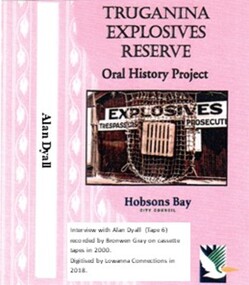
Digitised Oral History – Truganina Explosives Reserve - Tape 6 Alan Dyall, 2018
... Albert Street Williamstown...A primary source of information on memories of the Truganina Explosives Reserve and Altona,Victoria Albert Street Williamstown Rabbits Point Cook Homestead Truganina Explosive Reserve Lighterman Ports and Harbours Charlie Curry Lighter ICI Deer Park The Strand Williamstown Stevedores Hob nails Rope soled shoes Rifle Range Snowy Jorgensen Sailmaker Digital copy of original cassette recorded in 2000 and digitised in 2018 Digitised Oral History – Truganina Explosives Reserve - Tape 6 Alan Dyall ...The interviews were recorded in 2000 by Bronwen Gray and Alan Young for the production of Unreserved, Stories from Truganina Explosives Reserve, animated stories from past residents, workers and interested people of the Reserve (subject to copyright 2004). Alan Dyall reminisces on his childhood during the 1930s/40s in Williamstown and Altona in the 1960s. His father, Bill, worked as a lighterman at the Truganina Explosives Reserve. A primary source of information on memories of the Truganina Explosives Reserve and Altona,VictoriaDigital copy of original cassette recorded in 2000 and digitised in 2018albert street williamstown, rabbits, point cook homestead, truganina explosive reserve, lighterman, ports and harbours, charlie curry, lighter, ici, deer park, the strand williamstown, stevedores, hob nails, rope soled shoes, rifle range, snowy jorgensen, sailmaker -
 Sunshine and District Historical Society Incorporated
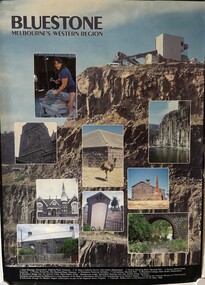
Poster - Bluestone Melbourne's Western Region - Bluestone & basalt quarried rocks in buildings Poster, Living Museum of the West, 1988
... Mary's Catholic Church Cecil Street Williamstown|Historic Shearing Shed Werribee Park|Quarry Market Street Sunshine|Primary School No 252 Geelong Road Footscray|Tombstone Footscray Cemetery|Out-building Werribee Park|Bluestone Cottage Albert Street Williamstown|Bluestone Bridge over the Kororoit Creek Keilor-Melton Road...Mary's Catholic Church Cecil Street Williamstown|Historic Shearing Shed Werribee Park|Quarry Market Street Sunshine|Primary School No 252 Geelong Road Footscray|Tombstone Footscray Cemetery|Out-building Werribee Park|Bluestone Cottage Albert Street Williamstown|Bluestone Bridge over the Kororoit Creek Keilor-Melton Road A coloured poster depicting bluestone, basalt and quarrying for buildings in the western region of Melbourne. ...Bluestone Melbourne's Western Region|Dean Bloxidhe Stonemason Geelong Road Footscray|St. Mary's Catholic Church Cecil Street Williamstown|Historic Shearing Shed Werribee Park|Quarry Market Street Sunshine|Primary School No 252 Geelong Road Footscray|Tombstone Footscray Cemetery|Out-building Werribee Park|Bluestone Cottage Albert Street Williamstown|Bluestone Bridge over the Kororoit Creek Keilor-Melton Roadquarry, blue stone -
 Port Melbourne Historical & Preservation Society
Document - Victorian Railway tickets, c. 1960' & 70's
... Street Station include three singles & one 'Periodical Pass'. As well as the singles & weekly tickets, the 24 to & from North Port Station also include a 'Periodical Pass' and one for a 'Collapsible Pram'. . From Montague Station single and weekly journeys make up the eight tickets. The weekly tickets show how far people would travel to work in Port Melbourne. From Ascot Vale, Broadmeadows, Carrum, Coburg, Gowrie, Malvern, Mont Albert, Reservoir, St Albans, Thorrnbury, Williamstown...Street Station include three singles & one 'Periodical Pass'. As well as the singles & weekly tickets, the 24 to & from North Port Station also include a 'Periodical Pass' and one for a 'Collapsible Pram'. . From Montague Station single and weekly journeys make up the eight tickets. The weekly tickets show how far people would travel to work in Port Melbourne. From Ascot Vale, Broadmeadows, Carrum, Coburg, Gowrie, Malvern, Mont Albert, Reservoir, St Albans, Thorrnbury, Williamstown ...From the collection of Warren DOUBLEDAY. Tickets were given to donor by retired railway officials who were given access to them for their collections following the tickets withdrawal from use. Fifteen are for journeys to and from the Port Melbourne station and include Single, Weekly and 'Extended Periodical' tickets.Those from Graham Street Station include three singles & one 'Periodical Pass'. As well as the singles & weekly tickets, the 24 to & from North Port Station also include a 'Periodical Pass' and one for a 'Collapsible Pram'. . From Montague Station single and weekly journeys make up the eight tickets. The weekly tickets show how far people would travel to work in Port Melbourne. From Ascot Vale, Broadmeadows, Carrum, Coburg, Gowrie, Malvern, Mont Albert, Reservoir, St Albans, Thorrnbury, Williamstown, Yarramam. Single tickets are for travel to or from Auburn, Clayton, Collingwood, Glenferrie, Hawthorn, Kensington, Melbourne, Mont Albert, Moonee Ponds, Richmond, West Footscray, A collection of 51 undated railway tickets.transport - railways, north port station, graham station, montague station, port melbourne station -
 Port Melbourne Historical & Preservation Society
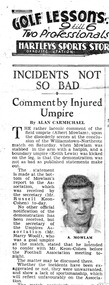
Article - Umpire, Albert MOWLAM stabbed with a hatpin
... Congues and Mowlam families Images of two families who lived in Cruikshank Street from the 1930s to 1950s. .20 - Article referring to umpire Albert MOWLAM being stabbed in the arm with a hatpin following the Williamstown and Northcote match - date unknown...Families Congues Family Mowlam Family Albert 'Tich' MOWLAM Sport - Australian Rules Football Congues and Mowlam families Images of two families who lived in Cruikshank Street from the 1930s to 1950s. .20 - Article referring to umpire Albert MOWLAM being stabbed in the arm with a hatpin following the Williamstown and Northcote match - date unknown Article Umpire, Albert MOWLAM stabbed with a hatpin ...Congues and Mowlam families Images of two families who lived in Cruikshank Street from the 1930s to 1950s. .20 - Article referring to umpire Albert MOWLAM being stabbed in the arm with a hatpin following the Williamstown and Northcote match - date unknownfamilies, congues family, mowlam family, albert 'tich' mowlam, sport - australian rules football -
 Melbourne Tram Museum
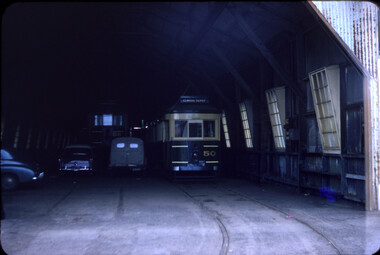
Slide - MMTB, MTA and VR tramway operations set of 12, Hugh Ballment, 1950s to 1980s
... Street at the Williamstown Road terminus, showing the return destination of Ballarat Road. Has a Gent's Hairdresser in the background. Yields information about Melbourne tram operations, with 1950s or 1960s photos of Melbourne tramways. tramways VR St Kilda Brighton Tramway tram 50 Z class tram 466 tram 463 Footscray Williamstown Road Russell St Ballarat Road tram 2001 tram 677 tram 459 tram 980 Preston Workshops Glen Huntly Road Trams Elwood Depot Spring St Leeds St X1 class PCC class Route 91 Birdport St B class Albert Park Yarraville West Footscray Barkly St Broadway Ormond Road Rosamond Road tram 460 X2 class T class tram 181 Francis St tram 678 tram 467 Kodachrome cardboard and plastic mounts, with notes - set of 12 Slide MMTB, MTA and VR tramway operations set of 12 Hugh Ballment ...Set of 12 photos by Hugh Ballment, unless noted, of VR, MTA and MMTB trams: HBM081 - VR Tram No 50, mid 1950s, Elwood Depot, with a Don't move sign. Tram 38 is alongside HBM082 - MMTB, c1975, Spring Street, Z1 class cars- (fuzzy photo) HBM083 - MMTB Trams X1 466 and 463, early 1960s, Leeds Street, Footscray station. In the background are J Burmah tailor, K C Field pawn broker, HBM084 - MTA, B 2001, Showing "Southbank Depot" Route 91, late 1980s, Albert Park, Light rail level crossing at Birdport Street. HBM085 - MMTB X2 677, late 1950s, Elsternwick, Glen Huntly Road, with the Railway level crossing gates closed. In the background are adverts for The Rex Fruit shop, The Sun, The Age, spray painting, Turf, and Holden cars. HBM086 - MMTB Tram 677, late 1950s, in Glen Huntly Road at the intersection of Broadway and Ormond Road bound for Port Ormond. In the background is a Chemist, Morley Auctioneers, State Savings Bank, and a motor dealer advertising Standard Cars. HBM087 - MMTB X1 459, early 1960s, Barkly Street?, running a Russell Street service. HBM088 - MMTB PCC 980, 26/05/1954, Preston Workshops, HBM089 - MMTB X1 460, c1960, at the Russell St terminus in Barkly Street, West Footscray. The tram has the return destination of Williamstown Road. In the background is E J Coxhead, Men's and Boy's Wear shop. This line closed in 1962. HBM090 - MMTB T 181, c1960, in Ballarat Road at the Rosamond Road terminus showing Williamstown Road on the destination. HBM091 - MMTB Tram 678, c1960, Ballarat Road, At Eleanor Street, with E V Young general store in the background advertising Robur Tea, and Cadbury's chocolate. HBM092 - MMTB Tram 467, c1960, in Francis Street at the Williamstown Road terminus, showing the return destination of Ballarat Road. Has a Gent's Hairdresser in the background. Yields information about Melbourne tram operations, with 1950s or 1960s photos of Melbourne tramways.Kodachrome cardboard and plastic mounts, with notes - set of 12tramways, vr, st kilda brighton tramway, tram 50, z class, tram 466, tram 463, footscray, williamstown road, russell st, ballarat road, tram 2001, tram 677, tram 459, tram 980, preston workshops, glen huntly road, trams, elwood depot, spring st, leeds st, x1 class, pcc class, route 91, birdport st, b class, albert park, yarraville, west footscray, barkly st, broadway, ormond road, rosamond road, tram 460, x2 class, t class, tram 181, francis st, tram 678, tram 467 -
 Surrey Hills Historical Society Collection
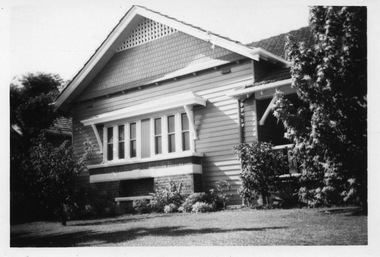
Digital photo, George L Coop, 688 Whitehorse Road, Mont Albert c 1953, c1953
... Williamstown, the son of Josephine Vistarini and George Frank Coop. He married Winifred Alice Trewartha in 1936 and they are listed in the electoral rolls at 688 Whitehorse Road in 1937. George died 3/4/1960, aged 54 years at Mont Albert. 3. George Burton and Alice Coop had 2 children: George Lister Coop - born St Georges Hospital, 8/10/1937 Alison - born c1945. The donor George Lister Coop informed that he initially attended Chatham State School because his first home was the Spanish Mission style flats at 346 Whitehorse Road, opposite Brenbeal Street...Williamstown, the son of Josephine Vistarini and George Frank Coop. He married Winifred Alice Trewartha in 1936 and they are listed in the electoral rolls at 688 Whitehorse Road in 1937. George died 3/4/1960, aged 54 years at Mont Albert. 3. George Burton and Alice Coop had 2 children: George Lister Coop - born St Georges Hospital, 8/10/1937 Alison - born c1945. The donor George Lister Coop informed that he initially attended Chatham State School because his first home was the Spanish Mission style flats at 346 Whitehorse Road, opposite Brenbeal Street ...This was the home of 3 generations of the Coop family: 1. Josephine and George Frank Coop (noted in Box Hill Rate Books for 1947-1954). 2. George Burton Coop (1906-1960) and his family. He was Assistant Chief Architect of Victoria in the Public Works Department (P.W.D.) George Burton Coop was born in c1906 in Williamstown, the son of Josephine Vistarini and George Frank Coop. He married Winifred Alice Trewartha in 1936 and they are listed in the electoral rolls at 688 Whitehorse Road in 1937. George died 3/4/1960, aged 54 years at Mont Albert. 3. George Burton and Alice Coop had 2 children: George Lister Coop - born St Georges Hospital, 8/10/1937 Alison - born c1945. The donor George Lister Coop informed that he initially attended Chatham State School because his first home was the Spanish Mission style flats at 346 Whitehorse Road, opposite Brenbeal Street, Balwyn. When his grandparents died, the family moved to 688 Whitehorse Road and he then attended Mont Albert Central School. The California bungalow style of housing was the dominant style of housing built in the interwar period through the northern parts of Surrey Hills and Mont Albert as formerly semi-rural land was subdivided for new housing. It was relatively inexpensive and affordable. In Australia the Californian bungalow drew upon elements that were popular across the United States from around 1910 to 1939. In Australia the style became popular from 1913. In Melbourne both timber and red brick were used as the main building material. Typically they are one or one and a half story houses and feature sloping roofs and eaves with unenclosed rafters and often a feature a dormer window (or an attic vent designed to look like one) over the main portion of the house. Decorative elements include wood shingles, part stucco rendered exteriors, brick, stone, rendered or a combination of these treatments to exterior chimneys and front porches supported by heavy timber, brick or stucco columns.A black & white photo taken at an angle of a Californian bungalow.californian bungalow, whitehorse road, george frank coop, (miss) josephine vistarini, (mrs) josephine coop, george burton coop, (miss) winifred trewartha, (mrs) winifred coop, george lister coop, alison coop -
 Surrey Hills Historical Society Collection
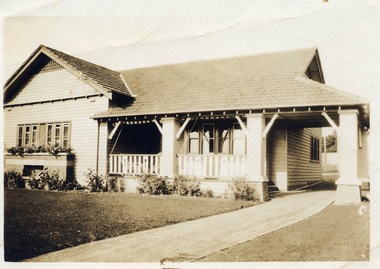
Digital photo, George L Coop, 688 Whitehorse Rd. Mont Albert c1950, c1950
... Williamstown, the son of Josephine Vistarini and George Frank Coop. He married Winifred Alice Trewartha in 1936 and they are listed in the electoral rolls at 688 Whitehorse Road in 1937. George died 3/4/1960, aged 54 years at Mont Albert. 3. George Burton and Alice Coop had 2 children: George Lister Coop - born St Georges Hospital, 8/10/1937 Alison - born c1945. The donor George Lister Coop informed that he initially attended Chatham State School because his first home was the Spanish Mission style flats at 346 Whitehorse Road, opposite Brenbeal Street...Williamstown, the son of Josephine Vistarini and George Frank Coop. He married Winifred Alice Trewartha in 1936 and they are listed in the electoral rolls at 688 Whitehorse Road in 1937. George died 3/4/1960, aged 54 years at Mont Albert. 3. George Burton and Alice Coop had 2 children: George Lister Coop - born St Georges Hospital, 8/10/1937 Alison - born c1945. The donor George Lister Coop informed that he initially attended Chatham State School because his first home was the Spanish Mission style flats at 346 Whitehorse Road, opposite Brenbeal Street ...This was the home of 3 generations of the Coop family: 1. Josephine and George Frank Coop (noted in Box Hill Rate Books for 1947-1954). 2. George Burton Coop (1906-1960) and his family. He was Assistant Chief Architect of Victoria in the Public Works Department (P.W.D.) George Burton Coop was born in c1906 in Williamstown, the son of Josephine Vistarini and George Frank Coop. He married Winifred Alice Trewartha in 1936 and they are listed in the electoral rolls at 688 Whitehorse Road in 1937. George died 3/4/1960, aged 54 years at Mont Albert. 3. George Burton and Alice Coop had 2 children: George Lister Coop - born St Georges Hospital, 8/10/1937 Alison - born c1945. The donor George Lister Coop informed that he initially attended Chatham State School because his first home was the Spanish Mission style flats at 346 Whitehorse Road, opposite Brenbeal Street, Balwyn. When his grandparents died, the family moved to 688 Whitehorse Road and he then attended Mont Albert Central School. The California bungalow style of housing was the dominant style of housing built in the interwar period through the northern parts of Surrey Hills and Mont Albert as formerly semi-rural land was subdivided for new housing. It was relatively inexpensive and affordable. In Australia the Californian bungalow drew upon elements that were popular across the United States from around 1910 to 1939. In Australia the style became popular from 1913. In Melbourne both timber and red brick were used as the main building material. Typically they are one or one and a half story houses and feature sloping roofs and eaves with unenclosed rafters and often a feature a dormer window (or an attic vent designed to look like one) over the main portion of the house. Decorative elements include wood shingles, part stucco rendered exteriors, brick, stone, rendered or a combination of these treatments to exterior chimneys and front porches supported by heavy timber, brick or stucco columns.A sepia photo taken at an angle from the street corner of the property. It is of a Californian bungalow with a driveway that extends through a carport, attached and roofed as part of the house, to the rear of the property. The veranda is accessed from under this covered area. The veranda and carport are supported by brick pillars and the veranda balustrades between are plain with an occasional wider feature panel. The front door is in shadow. There are rolled up striped canvas blinds on the veranda and at least 2 cane chairs. The main structure of the house is weatherboard with a terracotta tiled roof. There is a flower bed across the front of the house with an elevated brick flower box under the main window. There are no chimneys visible.californian bungalow, whitehorse road, george frank coop, (miss) josephine vistarini, (mrs) josephine coop, george burton coop, (miss) winifred trewartha, (mrs) winifred coop, george lister coop, alison coop -
 Surrey Hills Historical Society Collection
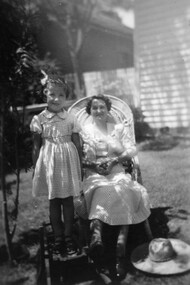
Digital photo, George L Coop, Winifred Alice Coop and her daughter Alison, c1950, c1950
... Williamstown, the son of Josephine Vistarini and George Frank Coop. He married Winifred Alice Trewartha in 1936 and they are listed in the electoral rolls at 688 Whitehorse Road in 1937. George died 3/4/1960, aged 54 years at Mont Albert; Alice died in 1980. 3. George Burton and Alice Coop had 2 children: George Lister Coop - born St Georges Hospital, 8/10/1937 Alison - born c1945. The donor George Lister Coop informed that he initially attended Chatham State School because his first home was the Spanish Mission style flats at 346 Whitehorse Road, opposite Brenbeal Street...Williamstown, the son of Josephine Vistarini and George Frank Coop. He married Winifred Alice Trewartha in 1936 and they are listed in the electoral rolls at 688 Whitehorse Road in 1937. George died 3/4/1960, aged 54 years at Mont Albert; Alice died in 1980. 3. George Burton and Alice Coop had 2 children: George Lister Coop - born St Georges Hospital, 8/10/1937 Alison - born c1945. The donor George Lister Coop informed that he initially attended Chatham State School because his first home was the Spanish Mission style flats at 346 Whitehorse Road, opposite Brenbeal Street ...The photo was taken at 688 Whitehorse Road, Mont Albert. It is of Winifred Alice Coop (nee Trewartha), known as Alice, and her daughter Alison, b1945. This was the home of 3 generations of the Coop family: 1. Josephine and George Frank Coop (noted in Box Hill Rate Books for 1947-1954). 2. George Burton Coop (1906-1960) and his family. He was Assistant Chief Architect of Victoria in the Public Works Department (P.W.D.) George Burton Coop was born in c1906 in Williamstown, the son of Josephine Vistarini and George Frank Coop. He married Winifred Alice Trewartha in 1936 and they are listed in the electoral rolls at 688 Whitehorse Road in 1937. George died 3/4/1960, aged 54 years at Mont Albert; Alice died in 1980. 3. George Burton and Alice Coop had 2 children: George Lister Coop - born St Georges Hospital, 8/10/1937 Alison - born c1945. The donor George Lister Coop informed that he initially attended Chatham State School because his first home was the Spanish Mission style flats at 346 Whitehorse Road, opposite Brenbeal Street, Balwyn. When his grandparents died, the family moved to 688 Whitehorse Road and he then attended Mont Albert Central School. Alison being younger did not go to Chatham Primary. A black & white photo of a woman seated in a cane chair with her daughter standing adjacent to her and standing on a small child's chair. The woman's sun hat is lying beside her on the grass. Both faces are partly shaded by an adjacent bush.alison coop, (mrs) winifred alice coop, whitehorse road, surrey hills, children, clothing and dress, george lister coop -
 Surrey Hills Historical Society Collection
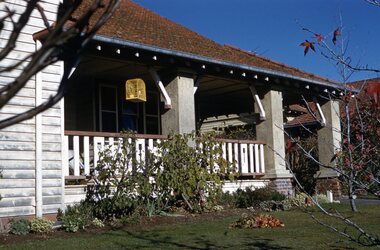
Photograph - Digital photograph, George L Coop, 688 Whitehorse Road, Mont Albert 1958, 1958
... Williamstown; died aged 54 years at Mont Albert) and Winsome Alice (MS: Trewartha) who married in 1936. They are first listed at this address in the electoral roll in 1937. They had 2 children: George Lister Coop - born St Georges Hospital, 8/10/1937 and Alison - born c1945. However the donor informed that he initially attended Chatham State School because his first home was the Spanish Mission style flats at 346 Whitehorse Road, opposite Brenbeal Street...Williamstown; died aged 54 years at Mont Albert) and Winsome Alice (MS: Trewartha) who married in 1936. They are first listed at this address in the electoral roll in 1937. They had 2 children: George Lister Coop - born St Georges Hospital, 8/10/1937 and Alison - born c1945. However the donor informed that he initially attended Chatham State School because his first home was the Spanish Mission style flats at 346 Whitehorse Road, opposite Brenbeal Street ...The donor George Lister Coop was about 21 years of age when he took this photo in 1958 of his family home. His parents were George Burton Coop (b c1906 Williamstown; died aged 54 years at Mont Albert) and Winsome Alice (MS: Trewartha) who married in 1936. They are first listed at this address in the electoral roll in 1937. They had 2 children: George Lister Coop - born St Georges Hospital, 8/10/1937 and Alison - born c1945. However the donor informed that he initially attended Chatham State School because his first home was the Spanish Mission style flats at 346 Whitehorse Road, opposite Brenbeal Street, Balwyn. When his grandparents died, the family moved to 688 Whitehorse Road and he then attended Mont Albert Central School. Alison being younger did not go to Chatham Primary. A digital copy of a colour photo showing detail of the front veranda of 688 Whitehorse Road. The house is white weatherboard in a modified Californian bungalow style with a tiled roof and the carport built within the roofline. The balustrades and finials of the veranda are simple with occasional feature planks with a tulip detail. A bird cage hangs from the veranda. The veranda is supported by rough-cast sturdy pillars.george l coop, whitehorse road, mont albert, uniting church, californian bungalow -
 Surrey Hills Historical Society Collection
Photograph - Digital photograph, George L Coop, 688 Whitehorse Road, Mont Albert 1958, 1958
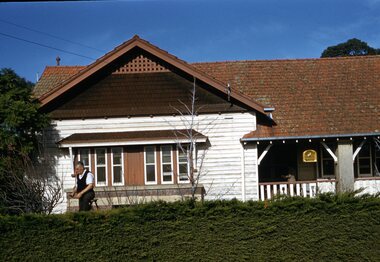
... Williamstown; died aged 54 years at Mont Albert) and Winsome Alice (MS: Trewartha) who married in 1936. They are first listed at this address in the electoral roll in 1937. They had 2 children: George Lister Coop - born St Georges Hospital, 8/10/1937 and Alison - born c1945. However the donor informed that he initially attended Chatham State School because his first home was the Spanish Mission style flats at 346 Whitehorse Road, opposite Brenbeal Street...Williamstown; died aged 54 years at Mont Albert) and Winsome Alice (MS: Trewartha) who married in 1936. They are first listed at this address in the electoral roll in 1937. They had 2 children: George Lister Coop - born St Georges Hospital, 8/10/1937 and Alison - born c1945. However the donor informed that he initially attended Chatham State School because his first home was the Spanish Mission style flats at 346 Whitehorse Road, opposite Brenbeal Street ...The gentleman in the photo is George Burton Coop, an architect / draughtsman. The donor, his son George Lister Coop was about 21 years of age when he took this photo in 1958 of his family home. His parents were: George Burton Coop (b c1906 Williamstown; died aged 54 years at Mont Albert) and Winsome Alice (MS: Trewartha) who married in 1936. They are first listed at this address in the electoral roll in 1937. They had 2 children: George Lister Coop - born St Georges Hospital, 8/10/1937 and Alison - born c1945. However the donor informed that he initially attended Chatham State School because his first home was the Spanish Mission style flats at 346 Whitehorse Road, opposite Brenbeal Street, Balwyn. When his grandparents died, the family moved to 688 Whitehorse Road and he then attended Mont Albert Central School. Alison being younger did not go to Chatham Primary. A digital copy of a colour photo showing detail of the front view of 688 Whitehorse Road. The house is white weatherboard in a Californian bungalow style with a tiled roof and shingles detail in a dark brown stain. The balustrades and finials of the veranda are simple with occasional feature planks with a tulip detail. A bird cage hangs from the veranda. The veranda is supported by rough-cast sturdy pillars. The house sits behind a cypress hedge. The photo was taken in winter as deciduous shrubs are bare. A gentleman astride a ladder is pruning the hedge. george l coop, whitehorse road, mont albert, californian bungalow, cypress hedge, gardening, george burton coop -
 Melbourne Tram Museum
Album - Ron Scholten Slide Collection, Ron Scholten
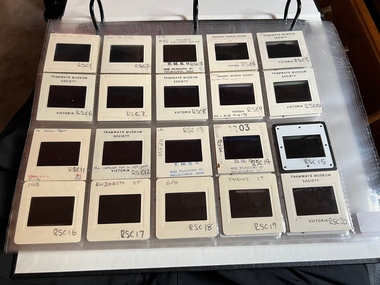
... Trams on route 88 delayed in Queens Parade Clifton Hill RSC121 Bendigo Birney car in Finn Street near North Bendigo terminus RSC122 SW6 in St Kilda Road at Domain Road at night RSC123 All 3 of Alf Twentyman’s cable cars in his Northcote backyard RSC124 Cable trailer 256 being unloaded into the shed at Bylands RSC125 Cable grip car 1 being removed from the Melbourne Museum RSC126 Alf Twentyman's cable cars in his Northcote Backyard RSC127 Alf Twentyman's cable cars in his Northcote Backyard RSC128 Alf Twentyman's cable cars in his Northcote Backyard RSC129 Alf Twentyman's cable cars in his Northcote Backyard RSC130 W class car in Swanston Street at Collins Street RSC131 Y1 469, L & W3 on the run out of Glenhuntly Depot on a tour RSC132 W7 1024 as an advertising tram for Bank of NSW at Clifton Hill RSC133 W2 496 on a footy special in Simpson Street Siding RSC134 W2 as originally converted to a test car at Preston Workshops RSC135 W3 667 in Brunswick Depot with Ellen Butland at the controls RSC136 W3 669 on its final run at Victoria Parade and Brunswick Street RSC137 W2 571 in Wellington Parade at Clarendon Street with a Footy Final load of Passengers RSC138 Y1 613 shunts at Spencer Street Terminus as X 217 waits on Australia Day Pageant RSC139 PCC 1041 on Route 96 in Bourke Street outside the Southern Cross Hotel RSC140 SW6 890 with accident damage on the outside roads at Preston Workshops, c1978 RSC141 W2 535 on Route 4 at the old St Kilda Junction, c1967 RSC142 PCC 1041 on Route 88 turns from Bourke Street into Spring Street, 1973 RSC143 L 102 on a tour at Albert Park Beach Terminus, Feb 1972 RSC144 W5 class Nos 833, 834 & 835 in Malvern Depot, c1976 RSC145 W2 No 281 in Wellington Parade on a football very crowded special c1974 RSC146 X1 No 464 Ballarat Road 1960 RSC147 T No 181 bound for the Explosives Factory - at Footscray Station - July 1960 RSC148 T No 181 at Williamstown Road, 1960 RSC149 Cable car set in Alf Twentyman’s back yard, c1970 RSC150 X No 217 at Malvern Depot, c1970 RSC151 X1 No 465 and T No181 Footscray Football ground in Barkly Street. c1960 RSC152 Scrubber No 5 at South Melbourne Depot, c1960 RSC153 X1 No 465 Footscray to Russell Street, c1960 RSC154 X1 No 467 Leeds Street Footscray, 1960 RSC155 PMTT No 4 Glenferrie Road, 1910 RSC156 S No 164 at Malvern Depot c1970 RSC157 T No 178 Footscray c1960 RSC158 Cleaner No. 7 at South Melbourne Depot c1960 RSC159 Two Y classes at Princes Bridge and Batman Avenue mid 1950s RSC160 Swanston Street – Nu color vue slide – M142 ...Trams on route 88 delayed in Queens Parade Clifton Hill RSC121 Bendigo Birney car in Finn Street near North Bendigo terminus RSC122 SW6 in St Kilda Road at Domain Road at night RSC123 All 3 of Alf Twentyman’s cable cars in his Northcote backyard RSC124 Cable trailer 256 being unloaded into the shed at Bylands RSC125 Cable grip car 1 being removed from the Melbourne Museum RSC126 Alf Twentyman's cable cars in his Northcote Backyard RSC127 Alf Twentyman's cable cars in his Northcote Backyard RSC128 Alf Twentyman's cable cars in his Northcote Backyard RSC129 Alf Twentyman's cable cars in his Northcote Backyard RSC130 W class car in Swanston Street at Collins Street RSC131 Y1 469, L & W3 on the run out of Glenhuntly Depot on a tour RSC132 W7 1024 as an advertising tram for Bank of NSW at Clifton Hill RSC133 W2 496 on a footy special in Simpson Street Siding RSC134 W2 as originally converted to a test car at Preston Workshops RSC135 W3 667 in Brunswick Depot with Ellen Butland at the controls RSC136 W3 669 on its final run at Victoria Parade and Brunswick Street RSC137 W2 571 in Wellington Parade at Clarendon Street with a Footy Final load of Passengers RSC138 Y1 613 shunts at Spencer Street Terminus as X 217 waits on Australia Day Pageant RSC139 PCC 1041 on Route 96 in Bourke Street outside the Southern Cross Hotel RSC140 SW6 890 with accident damage on the outside roads at Preston Workshops, c1978 RSC141 W2 535 on Route 4 at the old St Kilda Junction, c1967 RSC142 PCC 1041 on Route 88 turns from Bourke Street into Spring Street, 1973 RSC143 L 102 on a tour at Albert Park Beach Terminus, Feb 1972 RSC144 W5 class Nos 833, 834 & 835 in Malvern Depot, c1976 RSC145 W2 No 281 in Wellington Parade on a football very crowded special c1974 RSC146 X1 No 464 Ballarat Road 1960 RSC147 T No 181 bound for the Explosives Factory - at Footscray Station - July 1960 RSC148 T No 181 at Williamstown Road, 1960 RSC149 Cable car set in Alf Twentyman’s back yard, c1970 RSC150 X No 217 at Malvern Depot, c1970 RSC151 X1 No 465 and T No181 Footscray Football ground in Barkly Street. c1960 RSC152 Scrubber No 5 at South Melbourne Depot, c1960 RSC153 X1 No 465 Footscray to Russell Street, c1960 RSC154 X1 No 467 Leeds Street Footscray, 1960 RSC155 PMTT No 4 Glenferrie Road, 1910 RSC156 S No 164 at Malvern Depot c1970 RSC157 T No 178 Footscray c1960 RSC158 Cleaner No. 7 at South Melbourne Depot c1960 RSC159 Two Y classes at Princes Bridge and Batman Avenue mid 1950s RSC160 Swanston Street – Nu color vue slide – M142 Demonstrates the work of Ron Scholten in photography, collection and/or production of duplicate slides Melbourne tramways trams cable trams Horse Tram Route 67 Route 88 Route 55 Route 64 Route 59 Route 49 Route 50 Point Ormond Royal Park Swanston St Footscray Essendon Depot Matthews Ave Brunswick Depot Glenhuntly Depot Malvern Depot St.Georges Road Preston Workshops PCC class VR class W2 class W3 class L class S class x class x1 class K class Z3 class D1 class sw6 class W6 class W7 class T class B1 class C class Q class Y class Y1 class W5 class Z1 class tram 465 tram 181 tram 217 tram 467 tram 164 tram 102 tram 669 tram 667 tram 976 tram 890 tram 558 tram 657 tram 571 tram 484 tram 535 Flinders St tram 980 tram 1041 tram 482 tram 64 tram 104 tram 1 tram 466 tram 680 tram 676 tram 955 tram 92 tram 201 tram 3510 tram 3530 tram 3504 tram 3503 tram 53 tram 588 tram 383 tram 960 tram 32 tram 2042 tram 3016 tram 516 tram 43 tram 463 tram 191 tram 139 tram 469 tram 613 tram 796 tram 258 tram 384 Assembled album in a black presentation folder of 160 colour slides, 8 slide sleeves, collected or produced by Ron Scholten. ...Photo - see pdf file for further information. Number Brief Description RSC1 PCC 1041 at the gates of Preston Workshops on a test run without its trolley retriever RSC2 PCC 1041 in Glenhuntly Road on Route 67 en-route to Carnegie crossing the Railway Gates at Glenhuntly Station RSC3 W2 482 stored at Malvern Depot with Olympic Park on the Destination RSC4 Cable Car Set 64 in Swanston Street outside Princess Bridge Station in bound with open top Double Deck Bus, Trak Motors ? Departing from Flinders St Station RSC5 W3 669 in St George Road at Sumner Street en-route to Preston Workshops for scrapping RSC6 Cable Car in Lygon Street en-route to Carlton RSC7 PCC 1041 turning from St Georges Road into Miller Street to enter the Preston Workshops RSC8 Flinders Street Station with cable cars RSC9 PCC 1041 in strife on its maiden day in service. Trams on route 88 delayed in Queens Parade Clifton Hill RSC10 Flinders Street at William Street with Cable Cars RSC11 L 104 on the fan of the new shed at Malvern Depot on a TMSV tour RSC12 Cable Set 1 after it’s restoration at Preston Workshops on the fan near the front gate RSC13 X1 466 at a suburban terminus of the Footscray System RSC14 X2 680 at Point Ormond Terminus RSC15 An ex Launceston Tram at the outside terminus of the Penny Royal Complex Tramway in Launceston RSC16 Q 148 at Preston Workshops awaiting disposal RSC17 Elizabeth Street with Cable Cars RSC18 Elizabeth and Bourke Streets corner outside the GPO with cable cars RSC19 Collins Street with Cable Cars RSC20 A photo taken from the observation deck of the ICI building showing a view of Parliament House with a W class tram in Nicholson Street RSC21 Auburn Horse car with a posed photo of all the tramway men employed RSC22 Cheltenham Double Deck Horsecar with a full load of passengers RSC23 City of Northcote cable trailer No 3 at a terminus RSC24 City of Northcote Cable cars passing in High Street Northcote RSC25 St Kilda Road at Princes Bridge with Cable Cars RSC26 Flinders Street with Cable Cars RSC27 Cable Cars RSC28 Bourke Street looking towards Elizabeth Street from Queen Street RSC29 Cable cars in Bourke Street at Elizabeth Street looking east RSC30 Cable cars in Elizabeth Street at the terminus at Flinders Street RSC31 Cable cars in Bourke Street at Swanston Street looking west RSC32 Cable cars in Swanston Street at Flinders Street looking north RSC33 Cable cars in Collins Street near Russell Street RSC34 Cable cars in Elizabeth Street at Bourke Street RSC35 Cable cars in Collins Street at Elizabeth Street RSC36 Cable Cars in Swanston Street at Flinders Street RSC37 Cable cars in Collins Street RSC38 Cable Cars RSC39 Cable cars in St Kilda Road near Princes Bridge RSC40 Cable cars in Collins Street east of Swanston Street RSC41 Cable cars in Spring Street outside Parliament House RSC42 K class No 92 in M&MTB Chocolate and cream livery but with a P&MTT Destination box on Route 14 RSC43 Thornbury Depot viewed from Miller Street and St Georges Road. Two W2 class cars are laying over between the peaks RSC44 Z3 No 201 in Met Livery passes D1 No 3510 in new M/Tram livery. A staff member in uniform stands in the doorway. Dandenong Road RSC45 D1 No 3530 advertising Heinekin Super Golf on Route 55 in Royal Park RSC46 D1 No 3504 in M/Tram livery on the reserved track in Matthews Avenue near Essendon Airport showing Route 81 Travancore. I suspect it is a private enthusiasts charter due to the Malvern W class run number in the rear windscreen RSC47 D1 No 3504 on Route 64 in Dandenong Road in M/Tram Livery RSC48 D1 No 3504 in M/Tram Livery at Airport West Terminus RSC49 D1 No 3504 in M Tram Livery in Union Road outside the Showgrounds RSC50 D1 No 3504 at West Maribyrnong Terminus in M/Tram Livery RSC51 D1 No 3503 in M/Tram Livery in Malvern Depot RSC52 SW6 No 960 and VR No 53 in Harbour Esplanade for the NMEL&T Co Centenary RSC53 Hawthorn Tramways Trust No 32 in Harbour Esplanade for the NMEL&T Co Centenary RSC54 VR 53 & B 2042 in Harbour Esplanade for the NMEL&T Co Centenary RSC55 VR 53 & C 3016 in Harbour Esplanade for the NMEL&T Co Centenary RSC56 NMEL&T Co No 13 (Formerly No 214) in Harbour Esplanade for the NMEL&T Co Centenary RSC57 NMEL&T Co 13 (formerly No 214) at Preston Workshops for the NMEL&T Co Centenary RSC58 Hawthorn Tramways Trust Lettering on HTT No 32 in Harbour Esplanade for the NMEL&T Co Centenary RSC59 Hawthorn Tramways Trust No 32 in Harbour Esplanade for the NMEL&T Co Centenary RSC60 Hawthorn Tramways Trust No 32 in Harbour Esplanade for the NMEL&T Co Centenary RSC61 Hawthorn Tramways Trust No 32 in Harbour Esplanade for the NMEL&T Co Centenary RSC62 NMEL&T Co No 13 (formerly No 214) at Preston Workshops for the NMEL&T Co Centenary RSC63 W2 516 and another on route 59 wait to shunt at Essendon Aerodrome Terminus as W2 571 on route 49 departs. This was the last day of operation. RSC64 Australia’s First Electric Tram at Box Hill with tramway men including H J Hilton who is in the centre RSC65 W2 484 en-route to St Kilda Junction and another wait for passengers after a race meeting at Caulfield Racecourse RSC66 X1 463 on the Footscray system en-route to Russell Street RSC67 Geelong 35 on Chilwell Route, Formerly HTT 13, M&MTB 119, then Bendigo 1 and Ballarat 37 RSC68 P&MTT No 4 on Opening Day of the system in Glenferrie Road RSC69 Bendigo No 6 in McCrae Street near the Depot en-route to North Bendigo RSC70 P&MTT No 4 in Glenferrie Road on opening day of the system RSC71 Scrubber No 3 stripped and awaiting scrapping at Preston Workshops RSC72 Scrubber No 4 at South Melbourne Depot RSC73 Q 191 & 139 at Preston Workshops awaiting scrapping RSC74 Rail Grinder No 3 at Preston Workshops as purchased from Sydney RSC75 Y 469 waits to shunt at Wattle Park Terminus as Y1 613 departs on driver training duties RSC76 VR 53 on the outside roads at Essendon Depot RSC77 W5 796 with three doors and square windows running out of Brunswick Depot in Cameron Street, with a supplementary destination board showing “City via Swanston St” RSC78 W2 258 on the wheel grinder road at Brunswick Depot RSC79 X2 676 on a TMSV tour, W5 817 & 836 & VR 53 on the open roads at Essendon Depot RSC80 PCC 1041 on test, passes W7 1035 in High Street Preston RSC81 D1 class production number 7 as delivered on test in Matthews Avenue RSC82 W2 383 on route 5 turning from the reserved track in Dandenong Road into St Kilda Road at St Kilda Junction RSC83 Z3 204 as advertising tram for Vodaphone Grand Prix running into Malvern Depot new shed RSC84 Z1 No 4 on test in St Georges Road RSC85 PCC 1041 on Route 96 in Bourke Street near Exhibition Street RSC86 Z1 No 3 without numbers on test turning from Miller Street in St Georges Road RSC87 Track components stored in Coldblo Road at Malvern Depot with Z class cars adjacent RSC88 D1 3501 in M/Tram Livery on Route 55 in Peel Street at Franklin Street RSC89 C 3001 in Yarra Trams Livery Porto No 018 & D1 3502 in M/Tram Livery on display in Harbourside Esplanade RSC90 D1 class tram production number 7, in as delivered condition on test in Matthews Avenue RSC91 D1 3503 inside Malvern Depot RSC92 SW6 955 and W6 974 in St Kilda Road at City Road at dusk. RSC93 Freight Car No 19 at Preston Workshops in green Livery RSC94 Rail Grinder No 3 in green Livery at South Melbourne Per Way Yard RSC95 A SW6 class car on route 50 shunting at Elizabeth Street Terminus at night, taken from Flinders Street Station RSC96 W2 588 & 435 in St Kilda Road at Batman Avenue RSC97 Y1 613 in service at Wattle Park Terminus RSC98 W2 588 in Wellington Parade en-route to the City with a Grand Final Load of passengers followed closely by No 384 RSC99 W2 558 on MCG Footy Special entering the Simpson Street siding RSC100 W3 657 & an L Class in the new shed at Malvern Depot RSC101 Y1 613 in St Kilda Road on an enthusiast's tour in St Kilda Road south of St Kilda Junction RSC102 Y1 613 on an enthusiast's tour in Clarendon Street with the two extra tracks on the Railways viaduct under construction RSC103 W6 976 on the fan of the new shed at Malvern Depot RSC104 W7 1024 as an advertising car for Bank of NSW at the route 1 terminus at South Melbourne Beach RSC105 PCC 980 on route 96 in Nicholson Street near North Fitzroy Depot RSC106 SW6 890 with dash canopy lighting in Market Street on the opening day of William Street Services RSC107 W2 444 with big numbers heads a line of footy specials in Simpson Street Siding RSC108 Cable Cars in Elizabeth Street RSC109 NMEL&T co No 2 with a trailer outside the power station in Mount Alexander Road RSC110 Alf Twentyman’s cable car set in his Northcote backyard RSC111 Cable Cars in Queens Parade Clifton Hill RSC112 Cable cars in Collins Street outside the Town Hall RSC113 PCC 1041 at Carnegie terminus RSC114 Cable cars in Elizabeth Street RSC115 Cable cars in Collins St near Swanston St RSC116 HTT 19 turns from Riversdale Road into Camberwell Road at Camberwell Junction RSC117 W1 419 official builders photo of first car of the class RSC118 Cable car with a full load of passengers RSC119 W1 422 illuminated for the visit of T.R.H. The Duke and Duchess of York RSC120 PCC 1041 in strife on it’s maiden day in service. Trams on route 88 delayed in Queens Parade Clifton Hill RSC121 Bendigo Birney car in Finn Street near North Bendigo terminus RSC122 SW6 in St Kilda Road at Domain Road at night RSC123 All 3 of Alf Twentyman’s cable cars in his Northcote backyard RSC124 Cable trailer 256 being unloaded into the shed at Bylands RSC125 Cable grip car 1 being removed from the Melbourne Museum RSC126 Alf Twentyman's cable cars in his Northcote Backyard RSC127 Alf Twentyman's cable cars in his Northcote Backyard RSC128 Alf Twentyman's cable cars in his Northcote Backyard RSC129 Alf Twentyman's cable cars in his Northcote Backyard RSC130 W class car in Swanston Street at Collins Street RSC131 Y1 469, L & W3 on the run out of Glenhuntly Depot on a tour RSC132 W7 1024 as an advertising tram for Bank of NSW at Clifton Hill RSC133 W2 496 on a footy special in Simpson Street Siding RSC134 W2 as originally converted to a test car at Preston Workshops RSC135 W3 667 in Brunswick Depot with Ellen Butland at the controls RSC136 W3 669 on its final run at Victoria Parade and Brunswick Street RSC137 W2 571 in Wellington Parade at Clarendon Street with a Footy Final load of Passengers RSC138 Y1 613 shunts at Spencer Street Terminus as X 217 waits on Australia Day Pageant RSC139 PCC 1041 on Route 96 in Bourke Street outside the Southern Cross Hotel RSC140 SW6 890 with accident damage on the outside roads at Preston Workshops, c1978 RSC141 W2 535 on Route 4 at the old St Kilda Junction, c1967 RSC142 PCC 1041 on Route 88 turns from Bourke Street into Spring Street, 1973 RSC143 L 102 on a tour at Albert Park Beach Terminus, Feb 1972 RSC144 W5 class Nos 833, 834 & 835 in Malvern Depot, c1976 RSC145 W2 No 281 in Wellington Parade on a football very crowded special c1974 RSC146 X1 No 464 Ballarat Road 1960 RSC147 T No 181 bound for the Explosives Factory - at Footscray Station - July 1960 RSC148 T No 181 at Williamstown Road, 1960 RSC149 Cable car set in Alf Twentyman’s back yard, c1970 RSC150 X No 217 at Malvern Depot, c1970 RSC151 X1 No 465 and T No181 Footscray Football ground in Barkly Street. c1960 RSC152 Scrubber No 5 at South Melbourne Depot, c1960 RSC153 X1 No 465 Footscray to Russell Street, c1960 RSC154 X1 No 467 Leeds Street Footscray, 1960 RSC155 PMTT No 4 Glenferrie Road, 1910 RSC156 S No 164 at Malvern Depot c1970 RSC157 T No 178 Footscray c1960 RSC158 Cleaner No. 7 at South Melbourne Depot c1960 RSC159 Two Y classes at Princes Bridge and Batman Avenue mid 1950s RSC160 Swanston Street – Nu color vue slide – M142 Demonstrates the work of Ron Scholten in photography, collection and/or production of duplicate slidesAssembled album in a black presentation folder of 160 colour slides, 8 slide sleeves, collected or produced by Ron Scholten. Many are TMSV or Windsor Publications slides. All photographs have been scanned and placed on the Museum's G drive. A list of all photographs with details has been compiled. melbourne, tramways, trams, cable trams, horse tram, route 67, route 88, route 55, route 64, route 59, route 49, route 50, point ormond, royal park, swanston st, footscray, essendon depot, matthews ave, brunswick depot, glenhuntly depot, malvern depot, st.georges road, preston workshops, pcc class, vr class, w2 class, w3 class, l class, s class, x class, x1 class, k class, z3 class, d1 class, sw6 class, w6 class, w7 class, t class, b1 class, c class, q class, y class, y1 class, w5 class, z1 class, tram 465, tram 181, tram 217, tram 467, tram 164, tram 102, tram 669, tram 667, tram 976, tram 890, tram 558, tram 657, tram 571, tram 484, tram 535, flinders st, tram 980, tram 1041, tram 482, tram 64, tram 104, tram 1, tram 466, tram 680, tram 676, tram 955, tram 92, tram 201, tram 3510, tram 3530, tram 3504, tram 3503, tram 53, tram 588, tram 383, tram 960, tram 32, tram 2042, tram 3016, tram 516, tram 43, tram 463, tram 191, tram 139, tram 469, tram 613, tram 796, tram 258, tram 384 -
 City of Melbourne Libraries
Photograph, Bull, Hugh Jones, 1897-1993, Lord Mayor's Dinner, Melbourne Town Hall
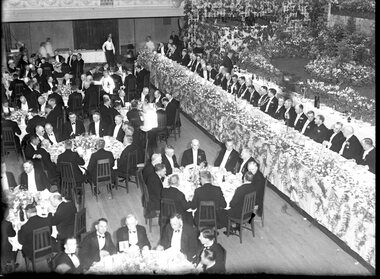
... Albert Dunstan on 22 December 1938. It replaced an earlier footbridge, which in turn had replaced a punt service. The bridge (originally referred to as Punt Road Bridge) was named after Robert Hoddle, who planned central Melbourne’s Hoddle Grid, the grid of streets which form Melbourne’s central business district. Hoddle arrived in Australia from the UK in 1823 and went on to carry out surveys in NSW and Queensland before arriving in Melbourne in 1837. He designed layouts for both Melbourne and Williamstown...Albert Dunstan on 22 December 1938. It replaced an earlier footbridge, which in turn had replaced a punt service. The bridge (originally referred to as Punt Road Bridge) was named after Robert Hoddle, who planned central Melbourne’s Hoddle Grid, the grid of streets which form Melbourne’s central business district. Hoddle arrived in Australia from the UK in 1823 and went on to carry out surveys in NSW and Queensland before arriving in Melbourne in 1837. He designed layouts for both Melbourne and Williamstown ...Photographer notations on slide: "General View Of Lord Mayor's Dinner At Town Hall Nov 1936 B112" Published: The Age, Tuesday 10 November 1936, page 13 Published title: LORD MAYOR'S BANQUET Published caption: The brilliant scene inside the Melbourne Town Hall last night during the Lord Mayor’s banquet. Trove article identifier: http://nla.gov.au/nla.news-article205939431 Description: 700 guests (all men) are seated around numerous tables in the Melbourne Town Hall for the Lord Mayor's dinner in November 1936. Before the stage is a top table of 35 men, all dressed smartly in black dinner suits, with either a black or white bow tie. Many are wearing their medals. The Lord Mayor has on his Mayoral chains, and to his right is the Governor of Victoria, Lord Huntingfield. The stage is heavily decorated with fresh flowers. Research by project volunteer, Louise McKenzie: This image takes up one quarter of the photographic space on page 13 of The Age on 10 November 1936, reflecting the importance of the event and also the sheer dramatics of the image: 700 guests (all men), a top table of 35, and all dressed smartly in black dinner suits, with either a black or white bow tie. Many are wearing their medals. The Lord Mayor has on his Mayoral chains, and to his right is the Governor of Victoria, Lord Huntingfield. Further to his right is a man with an impressive sash across his chest. It is a very animated, and rather informal, moment. Banks of fresh flowers smother the stage, which is decorated in the manner of a terrace at an English stately home. Tables are laden with food, drink and decorations, and the wait staff (men and women) are also formally dressed, in the manner of Downton Abbey. It is spectacular, dramatic, and luxurious, and perpetuates the proud descriptor of “Marvellous Melbourne” as conferred by London Journalist George Augustus Sala when he visited the city in 1885. During its 1880s boom, Melbourne was the second-largest city in the British Empire, after London, and reputedly the richest city in the world. At times the expression was used with some irony, but "...in Victoria’s centenary year, 1934, with the city mired in another depression, a publisher bravely entitled a book of souvenir photographs Marvellous Melbourne, claiming that the subject ‘still finds apt expression in the happy one-time sobriquet’.” This photo seems to reflect an ongoing pride in Melbourne and a desire for it to live up to its descriptor and celebrate its post-centenary era in style. So it is no surprise to find that on page 11 of The Age on the same day, a second photo is to be found – a cropped view of one table – along with a very detailed description of the night, its purpose, and a surprise announcement. But, who was the Lord Mayor in whose honour the dinner was held? In 1934, the Lord Mayor of Melbourne was Cr. Alexander George Wales, (born Richmond, 11 October 1885, died Elsterwick, 31 May 1962). His father was a contractor and quarry-owner, but was blinded in an industrial accident in 1899. Consequently Alexander, then aged 14, left Brunswick State School to become a railway labourer working at a quarry, and in 1903 joined the Commonwealth public service as a clerk and began studying at night school, determined to improve himself. In 1907 he was appointed secretary of the Albion Quarrying Co. (in which the family had an interest), then its managing director and chairman. As the Australian Dictionary of Biography notes, he was instrumental in expanding the company’s interests, "...becoming director of the Hardware Co. of Australia Pty Ltd, the Twentieth Century Building and Investment Society, the Albion Sand Co. and the Geelong Brick Co.”. His public career began in 1914 when he was elected to the Brunswick council. He was mayor 1917-18, and in 1925 progressed to the Melbourne City Council where he remained for 29 years, being a member of most council committees. He served three successive terms as lord mayor (1934-37), was Chairman of the council’s decorations committee for Melbourne’s centenary, president of the Metropolitan Fire Brigades Board (1936), and Chairman of the Public Works Committee (1937-39). In 1936 he was elected to the Legislative Council with United Australia Party support, but later resigned over possible State government contract tender irregularities. Wales received "the customary reward” of a knighthood and was invested at Buckingham Palace by King George VI whose coronation he attended in 1937. He was an early director of what is now Ampol, and helped the development of the petroleum industry in Australia after visiting the USA in 1943 and 1946. He was impressed by that country’s wartime shipbuilding efforts and supported closer ties with the USA. “While president (1947-48) of the Melbourne Chamber of Commerce, Wales was a vocal critic of the Federal Labor Government, ...a staunch anti-socialist ... and a focus for conservative opposition to the Curtin and Chifley governments...” He is described as “a natural leader in business and civic politics,... a powerful force in the Melbourne City Council... opposing democratic reforms such as the creation of a Greater Melbourne Council and the abolition of plural voting, but advocat[ing] the redevelopment of city-owned property like the Eastern and Western markets...” So, this Lord Mayor’s dinner marks the third successive term in office for Governor Cr. A G Wales. The room is filled with powerful and influential men, and provided a platform for the Premier of Victoria, Albert Dunstan (1882-1950, United Country party) to announce that if the City Council would bear half the cost the State Government would build a bridge at Punt Road “at once”. He announced that the Government proposed to have the bridge built by the Country Roads Board, and allow the City Council to pay its share on convenient terms, and further, it would investigate the shared provision of more Yarra bridges. The proposal for the Punt Road Bridge was met with applause as the Yarra River constituted a serious traffic barrier. On 12 November 1936, two days after the Lord Mayor’s dinner, The Age published an article, “Building without a Plan”. It questions the appropriateness of the next Yarra bridge being the one at Punt Road, and encourages a “proper procedure” to look at the provision of additional Yarra bridges as a whole. But in fact this topic had been canvassed back in August when Melbourne City Council’s public works committee had recommended the replacement of the footbridge at Punt Road with a bridge, and if the Country Roads Board would declare this portion of Punt Road, including the river crossing, a State Highway, this could give the Board authority to construct the bridge and allocate the cost. Hence the reference at the dinner to a shared expense. Still an integral part of traffic management today, the Hoddle Bridge carries Punt Road over the Yarra River between Richmond and South Yarra in Melbourne. It is a five-lane road bridge with narrow footpaths on either side. It is of continuous reinforced concrete T-beam construction with five segmental arched spans, supported on transverse piers, and linked by concrete cross-beams. “The piers terminate in a series of tapered concrete pillars with Art Deco-styled steamlined decoration. Each pillar supports a Victorian-style lamp. The infill railings are geometric-patterned painted metal. Construction began in late 1937, and it was opened by Premier Albert Dunstan on 22 December 1938. It replaced an earlier footbridge, which in turn had replaced a punt service. The bridge (originally referred to as Punt Road Bridge) was named after Robert Hoddle, who planned central Melbourne’s Hoddle Grid, the grid of streets which form Melbourne’s central business district. Hoddle arrived in Australia from the UK in 1823 and went on to carry out surveys in NSW and Queensland before arriving in Melbourne in 1837. He designed layouts for both Melbourne and Williamstown, and later Geelong and other Victorian country areas. He was keen that major streets be at least 30 metres wide. ”With remarkable foresight he provided for wide boulevards from the city to the suburbs, but the subdivisions of early speculators in inner suburbs created the bottle-necks of today. After the separation of the colony in 1851, he became Victoria’s first surveyor-general... and advocated the provision of three-chain (60 m) roads and the widening of all existing main roads from one (20 m) to three chains." However, he was met with constant opposition and in 1853, was eased out of office. As a small and interesting aside: Hoddle was appointed auctioneer for the first sale of crown land in Melbourne on 1 June 1837. His commission was 57 pounds 12s 7d. and he bought two allotments for himself at a cost of 54 pounds. After he died his second wife married Richard Buckhurst Buxton, a member of the family which in 1860s Melbourne established the Australian property dynasty of Buxton Real Estate, Becton, MAB Corporation etc. Returning to the dinner and The Age article of 10 November 1836: Another topic of the after-dinner speeches was a reference to the upcoming Armistice Day. “The Minister of Customs (Mr White) said the proximity of Armistice day reminded us that eighteen years ago we had high hopes of prolonged peace.” The term “Armistice Day” was coined after WWI: “At 11 am on 11 November 1918, the guns on the Western Front fell silent after more than four years of continuous warfare. The Germans called for an armistice (suspension of fighting) in order to secure a peace settlement. They accepted the allied terms on unconditional surrender. Therefore on the 11th hour of the 11th day of the 11th month, a minute’s silence is observed and dedicated to those soldiers who died fighting to protect the nation. Originally known as Armistice Day, it was renamed Remembrance Day after World War Two to commemorate those who were killed in both World Wars. Today it refers to the loss of Australian lives from all wars and conflicts, accompanied by the words, "We will remember them, Lest we forget"." There was comment at the dinner about the need to remain firm in supporting the “democratic government in the British Empire to avoid a “plunge into savagery”. There was a grave responsibility on the British people to keep democracy alive, and that could not be done without adequate defence forces... Many weak governments in non-British countries had been swept aside by strong-fisted dictators, who now were the real threat to peace”. With the benefit of hindsight these were very pertinent comments and tragically prophetic. The Melbourne Shrine of Remembrance had only been dedicated two years earlier, at a ceremony attended by the Duke of Gloucester, son of King George V. Over 300,000 citizens attended: one third of the population of Melbourne. It became the location for the Anzac Day Dawn Service. Originally the march travelled from the Shrine into the city, however, in 1936, this was reversed, and the Shrine became the termination point for Anzac Day Marches. Also significant in 1936, was the installation of a statue in the west forecourt of the Shrine: “The Man with the Donkey” (aka 'Private John Simpson and his Little Donkey'). The work is said to represent the “valour and compassion of the Australian soldier”. Its full citation, according to the City of Melbourne City Collection is: West Side of Base: "The / Man with his Donkey / Gallipoli, April 25 to May 19 / in Commemoration / of the valour and compassion / of the Australian Soldier" AFTER LANDING AT GALLIPOLI, SIMPSON, WITH HIS LITTLE DONKEY, WORKED ALONE, DAY AND NIGHT TAKING WATER TO THE FRONT LINE AND CARRYING THE WOUNDED BACK TO THE DRESSING STATIONS. HE AND HIS DONKEY WERE KILLED BY A SHRAPNEL SHELL ON THE 19TH MAY, 1915. SIMPSON WAS MENTIONED IN DISPATCHES BY SIR IAN HAMILTON, COMMANDER-IN-CHIEF OF THE MEDITERRANEAN EXPEDITIONARY FORCE. / Erected by Public Subscription under auspices of the / Red Cross Society. East Side of Base: Private John Simpson." Their summary in background states: "A bronze figure of Simpson and his donkey with a wounded man on the donkey's back on a granite pedestal. Private John Simpson Kirkpatrick’s intrepid and short-lived exploits during the Gallipoli campaign have made him a popular figure of World War One. He has been mythologised to represent the lauded values of the digger, and he symbolises all those who went into battle unarmed. Born in England in 1892, he came to Australia in 1910. He enlisted to make his way back to England, but as a member of the 3rd Field Ambulance AIA was sent to Gallipoli. After just three weeks of bearing wounded soldiers across Shrapnel Gully on the back of his donkey, Simpson was killed by shrapnel fire. Simpson’s story became a powerful propaganda tool for enlistment in Australia, but following the war he was quickly forgotten. With the Shrine of Remembrance nearing completion in 1933, the memory of Simpson was rekindled to commemorate all who gave their lives to help others during the war. One plaque reads: ‘The / Man with his donkey / Gallipoli … / In commemoration / of the valour and compassion / of the Australian soldier’. In 1935, Wallace Anderson’s design for the memorial was selected though a competition organised by the Australian Red Cross. Anderson had served during the war and worked at the Australian War Memorial after his return. His Man with the Donkey was cast in Italy, and after some debate was sited near the shrine. Unveiled 20th June, 1936." The sculptor, Victorian-born William Wallace Anderson (1888-1975), served in France during WWI and afterwards produced a number of bronze war memorials and memorial portraits, predominantly in Victoria. “His most famous work is that of Simpson and his Donkey (1935), which he completed after winning a competition conducted by the Victorian Division of the Australian Red Cross. Anderson’s fee was 350 pounds; the cast, made by the Chiurazzi Foundry, Naples, Italy, cost 40 pounds. The work... has become well known as a symbol of the Anzac tradition.” A debate as to the siting of the statue arose from a strong view expressed by General Sir John Monash that no representation of individual members of the Australian Defence Force be located on the Shrine itself. Hence its location off to the northwest of the forecourt, in a garden of rosemary. And finally we return to the photo of the grand Lord Mayor’s dinner! An article in The Argus of 4 November 1936 refers to “Brilliant Scene at Lord Mayor’s Ball – Hall Becomes a Garden”. So now it becomes clear why the Town Hall, location of the Lord Mayor’s Dinner on 10 November 1934, only 6 days later, is so lavishly decorated. The floral decorations from the Ball are still in place - an early example of “recycling”, which is gratifying to note at a time of Depression. The reporter has captured the scene with enthusiasm: “Hundreds of tiny rose lights, hidden among pink roses, transformed the Melbourne Town Hall into a magical garden last night, when the Lord Mayor and Lady Mayoress (Councillor A. C. Wales, M.L.C., and Mrs. Wales) entertained about 3,500 guests at a ball. His Excellency the Governor (Lord Huntingfield) and Lady Huntingfield were present, while Rear-Admiral and Mrs. Lane Poole and officers from the visiting squadron were among the special guests. The balconies all round the hall were hidden by a white trellis, covered with pink blossoms and greenery. Rosy flowers were issued up every pillar, and great golden lamps, hanging from the door, were seated in greenery and trails of sweet peas. The organ gallery was converted into a terrace garden with stone steps leading to banks of pink azaleas, pink pelargoniums, masses of calceolarias, and the lovely deep mauve and blue of cinerarias. Slender Japanese maples and poplar trees grew from the higher slopes amid thickets of hostas, while a fascinating illusion was created by the lofty conservatory windows, which formed the background, and which were tinted cerulean blue to simulate the sky seen through glass. Large fern baskets hung from the conservatory roof, and the whole scene was enclosed in trellises of blossom. In the entrance palm green shrubs stood like sentinels round the passed floor, and flowers bloomed in misty golds. The long corridor upstairs leading to the council chamber was lined with an avenue of poplar trees in tubs. In the Lower Town Hall great banks of calceolarias and azaleas decked the upper dais, and each supper table was adorned with a different coloured flower with sprays of roses and Japanese maple laid on the snowy cloths. The adjoining supper-rooms were fragrant with the scent of huge bowls of stock in mauve, purple, and pink, while the white walls were covered with palm leaves and flowers. The roof garden below the clock tower was enclosed as a buffet with rose wreathed walls, and flowers were arranged attractively in the Lady Mayoress's rooms." References: LORD MAYOR'S BANQUET. CENTURY MAKERS AT THE M.C.G. BEFORE THE CHANGE. (1936, November 10). The Age (Melbourne, Vic. : 1854 - 1954), p. 13. Retrieved September 4, 2024, from http://nla.gov.au/nla.news-article205939431 'Portrait of Sir George Wales (Lord Mayor 1934-1937)', City Collection, City of Melbourne, https://citycollection.melbourne.vic.gov.au/portrait-of-sir-george-wales-lord-mayor-1934-37/ Graeme Davison, 'Marvellous Melbourne', eMelbourne, https://www.emelbourne.net.au/biogs/EM00906b.htm THE LORD MAYOR'S BANQUET. (1936, November 10). The Age (Melbourne, Vic. : 1854 - 1954), p. 11. Retrieved September 26, 2024, from http://nla.gov.au/nla.news-article205939643 BRILLIANT SCENE AT LORD MAYOR'S BALL Hall Becomes a Garden (1936, November 4). The Argus (Melbourne, Vic. : 1848 - 1957), p. 14. Retrieved September 26, 2024, from http://nla.gov.au/nla.news-article11932746 'Hoddle Bridge', Wikipedia, https://en.wikipedia.org/wiki/Hoddle_Bridge 'Hoddle Bridge', Victorian Heritage Database Report, Victorian Heritage Council, https://vhd.heritagecouncil.vic.gov.au/places/195689/download-report David Dunstan, 'Wales, Sir Alexander George (1885–1962)', Australian Dictionary of Biography, National Centre of Biography, Australian National University, https://adb.anu.edu.au/biography/wales-sir-alexander-george-8951/text15737, published first in hardcopy 1990, accessed online 26 September 2024. Marjorie J. Tipping, 'Hoddle, Robert (1794–1881)', Australian Dictionary of Biography, National Centre of Biography, Australian National University, https://adb.anu.edu.au/biography/hoddle-robert-2190/text2823, published first in hardcopy 1966, accessed online 26 September 2024. BUILDING WITHOUT A PLAN. (1936, November 12). The Age (Melbourne, Vic. : 1854 - 1954), p. 8. Retrieved September 26, 2024, from http://nla.gov.au/nla.news-article205949762 NEW BRIDGE AT PUNT ROAD (1936, August 12). The Argus (Melbourne, Vic. : 1848 - 1957), p. 10. Retrieved September 26, 2024, from http://nla.gov.au/nla.news-article11902131 'The Shrine of Remembrance', Beaconsfield’s Soldiers: https://beaconsfield.org.au/digitalmemorial/shrine-introduction/ 'Shrine of Remembrance', Wikipedia, https://en.wikipedia.org/wiki/Shrine_of_Remembrance Ken Scarlett, 'Anderson, William Wallace (1888–1975)', Australian Dictionary of Biography, National Centre of Biography, Australian National University, https://adb.anu.edu.au/biography/anderson-william-wallace-9362/text16441, published first in hardcopy 1993, accessed online 26 September 2024. 'Man with the Donkey', City Collection, City of Melbourne, https://citycollection.melbourne.vic.gov.au/man-with-the-donkey-aka-private-john-simpson-and-his-little-donkey/ 'Remembrance Day', Australian Army, https://www.army.gov.au/about-us/history-and-research/traditions/remembrance-day Photographer notations on slide: "General View Of Lord Mayor's Dinner At Town Hall Nov 1936 B112".melbourne town hall, mayors, lord mayors, centenaries, bridges, dinners, clothing and dress, festive decorations, dances and balls, eating and drinking, shrine of remembrance, governors, monuments and memorials, 1930-1939, plants -
 Williamstown Historical Society Inc
Functional object - Match box cover
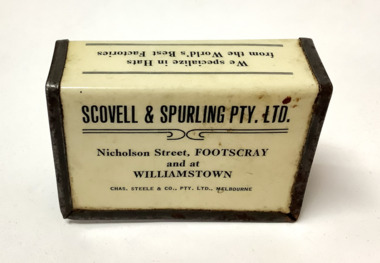
... This match box cover would have been given free to customers of the menswear and tailors firm Spurling and Scovell, who started their business in Footscray in 1906 at the corner of Albert and Barkly Streets. They also had branches in Williamstown at 22 Douglas Parade, and in Bacchus Marsh. ...This match box cover would have been given free to customers of the menswear and tailors firm Spurling and Scovell, who started their business in Footscray in 1906 at the corner of Albert and Barkly Streets. They also had branches in Williamstown at 22 Douglas Parade, and in Bacchus Marsh. ...This match box cover would have been given free to customers of the menswear and tailors firm Spurling and Scovell, who started their business in Footscray in 1906 at the corner of Albert and Barkly Streets. They also had branches in Williamstown at 22 Douglas Parade, and in Bacchus Marsh. Mr Spurling owned and lived in Tudor House in Williamstown. Scovell and Spurling were philanthropists who now have two reserves in Footscray named after them. The date of this cover is uncertain, but possibly around 1920. Metal matchbox or Vesta cover with black type on white background, covered in clear plastic. On one side: "SCOVELL @ SPURLING PTY. LTD./Nicholson Street, FOOTSCRAY/and at/WILLIAMSTOWN/CHAS STEELE & CO., PTY. LTD., MELBOURNE" On reverse side: " "Strike for Safety" and always/be tailored by/SCOVELL & SPURLING PTY. LTD./The "Quality" tailors/PRINTE IN U.S.A." On spine: "We specialize in Hats/from the World's Best Factories" -
 Port Melbourne Historical & Preservation Society
Poster - Lagoon Confectioners, Lagoon Confection
... Albert Park Lake, then called "The Lagoon". The McQuade family operated the business until it was sold in 2024 to Darrell Lea Confectioners. The company occupied the premises 191-193 Graham Street Port Melbourne from 1970 to 2000 then moving to a larger premises in Williamstown....Albert Park Lake, then called "The Lagoon". The McQuade family operated the business until it was sold in 2024 to Darrell Lea Confectioners. The company occupied the premises 191-193 Graham Street Port Melbourne from 1970 to 2000 then moving to a larger premises in Williamstown. ...Lagoon Confectioners was a family business which commenced in c 1929 opposite the Albert Park Lake, then called "The Lagoon". The McQuade family operated the business until it was sold in 2024 to Darrell Lea Confectioners. The company occupied the premises 191-193 Graham Street Port Melbourne from 1970 to 2000 then moving to a larger premises in Williamstown.Digital photo in black and whitebusiness and traders - confectioners, lagoon confectionery pty ltd, bob mcquade, dean mcquade, lorraine mcquade, graham street, built environment - commercial
