
Showing 87 items matching "albury stories"
-
 Wodonga & District Historical Society Inc
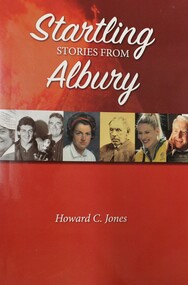
Book - Startling Stories from Albury, Howard C Jones, 2018
... Startling Stories from Albury...Startling Stories from Albury...Albury stories...Albury stories Albury Albury Local heroes Howard Jones’ sequel to ‘Astonishing Tales from Albury’, published in 2018. ...Howard Jones’ sequel to ‘Astonishing Tales from Albury’, published in 2018. More “sad, bad and mad” true stories including local murders, drownings and the scandalous deaths by malnutrition of 23 migrant babies in 1949. Also some bizarre or amusing events such as the bloodiest football grand final in Albury, a sensational divorce case, and some happy stories about local heroes such as Lauren Jackson, Lee Kernaghan and Fr Kevin Flanagan.non-fiction Howard Jones’ sequel to ‘Astonishing Tales from Albury’, published in 2018. More “sad, bad and mad” true stories including local murders, drownings and the scandalous deaths by malnutrition of 23 migrant babies in 1949. Also some bizarre or amusing events such as the bloodiest football grand final in Albury, a sensational divorce case, and some happy stories about local heroes such as Lauren Jackson, Lee Kernaghan and Fr Kevin Flanagan.albury stories, albury, albury local heroes -
 Bendigo Historical Society Inc.
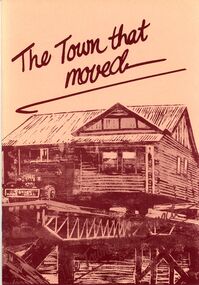
Book - STRAUCH COLLECTION: THE TOWN THAT MOVED
... Soft covered booklet titled The town that moved, the story of Tallangatta 1951 - 1956, 24 page with black and white photographs, printed by Thomsons printing Albury....VICTORIA History tallangatta History-Victoria-Tallangatta Harold Craig Soft covered booklet titled The town that moved, the story of Tallangatta 1951 - 1956, 24 page with black and white photographs, printed by Thomsons printing Albury. ...Soft covered booklet titled The town that moved, the story of Tallangatta 1951 - 1956, 24 page with black and white photographs, printed by Thomsons printing Albury.Harold Craigvictoria, history, tallangatta, history-victoria-tallangatta -
 Bendigo Historical Society Inc.
Document - ROYAL PRINCESS THEATRE COLLECTION: VICTORIAN SYMPHONY ORCHESTRA, c1954
... Albury, Bendigo, Shepparton, for 1954. TAA serves the Nation. Country Club, Tailored by Buckwalter. GMH, The whole story from A to Z. ...Albury, Bendigo, Shepparton, for 1954. TAA serves the Nation. Country Club, Tailored by Buckwalter. GMH, The whole story from A to Z. ...Victorian Symphony Orchestra, Royal Princess Theatre, Bendigo. Direction: Australian Broadcasting Commission. Conducted by Juan Jose Castro. Soloist: Donald Westlake (Clarinet). This series of concerts is arranged by the Australian Broadcasting Commission in Conjunction with the Government of Victoria. Royal Princess Theatre, Bendigo, Thur., 12 Nov. 8 p.m. Programme. Juan Jose Castro. Since he left Australia last November on six months' leave, Mr. Castro has been conducting and holidaying in Europe, and with his wife re-visited South America for the first time in eighteen months. In Italy he corrected the publisher's proofs of his opera, 'Proserpina and the Stranger,' which won the Verdi Prize award by La Scala I 1952, and is now . . . Analytical Notes . . . Personnel of the Orchestra. Conductor: Juan Jose Castro. Associate Conductor: Clive Douglass. First Violins: Bertha Jorgensen (leader), Harry Hutchins (Assistant Leader), Frank Schieblich, Norman Deerson, Paul O'Brien, William Glassford, Ruth Michael, Alex Burlakov. Second Violins: Hyman Lenzer, Robert Pattison, George Paton, Donald Weekes, Marie Bull, Harvey Davis. Violas: Coin Kerr, Mischa Kogan, Marion Ogilvie, Winifred Roberts. Cellos: Don Howley, Henri Touzeau, Valerie Awburn, Ezio Neri. Basses: Guill Fraillon, Frank Cerbasi, Samuel Shiffron. Flutes: Richard Chugg, Leslie Barklamb, Audrey Walklate. Oboes: Jiri Tancibudek, David Woolley. Clarinets: Thomas White, Isobel Carter. Bassoons: Roy White, Gordon Miller, Gordon Grieve, Graham Bickford. Trumpets: Mervyn Simpson, John Geary. Trombones: Stanley Code, John McGade. Bass Trombone: Harold Willis. Tuba: Ron Stevens. Tympani: Gordon Craig. Percussion: Ernest Lighton, Bert Crawford. Harp: Adrian Bendall. Australian Broadcasting Commission; R J F Boyer M.A., Chairman. E R Dawes, Vice-Chairman. Sir John Medley, KT., D.C.L., L.L.D., M.A. P Vanthoff, M.V.O. The Hon. Dame Enid Lyons, G.B.E. J C Stewart, M W O'Donnell, B.E.C. Charles Moses, General Manager. T S Duckmanton, A./Manager for Victoria. Dorrie O'Neil, Concert Manager for Victoria. Photos: Juan Jose Castro, Donald Westlake. Advertisements: Notice to subscribers; Annual General Meeting for Albury, Bendigo, Shepparton, for 1954. TAA serves the Nation. Country Club, Tailored by Buckwalter. GMH, The whole story from A to Z. Carnegie's, 106 Elizabeth St. b/ Victorian Symphony Orchestra, Conducted by Juan Jose Castro, Soloist: Joan Jones (Contralto). This series of concerts is arranged by the Australian Broadcasting Commission in conjunction with the Government of Victoria. Town Hall, Swan Hill. Programme. Juan Jose Castro, (first 4 paragraphs reads as per 4280a). At the end of his 1953 Australian season, Mr. Castro is in conduct concerts in Italy, Paris and London, as well as being re-engaged for Yugo-Slavia, which he visited for the second time last December. With his wife he had the thrill of experiencing . . . Analytical Notes. Personnel of the Orchestra. Conductor: Juan Jose Castro. Associate Conductor: Clive Douglas. First Violins: Bertha Jorgensen (Leader), Harry Hutchins (Assistant Leader), Frank Schieblich, Norman Deerson, Paul O'Brien, William Glasford, Ruth Michael, Alex Burlakov. Second Violins: Hyman Lenzer, Reginald Bradley, Robert Pattison, Donald Weekes, Marie Bull, Harvey Davis Violas: Colin Kerr, Mischa Kogan, Marion Ogilvie, Winifred Roberts. Cellos: Don Howley, Henri Touzeau, Valerie Awburn, Ezio Neri. Basses: Guill Fraillon, Frank Cerbasi, Milinor Morton. Flutes: Richard Chugg, Leslie Barklamb, Audrey Walklate. Oboes: Jiri Tancibudek, David Woolley. Clarinets: Thomas White, Isobel Carter. Bassoons: Thomas Wightman, Noel Hunt. Trumpets: Mervyn Simpson, Standish Roberts. Trombones: Stanley Code, John McGlade. Bass Trombone: Harold Willis, Tuba: Ron Stevens. Tympani: Gordon Craig. Percussion: Ernest Lighton, Bert Crawford. Harp: Adrian Bendall. Australian Broadcasting Commission; committee members. Photos: Juan Jose Castro, Cover. Joan Jones, page 4. Advertisements: QANTAS and B O A C , Qantas Empire Airways LTD. (incorporated I Queensland) in parallel with BRITISH OVERSEAS AIRWAYS CORPORATION. Coming orchestra dates for: Shepparton & Bendigo. Country Club, Tailored by Buckwalter. Carnegie's 'The House of Pianos'.program, theatre, orchestra, a/ victorian symphony orchestra, royal princess theatre, bendigo. direction: australian broadcasting commission. conducted by juan jose castro. soloist: donald westlake (clarinet). this series of concerts is arranged by the australian broadcasting commission in conjunction with the government of victoria. royal princess theatre, bendigo, thur., 12 nov. 8 p.m. programme. juan jose castro. which won the verdi prize award by la scala i 1952, and is now . . . analytical notes . . . orchestra. conductor: juan jose castro. associate conductor: clive douglass. first violins: bertha jorgensen (leader), harry hutchins (assistant leader), frank schieblich, norman deerson, paul o'brien, william glassford, ruth michael, alex burlakov. second violins: hyman lenzer, robert pattison, george paton, donald weekes, marie bull, harvey davis. violas: coin kerr, mischa kogan, marion ogilvie, winifred roberts. cellos: don howley, henri touzeau, valerie awburn, ezio neri. basses: guill fraillon, frank cerbasi, samuel shiffron. flutes: richard chugg, leslie barklamb, audrey walklate. oboes: jiri tancibudek, david woolley. clarinets: thomas white, isobel carter. bassoons: roy white, gordon miller, gordon grieve, graham bickford. trumpets: mervyn simpson, john geary. trombones: stanley code, john mcgade. bass trombone: harold willis. tuba: ron stevens. tympani: gordon craig. percussion: ernest lighton, bert crawford. harp: adrian bendall. australian broadcasting commission; r j f boyer m.a., chairman. e r dawes, vice-chairman. sir john medley, kt., d.c.l., l.l.d., m.a. p vanthoff, m.v.o. the hon. dame enid lyons, g.b.e. j c stewart, m w o'donnell, b.e.c. charles moses, general manager. t s duckmanton, a./manager for victoria. dorrie o'neil, concert manager for victoria. photos: juan jose castro, donald westlake. bendigo, 1954. taa. buckwalter. gmh, the whole story from a to z. carnegie's, 106 elizabeth st. b/ soloist: joan jones (contralto). this series of concerts is arranged by the australian broadcasting commission. town hall. juan jose castro. 1953 australian season, analytical notes. personnel of the orchestra. first violins: second violins: reginald bradley. violas: cellos: don howley, henri touzeau, valerie awburn, ezio neri. basses: guill fraillon, frank cerbasi, milinor morton. flutes:. oboes:. clarinets:, bassoons: thomas wightman, noel hunt. trumpets: standish roberts. trombones:. bass trombone:, tuba:. tympani:. percussion:. harp:. photos: juan jose castro. joan jones, qantas and b o a c , qantas empire airways ltd. british overseas airways corporation: bendigo. country club, buckwalter. carnegie's a/ victorian symphony orchestra, royal princess theatre, bendigo. direction: australian broadcasting commission. conducted by juan jose castro. soloist: donald westlake (clarinet). australian broadcasting commission government of victoria., thur., 12 nov. 8 p.m. juan jose castro. mr. castro has been conducting and holidaying in europe, and with his wife re-visited south america in italy he corrected the publisher's proofs of his opera, 'proserpina and the stranger, ' verdi prize award by la scala i 1952, .associate conductor: clive douglass. first violins: bertha jorgensen (leader), harry hutchins (assistant leader), frank schieblich, norman deerson, paul o'brien, william glassford, ruth michael, alex burlakov. second violins: hyman lenzer, robert pattison, george paton, donald weekes, marie bull, harvey davis. violas: coin kerr, mischa kogan, marion ogilvie, winifred roberts. cellos: don howley, henri touzeau, valerie awburn, ezio neri. basses: guill fraillon, frank cerbasi, samuel shiffron. flutes: richard chugg, leslie barklamb, audrey walklate. oboes: jiri tancibudek, david woolley. clarinets: thomas white, isobel carter. bassoons: roy white, gordon miller, gordon grieve, graham bickford. trumpets: mervyn simpson, john geary. trombones: stanley code, john mcgade. bass trombone: harold willis. tuba: ron stevens. tympani: gordon craig. percussion: ernest lighton, bert crawford. harp: adrian bendall. abccommittee: r j f boyer m.a., chairman. e r dawes, vice-chairman. sir john medley, kt., d.c.l., l.l.d., m.a. p vanthoff, m.v.o. the hon. dame enid lyons, g.b.e. j c stewart, m w o'donnell, b.e.c. charles moses, general manager. t s duckmanton, a./manager for victoria. dorrie o'neil, concert manager for victoria. photos: juan jose castro, donald westlake. advertisements: notice to subscribers; annual general meeting for albury, bendigo, shepparton, for 1954. taa. country club, . gmh, b/ victorian symphony orchestra, conducted by juan jose castro, soloist: joan jones (contralto). at the end of his 1953 australian season, mr. castro is in conduct concerts in italy, paris and london, as well as being re-engaged for yugo-slavia, . analytical notes. personnel of the orchestra. associate conductor: clive douglas. first violins: bertha jorgensen (leader), harry hutchins (assistant leader), frank schieblich, norman deerson, paul o'brien, william glasford, ruth michael, alex burlakov. second violins: hyman lenzer, reginald bradley, robert pattison, donald weekes, marie bull, harvey davis violas: colin kerr, mischa kogan, marion ogilvie, winifred roberts. cellos: don howley, henri touzeau, valerie awburn, ezio neri. basses: guill fraillon, frank cerbasi, milinor morton. flutes: richard chugg, leslie barklamb, audrey walklate. oboes: jiri tancibudek, david woolley. clarinets: thomas white, isobel carter. bassoons: thomas wightman, noel hunt. trumpets: mervyn simpson, standish roberts. trombones: stanley code, john mcglade. bass trombone: harold willis, tuba: ron stevens. tympani: gordon craig. percussion: ernest lighton, bert crawford. harp: adrian bendall. australian broadcasting commission; committee members. photos: juan jose castro, cover. joan jones, page 4. advertisements: qantas and b o a c , qantas empire airways ltd. (incorporated i queensland) in parallel with british overseas airways corporation. coming orchestra dates for: shepparton & bendigo. country club, tailored by buckwalter. carnegie's 'the house of pianos'. -
Lakes Entrance Historical Society
Book, Boyes, Rosemary B.E.M, The Hume Highway Today and Yesterday 1978, 1978
... Stories and photographs illustrating a little of the Hume Highway between Melbourne and Albury...Stories and photographs illustrating a little of the Hume Highway between Melbourne and Albury The Hume Highway Today and Yesterday 1978 Book Boyes, Rosemary B.E.M. ...Stories and photographs illustrating a little of the Hume Highway between Melbourne and AlburyCopy of inscription in Sutherland family history file.roads and streets -
 Wodonga & District Historical Society Inc
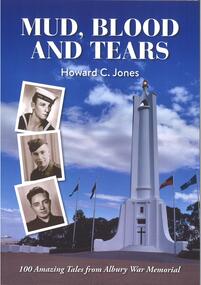
Book - Mud, Blood and Tears, Howard C. Jones, 2025
... A book of 54 pages including photographic images, an index and acknowledgements detailing the stories of 100 service personnel whose names are inscribed on the Albury War Memorial. ...The Albury War Memorial was built by Thomas Bartleson whose eldest son, John Henry Bartleson who was killed in battle in 1916 at Pozieres in France. John’s story ...This book was written to celebrate the 100th anniversary of the Albury War Memorial on Anzac Day 2025. It reveals the real people behind the names of 100 people amongst the 234 names inscribed on the Memorial. Those recognised served their nation in the Boer War, World War I and World War II and Vietnam. The Albury War Memorial was built by Thomas Bartleson whose eldest son, John Henry Bartleson who was killed in battle in 1916 at Pozieres in France. John’s story is one of those captured in this book.A book of 54 pages including photographic images, an index and acknowledgements detailing the stories of 100 service personnel whose names are inscribed on the Albury War Memorial. non-fictionThis book was written to celebrate the 100th anniversary of the Albury War Memorial on Anzac Day 2025. It reveals the real people behind the names of 100 people amongst the 234 names inscribed on the Memorial. Those recognised served their nation in the Boer War, World War I and World War II and Vietnam. The Albury War Memorial was built by Thomas Bartleson whose eldest son, John Henry Bartleson who was killed in battle in 1916 at Pozieres in France. John’s story is one of those captured in this book. albury war memorial, howard c jones, australian military -
 Wodonga & District Historical Society Inc
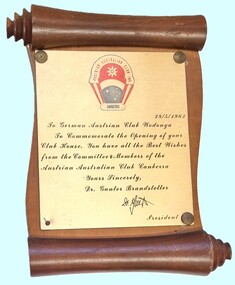
Plaque - German-Austrian Club Wodonga Opening, 1983
... This became reality in July 1979, when the Committee purchased land from the Albury Wodonga Development Corporation at 5 McFarland Road, Wodonga. The first brick was laid on the Club's land in May 1980, and the double-story brick building was completed within 12 months voluntarily by Club members. ...This became reality in July 1979, when the Committee purchased land from the Albury Wodonga Development Corporation at 5 McFarland Road, Wodonga. The first brick was laid on the Club's land in May 1980, and the double-story brick building was completed within 12 months voluntarily by Club members. ...Thousands of German migrants started a new life at Bonegilla, Victoria in the 1950s. Among them were five men who met each other in Wodonga, became friends and decided to form a German Austrian Club, where they could enjoy the company of likeminded individuals. They were Kurt Mueller, Willi Klimt, Toni Krischa and Erwin Klein from Germany and Manfred Teissl from Austria. On the 16th July 1960, after advertising in the Border Morning Mail the German Austrian Club in Wodonga was born. Office bearers were Paul Peters as President. Gerhard Ziermann as Secretary and Günter Schmehl as Treasurer. Their aim was "To promote the upkeep of the German language in written and spoken form and to promote good German fellowship, while enjoying functions of a cultural and entertaining nature". By 1963 the Club boasted 40 members, holding meetings at the RSL Clubrooms and other suitable locations before they found a house in Hovell Street, Wodonga. It was used for meetings, Skat meetings, film nights and Sonnabendschule” or Saturday school where children of members could continue to learn German. The Committee organised a wide range of activities and functions in their small rooms but dreamed of having a bigger home. This became reality in July 1979, when the Committee purchased land from the Albury Wodonga Development Corporation at 5 McFarland Road, Wodonga. The first brick was laid on the Club's land in May 1980, and the double-story brick building was completed within 12 months voluntarily by Club members. At the same time members supported other organisations and charities in the Wodonga and wider community. The first Oktoberfest in Wodonga was held in 1975, drawing 4,000 attendees. The event was organized to promote German culture, and the profits from the first year were donated to the Wodonga District Hospital, raising $20,000. In 2001 the German Austrian Club was presented with the Certificate of Meritorious Service by the Government of Victoria for Community Works in Wodonga and district. The Club raised $23,000 for the Wodonga Hospital, had numerous fundraisers to assist in bushfires and drought situations and was involved in the Red Cross Calling campaign for many years. After much fundraising, hard work and making their way through extensive government red tape, the Club moved to its new premises in McFarland Road on 1st August 1981. The members continued to make necessary internal adjustments and sought an alcohol licence. The building was officially opened in May 1983. The Club prospered and had 300 members, making it necessary for new applicants to be put on a waiting list to be accepted as members. Interest groups formed consisted of Competition Air Rifle Shooting Group, a Skat (German Card game) Group, Folk Dancing Group, Ladies Group, Table Tennis Group, Darts Group, Chess Group and the Billiard Group. In later years, as so many Australians became members, the Club’s name was changed to the German Austrian Australian Club. Over recent years patronage and interest in the Club and its activities changed. Children of the original members had become “real Aussies” and did not always want to carry on traditions. Aging membership and lack of volunteers forced the Club to disband in 2025. The Club building has been gifted to the Albury Wodonga Theatre Company. These items are significant because they are representative of an important cultural organisation which operated in Wodonga for over 60 years.A metal plaque attached to a wooden backing shaped like a scroll. The text is in the form of a letter.Emblem of the Austrian - Australian Clubs Inc. Canberra 28/5/1983 To German Austrian Club Wodonga To Commemorate the Opening of your Club House. You have all the Best Wishes from the Committee & Members of the Austrian Australian Club Canberra Yours Sincerely, Dr. Gunter Brandstetter Presidentgerman austrian australian club, german migrants wodonga -
 Wodonga & District Historical Society Inc
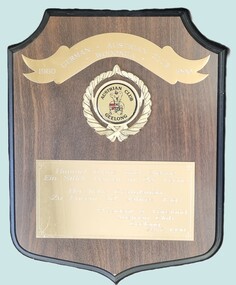
Plaque - German-Austrian Club Wodonga 30th Anniversary, 1990
... This became reality in July 1979, when the Committee purchased land from the Albury Wodonga Development Corporation at 5 McFarland Road, Wodonga. The first brick was laid on the Club's land in May 1980, and the double-story brick building was completed within 12 months voluntarily by Club members. ...This became reality in July 1979, when the Committee purchased land from the Albury Wodonga Development Corporation at 5 McFarland Road, Wodonga. The first brick was laid on the Club's land in May 1980, and the double-story brick building was completed within 12 months voluntarily by Club members. ...Thousands of German migrants started a new life at Bonegilla, Victoria in the 1950s. Among them were five men who met each other in Wodonga, became friends and decided to form a German Austrian Club, where they could enjoy the company of likeminded individuals. They were Kurt Mueller, Willi Klimt, Toni Krischa and Erwin Klein from Germany and Manfred Teissl from Austria. On the 16th July 1960, after advertising in the Border Morning Mail the German Austrian Club in Wodonga was born. Office bearers were Paul Peters as President. Gerhard Ziermann as Secretary and Günter Schmehl as Treasurer. Their aim was "To promote the upkeep of the German language in written and spoken form and to promote good German fellowship, while enjoying functions of a cultural and entertaining nature". By 1963 the Club boasted 40 members, holding meetings at the RSL Clubrooms and other suitable locations before they found a house in Hovell Street, Wodonga. It was used for meetings, Skat meetings, film nights and Sonnabendschule” or Saturday school where children of members could continue to learn German. The Committee organised a wide range of activities and functions in their small rooms but dreamed of having a bigger home. This became reality in July 1979, when the Committee purchased land from the Albury Wodonga Development Corporation at 5 McFarland Road, Wodonga. The first brick was laid on the Club's land in May 1980, and the double-story brick building was completed within 12 months voluntarily by Club members. At the same time members supported other organisations and charities in the Wodonga and wider community. The first Oktoberfest in Wodonga was held in 1975, drawing 4,000 attendees. The event was organized to promote German culture, and the profits from the first year were donated to the Wodonga District Hospital, raising $20,000. In 2001 the German Austrian Club was presented with the Certificate of Meritorious Service by the Government of Victoria for Community Works in Wodonga and district. The Club raised $23,000 for the Wodonga Hospital, had numerous fundraisers to assist in bushfires and drought situations and was involved in the Red Cross Calling campaign for many years. After much fundraising, hard work and making their way through extensive government red tape, the Club moved to its new premises in McFarland Road on 1st August 1981. The members continued to make necessary internal adjustments and sought an alcohol licence. The building was officially opened in May 1983. The Club prospered and had 300 members, making it necessary for new applicants to be put on a waiting list to be accepted as members. Interest groups formed consisted of Competition Air Rifle Shooting Group, a Skat (German Card game) Group, Folk Dancing Group, Ladies Group, Table Tennis Group, Darts Group, Chess Group and the Billiard Group. In later years, as so many Australians became members, the Club’s name was changed to the German Austrian Australian Club. Over recent years patronage and interest in the Club and its activities changed. Children of the original members had become “real Aussies” and did not always want to carry on traditions. Aging membership and lack of volunteers forced the Club to disband in 2025. The Club building has been gifted to the Albury Wodonga Theatre Company.This item is significant because it is representative of an important cultural organisation which operated in Wodonga for over 60 years.A wooden plaque with metal insignia and a plate with text in German. This plaque was presented by the German Austrian Club of Geelong on the occasion of the 30th Anniversary of the Wodonga Club and bears its insignia.Himmel Glanz und Sterne Ein Stuck Heimat in Der Fern Herzliche Gratulation Zu Eurem 30 Jahres Tag President and Vorstand Translation Sky, splendour and stars A piece of home away from home Congratulations On your 30th anniversary President and Board of Directorsgerman austrian australian club, german migrants wodonga -
 Wodonga & District Historical Society Inc
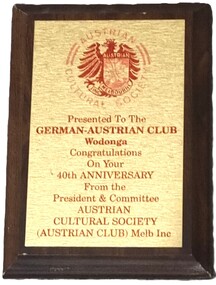
Plaque - German-Austrian Club Wodonga 40th Anniversary, 2000
... This became reality in July 1979, when the Committee purchased land from the Albury Wodonga Development Corporation at 5 McFarland Road, Wodonga. The first brick was laid on the Club's land in May 1980, and the double-story brick building was completed within 12 months voluntarily by Club members. ...This became reality in July 1979, when the Committee purchased land from the Albury Wodonga Development Corporation at 5 McFarland Road, Wodonga. The first brick was laid on the Club's land in May 1980, and the double-story brick building was completed within 12 months voluntarily by Club members. ...Thousands of German migrants started a new life at Bonegilla, Victoria in the 1950s. Among them were five men who met each other in Wodonga, became friends and decided to form a German Austrian Club, where they could enjoy the company of likeminded individuals. They were Kurt Mueller, Willi Klimt, Toni Krischa and Erwin Klein from Germany and Manfred Teissl from Austria. On the 16th July 1960, after advertising in the Border Morning Mail the German Austrian Club in Wodonga was born. Office bearers were Paul Peters as President. Gerhard Ziermann as Secretary and Günter Schmehl as Treasurer. Their aim was "To promote the upkeep of the German language in written and spoken form and to promote good German fellowship, while enjoying functions of a cultural and entertaining nature". By 1963 the Club boasted 40 members, holding meetings at the RSL Clubrooms and other suitable locations before they found a house in Hovell Street, Wodonga. It was used for meetings, Skat meetings, film nights and Sonnabendschule” or Saturday school where children of members could continue to learn German. The Committee organised a wide range of activities and functions in their small rooms but dreamed of having a bigger home. This became reality in July 1979, when the Committee purchased land from the Albury Wodonga Development Corporation at 5 McFarland Road, Wodonga. The first brick was laid on the Club's land in May 1980, and the double-story brick building was completed within 12 months voluntarily by Club members. At the same time members supported other organisations and charities in the Wodonga and wider community. The first Oktoberfest in Wodonga was held in 1975, drawing 4,000 attendees. The event was organized to promote German culture, and the profits from the first year were donated to the Wodonga District Hospital, raising $20,000. In 2001 the German Austrian Club was presented with the Certificate of Meritorious Service by the Government of Victoria for Community Works in Wodonga and district. The Club raised $23,000 for the Wodonga Hospital, had numerous fundraisers to assist in bushfires and drought situations and was involved in the Red Cross Calling campaign for many years. After much fundraising, hard work and making their way through extensive government red tape, the Club moved to its new premises in McFarland Road on 1st August 1981. The members continued to make necessary internal adjustments and sought an alcohol licence. The building was officially opened in May 1983. The Club prospered and had 300 members, making it necessary for new applicants to be put on a waiting list to be accepted as members. Interest groups formed consisted of Competition Air Rifle Shooting Group, a Skat (German Card game) Group, Folk Dancing Group, Ladies Group, Table Tennis Group, Darts Group, Chess Group and the Billiard Group. In later years, as so many Australians became members, the Club’s name was changed to the German Austrian Australian Club. Over recent years patronage and interest in the Club and its activities changed. Children of the original members had become “real Aussies” and did not always want to carry on traditions. Aging membership and lack of volunteers forced the Club to disband in 2025. The Club building has been gifted to the Albury Wodonga Theatre Company.This item is significant because it is representative of an important cultural organisation which operated in Wodonga for over 60 years.A small metal plaque on a wooden backing with red text. It includes the insignia of the Austrian Cultural Society of Melbourne.Presented To The GERMAN-AUSTRIAN CLUB Wodonga Congratulations On Your 40th ANNIVERSARY From the President & Committee AUSTRIAN CULTURAL SOCIETY (AUSTRIAN CLUB) Melb Incgerman austrian australian club, german migrants wodonga -
 Wodonga & District Historical Society Inc
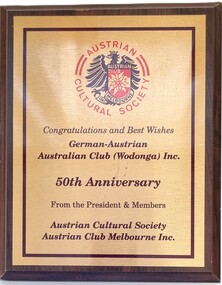
Plaque - German-Austrian Club Wodonga 50th Anniversary, 2010
... This became reality in July 1979, when the Committee purchased land from the Albury Wodonga Development Corporation at 5 McFarland Road, Wodonga. The first brick was laid on the Club's land in May 1980, and the double-story brick building was completed within 12 months voluntarily by Club members. ...This became reality in July 1979, when the Committee purchased land from the Albury Wodonga Development Corporation at 5 McFarland Road, Wodonga. The first brick was laid on the Club's land in May 1980, and the double-story brick building was completed within 12 months voluntarily by Club members. ...Thousands of German migrants started a new life at Bonegilla, Victoria in the 1950s. Among them were five men who met each other in Wodonga, became friends and decided to form a German Austrian Club, where they could enjoy the company of likeminded individuals. They were Kurt Mueller, Willi Klimt, Toni Krischa and Erwin Klein from Germany and Manfred Teissl from Austria. On the 16th July 1960, after advertising in the Border Morning Mail the German Austrian Club in Wodonga was born. Office bearers were Paul Peters as President. Gerhard Ziermann as Secretary and Günter Schmehl as Treasurer. Their aim was "To promote the upkeep of the German language in written and spoken form and to promote good German fellowship, while enjoying functions of a cultural and entertaining nature". By 1963 the Club boasted 40 members, holding meetings at the RSL Clubrooms and other suitable locations before they found a house in Hovell Street, Wodonga. It was used for meetings, Skat meetings, film nights and Sonnabendschule” or Saturday school where children of members could continue to learn German. The Committee organised a wide range of activities and functions in their small rooms but dreamed of having a bigger home. This became reality in July 1979, when the Committee purchased land from the Albury Wodonga Development Corporation at 5 McFarland Road, Wodonga. The first brick was laid on the Club's land in May 1980, and the double-story brick building was completed within 12 months voluntarily by Club members. At the same time members supported other organisations and charities in the Wodonga and wider community. The first Oktoberfest in Wodonga was held in 1975, drawing 4,000 attendees. The event was organized to promote German culture, and the profits from the first year were donated to the Wodonga District Hospital, raising $20,000. In 2001 the German Austrian Club was presented with the Certificate of Meritorious Service by the Government of Victoria for Community Works in Wodonga and district. The Club raised $23,000 for the Wodonga Hospital, had numerous fundraisers to assist in bushfires and drought situations and was involved in the Red Cross Calling campaign for many years. After much fundraising, hard work and making their way through extensive government red tape, the Club moved to its new premises in McFarland Road on 1st August 1981. The members continued to make necessary internal adjustments and sought an alcohol licence. The building was officially opened in May 1983. The Club prospered and had 300 members, making it necessary for new applicants to be put on a waiting list to be accepted as members. Interest groups formed consisted of Competition Air Rifle Shooting Group, a Skat (German Card game) Group, Folk Dancing Group, Ladies Group, Table Tennis Group, Darts Group, Chess Group and the Billiard Group. In later years, as so many Australians became members, the Club’s name was changed to the German Austrian Australian Club. Over recent years patronage and interest in the Club and its activities changed. Children of the original members had become “real Aussies” and did not always want to carry on traditions. Aging membership and lack of volunteers forced the Club to disband in 2025. The Club building has been gifted to the Albury Wodonga Theatre Company.This item is significant because it is representative of an important cultural organisation which operated in Wodonga for over 60 years.A small metal plaque on a wooden backing with red text. It includes the insignia of the Austrian Cultural Society of Melbourne.Congratulations and Best Wishes German-Austrian Australian Club (Wodonga) Inc. 50th Anniversary From the President & Members Austrian Cultural Society Austrian Club Melbourne Inc.german austrian australian club, german migrants wodonga -
 Wodonga & District Historical Society Inc
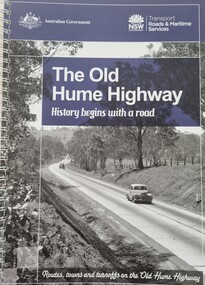
Book - The Old Hume Highway - History begins with a Road, 2014
... Albury-Wodonga bypass was opened in 2007 and in 2013 the final section, the Holbrook Bypass in NSW, was opened to traffic on August 7, completing the full Sydney-Melbourne dual carriageway link. In the course of this gigantic engineering achievement, many small, historic towns throughout Victoria and New South Wales were bypassed and often forgotten by passing commuters in a rush to reach their destination. This publication includes maps and information about the sites and landmarks in these towns. It encourages travellers to venture of the modern highway and rediscover the Old Hume Highway and the stories ...The Hume Highway was officially named in 1928, when both the New South Wales and Victorian governments agreed to give the unified inland route between Sydney and Melbourne the name, honouring explorer Hamilton Hume who, with William Hovell, first found the overland path in 1824. Much of the original highway followed their overland route wherever the landscape allowed. The road connected many small communities and rural properties, although in many parts was narrow and unsurfaced. Over the following years alterations and some deviations occurred with changing transport needs and heavier traffic loads. One of these deviations was completed in 1933 at Table Top north of Albury between Ettamogah and Mullengandra due to the construction of the Hume Weir which flooded the existing highway. Gradually sections of the road were converted to a dual carriageway. In 1961 the first modern freeway-standard, four-lane section was completed in Victoria at Craigieburn. The Hume Highway was also rerouted in Albury to avoid the town centre. Many major bypasses and duplications in New South Wales were completed throughout the 1980s and 1990s. In 1994 the last section of the Hume Highway in Victoria was duplicated with the completion of the Wangaratta bypass. The Albury-Wodonga bypass was opened in 2007 and in 2013 the final section, the Holbrook Bypass in NSW, was opened to traffic on August 7, completing the full Sydney-Melbourne dual carriageway link. In the course of this gigantic engineering achievement, many small, historic towns throughout Victoria and New South Wales were bypassed and often forgotten by passing commuters in a rush to reach their destination. This publication includes maps and information about the sites and landmarks in these towns. It encourages travellers to venture of the modern highway and rediscover the Old Hume Highway and the stories it holds about out past.A spiral bound volume of 122 pages including maps, photographs and illustrations prepared as a travel guide to the Old Hume Highway. It includes a Foreword by Peter FitzSimons.The Hume Highway was officially named in 1928, when both the New South Wales and Victorian governments agreed to give the unified inland route between Sydney and Melbourne the name, honouring explorer Hamilton Hume who, with William Hovell, first found the overland path in 1824. Much of the original highway followed their overland route wherever the landscape allowed. The road connected many small communities and rural properties, although in many parts was narrow and unsurfaced. Over the following years alterations and some deviations occurred with changing transport needs and heavier traffic loads. One of these deviations was completed in 1933 at Table Top north of Albury between Ettamogah and Mullengandra due to the construction of the Hume Weir which flooded the existing highway. Gradually sections of the road were converted to a dual carriageway. In 1961 the first modern freeway-standard, four-lane section was completed in Victoria at Craigieburn. The Hume Highway was also rerouted in Albury to avoid the town centre. Many major bypasses and duplications in New South Wales were completed throughout the 1980s and 1990s. In 1994 the last section of the Hume Highway in Victoria was duplicated with the completion of the Wangaratta bypass. The Albury-Wodonga bypass was opened in 2007 and in 2013 the final section, the Holbrook Bypass in NSW, was opened to traffic on August 7, completing the full Sydney-Melbourne dual carriageway link. In the course of this gigantic engineering achievement, many small, historic towns throughout Victoria and New South Wales were bypassed and often forgotten by passing commuters in a rush to reach their destination. This publication includes maps and information about the sites and landmarks in these towns. It encourages travellers to venture of the modern highway and rediscover the Old Hume Highway and the stories it holds about out past.old hume highway, hume highway, travel guide hume highway, \ -
 National Communication Museum
Document - Telegram, 24/10/1934
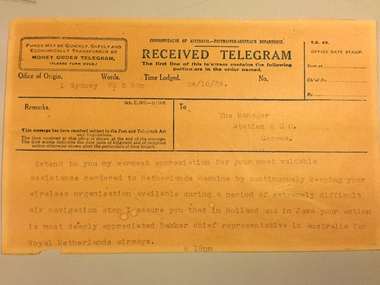
... Albury" in Morse code using the town's street lights. Local ABC Radio station 2CO also made a call for locals to light up a makeshift landing strip for the plane at the town's racecourse. The plane landed safely and the next morning with the help of the townspeople who pulled it out of the mud, took off and finished the race in second place. The story ...This telegram was sent from the Royal Netherlands Airways, Sydney, to the manager of ABC Radio Station 2CO, Corowa, New South Wales. This telegram relates to the 1934 London to Melbourne Air Race. The telegram records the Royal Netherlands Airways' thanks to ABC Radio 2CO radio staff for their efforts in broadcasting an emergency message to the residents of Albury after the Dutch airliner ‘Uiver’ became lost at night in bad weather. As requested local radio listeners drove their cars to the Albury racecourse and illuminated an emergency landing ground using their vehicle headlights. This allowed the lost airliner to land safely.This item relates to the London to Melbourne Air Race of 1934, a significant event that shaped Australia's history as it proved travelling to and from Australia could be done within a reasonable time by air, thereby making the country less isolated. Up to that time Australia was three weeks away from Europe by steam ship. The Air Race was dreamt up by the Lord Mayor of Melbourne, Harold Smith, to commemorate the centenary of Victoria's statehood and was sponsored by the Melbourne chocolate manufacturer Sir MacPherson Robertson. The Royal Netherlands Airways entered a Douglas DC2 plane 'Uiver' - the largest aircraft in the race, and the only one to carry passengers as well as crew, to show that a commercial passenger service to Australia was possible. But in the last leg of the race, the Uiver lost its way in an electrical storm over the Riverina town of Albury. Several communication methods were used to land the plane safely, including the signalling of the word "Albury" in Morse code using the town's street lights. Local ABC Radio station 2CO also made a call for locals to light up a makeshift landing strip for the plane at the town's racecourse. The plane landed safely and the next morning with the help of the townspeople who pulled it out of the mud, took off and finished the race in second place. The story of the Uiver points to the importance of communication in its various forms: two-way and broadcast radio, Morse, and light signals. The survival of the Uiver is a reflection of the ingenuity of Australian communications and the solutions that can be found through the sharing of ideas of information. The landing of the Uiver was an important moment in Albury's social history, as residents participated in the rescue of the plane and its passengers, helping the Uiver to continue on its journey and finish second in the Race. When the Uiver crashed in the Syrian Desert in December 1934, Albury residents contributed to a memorial which honoured those who were killed. Beige paper telegram printed with black ink and overwritten with typewriter. Telegram split into sections designating details of the telegram, details of the recipient and a space for the transmitted message. A small section of paper is missing from bottom left corner."Extend to you my warmest appreciation for your most valuable / assistance rendered to Netherlands machine by continuously keeping your / wireless organisation available during a period of extremely difficult / air navigation stop I assure you that in Holland and in Java your action / is most deeply appreciated Bakker chief representative in Australia for / Royal Netherlands airways. / 6 18pm"telegrams, telegraphic messages, communications, radio, uiver, royal netherlands airways, albury, london to melbourne air race, morse code -
 Wodonga & District Historical Society Inc
Photograph - Holloways Building Supplies
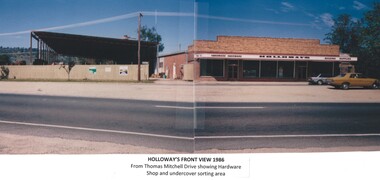
... Albury in 2013. In 2014 the lease land was sold to two local businesses. Leigh Martin Marine purchased the parcel of land adjoining their business. Lester and Son purchased the remaining block and demolished the premises. A funeral parlour was built on that site. These photos are significant because they document the story ...Eric Holloway began spot milling timber at age of 17. He borrowed fifty pound from an uncle in 1934 to purchase a McCormick Deering tractor and saw bench. He went from farm to farm cutting timber for farmers. For a time, he worked on Shelley Station spot milling with WS Walker and Son. In approximately 1946 Arthur and Eric Holloway established a saw mill at Shelley. Another brother Ernie, a builder and returned soldier, worked with them from time to time. Using timber sawn in the mill he built eight basic houses for the mill workers. The brothers employed many migrants: - Yugoslav, Czechs, Russians, Ukrainians, Serbs as well as other hardworking people. This meant there were families, so Ernie also built and furnished a school at Shelley. Application was made for a teacher from the Education Department. At the Shelley mill the workers used ex-army blitzes, GM trucks (for carting logs) army ducks and a centurion tank for parts. The timber from the mill was trucked to Albury and Wodonga, customers being FA Stowe and Mates Timber. The army was also a big customer with Holloways supplying timber for the army huts that were built at Bandiana. A timber mill that had been built at Tallangatta by State Rivers and Water for the purpose of establishing New Tallangatta, was purchased by Holloway Brothers as an extension of their Shelley operation. In 1954 a new mill was built at Granite Flat on the Omeo Highway and the Shelley operation closed. Ernie Holloway was involved in the building of the mill and accommodation houses in Mitta Mitta. The mill workers travelled from Mitta to work each day. Holloways Building Supplies was established at 49 Tallangatta Rd Wodonga at this time. It was established on four house blocks with a little shed, with more land being acquired as the operation expanded. The brothers realized that it would be more profitable to set up their own timber outlet to supply their customers. Arthur Holloway continued to run the sawmills while Eric Holloway concentrated on the Wodonga business. A hardware store, offices and joinery were built as demand continued for building materials. All the timber arriving in the yard from the mill was hand sorted, providing employment for many. With the milling and timber outlets Holloways provided employment for approximately forty staff. The next generation of the Holloway family became involved. A Hyster forklift was purchased which allowed for bulk handling of the timber. Land was purchased in Sanyo Drive where timber was cleated and dried. Select grade timber, F17 dry framing, builders hardware and tools were sold. Holloways endeavoured to be a one stop shop for framing and fitting out of houses. In 1989 the business was sold to Mt Beauty Timbers who later on sold to Dahlsens. The timber mill was decommissioned. The Holloway family retained the ownership of the premises of 49 Thomas Mitchell Drive leasing to Dahlsens until that operation was moved to Albury in 2013. In 2014 the lease land was sold to two local businesses. Leigh Martin Marine purchased the parcel of land adjoining their business. Lester and Son purchased the remaining block and demolished the premises. A funeral parlour was built on that site.These photos are significant because they document the story of an important Wodonga business.A series of coloured photographs depicting aspects of Holloways Building Supplies business in Wodonga.holloways wodonga, wodonga businesses, timber industry -
 Wodonga & District Historical Society Inc
Booklet - Overland to Port Phillip Bay Journey South West, Rosemary Boyes
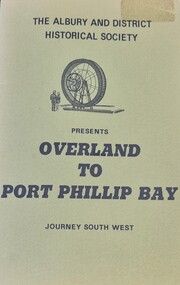
... Hume and Hovell Australian exploration Australia - Exploration and settlement This publication examines the story of the epic journey of exploration by Hume and Hovell, with their party, from October to December, 1824. A small green covered booklet produced by the Albury and District Historical Society. ...This publication examines the story of the epic journey of exploration by Hume and Hovell, with their party, from October to December, 1824.A small green covered booklet produced by the Albury and District Historical Society. Printed in black ink.This publication examines the story of the epic journey of exploration by Hume and Hovell, with their party, from October to December, 1824. hume and hovell, australian exploration, australia - exploration and settlement -
 Wodonga & District Historical Society Inc
Book - History of Postal Services in Victoria, Christine Gibbs, 1984
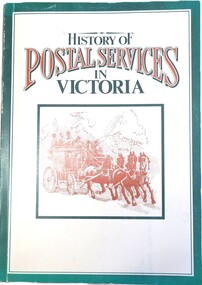
... story of Victorian postal services starting with the appointment of Melbourne's first official Postmaster Mr E J Foster on 13th April 1837. This position changed hands frequently and by 1851 Victoria's 8th Postmaster Alexander McCrae held the position. The construction of one of Melbourne's oldest landmarks began in three stages beginning in 1859 and was completed in 1867. The book includes developments in the mail service including by sea and overland by horseback and Cobb and Co. coaches. The mail coach contractors on the Melbourne to Albury ...This booklet was produced for Victoria's sesquicentenary celebrations. It tells the story of Victorian postal services starting with the appointment of Melbourne's first official Postmaster Mr E J Foster on 13th April 1837. This position changed hands frequently and by 1851 Victoria's 8th Postmaster Alexander McCrae held the position. The construction of one of Melbourne's oldest landmarks began in three stages beginning in 1859 and was completed in 1867. The book includes developments in the mail service including by sea and overland by horseback and Cobb and Co. coaches. The mail coach contractors on the Melbourne to Albury route in 1854 was George Foster followed in 1856 by Patrick Mulcare. Other chapters in this publication include transporting the mail by rail and air as well as details about a small number of post offices and people who dedicated themselves to ensuring the mail reached its destination safely.A small book of 125 pages containing information, photographic images and sketches. The book is printed on buff coloured paper with a green trim around the front cover. It also includes a comprehensive bibliography. The cover features a sketch of a Cobb & Co. Coach.This booklet was produced for Victoria's sesquicentenary celebrations. It tells the story of Victorian postal services starting with the appointment of Melbourne's first official Postmaster Mr E J Foster on 13th April 1837. This position changed hands frequently and by 1851 Victoria's 8th Postmaster Alexander McCrae held the position. The construction of one of Melbourne's oldest landmarks began in three stages beginning in 1859 and was completed in 1867. The book includes developments in the mail service including by sea and overland by horseback and Cobb and Co. coaches. The mail coach contractors on the Melbourne to Albury route in 1854 was George Foster followed in 1856 by Patrick Mulcare. Other chapters in this publication include transporting the mail by rail and air as well as details about a small number of post offices and people who dedicated themselves to ensuring the mail reached its destination safely.victorian postal service, australia post history -
 Wodonga & District Historical Society Inc
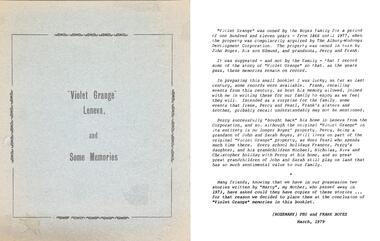
Booklet - Collection of Local History Booklets, Rosemary Boyes B.E.M
... Albury - Murray River to Botanic Gardens 3. The Hume Highway - A potpourri of Stories and Scenes, Today and Yesterday 4. ...Albury - Murray River to Botanic Gardens 3. The Hume Highway - A potpourri of Stories and Scenes, Today and Yesterday 4. ...In 1976 Rosemary Boyes was awarded the British Empire Medal for services to Australian History. She was the author of more than 20 publications about local and national historical events. From 1970 to 1981, writing as Mrs Frank Boyes, she contributed a regular column to the Wodonga/Albury Express newspaper. Rosemary was a Founder Member of the Albury & District Historical Society in 1961, a Life Member of Wodonga & District Historical Society and also a Life Member of the Wodonga RSL Sub-Branch. She and her husband, Frank, a veteran of the Kokoda Trail, farmed at Leneva before moving to Albury and then to Frankston. Rosemary Boyes died in September 1991.A collection of small paper back booklets on a range of topics related to Albury and Wodonga history. Their titles are:- 1. "Violet Grange Leneva" and its History 2. Albury - Murray River to Botanic Gardens 3. The Hume Highway - A potpourri of Stories and Scenes, Today and Yesterday 4. The Hume Monument - Albury NSW 5. Remembering Robert BrownIn 1976 Rosemary Boyes was awarded the British Empire Medal for services to Australian History. She was the author of more than 20 publications about local and national historical events. From 1970 to 1981, writing as Mrs Frank Boyes, she contributed a regular column to the Wodonga/Albury Express newspaper. Rosemary was a Founder Member of the Albury & District Historical Society in 1961, a Life Member of Wodonga & District Historical Society and also a Life Member of the Wodonga RSL Sub-Branch. She and her husband, Frank, a veteran of the Kokoda Trail, farmed at Leneva before moving to Albury and then to Frankston. Rosemary Boyes died in September 1991. australian history, rosemary boyes bem -
 Wodonga & District Historical Society Inc
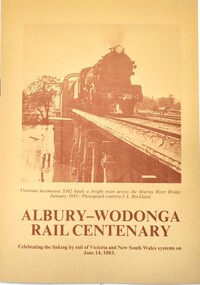
Programme - Albury-Wodonga Rail Centenary Celebrations, VicRail Public Relations Division, 1983
... It gives a brief history of the stages and stories surrounding the linking of the lines and the events which occurred in 1883. It also contains a programme of activities held in Albury and Wodonga as part of the celebrations a century later. ...This item was written for the celebration of the centenary of the linking by rail of Victoria and New South Wales systems on June 14, 1883. It gives a brief history of the stages and stories surrounding the linking of the lines and the events which occurred in 1883. It also contains a programme of activities held in Albury and Wodonga as part of the celebrations a century later.An 8 page leaflet printed on buff coloured paper with brown print. It includes 3 photos and an itinerary for the celebrations.fiction This item was written for the celebration of the centenary of the linking by rail of Victoria and New South Wales systems on June 14, 1883. It gives a brief history of the stages and stories surrounding the linking of the lines and the events which occurred in 1883. It also contains a programme of activities held in Albury and Wodonga as part of the celebrations a century later.vline safety, vline training, railways victoria -
 Wodonga & District Historical Society Inc
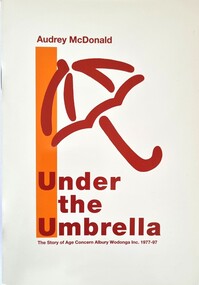
Booklet - Under the Umbrella - The Story of Age Concern Albury Wodonga Inc, Audrey McDonald, 1996
... Under the Umbrella - The Story of Age Concern Albury Wodonga Inc....Under the Umbrella - The Story of Age Concern Albury Wodonga Inc....A small booklet of 70 pages including photos, interviews and text outlining the history of "Age Concern Albury Wodonga. Under the Umbrella - The Story of Age Concern Albury Wodonga Inc. ...This book outlines the history and development of "Age Concern Albury Wodonga Inc." a not for profit organisation that operates in the Albury Wodonga area with some services provided operating across The Riverina Murray region. It provides services and social activities for frail aged people or people with disabilities and their carers. The objective of Age Concern is to lessen the mental and physical stress of growing older by advocating preparation and education of people approaching retirement as well as encouraging the provision of services within the community designed to improve the physical, mental and social well being of the aged.A small booklet of 70 pages including photos, interviews and text outlining the history of "Age Concern Albury Wodonga.non-fictionThis book outlines the history and development of "Age Concern Albury Wodonga Inc." a not for profit organisation that operates in the Albury Wodonga area with some services provided operating across The Riverina Murray region. It provides services and social activities for frail aged people or people with disabilities and their carers. The objective of Age Concern is to lessen the mental and physical stress of growing older by advocating preparation and education of people approaching retirement as well as encouraging the provision of services within the community designed to improve the physical, mental and social well being of the aged.aged concern albury wodonga, aged care, aged care services albury wodonga -
 Wodonga & District Historical Society Inc
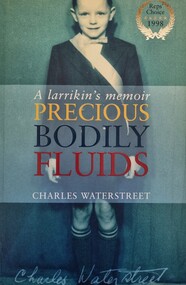
Book - Precious Bodily Fluids: A Larrikan's Memoir, Charles Waterstreet, 1998
... This novel shares reminiscence of childhood in the Albury Wodonga district in the 1960s Albury NSW Social Conditions Albury 1960s This publication tells the story of the battle to introduce fluoridation to eh water supply of Albury in New South Wales. ...This publication tells the story of the battle to introduce fluoridation to eh water supply of Albury in New South Wales. The events are described through the eyes of the author, Charles Wallstreet wo was a11 years old when the battle raged.A publication of 262 pages. Soft cover includes images with the synopsis published on the back. The inside cover includes a map of the Albury district .non-fictionThis publication tells the story of the battle to introduce fluoridation to eh water supply of Albury in New South Wales. The events are described through the eyes of the author, Charles Wallstreet wo was a11 years old when the battle raged. albury nsw social conditions, albury 1960s -
 Wodonga & District Historical Society Inc
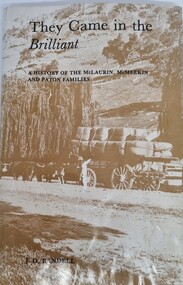
Book - They Came in the Brilliant, J. O. Randell, 1983
... Many descendants of these families made their way to Northeast Victoria and established themselves in Albury and the Upper Murray district of Victoria. This publication tells their stories. ...This publication gives a detailed history of the McLaurin, McMeekin and Paton Families who settled in Northeast Victoria.The migrated to Australia aboard the Bounty Scheme ship Brilliant under the command of Captain Gilkison. The voyage departed from Tobermory, Isle of Mull, on 27th September 1837 and arrived in Sydney on 20th January 1838. The voyage that the original intention had been to send the Brilliant to Van Diemen's Land (Tasmania), but because of reports of poor prospects for immigrants there the ship had been sent to Sydney instead. Many descendants of these families made their way to Northeast Victoria and established themselves in Albury and the Upper Murray district of Victoria. This publication tells their stories.This publication gives a detailed history of the McLaurin, McMeekin and Paton Families who settled in Northeast Victoria.The migrated to Australia aboard the Bounty Scheme ship Brilliant under the command of Captain Gilkison. The voyage departed from Tobermory, Isle of Mull, on 27th September 1837 and arrived in Sydney on 20th January 1838. The voyage that the original intention had been to send the Brilliant to Van Diemen's Land (Tasmania), but because of reports of poor prospects for immigrants there the ship had been sent to Sydney instead. Many descendants of these families made their way to Northeast Victoria and established themselves in Albury and the Upper Murray district of Victoria. This publication tells their stories.pioneers in northeast victoria, scottish migration, migration upper murray -
 Wodonga & District Historical Society Inc
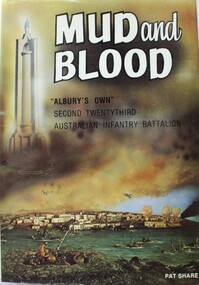
Book - MUD AND BLOOD: Albury's Own 23rd Australian Infantry Battalion, Pat Share, 1978
... Albury's Own". This was accepted on its behalf by the commanding officer. The men of the 2/23 rd Battalion served with honour in the Middle East, including at the Siege of Tobruk and El Alamein. After returning to Queensland for training in jungle warfare conditions, they were then deployed to New Guinea and Tarakan. This book tells the story ...The 2/23rd Infantry Battalion was raised at the Albury Showgrounds in New South Wales in June 1940, as part of the 26th Brigade. Initially the brigade belonged to the 7th Division but in early 1941 moved to the 9th Division. The need for larger quarters saw the battalion transferring to a new camp at Bonegilla to complete their training before sailing for the Middle East in November. Most of those enlisted in this Battalion were volunteers from the Albury Wodonga area and an Aldermen of Albury expressed the wish that the unit be given the title of "Albury's Own". This was accepted on its behalf by the commanding officer. The men of the 2/23 rd Battalion served with honour in the Middle East, including at the Siege of Tobruk and El Alamein. After returning to Queensland for training in jungle warfare conditions, they were then deployed to New Guinea and Tarakan. This book tells the story of the service and brotherhood demonstrated by the men of "Albury's Own." Written and composed by officers and men of the 2/23 Battalion, A.I.F. 9th Division, while on active service, Palestine, Tobruk, Syria and El Alamein.non-fictionThe 2/23rd Infantry Battalion was raised at the Albury Showgrounds in New South Wales in June 1940, as part of the 26th Brigade. Initially the brigade belonged to the 7th Division but in early 1941 moved to the 9th Division. The need for larger quarters saw the battalion transferring to a new camp at Bonegilla to complete their training before sailing for the Middle East in November. Most of those enlisted in this Battalion were volunteers from the Albury Wodonga area and an Aldermen of Albury expressed the wish that the unit be given the title of "Albury's Own". This was accepted on its behalf by the commanding officer. The men of the 2/23 rd Battalion served with honour in the Middle East, including at the Siege of Tobruk and El Alamein. After returning to Queensland for training in jungle warfare conditions, they were then deployed to New Guinea and Tarakan. This book tells the story of the service and brotherhood demonstrated by the men of "Albury's Own." Written and composed by officers and men of the 2/23 Battalion, A.I.F. 9th Division, while on active service, Palestine, Tobruk, Syria and El Alamein.world war 11, rats of tobruk, tobruk -
 Wodonga & District Historical Society Inc
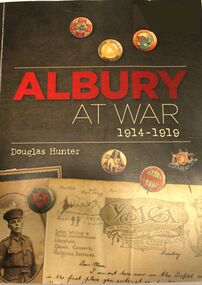
Book - Albury at War 1914 - 1919, Douglas Hunter, Published 2015
... Impact of World War 1 Albury Soldiers WW1 Albury WW1 Participation Albury This publication tells the story of the men and women from Albury and district who served in the Great War of 1914 to 1919. ...This publication tells the story of the men and women from Albury and district who served in the Great War of 1914 to 1919. It tells of those who served on the battlefield, but also those who supported and sustained them from home whilst maintaining the community of Albury. As indicated on the back cover, the author Lieutenant Colonel Douglas Hunter had a long military service and connection with Albury Wodonga. He was awarded the Medal of the Order of Australia in 2009 for services to military history. The book was based on research carried out with the assistance of members of the Albury and DIstrict Historical Society. It included a forward by Councillor Kevin Mack, Mayor of the City of Albury (2015).A publication of 156 pages including text, illustrations, facsimiles and portraits. It also includes bibliographical references and an index.This publication tells the story of the men and women from Albury and district who served in the Great War of 1914 to 1919. It tells of those who served on the battlefield, but also those who supported and sustained them from home whilst maintaining the community of Albury. As indicated on the back cover, the author Lieutenant Colonel Douglas Hunter had a long military service and connection with Albury Wodonga. He was awarded the Medal of the Order of Australia in 2009 for services to military history. The book was based on research carried out with the assistance of members of the Albury and DIstrict Historical Society. It included a forward by Councillor Kevin Mack, Mayor of the City of Albury (2015).impact of world war 1 albury, soldiers ww1 albury, ww1 participation albury -
 Wodonga & District Historical Society Inc
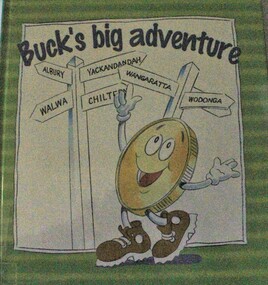
Book - Buck's Big Adventure, Ian Trevaskis & Emma Ashton, 2003
... The WAW stands for Wangaratta, Albury, Wodonga, reflecting its area and names of former credit unions from which it merged. A children's story book with large font text and colourful illustrations telling the story of a new dollar coin. ...This book was produced by the WAW Credit Union with the aim of educating children about money and how it can take different forms as it is used throughout the community. It gives a message about how banking with a Credit Union impacts on the entire community. WAW Credit Union has been operating in various forms since 1956. The WAW stands for Wangaratta, Albury, Wodonga, reflecting its area and names of former credit unions from which it merged.A children's story book with large font text and colourful illustrations telling the story of a new dollar coin. It consists of 30 pages.fictionThis book was produced by the WAW Credit Union with the aim of educating children about money and how it can take different forms as it is used throughout the community. It gives a message about how banking with a Credit Union impacts on the entire community. WAW Credit Union has been operating in various forms since 1956. The WAW stands for Wangaratta, Albury, Wodonga, reflecting its area and names of former credit unions from which it merged.banks and banking - juvenile literature, waw credit union, credit union wodonga -
 Wodonga & District Historical Society Inc
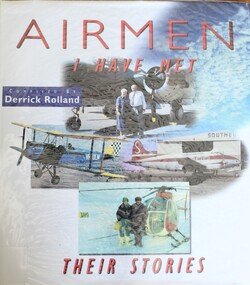
Book - Airmen I have Met - Their Stories, Derrick Rolland, 1999
... Albury-Wodonga Development Corporation and Wangaratta council bought the aircraft collection for about $2 million. They opened Drage Airworld in 1984. The cost of maintaining the collection became too much for the council which closed it down in 2002. Joe Drage died on 9 August 2017. This book is dedicated to all those who have, in their own unique way, made a contribution to our wealth of aviation history. This publication has a hard cover with a dust jacket. It consists of 191 pages, including 85 black and white and 12 coloured images. Airmen I have Met - Their Stories ...This book includes biographies of 16 different airmen with whom the compiler has come in contact. They have had their own uniques experiences in aviation. 12 of them served in the Royal Australian Air Force (RAAF). One of the aviators featured in this publication is Joe Drage, Born on 10 July 1931 in Walwa, Joseph Gordon (Joe) Drage operated a timber mill and earthmoving business, but his great passion was aviation. After obtaining his pilot’s licence at the age of 19, Mr. Drage set about buying vintage aircraft that he feared would be sold overseas. He bought his first aircraft, a Tiger Moth in 1965. In 1972 he established Drage Historical Aircraft Museum on about 60 ha of land in Wodonga, with 5 planes. Over time this grew to 21 planes which Joe maintained so that they were all in flying order. His museum was the location for several air shows which included fly-ins by members of the Antique Aeroplane Association. The land occupied by the Museum was compulsorily acquired by the Albury-Wodonga Development Corporation and Wangaratta council bought the aircraft collection for about $2 million. They opened Drage Airworld in 1984. The cost of maintaining the collection became too much for the council which closed it down in 2002. Joe Drage died on 9 August 2017.This publication has a hard cover with a dust jacket. It consists of 191 pages, including 85 black and white and 12 coloured images.This book includes biographies of 16 different airmen with whom the compiler has come in contact. They have had their own uniques experiences in aviation. 12 of them served in the Royal Australian Air Force (RAAF). One of the aviators featured in this publication is Joe Drage, Born on 10 July 1931 in Walwa, Joseph Gordon (Joe) Drage operated a timber mill and earthmoving business, but his great passion was aviation. After obtaining his pilot’s licence at the age of 19, Mr. Drage set about buying vintage aircraft that he feared would be sold overseas. He bought his first aircraft, a Tiger Moth in 1965. In 1972 he established Drage Historical Aircraft Museum on about 60 ha of land in Wodonga, with 5 planes. Over time this grew to 21 planes which Joe maintained so that they were all in flying order. His museum was the location for several air shows which included fly-ins by members of the Antique Aeroplane Association. The land occupied by the Museum was compulsorily acquired by the Albury-Wodonga Development Corporation and Wangaratta council bought the aircraft collection for about $2 million. They opened Drage Airworld in 1984. The cost of maintaining the collection became too much for the council which closed it down in 2002. Joe Drage died on 9 August 2017.air pilots australia, aviation history, joe drage, joe drage airworld -
 Wodonga & District Historical Society Inc
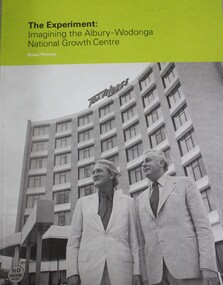
Booklet - THE EXPERIMENT : Imagining the Albury - Wodonga National Growth Centre, Bruce J Pennay, 2013
... The essay served as rationale and support for two council exhibitions at the Albury Library Museum and the Arts Space Wodonga in October and November 2013. The background story and the exhibitions are about place-making. ...Introductory Abstract - "On its instigation in 1973, the Albury-Wodonga Growth Centre experiment was hailed as a novel and imaginative project. It was a "pilot scheme" that was expected to influence the urban settlement pattern in Australia. It was a "bold venture", a "brave attempt" to solve a longstanding problem. It involved three governments embarking on an "exciting adventure". This short book length catalogue essay (51 pages) provides an illustrated guide to the social history and visual arts exhibitions mounted for the 40th anniversary in 2013 of the inauguration of the Albury-Wodonga National Growth Centre experiment. The essay served as rationale and support for two council exhibitions at the Albury Library Museum and the Arts Space Wodonga in October and November 2013. The background story and the exhibitions are about place-making. They ask about the kind of place that has been made at Albury-Wodonga. How was it imagined, promoted, grown? They examine the experiment of developing Albury and Wodonga jointly and rapidly, and ask how that experiment relates to the place now and in the future. It assesses and gives a broad contextual account of the National Growth Centre experiment at Albury-Wodonga and traces important aspects of the story with emphasis on a local point of view. " Bruce Pennaynon-fictionIntroductory Abstract - "On its instigation in 1973, the Albury-Wodonga Growth Centre experiment was hailed as a novel and imaginative project. It was a "pilot scheme" that was expected to influence the urban settlement pattern in Australia. It was a "bold venture", a "brave attempt" to solve a longstanding problem. It involved three governments embarking on an "exciting adventure". This short book length catalogue essay (51 pages) provides an illustrated guide to the social history and visual arts exhibitions mounted for the 40th anniversary in 2013 of the inauguration of the Albury-Wodonga National Growth Centre experiment. The essay served as rationale and support for two council exhibitions at the Albury Library Museum and the Arts Space Wodonga in October and November 2013. The background story and the exhibitions are about place-making. They ask about the kind of place that has been made at Albury-Wodonga. How was it imagined, promoted, grown? They examine the experiment of developing Albury and Wodonga jointly and rapidly, and ask how that experiment relates to the place now and in the future. It assesses and gives a broad contextual account of the National Growth Centre experiment at Albury-Wodonga and traces important aspects of the story with emphasis on a local point of view. " Bruce Pennayalbury-wodonga, decentralisation, urban settlement australoa -
 Wodonga & District Historical Society Inc
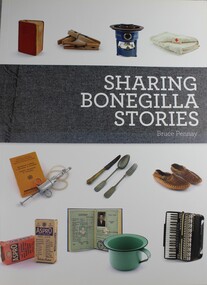
Booklet - Sharing Bonegilla Stories, Bruce J Pennay, 2012
... Sharing Bonegilla Stories Booklet Sharing Bonegilla Stories Bruce J Pennay Albury Library Museum and NSW Migration Heritage Centre ...A full-colour catalogue to support the Sharing Bonegilla Stories exhibition at the Albury LibraryMuseum which was curated by Bridget Guthrie in 2009. The exhibition drew from a successful earlier Belongings partnership with the Centre. The catalogue tries to make sense of people’s different memories of, and responses to, Bonegilla.non-fictionA full-colour catalogue to support the Sharing Bonegilla Stories exhibition at the Albury LibraryMuseum which was curated by Bridget Guthrie in 2009. The exhibition drew from a successful earlier Belongings partnership with the Centre. The catalogue tries to make sense of people’s different memories of, and responses to, Bonegilla.bonegilla, migrant experiences, immigration victoria -
 Wodonga & District Historical Society Inc
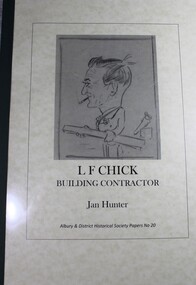
Booklet - Leslie F Chick Building Contractor, Jan Hunter, 2013
... Albury- Wodonga and the surrounding district. This book focuses on Les, who began life as a farm boy in South Wangaratta and ended as a Master Builder and Wodonga's first Building Inspector. His story ...Leslie F. Chick was a successful builder, building contractor and later building inspector in Albury- Wodonga and the surrounding district. This book focuses on Les, who began life as a farm boy in South Wangaratta and ended as a Master Builder and Wodonga's first Building Inspector. His story adds to the knowledge of tradesmen and domestic housing in Albury.non-fictionLeslie F. Chick was a successful builder, building contractor and later building inspector in Albury- Wodonga and the surrounding district. This book focuses on Les, who began life as a farm boy in South Wangaratta and ended as a Master Builder and Wodonga's first Building Inspector. His story adds to the knowledge of tradesmen and domestic housing in Albury.les chick builder, building industry albury wodonga -
 Wodonga & District Historical Society Inc
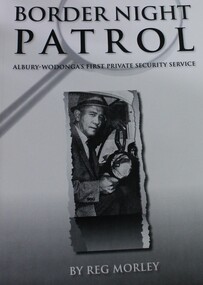
Book - Border night patrol : Albury-Wodonga's first private security service, Reg Morley, 2014
... border security albury-wodonga crime albury wodonga border patrol reg morley This book tells the stories and encounters of Reg Morley who ran Albury-Wodonga's first private security service for 12 years from 1958. ...This book tells the stories and encounters of Reg Morley who ran Albury-Wodonga's first private security service for 12 years from 1958. Sworn in by Albury Police Inspector Jack Burke as a Special Constable, Mr. Morley started out his business with barely enough clients to make a living. Eventually it became a great success, and he sold the business in 1970 to Metropolitan Security Services. The stories are accompanied by Border Morning Mail clippings of events.non-fictionThis book tells the stories and encounters of Reg Morley who ran Albury-Wodonga's first private security service for 12 years from 1958. Sworn in by Albury Police Inspector Jack Burke as a Special Constable, Mr. Morley started out his business with barely enough clients to make a living. Eventually it became a great success, and he sold the business in 1970 to Metropolitan Security Services. The stories are accompanied by Border Morning Mail clippings of events.border security albury-wodonga, crime albury wodonga, border patrol, reg morley -
 Wodonga & District Historical Society Inc
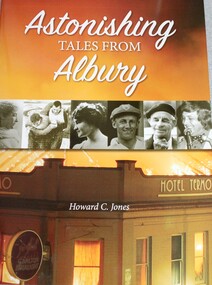
Book - Astonishing Tales From Albury, Howard C Jones, 2017
... True tales recall grim tragedies, local events and stories of Albury celebrities and other personalities Astonishing Tales From Albury Book Astonishing Tales From Albury Howard C Jones ...Collection of 50 newspaper-based stories from 1857 to 2017. True tales recall grim tragedies, local events and stories of Albury celebrities and other personalitiesnon-fictionCollection of 50 newspaper-based stories from 1857 to 2017. True tales recall grim tragedies, local events and stories of Albury celebrities and other personalitiesalbury history, albury personalities, local history -
 Wodonga & District Historical Society Inc
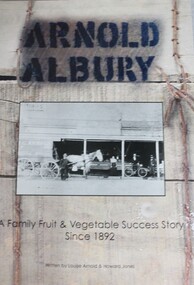
Book - Arnold Albury - A Family Fruit & Vegetable Success Story, Louise Arnold et al, 2009
... Arnold Albury - A Family Fruit & Vegetable Success Story...Arnold Albury - A Family Fruit & Vegetable Success Story...Arnold Albury - A Family Fruit & Vegetable Success Story Book Arnold Albury - A Family Fruit & Vegetable Success Story Louise Arnold Howard C Jones ...A history of Arnolds Fruit Market established by J.G Arnold in 1892.non-fictionA history of Arnolds Fruit Market established by J.G Arnold in 1892.j.g. arnold, arnolds wodonga, arnolds albury, businesses wodonga -
 Wodonga & District Historical Society Inc
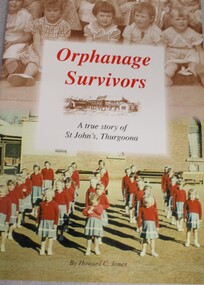
Book - Orphanage Survivors : a true story of St John's, Thurgoona, Howard C Jones, 2010
... st johns orphanage thurgoona orphanages orphanages history nsw A history of St John's Orphanage, founded by the Albury Foundation of the Sisters of Mercy in 1882 at Thurgoona, NSW. The orphanage operated until 1978. Orphanage Survivors : a true story of St John's, Thurgoona Book Orphanage Survivors : a true story of St John's, Thurgoona Howard C Jones ...A history of St John's Orphanage, founded by the Albury Foundation of the Sisters of Mercy in 1882 at Thurgoona, NSW. The orphanage operated until 1978.non-fictionA history of St John's Orphanage, founded by the Albury Foundation of the Sisters of Mercy in 1882 at Thurgoona, NSW. The orphanage operated until 1978.st johns orphanage thurgoona, orphanages, orphanages history nsw
