
Showing 32 items matching "alexandra gardens - melbourne"
-
 Kew Historical Society Inc
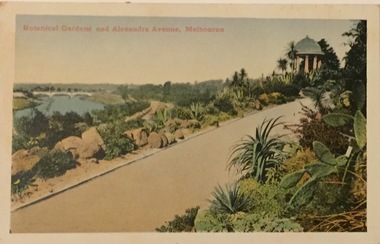
Postcard, Botanical Gardens and Alexandra Avenue, Melbourne, c.1906
... Botanical Gardens and Alexandra Avenue, Melbourne...botanical gardens - melbourne, alexandra avenue - melbourne...Botanical Gardens and Alexandra Avenue, Melbourne. Coloured postcard. ..."Botanical Gardens and Alexandra Avenue, Melbourne"...Those postcards which are early views of Melbourne must have been produced commercially for some decades from the early part of the 20th century. postcards george and edith weir botanical gardens - melbourne, alexandra avenue - melbourne weir collection "Botanical Gardens and Alexandra Avenue, Melbourne" Botanical Gardens and Alexandra Avenue, Melbourne. ...Collection of thirty-nine postcards donated by Jillian Rigby which had been owned by her grandparents, George and Edith Weir, who from c.1917 lived at 84 Princess Street, Kew. The mostly 'mint' postcards were purchased in Victoria and while travelling overseas. The sole dated postcard is dated from 1929. The postcards are numbered sequentially from 2017.0058.01-39. The remainder of the collection donated by Jill Rigby which was once owned by the Weirs of Broken Hill and Kew consist of costumes, costume accessories, photographs, and documents.The postcards in the Weir collection, especially those purchased on a trip or trips to the mother country, i.e. United Kingdom, represent a representative sample of sites that were considered significant to those Australians undertaking a reverse grand tour by member of the erstwhile colonies. Those postcards which are early views of Melbourne must have been produced commercially for some decades from the early part of the 20th century.Botanical Gardens and Alexandra Avenue, Melbourne. Coloured postcard. Weir collection."Botanical Gardens and Alexandra Avenue, Melbourne"postcards, george and edith weir, botanical gardens - melbourne, alexandra avenue - melbourne, weir collection -
 Kew Historical Society Inc
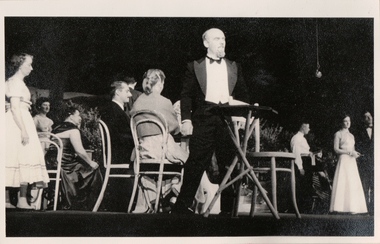
Photograph, Kew Light Opera Company, Goodnight Vienna!, 1956
... ...alexandra gardens - melbourne...The records also act as a history of arts activities in the Kew Recreation Hall and later in the Kew City Hall as entertainment and community arts and music precincts. performing arts -- kew (vic.) scrapbooks marion tilley collection kew light opera company kew recreation hall musical comedy -- melbourne -- victoria alexandra gardens - melbourne Marion Tilley has written underneath the photograph: "In Alexandra Gardens. ...The Kew Light Opera Company was formed in 1952, and mounted a number of musical and variety productions each year until it was subsumed in the "Q" Theatre Guild in 1957. A partial record of performances by the company includes: 1952 Florodora, 1953 The Cingalee - San Toy or The Emperor's Own, 1954 While the Sun Shines - A Country Girl - Our Miss Gibbs, 1955 The Toreador - The Arcadians, 1956 The Maid of the Mountains - Whiteoaks - Goodnight Vienna!, 1957 A Country Girl. Most of the Company's performances took place in the Kew Recreation Hall in Wellington Street, Kew. The scrapbook of annotated photographs, programmes, and newspaper reviews of which this item is a part was assembled by Marion Tilley, wardrobe mistress for, and performer in, productions by the Kew Light Opera Company and the "Q" Theatre Guild. It is significant as a remarkably complete document of theatre performances in Kew, Victoria during the 1950s and 1960s. The scrapbook, and the items individually catalogued within it, have artistic and aesthetic significance within the history of performing arts in Victoria in the middle of the 20th Century. They have social significance in that they reveal socio-cultural values and preoccupations during the period. The records also act as a history of arts activities in the Kew Recreation Hall and later in the Kew City Hall as entertainment and community arts and music precincts.Black and white photograph of cast members in The Kew Light Opera Company's Australian premiere of Goodnight Vienna!, performed during the 1957 Moomba Festival in the Alexandra Gardens and also in the Kew Recreation Hall. Goodnight Vienna! was composed by George Posford with additional lyrics by H. V. Purcell. The lyrics were by Holt Marvell who had written the book on which the musical was based. Goodnight Vienna! was produced and directed for The Kew Light Opera Company by Lance Nicholls with musical direction by John Trotter. The scenery and lighting was designed by James L. Alexander, while the costumes were by Ada Colton.Marion Tilley has written underneath the photograph: "In Alexandra Gardens. Moomba Festival"performing arts -- kew (vic.), scrapbooks, marion tilley collection, kew light opera company, kew recreation hall, musical comedy -- melbourne -- victoria, alexandra gardens - melbourne -
 Kew Historical Society Inc
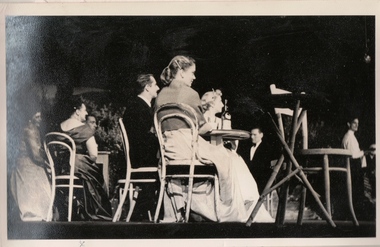
Photograph, Kew Light Opera Company, A Country Girl, 1957
... The performance at which this photo was shot took place in The Alexandra Gardens, Melbourne. ...The performance at which this photo was shot took place in The Alexandra Gardens, Melbourne. A Country Girl Photograph Photograph Kew Light Opera Company ...The Kew Light Opera Company was formed in 1952, and mounted a number of musical and variety productions each year until it was subsumed in the "Q" Theatre Guild in 1957. A partial record of performances by the company includes: 1952 Florodora, 1953 The Cingalee - San Toy or The Emperor's Own, 1954 While the Sun Shines - A Country Girl - Our Miss Gibbs, 1955 The Toreador - The Arcadians, 1956 The Maid of the Mountains - Whiteoaks - Goodnight Vienna!, 1957 A Country Girl. Most of the Company's performances took place in the Kew Recreation Hall in Wellington Street, Kew. The scrapbook of annotated photographs, programmes, and newspaper reviews of which this item is a part was assembled by Marion Tilley, wardrobe mistress for, and performer in, productions by the Kew Light Opera Company and the "Q" Theatre Guild. It is significant as a remarkably complete document of theatre performances in Kew, Victoria during the 1950s and 1960s. The scrapbook, and the items individually catalogued within it, have artistic and aesthetic significance within the history of performing arts in Victoria in the middle of the 20th Century. They have social significance in that they reveal socio-cultural values and preoccupations during the period. The records also act as a history of arts activities in the Kew Recreation Hall and later in the Kew City Hall as entertainment and community arts and music precincts.Black and white photograph of a performance of A Country Girl by The Kew Light Opera Company in 1957. The performance at which this photo was shot took place in The Alexandra Gardens, Melbourne. Inscribed underneath the photo in the scrapbook by Marion Tilley: "X me. Alexandra Gardens." [The 'me' referred to in the photo is the woman with her back to the camera at left.]performing arts -- kew (vic.), scrapbooks, marion tilley collection, kew light opera company, kew recreation hall, musical comedy -- melbourne -- victoria -
 Kew Historical Society Inc
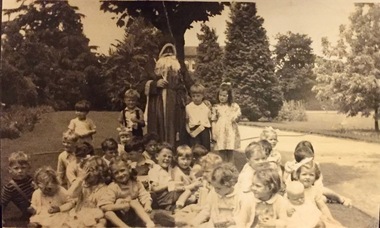
Print, Kew Baptist Church Kindergarten, Alexandra Gardens (Kew), circa 1946, c.1946
... Alexandra Gardens, Kew, Greater Melbourne, Victoria, Australia ...Kew Baptist Church Kindergarten Xmas break up in the Alexandra Gardens, Cotham Road, Kew, circa 1946.The donor's brother Ted Brock is in the very middle, looking at the camera.alexandra gardens - cotham road - kew (vic), kew baptist church kindergarten, ted brock -
 Kew Historical Society Inc
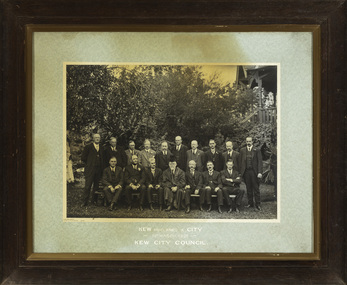
Photograph, J E Barnes, Kew Proclaimed a City, 10 March 1921
... Alexandra Gardens, Kew, Greater Melbourne, Victoria, Australia ...This large framed photograph once hung in the Kew Town Hall in Walpole Street. It marked the occasion when Kew became a city. It is an important record of a significant civic event by a nationally significant photographer. A very large, framed portrait of the elected councillors of the City of Kew in 1921. The photograph was taken by the nationally important photographer, Josiah Barnes who had until recently been a resident of Kew. He was to die in the same year that the photograph was taken. The photograph was taken in the Alexandra Gardens in front of the Jubilee Rotunda. [Inscription] "Kew Proclaimed a City, 10th March 1921, Kew City Council". [Photographer] "J.E. Barnes Photo / Kew". Plaque: “Presented by Cr Wm Wishart / Mayor 1906-7”.kew city council -
 City of Melbourne Libraries
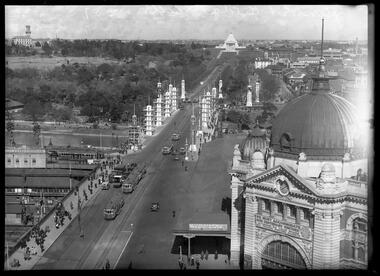
Photograph, Bull, Hugh Jones, 1897-1993, Princes Bridge Centenary pylons under construction
... Melbourne, Vic. : 1854 - 1954), p. 11. Retrieved September 21, 2023, from http://nla.gov.au/nla.news-article205880269 'Flinders Street railway station', Wikipedia, https://en.wikipedia.org/wiki/Flinders_Street_railway_station 'St Joseph’s Foundling Hospital (1901-75)', Finding Records, Department of Health and Human Services, State of Victoria, https://www.findingrecords.dhhs.vic.gov.au/collectionresultspage/St-JosephsFoundling-Hospital-Babies-Home#departmental-administration 'Alexandra Gardens', City of Melbourne, https://www.melbourne.vic.gov.au/community/parks-open-spaces/major-parks-gardens/Pages/alexandra-gardens.aspx 'Wirths Circus', Wikipedia, https://en.wikipedia.org/wiki/Wirth's_Circus 'Roy Prentice: Centenary Architect', Built Heritage Pty Ltd, Simon Reeves, https://www.builtheritage.com.au/downloads/prentice.pdf 'Princes Bridge', Heritage Council Victoria, https://vhd.heritagecouncil.vic.gov.au/places/817 PORT PHILLIP. (1846, April 1). ...Melbourne, Vic. : 1854 - 1954), p. 11. Retrieved September 21, 2023, from http://nla.gov.au/nla.news-article205880269 'Flinders Street railway station', Wikipedia, https://en.wikipedia.org/wiki/Flinders_Street_railway_station 'St Joseph’s Foundling Hospital (1901-75)', Finding Records, Department of Health and Human Services, State of Victoria, https://www.findingrecords.dhhs.vic.gov.au/collectionresultspage/St-JosephsFoundling-Hospital-Babies-Home#departmental-administration 'Alexandra Gardens', City of Melbourne, https://www.melbourne.vic.gov.au/community/parks-open-spaces/major-parks-gardens/Pages/alexandra-gardens.aspx 'Wirths Circus', Wikipedia, https://en.wikipedia.org/wiki/Wirth's_Circus 'Roy Prentice: Centenary Architect', Built Heritage Pty Ltd, Simon Reeves, https://www.builtheritage.com.au/downloads/prentice.pdf 'Princes Bridge', Heritage Council Victoria, https://vhd.heritagecouncil.vic.gov.au/places/817 PORT PHILLIP. (1846, April 1). ...Princes Bridge Centenary pylons under construction Possibly taken from Young and Jacksons Hotel (formerly Princes Bridge Hotel) on the corner of Flinders and Swanston streets, Flinders Street Station’s clocks and main entrance dominate, along with its distinctive copper dome and decorative façade. The time on the main clock is 1.40pm, and the sign underneath, reflecting Melbourne’s upcoming Centenary reads, “We must accommodate our Centenary visitors! Citizens! Do your share by taking paying guests.” At left is the original Princes Bridge Station, today the site of Federation Square. The riverside tram terminus advertises a Café/Tobacconist/Refreshment Room selling cigars & cigarettes, fountain drinks & confectionery, and in smaller text: “Leave your boot repairs here”. Nearly everyone is dressed in dark suits, coats and hats. The footpaths are wide and there are no traffic lights. The roadway stretches towards the Shrine of Remembrance, not yet dedicated but very dominant on the skyline. Government House is clearly visible across the wide parkland that would come to be known as Kings Domain and that is an area of deep importance to the people of the Eastern Kulin. Originally, Birrarung was part of a network of swamps and lagoons linked to the course of the river. From 1896, Public Works Department engineer Carlo Catani, oversaw a new channel to straighten the river and the swamps and lagoons were filled with spoil from the channel works. From the same vantage point today, only the top of the tower of Government House would be visible. The photo captures the pylons along Princes Bridge, mid-construction and being installed to mark Melbourne’s Centenary. The pylons were not without controversy. Both The Argus and The Age bemoaned them for being “made almost entirely of imported softwood timber”, denying work to native hardwood timber workers and sawmillers, and leading visitors to think Australia did not have its own exceptional native hardwoods. The pylons were also variously described in their incomplete state, as unimaginative and resembling an oilfield. Published: The Age 5 September 1934 Featured in "Newsworthy: Melbourne in photographs 1933-1936" exhibition at East Melbourne Library, October to December 2023. Exhibition caption by project volunteer, Louise McKenzie Photographer notations on slide: "Pylons + St Kilda Rd C57" Published: Age (Melbourne, Vic. : 1854 - 1954), Wednesday 5 September 1934, page 11 Published title: DECORATIONS -- THEN AND NOW. Published caption: "Although not completed yet, some impression of the effect of the decorations on Princes-bridge may be obtained from the first picture which shows the majestic sweep of St Kilda road with the Shrine of Remembrance and Government House dominating the horizon. The area to the left of St. Kilda-road and in front of Government House is portion of the area which it is proposed to call the King's Domain, which extends to Domain-road and Anderson-street..." Description: East-facing, elevated view of Flinders Street Station and Princes Bridge, featuring partially completed pylons erected for Melbourne's Centenary celebrations. The Shrine of Remembrance and Government House can be seen in the distance. In the foreground are trams, cars and trucks, pedestrians, Batman Avenue tram terminus and refreshment rooms. Signage on Flinders Street Station encourages citizens to accommodate Centenary visitors. The Melbourne Centenary was held 1934-35 in celebration John Batman's proclamation that Melbourne "the place for a village". Centenary events included a visit by Prince Henry, Duke of Gloucester. A Centenary Cake measuring 50 feet in height and ten tons in weight was cut into 250,000 pieces and sold at 1 shilling per piece for charity. Spectacular floodlighting of city landmarks, the creation of the Pioneer Women's Memorial Garden, and the MacRobertson Air Race from London, were other notable activities. Research by project volunteer, Louise McKenzie: The photo in The Age collage of 5 September 1934 has a slightly cropped foreground. The original photo has been taken from an elevated vantage point, most probably the roof of the Nicholas Building on the corner of Flinders and Swanston streets. The right foreground is dominated by the main “clocks” entrance to Flinders Street Station, showing its distinctive copper dome and decorative façade. The time on the main clock is 1.40 pm. The main sign on the front of the Station reads, "We Must Accommodate our Centenary Visitors! Citizens! Do your share by taking paying guests. Write to The Official Centenary Accommodation Bureau, 436 Collins St. City. Tel M 4671”. Another sign at eye level at the main entrance says: “Cheap Trips on Sundays”. The sign on the end of the roof along the eastern side of the station reads, “The Babies Need Your Help! Support Broadmeadows Foundling Hospital Appeal. July and August”. Run by the Sisters of St Joseph of the Sacred Heart, St Joseph’s Foundling Hospital was a purpose built infants’ home for up to 300 babies, plus accommodation for expectant mothers, mainly single women. In the early 1930s, the department (Victorian Children’s Welfare Department) contracted St Joseph’s Foundling Hospital to care for an additional 60 infant state wards, and up to 175 non wards at any given time. In 1931 it also operated a mothercraft training school. The centre foreground shows the commencement of Princes Bridge. Beneath the left side of the bridge was the site of the original Princes Bridge Station, by this time incorporated into Flinders Street Station, and today the area is the site of Federation Square. It was linked to Flinders Street station by the railway tracks that ran underneath the northern approach to the bridge. This photo shows a tram terminus which has a Café/Tobacconist/Refreshment Room, selling cigars & cigarettes, fountain drinks & confectionary, and a sign: Leave your boot repairs here. In the foreground is a wide roadway running south/north, comprising two vehicle lanes each heading north/south, and a central section containing two sets of tram tracks. There are cars, buses and delivery vans on the roadway. The trams visible are Glen Iris (Route No. 6; tram no. 448), Toorak (Route No. 8, tram no. 333), ? (No. 7), ? (No. 1), and ? (No. 2A). The footpaths are extremely wide. There is a square newspaper/magazine stand on the eastern side footpath. And also a “Ferry” sign. There are no traffic lights, but a policeman is visible on the roadway. There are pedestrians – men, women, children, a porter with trolley, women with prams. Clothing comprises dark suits, coats and hats for nearly everyone. There are double headed “Collins Street” lights along the side of the roadway, and along the northern riverbank. The roadway in the foreground is an extension of Swanston Street, which becomes Princes Bridge, then St Kilda Road, stretching towards the Shrine of Remembrance, and diverting past it. The Shrine had not yet been officially dedicated, and looks very white and dominant on the skyline. On the LHS of St Kilda Road, Government House is clearly visible across the wide parkland to be known as Kings Domain. The Kings Domain area is important to the people of the Eastern Kulin nation, and also has historical importance for its association with the early settlement of Melbourne and the foundation of British colonial administration in Victoria. On the southern side of the Yarra River (Birrarung) an historic rowing boathouse is visible, located adjacent to the Alexandra Gardens. Originally Birrarung was part of a network of swamps and lagoons linked to the course of the river. From 1896, under the guidance of engineer Carlo Catani* a new channel to straighten the river was created and the swamps and lagoons were filled with spoil from the channel works. The gardens were then created and completed in time for a Royal visit by the Duke of York in May 1901. The gardens are named after Alexandra of Denmark, the wife of King Edward VII. Both these areas, plus the Royal Botanic Gardens Victoria, Shrine of Remembrance Reserve, Sidney Myer Music Bowl, Government House, and the Queen Victoria Gardens together form the Domain Parklands. The extent of the subsequent plantings is evident today, where from the same vantage point only the top of the tower of Government House would be visible. *Catani was born in Florence in 1852, but after arriving in Melbourne worked as a civil engineer for the Victorian Government. His last major project was the reclamation of the foreshore of St Kilda, envisaged in the style of a European resort, complete with a split level esplanade, bathing pavilions, dance halls, amusements and a French-Italian style of landscape complete with palms. The gardens at the end of Fitzroy Street, St Kilda, now bear his name. The historic boathouse visible across the Yarra is another glimpse into Melbourne’s past. “Boathouse Row” comprises 7 amateur rowing clubs, the first established in 1859 (Melbourne University Boat Club). Other Clubs were Richmond, Melbourne, Banks, Melbourne Grammar School, Yarra Yarra and Mercantile. South of the river and west of the bridge is an area today developed into the Melbourne arts precinct of Hamer Hall and the Arts Centre. But at this time it was the home of Wirths Olympia Circus, which comprised Wirths Pleasure Park (an amusement park), a 5,000 seat auditorium – Hippodrome, a roller skating rink, a glaciarium, a cinema, and the Green Mill Dance Hall. Dog shows were also held at Olympia. The Green Mill Dance Hall closed in 1950, and the remainder of the Wirth buildings on site were destroyed by fire in December 1953. The feature of the photo is the pylons erected along Princes Bridge to mark Melbourne’s Centenary in 1934. The sixteen plastered pylons were designed by Roy Prentice, the second person to qualify as an architect at The University of Melbourne’s Bachelor of Architecture degree, in 1933, aged 27. Simon Reeves in his article marking the 100th birthday of Roy Prentice on 20 June 2006 reports that the State Electricity Commission sponsored this work, and the Argus reported that “… the pylons were “illuminated from within to give the effect of soft radiance”. Australia Home Beautiful 1 Oct 1934 reports in a very detailed and comprehensive article: The 10 taller pylons, including flagpole, were 48 ft, with a base of 8 ft. Timber-framed and faced with fibrous plaster and galvanised sheet iron, each structure was securely bolted to a concrete foundation three feet in depth. Panels of glass let into the shaft of each pylon were indirectly lit by 40, 100 watt lamps, and the upper bank of internal lamps were dyed so as to flood the panels with a deep red light. The decorative painted shields and flagpoles/pennants were illuminated by three 200 watt projectors concealed in the roof of each pylon, and were part of an electric night light decoration scheme involving 28 miles of wire to supply more than 20,000 lights. An article in the Argus on 18 October 1934 provided minute detail of the lighting erected in Melbourne for the Centenary, converting it “… into a coloured fairyland by night.” The estimated cost of 10 pounds per hour the lights were on. The display included 800 standard light poles 30 feet high which were tiered with electric bulbs concealed in inverted cones, 138 specially designed “Venetian poles” draped in flags trophies and streamers. The streets included in the electric night light decoration scheme were Bourke Street from Spring to William, the entire length of Collins Street, Flinders Street from Elizabeth to Spring, Lonsdale Street from Elizabeth to Swanston, Swanston and Elizabeth Streets from Flinders to Lonsdale, and parts of Springs and Spencer Streets. Together with the Princes Bridge pylons, approximately 28 miles of wire was required to supply power to the more than 20,000 lights. And that is just in the city of Melbourne. It was estimated the same amount of lighting was duplicated among other local councils. The pylons were not without controversy. The Argus on 28 August 1934 in an article headed “Imported Timber in Pylons” reported that the Princes Bridge pylons are “made almost entirely of imported softwood timber”, and have therefore denied work to native hardwood timber workers and sawmillers. The same day the Melbourne Age ran a similar story, bemoaning the fact that foreign oregon had been used which may lead tourists to think Australia did not have its own exceptional native hardwoods. A Camberwell City Councillor described the pylons as unimaginative, and the Herald reported that skeletons of pylons for the Centenary decorations in their present form led the area to resemble an oilfield! The Yarra River and Princes Bridge have long been a focal point of Melbourne life. In the early days of European settlement in Melbourne a rope-hauled punt carried people across the Yarra River. A surge in population and increased shipping traffic created a need for a bridge. There was difficulty in agreeing on a suitable site for the bridge (options were crossing at Elizabeth, Swanston, Queen or Market Streets), but the NSW Government favoured Swanston Street and the Melbourne Town Council decided on a temporary bridge across the Yarra spanning from the foot of Swanston Street. This first bridge was a single span timber toll bridge designed by Scottish born bridge designer David Lennox, and completed in 1845. It was 120 feet long, had a roadway of 17 feet wide, and a footpath on one side of 4 feet. It was leased to the Melbourne Bridge Company in the name of Robert A Balbirnie. The tollhouse was on the north side of the river and the toll keeper, Patrick Doherty, was credited with saving nine lives during the four years he was in charge of the toll station. The second bridge was stone (completed 1850), and named Prince’s Bridge after the HRH Prince of Wales, later Edward VII. It was designed with an elliptical single arc and an exceedingly small rise in proportion to the span. However, this design created an obstacle for flood waters, and together with Melbourne’s increasing population it was quickly apparent that a new bridge was required. At its opening on 15 November 1850 coincided with the imminent declaration of Victoria as a separate colony, it provided a moment of great celebration for Melbournians and “The opening ceremony was described as the grandest processional display witnessed in the colony.” (ToMelbourne.com.au) Princes Bridge in its present form, as depicted in this photograph, was designed by Jenkins, D’Ebro and Grainger, and constructed in 1886-88 by David Munro. John Grainger (father of Australian composer Percy Grainger) did the majority of the design work for the bridge. The structure was to have three arches each 96 feet wide measured across the river, and the banks on both sides were raised to allow more space for floodwater to flow. St Kilda Road was originally many feet below the current level. The bridge is of architectural significance for its substantial size, giant half columns, extensive use of wrought and cast iron, decorative elements (cast-iron lamps) and the skilled stonemasonry in the construction of the abutments and piers. Its main design features are similar to those of Blackfriars Bridge in London (1870). The bluestones were quarried from Footscray, the Malmsbury stones were from quarries at Kyneton, and the granite from Harcourt. The cost was met by the State of Victoria, City of Melbourne, and six out of seven of its municipalities, and their coats of arms feature on the bridge. The building of the bridge reflected the boom period of Melbourne, including the Victorian gold rush 1851- late 1860s, and its contractor, David Munro, was also responsible for the construction of Queens Bridge and Sandridge Railway Bridge. The Centenary pylons are no longer in place, but today this intersection still plays a major part in Melbourne’s daily life: people still meet “under the clocks” at Flinders Street station, and the route in and out of the city along St Kilda Road is often a feature of parades such as Moomba, the Grand Final Parade, and of course the Anzac Day Parade which commences at the Princes Bridge intersection and finishes at the Shrine of Remembrance. There are many tram routes, which cross the Bridge, and it directs pedestrians towards the Arts Precinct, the various components of Domain Park, plus the Southbank restaurant and rowing precincts. Even though this is a street scene, it feels very intimate; the viewer is instantly immersed in the activity of a Melbourne afternoon, looking down St Kilda Road from a viewpoint near today’s Federation Square. References: DECORATIONS -- THEN AND NOW. (1934, September 5). The Age (Melbourne, Vic. : 1854 - 1954), p. 11. Retrieved September 21, 2023, from http://nla.gov.au/nla.news-article205880269 'Flinders Street railway station', Wikipedia, https://en.wikipedia.org/wiki/Flinders_Street_railway_station 'St Joseph’s Foundling Hospital (1901-75)', Finding Records, Department of Health and Human Services, State of Victoria, https://www.findingrecords.dhhs.vic.gov.au/collectionresultspage/St-JosephsFoundling-Hospital-Babies-Home#departmental-administration 'Alexandra Gardens', City of Melbourne, https://www.melbourne.vic.gov.au/community/parks-open-spaces/major-parks-gardens/Pages/alexandra-gardens.aspx 'Wirths Circus', Wikipedia, https://en.wikipedia.org/wiki/Wirth's_Circus 'Roy Prentice: Centenary Architect', Built Heritage Pty Ltd, Simon Reeves, https://www.builtheritage.com.au/downloads/prentice.pdf 'Princes Bridge', Heritage Council Victoria, https://vhd.heritagecouncil.vic.gov.au/places/817 PORT PHILLIP. (1846, April 1). The Sydney Morning Herald (NSW : 1842 - 1954), p. 3. Retrieved September 21, 2023, from http://nla.gov.au/nla.news-article12886251 'Edward VII', Wikipedia, https://en.wikipedia.org/wiki/Edward_VII 'Princes Bridge', ToMelbourne.com, https://tomelbourne.com.au/princes-bridge/ 'Princes Bridge', eMelbourne, https://www.emelbourne.net.au/biogs/EM01189b.htm 'Princes Bridge', Australia for everyone, http://australiaforeveryone.com.au/files/melbourne/princes-bridge.html 'Victorian gold rush', Wikipedia, https://en.wikipedia.org/wiki/Victorian_gold_rush IMPORTED TIMBER IN PYLONS (1934, August 28). The Argus (Melbourne, Vic. : 1848 - 1957), p. 9. Retrieved September 21, 2023, from http://nla.gov.au/nla.news-article10952507 Princes-Bridge Pylons. (1934, August 28). The Age (Melbourne, Vic. : 1854 - 1954), p. 7. Retrieved September 21, 2023, from http://nla.gov.au/nla.news-article205532235 Pylons Appear Near Princes Bridge (1934, August 18). The Herald (Melbourne, Vic. : 1861 - 1954), p. 1. Retrieved September 21, 2023, from http://nla.gov.au/nla.news-article243104375 PRINCES-BRIDGE PYLONS. (1934, September 20). The Age (Melbourne, Vic. : 1854 - 1954), p. 10. Retrieved September 21, 2023, from http://nla.gov.au/nla.news-article205873535 28 Miles of Wire (1934, October 18). The Argus (Melbourne, Vic. : 1848 - 1957), p. 1 (The Junior Argus). Retrieved September 21, 2023, from http://nla.gov.au/nla.news-article10977836 'Historical references for Boathouse Row, Melbourne', http://boathouserowmelbourne.com.au/history/ 'ITALIAN DELEGATION TO HONOUR CARLO CATANI, DESIGNER OF THE ST KILDA FORESHORE, St Kilda Historical Society, 2001, https://web.archive.org/web/20070928061938/http://www.skhs.org.au/~SKHSarticles/articles/Carlo_Catani.html# HISTORY IN LIGHTS (1934, July 12). The Herald (Melbourne, Vic. : 1861 - 1954), p. 16. Retrieved September 21, 2023, from http://nla.gov.au/nla.news-article243172436 'Dressing Melbourne for the Duke', The Australian home beautiful: a journal for the home builder. Vol 12 No. 10 (1 October 1934), page 21, 58. Retrieved September 14, 2023, from http://nla.gov.au/nla.obj-2950922209Photographer notations on slide: "Pylons + St Kilda Rd C57".centenaries, bridges, lighting, flinders street railway station -
 Marysville & District Historical Society
THE TRIANGLE NEWS-VOL 39 NO 15-APRIL 27 2012
... melbourne...study of community members affected by 2009 bushfires...what's on when in april...the committee of management of the gallipoli park precinct...advertisements...creative triangle...triangle bushwalkers...marysville fire brigade agm...kidz zone youth impact...marysville triangle branch...liberal party of australia...progressive luncheon...church notices...triangle community pot luck dinner...maryville villains football team first home game...mayor's chair...marysville golf report...sample wines...alexandra & distict dog obedience club...narbethong reunion...e...marysville triangle real estate...old skool all stars band...narbethong community hall...the victorian bushfire appeal fund...marysville beer & platter garden...marysville victoria australia beyond bushfires university of melbourne study of community members affected by 2009 bushfires what's on when in april the committee of management of the gallipoli park precinct advertisements creative triangle triangle bushwalkers marysville fire brigade agm kidz zone youth impact marysville triangle branch liberal party of australia progressive luncheon church notices triangle community pot luck dinner maryville villains football team first home game mayor's chair marysville golf report sample wines alexandra & distict dog obedience club narbethong reunion e marysville triangle real estate old skool all stars band narbethong community hall the victorian bushfire appeal fund marysville beer & platter garden maryton park b & b more tourism workshops planned marysville tourism & events marketing program the marysville lake mountain visitor information centre kings banquet crossways inn lake mountain alpine resort mother's day lunch THE TRIANGLE NEWS-VOL 39 NO 15-APRIL 27 2012 ...marysville, victoria, australia, beyond bushfires, university of melbourne, study of community members affected by 2009 bushfires, what's on when in april, the committee of management of the gallipoli park precinct, advertisements, creative triangle, triangle bushwalkers, marysville fire brigade agm, kidz zone youth impact, marysville triangle branch, liberal party of australia, progressive luncheon, church notices, triangle community pot luck dinner, maryville villains football team first home game, mayor's chair, marysville golf report, sample wines, alexandra & distict dog obedience club, narbethong reunion, e, marysville triangle real estate, old skool all stars band, narbethong community hall, the victorian bushfire appeal fund, marysville beer & platter garden, maryton park b & b, more tourism workshops planned, marysville tourism & events marketing program, the marysville lake mountain visitor information centre, kings banquet, crossways inn, lake mountain alpine resort, mother's day lunch -
Marysville & District Historical Society
THE TRIANGLE NEWS-VOL 39 NO 37-SEPTEMBER 27 2012
... melbourne scottish fiddle club...scottish dance...marysville cricket t20 tournament...black saturday & beyond...victorian bushfire appeal fund...emotional support therapies & workshops...what's on when in september...intrepid triangle bushwalkers...creative triangle...marysville community market...marysville cfa-first aid course level 1...marysville golf report...vale murray edwards...senior's week...church notices...fire season-slashing program...buxton primary school...triangle garden club events...murrindindi shire council...amnesty period on open air burning...marysville chamber of commerce...victorian concert orchestra...narbethong community hall...marysville marathon...sample wines...position vacant...dalton fiske foundation...marysville & district lions project...advertisements...triangle community dancers...alexandra...marysville victoria australia buxton hall melbourne scottish fiddle club scottish dance marysville cricket t20 tournament black saturday & beyond victorian bushfire appeal fund emotional support therapies & workshops what's on when in september intrepid triangle bushwalkers creative triangle marysville community market marysville cfa-first aid course level 1 marysville golf report vale murray edwards senior's week church notices fire season-slashing program buxton primary school triangle garden club events murrindindi shire council amnesty period on open air burning marysville chamber of commerce victorian concert orchestra narbethong community hall marysville marathon sample wines position vacant dalton fiske foundation marysville & district lions project advertisements triangle community dancers alexandra library september events real estate habitat for humanity public information meeting marysville community golf & bowls club amnesty supports fire prevention efforts triangle community dinner free in marysville narbethong community garage sale maryville sparkling wine festival business breakfast marysville primary school parents club trivia night black spur inn hotel THE TRIANGLE NEWS-VOL 39 NO 37-SEPTEMBER 27 2012 ...marysville, victoria, australia, buxton hall, melbourne scottish fiddle club, scottish dance, marysville cricket t20 tournament, black saturday & beyond, victorian bushfire appeal fund, emotional support therapies & workshops, what's on when in september, intrepid triangle bushwalkers, creative triangle, marysville community market, marysville cfa-first aid course level 1, marysville golf report, vale murray edwards, senior's week, church notices, fire season-slashing program, buxton primary school, triangle garden club events, murrindindi shire council, amnesty period on open air burning, marysville chamber of commerce, victorian concert orchestra, narbethong community hall, marysville marathon, sample wines, position vacant, dalton fiske foundation, marysville & district lions project, advertisements, triangle community dancers, alexandra library september events, real estate, habitat for humanity, public information meeting, marysville community golf & bowls club, amnesty supports fire prevention efforts, triangle community dinner, free in marysville, narbethong community garage sale, maryville sparkling wine festival business breakfast, marysville primary school, parents club trivia night, black spur inn hotel -
Marysville & District Historical Society
THE TRIANGLE NEWS-VOL 40 NO 5-FEBRUARY 15 2013
... melbourne water's regional benefits program...yea wetlands trust...church news...mt cathedral community baptist church...lakeside fellowship eildon...world day of prayer...intrepid triangle bushwalkers...community happy hour...marysville golf & bowls club...maryton beer & platter garden...modern life music school...triangle shared trails project...madrats weekend...black spur inn...bbq gallipoli oval...marysville & district kindergarten centre...preschool centre...preschool director required...mayor's chair...motorhome weekend...thank you community...district nurse duck hunting protesters fined...advertisements...dalton fiske foundation grants awards...councillor comment...murrindindi shire council...library officer wanted...alexandra...marysville victoria australia camp marysville opens steel pans band prepare for festival what's on when in february buxton recreation reserve committee meeting for public the committee of management of the gallipoli park precinct marysville primary school creative triangle marysville community market yea wetlands project development state government melbourne water's regional benefits program yea wetlands trust church news mt cathedral community baptist church lakeside fellowship eildon world day of prayer intrepid triangle bushwalkers community happy hour marysville golf & bowls club maryton beer & platter garden modern life music school triangle shared trails project madrats weekend black spur inn bbq gallipoli oval marysville & district kindergarten centre preschool centre preschool director required mayor's chair motorhome weekend thank you community district nurse duck hunting protesters fined advertisements dalton fiske foundation grants awards councillor comment murrindindi shire council library officer wanted alexandra library good results for marysville golfers in the murrindindi masters marysville brownie guides agm marysville triangle youth funded governance training available for community groups marysville & triangle community foundation world's longest lunch marysville council's roadside fire prevention works continue invitation celebrating positive ageing help save marysville trees marysville fire brigade presentation night valentine's dinner maryton el kanah 2 great shows ventriloquist sarah jones comedian dennis coard marysville cultural community real estate THE TRIANGLE NEWS-VOL 40 NO 5-FEBRUARY 15 2013 ...marysville, victoria, australia, camp marysville opens, steel pans band prepare for festival, what's on when in february, buxton recreation reserve, committee meeting for public, the committee of management of the gallipoli park precinct, marysville primary school, creative triangle, marysville community market, yea wetlands project development, state government, melbourne water's regional benefits program, yea wetlands trust, church news, mt cathedral community baptist church, lakeside fellowship eildon, world day of prayer, intrepid triangle bushwalkers, community happy hour, marysville golf & bowls club, maryton beer & platter garden, modern life music school, triangle shared trails project, madrats weekend, black spur inn, bbq gallipoli oval, marysville & district kindergarten centre, preschool centre, preschool director required, mayor's chair, motorhome weekend, thank you community, district nurse duck hunting protesters fined, advertisements, dalton fiske foundation grants awards, councillor comment, murrindindi shire council, library officer wanted, alexandra library, good results for marysville golfers in the murrindindi masters, marysville brownie guides agm, marysville triangle youth, funded governance training available for community groups, marysville & triangle community foundation, world's longest lunch marysville, council's roadside fire prevention works continue, invitation celebrating positive ageing, help save marysville trees, marysville fire brigade presentation night, valentine's dinner maryton, el kanah 2 great shows, ventriloquist sarah jones, comedian dennis coard, marysville cultural community, real estate -
Marysville & District Historical Society
THE TRIANGLE NEWS-VOL 41 NO 41-OCTOBER 24 2014
... marysville victoria australia open gardens featured in narbethong and buxton alexandra & district open gardens weekend what's on when in october the committee of management of the gallipoli park precinct marysville community market creative triangle marysville art show 2014 community centre cup weekend intrepid triangle bushwalkers marysville golf report church notices advertisements 2015 goulburn river valley holiday planner mayor's chair by cr margaret rae murrindindi shire council councillor comment cr christine challen emotions anonymous international meeting marysville & triangle community men's shed buxton recreation reserve committee community working bee at buxton recreation reserve melbourne cup day office closures marysville district football & netball club agm residential & rural real estate marysville & triangle real estate dalton fiske foundation el kanah spring menu social dance buxton hall great victorian bike ride expressions of interest street stall for christ church marysville notice of public sale swimming pool ticket pricing triangle community dinner tender operations shed assistant casual bus driver operations co ordinator buxton bootcamp nominate a local young achiever pink lunch pink ribbon day auction at buxton hall national breast cancer foundation barefoot bowls marysville community golf & bowls club meet the candidates for eildon the outdoor ed group THE TRIANGLE NEWS-VOL 41 NO 41-OCTOBER 24 2014 ...marysville, victoria, australia, open gardens featured in narbethong and buxton, alexandra & district open gardens weekend, what's on when in october, the committee of management of the gallipoli park precinct, marysville community market, creative triangle, marysville art show 2014, community centre cup weekend, intrepid triangle bushwalkers, marysville golf report, church notices, advertisements, 2015 goulburn river valley holiday planner, mayor's chair by cr margaret rae, murrindindi shire council, councillor comment cr christine challen, emotions anonymous international meeting, marysville & triangle community men's shed, buxton recreation reserve committee, community working bee at buxton recreation reserve, melbourne cup day office closures, marysville district football & netball club agm, residential & rural real estate, marysville & triangle real estate, dalton fiske foundation, el kanah spring menu, social dance buxton hall, great victorian bike ride expressions of interest, street stall for christ church marysville, notice of public sale, swimming pool ticket pricing, triangle community dinner, tender, operations shed assistant, casual bus driver, operations co ordinator, buxton bootcamp, nominate a local young achiever, pink lunch, pink ribbon day, auction at buxton hall, national breast cancer foundation, barefoot bowls, marysville community golf & bowls club, meet the candidates for eildon, the outdoor ed group -
 Bendigo Historical Society Inc.
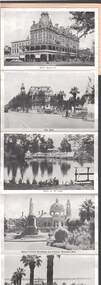
Postcard - BENDIGO PHOTOGRAPHIC BOOKLET
... Memorial, Conservatory Gardens; Deborah Gold Mines looking towards Bendigo; Queen Victoria Gardens; Alexandra Fountain; Soldiers' Memorial Hall; In the Fernery; Rosiland Park Gardens; Post Office. Published by The Valentine Publishing Co. Pty. Ltd., Melbourne...Memorial, Conservatory Gardens; Deborah Gold Mines looking towards Bendigo; Queen Victoria Gardens; Alexandra Fountain; Soldiers' Memorial Hall; In the Fernery; Rosiland Park Gardens; Post Office. Published by The Valentine Publishing Co. Pty. Ltd., Melbourne ...Postcard, Bendigo Photographic Booklet, 15 photographs of Bendigo, including: The Conservatory; Lake Weeroona; Conservatory Gardens; The Mall; Hotel Shamrock; Baths at the Lake; Queen Victoria Monument and Soldiers' Memorial Hall; King George V. Memorial, Conservatory Gardens; Deborah Gold Mines looking towards Bendigo; Queen Victoria Gardens; Alexandra Fountain; Soldiers' Memorial Hall; In the Fernery; Rosiland Park Gardens; Post Office. Published by The Valentine Publishing Co. Pty. Ltd., Melbourne & Sydney. Early 1900'spostcard, photograph, bendigo -
 Bendigo Historical Society Inc.
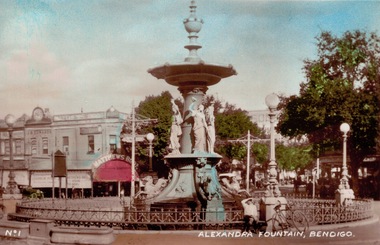
Photograph - Valentine's Bendigo Snapshots, abt 1940s
... Ltd, Melbourne" Photos of: No 1 Alexandra Fountain No 2 Town Hall No 3 The Conservatory Gardens No 4 The Swimming Pool No 5 View from Mitchell Street No 8 Queen Victoria Gardens No 9 King George 5th memorial, Conservatory Gardens No 10 Queen Victoria Gardens...BHS Collection history bendigo valentines photos Alexandra Fountain No 2 Town Hall No 3 The Conservatory Gardens No 4 The Swimming Pool No 5 View from Mitchell Street No 8 Queen Victoria Gardens No 9 King George 5th memorial Conservatory Gardens No 10 Queen Victoria Gardens Valentine's Bendigo Snapshots Packet for Photos - Printed on the front of the envelope is "Valentine's Snapshots Bendigo, Vic., No. 1. Eight real Photographs for your album, Hand Coloured Published by the Valentine Publishing Co. Pty. Ltd, Melbourne ...BHS CollectionValentine's Bendigo Snapshots Packet for Photos - Printed on the front of the envelope is "Valentine's Snapshots Bendigo, Vic., No. 1. Eight real Photographs for your album, Hand Coloured Published by the Valentine Publishing Co. Pty. Ltd, Melbourne" Photos of: No 1 Alexandra Fountain No 2 Town Hall No 3 The Conservatory Gardens No 4 The Swimming Pool No 5 View from Mitchell Street No 8 Queen Victoria Gardens No 9 King George 5th memorial, Conservatory Gardens No 10 Queen Victoria Gardenshistory, bendigo, valentines photos, alexandra fountain, no 2 town hall, no 3 the conservatory gardens, no 4 the swimming pool, no 5 view from mitchell street, no 8 queen victoria gardens, no 9 king george 5th memorial, conservatory gardens, no 10 queen victoria gardens -
 Ithacan Historical Society
Photograph, Alexandratos brothers - Ithaca, c1950s
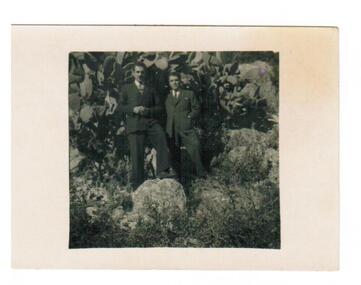
... Melbourne until returning to live permanently in Greece with his wife Zoi and children Penny and George in the early 1970s. In the early 1900s their father Giorgos Alexandratos was a partner in the 'Alexandra Bros' London Café at 25 Elizabeth Street. Giorgos was a founding member of the Ithacan Philanthropic Society. He eventually returned permanently to Ithaca where his three sons were born. cafes alexandratos brothers Written in Greek on the back: STATHIS ALEXANDROS SPIROS ALEXANDROS A small black and white photograph of two men dressed in suits standing in a rock garden and in front of a tall prickly pear cactus. ...Pictured in Ithaca are Stathi and Spiro Alexandratos who are the brothers of Yianni Alexandratos who lived in Melbourne until returning to live permanently in Greece with his wife Zoi and children Penny and George in the early 1970s. In the early 1900s their father Giorgos Alexandratos was a partner in the 'Alexandra Bros' London Café at 25 Elizabeth Street. Giorgos was a founding member of the Ithacan Philanthropic Society. He eventually returned permanently to Ithaca where his three sons were born.A small black and white photograph of two men dressed in suits standing in a rock garden and in front of a tall prickly pear cactus. The small photograph is surrounded with a white frame.Written in Greek on the back: STATHIS ALEXANDROS SPIROS ALEXANDROScafes, alexandratos brothers -
 Ithacan Historical Society
Photograph, Family group, c 1921
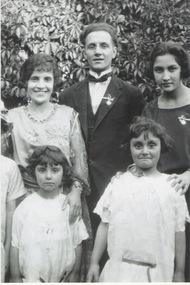
... Alexandra Vrachna who taught two generations of Australian born Ithacan children in Greek community schools for close to 30 years. In adult life Nina Black also went on to teach Greek at the Greek Community school which opened in Melbourne in the early 1930s. She also taught Greek at the CAE and English to new arrivals in the 1960s. A black and white photograph of a man, two ladies and two little girls of a group standing in a garden ...The photograph was taken in the family home of Constantine and Toula Black (Mavrokefalos) in Parkville during the early 1920s on the christening day of their son John Black. John's sisters, six year of Nina Black and her four year old sister, Rita (Marguerita) are pictured. Also pictured from l-r: Argiro ? , who was from Adelaide; John (Panoyoti) Raftopoulos, Toula's brother; and Lily Sigalas, Greek school teacher. Lily was the sister of Alexandra Vrachna who taught two generations of Australian born Ithacan children in Greek community schools for close to 30 years.In adult life Nina Black also went on to teach Greek at the Greek Community school which opened in Melbourne in the early 1930s. She also taught Greek at the CAE and English to new arrivals in the 1960s.A black and white photograph of a man, two ladies and two little girls of a group standing in a garden. A person on the left is almost hidden. -
 Slovenian Association Melbourne
Gold plated metal trophy, Melbourne Moomba Festival trophy 1980, 1980
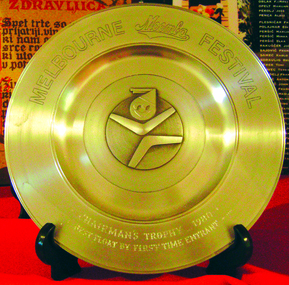
... Important Victorian Labour Day annual event in Melbourne and many floats form a lengthy parade - celebration in the streets of Melbourne, concluding at the Alexandra Gardens along River Yarra; it is a presentation of various communities, arts and cultural performances in the State of Victoria....Important Victorian Labour Day annual event in Melbourne and many floats form a lengthy parade - celebration in the streets of Melbourne, concluding at the Alexandra Gardens along River Yarra; it is a presentation of various communities, arts and cultural performances in the State of Victoria. ...Important Victorian Labour Day annual event in Melbourne and many floats form a lengthy parade - celebration in the streets of Melbourne, concluding at the Alexandra Gardens along River Yarra; it is a presentation of various communities, arts and cultural performances in the State of Victoria.Getting together, celebrating multicultural community and many facets of social lifeGold plated trophy presented to Slovenian Association Melbourne in 1980 for the entry of a float at the Moomba parade.Melbourne Moomba Festival Chairmans Trophy 1980 Best Float by First Time Entrantslovenian association melbourne, moomba parade, moomba festival melbourne, moomba float -
 Slovenian Association Melbourne
Moomba Event Program, Moomba Event Program 1962, 1962
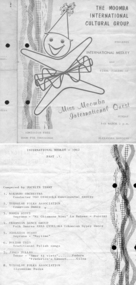
... The Moomba International Cultural Group presenting International Medley Program, Melbourne, on Sunday, 4th March 1962 at Alexandra Gardens with international participants, among them musician playing a Slovenian polka...Slovenian Association Melbourne Miss Moomba International Quest Program design showed the Moomba logo and announcing Miss Moomba INternational Quest, Free admission The Moomba International Cultural Group presenting International Medley Program, Melbourne, on Sunday, 4th March 1962 at Alexandra Gardens with international participants, among them musician playing a Slovenian polka Moomba Event Program 1962 Moomba Event Program ...The Moomba International Cultural Group presenting International Medley Program, Melbourne, on Sunday, 4th March 1962 at Alexandra Gardens with international participants, among them musician playing a Slovenian polkaProgram design showed the Moomba logo and announcing Miss Moomba INternational Quest, Free admissionslovenian association melbourne, miss moomba international quest -
 Melbourne Tram Museum
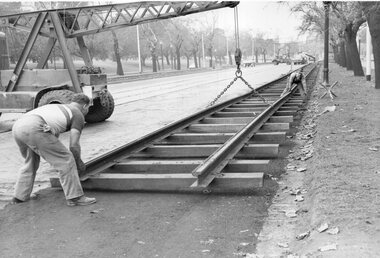
Photograph - Set of 3 - Temporary track St Kilda Road, Melbourne & Metropolitan Tramways Board (MMTB), 1950's
... Alexandra Gardens area, late 1950s? Yields information about setting up temporary track in St Kilda Road for major tramway reconstruction. Trams tramways Trackwork Rails Track Materials Track Repairs Sleepers Equipment St Kilda Road Some photos have pencil marks on rear. Series of 3 black and white photographs. Photograph Set of 3 - Temporary track St Kilda Road Melbourne ...Photographs showing setting up temporary track in St Kilda Road using a mobile crane. One photo shows the temporary connection in the Alexandra Gardens area, late 1950s?Yields information about setting up temporary track in St Kilda Road for major tramway reconstruction.Series of 3 black and white photographs.Some photos have pencil marks on rear.trams, tramways, trackwork, rails, track materials, track repairs, sleepers, equipment, st kilda road -
Kew Historical Society Inc
Journal, Kew Historical Society, Newsletter No.113, December 2015
... Melbourne / Robert Baker p4. Heritage Issues: 14 Irymple Avenue / Debbie McColl-Davis & Richard Peterson p5. The Diaries of Chris Robinson / John Torpey p7. Patriotic Buttons / Suzanne McWha & Robert Baker p9. Coley of Kew / Suzanne McWha p10. Some Examples of Lost Kew: Byram; Chipperfield's Boat House; Rotunda Alexandra Gardens ...Creative Communities / Robert Baker p1. Exhibitions p3. Quarterly Book Sale p3. Meetings & Lectures p3. Kew Historical Society Online p3. Chandler Hwy Upgrade options / Brad Miles p4. Lost Melbourne / Robert Baker p4. Heritage Issues: 14 Irymple Avenue / Debbie McColl-Davis & Richard Peterson p5. The Diaries of Chris Robinson / John Torpey p7. Patriotic Buttons / Suzanne McWha & Robert Baker p9. Coley of Kew / Suzanne McWha p10. Some Examples of Lost Kew: Byram; Chipperfield's Boat House; Rotunda Alexandra Gardens; Kilby Lodge / Various authors p11. Membership & Donations p12.Published quarterly since 1977, the newsletters of the Kew Historical Society contain significant research by members that explore aspects of the Victorian and Australian Framework of Historical Themes. Frequently, articles on people, places and artefacts are the only source of information about an aspect of Kew, and Melbourne’s history.non-fictionCreative Communities / Robert Baker p1. Exhibitions p3. Quarterly Book Sale p3. Meetings & Lectures p3. Kew Historical Society Online p3. Chandler Hwy Upgrade options / Brad Miles p4. Lost Melbourne / Robert Baker p4. Heritage Issues: 14 Irymple Avenue / Debbie McColl-Davis & Richard Peterson p5. The Diaries of Chris Robinson / John Torpey p7. Patriotic Buttons / Suzanne McWha & Robert Baker p9. Coley of Kew / Suzanne McWha p10. Some Examples of Lost Kew: Byram; Chipperfield's Boat House; Rotunda Alexandra Gardens; Kilby Lodge / Various authors p11. Membership & Donations p12.kew historical society (vic.) -- periodicals., kew historical society (vic.) -- newsletters, kew historical society (vic.) -- journals -
Kew Historical Society Inc
Archive (Sub-series) - Subject File, Centenary Celebrations (Kew), 1934, 1958
... Typically files will contain primary and secondary sources. centenary of melbourne commemorative events - kew (vic) alexandra gardens Small file containing a photocopy of a newspaper article form 1934 (The Age, 27 October 1934), and two copies of a local United Centenary Thanksgiving Service held in Kew in the Alexandra Gardens on the occasion. ...Various partiesReference, Research, InformationSecondary Values (KHS Imposed Order)Small file containing a photocopy of a newspaper article form 1934 (The Age, 27 October 1934), and two copies of a local United Centenary Thanksgiving Service held in Kew in the Alexandra Gardens on the occasion. centenary of melbourne, commemorative events - kew (vic), alexandra gardenscentenary of melbourne, commemorative events - kew (vic), alexandra gardens -
 Kew Historical Society Inc
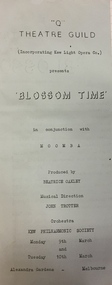
Programme, The "Q" Theatre Guild, Blossom Time, 1959
... Melbourne during the 1950s and 1960s. The scrapbook includes programmes, photographs, newspaper reports and personal annotations which are a rich source of detail about repertoire, performers, and artistic sensibility in the period. "q" theatre guild performing arts moomba alexandra gardens ...The “Q” Theatre Guild was formed in 1957. It inherited the productions and casts of the earlier Kew Light Opera Company. The Guild initially performed in the Kew Recreation Hall (Wellington Street) and later at the Kew Civic Hall (Cotham Road). A partial list of its performances include: 1957 The Geisha 1958 Maritana 1959 They All Do It (Cosi Fan Tutti) 1959 Blossom Time 1959 Love’s a Luxury 1960 There And Back & The Bohemian Girl 1960 Die Fledermaus 1961 Gay Rosalinda 1961 The Land of Smiles 1961 Kisses For A Kid & Hansel and Gretel 1962 Die Fledermaus 1964 Monsieur Beaucaire 1964 Macbeath [The Beggars’ Opera] 1964 The Beggars’ Opera Undated And So To BedThe Marion Tilley scrapbook is a significant record of performing arts in Melbourne during the 1950s and 1960s. The scrapbook includes programmes, photographs, newspaper reports and personal annotations which are a rich source of detail about repertoire, performers, and artistic sensibility in the period.Souvenir programme isued by the "Q" Theatre Guild incorporating Kew Light Opera Company for a performance of 'Blossom Time' in conjunction with Moomba. Performances were held in March in the Alexandra Gardens and subsequently at the Kew Recreation Hall in October and November. The programme forms part of a scrapbook that includes programmes, photographs and theatre reviews for the Kew Light Opera Company and later "Q" Theatre Guild."q" theatre guild, performing arts, moomba, alexandra gardens, theatre groups (kew), blossom time (musical) -
 Kew Historical Society Inc
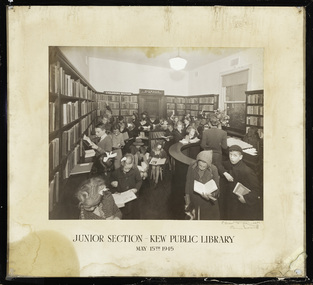
Photograph, C Stuart Tompkins, Junior Section, Kew Public Library, 15 May 1945
... Alexandra Gardens. The library was officially opened at this site on Friday 23 October 1987 by the Mayor of Kew, Cr James Tutt. (Source: Boroondara Library Service) Early original photograph of a children's library service taken by a notable Melbourne photographer kew public library photographers - c. stuart tompkins - camberwell (vic) children's libraries "Junior Section, Kew Public Library, May 15th 1945" Original photograph, in original frame, of the Junior Section of the Kew Public Library in Walpole Street, Kew. ...1860: Kew's first library was the Kew Literary and Scientific Society, which opened on 6 August 1860. 1884: Kew Town Hall was extended and the library transferred to a room on the upper floor. This was not an ideal arrangement as the room was required for Council purposes. 1904: A cottage adjoining Kew Town Hall was purchased for use as a library. 1937: The library was closed for a major overhaul of stock and renovation of the building. It reopened in December 1937 and remained there for more than 35 years. 1973: When the Civic Centre opened in Charles Street, Kew, the library moved in. 1987: Kew Library moved to its current location in the converted city hall, overlooking the beautiful Alexandra Gardens. The library was officially opened at this site on Friday 23 October 1987 by the Mayor of Kew, Cr James Tutt. (Source: Boroondara Library Service)Early original photograph of a children's library service taken by a notable Melbourne photographerOriginal photograph, in original frame, of the Junior Section of the Kew Public Library in Walpole Street, Kew. The photograph was taken by Stuart Tompkins who was the photographer of choice by the City of Kew from the 1930s to the 1960s. The details of the photograph are inscribed on the water-damaged mount, with the photographers signature at lower right. . "Junior Section, Kew Public Library, May 15th 1945"kew public library, photographers - c. stuart tompkins - camberwell (vic), children's libraries -
Kew Historical Society Inc
Journal, Kew Historical Society, Newsletter No.62, September, 1998
... Alexandra Gardens] / Raymond Vaughan-Smith p1-2. The Alexandra Gardens / p2-3. Our End of Year Party / p3. 1998 Calendar of Meetings and Other Activities / p4. Notice of Annual General Meeting / p4. Published quarterly since 1977, the newsletters of the Kew Historical Society contain significant research by members exploring relevant aspects of the Victorian and Australian Framework of Historical Themes. Frequently, articles on people, places and artefacts are the only source of information about an aspect of Kew, and Melbourne’s ...President’s Letter [Photograph of Alexandra Gardens] / Raymond Vaughan-Smith p1-2. The Alexandra Gardens / p2-3. Our End of Year Party / p3. 1998 Calendar of Meetings and Other Activities / p4. Notice of Annual General Meeting / p4.Published quarterly since 1977, the newsletters of the Kew Historical Society contain significant research by members exploring relevant aspects of the Victorian and Australian Framework of Historical Themes. Frequently, articles on people, places and artefacts are the only source of information about an aspect of Kew, and Melbourne’s history.President’s Letter [Photograph of Alexandra Gardens] / Raymond Vaughan-Smith p1-2. The Alexandra Gardens / p2-3. Our End of Year Party / p3. 1998 Calendar of Meetings and Other Activities / p4. Notice of Annual General Meeting / p4.kew historical society (vic.) -- periodicals., kew historical society (vic.) -- newsletters, kew historical society (vic.) -- journals -
 Kew Historical Society Inc
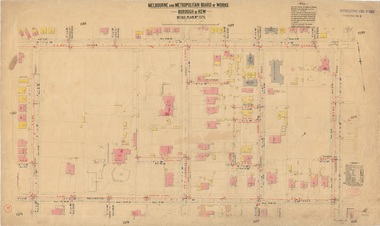
Plan, Melbourne & Metropolitan Board of Works : Borough of Kew : Detail Plan No.1576, 1904
... Alexandra Gardens in 1908. Elm Lodge/Madford was in 1922 to become St. Anthony’s Home for Little Children before its subsequent demolition in the 1980s. Melbourne ...The Melbourne and Metropolitan Board of Works (MMBW) plans were produced from the 1890s to the 1950s. They were crucial to the design and development of Melbourne's sewerage and drainage system. The plans, at a scale of 40 feet to 1 inch (1:480), provide a detailed historical record of Melbourne streetscapes and environmental features. Each plan covers one or two street blocks (roughly six streets), showing details of buildings, including garden layouts and ownership boundaries, and features such as laneways, drains, bridges, parks, municipal boundaries and other prominent landmarks as they existed at the time each plan was produced. (Source: State Library of Victoria)This plan forms part of a large group of MMBW plans and maps that was donated to the Society by the Mr Poulter, City Engineer of the City of Kew in 1989. Within this collection, thirty-five hand-coloured plans, backed with linen, are of statewide significance as they include annotations that provide details of construction materials used in buildings in the first decade of the 20th century as well as additional information about land ownership and usage. The copies in the Public Record Office Victoria and the State Library of Victoria are monochrome versions which do not denote building materials so that the maps in this collection are invaluable and unique tools for researchers and heritage consultants. A number of the plans are not held in the collection of the State Library of Victoria so they have the additional attribute of rarity.Original survey plan, issued by the MMBW to a contractor with responsibility for constructing sewers in the area identified on the plan within the Borough of Kew. The plan was at some stage hand-coloured, possibly by the contractor, but more likely by officers working in the Engineering Department of the Borough and later Town, then City of Kew. The hand-coloured sections of buildings on the plan were used to denote masonry or brick constructions (pink), weatherboard constructions (yellow), and public buildings (grey). Development in the 20th century has irreparably altered that part of Kew represented in this plan. In the block bounded by Cotham Road, Charles Street, Wellington Street and Gellibrand; just one house standing in 1903 remains. This block included two of the most historic houses in Kew: ‘Ordsall’ (later ‘Southesk’) and ‘Madford’ (previously ‘Elm Lodge’). Ordsall was the home of the second chairman of Kew, John Halfey. It contained some of the most significant interior murals in Kew, created for Halfey by artists working for Cullen & Co. It was demolished in 1960 to make way for the Kew Civic Centre. Elm Lodge had been built for William Siddeley in ca. 1864. Arthur Septimus King purchased it in 1874. The lower paddocks of Madford were sold in 1905 by his wife to the Borough of Kew and, after landscaping by George and Thomas Pockett, opened as the Alexandra Gardens in 1908. Elm Lodge/Madford was in 1922 to become St. Anthony’s Home for Little Children before its subsequent demolition in the 1980s.melbourne and metropolitan board of works, detail plans, maps - borough of kew, mmbw 1576, cartography -
 Kew Historical Society Inc
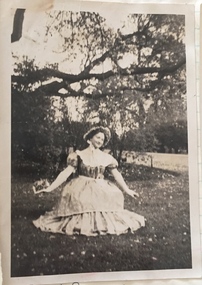
Photograph, The "Q" Theatre Guild, Blossom Time, 1959
... The records also act as a history of arts activities in the Kew Recreation Hall and later in the Kew City Hall as entertainment and community arts and music precincts. performing arts -- kew (vic.) scrapbooks marion tilley collection 'q' theatre guild musical comedy -- melbourne -- victoria kew recreation hall Marion Tilley, the creator of the scrapbook, wrote the following underneath the photograph: "Jeanette Rayment, Botanical Gardens, promoting Blossom Time." Faded photograph of Jeanette Rayment in full costume in the Royal Botanical Gardens to promote The "Q" Theatre Guild's performances of Blossom Time during the Moomba Festival of 1959. The performances took place in the Alexandra ...The "Q" Theatre Guild was formed out of the Kew Light Opera Company in 1957. It marked the transition of the company that had initially been directed by Lance Nicholls to one directed by Beatrice Oakley. It continued to perform in the Kew Recreation Hall, but, with its demolition in 1960, and the opening of the new Kew City Hall in Cotham Road, moved its productions to that venue. Productions of the "Q" Theatre Guild included The Geisha (1957), Maritana (1958), They All Do It (1959), Blossom Time (1959), Love's A Luxury (1959), There And Back & The Bohemian Girl (1960), Die Fledermaus (1960), Gay Rosalinda (1961), The Land Of Smiles (1961), Kisses For A Kid & Hansel And Gretel (1961), Die Fledermaus (1962), Monsieur Beaucaire (1964), Macbeath or The Beggar's Opera, and So To Bed.The scrapbook of annotated photographs, programmes, and newspaper reviews of which this item is a part was assembled by Marion Tilley, wardrobe mistress for, and performer in, productions by the Kew Light Opera Company and the "Q" Theatre Guild. It is significant as a remarkably complete document of theatre performances in Kew, Victoria during the 1950s and 1960s. The scrapbook, and the items individually catalogued within it, have artistic and aesthetic significance within the history of performing arts in Victoria in the middle of the 20th Century. They have social significance in that they reveal socio-cultural values and preoccupations during the period. The records also act as a history of arts activities in the Kew Recreation Hall and later in the Kew City Hall as entertainment and community arts and music precincts.Faded photograph of Jeanette Rayment in full costume in the Royal Botanical Gardens to promote The "Q" Theatre Guild's performances of Blossom Time during the Moomba Festival of 1959. The performances took place in the Alexandra Gardens. Rayment played the role of Therese in the production.Marion Tilley, the creator of the scrapbook, wrote the following underneath the photograph: "Jeanette Rayment, Botanical Gardens, promoting Blossom Time."performing arts -- kew (vic.), scrapbooks, marion tilley collection, 'q' theatre guild, musical comedy -- melbourne -- victoria, kew recreation hall -
 Kew Historical Society Inc
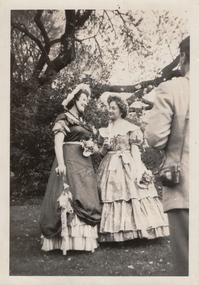
Photograph, The "Q" Theatre Guild, Blossom Time, 1958
... melbourne -- victoria Marion Tilley, the creator of the scrapbook, wrote the following underneath the photograph: "Esme Melville, Jeanette Rayment, Botanical Gardens, *** Blossom Time." Faded photograph of Esme Melville and Jeanette Rayment in full costume in the Royal Botanical Gardens to promote The "Q" Theatre Guild's performances of Blossom Time during the Moomba Festival of 1959. The performances took place in the Alexandra ...The "Q" Theatre Guild was formed out of the Kew Light Opera Company in 1957. It marked the transition of the company that had initially been directed by Lance Nicholls to one directed by Beatrice Oakley. It continued to perform in the Kew Recreation Hall, but, with its demolition in 1960, and the opening of the new Kew City Hall in Cotham Road, moved its productions to that venue. Productions of the "Q" Theatre Guild included The Geisha (1957), Maritana (1958), They All Do It (1959), Blossom Time (1959), Love's A Luxury (1959), There And Back & The Bohemian Girl (1960), Die Fledermaus (1960), Gay Rosalinda (1961), The Land Of Smiles (1961), Kisses For A Kid & Hansel And Gretel (1961), Die Fledermaus (1962), Monsieur Beaucaire (1964), Macbeath or The Beggar's Opera, and So To Bed.The scrapbook of annotated photographs, programmes, and newspaper reviews of which this item is a part was assembled by Marion Tilley, wardrobe mistress for, and performer in, productions by the Kew Light Opera Company and the "Q" Theatre Guild. It is significant as a remarkably complete document of theatre performances in Kew, Victoria during the 1950s and 1960s. The scrapbook, and the items individually catalogued within it, have artistic and aesthetic significance within the history of performing arts in Victoria in the middle of the 20th Century. They have social significance in that they reveal socio-cultural values and preoccupations during the period. The records also act as a history of arts activities in the Kew Recreation Hall and later in the Kew City Hall as entertainment and community arts and music precincts.Faded photograph of Esme Melville and Jeanette Rayment in full costume in the Royal Botanical Gardens to promote The "Q" Theatre Guild's performances of Blossom Time during the Moomba Festival of 1959. The performances took place in the Alexandra Gardens. In the production, Melville performed the role of Countess Fritzi Frangipani, while Rayment played the role of Therese.Marion Tilley, the creator of the scrapbook, wrote the following underneath the photograph: "Esme Melville, Jeanette Rayment, Botanical Gardens, *** Blossom Time."performing arts -- kew (vic.), scrapbooks, marion tilley collection, 'q' theatre guild, kew recreation hall, musical comedy -- melbourne -- victoria -
 Kew Historical Society Inc
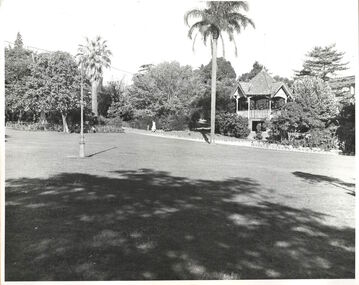
Photograph, Alexandra Gardens, c.1960
... Alexandra Gardens (1910-c.1960). The Alexandra Gardens’ rotunda was located within three acres of ‘gem like’ gardens ‘bright with verdant lawns and choice blooms’ in the centre of Kew. Designed by architects Grainger and Little, the ornate two-storey wooden kiosk functioned as a children’s shelter on the ground level and a bandstand and oratory dais on the upper. Funded by council and community subscription, it was a ‘symbol of the public spirit of Victoria’ and a Kew Jubilee commemoration memorial. Opened in 1910, the Kew Brass Band christened it the ‘finest band rotunda in Melbourne...Alexandra Gardens (1910-c.1960). The Alexandra Gardens’ rotunda was located within three acres of ‘gem like’ gardens ‘bright with verdant lawns and choice blooms’ in the centre of Kew. Designed by architects Grainger and Little, the ornate two-storey wooden kiosk functioned as a children’s shelter on the ground level and a bandstand and oratory dais on the upper. Funded by council and community subscription, it was a ‘symbol of the public spirit of Victoria’ and a Kew Jubilee commemoration memorial. Opened in 1910, the Kew Brass Band christened it the ‘finest band rotunda in Melbourne ...Rotunda, Alexandra Gardens (1910-c.1960). The Alexandra Gardens’ rotunda was located within three acres of ‘gem like’ gardens ‘bright with verdant lawns and choice blooms’ in the centre of Kew. Designed by architects Grainger and Little, the ornate two-storey wooden kiosk functioned as a children’s shelter on the ground level and a bandstand and oratory dais on the upper. Funded by council and community subscription, it was a ‘symbol of the public spirit of Victoria’ and a Kew Jubilee commemoration memorial. Opened in 1910, the Kew Brass Band christened it the ‘finest band rotunda in Melbourne’. Deterioration saw its demise 50 years later. This work forms part of the collection assembled by the historian Dorothy Rogers, that was donated to the Kew Historical Society by her son John Rogers in 2015. The manuscripts, photographs, maps, and documents were sourced by her from both family and local collections or produced as references for her print publications. Many were directly used by Rogers in writing ‘Lovely Old Homes of Kew’ (1961) and 'A History of Kew' (1973), or the numerous articles on local history that she produced for suburban newspapers. Most of the photographs in the collection include detailed annotations in her hand. The Rogers Collection provides a comprehensive insight into the working habits of a historian in the 1960s and 1970s. Together it forms the largest privately-donated collection within the archives of the Kew Historical Society.Lawn and original rotunda in the Alexandra Gardens, Cotham Road, Kew. The Alexandra Gardens were opened in 1908. The land on which the gardens were formed originally formed part of the Madford Estate. A feature of the gardens was a large brick, wood and tiled rotunda. "Alexandra Gardens. Formerly part of S. King. (Rest of Estate mainly belongs to St Anthonys home). Opened 1908. Alexandra Gardens. (Rotunda now demolished)"alexandra gardens, kew, dorothy rogers -
City of Kingston
Photograph - Colour, Circa 1993
... Alexandra Avenue in the north to Ella Grove Chelsea/Edithvale in the south. The area is built-up with residential housing and facilities including Edithvale Primary School, numerous churches and the Edithvale Railway station. Large sections depict the remnant Carrum Carrum swamp. Edithvale Common and the former "Duck Inn" (Melbourne Water/Friends of Edithvale Seaford Wetlands) can be seen. Edithvale Recreational reserve, the velodrome and Edithvale Public Golf Course are prominent. The image shows vacant land in the area now known as Aspendale Gardens...Alexandra Avenue in the north to Ella Grove Chelsea/Edithvale in the south. The area is built-up with residential housing and facilities including Edithvale Primary School, numerous churches and the Edithvale Railway station. Large sections depict the remnant Carrum Carrum swamp. Edithvale Common and the former "Duck Inn" (Melbourne Water/Friends of Edithvale Seaford Wetlands) can be seen. Edithvale Recreational reserve, the velodrome and Edithvale Public Golf Course are prominent. The image shows vacant land in the area now known as Aspendale Gardens ...Edithvale is a suburb in the City of Kingston. It is located between Aspendale and Chelsea on the Port Phillip Bay and built within remnant areas of the Carrum Carrum swamp. The foreshore precinct comprises a wide sandy beach, with low sand dunes and numerous historic boat sheds. The suburb consists of older style dwellings and former holiday houses, combined with mid-century housing and newer homes. The large blocks are increasingly subdivided and the existing dwellings demolished to accommodate units and townhouses, thus changing the landscape of the area and reducing the tree canopy.The beachside suburb of Edithvale was previously part of the extensive Carrum Carrum Swamp. The area was once a source of fish and eels for the Mayone-Bulluk clan of the Bunurong people. Over time the area was drained and predominantly devoted to dairy farming and holiday houses. The farms were gradually sold and subdivided with a large number of homes built after World War II and in the 1960s. Edithvale is mainly residential with a shopping strip along Nepean Highway but little significant industry was ever established in the area apart from a plaster works and confectionary factory, both now closed.Aerial colour photograph of Edithvale as viewed from Alexandra Avenue in the north to Ella Grove Chelsea/Edithvale in the south. The area is built-up with residential housing and facilities including Edithvale Primary School, numerous churches and the Edithvale Railway station. Large sections depict the remnant Carrum Carrum swamp. Edithvale Common and the former "Duck Inn" (Melbourne Water/Friends of Edithvale Seaford Wetlands) can be seen. Edithvale Recreational reserve, the velodrome and Edithvale Public Golf Course are prominent. The image shows vacant land in the area now known as Aspendale Gardens and the newer residential section of Chelsea Heights is not developed. A bike path has been established to cover the secondary drain. The Golf Links Court residential development located off Hughes Avenue is a large vacant block.Yellow circular adhesive sticker on plastic Black ink (marker): * (asterisk) Black type on white adhesive sticker: P000108edithvale, aspendale, chelsea, carrum carrum swamp -
City of Kingston
Photograph - Colour, 6 March 1993
... Alexandra Avenue in the north to Ella Grove Chelsea/Edithvale in the south. regents Park Aspendale can be seen in the top left. The area is built-up with residential housing and facilities including Edithvale Primary School, numerous churches and the Edithvale Railway station. Large sections depict the remnant Carrum Carrum swamp. Edithvale Common and the former "Duck Inn" (Melbourne Water/Friends of Edithvale Seaford Wetlands) can be seen. Edithvale Recreational reserve, the valodrome and Edithvale Public Golf Course are prominent. The image shows vacant land in the area now known as Aspendale Gardens...Alexandra Avenue in the north to Ella Grove Chelsea/Edithvale in the south. regents Park Aspendale can be seen in the top left. The area is built-up with residential housing and facilities including Edithvale Primary School, numerous churches and the Edithvale Railway station. Large sections depict the remnant Carrum Carrum swamp. Edithvale Common and the former "Duck Inn" (Melbourne Water/Friends of Edithvale Seaford Wetlands) can be seen. Edithvale Recreational reserve, the valodrome and Edithvale Public Golf Course are prominent. The image shows vacant land in the area now known as Aspendale Gardens ...Edithvale is a suburb in the City of Kingston. It is located between Aspendale and Chelsea on the Port Phillip Bay and built within remnant areas of the Carrum Carrum swamp. The foreshore precinct comprises a wide sandy beach, with low sand dunes and numerous historic boat sheds. The suburb consists of older style dwellings and former holiday houses, combined with mid-century housing and newer homes. The large blocks are increasingly subdivided and the existing dwellings demolished to accommodate units and townhouses, thus changing the landscape of the area and reducing the tree canopy.The beachside suburb of Edithvale was previously part of the extensive Carrum Carrum Swamp. The area was once a source of fish and eels for the Mayone-Bulluk clan of the Bunurong people. Over time the area was drained and predominantly devoted to dairy farming and holiday houses. The farms were gradually sold and subdivided with a large number of homes built after World War II and in the 1960s. Edithvale is mainly residential with a shopping strip along Nepean Highway but little significant industry was ever established in the area apart from a plaster works and confectionary factory, both now closed.Laminated aerial colour photograph of Edithvale as viewed from Alexandra Avenue in the north to Ella Grove Chelsea/Edithvale in the south. regents Park Aspendale can be seen in the top left. The area is built-up with residential housing and facilities including Edithvale Primary School, numerous churches and the Edithvale Railway station. Large sections depict the remnant Carrum Carrum swamp. Edithvale Common and the former "Duck Inn" (Melbourne Water/Friends of Edithvale Seaford Wetlands) can be seen. Edithvale Recreational reserve, the valodrome and Edithvale Public Golf Course are prominent. The image shows vacant land in the area now known as Aspendale Gardens and the newer residential section of Chelsea Heights is not developed. A bike path has been established to cover the secondary drain. The Golf Links Court residential development located off Hughes Avenue is a large vacant block.Black type on white adhesive label: 6-3-93 Black type on white adhesive label: 25/9211, 6/3/93, 11.20 am Black type on white adhesive label: 9211 Yellow circular adhesive sticker Black pencil: 9211 6-3-93 arrow pointing Nedthvale, carrum carrum swamp, aspendale, chelsea -
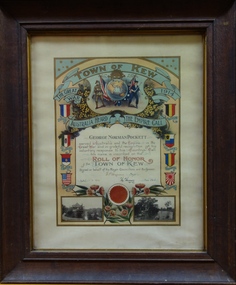 Kew Historical Society Inc
Certificate, Town of Kew, Roll of Honor of the Town of Kew : George Norman Pockett, 1918
... Melbourne. George Pockett Snr. was the first curator of the Alexandra Gardens in Kew. ...Melbourne. George Pockett Snr. was the first curator of the Alexandra Gardens in Kew. ...George Norman Pockett, who was awarded the certificate was the son of George Pockett , who with his brother designed a number of public parks in Melbourne. George Pockett Snr. was the first curator of the Alexandra Gardens in Kew. (see Comment below)Rolls of Honor were awarded to returned soldiers at the end of the First World War by many towns and cities. This framed certificate awarded to George Norman Pockett by the Town of Kew is one of two held in the Collection. The item is well-provenanced, and through the formal use of emblems and images in the design allows us to make judgements about social and cultural values in the period.Framed Illuminated Certificate: A commemorative certificate documenting the war service of George Norman Pockett of 18 Cobden Street, Kew. George Pockett enrolled at the age of 23 on 5 October 1915, as an engineer in the Australian Army. He embarked on HMAT Wiltshire A18 on 18 November 1915. His rank was that of Warrant Officer Armament Artificer in the 4 FAB [Field Artillery Brigade]. The website of the Australian War Memorial records that he was mentioned in dispatches. The formal certificate records that ‘George Norman Pockett served Australia and the Empire in the Great War and in grateful recognition of his voluntary response to his Country’s Call his name is inscribed on the Roll of Honor of the Town of Kew’. The then Mayor and Town Clerk signed the certificate. [Kew did not become a ‘City’ until 1921]. The certificate highlights emblems and symbols of Australia and Great Britain, and includes the coats of arms of the allies in the war. The certificate is customised with two black and white photographs of Kew: the rotunda in the Alexandra Gardens at left, and boating on the Yarra River at right.George Norman Pockett served Australia and the Empire in the Great War and in grateful recognition of his voluntary response to his Country's Call his name is recorded on the Roll of Honor Town of Kew on behalf of the Mayor, Councillors and Burgesses. 1.8.18. E.P. Wynne [Mayor] H. Harrison [Town Clerk]george norman pockett, first world war - memorabilia - certificates, town of kew (vic), kew war memorial - roll of honor, wwi -
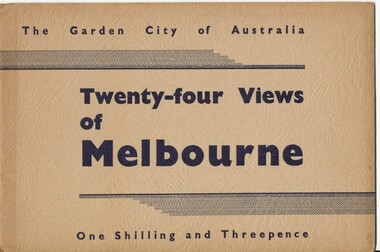 Melbourne Tram Museum
Book, Victorian Government Information Bureau?, "The Garden City of Australia / Twenty-four views of Melbourne", c1950
... Page Photo details by 1 Skyline of the City of Melbourne from Yarra Bank Victorian Railways 2 Collins St from Spring St (with trams) ditto 3 Princes Bridge, River Yarra ditto 4 St Kilda Rd from Flinders St Station ditto 5 St Pauls Cathedral ditto 6 Bourke St Shopping Centre - with double deck buses no details of photographer 7 Elizabeth St - with trams and buses Victorian Railways 8 Swanston St with modern skyscrapers (Collins) ditto 9 Aerial view, city of Melbourne ditto 10 Parliament House ditto 11 Public Library, Museum and Art Gallery ditto 12 St Kilda Rd, Looking towards the City trams 772 and W2 ditto 13 Kings Domain - Pioneer Monument ditto 14 Royal Melbourne Hospital - with back view inset ditto 15 Alexandra Gardens and the Shrine of Remembrance ditto 16 Alexandra Gardens and Government House ditto 17 Captain Cook's House - Fitzroy Gardens ditto 18 Albert Park Lake no details of photographer 19 Melbourne Boys School, MacRobertson's Girls High School and Melbourne Uni - no details of photographer 20 Scene in the Botanical Gardens Victorian Railways 21 Aerial view of St Kilda with Brighton in background Victorian Railways 22 Melbourne Cricket ground, taken during the testimonial match to Sir Donald Bradman - no details 23 Queen Victoria Memorial Hospital and Exhibition Buildings and Aquarium - Victorian Railways 24 Dandenong - Showing Silvan Dam Victorian Railways The testimonial match took place in Melbourne during December 1948 (Reference Sir Donald Bradman Museum). ...Page Photo details by 1 Skyline of the City of Melbourne from Yarra Bank Victorian Railways 2 Collins St from Spring St (with trams) ditto 3 Princes Bridge, River Yarra ditto 4 St Kilda Rd from Flinders St Station ditto 5 St Pauls Cathedral ditto 6 Bourke St Shopping Centre - with double deck buses no details of photographer 7 Elizabeth St - with trams and buses Victorian Railways 8 Swanston St with modern skyscrapers (Collins) ditto 9 Aerial view, city of Melbourne ditto 10 Parliament House ditto 11 Public Library, Museum and Art Gallery ditto 12 St Kilda Rd, Looking towards the City trams 772 and W2 ditto 13 Kings Domain - Pioneer Monument ditto 14 Royal Melbourne Hospital - with back view inset ditto 15 Alexandra Gardens and the Shrine of Remembrance ditto 16 Alexandra Gardens and Government House ditto 17 Captain Cook's House - Fitzroy Gardens ditto 18 Albert Park Lake no details of photographer 19 Melbourne Boys School, MacRobertson's Girls High School and Melbourne Uni - no details of photographer 20 Scene in the Botanical Gardens Victorian Railways 21 Aerial view of St Kilda with Brighton in background Victorian Railways 22 Melbourne Cricket ground, taken during the testimonial match to Sir Donald Bradman - no details 23 Queen Victoria Memorial Hospital and Exhibition Buildings and Aquarium - Victorian Railways 24 Dandenong - Showing Silvan Dam Victorian Railways The testimonial match took place in Melbourne during December 1948 (Reference Sir Donald Bradman Museum). ...Book, brown cover patterned (Deer skin?), titled "The Garden City of Australia / Twenty-four views of Melbourne" with 24 pages (smaller than cover) printed pages stapled inside. Inside front cover is a map of Melbourne, with specific buildings marked, inside rear cover - Where to go in Melbourne, General Information and Sight seeing tours. On rear cover is printer details. Page Photo details by 1 Skyline of the City of Melbourne from Yarra Bank Victorian Railways 2 Collins St from Spring St (with trams) ditto 3 Princes Bridge, River Yarra ditto 4 St Kilda Rd from Flinders St Station ditto 5 St Pauls Cathedral ditto 6 Bourke St Shopping Centre - with double deck buses no details of photographer 7 Elizabeth St - with trams and buses Victorian Railways 8 Swanston St with modern skyscrapers (Collins) ditto 9 Aerial view, city of Melbourne ditto 10 Parliament House ditto 11 Public Library, Museum and Art Gallery ditto 12 St Kilda Rd, Looking towards the City trams 772 and W2 ditto 13 Kings Domain - Pioneer Monument ditto 14 Royal Melbourne Hospital - with back view inset ditto 15 Alexandra Gardens and the Shrine of Remembrance ditto 16 Alexandra Gardens and Government House ditto 17 Captain Cook's House - Fitzroy Gardens ditto 18 Albert Park Lake no details of photographer 19 Melbourne Boys School, MacRobertson's Girls High School and Melbourne Uni - no details of photographer 20 Scene in the Botanical Gardens Victorian Railways 21 Aerial view of St Kilda with Brighton in background Victorian Railways 22 Melbourne Cricket ground, taken during the testimonial match to Sir Donald Bradman - no details 23 Queen Victoria Memorial Hospital and Exhibition Buildings and Aquarium - Victorian Railways 24 Dandenong - Showing Silvan Dam Victorian Railways The testimonial match took place in Melbourne during December 1948 (Reference Sir Donald Bradman Museum). Possibly arranged by the Victorian Government Information Bureau given the number of Victorian Railways photographs.trams, tramways, melbourne, st kilda rd, swanston st, bourke st, victorian railways, flinders st station, gardens
