
Showing 3 items matching "allied / japanese aircraft losses "
-
 Moorabbin Air Museum
Book - South Pacific Air War, South Pacific Air War Volume 4 Buna & Milne Bay
... ...Allied / Japanese aircraft losses & fatalities...South Pacific Air War Overview Night raids regional operations Independence Day regional operations Buna landing Target Townsville / Solomons & North Queensland Bombers destroy New Guinea D-day the Solomons Prelude Milne Bay Buna resupplied Milne Bay emergency Tainan Ku annihilated Allied / Japanese aircraft losses & fatalities History of WW2 South Pacific air war in Buna & Milne Bay, circa 2020 Donatad by John McCulloch 04/09/24 South Pacific Air War Volume 4 Buna & Milne Bay Book South Pacific Air War ...History of WW2 South Pacific air war in Buna & Milne Bay, circa 2020non-fictionHistory of WW2 South Pacific air war in Buna & Milne Bay, circa 2020overview, night raids regional operations, independence day regional operations, buna landing, target townsville / solomons & north queensland, bombers destroy new guinea, d-day the solomons, prelude milne bay, buna resupplied, milne bay emergency, tainan ku annihilated, allied / japanese aircraft losses & fatalities -
 Waverley RSL Sub Branch
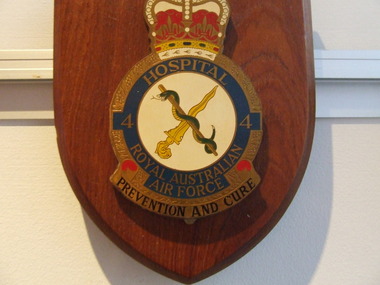
Plaque 4 Sqn.R.A.A.F. Hospital, R.A.A.F. Hospital
... aircraft, losses from anti-aircraft fire were high, however, this never deterred the Wirraway crews from completing their assigned tasks. This aggressive spirit was exemplified by Pilot Officer Archer and his crewman, Sergeant Coulston, who, while on a reconnaissance mission, found themselves above a Japanese Zero fighter. Despite operating a vastly inferior aircraft, Pilot Officer Archer dived to the attack and shot down the enemy aircraft. In June 1943, No 4 Squadron received its first Boomerang fighters and continued to support Allied...aircraft, losses from anti-aircraft fire were high, however, this never deterred the Wirraway crews from completing their assigned tasks. This aggressive spirit was exemplified by Pilot Officer Archer and his crewman, Sergeant Coulston, who, while on a reconnaissance mission, found themselves above a Japanese Zero fighter. Despite operating a vastly inferior aircraft, Pilot Officer Archer dived to the attack and shot down the enemy aircraft. In June 1943, No 4 Squadron received its first Boomerang fighters and continued to support Allied ...No 4 Squadron, Australian Flying Corps, formed at Point Cook, Victoria, in October 1916. After embarking for England to complete its training, the squadron deployed to France in December 1917. From the outset, No 4 Squadron aircraft regularly engaged the Red Baron's elite 'Flying Circus' and, in spite of their lack of experience, quickly gained the ascendancy over the German squadron. During its brief war service, No 4 Squadron destroyed some 128 enemy aircraft and spawned a total of eleven aces. The squadron's highest scoring airman was Captain Cobby who, in addition to shooting down 29 aircraft, also destroyed 13 observation balloons. World War II saw No 4 Squadron Wirraways deployed to Port Moresby in support of Australian troops fighting in the New Guinea jungles. In their slow and vulnerable aircraft, losses from anti-aircraft fire were high, however, this never deterred the Wirraway crews from completing their assigned tasks. This aggressive spirit was exemplified by Pilot Officer Archer and his crewman, Sergeant Coulston, who, while on a reconnaissance mission, found themselves above a Japanese Zero fighter. Despite operating a vastly inferior aircraft, Pilot Officer Archer dived to the attack and shot down the enemy aircraft. In June 1943, No 4 Squadron received its first Boomerang fighters and continued to support Allied troops during the Cape Gloucester landings before moving to Morotai. No 4 Squadron ended the war in Borneo and returned to Australia in November 1945, where it was renamed No 3 Squadron - thus closing the chapter on a very distinguished and proud unit. Summary of Unit Name(s) Start Date End Date No. 4 RAAF Hospital, Butterworth 06/06/1966 06/06/1966 No. 4 RAAF Hospital, Butterworth 03/07/1966 No. 4 RAAF Hospital, Butterworth 01/08/1966 01/08/1966 No. 4 RAAF Hospital, Butterworth 05/09/1966 No. 4 RAAF Hospital, Butterworth 29/09/1966 No. 4 RAAF Hospital, Butterworth 29/10/1966 29/10/1966 http://www.airforce.gov.au/raafmuseum/research/units/4sqn.htmWooden Plaque 15cm x 13cm with insignia of 4 Sqn.R.A.A.F. Hospital 4 Sqn R.A.A.F. Hospital r.a.a.f. 4 squadron, butterworth, r.a.a.f. hospital -
 Wangaratta RSL Sub Branch
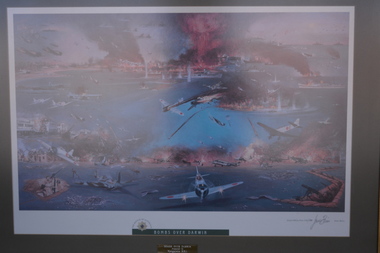
Print - Framed Print, Bombs over Darwin, 1991
... On the 19 February 1942, 242 Japanese aircraft, in two separate raids, attacked the town of Darwin, ships in the harbour and the town's two airfields in an attempt to prevent the Allies from using them as bases to contest the invasion of Timor and Java during World War II. Darwin was lightly defended, relative to the size of the attack, and the Japanese inflicted heavy losses upon Allied...On the 19 February 1942, 242 Japanese aircraft, in two separate raids, attacked the town of Darwin, ships in the harbour and the town's two airfields in an attempt to prevent the Allies from using them as bases to contest the invasion of Timor and Java during World War II. Darwin was lightly defended, relative to the size of the attack, and the Japanese inflicted heavy losses upon Allied ...On the 19 February 1942, 242 Japanese aircraft, in two separate raids, attacked the town of Darwin, ships in the harbour and the town's two airfields in an attempt to prevent the Allies from using them as bases to contest the invasion of Timor and Java during World War II. Darwin was lightly defended, relative to the size of the attack, and the Japanese inflicted heavy losses upon Allied forces at little cost to themselves. The two Japanese air raids were the first, and largest, of more than 100 air raids against Australia during 1942–43.The Bombing of Darwin, also known as the Battle of Darwin, on 19 February 1942 was the largest single attack ever mounted by a foreign power on Australia. The urban areas of Darwin also suffered damage from the raids and there were a number of civilian casualties. As a result more than half of Darwin's civilian population left the area permanently, before or immediately after the attack. Timber framed containing coloured print of planes depicting the bombing of Darwin Harbour. Gold metal plaque - BOMBS OVER DARWIN Presented to Wangaratta RSL Limited Edition Print 234/1800 by James Baineswwii, bombing of darwin, battle of darwin
