
Showing 5 items matching "amphibious warfare - history"
-
 Monbulk RSL Sub Branch
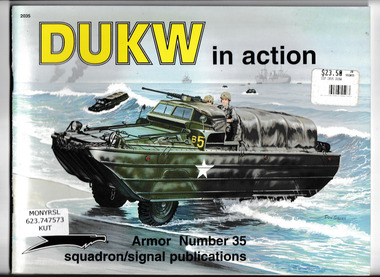
Book, Timothy J Kutta, DUKW in action, 1996
... amphibious vehicles - united states - history...amphibious warfare...amphibious vehicles - united states - history amphibious warfare - history A descriptive and pictorial history of the DUKW amphibious vehicle ill (b/w, col), p.49. ...A descriptive and pictorial history of the DUKW amphibious vehicleill (b/w, col), p.49.non-fictionA descriptive and pictorial history of the DUKW amphibious vehicleamphibious vehicles - united states - history, amphibious warfare - history -
 Monbulk RSL Sub Branch
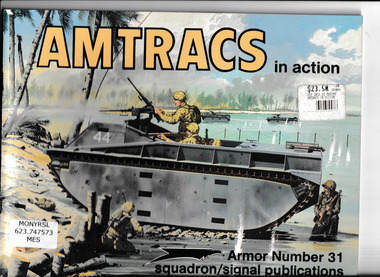
Book, Jim Mesko, AMTRACS in action, 1993
... amphibious warfare - history...amphibious warfare - history armoured vehicles - amtrac - history A descriptive and pictorial history of the AMTRAC amphibious vehicle ill )b/w,col) ,p.49. ...A descriptive and pictorial history of the AMTRAC amphibious vehicleill )b/w,col) ,p.49.non-fictionA descriptive and pictorial history of the AMTRAC amphibious vehicleamphibious warfare - history, armoured vehicles - amtrac - history -
 Monbulk RSL Sub Branch
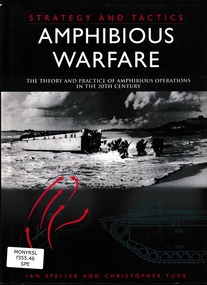
Book, Spellmount et al, Amphibious warfare : strategy and tactics, 2001
... amphibious warfare - history...amphibious warfare - history Amphibious warfare - 20th century The theory and practice of amphibious operations in the 20th century Index, bib, maps, ill, p.176. ...The theory and practice of amphibious operations in the 20th centuryIndex, bib, maps, ill, p.176.non-fictionThe theory and practice of amphibious operations in the 20th centuryamphibious warfare - history, amphibious warfare - 20th century -
 Monbulk RSL Sub Branch
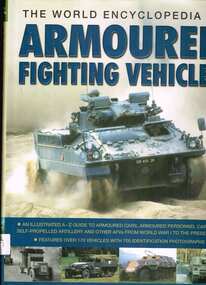
Book, Lorenz Books, The world encyclopedia of armoured fighting vehicles, 2014
... amphibious infantry assult vehicles in WWII, through to modern peacekeeping armoured personnel carriers. It features a range of wheeled and tracked vehicles, including AFVs from the two World Wars. Includes description and history of each vehicle, with a specification panel detailing information such as the official name, date, country of origin, crew, weight, dimensions, armament, armour thickness, powerplant, speed and range. It is a complete reference guide to over 100 years of military vehicle engineering and warfare ...This title examines the role of armoured vehicles, from the 1900's, the coming of age of self-propelled artillery and amphibious infantry assult vehicles in WWII, through to modern peacekeeping armoured personnel carriers. It features a range of wheeled and tracked vehicles, including AFVs from the two World Wars. Includes description and history of each vehicle, with a specification panel detailing information such as the official name, date, country of origin, crew, weight, dimensions, armament, armour thickness, powerplant, speed and range. It is a complete reference guide to over 100 years of military vehicle engineering and warfare.Index, ill, p.256.non-fictionThis title examines the role of armoured vehicles, from the 1900's, the coming of age of self-propelled artillery and amphibious infantry assult vehicles in WWII, through to modern peacekeeping armoured personnel carriers. It features a range of wheeled and tracked vehicles, including AFVs from the two World Wars. Includes description and history of each vehicle, with a specification panel detailing information such as the official name, date, country of origin, crew, weight, dimensions, armament, armour thickness, powerplant, speed and range. It is a complete reference guide to over 100 years of military vehicle engineering and warfare.armoured vehicles - history, tanks - military science -
 Returned Nurses RSL Sub-branch
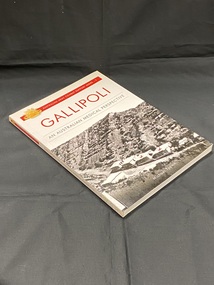
Book - Paperback book, Michael Tyquin, Gallipoli: an Australian medical perspective, 2012
... history shows us the maintenance of health in any army , is a key factor in warfare. In many respects the Gallipoli campaign was a doomed undertaking. The seeds of ultimate defeat in December 1915 were the risks that attended a hugely ambitious, complex, and large-scale amphibious operation - the landings on well-defended shores on the Gallipoli peninsula, under cover of darkness. ...To be successful, a modern army needs logistical support to survive - to arm, feed, transport, and care for its soldiers. As history shows us the maintenance of health in any army , is a key factor in warfare. In many respects the Gallipoli campaign was a doomed undertaking. The seeds of ultimate defeat in December 1915 were the risks that attended a hugely ambitious, complex, and large-scale amphibious operation - the landings on well-defended shores on the Gallipoli peninsula, under cover of darkness. Communications at the time were primitive, while general staff officers had little understanding of their own army's medical assets or the needs of a large medical organisation. The Australian Army Medical Corps (AAMC) received aid from, and gave support to, all five forces at various times during 1915. Underlying the execution of the Dardanelles campaign were factors wholly outside the control of the Australian AMS. - from TroveWhite paperback book with a large black and white image of a field hospital at the base of a hill, two of the white tents have red crosses on the roofs'. Above the image, the title is printed in red with the sub-title in black beneath it. At the top of the cover is a red banner with the series title and at the far left of the banner is the gold Australian Army pin. The text on the spine matches the cover and there is a spine label taped to the base.non-fictionTo be successful, a modern army needs logistical support to survive - to arm, feed, transport, and care for its soldiers. As history shows us the maintenance of health in any army , is a key factor in warfare. In many respects the Gallipoli campaign was a doomed undertaking. The seeds of ultimate defeat in December 1915 were the risks that attended a hugely ambitious, complex, and large-scale amphibious operation - the landings on well-defended shores on the Gallipoli peninsula, under cover of darkness. Communications at the time were primitive, while general staff officers had little understanding of their own army's medical assets or the needs of a large medical organisation. The Australian Army Medical Corps (AAMC) received aid from, and gave support to, all five forces at various times during 1915. Underlying the execution of the Dardanelles campaign were factors wholly outside the control of the Australian AMS. - from Trovegallipoli, australian army medical corps, aamc, medical aspects of war, wwi, ww1, world war 1914-1918
