
Showing 32 items matching "anglo-boer war"
-
 Dandenong/Cranbourne RSL Sub Branch
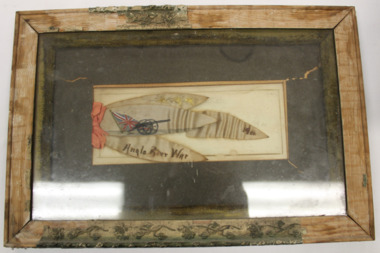
Memorabilia - Framed Trench Art Anglo Boer War 1900
... Framed Trench Art Anglo Boer War 1900...Memorabilia Framed Trench Art Anglo Boer War 1900 ... -
 Bendigo Military Museum
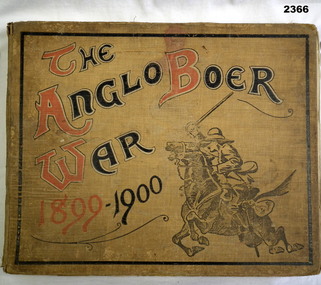
Book - HISTORICAL BOOK, The Anglo Boer War 1899 - 1900, Post 1902
... The Anglo Boer War 1899 - 1900...Boer War Book cover is heavy cardboard with fabric stretched over. Colour is dirty brown. The title is in red & black & depicts a soldier with a sword on horseback. 200 pages of photographs, first 2 pages missing. At rear is a summary of the War by dates, 14 pages. First page missing. The Anglo ...Book cover is heavy cardboard with fabric stretched over. Colour is dirty brown. The title is in red & black & depicts a soldier with a sword on horseback. 200 pages of photographs, first 2 pages missing. At rear is a summary of the War by dates, 14 pages. First page missing.books-military-history, boer war -
 Dandenong/Cranbourne RSL Sub Branch
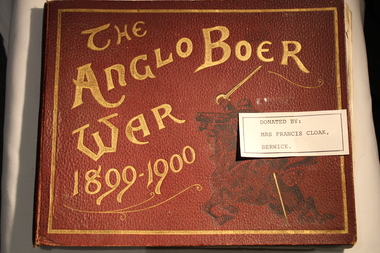
Book - Photo Album, The Anglo Boer War. 1899-1900, unknown
... The Anglo Boer War. 1899-1900 ...Dandenong/Cranbourne RSL Sub Branch 44 – 50 Clow Street Dandenong melbourne Horse. engraved Brown Leather bound album. 192 photos The Anglo Boer War. 1899-1900 Book Photo Album ...Brown Leather bound album. 192 photosHorse. engraved -
 Dandenong/Cranbourne RSL Sub Branch
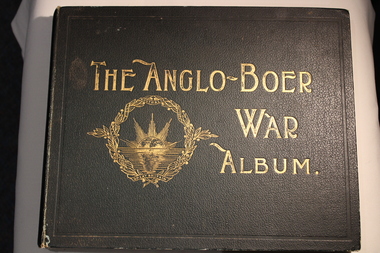
Book, Dennis Edward and Co, The Anglo - Boer War Album, Unknown
... The Anglo - Boer War Album...Green hard book cover with photos and inscriptions of the Boar War October 11th 1899 till May 1st 1902, The Anglo - Boer War Album Book Book Dennis Edward and Co ...Explains history of the Boar WarGreen hard book cover with photos and inscriptions of the Boar War October 11th 1899 till May 1st 1902,Rising Sun (Australia and Great Britain with wreath). Natal and Tasmania inscribed). -
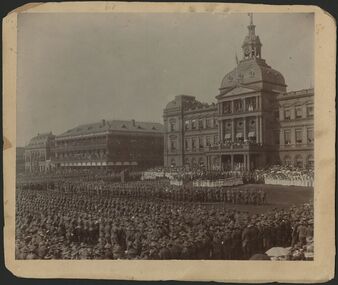 Frankston RSL Sub Branch
Photograph
... boer war...anglo...Lord Robert's victorious British armies raise the Union Jack flag at the Transvaal Republic Parliament building after the occupation of Pretoria on June 6th 1900 during the second Anglo Boer War....Frankston RSL Sub Branch 183 Cranbourne Road Frankston mornington-peninsula boer war anglo boer war transvaal pretoria south africa Lord Robert's victorious British armies raise the Union Jack flag at the Transvaal Republic Parliament building after the occupation of Pretoria on June 6th 1900 during the second Anglo Boer War. ...Lord Robert's victorious British armies raise the Union Jack flag at the Transvaal Republic Parliament building after the occupation of Pretoria on June 6th 1900 during the second Anglo Boer War.boer war, anglo boer war, transvaal, pretoria, south africa, -
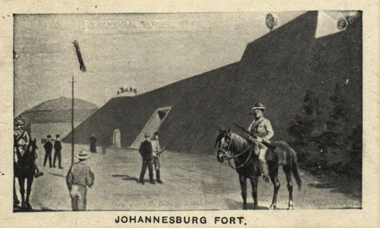 Federation University Historical Collection
Photograph (black & White), Johannesburg Fort - South Africa
... ...anglo-boer war...Even prominent Boer leaders of the Anglo-Boer War were imprisoned here by the British soon after the British had succeeded in seizing and controlling Johannesburg. ...Even prominent Boer leaders of the Anglo-Boer War were imprisoned here by the British soon after the British had succeeded in seizing and controlling Johannesburg. ...Constitution Hill, Johannesburg was formally the site of a fort which was later used as a prison. The Old Fort Prison complex was built to house white male prisoners in 1892. The Old Fort was built around this prison by Paul Kruger from 1896 to 1899 to protect the South African Republic from the threat of British invasion. During the Anglo-Boer War, however, the British seized Johannesburg and converted the Old Fort Prison buildings for the incarceration of Boers, some of whom were executed there. Even prominent Boer leaders of the Anglo-Boer War were imprisoned here by the British soon after the British had succeeded in seizing and controlling Johannesburg. In later times many famous people were imprisoned here, e.g. Mahatma Gandhi and Nelson Mandela. It became known as "The Robben Island of Johannesburg". It closed in 1983.Individual image from photographed poster of tobacco and cigarette cards.constitution hill johannesburg, fort, prison, old fort prison, paul kruger, south african republic, boers, anglo-boer war, johannesburg, mahatma gandi, nelson mandela, robben island of johannesburg -
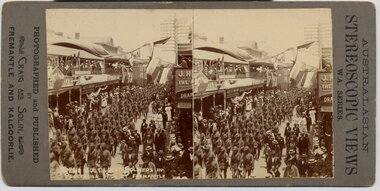 Australian Army Museum of Western Australia
Stereoscopic Image
... anglo boer war, peace of vereenniging, emily hobhouse, 1st Contingent WAMI, 2nd Contingent WAMI...Due to the shortage of khaki material, the 1st Contingent uniforms wore their blue militia tunics, blue puttees and a dark blue puggaree on departure. An Anglo Boer War Service of Reconciliation is held annually on the first Sunday in June at the "Fallen Soldiers" (Boer War) Memorial in Kings Park attended by descendants and representative of all combatant nations. ...Unique series of stereoscopic images showing both the 1st and 2nd West Australian Mounted Infantry Contingents to the Anglo Boer War. Images contain details of uniforms, accoutrements, camp life, civic honours and departure. anglo boer war, peace of vereenniging, emily hobhouse, 1st Contingent WAMI, 2nd Contingent WAMI Photographed and published by Craig and Solin, Fremantle and Kalgoorlie 2nd Contingent Soldiers in Procession, High Street, Fremantle. ...The 1st Contingent departed Fremantle on 7 November 1899 and returned on 29 December 1900. The 2nd Contingent departed 3 February 1900 and returned 8 December 1900. Due to the shortage of khaki material, the 1st Contingent uniforms wore their blue militia tunics, blue puttees and a dark blue puggaree on departure. An Anglo Boer War Service of Reconciliation is held annually on the first Sunday in June at the "Fallen Soldiers" (Boer War) Memorial in Kings Park attended by descendants and representative of all combatant nations. The date selected is the closest Sunday to the date of signing of the Treaty or Peace of Vereeniging (31 May 1902). The culmination of the service is the laying of the Emily Hobhouse wreath.Unique series of stereoscopic images showing both the 1st and 2nd West Australian Mounted Infantry Contingents to the Anglo Boer War. Images contain details of uniforms, accoutrements, camp life, civic honours and departure.2nd Contingent Soldiers in Procession, High Street, Fremantle. Published in Australian Stereoscopic Views, WA Series, Photographed and published by Craig and Solin, Fremantle and KalgoorliePhotographed and published by Craig and Solin, Fremantle and Kalgoorlieanglo boer war, peace of vereenniging, emily hobhouse, 1st contingent wami, 2nd contingent wami -
 4th/19th Prince of Wales's Light Horse Regiment Unit History Room
bandolier
... Designed from the experience of the British Army in the Anglo Boer War 1899-1902 for infantry and mounted troops. ...4th/19th Prince of Wales's Light Horse Regiment Unit History Room 4/19 PWLH Regiment, Building 78 Simpson Barracks Macleod melbourne Designed from the experience of the British Army in the Anglo Boer War 1899-1902 for infantry and mounted troops. ...Designed from the experience of the British Army in the Anglo Boer War 1899-1902 for infantry and mounted troops. Bandolier included as part of the 1903 Pattern Bandolier Equipment ensemble. Dismounted troops very quickly rejected the Bandolier Equipment and it was replaced by the 1908 pattern Infantry web equipment. Australian horse mounted troops continued using the 1903 Bandolier equipment til they exchanged their horses for motorised vehicles in the early 1940's These bandoliers were worn by soldiers of the 4th, 17th, and 19th Light Horse Regiments and their precedent untis from c. 1905 to c.1942. Current 4/19th soldiers wear a bandolier styled on this bandolier when carrying a lance in Parades.Bandolier, 1903 pattern, 90 rounds mk. 2. Leather, Veg. tan, colour brown, brass buckles studs and triangle.M. A. RISK 1915 (Manufacturers mark and date of manuf.)leather, bandolier, 1903, accoutrements, equipment, 9 pockets -
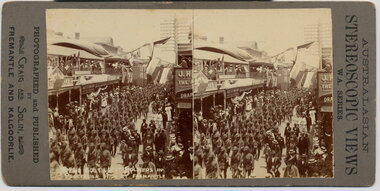 Australian Army Museum of Western Australia
Stereographic Image, 1900
... Due to the shortage of khaki material, the 1st Contingent uniforms wore their blue militia tunics, blue puttees and a dark blue puggaree on departure. An Anglo Boer War Service of Reconciliation is held annually on the first Sunday in June at the "Fallen Soldiers" (Boer War) Memorial in Kings Park attended by descendants and representative of all combatant nations. ...Due to the shortage of khaki material, the 1st Contingent uniforms wore their blue militia tunics, blue puttees and a dark blue puggaree on departure. An Anglo Boer War Service of Reconciliation is held annually on the first Sunday in June at the "Fallen Soldiers" (Boer War) Memorial in Kings Park attended by descendants and representative of all combatant nations. ...The 1st Contingent departed Fremantle on 7 November 1899 and returned on 29 December 1900. The 2nd Contingent departed 3 February 1900 and returned 8 December 1900. Due to the shortage of khaki material, the 1st Contingent uniforms wore their blue militia tunics, blue puttees and a dark blue puggaree on departure. An Anglo Boer War Service of Reconciliation is held annually on the first Sunday in June at the "Fallen Soldiers" (Boer War) Memorial in Kings Park attended by descendants and representative of all combatant nations. The date selected is the closest Sunday to the date of signing of the Treaty or Peace of Vereeniging (31 May 1902). The culmination of the service is the laying of the Emily Hobhouse wreath.Unique series of stereoscopic images showing both the 1st and 2nd West Australian Mounted Infantry Contingents to the Anglo Boer War. Images contain details of uniforms, accoutrements, camp life, civic honours and departure.2nd Contingent Soldiers in Procession, High Street, Fremantle. Published in Australian Stereoscopic Views, WA Series, Photographed and published by Craig and Solin, Fremantle and KalgoorliePhotographed and published by Craig and Solin, Fremantle and Kalgoorliestereoscope, boer war, south africa, capetown -
 Australian Army Museum of Western Australia
Stereographic Image, 1900
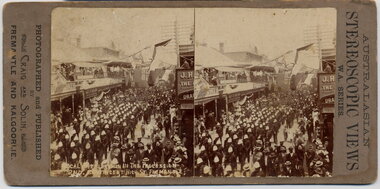
... Due to the shortage of khaki material, the 1st Contingent uniforms wore their blue militia tunics, blue puttees and a dark blue puggaree on departure. An Anglo Boer War Service of Reconciliation is held annually on the first Sunday in June at the "Fallen Soldiers" (Boer War) Memorial in Kings Park attended by descendants and representative of all combatant nations. ...Due to the shortage of khaki material, the 1st Contingent uniforms wore their blue militia tunics, blue puttees and a dark blue puggaree on departure. An Anglo Boer War Service of Reconciliation is held annually on the first Sunday in June at the "Fallen Soldiers" (Boer War) Memorial in Kings Park attended by descendants and representative of all combatant nations. ...The 1st Contingent departed Fremantle on 7 November 1899 and returned on 29 December 1900. The 2nd Contingent departed 3 February 1900 and returned 8 December 1900. Due to the shortage of khaki material, the 1st Contingent uniforms wore their blue militia tunics, blue puttees and a dark blue puggaree on departure. An Anglo Boer War Service of Reconciliation is held annually on the first Sunday in June at the "Fallen Soldiers" (Boer War) Memorial in Kings Park attended by descendants and representative of all combatant nations. The date selected is the closest Sunday to the date of signing of the Treaty or Peace of Vereeniging (31 May 1902). The culmination of the service is the laying of the Emily Hobhouse wreath.Unique series of stereoscopic images showing both the 1st and 2nd West Australian Mounted Infantry Contingents to the Anglo Boer War. Images contain details of uniforms, accoutrements, camp life, civic honours and departure.Local Artillerymen in the Procession. 2nd Contingent, High Street, Fremantle. Published in Australian Stereoscopic Views, WA Series, Photographed and published by Craig and Solin, Fremantle and KalgoorliePhotographed and published by Craig and Solin, Fremantle and Kalgoorliestereoscope, boer war, south africa, capetown -
 Australian Army Museum of Western Australia
Stereographic Image, 1900
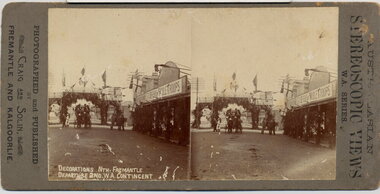
... Due to the shortage of khaki material, the 1st Contingent uniforms wore their blue militia tunics, blue puttees and a dark blue puggaree on departure. An Anglo Boer War Service of Reconciliation is held annually on the first Sunday in June at the "Fallen Soldiers" (Boer War) Memorial in Kings Park attended by descendants and representative of all combatant nations. ...Due to the shortage of khaki material, the 1st Contingent uniforms wore their blue militia tunics, blue puttees and a dark blue puggaree on departure. An Anglo Boer War Service of Reconciliation is held annually on the first Sunday in June at the "Fallen Soldiers" (Boer War) Memorial in Kings Park attended by descendants and representative of all combatant nations. ...The 1st Contingent departed Fremantle on 7 November 1899 and returned on 29 December 1900. The 2nd Contingent departed 3 February 1900 and returned 8 December 1900. Due to the shortage of khaki material, the 1st Contingent uniforms wore their blue militia tunics, blue puttees and a dark blue puggaree on departure. An Anglo Boer War Service of Reconciliation is held annually on the first Sunday in June at the "Fallen Soldiers" (Boer War) Memorial in Kings Park attended by descendants and representative of all combatant nations. The date selected is the closest Sunday to the date of signing of the Treaty or Peace of Vereeniging (31 May 1902). The culmination of the service is the laying of the Emily Hobhouse wreath.Unique series of stereoscopic images showing both the 1st and 2nd West Australian Mounted Infantry Contingents to the Anglo Boer War. Images contain details of uniforms, accoutrements, camp life, civic honours and departure.Decorations in Nth Fremantle. Departure of 2nd WA Contingent. Published in Australian Stereoscopic Views, WA Series, Photographed and published by Craig and Solin, Fremantle and KalgoorliePhotographed and published by Craig and Solin, Fremantle and Kalgoorliestereoscope, boer war, south africa, capetown -
 Australian Army Museum of Western Australia
Stereographic Image, 1900
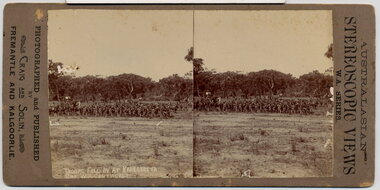
... Due to the shortage of khaki material, the 1st Contingent uniforms wore their blue militia tunics, blue puttees and a dark blue puggaree on departure. An Anglo Boer War Service of Reconciliation is held annually on the first Sunday in June at the "Fallen Soldiers" (Boer War) Memorial in Kings Park attended by descendants and representative of all combatant nations. ...Due to the shortage of khaki material, the 1st Contingent uniforms wore their blue militia tunics, blue puttees and a dark blue puggaree on departure. An Anglo Boer War Service of Reconciliation is held annually on the first Sunday in June at the "Fallen Soldiers" (Boer War) Memorial in Kings Park attended by descendants and representative of all combatant nations. ...The 1st Contingent departed Fremantle on 7 November 1899 and returned on 29 December 1900. The 2nd Contingent departed 3 February 1900 and returned 8 December 1900. Due to the shortage of khaki material, the 1st Contingent uniforms wore their blue militia tunics, blue puttees and a dark blue puggaree on departure. An Anglo Boer War Service of Reconciliation is held annually on the first Sunday in June at the "Fallen Soldiers" (Boer War) Memorial in Kings Park attended by descendants and representative of all combatant nations. The date selected is the closest Sunday to the date of signing of the Treaty or Peace of Vereeniging (31 May 1902). The culmination of the service is the laying of the Emily Hobhouse wreath.Unique series of stereoscopic images showing both the 1st and 2nd West Australian Mounted Infantry Contingents to the Anglo Boer War. Images contain details of uniforms, accoutrements, camp life, civic honours and departure.Troops Fall In at Karrakatta. 2nd WA Contingent. Published in Australian Stereoscopic Views, WA Series, Photographed and published by Craig and Solin, Fremantle and KalgoorliePhotographed and published by Craig and Solin, Fremantle and Kalgoorliestereoscope, boer war, south africa, capetown -
 Australian Army Museum of Western Australia
Stereographic Image, 1900
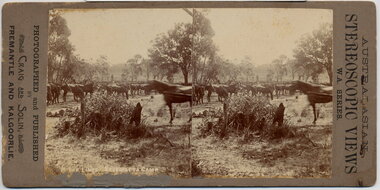
... Due to the shortage of khaki material, the 1st Contingent uniforms wore their blue militia tunics, blue puttees and a dark blue puggaree on departure. An Anglo Boer War Service of Reconciliation is held annually on the first Sunday in June at the "Fallen Soldiers" (Boer War) Memorial in Kings Park attended by descendants and representative of all combatant nations. ...Due to the shortage of khaki material, the 1st Contingent uniforms wore their blue militia tunics, blue puttees and a dark blue puggaree on departure. An Anglo Boer War Service of Reconciliation is held annually on the first Sunday in June at the "Fallen Soldiers" (Boer War) Memorial in Kings Park attended by descendants and representative of all combatant nations. ...The 1st Contingent departed Fremantle on 7 November 1899 and returned on 29 December 1900. The 2nd Contingent departed 3 February 1900 and returned 8 December 1900. Due to the shortage of khaki material, the 1st Contingent uniforms wore their blue militia tunics, blue puttees and a dark blue puggaree on departure. An Anglo Boer War Service of Reconciliation is held annually on the first Sunday in June at the "Fallen Soldiers" (Boer War) Memorial in Kings Park attended by descendants and representative of all combatant nations. The date selected is the closest Sunday to the date of signing of the Treaty or Peace of Vereeniging (31 May 1902). The culmination of the service is the laying of the Emily Hobhouse wreath.Unique series of stereoscopic images showing both the 1st and 2nd West Australian Mounted Infantry Contingents to the Anglo Boer War. Images contain details of uniforms, accoutrements, camp life, civic honours and departure.Horse Lines in Karrakatta Camp. Published in Australian Stereoscopic Views, WA Series, Photographed and published by Craig and Solin, Fremantle and KalgoorliePhotographed and published by Craig and Solin, Fremantle and Kalgoorliestereoscope, boer war, south africa, capetown -
 Australian Army Museum of Western Australia
Stereographic Image, 1900
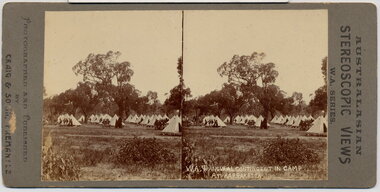
... Due to the shortage of khaki material, the 1st Contingent uniforms wore their blue militia tunics, blue puttees and a dark blue puggaree on departure. An Anglo Boer War Service of Reconciliation is held annually on the first Sunday in June at the "Fallen Soldiers" (Boer War) Memorial in Kings Park attended by descendants and representative of all combatant nations. ...Due to the shortage of khaki material, the 1st Contingent uniforms wore their blue militia tunics, blue puttees and a dark blue puggaree on departure. An Anglo Boer War Service of Reconciliation is held annually on the first Sunday in June at the "Fallen Soldiers" (Boer War) Memorial in Kings Park attended by descendants and representative of all combatant nations. ...The 1st Contingent departed Fremantle on 7 November 1899 and returned on 29 December 1900. The 2nd Contingent departed 3 February 1900 and returned 8 December 1900. Due to the shortage of khaki material, the 1st Contingent uniforms wore their blue militia tunics, blue puttees and a dark blue puggaree on departure. An Anglo Boer War Service of Reconciliation is held annually on the first Sunday in June at the "Fallen Soldiers" (Boer War) Memorial in Kings Park attended by descendants and representative of all combatant nations. The date selected is the closest Sunday to the date of signing of the Treaty or Peace of Vereeniging (31 May 1902). The culmination of the service is the laying of the Emily Hobhouse wreath.Unique series of stereoscopic images showing both the 1st and 2nd West Australian Mounted Infantry Contingents to the Anglo Boer War. Images contain details of uniforms, accoutrements, camp life, civic honours and departure.WA Transvaal Contingent in Camp at Karrakatta. Published in Australian Stereoscopic Views, WA Series, Photographed and published by Craig and Solin, Fremantle and KalgoorliePhotographed and published by Craig and Solin, Fremantle and Kalgoorliestereoscope, boer war, south africa, capetown -
 Australian Army Museum of Western Australia
Stereographic Image, 1900
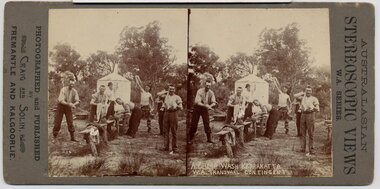
... Due to the shortage of khaki material, the 1st Contingent uniforms wore their blue militia tunics, blue puttees and a dark blue puggaree on departure. An Anglo Boer War Service of Reconciliation is held annually on the first Sunday in June at the "Fallen Soldiers" (Boer War) Memorial in Kings Park attended by descendants and representative of all combatant nations. ...Due to the shortage of khaki material, the 1st Contingent uniforms wore their blue militia tunics, blue puttees and a dark blue puggaree on departure. An Anglo Boer War Service of Reconciliation is held annually on the first Sunday in June at the "Fallen Soldiers" (Boer War) Memorial in Kings Park attended by descendants and representative of all combatant nations. ...The 1st Contingent departed Fremantle on 7 November 1899 and returned on 29 December 1900. The 2nd Contingent departed 3 February 1900 and returned 8 December 1900. Due to the shortage of khaki material, the 1st Contingent uniforms wore their blue militia tunics, blue puttees and a dark blue puggaree on departure. An Anglo Boer War Service of Reconciliation is held annually on the first Sunday in June at the "Fallen Soldiers" (Boer War) Memorial in Kings Park attended by descendants and representative of all combatant nations. The date selected is the closest Sunday to the date of signing of the Treaty or Peace of Vereeniging (31 May 1902). The culmination of the service is the laying of the Emily Hobhouse wreath.Unique series of stereoscopic images showing both the 1st and 2nd West Australian Mounted Infantry Contingents to the Anglo Boer War. Images contain details of uniforms, accoutrements, camp life, civic honours and departure.A Camp Wash Karrakatta. WA Transvaal Contingent. Published in Australian Stereoscopic Views, WA Series, Photographed and published by Craig and Solin, Fremantle and KalgoorliePhotographed and published by Craig and Solin, Fremantle and Kalgoorliestereoscope, boer war, south africa, capetown -
 Australian Army Museum of Western Australia
Stereographic Image, 1900
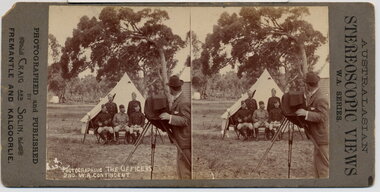
... Due to the shortage of khaki material, the 1st Contingent uniforms wore their blue militia tunics, blue puttees and a dark blue puggaree on departure. An Anglo Boer War Service of Reconciliation is held annually on the first Sunday in June at the "Fallen Soldiers" (Boer War) Memorial in Kings Park attended by descendants and representative of all combatant nations. ...Due to the shortage of khaki material, the 1st Contingent uniforms wore their blue militia tunics, blue puttees and a dark blue puggaree on departure. An Anglo Boer War Service of Reconciliation is held annually on the first Sunday in June at the "Fallen Soldiers" (Boer War) Memorial in Kings Park attended by descendants and representative of all combatant nations. ...The 1st Contingent departed Fremantle on 7 November 1899 and returned on 29 December 1900. The 2nd Contingent departed 3 February 1900 and returned 8 December 1900. Due to the shortage of khaki material, the 1st Contingent uniforms wore their blue militia tunics, blue puttees and a dark blue puggaree on departure. An Anglo Boer War Service of Reconciliation is held annually on the first Sunday in June at the "Fallen Soldiers" (Boer War) Memorial in Kings Park attended by descendants and representative of all combatant nations. The date selected is the closest Sunday to the date of signing of the Treaty or Peace of Vereeniging (31 May 1902). The culmination of the service is the laying of the Emily Hobhouse wreath.Unique series of stereoscopic images showing both the 1st and 2nd West Australian Mounted Infantry Contingents to the Anglo Boer War. Images contain details of uniforms, accoutrements, camp life, civic honours and departure.Photographing the Officers. 2nd WA Contingent. Published in Australian Stereoscopic Views, WA Series, Photographed and published by Craig and Solin, Fremantle and KalgoorliePhotographed and published by Craig and Solin, Fremantle and Kalgoorliestereoscope, boer war, south africa, capetown -
 Australian Army Museum of Western Australia
Stereographic Image, 1900
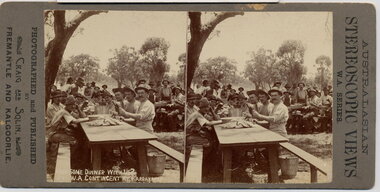
... Due to the shortage of khaki material, the 1st Contingent uniforms wore their blue militia tunics, blue puttees and a dark blue puggaree on departure. An Anglo Boer War Service of Reconciliation is held annually on the first Sunday in June at the "Fallen Soldiers" (Boer War) Memorial in Kings Park attended by descendants and representative of all combatant nations. ...Due to the shortage of khaki material, the 1st Contingent uniforms wore their blue militia tunics, blue puttees and a dark blue puggaree on departure. An Anglo Boer War Service of Reconciliation is held annually on the first Sunday in June at the "Fallen Soldiers" (Boer War) Memorial in Kings Park attended by descendants and representative of all combatant nations. ...The 1st Contingent departed Fremantle on 7 November 1899 and returned on 29 December 1900. The 2nd Contingent departed 3 February 1900 and returned 8 December 1900. Due to the shortage of khaki material, the 1st Contingent uniforms wore their blue militia tunics, blue puttees and a dark blue puggaree on departure. An Anglo Boer War Service of Reconciliation is held annually on the first Sunday in June at the "Fallen Soldiers" (Boer War) Memorial in Kings Park attended by descendants and representative of all combatant nations. The date selected is the closest Sunday to the date of signing of the Treaty or Peace of Vereeniging (31 May 1902). The culmination of the service is the laying of the Emily Hobhouse wreath.Unique series of stereoscopic images showing both the 1st and 2nd West Australian Mounted Infantry Contingents to the Anglo Boer War. Images contain details of uniforms, accoutrements, camp life, civic honours and departure.Have Some Dinner with Us. 2nd WA Contingent at Karrakatta. Published in Australian Stereoscopic Views, WA Series, Photographed and published by Craig and Solin, Fremantle and KalgoorliePhotographed and published by Craig and Solin, Fremantle and Kalgoorliestereoscope, boer war, south africa, capetown -
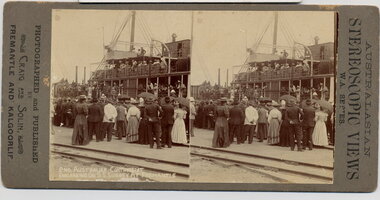 Australian Army Museum of Western Australia
Stereographic Image, 1900
... Due to the shortage of khaki material, the 1st Contingent uniforms wore their blue militia tunics, blue puttees and a dark blue puggaree on departure. An Anglo Boer War Service of Reconciliation is held annually on the first Sunday in June at the "Fallen Soldiers" (Boer War) Memorial in Kings Park attended by descendants and representative of all combatant nations. ...Due to the shortage of khaki material, the 1st Contingent uniforms wore their blue militia tunics, blue puttees and a dark blue puggaree on departure. An Anglo Boer War Service of Reconciliation is held annually on the first Sunday in June at the "Fallen Soldiers" (Boer War) Memorial in Kings Park attended by descendants and representative of all combatant nations. ...The 1st Contingent departed Fremantle on 7 November 1899 and returned on 29 December 1900. The 2nd Contingent departed 3 February 1900 and returned 8 December 1900. Due to the shortage of khaki material, the 1st Contingent uniforms wore their blue militia tunics, blue puttees and a dark blue puggaree on departure. An Anglo Boer War Service of Reconciliation is held annually on the first Sunday in June at the "Fallen Soldiers" (Boer War) Memorial in Kings Park attended by descendants and representative of all combatant nations. The date selected is the closest Sunday to the date of signing of the Treaty or Peace of Vereeniging (31 May 1902). The culmination of the service is the laying of the Emily Hobhouse wreath.Unique series of stereoscopic images showing both the 1st and 2nd West Australian Mounted Infantry Contingents to the Anglo Boer War. Images contain details of uniforms, accoutrements, camp life, civic honours and departure.2nd WA Contingent Embarking on SS Surrey at Fremantle. Published in Australian Stereoscopic Views, WA Series, Photographed and published by Craig and Solin, Fremantle and KalgoorliePhotographed and published by Craig and Solin, Fremantle and Kalgoorliestereoscope, boer war, south africa, capetown -
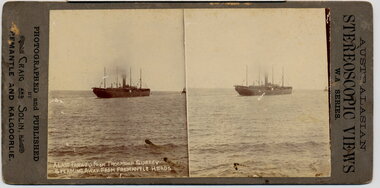 Australian Army Museum of Western Australia
Stereographic Image, 1900
... Due to the shortage of khaki material, the 1st Contingent uniforms wore their blue militia tunics, blue puttees and a dark blue puggaree on departure. An Anglo Boer War Service of Reconciliation is held annually on the first Sunday in June at the "Fallen Soldiers" (Boer War) Memorial in Kings Park attended by descendants and representative of all combatant nations. ...Due to the shortage of khaki material, the 1st Contingent uniforms wore their blue militia tunics, blue puttees and a dark blue puggaree on departure. An Anglo Boer War Service of Reconciliation is held annually on the first Sunday in June at the "Fallen Soldiers" (Boer War) Memorial in Kings Park attended by descendants and representative of all combatant nations. ...The 1st Contingent departed Fremantle on 7 November 1899 and returned on 29 December 1900. The 2nd Contingent departed 3 February 1900 and returned 8 December 1900. Due to the shortage of khaki material, the 1st Contingent uniforms wore their blue militia tunics, blue puttees and a dark blue puggaree on departure. An Anglo Boer War Service of Reconciliation is held annually on the first Sunday in June at the "Fallen Soldiers" (Boer War) Memorial in Kings Park attended by descendants and representative of all combatant nations. The date selected is the closest Sunday to the date of signing of the Treaty or Peace of Vereeniging (31 May 1902). The culmination of the service is the laying of the Emily Hobhouse wreath.Unique series of stereoscopic images showing both the 1st and 2nd West Australian Mounted Infantry Contingents to the Anglo Boer War. Images contain details of uniforms, accoutrements, camp life, civic honours and departure.A Last Farewell From Troopship Surrey Steaming Away From Fremantle Heads. Published in Australian Stereoscopic Views, WA Series, Photographed and published by Craig and Solin, Fremantle and KalgoorliePhotographed and published by Craig and Solin, Fremantle and Kalgoorliestereoscope, boer war, south africa, capetown -
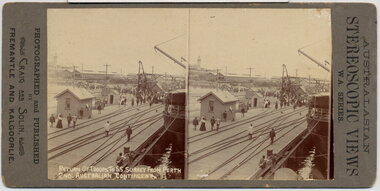 Australian Army Museum of Western Australia
Stereographic Image, 1900
... Due to the shortage of khaki material, the 1st Contingent uniforms wore their blue militia tunics, blue puttees and a dark blue puggaree on departure. An Anglo Boer War Service of Reconciliation is held annually on the first Sunday in June at the "Fallen Soldiers" (Boer War) Memorial in Kings Park attended by descendants and representative of all combatant nations. ...Due to the shortage of khaki material, the 1st Contingent uniforms wore their blue militia tunics, blue puttees and a dark blue puggaree on departure. An Anglo Boer War Service of Reconciliation is held annually on the first Sunday in June at the "Fallen Soldiers" (Boer War) Memorial in Kings Park attended by descendants and representative of all combatant nations. ...The 1st Contingent departed Fremantle on 7 November 1899 and returned on 29 December 1900. The 2nd Contingent departed 3 February 1900 and returned 8 December 1900. Due to the shortage of khaki material, the 1st Contingent uniforms wore their blue militia tunics, blue puttees and a dark blue puggaree on departure. An Anglo Boer War Service of Reconciliation is held annually on the first Sunday in June at the "Fallen Soldiers" (Boer War) Memorial in Kings Park attended by descendants and representative of all combatant nations. The date selected is the closest Sunday to the date of signing of the Treaty or Peace of Vereeniging (31 May 1902). The culmination of the service is the laying of the Emily Hobhouse wreath.Unique series of stereoscopic images showing both the 1st and 2nd West Australian Mounted Infantry Contingents to the Anglo Boer War. Images contain details of uniforms, accoutrements, camp life, civic honours and departure.Return of the Troops to SS Surrey from Perth. 2nd Australian Contingent. Published in Australian Stereoscopic Views, WA Series, Photographed and published by Craig and Solin, Fremantle and KalgoorliePhotographed and published by Craig and Solin, Fremantle and Kalgoorliestereoscope, boer war, south africa, capetown -
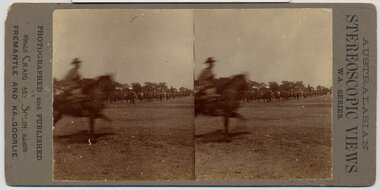 Australian Army Museum of Western Australia
Stereographic Image, 1900
... Due to the shortage of khaki material, the 1st Contingent uniforms wore their blue militia tunics, blue puttees and a dark blue puggaree on departure. An Anglo Boer War Service of Reconciliation is held annually on the first Sunday in June at the "Fallen Soldiers" (Boer War) Memorial in Kings Park attended by descendants and representative of all combatant nations. ...Due to the shortage of khaki material, the 1st Contingent uniforms wore their blue militia tunics, blue puttees and a dark blue puggaree on departure. An Anglo Boer War Service of Reconciliation is held annually on the first Sunday in June at the "Fallen Soldiers" (Boer War) Memorial in Kings Park attended by descendants and representative of all combatant nations. ...The 1st Contingent departed Fremantle on 7 November 1899 and returned on 29 December 1900. The 2nd Contingent departed 3 February 1900 and returned 8 December 1900. Due to the shortage of khaki material, the 1st Contingent uniforms wore their blue militia tunics, blue puttees and a dark blue puggaree on departure. An Anglo Boer War Service of Reconciliation is held annually on the first Sunday in June at the "Fallen Soldiers" (Boer War) Memorial in Kings Park attended by descendants and representative of all combatant nations. The date selected is the closest Sunday to the date of signing of the Treaty or Peace of Vereeniging (31 May 1902). The culmination of the service is the laying of the Emily Hobhouse wreath.Unique series of stereoscopic images showing both the 1st and 2nd West Australian Mounted Infantry Contingents to the Anglo Boer War. Images contain details of uniforms, accoutrements, camp life, civic honours and departure.Untitled [Mounted Exercises in Karrakatta Camp]. Published in Australian Stereoscopic Views, WA Series, Photographed and published by Craig and Solin, Fremantle and KalgoorliePhotographed and published by Craig and Solin, Fremantle and Kalgoorliestereoscope, boer war, south africa, capetown -
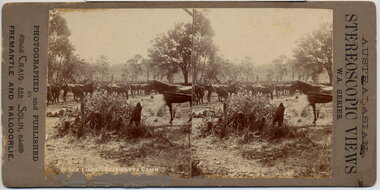 Australian Army Museum of Western Australia
Stereographic Image, 1900
... Due to the shortage of khaki material, the 1st Contingent uniforms wore their blue militia tunics, blue puttees and a dark blue puggaree on departure. An Anglo Boer War Service of Reconciliation is held annually on the first Sunday in June at the "Fallen Soldiers" (Boer War) Memorial in Kings Park attended by descendants and representative of all combatant nations. ...Due to the shortage of khaki material, the 1st Contingent uniforms wore their blue militia tunics, blue puttees and a dark blue puggaree on departure. An Anglo Boer War Service of Reconciliation is held annually on the first Sunday in June at the "Fallen Soldiers" (Boer War) Memorial in Kings Park attended by descendants and representative of all combatant nations. ...The 1st Contingent departed Fremantle on 7 November 1899 and returned on 29 December 1900. The 2nd Contingent departed 3 February 1900 and returned 8 December 1900. Due to the shortage of khaki material, the 1st Contingent uniforms wore their blue militia tunics, blue puttees and a dark blue puggaree on departure. An Anglo Boer War Service of Reconciliation is held annually on the first Sunday in June at the "Fallen Soldiers" (Boer War) Memorial in Kings Park attended by descendants and representative of all combatant nations. The date selected is the closest Sunday to the date of signing of the Treaty or Peace of Vereeniging (31 May 1902). The culmination of the service is the laying of the Emily Hobhouse wreath.Unique series of stereoscopic images showing both the 1st and 2nd West Australian Mounted Infantry Contingents to the Anglo Boer War. Images contain details of uniforms, accoutrements, camp life, civic honours and departure.Horse Lines Karrakatta Camp. Published in Australian Stereoscopic Views, WA Series, Photographed and published by Craig and Solin, Fremantle and KalgoorliePhotographed and published by Craig and Solin, Fremantle and Kalgoorliestereoscope, boer war, south africa, capetown -
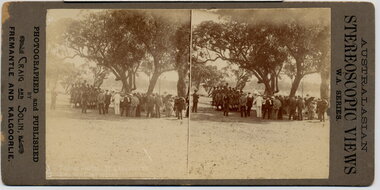 Australian Army Museum of Western Australia
Stereographic Image, 1900
... Due to the shortage of khaki material, the 1st Contingent uniforms wore their blue militia tunics, blue puttees and a dark blue puggaree on departure. An Anglo Boer War Service of Reconciliation is held annually on the first Sunday in June at the "Fallen Soldiers" (Boer War) Memorial in Kings Park attended by descendants and representative of all combatant nations. ...Due to the shortage of khaki material, the 1st Contingent uniforms wore their blue militia tunics, blue puttees and a dark blue puggaree on departure. An Anglo Boer War Service of Reconciliation is held annually on the first Sunday in June at the "Fallen Soldiers" (Boer War) Memorial in Kings Park attended by descendants and representative of all combatant nations. ...The 1st Contingent departed Fremantle on 7 November 1899 and returned on 29 December 1900. The 2nd Contingent departed 3 February 1900 and returned 8 December 1900. Due to the shortage of khaki material, the 1st Contingent uniforms wore their blue militia tunics, blue puttees and a dark blue puggaree on departure. An Anglo Boer War Service of Reconciliation is held annually on the first Sunday in June at the "Fallen Soldiers" (Boer War) Memorial in Kings Park attended by descendants and representative of all combatant nations. The date selected is the closest Sunday to the date of signing of the Treaty or Peace of Vereeniging (31 May 1902). The culmination of the service is the laying of the Emily Hobhouse wreath.Unique series of stereoscopic images showing both the 1st and 2nd West Australian Mounted Infantry Contingents to the Anglo Boer War. Images contain details of uniforms, accoutrements, camp life, civic honours and departure.Taking Photos at Karrakatta. 2nd WA Contingent. Published in Australian Stereoscopic Views, WA Series, Photographed and published by Craig and Solin, Fremantle and KalgoorliePhotographed and published by Craig and Solin, Fremantle and Kalgoorliestereoscope, boer war, south africa, capetown -
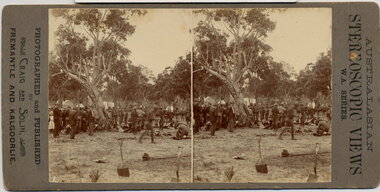 Australian Army Museum of Western Australia
Stereographic Image, 1900
... Due to the shortage of khaki material, the 1st Contingent uniforms wore their blue militia tunics, blue puttees and a dark blue puggaree on departure. An Anglo Boer War Service of Reconciliation is held annually on the first Sunday in June at the "Fallen Soldiers" (Boer War) Memorial in Kings Park attended by descendants and representative of all combatant nations. ...Due to the shortage of khaki material, the 1st Contingent uniforms wore their blue militia tunics, blue puttees and a dark blue puggaree on departure. An Anglo Boer War Service of Reconciliation is held annually on the first Sunday in June at the "Fallen Soldiers" (Boer War) Memorial in Kings Park attended by descendants and representative of all combatant nations. ...The 1st Contingent departed Fremantle on 7 November 1899 and returned on 29 December 1900. The 2nd Contingent departed 3 February 1900 and returned 8 December 1900. Due to the shortage of khaki material, the 1st Contingent uniforms wore their blue militia tunics, blue puttees and a dark blue puggaree on departure. An Anglo Boer War Service of Reconciliation is held annually on the first Sunday in June at the "Fallen Soldiers" (Boer War) Memorial in Kings Park attended by descendants and representative of all combatant nations. The date selected is the closest Sunday to the date of signing of the Treaty or Peace of Vereeniging (31 May 1902). The culmination of the service is the laying of the Emily Hobhouse wreath.Unique series of stereoscopic images showing both the 1st and 2nd West Australian Mounted Infantry Contingents to the Anglo Boer War. Images contain details of uniforms, accoutrements, camp life, civic honours and departure.Untitled [Issue of Harness at Karrakatta Camp]. Published in Australian Stereoscopic Views, WA Series, Photographed and published by Craig and Solin, Fremantle and KalgoorliePhotographed and published by Craig and Solin, Fremantle and Kalgoorliestereoscope, boer war, south africa, capetown -
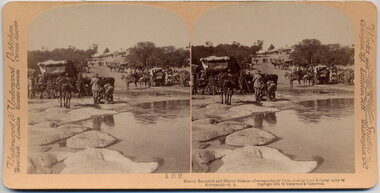 Australian Army Museum of Western Australia
Stereographic Image, 1900
... Due to the shortage of khaki material, the 1st Contingent uniforms wore their blue militia tunics, blue puttees and a dark blue puggaree on departure. An Anglo Boer War Service of Reconciliation is held annually on the first Sunday in June at the "Fallen Soldiers" (Boer War) Memorial in Kings Park attended by descendants and representative of all combatant nations. ...Due to the shortage of khaki material, the 1st Contingent uniforms wore their blue militia tunics, blue puttees and a dark blue puggaree on departure. An Anglo Boer War Service of Reconciliation is held annually on the first Sunday in June at the "Fallen Soldiers" (Boer War) Memorial in Kings Park attended by descendants and representative of all combatant nations. ...The 1st Contingent departed Fremantle on 7 November 1899 and returned on 29 December 1900. The 2nd Contingent departed 3 February 1900 and returned 8 December 1900. Due to the shortage of khaki material, the 1st Contingent uniforms wore their blue militia tunics, blue puttees and a dark blue puggaree on departure. An Anglo Boer War Service of Reconciliation is held annually on the first Sunday in June at the "Fallen Soldiers" (Boer War) Memorial in Kings Park attended by descendants and representative of all combatant nations. The date selected is the closest Sunday to the date of signing of the Treaty or Peace of Vereeniging (31 May 1902). The culmination of the service is the laying of the Emily Hobhouse wreath.Unique series of stereoscopic images showing both the 1st and 2nd West Australian Mounted Infantry Contingents to the Anglo Boer War. Images contain details of uniforms, accoutrements, camp life, civic honours and departure.Decorations High Street Fremantle. Departure 2nd WA Contingent. Published in Australian Stereoscopic Views, WA Series, Photographed and published by Craig and Solin, Fremantle and KalgoorliePhotographed and published by Craig and Solin, Fremantle and Kalgoorliestereoscope, boer war, south africa, capetown -
 City of Greater Bendigo - Civic Collection
Plaque - Commemorative
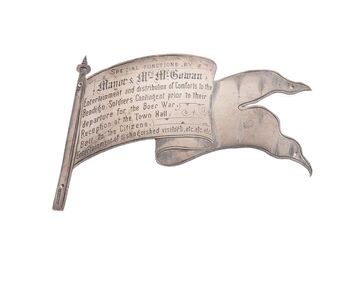
... The Boer War took place from 11 October 1899 – 31 May 1902. Also known as the Anglo–Boer War, or the South African War, the conflict was fought between the British Empire and the two Boer Republics (the South African Republic and the Orange Free State) over the Empire's influence in Southern Africa. ...City of Greater Bendigo - Civic Collection Bendigo Town Hall 189-193 Hargreaves St, Bendigo, 3550 goldfields The Boer War took place from 11 October 1899 – 31 May 1902. Also known as the Anglo–Boer War, or the South African War, the conflict was fought between the British Empire and the two Boer Republics (the South African Republic and the Orange Free State) over the Empire's influence in Southern Africa. ...The Boer War took place from 11 October 1899 – 31 May 1902. Also known as the Anglo–Boer War, or the South African War, the conflict was fought between the British Empire and the two Boer Republics (the South African Republic and the Orange Free State) over the Empire's influence in Southern Africa. As part of the British Empire, the Australian colonies offered troops for the war. Samuel McGowan was born in North Ireland in 1845, immigrating to Australia in 1870. He arrived in Bendigo 1871 and having worked in a large engineering works at home was quickly able to find management work in foundries, later opening a legal manager's office growing this into one of the largest of its type in Bendigo. Samuel McGowan was elected a member of the City Council in 1883 and was elected Mayor in 1885 and again in 1899, resigning as a councillor in 1901. He was the treasurer of the Bendigo Hospital, a senior member of the Zenith Lodge and president of the Bendigo Agricultural and Horticultural Society. Samuel McGowan and Kate Goyne from Epsom married on 29th August 1874. Samuel died in 1921 aged 76 and Kate in 1930 aged 78. This plaque was probably attached to a commemorative board such as an honour board, however its whereabout are unknown. Engraved plaque in the shape of a flag and flag pole. Four small holes indicate that it was previously attached to a larger commemorative board.Flag; Special functions by / Mayor & Mrs McGowan / entertainment and distribution of Comforts to the / Bendigo Soldiers Contingent prior to their / departure for the Boer War. / Reception at the Town Hall / Ball to the Citizens. / Entertainment of distinguished visitors, etc.etc.etc / Flag pole; F. Prescottmayor mcgowan, councillor s h mc gowan, mayoress mcgowan -
 Federation University Historical Collection
Photograph (black & White), General Sir Thomas Kelly-Kenny - South Africa Forces
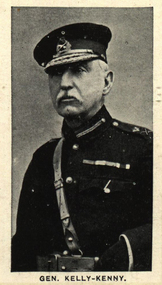
... In the Second Anglo-Boer War he was , as a Lieutenant-General, General Officer Commanding the 6th Division of the South African field forces. ...In the Second Anglo-Boer War he was , as a Lieutenant-General, General Officer Commanding the 6th Division of the South African field forces. ...As well as his army positions, Kelly-Kenny was very interested in politics in his native County Clare. In the Second Anglo-Boer War he was , as a Lieutenant-General, General Officer Commanding the 6th Division of the South African field forces. He was twice mentioned in dispatches and received the Queen's South African Medal with four clasps. He was involved in the relief of Kimberley, the battles of Paardeberg, Poplar Grove and Driefontein. Lieutenant-General Kitchener was appointed commander and over-ruled Kelly-Kenny's plan to besiege Cronji and bombard his force from a safe distance. Kitchener ordered an assault on the Boer trenches. The result was "Bloody Sunday" - an unnecessary sacrifice of hundreds of lives on the British side. Kelly-Kenny was involved in the engagements at Poplar Grove and Driefontein where the 6th Division distinguished itself. These were viewed as key to destroying the Boer morale and winning the war. General Kelly-Kenny was a close friend of King Edward VII. Appointments made, at the insistence of the King, were often challenged. Due to his loyalty and abilities Kelly-Kenny was appointed Knight Commander of the Order of the Bath and received a knighthood in a private audience. Once again others tried to have him moved from the War Office but the King intervened again and he remained in his position. He was conferred with the Knight Grand Cross of the Order of the Bath (1904), Grand Cross of the Red Eagle (1905 - Germany), Grand Cross of the Rising Sun (1906 - Japan) and on his return to Britain he received the Knight Grand Cross of the Royal Victorian Order (1906) Individual image taken from photographed poster of tobacco and cigarette cards.kell-kenny, county clare, lieutenant-general, kimberley, queen's south african medal, paardeberg, poplar grove, driefontein, kitchener, bloody sunday, cronji, boer war, trenches, knight commander of the order of the bath, war office, king, king edward vii, knight grand cross of the order of the bath, grand cross of the red eagle, grand cross of the rising sun, knight grand cross of the royal victorian order -
 Monbulk RSL Sub Branch
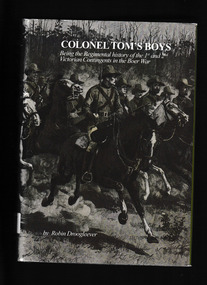
Book, Robin Droogleever, Colonel Tom's boys : being the regimental history of the 1st and 2nd Victorian contingents in the Boer War, 2013
... Monbulk RSL Sub Branch 48 Main Road Monbulk yarra-valley-and-the-dandenong-ranges Boer war - participation - Victoria - Australia Soldiers - Victoria - Biography This book focuses on the raising, equipping and dispatch of the 514 young colonials who served in the first two contingents which were sent in response to Britans call for aid when the Anglo Boer war broke out in 18999 Index, bibliography, ill, maps, p.613. ...This book focuses on the raising, equipping and dispatch of the 514 young colonials who served in the first two contingents which were sent in response to Britans call for aid when the Anglo Boer war broke out in 18999Index, bibliography, ill, maps, p.613.non-fictionThis book focuses on the raising, equipping and dispatch of the 514 young colonials who served in the first two contingents which were sent in response to Britans call for aid when the Anglo Boer war broke out in 18999boer war - participation - victoria - australia, soldiers - victoria - biography -
 Federation University Historical Collection
Photograph (black & White), Lieutenant-General, Sir George Stuart White, V.C. - South Africa
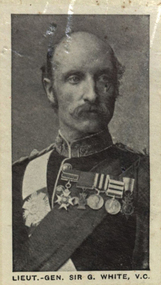
... anglo-afghan war...victoria cross...natal...second boer...Anglo-Afghan War. For his actions he was awarded the Victoria Cross in 1879. White became commander of the forces in Natal in 1899 at the opening of the Second Boer War and fought at the Battle of Elandslaagte. ...Anglo-Afghan War. For his actions he was awarded the Victoria Cross in 1879. White became commander of the forces in Natal in 1899 at the opening of the Second Boer War and fought at the Battle of Elandslaagte. ...White fought at the Battle of Charasiab and at the Battle of Kandahar in the Second Anglo-Afghan War. For his actions he was awarded the Victoria Cross in 1879. White became commander of the forces in Natal in 1899 at the opening of the Second Boer War and fought at the Battle of Elandslaagte. He withdrew to Ladysmith where he took command of the garrison during the Siege of Ladysmith. When his position there became untenable he was instructed by General Sir Redvers Buller to destroy the guns and surrender the garrison on the best terms he could. White insisted on staying and held out for another four months before being relieved in February 1900. For this he was appointed a Knight Grand Cross of the Order of St Michael and St George. Earlier he had been made Knight Grand Cross of the Royal Victorian Order. In 1903 he was promoted to Field Marshall. White received many awards for his service to his country. They include the Victoria Cross (1879); Knight Grand Commander of the Order of the Indian Empire (1893); Knight Grand Cross of the Order of the Bath (1897); Knight Grand Commander of the Order of the Star of India (1898); Knight Grand Cross of the Order of St Michael and St George (1900); Knight Grand Cross of the Royal Victorian Order (1900); Order of Merit (1905). He also received the Indian Mutiny Medal; Afghanistan Medal; Kabul to Kandahar Star; Egypt Medal (1885); India General Service Medal (1885-87); Queen's South Africa Medal - Defence of Ladysmith; Queen Victoria Diamond Jubilee Medal; King Edward VII Coronation Medal; King George V Coronation Medal; Khedive's Star. Sir George Stuart White's medal and honours are displayed at the Gordon Highlanders Museum. Individual image from photographed poster of tobacco and cigarette cards.george stuart white, battle of charasiab, battle of kandahar, second anglo-afghan war, victoria cross, natal, second boer war, battle of elandslaagte, kadysmith, siege of ladysmith, general sir redvers buller, knight grand cross of the order of st michael and st george, knight grand cross of the royal victorian order, field marshall, knight grand commander of the order of the indian empire, order of merit, indian mutiny medal, afghanistan medal, kabul to kandahar star, egypt medal, indian general service medal, queen's south africa medal, queen victoria diamond jubilee medal, king edward vii coronation medal, king george v coronation medal, khedive star, gordon highlanders museum -
 Federation University Historical Collection
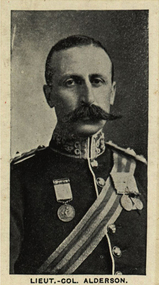
Photograph (black & White), Lieutenant-Colonel Alderson - South Africa
... boer war...transvaal...mashonaland...south africa...second boer war...first world war...anglo...Boer War in 1881 in the Transvaal. In 1896 he was sent to Mashonaland as a commander of a regiment of local troops during the Second Matabele War. In 1900 shortly after the outbreak of the Second Boer War he returned to South Africa to command the Mounted Infantry against the Boer forces. Alderson also served in the 1882 Anglo...Boer War in 1881 in the Transvaal. In 1896 he was sent to Mashonaland as a commander of a regiment of local troops during the Second Matabele War. In 1900 shortly after the outbreak of the Second Boer War he returned to South Africa to command the Mounted Infantry against the Boer forces. Alderson also served in the 1882 Anglo ...Edwin Alderson was born in 1859 and served in several campaigns of the late nineteenth and early twentieth centuries. He saw service in the First Boer War in 1881 in the Transvaal. In 1896 he was sent to Mashonaland as a commander of a regiment of local troops during the Second Matabele War. In 1900 shortly after the outbreak of the Second Boer War he returned to South Africa to command the Mounted Infantry against the Boer forces. Alderson also served in the 1882 Anglo-Egyptian War, Mounted Camel Regiment during the failed expedition to relieve Khartoum and rescue General Gordon. At the outbreak of the First World War, Alderson was in charge of the 1st Mounted Division. He retired from active service in 1920 aged 61. In 1901, as a result of Alderson's contribution to many campaigns he was rewarded with confirmation as a Brigadier General, appointment as a Companion of the Order of Bath and to receive the ceremonial post of Aide-de-Camp to Queen Victoria, who died the same year. He also received the Queen's South Africa Medal. He died in 1927 aged 68. Individual image from photographed poster of tobacco and cigarette cards. alderson, campaigns, first boer war, transvaal, mashonaland, south africa, second boer war, first world war, anglo-egyptian war, mounted camel regiment, second matabele war, general gordon, brigadier-general, companion of the order of bath, aide-de-camp, queen victoria, queen's south africa medal
