
Showing 23 items matching "apollo place"
-
 Warrnambool and District Historical Society Inc.
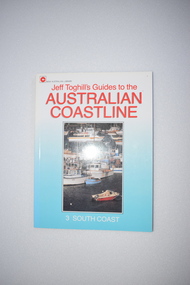
Book, Hodder & Stoughton (Australia) Pty Ltd, Australian Coast Line, 1987
... 2 Apollo Place, Lane Cove , NSW, Australia ...This book details the places and towns along the south coast of Australia. It contains potted histories and information for tourists. Some of the information regarding places to stay and recreational facilities etc will date over the years and the book will be of less use.This book is of minor interest as a summary of the places along the coastline of Victoria and as a useful resource book in our library.This s a soft-cover book of 128 pages. It has a blue cover with a colour photograph and red and white printing on the front cover and a colour photograph of the author and black printing on the back cover. The pages contain printed material, black and white photographs and maps and sketches. coastline of victoria, history of warrnambool -
 Stawell Historical Society Inc
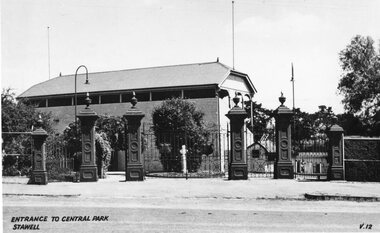
Photograph, Memorial Gates at Central Park Stawell by Wayman & Kay Foundry with the Statue of Apollo of Belvedere in place 1929 -- Postcard
... Memorial Gates at Central Park Stawell by Wayman & Kay Foundry with the Statue of Apollo of Belvedere in place 1929 -- Postcard...Statue of Apollo of Belvedere is in place unveiled in 1929....Statue of Apollo of Belvedere is in place unveiled in 1929. Stawell Memorial Gates at Central Park Stawell by Wayman & Kay Foundry with the Statue of Apollo of Belvedere in place 1929 -- Postcard Photograph ...PostCard Memorial Gates Central Park Stawell by Wayman & Kay Foundry. Statue of Apollo of Belvedere is in place unveiled in 1929.stawell -
 Sunshine and District Historical Society Incorporated
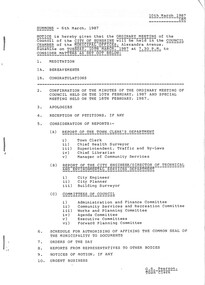
Administrative record - City of Sunshine Council Meetings 1986 - 1994 - Notice of Ordinary Meeting 10th March 1987, City of Sunshine, 6th March 1987
... ...Apollo Place...Albans Plan of Surrender of Easement 592 Western Highway (Ballarat Road) Albion Report of the Building Surveyor Show Cause Notice 24 Chicago Street Maribyrnong Above Ground Tank Grain Elevators Board Sunshine Terminal Wright Street Sunshine Show Cause Notice 15 Beech Court Sunshine West Beech Court 32 Knight Avenue Sunshine North Siting of Open Garage 8 Diamond Avenue Albanvale Show Cause Notice Beech Court 9 Apollo Place Ardeer Show Cause Notice 154 Neale Road Deer Park Show Cause Notice 28 Cleveland Street St. ...Albans Plan of Surrender of Easement 592 Western Highway (Ballarat Road) Albion Report of the Building Surveyor Show Cause Notice 24 Chicago Street Maribyrnong Above Ground Tank Grain Elevators Board Sunshine Terminal Wright Street Sunshine Show Cause Notice 15 Beech Court Sunshine West Beech Court 32 Knight Avenue Sunshine North Siting of Open Garage 8 Diamond Avenue Albanvale Show Cause Notice Beech Court 9 Apollo Place Ardeer Show Cause Notice 154 Neale Road Deer Park Show Cause Notice 28 Cleveland Street St. ...Notice of Ordinary Meeting 10th March 1987 Report of the Town Clerk's Department Report of the Town Clerk Accounts for Payment as at 15th February 1987 The New Western Independent Newspaper to Replace the Now Closed Western Independent Newspaper Request to Use Roadways Essendon District Tri-Antulas Triathlon Club Chifley Drive and Coulson Gardens Heart Health Awareness Programme National Hearth Foundation of Australia Lease of Council Land to Sunshine & District Helping Hand Association Furlong Road Australia Post Municipal Association of Victoria (M.A.V.) Chief Executive Officer St. John Ambulance Land for Headquarters Notice of Motion Possible Locations Fraser Street Bus Depot, Land Adjacent to Deer Park Club, Land Adjacent to Sunshine Ambulance Station Westmoreland Road, Sassella Park & George Street Ports & Harbour Development Notice of Motion Rate Recovery Sale Lot 204 George Street Maidstone Nuclear Free Zone Local Authorities Conference Perugia Italy October 1986 Loan 177 Refinancing of Loan 163 Sunshine Community Committee Bicentenary 1988 Municipal Representation on the Melbourne & Metropolitan Board of Works Vesting of Crown Land Reserves in Council More Park & Pennell Reserve Roads & Streets Trading Occupational Health and Safety Domiciliary Workers Workcare Family Day Care Scheme Loan 179 Discontinued Road Reserve and Right of Way East of Beachley Street North of Turner Crescent Braybrook Discontinued Right of Way Between Anderson Road, Durham Road, Derby Road and Graham Street Sunshine Report of Chief Health Surveyor Registration of Premises Health Act & Food Act Registration Transfers Health Act & Food Act Prosecution Proceedings Sunshine Magistrates Court Use of Property 11 Davey Street Sunshine West Report of the Superintendent Traffic & By-Laws Court Proceedings Sunshine Magistrates Court ANZAC Commemoration March Change of Name St. Albans Special School to Furlong Park School & Pre-School Centre Change of Name Highpoint West Post Office to Highpoint City Post Office Proposed Procession Scout Association of Australia by Sunshine District Report of the Chief Librarian History of Sunshine by Prue McGoldrick Commonwealth Assistance for Public Libraries (CAPLS) Campaign Sunshine Art Collection 3WRB Community Radio Station Report of the Acting Manager Community Services Disability Services Programme Bridging the Gap Project Change in Method of Calculation CEP DEIR Region sponsor Contribution Fresh start in the Park Braybrook - Maidstone Community Health Centre Neighborhood Watch Appeal Against Council Decision Regarding Holiday Programme West Sunshine Castley Hall Redevelopment Committee Marie Mill Community Centre Purchase of Equipment Marie Mill Community Centre Sunshine West Community Centre Sunshine West Community Centre Management Committee Marie Mill Community Centre Minutes of Meeting Home & Community Care Program Home Help Grant Ceiling 1986/87 Report of the City Engineer Smorgan Consolidated Industries New Development Waste Disposal Proposed New Tip Jones Road Brooklyn Braybrook - Maidstone Public Tenants Union Community Bus Maintenance House of Sunshine Additions & Alterations Corio Street and Watt Street Portable Changerooms Chaplin Reserve Anderson Road Sunshine Development of Billingham Reserve Deer Park Notice of Motion Proposed Footscray Institute of Technology Sciences Park Renovations and Restoration of The Hunt Club Ballarat Road Deer Park Maribyrnong Viaduct Fencing Pedestrian Operated Signals Ballarat Road (East of Leonard Street) Sunshine Installation of Audio Tactile Pedestrian Facility Quinn Street Private Street Scheme Variations Deer Park Certificate of Completion Quinn Street Private Street Scheme Deer Park Metropolitan Street Name Signing Programme Traffic Control Items Tenders Two Amenities Caravan Proposed Alterations to Existing Separators and Medians in Geelong Road Between Holmwood Road and Somerville Road Brooklyn New Sunshine Fire Station McIntyre Road (East & West) Parking Prohibition Sunshine North Stanford Street (East Side) 90 Degree Angle Parking Sunshine Quinn Street Private Street Scheme Stage 2 Deer Park Proposed Lease of Railway Land off Anderson Road Sunshine Tenders for Fencing Station Road Deer Park Proposed Car Park on Railway Land Lot 2 St. Albans Road St. Albans Station Road Widening Gladstone Street to Furlong Road St. Albans Paramount Road / Somerville Road Intersection Fairbairn Road Private Street Scheme Sunshine West Report of the City Planner Enforcement of Metropolitan Planning Scheme Inspection of Use of Property 11 Davey Street Ardeer Planning Permit Application Truck Parking 18 Baynton Avenue Sunshine North Planning Permit Application Truck Parking 22 Baynton Avenue Sunshine North Planning Permit Application Truck Parking 24 Baynton Avenue Sunshine North Planning Permit Application Factory Lot 10 Tottenham Parade Brooklyn Planning Permit Application Enforcement of the Planning Scheme Amusement Parlour 113 Durham Road Sunshine Maribyrnong Advisory Committee Rezoning Land West of Kororoiit Creek and North of the Western Highway Shire of Melton Planning Permit Application Car Park Lot 53 Cromer Avenue Sunshine North Planning Permit Application Extension of Place of Assembly Dutch Australian Community Council 96 Cromer Avenue Sunshine North Planning Permit Application Health Centre 57 Dickson Street Sunshine Planning Permit Recreation Centre Lot 2 McKechnie Street North East Corner of Gratz Street St. Albans Planning Permit Application Double Sided Promotional Panel Sign Sunshine Road Tottenham Planning Permit Application Double Sided Promotional Panel Sign Sunshine Road Tottenham Planning Permit Application Double Sided Promotional Panel Sign Tilburn Road Deer Park Planning Permit Application Extension to Existing Shops 87 - 89 McIntyre Road Sunshine North Planning Permit Application Convenience Shop, Petrol Filling Station Restaurant, 10 Cinema Complex and Medical Centre 2/72 Neale Road Deer Park Planning Permit Application Alterations to Flats Lot 4 to 8 The Gables Albion Planning Permit Application Motel / Restaurant and Caretaker's Residence Lots 3 & 4 Ballarat Road North West Corner Miles Street Deer Park Planning Permit Application Motor Repair Station 58 Omar Street Maidstone Sunshine District Centre Road Works Planning Permit Application Livestock Sale Yards 690 Geelong Road North East Corner Old Geelong Road Brooklyn Planning Permit Application Private Rubbish Tip Associated Quarries Pty Ltd Market Road Quarry Market Road Sunshine Delegated Matters Removal of Easement Lot 21 Camperdown Avenue and Lot 22 Cary Street Sunshine North Plan of Subdivision Corner Robinsons Road and Ballarat Road Deer Park Plan of Proposed Strata Subdivision 1 White Street Maribyrnong Plan of Consolidation F.B. Transport Amanda Road Tottenham Plan of Consolidation Smogan Consolidated Industries Somerville Road Footscray West Plan of Consolidation Lots 5 & 6 McIntyre Road Sunshine North Plan of Consolidation Lots 1 & 2 Adams Street South East Corner Disraeli Street St. Albans Plan of Consolidation lots 4 & 5 Jefferson Street South West Corner Disraeli Street St. Albans Plan of Strata Subdivision lot 2 Corner McKechnie Street and Gratz Street St. Albans Plan of Surrender of Easement 592 Western Highway (Ballarat Road) Albion Report of the Building Surveyor Show Cause Notice 24 Chicago Street Maribyrnong Above Ground Tank Grain Elevators Board Sunshine Terminal Wright Street Sunshine Show Cause Notice 15 Beech Court Sunshine West Beech Court 32 Knight Avenue Sunshine North Siting of Open Garage 8 Diamond Avenue Albanvale Show Cause Notice Beech Court 9 Apollo Place Ardeer Show Cause Notice 154 Neale Road Deer Park Show Cause Notice 28 Cleveland Street St. Albans Show Cause Notice 1D Bell Street Sunshine West Show Cause Notice 7 Nova Avenue Deer Park Dangerous Building 16 Cypress Avenue Brooklyn Show Cause Notice 25 Chatsworth Avenue Ardeer Show Cause Notice 11 Concord Circuit Albanvale Show Cause Notice 50 Ford Avenue Sunshine North Show Cause Notice 553 Geelong Road Brooklyn Show Cause Notice 40 Joan Street Ardeer Show Cause Notice 49 Denton Avenue St. Albans Show Cause Notice 41 Mulhall Drive St. Albans Show Cause Notice 1 White Street Maribyrnong Show Cause Notice 74 Ford Avenue Sunshine North Show Cause Notice 11 Davey Street Sunshine West Schedule for Authorising of Affixing the Common Seal of the Municipality to Documents Orders of the Day West Sunshine Community Centre Show Cause Notice 19 Second Avenue Sunshine Show Cause Notice 34 Harris Street St. Albans Confidential Report Council Polices Consideration of a Petition on behalf of 45 Residents of Maribyrnong in Relation to Objecting to the Establishment of a Night Club at the Angler's Hotel Notice of Motions Sunshine Leisure Centre Contingency Account Cleaning Kerb & Channel and Drainage Pits Referendum Ceding of Brooklyn to Altona Road Surface Maintenance Management of Child Care Centres Financial Return Child Care Centres Finance Manager Council Auspiced Services Removal of Rubbish 2 Derrimut Street Albion Slogan Sunshine Multicultural City of Victoria Sand & Dust Menace Corner Sunshine Avenue and McIntyre Road Sunshine North 125 Durham Road Sunshine Traffic lights Corner McIntyre Road, Furlong Road and Berkshire Road Sunshine North Deer Park Football Club Pavilion Nuclear Free Zones Palm Sunday Peace Celebrations Seed Patenting and Plant Variety Rights Toxic Waste Disposal Facilityessendon district tri-antulas triathlon club, chifley drive, coulson gardens, maribyrnong, sunshine & district helping hand association, furlong road, sunshine north, fraser street, deer park club, westmoreland road, sassella park, george street, sunshine, ballarat road, deer park, more park, esmond street, ardeer, pennell reserve, burke street, braybrook, beachley street, turner crescent, anderson road, durham road, derby road, graham street, davey street, st. albans special school, furlong park school & pre-school centre, highpoint west post office, highpoint city post office, 3wrb community radio station, braybrook - maidstone community health centre, marie mill community centre, randall street, sunshine west community centre, kermeen street, sunshine west, smorgan consolidated industries, jones road, brooklyn, braybrook - maidstone public tenants union, house of sunshine, corio street, watt street, chaplin reserve, billingham reserve, the hunt club, leonard street, the hunt club hotel, quinn street, holmwood road, somerville road, sunshine fire station, mcintyre road, stanford street, station road, st. albans road, st. albans, paramount road, fairbairn road, baynton avenue, tottenham parade, kororoiit creek, western highway, cromer avenue, dutch australian community council, dickson street, mckechnie street, gratz street, sunshine road, tottenham, tilburn road, neale road, the gables, albion, miles street, omar street, maidstone, geelong road, old geelong road, associated quarries, market road, camperdown avenue, cary street, robinsons road, white street, amanda road, adams street, disraeli street, jefferson street, chicago street, wright street, beech court, knight avenue, diamond avenue, albanvale, apollo place, cleveland street, bell street, nova avenue, cypress avenue, chatsworth avenue, concord circuit, ford avenue, joan street, denton avenue, mulhall drive, second avenue, harris street, angler's hotel, anglers way, derrimut street, sunshine avenue, berkshire road, deer park football club, john mcleod reserve -
 Federation University Historical Collection
Book, From Timber to Tourism: Exploring Place Attachment and Natural Area Values in the Otway Ranges, 1997
... university of ballarat school of business tourism Apollo bay otway national park michelle brown melinda gill clare kearns sarah mcEwing Renee Walder cape otway lighthouse point franklin residential estate harbour sand dune erosion great ocean road blanket bay maits rest walking track Spiral bound report From Timber to Tourism: Exploring Place Attachment and Natural Area Values in the Otway Ranges Book ...Spiral bound reportuniversity of ballarat, school of business, tourism, apollo bay, otway national park, michelle brown, melinda gill, clare kearns, sarah mcewing, renee walder, cape otway lighthouse, point franklin residential estate, harbour, sand dune erosion, great ocean road, blanket bay, maits rest walking track -
 Flagstaff Hill Maritime Museum and Village
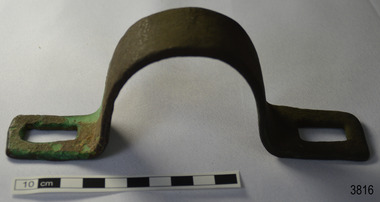
Functional object - Bracket
... The Grange is an example of a mid-19th century vessel that carried a weapon of defence onboard. flagstaff hill warrnambool flagstaff hill maritime museum maritime museum shipwreck coast flagstaff hill maritime village great ocean road west coast trader apollo bay mid-19th century shipwreck the grange scottish barque little henty reef captain a alexander underwater explorers club of victoria 1840s carronade vhr 5297 coastal trader wooden shipwreck john chance wooden ship ship fitting bracket Bracket, brass, U shaped with rectangular flat ends. Both ends have a formed rectangular hole in them; the hole has rounded corners. The metal has corroded in places ...This metal bracket is part of the wooden barque, the Grange, built in 1840. The bracket was recovered from the shipwreck of the Grange in around 1968, 110 years after the Grange was wrecked (see below for further details on the Grange). It is part of the John Chance Collection. THE GRANGE, 1840-1858- The wooden barque ’Grange’ was a three-masted ship built in Scotland in 1840 for international and coastal trade. On March 22, 1858, the Grange set sail from Melbourne under Captain A. Alexander, carrying a cargo of ballast. The barque had left the Heads of Phillip Bay and was heading west along the Victorian coast towards Cape Otway. The ship struck Little Haley’s Reef at Apollo Bay due to a navigational error and was stuck on the rocks. The crew left the ship carrying whatever they could onto the beach. Eventually, the remains of the hull, sails and fittings were salvaged before the wreck of the Grange broke up about a month later. About 110 years later, in 1968, the wreck of the Grange was found by divers from the Underwater Explorers Club of Victoria. They were amazed to find a unique, six to nine pound carronade (type of small cannon) and a cannonball on the site. There have been no other similar carronades recorded. In that same year the anchor of the Grange was recovered by diver John Chance and Mal Brown. The bracket is significant historically as an example of hardware used when building wooden ships in the early to mid-19th century. The bracket is historically significant as an example of the work and trade of blacksmith. The bracket also has significant as it was recovered by John Chance, a diver from the wreck of the Grange in the 1968. Items that come from several wrecks along Victoria's coast have since been donated to the Flagstaff Hill Maritime Village’s museum collection by his family, illustrating this item’s level of historical value. The bracket is historically significant for its association with the 1840s wooden barque, the Grange. The Grange is an historical example of a Scottish built vessel used for international and coastal trader of both cargo and passengers in the mid-19th century. The Grange is an example of an early ship, designed with a wooden hull. It is significant as a ship still available to divers along the south coast of Victoria, for research and education purposes. The Grange is an example of a mid-19th century vessel that carried a weapon of defence onboard.Bracket, brass, U shaped with rectangular flat ends. Both ends have a formed rectangular hole in them; the hole has rounded corners. The metal has corroded in places and has green concretion.flagstaff hill, warrnambool, flagstaff hill maritime museum, maritime museum, shipwreck coast, flagstaff hill maritime village, great ocean road, west coast trader, apollo bay, mid-19th century shipwreck, the grange, scottish barque, little henty reef, captain a alexander, underwater explorers club of victoria, 1840s carronade, vhr 5297, coastal trader, wooden shipwreck, john chance, wooden ship, ship fitting, bracket -
 Flagstaff Hill Maritime Museum and Village
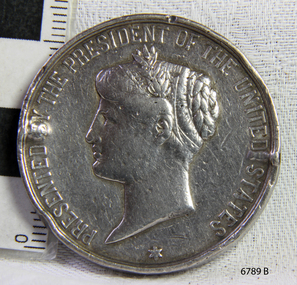
Award - Medal, Nelson Johnson, November 1880
... Apollo Bay. In 1881 a red light was installed about 300 feet above sea level at the base of the Cape Otway lighthouse to warn ships when they were too close to shore; It would not be visible unless a ship came within 3 miles from it. This has proved to be an effective warning. Nelson Johnson married Elizabeth Howard in 1881 and they had 10 children, the father of the medal’s donor being the youngest. They lived in 13 Tichbourne Place...Apollo Bay. In 1881 a red light was installed about 300 feet above sea level at the base of the Cape Otway lighthouse to warn ships when they were too close to shore; It would not be visible unless a ship came within 3 miles from it. This has proved to be an effective warning. Nelson Johnson married Elizabeth Howard in 1881 and they had 10 children, the father of the medal’s donor being the youngest. They lived in 13 Tichbourne Place ...This medal for bravery, for rescue of the crew from the shipwreck “Eric the Red” on 4th September 1880, was awarded to one of the crew of the steamer S.S. Dawn by the President of the United States in July 1881. The medal is engraved with the name “Nelson Johnson” (the anglicised version of his Swedish name Neils Frederick Yohnson). It was donated to Flagstaff Hill Maritime Village in 2013 by Nelson’s granddaughter. Nelson had migrated from Sweden to Sydney in 1879. The next year in 1880, aged 24, he was a seaman on the steamship Dawn and involved in the rescue of the survivors of the Eric the Red. Nelson Johnson was a crew member of the S.S. Dawn and was one of the rescue team in the dinghy in the early morning of September 4th 1880. Medals were awarded to the Captain and crew of the S.S. Dawn by the President of the United States, through the Consul-general (Mr Oliver M. Spencer), in July 1881 “ … in recognition of their humane efforts in rescuing the 23 survivors of the American built wooden sailing ship, the Eric the Red, on 4th September 1880.” The men were also presented with substantial monetary rewards and gifts. The city of Warrnambool’s care of the survivors was also mentioned by the President at the presentation, saying that “the city hosted and supported the crew ‘most graciously’. Previously, a week after the shipwreck, the Australian Government had also conveyed its thanks to the Captain and crew of the S.S. Dawn “Captain Griffith Jones, S.S. Dawn, The Hon. Mr Clark desires that the thanks of the Government should be conveyed to you for the prompt, persevering and seamanlike qualities displayed by you, your officers and crew in saving the number of lives you did on the occasion referred to. The hon. The Commissioner has also been pleased to award you a souvenir in commemoration of the occasion, and a sum of 65 pounds to be awarded to your officers and crew according to annexed scale. I am, &c, W Collins Rees, for and in the absence of the Chief Harbour Master.” The Awards are as follows: - Crew of DAWN'S lifeboat-Chief Officer, Mr G. Peat, 15 pounds; boat's crew-G. Sterge, A.B., 5 pounds; T. Hammond, A.B., 5 pounds; J. Black, A.B., 5 pounds; H. Edwards, A.B., 5 pounds. Dinghy's Crew-Second Officer, Mr Christie, 10 pounds; boat's crew -F. Lafer, A.B., 5 pounds; W. Johnstone, A.B., 5 pounds; Mr Lear, provedore, 5 pounds; Mr Dove, purser, 5 pounds. Captain Jones receives a piece of plate. (from “Wreck of the ship Eric the Red” by Jack Loney) The medal’s history, according to the Editor of ‘E-Sylum’ (the newsletter of The Numismatic Bibliomania Society “… appears to be an example of an 1880 State Department medal, catalogued as LS-3 (page 322 of R. W. Julian's book, Medals of the United States Mint: The First Century 1792-1892). The reverse is mostly blank for engraving, surrounded by a thin wreath. It was designed by George Morgan, chief engraver for the Philadelphia Mint, and struck in gold, silver and bronze. The one pictured here (in The Standard newspaper, 2nd July 2013) appears to be silver.” The following is an account of the events which led to the awarding of this medal. The American ship Eric the Red was a wooden, three-masted clipper ship. She had 1,580 tons register and was the largest full-rigged ship built at Bath, Maine, USA in 1871. She was built and registered by Arthur Sewall, later to become the partnership E. & A. Sewall, the 51st ship built by this company. The annually-published List of Merchant Vessels of the U.S. shows Bath was still the home port of Eric the Red in 1880. The vessel was named after the Viking discoverer, Eric ‘the Red-haired’ Thorvaldsson, who was the first European to reach the shores of North America (in 980AD). The ship Eric the Red at first traded in coal between America and Britain, and later traded in guano nitrates from South America. In 1879 she was re-metalled and was in first-class condition. On 10th June 1880 (some records say 12th June) Eric the Red departed New York for Melbourne and then Sydney. She had been commissioned by American trade representatives to carry a special cargo of 500 exhibits (1400 tons) – about a quarter to a third of America’s total exhibits - for the U.S.A. pavilion at Melbourne’s first International Exhibition. The exhibits included furniture, ironmongery, wines, chemicals, dental and surgical instruments, paper, cages, bronze lamp trimmings, axles, stamped ware, astronomical and time globes, samples of corn and the choicest of leaf tobacco. Other general cargo included merchandise such as cases of kerosene and turpentine, brooms, Bristol's Sarsaparilla, Wheeler and Wilson sewing machines, Wheeler’s thresher machine, axe handles and tools, cases of silver plate, toys, pianos and organs, carriages and Yankee notions. The Eric the Red left New York under the command of Captain Zaccheus Allen (or some records say Captain Jacques Allen) and 24 other crew including the owner’s son third mate Ned Sewall. There were also 2 saloon passengers on board. The ship had been sailing for an uneventful 85 days and the voyage was almost at its end. As Eric the Red approached Cape Otway there was a moderate north-west wind and a hazy and overcast atmosphere. On 4th September 1880 at about 1:30 am Captain Allen sighted the Cape Otway light and was keeping the ship 5-6 miles offshore to stay clear of the hazardous Otway Reef. However, he had badly misjudged his position. The ship hit the Otway Reef about 2 miles out to sea, southwest of the Cape Otway light station. Captain Allen ordered the wheel to be put ‘hard up’ thinking that she might float off the reef. The sea knocked the helmsman away from the wheel, broke the wheel ropes and carried away the rudder. The lifeboats were swamped, the mizzenmast fell, with all of its riggings, then the mainmast also fell and the ship broke in two. Some said that the passenger Vaughan, who was travelling for his health and not very strong, was washed overboard and never seen again. The ship started breaking up. The forward house came adrift with three of the crew on it as well as a longboat, which the men succeeded in launching and keeping afloat by continually bailing with their sea boots. The captain, the third mate (the owner’s son) and others clung to the mizzenmast in the sea. Then the owner’s son was washed away off the mast. Within 10 minutes the rest of the ship was in pieces, completely wrecked, with cargo and wreckage floating in the sea. The captain encouraged the second mate to swim with him to the deckhouse where there were other crew but the second mate wouldn’t go with him. Eventually, the Captain made it to the deckhouse and the men pulled him up. At about 4:30 am the group of men on the deckhouse saw the lights of a steamer and called for help. At the same time, they noticed the second mate and the other man had drifted nearby, still on the spur, and pulled them both onto the wreck. The coastal steamer SS Dawn was returning to Warrnambool from Melbourne, and its sailing time was different to its usual schedule. She was built in 1876 and bought by the Portland and Belfast Steam Navigation Co. in 1877. At the time of this journey, she was commanded by Captain Jones and was sailing between Melbourne and Portland via Warrnambool. The provedore the Dawn, Benjamin Lear, heard cries of distress coming through the portholes of the saloon. He gave the alarm and the engines were stopped. Cries could be heard clearly, coming from the land. Captain Jones sent out crew in two boats and fired off rockets and blue lights to illuminate the area. They picked up the three survivors who were in the long boat from Eric the Red. Two men were picked up out of the water, one being the owner’s son who was clinging to floating kerosene boxes. At daylight, the Dawn then rescued the 18 men from the floating portion of the deckhouse, which had drifted about 4 miles from where they’d struck the reef. Shortly after the rescue the deckhouse drifted onto breakers and was thrown onto rocks at Point Franklin, about 2 miles east of Cape Otway. Captain Jones had signalled to Cape Otway lighthouse the number of the Eric the Red and later signalled that there was a wreck at Otway Reef but there was no response from the lighthouse. The captain and crew of the Dawn spent several more hours searching unsuccessfully for more survivors, even going back as far as Apollo Bay. On board the Dawn the exhausted men received care and attention to their needs and wants, including much-needed clothing. Captain Allen was amongst the 23 battered and injured men who were rescued and later taken to Warrnambool for care. Warrnambool’s mayor and town clerk offered them all hospitality, the three badly injured men going to the hospital for care and others to the Olive Branch Hotel, then on to Melbourne. Captain Allen’s leg injury prevented him from going ashore so he and three other men travelled on the Dawn to Portland. They were met by the mayor who also treated them all with great kindness. Captain Allen took the train back to Melbourne then returned to America. Those saved were Captain Zaccheus Allen (or Jacques Allen), J. Darcy chief mate, James F. Lawrence second mate, Ned Sewall third mate and owner’s son, John French the cook, C. Nelson sail maker, Clarence W. New passenger, and able seamen Dickenson, J. Black, Denis White, C. Herbert, C. Thompson, A. Brooks, D. Wilson, J. Ellis, Q. Thompson, C. Newman, W. Paul, J. Davis, M. Horenleng, J. Ogduff, T. W. Drew, R. Richardson. Four men had lost their lives; three of them were crew (Gus Dahlgreen ship’s carpenter, H. Ackman steward, who drowned in his cabin, and George Silver seaman) and one a passenger (J. B. Vaughan). The body of one of them had been found washed up at Cape Otway and was later buried in the lighthouse cemetery; another body was seen on an inaccessible ledge. Twelve months later the second mate James F. Lawrence, from Nova Scotia passed away in the Warrnambool district; an obituary was displayed in the local paper. Neither the ship nor its cargo was insured. The ship was worth about £15,000 and the cargo was reportedly worth £40,000; only about £2,000 worth had been recovered. Cargo and wreckage washed up at Apollo Bay, Peterborough, Port Campbell, Western Port and according to some reports, even as far away as the beaches of New Zealand. The day after the wreck the government steamship Pharos was sent from Queenscliff to clear the shipping lanes of debris that could be a danger to ships. The large midship deckhouse of the ship was found floating in a calm sea near Henty Reef. Items such as an American chair, a ladder and a nest of boxes were all on top of the deckhouse. As it was so large and could cause danger to passing ships, Captain Payne had the deckhouse towed towards the shore just beyond Apollo Bay. Between Apollo Bay and Blanket Bay, the captain and crew of Pharos collected Wheeler and Wilson sewing machines, nests of boxes, bottles of Bristol’s sarsaparilla, pieces of common American chairs, axe handles, a Wheelers’ Patent thresher and a sailor’s trunk with the words “A. James” on the front. A ship’s flag-board bearing the words “Eric the Red” was found on the deckhouse; finally, those on board the Pharos had the name of the wrecked vessel. During this operation, Pharos came across the government steamer Victoria and also a steamer S.S. Otway, both of which were picking up flotsam and wreckage. A whole side of the hull and three large pieces of the other side of the hull, with some of the copper sheathing stripped off, had floated onto Point Franklin. Some of the vessels' yards and portions of her masts were on shore. The pieces of canvas attached to the yards and masts confirmed that the vessel had been under sail. The beach there was piled with debris several feet high. There were many cases of Diamond Oil kerosene, labelled R. W. Cameron and Company, New York. There were also many large planks of red pine, portions of a small white boat and a large, well-used oar. Other items found ashore included sewing machines (some consigned to ‘Long and Co.”) and notions, axe and scythe handles, hay forks, wooden pegs, rolls of wire (some branded “T.S” and Co, Melbourne”), kegs of nails branded “A.T. and Co.” from the factory of A. Field and Son, Taunton, Massachusetts, croquet balls and mallets, buggy fittings, rat traps, perfumery, cutlery and Douay Bibles, clocks, bicycles, chairs, a fly wheel, a cooking stove, timber, boxes, pianos, organs and a ladder. (Wooden clothes pegs drifted in for many years). There seemed to be no personal luggage or clothing. The Pharos encountered a long line, about one and a half miles, of f locating wreckage about 10 miles off land, southeast of Cape Otway, and in some places about 40 feet wide. It seemed that more than half of it was from Eric the Red. The ship’s crew rescued 3 cases that were for the Melbourne Exhibition and other items from amongst the debris. There were also chairs, doors, musical instruments, washing boards, nests of trunks and flycatchers floating in the sea. Most of the goods were saturated and smelt of kerosene. A section of the hull lies buried in the sand at Parker River Beach. An anchor with a chain is embedded in the rocks east of Point Franklin and a second anchor, thought to be from Eric the Red, is on display at the Cape Otway light station. (There is a photograph of a life belt on the verandah of Rivernook Guest House in Princetown with the words “ERIC THE RED / BOSTON”. This is rather a mystery as the ship was registered in Bath, Maine, USA.) Parts of the ship are on display at Bimbi Park Caravan Park and at Apollo Bay Museum. Flagstaff Hill Maritime Village also has part of the helm (steering wheel), a carved wooden sword (said to be the only remaining portion of the ship’s figurehead; further research is currently being carried out), a door, a metal rod, samples of wood and this medal awarded for the rescue of the crew. Much of the wreckage was recovered by the local residents before police and other authorities arrived at the scene. Looters went to great effort to salvage goods, being lowered down the high cliff faces to areas with little or no beach to collect items from the wreckage, their mates above watching out for dangerous waves. A Tasmanian newspaper reports on a court case in Stawell, Victoria, noting a man who was caught 2 months later selling tobacco from the wreckage of Eric the Red. Some of the silverware is still treasured by descendants of Mr Mackenzie who was given these items by officials for his help in securing the cargo. The gifts included silver coffee and teapots, half a dozen silver serviette rings and two sewing machines. A Mr G.W. Black has in his possession a medal and a purse that was awarded to his father, another Dawn crew member who was part of the rescue team. The medal is similarly inscribed and named “To John Black ….” (from “Shipwrecks” by Margaret E. Mackenzie, 3rd edition, published 1964). The wreck and cargo were sold to a Melbourne man who salvaged a quantity of high-quality tobacco and dental and surgical instruments. Timbers from the ship were salvaged and used in the construction of houses and shed around Apollo Bay, including a guest house, Milford House (since burnt down in bushfires), which had furniture, fittings and timber on the dining room floor from the ship. A 39.7-foot-long trading ketch, the Apollo, was also built from its timbers by Mr Burgess in 1883 and subsequently used in Tasmanian waters. It was the first attempt at shipbuilding in Apollo Bay. In 1881 a red light was installed about 300 feet above sea level at the base of the Cape Otway lighthouse to warn ships when they were too close to shore; It would not be visible unless a ship came within 3 miles from it. This has proved to be an effective warning. Nelson Johnson married Elizabeth Howard in 1881 and they had 10 children, the father of the medal’s donor being the youngest. They lived in 13 Tichbourne Place, South Melbourne, Victoria. Nelson died in 1922 in Fitzroy Victoria, age 66. In 1895 the owners of the S.S. Dawn, the Portland and Belfast Steam Navigation Co., wound up and sold out to the Belfast Company who took over the Dawn for one year before selling her to Howard Smith. She was condemned and sunk in Suva in 1928. The State Library of Victoria has a lithograph in its collection depicting the steamer Dawn and the shipwrecked men, titled. "Wreck of the ship Eric the Red, Cape Otway: rescue of the crew by the Dawn". The medal for bravery is associated with the ship the “The Eric the Red which is historically significant as one of Victoria's major 19th century shipwrecks. (Heritage Victoria Eric the Red; HV ID 239) The wreck led to the provision of an additional warning light placed below the Cape Otway lighthouse to alert mariners to the location of Otway Reef. The site is archaeologically significant for its remains of a large and varied cargo and ship's fittings being scattered over a wide area. The site is recreationally and aesthetically significant as it is one of the few sites along this coast where tourists can visit identifiable remains of a large wooden shipwreck, and for its location set against the background of Cape Otway, Bass Strait, and the Cape Otway lighthouse.“ (Victorian Heritage Database Registration Number S239, Official Number 8745 USA) This medal was awarded to Nelson Johnson by the U.S. President for bravery in the rescue of the Eric the Red crew. The obverse of the round, solid silver medal has an inscription around the rim. In the centre of the medal is the head of Liberty to the left, hair in a bun, with a sprig of leaves in the top left of a band around her head. There is a 6-pointed star below the portrait, between the start and end of the inscription. There are two raised areas on the rim, horizontally opposite each other, from the edge to just below the lettering and coinciding with the holes drilled in the edge. Slightly right of the top is a round indentation in the rim. The reverse has a wreath of leaves as a border, joined at the bottom by a ribbon bow. In the centre of the medal is an inscription, decorated with 3-pronged design and dots. The edge is plain with 2 small, rough and uneven holes horizontally opposite to each other, as though they had been used for mounting the medal at some stage. The medal has a matte finish on both sides and is slightly pitted and scratched.“PRESENTED BY THE PRESIDENT OF THE UNITED STATES” around the perimeter of the obverse of the medal. “TO / Nelson Johnson, / seaman of the British, / str “Dawn”, for bravery, / at risk of life, / in / rescuing the crew of / the American Ship / “Eric the Red.” “M” on obverse, truncation of the portraitwarrnambool, flagstaff hill, flagstaff hill maritime village, maritime museum, shipwreck coast, great ocean road, shipwreck artefact, eric the red, zaccheus allen, sewall, 1880, melbourne exhibition, cape otway, otway reef, victorian shipwreck, medal, nelson johnson, neils frederick yohnson, s.s. dawn, george morgan, hero -
 Otway Districts Historical Society
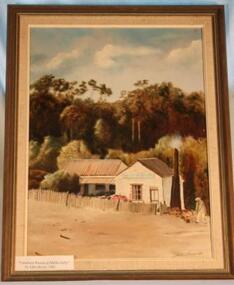
Painting - Oil painting, framed, The Luncheon Rooms at Melba Gully, 1981
... place 'Melba Gully'. Sometime in the late 1920s Mrs Fry was approached by Pioneer Tours, the bus company, to see if she would provide lunches and afternoon teas for their passengers travelling between Apollo Bay and Port Campbell. ...place 'Melba Gully'. Sometime in the late 1920s Mrs Fry was approached by Pioneer Tours, the bus company, to see if she would provide lunches and afternoon teas for their passengers travelling between Apollo Bay and Port Campbell. ...Forming the headwaters of the Johanna River and noted for its majestic Myrtle Beech and Blackwood trees, in 1921 the property came into the possession of Mrs Jessie Fry, wife of Mr Thomas Fry, a well-known and respected local bushman and timber getter. Here the family lived and it was Mrs Fry who named the place 'Melba Gully'. Sometime in the late 1920s Mrs Fry was approached by Pioneer Tours, the bus company, to see if she would provide lunches and afternoon teas for their passengers travelling between Apollo Bay and Port Campbell. Mrs Fry rose to the challenge; the Melba Gully Luncheon Rooms were built adjoining the Fry home and she was in business. Mrs Fry was unfailing in her courtesy and kindness. She was also a splendid cook, known for her feather-light scones and sponges. Home-produced strawberries and cream were a special treat. Visitors were also taken on a tour of 'The Gully', often guided by one of her young sons. Melba Gully Visitors Book is testimony to her many satisfied customers. Tom and Jessie Fry sold the property on her retirement in 1947 and the tearooms ceased to operate. It again changed hands in 1958 to Otway residents Mr and Mrs Axel Madsen, and in 1975 they made the magnificent gesture of gifting the 48 hectare Melba Gully to the people of Victoria..Framed painting in oils of a weatherboard house with picket fence, before a backdrop of forest. A figure chopping wood is at the right.Signature of artist John Driver, 1981melba gully, jessie fry, thomas fry, buses, tours, weatherboard house, john driver -
 Otway Districts Historical Society
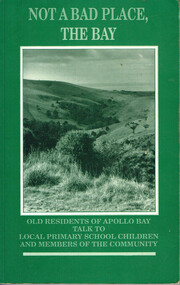
Book, Not a bad place, the Bay, 1987
... place...the Bay; Apollo Bay; Jackie Price (ed.); Nadia Wheatley (ed.); Interviews; Social life and customs; History;...Not a bad place, the Bay. Old residents of Apollo Bay talk to local primary school children and members of the community. ...An Apollo Bay oral history project converted into a written work, it covers the lives of ten older residents and their times in Apollo Bay. Not a bad place the Bay; Apollo Bay; Jackie Price (ed.); Nadia Wheatley (ed.); Interviews; Social life and customs; History; Not a bad place, the Bay. ...An Apollo Bay oral history project converted into a written work, it covers the lives of ten older residents and their times in Apollo Bay.Not a bad place, the Bay. Old residents of Apollo Bay talk to local primary school children and members of the community. Jackie Price (ed.). Nadia Wheatley (ed.) Apollo Bay (Vic); The Killala Road Publishing Co.; 1987. 160 p.; illus, map. Hard cover. ISBN 0 9587872 0 4not a bad place, the bay; apollo bay; jackie price (ed.); nadia wheatley (ed.); interviews; social life and customs; history; -
 Otway Districts Historical Society
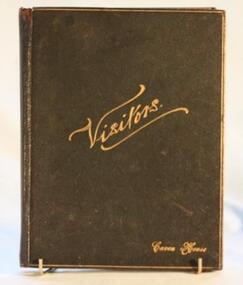
Book - Visitors Book, Melba Gully Visitors Book, 1937-1958
... place 'Melba Gully'. Sometime in the late 1920s Mrs Fry was approached by Pioneer Tours, the bus company, to see if she would provide lunches and afternoon teas for their passengers travelling between Apollo Bay and Port Campbell. ...place 'Melba Gully'. Sometime in the late 1920s Mrs Fry was approached by Pioneer Tours, the bus company, to see if she would provide lunches and afternoon teas for their passengers travelling between Apollo Bay and Port Campbell. ...Forming the headwaters of the Johanna River and noted for its majestic Myrtle Beech and Blackwood trees, in 1921 the property came into the possession of Mrs Jessie Fry, wife of Mr Thomas Fry, a well-known and respected local bushman and timber getter. Here the family lived and it was Mrs Fry who named the place 'Melba Gully'. Sometime in the late 1920s Mrs Fry was approached by Pioneer Tours, the bus company, to see if she would provide lunches and afternoon teas for their passengers travelling between Apollo Bay and Port Campbell. Mrs Fry rose to the challenge; the Melba Gully Luncheon Rooms were built adjoining the Fry home and she was in business. Mrs Fry was unfailing in her courtesy and kindness. She was also a splendid cook, known for her feather-light scones and sponges. Home-produced strawberries and cream were a special treat. Visitors were also taken on a tour of 'The Gully', often guided by one of her young sons. Melba Gully Visitors Book, running from November 1937 until the end of 1958, is testimony to her many satisfied customers. Tom and Jessie Fry sold the property on her retirement in 1947 although the tearooms continued to operate. It again changed hands in 1958 to Otway residents Mr and Mrs Axel Madsen, when it finally closed, and in 1975 they made the magnificent gesture of gifting the 48 hectare Melba Gully to the people of Victoria..Melba Gully Visitors Book. Foolscap, leather-bound, lined pages with margin approximately 30mm from left. Added, 24 p. unlined quarto.Full of inscriptions, cover to coverlavers hill, melba gully, jessie fry, thomas fry, axel madsen -
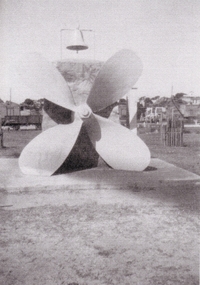 Port Fairy Historical Society Museum and Archives
Photograph, 1930's
... This Memorial was set up in memory of the nine people who drowned when the S.S.Casino sank in Apollo Bay in 1932.The cement plinth carries a bronze plaque with the names of the nine people who drowned on one side, the propeller, the wreck bell used to alert the lifeboat crew that there was an incident in the bay and for many years a large barometer that was consulted by the local fishermen before setting out to sea. A memorial Service is held each year on July the 10th at 11 am the time that the sinking took place...This Memorial was set up in memory of the nine people who drowned when the S.S.Casino sank in Apollo Bay in 1932.The cement plinth carries a bronze plaque with the names of the nine people who drowned on one side, the propeller, the wreck bell used to alert the lifeboat crew that there was an incident in the bay and for many years a large barometer that was consulted by the local fishermen before setting out to sea. A memorial Service is held each year on July the 10th at 11 am the time that the sinking took place ...This Memorial was set up in memory of the nine people who drowned when the S.S.Casino sank in Apollo Bay in 1932.The cement plinth carries a bronze plaque with the names of the nine people who drowned on one side, the propeller, the wreck bell used to alert the lifeboat crew that there was an incident in the bay and for many years a large barometer that was consulted by the local fishermen before setting out to sea. A memorial Service is held each year on July the 10th at 11 am the time that the sinking took place. The Casino was about to celebrate her 50th year of plying the southwest trade route. Black and white photograph of Propeller from SS Casino as memorial memorial, s.s.casino, propeller, barometer, moyne river, sea -
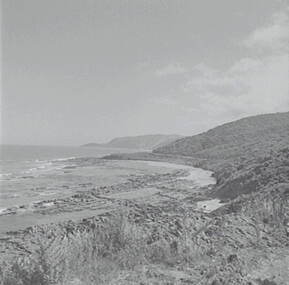 Allan Doney Collection, Bendigo Historical Society Inc.
Negative - Apollo Bay - Beach, Allan Doney, 1950 -1970
... Although he travelled to many other places in Northern Victoria and beyond in search of subjects for his art, he seemed to always return to Bendigo for inspiration. Negative Apollo ...In the years of Allan Doney’s photography, landmark buildings succumbed to fire, neglect and redevelopment. He photographed the grey sand hills from Bendigo’s mining past, the streetscapes, poppet heads, miners’ cottages, gracious homes with ornate verandahs, trams and much more. Above all, his photographs show how much of the city has survived from the 19th century – and how much has not. Through two decades of great change, Allan Doney was there to capture ways people interacted with it. Although he travelled to many other places in Northern Victoria and beyond in search of subjects for his art, he seemed to always return to Bendigo for inspiration. -
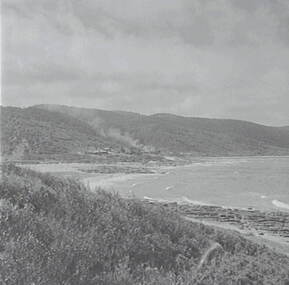 Allan Doney Collection, Bendigo Historical Society Inc.
Negative - Apollo Bay - Beach, Allan Doney, 1950 -1970
... Although he travelled to many other places in Northern Victoria and beyond in search of subjects for his art, he seemed to always return to Bendigo for inspiration. Negative Apollo ...In the years of Allan Doney’s photography, landmark buildings succumbed to fire, neglect and redevelopment. He photographed the grey sand hills from Bendigo’s mining past, the streetscapes, poppet heads, miners’ cottages, gracious homes with ornate verandahs, trams and much more. Above all, his photographs show how much of the city has survived from the 19th century – and how much has not. Through two decades of great change, Allan Doney was there to capture ways people interacted with it. Although he travelled to many other places in Northern Victoria and beyond in search of subjects for his art, he seemed to always return to Bendigo for inspiration. -
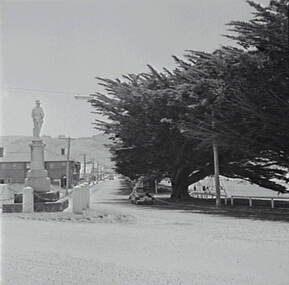 Allan Doney Collection, Bendigo Historical Society Inc.
Negative - Apollo Bay, Allan Doney, 1950 -1970
... Although he travelled to many other places in Northern Victoria and beyond in search of subjects for his art, he seemed to always return to Bendigo for inspiration. Negative Apollo ...In the years of Allan Doney’s photography, landmark buildings succumbed to fire, neglect and redevelopment. He photographed the grey sand hills from Bendigo’s mining past, the streetscapes, poppet heads, miners’ cottages, gracious homes with ornate verandahs, trams and much more. Above all, his photographs show how much of the city has survived from the 19th century – and how much has not. Through two decades of great change, Allan Doney was there to capture ways people interacted with it. Although he travelled to many other places in Northern Victoria and beyond in search of subjects for his art, he seemed to always return to Bendigo for inspiration. -
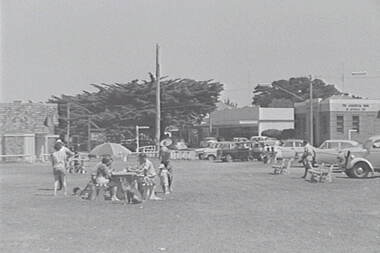 Allan Doney Collection, Bendigo Historical Society Inc.
Negative - Apollo Bay - Park - Commercial Bank, Allan Doney, 1950 -1970
... Although he travelled to many other places in Northern Victoria and beyond in search of subjects for his art, he seemed to always return to Bendigo for inspiration. Negative Apollo ...In the years of Allan Doney’s photography, landmark buildings succumbed to fire, neglect and redevelopment. He photographed the grey sand hills from Bendigo’s mining past, the streetscapes, poppet heads, miners’ cottages, gracious homes with ornate verandahs, trams and much more. Above all, his photographs show how much of the city has survived from the 19th century – and how much has not. Through two decades of great change, Allan Doney was there to capture ways people interacted with it. Although he travelled to many other places in Northern Victoria and beyond in search of subjects for his art, he seemed to always return to Bendigo for inspiration. -
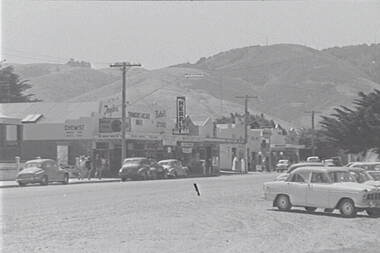 Allan Doney Collection, Bendigo Historical Society Inc.
Negative - Apollo Bay - Street - Chemist - Arcade, Allan Doney, 1950 -1970
... Although he travelled to many other places in Northern Victoria and beyond in search of subjects for his art, he seemed to always return to Bendigo for inspiration. Negative Apollo ...In the years of Allan Doney’s photography, landmark buildings succumbed to fire, neglect and redevelopment. He photographed the grey sand hills from Bendigo’s mining past, the streetscapes, poppet heads, miners’ cottages, gracious homes with ornate verandahs, trams and much more. Above all, his photographs show how much of the city has survived from the 19th century – and how much has not. Through two decades of great change, Allan Doney was there to capture ways people interacted with it. Although he travelled to many other places in Northern Victoria and beyond in search of subjects for his art, he seemed to always return to Bendigo for inspiration. -
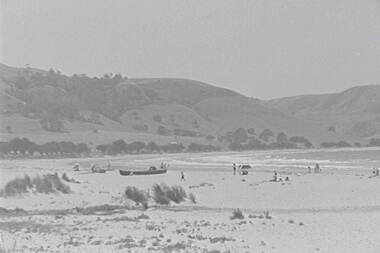 Allan Doney Collection, Bendigo Historical Society Inc.
Negative - Apollo Bay - Beach - Boat - People, Allan Doney, 1950 -1970
... Although he travelled to many other places in Northern Victoria and beyond in search of subjects for his art, he seemed to always return to Bendigo for inspiration. Negative Apollo ...In the years of Allan Doney’s photography, landmark buildings succumbed to fire, neglect and redevelopment. He photographed the grey sand hills from Bendigo’s mining past, the streetscapes, poppet heads, miners’ cottages, gracious homes with ornate verandahs, trams and much more. Above all, his photographs show how much of the city has survived from the 19th century – and how much has not. Through two decades of great change, Allan Doney was there to capture ways people interacted with it. Although he travelled to many other places in Northern Victoria and beyond in search of subjects for his art, he seemed to always return to Bendigo for inspiration. -
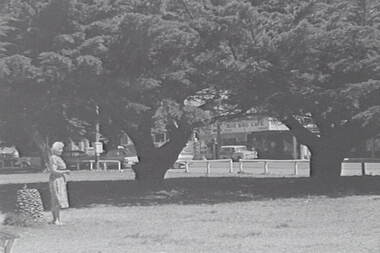 Allan Doney Collection, Bendigo Historical Society Inc.
Negative - Apollo Bay - Park - Blue Bird Cafe - Mrs Doney, Allan Doney, 1950 -1970
... Although he travelled to many other places in Northern Victoria and beyond in search of subjects for his art, he seemed to always return to Bendigo for inspiration. Negative Apollo ...In the years of Allan Doney’s photography, landmark buildings succumbed to fire, neglect and redevelopment. He photographed the grey sand hills from Bendigo’s mining past, the streetscapes, poppet heads, miners’ cottages, gracious homes with ornate verandahs, trams and much more. Above all, his photographs show how much of the city has survived from the 19th century – and how much has not. Through two decades of great change, Allan Doney was there to capture ways people interacted with it. Although he travelled to many other places in Northern Victoria and beyond in search of subjects for his art, he seemed to always return to Bendigo for inspiration. -
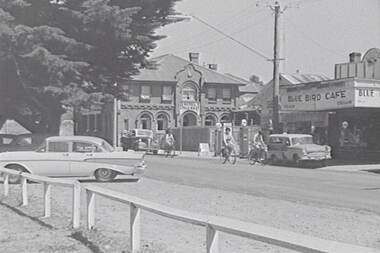 Allan Doney Collection, Bendigo Historical Society Inc.
Negative - Apollo Bay - Hotel Ballarat - Blue Bird Cafe, Allan Doney, 1950 -1970
... Although he travelled to many other places in Northern Victoria and beyond in search of subjects for his art, he seemed to always return to Bendigo for inspiration. Negative Apollo ...In the years of Allan Doney’s photography, landmark buildings succumbed to fire, neglect and redevelopment. He photographed the grey sand hills from Bendigo’s mining past, the streetscapes, poppet heads, miners’ cottages, gracious homes with ornate verandahs, trams and much more. Above all, his photographs show how much of the city has survived from the 19th century – and how much has not. Through two decades of great change, Allan Doney was there to capture ways people interacted with it. Although he travelled to many other places in Northern Victoria and beyond in search of subjects for his art, he seemed to always return to Bendigo for inspiration. -
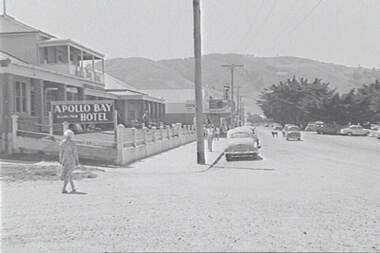 Allan Doney Collection, Bendigo Historical Society Inc.
Negative - Apollo Bay - Street - Hotel, Allan Doney, 1950 -1970
... Although he travelled to many other places in Northern Victoria and beyond in search of subjects for his art, he seemed to always return to Bendigo for inspiration. Negative Apollo ...In the years of Allan Doney’s photography, landmark buildings succumbed to fire, neglect and redevelopment. He photographed the grey sand hills from Bendigo’s mining past, the streetscapes, poppet heads, miners’ cottages, gracious homes with ornate verandahs, trams and much more. Above all, his photographs show how much of the city has survived from the 19th century – and how much has not. Through two decades of great change, Allan Doney was there to capture ways people interacted with it. Although he travelled to many other places in Northern Victoria and beyond in search of subjects for his art, he seemed to always return to Bendigo for inspiration. -
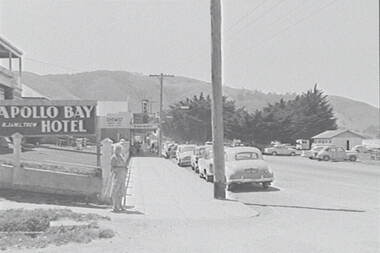 Allan Doney Collection, Bendigo Historical Society Inc.
Negative - Apollo Bay - Street - Hotel, Allan Doney, 1950 -1970
... Although he travelled to many other places in Northern Victoria and beyond in search of subjects for his art, he seemed to always return to Bendigo for inspiration. Negative Apollo ...In the years of Allan Doney’s photography, landmark buildings succumbed to fire, neglect and redevelopment. He photographed the grey sand hills from Bendigo’s mining past, the streetscapes, poppet heads, miners’ cottages, gracious homes with ornate verandahs, trams and much more. Above all, his photographs show how much of the city has survived from the 19th century – and how much has not. Through two decades of great change, Allan Doney was there to capture ways people interacted with it. Although he travelled to many other places in Northern Victoria and beyond in search of subjects for his art, he seemed to always return to Bendigo for inspiration. -
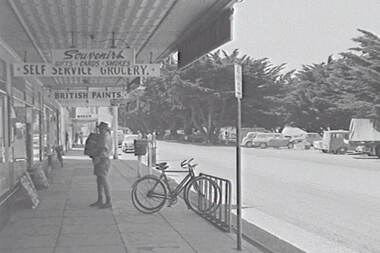 Allan Doney Collection, Bendigo Historical Society Inc.
Negative - Apollo Bay - Street - Grocery, Allan Doney, 1950 -1970
... Although he travelled to many other places in Northern Victoria and beyond in search of subjects for his art, he seemed to always return to Bendigo for inspiration. Negative Apollo ...In the years of Allan Doney’s photography, landmark buildings succumbed to fire, neglect and redevelopment. He photographed the grey sand hills from Bendigo’s mining past, the streetscapes, poppet heads, miners’ cottages, gracious homes with ornate verandahs, trams and much more. Above all, his photographs show how much of the city has survived from the 19th century – and how much has not. Through two decades of great change, Allan Doney was there to capture ways people interacted with it. Although he travelled to many other places in Northern Victoria and beyond in search of subjects for his art, he seemed to always return to Bendigo for inspiration. -
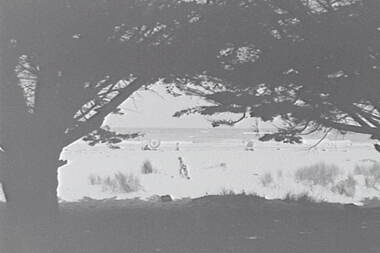 Allan Doney Collection, Bendigo Historical Society Inc.
Negative - Apollo Bay - Beach - Trees, Allan Doney, 1950 -1970
... Although he travelled to many other places in Northern Victoria and beyond in search of subjects for his art, he seemed to always return to Bendigo for inspiration. Negative Apollo ...In the years of Allan Doney’s photography, landmark buildings succumbed to fire, neglect and redevelopment. He photographed the grey sand hills from Bendigo’s mining past, the streetscapes, poppet heads, miners’ cottages, gracious homes with ornate verandahs, trams and much more. Above all, his photographs show how much of the city has survived from the 19th century – and how much has not. Through two decades of great change, Allan Doney was there to capture ways people interacted with it. Although he travelled to many other places in Northern Victoria and beyond in search of subjects for his art, he seemed to always return to Bendigo for inspiration. -
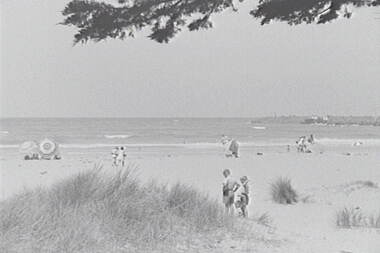 Allan Doney Collection, Bendigo Historical Society Inc.
Negative - Apollo Bay - Beach - Trees, Allan Doney, 1950 -1970
... Although he travelled to many other places in Northern Victoria and beyond in search of subjects for his art, he seemed to always return to Bendigo for inspiration. Negative Apollo ...In the years of Allan Doney’s photography, landmark buildings succumbed to fire, neglect and redevelopment. He photographed the grey sand hills from Bendigo’s mining past, the streetscapes, poppet heads, miners’ cottages, gracious homes with ornate verandahs, trams and much more. Above all, his photographs show how much of the city has survived from the 19th century – and how much has not. Through two decades of great change, Allan Doney was there to capture ways people interacted with it. Although he travelled to many other places in Northern Victoria and beyond in search of subjects for his art, he seemed to always return to Bendigo for inspiration.
