
Showing 43 items matching "approach and landing"
-
 National Vietnam Veterans Museum (NVVM)
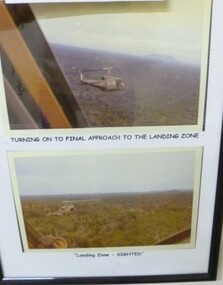
Photograph - Two Coloured Framed Photographs of Helicopters, Turning on to Final Approach to Landing Zone and Landing Zone Sighted
... Turning on to Final Approach to Landing Zone and Landing Zone Sighted...Two coloured photographs in a black frame with white matt of helicopters approaching a landing zone. Under the top photograph reads Turning on to Final Approach to Landing Zone and under the bottom photograph reads Landing Zone Sighted...Helicopters Landing Zone Photographs Two coloured photographs in a black frame with white matt of helicopters approaching a landing zone. ...Two coloured photographs in a black frame with white matt of helicopters approaching a landing zone. Under the top photograph reads Turning on to Final Approach to Landing Zone and under the bottom photograph reads Landing Zone Sightedhelicopters, landing zone, photographs -
 National Vietnam Veterans Museum (NVVM)
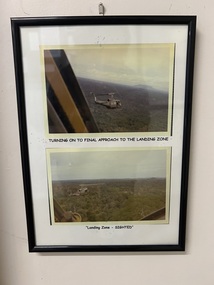
Photograph, Turning on to Final Approach to Landing Zone and Landing Zone Sighted
... Turning on to Final Approach to Landing Zone and Landing Zone Sighted...The top photograph is an inside view of approaching landing zone "To Final Approach" and you can see a helicopter in flight. ...The top photograph is an inside view of approaching landing zone "To Final Approach" and you can see a helicopter in flight. ...Two coloured photographs in a black frame with white matt. The top photograph is an inside view of approaching landing zone "To Final Approach" and you can see a helicopter in flight. Under the photograph reads Turning on to final approach to the landing zone. The second photograph is of a helicopter in flight being viewed through glass and under this photograph reads Landing Zone - Sighted. 2. View of at least two Huey's for evacuation "Landing ...sighted"photograph, hueycobra (helicopter), landing zone -
 Moorabbin Air Museum
Book (item) - Instrument Approach & Landing Charts - Dept Transport Australia March 1986
... Instrument Approach & Landing Charts - Dept Transport Australia March 1986...Instrument Approach & Landing Charts - Dept Transport Australia March 1986 Book Instrument Approach & Landing Charts - Dept Transport Australia March 1986 ... -
Moorabbin Air Museum
Manual (Item) - D.C.A - Aeronautical Information Publication En Route Supplement, Terminal Area Procedures & Instrument Approach & Landing Charts, D.C.A. Aeronautical Information Publication En Route Supplement, Terminal Area Procedures & Instrument Approach & Landing Charts
... Aeronautical Information Publication En Route Supplement, Terminal Area Procedures & Instrument Approach & Landing Charts...Aeronautical Information Publication En Route Supplement, Terminal Area Procedures & Instrument Approach & Landing Charts Manual D.C.A - Aeronautical Information Publication En Route Supplement, Terminal Area Procedures & Instrument Approach & Landing Charts ... -
Moorabbin Air Museum
Manual (Item) - Radio Technical Commission for Aeronautics A New Guidance System for Approach and Landing DO-148 Vol 1
... Radio Technical Commission for Aeronautics A New Guidance System for Approach and Landing DO-148 Vol 1...Radio Technical Commission for Aeronautics A New Guidance System for Approach and Landing DO-148 Vol 1 Manual Radio Technical Commission for Aeronautics A New Guidance System for Approach and Landing DO-148 Vol 1 ... -
 Lakes Entrance Historical Society
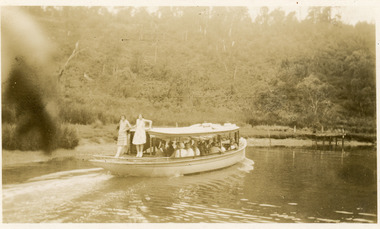
Photograph - Loch Ard, 1940 c
... Photo shows vessel approaching landing below Comers Tearooms, with full load of visitors. ...Photo shows vessel approaching landing below Comers Tearooms, with full load of visitors. ...Sepia photograph showing MV Loch Ard in North Arm. Photo shows vessel approaching landing below Comers Tearooms, with full load of visitors. Thick vegetation on hill. Lakes Entrance Victoria waterways, boats and boating, tourism -
 Lakes Entrance Historical Society
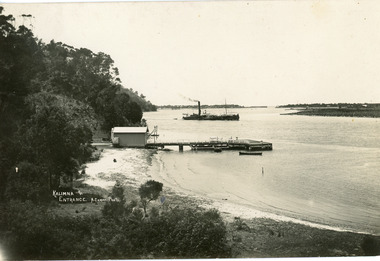
Postcard - Kalimna Jetty Lakes Entrance Victoria c1915, Cooper Alexander
... It shows the shed on the approach to the jetty and landing, Rigby Island and Entrance in background, steep cliffs at eastern edge of lake. ...It shows the shed on the approach to the jetty and landing, Rigby Island and Entrance in background, steep cliffs at eastern edge of lake. ...Black and white large format postcard of Kalimna Jetty Gippsland Lakes. It shows the shed on the approach to the jetty and landing, Rigby Island and Entrance in background, steep cliffs at eastern edge of lake. Pioneer Dredge in channel. Lakes Entrance VictoriaKalimna and Entrancejetties, boats and boating, dredges -
Lakes Entrance Historical Society
Photograph - jetty and shoreline at Lake Tyers Aboriginal Station. Lake Tyers Victoria c1949, c1949
... Showing a launch carrying tourists approaching, and a dozen or more people waiting on the jetty. ...Showing a launch carrying tourists approaching, and a dozen or more people waiting on the jetty. ...Black and white photograph of the jetty and shoreline at Lake Tyers Aboriginal Station. Showing a launch carrying tourists approaching, and a dozen or more people waiting on the jetty. Tree in foreground obscures boat shed beside the landing area, shoreline on opposite bank of lake is timbered. Lake Tyers Victoriaaboriginals, tourism, boats and boating -
 Bendigo Military Museum
Map - MAP, DUTCH BORNEO
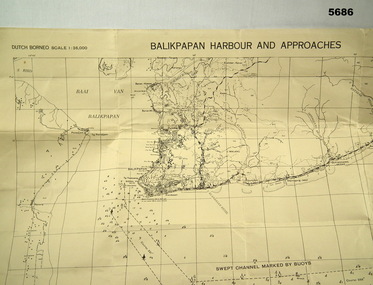
... Map identified height of land in area and depth of ocean on approached to Balikpapan Harbour. Identified piers, streets and defences and potentially used for landing or combat in the area. ...Map identified height of land in area and depth of ocean on approached to Balikpapan Harbour. Identified piers, streets and defences and potentially used for landing or combat in the area. ...Map identified height of land in area and depth of ocean on approached to Balikpapan Harbour. Identified piers, streets and defences and potentially used for landing or combat in the area. MAP PRODUCED BY 2/1 AUST ARMY TOPO SQN CO. Large Yellow paper map with scale of 1:36,000 of Dutch Borneo Balikpapan Harbour and it's approaches. Map folded into 8.balikpapan harbour, maps -
 Bendigo Military Museum
Poster - POSTERS, TRAINING, Possibly 1935 onwards
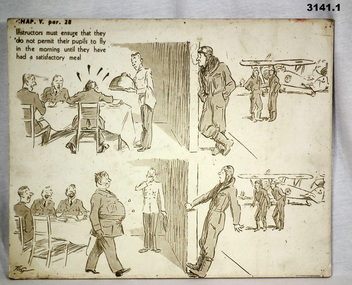
... .1) Chap.V. par 28 Instructors must ensure that they do not permit their pupils to fly in the morning until they have had a satisfactory meal. .2) Chap.V. par 46 (vii) In landing practice the instructor should always give the pupil a mark on which to land. ...documents-posters military history - airforce Cartoons .1) Chap.V. par 28 Instructors must ensure that they do not permit their pupils to fly in the morning until they have had a satisfactory meal. .2) Chap.V. par 46 (vii) In landing practice the instructor should always give the pupil a mark on which to land. ....1) - .3) RAAF Comedy Training Posters. Brown ink on thin cardboard..1) Chap.V. par 28 Instructors must ensure that they do not permit their pupils to fly in the morning until they have had a satisfactory meal. .2) Chap.V. par 46 (vii) In landing practice the instructor should always give the pupil a mark on which to land. The pupil himself should shut off the engine, judge his approach and land as near to the given mark as possible. .3) Chap.V. par 8 The instructor's relations with his pupils should be as friendly and informal as possible.documents-posters, military history - airforce, cartoons -
 National Vietnam Veterans Museum (NVVM)
Sign - Information board, Fix Bayonets!
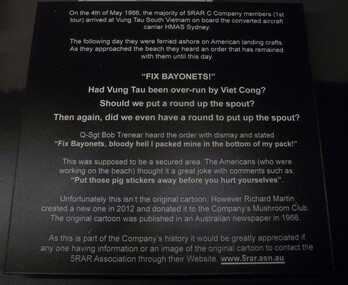
... On the 4th May 1966, the majority of 5RAR C Company (1st tour) arrived at Vung Tau South Vietnam on board the converted aircraft carrier HMAS Sydney, The following day they were ferried ashore on American landing crafts. As they approached the beach, they heard an order that has remained with them until this day. ...Company's Mushroom Club 5 RAR Association Cartoon Poster Information Board Vung Tau HMAS Sydney Sgt Bob Trenear Bayonet Richard Martin Company's Mushroom Club Sgt (Temp) Robert Arthur Trenear 214098 Royal Australian Infantry Corps 5th Battalion The Royal Australian Regiment On the 4th May 1966, the majority of 5RAR C Company (1st tour) arrived at Vung Tau South Vietnam on board the converted aircraft carrier HMAS Sydney, The following day they were ferried ashore on American landing crafts. As they approached the beach, they heard an order that has remained with them until this day. ...Company's Mushroom ClubA poster information board, white text on black, for cartoon in 5RAR display.On the 4th May 1966, the majority of 5RAR C Company (1st tour) arrived at Vung Tau South Vietnam on board the converted aircraft carrier HMAS Sydney, The following day they were ferried ashore on American landing crafts. As they approached the beach, they heard an order that has remained with them until this day. "Fix Bayonets!" Had Vung Tau been over-run by Viet Cong? Should we put a round up the spout? Then again, did we even have a round to put up the spout? Q-Sgt Bob Trenear heard the order with dismay and stated "Fix Bayonets, bloody hell I packed mine in the bottom of my pack!" This was supposed to be a secured area. The Americans (who were working on the beach) thought it a great joke with comments such as "Put those pig stickers away before you hurt yourselves". Unfortunately, this isn't the original cartoon. However Richard Martin created a new one in 2012 and donated it to the Company's Mushroom Club. The original cartoon was published in an Australian newspaper in 1966. As this is a part of the Company's history it would be great appreciated if anyone having information or an image of the original cartoon to contact the 5RAR Association through their Website www.5rar.asn.au 5 rar association, cartoon, poster, information board, vung tau, hmas sydney, sgt bob trenear, bayonet, richard martin, company's mushroom club, sgt (temp) robert arthur trenear, 214098, royal australian infantry corps, 5th battalion, the royal australian regiment -
 Lara RSL Sub Branch
Picture Print, Hurricane, Unknown
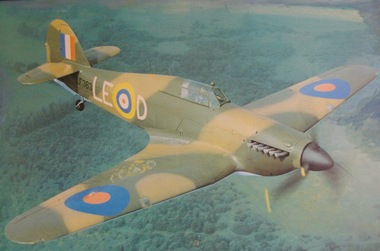
... Whilst flying to Jersey in September 1991, LF363 suffered engine problems and had to be diverted to RAF Wittering but on the final approach the aircraft suffered complete engine failure and had to make an emergency landing. ...Whilst flying to Jersey in September 1991, LF363 suffered engine problems and had to be diverted to RAF Wittering but on the final approach the aircraft suffered complete engine failure and had to make an emergency landing. ...The Hawker Hurricane is a British single-seat fighter aircraft of the 1930s–40s that was designed and predominantly built by Hawker Aircraft Ltd. for service with the Royal Air Force (RAF). It was overshadowed in the public consciousness by the Supermarine Spitfire's role during Battle of Britain in 1940, but the Hurricane actually inflicted 60 percent of the losses sustained by the Luftwaffe in the engagement, and it went on to fight in all the major theatres of the Second World War. Url Hurricane.html. The Hawker Hurricane Mk.IIc - LF363, first flew on the 1st January 1944 and is believed to be the last Hurricane to enter service in the RAF. It was in service with 63 squadron and 26 squadron. After hostilities, LF363 was spared the scrap yard and used on various station flights and also appeared in films 'Angels one five', 'Reach for the Sky' and 'The Battle of Britain'. Whilst flying to Jersey in September 1991, LF363 suffered engine problems and had to be diverted to RAF Wittering but on the final approach the aircraft suffered complete engine failure and had to make an emergency landing. The pilot was saved with relative minor injuries (a broken ankle and minor burns) but the aircraft suffered severe damage. Historic Flying Limited completely rebuilt LF363 and by 1998 it was flying again as part of the B.B.M.F. LF363 currently wears the colour scheme of a Mk.I Hurricane of 17 squadron, P3878 'YB-W' which was flown by Flying Office Harold Bird-Wilson at Debden and Tangmere. Harold 'Birdy' Bird-Wilson had previously been badly burned in a pre-war flying accident. Upon his recovery he joined 17 squadron and fought through the 'Battle of France' and the 'Battle of Britain' achieving 6 confirmed kills. On 24th September 1940, 'Birdy' was shot down by Adolf Galland, his 40th 'kill', and had to bale out. 'Birdy' survived the war and when he retired from the RAF he had reached the rank of Vice Marshall and had been awarded the CBE, DSO, DFC & Bar and the AFC & Bar. British single-seat fighter aircraft manufactured by Hawker Aircraft, Ltd., in the 1930s and ’40s. The Hurricane was numerically the most important British fighter during the critical early stages of World War II, sharing victory laurels with the Supermarine Spitfire in the Battle of Britain (1940–41) and the defense of Malta (1941–42). Hurricanes served in all theatres of war where British forces were engaged. https://www.britannica.com/technology/Hurricane-airplane Framed coloured picture print on plastic sheetOn the aircraft are the markings LF 363 -
 Bendigo Military Museum
Photograph - PHOTOGRAPHS, NAVY WW2, c.WWII
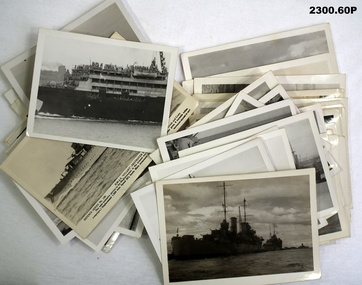
... RAMB II .5) HMS Exeter .6) The landing party returning .7) Part fleet at Colombo .8) British ammunition ship sunk by sabotage in Alex Harbour .9) HMS Exeter .10) On the approach of the island. ...RAMB II .5) HMS Exeter .6) The landing party returning .7) Part fleet at Colombo .8) British ammunition ship sunk by sabotage in Alex Harbour .9) HMS Exeter .10) On the approach of the island. ...Photographs collected by Earnest Albert Simmons W/2129 Royal Australian Navy. Enlisted 30 June 1941 and discharged 14 October 1946 with the rank of Leading Stoker. Posting at discharge was HMAS Lonsdale..1) Ship .2) Submarine conning tower .3) Ship .4) Hospital ship .5) Ship at anchor .6) Launch at ships side .7) Ships at anchor .8) Sunken ship .9) Ship .10) Group on launch .11) Ship firing a broadside .12) Wooden sailing vessel .13) Ship .14) Ship .15) Pilot station .16) Ship .17) Ship .18) Ship.s deck and biplane .19) Partially sunken ship .20) Two ships .21) Ship .22) Ship - damaged .23) Ship .24) Statue and colonade .25) Searchlights .26) Ships deck at sea .27) Aircraft .28) Ship .29) Ship .30) Troop ship .31) Swimmers at ships side .32) Ship .33) Ship .34) Ship deck at sea .35) Ship .36) Submarine .37) Ship .38) Ship .39) Ship .40) Two ships at sea .41) Ship .42) Aircraft carrier .43) Ships symbol .44) Sketch of Berbera .45) Sketch of biplanes .46) Boat at pier .47) Tug boat .48) Ship .49) Ship at wharf .50) Ships at wharf .51) Aircraft carrier .52) Ship .53) Ship at wharf .54) Ships at wharf .55) Ship .56) Two ships .57) Tug boat .58) Diagram comparing the size of two ships .59) Ship sailing past lighthouse .60) Postcard HMAS "Stuart". .1) Hobart and Glascow at Colombo .2) British submarine returning to Alexandria after claiming a victory - note Skull and X Bones .3) HMS Glascow at Colombo .4) Ex Italian hospital ship taken over by British. RAMB II .5) HMS Exeter .6) The landing party returning .7) Part fleet at Colombo .8) British ammunition ship sunk by sabotage in Alex Harbour .9) HMS Exeter .10) On the approach of the island. Note twin Lewis guns .11) HMS Ajax bombarding Bardia .12) A native boat used along coasts and Indian Ocean .13) RMS Georgie refoated at Pt? 1941 .14) HMS Carthage .15) Pilot station at Colombo .16) Aquitania .17) Ajax on patrol with Hobart and battle fleet .18) Hobart rolling in the Bight .19) HMS Gnat (river gun boat) hit by torpedo at Tobruk .20) - .21) Mauritania .22) Italian cruiser sunk by HMAS Sydney .23) Greek destroyer .24) Memorial of Mohomed Pasha Alexandria. Presented by Musso .25) Searchlight at Alexandria .26) Hobart pile driving in heavy weather .27) Lockheed Hudson dive bombing .28) - .29) HMS Galatea? x 1 turret at stern .30) Troops on Aquitania .31) Boys swimming in the middle lakes at Ismalia in the centre of Sues Canal .32) A water NG ? .33) - .34) Hobart striking heavy weather .35) HMS Jupiter .36) British submarine entering Alex .37) Queen Mary .38) Queen Elizabeth .39) Nieuw Amsterdam .40) - .41) Achilles .42) HMS Aircraft carrier - Illustrious .43) Symbol of Hobart's Pom-Pom .44) - .45) - .46) - .47) - .48) Mohoja and Oronties .49) Mohoja .50) - .51) - .52) HMAS Murchison 1954 .53) Strathmore .54) - .55) - .56 - .57 - .58) HMAS Vendetta .59) HMAS Cowra .60) - photographs, ran, hmas -
 Royal Melbourne Yacht Squadron
Memorabilia - Wheel of HMAS Sydney, Early 20th Century
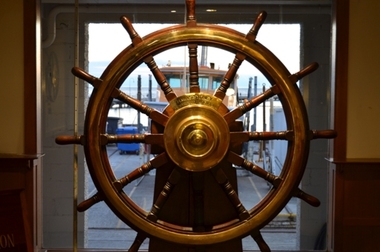
... In the early hours of the morning of Monday the 9 November, he anchored “Emden” off Direction Island to send a landing party ashore, In the meantime the Cable Station had sent out a Morse Code message ‘Strange ship approaching’, this was followed soon after by a ‘S.O.S.’ ...In the early hours of the morning of Monday the 9 November, he anchored “Emden” off Direction Island to send a landing party ashore, In the meantime the Cable Station had sent out a Morse Code message ‘Strange ship approaching’, this was followed soon after by a ‘S.O.S.’ ...THE WHEEL OF HMAS SYDNEY COMMEMORATING AUSTRALIA’S FIRST NAVAL ENGAGEMENT The historic wheel of HMAS Sydney commemorates the Royal Australian Navy’s first ship- to- ship naval engagement. It was purchased early in 1930 and later presented to the Royal St Kilda Yacht Club (now Royal Melbourne Yacht Squadron) by then Commodore Joe White, following HMAS Sydney being broken up at Cockatoo Dock, Sydney. On 1 November 1914, led by the flagship SS Orvieto, a large convoy of 28 Australian and 10 New Zealand transports escorted by the Light Cruisers HMAS Melbourne, HMAS Sydney, HMS Minotaur and the Japanese ship Ibuki, departed King George Sound, Albany Western Australia with a large contingent of Australian and New Zealand troops bound for Egypt, to become the original Anzac’s. As the convoy steamed northwest across the Indian Ocean, leaving Cocos-Keeling Islands well to the westward, Captain Karl von Muller in the German Light Cruiser Emden of 3,600 tons, after having wrought much havoc to allied shipping in the Indian Ocean, ignorant of the convoys presence, had in mind to destroy the Cocos Island Cable Station on Direction Island. In the early hours of the morning of Monday the 9 November, he anchored “Emden” off Direction Island to send a landing party ashore, In the meantime the Cable Station had sent out a Morse Code message ‘Strange ship approaching’, this was followed soon after by a ‘S.O.S.’ These messages were picked up by ships in the convoy and at 7.00 a.m., Captain J.C. Glossop of the 5,400 ton HMAS Sydney was directed to leave the convoy and proceed at full speed for Cocos Islands. Two hours later Cocos Island was on the horizon. Captain von Muller, with the boarding party ashore to destroy the Cable station, steamed out to intercept the intruder. Captain Glossop decided to close in to 9,500 yards ( 8686.8m) before delivering his first salvo. Emden on the other hand, opened fire at 10,500 yards (9601m), its ten, 4.1 inch (104mm) guns firing 38 pound (17.24 kg ) shells, some of which scored near misses. Emden was hit repeatedly by HMAS Sydney’s eight, 6 inch (152.4mm) guns firing 100 pound (45.36kg ) shells. Within two hours Captain von Muller had decided to run the badly damaged Emden aground on North Keeling Island. Captain Glossop then broke off the engagement to speed off to intercept Emden’s collier, “Buresk”, seen lurking in the distance, soon to overtake her. A boarding party from HMAS Sydney was too late to prevent Buresk from being scuttled but able to rescue her crew. Returning to finish off Emden, HMAS Sydney was again met by heavy gunfire. Sydney scored a number of direct hits to Emden and only after having suffered 134 killed and 65 wounded, did Captain von Muller finally decide to lower his Naval Ensign. He was among those captured and was allowed to retain his Naval sword. In the engagements HMAS Sydney only suffered four direct hits, 4 killed and 12 wounded. J.H.(Bert) Ferris Extremely significant as part of Australia's Naval and Military history.Ships wheel, timber, mounted on a timber plinth, wheel of ship first HMAS Sydney.Plaque notifying that wheel donated by Commodore Joe White 1930ww1, sydney, german, hmas, raider, emden, cocos keeling, islands, hmas sydney, wheel -
 Melton City Libraries
Photograph, The Cairn- Jimmy Melrose's plane crash site, 1988
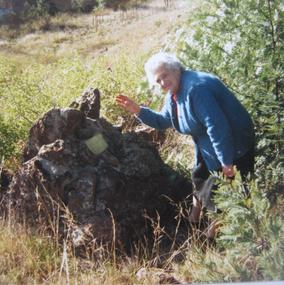
... He was seventh in finishing order and third in the handicap section making news again during the race with a dramatic landing in Darwin with empty fuel tanks. ...Specifications were: 40 feet 4 inches length 30 ft 2 ins height, 9ft 7ins, wing area 270 sq ft, Tare weight 2,600lbs loaded weight 3,300lbs; cruising speed 360 m.p.h. landing 50mph ceiling 14,000 ft range 700 miles. ...Edna Barrie at the cairn, photo received from Graeme Minns in 1988. The cairn marks the site of Jimmy Melrose's plane crash in Melton South. The accident which happened on July 5th 1936. In 1934 Melrose made headlines with a series of spectacular flights. In July of that year, he set around Australia record and in that year established a new solo Australia England record when he flew to England to compete in the MacRoberston race with a De Havilland Puss Moth VH- YQO. The only Australian and the only solo pilot to complete the course within the time limit. He was seventh in finishing order and third in the handicap section making news again during the race with a dramatic landing in Darwin with empty fuel tanks. Late in 1935 Melrose imported the Phoenix for his “Adelaide to Anywhere” Charter Service. The previous year the Heston Aircraft Company had taken over the interests of the well known Comper Aircraft Company, and the first production of the new firm was the Phoenix, a single-engined all wooden five seater machine of sesquiplane configuration. The forward half of the fuselage was a streamlined rectangular section and the rear portion was a monocogue shell; the whole was of plywood fabric covered. The wing was built up of spruce box spars and lattice ribs, ply covered from the leading edge to the front spar and the fabric covered over the remainder. The tail surfaces were of similar construction. The most notable feature of the design was the lower stub wing which ran right across the fuselage embodying two box spars, plywood covered it housed the main undercarriage wheels when retracted and provided a substantial anchorage for the Nu form wing struts. The Dowty undercarriage retracted inwards, operated manually by hydraulic packs, Dual control fitted, with side by side seating for the pilots and three passenger seats behind. Power was a 200 h.p. De Havilland Gipsy VI 6 cylinder inverted in-line air-cooled engine. Six Phoenix were built; five of them registered in Great Britain and one of those was later sold abroad the remaining four were impressed into the R.A.F. in 1940. Specifications were: 40 feet 4 inches length 30 ft 2 ins height, 9ft 7ins, wing area 270 sq ft, Tare weight 2,600lbs loaded weight 3,300lbs; cruising speed 360 m.p.h. landing 50mph ceiling 14,000 ft range 700 miles. Melrose’s machine the first production aircraft was built early in 1936 and test flown of the 24th March. Painted green it carries the words “South Australian Centenary 1936” in silver of the fuselage and the name “Billing on the engine cowling in honor of Melrose’s uncle Noel Pemberton Billing, pioneer designer and founder of the Supermarine Aviation Company. The delivery flight was planned as a goodwill mission to publicise the forthcoming South Australian Centenary celebrations. Melrose left Dympne on the 9th April 1936, and flying via Marseilles, Naples, Athens, Baghdad, Basra, Karachi, Jodphur, Calcutta, Akyab, Penang, Singapore, Lombok, Darwin, Newcastle Waters and Alice Springs reached Adelaide on the 25th of April. Continuing the goodwill flight to other States, he visited Melbourne, Sydney, Newcastle, Grafton, Brisbane, Coff’s Harbour, Sydney again, Launceston, Hobart and Mount Gambier before returning to Adelaide on the 13th May. During June Jimmy made some charter flights and early in July was engaged by Mr. A.J. Campbell a director of several mining companies from Melbourne to Darwin to commence at Essendon on the4th July. However on that day low cloud and steady rain caused the postponement. There was little improvement and Melrose was advised to delay the departure again. However he wished to reach Oodnadatta that night, and when he observed the break in the clouds decided to leave. He planned to climb above the cloud and fly to Adelaide at 3,000 feet. The aircraft was airborne about 8.10 a.m. and was last seen from Essendon climbing above the clouds. At 8.45 people at Melton (30 miles West of Melbourne) heard an approaching aircraft. The engine noise increased abnormally and eye witnesses saw the machine fall out of control from the cloud base about 800 feet and then disintegrate, fragments were scattered for 1½ miles and both occupants were killed. Hand written carbon copy by Edna Barrie.Typed by Wendy Barrie March 2014 Last Flight of Jimmy Melrose by John Burke Parade Magazine July 1972 Page 2 –4 This article gives the take off time of 7.50 am from Essendon Airport Eyewitness account at the time Maisie Arthur’s description. Newspaper article. Edna Barrie at the site of the 'Cairn'local identities, local significant events -
 Flagstaff Hill Maritime Museum and Village
Equipment - Ship's Wheel, 1922
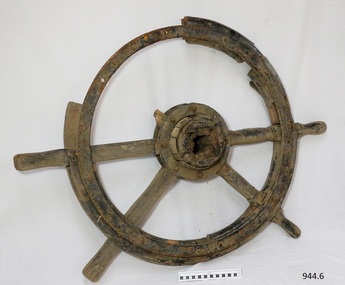
... The bags of grain were individually pushed down the chute, landing in a waiting small boat, then rowed to Reginald M with 14 bags at a time. ...The bags of grain were individually pushed down the chute, landing in a waiting small boat, then rowed to Reginald M with 14 bags at a time. ...This ship's wheel was hand-made from wood and metal using a recycled cart wheel. It originally belonged to the "Reginald M", a coastal trading ketch. ‘REGINALD M’ 1922 to 1975- The vessel “Reginald M” was a two-masted coastal ketch, owned and built by Mr Jack (John) Murch of Birkenhead, Port of Adelaide, South Australia. Its construction took approximately 6 months, and it launched at Largs Bay in 1922. The Reginald M’s purpose was to serve the coastal trade of South Australia, to carry cargo cheaply and efficiently. Some have said that the keel was, in fact, hewn from two telegraph poles! Its builder frequented all the salvage yards for materials and fittings. Reginald M had a very shallow draft and a flat bottom that enabled it to come close to shore and to sit high and dry at low tide or to be beached on sand. The flat bottom was also to make the ship able to skim over reefs. Wagons could load and unload direct from their sides. Its cargo included Guano, Barley, Wool, Horses, Cattle, Timber, Explosives, Potatoes, Shell Gritt and Gypsum. On April 9th 1931Reginald M weathered a large storm in St Vincent Gulf, SA. The vessel suffered great damage; the mast snapped, and the crew laboured for four hours to free it by chopping off the mast and rigging. The crew patched it up and slowly returned to Port Adelaide with only a portion of the insured cargo being damaged. The crew members at the time were owner Mr John H Murch of Wells Street, Largs Bay; Skipper Mr R Murch, John’s brother; Murray, son of Captain Murch; and Seaman John Smith. Reg Webb purchased Carribie Station, at Marion in the Warooka District, south of Adelaide, in 1921. He cleared the land and farmed sheep and grain. In 1923, he shipped his own wool and grain from Marion Bay, having first carted 300 bags of the barley grain, 12 bags at a time, along the unmade track to the jetty. A photograph donated to Flagstaff Hill, dating about 1929 - 1942, shows two men on the Reginald M, holding between them their fishing catch of a large hammer shark. The photograph is stamped “GRENFELL STUDIO PORT LINCOLN PRINT” and titled “hammer shark caught on Reginald Emm”. The donor’s family lived on the Your Peninsula and dispatched their grain from a chute at Gleeson’s Landing to the awaiting transport vessel. Reg knew the Murch Brothers from Port Adelaide. The brothers had been using their ketch, Reginald M, to ship Guano from the Islands, led by Captain Richard Murch. Reg approached them in 1934 about shipping grain from Marion Bay. The brothers visited the bay and thought it was an ideal place. They showed Reg where to stack his grain, and they measured up the cliffs. When Reg was ready, they brought down and installed a ninety-foot wooden chute. The bags of grain were individually pushed down the chute, landing in a waiting small boat, then rowed to Reginald M with 14 bags at a time. After 10 hours, Reginald M would have a load of 1300 bags of grain to ship to waiting ports. At one time, a wild storm destroyed the chute, so they built a stronger replacement chute. Reginald M engaged in the shipping of grain from there until 1938. In 1940, Able Seaman Allan H Lucas served on the Reginald M between September and December, being engaged and discharged from Port Adelaide. The ship’s Master, W S Murch, signed his Certificate of Discharge. It seems that at the Reginald M was used, at one time, as a Customs vessel, as one photograph in Flagstaff Hill’s collection shows “H.M.C. No. 3, Pt Adelaide” on the bow. In 1969, the last freight left Marion Bay on the ketch Reginald M carrying grain, wool, and explosives. In late 1970, the Mt. Lyell Mining and Railway Company bought the vessel to use as a barge to carry explosives. In 1972, the Navy League of Strahan, Tasmania, purchased it for use by the Strahan Sea Cadet Unit to use at Macquarie Harbour and renamed it T.S. Macquarie. However, this plan for the use of Reginald M did not happen. In 1974, Mr Andrew Rennie, of East Brighton, Melbourne, bought it for a similar purpose, paying $5,000 and donating a ‘Cadet of the Year’ trophy to the Sea Cadets. He sailed it from Strahan to Melbourne, planning to use it for pleasure sailing. Also, in 1975, Reginald M was bought by the Melbourne Ferry Company at auction. Later in 1975, Flagstaff Hill Maritime Museum bought the Reginald M for $20,000. It became a popular exhibit in the Village’s lake. In 2006, using funds from a $4,000 government grant, the restoration of the vessel continued. Flagstaff Hill Maritime Village’s Collection holds other artefacts associated with Reginald M. They include - Photographs of the Reginald M, including one photograph of it in Outer Harbour, S.A., dated 1947, with Skipper- R.F. Dale and Owner- John Murch. Another shows it docked at Port Adelaide, with the lettering H.M.C. No. 3 Pt ADEL (standing for His /Her Majesty’s Customs). There is a black and white photo of it at a wharf and another showing a person on board. - a lifebuoy, made of cork, with the inscription of “Pt Adelaide” on it. - Helm section, removed and replaced during restoration. - a bullet found in pieces of timber when Reginald M was restored in 1979 Reginald M was a much-loved exhibit at the Maritime Village, where many visitors enjoyed boarding and exploring a real ship with a long history. Sadly, the Reginald M was decommissioned in late 2016, due to the continuing prohibitive cost of maintenance and the risk to public safety. Components from the Reginald M are held in Flagstaff Hill's collection as a reminder of the Reginald M’s history. This ship's wheel is significant because of its association with the REGINALD M. REGNIALD M was a coastal trading ketch from South Australia built in 1922. It is one of very few sailing coastal trading vessels still extant, and its flat bottom, single chine shape illustrates a very simple but robust method of construction, compared to other round bilged examples of trading vessels. She is now listed on the Australian Register of Historic Vessels (ARHV Number: HV000562.)Ship’s wheel, also called a Helm, eight spoke design. Centre of wheel is handmade of wood and has iron rings around each side. The spokes are fitted into this wooden hub. The outer wheel has an iron ring on one side and sections of a wooden ring on the other. There are both original and modern bolt and screw fastenings. The wheel has remnants of black paint. This ship’s wheel was originally fitted to the ketch REGINALD M and removed during its restoration. flagstaff hill, warrnambool, shipwrecked-coast, flagstaff-hill, flagstaff-hill-maritime-museum, maritime-museum, shipwreck-coast, flagstaff-hill-maritime-village, ship's wheel, hand made ship's wheel, coastal trader, reginald m, ketch, john murch, ch murch, reg webb, carribie station, mt lyell copper company, queenstown navy league, andrew rennie, melbourne ferry company, r.f. dale -
 Flagstaff Hill Maritime Museum and Village
Photograph, 1945
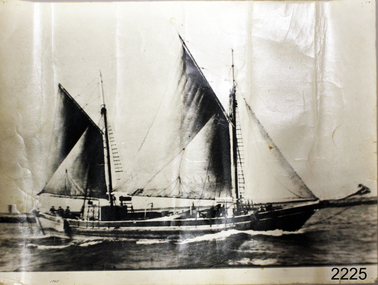
... The bags of grain were individually pushed down the chute, landing in a waiting small boat, then rowed to Reginald M with 14 bags at a time. ...The bags of grain were individually pushed down the chute, landing in a waiting small boat, then rowed to Reginald M with 14 bags at a time. ...The donor was a seamen at Port Adelaide, where this photogrpah of the ketch, Reginald M, was taken in 1945. ‘REGINALD M’ 1922 to 1975- The vessel “Reginald M” was a two-masted coastal ketch, owned and built by Mr Jack (John) Murch of Birkenhead, Port of Adelaide, South Australia. Its construction took approximately 6 months, and it launched at Largs Bay in 1922. The Reginald M’s purpose was to serve the coastal trade of South Australia, to carry cargo cheaply and efficiently. Some have said that the keel was, in fact, hewn from two telegraph poles! Its builder frequented all the salvage yards for materials and fittings. Reginald M had a very shallow draft and a flat bottom that enabled it to come close to shore and to sit high and dry at low tide or to be beached on sand. The flat bottom was also to make the ship able to skim over reefs. Wagons could load and unload directly from their sides. Its cargo included Guano, Barley, Wool, Horses, Cattle, Timber, Explosives, Potatoes, Shell Gritt, and Gypsum. On April 9th 1931, Reginald M weathered a large storm in St Vincent Gulf, SA. The vessel suffered great damage; the mast snapped, and the crew laboured for four hours to free it by chopping off the mast and rigging. The crew patched it up and slowly returned to Port Adelaide with only a portion of the insured cargo being damaged. The crew members at the time were the owner, Mr John H Murch of Wells Street, Largs Bay; Skipper Mr R Murch, John’s brother; Murray, son of Captain Murch; and Seaman John Smith. Reg Webb purchased Carribie Station, at Marion in the Warooka District, south of Adelaide, in 1921. He cleared the land and farmed sheep and grain. In 1923, he shipped his own wool and grain from Marion Bay, having first carted 300 bags of the barley grain, 12 bags at a time, along the unmade track to the jetty. A photograph donated to Flagstaff Hill, dating about 1929 - 1942, shows two men on the Reginald M, holding between them their fishing catch of a large hammer shark. The photograph is stamped “GRENFELL STUDIO PORT LINCOLN PRINT” and titled “hammer shark caught on Reginald Emm”. The donor’s family lived on the Your Peninsula and dispatched their grain from a chute at Gleeson’s Landing to the awaiting transport vessel. Reg knew the Murch Brothers from Port Adelaide. The brothers had been using their ketch, Reginald M, to ship Guano from the Islands, led by Captain Richard Murch. Reg approached them in 1934 about shipping grain from Marion Bay. The brothers visited the bay and thought it was an ideal place. They showed Reg where to stack his grain, and they measured up the cliffs. When Reg was ready, they brought down and installed a ninety-foot wooden chute. The bags of grain were individually pushed down the chute, landing in a waiting small boat, then rowed to Reginald M with 14 bags at a time. After 10 hours, Reginald M would have a load of 1300 bags of grain to ship to waiting ports. At one time, a wild storm destroyed the chute, so they built a stronger replacement chute. Reginald M engaged in the shipping of grain from there until 1938. In 1940, Able Seaman Allan H Lucas served on the Reginald M between September and December, being engaged and discharged from Port Adelaide. The ship’s Master, W S Murch, signed his Certificate of Discharge. It seems that at the Reginald M was used, at one time, as a Customs vessel, as one photograph in Flagstaff Hill’s collection shows “H.M.C. No. 3, Pt Adelaide” on the bow. In 1969, the last freight left Marion Bay on the ketch Reginald M carrying grain, wool, and explosives. In late 1970, the Mt. Lyell Mining and Railway Company bought the vessel to use as a barge to carry explosives. In 1972, the Navy League of Strahan, Tasmania, purchased it for use by the Strahan Sea Cadet Unit to use at Macquarie Harbour and renamed it T.S. Macquarie. However, this plan for the use of Reginald M did not happen. In 1974, Mr Andrew Rennie, of East Brighton, Melbourne, bought it for a similar purpose, paying $5,000 and donating a ‘Cadet of the Year’ trophy to the Sea Cadets. He sailed it from Strahan to Melbourne, planning to use it for pleasure sailing. Also, in 1975, Reginald M was bought by the Melbourne Ferry Company at auction. Later in 1975, Flagstaff Hill Maritime Museum bought the Reginald M for $20,000. It became a popular exhibit in the Village’s lake. In 2006, using funds from a $4,000 government grant, the restoration of the vessel continued. Flagstaff Hill Maritime Village’s Collection holds other artefacts associated with Reginald M. They include - Photographs of the Reginald M, including one photograph of it in Outer Harbour, S.A., dated 1947, with Skipper- R.F. Dale and Owner- John Murch. Another shows it docked at Port Adelaide, with the lettering H.M.C. No. 3 Pt ADEL (standing for His /Her Majesty’s Customs). There is a black and white photo of it at a wharf and another showing a person on board. - a lifebuoy, made of cork, with the inscription of “Pt Adelaide” on it. - Helm section, removed and replaced during restoration. - a bullet found in pieces of timber when Reginald M was restored in 1979 Reginald M was a much-loved exhibit at the Maritime Village, where many visitors enjoyed boarding and exploring a real ship with a long history. Sadly, the Reginald M was decommissioned in late 2016, due to the continuing prohibitive cost of maintenance and the risk to public safety. Components from the Reginald M are held in Flagstaff Hill's collection as a reminder of the Reginald M’s history. The photograph represents a time when the Reginald M was in use at the Port of Adelaide. It shows the configuration of the sails at that time. The vessel was active as a coastal trader from Adelaide and along the south east coast of Australia.Photograph: sepia, rectangular image of the two-masted ketch, Reginald M, in Port River, Adelaide, South Australia. A figure is on the bowsprit, and other figures are on the masts and on deck. Photographed at Port River, Adelaide.flagstaff hill, flagstaff hill maritime museum and village, warrnambool, maritime museum, maritime village, great ocean road, shipwreck coast, ships, port river sa, adelaide, reginald m, 2-masted, sailing ship, ketch, port adelaide, 1945 -
 Sunshine and District Historical Society Incorporated
Administrative record - City of Sunshine - Commissioner Mr Alexander Alex George Gillon Collection 1976 - 1982 - Notice of ordinary meeting of the council 13th October 2026, City of Sunshine, 7th October 1981
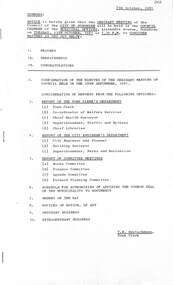
... Albans Delegated Matters Melbourne & Metropolitan Tramways Board New Passenger Shelter South Road South Side Opposite Melton Street Braybrook Keith Street Maidstone No standing Anytime Signs Extruded Metals West Gate Bridge Direction Signing Western Approaches Braybrook Youth Centre Building Subsided Report of the Building Surveyor Building Over Easement 21 Skipton Street St. ...Albans Delegated Matters Melbourne & Metropolitan Tramways Board New Passenger Shelter South Road South Side Opposite Melton Street Braybrook Keith Street Maidstone No standing Anytime Signs Extruded Metals West Gate Bridge Direction Signing Western Approaches Braybrook Youth Centre Building Subsided Report of the Building Surveyor Building Over Easement 21 Skipton Street St. ...Notice of Ordinary Meeting of the Council 13th October 2026 Report of the Town Clerk's Department Report of the Town Clerk Lease Sunshine YCW Football Club Kinder Smith Reserve Braybrook Tenders Sunshine Swimming Pool Kiosk Land Titles Percy Street and Beaver Street St. Albans Formal Allotment of Street Numbers Municipality Grid Map Ref F0 6, F0 7, HO 1 & HO 4 Formal Allotment of Street Numbers Municipality Grid Map Ref KO 2 Municipal Rates Housing Commission Holiday Programmes August / September 1981 On costs Education Department Land Grazing Licence Termination Furlong Road Albion North Report of the Co-Ordinator of Welfare Services Community Bus One Day Music Workshop at Maidstone Hall Community Youth Support Scheme Reinstatement of Federal Funding Report of the Chief Health Surveyor Health Act Registrations Application for Transfer of Premises Under the Health Act Prosecution Proceedings Sunshine Magistrates Court Report of the Medical Officer of Health Report of the Superintendent Traffic & By-Laws Dog Act Landing of Helicopter Highpoint West Shopping Centre Fire Hazards Notice of Removal Fire Hazards Removal Tenders Season 1981/82 Snake Eradication Court Proceedings Parking, Traffic & Dog Infringements Report of the City Librarian Automation of the Circulating System Report of the Project Officer Rainbow Workshop Arts and Crafts Student's Exhibition Pottery Glazing Workshops by the Craft Council of Victoria Weaving Demonstration and Slide Night by Mrs. Lily Duks Highpoint West Library Report of the City Engineer & Planner Melbourne Metropolitan Planning Scheme Amendments Planning Permit Application Bulk Handling Storage Terminal Lot 2 Kalingra Road Tottenham Planning Permit Application Retirement Village Lot 7 - 16 Trinacria Court Deer Park Planning Permit Application Signs 390 Ballarat Road North West Corner Alford Street Sunshine North Planning Permit Application Signs Main Road West South East Corner Station Road St. Albans Delegated Matters Melbourne & Metropolitan Tramways Board New Passenger Shelter South Road South Side Opposite Melton Street Braybrook Keith Street Maidstone No standing Anytime Signs Extruded Metals West Gate Bridge Direction Signing Western Approaches Braybrook Youth Centre Building Subsided Report of the Building Surveyor Building Over Easement 21 Skipton Street St. Albans Building Over Easement 8 Currajong Street St. Albans Schedule for Authorising of Affixing the Common Seal of the Municipality to Documents Orders of the Day Proposal to Close Part of Burnside Street North of Harrison Street Deer Park Under the Provisions of Section 528 of the Local Government Act 1958 Notices of Motion Motion No 1029 Rates Motion No 1030 Sanitary Motion No 1031 Valuationsunshine swimming pool, kennedy street, sunshine, ycw football club, kinder smith reserve, lily street, braybrook, furlong road, sunshine north, percy street, beaver street, st. albans, maidstone hall, thomson street, maidstone, highpoint west shopping centre, rosamond road, maribyrnong, highpoint west library, kalingra road, tottenham, trinacria court, deer park, ballarat road, alford street, main road west, station road, south road, melton street, keith street, extruded metals, west gate bridge, skipton street, currajong street, burnside street, harrison street -
 Flagstaff Hill Maritime Museum and Village
Memorabilia - Bullet & Timber, Early 20th century
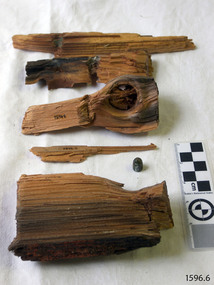
... The bags of grain were individually pushed down the chute, landing in a waiting small boat, then rowed to Reginald M with 14 bags at a time. ...The bags of grain were individually pushed down the chute, landing in a waiting small boat, then rowed to Reginald M with 14 bags at a time. ...The Reginald M was an early purchase of Flagstaff Hill Maritime Museum and Village, soon after it opened in 1975. It was restored and then used as an exhibit in the maritime Village. The reason for the bullet being within the pieces of timber is unknown. The Reginald M's history does not suggest a time when weapons were used. However, the vessel's construction included used materials from different sources; perhaps the bullet was within these materials, which later became part of the Reginald M. ‘REGINALD M’ 1922 to 1975- The vessel “Reginald M” was a two-masted coastal ketch, owned and built by Mr Jack (John) Murch of Birkenhead, Port of Adelaide, South Australia. Its construction took approximately 6 months, and it launched at Largs Bay in 1922. The Reginald M’s purpose was to serve the coastal trade of South Australia, to carry cargo cheaply and efficiently. Some have said that the keel was, in fact, hewn from two telegraph poles! Its builder frequented all the salvage yards for materials and fittings. Reginald M had a very shallow draft and a flat bottom that enabled it to come close to shore and to sit high and dry at low tide or to be beached on sand. The flat bottom was also to make the ship able to skim over reefs. Wagons could load and unload directly from their sides. Its cargo included Guano, Barley, Wool, Horses, Cattle, Timber, Explosives, Potatoes, Shell Grit, and Gypsum. On April 9th 1931, Reginald M weathered a large storm in St Vincent Gulf, SA. The vessel suffered great damage; the mast snapped, and the crew laboured for four hours to free it by chopping off the mast and rigging. The crew patched it up and slowly returned to Port Adelaide with only a portion of the insured cargo being damaged. The crew members at the time were the owner, Mr John H Murch of Wells Street, Largs Bay; Skipper Mr R Murch, John’s brother; Murray, son of Captain Murch; and Seaman John Smith. Reg Webb purchased Carribie Station, at Marion in the Warooka District, south of Adelaide, in 1921. He cleared the land and farmed sheep and grain. In 1923, he shipped his own wool and grain from Marion Bay, having first carted 300 bags of the barley grain, 12 bags at a time, along the unmade track to the jetty. A photograph donated to Flagstaff Hill, dating about 1929 - 1942, shows two men on the Reginald M, holding between them their fishing catch of a large hammer shark. The photograph is stamped “GRENFELL STUDIO PORT LINCOLN PRINT” and titled “hammer shark caught on Reginald Emm”. The donor’s family lived on the Your Peninsula and dispatched their grain from a chute at Gleeson’s Landing to the awaiting transport vessel. Reg knew the Murch Brothers from Port Adelaide. The brothers had been using their ketch, Reginald M, to ship Guano from the Islands, led by Captain Richard Murch. Reg approached them in 1934 about shipping grain from Marion Bay. The brothers visited the bay and thought it was an ideal place. They showed Reg where to stack his grain, and they measured up the cliffs. When Reg was ready, they brought down and installed a ninety-foot wooden chute. The bags of grain were individually pushed down the chute, landing in a waiting small boat, then rowed to Reginald M with 14 bags at a time. After 10 hours, Reginald M would have a load of 1300 bags of grain to ship to waiting ports. At one time, a wild storm destroyed the chute, so they built a stronger replacement chute. Reginald M engaged in the shipping of grain from there until 1938. In 1940, Able Seaman Allan H Lucas served on the Reginald M between September and December, being engaged and discharged from Port Adelaide. The ship’s Master, W S Murch, signed his Certificate of Discharge. It seems that at the Reginald M was used, at one time, as a Customs vessel, as one photograph in Flagstaff Hill’s collection shows “H.M.C. No. 3, Pt Adelaide” on the bow. In 1969, the last freight left Marion Bay on the ketch Reginald M carrying grain, wool, and explosives. In late 1970, the Mt. Lyell Mining and Railway Company bought the vessel to use as a barge to carry explosives. In 1972, the Navy League of Strahan, Tasmania, purchased it for use by the Strahan Sea Cadet Unit to use at Macquarie Harbour and renamed it T.S. Macquarie. However, this plan for the use of Reginald M did not happen. In 1974, Mr Andrew Rennie, of East Brighton, Melbourne, bought it for a similar purpose, paying $5,000 and donating a ‘Cadet of the Year’ trophy to the Sea Cadets. He sailed it from Strahan to Melbourne, planning to use it for pleasure sailing. Also, in 1975, Reginald M was bought by the Melbourne Ferry Company at auction. Later in 1975, Flagstaff Hill Maritime Museum bought the Reginald M for $20,000. It became a popular exhibit in the Village’s lake. In 2006, using funds from a $4,000 government grant, the restoration of the vessel continued. Flagstaff Hill Maritime Village’s Collection holds other artefacts associated with Reginald M. They include - Photographs of the Reginald M, including one photograph of it in Outer Harbour, S.A., dated 1947, with Skipper- R.F. Dale and Owner- John Murch. Another shows it docked at Port Adelaide, with the lettering H.M.C. No. 3 Pt ADEL (standing for His /Her Majesty’s Customs). There is a black and white photo of it at a wharf and another showing a person on board. - a lifebuoy, made of cork, with the inscription of “Pt Adelaide” on it. - Helm section, removed and replaced during restoration. - a bullet found in pieces of timber when Reginald M was restored in 1979 Reginald M was a much-loved exhibit at the Maritime Village, where many visitors enjoyed boarding and exploring a real ship with a long history. Sadly, the Reginald M was decommissioned in late 2016, due to the continuing prohibitive cost of maintenance and the risk to public safety. Components from the Reginald M are held in Flagstaff Hill's collection as a reminder of the Reginald M’s history. The timber is an example of the materials used to build the Reginald M in 1922. The ship was built from recycled items where possible. The bullet represents a time in the history of the vessel that is currently unknown.Wood from the vessel, Reginald M, and a bullet found within its timbers on June 22nd, 1979, during its restoration. flagstaff hill, flagstaff hill maritime museum and village, warrnambool, maritime museum, maritime village, great ocean road, shipwreck coast, reginald m, ketch, coastal trader, timber, wood, bullet, murch, john murch, 1922 -
 Flagstaff Hill Maritime Museum and Village
Domestic object - Wood Stove, circa 1880-1920
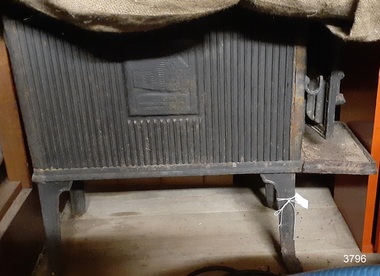
... The bags of grain individually pushed down the chute, landing in a waiting small boat then rowed to Reginald M, 14 bags at a time. ...The bags of grain individually pushed down the chute, landing in a waiting small boat then rowed to Reginald M, 14 bags at a time. ...Stoves of this design are used for heating domestic places and were available in many designs and shapes. They commonly used wood as fuel. They were used for both heating and cooking. This stove was part of the original furnishings of the 1922 vessel 'Reginald M', a South Australian coastal trader. The two-masted coastal ketch was built from material and fittings obtained from salvage yards by Mr Jack (John) Murch of Birkenhead, Port of Adelaide, South Australia. Its construction took approximately six months. It was launched at Largs Bay in 1922. ‘REGINALD M’ 1922 to 1975- The vessel “Reginald M” was a two-masted coastal ketch, owned and built by Mr. Jack (John) Murch of Birkenhead, Port of Adelaide, South Australia. Its construction took approximately 6 months, and it launched at Largs Bay in 1922. The Reginald M’s purpose was to serve the coastal trade of South Australia, to carry cargo cheaply and efficiently. Some have said that the keel was in fact hewn from two telegraph poles! Its builder frequented all the salvage yards for materials and fittings. Reginald M had a very shallow draft and a flat bottom that enabled it to come close to shore and to sit high and dry at low tide or to be beached on sand. The flat bottom was also to make the ship able to skim over reefs. Wagons could load and unload direct from its side. Her cargo included Guano, Barley, Wool, Horses, Cattle, Timber, Explosives, Potatoes, Shell Gritt and Gypsum. On April 9th 1931Reginald M weathered a large storm in St Vincent Gulf, SA. The vessel suffered great damage; mast snapped and the crew laboured for four hours to free it by chopping off the past and rigging. The crew patched iit up and slowly returned to Port Adelaide with only a portion of the insured cargo being damaged. Her crew members at the time were owner Mr John H Murch of Wells Street Largs Bay, Skipper Mr R Murch – John’s brother, Murray – son of Captain Murch and Seaman John Smith. Reg Webb purchased Carribie Station, at Marion in the Warooka District, south of Adelaide, in 1921. He cleared the land and farmed sheep and grain. In 1923 he shipped his own wool and grain from Marion Bay, having first carted 300 bags of the barley grain, 12 bags at a time, along the unmade track to the jetty. A photograph donated to Flagstaff Hill, dating about 1929 - 1942, shows two men on the Reginald M, holding between them their fishing catch of a large hammer shark. The photograph is stamped “GRENFELL STUDIO PORT LINCOLN PRINT” and titled “hammer shark caught on Reginald Emm”. The donor’s family lived on the Your Peninsular and despatched their grain from a chute at Gleeson’s Landing to the awaiting transport vessel. Reg knew the Murch Brothers from Port Adelaide. The brothers had been using their ketch Reginald M to ship Guano from the Islands, led by Captain Richard Murch. Reg approached them in 1934 about shipping grain from Marion Bay. The brothers visited the bay and thought it was an ideal place. They showed Reg where to stack his grain, and they measured up the cliffs. When Reg was ready, they brought down and installed a ninety-foot wooden chute. The bags of grain individually pushed down the chute, landing in a waiting small boat then rowed to Reginald M, 14 bags at a time. After 10 hours Reginald M would have a load of 1300 bags of grain to ship to waiting ports. At one time a wild storm destroyed the chute, so they built a stronger replacement chute. Reginald M engaged in the shipping of grain from there until 1938. In 1940 Able Seaman Allan H Lucas served on Reginald M between September and December, being engaged and discharged from Port of Adelaide. The ship’s Master, W S Murch, signed his Certificate of Discharge. It seems that at the Reginald M was used at one time as a Customs vessel, as one photograph in Flagstaff Hill’s collection shows “H.M.C. No. 3, Pt Adelaide” on the bow. In 1969 the last freight left Marion Bay on the ketch Reginald M carrying grain, wool, and explosives. In late 1970 the Mt. Lyell Mining and Railway Company bought the vessel to use as a barge to carry explosives. In 1972 the Navy League of Strahan, Tasmania, purchased it for use by the Strahan Sea Cadet Unit to use at Macquarie Harbour and renamed iit T.S. Macquarie. However, this plan for use of Reginald M did not happen. In 1974 Mr. Andrew Rennie, of East Brighton, Melbourne, bought it for a similar purpose, paying $5,000 and donating a ‘Cadet of the Year” trophy to the Sea Cadets. He sailed it from Strahan to Melbourne, planning to use it for pleasure sailing. Also, in 1975 Reginald M was bought by the Melbourne Ferry Company auction. Later in 1975 Flagstaff Hill Maritime Museum bought the Reginald M for $20,000. It became a popular exhibit in the Village’s lake. In 2006, using funds from a $4,000 government grant, restoration continued the vessel. Flagstaff Hill Maritime Village’s Collection holds other artefacts associated with Reginald M. They include - Photographs of the Reginald M, including one photograph of iit in Outer Harbour, S.A. dated 1947, with Skipper- R.F. Dale and Owner- John Murch. Another shows it docked at Port Adelaide, with the lettering H.M.C. No. 3 Pt ADEL (standing for His/Her Majesty’s Customs). There is a black and white photo of it at a wharf and another showing a person on board. - a lifebuoy, made of cork, with the inscription of “Pt Adelaide” on it. - Helm section, removed and replaced during restoration. - a bullet found in pieces of timber when Reginald M was restored in 1979 Reginald M was a much-loved exhibit at the Maritime Village, where many visitors enjoyed boarding and exploring a real ship with a long history. Sadly, in late 2016, the Reginald M was decommissioned due to the continuing prohibitive cost of maintenance and the risk to public safety. Components from the Reginald M are preserved as part of Flagstaff Hill's collection. The stove is significant as it represents the heating and cooking appliances used in the late 19th and early 20th centuries, both on board vessels as well as for domestic purposes. The stove has additional significance for its association with the vessel "Reginald M", a coastal trading ketch from South Australia built in 1922 at Largs Bay. It is one of the very few sailing coastal trading vessels built in Australia, with its flat bottom, single chine shape designed for navigating shallow water. Stove: a cast-iron, rectangular, four-legged stove with a hinged front door. This stove was part of the original furnishings of the vessel 'Reginald M', built in Adelaide in 1922. Inscription on the side. Image of a log cabin with an illegible inscription below it.flagstaff hil, warrnambool, flagstaff hill maritime museum, maritime museum, shipwreck coast, flagstaff hill maritime village, coastal trader, trading vessel, vessel reginald m, ketch, john murch ship builder, reg webb, carribie station, mt lyell copper company, queenstown navy league, andrew rennie, melbourne ferry company, r.f. dale, port adelaide vessel reginald m, macquarie training vessel, grenfell studio port lincoln, stove, domestic heating, domestic cooking, heater, cooking unit, wood fired stove, wood stove, wood-burning stove -
 Flagstaff Hill Maritime Museum and Village
Machine - Steering Gear, Carron Ironworks foundry, before 1922
... The bags of grain were then individually sent down the chute, landing in a waiting small boat then rowed to REGINALD M, 14 bags at a time. ...The bags of grain were then individually sent down the chute, landing in a waiting small boat then rowed to REGINALD M, 14 bags at a time. ...The ship's steering gear was used for steering and navigation of a vessel - it was a very important part of the ship's equipment. This steering gear was part of the original vessel 'Reginald M', which became part of the exhibitions at Flagstaff Hill Maritime Village. The steering gear was manufactured by the Carron Company. ABOUT THE CARRON COMPANY The Carron Company established its ironworks on the banks of the River Carron in Stirlingshire, Scotland, in 1759, and became an incorporated company in 1773. One of the notable items produced by the company was the Carronade, a short-barrelled naval cannon, being produced until the 1850s. The company was the largest ironworks in Europe during the 19th century. It supplied ammunition and armaments, steamboat engines, pig iron, cast iron goods such as balustrades fire grates and bath tugs, pillar boxes and telephone boxes, and even cast iron rings for underground tunnels. In 1982 it became insolvent and was taken over by the Franke Corporation, using the brand Carron Phoenix. ABOUT THE 'REGINALD M' The Reginald M’s purpose was to serve the coastal trade of South Australia, to carry cargo cheaply and efficiently. It is believed that the keel was in fact hewn from two telegraph poles! Its builder frequented all the salvage yards for materials and fittings. The vessel “Reginald M” was a two-masted coastal ketch, owned and built by Mr. Jack (John) Murch of Birkenhead, Port of Adelaide, South Australia. Its construction took approximately 6 months and it was launched at Largs Bay in 1922. Reginald M had a very shallow draft and a flat bottom that enabled it to come close to shore and to sit high and dry at low tide or to be beached on sand. The flat bottom was also to make the ship able to skim over reefs. Wagons could load and unload direct from her side. Her cargo included Guano, Barley, Wool, Horses, Cattle, Timber, Explosives, Potatoes, Shell Grit and Gypsum. On April 9th 1931Reginald M weathered a large storm in St Vincent Gulf, SA. The vessel suffered much damage; mast snapped and the crew laboured for four hours to free her by chopping off the past and rigging. The crew patched her up and slowly returned to Port Adelaide with only a portion of the insured cargo being damaged. Her crew members at the time were owner Mr John H Murch of Wells Street Largs Bay, Skipper Mr R Murch – John’s brother, Murray – son of Captain Murch and Seaman John Smith. Reg Webb purchased Carribie Station, at Marion in the Warooka District, south of Adelaide, in 1921. He cleared the land and farmed sheep and grain. In 1923 he shipped his own wool and grain from Marion Bay, having first carted 300 bags of the barley grain, 12 bags at a time, along the unmade track to the jetty. A photograph donated to Flagstaff Hill, dating about 1929 - 1942, shows two men on the Reginald M, holding between them their fishing catch of a large hammer shark. The photograph is stamped “GRENFELL STUDIO PORT LINCOLN PRINT” and titled “hammer shark caught on Reginald Emm”. The donor’s family lived on the Your Peninsular and despatched their grain from a chute at Gleeson’s Landing to the awaiting transport vessel. Reg knew the Murch Brothers from Port Adelaide. The brothers had been using their ketch REGINALD M to ship Guano from the Islands, led by Captain Richard Murch. Reg approached them in 1934 about shipping grain from Marion Bay. The brothers visited the bay and thought it was an ideal place. They showed Reg where to stack his grain and they measured up the cliffs. When Reg was ready, they brought down and installed a ninety foot wooden chute. The bags of grain were then individually sent down the chute, landing in a waiting small boat then rowed to REGINALD M, 14 bags at a time. After 10 hours REGINALD M would be fully loaded with 1300 bags of grain and shipped to waiting ports. At one time a wild storm destroyed the chute but it was rebuilt and strengthened. REGINALD M was involved in shipping the grain from there until 1938. In 1940 Able Seaman Allan H Lucas served on Reginald M between September and December, being engaged and discharged from Port of Adelaide. His Certificate of Discharge was signed by ship’s Master W S Murch. It seems that at some stage Reginald M was used as a Customs vessel, as one photograph in Flagstaff Hill’s collection shows “H.M.C. No. 3, Pt Adelaide” on the bow. In 1969 the last freight left Marion Bay on the ketch REGINALD M carrying grain, wool and explosives. In late 1970 she was sold to the Mt. Lyell Mining and Railway Company and was used by them as a barge to carry explosives. In 1972 the Navy League of Strahan, Tasmania, purchased her for use by the Strahan Sea Cadet Unit to use at Macquarie Harbour and renamed her T.S. Macquarie. However this plan for use of Reginald M did not come to pass. In 1974 Mr. Andrew Rennie, of East Brighton, Melbourne, bought her for a similar purpose. , paying $5,000 and donating a ‘Cadet of the Year” trophy to the Sea Cadets. He sailed her from Strahan to Melbourne, planning to use her for pleasure sailing. Also in 1975 Reginald M was sold to Melbourne Ferry Company at auction. Later in 1975 the Reginald M was bought by Flagstaff Maritime Museum for $20,000 . She has been restored and is now one of the exhibits in the Village lagoon or lake. It was restored in 2006 using funds from a $4,000 government grant. Flagstaff Hill Maritime Village’s Collection holds several other artefacts associated with Reginald M. They include photographs of the Reginald M, including one photograph of her in Outer Harbour, S.A. dated 1947, with Skipper- R.F. Dale and Owner- John Murch. Another shows her docked at Port Adelaide, with the lettering H.M.C. No. 3 Pt ADEL (standing for His/Her Majesty’s Customs). There is a black and white photo of her at a wharf and another showing a person on board.The steering gear is significant through its association with the Carron Company, the largest ironworks in Europe in the 19th century, and the manufacture of the short barrel, lightweight naval gun - the Carronade. The steering gear is significant for its association with the vessel REGINALD M is a coastal trading ketch from South Australia built in 1922. It is one of very few sailing coastal trading vessels still extant, and its flat bottom, single chine shape illustrates a very simple but robust method of construction, compared to other round bilged examples of trading vessels. She is now listed on the Australian Register of Historic Vessels (ARHV Number: HV000562.) Ship's steering gear that was part of the original vessel 'Reginald M', which was constructed in 1922. Inscription on both sides. Made by the Carron Company, UK."CARRON COMPANY"flagstaff hil, warrnambool, shipwrecked coast, flagstaff hill maritime museum, maritime museum, shipwreck coast, flagstaff hill maritime village, coastal trader, trading vessel, vessel reginald m, ketch, john murch ship builder, reg webb, carribie station, mt lyell copper company, queenstown navy league, andrew rennie, melbourne ferry company, r.f. dale, port adelaide vessel reginald m, macquarie training vessel, grenfell studio port lincoln, ship steering gear, metal steering gear, ship's gear, ship's navigation, carron company -
 Flagstaff Hill Maritime Museum and Village
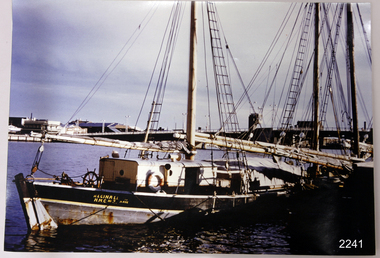
Photograph
... The bags of grain were then individually sent down the chute, landing in a waiting small boat then rowed to REGINALD M, 14 bags at a time. ...The bags of grain were then individually sent down the chute, landing in a waiting small boat then rowed to REGINALD M, 14 bags at a time. ...This coloured photograph of the ketch Reginald M was taken when she was docked at Port Adelaide. The side of the vessel shows the letters "REGINALD M / H.M.C. No. 2 Pt ADEL" - (abbreviation H.M.C. meaning His/Her Majesty's Customs. HISTORY The Reginald M, a two-masted coastal ketch, was owned and built by Mr. Jack (John) Murch of Birkenhead, Port of Adelaide, South Australia to serve the coastal ports of South Australia. Its construction took approximately 6 months and it was launched at Largs Bay in 1922. Its purpose was to carry cargo cheaply and efficiently, and tradition has it that the keel was in fact hewn from two telegraph poles! Its builder frequented all the salvage yards for materials and fittings. The Reginald M had a very shallow draft and a flat bottom that enabled it to sit high and dry at low tide. The flat bottom was also to make the ship able to skim over reefs. Wagons were able to load and unload direct from her side. Her cargo included Guano, Barley, Wool, Horses, Cattle, Timber, Explosives, Potatoes, Shell Grit and Gypsum. In 1931 she weathered a large storm in St Vincents Gulf, SA. Her crew at the time were Owner Mr John H Murch, Wells St, Largs Bay, Skipper, John’s brother Mr R Murch, Murray, son of Mr R Murch and Seaman John Smith Reg Webb purchased Carribie Station, at Marion in the Warooka District, south of Adelaide, in 1921. He cleared the land and farmed sheep and grain. In 1923 he shipped his own wool and grain from Marion Bay, having first carted 300 bags of the barley grain, 12 bags at a time, along the unmade track to the jetty. A photograph dating about 1929 -1942 shows 2 men on the Reginald M, having just landed their fishing catch of a hammer shark. The photograph is stamped “GRENFELL STUDIO PORT LINCLON PRINT” and titled “hammer shark caught on Reginall Emm”. Reg Webb knew the Murch Brothers from Port Adelaide. The brothers had been using their ketch REGINALD M to ship Guano from the Islands, led by Captain Richard Murch. Reg approached them in 1934 about shipping grain from Marion Bay. The brothers visited the bay and thought it was an ideal place. They showed Reg where to stack his grain and they measured up the cliffs. When Reg was ready, they brought down and installed a ninety foot wooden chute. The bags of grain were then individually sent down the chute, landing in a waiting small boat then rowed to REGINALD M, 14 bags at a time. After 10 hours REGINALD M would be fully loaded with 1300 bags of grain and shipped to waiting ports. At one time a wild storm destroyed the chute but it was rebuilt and strengthened. REGINALD M was involved in shipping the grain from there until 1938. In 1940 Able Seaman Allan H Lucas served on Reginald M between September and December, being engaged and discharged from Port of Adelaide. His Certificate of Discharge was signed by ship’s Master W S Murch. It seems that at some stage Reginald M was used as a Customs vessel because a photograph in Flagstaff Hill’s collection shows the text “H.M.C. No. 3, Pt Adelaide” on the bow, the abbreviations standing for “His/Her Majesty’s Customs”. In 1969 the last freight left Marion Bay on the ketch REGINALD M carrying grain, wool and explosives. In late 1970 she was sold to the Mt. Lyell Copper Company, based in Queenstown, Tasmania, to carry explosives. In 1972 the Navy League of Strahan, Tasmania, purchased her for use by the Strahan Sea Cadet Unit and renamed her T.S. Macquarie. In 1974 Mr. Andrew Rennie, of East Brighton, Melbourne, bought her, paying $5,000 and donating a ‘Cadet of the Year” trophy to the Sea Cadets. He sailed her from Strahan to Melbourne, planning to use her for pleasure sailing. In 1975 Reginald M was sold to Melbourne Ferry Company at auction. In 1975 the Reginald M was bought by Flagstaff Maritime Museum for $20,000. She has been restored and is now one of the exhibits, tied up at the dock. Flagstaff Hill Maritime Village’s Collection holds several other artefacts associated with Reginald M. They include - Photographs of the Reginald M, including one photograph of her in Outer Harbour, S.A. dated 1947, with Skipper- R.F. Dale and Owner- John Murch. Another shows her docked at Port Adelaide, with the lettering H.M.C. No. 3 Pt ADEL (standing for His/Her Majesty’s Customs). There is a black and white photo of her at a wharf and another showing a person on board. - a lifebuoy, with Pt Adelaide on it. - a bullet found in pieces of timber when Reginald M was restored in 1979 (References: Flagstaff Hill Fact Sheet “Reginald M”, the book “The Reg Webb Story” compiled by the Warooka & District Museum. Reg Webb’s daughter Lily Ramsay (nee Webb) and her husband Howard, Lizzie Rennie (daughter of owner Andrew Rennie), brochure “Discover the Yorke Peninsula South Australia”, Ketch in Peril; Adelaide Chronicle 9 April 1931, K Gordon & Mary Filmer of Warooka; South Australian Maritime Museum) Thiis photograph is significant because of its connection to the history of the vessel REGINALD M is a coastal trading ketch from South Australia built in 1922. It is one of very few sailing coastal trading vessels still extant, and its flat bottom, single chine shape illustrates a very simple but robust method of construction, compared to other round bilged examples of trading vessels. She is now listed on the Australian Register of Historic Vessels (ARHV Number: HV000562.)Photograph of Reginald M at Port Adelaide. The side of the vessel shows the letters "REGINALD M / H.M.C. No. 2 Pt ADEL" - (abbreviation H.M.C. meaning His/Her Majesty's Customs. Painted on the side of the vessel "REGINALD M / H.M.C. No. 2 Pt ADEL" - flagstaff hill, warrnambool, shipwrecked-coast, flagstaff-hill, flagstaff-hill-maritime-museum, maritime-museum, shipwreck-coast, flagstaff-hill-maritime-village, reginald m, coastal trading ketch, trading vessel, john murch ship builder, port adelaide vessel reginald m, andrew rennie, macquarie training vessel, mt lyell copper company, queenstown navy league, ch murch, reg webb, carribie station, melbourne ferry company, grenfell studio port lincoln, vessel reginald m -
Stawell Historical Society Inc
Archive, Historical Film Footage of Stawell Technical School 1932 & 1966
... December 13th 1932 50.00 By the Lakeside 50.22 The boys take to the water. 50.46 One in, All in. 51.22 Hunger….. approaching, On with..the billy.. 51.34 The workers Partake of Nourishment. 51.47 Silent workers....December 13th 1932 50.00 By the Lakeside 50.22 The boys take to the water. 50.46 One in, All in. 51.22 Hunger….. approaching, On with..the billy.. 51.34 The workers Partake of Nourishment. 51.47 Silent workers. ...Historical Film FootageTwo Film Reels Larger one Green Plastic Smaller one Red Plastic Sport at the Stawell Technical School 0.00 “Cricket Practice” 0.33 “The Bowler ..t it” 1.10 “Our Football Team 1932” 1.33 “Have a Closer look at them” (Football at Central Park ) 2.20 “Some of the Younger Fry” (school boys at Central Park) 2.33 “Start of the 220 Yards” 2.57 “High jump Events” 3.30 “See how it is done” 4.27 “See how to jump” 5.44 “The Sack Race” 6.15 “Boot Scram How carefully …. The boots …” 6.25 “The rush of the bootless brigade” 7.02 “Start of the Apple in Tub……. Race” 7.12 “An apple a day, keeps the doctor away…. They want their apple” 7.32 “See – The Art of Getting….The apple. 7.59 Putting the Weight” 8.14 “Notice the graceful movements” Skene (Street site) 9.31 “ The Long Jump” Stawell Technical School Activities at Skene Street 10.10 “ Marching practice for Inter- Technical sports….. 1932 10.33 “Some practice starts. ( Tech school building Skene Street ) 11.54 Technical school building in Skene St 12.07 “The Fall in” 12.48 “Drill exercise” 13.40 “Drill Exercise Juniors” 15.09 “Dismiss” 15.24 “Classes Leaving School Room- Sorry to part” 15.52 “Bat Tennis” 16.23 “Ball passing” 16.50 “Over-head Ball Passing” 17.21 fancy dress on stage. Similar to Can Can 18.21 possible Egyptian dance Stawell Technical School Swimming 19.00 “Receiving Instructions-The Lull before the storm!” 19.09 “All ready in their gowns.—They’re off!!! (No, not the gowns.) 19.19 “Hey! Would you believe he’d do this on purpose?” 1st method of release and rescue 19.54 “Another patient “callin” for help- Life-saving is mostly ups and downs” 20.17 “Towing the patient in, so that he can’t struggle with the rescuer” 20.52 “Who’s drowning now? It’s either Sir Walter Dally or Frantic Drake getting ducked” 21.38 Swimming club room at Cato Lake 21.44 Diving tower Cato Lake Views of Stawell from Big Hill and from a Plane 23.18 Views from Big Hill 23.48 ? lettered title by Stawell Technical School 23.53 “Now, off we go in the Texas plane”(biplane) 24.07 “Stawell looks like a Doll’s Garden” 24.36 “Main Street Winds … beneath us” 24.55 “Lake Cato, Central Park, War Memorial” 25.16 “State School 502 with the “ants” out at play…. 25.53 “The North Western Woollen Mills” 26.05 “And now from the West side” 26.33 “Above the clouds at 7000ft.”(and landing the biplane) Technical School Trade Skill-- Carpentry 27.16 “Woodwork Department” “Model Dairy” – Built on walk-in walk-out principle with bails for 6 cows; also separator, cream, and feed room; Length 52 Ft Width 18ft. Scale 27.44 “Framing for Lean-to shed Many uses can be found for this type on the farm 28.08 “Putting the finishing touches to a Twi-roomed Settler’s House….” 28.42 “A good sturdy type of hand gate….. half full size.. 28.57 “This Double-batten gate costs the farmer13/-, can be made in 3 hours, and is good for a Century…. 29.20 “ A stand for…… 1.000 Gallon tank. 1/3rd Full size….. 29.45 “ Form for moulding Concrete fence posts…. These posts are fire-proof, white-ant-proof, and will not rot…. 30.11 “No 2. Carpentry.” Sinking Mortices in Styles of a pair of Gates….. 30.29 “Cutting Tenons on the Rails” 30.42 “Fitting Tenon into Mortice.” 30.53 ‘Marking and cutting for Brace” 31.46 “Turret Roofs. 1. Bell-shaped… 2. Ogee……… 32.03 “Cutting a Mitre such as is used for corner of Picture Frame. 32.51 “Testing Mitre for Square” 32.59 “No 3. Joinery.” Box-framed Window with Double-hung sashes 33.24 “Louvre Ventilators 1. Circular. 2. Triangular. 33.46 “Front Entrance Door and Frame, with Fanlight and Sidelights. 34.04 “Half Size Model of a Gothic Door 34.21 No 4. Cabinet-Making. Fitting shaped rail to turned leg of….. Music Stool, having a Drawer for Music. 34.43 “A Fire-screen….. with Painted Panel. 35.01 “A sitting down job.” Junior Technical Boys on Chair construction 35.22 “A modeling class at work. ------- Technical School Trade Skill—Plastering 36.09 “ A process of … casting in Plaster. Of parts…… 36.14 “Building the walls around the clay….. model. ------ 36.34 “Mixing the Plaster of Paris to pour for the mould….. 36.39 “Modelling Section. The running of Mouldings…. 36.43 “Building up…. The rough shape of the mould…” 36.55 “Moving thr template slowly along,….. in order to perfect the shape…… 37.30 “Moving the template along……. For the second time. 37.49 “The finished mould.” 37.55 “An end view showing …. The exact shape. Technical School Speech Day 38.40 Speech day 39.40 Display of art work, plaster models and carpentry 41.44 Science experiments Exploring the Grampians/Halls Gap 40.30 Exploring the Grampians Views from Mt William 45.54 Picnic Halls Gap 46.36 Swimming carnival Halls Gap pool Athletics at Central Park Stawell 43.56 Athletic events at Central Park including sack race and tandem racing Lake Lonsdale Picnic 49.41 Leaving for …. The School Picnic held at …Lake Lonsdale….. December 13th 1932 50.00 By the Lakeside 50.22 The boys take to the water. 50.46 One in, All in. 51.22 Hunger….. approaching, On with..the billy.. 51.34 The workers Partake of Nourishment. 51.47 Silent workers.(mothers picnic lunch) Wash up and Dry up. 52.20 General view at Lunch time. 52.53 One swallow does not make a summer… 53.10 Great Australian Bites. 53.28 Good-bye Sandwiches.. 53.57 Note the more than full expressions… 54.06 The last parade 54.16 Swim for the shore boys Under 14 years 54.43 Swim for the shore boys. Under 16 Years. 55.06 Swim for the shore boys, all in… 55.28 Ladies Race. Use your weight. 55.45 After the fall. 55.47 The winner Mrs Taylor. 55.06 Boys Races 56.20 How NOT to run.(backwards) 57.10 Try this one yourself….(backwards) 57.26 The Staff Spirit? 57.39 The Winner Mr Henderson.. Snow in Stawell 1949 58.01 1949 snow in Stawell Tech school, 502, Tech snow fight , Patrick St with courthouse 59.31 Big Hill scenery 1.00.06 Speech at Tech school quadrangle Street Parade down Main Street 1.00.22 c. 1945 Parade main St (possibly Peace celebrations) Sporting event Central Park 1.02.04 Central Park sporting event after the Parade, including Scouts erecting a tent. Historical Film Footage Stawell Tech 1932education -
 City of Melbourne Libraries
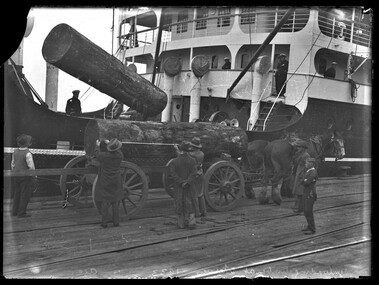
Photograph (item), Bull, Hugh Jones, 1897-1993, Unloading timber at Victoria Dock, 1933
... Here, in 1889, the Trust began building six jetties and a wharf specifically for the landing of timber. Clydesdale horses were initially brought to Victoria from Tasmania in the 1830s, and with the 1850s gold rush they were imported direct from Scotland. ...Here, in 1889, the Trust began building six jetties and a wharf specifically for the landing of timber. Clydesdale horses were initially brought to Victoria from Tasmania in the 1830s, and with the 1850s gold rush they were imported direct from Scotland. ...Photographer notations on slide: "Unloading Timber at Wharves 1933 Age B5" Published: Age (Melbourne, Vic.: 1854- ), Tuesday 15 August 1933 MAHOGANY FROM MANILA. (1933, August 15). The Age (Melbourne, Vic. : 1854 - 1954), p. 11. Retrieved January 16, 2026, from http://nla.gov.au/nla.news-article204377024 Published title: MAHOGANY FROM MANILA Published Caption: Age Tue 15 Aug 1933 Caption: Unloading Mahogany Logs brought from Manila, Philippine Islands, by the steamer Taiping, which berthed yesterday at Victoria Dock. The vessel discharged twenty logs, each weighing three tons, the first shipment of this type of timber landed in Melbourne. Research by Project Volunteer, Louise McKenzie: This photograph in many ways epitomises Melbourne in the 1930s. It is a time of enormous growth, development and change. But before delving into that, the photo itself is very powerful. The huge mahogany logs being unloaded appear to be so heavy that the ship itself seems to list to port as they are craned over the side. They are being levered into a cart to which two large and sturdy Clydesdale horses are hitched. In contrast to the traditional horses, the wharf is crisscrossed with modern railway tracks. Unloading is both mechanical and manual, and the scene is one of intense interest to a young boy bystander. The ship appears to be squat and solid, but the whole image also gives a feeling of movement and intensity. The mahogany being delivered to Melbourne would be intended for high quality furniture. In the 1930s Australia actually had a growing timber industry, but much of the eucalyptus wood was being utilised for mass produced furniture, and much of this furniture would then have had a veneer applied to it. The fact that it was economic to import this timber from the “Philippine Islands” – not a traditional trading market for Australia – reflects a Victorian economy that was strong enough to support a growing demand for good quality furniture Mahogany was described as a classic, strong hardwood, often used for dark opulent furniture. In the 1930s the importation of timber from Manila (Philippines) to Australia was a notable trade, particularly in Philippine Lauan (often referred to as Philippine Mahogany), which was used as a cheaper alternative to other hardwoods. 1930s furniture, dominated by the art deco style, used a mix of luxurious exotic woods like mahogany, macassar and ebony for high-end pieces, often veneered over less expensive woods such as walnut, birch and poplar, and with plywood, chrome and lacquer also popular for more practical, streamlined designs during the Depression era. By the mid 1930s timber mills were being relocated away from the immediate dock area, but the fact that these logs were being transported by horse-drawn cart implies that the load would not have had to be taken too far for milling. 1885 the Melbourne Harbour Trust Commissioners had decided that land in or near the city was far too valuable to be used as timber yards. Furthermore, large stacks of timber posed a fire risk. The Trust asked the Victorian Government to reserve a site on the east side of the Yarra River opposite Yarraville and Spotswood. Here, in 1889, the Trust began building six jetties and a wharf specifically for the landing of timber. Clydesdale horses were initially brought to Victoria from Tasmania in the 1830s, and with the 1850s gold rush they were imported direct from Scotland. Melbourne was from its earliest years an important centre of horse-breeding from both imported and colonial-bred stock, providing the well-built draught horse for pulling heavily loaded wagons, the harness horse for delivery work and drawing coaches, and the saddle-horse used for riding. Stud breeding facilities were advertised from the early 1840s. By the 1870s the horse export trade was thriving, and the Port of Melbourne was the country's busiest exporter of horses to Indian, Asian and New Zealand markets. Kirk's Melbourne Horse and Carriage Bazaar in Bourke Street first advertised for business in 1840, and by the 1850s Bourke Street West was famed for its horse bazaars and saleyards. The Victorian Clydesdale Horse Society reports that Clydesdale working horses were a vital part of Melbourne's infrastructure and agricultural industry in the 1930s, when they reached the peak of their popularity despite the increasing competition from mechanization. Their main roles and usage at this time were: • City Delivery: Clydesdales were a common sight for metropolitan deliveries, particularly for breweries (such as Carlton & United Breweries), milk runs, and bread deliveries. • Industrial Work: They were heavily used for hauling cargo at the docks, in construction, and at specialized sites like the Truganina Explosives Reserve, where they pulled wagons. • Agriculture: In surrounding rural areas, they were the primary power source for ploughing and agricultural machinery. • Specialization: By the 1930s, the Clydesdale was smaller and more compact than the Shire or Percheron breeds, making them ideal for navigation in urban environments. After the 1930s their numbers decreased due to the onset of WWI and mechanisation. Wartime petrol rationing led to a brief revival for the working horse, as suburban tradesmen, now used to motor delivery, took their old jinkers out of mothballs. By 1947, however, only 1.5% of city traffic was horse-drawn. In 1952 the large horse cartage company A. Kellet Pty Ltd sold its 250 horses and converted its Richmond stables to storage. In the 1950s at Station and Princes piers, wharf labourers refused to work with the six draught horses still being used to haul trolleys and which were soon superseded by the fork lift, semi-trailer and mobile crane. Where carefully trained horses had once shunted trains in city goods yards, a few hundred a week were now being killed at the abattoirs for pet and human consumption. The last MCC dray horse was withdrawn from service in 1958, but some of the few remaining working animals are used by the mounted police for crowd control at demonstrations and football games. The death knell had also sounded for the associated trades of farrier, saddler and blacksmith. Our photo, therefore, showing the wharf with both the haulage Clydesdales and the rail lines, is a strong visual summary of the social and economic changes experienced in Victoria in the 1930s and on towards the 1950s. Our photo is located at Victoria Dock (also known as Victoria Harbour) which is still an active component of Melbourne’s port system. In 1892 the West Melbourne Dock (later Victoria Dock) was opened, downstream and immediately west of the Spencer Street railway shunting yards. It contained a swing basin for ships, replacing the one which had been provided on the south side of the river, later to be the Duke and Orr dry dock, west of the Charles Grimes Bridge. Further west was the South Wharf along the river bank. The history of Victoria Dock is extremely well described by Ashley Smith in his 2 March 2022 article in Docklands News, and its accompanying aerial photo of the Dock taken in 1934. He writes: "In the early 1930s Victoria Dock was one of the biggest sites for trade and export in Melbourne. A constant queue of ships sailed in, unloaded their cargo, recharged and reloaded, then left for the next port. Around the time this photo was taken (found in a 1934 photo book), the trapezium-shaped basin had been through some changes since its construction in the 1890s. The 497-metre-long Central Pier, finished in 1919, now featured six sheds to house the ever-increasing volume of cargo. The entrance had also been widened in the 1920s to allow better access. Some of the berths featured three-ton jib electric cranes to help with loading cargo and a rail network connected to the State Railway service. By the time construction was completed, the dock was 39 hectares and hailed as the second-largest dock in the world (behind Cavendish Dock, Barrow-in-Furness). To further save costs, excavations were dug to a more reasonable seven metres below low water, instead of British engineer Sir John Coode’s recommended 8.3 metres. Even then, the costs were still around £900,000. It was envisaged, with the extra wharfage, that around thirty 90-metre ships could berth inside. On March 22, 1892, Victoria Dock was opened by Victoria’s Governor, the Earl of Hopetoun (later Australia’s first Governor-General) who opened the sluice to let the Yarra in. It took six days to fill the basin with The Leader newspaper estimating that it would take another six months to completely fill (March 26, 1892). In the end, it took nearly a year before the first ship was allowed to enter on February 20, 1893, when the steamer Hubbuck sailed in to unload 1200 tonnes of cargo in 15 hours. The Argus (February 23, 1893) reported that the ship’s captain, J. R. Brodie, called the Yarra “better than the Thames”, and compared Victoria Dock favourably to the Albert Dock (Liverpool)." This would be a good time to move our focus on to the Taiping, which is the transporter of these giant mahogany logs. The Taiping was a steel-hulled, single-screw passenger-cargo Chinese steamer, which today has the dubious legacy of being involved in a collision headlined as “The Chinese Titanic”. It was constructed by the Hong Kong and Shampoa Dock Company at its facility in Hong Kong, with completion in 1926 for service under the Australia Oriental Line. Her gross register tonnage measured 4,324 tons, reflecting her design for inter-island and coastal trade routes, accommodating both passengers and freight. She operated routes connecting Australian ports with East Asian destinations. As World War II approached, Taiping continued predominantly working the trade routes between China and Australia, until December 1941, when she evacuated women and children from Hong Kong to Manila just before Japanese forces overran the region. She then safely reached Australia despite enemy air raids. Taiping was then requisitioned by the Royal Navy and repurposed as a victualling stores issuing ship for the Eastern Fleet, supporting logistical needs in the Pacific and Indian oceans. Returned to the Australian Oriental Line in 1947, she underwent refitting and by mid-1948 was chartered to the Shanghai Shipping Company, and modified for greater passenger accommodation – approximately 500 passengers. In 1948/49 the Chinese Civil War took place. The Taiping departed Shanghai on 26 January 1949 as one of the final vessels evacuating civilians from to Keelung Harbour in Taiwan. Reports indicate that the Taiping carried double the rated capacity of passengers i.e. 1000. The ship carried families, military personnel, civilians, carrying personal belongings, gold and valuables in hope of resettlement in Nationalist Taiwan. It also held heavy cargo in the form of silver and gold bullion loaded by the Central Bank of China. Because of the risk of patrols, and to conserve fuel, the Captain took the ship away from the usual open-sea passage, and instead navigated along the coast. He also extinguished navigation lights to avoid detection. Shortly after midnight on 27 January 1949 the Taiping collided with the smaller cargo steamer Chien Yuan in the East China Sea near the Zhoushan Archipelago. The Chien Yuan was also operating in darkness. The subsequent collision was catastrophic. The Chien Yuan sank with in 5 minutes, with the loss of 72 of its 74 crew. The Taiping sustained severe structural compromise from the broadside strike and initially remained afloat, then made a swift descent into the freezing water, with no attempt at an organised evacuation. No formal recovery process was instigated, however a distress signal went out. 32 survivors were picked up by the Australian destroyer HMAS Warramunga (on patrol nearby), a passing US vessel found 2 more, and local Zhoushan fishermen retrieved others. In the end, only 37 people survived. The event is remembered as a poignant moment in the mass migration to Taiwan, with families tragically separated. A memorial to the disaster exists at the Keelung Harbour naval base on Taiwan. With its total of over 1,500 deaths, it constituted one of the worst peacetime maritime losses. It is sometimes referred to as the “Oriental Titanic” because of the similarly large loss of life and speed of demise with the RMS Titanic in 1912. A fictional depiction of this event appears in the John Woo movies “The Crossing (Part 1) (2014), and The Crossing II (2015), known in Chinese as “Taiping Wheel”. The narrative weaves a story around pre-disaster romances and wartime turmoil among passengers, culminating in the ship’s rapid sinking. “The production, a high-budget Sino-Taiwanese-Hong Kong co-effort, portrays the event as a microcosm of the 1940s Sino-Japanese and civil war legacies, though critics noted the melodramatic style prioritizing spectacle over historical precision.” In conclusion, it is nice to return to our photo, and observe the people involved in this moment. The dockworkers are, so typical of the 1930s, dressed in what looks to us like formal clothing – dark suits or coats, white shirts, and black hats. I am particularly drawn to the young boy, bare-headed, arms crossed, and so intent on the unloading process. He too is wearing a white shirt, black trousers and jacket, and black shoes. This is 1933 Melbourne – but the haircut he is sporting is now very “hipster” and modern in 2026 Melbourne. References: MAHOGANY FROM MANILA. (1933, August 15). The Age (Melbourne, Vic. : 1854 - 1954), p. 11. Retrieved January 30, 2026, from http://nla.gov.au/nla.news-article204377024 Wikipedia, Taiping steamer, https://en.wikipedia.org/wiki/Taiping_(steamer) Wikipedia, Victoria Dock, https://en.wikipedia.org/wiki/Victoria_Dock_(Melbourne) Docklands News, Ashley Smith, 2 Mar 2022, https://www.docklandsnews.com.au/victoria-dock/ Living Histories: Heritage Council of Victoria, Jill Barnard, 2008, Jetties and Piers, https://livinghistories.net.au/wp-content/uploads/2015/11/Jetties-ONL-intro_Part-1.pdf eMelbourne, Wharves and Docks, https://www.emelbourne.net.au/biogs/EM01612b.htm Australian Academy of Technological Sciences – Harvesting Wood, https://www.austehc.unimelb.edu.au/tia/225.html Old Treasury Building, On the Water – The Docks, https://tinyurl.com/3wkbk66m Old Treasury Building, On The Road, https://tinyurl.com/dw44yr3t Port of Melbourne, Victorian Places, https://www.victorianplaces.com.au/port-of-melbourne Docklands Heritage Study - Environmental History, https://mvga-prod-files.s3.ap-southeast-4.amazonaws.com/public/2024-05/docklands-heritage-review-thematic-environmental-history-1991.pdf eMelbourne, Horses, https://www.emelbourne.net.au/biogs/EM00723b.htm Victorian Clydesdale Horse Society, https://www.clydesdalesvic.org.au/history The Crossing, https://letterboxd.com/film/the-crossing-i/Photographer notations on slide: "Unloading Timber at Wharves 1933 Age B5"ships, shipping, timber industry, shipwrecks, horses, docks, wharves, 1930-1939, wars, docklands -
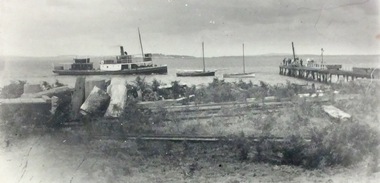 Phillip Island and District Historical Society Inc.
Photograph, Genista approaching Rhyll c 1915, 1915?
... Norling, 1913 at Bass Landing. local history photography photographs transport shipping maritime technology fisheries ferries fishing boats black & white photograph phillip island western port "Genista" approaching Rhyll jetty c.1915. ..."Genista" - built 1886, Sydney. Western Port Ferry 1889 to early 1930's. "Veronica" - built by J. Norling, 1913 at Bass Landing."Genista" approaching Rhyll jetty c.1915. Smaller black boat is John Norling's crayfishing boat - Veronica".local history, photography, photographs, transport, shipping, maritime technology, fisheries, ferries, fishing boats, black & white photograph, phillip island, western port -
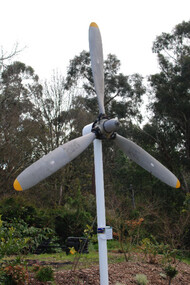 Running Rabbits Military Museum operated by the Upwey Belgrave RSL Sub Branch
Propeller for a DHC-4 Caribou light transport
... The Caribou is a twin-engined high-wing monoplane with full-span double-slotted Fowler flaps and fully-reversible propellers, which allow it to achieve its trademark steep approach with very short take-offs and landings on unprepared runways. ...DHC-4 Caribou light transport The Royal Australian Air Force DHC-4 Caribou was a versatile tactical light transport aircraft . Its main operational role was tactical air transport in support of the Australian Army. The Caribou was last operated by No 38 Squadron from RAAF Base Townsville in December 2009. The Caribou is a twin-engined high-wing monoplane with full-span double-slotted Fowler flaps and fully-reversible propellers, which allow it to achieve its trademark steep approach with very short take-offs and landings on unprepared runways. The high wing and distinctive high placement of the tail provide easy access to a large cargo compartment, while the low-pressure tyres permit operation on unprepared runways. It was the last piston-engined aircraft in the Air Force and was our only aircraft to employ the Low Altitude Parachute Extraction System (LAPES), where up to 2000kg of sled-mounted cargo is extracted from the aircraft by a parachute from a metre above the ground. The Caribou is equipped with GPS satellite navigation and night-vision equipment, giving it the capability to operate in any weather, day or night, to either land or drop soldiers and equipment by parachute with pinpoint accuracy. The Caribou is not pressurised and is not fitted with auto-pilot or weather radar. The first Caribou arrived in Australia in April 1964 and they were deployed to Vietnam from July 1964 to February 1972 and carried over 600,000 passengers and a huge quantity of cargo while they were there. Since 1997 the Caribou participated in famine-relief operations in Papua New Guinea and Irian Jaya during Operations SIERRA, PLES DRAI and AUSINDO JAYA, as well as the tsunami-relief operation in PNG in 1999 and operations in East Timor and the Solomon Islands since 1999. Their service life was over 40 years. raaf caribou aircraft -
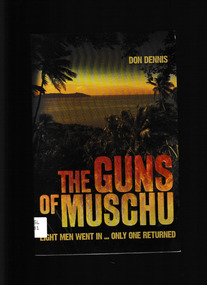 Monbulk RSL Sub Branch
Book, Allen & Unwin, The guns of Muschu, 2006
... Unknown to them, their presence had been discovered within hours of their landing. With no means of escape, the island became a killing ground. ...During the night of 11 April 1945, eight Australian Z Special commandos landed on Japanese-held Muschu Island, off the coast of New Guinea. Their mission was to reconnoitre the island's defences and confirm the location of two concealed naval guns that commanded the approaches to Wewak Harbour. But the secret mission went horribly wrong. Unknown to them, their presence had been discovered within hours of their landing. With no means of escape, the island became a killing ground. Nine days later, on the New Guinea mainland, the only survivor staggered back through the Japanese lines to safety... This is the remarkable true story of that survivor.Maps, p.255.non-fictionDuring the night of 11 April 1945, eight Australian Z Special commandos landed on Japanese-held Muschu Island, off the coast of New Guinea. Their mission was to reconnoitre the island's defences and confirm the location of two concealed naval guns that commanded the approaches to Wewak Harbour. But the secret mission went horribly wrong. Unknown to them, their presence had been discovered within hours of their landing. With no means of escape, the island became a killing ground. Nine days later, on the New Guinea mainland, the only survivor staggered back through the Japanese lines to safety... This is the remarkable true story of that survivor. world war 1939 – 1945 – campaigns – papua new guinea, world war 1939 – 1945 – personal narratives – australia -
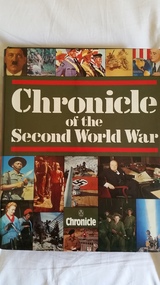 Monbulk RSL Sub Branch
Book, Derrik Mercer, Chronicle of the Second World War, 1990
... World War 1939-1945 - History World War 1939-1945 - Pictorial works This volume continues to use the approach of previous "Chronicles" and details the events of the war from September 1939 to August 1945, week by week and even hour by your for certain key events such as the D-Day landing. ...This volume continues to use the approach of previous "Chronicles" and details the events of the war from September 1939 to August 1945, week by week and even hour by your for certain key events such as the D-Day landing. It contains black and white and colour photographs, some of them full page size and the content has been checked by senior British military chiefs: Lord Lewis, Sir John Stanier and Sir Michael Armitage. Topics range from "My War", which gives personal war memoirs from well-known public figures including Spike Milligan, Dr Robert Runcie, Denis Healey and Vera Lynn, and "The Technology of the War", which details machinery as it developed in all waring nations for the war in the air, on land and at sea, to "The Heroes of the War", which contains details of every individual who won the Victoria Cross or the George Cross during the war.Index, ill, maps, p.731.non-fictionThis volume continues to use the approach of previous "Chronicles" and details the events of the war from September 1939 to August 1945, week by week and even hour by your for certain key events such as the D-Day landing. It contains black and white and colour photographs, some of them full page size and the content has been checked by senior British military chiefs: Lord Lewis, Sir John Stanier and Sir Michael Armitage. Topics range from "My War", which gives personal war memoirs from well-known public figures including Spike Milligan, Dr Robert Runcie, Denis Healey and Vera Lynn, and "The Technology of the War", which details machinery as it developed in all waring nations for the war in the air, on land and at sea, to "The Heroes of the War", which contains details of every individual who won the Victoria Cross or the George Cross during the war.world war 1939-1945 - history, world war 1939-1945 - pictorial works -
Moorabbin Air Museum
Manual - A New Guidance System for Approach and Landing Volume Two, Radio Technical Commission for Aeronautics
... Radio Technical Commission for Aeronautics Manual A New Guidance System for Approach and Landing Volume Two ... -
Moorabbin Air Museum
Book - Aviation training, The Complete Flying Course A Manual of Flying Tuition
... Aviation training Air experience Cockpit layout & effect of controls Taxiying Straight & level flight Climbing Gliding & stalling Turns Take off Power & gliding approach/landing Spinning First solo Handbook for instructors & pupils. ...Handbook for instructors & pupils. No publication date stated.non-fictionHandbook for instructors & pupils. No publication date stated.air experience, cockpit layout & effect of controls, taxiying, straight & level flight, climbing, gliding & stalling, turns, take off, power & gliding approach/landing, spinning, first solo
