
Showing 44 items matching "army component"
-
 National Vietnam Veterans Museum (NVVM)
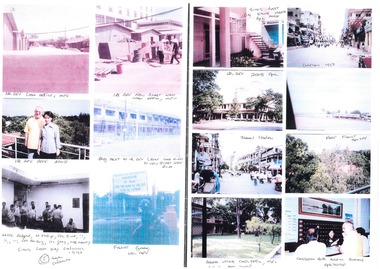
Photograph - Coloured photos copied
... ...Army Component...He was a Corporal assigned to the Medical Corps, Headquarters, Australian Force Vietnam, (Army Component). The coloured images are dated between 1970 - 2008 and show what it looked like when he was in Vietnam and how it was in 2008. ...Peter Sims 44304 Medical Corps Army Component Vietnam A3 size page with 14 coloured photographs photocopied. ...This object was donated by Peter Sims who served in Vietnam between September 1969 - September 1970. He was a Corporal assigned to the Medical Corps, Headquarters, Australian Force Vietnam, (Army Component). The coloured images are dated between 1970 - 2008 and show what it looked like when he was in Vietnam and how it was in 2008. A3 size page with 14 coloured photographs photocopied. Under each photo is a caption identifying various locations and subjects. peter sims, 44304, medical corps, army component, vietnam -
 National Vietnam Veterans Museum (NVVM)
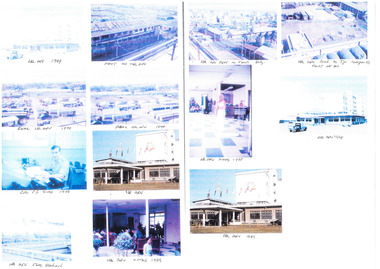
Photograph
... ...Army Component...He was a Corporal assigned to the Medical Corps, Headquarters, Australian Force Vietnam, (Army Component). The coloured images are dated between 1970 - 2008 and show what it looked like when he was in Vietnam and how it was in 2008....Peter Sims Vietnam Army Component Various places and dates. Thirteen coloured images taken in 1969 - 1970 of Vietnam copied onto an A3 sheets of paper. ...This object was donated by Peter Sims who served in Vietnam between September 1969 - September 1970. He was a Corporal assigned to the Medical Corps, Headquarters, Australian Force Vietnam, (Army Component). The coloured images are dated between 1970 - 2008 and show what it looked like when he was in Vietnam and how it was in 2008.Thirteen coloured images taken in 1969 - 1970 of Vietnam copied onto an A3 sheets of paper.Various places and dates.peter sims, vietnam, army component -
 National Vietnam Veterans Museum (NVVM)
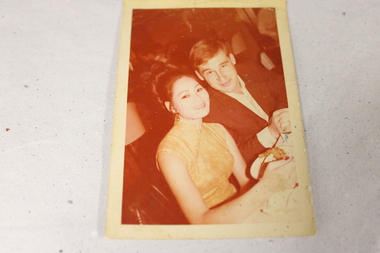
Photograph - Original photograph
... This item shows Vietnam serviceman Corporal Peter Sims of Headquarters, Australian Force Vietnam (Army Component), 1969-70 on R & R in Taipei...This item shows Vietnam serviceman Corporal Peter Sims of Headquarters, Australian Force Vietnam (Army Component), 1969-70 on R & R in Taipei Sims R&R Vietnam War Peter Sims On the back of the photo " Best hotel for R&R approved by the B&R Centre Bangkok Hotel: Tapei, Taiwan. ...This item shows Vietnam serviceman Corporal Peter Sims of Headquarters, Australian Force Vietnam (Army Component), 1969-70 on R & R in TaipeiFaded color photograph of two people-a man and a woman-seated with a crowd in the background. They are formally dressed and there is food on a table in front of the female. The photo is surrounded by a white border.On the back of the photo " Best hotel for R&R approved by the B&R Centre Bangkok Hotel: Tapei, Taiwan. No 76.........Road Taipei Taiwan. R.O.C. Tel 559589-9 (all in blue ink) R&R 1970 see receipt written in black pen.sims, r&r, vietnam war, peter sims -
 National Vietnam Veterans Museum (NVVM)
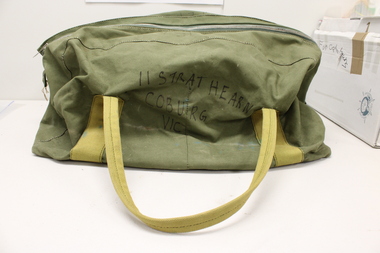
Equipment - Duffel bag
... He served in Vietnam with Headquarters, Australian Force Vietnam (Army Component) from December 1969 to November 1970....He served in Vietnam with Headquarters, Australian Force Vietnam (Army Component) from December 1969 to November 1970. ...This item was donated by Pte Allen Doran Lette (3795490) who was a National Serviceman with the Royal Australian Ordnance Corps. He served in Vietnam with Headquarters, Australian Force Vietnam (Army Component) from December 1969 to November 1970.Olive green canvas zippered duffel bag with mustard coloured reinforced handles11 Strathearn ave Coburg VICpte allen doran lette, 3795490, australian national serviceman, royal australian ordnance corps, headquarters, australian force vietnam, equipment, duffle bag -
 National Vietnam Veterans Museum (NVVM)
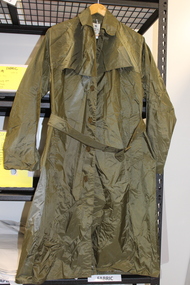
Uniform - Rain coat
... This item was issued to National Serviceman Pte Allen Doran Lette, Service Number 3795490, who served in the Royal Australian Army Ordnance Corps, Headquarters, Australian Force Vietnam (Army Component) from 17 December 1969 until 05 November 1970....This item was issued to National Serviceman Pte Allen Doran Lette, Service Number 3795490, who served in the Royal Australian Army Ordnance Corps, Headquarters, Australian Force Vietnam (Army Component) from 17 December 1969 until 05 November 1970. ...This item was issued to National Serviceman Pte Allen Doran Lette, Service Number 3795490, who served in the Royal Australian Army Ordnance Corps, Headquarters, Australian Force Vietnam (Army Component) from 17 December 1969 until 05 November 1970.A khaki vinyl rain coat, Army issue, beneath knee length. Has a collar plus flaps over shoulders. Fastens with 4 buttons at the front. Has 2 front pockets and a belt held in place by loops and a buckle.Inside label at neck: Class 8405/66-018-1272, M.Pennisi Clothing Co Pty Ltd Victoria 1968pte allen doran lette, 3795490, australian national serviceman, royal australian army ordnance corps, australian force vietnam, clothing, rain coat, lette, outerwear, protective clothing -
 National Vietnam Veterans Museum (NVVM)
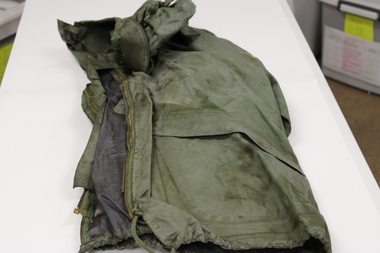
Uniform - Jacket, waterproof
... This item was issued to National Serviceman Pte Allen Doran Lette, Service Number 3795490, who served in the Royal Australian Army Ordnance Corps, Headquarters, Australian Force Vietnam (Army Component) from 17 December 1969 until 05 November 1970...This item was issued to National Serviceman Pte Allen Doran Lette, Service Number 3795490, who served in the Royal Australian Army Ordnance Corps, Headquarters, Australian Force Vietnam (Army Component) from 17 December 1969 until 05 November 1970 Pte Allen Doran Lette 3795490 Australian National Serviceman Royal Australian Ordnance Corps Headquarters Australian Force Vietnam Clothing Jacket waterproof A dark green hooded jacket with long sleeves. ...This item was issued to National Serviceman Pte Allen Doran Lette, Service Number 3795490, who served in the Royal Australian Army Ordnance Corps, Headquarters, Australian Force Vietnam (Army Component) from 17 December 1969 until 05 November 1970A dark green hooded jacket with long sleeves. Lined in black, it has large front pockets and zip-up front.pte allen doran lette, 3795490, australian national serviceman, royal australian ordnance corps, headquarters, australian force vietnam, clothing, jacket, waterproof -
 National Vietnam Veterans Museum (NVVM)
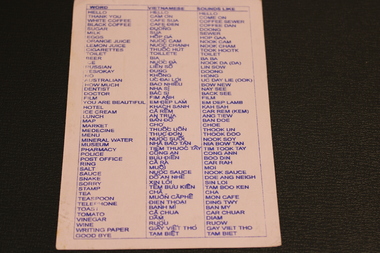
Pamphlet - Translation card
... This card was used by Corporal Peter Sims who served in the Royal Australian Army Medical Corps: Headquarters, Australian Force Vietnam (Army Component) 24 Sep 1969 - 24 Sep 1970. ...This card was used by Corporal Peter Sims who served in the Royal Australian Army Medical Corps: Headquarters, Australian Force Vietnam (Army Component) 24 Sep 1969 - 24 Sep 1970. English to Vietnamese pamphlet English Vietnamese Phonetics translation Sims Peter Sims Helpful word translation card. ...Standard issue item as used by Australian servicemen during the conflict in Vietnam. This card was used by Corporal Peter Sims who served in the Royal Australian Army Medical Corps: Headquarters, Australian Force Vietnam (Army Component) 24 Sep 1969 - 24 Sep 1970. Helpful word translation card. Mauve colored card with purple print. 49 words in English and translation in Vietnamese language with "Sounds like" for Vietnamese pronunciation. Three columns headed Word/ Vietnamese/ Sounds like.english to vietnamese pamphlet, english, vietnamese, phonetics, translation, sims, peter sims -
 National Vietnam Veterans Museum (NVVM)
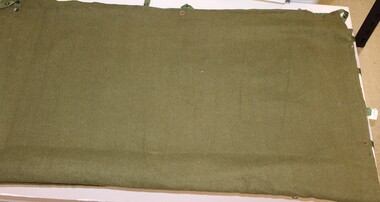
Equipment - Blanket
... He served in Vietnam with Headquarters, Australian Force Vietnam (Army Component) from December 1969 to November 1970. ...He served in Vietnam with Headquarters, Australian Force Vietnam (Army Component) from December 1969 to November 1970. ...This item was donated by Pte Allen Doran Lette (3795490) who was a National Serviceman with the Royal Australian Ordnance Corps. He served in Vietnam with Headquarters, Australian Force Vietnam (Army Component) from December 1969 to November 1970. Standard army issue woollen blanket as issued to Australian servicemen.Army issue khaki woollen blanket. There are 10 press studs and tabs to join the blanket in half.pte allen doran lette, 3795490, australian national serviceman, royal australian ordnance corps, headquarters, australian force vietnam, blanket -
 National Vietnam Veterans Museum (NVVM)
Article - Newspaper clipping
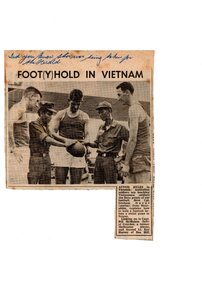
... It was clipped from the Melbourne morning paper and posted to National Serviceman Cpl GC Owens by his mother during his service in the Royal Australian Army Ordnance Corps, Headquarters, Australian Force Vietnam (Army Component), 30 Jul 1968 - 30 Jul 1969....It was clipped from the Melbourne morning paper and posted to National Serviceman Cpl GC Owens by his mother during his service in the Royal Australian Army Ordnance Corps, Headquarters, Australian Force Vietnam (Army Component), 30 Jul 1968 - 30 Jul 1969. AFL Football Capt Bill McMahon Cpl Graeme Owens Lt. ray Harvey Vietnam war Ordnance Did you know this was being taken for the Herald Original newspaper clipping from Herald Sun of three Australian soldiers in t-shirts and shorts showing Vietnamese soldiers how to hold an Aussie rules football. ...This item commemorates the war in Vietnam. It was clipped from the Melbourne morning paper and posted to National Serviceman Cpl GC Owens by his mother during his service in the Royal Australian Army Ordnance Corps, Headquarters, Australian Force Vietnam (Army Component), 30 Jul 1968 - 30 Jul 1969.Original newspaper clipping from Herald Sun of three Australian soldiers in t-shirts and shorts showing Vietnamese soldiers how to hold an Aussie rules football.Did you know this was being taken for the Heraldafl football, capt bill mcmahon, cpl graeme owens, lt. ray harvey, vietnam war, ordnance -
 National Vietnam Veterans Museum (NVVM)
Ephemera - Airline ticket
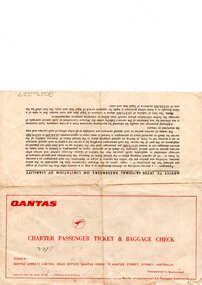
... This particular item was issued to Corporal Peter Stanley Sims, Service no: 44304, who served in the Royal Australian Army Medical Corps, Headquarters, Australian Force Vietnam (Army Component) from24 September 1969 until 24 September 1970. ...This particular item was issued to Corporal Peter Stanley Sims, Service no: 44304, who served in the Royal Australian Army Medical Corps, Headquarters, Australian Force Vietnam (Army Component) from24 September 1969 until 24 September 1970. ...This airline ticket is typical of those issued to Australian Defence Force personnel traveling to Vietnam. This particular item was issued to Corporal Peter Stanley Sims, Service no: 44304, who served in the Royal Australian Army Medical Corps, Headquarters, Australian Force Vietnam (Army Component) from24 September 1969 until 24 September 1970. Printed Qantas ticket and foolscap information sheet. Yellowed paper with red printing on the front of the ticket and black printing on the bottom half of the reverse. The information paper is yellowed with age and printed in black. There are 6 paragraphs detailing instructions for the armed forces when arriving in Vietnam.Qantas/charter passenger ticket and baggage check. In blue pen on the back "Tong Doe Phuory Cholou" handwritten.airline ticket, qantas, information page, traveling to vietnam, peter sims oam jp, nvvm -
 National Vietnam Veterans Museum (NVVM)
Ephemera - Airline ticket
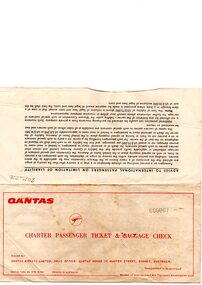
... This item was issued to Corporal Peter Stanley Sims who served in Royal Australian Army Medical Corps, Headquarters, Australian Force Vietnam (Army Component) 1969-70. ...This item was issued to Corporal Peter Stanley Sims who served in Royal Australian Army Medical Corps, Headquarters, Australian Force Vietnam (Army Component) 1969-70. Qantas airline ticket NVVM customs declaration leaving Vietnam P.Sims OAM JP R&R Recreation Vietnam Qantas 000067 charter passenger ticket and baggage check. ...Typical example of Qantas Airline ticket issued to armed forces personnel leaving Vietnam for Australia for R&R, with. Australian Customs form and declaration to be filled in by traveller. Briefing sheet listing arrangement for departure and arrival in Australia. This item was issued to Corporal Peter Stanley Sims who served in Royal Australian Army Medical Corps, Headquarters, Australian Force Vietnam (Army Component) 1969-70. Qantas airline ticket. Australian customs paperwork, double sided information and declaration sheet. The ticket is printed in red ink. Australian Force Vietnam briefing letter for travelling to Australia from Vietnam typed in black ink.Qantas 000067 charter passenger ticket and baggage check. Customs paperwork and briefing notes for travelling to Australia.qantas, airline ticket, nvvm, customs declaration, leaving vietnam, p.sims oam jp, r&r, recreation vietnam -
 National Vietnam Veterans Museum (NVVM)
Functional object - Wooden stamp, Vietnamese
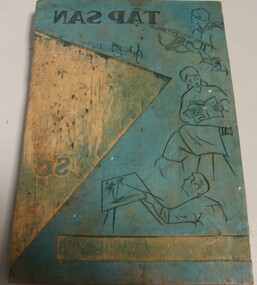
... Donated by National Serviceman Corporal L C Rotherham who served in the Royal Australian Survey Corps, in Headquarters, Australian Force Vietnam (Army Component) from 12 Dec 1966 - 03 Feb 1967 and A Section, 1st Topographical Survey Troop from 19 Jul 1967-18 Mar 1968. ...Donated by National Serviceman Corporal L C Rotherham who served in the Royal Australian Survey Corps, in Headquarters, Australian Force Vietnam (Army Component) from 12 Dec 1966 - 03 Feb 1967 and A Section, 1st Topographical Survey Troop from 19 Jul 1967-18 Mar 1968. ...This propaganda printing block was captured during clearing of the Long Hai Tunnels in the Minh Dam Secret Zone in December 1967. Donated by National Serviceman Corporal L C Rotherham who served in the Royal Australian Survey Corps, in Headquarters, Australian Force Vietnam (Army Component) from 12 Dec 1966 - 03 Feb 1967 and A Section, 1st Topographical Survey Troop from 19 Jul 1967-18 Mar 1968. Particle Board Stamp. Wooden Stamp. Blue laminate showing soldier, lady reading a book; someone taking photo and a person painting. Music notes. Captured Propaganda PrintCaptured Dec 1967 Long Hai's Tunnels - hand written on the back in blue penstamp, propaganda, vietnamese, print, rotherham, survey troop -
 Bendigo Military Museum
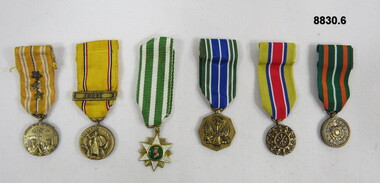
Award - MEDALS, MINIATURE, Unknown
... USA - Army Achievement. 5. USA - Army Reserves Component's Achievement. 6. USA - Coast Guard Achievements Medal....USA - Army Achievement. 5. USA - Army Reserves Component's Achievement. 6. USA - Coast Guard Achievements Medal. ...Miniature Medals, all original, court mounted. 1. USA - Asiatic Campaign WW2. 2. USA - Defence Service with base clasp WW2. 3. USA - Vietnam Campaign. 4. USA - Army Achievement. 5. USA - Army Reserves Component's Achievement. 6. USA - Coast Guard Achievements Medal.pbt762to767, bob english collection, passchendaele barracks trust -
 National Vietnam Veterans Museum (NVVM)
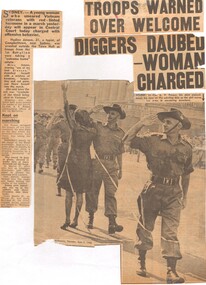
Newspaper, Newspaper Clippings about "red paint" at welcome home parade
... He served in Vietnam with the Australian Army Training Team Vietnam from March 1965 to November 1965, 1st Battalion, The Royal Australian Regiment from December 1965 to June 1966, Headquarters, Australian Force Vietnam (Army Component) from May 1969 to August 1969 and October 1969 to December 1969. ...He served in Vietnam with the Australian Army Training Team Vietnam from March 1965 to November 1965, 1st Battalion, The Royal Australian Regiment from December 1965 to June 1966, Headquarters, Australian Force Vietnam (Army Component) from May 1969 to August 1969 and October 1969 to December 1969. ...This is part of a collection which was donated by Col Alexander Vogler Preece (1113) who served with the Royal Australian Infantry Corps. He served in Vietnam with the Australian Army Training Team Vietnam from March 1965 to November 1965, 1st Battalion, The Royal Australian Regiment from December 1965 to June 1966, Headquarters, Australian Force Vietnam (Army Component) from May 1969 to August 1969 and October 1969 to December 1969. He also visited Vietnam in October 1970 and July 1972. Col Preece was awarded The Companion Of The Distinguished Service Order.Newspaper Clippings about Lt Col Preece being spattered with red -tinted kerosene by a protester. There is a photograph of Lt Col Preece doing the salute to Governor General Casey with the stain on his uniform. (See media files/scans for more information)col alexander vogler preece, 1113, royal australian infantry corps, australian army training team vietnam (aattv), 1st battalion, australian force vietnam, the companion of the distinguished service order, dso, governor general richard casey, nadine jensen, welcome home salute - sydney june 9, red paint, newspaper clippings, protester, protest, anti-war, jensen, nadine, welcome home, parade -
 Moorabbin Air Museum
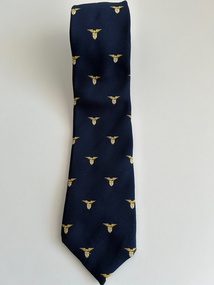
Clothing (item) - Tie - Type Unknown, Belonging to W.A.Eacott
... Tie type unkown, has two components, 8th Army yellow cross on white shield and what appears to be City/County Of London crest....Tie type unkown, has two components, 8th Army yellow cross on white shield and what appears to be City/County Of London crest. ...This tie forms part of clothing which was owned by Walter Alexander Scott. Joined RAF December 1940 to be trained as a pilot, he got his wings December 1941, became a night fighter pilot after OTU and posted to 219 Squadron. Was posted to 603 Squadron December 1942 flying Beaufighters on coastal command convoy escorts, desert patrols, supporting Sicilian and Italian invasions (all from the N.African desert, then on Greek Island " Armed Rovers" until 10 November 1943, just at the end of ops, when he was shot down in the Aegean Sea and became a POW the next day 11 November 1943. Transferred to Germany he was in Stalag IVB for 3 months, before exchanging ID with an Irish soldier ,in order to get out of the main camp into a working sub-camp in order to escape. Post war Walter returned to Australia, he became "Citizen of the Year" in Werribee 1992 for his service to the community. In 1993 he was awarded the Order of Australia Medal for services to youth and to the retired. -
 4th/19th Prince of Wales's Light Horse Regiment Unit History Room
Field Ration Eating Device (FRED), CMI Pty Ltd, 2009
... A standard component of Army ration packs from the 60's to about 2010...A standard component of Army ration packs from the 60's to about 2010 army fred rations can opener ration packs cmi field rations eating device Defence Stock No: "7330-66-010-0933" Contractor: "CMI" Year of Manufacture: "2009" Defence broad arrow. ...A standard component of Army ration packs from the 60's to about 2010A pressed steel tool with one end shaped for use as a spoon and the other incorporating a bottle opener. A 2 cm long fold out can opener blade is fitted to the side. A 3 mm hole is drilled through the device at the can opener end. Yellow (anodised ?) finish.Defence Stock No: "7330-66-010-0933" Contractor: "CMI" Year of Manufacture: "2009" Defence broad arrow.army, fred, rations, can opener, ration packs, cmi, field rations eating device -
 Bendigo Military Museum
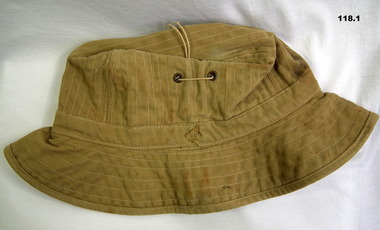
Equipment - BUSH HAT, BANDAGES & NECK CLOTH, 2) - .4) 11.1944
... He then served in Malaya 1959 - 1961then Vietnam with the rank of Captain with 1st Aust Task Force HQ Light Aid Detachment (LAD) 7.5.1969 - 7.11.1969, HQ Aust Force Vietnam Army component 8.11.1969 - 7.5.1970. He retired with the rank of Major in 1985 after 40 years plus. ...He then served in Malaya 1959 - 1961then Vietnam with the rank of Captain with 1st Aust Task Force HQ Light Aid Detachment (LAD) 7.5.1969 - 7.11.1969, HQ Aust Force Vietnam Army component 8.11.1969 - 7.5.1970. He retired with the rank of Major in 1985 after 40 years plus. ...Andrew John BALSILLIE MBE, JP. (Born Bendigo) Jack as he was known enlisted in the Australian Army near the end of WWII No 31224 age 16 years. He then served in Malaya 1959 - 1961then Vietnam with the rank of Captain with 1st Aust Task Force HQ Light Aid Detachment (LAD) 7.5.1969 - 7.11.1969, HQ Aust Force Vietnam Army component 8.11.1969 - 7.5.1970. He retired with the rank of Major in 1985 after 40 years plus. He was awarded an MBE in 1969 for his services to the Australian War Memorial. Elected to Committee Bendigo RSL 1988 - 1993 with Snr Vice President 1989 - 1993, re-elected 1999 - 2000. Re-elected again in 2002 as Snr Vice President. He was elected to Bendigo City Council 1990 - 1993 serving as Mayor in 1993. .1) Bush hat, floppy, khaki canvas, belonged to Major J BALSILLIE. .2) - .4) Gauze wound dressing in brown cotton pack, 2 rolls per pack. .5) Neck cloth, green cotton..1) Inside hat: Maj J Balsillie. .2) - .4) Labelled: First Field Dressings.headwear, medical dressings -
 Frankston RSL Sub Branch
Badge
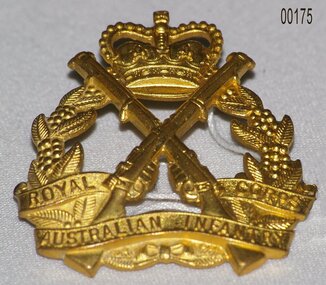
... Army. It was established on 14 December 1948, with its Royal Corps status being conferred by His Majesty King George VI. At her coronation in 1953, Queen Elizabeth II became Colonel-in-Chief of the corps. Major components...Army. It was established on 14 December 1948, with its Royal Corps status being conferred by His Majesty King George VI. At her coronation in 1953, Queen Elizabeth II became Colonel-in-Chief of the corps. Major components ...The Royal Australian Infantry Corps (RA Inf) is the parent corps for all infantry regiments of the Australian Army. It was established on 14 December 1948, with its Royal Corps status being conferred by His Majesty King George VI. At her coronation in 1953, Queen Elizabeth II became Colonel-in-Chief of the corps. Major components of the RA Inf include the various battalions of the Royal Australian Regiment and the six state-based Reserve infantry regiments, such as the Royal New South Wales Regiment. The various Regional Force Surveillance and Special Forces units of the Army are also part of the corps. The Infantry School is located at Singleton, New South Wales.Pressed metal cap badge for the Royal Australian Infantry Corp. This badge is brass alloy with two pins at rear for securing to the cap when worn."Royal Australian Infantry Corps" -
 Bendigo Military Museum
Map - Army Survey Regiment - Automap, Army Survey Regiment, Bendigo, 1 Nov 1979, .2 and .3 Aug 1980 and .4 December 1982
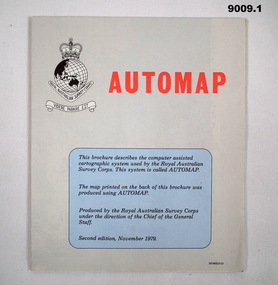
... Army Survey Regiment. Project References. A wide range of user manuals and associated documentation is available for both the hardware and software components of the AUTOMAP system. ...Army Survey Regiment. Project References. A wide range of user manuals and associated documentation is available for both the hardware and software components of the AUTOMAP system. ...These flow diagrams and in particular the Introduction to Automap 2 booklet is designed to provide a general description of the second phase of the AUTOMAP system (Automap 2) installed at the Army Survey Regiment, Bendigo. It contains information that managers and supervisors need to know and serves as a preliminary introduction for anyone interested in learning about AUTOMAP 2. In addition, a number of annexes are included to provide more detailed descriptions of significant features and components of the system. System Objectives. In order that RASVY can carry out its mapping programme effectively, an efficient production system is required that can acquire and edit digital data from a topographic data base and thence automatically produce high quality maps using that digital data. The existing system, AUTOMAP 1, provides a small part of such a system. AUTOMAP 2 expands the capabilities of AUTOMAP 1 in data capture, computing power and data handling for cartographic purposes. AUTOMAP 2 includes state-of-the-art technology, introduces interactive graphics as a production tool and shifts procedures from a current mix of analogue and digital technologies to an almost totally digital system. AUTOMAP 2 increases map production by at least 20 percent at the Army Survey Regiment. Project References. A wide range of user manuals and associated documentation is available for both the hardware and software components of the AUTOMAP system. Other related departmental references are listed at the rear of the booklet..1 A folded Automap produced Map, Derby 1:100 000, Series 1611, Sheet 3663, Printed on one side and Automap flow diagram second Edition DEF/MISC/5157 on the other side. .2 and .3 Two copies of a folded Automap produced Map, Yampi 1:250 000, Series 1501 (Joint Operations Graphic), Sheet SE51-3, Edition 1, Printed on one side and Automap flow diagram third Edition DEF/MISC/5157C on the other side. .4 An Introduction to the Automap 2 System, A4 Booklet 16 x pages and a folded Automap2 flow diagram fifth Edition DEF/MISC/5157E Annex in the rear of the booklet..1 DEF/MISC/5157 .2 AND .3 DEF/MISC/5157C .4 DEF/MISC/5157Eroyal australian survey corps, rasvy, fortuna, army survey regiment, army svy regt, asr -
 Bendigo Military Museum
Photograph - Despatch Area of Print Room, Army Survey Regiment, Fortuna, Bendigo, c1985
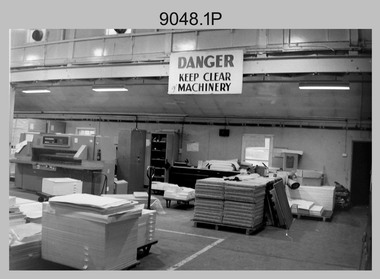
... Army Survey Regiment personnel. The Wohlenberg MCS-2 guillotine seen in photos .1P & .2P, .4P .8P & .9P was a heavy-duty guillotine that became in 1990 an integrated component of the Map Handling Station, to trim bulk printed map stock. ...Army Survey Regiment personnel. The Wohlenberg MCS-2 guillotine seen in photos .1P & .2P, .4P .8P & .9P was a heavy-duty guillotine that became in 1990 an integrated component of the Map Handling Station, to trim bulk printed map stock. ...These 10 photographs of the despatch area of Lithographic Squadron’s Print Room were taken at the Army Survey Regiment, Fortuna, Bendigo circa 1985. bulk printed map stock to customers The despatch of printed map products was the final task performed by teams of Printer Technicians. It involved the wrapping of trimmed bulk maps into manageable parcels and sending them by freight to customers or to the Army Map Depot at Bandiana, VIC. The task’s Due date and sensitivity were essential considerations in the planning of production affecting the lead time and method of delivery. Freighting by commercial means was the normal method for routine tasks. The method of despatch for urgent time-critical tasks sometimes meant having to use military freight or safe-handed by Army Survey Regiment personnel. The Wohlenberg MCS-2 guillotine seen in photos .1P & .2P, .4P .8P & .9P was a heavy-duty guillotine that became in 1990 an integrated component of the Map Handling Station, to trim bulk printed map stock. See item 6242.25P for photos of the configuration. See Item 6069.6P for more information and photos of earlier types of guillotine equipment and Item 6070.9P for photos of Printer Technicians working in the despatch area of the Print Room. The two Ultra-MAN-III Printing Presses seen in photos .4P to .7P were made in Germany at a standard map size format and introduced in June 1962 as a two-colour offset press with improved safety features. With an upgrade to a third colour deck in 1968, productivity greatly improved as the two presses could print a five-colour standard topographic map in two passes, rather than the three passes before their upgrade. They were replaced with a single Heidelberg Speedmaster five colour Printing Press in 1990. The Original Heidelberg Printing Press seen in photo .6P was a single colour offset press. It was a robust and well-made lithographic printing press and was in service at the Army Svy Regt for decades. Its primary use was for initial training and rapid response tasks, such as single pass overprints over existing print stock.This is a set of 10 photographs of the despatch area of Lithographic Squadron’s Print Room, taken at the Army Survey Regiment. circa 1985, Fortuna Villa Bendigo. The photographs were printed on photographic paper and are part of the Army Survey Regiment’s Collection. The photographs were scanned at 300 dpi. .1) & .2) - Photo, black & white, c1985, Map despatch work area and Wohlenberg MCS-2 guillotine. .3) - Photo, black & white, c1985, Map despatch work area. Unidentified print technician. .4) - Photo, black & white, c1985, Map despatch work area and Wohlenberg MCS-2 guillotine. Unidentified print technician. .5) - Photo, black & white, c1985, Ultra-MAN-III Printing Presses in foreground. .6) - Photo, black & white, c1985, Original Heidelberg Printing Press in foreground, Ultra-MAN-III Printing Presses in background. .7) - Photo, black & white, c1985, Ultra-MAN-III Printing Presses in foreground. .8) - Photo, black & white, c1985, Map despatch work area. Pallets of wrapped printed maps in foreground, pallets of paper stock in background. .9) - Photo, black & white, c1985, Map despatch work area. Pallets of printed maps awaiting wrapping in foreground, Wohlenberg MCS-2 guillotine in background. .10) - Photo, black & white, c1985, Map despatch work area, pallets of wrapped printed maps in foreground, Pallets of wrapped printed maps in background..1P to .10P – There are no annotationsroyal australian survey corps, rasvy, fortuna, army survey regiment, printing, litho, litho sqn -
 Bendigo Military Museum
Photograph - AUTOMAP 2 Production - Army Survey Regiment, Fortuna, Bendigo, c1986
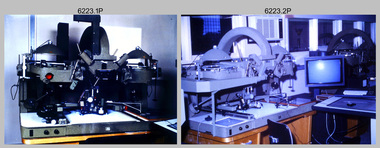
... They are part of the Army Survey Regiment’s Collection. .1) - Photo, colour, c1986, AUTOMAP 2 Production - Army Survey Regiment, Fortuna, Bendigo. c1986. .2) - Photo, colour, c1986, AUTOMAP 2 Wild B8 Aviograph stereoplotter. .3) - Photo, colour, c1986, AUTOMAP 2 Wild B8 Aviograph stereoplotter feature extraction, unidentified technician. .4) - Photo, colour, c1986, Wild B8 Aviograph stereoplotter feature extraction, LCPL Raelene (Munting) Brodie. .5) - Photo, colour, c1986, AUTOMAP 2 computer tape maintenance, SPR Steve Linane. .6) - Photo, colour, c1986, AUTOMAP 2 Graphic Edit Workstation, SPR Steve Linane. .7) to .8) - Photo, colour, c1986, AUTOMAP 2 Graphic Edit Workstation, unidentified technician. .9 to .10) - Photo, colour, c1986, AUTOMAP 2 Graphic Edit Workstation. .11) - Photo, colour, c1986, AUTOMAP 2 Graphic Edit Workstation feature coding and command menu. .12) - Photo, colour, c1986, AUTOMAP 2 high resolution computer monitor. .13) to .16) - Photo, colour, c1986, AUTOMAP 2 production output comparison to AUTOMAP 1. .17) to .18) - Photo, colour, c1986, AUTOMAP 2 computer system components. .19) - Photo, colour, c1986, AUTOMAP 2 Intergraph 7596 verification plotter. .20) - Photo, colour, c1986, AUTOMAP 2 Benson verification plotter, SPR Steve Coulson. .21) - Photo, colour, c1986, AUTOMAP 2 drainage, contour, roads and cultural digital data verification plot. .22) - Photo, colour, c1986, AUTOMAP 2 drainage, contour, roads and cultural digital data on computer monitor. .23) - Photo, colour, c1986, AUTOMAP 2 3D digital terrain model on computer monitor. AUTOMAP 2 Production - Army ...This collection of 23 photos of map production on the AUTOMAP 2 computer-based system in Air Survey and Cartographic Squadrons, was most likely taken in 1986. The AUTOMAP 2 system was an upgrade to the AUTOMAP 1 system, comprising Intergraph graphic edit workstation terminals networked to VAX 750/785 main frame computers. Unlike AUTOMAP 1, operators could display digital topographic features on monitors for editing. Successful adaptation of this system meant RASvy was at the forefront of digital mapping/cartographic systems in Australia and overseas. The system comprised Input (Wild B8 Aviograph feature extraction) Raster Scanning (digitising from compilation sheets, Graphic Edit (cartographic completion) and Plot Verification Sub Systems. The system was operational from 1984 to its ‘Newheart’ upgrade in 1993. Throughout its life, the system was progressively refined with productivity gains, achieved from award winning technical development in-house by talented and innovative Army Survey Regiment personnel.This is a set of 23 photograph of AUTOMAP 2 production at the Army Survey Regiment at Fortuna, Bendigo, c1986. The photographs were on 35mm colour slides and were scanned at 96 dpi. Photos .5P and .6P are also printed on photographic and scanned at 300 dpi. They are part of the Army Survey Regiment’s Collection. .1) - Photo, colour, c1986, AUTOMAP 2 Production - Army Survey Regiment, Fortuna, Bendigo. c1986. .2) - Photo, colour, c1986, AUTOMAP 2 Wild B8 Aviograph stereoplotter. .3) - Photo, colour, c1986, AUTOMAP 2 Wild B8 Aviograph stereoplotter feature extraction, unidentified technician. .4) - Photo, colour, c1986, Wild B8 Aviograph stereoplotter feature extraction, LCPL Raelene (Munting) Brodie. .5) - Photo, colour, c1986, AUTOMAP 2 computer tape maintenance, SPR Steve Linane. .6) - Photo, colour, c1986, AUTOMAP 2 Graphic Edit Workstation, SPR Steve Linane. .7) to .8) - Photo, colour, c1986, AUTOMAP 2 Graphic Edit Workstation, unidentified technician. .9 to .10) - Photo, colour, c1986, AUTOMAP 2 Graphic Edit Workstation. .11) - Photo, colour, c1986, AUTOMAP 2 Graphic Edit Workstation feature coding and command menu. .12) - Photo, colour, c1986, AUTOMAP 2 high resolution computer monitor. .13) to .16) - Photo, colour, c1986, AUTOMAP 2 production output comparison to AUTOMAP 1. .17) to .18) - Photo, colour, c1986, AUTOMAP 2 computer system components. .19) - Photo, colour, c1986, AUTOMAP 2 Intergraph 7596 verification plotter. .20) - Photo, colour, c1986, AUTOMAP 2 Benson verification plotter, SPR Steve Coulson. .21) - Photo, colour, c1986, AUTOMAP 2 drainage, contour, roads and cultural digital data verification plot. .22) - Photo, colour, c1986, AUTOMAP 2 drainage, contour, roads and cultural digital data on computer monitor. .23) - Photo, colour, c1986, AUTOMAP 2 3D digital terrain model on computer monitor. .1P to .23P - Some of the equipment is annotated on the frame of the 35mm slides. .5P & .6P prints annotated incorrectly ‘Steve Lenane’. Correct spelling is - ‘Steve Linane’ royal australian survey corps, rasvy, army survey regiment, army svy regt, fortuna, asr, automap 2 -
 Bendigo Military Museum
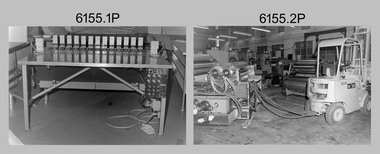
Photograph - Equipment and Personnel, Lithographic Squadron - Army Survey Regiment, Bendigo, c1975
... Army Survey Regiment at Fortuna, Bendigo, 1989. Black and white photographs .1P to .13P are on 35mm negative film and scanned at 96 dpi. Black and white photos .14P to .21P are on photographic paper and were scanned at 300 dpi. .1) - Photo, black & white, c1975, tri-linear film punch. .2) to .5) - Photo, black & white, c1975, Newkoni Komori printing press components. .6) - Photo, black & white, c1975, Newkoni Komori printing press components, Alex Cook. .7) - Photo, black & white, c1975, Newkoni Komori printing press components. .8) to .12) - Photo, black & white, c1975, northern exterior of print buildings. .13) - Photo, black & white, c1975, L to R: unidentified (x2), Jim Mulqueen, Ian ‘Lofty’ Turner. .14) - Photo, black & white, c1975, Log Electonics film processor. .15) - Photo, black & white, c1975, contact frame. .16) - Photo, black & white, c1975, film tri-punch stud registration table. .17) - Photo, black & white, c1975, Ultra-MAN-III Printing Presses. .18) to .19) - Photo, black & white, c1975, KLIMSCH Commodore camera, Gavin Neilson. .20) - Photo, black & white, c1975, map proof whirler. .21) - Photo, black & white, c1975, Fotosetter type setting machine....Army Survey Regiment at Fortuna, Bendigo, 1989. Black and white photographs .1P to .13P are on 35mm negative film and scanned at 96 dpi. Black and white photos .14P to .21P are on photographic paper and were scanned at 300 dpi. .1) - Photo, black & white, c1975, tri-linear film punch. .2) to .5) - Photo, black & white, c1975, Newkoni Komori printing press components. .6) - Photo, black & white, c1975, Newkoni Komori printing press components, Alex Cook. .7) - Photo, black & white, c1975, Newkoni Komori printing press components. .8) to .12) - Photo, black & white, c1975, northern exterior of print buildings. .13) - Photo, black & white, c1975, L to R: unidentified (x2), Jim Mulqueen, Ian ‘Lofty’ Turner. .14) - Photo, black & white, c1975, Log Electonics film processor. .15) - Photo, black & white, c1975, contact frame. .16) - Photo, black & white, c1975, film tri-punch stud registration table. .17) - Photo, black & white, c1975, Ultra-MAN-III Printing Presses. .18) to .19) - Photo, black & white, c1975, KLIMSCH Commodore camera, Gavin Neilson. .20) - Photo, black & white, c1975, map proof whirler. .21) - Photo, black & white, c1975, Fotosetter type setting machine. ...This is a set of 21 photographs of Lithographic Squadron equipment and personnel as well equipment operated by Cartographic Squadron, Army Survey Regiment, Fortuna, Bendigo circa 1975. The photos were mainly taken in the Printing, Camera, proofing and external buildings. Cartographic Squadron’s CPL Arty Lane operated the Fotosetter type setting machine, as shown in photo .21P for many years in a room on the top floor of Fortuna Villa. There is more information on the Ultra-MAN-III Printing Presses, the KLIMSCH Commodore camera, Gavin Neilson and the Fotosetter type setting machine on pages 70-71, and the Newkoni Komori printing press on page 120 of Valerie Lovejoy’s book 'Mapmakers of Fortuna – A history of the Army Survey Regiment’ ISBN: 0-646-42120-4.This is a set of 21 photograph of Lithographic Squadron equipment and personnel, Army Survey Regiment at Fortuna, Bendigo, 1989. Black and white photographs .1P to .13P are on 35mm negative film and scanned at 96 dpi. Black and white photos .14P to .21P are on photographic paper and were scanned at 300 dpi. .1) - Photo, black & white, c1975, tri-linear film punch. .2) to .5) - Photo, black & white, c1975, Newkoni Komori printing press components. .6) - Photo, black & white, c1975, Newkoni Komori printing press components, Alex Cook. .7) - Photo, black & white, c1975, Newkoni Komori printing press components. .8) to .12) - Photo, black & white, c1975, northern exterior of print buildings. .13) - Photo, black & white, c1975, L to R: unidentified (x2), Jim Mulqueen, Ian ‘Lofty’ Turner. .14) - Photo, black & white, c1975, Log Electonics film processor. .15) - Photo, black & white, c1975, contact frame. .16) - Photo, black & white, c1975, film tri-punch stud registration table. .17) - Photo, black & white, c1975, Ultra-MAN-III Printing Presses. .18) to .19) - Photo, black & white, c1975, KLIMSCH Commodore camera, Gavin Neilson. .20) - Photo, black & white, c1975, map proof whirler. .21) - Photo, black & white, c1975, Fotosetter type setting machine.No personnel are identified. .14P, .16P to .19P and .20P to .21P are annotated with 5-digit numbers on top right corner of photo.royal australian survey corps, rasvy, army survey regiment, army svy regt, fortuna, asr, litho, carto -
 Bendigo Military Museum
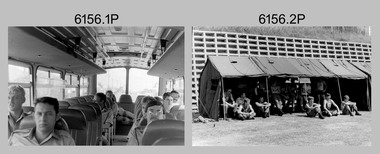
Photograph - Army Survey Regiment’s Tug-of-War Team at Simpson Barracks, Watsonia, c1989
... Army Svy Regt on the bus who were not part of this team. The team’s coach was WO1 Ken Slater. Tug-of-War contests were very popular for the competitors and spectators, as they were often held at the Regiment as a component of inter-squadron athletics competitions, Flag Day verses the School of Military Survey, Bones Day verses the RAAF’s the School of Radio and a component of regimental training....Army Svy Regt on the bus who were not part of this team. The team’s coach was WO1 Ken Slater. Tug-of-War contests were very popular for the competitors and spectators, as they were often held at the Regiment as a component of inter-squadron athletics competitions, Flag Day verses the School of Military Survey, Bones Day verses the RAAF’s the School of Radio and a component of regimental training. ...These eight photos of the Army Survey Regiment’s Tug-of-War Team were most likely taken at Simpson Barracks, Watsonia in circa 1989. There is no information available on why the unit sent the team to Melbourne, the occasion, and the winner of this contest. It may have been a military athletics carnival held to commemorate Australia’s First Fleet bi- centenary, noting there was other members of Army Svy Regt on the bus who were not part of this team. The team’s coach was WO1 Ken Slater. Tug-of-War contests were very popular for the competitors and spectators, as they were often held at the Regiment as a component of inter-squadron athletics competitions, Flag Day verses the School of Military Survey, Bones Day verses the RAAF’s the School of Radio and a component of regimental training.These eight photos of the Army Survey Regiment’s Tug-of-War Team were most likely taken at a competition held at Simpson Barracks, Watsonia circa 1989. The photographs were on 35mm negative film and were scanned at 96 dpi. They are part of the Army Survey Regiment’s Collection. .1) - Photo, black & white, c1989, L to R: Neil Jones, WO1 Ken Slater, WO1 Brian Mead, unidentified (x2), Dave Cook, John Lane and Barry Miller. .2) - Photo, black & white, c1989, L to R: Rhys De Laine, WO1 Ken Slater, unidentified, Phil Meagher, unidentified (x6), Dave Cook and Mick Gillham. .3) - Photo, black & white, c1989, L to R: unidentified (x2), Rhys De Laine, Phil Meagher, Neil Jones, John Lane, Dave Cook, Rick Warren, Mick Gillham, unidentified and WO1 Ken Slater. .4) to .6) - Photo, black & white, c1989, L to R: Rick Warren, Dave Cook, John Lane, Neil Jones, Phil Meagher, Rhys De Laine and unidentified (x2). WO1 Ken Slater in foreground. .7) - Photo, black & white, c1989, L to R: Rick Warren, Dave Cook, John Lane, Neil Jones, Phil Meagher, Rhys De Laine and unidentified (x2). .8) - Photo, black & white, c1989, L to R: unidentified (x2), Rhys De Laine, Phil Meagher, Neil Jones, John Lane, Dave Cook, Rick Warren.No personnel are identified.royal australian survey corps, rasvy, army survey regiment, army svy regt, fortuna, asr -
 Bendigo Military Museum
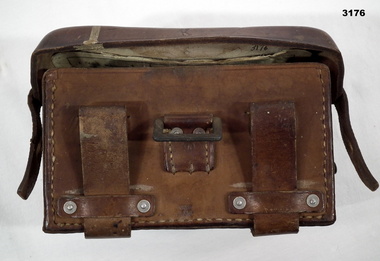
Equipment - FIRST AID CASE GERMAN 1940, C.1940
... “Made Jun 1940 & Nazi army badge - Eagle & Swastika” Stamped onto side of lid: “K” WWII Tan leather Fist Aid case, empty, has two straps on the rear for belt mounting. The paper instruction list of components ...WWII Tan leather Fist Aid case, empty, has two straps on the rear for belt mounting. The paper instruction list of components has detached from inside the lid and written in black ink in German, dated 1937, there is a closing strap at each end closing on a brass stud. Near belt buckle: Some stamping marks. “Made Jun 1940 & Nazi army badge - Eagle & Swastika” Stamped onto side of lid: “K”military equipment - german army, first aid -
 Bendigo Military Museum
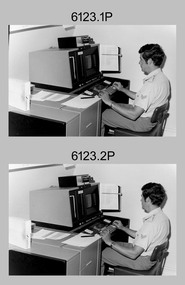
photograph - Cartographic Squadron Production – Army Survey Regiment, Fortuna, c1980
... components were registered to the map sheet, as shown in photo .12P and masked using an air brush and a halftone negative was then created. The terrain embossing method of producing hill shading was more efficient to produce than previous specialised artistic methods such pencil/eraser and air brush. Furthermore, a more consistent enhancement of terrain on charts was achieved between technicians. Royal Australian Survey Corps RASvy Army ...This collection of 12 photos was most likely taken in 1980. The photos were most likely taken in Cartographic Squadron’s Ante Room, the Attic and small offices on the top floor of Fortuna Villa. The computer based Editwriter typesetting system was introduced in 1975 as a replacement to the aging Fotosetter machine. It was operated by a specialised technician, who generated a large variety of map type styles and sizes quickly and reliably, as well as text panels. CPL Richards performed this task for several years and in photo .1P and .2P is reading off a type order next to the computer monitor. Output on Copy proof adhesive backed stripping type film replaced messy wax and spray adhesives in 1978. The Editwriter capability supported all RASvy units and contractor type setting requirements. Scribing was the cartographic process of drafting features such as drainage, relief, vegetation, roads and culture on specially coated map reproduction material. The cartographic technician scribed out the map feature such as a contour to a specified line width on the map sheet, using a tool affixed with a sapphire tipped cutter. The quality control edit (Proving) stage of map production was the first opportunity to inspect a proof of the map independently and systematically. Proving tasks were carried out by technicians conversant of the map product specification and task requirement, however, was not involved in its production. Corrections were identified, marked up and sent to back to the correcting section or contractors. Terrain Embossing was a manual map production technique to produce hill shading on medium to small scale graphics and air charts. SPR John Martin is seen in photos .8P to.10P using a fine embossing metal stylus to push down on the drainage impression on a thin malleable opaque plastic material (AK Poligraphy). Ridge lines were then pushed down using the contour impression as a guide, on the opposing side of the AK Poligraphy to create a 3D plastic model terrain effect. The map impression was sprayed with white paint and photographed to create a contone tone hill shade. SPR Gina (Coore) Neilson is seen in photo .11P washing a contone positive of a land mass in a solution. The contone components were registered to the map sheet, as shown in photo .12P and masked using an air brush and a halftone negative was then created. The terrain embossing method of producing hill shading was more efficient to produce than previous specialised artistic methods such pencil/eraser and air brush. Furthermore, a more consistent enhancement of terrain on charts was achieved between technicians.This is a set of 12 photographs of Cartographic Squadron performing four map production tasks at the Army Survey Regiment, Fortuna, Bendigo c1980. The first ten photographs were on 35mm negative film and were scanned at 96 dpi. Photos .11P and .12P were on photographic paper and scanned at 300 dpi. They are part of the Army Survey Regiment’s Collection. .1) - Photo, black & white, c1980, Editwriter typesetter, CPL Paul Richards. .2) - Photo, black & white, c1980, Editwriter typesetter, CPL Paul Richards. .3) - Photo, black & white, c1980, Scribing contours on a RAAF Chart, SPR Megan (McBurney) Reynolds. .4) - Photo, black & white, c1980, Scribing contours on a RAAF Chart, SPR Megan (McBurney) Reynolds. .5) - Photo, black & white, c1980, Scribing contours on a RAAF Chart, SPR Rod Skidmore. .6) - Photo, black & white, c1980, Scribing contours on a RAAF Chart, SPR Rod Skidmore. .7) - Photo, black & white, c1980, Formal quality control edit (Proving), CPL Ian Belmont. .8) - Photo, black & white, c1980, Hill Shade Terrain Embossing, SPR John Martin. .9) - Photo, black & white, c1980, Hill Shade Terrain Embossing, SPR John Martin. .10) - Photo, black & white, c1980, Hill Shade Terrain Embossing, SPR John Martin. .11) - Photo, black & white, c1980, Hill Shade Terrain Embossing, SPR Gina (Coore) Neilson. .12) - Photo, black & white, c1980, Hill Shade Terrain Embossing, unidentified..1P to .10P No personnel are identified. .11P and .12P annotated ‘Terrain Embossing’royal australian survey corps, rasvy, army survey regiment, army svy regt, fortuna, asr, carto -
 Bendigo Military Museum
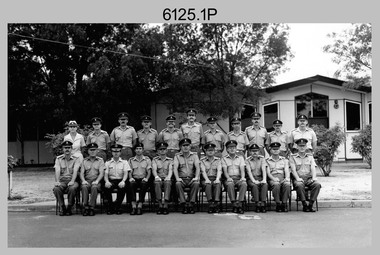
Photograph - Army Survey Regiment’s Officers, Warrant Officers and Sergeants and Squadrons, at Fortuna, Bendigo, 1982
... Army personnel from RASvy, RACT, AACC, RAAOC and RAEME corps. Other supporting staff at this time included the RAAF Liaison Officer, RAN Liaison Officer and several civilians employed in administration, the Q-Store and grounds maintenance. A component...Army personnel from RASvy, RACT, AACC, RAAOC and RAEME corps. Other supporting staff at this time included the RAAF Liaison Officer, RAN Liaison Officer and several civilians employed in administration, the Q-Store and grounds maintenance. A component ...This is a set of six staff photographs of the Army Survey Regiment’s Officers, Warrant Officers and Sergeants, and each of its four Squadrons at Fortuna, Bendigo in December 1982. Note - Air Survey Squadron’s photo was probably taken in July 1982 as they appear in winter dress. Air Survey Squadron was responsible for aerotriangulation, photogrammetric feature extraction and the AUTOMAP 1 system. Typical tasks were flight planning the acquisition of aerial photography, pugging, mensuration and block adjustments, photogrammetric extraction of topographic features from aerial photography, digital feature editing, map compilation, operating the scanner/plotter, operating the AUTOMAP 1 system and computer programming by civilians. Cartographic Squadron was responsible for the production of the following military products: Joint Operation Graphics, small-scale RAAF Air Charts, large-scale topographic line maps and orthophotomaps. Cartographic technician tasks were scribing, compiling, retouching, masking, type setting, type stickup, terrain embossing, correcting and proving quality control. Headquarters Squadron was responsible for the planning and coordination of map production and contracts. It also performed administrative and support functions such as personnel administration, pay, finance, transportation, records, map Library, kitchens, messes and facility maintenance. It was staffed by Army personnel from RASvy, RACT, AACC, RAAOC and RAEME corps. Other supporting staff at this time included the RAAF Liaison Officer, RAN Liaison Officer and several civilians employed in administration, the Q-Store and grounds maintenance. A component of the Army Svy Regt’s cartographic map production was carried out by the Detachment, a sub-unit located at Bonegilla next to the School of Military Survey. Lithographic Squadron was responsible for the reproduction of map materials and printing of military map products. The main tasks undertaken by photographic technicians were photographic enlargements, reductions and duplication of map reproduction material and processing of aerial photography. Printing technician tasks included platemaking, offset printing, map stock despatching and proofing.This is a set of six staff photographs of the Army Survey Regiment’s Officers, Warrant Officers and Sergeants, and its four Squadrons, at Fortuna, Bendigo, 1982. The black and white photographs were printed on photographic paper and are part of the Army Survey Regiment’s Collection. The photograph was scanned at 300 dpi. No personnel are identified. No personnel are identified. .1P – Annotated on front “OFFICERS MESS DEC ’82” .2P – Annotated on back “SGTS MESS DEC ’82” .4P– Annotated on front “CARTO SQN DEC ’82” .5P– Annotated on front “HQ SQN DEC ’82”royal australian survey corps, rasvy, army survey regiment, army svy regt, fortuna, asr, air survey, carto, litho -
 Bendigo Military Museum
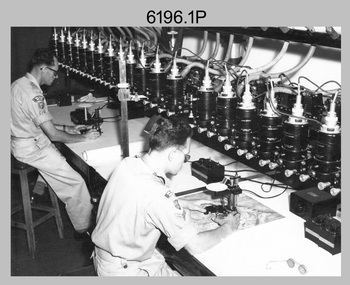
Photograph - Multiplex mechanical stereoplotting equipment, Army Survey Regiment, Fortuna Bendigo, c1950s
... Army Survey Regiment’s Collection. The photographs were scanned at 300 dpi. .1) - Photo, black & white, c1950s, unidentified personnel operating Multiplex equipment. .2) - Photo, black & white, c1950s, Multiplex equipment. .3) - Photo, black & white, c1950s, Multiplex components identified. .4) - Photo, black & white, c1950s, Multiplex optical components. .5) - Photo, black & white, c1950s. ...Royal Australian Survey Corps RASvy Army Survey Regiment Army Svy Regt Fortuna ASR Photogrammetry .1P to .2P, .4P – No annotations. .3P annotations identifying Multiplex components on front of photo. .5P annotated on front ‘Lay down of individual Multiplex plots at 1/14000 to framework of master grid to form Composite Compilation Sheet – Material Duralex.’ ...This is a set of five photographs of Multiplex mechanical stereoplotting equipment at the Army Survey Regiment, Fortuna Bendigo. c1950s. Multiplex equipment was imported from the UK in 1951 and introduced in the following year, to accelerate map production output covering CMF training areas at 1:25,000 map scale. Multiplex plotting was a productive advancement replacing the ‘Arundel’ method of graphical plotting planimetric detail that was expensive and slow, especially in timbered mountainous terrain. Air photos were made into small diapositives and mounted on racks in the exact position relative to when the aerial photos were taken. The technicians operated the Multiplex in a darkened room, with one photo projected with a green filter and the other through a red filter to form a 3D view of the overlapping photos. The 3D model projected onto a platen, which was a small platform that was raised up and down. The technician viewed the 3D image with special glasses fitted with red and green lenses. In the centre of the platen was a small pinhole that served as a floating mark, with a vertical pencil located exactly below the pinhole. This tracing table was moved to follow the topographic feature or contour line and draw it on the paper underneath. The technician raising or lowering the platform’s floating mark to match the height of the 3D terrain. It also replaced the slotted template method of mechanical adjustment of strips of aerial photography, however was restricted to each strip rather than between strips in the block. Although the Multiplex was phased out of production in 1968, it was used in the training of photogrammetry and aero-triangulation at the School of Military Survey located at Bonegilla, Victoria until the early 1990s. The history of the Multiplex is covered in more detail with additional historic photographs, in pages 50 to 51 of Valerie Lovejoy’s book 'Mapmakers of Fortuna – A history of the Army Survey Regiment’ ISBN: 0-646-42120-4.This is a set of five photographs of Multiplex mechanical stereoplotting equipment at the Army Survey Regiment, Fortuna, Bendigo. c1950s. The photographs were printed on photographic paper and are part of the Army Survey Regiment’s Collection. The photographs were scanned at 300 dpi. .1) - Photo, black & white, c1950s, unidentified personnel operating Multiplex equipment. .2) - Photo, black & white, c1950s, Multiplex equipment. .3) - Photo, black & white, c1950s, Multiplex components identified. .4) - Photo, black & white, c1950s, Multiplex optical components. .5) - Photo, black & white, c1950s. Unidentified technician laying down individual Multiplex plots..1P to .2P, .4P – No annotations. .3P annotations identifying Multiplex components on front of photo. .5P annotated on front ‘Lay down of individual Multiplex plots at 1/14000 to framework of master grid to form Composite Compilation Sheet – Material Duralex.’royal australian survey corps, rasvy, army survey regiment, army svy regt, fortuna, asr, photogrammetry -
4th/19th Prince of Wales's Light Horse Regiment Unit History Room
Decorative Australian National Flag, 2007
... The Security Detachment Iraq (SECDET Iraq) was the final component of Australia's contribution to coalition operations in Iraq. SECDET was based on an Australian Army combined arms combat team consisting of an infantry company group and a troop of cavalry which operated the Australian Light Armoured (ASLAV) vehicles. ...The Security Detachment Iraq (SECDET Iraq) was the final component of Australia's contribution to coalition operations in Iraq. SECDET was based on an Australian Army combined arms combat team consisting of an infantry company group and a troop of cavalry which operated the Australian Light Armoured (ASLAV) vehicles. ...The Security Detachment Iraq (SECDET Iraq) was the final component of Australia's contribution to coalition operations in Iraq. SECDET was based on an Australian Army combined arms combat team consisting of an infantry company group and a troop of cavalry which operated the Australian Light Armoured (ASLAV) vehicles. The force's duties included static security guarding at the Australian Embassy in Baghdad and the protection of Australian diplomats and vehicle convoys. SECDET was withdrawn in August 2011, with the firm Unity Resources Group becoming responsible for providing security for Australia's diplomatic presence in Iraq. SECDET XII 2007 • D Company, 6 RAR • Troop, 2/14 LHR (QMI) • Elements, 1st MP Bn • Combat Service Support Element Some members of 4/19 Prince of Wales's light Horse Regiment were deployed to SECDETMiniature Australian flag as souvenir of SECDET XI service - Operation Catalyst. Gold coloured material edgingVIID embroidered in lower right quadrant -
4th/19th Prince of Wales's Light Horse Regiment Unit History Room
Antenna Matching Unit MX-6707/VRC, E-Systems Inc, abt 1980
... Component of vehicle radio installations of the Regiment during 1980's. Vehicle installations included: AN/VRC 46, AN/VRC 49, and An/VRC 64 Radio Army Armoured Corps Antenna systems Serial No 1362 The AMU consists of a metal body with a spring top section incorporating the thread for mounting the antenna. ...Component of vehicle radio installations of the Regiment during 1980's. Vehicle installations included: AN/VRC 46, AN/VRC 49, and An/VRC 64The AMU consists of a metal body with a spring top section incorporating the thread for mounting the antenna. Underneath the bottom portion are receptacles and controls. These include: a. antenna cable receptacle, b. control cable receptacle,and c. band control switch. Also underneath is a drain screw and provision for fitting an earth strap. Serial No 1362radio, army, armoured corps, antenna systems -
 Warrnambool RSL Sub Branch
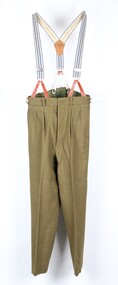
Army Uniform trousers, 1968
... One leather component has inscriptions in black ink on the interior as opposed to a white coating. The suspenders are attached to the trousers by six brown plastic buttons on the interior of the waistband. Army ...This uniform belonged to Sapper Hughes 3795948 of the Royal Australian Engineers Corps. By the date on the uniform, it is assumed that he served C 1968.This uniform has significance as an example of a uniform worn by soldier ranks for daily work and dress parades.Khaki coloured long trousers with attached suspenders. They have a button up front (5 brown plastic buttons). There are two pockets on either side of the trousers and one button up pocket on the back right with a flap that is fastened with a single brown plastic button. There are three extra brown plastic buttons on the back exterior of the waistband and six belt loops on the whole length of the waist band. The interior pocket fabric is more light weight and a slightly more green in colour. The interior of the right back pocket includes a white patch of fabric with printed inscriptions and further inscriptions written in black ink just above. The suspenders are composed mostly of blue, grey, beige, black and cream striped thick fabric. There are also silver coloured metallic components (which include inscriptions) and leather sections, most of which have a reddish/brown coating on the exterior and a white coating on the interior. One leather component has inscriptions in black ink on the interior as opposed to a white coating. The suspenders are attached to the trousers by six brown plastic buttons on the interior of the waistband. Back pocket interior inscriptions on the green fabric: HUGHES / 3795948 Back pockket interior inscriptions on the white fabric: E.W. P/LTD. / SOUTH AUSTRALIA / 1968 / (a symbol of a broad arrow) / Class 8405-66-025-6405 / Batch 67 / Mill / Size and Waist 28C / Matching Jacket 35 /36C / DRY CLEAN ONLY / CREASES SET BY SIROSET / REPRESS ON ORIGINAL CREASES / MENDING PATCH ATTACHED / NAME HUGHES. J.W. / ARMY No. 3795948 8PL Bcoj Identical metallic clip inscriptions on two of the suspenders: POLICE / (embossed image of a police baton)royal australian engineers, warrnambool rsl, warrnambool, engineer, hughes, sapper hughes, 3795948, hughes 3795948, uniform, army uniform, trousers, army
