
Showing 8 items matching "australasian key"
-
 Port Fairy Historical Society Museum and Archives
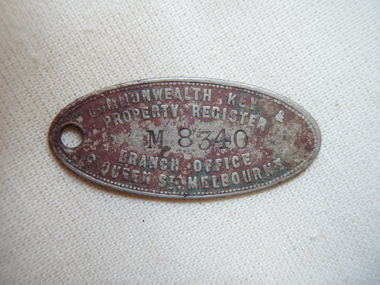
Unknown - Property tag
... ...Australasian key...Established in Sydney in 1900 'The Commonwealth Key & Property Register' and later, her sister company 'Australasian Key Register', provided a Nationwide Service. ...Established in Sydney in 1900 'The Commonwealth Key & Property Register' and later, her sister company 'Australasian Key Register', provided a Nationwide Service. ...Established in Sydney in 1900 'The Commonwealth Key & Property Register' and later, her sister company 'Australasian Key Register', provided a Nationwide Service. The service provides nationwide protection for lost, stolen or damaged locks and keys.Elliptic white metal tag with hole to attach to keyCommonwealth Key and Property Register M 8340 Branch Office Queen Street Melbourne Obverse Finder returning with attached to nearest Police Station will be rewarded 5/- ............. returned to ownerkey, property register, australasian key, sydney, police, commonwealth -
 The Beechworth Burke Museum
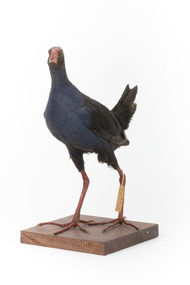
Animal specimen - Australasian Swamphen, Trustees of the Australian Museum, 1860-1880
... This collection continues to be on display in the Museum and has become a key part to interpreting the collecting habits of the 19th century. taxidermy mount taxidermy animalia burke museum beechworth australian museum skin reynell eveleigh johns bird australian birds swamphen moorhen purple bird hen purple swamphen water bird 17e. / Purple Gallinule / Catalogue Page 35 / This taxidermy specimen is of a Australasian swamphen which is mounted standing on a wooden platform and has a paper identification tag tied to its upper left leg. ...The Australasian swamphen is a visually striking and socially complex bird found across Oceania. It can be found in eastern Indonesia (specifically the Moluccas, Aru, and Kai Islands), Papua New Guinea, New Zealand, and Australia. As a member of the rail family (Rallidae), it belongs to the diverse order Gruiformes, which also includes cranes and other rail species. Like other rails, it possesses relatively short wings and a strong, elongated bill, both adaptations suited to its semi-aquatic wetland habitat. This swamphen is easily identified by its deep blue-purple plumage, prominent red frontal shield, and sturdy red legs. It primarily inhabits swamps, marshes, and other wet lowland areas, though its range has expanded to include pastures, roadsides, and farmland due to significant landscape modifications over the past 150 years. Unlike many wetland birds, it is highly adaptable and thrives in both natural and human-altered environments. Its diet is similarly flexible, consisting mostly of plant material such as grass stems, shoots, and leaves, but also including invertebrates and, on occasion, the young of other bird species. This specimen was misidentified as a Purple Swamphen in original catalogue records and is part of a collection of almost 200 animal specimens that were originally acquired as skins from various institutions across Australia, including the Australian Museum in Sydney and the National Museum of Victoria (known as Museums Victoria since 1983), as well as individuals such as amateur anthropologist Reynell Eveleigh Johns between 1860-1880. These skins were then mounted by members of the Burke Museum Committee and put-on display in the formal space of the Museum’s original exhibition hall where they continue to be on display. This display of taxidermy mounts initially served to instruct visitors to the Burke Museum of the natural world around them, today it serves as an insight into the collecting habits of the 19th century.This specimen is part of a significant and rare taxidermy mount collection in the Burke Museum. This collection is scientifically and culturally important for reminding us of how science continues to shape our understanding of the modern world. They demonstrate a capacity to hold evidence of how Australia’s fauna history existed in the past and are potentially important for future environmental research. This collection continues to be on display in the Museum and has become a key part to interpreting the collecting habits of the 19th century.This taxidermy specimen is of a Australasian swamphen which is mounted standing on a wooden platform and has a paper identification tag tied to its upper left leg. The specimen has dark colouring on its back and head with a purple-blue coloured neck, breast and belly. The bill is oversized and is orange/red which is the same colour as the frontal shield on the bird's face. The eyes are made from a red and black glass and the legs of this specimen are orange. The legs are elongated and the toes also long and unwebbed. 17e. / Purple Gallinule / Catalogue Page 35 / taxidermy mount, taxidermy, animalia, burke museum, beechworth, australian museum, skin, reynell eveleigh johns, bird, australian birds, swamphen, moorhen, purple bird, hen, purple swamphen, water bird -
 Flagstaff Hill Maritime Museum and Village
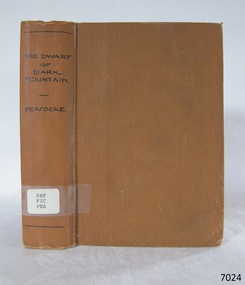
Book - Fictional Story, Isabel Maude Peacocke et al, The Dwarf Of Dark Mountain, 1932-1939
... While The Dwarf of Dark Mountain is not a major classic in global literature, it is a significant piece of Australasian and New Zealand children's literary history. Peacocke was among a key generation of early 20th-century New Zealand women writers whose work captured colonial life, post-WWI family dynamics, and regional social history. ...The Dwarf of Dark Mountain is a children's adventure novel illustrated by Norman Sutcliffe. Set against the backdrop of the New Zealand bush and rural landscapes, the story follows a group of young protagonists on a mystery-filled adventure centred around a local geological landmark known as "Dark Mountain". Typical of Isabel Maud Peacocke's popular juvenile fiction of the 1930s (such as The Cruise of the Crazy Jane and Cathleen with a C), the book weaves together themes of bush navigation and exploration. The children venture through dense ti-tree scrub and native fern gullies, with the narrative centring around the titular "dwarf" of the mountain blending rural Australian and New Zealand family life with wholesome mystery, moral growth, and outdoor adventure.The Dwarf Of Dark Mountain Author: Isabel Maude Peacocke Illustrator: Norman Sutcliffe Publisher: Ward Lock & Co Date: Further Information: Plain brown/tan cloth binding with the title and author hand-lettered directly onto the spine with no decorative illustration, gilt stamping, or pictorial design. The spine has a Library label with an inscription.fictionThe Dwarf of Dark Mountain is a children's adventure novel illustrated by Norman Sutcliffe. Set against the backdrop of the New Zealand bush and rural landscapes, the story follows a group of young protagonists on a mystery-filled adventure centred around a local geological landmark known as "Dark Mountain". Typical of Isabel Maud Peacocke's popular juvenile fiction of the 1930s (such as The Cruise of the Crazy Jane and Cathleen with a C), the book weaves together themes of bush navigation and exploration. The children venture through dense ti-tree scrub and native fern gullies, with the narrative centring around the titular "dwarf" of the mountain blending rural Australian and New Zealand family life with wholesome mystery, moral growth, and outdoor adventure.warrnambool, shipwrecked-coast, flagstaff-hill, flagstaff-hill-maritime-museum, maritime-museum, shipwreck-coast, flagstaff-hill-maritime-village, shipwrecked-artefact, book, the dwarf of dark mountain, isabel maude peacocke, warrnambool mechanics’ institute, pattison collection, warrnambool library, ralph eric pattison, corangamite regional library service, warrnambool city librarian, mechanics’ institute library, victorian library board, warrnambool books and records, warrnambool children’s library, i. m. cluett., illustrator norman sutcliffe -
 The Beechworth Burke Museum
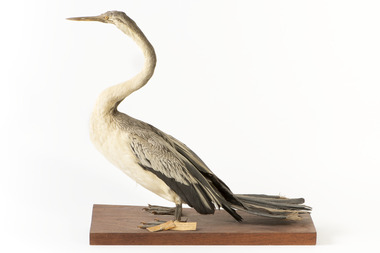
Animal specimen - Australasian Darter, Trustees of the Australian Museum, 1860-1880
... This collection continues to be on display in the Museum and has become a key part to interpreting the collecting habits of the 19th century. taxidermy mount taxidermy animalia burke museum beechworth australian museum skin reynell eveleigh johns darter bird australasian darter Paper label: "154 New Holland Darter" An Australasian Darter with a large, slim body and grey to white colouring. ...An Australasian Darter is a waterbird with a distinctive long straight neck and a sharp bill. This feature has resulted in this bird sometimes being called the "snakebird" . This specimen is a slim bird with pale grey to white colouring. This colouring identifies this particular specimen as female. The Australasian Darter is commonly located around waterways in freshwater or brackish wetlands more than 0.5m deep. The Darter will perch on fallen trees and branches near the water and holds its wings out to the sides in an effort to dry them. The Noongar people of southwestern Australia called this bird "mimal". It has also been called the New Holland darter or the New Holland devil-bird. This specimen is part of a collection of almost 200 animal specimens that were originally acquired as skins from various institutions across Australia, including the Australian Museum and the National Museum of Victoria, as well as individuals such amateur anthropologist Reynell Eveleigh Johns between 1860-1880. These skins were then mounted by members of the Burke Museum Committee and put-on display in the formal space of the Museum’s original exhibition hall where they continue to be on display. This display of taxidermy mounts initially served to instruct visitors to the Burke Museum of the natural world around them, today it serves as an insight into the collecting habits of the 19th century. This specimen is part of a significant and rare taxidermy mount collection in the Burke Museum. This collection is scientifically and culturally important for reminding us of how science continues to shape our understanding of the modern world. They demonstrate a capacity to hold evidence of how Australia’s fauna history existed in the past and are potentially important for future environmental research. This collection continues to be on display in the Museum and has become a key part to interpreting the collecting habits of the 19th century.An Australasian Darter with a large, slim body and grey to white colouring. This specimen has a long snake-like neck and webbed feet. It has large powerful wings positioned flat against the rear of its body. The eyes are made of glass and are a pale yellow colour which is similar in colour to the long and sharp bill.Paper label: "154 New Holland Darter"taxidermy mount, taxidermy, animalia, burke museum, beechworth, australian museum, skin, reynell eveleigh johns, darter, bird, australasian darter -
 The Beechworth Burke Museum
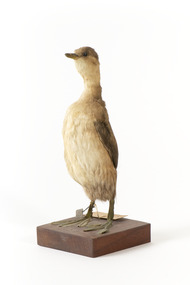
Animal specimen - Australasian Grebe, Trustees of the Australian Museum, 1860-1880
... This collection continues to be on display in the Museum and has become a key part to interpreting the collecting habits of the 19th century. taxidermy mount taxidermy animalia burke museum beechworth australian museum skin reynell eveleigh johns bird grebe australasian grebe dabchick Paper tag: "34a Dabchick Catalogue, page, 64" Metal Tag: "4496" This Australasian Grebe is in a standing position on a wooden platform with identification tags tied to the right leg. ...The Australasian Grebe is a small duck-like bird with a hyperactive nature. These birds reside in small, shallow, freshwater lakes and ponds, small waterways or sheltered caves and bays. They can be found throughout Australia and the Pacific region and New Zealand. The Australasian Grebe eat mainly small freshwater fish, crayfish, shellfish and leeches which they catch by diving underwater. This specimen is part of a collection of almost 200 animal specimens that were originally acquired as skins from various institutions across Australia, including the Australian Museum and the National Museum of Victoria, as well as individuals such amateur anthropologist Reynell Eveleigh Johns between 1860-1880. These skins were then mounted by members of the Burke Museum Committee and put-on display in the formal space of the Museum’s original exhibition hall where they continue to be on display. This display of taxidermy mounts initially served to instruct visitors to the Burke Museum of the natural world around them, today it serves as an insight into the collecting habits of the 19th century. This specimen is part of a significant and rare taxidermy mount collection in the Burke Museum. This collection is scientifically and culturally important for reminding us of how science continues to shape our understanding of the modern world. They demonstrate a capacity to hold evidence of how Australia’s fauna history existed in the past and are potentially important for future environmental research. This collection continues to be on display in the Museum and has become a key part to interpreting the collecting habits of the 19th century.This Australasian Grebe is in a standing position on a wooden platform with identification tags tied to the right leg. It has dark glass eyes and pale grey bill and legs. The plumage of this specimen consists of dark greys and browns on the rear with lighter colours on the underside. These colours align with those of the non-breeding season. This species has rufous red colouring on the chest and neck and darker colouring on the head during the breeding season. Paper tag: "34a Dabchick Catalogue, page, 64" Metal Tag: "4496"taxidermy mount, taxidermy, animalia, burke museum, beechworth, australian museum, skin, reynell eveleigh johns, bird, grebe, australasian grebe, dabchick -
 The Beechworth Burke Museum
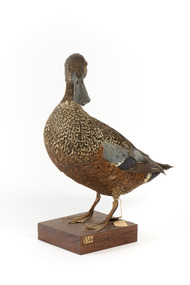
Animal specimen - Australiasian Shovelor, Trustees of the Australian Museum, 1860-1880
... This collection continues to be on display in the Museum and has become a key part to interpreting the collecting habits of the 19th century. taxidermy mount taxidermy animalia burke museum beechworth australian museum skin reynell eveleigh johns bird australian birds heron duck australaisian shovelor shovelor 5a. / Australian Shoveller / See Catalogue, page 38. / This Australasian Shoveler is a species of low-floating duck with a dark head and brown plumage. ...The Australasian Shoveler is a species of duck that can be commonly found in heavily vegetated swamps in southwestern and southeastern Australia, Tasmania and New Zealand. The species, Australasian Shoveler, is aptly named after their large shovel-shaped bill. These birds use these large bills which are equipped with fine hair-like components which strain the water and mud for food including tiny creatures including insects, crustaceans and seeds while it swims. This specimen is part of a collection of almost 200 animal specimens that were originally acquired as skins from various institutions across Australia, including the Australian Museum in Sydney and the National Museum of Victoria (known as Museums Victoria since 1983), as well as individuals such as amateur anthropologist Reynell Eveleigh Johns between 1860-1880. These skins were then mounted by members of the Burke Museum Committee and put-on display in the formal space of the Museum’s original exhibition hall where they continue to be on display. This display of taxidermy mounts initially served to instruct visitors to the Burke Museum of the natural world around them, today it serves as an insight into the collecting habits of the 19th century.This specimen is part of a significant and rare taxidermy mount collection in the Burke Museum. This collection is scientifically and culturally important for reminding us of how science continues to shape our understanding of the modern world. They demonstrate a capacity to hold evidence of how Australia’s fauna history existed in the past and are potentially important for future environmental research. This collection continues to be on display in the Museum and has become a key part to interpreting the collecting habits of the 19th century.This Australasian Shoveler is a species of low-floating duck with a dark head and brown plumage. The rear of this specimen is a dark brown, with mixed white and brown colouring on the upper torso. The underparts of this bird are brown and orange. The specimen has glass eyes made in an amber colour. The Shoveler is standing on a wooden platform which is labelled number 136. Amongst the feathers on the wings, this bird has a green coloured feather. The legs of the Shoveler would have once been a bright orange; however, the legs of this specimen have darkened in colour throughout the taxidermy process. This bird has a large bill shaped like a shovel from which the name "Shoveler" has been derived.5a. / Australian Shoveller / See Catalogue, page 38. /taxidermy mount, taxidermy, animalia, burke museum, beechworth, australian museum, skin, reynell eveleigh johns, bird, australian birds, heron, duck, australaisian shovelor, shovelor -
 Mont De Lancey
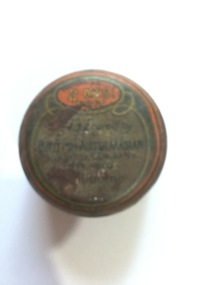
Tin
... Australasian Tobacco Company Pty. Ltd. Melbourne, Australia". Small, round, red, metal, smoking mixture box, with a key lock in the lid Tin ...Small, round, red, metal, smoking mixture box, with a key lock in the lidOn lid: "Special Havelock smoking mixture". Around the outside edges of the lid and tin: "Medium strength, Havelock smoking mixture, Havelock medium strength and B.A. Pty. Ltd." inside a shield-shaped logo. On base: "Factory weight 2 oz. nett. Manufactured by British Australasian Tobacco Company Pty. Ltd. Melbourne, Australia".tobacco tins, containers, tins -
 Flagstaff Hill Maritime Museum and Village
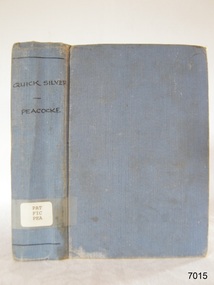
Book - Fictional Story, Isabel Maude Peacocke et al, Quicksilver, 1922-1925
... While Quicksilver is not a major classic in global literature, it is a significant piece of Australasian and New Zealand children's literary history. Peacocke was among a key generation of early 20th-century New Zealand women writers whose work captured colonial life, post-WWI family dynamics, and regional social history. ...Quicksilver (1922) is a children's novel written by New Zealand author Isabel Maude Peacocke and illustrated by the noted English artist Harold Copping. The story revolves around a young boy named Ronnie, who is being pampered and coddled by the women in his family. His uncle, Uncle Jimmy, decides that Ronnie needs to be toughened up and arranges for him to have a companion, a spirited, lively young girl nicknamed 'Quicksilver' (or Quixy). Typical of Peacocke's post-World War I writing, the novel blends juvenile adventure with subtle social commentary on class differences, gender expectations, and child rearing in the early 20th century.Hard cover book. Quicksilver Author: Isabel Maude Peacocke Illustrator. Harold Copping Publisher: Ward, Lock & Co Date: 1922-1925 Further Information: Light blue Cloth hardcover with lettering and patterning to spine in black. The spine has a Library label with an inscription.fictionQuicksilver (1922) is a children's novel written by New Zealand author Isabel Maude Peacocke and illustrated by the noted English artist Harold Copping. The story revolves around a young boy named Ronnie, who is being pampered and coddled by the women in his family. His uncle, Uncle Jimmy, decides that Ronnie needs to be toughened up and arranges for him to have a companion, a spirited, lively young girl nicknamed 'Quicksilver' (or Quixy). Typical of Peacocke's post-World War I writing, the novel blends juvenile adventure with subtle social commentary on class differences, gender expectations, and child rearing in the early 20th century.warrnambool, shipwrecked-coast, flagstaff-hill, flagstaff-hill-maritime-museum, maritime-museum, shipwreck-coast, flagstaff-hill-maritime-village, shipwrecked-artefact, book, quicksilver, isabel maude peacocke, warrnambool mechanics’ institute, pattison collection, warrnambool library, ralph eric pattison, corangamite regional library service, warrnambool city librarian, mechanics’ institute library, victorian library board, warrnambool books and records, warrnambool children’s library
