
Showing 6 items matching "australia - politics and government - 1942-1945"
-
 Monbulk RSL Sub Branch
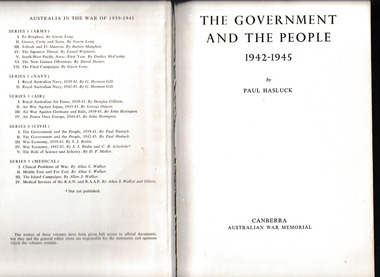
Book, Australian War Memorial, The government and the people, 1942-1945, 1970
... Australia - Politics and government - 1942-1945...Australia - Politics and government - 1942-1945 Australia - Politics and government - Social conditions A study of the administrative and political management of the Australian war effort. ...A study of the administrative and political management of the Australian war effort.Index, ill, p.644.non-fictionA study of the administrative and political management of the Australian war effort.australia - politics and government - 1942-1945, australia - politics and government - social conditions -
 Lara RSL Sub Branch
Book, Australia in the War of 1939-1945 CIVIL Volume 2 Author Paul Hasluck The Government and the People of 1942-1945, First published 1970
... Maps, illustrations and photographs The development and significant events of Australian politics during 1942-1945 fall of singapore south west pacific command bombs on australian soil macarthur macarthur takes command industrial - coal austerity manpower difficulties 1943 elections san francisco conference the end of hitler's war john curtin is dead the surrender of japan Australian War Memorial Australia in the War of 1939-1945 - The Government and the People 1942-45 Australia in the War of 1939-1945 CIVIL Volume 2 Author Paul Hasluck The Government and the People of 1942-1945 Book ...This book is a follow one from the first volume written by Paul Hasluck. Maps, illustrations and photographsThe development and significant events of Australian politics during 1942-1945Australia in the War of 1939-1945 - The Government and the People 1942-45Australian War Memorialfall of singapore, south west pacific command, bombs on australian soil, macarthur, macarthur takes command, industrial - coal, austerity, manpower difficulties, 1943 elections, san francisco conference, the end of hitler's war, john curtin is dead, the surrender of japan -
 Bendigo Military Museum
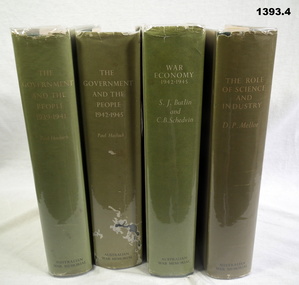
Book - BOOKS, 1) & .2) Paul Hasluck et al, Australia in the War of 1939 -1945. Series 4 Civil, 1970
... politics Mid green buckram covers with light green dust jackets, several with plastic. Titles on front & spines. Illustrated with black & white photos & drawings. .1) Vol I The Government and the People 1939-1941,644 pages .2) Vol II The Government and the People 1942 -1945, 771 pages .3) Vol IV War Economy 1942 -1945, 817 pages .4) Vol V The role of Science and Industry, 738 pages Australia in the War of 1939 -1945. ...Mid green buckram covers with light green dust jackets, several with plastic. Titles on front & spines. Illustrated with black & white photos & drawings. .1) Vol I The Government and the People 1939-1941,644 pages .2) Vol II The Government and the People 1942 -1945, 771 pages .3) Vol IV War Economy 1942 -1945, 817 pages .4) Vol V The role of Science and Industry, 738 pagesbooks - history, politics -
 Eltham District Historical Society Inc
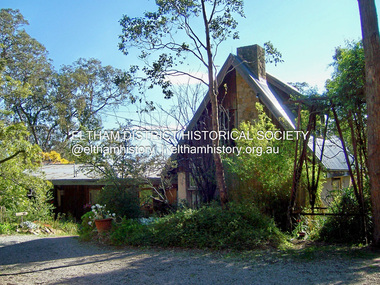
Photograph - Digital Photograph, Marguerite Marshall, Former home of Professor William MacMahon Ball, York Street, Eltham, 24 May 2007
... Australia. From 1923 he taught at The University of Melbourne, then became foundation Professor of Political Science in 1949 and was Chair until his retirement in 1968.6 In 1942, as the government expected a Japanese invasion, Mac’s wife Katrine and their only child Jenny, moved from Kew to Eltham as temporary evacuees. ...Australia. From 1923 he taught at The University of Melbourne, then became foundation Professor of Political Science in 1949 and was Chair until his retirement in 1968.6 In 1942, as the government expected a Japanese invasion, Mac’s wife Katrine and their only child Jenny, moved from Kew to Eltham as temporary evacuees. ...Situated at the eastern end of York Street, Eltham, 'Shinrone', the former home of Professor William (Mac) MacMahon Ball was one of the first in the Shire of Eltham to incorporate mud-brick. Professor MacMahon Ball, a political scientist, writer, broadcaster and diplomat and family moved to York Street, Eltham in 1945 into a timber cottage built around the 1890s and in poor repair. Mac asked Alistair Knox to renovate the home and he expanded the living area and added verandahs. In 1948 Montsalvat artist and sculptor Sonia Skipper supervised the building of most of the mud-brick studio. Neighbour Gordon Ford made the mud-bricks. Mac also asked John Harcourt, who had worked with him as a journalist in shortwave broadcasting, to build a pise (rammed earth) and stone addition to the largely timber house. Harcourt built two bedrooms - including an attic bedroom - a balcony with a shower and toilet, a nd a fireplace and chimney of local stone. Published: Nillumbik Now and Then / Marguerite Marshall 2008; photographs Alan King with Marguerite Marshall.; p141 At the eastern tip of York Street, Eltham, stands Shinrone, the former home of one of Australia’s intellectual leaders. Professor William Macmahon Ball, was one of the first to bring Asia as a foreign policy issue to the Australian public.1 He was a political scientist, writer, broadcaster and diplomat. The house was one of the first in Eltham Shire to incorporate mud-brick,2 because of the acute shortage of building materials after World War Two. Its novice builders later become leaders in Eltham’s built and garden design. Mac (as he was usually called), who was the son of a Church of England minister, was born in Casterton, Victoria in 1901 and died in 1986. In 1945 he helped establish the United Nations, as political consultant to the Australian Delegation at the San Francisco Conference.3 Then in 1946 Mac was appointed British Commonwealth Representative on the Allied Council for Japan, which is recorded in detail in his diary.4 In 1948 Mac led an Australian Government Goodwill Mission to South East Asia. However, Mac was perhaps most successful as an academic and public speaker.5 He was a commentator on the Australian Broadcasting Commission, from the early 1930s to the early 1960s. He was also Controller of the Short-Wave Broadcasting Unit during World War Two, which later became Radio Australia. From 1923 he taught at The University of Melbourne, then became foundation Professor of Political Science in 1949 and was Chair until his retirement in 1968.6 In 1942, as the government expected a Japanese invasion, Mac’s wife Katrine and their only child Jenny, moved from Kew to Eltham as temporary evacuees. However Mac and Katrine lived in Eltham for almost the rest of their lives. After staying with friends, they rented a house in Reynolds Road, where, as it was wartime, they needed to keep horses for transport and a cow and poultry for milk and eggs. In 1945 the family moved to the house at York Street, which was then a timber cottage, built around the 1890s and in poor repair. The underground well, cellar and part of the garden are all that remain of what stood on the original 18 acre (7.3ha) allotment. Thanks largely to Katrine’s hard work, the house was gradually renovated and extended. The long rambling house was partially built by several young neighbours, who were inspired by the cheap mud-brick and stone building style of Montsalvat, the Eltham artists’ colony. Mac asked Alistair Knox to renovate Shinrone, named after an Irish village near Katrine’s family home. Knox later popularised the mud-brick style of house construction, for which Eltham became known. He expanded the living area and added verandas. In 1948 Montsalvat artist and sculptor Sonia Skipper supervised the building of most of the mud-brick studio. Another neighbour, Gordon Ford, who was to have a major influence on the Australian garden style, made the mud-bricks. Mac also asked John Harcourt, who had worked with him as a journalist in short-wave broadcasting, to build a pisé (rammed earth) and stone addition to the largely timber house. Harcourt built two bedrooms – including an attic bedroom – a balcony with a shower and toilet, and a fireplace and chimney of local sandstone. With pioneering work naturally came mistakes, including one particularly dramatic incident when Harcourt was building walls with unsupported sections. Jenny Ellis, Mac’s daughter, remembers being awakened from sleep by a thundering shudder. The wall of her room had fallen down – fortunately away from her! In 1950 artist Peter Glass – another neighbour and later landscape designer – built Katrine a mud-brick pottery. As a result, the house features at one end Harcourt’s characteristic steep gable roof, while at the other the flatter construction characteristic of Knox. Mac referred to the home as the Eltham ‘experimental building site’.7 Surprisingly, the combination works, perhaps partly because it has the warm inviting feel of timber, mud-brick and stone.This collection of almost 130 photos about places and people within the Shire of Nillumbik, an urban and rural municipality in Melbourne's north, contributes to an understanding of the history of the Shire. Published in 2008 immediately prior to the Black Saturday bushfires of February 7, 2009, it documents sites that were impacted, and in some cases destroyed by the fires. It includes photographs taken especially for the publication, creating a unique time capsule representing the Shire in the early 21st century. It remains the most recent comprehenesive publication devoted to the Shire's history connecting local residents to the past. nillumbik now and then (marshall-king) collection, eltham, alistair knox, gordon ford, john harcourt, mudbrick construction, pise construction, professor macmahon ball, shinrone, sonia skipper, york street -
 Monbulk RSL Sub Branch
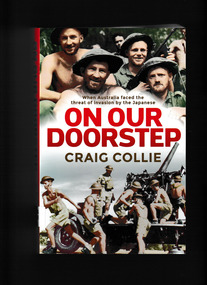
Book, Allen & Unwin, On our doorstep : when Australia faced the threat of invasion by the Japanese, 2020
... World war 1939 – 1945 – Campaigns – South West Pacific Australia - Politics and government - 1939-1945 By March 1942, the Japanese had steamrolled through Malaya, laid siege to Singapore, and bombed Darwin with the same ferocity they had dealt Pearl Harbor. ...By March 1942, the Japanese had steamrolled through Malaya, laid siege to Singapore, and bombed Darwin with the same ferocity they had dealt Pearl Harbor. Nothing could stop them. Their next step was inevitable, surely: the invasion and occupation of Australia. Meanwhile, as Australian prime minister John Curtin was battling with Winston Churchill to get troops back from overseas to defend their homeland, he was also positioning to ensure the United States would be there with us to fend off the approaching enemy. And at home, people pitched in as best they could and in any way to frustrate the invader. They all played their part, torn between 'she'll be right' and near panic. On Our Doorstep is the story of how Australia and Australians - the government, the military and the people - prepared to face this calamity, and the events that persuaded them of its probability. In the end, Japan found it had stretched itself beyond the reliability of its supply line, but had it ever intended to invade Australia?Index, bibliography, notes, ill, map, p.404.non-fictionBy March 1942, the Japanese had steamrolled through Malaya, laid siege to Singapore, and bombed Darwin with the same ferocity they had dealt Pearl Harbor. Nothing could stop them. Their next step was inevitable, surely: the invasion and occupation of Australia. Meanwhile, as Australian prime minister John Curtin was battling with Winston Churchill to get troops back from overseas to defend their homeland, he was also positioning to ensure the United States would be there with us to fend off the approaching enemy. And at home, people pitched in as best they could and in any way to frustrate the invader. They all played their part, torn between 'she'll be right' and near panic. On Our Doorstep is the story of how Australia and Australians - the government, the military and the people - prepared to face this calamity, and the events that persuaded them of its probability. In the end, Japan found it had stretched itself beyond the reliability of its supply line, but had it ever intended to invade Australia?world war 1939 – 1945 – campaigns – south west pacific, australia - politics and government - 1939-1945 -
 Monbulk RSL Sub Branch
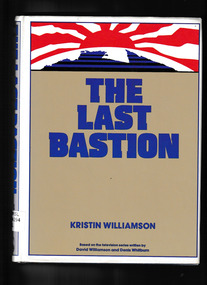
Book, Lansdowne Press, The last bastion, 1984
... Australia - Politics and government - 1939-1945 Australia - History - Military An account of the power struggle over the defence of Australia between 1942 and 1945 Index, bib, ill, maps, p.264. ...An account of the power struggle over the defence of Australia between 1942 and 1945Index, bib, ill, maps, p.264.non-fictionAn account of the power struggle over the defence of Australia between 1942 and 1945australia - politics and government - 1939-1945, australia - history - military
