
Showing 11 items matching "australia. army. casualty clearing station"
-
 Returned Nurses RSL Sub-branch
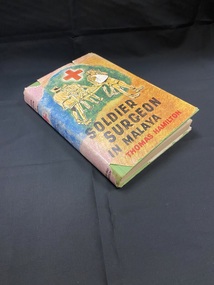
Book - Hardcover book, Thomas Hamilton, Soldier surgeon in Malaya, 1957
... Australia. Army. Casualty Clearing Station...World war two WWII World War 2 Australia. Army. Casualty Clearing Station 1939-1945 -- Medical care -- Australia 1939-1945 -- Malaysia -- Malaya Singapore A record of 'the work done by the 2/4th Casualty Clearing Station of the 8th Division in Malaya and Singapore in 1941-2. ...A record of 'the work done by the 2/4th Casualty Clearing Station of the 8th Division in Malaya and Singapore in 1941-2. Lieut.Colonel Hamilton wrote the diary in secret within the confines of Japanese prisoner-of-war camps at Changi in Singapore and at various points along the Burma-Thailand railway." - from dust-jacket.Green hard-cover with dust-jacket.The cover is orange and green with a red medical cross at the top and a drawing of wounded soldiers being assisted by medics, the title is below in black and the author's name in red.non-fictionA record of 'the work done by the 2/4th Casualty Clearing Station of the 8th Division in Malaya and Singapore in 1941-2. Lieut.Colonel Hamilton wrote the diary in secret within the confines of Japanese prisoner-of-war camps at Changi in Singapore and at various points along the Burma-Thailand railway." - from dust-jacket.world war two, wwii, world war 2, australia. army. casualty clearing station, 1939-1945 -- medical care -- australia, 1939-1945 -- malaysia -- malaya, singapore -
 Returned Nurses RSL Sub-branch
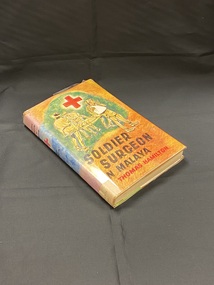
Book - Hardcover book, Thomas Hamilton, Soldier surgeon in Malaya, 1957
... Australia. Army. Casualty Clearing Station...World war two WWII World War 2 Australia. Army. Casualty Clearing Station 1939-1945 -- Medical care -- Australia 1939-1945 -- Malaysia -- Malaya Singapore A record of 'the work done by the 2/4th Casualty Clearing Station of the 8th Division in Malaya and Singapore in 1941-2. ...A record of 'the work done by the 2/4th Casualty Clearing Station of the 8th Division in Malaya and Singapore in 1941-2. Lieut.Colonel Hamilton wrote the diary in secret within the confines of Japanese prisoner-of-war camps at Changi in Singapore and at various points along the Burma-Thailand railway." - from dust-jacket.Green hard-cover with dust-jacket.The cover is orange and green with a red medical cross at the top and a drawing of wounded soldiers being assisted by medics, the title is below in black and the author's name in red.non-fictionA record of 'the work done by the 2/4th Casualty Clearing Station of the 8th Division in Malaya and Singapore in 1941-2. Lieut.Colonel Hamilton wrote the diary in secret within the confines of Japanese prisoner-of-war camps at Changi in Singapore and at various points along the Burma-Thailand railway." - from dust-jacket.world war two, wwii, world war 2, australia. army. casualty clearing station, 1939-1945 -- medical care -- australia, 1939-1945 -- malaysia -- malaya, singapore -
 Bendigo Military Museum
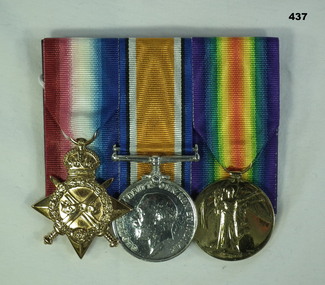
Award - MEDAL SET WW1, Post 1919
... Australian Army Nursing Service age 26 years, embarked for Eygpt 12.11.1915. Joins the B.E.F in Alexandria 26.3.1916, disembarks Marseilles 4.4.1916, hospital with Hay Fever 16.6.1917 later changed to Nasal Catarrh and then with Debility, rejoin unit 4.7.1917. From there she served in No 1 ACCS, 15 CCS and 10th SH. She was discharged from the AIF on her marriage to Capt S.O.Coen AAMC on 18.11.18. She had 5 brothers in the AIF, one DOW's and one awarded a DCM. 1ACCS (1st Aust Casualty Clearing Station...Australian Army Nursing Service age 26 years, embarked for Eygpt 12.11.1915. Joins the B.E.F in Alexandria 26.3.1916, disembarks Marseilles 4.4.1916, hospital with Hay Fever 16.6.1917 later changed to Nasal Catarrh and then with Debility, rejoin unit 4.7.1917. From there she served in No 1 ACCS, 15 CCS and 10th SH. She was discharged from the AIF on her marriage to Capt S.O.Coen AAMC on 18.11.18. She had 5 brothers in the AIF, one DOW's and one awarded a DCM. 1ACCS (1st Aust Casualty Clearing Station ...Frances Madge Killicoat (Born Burra Burra) Enlisted on 5.11.15 in the Australian Army Nursing Service age 26 years, embarked for Eygpt 12.11.1915. Joins the B.E.F in Alexandria 26.3.1916, disembarks Marseilles 4.4.1916, hospital with Hay Fever 16.6.1917 later changed to Nasal Catarrh and then with Debility, rejoin unit 4.7.1917. From there she served in No 1 ACCS, 15 CCS and 10th SH. She was discharged from the AIF on her marriage to Capt S.O.Coen AAMC on 18.11.18. She had 5 brothers in the AIF, one DOW's and one awarded a DCM. 1ACCS (1st Aust Casualty Clearing Station), 15 CCS (15th Casualty Clearing Station), 10th SH (10th Stationary Hospital)Medals, court Mounted, set of (3) Re Nurse- sister F. Killicoat. 1. 1914-15 Star. 2. War Medal 1914-18 3. Victory Medal 1914-191. "Nurse/Sister F.M Killicoat, ANS A.F 2. "S - Nurse F.M Killicoat A.I.F" 3. "Sister F.M Killicoat A.I.F"numismatics- medals- history, metalcraft -
 Geoffrey Kaye Museum of Anaesthetic History
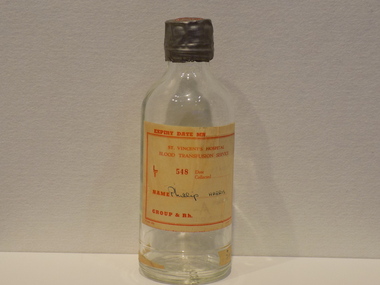
Container - Bottle, Blood transfusion
... Australian Army in 1916 as a medical officer with the rank of Captain. In 1918, Holmes á Court was promoted to Major and attached to the 4th Australian Field Ambulance on the Western Front. As the front advanced, the Casualty Clearing Stations...Australian Army in 1916 as a medical officer with the rank of Captain. In 1918, Holmes á Court was promoted to Major and attached to the 4th Australian Field Ambulance on the Western Front. As the front advanced, the Casualty Clearing Stations ...Dr Alan Holmes á Court enlisted in the Australian Army in 1916 as a medical officer with the rank of Captain. In 1918, Holmes á Court was promoted to Major and attached to the 4th Australian Field Ambulance on the Western Front. As the front advanced, the Casualty Clearing Stations became further removed from the battlefield, creating an urgent need for immediate resuscitation prior to transfer back to the CCS. In June 1918, Holmes a Court and his colleagues established a forward resuscitation team. The team consisted of one doctor trained in surgery, blood transfusion and resuscitation, another doctor trained in anaesthesia, resuscitation and blood classification, and four other assisting staff. This team moved out to the wounded, rather than waiting for them to be stretchered back. They provided on-the-spot, life-saving resuscitation. The wounded were then transported back to the Casualty Clearing Station or Regimental Aid Post for further treatment. Among the assorted surgical and resuscitation equipment carried by the forward resuscitation team, were a number of Kimpton-Brown flasks. Blood was collected from patients with minor injuries using the flask. It was then administered to those in need, after establishing their blood type. Citrated blood was introduced by the Americans in 1917. This allowed blood administration to be delayed for up to two hours but there were many problems with transport, storage and infection in these early experimental days.Round, clear glass bottle with white [discoloured] paper label, with red printed, and metal screw-top lid.Handwritten on white [discoloured] paper label: Phillip HARRIS Moulded into the top of the screw-top lid in red ink: RED CROSS BLOOD TRANSFUSION SERVICEblood transfusion, red cross, world war one -
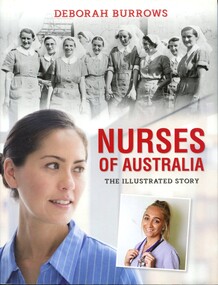 Alfred Hospital Nurses League - Nursing History Collection
Book - Illustrated book, Deborah Burrows 1959, Nurses of Australia: The illustrated story, 2018
... Title and authors name printed on front cover and spine (red ink on front and white ink on red background on spine) Background of front cover has three photographs: black and white photograph of a group of nurses (Malaya 1941 group portrait of Australian Army Nursing Service nurses of the 2/4th Casualty Clearing Station), colour photo of a nurse looking over her shoulder, and a coloured photo of an Indigenous nurse. ...Title and authors name printed on front cover and spine (red ink on front and white ink on red background on spine) Background of front cover has three photographs: black and white photograph of a group of nurses (Malaya 1941 group portrait of Australian Army Nursing Service nurses of the 2/4th Casualty Clearing Station), colour photo of a nurse looking over her shoulder, and a coloured photo of an Indigenous nurse. ...From the First Nation caregivers who healed, birthed and nursed for millennia to the untrained and ill-equipped convict men and women who cared for the sick in the fledgling colony of New South Wales, nursing has been practised in Australia since the beginning. It would take the arrival of a group of dedicated Irish nuns, followed by Florence Nightingale-trained nurses - and decades of constant and continuing campaigning - to transform nursing into what it is today: the most trusted profession in Australia. Nurses will recognise their own lived experience in stories about training days, nurses' quarters, changing uniforms, changing roles, the arrival of male nurses and current pathways to nursing. Produced in collaboration with the Australian College of Nursing and the Congress of Aboriginal and Torres Strait Islander Nurses and Midwives, with additional information provided by the Australian Nursing and Midwifery Federation, this is the story of nursing in Australia.Illustrated book. Title and authors name printed on front cover and spine (red ink on front and white ink on red background on spine) Background of front cover has three photographs: black and white photograph of a group of nurses (Malaya 1941 group portrait of Australian Army Nursing Service nurses of the 2/4th Casualty Clearing Station), colour photo of a nurse looking over her shoulder, and a coloured photo of an Indigenous nurse. The back cover has a summary of the book along with four coloured photographs: Portrait of a nun with constitution and quill (Sister Mary Augustine Aikenhead by Nicholas Joseph Cowley), A nurse in uniform with veil (Vivian Bull winkel 1941), an indigenous woman (Lois O'Donoghue) an enrolled nurse (Samuel Yenui)non-fictionFrom the First Nation caregivers who healed, birthed and nursed for millennia to the untrained and ill-equipped convict men and women who cared for the sick in the fledgling colony of New South Wales, nursing has been practised in Australia since the beginning. It would take the arrival of a group of dedicated Irish nuns, followed by Florence Nightingale-trained nurses - and decades of constant and continuing campaigning - to transform nursing into what it is today: the most trusted profession in Australia. Nurses will recognise their own lived experience in stories about training days, nurses' quarters, changing uniforms, changing roles, the arrival of male nurses and current pathways to nursing. Produced in collaboration with the Australian College of Nursing and the Congress of Aboriginal and Torres Strait Islander Nurses and Midwives, with additional information provided by the Australian Nursing and Midwifery Federation, this is the story of nursing in Australia.nurses-australia-history, nursing-australia-history -
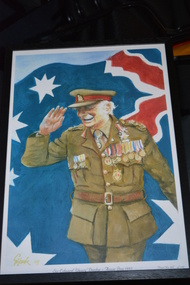 Wangaratta RSL Sub Branch
Print - Framed print, c1993
... Born 12 July 1907 Major Plains, Victoria Died 2 July 1993 (aged 85) Service/branch Australian Army Years of service 1935–1946 Rank Colonel Unit Royal Australian Army Medical Corps 2/2nd Casualty Clearing Station Commands held No.1 Allied General Hospital Battles/wars World War II Battle of Greece North African Campaign Syria-Lebanon campaign South West Pacific New Guinea Campaign South East Asia Campaign Awards Companion of the Order of Australia Knight Bachelor Companion of the Order of St Michael and St George Officer of the Order of the British Empire Knight of the Venerable Order of Saint John Mentioned in Despatches ...Born 12 July 1907 Major Plains, Victoria Died 2 July 1993 (aged 85) Service/branch Australian Army Years of service 1935–1946 Rank Colonel Unit Royal Australian Army Medical Corps 2/2nd Casualty Clearing Station Commands held No.1 Allied General Hospital Battles/wars World War II Battle of Greece North African Campaign Syria-Lebanon campaign South West Pacific New Guinea Campaign South East Asia Campaign Awards Companion of the Order of Australia Knight Bachelor Companion of the Order of St Michael and St George Officer of the Order of the British Empire Knight of the Venerable Order of Saint John Mentioned in Despatches colonel sir ernest edward dunlop "weary" dunlop surgeon Sir Edward "Weary" Dunlop - Anzac Day 1993 Print No 455 of 500 Black timber frame containing coloured caricature of saluting Army Officer with flag in background. ...Colonel Sir Ernest Edward "Weary" Dunlop, AC, CMG, OBE (Born at Wangaratta 12 July 1907 – 2 July 1993) was an Australian surgeon who was renowned for his leadership while being held prisoner by the Japanese during World War II. Born 12 July 1907 Major Plains, Victoria Died 2 July 1993 (aged 85) Service/branch Australian Army Years of service 1935–1946 Rank Colonel Unit Royal Australian Army Medical Corps 2/2nd Casualty Clearing Station Commands held No.1 Allied General Hospital Battles/wars World War II Battle of Greece North African Campaign Syria-Lebanon campaign South West Pacific New Guinea Campaign South East Asia Campaign Awards Companion of the Order of Australia Knight Bachelor Companion of the Order of St Michael and St George Officer of the Order of the British Empire Knight of the Venerable Order of Saint John Mentioned in Despatches Black timber frame containing coloured caricature of saluting Army Officer with flag in background.Sir Edward "Weary" Dunlop - Anzac Day 1993 Print No 455 of 500colonel sir ernest edward dunlop, "weary" dunlop, surgeon -
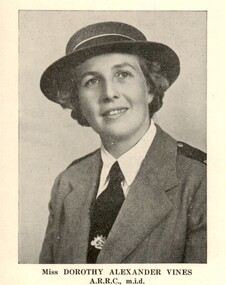 Melbourne Legacy
Article, Melbourne Legacy, Miss Dorothy Vines, 1955
... Australian Army Nursing Corps. At the beginning of 1940 she went to the Middle East and served as Senior Sister of No.1 Casualty Clearing Station and shortly afterwards was appointed Sister-in-charge of the No.3 Casualty Clearing Station. ...Australian Army Nursing Corps. At the beginning of 1940 she went to the Middle East and served as Senior Sister of No.1 Casualty Clearing Station and shortly afterwards was appointed Sister-in-charge of the No.3 Casualty Clearing Station. ...The newsletter from August 1955. It featured photos of the Legacy staff, including Miss Dorrie Vines the Matron of Stanhope. It summarises her life before joining Stanhope on 11 November 1946. She had served with distinction overseas during World War 2 as a Major with the Royal Australian Army Nursing Corps. At the beginning of 1940 she went to the Middle East and served as Senior Sister of No.1 Casualty Clearing Station and shortly afterwards was appointed Sister-in-charge of the No.3 Casualty Clearing Station. She returned to Australian in 1943 and was appointed Matron of a hospital in Alice Springs and in 1944 she again left Australia for New Guinea as Matron of the 2/11 Australian General Hospital. For her war service she was awarded the medal of an Associate of the Royal Red Cross in 1943 and was also mentioned in despatches. Miss Vines remained at Stanhope until her retirement in December 1966.Newsletter outlining news of Junior Legatee activities also occassionally contained information about staff.Black and white printed article about Miss Vines from Newsletter published August 1955. Volume 9 Number 2staff, residences, dorothy vines -
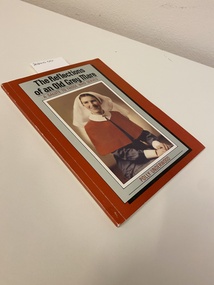 Returned Nurses RSL Sub-branch
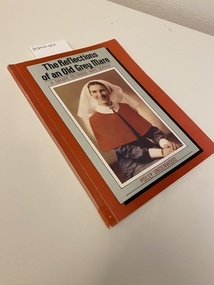
Book, Polly Underwood, The Reflections of an old grey mare : A salute to those who served
... Casualty clearing stations, ambulance trains. World War Two WW2 Finschhafen ambulance trains WWII A record of nursing service in the second world war, from enlistment to peace. 'Presented to the Returnded Nurses Club in memory of Captain E.W.(Tige) Lyon, AANS' [on glued in card - inside front cover] Soft cover, red and grey, containing a portrait of the author in army nurses' uniform. Australian ...A record of nursing service in the second world war, from enlistment to peace.Soft cover, red and grey, containing a portrait of the author in army nurses' uniform. Australian Army Nursing Service uniform. Back cover, white with a facsimile of the Instrument of Surrender.non-fictionA record of nursing service in the second world war, from enlistment to peace.world war two, ww2, finschhafen, ambulance trains, wwii -
 Returned Nurses RSL Sub-branch
Book, Polly Underwood, The Reflections of an old grey mare : A salute to those who served
... Casualty clearing stations, ambulance trains. World War Two WW2 Finschhafen ambulance trains WWII A record of nursing service in the second world war, from enlistment to peace. 'Presented to the Returnded Nurses Club in memory of Captain E.W.(Tige) Lyon, AANS' [on verso page] Soft cover, red and grey, containing a portrait of the author in army nurses' uniform. Australian ...A record of nursing service in the second world war, from enlistment to peace.Soft cover, red and grey, containing a portrait of the author in army nurses' uniform. Australian Army Nursing Service uniform. Back cover, white with a facsimile of the Instrument of Surrender.non-fictionA record of nursing service in the second world war, from enlistment to peace.world war two, ww2, finschhafen, ambulance trains, wwii -
 Returned Nurses RSL Sub-branch
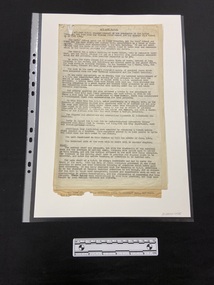
Document - Typed document, Sister J Langham, 2/3 Aust C.C.S
... An account of the 2/3 Austrailan Casualty Clearing Station (C.C.S.) in 1941-42 including information on staff, equipment, movements, patients, evacuations and conditions. Australian Army ...An account of the 2/3 Austrailan Casualty Clearing Station (C.C.S.) in 1941-42 including information on staff, equipment, movements, patients, evacuations and conditions.'2/3 AUST C.C.S.' typed and underlined at the top of the page followed by a full page of typed print. There are twelve pages in total, of varying sizes. 'by Sister J Langham' [Lightly written in pencil in the top right corner of the first page]australian army nurses, world war 1939-1945, ww2, wwii, 2/3 australian casual clearing station, jess langham -
 Returned Nurses RSL Sub-branch
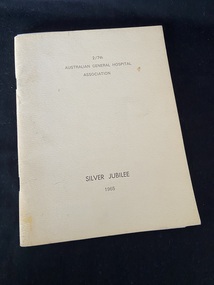
Booklet, 2/7th Australian General Hospital Assiciation, Silver Jubilee : 1965, 1965
... Contains a unit history (including anecdotes, but very precise about the order of events as the unit assembled), extracts from what appears to be the official unit diary (1/7/1940 - 24/12/1945), statistics for the 2/7th (May 1941- August 1945), List of hospitals on active service (including casualty clearing stations, camp hospitals 46 and 66, field ambulances and hospital ships).The booklet also contains a list of members of the 2/7th AGH Association, notes regarding AANS and AAMWS, and a list of appointmenta available in the AAMC (medical offices, pharmacists, etc.). 2/7th Australian General Hospital World War II medical care WW2 WWII 2/7th 'Foreword / The Australian Army Nursing Service, 1939-45. / Compiled by VFX 47777 / This small volume represents a brief account of the work done by its members, at home, and abroad.' ...Contains a unit history (including anecdotes, but very precise about the order of events as the unit assembled), extracts from what appears to be the official unit diary (1/7/1940 - 24/12/1945), statistics for the 2/7th (May 1941- August 1945), List of hospitals on active service (including casualty clearing stations, camp hospitals 46 and 66, field ambulances and hospital ships).The booklet also contains a list of members of the 2/7th AGH Association, notes regarding AANS and AAMWS, and a list of appointmenta available in the AAMC (medical offices, pharmacists, etc.).Cream coloured booklet with two staples. The title and author are typed in black ink on the cover.non-fiction'B88' [Handwritten in pencil on the first page] 2/7th australian general hospital, world war ii medical care, ww2, wwii, 2/7th
