
Showing 57 items matching "australian army - regimental histories"
-
 Monbulk RSL Sub Branch
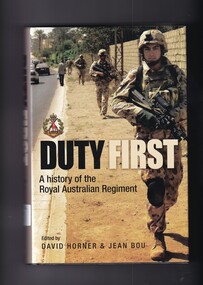
Book, Allen and Unwin, Duty first: A history of the Royal Australian Regiment
... ...australian army - regimental histories...australian army - royal australian regiment - history australian army - regimental histories A story of humour and courage, of professionalism, and above all dedication to duty, this is the official history of The Royal Australian Regiment. ...A story of humour and courage, of professionalism, and above all dedication to duty, this is the official history of The Royal Australian Regiment. "The Royal Australian Regiment, consisting initially of three battalions, formed at the end of World War 2. This "official history" was first published in 1990 and adds a detailed coverage of the activities of and developments in the regiment since 1990."--Provided by publisher. The Royal Australian Regiment, consisting initially of three battalions, has been the mainstay of the Australian Regular Army for over 60 years since its formation at the end of World War 2. Thisofficial history was first published in 1990 and adds a detailed coverage of the activities of and developments in the regiment since 1990. TitleIndex, bibliography, notes, appendices, ill (b/w), p.427.non-fictionA story of humour and courage, of professionalism, and above all dedication to duty, this is the official history of The Royal Australian Regiment. "The Royal Australian Regiment, consisting initially of three battalions, formed at the end of World War 2. This "official history" was first published in 1990 and adds a detailed coverage of the activities of and developments in the regiment since 1990."--Provided by publisher. The Royal Australian Regiment, consisting initially of three battalions, has been the mainstay of the Australian Regular Army for over 60 years since its formation at the end of World War 2. Thisofficial history was first published in 1990 and adds a detailed coverage of the activities of and developments in the regiment since 1990. Titleaustralian army - royal australian regiment - history, australian army - regimental histories -
 Monbulk RSL Sub Branch
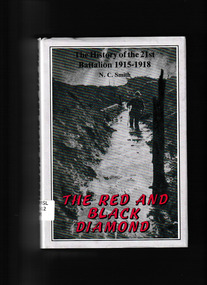
Book, Neil C Smith, The red and black diamond : the history of the 21st Battalion 1915-18, 1997
... australian army - 21st battalion...regimental histories...australian army - 21st battalion regimental histories - australia A listing of the roll, honours and awards and history of the 21st battallion during the first war index, ill, maps, p.291. ...A listing of the roll, honours and awards and history of the 21st battallion during the first warindex, ill, maps, p.291.non-fictionA listing of the roll, honours and awards and history of the 21st battallion during the first waraustralian army - 21st battalion, regimental histories - australia -
 Bendigo Military Museum
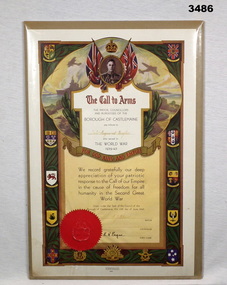
Certificate - BOROUGH OF CASTLEMAINE, FRAMED, Post WW2
... Army on 22.3.1946 ad a Pte in 2/1st Aust Gaurd Regt. documents - certificates military history - army civic mementoes Coloured certificate - The Call to Arms. From Borough of Castlemaine paying tribute to Leslie Raymond HUGHES who served in the World War 1939 - 1945. Top of certificate has a photo of King George between a Union Jack & Australian flag. Regimental ...Item relates to Leslie Raymond HUGHES. He initially enlisted in the CMF No V56193. Stationed in Geraldton he then transferred to the 2nd AIF No VX88615 age 23 years on 22.7.1942. He was discharged from the Army on 22.3.1946 ad a Pte in 2/1st Aust Gaurd Regt.Coloured certificate - The Call to Arms. From Borough of Castlemaine paying tribute to Leslie Raymond HUGHES who served in the World War 1939 - 1945. Top of certificate has a photo of King George between a Union Jack & Australian flag. Regimental badges are around the border & a red seal is bottom L. Signed by the Mayor, Councillor & Town Clerk. Certificate is attached to metal backing with heavy clear plastic.documents - certificates, military history - army, civic mementoes -
 Bendigo Military Museum
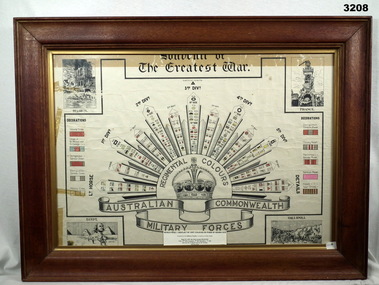
Poster - POSTER WW1,FRAMED, Bendigo Art Framing, Post WW1
... Saw service in Egypt and on the Somme 1915 - 1919. military history-army documents-posters Passchendaele Barracks Trust Printed top: “Souvenir of the Greatest War” Printed at bottom: “Australian Commonwealth Military Forces” Stamped on back: “Passchendaele Barracks Trust” Display of unit colours of WWI in the form of a Rising Sun. Printed on white background with drawings of Belgium, France, Gallipoli & Egypt in each corner. Decorations are listed each side of display. All decorations & unit badges are in regimental ...Item donated in the memory of Regt No 3188 Sgt John Joseph MILBURN, Unit 15th M G Company, 5th M G Battalion, 1st AIF. Saw service in Egypt and on the Somme 1915 - 1919.Display of unit colours of WWI in the form of a Rising Sun. Printed on white background with drawings of Belgium, France, Gallipoli & Egypt in each corner. Decorations are listed each side of display. All decorations & unit badges are in regimental colours. Display has glass front & brown wooden frame with gold inner edge, fawn cardboard backing.Printed top: “Souvenir of the Greatest War” Printed at bottom: “Australian Commonwealth Military Forces” Stamped on back: “Passchendaele Barracks Trust”military history-army, documents-posters, passchendaele barracks trust -
 Bendigo Military Museum
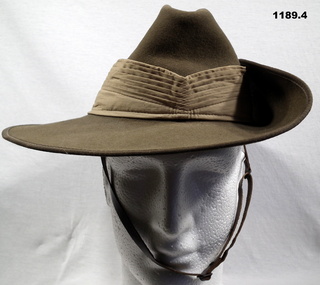
Uniform - ARMY UNIFORM, 4) est 1950
... history and details re his death. The uniform being winter dress remained in Australia as there was no need for this to go to Vietnam. Uniform slouch hat Army Reidy .4) “Reidy 3793403 6 3/8" .1) Jacket (Battle Dress winter) .2) Trousers (Battle dress winter) .3) Lanyard, red colour. .4) Slouch Hat with leather chin strap, cloth pugaree and brass regimental badge depicting a kangaroo with crossed rifles and wattle. .5) Braces Uniform ARMY UNIFORM Fayrefield ...The uniform was issued to Paul Francis Reidy No 3793403 National Serviceman KIA Vietnam. Refer Cat No 2526.2 for his service history and details re his death. The uniform being winter dress remained in Australia as there was no need for this to go to Vietnam..1) Jacket (Battle Dress winter) .2) Trousers (Battle dress winter) .3) Lanyard, red colour. .4) Slouch Hat with leather chin strap, cloth pugaree and brass regimental badge depicting a kangaroo with crossed rifles and wattle. .5) Braces.4) “Reidy 3793403 6 3/8"uniform, slouch hat, army, reidy -
 Monbulk RSL Sub Branch
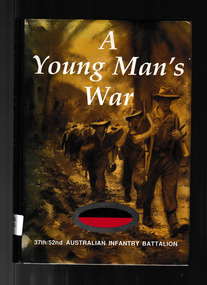
Book, 37/52 Australian Infantry Battalion Association, A young man's war : a history of the 37th/52nd Australian Infantry Battalion in World War Two : Battle honours South West Pacific 1943-1945, liberation of Australian New Guinea, Gusika -Fortification Point, 1992
... World war 1939-1945 - Regimental histories - Australia World War 1939-1945 - Campaigns - South West Pacific A history of the wartime experiences of the Australian Army 37th/52nd infantry battalions Index, ill, maps, p.428. ...A history of the wartime experiences of the Australian Army 37th/52nd infantry battalionsIndex, ill, maps, p.428.non-fictionA history of the wartime experiences of the Australian Army 37th/52nd infantry battalionsworld war 1939-1945 - regimental histories - australia, world war 1939-1945 - campaigns - south west pacific -
 Monbulk RSL Sub Branch
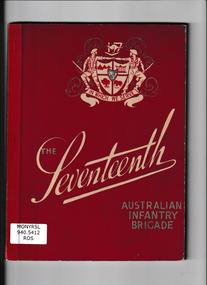
Book, 17 Australian Infantry Brigade, The Seventeenth Australian Infantry Brigade: a record of four years campaigning, 195?
... regimental histories - australiat australian army - 17th infantry brigade record of four years campaigning by the Seventeenth Australian Infantry Brigade Ill, p.144. ...record of four years campaigning by the Seventeenth Australian Infantry BrigadeIll, p.144.non-fiction record of four years campaigning by the Seventeenth Australian Infantry Brigaderegimental histories - australiat, australian army - 17th infantry brigade -
 Monbulk RSL Sub Branch
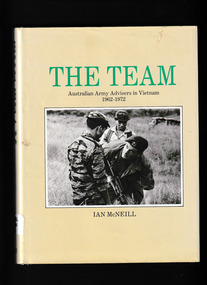
Book, The Team : Australian Army advisers in Vietnam 1962-1972, 1984
... Vietnam war 1961-1975 – Australian involvement Vietnam war 1961-1975 – Regimental histories - Australia the official history of the Australian army training team in Vietnam between 1962 and 1972 Index, bibliography, notes, ill, maps, p.534. ...the official history of the Australian army training team in Vietnam between 1962 and 1972Index, bibliography, notes, ill, maps, p.534.the official history of the Australian army training team in Vietnam between 1962 and 1972vietnam war 1961-1975 – australian involvement, vietnam war 1961-1975 – regimental histories - australia -
 Monbulk RSL Sub Branch
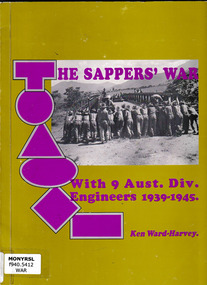
Book, Sakoga in conjunction with 9th Division RAE Association, The sappers' war with Ninth Australian Division Engineers 1939-1945, 1992
... Australian army - Engineers World war 1939-1945 - Regimental histories - Australia Traces the activities of the 9th Australian Division Engineers during World War Two Ill, maps, p.224. ...Traces the activities of the 9th Australian Division Engineers during World War TwoIll, maps, p.224.non-fictionTraces the activities of the 9th Australian Division Engineers during World War Twoaustralian army - engineers, world war 1939-1945 - regimental histories - australia -
 National Vietnam Veterans Museum (NVVM)
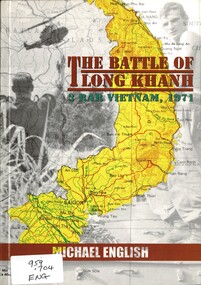
Book, English, Michael, The Battle of Long Khanh: 3 RAR, Vietnam, 1971, 1995
... Australia. Army. Battalion Vietnamese Conflict 1961- 1975 - Campaigns - Vietnam - Long Khanh (Province). Vietnamese Conflict 1961-1975 - Regimental histories - Australia 3 RAR Batle of Long Khanh Operation Overlord Born in Mount Gambier, South Australia, in 1951, Michael English was educated at Christian Brothers College. ...Born in Mount Gambier, South Australia, in 1951, Michael English was educated at Christian Brothers College. In 1968 he enlisted in the Regular Army, and served for six years with 3 RAR. This service included a ten-month tour of duty in Vietnam in 1971. Operation Overlord was one of the actions in which Michael was involved.Born in Mount Gambier, South Australia, in 1951, Michael English was educated at Christian Brothers College. In 1968 he enlisted in the Regular Army, and served for six years with 3 RAR. This service included a ten-month tour of duty in Vietnam in 1971. Operation Overlord was one of the actions in which Michael was involved.australia. army. battalion, vietnamese conflict , 1961- 1975 - campaigns - vietnam - long khanh (province)., vietnamese conflict, 1961-1975 - regimental histories - australia, 3 rar, batle of long khanh, operation overlord -
 National Vietnam Veterans Museum (NVVM)
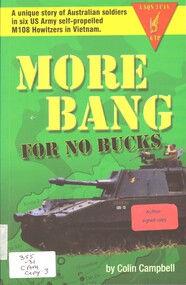
Book, Campbell, Colin, More Bang For No Bucks (Copy 3)
... Australia... Army... Cavalry Regiment... 3rd - History...Vietnamese Conflict... 1961-1975...Regimental...Australia Army Cavalry Regiment 3rd - History Vietnamese Conflict 1961-1975 Regimental Histories - Australia Howitzers The unique story of Australian armoured, artillery and infantry soldiers drawn together during the Vietnam War to form 6 Troop, A Squadron, 3rd Cavalry Regiment that served in six self-propelled M108 Howitzers, loaned at no cost from the US Army More Bang For No Bucks (Copy 3) Book Campbell, Colin ...The unique story of Australian armoured, artillery and infantry soldiers drawn together during the Vietnam War to form 6 Troop, A Squadron, 3rd Cavalry Regiment that served in six self-propelled M108 Howitzers, loaned at no cost from the US ArmyThe unique story of Australian armoured, artillery and infantry soldiers drawn together during the Vietnam War to form 6 Troop, A Squadron, 3rd Cavalry Regiment that served in six self-propelled M108 Howitzers, loaned at no cost from the US Armyaustralia, army, cavalry regiment, 3rd - history, vietnamese conflict, 1961-1975, regimental histories - australia, howitzers -
 National Vietnam Veterans Museum (NVVM)
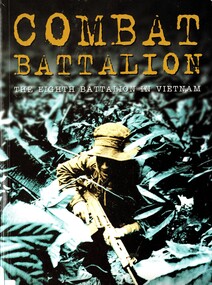
Book, Hall, Robert, Combat Battalion: The Eighth Battalion in Vietnam (Copy 3), 2000
... Australia. Army. Battalion Vietnamese Conflict 1961-1975 - Regimental histories - Australia. 8th Battalion This book explores the life of Australian infantrymen in the Vietnam War by focusing on the experience of the men of the Eighth Battalion during their 12 month tour at the height of the war. ...This book explores the life of Australian infantrymen in the Vietnam War by focusing on the experience of the men of the Eighth Battalion during their 12 month tour at the height of the war.This book explores the life of Australian infantrymen in the Vietnam War by focusing on the experience of the men of the Eighth Battalion during their 12 month tour at the height of the war.australia. army. battalion, vietnamese conflict, 1961-1975 - regimental histories - australia., 8th battalion -
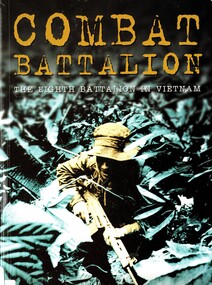 National Vietnam Veterans Museum (NVVM)
Book, Hall, Robert, Combat Battalion: The Eighth Battalion in Vietnam (Copy 1), 2000
... Australia. Army. Battalion 8th Vietnamese Conflict 1961-1975 - Regimental histories - Australia. ...This book explores the life of Australian infantrymen in the Vietnam War by focusing on the experience of the men of the Eighth Battalion during their 12 month tour at the height of the war.This book explores the life of Australian infantrymen in the Vietnam War by focusing on the experience of the men of the Eighth Battalion during their 12 month tour at the height of the war.australia. army. battalion, 8th, vietnamese conflict, 1961-1975 - regimental histories - australia. -
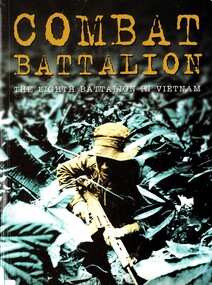 National Vietnam Veterans Museum (NVVM)
Book, Hall, Robert, Combat Battalion: The Eighth Battalion in Vietnam (Copy 2), 2000
... Australia. Army. Battalion 8th Vietnamese Conflict 1961-1975 - Regimental histories - Australia. ...This book explores the life of Australian infantrymen in the Vietnam War by focusing on the experience of the men of the Eighth Battalion during their 12 month tour at the height of the war.This book explores the life of Australian infantrymen in the Vietnam War by focusing on the experience of the men of the Eighth Battalion during their 12 month tour at the height of the war.australia. army. battalion, 8th, vietnamese conflict, 1961-1975 - regimental histories - australia. -
 National Vietnam Veterans Museum (NVVM)
Book, Year of the tigers: the second tour of 5th Battalion (Copy 3)
... Vietnam War 1961-1975 - Regimental histories - Australia Australia. Army. Battalion 5th Year of the tigers: the second tour of 5th Battalion (Copy 3) Book Book Battle, Captain M.R. ed. ...vietnam war, 1961-1975 - regimental histories - australia, australia. army. battalion, 5th -
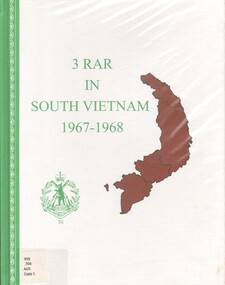 National Vietnam Veterans Museum (NVVM)
Book, Stuart, Major R. F.ed, 3 RAR in South Vietnam 1967-1968 (Copy 3)
... Australia. Army. Royal Australian Regiment. Battalion 3rd Vietnam War 1961-1975 - Regimental histories - Australia A record of the Operational Service of the Third Battalion, The Royal Australian Regiment in South Vietnam from 12th December 1967 - 20th November 1968 3 RAR in South Vietnam 1967-1968 (Copy 3) Book Book Stuart, Major R. ...A record of the Operational Service of the Third Battalion, The Royal Australian Regiment in South Vietnam from 12th December 1967 - 20th November 1968A record of the Operational Service of the Third Battalion, The Royal Australian Regiment in South Vietnam from 12th December 1967 - 20th November 1968 australia. army. royal australian regiment. battalion, 3rd, vietnam war, 1961-1975 - regimental histories - australia -
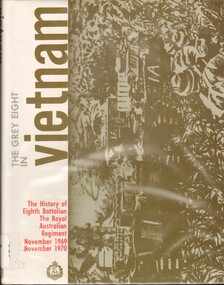 National Vietnam Veterans Museum (NVVM)
Book, Clunies Ross, A. ed, The Grey Eight in Vietnam: The history of Eighth Battalion, the Royal Australian Regiment, Nov 1969-Nov 1970 (Copy 2)
... Australia. Army. Battalion Vietnam War 1961-1975 - Regimental histories - Australia 8th Battalion Royal Australian Regiment The Australian and New Zealand part in the Vietnam War is sometimes overlooked, but it is generally accepted that the 'Diggers' and 'Kiwis' were among the most effective and professional troops involved. ...The Australian and New Zealand part in the Vietnam War is sometimes overlooked, but it is generally accepted that the 'Diggers' and 'Kiwis' were among the most effective and professional troops involved.The Australian and New Zealand part in the Vietnam War is sometimes overlooked, but it is generally accepted that the 'Diggers' and 'Kiwis' were among the most effective and professional troops involved. australia. army. battalion, vietnam war, 1961-1975 - regimental histories - australia, 8th battalion, royal australian regiment -
 National Vietnam Veterans Museum (NVVM)
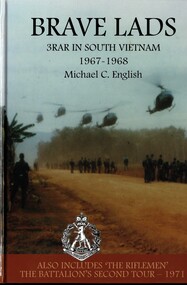
Book, English, Michael, Brave Lads: 3 RAR in South Vietnam 1967-1968
... Australia. Army. Battalion Vietnam War 1961-1975 -- Regimental histories -- Australia 3 RAR Brave lads is a long awaited unit history that fills a gap in the Australian military experence in South Vietnam Brave Lads: 3 RAR in South Vietnam 1967-1968 Book Book English, Michael ...Brave lads is a long awaited unit history that fills a gap in the Australian military experence in South VietnamBrave lads is a long awaited unit history that fills a gap in the Australian military experence in South Vietnamaustralia. army. battalion, vietnam war, 1961-1975 -- regimental histories -- australia, 3 rar -
National Vietnam Veterans Museum (NVVM)
Book, Twelve in focus: 12th Field Regiment in South Vietnam
... Australia. Army. Field Regiment 12th Vietnam War 1961-1975- Regimental histories - Australia Twelve in focus: 12th Field Regiment in South Vietnam Book Book Rickards, G. ed. ...australia. army. field regiment, 12th, vietnam war, 1961-1975- regimental histories - australia -
National Vietnam Veterans Museum (NVVM)
Book, Vietnam task: the 5th Battalion, the Royal Australian (Copy 3 swapped with copy 1 as it is in a better condition))
... Australia. Army. Royal Australian Regiment. Battalion 5th Vietnam War 1961-1975 - Regimental histories - Australia Vietnam task: the 5th Battalion, the Royal Australian (Copy 3 swapped with copy 1 as it is in a better condition)) Book Book O'Neill, Robert J. ...australia. army. royal australian regiment. battalion, 5th, vietnam war, 1961-1975 - regimental histories - australia -
National Vietnam Veterans Museum (NVVM)
Book, Long Tan and beyond: Alpha Company 6 RAR in Vietnam (Copy 1), 2006
... Australia. Army. Royal Australian Regiment. Battalion... 6th. Alpha Company - History...Vietnam War... 1961-1975 - Regimental...Australia. Army. Royal Australian Regiment. Battalion 6th. Alpha Company - History Vietnam War 1961-1975 - Regimental histories - Australia Long Tan and beyond: Alpha Company 6 RAR in Vietnam (Copy 1) Book Book Mollison, Charles ...australia. army. royal australian regiment. battalion, 6th. alpha company - history, vietnam war, 1961-1975 - regimental histories - australia -
 National Vietnam Veterans Museum (NVVM)
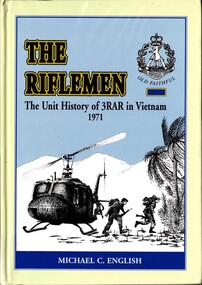
Book, English, Michael, The Riflemen: The Unit history of 3RAR in Vietnam 1971
... Australia. Army. Battalion Vietnam War 1961-1975- Regimental histories - Australia 3 RAR Despite the problems, 3 RAR finished its tour able to hold its head high, having shown a high level of professionalism in its acions agains everclusive enemy. ...Despite the problems, 3 RAR finished its tour able to hold its head high, having shown a high level of professionalism in its acions agains everclusive enemy.Despite the problems, 3 RAR finished its tour able to hold its head high, having shown a high level of professionalism in its acions agains everclusive enemy.australia. army. battalion , vietnam war, 1961-1975- regimental histories - australia, 3 rar -
 National Vietnam Veterans Museum (NVVM)
Book, Servos, Michael, The Royal Australian Regiment 50th anniversary 1948-1998 (Copy 1)
... Australia. Army. Royal Australian Regiment - History...Australia. Army - Regimental...Australia. Army. Royal Australian Regiment - History Australia. Army - Regimental histories This book was compiled by the National Committee of 3 RAR Association (Qld Faithful) Inc. to commemorate the 50th anniversary of The Regiment. ...This book was compiled by the National Committee of 3 RAR Association (Qld Faithful) Inc. to commemorate the 50th anniversary of The Regiment.This book was compiled by the National Committee of 3 RAR Association (Qld Faithful) Inc. to commemorate the 50th anniversary of The Regiment. australia. army. royal australian regiment - history, australia. army - regimental histories -
 National Vietnam Veterans Museum (NVVM)
Book, Servos, Michael, The Royal Australian Regiment 50th Anniversary 1948-1998 (Copy 2)
... Australia. Army. Royal Australian Regiment - History...Australia. Army - Regimental...Australia. Army. Royal Australian Regiment - History Australia. Army - Regimental histories 3 RAR This book was compiled by the National Committee of 3 RAR Association (Qld Faithful) Inc. to commemorate the 50th anniversary of The Regiment. ...This book was compiled by the National Committee of 3 RAR Association (Qld Faithful) Inc. to commemorate the 50th anniversary of The Regiment.This book was compiled by the National Committee of 3 RAR Association (Qld Faithful) Inc. to commemorate the 50th anniversary of The Regiment. australia. army. royal australian regiment - history, australia. army - regimental histories, 3 rar -
 National Vietnam Veterans Museum (NVVM)
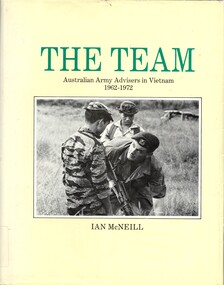
Book, McNeill, Ian, The Team: Australian Army Advisers in Vietnam 1962 - 1972 (Copy 1)
... Australia. Army. Australian Army Training Team Vietnam War 1961-1975 - Regimental histories - Australia AATTV Saig Saigon Inerest in the vietnam War has focussed on its global significance and on the domestic political responses which the war engendered. ...Inerest in the vietnam War has focussed on its global significance and on the domestic political responses which the war engendered.Inerest in the vietnam War has focussed on its global significance and on the domestic political responses which the war engendered.australia. army. australian army training team, vietnam war, 1961-1975 - regimental histories - australia, aattv, saig, saigon -
National Vietnam Veterans Museum (NVVM)
Book, The 33rd Regiment - North Vietnamese Army: their history (1965 - 1989) (Copy 2), 2017
... Vietnam War 1961-1975 -- Participation Australian Vietnam War 1961-1975 -- Campaigns Vietnam War 1961-1975 -- Regimental histories Including the Battles of Binh Ba - 1969 & Nui Le -1971). The 33rd Regiment - North Vietnamese Army ...Including the Battles of Binh Ba - 1969 & Nui Le -1971).vietnam war, 1961-1975 -- participation, australian, vietnam war, 1961-1975 -- campaigns, vietnam war, 1961-1975 -- regimental histories -
 National Vietnam Veterans Museum (NVVM)
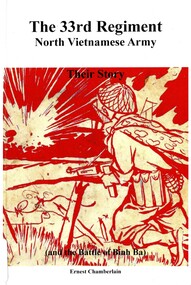
Book, Chamberlain, Ernest, The 33rd Regiment - North Vietnamese Army: Their history (1965 - 1989) (including the Battles of Binh Ba - 1969 and Nui Le -1971 (Copy 3), 2017
... 1961-1975 -- Participation Australian Vietnam War 1961-1975 -- Campaigns Vietnam War 1961-1975 -- Regimental histories The story of the 33rd Regiment North Vietnamese Army The 33rd Regiment - North Vietnamese Army: Their history (1965 - 1989) (including the Battles of Binh Ba - 1969 and Nui Le -1971 (Copy 3). ...The story of the 33rd Regiment North Vietnamese ArmyThe story of the 33rd Regiment North Vietnamese Army 1961-1975 -- participation, australian, vietnam war, 1961-1975 -- campaigns, vietnam war, 1961-1975 -- regimental histories -
National Vietnam Veterans Museum (NVVM)
Book, 107th Field Battery: Royal Australian Artillery
... Australia. Army. Field Battery 107th Vietnam War 1961-1975 - Regimental histories - Australia 107th Field Battery: Royal Australian Artillery Book Book Feakes, Warren ...australia. army. field battery, 107th, vietnam war, 1961-1975 - regimental histories - australia -
National Vietnam Veterans Museum (NVVM)
Book, 3 RAR in South Vietnam 1967-1968 (Copy 2)
... Australia. Army. Royal Australian Regiment. Battalion 3rd Vietnam War 1961-1975 - Regimental histories - Australia 3 RAR in South Vietnam 1967-1968 (Copy 2) Book Book Stuart, Major R. ...australia. army. royal australian regiment. battalion, 3rd, vietnam war, 1961-1975 - regimental histories - australia -
 National Vietnam Veterans Museum (NVVM)
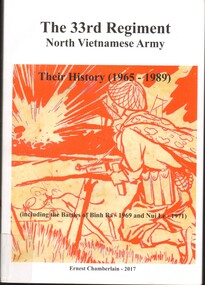
Book, Chamberlain, Ernest, The 33rd Regiment - North Vietnamese Army: Their history (1965 - 1989) (including the Battles of Binh Ba - 1969 and Nui Le -1971 (Copy 2), 2017
... 1961-1975 -- Participation Australian 1961-1975 -- Campaigns Vietnam War 1961-1975 -- Regimental histories Battle of Binh Ba Battle Of Nui Le An important aspect worth recognising is that the book has been able to give expression to the deep gratitude, sentiment, spirit of camaraderie, and sacred companionship towards the Regiment's almost 4,000 martyrs that bravely fought, shed their blood and died - offering up their lives for the Nation's independence and freedom. Including the Battles of Binh Ba - 1969 & Nui Le -1971). The 33rd Regiment - North Vietnamese Army ...An important aspect worth recognising is that the book has been able to give expression to the deep gratitude, sentiment, spirit of camaraderie, and sacred companionship towards the Regiment's almost 4,000 martyrs that bravely fought, shed their blood and died - offering up their lives for the Nation's independence and freedom.Including the Battles of Binh Ba - 1969 & Nui Le -1971).An important aspect worth recognising is that the book has been able to give expression to the deep gratitude, sentiment, spirit of camaraderie, and sacred companionship towards the Regiment's almost 4,000 martyrs that bravely fought, shed their blood and died - offering up their lives for the Nation's independence and freedom. 1961-1975 -- participation, australian, 1961-1975 -- campaigns, vietnam war, 1961-1975 -- regimental histories, battle of binh ba, battle of nui le
