
Showing 25 items matching "australian book industry award"
-
 Eltham District Historical Society Inc
Document - Folder, Wright, Alexis
... ...Australian Book Industry Award...awards. Alexis Wright "Carpentaria" book Australian Book Industry Award Australian Literature Society Gold Medal Waanyi people Victorian Premier's Literary Awards Vance Palmer Prize for Fiction Miles Franklin Award Danielle Clode Nettie Palmer Award "Voyages to the South Seas" book Karen Sparnon "Madonna in the Eucalypts" book Grollo Ruzzene Foundation Prize Newspaper clippings, A4 photocopies, etc Wright, Alexis Document Folder ...Writer Alexis Wright lived in Eltham. Contents Newspaper article: "Stream of wins to Eltham writer", Diamond Valley Leader, 3 August 2009. Awards for "Carpentaria" by Alexis Wright. Newspaper article: "Authors rewarded", Diamond Valley Leader, 19 September 2007. Three Diamond Valley writers won awards.Newspaper clippings, A4 photocopies, etcalexis wright, "carpentaria" book, australian book industry award, australian literature society gold medal, waanyi people, victorian premier's literary awards, vance palmer prize for fiction, miles franklin award, danielle clode, nettie palmer award, "voyages to the south seas" book, karen sparnon, "madonna in the eucalypts" book, grollo ruzzene foundation prize -
Federation University Historical Collection
Book, Ansett Australia Victorian Tourism Awards - University of Ballarat, 1999
... A Submission to Tourism Victoria for the 1999 Ansett Australia Victorian Tourism Awards - Industry Education Category by Centre for Tourism University of Ballarat. history and nature of our business business success contribution to the development of tourism at the local, regional and state levels raising professionalism in the tourism industry michael pearlman jane picken wendy liddell arden joseph mary hollick alex ruggero kendall airlines john simos sandra leach monika heim jeff floyd jacqueline turner nicole tangey andrew duncan deidre k. giblin robert edwards anne saunders jenny nemeth alice mills nicole mackley luis m diamonon david riley olivia hazledine tourism victoria jenny meaney belinda pearce peter freund kerry kyriacou mary hickey ulla hiltula ken hore tracey hull tom smith liz seymon meryl hodgson rosie king gerard ballantyne emma cottis david dunoon customer service Ansett tourism awards White soft covered book of 24 pages and attachments. Ansett Australia ...A Submission to Tourism Victoria for the 1999 Ansett Australia Victorian Tourism Awards - Industry Education Category by Centre for Tourism University of Ballarat.White soft covered book of 24 pages and attachments.history and nature of our business, business success, contribution to the development of tourism at the local, regional and state levels, raising professionalism in the tourism industry, michael pearlman, jane picken, wendy liddell, arden joseph, mary hollick, alex ruggero, kendall airlines, john simos, sandra leach, monika heim, jeff floyd, jacqueline turner, nicole tangey, andrew duncan, deidre k. giblin, robert edwards, anne saunders, jenny nemeth, alice mills, nicole mackley, luis m diamonon, david riley, olivia hazledine, tourism victoria, jenny meaney, belinda pearce, peter freund, kerry kyriacou, mary hickey, ulla hiltula, ken hore, tracey hull, tom smith, liz seymon, meryl hodgson, rosie king, gerard ballantyne, emma cottis, david dunoon, customer service, ansett, tourism awards -
Federation University Historical Collection
Book - Book - Scrapbook, Ballarat Institute of Advanced Education: Scrapbook of newspaper cutting, Book 6; December 1971 to May 1972
... The cuttings cover the period from 12 December 1971 to 1 May 1972. ballarat institute of advanced education biae employment advertisements application for enrolment outline of courses victorian institute of colleges staff association jack barker sees danger fourth university use up funds technical teachers at annual conference professor at seminar middle courses needed in engineering field 1973 for biae library student poster to sovereign hill john crebbin graeme trevena gary murphy group leadership is important mr kevin murray pollution threat to biae at mt helen $300000 for biae student housing academic registrar for institute decision on mt helen clay pit a l mckenzie president japanese exchange group in ballarat study grant for metallurgist planners agree on fourth uni pmg training at institute melbourne site recommended fourth uni should reach out leaders slate report pressure from country - fourth uni gates to be removed - former gaol 60 year old fleece found john sharrock youth is his thing industry shows lack of interest great blow to decentralisation develop flexibility advise to chemical society australian science education project fourth uni not wanted - councillor biae library taking shape $500 scholarship to anne mills bush their classroom smb cabaret ball greg govan - pottery student prize commemorates early industrialists e j tippett apprenticeship prize daryl eason athletics champion goon's giftthrough ballarat technical teachers at protest meeting stock exchange award to anne mills chamber of manufactures scholarship to david ward arblaster award for smb new course - bachelor of applied science in metallurgy Book with orange cover, front. ...Newspaper cuttings relating to Ballarat Institute of Advanced Education. These are from various newspapers and include The Age, Ballarat Courier, The Australian, The Herald. The cuttings cover the period from 12 December 1971 to 1 May 1972. Book with orange cover, front. Spiral bound.ballarat institute of advanced education, biae, employment advertisements, application for enrolment, outline of courses, victorian institute of colleges staff association, jack barker sees danger, fourth university use up funds, technical teachers at annual conference, professor at seminar, middle courses needed in engineering field, 1973 for biae library, student poster to sovereign hill, john crebbin, graeme trevena, gary murphy, group leadership is important, mr kevin murray, pollution threat to biae at mt helen, $300000 for biae student housing, academic registrar for institute, decision on mt helen clay pit, a l mckenzie president, japanese exchange group in ballarat, study grant for metallurgist, planners agree on fourth uni, pmg training at institute, melbourne site recommended, fourth uni should reach out, leaders slate report, pressure from country - fourth uni, gates to be removed - former gaol, 60 year old fleece found, john sharrock, youth is his thing, industry shows lack of interest, great blow to decentralisation, develop flexibility advise to chemical society, australian science education project, fourth uni not wanted - councillor, biae library taking shape, $500 scholarship to anne mills, bush their classroom, smb cabaret ball, greg govan - pottery student, prize commemorates early industrialists, e j tippett apprenticeship prize, daryl eason athletics champion, goon's giftthrough ballarat, technical teachers at protest meeting, stock exchange award to anne mills, chamber of manufactures scholarship to david ward, arblaster award for smb, new course - bachelor of applied science in metallurgy -
Marysville & District Historical Society
THE TRIANLGE NEWS-VOL 40 NO 37-SEPTEMBER 27 2013
... marysville victoria australia narbethong fire brigade alexandra group training exercise marysville primary school netball team tigers note from editor what's on when in october buxton progress assocn agm marysville & district football & netball club agm marysville community market creative triangle murrindindi shire council payment of rate instalments celebrate senior's week triangle community dinner el kanah village church notices breakfast all for men intrepid triangle bushwalkers mayor's chair great victorian rail trail marketing opportunities marysville golf report expressions of interest advertisements 2013 open gardens the salvation army funding available 2009 bushfire relief dalton fiske foundation grant buxton hotel taste of italy pasta night local bus tours real estate marysville triangle community men's shed agm victorian senior's festival afternoon tea dance lions triangle tool library community safety a priority for council heart foundation walkers wanted art show kinglake amnesty supports fire prevention efforts australian centre for grief and bereavement australia day award nominations renewal of wildlife licence department of environment & primary industries narbethong history group narbethong hall book launch black spur inn tradie meal & stay deal road management plan review highlights works priorities office manager camp marysville sixteenth annual steam and wood show taggerty dance on again casual situation vacant in triangle area marysville & district kindergarten assocn preschool centre open & enrolment day buxton recreation reserve working bee the committee of management of the gallipoli park precinct leadership course funded by bendigo bank THE TRIANLGE NEWS-VOL 40 NO 37-SEPTEMBER 27 2013 ...marysville, victoria, australia, narbethong fire brigade, alexandra group training exercise, marysville primary school netball team tigers, note from editor, what's on when in october, buxton progress assocn agm, marysville & district football & netball club agm, marysville community market, creative triangle, murrindindi shire council payment of rate instalments, celebrate senior's week, triangle community dinner, el kanah village, church notices, breakfast all for men, intrepid triangle bushwalkers, mayor's chair, great victorian rail trail marketing opportunities, marysville golf report, expressions of interest, advertisements, 2013 open gardens, the salvation army, funding available, 2009 bushfire relief, dalton fiske foundation grant, buxton hotel taste of italy pasta night, local bus tours, real estate, marysville triangle community men's shed agm, victorian senior's festival, afternoon tea dance, lions triangle tool library, community safety a priority for council, heart foundation walkers wanted, art show kinglake, amnesty supports fire prevention efforts, australian centre for grief and bereavement, australia day award nominations, renewal of wildlife licence, department of environment & primary industries, narbethong history group, narbethong hall book launch, black spur inn tradie meal & stay deal, road management plan review highlights works priorities, office manager camp marysville, sixteenth annual steam and wood show, taggerty dance on again, casual situation vacant in triangle area, marysville & district kindergarten assocn, preschool centre open & enrolment day, buxton recreation reserve working bee, the committee of management of the gallipoli park precinct, leadership course funded by bendigo bank -
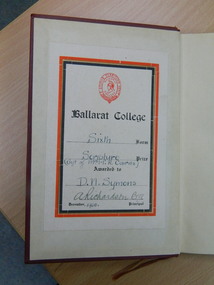 Ballarat Clarendon College
Book, Charles George Gordon
... Awarded to Donald Neil Symons for excellence in Scripture during his final year at Ballarat College. Neil was educated at Ballarat College (Dux 1933) and Ormond College, Melbourne University. He became a Clothing industry leader and was Fletcher Jones' distinguished successor as chief executive of the FJ organisation, and a prominent advocate for the Australian textile and clothing industries, decentralised industry and government support of employee share ownership schemes. donald-neil-symons fletcher-jones cairns Book plate inside front covers: school crest / Ballarat College / Sixth Form / Scripture Prize / (Gift of Mrs T R Cairns) / Awarded to / D N Symons / A Richardson, BA / December 1930 Principal Small, maroon leather-bound book with gold title and detailing on spine and gold school crest on front cover; plain endpapers; bookplate inside front cover. ...Awarded to Donald Neil Symons for excellence in Scripture during his final year at Ballarat College. Neil was educated at Ballarat College (Dux 1933) and Ormond College, Melbourne University. He became a Clothing industry leader and was Fletcher Jones' distinguished successor as chief executive of the FJ organisation, and a prominent advocate for the Australian textile and clothing industries, decentralised industry and government support of employee share ownership schemes. Small, maroon leather-bound book with gold title and detailing on spine and gold school crest on front cover; plain endpapers; bookplate inside front cover.Book plate inside front covers: school crest / Ballarat College / Sixth Form / Scripture Prize / (Gift of Mrs T R Cairns) / Awarded to / D N Symons / A Richardson, BA / December 1930 Principaldonald-neil-symons, fletcher-jones, cairns -
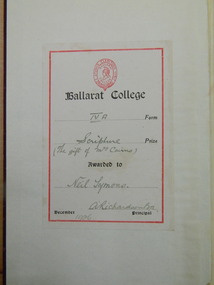 Ballarat Clarendon College
Book, Paul the ambassador: the life story of the great apostle re-told for young people
... Awarded to Donald Neil Symons for excellence in Scripture during 1926 at Ballarat College. Neil was educated at Ballarat College (Dux 1933) and Ormond College, Melbourne University. He became a Clothing industry leader and was Fletcher Jones' distinguished successor as chief executive of the FJ organisation, and a prominent advocate for the Australian textile and clothing industries, decentralised industry and government support of employee share ownership schemes. donald-neil-symons cairns scripture book prize Bookplate inside front cover:School crest / Ballarat College / IVA Form / Scripture Prize / (The gift of Mrs Cairns) / Awarded to / Neil Symons / A Richardson BA / December 1926 Principal Thick, maroon leather-bound book with gold lettering on spine, black wording and detail and gold school crest on front cover; bookplate inside front cover Paul the ambassador: the life story of the great apostle re-told for young people Book ...Awarded to Donald Neil Symons for excellence in Scripture during 1926 at Ballarat College. Neil was educated at Ballarat College (Dux 1933) and Ormond College, Melbourne University. He became a Clothing industry leader and was Fletcher Jones' distinguished successor as chief executive of the FJ organisation, and a prominent advocate for the Australian textile and clothing industries, decentralised industry and government support of employee share ownership schemes.Thick, maroon leather-bound book with gold lettering on spine, black wording and detail and gold school crest on front cover; bookplate inside front coverBookplate inside front cover:School crest / Ballarat College / IVA Form / Scripture Prize / (The gift of Mrs Cairns) / Awarded to / Neil Symons / A Richardson BA / December 1926 Principaldonald-neil-symons, cairns, scripture, book prize -
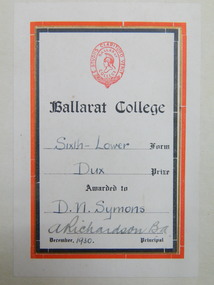 Ballarat Clarendon College
Book, The land that is desolate: an account of a tour in Palestine
... He became a Clothing industry leader and was Fletcher Jones' distinguished successor as chief executive of the FJ organisation, and a prominent advocate for the Australian textile and clothing industries, decentralised industry and government support of employee share ownership schemes. donald-neil-symons dux 1930s fletcher jones Bookplate inside front cover: School crest / Ballarat College / Sixth-Lower Form / Dux Prize / Awarded to / D N Symons / A Richardson BA / December 1930 Principal Medium-sized, maroon, leather-bound book with gold-lettering and decoration on spine and gold school crest on front cover; bookplate inside front cover The land that is desolate: an account of a tour in Palestine Book ...Awarded to Donald Neil Symons for excellence in Scripture during 1926 at Ballarat College. Neil was educated at Ballarat College (Dux 1933) and Ormond College, Melbourne University. He became a Clothing industry leader and was Fletcher Jones' distinguished successor as chief executive of the FJ organisation, and a prominent advocate for the Australian textile and clothing industries, decentralised industry and government support of employee share ownership schemes.Medium-sized, maroon, leather-bound book with gold-lettering and decoration on spine and gold school crest on front cover; bookplate inside front coverBookplate inside front cover: School crest / Ballarat College / Sixth-Lower Form / Dux Prize / Awarded to / D N Symons / A Richardson BA / December 1930 Principaldonald-neil-symons, dux, 1930s, fletcher jones -
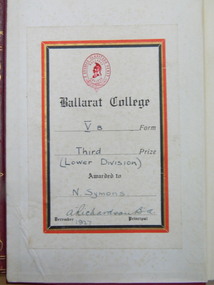 Ballarat Clarendon College
Book, Redgauntlet
... Awarded to Donald Neil Symons for excellence in Scripture during 1926 at Ballarat College. Neil was educated at Ballarat College (Dux 1933) and Ormond College, Melbourne University. He became a Clothing industry leader and was Fletcher Jones' distinguished successor as chief executive of the FJ organisation, and a prominent advocate for the Australian textile and clothing industries, decentralised industry and government support of employee share ownership schemes. donald-neil-symons fletcher jones 1920s book prize Book plate inside front cover: School crest / Ballarat College / Third Prize / (Lower division) / Awarded to / N Symons / A Richardson BA / December 1927 Principal Small, maroon, leather-bound book with gold lettering and detail on spine and gold crest on front cover; book plate inside front cover Redgauntlet Book ...Awarded to Donald Neil Symons for excellence in Scripture during 1926 at Ballarat College. Neil was educated at Ballarat College (Dux 1933) and Ormond College, Melbourne University. He became a Clothing industry leader and was Fletcher Jones' distinguished successor as chief executive of the FJ organisation, and a prominent advocate for the Australian textile and clothing industries, decentralised industry and government support of employee share ownership schemes.Small, maroon, leather-bound book with gold lettering and detail on spine and gold crest on front cover; book plate inside front coverBook plate inside front cover: School crest / Ballarat College / Third Prize / (Lower division) / Awarded to / N Symons / A Richardson BA / December 1927 Principaldonald-neil-symons, fletcher jones, 1920s, book prize -
 Bendigo Historical Society Inc.
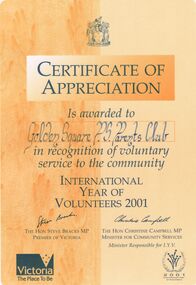
Document - GOLDEN SQUARE PRIMARY SCHOOL COLLECTION: CERTFICATES OF APPRECIATION
... Awards from International Year of Volunteers 2001; Loddon Campaspe Multicultural Services; Bendigo RSL; Indigenous Literacy Foundation; jeans for Genes; Generals Basketball Club; Melbourne City Mission; Anti-Cancer Council; Juvenile Diabetes Research Foundation; MS Readathon, State Schools Relief Committee; Clean up Australia; Family Support Services, Parents Victoria; Good Friday appeal; Victoria Police Historical Society; Jump rope for Heart; Safety House Committee; Starlight foundation; City of Greater Bendigo Olympic Torch Relay; Camp Quality; Zone Football Carnival, School's Garden Awards; Heart Foundation; Target; Scholastic Book Club; School Industry Partnership Project; Royal Flying Doctor Service; Juvenile Diabetes Foundation; McDonald Camp Quality Puppets; Neighbourhood Watch; Centenary of Federation medallion certificate; Derby Hill Camp....Awards from International Year of Volunteers 2001; Loddon Campaspe Multicultural Services; Bendigo RSL; Indigenous Literacy Foundation; jeans for Genes; Generals Basketball Club; Melbourne City Mission; Anti-Cancer Council; Juvenile Diabetes Research Foundation; MS Readathon, State Schools Relief Committee; Clean up Australia; Family Support Services, Parents Victoria; Good Friday appeal; Victoria Police Historical Society; Jump rope for Heart; Safety House Committee; Starlight foundation; City of Greater Bendigo Olympic Torch Relay; Camp Quality; Zone Football Carnival, School's Garden Awards; Heart Foundation; Target; Scholastic Book Club; School Industry Partnership Project; Royal Flying Doctor Service; Juvenile Diabetes Foundation; McDonald Camp Quality Puppets; Neighbourhood Watch; Centenary of Federation medallion certificate; Derby Hill Camp. ...42 Certificates of appreciation/participation awarded to Golden Square Primary School Parents' Club, students and teachers. Awards from International Year of Volunteers 2001; Loddon Campaspe Multicultural Services; Bendigo RSL; Indigenous Literacy Foundation; jeans for Genes; Generals Basketball Club; Melbourne City Mission; Anti-Cancer Council; Juvenile Diabetes Research Foundation; MS Readathon, State Schools Relief Committee; Clean up Australia; Family Support Services, Parents Victoria; Good Friday appeal; Victoria Police Historical Society; Jump rope for Heart; Safety House Committee; Starlight foundation; City of Greater Bendigo Olympic Torch Relay; Camp Quality; Zone Football Carnival, School's Garden Awards; Heart Foundation; Target; Scholastic Book Club; School Industry Partnership Project; Royal Flying Doctor Service; Juvenile Diabetes Foundation; McDonald Camp Quality Puppets; Neighbourhood Watch; Centenary of Federation medallion certificate; Derby Hill Camp.bendigo, education, golden square primary school -
National Wool Museum
Book, Farmers and settlers industrial association: log of claims for pastoral industry award
... industry award" -A R Johnson, Farmers and Settlers Industrial Association, to Australian Workers Union. Agriculture - industrial relations Labour Movement - Australia Shearing Shearing sheds Sheep stations - management Stockmen Australian Workers' Union Farmers and Settlers Industrial Association Agriculture - industrial relations Labour Movement - Australia Shearing Shearing sheds Sheep stations - management Stockmen Farmers and settlers industrial association: log of claims for pastoral industry award Book ..."Log of claims for pastoral industry award" -A R Johnson, Farmers and Settlers Industrial Association, to Australian Workers Union.agriculture - industrial relations labour movement - australia shearing shearing sheds sheep stations - management stockmen, australian workers' union farmers and settlers industrial association, agriculture - industrial relations, labour movement - australia, shearing, shearing sheds, sheep stations - management, stockmen -
 National Wool Museum
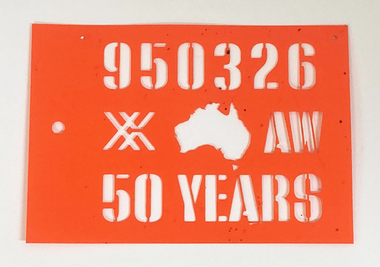
Tool - Stencil, c.2018
... awarded by the Australian Wool Exchange (AWEX). This is a rare honour achieved by few. As of February 2020, a total of 430 wool classers had achieved this 50-year milestone. For Denis however, his proudest achievement is achieving 90 years of wool classing with his father. The National Wool Museum is proud to share the collection of objects gained from 90 years in the wool classing industry by Stanley and Denis. This ranges from Stanley’s first stencil and Wool Sample book...awarded by the Australian Wool Exchange (AWEX). This is a rare honour achieved by few. As of February 2020, a total of 430 wool classers had achieved this 50-year milestone. For Denis however, his proudest achievement is achieving 90 years of wool classing with his father. The National Wool Museum is proud to share the collection of objects gained from 90 years in the wool classing industry by Stanley and Denis. This ranges from Stanley’s first stencil and Wool Sample book ...The story of 90 years of wool classing between father & son begins in 1936, when a young boy by the name of Stanley James Hucker walked through the doors of the Gordon Technical School in Geelong. Born in 1921, Stanley was 15 years of age when he began his 3-year course in Wool Classing. 30 years later, Stanley’s second son Denis completed the same 3-year wool classing course. Beginning in 1966, Denis attended the same Gordon Technical School and walked the same halls as his father before him. Stanley finished his course in 1938. He went back to the family farm in Lake Bolac for a brief period before enrolling in the Second World War. At the completion of the war, Stanley returned home and married before gaining a soldier settler allotment, north of Willaura. This enabled Stan to use his wool classing knowledge. He ran between 1,500 and 2,000 sheep for many years, while his wool classer stencil also allowed him to go out and class at various sheds around the area. He held his stencil from 1938 until he retired at the age of 60 in 1981. On retirement, his second son Denis was working in the district, managing a local property while also leasing land himself. Upon his father’s retirement, Denis had the opportunity to lease his father’s farm, an opportunity he could not refuse. Denis had finished his wool classing course at the Gordon Technical School in 1968, graduating dux of his class. He began working with a local contractor and started classing wool in his team. Denis gained a great deal of experience working as part of this team in big sheds of up to 8 stands servicing between 10 & 20,000 sheep. It was not all smooth sailing for Denis however, and he soon learnt an important lesson. Class wool the way you’re taught, don’t listen to the owner standing over your shoulder. At a clip of Corriedales near Casterton, Denis was pushing too many fleeces into the line of fine wool. This resulted in a notice from the Australian Wool Exchange (AWEX) “mixing counts too much, submit three clips for inspection”. Denis was able to submit 3 clips with no further complaints, however, this proved a valuable lesson he would never forget over his long career classing wool. In the early 1980s, when Denis was leasing two properties including his father’s, things were going well until drought struck. February 1983 was the date of the Ash Wednesday bushfires, and saw Melbourne have three days over 40 °C for only the second time on record. This period saw Denis give away farming, turning towards contracting work instead. After the difficult times of the early 1980s, the next two decades were a good time for the sheep industry. 15 micron wool was selling for prices between 4 to 5,000 cents per kilo, double what you’d expect for the same wool in 2022. In 1995 a single bale of wool sold for a million dollars. This was a good time for Denis too. His contracting work saw him employing local shearers and shed staff. His team was involved with the shearing and classing of more than 130,000 sheep. After 20 years of contracting, it was time for Denis to transition into the next phase of his life. He gave up independent contracting, preferring instead to return to being a member of someone else’s team. In 2018, having completed 50 years of wool classing, it was time to call it a day and retire completely. At the annual Gordon Wool School Old Students Association dinner held in 2018, Denis was presented with his 50 years as a registered wool classer stencil awarded by the Australian Wool Exchange (AWEX). This is a rare honour achieved by few. As of February 2020, a total of 430 wool classers had achieved this 50-year milestone. For Denis however, his proudest achievement is achieving 90 years of wool classing with his father. The National Wool Museum is proud to share the collection of objects gained from 90 years in the wool classing industry by Stanley and Denis. This ranges from Stanley’s first stencil and Wool Sample book, started when he first attended the Gordon in 1936. The collection concludes 90 years later with Denis’ 50 years of wool classing Stencil. The collection contains many more objects, all telling the story of these 90 years, and the hard work invested by this dedicated father and son duo. Thin sheet of orange plastic with letters and numbers moulded to produce a consistent pattern for the surface below through the application of ink. This wool classing stencil once belonged to Denis Hucker. The top number is Denis’ Wool Classing Stencil Number. On the next line is the emblem of the Australian Wool Exchange, followed by an image of Australia, and finally the letters AW. The final line reads 50 years, indicating Denis’ experience in the profession of wool classing. This stencil is reserved for wool classers who have held their stencil and been actively classing wool in Australia for more than 50 years. Wool classers sort, classify, and grade wool into various lines so that it can be sold at best market price. They also manage and supervise wool-handling teams. The stencil is used in the final step of preparing a bale of wool for sale. It is branded across the front of a wool bale to indicate the quality of the wool, with the classers number used as a seal of approval. Accompanying the stencil are two sheets of white A4 paper with printing in gold and black ink. The first sheet was presented by the Australian Council of Wool Exporters & Processors to Denis Hucker for achieving 50 years of wool classing. Surrounded by a thin gold boarder, the page is made up of black text with gold headings. In the top right corner, an image of a sheep with an outline of Australia is found. The second piece of paper was presented by the Australian Wool Exchange to Denis Hucker for achieving 50 years of wool classing. Two thirds of the page is made up of a gold stencil which reads “50 years”. Accompanying the stencil is black text. Moulded letters, numbers, emblem, and imagery. “950326 / (emblem AWEX) (Image Australia) AW / 50 Years” A4 Paper. Printed. See Multimedia A4 Paper. Printed See Multimedia wool classing, stencil, 90 years wool classing between father & son -
 National Wool Museum
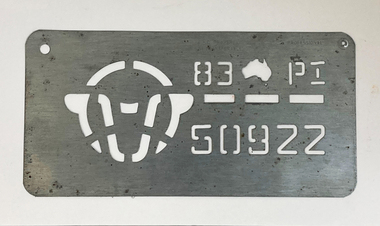
Tool - Stencil, 1983
... awarded by the Australian Wool Exchange (AWEX). This is a rare honour achieved by few. As of February 2020, a total of 430 wool classers had achieved this 50-year milestone. For Denis however, his proudest achievement is achieving 90 years of wool classing with his father. The National Wool Museum is proud to share the collection of objects gained from 90 years in the wool classing industry by Stanley and Denis. This ranges from Stanley’s first stencil and Wool Sample book...awarded by the Australian Wool Exchange (AWEX). This is a rare honour achieved by few. As of February 2020, a total of 430 wool classers had achieved this 50-year milestone. For Denis however, his proudest achievement is achieving 90 years of wool classing with his father. The National Wool Museum is proud to share the collection of objects gained from 90 years in the wool classing industry by Stanley and Denis. This ranges from Stanley’s first stencil and Wool Sample book ...The story of 90 years of wool classing between father & son begins in 1936, when a young boy by the name of Stanley James Hucker walked through the doors of the Gordon Technical School in Geelong. Born in 1921, Stanley was 15 years of age when he began his 3-year course in Wool Classing. 30 years later, Stanley’s second son Denis completed the same 3-year wool classing course. Beginning in 1966, Denis attended the same Gordon Technical School and walked the same halls as his father before him. Stanley finished his course in 1938. He went back to the family farm in Lake Bolac for a brief period before enrolling in the Second World War. At the completion of the war, Stanley returned home and married before gaining a soldier settler allotment, north of Willaura. This enabled Stan to use his wool classing knowledge. He ran between 1,500 and 2,000 sheep for many years, while his wool classer stencil also allowed him to go out and class at various sheds around the area. He held his stencil from 1938 until he retired at the age of 60 in 1981. On retirement, his second son Denis was working in the district, managing a local property while also leasing land himself. Upon his father’s retirement, Denis had the opportunity to lease his father’s farm, an opportunity he could not refuse. Denis had finished his wool classing course at the Gordon Technical School in 1968, graduating dux of his class. He began working with a local contractor and started classing wool in his team. Denis gained a great deal of experience working as part of this team in big sheds of up to 8 stands servicing between 10 & 20,000 sheep. It was not all smooth sailing for Denis however, and he soon learnt an important lesson. Class wool the way you’re taught, don’t listen to the owner standing over your shoulder. At a clip of Corriedales near Casterton, Denis was pushing too many fleeces into the line of fine wool. This resulted in a notice from the Australian Wool Exchange (AWEX) “mixing counts too much, submit three clips for inspection”. Denis was able to submit 3 clips with no further complaints, however, this proved a valuable lesson he would never forget over his long career classing wool. In the early 1980s, when Denis was leasing two properties including his father’s, things were going well until drought struck. February 1983 was the date of the Ash Wednesday bushfires, and saw Melbourne have three days over 40 °C for only the second time on record. This period saw Denis give away farming, turning towards contracting work instead. After the difficult times of the early 1980s, the next two decades were a good time for the sheep industry. 15 micron wool was selling for prices between 4 to 5,000 cents per kilo, double what you’d expect for the same wool in 2022. In 1995 a single bale of wool sold for a million dollars. This was a good time for Denis too. His contracting work saw him employing local shearers and shed staff. His team was involved with the shearing and classing of more than 130,000 sheep. After 20 years of contracting, it was time for Denis to transition into the next phase of his life. He gave up independent contracting, preferring instead to return to being a member of someone else’s team. In 2018, having completed 50 years of wool classing, it was time to call it a day and retire completely. At the annual Gordon Wool School Old Students Association dinner held in 2018, Denis was presented with his 50 years as a registered wool classer stencil awarded by the Australian Wool Exchange (AWEX). This is a rare honour achieved by few. As of February 2020, a total of 430 wool classers had achieved this 50-year milestone. For Denis however, his proudest achievement is achieving 90 years of wool classing with his father. The National Wool Museum is proud to share the collection of objects gained from 90 years in the wool classing industry by Stanley and Denis. This ranges from Stanley’s first stencil and Wool Sample book, started when he first attended the Gordon in 1936. The collection concludes 90 years later with Denis’ 50 years of wool classing Stencil. The collection contains many more objects, all telling the story of these 90 years, and the hard work invested by this dedicated father and son duo. Thin sheet of metal with letters and numbers cut to produce a consistent pattern for the surface below through the application of ink. In small text on the top edge of the stencil two separate phrases are engraved.” A.W.C. PROPERTY NOT TRANSFERABLE” and “PROFESSIONAL“. This wool classing stencil belonged to Stanley Hucker. It was his last Wool Classing Stencil. Dated to 1983, it is 45 years older than his first stencil. The role of a Wool Classer is to sort, classify, and grade wool into various ‘lines’ so that it can be sold for best market price. Wool Classers are typically also tasked with the managing and supervising of wool-handling teams. The stencil is used in the final step of preparing a bale of wool for sale. It is branded across the front of a wool bale to indicate the quality of the wool, with the classers number used as a seal of guarantee.Engraved letters. “A.W.C. PROPERTY / NOT TRANSFERABLE” Engraved letters. “PROFESSIONAL“. Cut imagery. Sheep’s head Cut letters, numbers, and imagery. “83 (Image Australia) P I / 50922”wool classing, stencil, 90 years wool classing between father & son -
 National Wool Museum
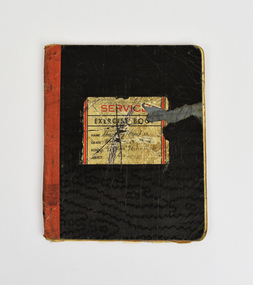
Book - Wool Classing Exercise Book, 1936-38
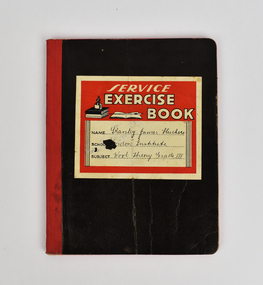
... awarded by the Australian Wool Exchange (AWEX). This is a rare honour achieved by few. As of February 2020, a total of 430 wool classers had achieved this 50-year milestone. For Denis however, his proudest achievement is achieving 90 years of wool classing with his father. The National Wool Museum is proud to share the collection of objects gained from 90 years in the wool classing industry by Stanley and Denis. This ranges from Stanley’s first stencil and Wool Sample book...awarded by the Australian Wool Exchange (AWEX). This is a rare honour achieved by few. As of February 2020, a total of 430 wool classers had achieved this 50-year milestone. For Denis however, his proudest achievement is achieving 90 years of wool classing with his father. The National Wool Museum is proud to share the collection of objects gained from 90 years in the wool classing industry by Stanley and Denis. This ranges from Stanley’s first stencil and Wool Sample book ...The story of 90 years of wool classing between father & son begins in 1936, when a young boy by the name of Stanley James Hucker walked through the doors of the Gordon Technical School in Geelong. Born in 1921, Stanley was 15 years of age when he began his 3-year course in Wool Classing. 30 years later, Stanley’s second son Denis completed the same 3-year wool classing course. Beginning in 1966, Denis attended the same Gordon Technical School and walked the same halls as his father before him. Stanley finished his course in 1938. He went back to the family farm in Lake Bolac for a brief period before enrolling in the Second World War. At the completion of the war, Stanley returned home and married before gaining a soldier settler allotment, north of Willaura. This enabled Stan to use his wool classing knowledge. He ran between 1,500 and 2,000 sheep for many years, while his wool classer stencil also allowed him to go out and class at various sheds around the area. He held his stencil from 1938 until he retired at the age of 60 in 1981. On retirement, his second son Denis was working in the district, managing a local property while also leasing land himself. Upon his father’s retirement, Denis had the opportunity to lease his father’s farm, an opportunity he could not refuse. Denis had finished his wool classing course at the Gordon Technical School in 1968, graduating dux of his class. He began working with a local contractor and started classing wool in his team. Denis gained a great deal of experience working as part of this team in big sheds of up to 8 stands servicing between 10 & 20,000 sheep. It was not all smooth sailing for Denis however, and he soon learnt an important lesson. Class wool the way you’re taught, don’t listen to the owner standing over your shoulder. At a clip of Corriedales near Casterton, Denis was pushing too many fleeces into the line of fine wool. This resulted in a notice from the Australian Wool Exchange (AWEX) “mixing counts too much, submit three clips for inspection”. Denis was able to submit 3 clips with no further complaints, however, this proved a valuable lesson he would never forget over his long career classing wool. In the early 1980s, when Denis was leasing two properties including his father’s, things were going well until drought struck. February 1983 was the date of the Ash Wednesday bushfires, and saw Melbourne have three days over 40 °C for only the second time on record. This period saw Denis give away farming, turning towards contracting work instead. After the difficult times of the early 1980s, the next two decades were a good time for the sheep industry. 15 micron wool was selling for prices between 4 to 5,000 cents per kilo, double what you’d expect for the same wool in 2022. In 1995 a single bale of wool sold for a million dollars. This was a good time for Denis too. His contracting work saw him employing local shearers and shed staff. His team was involved with the shearing and classing of more than 130,000 sheep. After 20 years of contracting, it was time for Denis to transition into the next phase of his life. He gave up independent contracting, preferring instead to return to being a member of someone else’s team. In 2018, having completed 50 years of wool classing, it was time to call it a day and retire completely. At the annual Gordon Wool School Old Students Association dinner held in 2018, Denis was presented with his 50 years as a registered wool classer stencil awarded by the Australian Wool Exchange (AWEX). This is a rare honour achieved by few. As of February 2020, a total of 430 wool classers had achieved this 50-year milestone. For Denis however, his proudest achievement is achieving 90 years of wool classing with his father. The National Wool Museum is proud to share the collection of objects gained from 90 years in the wool classing industry by Stanley and Denis. This ranges from Stanley’s first stencil and Wool Sample book, started when he first attended the Gordon in 1936. The collection concludes 90 years later with Denis’ 50 years of wool classing Stencil. The collection contains many more objects, all telling the story of these 90 years, and the hard work invested by this dedicated father and son duo. This is the first in a series of 5 wool classing exercise books. They were written by Stanley Hucker in his time at the Gordon Technical College from 1936-1938. This book begins in a cover of black vinyl with a strip of red tape on the spine to give added support. Some of the vinyl has been removed on the cover, revealing blue card beneath. A sticker label is also found on the front cover. It has been damaged. Part of the sticker has been removed, while blue ink can also be found obscuring the text below. Internally, the book is handwritten on yellowed pages with blue lines for the assistance in clarity of handwriting. The pages are also surrounded by a margin of red pen. The exercise book’s content is about veterinary studies relating to the diseases, injuries, and treatment of sheep. It is handwritten and accompanied by an occasional hand drawn diagram. A selection of pages have been photographed to give an impression of the information taught in classes, 90 years ago. This includes information about a sheep’s heart, hind limbs, and reproduction system in ewes. Front Cover. Wording, printed and handwritten “SERVICE / EXERCISE BOOK / NAME Stanley Hucker / GRADE wool classing / SCHOOL Gordon Technical / SUBJECT Veterinary”gordon institute geelong, wool classing, 1930s sheep farming, 90 years wool classing between father & son -
 National Wool Museum
Book - Wool Classing Exercise Book, 1936-38
... awarded by the Australian Wool Exchange (AWEX). This is a rare honour achieved by few. As of February 2020, a total of 430 wool classers had achieved this 50-year milestone. For Denis however, his proudest achievement is achieving 90 years of wool classing with his father. The National Wool Museum is proud to share the collection of objects gained from 90 years in the wool classing industry by Stanley and Denis. This ranges from Stanley’s first stencil and Wool Sample book...awarded by the Australian Wool Exchange (AWEX). This is a rare honour achieved by few. As of February 2020, a total of 430 wool classers had achieved this 50-year milestone. For Denis however, his proudest achievement is achieving 90 years of wool classing with his father. The National Wool Museum is proud to share the collection of objects gained from 90 years in the wool classing industry by Stanley and Denis. This ranges from Stanley’s first stencil and Wool Sample book ...The story of 90 years of wool classing between father & son begins in 1936, when a young boy by the name of Stanley James Hucker walked through the doors of the Gordon Technical School in Geelong. Born in 1921, Stanley was 15 years of age when he began his 3-year course in Wool Classing. 30 years later, Stanley’s second son Denis completed the same 3-year wool classing course. Beginning in 1966, Denis attended the same Gordon Technical School and walked the same halls as his father before him. Stanley finished his course in 1938. He went back to the family farm in Lake Bolac for a brief period before enrolling in the Second World War. At the completion of the war, Stanley returned home and married before gaining a soldier settler allotment, north of Willaura. This enabled Stan to use his wool classing knowledge. He ran between 1,500 and 2,000 sheep for many years, while his wool classer stencil also allowed him to go out and class at various sheds around the area. He held his stencil from 1938 until he retired at the age of 60 in 1981. On retirement, his second son Denis was working in the district, managing a local property while also leasing land himself. Upon his father’s retirement, Denis had the opportunity to lease his father’s farm, an opportunity he could not refuse. Denis had finished his wool classing course at the Gordon Technical School in 1968, graduating dux of his class. He began working with a local contractor and started classing wool in his team. Denis gained a great deal of experience working as part of this team in big sheds of up to 8 stands servicing between 10 & 20,000 sheep. It was not all smooth sailing for Denis however, and he soon learnt an important lesson. Class wool the way you’re taught, don’t listen to the owner standing over your shoulder. At a clip of Corriedales near Casterton, Denis was pushing too many fleeces into the line of fine wool. This resulted in a notice from the Australian Wool Exchange (AWEX) “mixing counts too much, submit three clips for inspection”. Denis was able to submit 3 clips with no further complaints, however, this proved a valuable lesson he would never forget over his long career classing wool. In the early 1980s, when Denis was leasing two properties including his father’s, things were going well until drought struck. February 1983 was the date of the Ash Wednesday bushfires, and saw Melbourne have three days over 40 °C for only the second time on record. This period saw Denis give away farming, turning towards contracting work instead. After the difficult times of the early 1980s, the next two decades were a good time for the sheep industry. 15 micron wool was selling for prices between 4 to 5,000 cents per kilo, double what you’d expect for the same wool in 2022. In 1995 a single bale of wool sold for a million dollars. This was a good time for Denis too. His contracting work saw him employing local shearers and shed staff. His team was involved with the shearing and classing of more than 130,000 sheep. After 20 years of contracting, it was time for Denis to transition into the next phase of his life. He gave up independent contracting, preferring instead to return to being a member of someone else’s team. In 2018, having completed 50 years of wool classing, it was time to call it a day and retire completely. At the annual Gordon Wool School Old Students Association dinner held in 2018, Denis was presented with his 50 years as a registered wool classer stencil awarded by the Australian Wool Exchange (AWEX). This is a rare honour achieved by few. As of February 2020, a total of 430 wool classers had achieved this 50-year milestone. For Denis however, his proudest achievement is achieving 90 years of wool classing with his father. The National Wool Museum is proud to share the collection of objects gained from 90 years in the wool classing industry by Stanley and Denis. This ranges from Stanley’s first stencil and Wool Sample book, started when he first attended the Gordon in 1936. The collection concludes 90 years later with Denis’ 50 years of wool classing Stencil. The collection contains many more objects, all telling the story of these 90 years, and the hard work invested by this dedicated father and son duo. This is the second in a series of 5 wool classing exercise books. They were written by Stanley Hucker in his time at the Gordon Technical College from 1936-1938. This book begins in a cover of black vinyl with a strip of red tape on the spine. A sticker label is also found on the front cover. It has been damaged with part of the sticker removed. Internally, the book is handwritten on yellowed pages with blue lines for the assistance in clarity of handwriting. The pages are also surrounded by a margin of red pen. The exercise book’s content is about the wool industry. It is handwritten and accompanied by an occasional hand drawn table. A selection of pages have been photographed to give an impression of the information taught in classes, 90 years ago. This includes information about: - Matching wool terminologies in different countries i.e. England, USA, France, and Germany - Charges deducted in the selling of wool i.e. insurance & commission - The duties of a Wool Classer - The history of Merino Sheep - Wool Selling figures from 1925-1932 - Statistics on the breed of sheep in Australia (as of 31st December 1929) - Australia’s portion of the global wool clip in 1934 gordon institute geelong, wool classing, 1930s sheep farming, 90 years wool classing between father & son -
 National Wool Museum
Book - Wool Classing Exercise Book, 1936-38
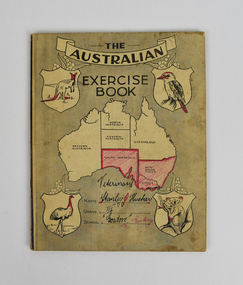
... awarded by the Australian Wool Exchange (AWEX). This is a rare honour achieved by few. As of February 2020, a total of 430 wool classers had achieved this 50-year milestone. For Denis however, his proudest achievement is achieving 90 years of wool classing with his father. The National Wool Museum is proud to share the collection of objects gained from 90 years in the wool classing industry by Stanley and Denis. This ranges from Stanley’s first stencil and Wool Sample book...awarded by the Australian Wool Exchange (AWEX). This is a rare honour achieved by few. As of February 2020, a total of 430 wool classers had achieved this 50-year milestone. For Denis however, his proudest achievement is achieving 90 years of wool classing with his father. The National Wool Museum is proud to share the collection of objects gained from 90 years in the wool classing industry by Stanley and Denis. This ranges from Stanley’s first stencil and Wool Sample book ...The story of 90 years of wool classing between father & son begins in 1936, when a young boy by the name of Stanley James Hucker walked through the doors of the Gordon Technical School in Geelong. Born in 1921, Stanley was 15 years of age when he began his 3-year course in Wool Classing. 30 years later, Stanley’s second son Denis completed the same 3-year wool classing course. Beginning in 1966, Denis attended the same Gordon Technical School and walked the same halls as his father before him. Stanley finished his course in 1938. He went back to the family farm in Lake Bolac for a brief period before enrolling in the Second World War. At the completion of the war, Stanley returned home and married before gaining a soldier settler allotment, north of Willaura. This enabled Stan to use his wool classing knowledge. He ran between 1,500 and 2,000 sheep for many years, while his wool classer stencil also allowed him to go out and class at various sheds around the area. He held his stencil from 1938 until he retired at the age of 60 in 1981. On retirement, his second son Denis was working in the district, managing a local property while also leasing land himself. Upon his father’s retirement, Denis had the opportunity to lease his father’s farm, an opportunity he could not refuse. Denis had finished his wool classing course at the Gordon Technical School in 1968, graduating dux of his class. He began working with a local contractor and started classing wool in his team. Denis gained a great deal of experience working as part of this team in big sheds of up to 8 stands servicing between 10 & 20,000 sheep. It was not all smooth sailing for Denis however, and he soon learnt an important lesson. Class wool the way you’re taught, don’t listen to the owner standing over your shoulder. At a clip of Corriedales near Casterton, Denis was pushing too many fleeces into the line of fine wool. This resulted in a notice from the Australian Wool Exchange (AWEX) “mixing counts too much, submit three clips for inspection”. Denis was able to submit 3 clips with no further complaints, however, this proved a valuable lesson he would never forget over his long career classing wool. In the early 1980s, when Denis was leasing two properties including his father’s, things were going well until drought struck. February 1983 was the date of the Ash Wednesday bushfires, and saw Melbourne have three days over 40 °C for only the second time on record. This period saw Denis give away farming, turning towards contracting work instead. After the difficult times of the early 1980s, the next two decades were a good time for the sheep industry. 15 micron wool was selling for prices between 4 to 5,000 cents per kilo, double what you’d expect for the same wool in 2022. In 1995 a single bale of wool sold for a million dollars. This was a good time for Denis too. His contracting work saw him employing local shearers and shed staff. His team was involved with the shearing and classing of more than 130,000 sheep. After 20 years of contracting, it was time for Denis to transition into the next phase of his life. He gave up independent contracting, preferring instead to return to being a member of someone else’s team. In 2018, having completed 50 years of wool classing, it was time to call it a day and retire completely. At the annual Gordon Wool School Old Students Association dinner held in 2018, Denis was presented with his 50 years as a registered wool classer stencil awarded by the Australian Wool Exchange (AWEX). This is a rare honour achieved by few. As of February 2020, a total of 430 wool classers had achieved this 50-year milestone. For Denis however, his proudest achievement is achieving 90 years of wool classing with his father. The National Wool Museum is proud to share the collection of objects gained from 90 years in the wool classing industry by Stanley and Denis. This ranges from Stanley’s first stencil and Wool Sample book, started when he first attended the Gordon in 1936. The collection concludes 90 years later with Denis’ 50 years of wool classing Stencil. The collection contains many more objects, all telling the story of these 90 years, and the hard work invested by this dedicated father and son duo. This is the third in a series of 5 wool classing exercise books. They were written by Stanley Hucker in his time at the Gordon Technical College from 1936-1938. This book begins in a white cover with black ink illustrations and writing. These illustrations have been added to with Pink ink. Internally, the book is handwritten on yellowed pages with blue lines for the assistance in clarity of handwriting. The pages are also surrounded by a margin of red pen. The exercise book’s content is about veterinary studies relating to the diseases, injuries, and treatment of sheep. It is handwritten. A selection of pages have been photographed to give an impression of the information taught in classes, 90 years ago. This includes information about blow fly and bacterial diseases.Front Cover. Wording, printed and handwritten “THE / AUSTRALIAN / EXERCISE / BOOK / Veterinary / NAME Stanley J Hucker / GRADE III / School “Gordon” Geelong” Front Cover. Illustrations, printed. Kangaroo, kookaburra / Map of Australia with state names / Emu, Koalagordon institute geelong, wool classing, 1930s sheep farming, 90 years wool classing between father & son -
 National Wool Museum
Book - Wool Classing Exercise Book, 1937-38
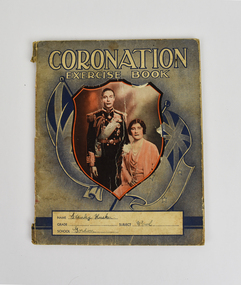
... awarded by the Australian Wool Exchange (AWEX). This is a rare honour achieved by few. As of February 2020, a total of 430 wool classers had achieved this 50-year milestone. For Denis however, his proudest achievement is achieving 90 years of wool classing with his father. The National Wool Museum is proud to share the collection of objects gained from 90 years in the wool classing industry by Stanley and Denis. This ranges from Stanley’s first stencil and Wool Sample book...awarded by the Australian Wool Exchange (AWEX). This is a rare honour achieved by few. As of February 2020, a total of 430 wool classers had achieved this 50-year milestone. For Denis however, his proudest achievement is achieving 90 years of wool classing with his father. The National Wool Museum is proud to share the collection of objects gained from 90 years in the wool classing industry by Stanley and Denis. This ranges from Stanley’s first stencil and Wool Sample book ...The story of 90 years of wool classing between father & son begins in 1936, when a young boy by the name of Stanley James Hucker walked through the doors of the Gordon Technical School in Geelong. Born in 1921, Stanley was 15 years of age when he began his 3-year course in Wool Classing. 30 years later, Stanley’s second son Denis completed the same 3-year wool classing course. Beginning in 1966, Denis attended the same Gordon Technical School and walked the same halls as his father before him. Stanley finished his course in 1938. He went back to the family farm in Lake Bolac for a brief period before enrolling in the Second World War. At the completion of the war, Stanley returned home and married before gaining a soldier settler allotment, north of Willaura. This enabled Stan to use his wool classing knowledge. He ran between 1,500 and 2,000 sheep for many years, while his wool classer stencil also allowed him to go out and class at various sheds around the area. He held his stencil from 1938 until he retired at the age of 60 in 1981. On retirement, his second son Denis was working in the district, managing a local property while also leasing land himself. Upon his father’s retirement, Denis had the opportunity to lease his father’s farm, an opportunity he could not refuse. Denis had finished his wool classing course at the Gordon Technical School in 1968, graduating dux of his class. He began working with a local contractor and started classing wool in his team. Denis gained a great deal of experience working as part of this team in big sheds of up to 8 stands servicing between 10 & 20,000 sheep. It was not all smooth sailing for Denis however, and he soon learnt an important lesson. Class wool the way you’re taught, don’t listen to the owner standing over your shoulder. At a clip of Corriedales near Casterton, Denis was pushing too many fleeces into the line of fine wool. This resulted in a notice from the Australian Wool Exchange (AWEX) “mixing counts too much, submit three clips for inspection”. Denis was able to submit 3 clips with no further complaints, however, this proved a valuable lesson he would never forget over his long career classing wool. In the early 1980s, when Denis was leasing two properties including his father’s, things were going well until drought struck. February 1983 was the date of the Ash Wednesday bushfires, and saw Melbourne have three days over 40 °C for only the second time on record. This period saw Denis give away farming, turning towards contracting work instead. After the difficult times of the early 1980s, the next two decades were a good time for the sheep industry. 15 micron wool was selling for prices between 4 to 5,000 cents per kilo, double what you’d expect for the same wool in 2022. In 1995 a single bale of wool sold for a million dollars. This was a good time for Denis too. His contracting work saw him employing local shearers and shed staff. His team was involved with the shearing and classing of more than 130,000 sheep. After 20 years of contracting, it was time for Denis to transition into the next phase of his life. He gave up independent contracting, preferring instead to return to being a member of someone else’s team. In 2018, having completed 50 years of wool classing, it was time to call it a day and retire completely. At the annual Gordon Wool School Old Students Association dinner held in 2018, Denis was presented with his 50 years as a registered wool classer stencil awarded by the Australian Wool Exchange (AWEX). This is a rare honour achieved by few. As of February 2020, a total of 430 wool classers had achieved this 50-year milestone. For Denis however, his proudest achievement is achieving 90 years of wool classing with his father. The National Wool Museum is proud to share the collection of objects gained from 90 years in the wool classing industry by Stanley and Denis. This ranges from Stanley’s first stencil and Wool Sample book, started when he first attended the Gordon in 1936. The collection concludes 90 years later with Denis’ 50 years of wool classing Stencil. The collection contains many more objects, all telling the story of these 90 years, and the hard work invested by this dedicated father and son duo. This is the fourth in a series of 5 wool classing exercise books. They were written by Stanley Hucker in his time at the Gordon Technical College from 1936-1938. This book begins in a white cover with blue ink illustrations and writing. It has a centrepiece-coloured emblem of King George VI & Queen Elizabeth with flags of the Union Jack & Australia in background. Internally, the book is handwritten on yellowed pages with blue lines for the assistance in clarity of handwriting. The pages are also surrounded by a margin of red pen. The exercise book’s content is about wool studies relating to the health and productivity of wool sheep. It is handwritten. A selection of pages have been photographed to give an impression of the information taught in classes, 90 years ago. This includes information about: - Wool scouring - Shearing - Lamb marking - Breeding - Fellmongering - Comparison between wool and artificial fibres - Characteristics of good wool - Wool selling methods - Established studs in Victoria - Award rates (1937-38)Front Cover. Wording, printed and handwritten. “CORONATION / EXERCISE BOOK / NAME Stanley Hucker / GRADE SUBJECT Wool / SCHOOL Gordon Front Cover. Illustration’s colour, printed. King George VI & Queen Elizabeth with flags of the Union Jack & Australia in background.gordon institute geelong, wool classing, 1930s sheep farming, 90 years wool classing between father & son -
 National Wool Museum
Book - Wool Classing Exercise Book, 1936-38
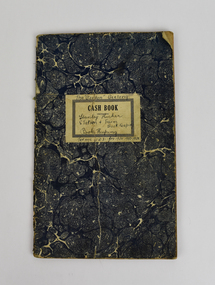
... awarded by the Australian Wool Exchange (AWEX). This is a rare honour achieved by few. As of February 2020, a total of 430 wool classers had achieved this 50-year milestone. For Denis however, his proudest achievement is achieving 90 years of wool classing with his father. The National Wool Museum is proud to share the collection of objects gained from 90 years in the wool classing industry by Stanley and Denis. This ranges from Stanley’s first stencil and Wool Sample book...awarded by the Australian Wool Exchange (AWEX). This is a rare honour achieved by few. As of February 2020, a total of 430 wool classers had achieved this 50-year milestone. For Denis however, his proudest achievement is achieving 90 years of wool classing with his father. The National Wool Museum is proud to share the collection of objects gained from 90 years in the wool classing industry by Stanley and Denis. This ranges from Stanley’s first stencil and Wool Sample book ...The story of 90 years of wool classing between father & son begins in 1936, when a young boy by the name of Stanley James Hucker walked through the doors of the Gordon Technical School in Geelong. Born in 1921, Stanley was 15 years of age when he began his 3-year course in Wool Classing. 30 years later, Stanley’s second son Denis completed the same 3-year wool classing course. Beginning in 1966, Denis attended the same Gordon Technical School and walked the same halls as his father before him. Stanley finished his course in 1938. He went back to the family farm in Lake Bolac for a brief period before enrolling in the Second World War. At the completion of the war, Stanley returned home and married before gaining a soldier settler allotment, north of Willaura. This enabled Stan to use his wool classing knowledge. He ran between 1,500 and 2,000 sheep for many years, while his wool classer stencil also allowed him to go out and class at various sheds around the area. He held his stencil from 1938 until he retired at the age of 60 in 1981. On retirement, his second son Denis was working in the district, managing a local property while also leasing land himself. Upon his father’s retirement, Denis had the opportunity to lease his father’s farm, an opportunity he could not refuse. Denis had finished his wool classing course at the Gordon Technical School in 1968, graduating dux of his class. He began working with a local contractor and started classing wool in his team. Denis gained a great deal of experience working as part of this team in big sheds of up to 8 stands servicing between 10 & 20,000 sheep. It was not all smooth sailing for Denis however, and he soon learnt an important lesson. Class wool the way you’re taught, don’t listen to the owner standing over your shoulder. At a clip of Corriedales near Casterton, Denis was pushing too many fleeces into the line of fine wool. This resulted in a notice from the Australian Wool Exchange (AWEX) “mixing counts too much, submit three clips for inspection”. Denis was able to submit 3 clips with no further complaints, however, this proved a valuable lesson he would never forget over his long career classing wool. In the early 1980s, when Denis was leasing two properties including his father’s, things were going well until drought struck. February 1983 was the date of the Ash Wednesday bushfires, and saw Melbourne have three days over 40 °C for only the second time on record. This period saw Denis give away farming, turning towards contracting work instead. After the difficult times of the early 1980s, the next two decades were a good time for the sheep industry. 15 micron wool was selling for prices between 4 to 5,000 cents per kilo, double what you’d expect for the same wool in 2022. In 1995 a single bale of wool sold for a million dollars. This was a good time for Denis too. His contracting work saw him employing local shearers and shed staff. His team was involved with the shearing and classing of more than 130,000 sheep. After 20 years of contracting, it was time for Denis to transition into the next phase of his life. He gave up independent contracting, preferring instead to return to being a member of someone else’s team. In 2018, having completed 50 years of wool classing, it was time to call it a day and retire completely. At the annual Gordon Wool School Old Students Association dinner held in 2018, Denis was presented with his 50 years as a registered wool classer stencil awarded by the Australian Wool Exchange (AWEX). This is a rare honour achieved by few. As of February 2020, a total of 430 wool classers had achieved this 50-year milestone. For Denis however, his proudest achievement is achieving 90 years of wool classing with his father. The National Wool Museum is proud to share the collection of objects gained from 90 years in the wool classing industry by Stanley and Denis. This ranges from Stanley’s first stencil and Wool Sample book, started when he first attended the Gordon in 1936. The collection concludes 90 years later with Denis’ 50 years of wool classing Stencil. The collection contains many more objects, all telling the story of these 90 years, and the hard work invested by this dedicated father and son duo. This is the fifth in a series of 5 wool classing exercise books. They were written by Stanley Hucker in his time at the Gordon Technical College from 1936-1938. This book begins in a white cover with blue ink swirls covering its entirety. It has a central sticker label. Internally, the book is handwritten on yellowed pages with blue lines for the assistance in clarity of handwriting. The pages are also surrounded by a margin of red pen. The exercise book’s content is about recording and tracking the financial transactions of Sheep Stations and Wool Classers. It is handwritten. A selection of pages have been photographed to give an impression of the information taught in classes, 90 years ago. This includes information about: - General bookkeeping terms and definitions - Practise invoices - Larger multiple page definition of bookkeeping - Assets liabilities - Practise bale bookFront Cover. Wording, printed and handwritten. “The “Gordon Geelong / CASH BOOK / Stanley Hucker / Station + Farm / Bookkeeping / Bookkeeping / Terms 1.2.3 for 1936. 1937. 1938”gordon institute geelong, wool classing, 1930s sheep farming, 90 years wool classing between father & son -
 National Wool Museum
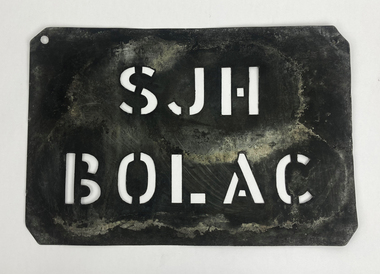
Tool - Stencil, 1938
... awarded by the Australian Wool Exchange (AWEX). This is a rare honour achieved by few. As of February 2020, a total of 430 wool classers had achieved this 50-year milestone. For Denis however, his proudest achievement is achieving 90 years of wool classing with his father. The National Wool Museum is proud to share the collection of objects gained from 90 years in the wool classing industry by Stanley and Denis. This ranges from Stanley’s first stencil and Wool Sample book...awarded by the Australian Wool Exchange (AWEX). This is a rare honour achieved by few. As of February 2020, a total of 430 wool classers had achieved this 50-year milestone. For Denis however, his proudest achievement is achieving 90 years of wool classing with his father. The National Wool Museum is proud to share the collection of objects gained from 90 years in the wool classing industry by Stanley and Denis. This ranges from Stanley’s first stencil and Wool Sample book ...The story of 90 years of wool classing between father & son begins in 1936, when a young boy by the name of Stanley James Hucker walked through the doors of the Gordon Technical School in Geelong. Born in 1921, Stanley was 15 years of age when he began his 3-year course in Wool Classing. 30 years later, Stanley’s second son Denis completed the same 3-year wool classing course. Beginning in 1966, Denis attended the same Gordon Technical School and walked the same halls as his father before him. Stanley finished his course in 1938. He went back to the family farm in Lake Bolac for a brief period before enrolling in the Second World War. At the completion of the war, Stanley returned home and married before gaining a soldier settler allotment, north of Willaura. This enabled Stan to use his wool classing knowledge. He ran between 1,500 and 2,000 sheep for many years, while his wool classer stencil also allowed him to go out and class at various sheds around the area. He held his stencil from 1938 until he retired at the age of 60 in 1981. On retirement, his second son Denis was working in the district, managing a local property while also leasing land himself. Upon his father’s retirement, Denis had the opportunity to lease his father’s farm, an opportunity he could not refuse. Denis had finished his wool classing course at the Gordon Technical School in 1968, graduating dux of his class. He began working with a local contractor and started classing wool in his team. Denis gained a great deal of experience working as part of this team in big sheds of up to 8 stands servicing between 10 & 20,000 sheep. It was not all smooth sailing for Denis however, and he soon learnt an important lesson. Class wool the way you’re taught, don’t listen to the owner standing over your shoulder. At a clip of Corriedales near Casterton, Denis was pushing too many fleeces into the line of fine wool. This resulted in a notice from the Australian Wool Exchange (AWEX) “mixing counts too much, submit three clips for inspection”. Denis was able to submit 3 clips with no further complaints, however, this proved a valuable lesson he would never forget over his long career classing wool. In the early 1980s, when Denis was leasing two properties including his father’s, things were going well until drought struck. February 1983 was the date of the Ash Wednesday bushfires, and saw Melbourne have three days over 40 °C for only the second time on record. This period saw Denis give away farming, turning towards contracting work instead. After the difficult times of the early 1980s, the next two decades were a good time for the sheep industry. 15 micron wool was selling for prices between 4 to 5,000 cents per kilo, double what you’d expect for the same wool in 2022. In 1995 a single bale of wool sold for a million dollars. This was a good time for Denis too. His contracting work saw him employing local shearers and shed staff. His team was involved with the shearing and classing of more than 130,000 sheep. After 20 years of contracting, it was time for Denis to transition into the next phase of his life. He gave up independent contracting, preferring instead to return to being a member of someone else’s team. In 2018, having completed 50 years of wool classing, it was time to call it a day and retire completely. At the annual Gordon Wool School Old Students Association dinner held in 2018, Denis was presented with his 50 years as a registered wool classer stencil awarded by the Australian Wool Exchange (AWEX). This is a rare honour achieved by few. As of February 2020, a total of 430 wool classers had achieved this 50-year milestone. For Denis however, his proudest achievement is achieving 90 years of wool classing with his father. The National Wool Museum is proud to share the collection of objects gained from 90 years in the wool classing industry by Stanley and Denis. This ranges from Stanley’s first stencil and Wool Sample book, started when he first attended the Gordon in 1936. The collection concludes 90 years later with Denis’ 50 years of wool classing Stencil. The collection contains many more objects, all telling the story of these 90 years, and the hard work invested by this dedicated father and son duo. Thin sheet of metal with letters cut to produce a consistent pattern for the surface below through the application of ink. This wool classing stencil belonged to Stanley Hucker. It was his first Wool Classing Stencil. It was used on Stanley’s property named “Yohhatnbu” in Willaura. Stanley gained the property as part of the Returned Soldiers Settlement Scheme for his service in World War 2. The role of a Wool Classer is to sort, classify, and grade wool into various ‘lines’ so that it can be sold for best market price. Wool Classers are typically also tasked with the managing and supervising of wool-handling teams. The stencil is used in the final step of preparing a bale of wool for sale. It is branded across the front of a wool bale to indicate the quality of the wool, with the classers number used as a seal of guarantee.Cut letters. “SJH / BOLAC ”wool classing, stencil, 90 years wool classing between father & son -
 National Wool Museum
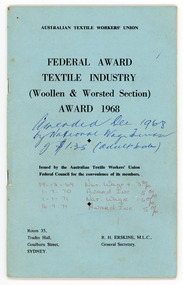
Book - Federal Award Textile Industry (Woollen & Worsted Section) Award 1968, Australian Textile Workers’ Union Federal Council, 1968
... Unions Textile Workers Union Award Legal Document Textile Industry Woollen Worsted front: [printed] AUSTRALIAN TEXTILE WORKERS’ UNION / FEDERAL AWARD / TEXTILE INDUSTRY / (Woollen & Worsted Section) / AWARD 1968 Thirty six page booklet with printed black and white text. Front and back cover is blue with printed black text. Handwritten text in blue and red is also shown on the front. Book ...Thirty six page booklet with printed black and white text. Front and back cover is blue with printed black text. Handwritten text in blue and red is also shown on the front. front: [printed] AUSTRALIAN TEXTILE WORKERS’ UNION / FEDERAL AWARD / TEXTILE INDUSTRY / (Woollen & Worsted Section) / AWARD 1968unions, textile workers union, award, legal document, textile industry, woollen, worsted -
 National Wool Museum
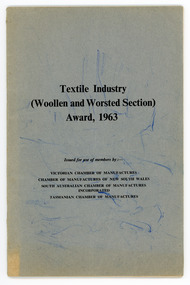
Book - Textile Industry (Woollen and Worsted Section) Award 1963, Australian Textile Workers’ Union, 1963
... Unions Textile Workers Union Award Legal Document Textile Industry Woollen Worsted front: [printed] Textile Industry / (Woollen and Worsted Section) / Award, 1963 / Issued for use of members by:- / VICTORIAN CHAMBER OF MANUFACTURERS / CHAMBER OF MANUFACTURERS OF NEW SOUTH WALES / SOUTH AUSTRALIAN CHAMBER OF MANUFACTURERES / INCORPORATED / TASMANIAN CHAMBER OF MANUFACTURERS Thirty six page booklet with printed black and white text. Front and back cover grey with printed black text. Blue pencil marks are shown on the front. Book ...Thirty six page booklet with printed black and white text. Front and back cover grey with printed black text. Blue pencil marks are shown on the front. front: [printed] Textile Industry / (Woollen and Worsted Section) / Award, 1963 / Issued for use of members by:- / VICTORIAN CHAMBER OF MANUFACTURERS / CHAMBER OF MANUFACTURERS OF NEW SOUTH WALES / SOUTH AUSTRALIAN CHAMBER OF MANUFACTURERES / INCORPORATED / TASMANIAN CHAMBER OF MANUFACTURERSunions, textile workers union, award, legal document, textile industry, woollen, worsted -
 National Wool Museum
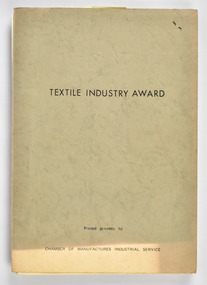
Book - Textile Industry Award 1974, Australian Textile Workers’ Union, 1974
... Unions Textile Workers Union Award Legal Document Textile Industry Woollen Worsted front: [printed] TEXTILE INDUSTRY AWARD / Printed privately by / CHAMBER OF MANUFACTURES INDUSTRIAL SERVICE Forty seven page book with metal binding and black and white printed text. A piece of paper is stapled to the inside cover page. Cover is grey, with printed black text. Book Textile Industry Award 1974 Australian ...Forty seven page book with metal binding and black and white printed text. A piece of paper is stapled to the inside cover page. Cover is grey, with printed black text. front: [printed] TEXTILE INDUSTRY AWARD / Printed privately by / CHAMBER OF MANUFACTURES INDUSTRIAL SERVICE unions, textile workers union, award, legal document, textile industry, woollen, worsted -
 National Wool Museum
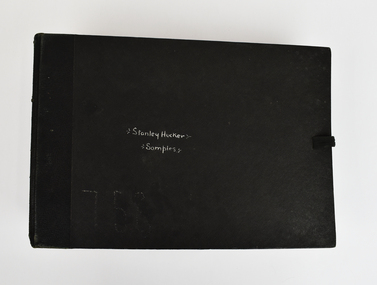
Book, Wool Sample, 1936-8
... awarded by the Australian Wool Exchange (AWEX). This is a rare honour achieved by few. As of February 2020, a total of 430 wool classers had achieved this 50-year milestone. For Denis however, his proudest achievement is achieving 90 years of wool classing with his father. The National Wool Museum is proud to share the collection of objects gained from 90 years in the wool classing industry by Stanley and Denis. This ranges from Stanley’s first stencil and Wool Sample book...awarded by the Australian Wool Exchange (AWEX). This is a rare honour achieved by few. As of February 2020, a total of 430 wool classers had achieved this 50-year milestone. For Denis however, his proudest achievement is achieving 90 years of wool classing with his father. The National Wool Museum is proud to share the collection of objects gained from 90 years in the wool classing industry by Stanley and Denis. This ranges from Stanley’s first stencil and Wool Sample book ...The story of 90 years of wool classing between father & son begins in 1936, when a young boy by the name of Stanley James Hucker walked through the doors of the Gordon Technical School in Geelong. Born in 1921, Stanley was 15 years of age when he began his 3-year course in Wool Classing. 30 years later, Stanley’s second son Denis completed the same 3-year wool classing course. Beginning in 1966, Denis attended the same Gordon Technical School and walked the same halls as his father before him. Stanley finished his course in 1938. He went back to the family farm in Lake Bolac for a brief period before enrolling in the Second World War. At the completion of the war, Stanley returned home and married before gaining a soldier settler allotment, north of Willaura. This enabled Stan to use his wool classing knowledge. He ran between 1,500 and 2,000 sheep for many years, while his wool classer stencil also allowed him to go out and class at various sheds around the area. He held his stencil from 1938 until he retired at the age of 60 in 1981. On retirement, his second son Denis was working in the district, managing a local property while also leasing land himself. Upon his father’s retirement, Denis had the opportunity to lease his father’s farm, an opportunity he could not refuse. Denis had finished his wool classing course at the Gordon Technical School in 1968, graduating dux of his class. He began working with a local contractor and started classing wool in his team. Denis gained a great deal of experience working as part of this team in big sheds of up to 8 stands servicing between 10 & 20,000 sheep. It was not all smooth sailing for Denis however, and he soon learnt an important lesson. Class wool the way you’re taught, don’t listen to the owner standing over your shoulder. At a clip of Corriedales near Casterton, Denis was pushing too many fleeces into the line of fine wool. This resulted in a notice from the Australian Wool Exchange (AWEX) “mixing counts too much, submit three clips for inspection”. Denis was able to submit 3 clips with no further complaints, however, this proved a valuable lesson he would never forget over his long career classing wool. In the early 1980s, when Denis was leasing two properties including his father’s, things were going well until drought struck. February 1983 was the date of the Ash Wednesday bushfires, and saw Melbourne have three days over 40 °C for only the second time on record. This period saw Denis give away farming, turning towards contracting work instead. After the difficult times of the early 1980s, the next two decades were a good time for the sheep industry. 15 micron wool was selling for prices between 4 to 5,000 cents per kilo, double what you’d expect for the same wool in 2022. In 1995 a single bale of wool sold for a million dollars. This was a good time for Denis too. His contracting work saw him employing local shearers and shed staff. His team was involved with the shearing and classing of more than 130,000 sheep. After 20 years of contracting, it was time for Denis to transition into the next phase of his life. He gave up independent contracting, preferring instead to return to being a member of someone else’s team. In 2018, having completed 50 years of wool classing, it was time to call it a day and retire completely. At the annual Gordon Wool School Old Students Association dinner held in 2018, Denis was presented with his 50 years as a registered wool classer stencil awarded by the Australian Wool Exchange (AWEX). This is a rare honour achieved by few. As of February 2020, a total of 430 wool classers had achieved this 50-year milestone. For Denis however, his proudest achievement is achieving 90 years of wool classing with his father. The National Wool Museum is proud to share the collection of objects gained from 90 years in the wool classing industry by Stanley and Denis. This ranges from Stanley’s first stencil and Wool Sample book, started when he first attended the Gordon in 1936. The collection concludes 90 years later with Denis’ 50 years of wool classing Stencil. The collection contains many more objects, all telling the story of these 90 years, and the hard work invested by this dedicated father and son duo.Large black bound book with ribbon for fastening containing 12 double-sided blue pages. Pages have several samples of shorn wool mounted and annotated to include information such as specific breeding, shearing faults, and geographical area. The book concludes with four pages without wool samples. Two of these pages relate to plans for a shearing shed and other industry related structures. The final two-pages relate to the anatomy of a sheep. Wool sample books were constructed by Wool Classing students at the Gordon Technical School as examples of what to look for when classing wool. The students were tasked with constructing these books with samples they retrieved themselves from several different farms and animals. The book would serve as a reference point for the wool classers throughout their years in the field, it was always on hand to refresh knowledge. This book was constructed by Stanley Hucker over his schooling at the Gordon between 1936 and 1938Front Cover. Handwritten, White Ink "Stanley Hucker / Samples"90 years wool classing between father & son, wool classing, gordon technical school -
Vision Australia
Audio - Sound recording, Letter to clients regarding the Vision Australia Awards, 2005
... Book of the Year awards were first established by the Braille and Talking Book Library in 1974, as a way of recognising excellence in Braille production. In 1990 the first Narrator of the Year was awarded, then followed by the Audio Book of the Year in 1991. With the merger with the AFB, then the name change to Vision Australia Foundation, these awards were rechristened the Vision Australia Foundation awards. In 2005, another merger took place and the decision was made to only continue the original award, due to both limited funds and the development of the commercial audio book industry...Book of the Year awards were first established by the Braille and Talking Book Library in 1974, as a way of recognising excellence in Braille production. In 1990 the first Narrator of the Year was awarded, then followed by the Audio Book of the Year in 1991. With the merger with the AFB, then the name change to Vision Australia Foundation, these awards were rechristened the Vision Australia Foundation awards. In 2005, another merger took place and the decision was made to only continue the original award, due to both limited funds and the development of the commercial audio book industry ...The Braille Book of the Year awards were first established by the Braille and Talking Book Library in 1974, as a way of recognising excellence in Braille production. In 1990 the first Narrator of the Year was awarded, then followed by the Audio Book of the Year in 1991. With the merger with the AFB, then the name change to Vision Australia Foundation, these awards were rechristened the Vision Australia Foundation awards. In 2005, another merger took place and the decision was made to only continue the original award, due to both limited funds and the development of the commercial audio book industry and thus commercial audio awards. This letter was sent to members to advise of the changes and the reasons behind it.1 CD with 1 sound filevision australia, awards -
Unions Ballarat
MEWU National Metal and Engineering On-Site Construction Industry Award, n.d
... Award pertaining to New South Wales, Victoria, South Australia, Tasmania, Queensland and the ACT. (n.d.) Pertinent to industry terms, conditions, rights and entitlements. Award pertaining to New South Wales, Victoria, South Australia, Tasmania, Queensland and the ACT. ballarat trades and labour council; ballarat trades hall mewu metal and engineering workers union (australia) unions industrial awards construction workers btlc Front cover: title and union name on front cover; "Julian" has been written on the cover. Paperback book ...Award pertaining to New South Wales, Victoria, South Australia, Tasmania, Queensland and the ACT. (n.d.)Pertinent to industry terms, conditions, rights and entitlements. Award pertaining to New South Wales, Victoria, South Australia, Tasmania, Queensland and the ACT.Paperback book.Front cover: title and union name on front cover; "Julian" has been written on the cover.ballarat trades and labour council;, ballarat trades hall, mewu, metal and engineering workers union (australia), unions, industrial awards, construction workers, btlc -
Emerald Museum & Nobelius Heritage Park
Programme - Garden Show programme, Ferntree Gully and District Argicultural & Horticultural Society et al, Fern Tree Gully and District Argicultural & Horticultural Society First Annual Show Program, 1947
... Souvenir program for First Annual Show of Fern Tree Gully & District Agricultural & Horticultural Society. 22 November 1947 Sheep G A Williams B S Stillwell E Russell T Merrett Mrs E Kennedy Mrs Cavalier F Eaton Violet Lambert Ferntree Gully and District Agricultural & Horticultural Society Emerald Victoria Australia Prizes and awards Poultry industry Needlework Cattle horses Ferntree Gully Victoria Australia Farms Agriculture 80-page soft-cover book, stapled. ...Souvenir program for First Annual Show of Fern Tree Gully & District Agricultural & Horticultural Society. 22 November 194780-page soft-cover book, stapled.sheep, g a williams, b s stillwell, e russell, t merrett, mrs e kennedy, mrs cavalier, f eaton, violet lambert, ferntree gully and district agricultural & horticultural society, emerald, victoria, australia, prizes and awards, poultry industry, needlework, cattle, horses, ferntree gully victoria australia, farms, agriculture
