
Showing 8 items matching "australian deserts"
-
 Bendigo Historical Society Inc.
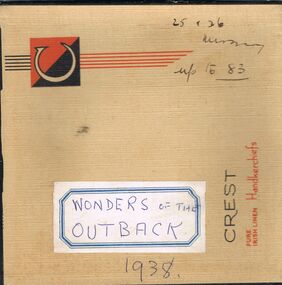
Newspaper - LYDIA CHANCELLOR COLLECTION: WONDERS OF THE OUTBACK
... ... Australian deserts...SCIENCES General flora and fauna Lydia Chancellor collection Australian outback outback Australian wildlife wildlife Australian Aborigines Aborigines Australian birds birds Australian rock carvings rock carvings Australian deserts deserts Aboriginal place sciences region Australia plants flora fauna Wonders of the outback 1938. 25 + 26 missing. ...A handkerchief box containing newspaper cuttings from 'The Sun-News Pictorial' dated 1938, 'Wonders Of The Outback' on the beauty of and life in the outback. A series numbered 1 to 83. these clips contain photos and descriptions of Aboriginal/Indigenous People, Flora, Fauna, Lizards, Insects, land formations etc.Wonders of the outback 1938. 25 + 26 missing. Up to 83sciences, general, flora and fauna, lydia chancellor, collection, australian outback, outback, australian wildlife, wildlife, australian aborigines, aborigines, australian birds, birds, australian rock carvings, rock carvings, australian deserts, deserts, aboriginal, place, sciences, region, australia, plants, flora, fauna -
 Nhill and District Historical Society Inc.
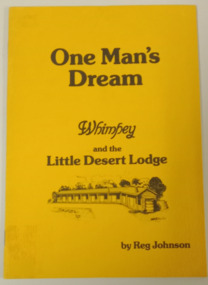
Book - One Man's Dream, R. C. Reichelt and H. R. Johnson, Whimpy at Little Desert Lodge by Reg Johnson, 1983
... Australian Deserts...Australian Deserts Little Desert - Lodge Little Desert Victoria conservation This is a book about a selfless conservationist, Wimpy Reichelt who in 1969, successfully opposed the subdivision of the Little Desert. ...This is a book about a selfless conservationist, Wimpy Reichelt who in 1969, successfully opposed the subdivision of the Little Desert.Yellow Cover with black print in excellent conditionnon-fictionThis is a book about a selfless conservationist, Wimpy Reichelt who in 1969, successfully opposed the subdivision of the Little Desert.australian deserts, little desert - lodge, little desert victoria, conservation -
 Nhill and District Historical Society Inc.
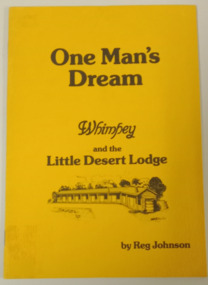
Book, R. C. Reichelt and H. R. Johnson, One Man's Dream -Whimpy at Little Desert Lodge, 1983
... ...Australian Deserts...Little Desert Victoria Little Desert - Lodge conservation Australian Deserts This is a book about a selfless conservationist, Wimpy Reichelt who in 1969, successfully opposed the subdivision of the Little Desert. ...This is a book about a selfless conservationist, Wimpy Reichelt who in 1969, successfully opposed the subdivision of the Little Desert.Yellow Cover with black print in excellent conditionnon-fictionThis is a book about a selfless conservationist, Wimpy Reichelt who in 1969, successfully opposed the subdivision of the Little Desert.little desert victoria, little desert - lodge, conservation, australian deserts -
 The Beechworth Burke Museum
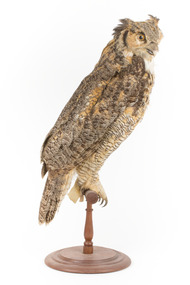
Animal specimen - Long-Eared Owl, Trustees of the Australian Museum, 1860- 1880
... deserts, though more commonly semi-desert, and may nest and roost in available oases and hunt prey over the open desert ground. This particular specimen has been mounted in a correctly stylised fashion. This specimen is part of a collection of almost 200 animal specimens that were originally acquired as skins from various institutions across Australia, including the Australian Museum in Sydney and the National Museum of Victoria (known as Museums Victoria since 1983), as well as individuals such as amateur anthropologist Reynell Eveleigh Johns between 1860-1880. ...deserts, though more commonly semi-desert, and may nest and roost in available oases and hunt prey over the open desert ground. This particular specimen has been mounted in a correctly stylised fashion. This specimen is part of a collection of almost 200 animal specimens that were originally acquired as skins from various institutions across Australia, including the Australian Museum in Sydney and the National Museum of Victoria (known as Museums Victoria since 1983), as well as individuals such as amateur anthropologist Reynell Eveleigh Johns between 1860-1880. ...The Long-eared owl is one of the most widely distributed and most numerous owl species in the world. It is a rather slim and long-winged bird with usually prominent erectile ear tufts, which are positioned closer to the center of the head than in many other types of owl. Long-eared owls prefer open landscapes with groups of trees, hedges or small woods, as well as pastureland with rows of trees and bushes, any type of forest with clearings, forest edges, semi-open taiga forest, swampy areas and bogs, orchards with old fruit trees, parks, even gardens and timbered areas in villages, towns or cities. In many parts of the world, Long-eared owls have even adapted to deserts, though more commonly semi-desert, and may nest and roost in available oases and hunt prey over the open desert ground. This particular specimen has been mounted in a correctly stylised fashion. This specimen is part of a collection of almost 200 animal specimens that were originally acquired as skins from various institutions across Australia, including the Australian Museum in Sydney and the National Museum of Victoria (known as Museums Victoria since 1983), as well as individuals such as amateur anthropologist Reynell Eveleigh Johns between 1860-1880. These skins were then mounted by members of the Burke Museum Committee and put-on display in the formal space of the Museum’s original exhibition hall where they continue to be on display. This display of taxidermy mounts initially served to instruct visitors to the Burke Museum of the natural world around them, today it serves as an insight into the collecting habits of the 19th century.This specimen is part of a significant and rare taxidermy mount collection in the Burke Museum. This collection is scientifically and culturally important for reminding us of how science continues to shape our understanding of the modern world. They demonstrate a capacity to hold evidence of how Australia’s fauna history existed in the past and are potentially important for future environmental research. This collection continues to be on display in the Museum and has become a key part to interpreting the collecting habits of the 19th century.This Long-Eared Owl is a rather slim, long-winged bird with prominent erectile ear tufts. The coloration of this Long-eared Owl is a hue of ochraceous-tawny with a brownish wash. The wings, back and chest are patterned and the facial disc is visibly well developed and light brown in colour. The ear tufts are dusky in front and darter tawny on the back. This Long-eared owl possesses a light-coloured bill and its eyes are yellowish-orange. The specimen stands upon a wooden platform. Swing tag: 33 / Virginian / Bee-boo Owl / Catalogue, page 52 / Other tag: No 19 / STRIX Virginian / N. America / taxidermy mount, taxidermy, animalia, burke museum, beechworth, australian museum, skin, reynell eveleigh johns, bird, owl, long-eared owl -
 Bendigo Military Museum
Postcard - CHRISTMAS GREETING, Australian Military Forces, 23 Dec 1941
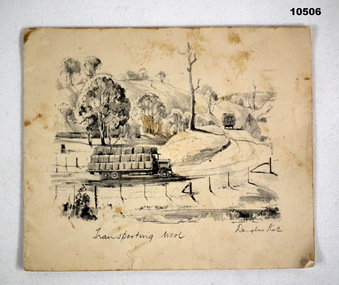
... Australian Military Forces. "I don't appear in the picture, not being a skite, I am hiding behind the gun. J.T.". Rear Page - 7th Inf. Brigade, Chermside Camp, Brisbane 23.12.41. Dear Ted & George. Wishing you both a Happy Christmas and a Prosperous New Year. Have been in camp hospital for ten days as a result of encounter with muma (?) - shall hardly land the M.C. but then so very few get their deserts...Australian Military Forces. "I don't appear in the picture, not being a skite, I am hiding behind the gun. J.T.". Rear Page - 7th Inf. Brigade, Chermside Camp, Brisbane 23.12.41. Dear Ted & George. Wishing you both a Happy Christmas and a Prosperous New Year. Have been in camp hospital for ten days as a result of encounter with muma (?) - shall hardly land the M.C. but then so very few get their deserts ..."John Ahem Torpie" QX39522 (Q119806) Enlisted 14/9/42 (2nd AIF) Discharged 6/11/46. Rank Captain. Black and white card formed by folding a sheet of paper two ways. The front depicts a pen and ink drawing of civilian trucks hauling wool bales in an Australian Rural scene. On the inside of the card there is an illustration of a soldier standing to attention and a 25 Pdr gun crew in action. The right side shows a heavy A.A. gun in action - mobile type of gun. Beside it are two artillery signallers, prone, working a radio set. The rear page has the actual letter greetings.Front Title - Transporting wool. Inner left - To Greet You Sincerely at Christmas and wish you Happiness in the New Year. Inner Right - Australian Military Forces. "I don't appear in the picture, not being a skite, I am hiding behind the gun. J.T.". Rear Page - 7th Inf. Brigade, Chermside Camp, Brisbane 23.12.41. Dear Ted & George. Wishing you both a Happy Christmas and a Prosperous New Year. Have been in camp hospital for ten days as a result of encounter with muma (?) - shall hardly land the M.C. but then so very few get their deserts. Often think of C.V.M.S. & wonder how you all are doing. Remember me to the boys. John A Torpie. ww2, postcard, artillery, christmas, john a torpie -
 Monbulk RSL Sub Branch
Book, Viking, Fly -True Stories of Courage and Adventure from the Airmen of World War II, 2008
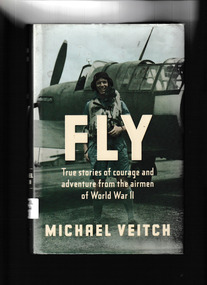
... World war 1939 – 1945 – Aerial operations - Australia World war 1939 – 1945 – Personal narratives – Australia All over the world during World War II, thousands of young men who had never so much as been near an aeroplane left offices, farms and classrooms to learn to fly and fight in the greatest conflict the world has ever seen. They fought over deserts ...All over the world during World War II, thousands of young men who had never so much as been near an aeroplane left offices, farms and classrooms to learn to fly and fight in the greatest conflict the world has ever seen. They fought over deserts, cities and jungles, in-single-engine fighter aircraft, heavy bombers, transport planes and flying boats. How do they feel about their dramatic days in the air? What is it they remember, and what do they choose to forget? In these candid and moving stories, Michael Veitch, writer, broadcaster and aeroplane fanatic, uncovers some of the untold stories of World War II: Australian, British and even German. He captures the events that defined a generation of men before these stories are lost forever.Ill, p.303.non-fictionAll over the world during World War II, thousands of young men who had never so much as been near an aeroplane left offices, farms and classrooms to learn to fly and fight in the greatest conflict the world has ever seen. They fought over deserts, cities and jungles, in-single-engine fighter aircraft, heavy bombers, transport planes and flying boats. How do they feel about their dramatic days in the air? What is it they remember, and what do they choose to forget? In these candid and moving stories, Michael Veitch, writer, broadcaster and aeroplane fanatic, uncovers some of the untold stories of World War II: Australian, British and even German. He captures the events that defined a generation of men before these stories are lost forever. world war 1939 – 1945 – aerial operations - australia, world war 1939 – 1945 – personal narratives – australia -
 Monbulk RSL Sub Branch
Book, Pan McMillan et al, In the line of fire : real stories of Australians at war, from Gallipoli to Vietnam, 2005
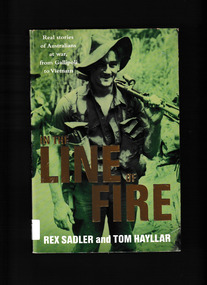
... Military participation - Australia Sustralia - History - Military In the line of fire' explores the nature of combat from the perspective of the men doing the actual fighting. From the heights of Gallipoli to the trenches of the Western Front, from the deserts of North Africa to the jungle POW camps of the Thai-Burma Railway, from the savage cold of a Korean winter to the steamy heat of Vietnam this book details what it's really like to be in the line of fire. ...In the line of fire' explores the nature of combat from the perspective of the men doing the actual fighting. From the heights of Gallipoli to the trenches of the Western Front, from the deserts of North Africa to the jungle POW camps of the Thai-Burma Railway, from the savage cold of a Korean winter to the steamy heat of Vietnam this book details what it's really like to be in the line of fire. Also it reveals the experiences of Australian women at war and the combat photographers.Index, bibliography, ill, maps, p.358.non-fictionIn the line of fire' explores the nature of combat from the perspective of the men doing the actual fighting. From the heights of Gallipoli to the trenches of the Western Front, from the deserts of North Africa to the jungle POW camps of the Thai-Burma Railway, from the savage cold of a Korean winter to the steamy heat of Vietnam this book details what it's really like to be in the line of fire. Also it reveals the experiences of Australian women at war and the combat photographers.military participation - australia, sustralia - history - military -
 Robin Boyd Foundation
Book, Geoffrey Serle, From Deserts The Prophets Come: the creative spirit in Australia 1788-1972, 1973
... From Deserts The Prophets Come: the creative spirit in Australia 1788-1972...arts australian art colonisation Walsh St library Softcover From Deserts The Prophets Come: the creative spirit in Australia 1788-1972 Book Geoffrey Serle Heinemann ...Softcoverarts, australian art, colonisation, walsh st library
