
Showing 48 items matching "australian imper"
-
 Returned Nurses RSL Sub-branch
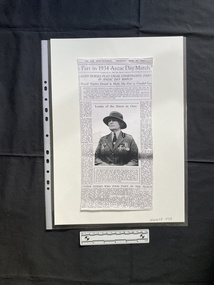
Newspaper - Photocopy of newspaper clipping, The Sun News-Pictorial, Army nurses play usual unobstrusive part in Anzac Day march: Record number, dressed in mufti, slip past in crowded cars, April 26 1934
... ...Australian Imper...WW1 WWI World War 1 E Conyers Matron in Chief Australian Army Nursing Service AANS Australian Imper Australian Imperial Forces AIF A Dowsley 3rd Military District E Cornwell Edith Cavell Trust Fund McHardie White Gertrude Davis Hamilton Russell Wing Alfred Hospital I O'Dwyer Repatriation Hospital Caulfield M.E. ...Dressed in mufti, attended by no band or banners, more than 200 women slid past the almost unheeding crowd in a battalion of cars, unobtrusively taking their part in the Anzac Day march, as they played their part during World War One. They were all returned army nurses who served in Egypt, Salonika, Flanders, Belgium, England and India. Many were wearing medals such as the Commander of the Order of the British Empire medal (CBE), the Royal Red Cross medal (RRC), the Florence Nightingale medal, the Order of St Sava and the Medal of Honour of Greece. The article goes on to list many of the women who participated in the march.A photocopy of a newspaper clipping consisting of titles, one large photo and several columns of text. The photo depicts a woman in nurse's uniform and war medals.ww1, wwi, world war 1, e conyers, matron in chief, australian army nursing service, aans, australian imper, australian imperial forces, aif, a dowsley, 3rd military district, e cornwell, edith cavell trust fund, mchardie white, gertrude davis, hamilton russell wing, alfred hospital, i o'dwyer, repatriation hospital, caulfield, m.e. nicholson, methodist homes for children, cheltenham, a.f. roberts, masonic homes, punt rd, d ryall (nee newton), trinity college, g douglas, newport, e cameron, melbourne university, nan reay, bryant and may, c fisher (nee pratti), grace wilson, edith cavell memorial service, returned army nurses' club, parliament house, h. hayes (nee gawler), m.m. loughron, children's welfare department, e hart, b.m. gibbings, a.r. broughton (nee bolton), a forrest, baby health centre, ivanhoe, buckham, a. king, lily rutherford, m. coombes, v woinarski, m. humphrey, police hospital, n. rhoden, anzac hostel, j. tyers, mont park, j. stanbury, bundoora, f. grylls, children's health bureau, anzac house, m. ambler, jean robertson, macrobertson's, rose quarterman, buckleu and nunn, v. payne, tanganyika, w.b. healy (nee brocklebank), rushworth, c. murray, nauru, e.m. mccarthy, traralgon, l.e. wheeler, st arnaud, b. g. stubbs, tecoma, e.l. weitnaure (nee trant), bateford, cope (nee hewlett), tatura, w.s. philip (nee green), echuca, b. o'connor (nee balkam), maldon, scurry (nee barry), silvan, long (nee garden), fussell (nee garden), gillies, m peet, a purcell, geelong, j.r. porter, peake (nee ekers), harcourt (nee tuxworth), o. sommerville (nee deane), lorimer (nee pilkington), r. b. kelley (nee malcolm), i. owen, e cullen (nee newton), e shepard (nee harrison), gaff (nee steele), wilkinson (nee peters), p. n. lewis (nee evans), p dooley (nee haynes), barber (nee webb), d monat (nee crossing), w. scurry (nee barry), e. geddison (nee edwards), arruthers, winfield, hambridge, l. dutton, w. b. heily (nee bocklebank), e. glyde (nee whitely), b o'connor (nee balham), i. prime (nee ogilvie), r. e.ireland (nee grove), e. kitchen (nee neville), c. matheson (nee donaldson), m. clyne (nee hardie), s. buckley (nee flett), stewart cowan, wiseman (nee jamieson), h. welch (nee white), jj. sedgeick (nee waddell), n drysdale, m. roberts (nee brown), geach, c. bonwick (nee strom), l. thompson (nee stewart), g. easter (nee jeremiah), n. kenward, h. davis (nee colwill), geddison, g. owen, g. cochran, hales (nee whitfield), l. sheppard, g. levinson (nee irvine), g. sylvester, tregellis smith (nee sampson), h. f. allison wallilien (nee canard), v. woinarski, l. leich, d. white, s. bennett smith, mcphail, l. rutherford, m. hall, n. coombs, w. holding, c. cadwellader, dowling, stewart, j. bage, m. hobler, i. mcalpine, condon, s. malcolm, m. smith, a. h. stone, m. nuzum, j. burgess, m. burtley, k. devine, e. simpson, s. pines, i. bonnin, a. cassidy, kendall, i. f. donald, j. currie, t. tyson, j. robertson, r. quarterman, g. grace, m. tilton, m. robinson, a. lee-brown, c. williams, l. moxham, e. reddie, f. tabor, n. isaacs, e. m. renard, mackenzie, k. garney, g. duncan, f.m. dowell, n.w. gillespie, e.l. prescott, sandbrook, m. peet, e. thistlewaite, e. palmer, b. lord, b. mckinnell, g. bishop, b mcphail, m. pearce, l. hancock, o. saloway, e. dixon, g.c. marum, m. folwer, a.m. gallen, a. brown, a. hardie, j. simpson, m. thomas, e.g. beer, goodman, s. greenaway, w. williamson, j. donald, a. gill, e. gill, k. fegan, m. humphreys, j.m. matthews, e.c. kerr, holding, g. sumner, a. kitchen, e. pitchford, m. cumming, m. donnellan, o. gillin, a. purcell, j. jennings, m. delehenty, m. stevens, m. duggan, j. reeves, a. neunham -
 Warrnambool and District Historical Society Inc.
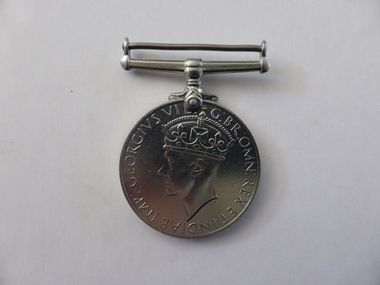
Medal, Campaign Stars & Medals, C 1945
... The Australian Service medal 1939-1945. George VI G Br OMN Rex Et Indiae Imp VX88010 E H Swan...A common item which relates to a local soldier and World War 11. warrnambool ernest henry swan The Australian Service medal 1939-1945. George VI G Br OMN Rex Et Indiae Imp VX88010 E H Swan Round white metal medal with bar at top. ...This medal was awarded to Ernest Henry Swan. He served from December 1941 to July 1942 in the Citizen Military Forces and from July 1942 to September 1944 in the Australian Imperial Forces. His reason for discharge was reserved occupation. He held the rank of corporal in 26th Motor regiment. He was born in Colac 19/11/1919 to Ernest Swan and Daisy Johnson. He died 04/08/2009 and is buried at the Warrnambool cemetery. During his life he farmed a soldiers’ settlers block in the Grasmere area, north of Warrnambool.A common item which relates to a local soldier and World War 11.Round white metal medal with bar at top. Australian Coat of arms on front with image of George 6th on the reverse. Flat edge on medal with recipient's name and number engraved. it is housed in small cream card box with a small sheet of paper with summary of conditions of campaign stars and medals. The Australian Service medal 1939-1945. George VI G Br OMN Rex Et Indiae Imp VX88010 E H Swanwarrnambool, ernest henry swan -
 Warrnambool and District Historical Society Inc.
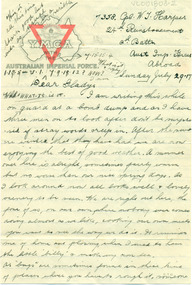
Document - World War Letters, Letters: July 1917 To Gladys from 7358 Pte William Thomas Harper, pre 1917
... Australia. Postmark ...CAMP B.O. SALISBURY 10 UY 17 001803.2-.6R: Leeter: 24th Reinforcement/2nd Battn/Aust Imp Forces/Abroad/Sunday July 29.17 to Dear Gladys 001803.7- 7R: Envelope: Red id stamp with black postmark 11.45AM, 20 SEP 17, Address-Miss Gladys Holmes/Byaduk/Hamilton/Victoria/Australia. ...Australia. Postmark ...CAMP B.O. SALISBURY 10 UY 17 001803.2-.6R: Leeter: 24th Reinforcement/2nd Battn/Aust Imp Forces/Abroad/Sunday July 29.17 to Dear Gladys 001803.7- 7R: Envelope: Red id stamp with black postmark 11.45AM, 20 SEP 17, Address-Miss Gladys Holmes/Byaduk/Hamilton/Victoria/Australia. ...Original documents, envelopes, diet sheet,letters and photograph sent from abroad from William Thomas harper to Gladys Holmes, Byaduk 7358 Pte William Thomas Harper b. 1896, Byaduk, 8th Battalion - 24th Reinforcements, embarked on 19th February 1917 on HMAT A70 Ballarat. Killed in France on 3rd May 1918. Buried Outtersteene Communal Cemetery Extension, Bailleul France. Cousin to twin AV Harper and RS Harper. one of eight correspondents to Gladys Holmes, ByadukOriginal documents, part of 14 sets of correspondence to Gladys Holmes and local Byaduk residents from local servicemen during WW 1..001803.1: Envelope 001803.2 -.6R: Buff coloured paper, 6 sheets with YMCA logo on map of Australia and red triangle. 001803.7 - 7R: Envelope has a red 1d stamp with 20 SEP 17 black ink postmark and blue ink handwritten address with sender's details. 001803.8 - 8R: note and Diet sheet Week Aug 26 - Sep 2 1917 001803.9 - 9R: Small sepia photograph of physical training soldier, and reverse has handwritten notes001803.1: Envelope, addressed to Miss Gladys Holmes/Byaduk/Hamilton/Victoria/Australia. Postmark ...CAMP B.O. SALISBURY 10 UY 17 001803.2-.6R: Leeter: 24th Reinforcement/2nd Battn/Aust Imp Forces/Abroad/Sunday July 29.17 to Dear Gladys 001803.7- 7R: Envelope: Red id stamp with black postmark 11.45AM, 20 SEP 17, Address-Miss Gladys Holmes/Byaduk/Hamilton/Victoria/Australia. Sender: 7538 8th Batt. Reverse: Received 24th Nov 1917. 18.8.17/Use old/address/still/ 24.8 A.I.F. etc 001803.8- 8R: Note andDIET SHEET Week Aug 26 to Sep 2, Breakfast Dinner & Tea 1001803.9 - 9R: Photograph of physical trainer and reverse has 11 lines of informationwilliam thomas harper, gladys holmes, byaduk ww1, letter, photograph, envelope, a.i.f., warrnambool, byaduk, william thomas harper, gladys holmes -
 Warrnambool and District Historical Society Inc.
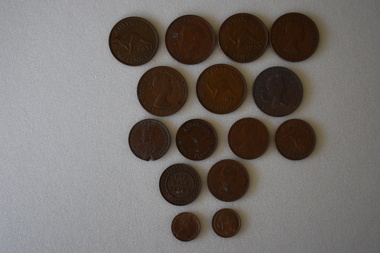
Australian Coins, Pennies, halfpennies and cents
... Reverse AUSTRALIA 1951.PENNY .2 Identical to .1 .3 Obverse identical to .1 .2 Reverse AUSTRALIA 1952 PENNY .4 Obverse ELIZABETH.11.DEI.GRATIA.REGINA.F;D;+ Reverse AUSTRALIA 1955 PENNY .5 Obverse identical to .4 Reverse AUSTRALIA 1958 PENNY .6 Identical to .5 .7 Obverse identical to .4 Reverse AUSTRALIA 1962 PENNY .8 Obverse GEORGIUS V D G BRITT OMN: REX; D; IND IMP Reverse ONE HALF PENNY .COMMONWEALTH OF AUSTRALIA The date is obscured by the chip. .9 Obverse identical to .8 Reverse Identical to .8 but the date is 1929 .10 Obverse GEORGIU VI D; G; BR;OMN REX;F;D;IND;IMP Reverse AUSTRALIA HALF PENNY 1948 .11 Obverse ELIZABETH .11. ...Reverse AUSTRALIA 1951.PENNY .2 Identical to .1 .3 Obverse identical to .1 .2 Reverse AUSTRALIA 1952 PENNY .4 Obverse ELIZABETH.11.DEI.GRATIA.REGINA.F;D;+ Reverse AUSTRALIA 1955 PENNY .5 Obverse identical to .4 Reverse AUSTRALIA 1958 PENNY .6 Identical to .5 .7 Obverse identical to .4 Reverse AUSTRALIA 1962 PENNY .8 Obverse GEORGIUS V D G BRITT OMN: REX; D; IND IMP Reverse ONE HALF PENNY .COMMONWEALTH OF AUSTRALIA The date is obscured by the chip. .9 Obverse identical to .8 Reverse Identical to .8 but the date is 1929 .10 Obverse GEORGIU VI D; G; BR;OMN REX;F;D;IND;IMP Reverse AUSTRALIA HALF PENNY 1948 .11 Obverse ELIZABETH .11. ...The pennies and half pennies were Australian currency minted prior to the introduction of decimal currency in Australia on 14th February, 1966. The one cent coins post dated the introduction of decimal currency.These coins are retained as examples of pre decimal currency in Australia. It is interesting to note that dating from 1951 to 1983 three monarchs are featured on the obverse.: King George V, King George VI, and Queen Elizabeth 11..The one cent coins are retained as they are no longer in useSeven copper pennies : .1 Obverse profile of King George V1 and text around the perimeter. Small green stain. Reverse profile of a kangaroo, a star and text . Smooth edge ..2 Identical to .1 excepting stain .3 Identical to .2 .4 Obverse profile of Queen Elizabeth 11. and text. Reverse -Profile of a kangaroo, a star and text . .5 Identical to .4 .6 Identical to .4. .7Identical to .4 Five copper half pennies: .8 Obverse Profile of King George V and text around the perimeter. Smooth edge.The coin has a small chip on one edge. Reverse A circle containing text and an outer ring containing text . .9 Identical to .8 .10 Obverse Profile of King George VI and text Reverse Profile of kangaroo,star and text .11 Obverse Profile of Queen Elizabeth 11 Reverse Profile of kangaroo, star and text .12 Obverse identical to .11 Reverse Identical to .11 .13 Obverse identical to .11 Reverse identical to .11 Two copper one cent pieces: .14 Obverse Profile of Queen Elizabeth 11 and text .15 Obverse identical to .14 . .1Obverse GEORGIUS VI D;G;BR OMN; REX FIDEI; DEF. Reverse AUSTRALIA 1951.PENNY .2 Identical to .1 .3 Obverse identical to .1 .2 Reverse AUSTRALIA 1952 PENNY .4 Obverse ELIZABETH.11.DEI.GRATIA.REGINA.F;D;+ Reverse AUSTRALIA 1955 PENNY .5 Obverse identical to .4 Reverse AUSTRALIA 1958 PENNY .6 Identical to .5 .7 Obverse identical to .4 Reverse AUSTRALIA 1962 PENNY .8 Obverse GEORGIUS V D G BRITT OMN: REX; D; IND IMP Reverse ONE HALF PENNY .COMMONWEALTH OF AUSTRALIA The date is obscured by the chip. .9 Obverse identical to .8 Reverse Identical to .8 but the date is 1929 .10 Obverse GEORGIU VI D; G; BR;OMN REX;F;D;IND;IMP Reverse AUSTRALIA HALF PENNY 1948 .11 Obverse ELIZABETH .11. DEI. GRATIA. REGINA + Reverse AUSTRALIA HALF PENNY 1955 .12 Obverse identical to .11 Reverse AUSTRALIA HALF PENNY 1955 .13 Obverse identical to .11 Reverse AUSTRALIA HALF PENNY 1959 .14 Obverse ELIZABETH 11 AUSTRALIA 1985 Reverse Feathered Tail Glider and herbage ,1 .15 Obverse identical to .14 date 1983 Reverse Identical to .14penny, half penny -
 Orbost & District Historical Society
medals, 1919-1920
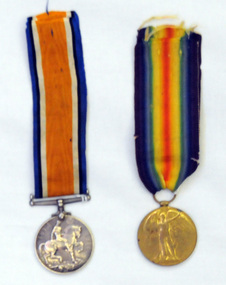
... Australia. These personal documents, photographs, medals and books give an insight into the human element of World War 1 ensuring that those who were part of the Orbost community and died while playing a vital role during this time are remembered. medals ww1 lawless-family Two medals in recognition of service during WW1. 1846.3 is a silver medal a WW1 1914-18 British War Medal. Obverse: Bare head of King George V facing left; text around, 'GEORGIVS V BRITT: OMN: REX ET IND: IMP ...These medals are part of the Lawless Collection. The Lawless family lived in Orbost from 1907 - c 1920. John Francis Lawless had a saddlery shop. He died at an early age - 47 years - June 7 1912, leaving his wife, Elizabeth and seven children. The eldest son, Victor Rowland lawless volunteered for serv ice in WW1 but did not leave Australia because of illness. The second son, Edward Vincent Lawless (b 1895 d 1917) worked for McCoy & Co. in Orbost, coachbuilding, undertakers, general blacksmiths and farriers, prior to enlisting in WW!. He was trained as a signaller and was sent to France where he was killed in action on 9.10.1917. Elizabeth Lawless worked as a ladies' nurse (midwife) in Orbost prior to leaving the district in 1920. She lived to 6.6.1975 aged 104 years. The British War Medal was a medal given to people who had fought in the First World War. The Victory Medal (also called the Inter-Allied Victory Medal) is a First World War campaign medal of Britain and her then colonies and dominions which included Australia.These personal documents, photographs, medals and books give an insight into the human element of World War 1 ensuring that those who were part of the Orbost community and died while playing a vital role during this time are remembered.Two medals in recognition of service during WW1. 1846.3 is a silver medal a WW1 1914-18 British War Medal. Obverse: Bare head of King George V facing left; text around, 'GEORGIVS V BRITT: OMN: REX ET IND: IMP:'; the artist's initials 'B.M.' (Bertram MacKennal) are on the neck truncation. Reverse: Naked figure of St. George on horseback advancing right trampling a shield bearing an eagle design and a skull and crossbone. It has a blue/white/orange striped ribbon attached. 1846.4 is a gold coloured medal. The obverse in the medal shows the winged, full-length, full-front, figure of 'Victory' with her left arm extended and holding a palm branch in her right hand. The reverse has the words ‘THE GREAT / WAR FOR / CIVILISATION / 1914-1919' in four lines, all surrounded by a laurel wreath. It has a purple/blue/green/yellow and orange striped ribbon attached.medals ww1 lawless-family -
 The Beechworth Burke Museum
Medal - Service Medal, c1948
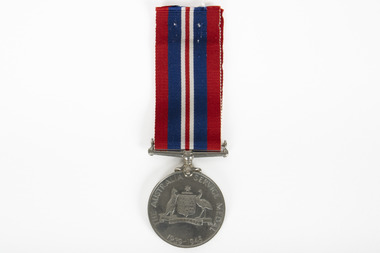
... FRONT: AUSTRALIA SERVICE MEDAL / 1939-1945 / BACK: G:BR:OMN:REX ET INDIAE IMP: GEORGIV S VI /...Burke Museum Beechworth Army service Australian Women's Army Service army medal WW2 WWII World War Two FRONT: AUSTRALIA SERVICE MEDAL / 1939-1945 / BACK: G:BR:OMN:REX ET INDIAE IMP: GEORGIV S VI / A army service medal featuring a silver pendant and a dark blue, white, and red striped ribbon Medal Service Medal ...An Australia Service Medal 1939 - 1945, issued to Corporal Joan Cahill. During her service, Joan serviced in the Signals Branch of the Australian Women's Army Service.A army service medal featuring a silver pendant and a dark blue, white, and red striped ribbonFRONT: AUSTRALIA SERVICE MEDAL / 1939-1945 / BACK: G:BR:OMN:REX ET INDIAE IMP: GEORGIV S VI /burke museum, beechworth, army service, australian women's army service, army medal, ww2, wwii, world war two -
 The Beechworth Burke Museum
Medal - Service Medal, c1948
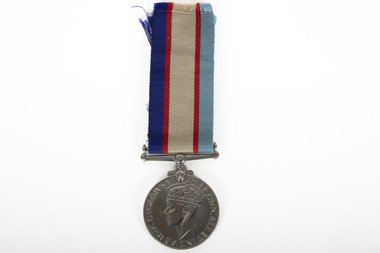
... Burke Museum Beechworth Army service Australian Women's Army Service army medal WW2 WWII World War Two FRONT: 1939 / 1945 BACK: G:BR:OMN:REX ET INDIAE IMP: GEORGIV S VI A army service medal featuring a silver pendant and a light blue, dark blue, white, and red striped ribbon Medal Service Medal ...An Army Medal 1939 - 1945, issued to Corporal Joan Cahill. During her service, Joan serviced in the Signals Branch of the Australian Women's Army Service.A army service medal featuring a silver pendant and a light blue, dark blue, white, and red striped ribbonFRONT: 1939 / 1945 BACK: G:BR:OMN:REX ET INDIAE IMP: GEORGIV S VIburke museum, beechworth, army service, australian women's army service, army medal, ww2, wwii, world war two -
 Flagstaff Hill Maritime Museum and Village
Currency - Coin, 1896
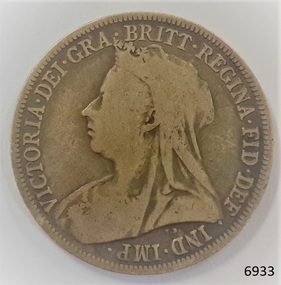
... It is part of the special silver and gold coins minted 1887-1893 to celebrate the 50 years Jubilee of Queen Victoria’s reign 1837-1887. flagstaff hill warrnambool shipwrecked coast flagstaff hill maritime museum maritime museum shipwreck coast flagstaff hill maritime village great ocean road coin currency money legal tender australian currency history royal mint british shilling 1896 thomas brock edward paynter great britain shilling queen victoria currency queen victoria 50 years golden jubilee shilling colonial australia currency numismatics Obverse “VICTORIA . DEI . GRA . BRITT . REGINA . FID . DEF . IND . IMP ...This Great Britain one shilling coin is dated 1896, which is during the reign of Queen Victoria. There were over 9 million of these coins minted. Queen Victoria succeeded King William IV to the British Throne in 1837 – she was only 18 years old at the time – and she ruled until 1901. British coins such as this one shilling were in circulation in the colony of Australia until 1910, when the Commonwealth of Australia began producing its own coinage. This one shilling coin was minted by the Royal Mint at Royal Mint Court, in Little Tower Hill, London, England. Coins for circulation in the Kingdom of England, Great Britain and most of the British Empire were produced here until the 1960’s when the Royal Mint shifted location to Wales. There are three main groups of shillings produced during Queen Victoria’s reign:- - The Young Head; 1837-1887, in 8 different versions, on the obverse showing the Queen’s maturing face over 50 years. - The Junior Head; 1887-1892, minted when Queen Victoria had been reigning for 50 years. Her head was smaller on the coins minted 1887-1889 than on those shillings minted 1889-1892. - The Old Head; 1893-1901, shows the veiled head of Queen Victoria. The obverse side of the coin was designed by Thomas Brock. The inscription’s translation is “Victoria by the Grace of God, Queen of the British territories, Defender of the Faith, Empress of India”. The reverse side of the coin was designed by Edward Paynter. The inscription "HONI SOIT QUI MAL Y PENSE" translates as "Evil be to him who evil thinks". AUSTRALIAN CURRENCY The early settlers of Australia brought their own currency with them so a wide variety of coins, tokens and even ‘promissory’ notes (often called IOU’s) were used in the exchange of goods and services. In 1813 Spanish dollars were imported and converted for use by punching a hole in the centre of the coin. Both the outer ring, called the holey dollar, and the punched out ‘hole’, called the dump, were then used as the official currency. In 1825 the British Government passed the Sterling Silver Currency Act, making the British Pound the only legal form of currency in the Australian colonies. Not enough British currency was imported into the colony so other forms of currency were still used. In the mid 1800’s Australia entered the Gold Rush period when many made their fortunes. Gold was used for trading, often shaped into ingots, stamped with their weight and purity, and one pound tokens. In 1852 the Adelaide Assay Office, without British approval, made Australia’s first gold coin to meet the need for currency in South Australia after the Gold Rush began. In 1855 the official Australian Mint opened in Sydney, operating as a branch of the Royal Mint in London, and the gold was turned into coins called ‘sovereigns’. Other branches also opened in Melbourne and Perth. Up to the time of Australia becoming a federation in 1901 its currency included British copper and silver coins, Australian gold sovereigns, locally minted copper trade tokens, private banknotes, New South Wales and Queensland government treasury notes and Queensland government banknotes. After Federation the Australian government began to overwrite privately issued notes and prepared for the introduction of its own currency. In 1910 a National Australian Currency was formed, based on the British currency of ‘pounds, shillings and pence’ and the first Commonwealth coining was produced. In 1966, on February 14th, Australia changed over to the decimal currency system of dollars and cents. Australia did not have its own currency in the colonial times. Settlers brought money from other countries and they also traded goods such as grain when currency was scarce. For a long time there was no standardised value for the different currencies. In 1825 British currency became the only official currency in the colony of Australia and coins such as this silver shilling were imported into Australia to replace the mixture of foreign currency. Australia became a Federated nation on 1st January 1901. In 1910 National Australian Currency was formed and Australia produced its own currency, based on the British ‘pounds, shillings and pence’. The British currency was no longer valid. This silver shilling is of national significance as it represents the British currency used in Australia from 1825-1910. This silver shilling is also of significance to Australia as part one of the British Colonies ruled by Queen Victoria. It is part of the special silver and gold coins minted 1887-1893 to celebrate the 50 years Jubilee of Queen Victoria’s reign 1837-1887.Coin, Great Britain Shilling, 1896. Silver coin, round. Obverse; Queen Victoria head, ‘Old Head’, looking left. Reverse; 3 shields (each crowned) - 3 passant lions (England), 1 rampant lion (Scotland), golden harp (Northern Ireland) - floral symbols between them – 1 rose, 2 thistles. Inscriptions on both sides of coin.Obverse “VICTORIA . DEI . GRA . BRITT . REGINA . FID . DEF . IND . IMP” Reverse “ONE SHILLING, 1896, Inner band, some letters hidden - HONI SO VI Y PENSE” flagstaff hill, warrnambool, shipwrecked coast, flagstaff hill maritime museum, maritime museum, shipwreck coast, flagstaff hill maritime village, great ocean road, coin, currency, money, legal tender, australian currency history, royal mint, british shilling 1896, thomas brock, edward paynter, great britain shilling, queen victoria currency, queen victoria 50 years golden jubilee shilling, colonial australia currency, numismatics -
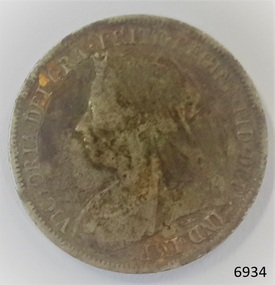 Flagstaff Hill Maritime Museum and Village
Currency - Coin, 1896
... It is part of the special silver and gold coins minted 1887-1893 to celebrate the 50 years Jubilee of Queen Victoria’s reign 1837-1887. flagstaff hill warrnambool shipwrecked coast flagstaff hill maritime museum maritime museum shipwreck coast flagstaff hill maritime village great ocean road coin currency money legal tender australian currency history royal mint british shilling 1896 thomas brock edward paynter great britain shilling queen victoria currency queen victoria 50 years golden jubilee shilling colonial australia currency numismatics Obverse “VICTORIA . DEI . GRA . BRITT . REGINA . FID . DEF . IND . IMP ...This Great Britain one shilling coin is dated 1896, which is during the reign of Queen Victoria. There were over 9 million of these coins minted. Queen Victoria succeeded King William IV to the British Throne in 1837 – she was only 18 years old at the time – and she ruled until 1901. British coins such as this one shilling were in circulation in the colony of Australia until 1910, when the Commonwealth of Australia began producing its own coinage. This one shilling coin was minted by the Royal Mint at Royal Mint Court, in Little Tower Hill, London, England. Coins for circulation in the Kingdom of England, Great Britain and most of the British Empire were produced here until the 1960’s when the Royal Mint shifted location to Wales. There are three main groups of shillings produced during Queen Victoria’s reign:- - The Young Head; 1837-1887, in 8 different versions, on the obverse showing the Queen’s maturing face over 50 years. - The Junior Head; 1887-1892, minted when Queen Victoria had been reigning for 50 years. Her head was smaller on the coins minted 1887-1889 than on those shillings minted 1889-1892. - The Old Head; 1893-1901, shows the veiled head of Queen Victoria. The obverse side of the coin was designed by Thomas Brock. The inscription’s translation is “Victoria by the Grace of God, Queen of the British territories, Defender of the Faith, Empress of India”. The reverse side of the coin was designed by Edward Paynter. The inscription "HONI SOIT QUI MAL Y PENSE" translates as "Evil be to him who evil thinks". AUSTRALIAN CURRENCY The early settlers of Australia brought their own currency with them so a wide variety of coins, tokens and even ‘promissory’ notes (often called IOU’s) were used in the exchange of goods and services. In 1813 Spanish dollars were imported and converted for use by punching a hole in the centre of the coin. Both the outer ring, called the holey dollar, and the punched out ‘hole’, called the dump, were then used as the official currency. In 1825 the British Government passed the Sterling Silver Currency Act, making the British Pound the only legal form of currency in the Australian colonies. Not enough British currency was imported into the colony so other forms of currency were still used. In the mid 1800’s Australia entered the Gold Rush period when many made their fortunes. Gold was used for trading, often shaped into ingots, stamped with their weight and purity, and one pound tokens. In 1852 the Adelaide Assay Office, without British approval, made Australia’s first gold coin to meet the need for currency in South Australia after the Gold Rush began. In 1855 the official Australian Mint opened in Sydney, operating as a branch of the Royal Mint in London, and the gold was turned into coins called ‘sovereigns’. Other branches also opened in Melbourne and Perth. Up to the time of Australia becoming a federation in 1901 its currency included British copper and silver coins, Australian gold sovereigns, locally minted copper trade tokens, private banknotes, New South Wales and Queensland government treasury notes and Queensland government banknotes. After Federation the Australian government began to overwrite privately issued notes and prepared for the introduction of its own currency. In 1910 a National Australian Currency was formed, based on the British currency of ‘pounds, shillings and pence’ and the first Commonwealth coining was produced. In 1966, on February 14th, Australia changed over to the decimal currency system of dollars and cents. Australia did not have its own currency in the colonial times. Settlers brought money from other countries and they also traded goods such as grain when currency was scarce. For a long time there was no standardised value for the different currencies. In 1825 British currency became the only official currency in the colony of Australia and coins such as this silver shilling were imported into Australia to replace the mixture of foreign currency. Australia became a Federated nation on 1st January 1901. In 1910 National Australian Currency was formed and Australia produced its own currency, based on the British ‘pounds, shillings and pence’. The British currency was no longer valid. This silver shilling is of national significance as it represents the British currency used in Australia from 1825-1910. This silver shilling is also of significance to Australia as part one of the British Colonies ruled by Queen Victoria. It is part of the special silver and gold coins minted 1887-1893 to celebrate the 50 years Jubilee of Queen Victoria’s reign 1837-1887. Coin, Great Britain Shilling, 1896. Silver coin, round. Obverse; Queen Victoria head, ‘Old Head’, looking left. Reverse; 3 shields (each crowned) - 3 passant lions (England), 1 rampant lion (Scotland), golden harp (Northern Ireland) - floral symbols between them – 1 rose, 2 thistles. Inscriptions on both sides of coin.Obverse “VICTORIA . DEI . GRA . BRITT . REGINA . FID . DEF . IND . IMP” Reverse “ONE SHILLING, 1896”, Inner band, [some letters hidden] “HONI SO VI Y PENSE” flagstaff hill, warrnambool, shipwrecked coast, flagstaff hill maritime museum, maritime museum, shipwreck coast, flagstaff hill maritime village, great ocean road, coin, currency, money, legal tender, australian currency history, royal mint, british shilling 1896, thomas brock, edward paynter, great britain shilling, queen victoria currency, queen victoria 50 years golden jubilee shilling, colonial australia currency, numismatics -
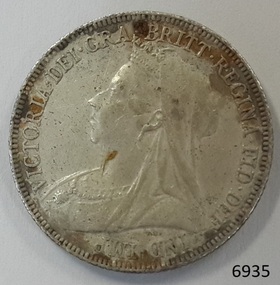 Flagstaff Hill Maritime Museum and Village
Currency - Coin, 1897
... It is part of the special silver and gold coins minted 1887-1893 to celebrate the 50 years Jubilee of Queen Victoria’s reign 1837-1887. flagstaff hill warrnambool shipwrecked coast flagstaff hill maritime museum maritime museum shipwreck coast flagstaff hill maritime village great ocean road coin currency money legal tender australian currency history royal mint british shilling 1897 thomas brock edward paynter great britain shilling queen victoria currency queen victoria 50 years golden jubilee shilling colonial australia currency numismatics Obverse “VICTORIA . DEI . GRA . BRITT . REGINA . FID . DEF . IND . IMP ...This Great Britain one shilling coin is dated 1897, which is during the reign of Queen Victoria. There were over 6 million of these coins minted. Queen Victoria succeeded King William IV to the British Throne in 1837 – she was only 18 years old at the time – and she ruled until 1901. British coins such as this one shilling were in circulation in the colony of Australia until 1910, when the Commonwealth of Australia began producing its own coinage. This one shilling coin was minted by the Royal Mint at Royal Mint Court, in Little Tower Hill, London, England. Coins for circulation in the Kingdom of England, Great Britain and most of the British Empire were produced here until the 1960’s when the Royal Mint shifted location to Wales. There are three main groups of shillings produced during Queen Victoria’s reign:- - The Young Head; 1837-1887, in 8 different versions, on the obverse showing the Queen’s maturing face over 50 years. - The Junior Head; 1887-1892, minted when Queen Victoria had been reigning for 50 years. Her head was smaller on the coins minted 1887-1889 than on those shillings minted 1889-1892. - The Old Head; 1893-1901, shows the veiled head of Queen Victoria. The obverse side of the coin was designed by Thomas Brock. The inscription’s translation is “Victoria by the Grace of God, Queen of the British territories, Defender of the Faith, Empress of India”. The reverse side of the coin was designed by Edward Paynter. The inscription "HONI SOIT QUI MAL Y PENSE" translates as "Evil be to him who evil thinks". AUSTRALIAN CURRENCY The early settlers of Australia brought their own currency with them so a wide variety of coins, tokens and even ‘promissory’ notes (often called IOU’s) were used in the exchange of goods and services. In 1813 Spanish dollars were imported and converted for use by punching a hole in the centre of the coin. Both the outer ring, called the holey dollar, and the punched out ‘hole’, called the dump, were then counter-stamped and used as the official currency. In 1825 the British Government passed the Sterling Silver Currency Act, making the British Pound the only legal form of currency in the Australian colonies. Not enough British currency was imported into the colony so other forms of currency were still used. In the mid 1800’s Australia entered the Gold Rush period when many made their fortunes. Gold was used for trading, often shaped into ingots, stamped with their weight and purity, and one pound tokens. In 1852 the Adelaide Assay Office, without British approval, made Australia’s first gold coin to meet the need for currency in South Australia after the Gold Rush began. In 1855 the official Australian Mint opened in Sydney, operating as a branch of the Royal Mint in London, and the gold was turned into coins called ‘sovereigns’. Other branches also opened in Melbourne and Perth. Up to the time of Australia becoming a federation in 1901 its currency included British copper and silver coins, Australian gold sovereigns, locally minted copper trade tokens, private banknotes, New South Wales and Queensland government treasury notes and Queensland government banknotes. After Federation the Australian government began to overwrite privately issued notes and prepared for the introduction of its own currency. In 1910 a National Australian Currency was formed, based on the British currency of ‘pounds, shillings and pence’ and the first Commonwealth coining was produced, removing the power from the States. In 1966, on February 14th, Australia changed over to the decimal currency system of dollars and cents. Australia did not have its own currency in the colonial times. Settlers brought money from other countries and they also traded goods such as grain when currency was scarce. For a long time there was no standardised value for the different currencies. In 1825 British currency became the only official currency in the colony of Australia and coins such as this silver shilling were imported into Australia to replace the mixture of foreign currency. Australia became a Federated nation on 1st January 1901. In 1910 National Australian Currency was formed and Australia produced its own currency, based on the British ‘pounds, shillings and pence’. The British currency was no longer valid. This silver shilling is of national significance as it represents the British currency used in Australia from 1825-1910. This silver shilling is also of significance to Australia as part one of the British Colonies ruled by Queen Victoria. It is part of the special silver and gold coins minted 1887-1893 to celebrate the 50 years Jubilee of Queen Victoria’s reign 1837-1887. Coin, Great Britain Shilling, 1897. Silver coin, round. Obverse; Queen Victoria head, ‘Old Head’, looking left. Reverse; 3 shields (each crowned) - 3 passant lions (England), 1 rampant lion (Scotland), golden harp (Northern Ireland) - floral symbols between them – 1 open rose, 2 thistles. Inscriptions on both sides of coin.Obverse “VICTORIA . DEI . GRA . BRITT . REGINA . FID . DEF . IND . IMP” Reverse “ONE SHILLING, 1897, Inner band, some letters hidden - HONI SO VI Y PENSE” flagstaff hill, warrnambool, shipwrecked coast, flagstaff hill maritime museum, maritime museum, shipwreck coast, flagstaff hill maritime village, great ocean road, coin, currency, money, legal tender, australian currency history, royal mint, british shilling 1897, thomas brock, edward paynter, great britain shilling, queen victoria currency, queen victoria 50 years golden jubilee shilling, colonial australia currency, numismatics -
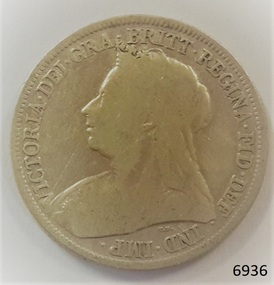 Flagstaff Hill Maritime Museum and Village
Currency - Coin, 1897
... It is part of the special silver and gold coins minted 1887-1893 to celebrate the 50 years Jubilee of Queen Victoria’s reign 1837-1887. flagstaff hill warrnambool shipwrecked coast flagstaff hill maritime museum maritime museum shipwreck coast flagstaff hill maritime village great ocean road coin currency money legal tender australian currency history royal mint british shilling 1897 thomas brock edward paynter great britain shilling queen victoria currency queen victoria 50 years golden jubilee shilling colonial australia currency numismatics Obverse “VICTORIA . DEI . GRA . BRITT . REGINA . FID . DEF . IND . IMP ...This Great Britain one shilling coin is dated 1897, which is during the reign of Queen Victoria. There were over 6 million of these coins minted. Queen Victoria succeeded King William IV to the British Throne in 1837 – she was only 18 years old at the time – and she ruled until 1901. British coins such as this one shilling were in circulation in the colony of Australia until 1910, when the Commonwealth of Australia began producing its own coinage. This one shilling coin was minted by the Royal Mint at Royal Mint Court, in Little Tower Hill, London, England. Coins for circulation in the Kingdom of England, Great Britain and most of the British Empire were produced here until the 1960’s when the Royal Mint shifted location to Wales. There are three main groups of shillings produced during Queen Victoria’s reign:- - The Young Head; 1837-1887, in 8 different versions, on the obverse showing the Queen’s maturing face over 50 years. - The Junior Head; 1887-1892, minted when Queen Victoria had been reigning for 50 years. Her head was smaller on the coins minted 1887-1889 than on those shillings minted 1889-1892. - The Old Head; 1893-1901, shows the veiled head of Queen Victoria. The obverse side of the coin was designed by Thomas Brock. The inscription’s translation is “Victoria by the Grace of God, Queen of the British territories, Defender of the Faith, Empress of India”. The reverse side of the coin was designed by Edward Paynter. The inscription "HONI SOIT QUI MAL Y PENSE" translates as "Evil be to him who evil thinks". AUSTRALIAN CURRENCY The early settlers of Australia brought their own currency with them so a wide variety of coins, tokens and even ‘promissory’ notes (often called IOU’s) were used in the exchange of goods and services. In 1813 Spanish dollars were imported and converted for use by punching a hole in the centre of the coin. Both the outer ring, called the holey dollar, and the punched out ‘hole’, called the dump, were then counter-stamped and used as the official currency. In 1825 the British Government passed the Sterling Silver Currency Act, making the British Pound the only legal form of currency in the Australian colonies. Not enough British currency was imported into the colony so other forms of currency were still used. In the mid 1800’s Australia entered the Gold Rush period when many made their fortunes. Gold was used for trading, often shaped into ingots, stamped with their weight and purity, and one pound tokens. In 1852 the Adelaide Assay Office, without British approval, made Australia’s first gold coin to meet the need for currency in South Australia after the Gold Rush began. In 1855 the official Australian Mint opened in Sydney, operating as a branch of the Royal Mint in London, and the gold was turned into coins called ‘sovereigns’. Other branches also opened in Melbourne and Perth. Up to the time of Australia becoming a federation in 1901 its currency included British copper and silver coins, Australian gold sovereigns, locally minted copper trade tokens, private banknotes, New South Wales and Queensland government treasury notes and Queensland government banknotes. After Federation the Australian government began to overwrite privately issued notes and prepared for the introduction of its own currency. In 1910 a National Australian Currency was formed, based on the British currency of ‘pounds, shillings and pence’ and the first Commonwealth coining was produced, removing the power from the States. In 1966, on February 14th, Australia changed over to the decimal currency system of dollars and cents. Australia did not have its own currency in the colonial times. Settlers brought money from other countries and they also traded goods such as grain when currency was scarce. For a long time there was no standardised value for the different currencies. In 1825 British currency became the only official currency in the colony of Australia and coins such as this silver shilling were imported into Australia to replace the mixture of foreign currency. Australia became a Federated nation on 1st January 1901. In 1910 National Australian Currency was formed and Australia produced its own currency, based on the British ‘pounds, shillings and pence’. The British currency was no longer valid. This silver shilling is of national significance as it represents the British currency used in Australia from 1825-1910. This silver shilling is also of significance to Australia as part one of the British Colonies ruled by Queen Victoria. It is part of the special silver and gold coins minted 1887-1893 to celebrate the 50 years Jubilee of Queen Victoria’s reign 1837-1887. Coin, Great Britain Shilling, 1897. Silver coin, round. Obverse; Queen Victoria head, ‘Old Head’, looking left. Reverse; 3 shields (each crowned) - 3 passant lions (England), 1 rampant lion (Scotland), golden harp (Northern Ireland) - floral symbols between them – 1 rose, 2 thistles. Inscriptions on both sides of coin.Obverse “VICTORIA . DEI . GRA . BRITT . REGINA . FID . DEF . IND . IMP” Reverse “ONE SHILLING, 1897, Inner band, some letters hidden - HONI SO VI Y PENSE” flagstaff hill, warrnambool, shipwrecked coast, flagstaff hill maritime museum, maritime museum, shipwreck coast, flagstaff hill maritime village, great ocean road, coin, currency, money, legal tender, australian currency history, royal mint, british shilling 1897, thomas brock, edward paynter, great britain shilling, queen victoria currency, queen victoria 50 years golden jubilee shilling, colonial australia currency, numismatics -
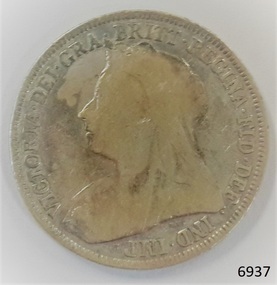 Flagstaff Hill Maritime Museum and Village
Currency - Coin, 1898
... It is part of the special silver and gold coins minted 1887-1893 to celebrate the 50 years Jubilee of Queen Victoria’s reign 1837-1887. flagstaff hill warrnambool shipwrecked coast flagstaff hill maritime museum maritime museum shipwreck coast flagstaff hill maritime village great ocean road coin currency money legal tender australian currency history royal mint british shilling 1898 thomas brock edward paynter great britain shilling queen victoria currency queen victoria 50 years golden jubilee shilling colonial australia currency numismatics Obverse “VICTORIA . DEI . GRA . BRITT . REGINA . FID . DEF . IND . IMP ...This Great Britain one shilling coin is dated 1898, which is during the reign of Queen Victoria. There were over 9 million of these coins minted. Queen Victoria succeeded King William IV to the British Throne in 1837 – she was only 18 years old at the time – and she ruled until 1901. British coins such as this one shilling were in circulation in the colony of Australia until 1910, when the Commonwealth of Australia began producing its own coinage. This one shilling coin was minted by the Royal Mint at Royal Mint Court, in Little Tower Hill, London, England. Coins for circulation in the Kingdom of England, Great Britain and most of the British Empire were produced here until the 1960’s when the Royal Mint shifted location to Wales. There are three main groups of shillings produced during Queen Victoria’s reign:- - The Young Head; 1837-1887, in 8 different versions, on the obverse showing the Queen’s maturing face over 50 years. - The Junior Head; 1887-1892, minted when Queen Victoria had been reigning for 50 years. Her head was smaller on the coins minted 1887-1889 than on those shillings minted 1889-1892. - The Old Head; 1893-1901, shows the veiled head of Queen Victoria. The obverse side of the coin was designed by Thomas Brock. The inscription’s translation is “Victoria by the Grace of God, Queen of the British territories, Defender of the Faith, Empress of India”. The reverse side of the coin was designed by Edward Paynter. The inscription "HONI SOIT QUI MAL Y PENSE" translates as "Evil be to him who evil thinks". AUSTRALIAN CURRENCY The early settlers of Australia brought their own currency with them so a wide variety of coins, tokens and even ‘promissory’ notes (often called IOU’s) were used in the exchange of goods and services. In 1813 Spanish dollars were imported and converted for use by punching a hole in the centre of the coin. Both the outer ring, called the holey dollar, and the punched out ‘hole’, called the dump, were then used as the official currency. In 1825 the British Government passed the Sterling Silver Currency Act, making the British Pound the only legal form of currency in the Australian colonies. Not enough British currency was imported into the colony so other forms of currency were still used. In the mid 1800’s Australia entered the Gold Rush period when many made their fortunes. Gold was used for trading, often shaped into ingots, stamped with their weight and purity, and one pound tokens. In 1852 the Adelaide Assay Office, without British approval, made Australia’s first gold coin to meet the need for currency in South Australia after the Gold Rush began. In 1855 the official Australian Mint opened in Sydney, operating as a branch of the Royal Mint in London, and the gold was turned into coins called ‘sovereigns’. Other branches also opened in Melbourne and Perth. Up to the time of Australia becoming a federation in 1901 its currency included British copper and silver coins, Australian gold sovereigns, locally minted copper trade tokens, private banknotes, New South Wales and Queensland government treasury notes and Queensland government banknotes. After Federation the Australian government began to overwrite privately issued notes and prepared for the introduction of its own currency. In 1910 a National Australian Currency was formed, based on the British currency of ‘pounds, shillings and pence’ and the first Commonwealth coining was produced. In 1966, on February 14th, Australia changed over to the decimal currency system of dollars and cents. Australia did not have its own currency in the colonial times. Settlers brought money from other countries and they also traded goods such as grain when currency was scarce. For a long time there was no standardised value for the different currencies. In 1825 British currency became the only official currency in the colony of Australia and coins such as this silver shilling were imported into Australia to replace the mixture of foreign currency. Australia became a Federated nation on 1st January 1901. In 1910 National Australian Currency was formed and Australia produced its own currency, based on the British ‘pounds, shillings and pence’. The British currency was no longer valid. This silver shilling is of national significance as it represents the British currency used in Australia from 1825-1910. This silver shilling is also of significance to Australia as part one of the British Colonies ruled by Queen Victoria. It is part of the special silver and gold coins minted 1887-1893 to celebrate the 50 years Jubilee of Queen Victoria’s reign 1837-1887. Coin, Great Britain Shilling, 1898. Silver coin, round. Obverse; Queen Victoria head, ‘Old Head’, looking left. Reverse; 3 shields (each crowned) - 3 passant lions (England), 1 rampant lion (Scotland), golden harp (Northern Ireland) - floral symbols between them – 1 rose, 2 thistles. Inscriptions on both sides of coin.Obverse “VICTORIA . DEI . GRA . BRITT . REGINA . FID . DEF . IND . IMP” Reverse “ONE SHILLING, 1898, Inner band, some letters hidden - HONI SO VI Y PENSE” flagstaff hill, warrnambool, shipwrecked coast, flagstaff hill maritime museum, maritime museum, shipwreck coast, flagstaff hill maritime village, great ocean road, coin, currency, money, legal tender, australian currency history, royal mint, british shilling 1898, thomas brock, edward paynter, great britain shilling, queen victoria currency, queen victoria 50 years golden jubilee shilling, colonial australia currency, numismatics -
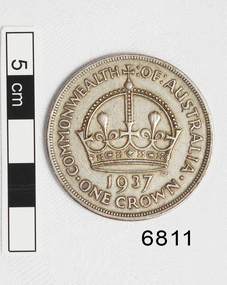 Flagstaff Hill Maritime Museum and Village
Coin, 1937
... AUSTRALIA ONE CROWN". "1937". Reverse has head of King George, "GEORGIVS VI G BR OMN REX F D IND IMP" ... "COMMONWEALTH OF AUSTRALIA ONE CROWN". "GEORGIVS VI G BR OMN REX F D IND IMP" ...AUSTRALIA ONE CROWN". "1937". Reverse has head of King George, "GEORGIVS VI G BR OMN REX F D IND IMP" Coin ...Coin, silver, One Crown. Obverse has a crown, dated 1937. "COMMONWEALTH OF AUSTRALIA ONE CROWN". "1937". Reverse has head of King George, "GEORGIVS VI G BR OMN REX F D IND IMP" "COMMONWEALTH OF AUSTRALIA ONE CROWN". "GEORGIVS VI G BR OMN REX F D IND IMP" flagstaff hill, warrnambool, shipwrecked-coast, flagstaff-hill, flagstaff-hill-maritime-museum, maritime-museum, shipwreck-coast, flagstaff-hill-maritime-village, coin, one crown coin, currency, australian currency -
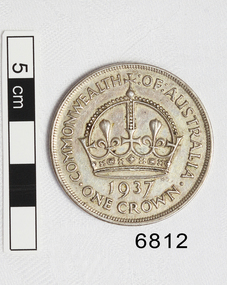 Flagstaff Hill Maritime Museum and Village
Coin, 1937
... AUSTRALIA ONE CROWN". "1937". Reverse has head of King George, "GEORGIVS VI G BR OMN REX F D IND IMP" ..."COMMONWEALTH OF AUSTRALIA ONE CROWN". "GEORGIVS VI G BR OMN REX F D IND IMP"...AUSTRALIA ONE CROWN". "1937". Reverse has head of King George, "GEORGIVS VI G BR OMN REX F D IND IMP" Coin ...Coin, silver, One Crown. Obverse has a crown, dated 1937. "COMMONWEALTH OF AUSTRALIA ONE CROWN". "1937". Reverse has head of King George, "GEORGIVS VI G BR OMN REX F D IND IMP" "COMMONWEALTH OF AUSTRALIA ONE CROWN". "GEORGIVS VI G BR OMN REX F D IND IMP"flagstaff hill, warrnambool, shipwrecked-coast, flagstaff-hill, flagstaff-hill-maritime-museum, maritime-museum, shipwreck-coast, flagstaff-hill-maritime-village, one crown, australian currency -
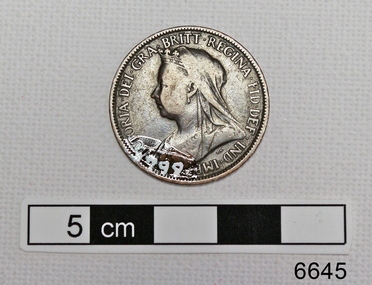 Flagstaff Hill Maritime Museum and Village
Currency - Coin, 1900
... Australia in 1901.. Flagstaff Hill Flagstaff Hill Maritime Museum and Village Warrnambool Maritime Museum Maritime Village Great Ocean Road Shipwreck Coast coin British coin currency half penny 20th century Queen Victoria old Queen Victoria Brittania 1900 prior to Federation Obverse: "VICTORIA : DEI : GRA : BRITT : REGINA : FID : IND : IMP : Reverse: "HALF PENNY" "1900" Coin, Queen Victorian Half Penny, 1900, Obverse shows the "Old Head" of Queen Victoria. ...The image on this coin shows a British monarch, the mature Queen Victoria, in 1900. This was the period just prior to Australia's Federation in 1901,This coin represents the currency used in Australia at the turn of the 20th century, and just prior to the Federation of Australia in 1901..Coin, Queen Victorian Half Penny, 1900, Obverse shows the "Old Head" of Queen Victoria. Reverse shows Britannia. Coin well worn.Obverse: "VICTORIA : DEI : GRA : BRITT : REGINA : FID : IND : IMP : Reverse: "HALF PENNY" "1900"flagstaff hill, flagstaff hill maritime museum and village, warrnambool, maritime museum, maritime village, great ocean road, shipwreck coast, coin, british coin, currency, half penny, 20th century, queen victoria, old queen victoria, brittania, 1900, prior to federation -
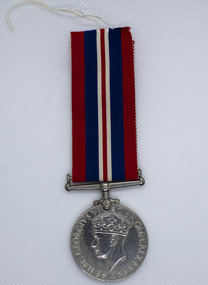 Australian Commando Association - Victoria
Medal - War Medal- William Alsop 2/10 Commando Squadron, c. 1945
... This object displays Historic Significance through its connection with William Donald Alsop, his service in the 2/10 Command Squadron and World War Two. alsop second world war ww2 wwii world war two australian commando On front of medal, above the lion: 1939/1945 On reverse of medal, in a circle around the outside: GEORGIVS VI G. BR. OMN. REX ET INDIAE IMP ...This object was issued to William Donald Alsop for his service in the 2/10 Commando Squadron during the Second World War.This object displays Historic Significance through its connection with William Donald Alsop, his service in the 2/10 Command Squadron and World War Two.The War Medal 1939-45 is cupro-nickel with the crowned effigy of King George VI on the obverse. The reverse has a lion standing on a fallen dragon. The top of the reverse shows the dates 1939 and 1945. The riband is 32 millimetres wide with a 5½ millimetres wide Army red band, a 3 millimetres wide navy blue band, a 6 millimetres wide dark green band, a 3 millimetres wide yellow band, a 6 millimetres wide dark green band, a 3 millimetres wide Royal Air Force blue band and a 5½ millimetres wide Army red band. The forests and beaches of the Pacific are represented by the dark green and yellow bands respectively, while the Royal Navy and Merchant Navy, the Armies and the Air Forces are represented by the dark blue, red and light blue bands respectively.On front of medal, above the lion: 1939/1945 On reverse of medal, in a circle around the outside: GEORGIVS VI G. BR. OMN. REX ET INDIAE IMP:alsop, second world war, ww2, wwii, world war two, australian commando -
 Federation University Historical Collection
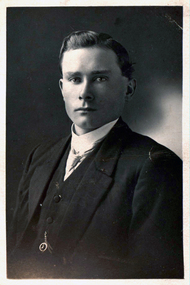
Photograph - Black and White, Chatham-Holmes Collection: Lance Corporal Horace Pickford, c1914
... Horace Pickford married after enlistment, and his wife Mrs Sarah Ida Isabel (Ida) Pickford of 261 Malvern Road South Yarra became his next of kin. pickford chatham-holmes collection horace pickford australian imperial forces c company active service pickford collection world war one yeovil Written on back: "Lance Corporal Horace Pickford 2882 C Company 58th Battalion Aust Imp Forces On Active Service Abroad" Postcard - black and white portrait of Horace Pickford. ...Horace Pickford was born at Clunes, Victoria. Private Horace Pickford (2882) enlisted for service during [[World War One]] at Melbourne. on 18 June 1915. He gave his mother, Bessie Pickford of Yeovil Estate Clunes, as his next of kin. He served with the 57th Battalion until he was transferred to the 58th Battalion on 15 March 1916. He was appointed Lance Corporal on 01 December 1916, and was wounded in the back in France the next day and evacuated to England from Rouen. On 03 March 1917 Pickford was awarded the D.C.M. for conspicuous gallantry in action, and rejoined his unit in France on 09 July 1917. On 24 August 1917 Horace Pickford was promted to Corporal. He was killed in Action in France on 27 September 1917 and buried in the vicinity of Polygone Wood. The grave was later docuemnted at being located in the Tyne Cot. Military Cemetery (Plot 62, Row E. Grave2). This cemetery is in Passchendaele, 5 1'2 miles north east of Ypres. Horace Pickford married after enlistment, and his wife Mrs Sarah Ida Isabel (Ida) Pickford of 261 Malvern Road South Yarra became his next of kin. Postcard - black and white portrait of Horace Pickford. Written on back: "Lance Corporal Horace Pickford 2882 C Company 58th Battalion Aust Imp Forces On Active Service Abroad"pickford, chatham-holmes collection, horace pickford, australian imperial forces, c company, active service, pickford collection, world war one, yeovil -
 Stanley Athenaeum & Public Room
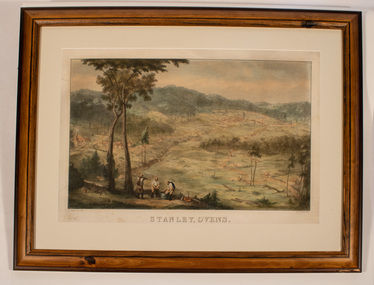
Artwork, other - Lithograph - framed reproduction - coloured, Stanley, Ovens 1859
... imp. Reproduction company for National Library, Australia...imp. Reproduction company for National Library, Australia Edward Hulme - artist's early landscape of Stanley Village overlooking the plateau and hills. ...Edward Hulme - artist's early landscape of Stanley Village overlooking the plateau and hills. There are 3 miners in the foreground washing the gravel by a cradle with 2 tall eucalypts to the left. Outlying dwellings and a water-race also feature.E.Hulme clel & lith. Ladd and Carr. imp. Reproduction company for National Library, Australia -
 Returned Nurses RSL Sub-branch
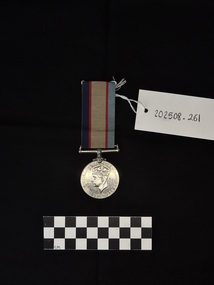
Medal - The Australia Service Medal 1939-1945
... AUSTRALIA SERVICE MEDAL/1939-1945' and engravings along the rim reading 'VFX53656/J.G. GIBSON.' The reverse displays a central, textured design of the crowned effigy of King George VI, facing left, with the initials 'PM' [for designer Percy Metcalfe] beneath the truncated neck of the effigy. Surrounding the perimeter is the legend 'GEORGIVS VI D:G:BR:OMN:REX ET INDIAE IMP...AUSTRALIA SERVICE MEDAL/1939-1945' and engravings along the rim reading 'VFX53656/J.G. GIBSON.' The reverse displays a central, textured design of the crowned effigy of King George VI, facing left, with the initials 'PM' [for designer Percy Metcalfe] beneath the truncated neck of the effigy. Surrounding the perimeter is the legend 'GEORGIVS VI D:G:BR:OMN:REX ET INDIAE IMP ...Medal belonged to Joan Grace Gibson (Mitchell) Service numbers: VFX53656 VX53656 VX38752. The Australia Service Medal 1939-1945 was instituted in 1949 to recognise the service of members of the Australian Armed Forces and the Australian Mercantile Marine during World War II.The medal is of high significance and should be kept in the collection.Medal belonged to Joan Grace Gibson (Mitchell) Service numbers: VFX53656 VX53656 VX38752. Both the obverse and reverse views of the Australia Service Medal, made from cool-to-the-touch nickel-silver. The obverse features a central, textured design of the Australian coat of arms, with the inscription 'THE AUSTRALIA SERVICE MEDAL/1939-1945' and engravings along the rim reading 'VFX53656/J.G. GIBSON.' The reverse displays a central, textured design of the crowned effigy of King George VI, facing left, with the initials 'PM' [for designer Percy Metcalfe] beneath the truncated neck of the effigy. Surrounding the perimeter is the legend 'GEORGIVS VI D:G:BR:OMN:REX ET INDIAE IMP:', [Latin meaning: 'George VI, by the Grace of God, King of all the Britains and Emperor of India.] The ribbon- Dark blue (representing the Royal Australian Navy), khaki (representing the Army), light blue (representing the R.A.A.F) and red (representing the Mercantile Marine). 'VFX53656 / J.G. GIBSON' [Engraved on the rim]world war 2, world war ii, world war two, wwii, ww2, joan grace gibson -
 Tatura Irrigation & Wartime Camps Museum
Army Service Ribbons
... Sister Heaphy was attached, for part of her service, to 28 Camp Hospital Internment camp 1. australian army nursing service sister kathleen heaphy 28 camp hospital internment camp 1 army service ribbons 1 - GRT V1 The 1939-1945 star 2 - GRT V2 The Pacific Star 3 - G.Br.Omn.Rex et Indiae Imp. ...Issued to Sister Kathleen Heaphy of Australian Army Nursing service. Sister Heaphy was attached, for part of her service, to 28 Camp Hospital Internment camp 1.Brass bar - 4 sections - with a pin - with navy blue, red,light blue, green, yellow, white and fawn coloured ribbons. 2 gold coloured 6 pointed stars and 2 silver medals are attached to four ribbons1 - GRT V1 The 1939-1945 star 2 - GRT V2 The Pacific Star 3 - G.Br.Omn.Rex et Indiae Imp. Georg 1VS head and crown. Lion 1939-1945 K. G. Luke Melbourneaustralian army nursing service, sister kathleen heaphy, 28 camp hospital internment camp 1, army service ribbons -
 Geoffrey Kaye Museum of Anaesthetic History
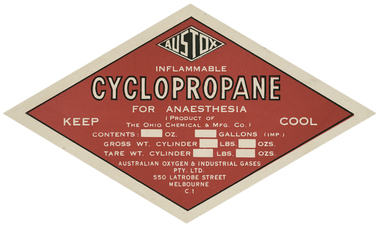
Ephemera - Label, cylinder, Austox et al
... IMP.) / GROSS WT. CYLINDER LBS. OZS. / TARE WT. CYLINDER LBS. OZS. / AUSTRALIAN OXYGEN & INDUSTRIAL GASES / PTY. ...Geoffrey Kaye Museum of Anaesthetic History ANZCA House 630 St Kilda Road Melbourne melbourne label cylinder cig cyclopropane austox ohio chemical and mfg company australian oxygen and industrial gases pty ltd commonwealth industrial gases ltd Information printed on label: AUSTOX [logo] / INFLAMMABLE / CYCLOPROPANE / FOR ANAESTHESIA / KEEP COOL / (PRODUCT OF THE OHIO CHEMICAL & MFG. CO.) / CONTENTS: OZ. GALLONS (IMP ...Medium sized diamond shaped label made for use on cyclopropane cylinders. White with a dark orange background and black and white lettering.Information printed on label: AUSTOX [logo] / INFLAMMABLE / CYCLOPROPANE / FOR ANAESTHESIA / KEEP COOL / (PRODUCT OF THE OHIO CHEMICAL & MFG. CO.) / CONTENTS: OZ. GALLONS (IMP.) / GROSS WT. CYLINDER LBS. OZS. / TARE WT. CYLINDER LBS. OZS. / AUSTRALIAN OXYGEN & INDUSTRIAL GASES / PTY. LTD. / 550 LATROBE STREET / MELBOURNE / C1label, cylinder, cig, cyclopropane, austox, ohio chemical and mfg company, australian oxygen and industrial gases pty ltd, commonwealth industrial gases ltd -
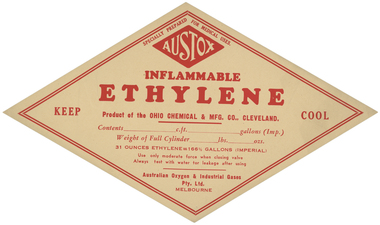 Geoffrey Kaye Museum of Anaesthetic History
Ephemera - Label, Cylinder, Austox et al
... Imp.) / Weight of Full Cylinder ..........lbs. ..........ozs. / 31 OUNCES ETHYLENE = 166 1/2 GALLONS (IMPERIAL) / Use only moderate force when closing valve / Always test with water for leakage after using / Australian Oxygen & Industrial Gases / Pty. ...Geoffrey Kaye Museum of Anaesthetic History ANZCA House 630 St Kilda Road Melbourne melbourne label cylinder cig ethylene austox ohio chemical and mfg company australian oxygen and industrial gases pty ltd commonwealth industrial gases ltd Information printed on label: SPECIALLY PREPARED FOR MEDICAL USE / AUSTOX [logo] / INFLAMMABLE / ETHYLENE / KEEP COOL / Product of the OHIO CHEMICAL & MFG. CO., CLEVELAND. / Contents...............c.ft. ............... gallons (Imp ...Large unused diamond shaped Austox label made for use on ethylene cylinders. Beige with red lettering.Information printed on label: SPECIALLY PREPARED FOR MEDICAL USE / AUSTOX [logo] / INFLAMMABLE / ETHYLENE / KEEP COOL / Product of the OHIO CHEMICAL & MFG. CO., CLEVELAND. / Contents...............c.ft. ............... gallons (Imp.) / Weight of Full Cylinder ..........lbs. ..........ozs. / 31 OUNCES ETHYLENE = 166 1/2 GALLONS (IMPERIAL) / Use only moderate force when closing valve / Always test with water for leakage after using / Australian Oxygen & Industrial Gases / Pty. Ltd. / MELBOURNElabel, cylinder, cig, ethylene, austox, ohio chemical and mfg company, australian oxygen and industrial gases pty ltd, commonwealth industrial gases ltd -
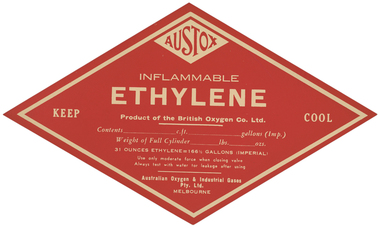 Geoffrey Kaye Museum of Anaesthetic History
Ephemera - Label, Cylinder, Austox et al
... Imp.) / Weight of Full Cylinder ..........lbs. ..........ozs. / 31 OUNCES ETHYLENE = 166 1/2 GALLONS (IMPERIAL) / Use only moderate force when closing valve / Always test with water for leakage after using / Australian Oxygen & Industrial Gases / Pty. ...Geoffrey Kaye Museum of Anaesthetic History ANZCA House 630 St Kilda Road Melbourne melbourne Label Cylinder CIG Ethylene Austox British Oxygen Company BOC australian oxygen and industrial gases pty ltd commonwealth industrial gases ltd Information printed on label: AUSTOX [logo] / INFLAMMABLE / ETHYLENE / KEEP COOL / Product of the British Oxygen Co. Ltd. / Contents...............c.ft. ...............gallons (Imp ...Large unused diamond shaped Austox label made for use on ethylene cylinders. Red with beige lettering.Information printed on label: AUSTOX [logo] / INFLAMMABLE / ETHYLENE / KEEP COOL / Product of the British Oxygen Co. Ltd. / Contents...............c.ft. ...............gallons (Imp.) / Weight of Full Cylinder ..........lbs. ..........ozs. / 31 OUNCES ETHYLENE = 166 1/2 GALLONS (IMPERIAL) / Use only moderate force when closing valve / Always test with water for leakage after using / Australian Oxygen & Industrial Gases / Pty. Ltd. / MELBOURNElabel, cylinder, cig, ethylene, austox, british oxygen company, boc, australian oxygen and industrial gases pty ltd, commonwealth industrial gases ltd -
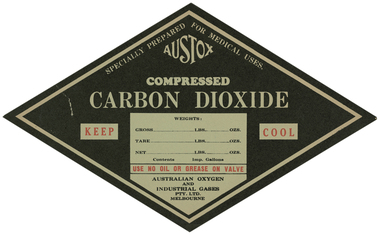 Geoffrey Kaye Museum of Anaesthetic History
Ephemera - Label, Cylinder, Austox et al
... Imp. Gallons / USE NO OIL OR GREASE ON VALVE [in red] / AUSTRALIAN OXYGEN / AND / INDUSTRIAL GASES / PTY. ...australian oxygen and industrial gases pty ltd Information printed on label: SPECIALLY PREPARED FOR MEDICAL USES. / AUSTOX [logo] / COMPRESSED / CARBON DIOXIDE / KEEP COOL [in red] / WEIGHTS: / GROSS..........LBS. ........OZS. / TARE..........LBS. ........OZS. / NET..........LBS. .......OZS. / Contents Imp. ...Large unused diamond shaped Austox label made for use on carbon dioxide cylinders. Black and beige background, with beige and red lettering.Information printed on label: SPECIALLY PREPARED FOR MEDICAL USES. / AUSTOX [logo] / COMPRESSED / CARBON DIOXIDE / KEEP COOL [in red] / WEIGHTS: / GROSS..........LBS. ........OZS. / TARE..........LBS. ........OZS. / NET..........LBS. .......OZS. / Contents Imp. Gallons / USE NO OIL OR GREASE ON VALVE [in red] / AUSTRALIAN OXYGEN / AND / INDUSTRIAL GASES / PTY. LTD. / MELBOURNElabel, cylinder, carbon dioxide, cig, commonwealth industrial gases ltd, compressed carbon dioxide, austox, australian oxygen and industrial gases pty ltd -
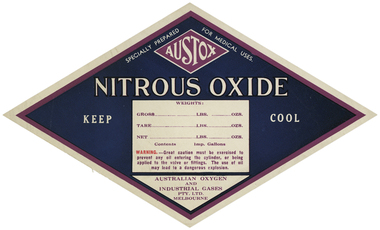 Geoffrey Kaye Museum of Anaesthetic History
Ephemera - Label, Cylinder, Austox et al
... Imp. Gallons / WARNING. - Great caution must be exercised to prevent any oil entering the cylinder, or being applied to the valve or fittings. The use of oil may lead to a dangerous explosion. / AUSTRALIAN...australian oxygen and industrial gases pty ltd Nitrous oxide Information printed on label: SPECIALLY PREPARED FOR MEDICAL USES. / AUSTOX [logo] / NITROUS OXIDE / KEEP COOL / WEIGHTS: / GROSS..........LBS. ........OZS. / TARE.......... LBS. ........OZS. / NET..........LBS. ........OZS. / Contents Imp ...Large unused diamond shaped Austox label made for use on nitrous oxide cylinders. Dark purple, violet and white background, with white, violet and red lettering.Information printed on label: SPECIALLY PREPARED FOR MEDICAL USES. / AUSTOX [logo] / NITROUS OXIDE / KEEP COOL / WEIGHTS: / GROSS..........LBS. ........OZS. / TARE.......... LBS. ........OZS. / NET..........LBS. ........OZS. / Contents Imp. Gallons / WARNING. - Great caution must be exercised to prevent any oil entering the cylinder, or being applied to the valve or fittings. The use of oil may lead to a dangerous explosion. / AUSTRALIAN OXYGEN / AND / INDUSTRIAL GASES / PTY. LTD. / MELBOURNElabel, cylinder, austox, australian oxygen and industrial gases pty ltd, nitrous oxide -
 City of Ballarat
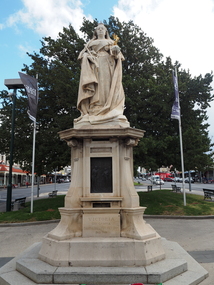
Public Artwork, Sir Edgar Bertram MacKennal, Queen Victoria Memorial Statue by Bertam MacKennal, 1902
... Imp. 1900. Incorporates four fine bronze scenes from her life; Accession to the Throne (1837), Coronation (1838), Diamond Jubilee (1897) and Signing of the Constitution of the Australian Commonwealth (1900)....Imp. 1900. Incorporates four fine bronze scenes from her life; Accession to the Throne (1837), Coronation (1838), Diamond Jubilee (1897) and Signing of the Constitution of the Australian Commonwealth (1900). ...The Queen Victoria Monument by Australian Sculptor Sir Bertam MacKennal has a granite plinth with 4 bronze picture plates and granite bowl. The work was once a drinking fountain with decorative bronze spouts and taps set into the columned granite base. Queen Victoria died 22 January 1901, this work was commissioned and gifted to the City of Ballarat by the Woman’s Christian Temperance Union. This work marked the end of her long reign on the English throne and as Empress of the British Empire including Australia. This magnificent statue commemorates the reign of Queen Victoria (1837 - 1901), and is located in Sturt Street, Ballarat, just outside the Town Hall. Listed on the Victorian Heritage Database (B7272), the Queen Victoria Monument is significant to the people of Victoria. The Queen Victoria Monument, Ballarat, is a key component of Sturt Street in Ballarat, a notable streetscape of the late Victorian era. It represents a pivotal element in the extensive series of public art forms erected during the late nineteenth century in the heyday of Ballarat and added to during the twentieth century. The Queen Victoria Monument is an over life size statue mounted on a freestone pedestal containing four bronze relief interpretive plaques. It is situated in front of the Ballarat Town Hall, a prominent position on the wide notable picturesque boulevard of Sturt Street. The presence of the monument in the notable Sturt Street gardens precinct together with other significant statues is of importance. The Queen Victoria Monument at Ballarat is historically significant as a fine example of a tribute to the reigning monarch, initiated by citizens, on the occasion of her Diamond Jubilee, prior to her death. It reflects the fervour of the citizens of the town that played an important role in the development of the State of Victoria during the latter half of the nineteenth century. The Monument is important for its aesthetic characteristics in that it displays a combination of excellent examples of the artistry and technical skills of the sculptor E.B. MacKennal. These elements are evident in design, carving, and in casting of relief modelling.Sicilian marble statue of Queen Victoria with hand outstretched holding the Sovereign's Orb with small gold angel figure. Includes granite plinth with 4 bronze elements and granite bowl. Victoria Dei Gratia Britt Regina Fid. Def. Ind. Imp. 1900. Incorporates four fine bronze scenes from her life; Accession to the Throne (1837), Coronation (1838), Diamond Jubilee (1897) and Signing of the Constitution of the Australian Commonwealth (1900).queen victoria -
 Federation University Art Collection
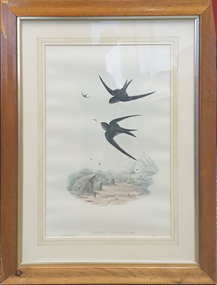
Print, John Gould, Cypselus Infumatus, 1866
... Federation University Art Collection Artworks are displayed at Federation University Australia campuses at Ballarat, Gippsland (Churchill), Stawell and Horsham. goldfields John GOULD (1804-1881) English ornitologicalmartist who published a number of monographs on birds. available palm roof-swift bird LL JGould & HCRichter del et lith centre Cypselus Infumatus, Sclat. Walter; Imp ...John GOULD (1804-1881) English ornitologicalmartist who published a number of monographs on birds.Framed, hand coloured lithograph. Published by John Gould. The mount has a hand coloured border. The plate id from "Birds of Asia" LL JGould & HCRichter del et lith centre Cypselus Infumatus, Sclat. Walter; Imp.available, palm roof-swift, bird -
 Kew Historical Society Inc
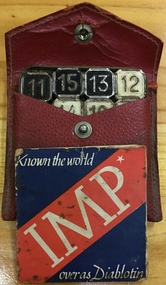
Leisure object, IMP : known the world over as Diablotin, 1950s
... Australian and International children’s market in the Nineteenth and Twentieth centuries. The examples of toys in the collection include examples of alphabet toys, arcade toys, baby toys, construction toys, dolls, doll accessories, educational toys, soft toys, tin toys, toy animals, toy blocks, toy machines, toy typewriters, etc. diablotin games and puzzles imp Exterior: "IMP / known the world over as Diablotin" IMP is a fifteen puzzle. ...The Kew Historical Society’s collection includes a wide range of leisure objects. Many of the items are European-made, generally of British origin, however there are a number that were made for the Australian market by Australian manufacturers. There were clearly a huge range of toys produced for the Australian and International children’s market in the Nineteenth and Twentieth centuries. The examples of toys in the collection include examples of alphabet toys, arcade toys, baby toys, construction toys, dolls, doll accessories, educational toys, soft toys, tin toys, toy animals, toy blocks, toy machines, toy typewriters, etc. IMP is a fifteen puzzle. The metal base and the numbers are housed in a red leather purse with press-stud. The wallet contains a booklet of promotional material and 'problems'. Puzzle consisting of 15 squares, numbered 1 through 15, which can be slid horizontally or vertically within a four-by-four grid that has one empty space among its 16 locations. The object of the puzzle is to arrange the squares in numerical sequence using only the extra space in the grid to slide the numbered titles.Exterior: "IMP / known the world over as Diablotin"diablotin, games and puzzles, imp -
 Dandenong/Cranbourne RSL Sub Branch
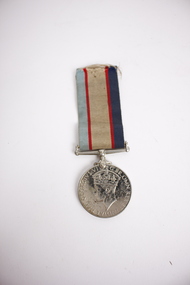
Medal - Australian Service Medal
... Back: "THE AUSTRALIA SERVICE MEDAL / 1939-1945" Front: "IMP GEORGIUS VI G BR OMN REX ET INDIAE" Side: "128418 A E Miller"...Dandenong/Cranbourne RSL Sub Branch 44 – 50 Clow Street Dandenong melbourne Medal belonged to A E Miller 128418 Back: "THE AUSTRALIA SERVICE MEDAL / 1939-1945" Front: "IMP GEORGIUS VI G BR OMN REX ET INDIAE" Side: "128418 A E Miller" Silver nickel medal with Australian Coat of Arms on back and a crowned effigy of King George VI on the front. ...Medal belonged to A E Miller 128418Silver nickel medal with Australian Coat of Arms on back and a crowned effigy of King George VI on the front. Ribbon features wide central khaki stripe flanked by two thin red stripes flanked by two outer stripes, one of light blue and one of dark blue.Back: "THE AUSTRALIA SERVICE MEDAL / 1939-1945" Front: "IMP GEORGIUS VI G BR OMN REX ET INDIAE" Side: "128418 A E Miller" -
 Dandenong/Cranbourne RSL Sub Branch
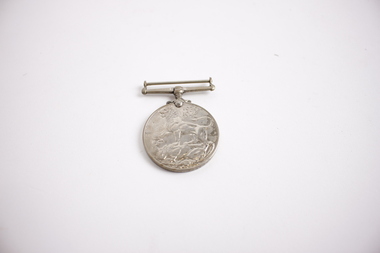
Medal - War Medal WWII
... Dandenong/Cranbourne RSL Sub Branch 44 – 50 Clow Street Dandenong melbourne This medal belonged to MURPHY ROBERT : Service Number - VX30381 : Date of birth - 26 Jun 1906 : Place of birth - COLAC VIC : Place of enlistment - ROYAL PARK VIC : Next of Kin - MURPHY KATHLEEN for service in the Australian Armed Forces during WWII wwii war medal australian war medal Front: "GEORGIUS VI D: G: BR: OMN: REX ET INDIAE IMP:" Back: " 1939 / 1946" Side: "VX 30381 R. ...This medal belonged to MURPHY ROBERT : Service Number - VX30381 : Date of birth - 26 Jun 1906 : Place of birth - COLAC VIC : Place of enlistment - ROYAL PARK VIC : Next of Kin - MURPHY KATHLEEN for service in the Australian Armed Forces during WWIICupro-nickel medal with crowned effigy of King George VI on front. The back features a lion on top of a fallen dragon. There is no ribbon.Front: "GEORGIUS VI D: G: BR: OMN: REX ET INDIAE IMP:" Back: " 1939 / 1946" Side: "VX 30381 R. MURPHY"wwii, war medal, australian war medal
