
Showing 84 items matching "australian light horse brigade"
-
 4th/19th Prince of Wales's Light Horse Regiment Unit History Room
Photograph, 3rd Australian Light Horse Brigade camp at El Mina, Tripoli, Syria, abt 1918
... 3rd Australian Light Horse Brigade camp at El Mina, Tripoli, Syria,...Black & white photo, 195 x 147 mm, of 3rd Australian Light Horse Brigade camp at El Mina, Tripoli, Syria, during World War 1...light horse ww1 syria Black & white photo, 195 x 147 mm, of 3rd Australian Light Horse Brigade camp at El Mina, Tripoli, Syria, during World War 1 3rd Australian Light Horse Brigade camp at El Mina, Tripoli, Syria, Photograph Photograph ...Black & white photo, 195 x 147 mm, of 3rd Australian Light Horse Brigade camp at El Mina, Tripoli, Syria, during World War 1light horse, ww1, syria -
 National Wool Museum
Equipment - Gaiter
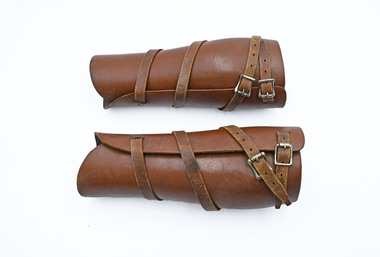
... ...Australian Light Horse Brigade...The gaiters were possibly worn by soldiers of the Australian Light Horse Brigade. The Australian Light Horse were mounted troops with characteristics of both cavalry and mounted infantry, who served in the Second Boer War and World War 1....The gaiters were possibly worn by soldiers of the Australian Light Horse Brigade. The Australian Light Horse were mounted troops with characteristics of both cavalry and mounted infantry, who served in the Second Boer War and World War 1. ...The gaiters were possibly worn by soldiers of the Australian Light Horse Brigade. The Australian Light Horse were mounted troops with characteristics of both cavalry and mounted infantry, who served in the Second Boer War and World War 1.A pair of leather gaiters (or leggings). The leather panel is shaped to fit the contour of the lower leg and overlaps at the centre back. Attached at the lower edge is a single strap of leather which winds around the legging and feeds through two flat loops which have been rivetted to the front. At the top of the outer sides of both leggings is a leather securing tab with two buckles. The lower secures the strap and the upper secures a second, shorter strap that wraps around the calf.wwi, boer war, australian light horse brigade, leather -
 8th/13th Victorian Mounted Rifles Regimental Collection
Photograph - 3rd Light Horse Brigade
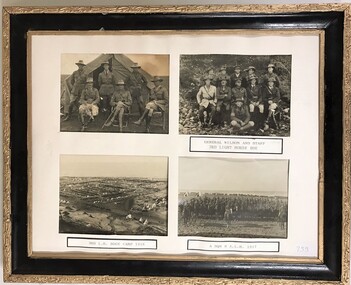
... The 3rd Australian Light Horse Brigade comprised the 8th, 9th and 10 Light Horse Regiments. ...Framed compilation of four black and white photographs of scenes of 3rd Australian Light Horse Brigade inn Egypt c.1917....The 3rd Australian Light Horse Brigade comprised the 8th, 9th and 10 Light Horse Regiments. ...The 3rd Australian Light Horse Brigade comprised the 8th, 9th and 10 Light Horse Regiments. It served at Gallipoli, and Egypt and Palestine. during World War One.Framed compilation of four black and white photographs of scenes of 3rd Australian Light Horse Brigade inn Egypt c.1917.world war one, wwi, light horse, egypt -
Frankston RSL Sub Branch
Game, Chess, P N F Figurines, Charge of Beersheba
... ...4th australian light horse brigade...The chessmen are the Australian 4th Light Horse Brigade and the Turkish 27th Division....ww1 world war 1 palestine beersheba 4th australian light horse brigade charge of beersheba mounted charge 4th light horse brigade Chess game consisting of a set of miniature military chessmen and a glass chess board. ...Chess game consisting of a set of miniature military chessmen and a glass chess board. The miniature chessmen depict the opponents involved in the historic World War 1 mounted attack and capture of the town of Beersheba, near Gaza in what was known as Palestine, The battle, known as the "Charge of Beersheba", was late in the day on 31st October, 1917. The chessmen are the Australian 4th Light Horse Brigade and the Turkish 27th Division.ww1, world war 1, palestine, beersheba, 4th australian light horse brigade, charge of beersheba, mounted charge, 4th light horse brigade -
 Lara RSL Sub Branch
Statement By Eric George Elliott on the Light Horse Brigade charge at Beersheba
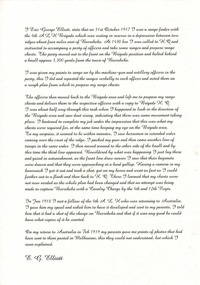
... , beersheba, statement, photocopy, australian light horse brigade.... Light Horse Divisions captured the town and secured crucial water wells, their success also marked the beginning of the end of the war in the Middle East. This end came exactly a year to the day after success at Beersheba. ww!, beersheba, statement, photocopy, australian light horse brigade ...This statement by Eric George Elliott tells how The battle of Beersheba took place on 31 October 1917 as part of the wider British offensive collectively known as the third Battle of Gaza. The final phase of this all day battle was the famous mounted charge of the 4th Light Horse Brigade. Commencing at dusk, members of the brigade stormed through the Turkish defences and seized the strategic town of Beersheba. The capture of Beersheba enabled British Empire forces to break the Ottoman line near Gaza on 7 November and advance into Palestine.Decisive victory at Beersheba fell to one of the last great charges of mounted troops in history. As Australian Light Horse Divisions captured the town and secured crucial water wells, their success also marked the beginning of the end of the war in the Middle East. This end came exactly a year to the day after success at Beersheba.Rectangular shaped glass covered picture frame with a photocopy of his statement on the charge of Beersheba.ww!, beersheba, statement, photocopy, australian light horse brigade. -
 Phillip Island and District Historical Society Inc.
Postcard, A.L.H. Camp at Broadford 1914, 1914
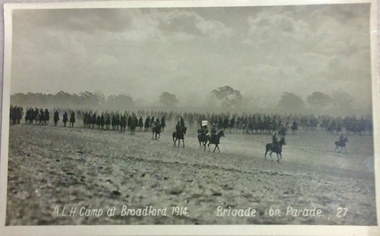
... Australian Light Horse Brigade...Australian Light Horse Brigade postcards world war i photographs military light horse william smith A.L.H. ...Australian Light Horse BrigadeBlack and white photo of soldiers on horseback riding in formation across a dusty wide plain with trees in background.A.L.H. Camp at Broadford 1914 Brigade on Parade 27postcards, world war i, photographs, military, light horse, william smith -
4th/19th Prince of Wales's Light Horse Regiment Unit History Room
Horse whip, c.1914
... Memorabilia of Dvr Thomas Whyte, Machine Gun Squadron, 3rd Australian Light Horse Brigade, AIF...Memorabilia of Dvr Thomas Whyte, Machine Gun Squadron, 3rd Australian Light Horse Brigade, AIF Used by Australian Light Horse soldier of World War 1 Nil Plaited leather whip Horse whip ...Memorabilia of Dvr Thomas Whyte, Machine Gun Squadron, 3rd Australian Light Horse Brigade, AIFUsed by Australian Light Horse soldier of World War 1Plaited leather whipNil -
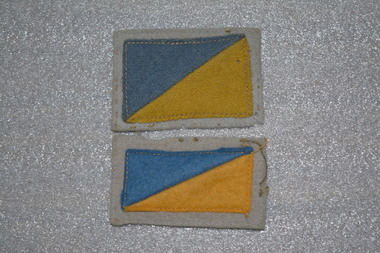 Wangaratta RSL Sub Branch
Uniform - Colour Patches, 8th Light Horse
... Army Unit Colour Patches were worn as a distinguishing unit indication at the top of each sleeve from 1916.The 8th Light Horse Regiment was formed as part of the 3rd Australian Light Horse Brigade, 3rd Contingent and attached to the Australian Division. ...Army Unit Colour Patches were worn as a distinguishing unit indication at the top of each sleeve from 1916.The 8th Light Horse Regiment was formed as part of the 3rd Australian Light Horse Brigade, 3rd Contingent and attached to the Australian Division. ...Army Unit Colour Patches were worn as a distinguishing unit indication at the top of each sleeve from 1916.The 8th Light Horse Regiment was formed as part of the 3rd Australian Light Horse Brigade, 3rd Contingent and attached to the Australian Division. Made up of men drawn from the 3rd Military District [Victoria], the 8th Light Horse Regiment was established at the Broadmeadows Training Camp in Melbourne, Victoria. The Army Unit Colour Patches (UCP) were orginally designed in a simple manner,allowing other member to easily identify the member's unit, division and battalion. A UCP is worn on the puggaree of the slouch hat whilst the Unit Shoulder Patch will incorporate the UCP normally with a border showing the unit's superior HQ. Horizontally aligned rectangular colour patch for 8 Light Horse Regiment, AIF, divided diagonally yellow (left) below light blue.Nilwwi, world war 1, light horse, 8th regiment -
4th/19th Prince of Wales's Light Horse Regiment Unit History Room
DVD, The Light Horsemen of Beersheba, 2008 (exact)
... It features a memorial to the Australian Light Horse Brigade which won Beersheba from the Turks in World War 1 and a dual purpose playground which provides access to children with disabilities. ...australian world war 1 ceremonial light horse beersheba israel richard pratt shimon peres michael jeffrey memorials park of the australian soldier turkish army playground australian world war 1 ceremonial light horse beersheba israel richard pratt shimon peres michael jeffrey memorials park of the australian soldier turkish army playground On April 28, 2008, along with Israel's President Shimon Peres and Australia's Governor-General, Major General (ret) Michael Jeffrey AC, CVO, MC, the late Richard Pratt opened the Park of the Australian Soldier in Beersheba, Israel. An initiative of the Melbourne-based Pratt Foundation, the Park commemorates the involvement of the Australian military forces in the Middle East in two World Wars and in other conflicts in the region. It features a memorial to the Australian Light Horse Brigade ...On April 28, 2008, along with Israel's President Shimon Peres and Australia's Governor-General, Major General (ret) Michael Jeffrey AC, CVO, MC, the late Richard Pratt opened the Park of the Australian Soldier in Beersheba, Israel. An initiative of the Melbourne-based Pratt Foundation, the Park commemorates the involvement of the Australian military forces in the Middle East in two World Wars and in other conflicts in the region. It features a memorial to the Australian Light Horse Brigade which won Beersheba from the Turks in World War 1 and a dual purpose playground which provides access to children with disabilities. This DVD tells the Park's story from its inception to its dedication in 2008australian, world war 1, ceremonial, light horse, beersheba, israel, richard pratt, shimon peres, michael jeffrey, memorials, park of the australian soldier, turkish army, playground, australian, world war 1, ceremonial, light horse, beersheba, israel, richard pratt, shimon peres, michael jeffrey, memorials, park of the australian soldier, turkish army, playground -
4th/19th Prince of Wales's Light Horse Regiment Unit History Room
DVD, The Park of the Australian Soldier. Remembering the Light Horse April 28, 2008, 2008 (exact)
... It features a memorial to the Australian Light Horse Brigade which won Beersheba from the Turks in World War 1 and a dual purpose playground which provides access to children with disabilities. ...australian world war 1 ceremonial light horse beersheba israel richard pratt shimon peres michael jeffrey memorials park of the australian soldier turkish army playground On April 28, 2008, along with Israel's President Shimon Peres and Australia's Governor-General, Major General (ret) Michael Jeffrey AC, CVO, MC, the late Richard Pratt opened the Park of the Australian Soldier in Beersheba, Israel. An initiative of the Melbourne-based Pratt Foundation, the Park commemorates the involvement of the Australian military forces in the Middle East in two World Wars and in other conflicts in the region. It features a memorial to the Australian Light Horse Brigade ...On April 28, 2008, along with Israel's President Shimon Peres and Australia's Governor-General, Major General (ret) Michael Jeffrey AC, CVO, MC, the late Richard Pratt opened the Park of the Australian Soldier in Beersheba, Israel. An initiative of the Melbourne-based Pratt Foundation, the Park commemorates the involvement of the Australian military forces in the Middle East in two World Wars and in other conflicts in the region. It features a memorial to the Australian Light Horse Brigade which won Beersheba from the Turks in World War 1 and a dual purpose playground which provides access to children with disabilities. This DVD records the Park's opening ceremony on April 28, 2008. australian, world war 1, ceremonial, light horse, beersheba, israel, richard pratt, shimon peres, michael jeffrey, memorials, park of the australian soldier, turkish army, playground -
4th/19th Prince of Wales's Light Horse Regiment Unit History Room
DVD, The Australian Light Horse. A Park in Beersheba. April 28, 2008, 2008 (exact)
... It features a memorial to the Australian Light Horse Brigade which won Beersheba from the Turks in World War 1 and a dual purpose playground which provides access to children with disabilities. ...australian world war 1 ceremonial light horse beersheba israel richard pratt shimon peres michael jeffrey memorials park of the australian soldier turkish army playground On April 28, 2008, along with Israel's President Shimon Peres and Australia's Governor-General, Major General (ret) Michael Jeffrey AC, CVO, MC, the late Richard Pratt opened the Park of the Australian Soldier in Beersheba, Israel. An initiative of the Melbourne-based Pratt Foundation, the Park commemorates the involvement of the Australian military forces in the Middle East in two World Wars and in other conflicts in the region. It features a memorial to the Australian Light Horse Brigade ...On April 28, 2008, along with Israel's President Shimon Peres and Australia's Governor-General, Major General (ret) Michael Jeffrey AC, CVO, MC, the late Richard Pratt opened the Park of the Australian Soldier in Beersheba, Israel. An initiative of the Melbourne-based Pratt Foundation, the Park commemorates the involvement of the Australian military forces in the Middle East in two World Wars and in other conflicts in the region. It features a memorial to the Australian Light Horse Brigade which won Beersheba from the Turks in World War 1 and a dual purpose playground which provides access to children with disabilities. This DVD records the highlights of the Park's opening ceremony on April 28, 2008australian, world war 1, ceremonial, light horse, beersheba, israel, richard pratt, shimon peres, michael jeffrey, memorials, park of the australian soldier, turkish army, playground -
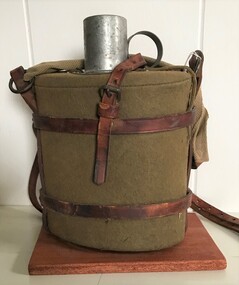 8th/13th Victorian Mounted Rifles Regimental Collection
Functional object - water bottle
... Light Horse Field Ambulance. The cup/cap was used to give a drink to a wounded soldier who could not hold a water bottle to his lips. A light horse field ambulance was an Australian World War I military unit whose purpose was to provide medical transport and aid to the wounded and sick soldiers of an Australian Light Horse brigade. ...Light Horse Field Ambulance. The cup/cap was used to give a drink to a wounded soldier who could not hold a water bottle to his lips. A light horse field ambulance was an Australian World War I military unit whose purpose was to provide medical transport and aid to the wounded and sick soldiers of an Australian Light Horse brigade. ...This water bottle was carried by stretcher bearers in the Light Horse Field Ambulance. The cup/cap was used to give a drink to a wounded soldier who could not hold a water bottle to his lips. A light horse field ambulance was an Australian World War I military unit whose purpose was to provide medical transport and aid to the wounded and sick soldiers of an Australian Light Horse brigade. Typically a Lieutenant Colonel commanded each ambulance. All officers of the ambulance were medical doctors or surgeons. Dental units were often attached to the ambulance as well. A Field Ambulance consisted of two sections, the Mobile and the Immobile. The Mobile Section travel with its brigade into combat, where it would establish a Dressing Station. It use stretchers or carts to retrieve the wounded and transport them to the Dressing Station. The Immobile Section established and operated a Receiving Station, which received the wounded the Dressing Station sent on. The ambulance's surgeons would operate on the wounded at the Receiving Station. From the Receiving Station, the sick and wounded would go first to the Casualty Clearing Station and ultimately to a Base Hospital. Representative of a water bottle which differed from the regular water bottle and was used for a specific purpose.Water bottle, felt coated, with small metal cup over spout, all held in leather carrier. Strapped to a wooden stand.military, water, medical, light horse, ambulance, stretcher bearer -
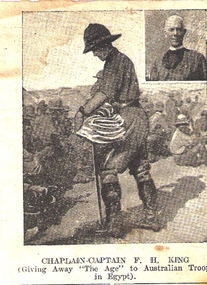 Waverley RSL Sub Branch
News paper Cutting Chaplain-Captain F. H. King, ? 1917
... Green to the parish, but Green declined.”(1) He was sent to Egypt where he administered to the Australian Stationary Hospital Australian 3rd and 5th light horse brigades. His Army record states he was Invalided and Completion of Duty 12 July 1918. ...Green to the parish, but Green declined.”(1) He was sent to Egypt where he administered to the Australian Stationary Hospital Australian 3rd and 5th light horse brigades. His Army record states he was Invalided and Completion of Duty 12 July 1918. ...Captain Frank Herbert King was born in the Parish of St. Saviors in the borough of Brougham London March 5th 1875. He was educated in theology at St. Augustine's College Durban University. He went on to serve for 2 1/2 years in South Africa during the Boer Wars and then re-enlisted in the A.I.F.16th November 1916 when he listed his address as "The Vicarage Sunshine Victoria" and listed his wife as "Kathleen King" “Revd McCoy announced his intention of moving to the parish of Deniliquin in October 1915. He was replaced by F.H. King. Though the parish could not house him, he came in November. King was a typical “new broom”. In January 1916, at his instigation, the parish agreed to change its hymn book to Ancient and Modern. This decision could be viewed as a “churchmanship” matter, one of many that happened in these years. He pushed through the building of the vicarage, from tender in January to blessed and occupied by June. At the Annual General Meeting, King described 1915 as a trying time in the church and looked forward to a happier and more prosperous time during 1916. At a special vestry meeting, 3 November 1916, King announced that he had accepted an appointment by the Archbishop for service at the front, and that he had been instructed to prepare to go abroad. It was decided in his absence the parish use lay-readers, with periodic visits by clergy for Holy Communion. On 12 November, King thanked the parish for their loyalty and their devotion to him and the church. In return the parish presented him with a wrist watch. The parish was not formally vacant; just without a vicar. In September 1917, the Archbishop wrote advising that King had resigned. He appointed the Rev. W. Green to the parish, but Green declined.”(1) He was sent to Egypt where he administered to the Australian Stationary Hospital Australian 3rd and 5th light horse brigades. His Army record states he was Invalided and Completion of Duty 12 July 1918. He was later awarded th Order of the British Empire (OBE) 1 “The Junction” a history of St Mark’s Sunshine The picture of Chaplain-Captain F.H. King was carried in the Bible of Sig. H. C. Roussac ( a Gallipoli veteran) during his service with the A.I.F. in France. It can only be assumed that F.H.King had a profound effect on Sig. Roussac.Cutting of a lithographic picture showing Chaplain-Captain F. H. King giving away "The Age" (News paper) to Australian troops in Egypt 1917 Chaplain-Captain F. H. King giving away "The Age" to Australian troops in Egypta.i.f. egypt, chaplain, f.h.king, light horse egypt, roussac, o.b.e., boer war -
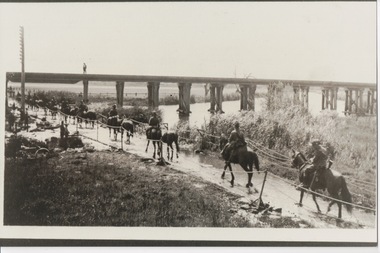 Lara RSL Sub Branch
Photograph, Set 4 photographs. and others for Torquay Light Horse camp, 1940
... These images capture for all time Light Horsemen travelling through Geelong on their way to camp at Torquay for the last Group meeting in Australia . information following - details obtained from .........https://torquayhistory.com/light-horse-brigade/ On Australia Day, 1997, Sir John Young unveiled this plaque on Point Danger, Torquay. ...These images capture for all time Light Horsemen travelling through Geelong on their way to camp at Torquay for the last Group meeting in Australia . information following - details obtained from .........https://torquayhistory.com/light-horse-brigade/ On Australia Day, 1997, Sir John Young unveiled this plaque on Point Danger, Torquay. ...These images capture for all time Light Horsemen travelling through Geelong on their way to camp at Torquay for the last Group meeting in Australia . information following - details obtained from .........https://torquayhistory.com/light-horse-brigade/ On Australia Day, 1997, Sir John Young unveiled this plaque on Point Danger, Torquay. Torquay history, Light Horse Training Camp, WW2 Plaque at Pt. Danger Note----- (See images to view plaque) The plaque identifies a significant event in Torquay’s history and the sentiments of ‘change’ for the Light Horse Brigade – from horses to machines. In 1940 the four Light Horse Regiments (4th, 8th, 13th and 20th), some 5000 Light Horse and 2000 horses camped and trained at Torquay. Three other regiments, formerly mounted on horses, were also at Torquay ‘mounted’ on privately owned trucks and cars. Division troops included Artillery, Engineers, Signals, Field Ambulance and other branches of the Army necessary to enable a Division to function. It wasn’t just the sheer numbers of men coming to this little town that made the event significant, it was also the fact that the men of the Light Horse were dramatic, almost glamorous figures and it is easy to see their exploits as some splendid adventure. Horses have played a special role in the story of Australia. They were the only means of transport across this huge country, so it was necessary for everyone to have the ability to ride a horse. When war broke out in 1899 between Britain and the Boers of South Africa (“Boer” was Dutch for “farmer”) Australia sent troops to fight. At first Britain was wary of using untried, unprofessional colonial cavalrymen but soon saw that the slouch-hatted Australian “bushmen” were a match for the fast-moving and unconventional mounted commandos of the Boers. The Australians proved themselves to be expert rough-riding horsemen and good shots. Bush life had hardened them to go for long periods with little food and water. They also showed remarkable ability to find their way in a strange country and use its features for cover, in both attack and defence. By 1914, when Australia joined the war against Germany, there were 23 Light Horse regiments of militia volunteers. Many men from these units joined the Light Horse regiments of the Australian Imperial Force (AIF). Men were given remounts (if not using their own horses) – army horses bought by Commonwealth purchasing officers from graziers and breeders. These were called “walers” because they were a New South Wales stockhorse type – strong, great-hearted animals with the strains of the thoroughbred and semi-draught to give them speed, strength and stamina. On 1st November, 1914, Australia’s First Infantry Division and the first four Light Horse regiments sailed for England in a fleet of transport ships. The first of the Light Horse arrived at Gallipoli in May without their horses. Back with their horses after Gallipoli, they were formidable combatants across the Sinai and Palestine. Some British commanders observed that the light horseman moved with a “lazy, slouching gait, like that of a sleepy tiger” but described how the promise of battle “changes that careless gait, into a live athletic swing that takes him over the ground much quicker than other troops”. They had Light Horse, Torquay, training campdeveloped a reputation as formidable infantrymen. The Turks called them “the White Ghurkas” – a reference to their deadly skill with the bayonet. The Arabs called them “The Kings of the Feathers”. The plume had originally been a battle honour of the Queensland Mounted Infantry for their work in the shearer’s strike of 1891. During WW1 it was adopted by almost all the Light Horse Regiments. It was the proud badge of the light horseman. The most famous of their battles was the attack on Beersheba- the charge of the 4th Light Horse Brigade. Mounted infantrymen and their superb walers had carried out one of the most successful cavalry charges in history – against what seemed impossible odds. They surprised the Turks by charging cavalry-style, when they would normally have ridden close to an objective then dismounted to fight. The fall of Beersheba swung the battle tide against the Turks in Palestine; and changed the history of the Middle East. While 19 men from the Surf Coast Shire served with the 4th Light Horse over the course of WW1, only four were involved in the charge of Beersheba- John GAYLARD, Philip QUINN.(Winchelsea); Wallace FINDLAY (Anglesea); Harry TRIGG (Bambra). After the war, Light Horse units played a key role in the Australian Government’s compulsory military training programme. The Citizen Military Forces (C.M.F.) thrived on the glamour of the wartime Light Horse tradition, ignoring the possibility that motor vehicles would soon replace the horses. When training was no longer compulsory, the C.M.F. regiments declined and horses became more of a luxury during the 1930s depression years of poverty and unemployment. Some regiments were motorised. Then, in 1939, Australia joined Britain in another world war. Training was increased for the militia at both home bases and regional training camps. The camp at Torquay in 1940, commanded by Major General Rankin, was at Divisional strength. By the end of the camp some felt that the Division was ready for active service. Gradually, over the next four years, the Australian Light Horse units were mounted on wheels and tracks and the horses were retired. Six men enlisted at the Torquay camp and another 57 men and women enlisted at Torquay for service in WW2. Those who served in the Militia provided valuable Officers and NCOs and men for the armed services during the war. Each infantry division of the 2nd AIF had a Light Horse regiment attached to it. But the day of the Australian mounted soldier hadn’t quite passed. During World War II, Australia’s 6th Cavalry Regiment formed a mounted unit they called “The Kelly Gang” which did valuable scouting work. In New Guinea, a mounted Light Horse Troop did patrol duty and helped carry supplies. Some fully equipped walers were flown into Borneo for reconnaissance in rugged mountain country. But by the end of the war, in 1945, the horse had disappeared from the Australian Army. References: Australian Light Horse Association www.lighthorse.org.au National Australia Archives Australian War Memorial Surf Coast Shire WW1 memorials www.togethertheyserved.com The Light horse- a Cavalry under Canvas Light Horse, Training Camp, Torquay, WW2 Late in 1939 it was decided to set up a Lighthorse training camp in Torquay to train both men and horses for the battles of the Second World War. Horses, men and equipment came on special trains from all over Victoria and NSW, and as you would expect horseman came from areas such as Omeo and Sale, the Wimmera and the Western District. They arrived at the Geelong racecourse for watering in the Barwon River and then were ridden across the ford at the breakwater and began their 11 mile trek to Torquay. Light Horse, Training Camp, Torquay, WW2 Tent city By the end of January 1940 the camp at Torquay accommodated some 5000 men and 2500 horses of the Second Cavalry Division. The rows of horses, tents and huts near Blackgate Road were quite a sight. While the cavalrymen engaged in exercises on the land and on the beaches, many of the troops took over the Torquay School for special training of men and officers. Mr Bob Pettit local farmer and Councillor for the Barrabool Shire, wrote about the Light horse in the Surf Coast Community News in 1985 saying “They used to travel about the district riding four abreast in one long convoy. To my annoyance they went through my property and shut all the gates behind them. I had certain gates open to let stock in to the water holes and it would take me three -quarters of an hour to follow the horsemen up and put all the gates right again” he continued “the men from the Light Horse were here when the fire went through in March 1940. He recalled an incident when early one morning, as some one blew the bugle, a soldier putting a white sheet on the line frightened the horses. They panicked and ran off in all directions. Six went over the cliff near Bird Rock, five were never found, and the rest were gathered up after nearly a fortnight in the bush around Addiscott and Anglesea" Light Horse, Training Camp, Torquay, WW2, Geelong Parade Geelong parade The training camp culminated in a parade through the streets of Geelong on March 12th 1940. The salute was given at the Town Hall and the troops continued on a route to the You Yang’s for a training exercise. Note-----(see media section for photograph) The Camp was abandoned in mid 1940 as it was deemed unsuitable for training during winter and the cost of a permanent camp could not be justified if it could not be used all year. Historic.......Rare,,,Interpretive.Sepia photographs.set of four ....post card size ....Horses &LighthorsemenNo 1, Lighthorsemen Regiment Geelong 1940......No 2 Light Horse at Breakwater Geelong 1938 to 1940....No 3 Light Horse at Breakwater Geelong 1938 to 1940.....No 4 Light Horse crossing Breakwater camped at Geelong Showgrounds. These markings are on reverse of photographs.light horsemengeelong 1940., world war 2 -
 Lara RSL Sub Branch
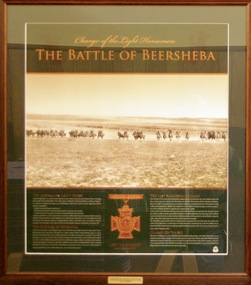
Photograph, Battle of Beersheba - Limited Edition of 1917, Rememberance Day 2008
... Light Horse Brigade. Commencing at dusk, members of the brigade stormed through the Turkish defences and seized the strategic town of Beersheba. The capture of Beersheba enabled British Empire forces to break the Ottoman line near Gaza on 7 November and advance into Palestine. Decisive victory at Beersheba fell to one of the last great charges of mounted troops in history. As Australian ...The battle of Beersheba took place on 31 October 1917 as part of the wider British offensive collectively known as the third Battle of Gaza. The final phase of this all day battle was the famous mounted charge of the 4th Light Horse Brigade. Commencing at dusk, members of the brigade stormed through the Turkish defences and seized the strategic town of Beersheba. The capture of Beersheba enabled British Empire forces to break the Ottoman line near Gaza on 7 November and advance into Palestine.Decisive victory at Beersheba fell to one of the last great charges of mounted troops in history. As Australian Light Horse Divisions captured the town and secured crucial water wells, their success also marked the beginning of the end of the war in the Middle East. This end came exactly a year to the day after success at Beersheba.Rectangular shaped glass covered picture frame showing the Light Horsemen.Charge of the Light Horsemen The Battle of Beershebabeersheba, the light horse, lara r.s.l.,world war one, battle of beersheba, ww1 -
 Flagstaff Hill Maritime Museum and Village
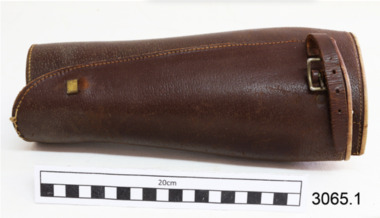
Clothing - Leather Leggings, 1899 to 1920
... Australian Light Horse that served in the South African War from 1899 to 1902. After the war, Britain wanted to use fewer mounted troops and restructured its force around a style of combat that needed more infantry. But the defence of Australia still relied upon mounted military units as these were more mobile than infantry and could travel faster over long distances. Light Horse brigades...Australian Light Horse that served in the South African War from 1899 to 1902. After the war, Britain wanted to use fewer mounted troops and restructured its force around a style of combat that needed more infantry. But the defence of Australia still relied upon mounted military units as these were more mobile than infantry and could travel faster over long distances. Light Horse brigades ...The subject leather leggings are associated with mounted troops known as the Australian Light Horse that served in the South African War from 1899 to 1902. After the war, Britain wanted to use fewer mounted troops and restructured its force around a style of combat that needed more infantry. But the defence of Australia still relied upon mounted military units as these were more mobile than infantry and could travel faster over long distances. Light Horse brigades in the Australian Imperial Force (AIF) mostly contained recruits who served in the Light Horse regiments of the Citizen Forces. Many young men from rural areas of Australia volunteered for the Light Horse regiments. They had to pass a riding test to join, this test was easier for men from the bush because horses were still the main method of transport on farms and in country towns. The army did not officially accept First Australians into the AIF until May 1917 when enlistment standards were relaxed to include 'half-castes' with a parent of European origin. Indigenous soldiers served as valuable members of the Light Horse and many possessed excellent horse handling skills and specialist tracking knowledge.The subject items are part of the uniform for the Light Horse Units that served in the Australian army from 1899 until 1918. These leggings were worn by soldiers on horseback and are significant as they represent a noteworthy time in Australia's early military history. It was a time when many young men gave their lives during the South African and First World Wars in the defence of the then British Empire as part of the Imperial Forces that were gathered from many British-controlled Colonial countries.A pair of two Leather Leggings used by Mounted Australian soldiers during the first world war. The leggings are dark tan in colour with stitching to attach buckles and fastener straps. The strap buckles are made of brass and the leather legging straps are of same leather as leggings. Noneflagstaff hill, warrnambool, flagstaff hill maritime museum, shipwreck coast, flagstaff hill maritime village, great ocean road, leggings, leather leggings, protective leggings, protective clothing, australian mounted light horse units, military equipment -
 Geelong RSL Sub Branch
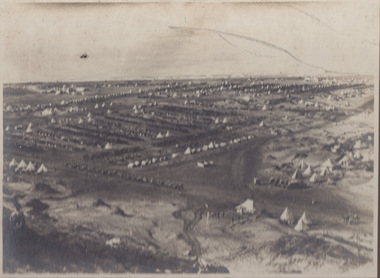
Photograph - 3rd Light Horse Brigade, Brigade Camp Tripoli, Early 20th Century
... Light Horse Brigade was a mounted infantry brigade of the 1st AIF and served in the Middle East during WW1. This photograph is of the the 3rd Light Horse Brigade camp at Tripoli, Syria circa December 1918. WW1 3rd Light Horse Brigade 3rd Light Horse BrigadeTripoli Syria December 1918 On the front - 3rd L H Brg Camp Tripoli On the back - B813 Australian Official Photo No, purchased from Australian War Museum Wool Exchange , King Street, Melbourne. ...The 3rd Light Horse Brigade was a mounted infantry brigade of the 1st AIF and served in the Middle East during WW1.This photograph is of the the 3rd Light Horse Brigade camp at Tripoli, Syria circa December 1918.Sepia coloured photograph on a charcoal coloured matt backing.On the front - 3rd L H Brg Camp Tripoli On the back - B813 Australian Official Photo No, purchased from Australian War Museum Wool Exchange , King Street, Melbourne. Copyright ww1, 3rd light horse brigade, 3rd light horse brigadetripoli, syria, december 1918 -
 Orbost & District Historical Society
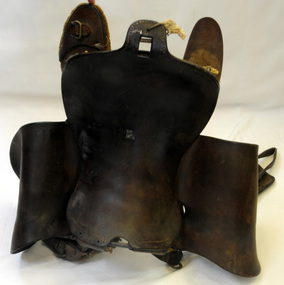
saddle, Before 1915
... Australia joined the war against Germany, there were 23 Light Horse regiments of militia volunteers. Many men from these units joined the Light Horse regiments of the Australian Imperial Force (AIF). This WW1 item is a reminder of the roles that men from Orbost played in that conflict. saddle military-history army transport horse C G H F The saddle also has a few other numbers on it which are difficult to read with accuracy. Large brown leather saddle used by the Light Horse Brigade ...By 1914, when Australia joined the war against Germany, there were 23 Light Horse regiments of militia volunteers. Many men from these units joined the Light Horse regiments of the Australian Imperial Force (AIF).This WW1 item is a reminder of the roles that men from Orbost played in that conflict.Large brown leather saddle used by the Light Horse Brigade in WW1. The saddle is built on a pair of felt-padded wooden "bars" which sat on either side of the horse's spine. These are joined by steel arches with a shaped leather seat laced between them. C G H F The saddle also has a few other numbers on it which are difficult to read with accuracy. saddle military-history army transport horse -
 Australian Commando Association - Victoria
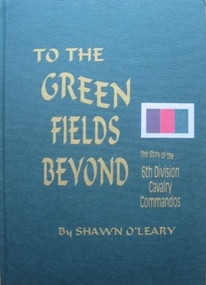
Book - 6th Div, Shawn OLeary, To The Green Fields Beyond:The story of the 6th Division Cavalry Commandos
... Brigade, and advanced along the Rosh Pinna road, engaging strong enemy defences at Fort Khirbe. C Squadron was relieved by B Squadron, which was later attacked by Vichy French tanks that were supported by heavy artillery and machine-gun fire, which forced the Australians to withdrawal. Always willing or needing to improvise during the campaign, A and B Squadrons both operated three captured French R35 Renault light tanks, while C Squadron provided personnel for a horse ...The comprehensive history of the 6th Australian Division Cavalry Commandos – a (now out of print) reprint of one of the rarer Armoured unit history books. This is the story of one of Australia’s most famous fighting regiments during World War II. As an armoured cavalry unit it fought the Italians and Germans in the sands of the African desert and the Vichy French in the mountains of Syria. Later as a dismounted commando unit it fought the Japanese in the terrifying jungles of New Guinea. The heroism of the men in its ranks and the actions in which they engaged are portrayed in a way which makes battle deeds leap realistically from the pages. “To The Green Fields Beyond” is a documented and detailed book which is of value to everyone who is interested in Australia’s story. Seldom before has such a contribution been made to record of our national history. The book has been approved and sponsored by the Australian War Memorial. The 6th Division Cavalry Regiment was formed in November 1939 and, just two months later, was sent overseas to the Middle East in January 1940. Arriving in Egypt, the regiment immediately went to Palestine, where it joined the rest of the 6th Division and trained using machine-gun carriers and, from October, six old Vickers light tanks. At the end of the year the regiment moved into the Western Desert, where it joined British forces ready for the major offensive to commence on 9 December. Two days later the regiment became the first unit of the 2nd Australian Imperial Force (AIF) to go into action when one of its squadron fought a sharp action against the Italians holding Garn el Grein and Fort Maddalina on 11 and 12 December. By 21 December British forces had captured Sidi Barrrani and the desert was now open for the 6th Division’s advance along the Libyan coast. On 3 January 1941 the division attacked and captured the Italian fort of Bardia. The regiment’s A Squadron, under the command of Major Denzil Macarthur-Onslow, who went on to command the 4th Armoured Brigade, supported the attack. Tobruk was the next Italian fort to be captured, with the regiment again in support and covering the 19th Brigade’s advance. The regiment, though, was under-equipped and without its full compliment of vehicles, using only machine gun carriers. To compensate for this, A Squadron was parity re-equipped with captured Italian light tanks, which had large kangaroos painted on the hulls and turrets to distinguish them from enemy vehicles. After Tobruk, the regiment was used as part of the advance guard in the capture of Derna and then Benghazi. In April the unit moved to Helwan, where it was equipped with Vickers light tanks and machine-gun carriers, and operated with British troops in capturing Sollum. Towards the end of May the regiment moved to Palestine, where it came under the command of the 7th Division for the imminent invasion of Syria. The regiment experienced its heaviest fighting during the Syrian campaign, which began on 7 June. A Squadron was attached to the 21st Brigade and advanced along the coast, where the rugged hills made it difficult to manoeuvre the tanks and carriers. The squadron was relieved by one of the 9th Division Cavalry Regiment’s squadrons on 13 and 14 June. C Squadron, meanwhile, was with the 25th Brigade, and advanced along the Rosh Pinna road, engaging strong enemy defences at Fort Khirbe. C Squadron was relieved by B Squadron, which was later attacked by Vichy French tanks that were supported by heavy artillery and machine-gun fire, which forced the Australians to withdrawal. Always willing or needing to improvise during the campaign, A and B Squadrons both operated three captured French R35 Renault light tanks, while C Squadron provided personnel for a horse troop, quickly nicknamed the “Kelly Gang”, to patrol the high, rugged hills near the Mardjayoun–Banis Road. The regiment remained in Syria as part of the occupation force and returned to Australia in March 1942. It was sent to the Adelaide River, in the Northern Territory, and then later to Murgon, in Queensland. In 1943 and 1944 divisional cavalry regiments were reorganised into cavalry (commando) regiments. In January 1944 the 6th Division Cavalry Regiment became the 2/6th Cavalry (Commando) Regiment. The regiment lost its vehicles and became the administrative headquarters for the 2/7th, 2/9th, and 2/10th Commando Squadrons. The regiment remained with the 6th Division and participated in the Aitpae–Wewak campaign, in New Guinea, during 1945. Includes Nominal Rollnon-fictionThe comprehensive history of the 6th Australian Division Cavalry Commandos – a (now out of print) reprint of one of the rarer Armoured unit history books. This is the story of one of Australia’s most famous fighting regiments during World War II. As an armoured cavalry unit it fought the Italians and Germans in the sands of the African desert and the Vichy French in the mountains of Syria. Later as a dismounted commando unit it fought the Japanese in the terrifying jungles of New Guinea. The heroism of the men in its ranks and the actions in which they engaged are portrayed in a way which makes battle deeds leap realistically from the pages. “To The Green Fields Beyond” is a documented and detailed book which is of value to everyone who is interested in Australia’s story. Seldom before has such a contribution been made to record of our national history. The book has been approved and sponsored by the Australian War Memorial. The 6th Division Cavalry Regiment was formed in November 1939 and, just two months later, was sent overseas to the Middle East in January 1940. Arriving in Egypt, the regiment immediately went to Palestine, where it joined the rest of the 6th Division and trained using machine-gun carriers and, from October, six old Vickers light tanks. At the end of the year the regiment moved into the Western Desert, where it joined British forces ready for the major offensive to commence on 9 December. Two days later the regiment became the first unit of the 2nd Australian Imperial Force (AIF) to go into action when one of its squadron fought a sharp action against the Italians holding Garn el Grein and Fort Maddalina on 11 and 12 December. By 21 December British forces had captured Sidi Barrrani and the desert was now open for the 6th Division’s advance along the Libyan coast. On 3 January 1941 the division attacked and captured the Italian fort of Bardia. The regiment’s A Squadron, under the command of Major Denzil Macarthur-Onslow, who went on to command the 4th Armoured Brigade, supported the attack. Tobruk was the next Italian fort to be captured, with the regiment again in support and covering the 19th Brigade’s advance. The regiment, though, was under-equipped and without its full compliment of vehicles, using only machine gun carriers. To compensate for this, A Squadron was parity re-equipped with captured Italian light tanks, which had large kangaroos painted on the hulls and turrets to distinguish them from enemy vehicles. After Tobruk, the regiment was used as part of the advance guard in the capture of Derna and then Benghazi. In April the unit moved to Helwan, where it was equipped with Vickers light tanks and machine-gun carriers, and operated with British troops in capturing Sollum. Towards the end of May the regiment moved to Palestine, where it came under the command of the 7th Division for the imminent invasion of Syria. The regiment experienced its heaviest fighting during the Syrian campaign, which began on 7 June. A Squadron was attached to the 21st Brigade and advanced along the coast, where the rugged hills made it difficult to manoeuvre the tanks and carriers. The squadron was relieved by one of the 9th Division Cavalry Regiment’s squadrons on 13 and 14 June. C Squadron, meanwhile, was with the 25th Brigade, and advanced along the Rosh Pinna road, engaging strong enemy defences at Fort Khirbe. C Squadron was relieved by B Squadron, which was later attacked by Vichy French tanks that were supported by heavy artillery and machine-gun fire, which forced the Australians to withdrawal. Always willing or needing to improvise during the campaign, A and B Squadrons both operated three captured French R35 Renault light tanks, while C Squadron provided personnel for a horse troop, quickly nicknamed the “Kelly Gang”, to patrol the high, rugged hills near the Mardjayoun–Banis Road. The regiment remained in Syria as part of the occupation force and returned to Australia in March 1942. It was sent to the Adelaide River, in the Northern Territory, and then later to Murgon, in Queensland. In 1943 and 1944 divisional cavalry regiments were reorganised into cavalry (commando) regiments. In January 1944 the 6th Division Cavalry Regiment became the 2/6th Cavalry (Commando) Regiment. The regiment lost its vehicles and became the administrative headquarters for the 2/7th, 2/9th, and 2/10th Commando Squadrons. The regiment remained with the 6th Division and participated in the Aitpae–Wewak campaign, in New Guinea, during 1945. Includes Nominal Rollww2, australian commandos, australian special forces, world war 2 -
 Flagstaff Hill Maritime Museum and Village
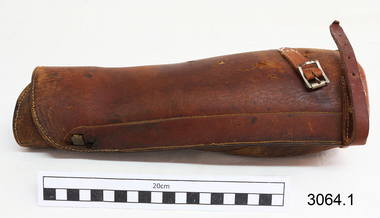
Clothing - Leather Leggings, 1899 to 1918
... Australian Light Horse that served in the South African War from 1899 to 1902. After the war, Britain wanted to use fewer mounted troops and restructured its force around a style of combat that needed more infantry. But the defence of Australia still relied upon mounted military units as these were more mobile than infantry and could travel faster over long distances. Light Horse brigades...Australian Light Horse that served in the South African War from 1899 to 1902. After the war, Britain wanted to use fewer mounted troops and restructured its force around a style of combat that needed more infantry. But the defence of Australia still relied upon mounted military units as these were more mobile than infantry and could travel faster over long distances. Light Horse brigades ...The subject leather leggings are associated with mounted troops known as the Australian Light Horse that served in the South African War from 1899 to 1902. After the war, Britain wanted to use fewer mounted troops and restructured its force around a style of combat that needed more infantry. But the defence of Australia still relied upon mounted military units as these were more mobile than infantry and could travel faster over long distances. Light Horse brigades in the Australian Imperial Force (AIF) mostly contained recruits who served in the Light Horse regiments of the Citizen Forces. Many young men from rural areas of Australia volunteered for the Light Horse regiments. They had to pass a riding test to join, this test was easier for men from the bush because horses were still the main method of transport on farms and in country towns. The army did not officially accept First Australians into the AIF until May 1917 when enlistment standards were relaxed to include 'half-castes' with a parent of European origin. Indigenous soldiers served as valuable members of the Light Horse and many possessed excellent horse handling skills and specialist tracking knowledge.The subject items are part of the uniform for the Light Horse Units that served in the Australian army from 1899 until 1918. These leggings were worn by soldiers on horseback and are significant as they represent a noteworthy time in Australia's early military history. It was a time when many young men gave their lives during the South African and First World Wars in the defence of the then British Empire as part of the Imperial Forces that were gathered from many British-controlled Colonial countries.A pair of two Leather Leggings used by Mounted Australian soldiers during the first world war. The leggings are dark tan in colour with stitching to attach buckles and fastener straps. The strap buckles are made of brass and the leather legging straps are of same leather as leggings. Noneflagstaff hill, warrnambool, flagstaff hill maritime museum, shipwreck coast, flagstaff hill maritime village, great ocean road, leggings, leather leggings, protective leggings, protective clothing, australian mounted light horse units, military equipment -
 Bendigo Military Museum
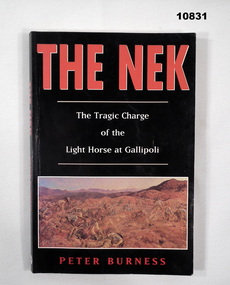
Book - BATTLE WW1, Peter Burness, "THE NEK", 1996
... Light Horse at Gallipoli". Publications Books Gallipoli WW1 SOFT COVER BOOK. Cover - cardboard, red and white ink print on a black colour background. Front illustration - in colour - paintingt by George Lambert titled "The Charge of the 3rd Light Horse Brigade at the Nek". 168 pages, cut, plain white paper. Illustrated black and white photographs and one map. "THE NEK" Book BATTLE WW1 Peter Burness Kangaroo Press Pty Ltd Australian ...From front cover - "THE NEK/ The Tragic Charge of the Light Horse at Gallipoli".SOFT COVER BOOK. Cover - cardboard, red and white ink print on a black colour background. Front illustration - in colour - paintingt by George Lambert titled "The Charge of the 3rd Light Horse Brigade at the Nek". 168 pages, cut, plain white paper. Illustrated black and white photographs and one map. publications, books, gallipoli, ww1 -
 Bendigo Military Museum
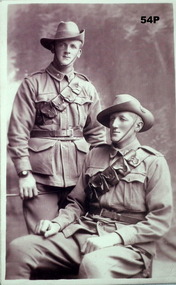
Photograph - SOLDIERS PHOTOGRAPH, c.1914 - 15
... Light Horse Regt. Embarked for Egypt 25.2.1915 then Gallipoli 16.5.1915. Hospitalised with dysentery 7.8.15 then diagnosed as gastroenteritis. Embarked for Australia 16.10.1915 classed as enteric fever. Classed fully fit he embarked for England 7.9.1916 as No 26673 in 3rd reinforcements 8th FA Brigade...Light Horse Regt. Embarked for Egypt 25.2.1915 then Gallipoli 16.5.1915. Hospitalised with dysentery 7.8.15 then diagnosed as gastroenteritis. Embarked for Australia 16.10.1915 classed as enteric fever. Classed fully fit he embarked for England 7.9.1916 as No 26673 in 3rd reinforcements 8th FA Brigade ...Carl HOLMBERG No 314 (born Elmore, enlisted Bendigo) in the 8th Light Horse Regt on 14.9.1914. Embarked for Egypt 25.2.1915 then Gallipoli 16.5.1915. Transferred to Machine Gun Section 28.5.1915. WIA 7.8.1915 GSW's to neck, face and right shoulder. DOW's complicated by septicemia at sea. Buried at sea between ANZAC cove and Mudros Island. Henry HOLMBERG initially (born Elmore, enlisted Bendigo) as No 334. There is some confusion to it, possibly 234 in the 8th Light Horse Regt. Embarked for Egypt 25.2.1915 then Gallipoli 16.5.1915. Hospitalised with dysentery 7.8.15 then diagnosed as gastroenteritis. Embarked for Australia 16.10.1915 classed as enteric fever. Classed fully fit he embarked for England 7.9.1916 as No 26673 in 3rd reinforcements 8th FA Brigade. Transferred to 1st Div Ammunition Column 23.3.1917, mustered as Driver 4.7.1917. WIA 6.10.1917 with GSW's to left thigh, right knee, shoulder and arm severe. Discharged from the AIF 29.8.1918. The brothers were both big men for the time at 6'1" and 6'3". Refer also 626, 609P. Collection re Mrs May Burns.Photo post card B & W re Carl and Henry HOLMBERG in Light Horse uniform. Carl is standing and Henry sitting.On rear in blue ink “Holmbergs”photography, portraits, military history, souvenirs -
 Bendigo Military Museum
Uniform - UNIFORM AIF WW1, 4) Hat - Akubra et al, c.2000
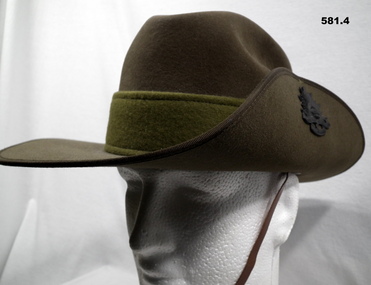
... Light horse brigade .1) Jacket, 100% wool with cotton lining. 7th Battalion AIF colour patches with a brass A signifying original ANZAC on both sleeves. Right sleeve has sergeant's stripes & 5 blue & 1 red chevron stripes. Left sleeve has 3 brass bars re WIA 3 times. Rising Sun badges on each collar & Australia...on hat: "5.7 Akubra Made in Australia" Light horse brigade .1) Jacket, 100% wool with cotton lining. 7th Battalion AIF colour patches with a brass A signifying original ANZAC on both sleeves. ...A complete replica uniform set of clothing and all items that were or could be worn by a first AIF soldier.Light horse brigade .1) Jacket, 100% wool with cotton lining. 7th Battalion AIF colour patches with a brass A signifying original ANZAC on both sleeves. Right sleeve has sergeant's stripes & 5 blue & 1 red chevron stripes. Left sleeve has 3 brass bars re WIA 3 times. Rising Sun badges on each collar & Australia badges on shoulder straps. Belted at waist. .2) Jodphurs, khaki corded wool. Brass button up fly. .3) Braces, red, white & blue oblique striped. .4) Hat, size 57, khaki Akubra with felt pugaree, leather chin strap, & blackened brass Rising Sun badge on upturned rim. .5) & .6) Puttees, pair, khaki wool felt with khaki cotton tapes. .7) & .8) Boots, pair, size L, tan coloured leather with dark brown leather laces, leather soles with metal reinforcing on heels..1) & .2) Makers labels. .4) Hat: Akubra, Made in Australia; On badge: Australian Commonwealth Military Forces. on hat: "5.7 Akubra Made in Australia"uniforms-army, costume - male footwear, costume - male headwear -
 Bendigo Military Museum
Equipment - SPURS WW1, 1914-15 (estimated)
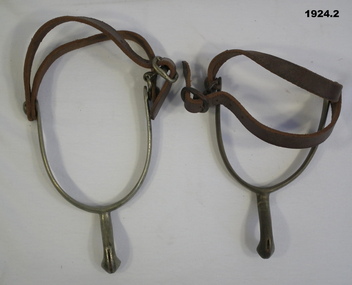
... Pre WW1 he had served in the 17th Light Horse from 1910 until he enlisted in the AIF with the rank of Lieut age 24 years 3 months with 14th reinforcements 8th L.Horse on 16.12.1915, embark for Egypt 27.1.1916, transfer to 12th FAB (Artillery) 6.4.1916, embark for France 2.6.1916, promoted Capt 21.1.1917, detached to Australian Artillery Reserve Brigade England 6.2.1918, rejoins unit 27.5.1918, transfer to 45th Battery to Command 8.9.1918, promoted Major 22.10.1918, hospital 19.6.1919 with Scabies, discharged from the AIF 23.12.1919....Pre WW1 he had served in the 17th Light Horse from 1910 until he enlisted in the AIF with the rank of Lieut age 24 years 3 months with 14th reinforcements 8th L.Horse on 16.12.1915, embark for Egypt 27.1.1916, transfer to 12th FAB (Artillery) 6.4.1916, embark for France 2.6.1916, promoted Capt 21.1.1917, detached to Australian Artillery Reserve Brigade England 6.2.1918, rejoins unit 27.5.1918, transfer to 45th Battery to Command 8.9.1918, promoted Major 22.10.1918, hospital 19.6.1919 with Scabies, discharged from the AIF 23.12.1919. military history transport - horse metalcraft brassware metal craft - cast iron .1) Riding spurs, metal 'U' shape with 2 leather straps attached, one with adjustable strap & buckle. .2) Same as .1) Equipment SPURS WW1 ...The Spurs were issued to Frank Levy. Pre WW1 he had served in the 17th Light Horse from 1910 until he enlisted in the AIF with the rank of Lieut age 24 years 3 months with 14th reinforcements 8th L.Horse on 16.12.1915, embark for Egypt 27.1.1916, transfer to 12th FAB (Artillery) 6.4.1916, embark for France 2.6.1916, promoted Capt 21.1.1917, detached to Australian Artillery Reserve Brigade England 6.2.1918, rejoins unit 27.5.1918, transfer to 45th Battery to Command 8.9.1918, promoted Major 22.10.1918, hospital 19.6.1919 with Scabies, discharged from the AIF 23.12.1919..1) Riding spurs, metal 'U' shape with 2 leather straps attached, one with adjustable strap & buckle. .2) Same as .1)military history, transport - horse, metalcraft brassware, metal craft - cast iron -
 Bendigo Military Museum
Postcard - POSTCARDS WW1, c.1914
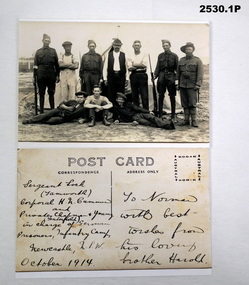
... Light Horse Regt age 20 years. Embark for Egypt 27.10.1915, hospital 3.1.1916 with Bronvhitis, rejoin unit 15.1.1916, over some 7 months from 4.4.1916 he transfers 4 times until 2.11.1916 and listed as 4th Australian Camel Regt, by 16.2.1917 he is classed as being with 11th Coy 3rd Anzac Batt 1st Camel Brigade, WIA 1.12.1917 GSW’s, DOW’s at 2nd L.H.Brigade Field Ambulance 1.12.1917 in Jaffa. ...Light Horse Regt age 20 years. Embark for Egypt 27.10.1915, hospital 3.1.1916 with Bronvhitis, rejoin unit 15.1.1916, over some 7 months from 4.4.1916 he transfers 4 times until 2.11.1916 and listed as 4th Australian Camel Regt, by 16.2.1917 he is classed as being with 11th Coy 3rd Anzac Batt 1st Camel Brigade, WIA 1.12.1917 GSW’s, DOW’s at 2nd L.H.Brigade Field Ambulance 1.12.1917 in Jaffa. ....1) H.N.Cummin. Harold Nesbit Cummin had prior Military service (unclear) to joining the AIF. No 1239 he enlisted on 17.8.1915 in the 6th reinforcements to the 11th Light Horse Regt age 20 years. Embark for Egypt 27.10.1915, hospital 3.1.1916 with Bronvhitis, rejoin unit 15.1.1916, over some 7 months from 4.4.1916 he transfers 4 times until 2.11.1916 and listed as 4th Australian Camel Regt, by 16.2.1917 he is classed as being with 11th Coy 3rd Anzac Batt 1st Camel Brigade, WIA 1.12.1917 GSW’s, DOW’s at 2nd L.H.Brigade Field Ambulance 1.12.1917 in Jaffa. Refer 2535P re his brother Alexander Norman. The photo obviously refers to his previous service as the photo is dated “Oct 1914”. The Germans are possibly people interned after outbreak of the war. .1) Photo of 4 armed Australian Soldiers with 6 civilians, verso postcard has hand written description. .2) Generic postcard from Egypt to a brother, verso letter from Harold to Norman. .3) Photo of 2 WWI German Servicemen with no headgear, verso addressed to a German lady - see Inscriptions & Markings. .1) SGT LOCK (Tamworth), CPL H N CUMMIN & PTES CHAPMAN & YOUNG (Tenterfield) in charge of German prisoners, Infantry Camp, Newcastle, NSW, October 1914. Address: To Norman with best wishes from his loving brother Harold. .2) Dated 5.10.1917 Dear Norman, .... 17 lines .... Your loving brother Harold. .3) To Frau A Muxfeldt Niendorf (Kr Tinneberg) Gaustedterueg No 19, Gesebrieben d 18 Juli 1918. Absender Hugu Muxfeldt No 252 15 Prisoner of War Coy France C/o GPO London Englandpostcards, photographs, 38th -
 Waverley RSL Sub Branch
Photographs, Fredrick Charles Dix
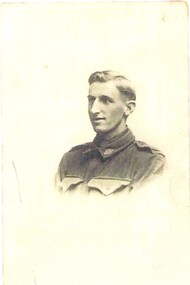
... Light horse and sent to Egypt for further training. Unit embarked from Adelaide, South Australia, on board HMAT A30 Borda on 11 January 1916.He served in France and was wounded by shrapnel in the eye socket but eventually returned to active duty on the front.He returned to Australia 6 September 1919 Sgt. F. C. Dix 1790 9th light horse 13th reinforcement 13 Field Artillery Brigade ...Fredrick Charles Dix enlisted 8th July 1915 at Castlemaine (at the time he was living with his Mother and stepfather in Fryers Town) after serving in the Senior Cadets. He was taken on by the 9th Light horse and sent to Egypt for further training. Unit embarked from Adelaide, South Australia, on board HMAT A30 Borda on 11 January 1916.He served in France and was wounded by shrapnel in the eye socket but eventually returned to active duty on the front.He returned to Australia 6 September 1919 Sgt. F. C. Dix 1790 9th light horse 13th reinforcement 13 Field Artillery Brigade where he (several times) attained the rank of Sergeant. He also served during WWII at Nowra as a driver. Photos of Fred. were taken after enlistment, and the photo of ? 13 F.A.B. is thought to have been taken in Egypt 1916 3 Black and white photographs from WWIWritten on reverse of the image of the soldiers in front of tent "Fred's Mates"f dix, fredrick dix, 13th f.a.b., 9th light horse, castlemaine, wwi, egypt, photographs, photos, postcards france wwi -
 Bendigo Military Museum
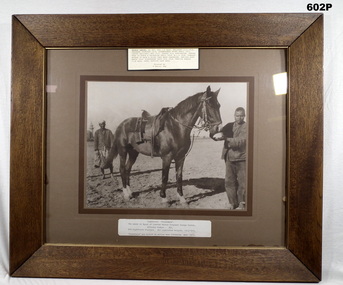
Photograph - WW1 PHOTOGRAPH, FRAMED, c.1915-1918
... Australia 15.2.1918, hospital re his wounds 2.4.1918, discharged Medically unfit 12.9.1918. Scarsdale is a small town near Ballarat where the family came from. Photography scarsdale Light horse ww1 framing Light Horse SCARSDALE, the mount in Egypt of QUARTER MASTER SERGEANT GEORGE DANIEL Regt No 367. 8th Light Horse Regiment, 3rd Light Horse Brigade 1915-1918. ...George DANIEL (born Woorarra, enlisted Foster Vic) had 2 years previous military experience prior to enlisting in the AIF as a Cpl No 367 in C Sqd 8th LH Regt on 16.8.1915 age 26 years. Embark for Egypt 25.2.1915, embark for Gallipoli 16.5.1915, promoted to Sgt 10.7.1915, hospital with Influenza 28.7.1915, rejoin unit 16.8.1915, promoted to QM Sgt 26.12.1915, hospital 1.12.1916 (unclear), rejoin unit 6.12.1916, transfer to 3rd LH Regt 2.7.1917, transfer back to 8th LH Regt 12 10.1917, WIA 11.12.1917 GSW’s to Back and right leg, embark for Australia 15.2.1918, hospital re his wounds 2.4.1918, discharged Medically unfit 12.9.1918. Scarsdale is a small town near Ballarat where the family came from.Rectangular sepia photograph of Light Horse SCARSDALE with 2 Arab handlers. Wooden frame, glass front & brown mount.Light Horse SCARSDALE, the mount in Egypt of QUARTER MASTER SERGEANT GEORGE DANIEL Regt No 367. 8th Light Horse Regiment, 3rd Light Horse Brigade 1915-1918. SCARSDALE was killed in action near Jerusalem mid 1918. photography, scarsdale, light horse ww1, framing -
4th/19th Prince of Wales's Light Horse Regiment Unit History Room
Flag, 173rd Airborne Brigade (US)
... Brigade. On 5 May 1965, it became the first US Army ground combat unit committed to the war in South Vietnam, where further organizational changes were to take place. Australians attached to the Brigade were: 1st Battalion, of the Royal Australian Regiment (I RAR) and support troops of the 4/19th Prince of Wales Light Horse Regiment (1Troop), 105 Field Battery Royal Australian Artillery, 161 Field Battery Royal New Zealand Artillery, 3 Field Troop Royal Australian Engineers, 161 Reconnaissance Flight, Royal Australian Army Air Corps, 1st Australian Logistical Support Company. ...Brigade. On 5 May 1965, it became the first US Army ground combat unit committed to the war in South Vietnam, where further organizational changes were to take place. Australians attached to the Brigade were: 1st Battalion, of the Royal Australian Regiment (I RAR) and support troops of the 4/19th Prince of Wales Light Horse Regiment (1Troop), 105 Field Battery Royal Australian Artillery, 161 Field Battery Royal New Zealand Artillery, 3 Field Troop Royal Australian Engineers, 161 Reconnaissance Flight, Royal Australian Army Air Corps, 1st Australian Logistical Support Company. ...173 AIRBORNE BRIGADE (SEPARATE) US ARMY 1 RAR BATTLE GROUP BIEN HOA 1965-1966 On May 5, 1965, the Brigade deployed to South Viet Nam as the first US Army ground combat unit in that war. Upon arrival, the 1st Battalion of the Royal Australian Regiment (1 RAR) and a battery from New Zealand (161Royal NZ Artillery) were attached to the Brigade -- making the 173d Airborne the only multi-national combat unit in the war. Initially headquartered in Bien Hoa, the Brigade operated in the four provinces around Saigon. (Xuan Loc, Long Khanh, Phuoc Long & Phuoc Tuy), but (in its roll as a "Fire Brigade") also went to the Central Highlands (Pleiku / Kontum) to fight Viet Cong. The 173d also conducted constant operations against the southern stronghold of the VC Main Force in the legendary Iron Triangle in War Zone D. The brigade was organized as a balanced airborne combat force consisting of two infantry battalions, an artillery battalion, a support battalion, an engineer company, a cavalry troop, an armour company, and a headquarters company. Upon activation, it became the first and only separate airborne brigade in the United States Army. This was the beginning of a long series of "Firsts" for the Brigade. On 5 May 1965, it became the first US Army ground combat unit committed to the war in South Vietnam, where further organizational changes were to take place. Australians attached to the Brigade were: 1st Battalion, of the Royal Australian Regiment (I RAR) and support troops of the 4/19th Prince of Wales Light Horse Regiment (1Troop), 105 Field Battery Royal Australian Artillery, 161 Field Battery Royal New Zealand Artillery, 3 Field Troop Royal Australian Engineers, 161 Reconnaissance Flight, Royal Australian Army Air Corps, 1st Australian Logistical Support Company. The Brigade's two infantry battalions, the First Battalion of the 503' Infantry (1/503`d) and the Second Battalion, of the 503`d Infantry (2/503`) and the attached Australians of 1 RAR constituted the infantrymen available to the Brigade. Their mission was to protect the Bien Hoa Air Base and to close with and destroy or capture the enemy. This was in fact the first operational ground force formed under the ANZUS Defence Treaty. ANZUS was a mutual defence treaty signed in 1951 between Australia, New Zealand and the United States of America. In 1965 the spirit of this treaty appeared as 173d Airborne Brigade (Sep) a tri-national brigade. The only such tri-national fighting force formed during the Vietnam War. On deployment to South Vietnam in 1965, 1 Troop A Squadron, 4th/19th Prince of Wales's Light Horse Regiment was part of the US 173rd Airborne Brigade combat group. Flag, two colours divided vertically, hoist half mid blue, fly half red. Badge of 173rd Airborne Brigade (730 x 490 mm) in centreflag, 173rd airborne, south vietnam -
4th/19th Prince of Wales's Light Horse Regiment Unit History Room
Bridle, c. 1914
... Used by 908 Dvr Thomas Edward Whyte 1st AIF, 3rd Light Horse Brigade, Machine Gun Squadron Equipment used by Australian Light Horseman in World War 1 Nil Australian Light Horse Bridle Bridle ...Used by 908 Dvr Thomas Edward Whyte 1st AIF, 3rd Light Horse Brigade, Machine Gun SquadronEquipment used by Australian Light Horseman in World War 1Australian Light Horse Bridle Nil -
4th/19th Prince of Wales's Light Horse Regiment Unit History Room
Uniform, Service Dress WW1, c 1914
... Light Horse regiments (Bourchier Force) in the final advance on Damascus; on entering the city the 4th captured 12,000 Turks and set about relieving their sufferings. Bourchier was three times mentioned in dispatches. He was appointed C.M.G. in June 1919 and his A.I.F. appointment ended in October. In 1921 he was promoted colonel, commanding the 5th Cavalry Brigade, and in 1931 brigadier, in charge of the 2nd Cavalry Division. He returned to Strathmerton but later farmed a property at Katandra, which he named Kuneitra. - Source: Australian...Light Horse regiments (Bourchier Force) in the final advance on Damascus; on entering the city the 4th captured 12,000 Turks and set about relieving their sufferings. Bourchier was three times mentioned in dispatches. He was appointed C.M.G. in June 1919 and his A.I.F. appointment ended in October. In 1921 he was promoted colonel, commanding the 5th Cavalry Brigade, and in 1931 brigadier, in charge of the 2nd Cavalry Division. He returned to Strathmerton but later farmed a property at Katandra, which he named Kuneitra. - Source: Australian ...Sir Murray William James Bourchier (1881-1937), grazier, soldier and politician, was born on 4 April 1881 at Pootilla, Bungaree, Victoria, eldest son of Edward Bourchier, Geelong-born farmer, and his wife Francis (Fanny), née Cope. In 1878 Edward and his three brothers had taken up four adjoining selections on the Murray River near Tocumwal. Within a few years their properties had expanded considerably: Edward's, near Strathmerton, was called Woodland Park; the other three were known collectively as Boomagong. After a private education in Melbourne, Murray returned to Woodland Park. From 1909 until the outbreak of World War I he commanded a troop of light horse at Numurkah, attending annual camps and courses. Bourchier's military service was distinguished. He enlisted in the Australian Imperial Force in August 1914 and sailed as a lieutenant in the 4th Light Horse Regiment, serving seven months on Gallipoli. After the Sinai campaign in 1916-17, during which he was promoted lieutenant-colonel commanding his regiment, he made the crucial final assault on Beersheba. On 31 October 1917 he led his men, many of them from his own district, at full gallop over two miles into Turkish entrenchments and on for a further two miles (3.2 km) into Beersheba to capture vital wells before the Turks could destroy them. Lacking sabres, the regiment used bayonets held in their hands as shock weapons. For this exploit he was awarded the Distinguished Service Order and earned the sobriquet 'Bourchier of Beersheba'. Eleven months later, after fighting north through Palestine, he commanded a joint force of the 4th and 12th Light Horse regiments (Bourchier Force) in the final advance on Damascus; on entering the city the 4th captured 12,000 Turks and set about relieving their sufferings. Bourchier was three times mentioned in dispatches. He was appointed C.M.G. in June 1919 and his A.I.F. appointment ended in October. In 1921 he was promoted colonel, commanding the 5th Cavalry Brigade, and in 1931 brigadier, in charge of the 2nd Cavalry Division. He returned to Strathmerton but later farmed a property at Katandra, which he named Kuneitra. - Source: Australian Dictionary of BiographyService dress of General Sir Murray Bourchier, complete with jacket, trousers, shirt, tie, boots (high rise),Sam Browne belt, peaked cap, medal ribbons, badges of rank, medal ribbons
