
Showing 12 items matching "australian service attaché staff"
-
 National Vietnam Veterans Museum (NVVM)
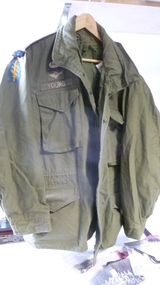
Uniform - Uniform, US Army, American Jacket
... ...Australian Service Attache Staff...He served with the Australian Army Training Team Vietnam from June 1962 to July 1963, Official Duty (from Army Headquarters, Canberra) August 1965, Australian Service Attaché Staff, Saigon from November 1965 to May 1966 and June 1966 to December 1967....He served with the Australian Army Training Team Vietnam from June 1962 to July 1963, Official Duty (from Army Headquarters, Canberra) August 1965, Australian Service Attaché Staff, Saigon from November 1965 to May 1966 and June 1966 to December 1967. ...This item was donated by Maj (Temp) Peter Raymond Young, (240217) who served with the Australian Intelligence Corps. He served with the Australian Army Training Team Vietnam from June 1962 to July 1963, Official Duty (from Army Headquarters, Canberra) August 1965, Australian Service Attaché Staff, Saigon from November 1965 to May 1966 and June 1966 to December 1967.American field jacket owned by Peter Raymond Young 240217, Australian Intelligence Corp (temporary) Major. Khaki lined jacket, long sleeved, four pockets in front, has plastic zipper down middle, also snap fastners and buttons. 1st Special Forces Command (Airborne) shoulder sleeve insignia. Two jump wings insignia on rithe breast over the name young. Zippered pocket on back of collar240217 Capt young, Aust Int corps written in black texta on right bottom of lined jacketamerican army jacket, us army, maj (temp) peter raymond young, 240217, australian intelligence corp, australian army training team vietnam (aattv), australian service attache staff, saigon, clothing -
 National Vietnam Veterans Museum (NVVM)
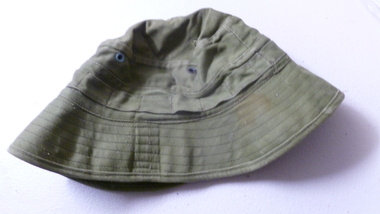
Headwear - Bush hat, giggle hat, 1968
... ...Australian Service Attaché Staff...He served with the Australian Army Training Team Vietnam from June 1962 to July 1963, Official Duty (from Army Headquarters, Canberra) August 1965, Australian Service Attaché Staff, Saigon from November 1965 to May 1966 and June 1966 to December 1967....He served with the Australian Army Training Team Vietnam from June 1962 to July 1963, Official Duty (from Army Headquarters, Canberra) August 1965, Australian Service Attaché Staff, Saigon from November 1965 to May 1966 and June 1966 to December 1967. ...This item was donated by Maj (Temp) Peter Raymond Young, (240217) who served with the Australian Intelligence Corps. He served with the Australian Army Training Team Vietnam from June 1962 to July 1963, Official Duty (from Army Headquarters, Canberra) August 1965, Australian Service Attaché Staff, Saigon from November 1965 to May 1966 and June 1966 to December 1967.Australian Army bush hat found in bottom left hand pocket of jacket belonging to Peter Raymond Young 240217 (refer catalogue 11889) has "Copral" written in black ink on inside. label. Has a small hole in crown. Sun Ray hats Pty Ltd. made in Melbourne 1968maj (temp) peter raymond young, 240217, australian intelligence corp, australian army training team vietnam (aattv), official duty, army headquarters, australian service attaché staff, saigon, giggle hat, clothing, bush hat -
 National Vietnam Veterans Museum (NVVM)
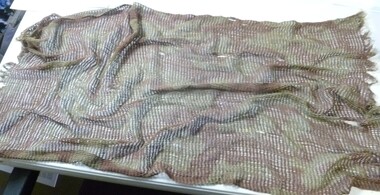
Equipment - Jungle Scarf, Sweat Rag
... ...Australian Service Attaché Staff...He served with the Australian Army Training Team Vietnam from June 1962 to July 1963, Official Duty (from Army Headquarters, Canberra) August 1965, Australian Service Attaché Staff, Saigon from November 1965 to May 1966 and June 1966 to December 1967....He served with the Australian Army Training Team Vietnam from June 1962 to July 1963, Official Duty (from Army Headquarters, Canberra) August 1965, Australian Service Attaché Staff, Saigon from November 1965 to May 1966 and June 1966 to December 1967. ...This item was donated by Maj (Temp) Peter Raymond Young, (240217) who served with the Australian Intelligence Corps. He served with the Australian Army Training Team Vietnam from June 1962 to July 1963, Official Duty (from Army Headquarters, Canberra) August 1965, Australian Service Attaché Staff, Saigon from November 1965 to May 1966 and June 1966 to December 1967.Green/brown camouflage scarf has quite a few holes, some have been mended.maj (temp) peter raymond young, 240217, australian intelligence corp, australian army training team vietnam (aattv), official duty, army headquarters, australian service attaché staff, clothing, sweat scarf -
 National Vietnam Veterans Museum (NVVM)
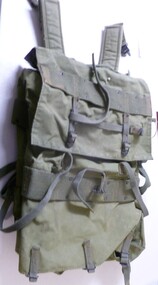
Equipment - Equipment, Army Backpack
... ...Australian Service Attaché Staff...He served with the Australian Army Training Team Vietnam from June 1962 to July 1963, Official Duty (from Army Headquarters, Canberra) August 1965, Australian Service Attaché Staff, Saigon from November 1965 to May 1966 and June 1966 to December 1967....He served with the Australian Army Training Team Vietnam from June 1962 to July 1963, Official Duty (from Army Headquarters, Canberra) August 1965, Australian Service Attaché Staff, Saigon from November 1965 to May 1966 and June 1966 to December 1967. ...This item was donated by Maj (Temp) Peter Raymond Young, (240217) who served with the Australian Intelligence Corps. He served with the Australian Army Training Team Vietnam from June 1962 to July 1963, Official Duty (from Army Headquarters, Canberra) August 1965, Australian Service Attaché Staff, Saigon from November 1965 to May 1966 and June 1966 to December 1967.Army khaki canvas backpack and webbing outside camouflage plastic lined. Webbing handle on top. Padded areas on back with padded shoulder straps. Can be opened at either top or bottom. Loops and attachments for storing articles.maj (temp) peter raymond young, 240217, australian intelligence corp, australian army training team vietnam (aattv), official duty, army headquarters, australian service attaché staff, army equipment, backpack -
 National Vietnam Veterans Museum (NVVM)
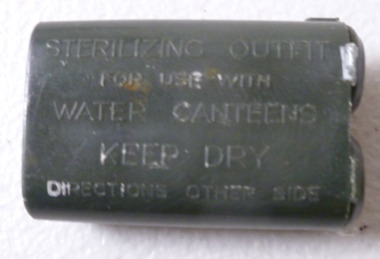
Equipment - Equipment, Army Sterilizing Kit
... ...Australian Service Attaché Staff...He served with the Australian Army Training Team Vietnam from June 1962 to July 1963, Official Duty (from Army Headquarters, Canberra) August 1965, Australian Service Attaché Staff, Saigon from November 1965 to May 1966 and June 1966 to December 1967....He served with the Australian Army Training Team Vietnam from June 1962 to July 1963, Official Duty (from Army Headquarters, Canberra) August 1965, Australian Service Attaché Staff, Saigon from November 1965 to May 1966 and June 1966 to December 1967. ...This item was donated by Maj (Temp) Peter Raymond Young, (240217) who served with the Australian Intelligence Corps. He served with the Australian Army Training Team Vietnam from June 1962 to July 1963, Official Duty (from Army Headquarters, Canberra) August 1965, Australian Service Attaché Staff, Saigon from November 1965 to May 1966 and June 1966 to December 1967.Khaki plastic sterilizing kit to containing vials of tablets. Has a strip of Velcro on it used to attach item to webbing.Sterilizing outfit for use with water canteen - keep dry. Directions other side: Follow procedure white tablet first, blue tablet secondmaj (temp) peter raymond young, 240217, australian intelligence corp, australian army training team vietnam (aattv), official duty, army headquarters, australian service attaché staff, army -- equipment, water sterilising, sterilising tablets -
 National Vietnam Veterans Museum (NVVM)
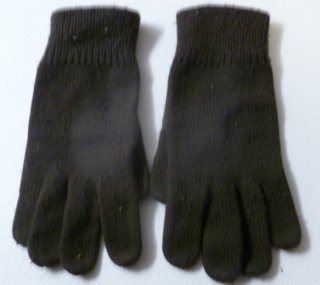
Clothing - A Pair of Gloves
... ...Australian Service Attache Staff ...This item was donated by Maj (Temp) Peter Raymond Young, (240217) who served with the Australian Intelligence Corps. He served with the Australian Army Training Team Vietnam from June 1962 to July 1963, Official Duty (from Army Headquarters, Canberra) August 1965, Australian Service Attache Staff, Saigon from November 1965 to May 1966 and June 1966 to December 1967.Pair of dark brown woollen gloves found in bottom right hand pocket of jacket belonging to Peter Raymond Young 240217 - Catalogue No. 11889maj (temp) peter raymond young, 240217, australian intelligence corp, australian army training team vietnam (aattv), official duty, army headquarters, australian service attache staff, gloves, woollen gloves, clothing -
 National Vietnam Veterans Museum (NVVM)
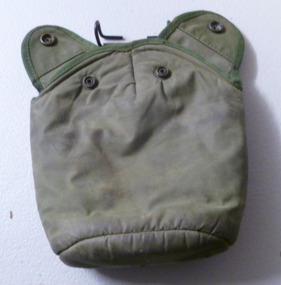
Equipment - Equipment, Army Bottle Holder
... ...Australian Service Attaché Staff...Australian Service Attache Staff, Saigon from November 1965 to May 1966 and June 1966 to December 1967. Maj (Temp) Peter Raymond Young 240217 Australian Intelligence Corp Australian Army Training Team Vietnam (AATTV) Official Duty Army Headquarters Australian Service Attaché Staff Army equipment Water Bottle Khaki water bottle holder - possibly canvas with green felt lining 2 metal snap fasteners on flaps, on top metal hooks attached to webbing with a belt loop. ...This item was donated by Maj (Temp) Peter Raymond Young, (240217) who served with the Australian Intelligence Corps. He served with the Australian Army Training Team Vietnam from June 1962 to July 1963, Official Duty (from Army Headquarters, Canberra) August 1965, Australian Service Attache Staff, Saigon from November 1965 to May 1966 and June 1966 to December 1967.Khaki water bottle holder - possibly canvas with green felt lining 2 metal snap fasteners on flaps, on top metal hooks attached to webbing with a belt loop. maj (temp) peter raymond young, 240217, australian intelligence corp, australian army training team vietnam (aattv), official duty, army headquarters, australian service attaché staff, army equipment, water bottle -
 National Vietnam Veterans Museum (NVVM)
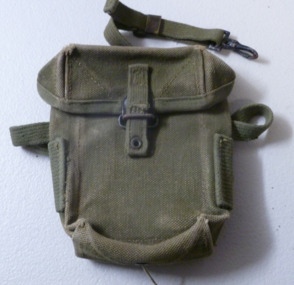
Equipment - Equipment, Army - Ammo/Magazine Holder
... ...Australian Service Attaché Staff...He served with the Australian Army Training Team Vietnam from June 1962 to July 1963, Official Duty (from Army Headquarters, Canberra) August 1965, Australian Service Attache Staff, Saigon from November 1965 to May 1966 and June 1966 to December 1967. ammunition pouch Maj (Temp) Peter Raymond Young 240217 Australian Intelligence Corp Australian Army Training Team Vietnam (AATTV) Official Duty Army Headquarters Australian Service Attaché Staff Saigon Army equipment Ammunition Pouch Magazine pouch Heavy khaki ammunition and magazine holder with a metal insert in front with black metal fastener. 2 Khaki webbing loops on either side 2 metal clips on back. ...This item was donated by Maj (Temp) Peter Raymond Young, (240217) who served with the Australian Intelligence Corps. He served with the Australian Army Training Team Vietnam from June 1962 to July 1963, Official Duty (from Army Headquarters, Canberra) August 1965, Australian Service Attache Staff, Saigon from November 1965 to May 1966 and June 1966 to December 1967.ammunition pouch Heavy khaki ammunition and magazine holder with a metal insert in front with black metal fastener. 2 Khaki webbing loops on either side 2 metal clips on back. Webbing loop with dog tag fastener on end. Has canvas top which can be fastened to front metal fastener. maj (temp) peter raymond young, 240217, australian intelligence corp, australian army training team vietnam (aattv), official duty, army headquarters, australian service attaché staff, saigon, army equipment, ammunition pouch, magazine pouch -
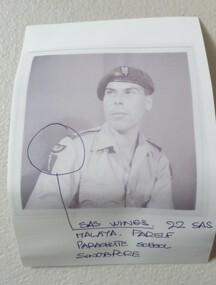 National Vietnam Veterans Museum (NVVM)
Photograph - A Black and White photograph of Capt. Peter Raymond Young in a Beret and Uniform
... ...Australian Service Attaché Staff...Australian Service Attache Staff, Saigon from November 1965 to May 1966 and June 1966 to December 1967. Maj (Temp) Peter Raymond Young 240217 Australian Intelligence Corp Australian Army Training Team Vietnam (AATTV) Official Duty Army Headquarters Australian Service Attaché Staff SAS Wings 22 SAS Malaya FARELF Parachute School Singapore Photograhp SAS Wings 22 SAS Malaya FARELF Parachute School Singapore Black and white photograph of Capt. ...This item was donated by Maj (Temp) Peter Raymond Young, (240217) who served with the Australian Intelligence Corps. He served with the Australian Army Training Team Vietnam from June 1962 to July 1963, Official Duty (from Army Headquarters, Canberra) August 1965, Australian Service Attache Staff, Saigon from November 1965 to May 1966 and June 1966 to December 1967. Black and white photograph of Capt. Peter Raymond Young in a beret and uniform. Found in top left pocket of his jacket. cat. No. 11889SAS Wings 22 SAS Malaya FARELF Parachute School Singaporemaj (temp) peter raymond young, 240217, australian intelligence corp, australian army training team vietnam (aattv), official duty, army headquarters, australian service attaché staff, sas wings, 22 sas malaya, farelf parachute school singapore, photograhp -
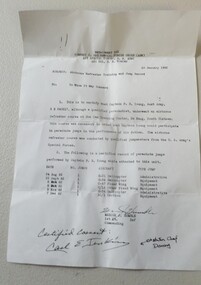 National Vietnam Veterans Museum (NVVM)
Letter - A letter for Capt. P.R. Young doing a refresher course for parachute jumping so that he could parachute in the course of his duties as Australian Intelligence Service
... ...Australian Service Attaché Staff...Australian Service Attache Staff, Saigon from November 1965 to May 1966 and June 1966 to December 1967. Maj (Temp) Peter Raymond Young 240217 Australian Intelligence Corp Australian Army Training Team Vietnam (AATTV) Official Duty Army Headquarters Australian Service Attaché Staff Parachutist 173rd Airborne Refresher Course Ham Cam Training Centre Da Nang U.S. ...This item was donated by Maj (Temp) Peter Raymond Young, (240217) who served with the Australian Intelligence Corps. He served with the Australian Army Training Team Vietnam from June 1962 to July 1963, Official Duty (from Army Headquarters, Canberra) August 1965, Australian Service Attache Staff, Saigon from November 1965 to May 1966 and June 1966 to December 1967.A letter for Capt. P.R. Young doing a refresher course for parachute jumping so that he could parachute in the couse of his duties as Australian Intelligence Service dated 10 January 1962 with US special forces. Found in top left hand pocket of jacket. Cat. No. 11889maj (temp) peter raymond young, 240217, australian intelligence corp, australian army training team vietnam (aattv), official duty, army headquarters, australian service attaché staff, parachutist, 173rd airborne, refresher course, ham cam training centre, da nang, u.s. army's special forces, h-21 helicopter, h-34 helicopter, ac/1 caribou -
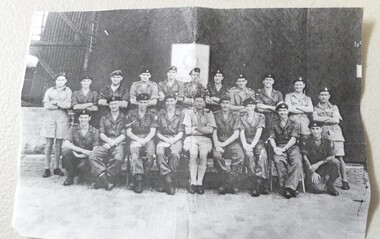 National Vietnam Veterans Museum (NVVM)
Photograph - A Black and White Photograph of 20 Uniformed Men Having Received Their SAS Wings
... ...Australian Service Attaché Staff...Australian Service Attache Staff, Saigon from November 1965 to May 1966 and June 1966 to December 1967. Maj (Temp) Peter Raymond Young 240217 Australian Intelligence Corp Australian Army Training Team Vietnam (AATTV) Official Duty Army Headquarters Australian Service Attaché Staff SAS 22 SAS Regiment Singapore Parachute Photograhp Written on the back of the photograph - Young Front Row wearing SAS cap badge ? ...This item was donated by Maj (Temp) Peter Raymond Young, (240217) who served with the Australian Intelligence Corps. He served with the Australian Army Training Team Vietnam from June 1962 to July 1963, Official Duty (from Army Headquarters, Canberra) August 1965, Australian Service Attache Staff, Saigon from November 1965 to May 1966 and June 1966 to December 1967.Black and white photograph of 20 uniformed men having received their SAS wings. Capt. Peter Raymond Young in the front row. Found in left hand top pocket of his jacket. Cat. No. 11889Written on the back of the photograph - Young Front Row wearing SAS cap badge ? SAS wings. Parachute ? Singapore 195? Immediately after jump 22 SAS Regiment at KL Malayamaj (temp) peter raymond young, 240217, australian intelligence corp, australian army training team vietnam (aattv), official duty, army headquarters, australian service attaché staff, sas, 22 sas regiment, singapore, parachute, photograhp -
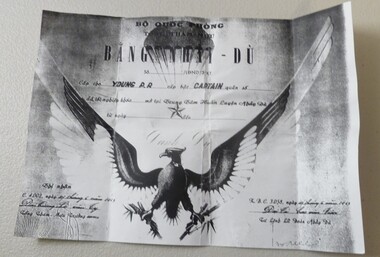 National Vietnam Veterans Museum (NVVM)
Certificate - A Copy of US 1st SF Vietnam Certified for Parachute Jumping for Capt Peter Raymond Young
... ...Australian Service Attaché Staff...Australian Service Attache Staff, Saigon from November 1965 to May 1966 and June 1966 to December 1967. Maj (Temp) Peter Raymond Young 240217 Australian Intelligence Corp Australian Army Training Team Vietnam (AATTV) Official Duty Army Headquarters Australian Service Attaché Staff Parachute Certificate Certificate SAS Details written in Vietnamese Copy of US 1st SF Vietnam certified for parachute jumping. ...This item was donated by Maj (Temp) Peter Raymond Young, (240217) who served with the Australian Intelligence Corps. He served with the Australian Army Training Team Vietnam from June 1962 to July 1963, Official Duty (from Army Headquarters, Canberra) August 1965, Australian Service Attache Staff, Saigon from November 1965 to May 1966 and June 1966 to December 1967.Copy of US 1st SF Vietnam certified for parachute jumping. Found in the top left hand pocket of Peter Raymond Young's jacketDetails written in Vietnamesemaj (temp) peter raymond young, 240217, australian intelligence corp, australian army training team vietnam (aattv), official duty, army headquarters, australian service attaché staff, parachute certificate, certificate, sas
