
Showing 89 items matching "australian women in the second world war"
-
 Returned Nurses RSL Sub-branch
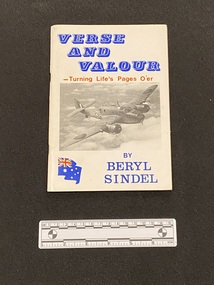
Book - Paperback booklet, Beryl Sindel, Verse and valour: turning life's pages o'er, 1985
... ...Australian women in the Second World War...war poetry Australian war poetry Australian Army Nursing Service Voluntary Aid Detachment Australian women in the Second World War World War 1939-1945 WW2 WWII poetry A collection of poems written by ex-WAAAF (Women's Australian Auxilary Airforce) A.C.W. ...A collection of poems written by ex-WAAAF (Women's Australian Auxilary Airforce) A.C.W. (aircraftwoman) (92848), Beryl Sindel. 'In this volume of poems, Beryl Sindel pays tribute to those women who between the years 1939 and 1945, voluntarily changed the direction of their lives and faced the unknown with unselfish devotion and patriotism.' [taken from foreward written by David Young]Staple bound white booklet with an image of a military plane on the cover. Wording is printed in blue and red print to match the colours of the Australian flag which is depicted waving in the bottom corner.non-fictionA collection of poems written by ex-WAAAF (Women's Australian Auxilary Airforce) A.C.W. (aircraftwoman) (92848), Beryl Sindel. 'In this volume of poems, Beryl Sindel pays tribute to those women who between the years 1939 and 1945, voluntarily changed the direction of their lives and faced the unknown with unselfish devotion and patriotism.' [taken from foreward written by David Young] war poetry, australian war poetry, australian army nursing service, voluntary aid detachment, australian women in the second world war, world war 1939-1945, ww2, wwii, poetry -
 The Beechworth Burke Museum
Audio - Oral History, Jennifer Williams, Mrs Sheila Parkinson, 3 January 2000
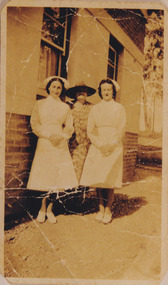
... second World War. At that time, unmarried women were accommodated and received nursing training on-site. Shiela was obliged to cease professional training and employment when she married in 1941, which disrupted completion of her final nursing examinations. Following post-war changes to the law that allowed married women to work, Sheila returned to Mayday Hills. Sheila's husband, Don, returned to Beechworth after four years abroad as a serviceman in the Australian...second World War. At that time, unmarried women were accommodated and received nursing training on-site. Shiela was obliged to cease professional training and employment when she married in 1941, which disrupted completion of her final nursing examinations. Following post-war changes to the law that allowed married women to work, Sheila returned to Mayday Hills. Sheila's husband, Don, returned to Beechworth after four years abroad as a serviceman in the Australian ...Mrs Sheila Parkinson was born in Wagga in 1916 and came to Beechworth as a young woman around 1938. Sheila trained as a psychiatric nurse at Mayday Hills hospital prior to the second World War. At that time, unmarried women were accommodated and received nursing training on-site. Shiela was obliged to cease professional training and employment when she married in 1941, which disrupted completion of her final nursing examinations. Following post-war changes to the law that allowed married women to work, Sheila returned to Mayday Hills. Sheila's husband, Don, returned to Beechworth after four years abroad as a serviceman in the Australian Air Force. Beechworth's institutions were a major source of local employment throughout the twentieth century. As well as providing limited employment opportunities to young women like Shiela, post-war European migrants from Bonegilla Migrant camp found at Mayday Hills, encouraging European migrant settlement in the district. Mayday Hills was renamed several times since its establishment in 1867. At the peak of operations, it comprised sixty-seven buildings housing over twelve hundred patients patients and five hundred staff. The hospital officially closed in 1998. Today, the decommissioned two-storey Italianate style main building stands on eleven hectares of botanical gardens under National Trust protection. The site remains a popular cultural heritage destination for visitors. This oral history recording was part of a project conducted by Jennifer Williams in the year 2000 to capture the everyday life and struggles in Beechworth during the twentieth century. This project involved recording seventy oral histories on cassette tapes of local Beechworth residents which were then published in a book titled: Listen to what they say: voices of twentieth century Beechworth. The cassette tapes were digitised in July 2021 with funds made available by the Friends of the Burke.Employed as a psychiatric nurse at one of Beechworth's large welfare institutions, Mayday Hills, Mrs Sheila Parkinson recalls the conditions faced by staff and patients at the hospital, which cared for chronically ill people from the Ovens region and patients from the Yarra Bend Asylum, Melbourne, which closed in 1925. When Sheila first began her nurse training, Mayday Hills suffered from a lack of resources and rudimentary facilities and patients frequently suffered from the cold due to poor heating and inadequate clothing and bedding. However, as the twentieth century progressed, Sheila recalls how conditions and treatments improved as a result of increased government funding of services and advances in psychiatry and pharmaceutical medicine. Mrs Sheila Parkinson's oral history recording is historically and socially significant for its witness to life in Beechworth in the pre- and post-WWII period. Sheila's story enriches our understanding of processes of modernisation with regard to psychiatric and welfare services, while the course of Sheila's professional training and employment brings attention to systemic and socio-economic barriers faced by women, as well as the valuable contribution women and migrants make in the delivery of care and ancillary services. This oral history account is socially and historically significant as it is a part of a broader collection of interviews conducted by Jennifer Williams which were published in the book 'Listen to what they say: voices of twentieth-century Beechworth.' While the township of Beechworth is known for its history as a gold rush town, these accounts provide a unique insight into the day-to-day life of the town's residents during the twentieth century, many of which would have been lost if they had not been preserved.This is a digital copy of a recording that was originally captured on a cassette tape. The cassette tape is black with a horizontal white strip and is currently stored in a clear flat plastic rectangular container. It holds up 40 minutes of recordings on each side.Mrs Sheila Parkinson /twentieth century beechworth, mayday hills, psychiatric care, benevolent asylums, nursing, wwii, psychiatric treatment, country women, psychiatric hostpital, beechworth's institutions, local employment, government institutions, listen to what they say, oral history, burke museum, sheila parkinson, beechworth lunatic asylum, beechworth mental hospital, beechworth hospital for the insane, the kerferd clinic, bonegilla migrant camp, working women, white australia policy -
 The Beechworth Burke Museum
Photograph, Between 1946 and 1961
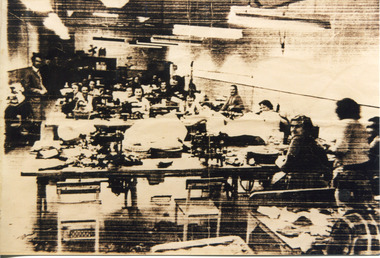
... At its peak, the shoe factory employed thirty six women and girls, which also included post-war migrants. After the Second World War, Australia admitted increasing numbers of immigrants in order to fulfil labour requirements for a rapidly inflating demand of consumer goods. ...At its peak, the shoe factory employed thirty six women and girls, which also included post-war migrants. After the Second World War, Australia admitted increasing numbers of immigrants in order to fulfil labour requirements for a rapidly inflating demand of consumer goods. ...Elgin Shoes Pty., Ltd., established a branch shoe factory in Beechworth in 1946. Managing director, Mr T Nagle Pitman, selected Beechworth as a suitable location for the factory due to the availability of labour in the town, particularly girls under sixteen years of age. At its peak, the shoe factory employed thirty six women and girls, which also included post-war migrants. After the Second World War, Australia admitted increasing numbers of immigrants in order to fulfil labour requirements for a rapidly inflating demand of consumer goods. These migrants were largely from European Countries in line with the ‘White Australia Policy’. In 1954 Beechworth had 170 migrants from the UK, 102 from Hungary, and 63 from Germany. The factory closed in 1961 as increased centralisation of both populations and industry in the larger nearby towns of Wangaratta and Wodonga lead to the closure of many factories in small towns in the 1960s and 1970s. This photograph is historically significant as it shows the working conditions in a factory primarily staffed by women at some point between the late 1940s and early 1960s. Sepia rectangular photograph printed on matte photographic paperReverse: 14 / AFGA / 6982 / pitman shoe factory, elgin shoe company, industry, shoe factory, shoemaking, working women, post-war migration, factory, white australia policy, mid-twentieth century women's working conditions, twentieth-century working conditions, pitman, elgin, shoe, sewing machine, leather, pittman -
 Lara RSL Sub Branch
Card, Happy Birthday Card
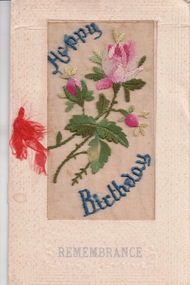
... war finished Jack travelled back to Australia and lived in Lara with his brother and sister. This card is significant as it is a reflection on the communication between families during the First World War. It also is a symbol of the way women in France made their money during the tuff times birthday card mother son mcintyre world war 1 ww1 happy birthday handmade silk embroidered On the front it has 'Happy Birthday" "Remembrance" On the first page in the inside "Remembrance" "To mother" "From Jack" "France 1918" On the second page in the inside: "Wishes are nothing; t'is the heart That in the few lines dwells And says to those from us apart More that the greeting tells" A birthday card with silk on the front of the card. ...The silk card were created by French women during the First World War. The women would create these in there homes as a way to earn an income during the tuff times. The silk mesh was embroidered by the women and was later sent to factories to be placed on the cards. According to the Australian war memorial website there were 10 million of the cards made between 1914-1919. This card in particular was sent from John (Jack) McIntyre to his mother for her birthday. J. McIntyre served in the first world war, first arrived in Egypt in 1915, then to the Western front in France in July 1916. He was servery injured during his time in France and was sent to the Hospital in England. After the war finished Jack travelled back to Australia and lived in Lara with his brother and sister.This card is significant as it is a reflection on the communication between families during the First World War. It also is a symbol of the way women in France made their money during the tuff timesA birthday card with silk on the front of the card. It has pink flowers stitched into the silk and says 'happy birthday'On the front it has 'Happy Birthday" "Remembrance" On the first page in the inside "Remembrance" "To mother" "From Jack" "France 1918" On the second page in the inside: "Wishes are nothing; t'is the heart That in the few lines dwells And says to those from us apart More that the greeting tells" birthday card, mother, son, mcintyre, world war 1, ww1, happy birthday, handmade, silk, embroidered -
 Shepparton RSL Sub Branch
Uniform, Great Coat
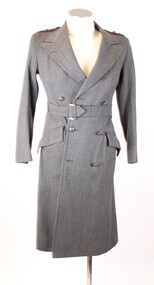
... Australian General Hospital during the 1940s and into the 1950s. The uniform set has social significance to the Shepparton area, being owned and worn by a serving community member who was born in Numurkah, enlisted in Shepparton and returned to the community in later life. second world war world war ii medical wwii nurse women Shoulder flashes read "AUSTRALIA" and "BRITISH COMMONWEALTH FORCES". ...Coat worn by Sister Danson (VFX151507) during the British presence in Japan following the end of the Second World War. About 16,000 Australians served in the British Commonwealth Occupation Forces, including 130 from the Australian General Hospital with whom Sister Danson presumably served. Sister Danson was born in Numurkah and served as Leiutentant with the Heidelberg Military Hospital before embarking for Japan in 1947.This coat is part of a complete uniform set held by the Shepparton RSL. The uniform has representative and historic significance as an example of the style of uniform worn by nursing staff of the Australian General Hospital during the 1940s and into the 1950s. The uniform set has social significance to the Shepparton area, being owned and worn by a serving community member who was born in Numurkah, enlisted in Shepparton and returned to the community in later life.Shin length grey woollen double breasted coat fastened with three buttons on front centre. Interior bakelite or plastic button fastens panels on interior. Two hip-height pockets with folded flap on exterior. Grey fabric belt fastened with a metal buckle; belt is held in place with two fabric loops on either side of the waist. "AUSTRALIA" shoulder flashes on both left and right shoulders; on left arm a blue and brown rectangular colour patch and on the right arm, a blue square patch with embroidered crown and the words "BRITISH COMMONWEALTH FORCES." Epaulettes on either shoulder carry two metal badges signifying a senior Sister and fastened with a metal button. A pin is missing from the base of the epaulette. Interior lined with purple-grey lining; pocket on interior left chest and manufacturer's label at base of neck underneath loop.Shoulder flashes read "AUSTRALIA" and "BRITISH COMMONWEALTH FORCES". Label reads "TAILORS & HABIT/MAKERS/J. RAVENSDALE/& SON/NICHOLAS BLDG./SWANSTON ST MELBOURNE/SISTER DANSON". Buttons read "AUSTRALIAN MILITARY FORCES"second world war, world war ii, medical, wwii, nurse, women -
 Shepparton RSL Sub Branch
Uniform, Dress Jacket, 1943
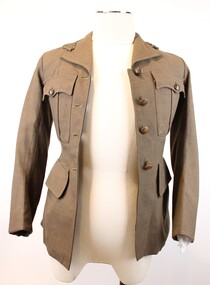
... Australian Womens Army Service (AWAS). Dorothy Mortlock was born in Swan Hill and enlisted with the 3rd AUST AWS REC DEPOT. world war ii second world war wwii women australian women's army service Label reads "V 579/1943/SIZE/MADE IN/AUSTRALIA/D. ...This jacket belonged to Dorothy May Mortlock (VF518245) who was part of the Australian Womens Army Service (AWAS). Dorothy Mortlock was born in Swan Hill and enlisted with the 3rd AUST AWS REC DEPOT.Khaki-coloured woollen jacket which fastens along the centre via four metal buttons. Two hip-height pockets with external flap; two chest pockets with pleat in centre fastened via a metal button. Fabric belt around waist held in place by two fabric loops on back and fastened through metal buckle and loop. Collar carries two metal rising sun badges on the left and right side. Two epaulettes on either shoulder are held in place by a button and carries a badge reading "AWAS". Colour patch on both left and right side is square, half green and half black. Interior label on base of neck.Label reads "V 579/1943/SIZE/MADE IN/AUSTRALIA/D. MORTLOCK/VF518245". Rising sun badge reads "AUSTRALIAN COMMONWEALTH/MILITARY FORCES." Buttons read "AUSTRALIAN MILITARY FORCES."world war ii, second world war, wwii, women, australian women's army service -
 Shepparton RSL Sub Branch
Uniform, Skirt, C. 1943
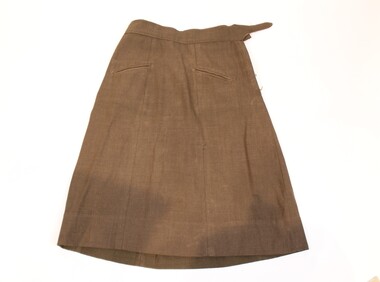
... Australian Womens Army Service (AWAS). Dorothy Mortlock was born in Swan Hill and enlisted with the 3rd AUST AWS REC DEPOT. world war ii second world war wwii women australian women's army service Khaki-coloured skirt constructed of six panels in A-style shape. ...This skirt belonged to Dorothy May Mortlock (VF518245) who was part of the Australian Womens Army Service (AWAS). Dorothy Mortlock was born in Swan Hill and enlisted with the 3rd AUST AWS REC DEPOT.Khaki-coloured skirt constructed of six panels in A-style shape. Skirt hemmed by hand on interior. Skirt fastened via four hook and eye on the left hand side and two fabric strips which pass through two buckles on the back waistband. Two angled pockets on front.world war ii, second world war, wwii, women, australian women's army service -
 Shepparton RSL Sub Branch
Uniform, Jacket Belt
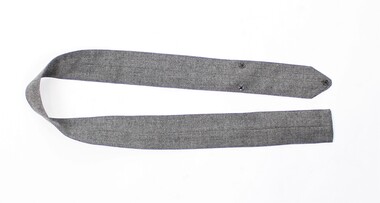
... Australian General Hospital during the 1940s and into the 1950s. The uniform set has social significance to the Shepparton area, being owned and worn by a serving community member who was born in Numurkah, enlisted in Shepparton and returned to the community in later life. second world war world war ii medical wwii nurse women Grey fabric belt fastened with a metal buckle; belt is held in place with two fabric loops on either side of the waist. ...Part of a jacket worn by Sister Danson (VFX151507) during the British presence in Japan following the end of the Second World War. About 16,000 Australians served in the British Commonwealth Occupation Forces, including 130 from the Australian General Hospital with whom Sister Danson presumably served. Sister Danson was born in Numurkah and served as Leiutentant with the Heidelberg Military Hospital before embarking for Japan in 1947.This belt is part of a complete uniform set held by the Shepparton RSL. The uniform has representative and historic significance as an example of the style of uniform worn by nursing staff of the Australian General Hospital during the 1940s and into the 1950s. The uniform set has social significance to the Shepparton area, being owned and worn by a serving community member who was born in Numurkah, enlisted in Shepparton and returned to the community in later life.Grey fabric belt fastened with a metal buckle; belt is held in place with two fabric loops on either side of the waist.second world war, world war ii, medical, wwii, nurse, women -
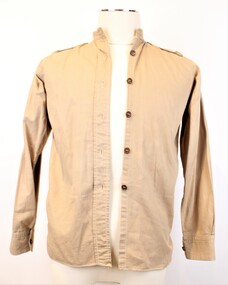 Shepparton RSL Sub Branch
Uniform, Shirt, C. 1943
... Australian Womens Army Service (AWAS). Dorothy Mortlock was born in Swan Hill and enlisted with the 3rd AUST AWS REC DEPOT. world war ii second world war wwii women australian women's army service Inscribed on interior of collar on label is "N 332 1943/Made in Australia/SIZE 13". ...This shirt belonged to Dorothy May Mortlock (VF518245) who was part of the Australian Womens Army Service (AWAS). Dorothy Mortlock was born in Swan Hill and enlisted with the 3rd AUST AWS REC DEPOT.Light khaki-coloured shirt with detatchable collar (UA09.4.2), long sleeves. Shirt is fastened with five bakelite or plastic brown buttons. Three button holes along the collar line attach to detatchable collar, possibly via cufflink-style fasteners. Shoulders each carry an epaulette with a canvas badge, embroidered with the letters "A.W.A.S." in white' epaulette fastened by brown button. Light khaki to white topstitching throughout. Inscribed on interior of collar on label is "N 332 1943/Made in Australia/SIZE 13". Handwritten on interior collar "VF518245/PTE MORTLOCK, D/A.W.A.S."world war ii, second world war, wwii, women, australian women's army service -
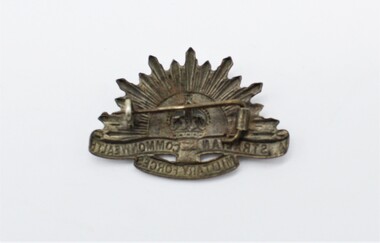 Shepparton RSL Sub Branch
Uniform, Badge
... Australian General Hospital during the 1940s and into the 1950s. The uniform set has social significance to the Shepparton area, being owned and worn by a serving community member who was born in Numurkah, enlisted in Shepparton and returned to the community in later life. second world war world war ii medical wwii nurse women badge australian commonwealth military forces military Dark brown metallic badge with pin on the back for fastening. ...This badge is attached to a tie which was worn as part of an official uniform by Sister Danson (VFX151507) during the British presence in Japan following the end of the Second World War. About 16,000 Australians served in the British Commonwealth Occupation Forces, including 130 from the Australian General Hospital with whom Sister Danson presumably served. Sister Danson was born in Numurkah and served as Leiutentant with the Heidelberg Military Hospital before embarking for Japan in 1947.This badge is part of a complete uniform set held by the Shepparton RSL. The uniform has representative and historic significance as an example of the style of uniform worn by nursing staff of the Australian General Hospital during the 1940s and into the 1950s. The uniform set has social significance to the Shepparton area, being owned and worn by a serving community member who was born in Numurkah, enlisted in Shepparton and returned to the community in later life.Dark brown metallic badge with pin on the back for fastening. The badge has embossed features. These depict a crown in the centre, a crescent shaped section which is meant to represent the rising sun and which half encircles the crown as well as three pieces of ribbon (metallic) with the embossed words "Australian Commonwealth Military Forces".second world war, world war ii, medical, wwii, nurse, women, badge, australian commonwealth military forces, military -
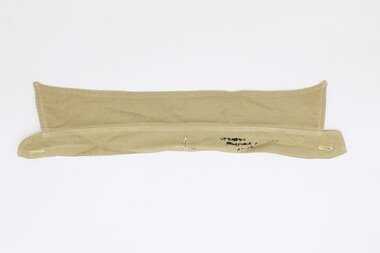 Shepparton RSL Sub Branch
Uniform, Shirt Collar, C. 1943
... Australian Womens Army Service (AWAS). Dorothy Mortlock was born in Swan Hill and enlisted with the 3rd AUST AWS REC DEPOT. world war ii second world war wwii women australian women's army service Handwritten on interior collar "VF518245/MORTLOCK, D/A.W.A.S./13 1/2" Light khaki-coloured detatchable collar with pointed tips. ...This shirt collar belonged to Dorothy May Mortlock (VF518245) who was part of the Australian Womens Army Service (AWAS). Dorothy Mortlock was born in Swan Hill and enlisted with the 3rd AUST AWS REC DEPOT.Light khaki-coloured detatchable collar with pointed tips. Three button holes along long edge attach to shirt presumably through a cufflink-type attachmentHandwritten on interior collar "VF518245/MORTLOCK, D/A.W.A.S./13 1/2"world war ii, second world war, wwii, women, australian women's army service -
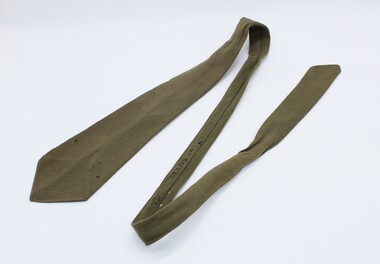 Shepparton RSL Sub Branch
Uniform, Tie, C. 1943
... Australian Womens Army Service (AWAS). Dorothy Mortlock was born in Swan Hill and enlisted with the 3rd AUST AWS REC DEPOT. world war ii second world war wwii women australian women's army service Interior of tie reads "VF518245 MORTLOCK" Khaki-coloured tie with pointed end. ...This tie belonged to Dorothy May Mortlock (VF518245) who was part of the Australian Womens Army Service (AWAS). Dorothy Mortlock was born in Swan Hill and enlisted with the 3rd AUST AWS REC DEPOT.Khaki-coloured tie with pointed end. Rising sun bdage (UA09.5) sits on tie at sternum height.Interior of tie reads "VF518245 MORTLOCK"world war ii, second world war, wwii, women, australian women's army service -
 Shepparton RSL Sub Branch
Uniform, Tie Badge, C. 1943
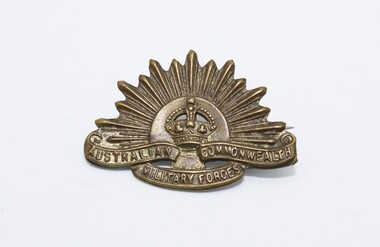
... Australian Womens Army Service (AWAS). Dorothy Mortlock was born in Swan Hill and enlisted with the 3rd AUST AWS REC DEPOT. world war ii second world war wwii women australian women's army service Badge reads "AUSTRALIAN COMMONWEALTH/MILITARY FORCES" Rising sun badge in bronze-coloured metal with pin and loop on reverse for attachment to tie. ...This badge belonged to Dorothy May Mortlock (VF518245) who was part of the Australian Womens Army Service (AWAS). Dorothy Mortlock was born in Swan Hill and enlisted with the 3rd AUST AWS REC DEPOT.Rising sun badge in bronze-coloured metal with pin and loop on reverse for attachment to tie.Badge reads "AUSTRALIAN COMMONWEALTH/MILITARY FORCES"world war ii, second world war, wwii, women, australian women's army service -
 Shepparton RSL Sub Branch
Uniform, Hat, 1943
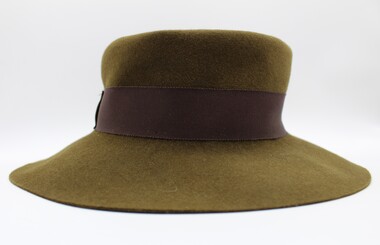
... Part of a nurses' uniform during the Second World War. second world war world war ii world war 2 world war two wwii nurse medical women Label on interior reads "MADE IN AUSTRALIA/UIM/N451-1943/SIZE 6 5/8 - 21 1/4 in." ...Part of a nurses' uniform during the Second World War. Khaki wool felt hat with wide brim and burgandy-brown grosgrain ribbon band with bow on right side. The hat also has a grosgrain sweatband with a maker's label sewn in on the interior. This is marked in ink with manufacturers' label. Elastic chip strap on interior has deteriorated and broken in half.Label on interior reads "MADE IN AUSTRALIA/UIM/N451-1943/SIZE 6 5/8 - 21 1/4 in." second world war, world war ii, world war 2, world war two, wwii, nurse, medical, women -
 Shepparton RSL Sub Branch
Uniform, Hat, 1943
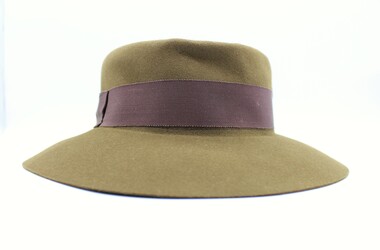
... Part of a nurses' uniform during the Second World War. second world war world war ii world war 2 world war two wwii nurse medical women Label on interior reads "N513/1943/MADE IN AUSTRALIA/6-5/8" Khaki wool felt hat with wide brim and burgandy-brown grosgrain ribbon band with bow on right side. ...Part of a nurses' uniform during the Second World War. Khaki wool felt hat with wide brim and burgandy-brown grosgrain ribbon band with bow on right side. The hat also has a grosgrain sweatband with a maker's label sewn in on the interior. This is marked in ink with manufacturers' label. Elastic chip strap on interior is secure and matches colour of grosgrain.Label on interior reads "N513/1943/MADE IN AUSTRALIA/6-5/8"second world war, world war ii, world war 2, world war two, wwii, nurse, medical, women -
 Shepparton RSL Sub Branch
Uniform, Dress, C. 1940s
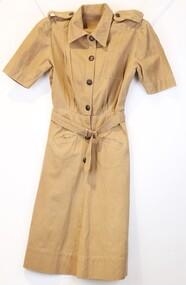
... This dress belonged to Dorothy May Mortlock (VF518245), who served as a Sapper with the Australian Women’s Army Service from 27 July 1945 to 1 August 1946. women wwii world war two second world war australian womens army service awas Ink inscription on interior loop difficult to read, “VF518245” and 5-6 indiscernible characters. ...This dress belonged to Dorothy May Mortlock (VF518245), who served as a Sapper with the Australian Women’s Army Service from 27 July 1945 to 1 August 1946.Light brown coloured woven cotton dress with button-up front secured by 6 metal buttons. Dress constructed of a skirt element attached to a short sleeve shirt-style torso section, a hook and eye sits on interior of two sections to fasten left and right sides together. One square topstitched pocket on the left chest and two angled hip pockets on front. Fabric belt with metal buckle held in place by fabric loops on both left and right side. Fabric epaulette passes through loop on both left and right side and secured with metal button. Two loops on interior left and right shoulders, left loop with inscription; woven label stitched to interior left side underneath which is a stamped motif.Ink inscription on interior loop difficult to read, “VF518245” and 5-6 indiscernible characters. Button reads “AUSTRALIAN MILITARY FORCES” below an embossed image of Australia with the King George V crown on top. Stamped motif reads “[broad arrow]/S.D.”women, wwii, world war two, second world war, australian womens army service, awas -
 Shepparton RSL Sub Branch
Uniform, Cape, C. 1950s
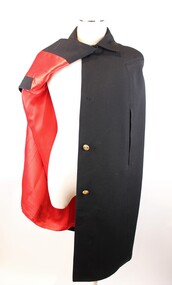
... It is possible, though not confirmed, that this cape was worn by Norma Kilfoyle in a later role after the Second World War. cape second world war world war two world war ii navy royal australian navy ran women telegraph communications Handwritten inscription reads “KILFOYLE”. ...This cape may have belonged to RAN Telegraphist Norma Ashton Kilfoyle, however the date of her service is not consistent with the style of the article (which has buttons which suggest this cape was issued post 1952 during the reign of Queen Elizabeth II). It is possible, though not confirmed, that this cape was worn by Norma Kilfoyle in a later role after the Second World War.Black thigh-length nurses cape with red satin lining. Fastened along centre with four gold buttons and one press stud at chin (second button from the top is missing). Two slits at waist height on both left and right allow arms through from the interior to the front. Embroidered manufacturer’s label on interior at base of neck, below which there is an ink inscription. Sewn in fabric swatch on interior right.Handwritten inscription reads “KILFOYLE”. Manufacturer’s label reads “[Australian coat of arms]/A Quality Garment/BY/Australian Government Clothing Factory”. Interior sewn in label reads “33643/Kilfoyle/Cloak F Bara/[indiscernible characters]”. Buttons read “[Queen Elizabeth crown over the Navy anchor]/AUSTRALIA” and on interior “STOKES/MELB”cape, second world war, world war two, world war ii, navy, royal australian navy, ran, women, telegraph, communications -
 Flagstaff Hill Maritime Museum and Village
Badge - Australian Legion of Ex-Servicemen and Women, Stokes, Membership badge, 1957
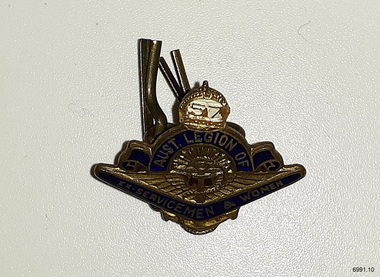
... women of the three military forces; Army, Navy and Air Force. The W.R. Angus Collection is significant for still being located at the site it is connected with, Doctor Angus being the last Port Medical Officer in Warrnambool. The Collection includes historical medical objects that date back to the late 1800s. Flagstaff Hill Warrnambool Maritime Museum Maritime Village Great Ocean Road Shipwreck Coast W.R. Angus badge Ladies’ Badge military service Stokes Melbourne Australian Legion of Ex-Servicemen and Women membership badge 1957 membership badge Ex=service personnel heraldry World War II Second ...The badge was issued by the Victorian branch (indicated by the 'V' on the reverse) of the Australian Legion of Ex-Servicemen and Women and is referred to as The Badge of Unity or Tri-Services badge, uniting the armed services of Australia; the Army (rising sun), the Navy (anchor) and the Air Force (pair of wings). The number '57' on the crown represents the year of paid membership; 1957. The badge belonged to Dr W R Angus, who served in the Australian Army as a military doctor during WWII. It was made in Melbourne by Stokes in 1957, around 100 years after the firm was established by Thomas Stokes in Mincing Lane, Melbourne. The firm was operating from Caledonian Lane/Post Office Place in the 1950s. The badge is one of a set of badges collected by Dr W R Angus from the organisations in which he was involved. They are now part of Flagstaff Hill’s comprehensive W.R. Angus Collection, donated by the family of Dr W R Angus, surgeon and oculist. Australian Legion of Ex-Servicemen and Women was formed in 1944 to "entourage fellowship and assist those who have served". The organisation is open to members from Australia, British Commonwealth and Allied ex-service personnel. The W.R. Angus Collection: - The W.R. Angus Collection includes historical medical equipment, surgical instruments and material once belonging to Dr Edward Ryan and Dr Thomas Francis Ryan, (both of Nhill, Victoria) as well as Dr Angus’ own belongings. The Collection’s history spans the medical practices of the two Doctors Ryan, from 1885-1926 plus that of Dr Angus, up until 1969. It includes historical medical and surgical equipment and instruments from the doctors Edward and Thomas Ryan of Nhill, Victoria. Dr Angus married Gladys in 1927 at Ballarat, the nearest big city to Nhill where he began as a Medical Assistant. He was also Acting House surgeon at the Nhill hospital where their two daughters were born. During World War II He served as a Military Doctor in the Australian Defence Force. Dr Angus and his family moved to Warrnambool in 1939, where Dr Angus operated his own medical practice. He later added the responsibility of part-time Port Medical Officer and was the last person appointed to that position. Both Dr Angus and his wife were very involved in the local community, including the planning stages of the new Flagstaff Hill and the layout of the gardens there. Dr Angus passed away in March 1970.This Badge of Unity, or Tri-Service badge, is significant for connecting Doctor Angus with organisations that support men and women who performed military service for Australia. The badge was for membership with the organisation, which supports ex-servicemen and women of the three military forces; Army, Navy and Air Force. The W.R. Angus Collection is significant for still being located at the site it is connected with, Doctor Angus being the last Port Medical Officer in Warrnambool. The Collection includes historical medical objects that date back to the late 1800s.Badge; a gold-coloured metal and enamel badge. The blue boomerang-shaped band is below an arch of blue, below a crown with a number and coloured red, white and blue. There are symbols in the centre; a rising sun, above a pair of wings, with an anchor in the centre of both. There is red and blue scrollwork behind the symbols. Inscriptions are on the front and back of the badge. There are two loops and pins on the back of the badge. It is a membership badge of the Victorian branch of the Australian Legion of Ex-Servicemen and Women and was made by Stokes in 1957. The badge has a Serial Number. This badge is part of a set of badges collected by Dr Angus and is part of the W.R. Angus Collection.FRONT; “AUST. LEGION OF / EX-SERVICEMEN & WOMEN” On crown “57” REVERSE; “V” “13156" "STOKES” flagstaff hill, warrnambool, maritime museum, maritime village, great ocean road, shipwreck coast, w.r. angus, badge, ladies’ badge, military service, stokes, melbourne, australian legion of ex-servicemen and women, membership badge, 1957 membership badge, ex=service personnel, heraldry, world war ii, second world war, tri-services symbol, badge of unity, rising sun, anchor, pair of wings -
 Bendigo Military Museum
Clothing - UNIFORM, RED CROSS, 1943
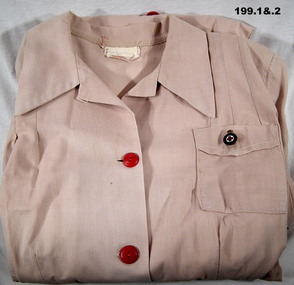
... Uniforms Red Cross Societies Numismatics Badges WWII World War 2 Second World War Charities Dresses Hats Women's Clothing .1) Written in ink on tape centre back neck, "TUCKERMAN" & identical tape inside hat. .3) Label, printed in black on band inside crown, "Made in Australia/N451-1943/Size 7-223/8 ins. ...Uniform belonged to Elizabeth Majory TUCKERMAN.War time Red Cross uniform and hat. .1) Beige cotton/linen button through dress with short sleeves & red buttons. .2) Australian Red Cross Society enamelled badge on left breast pocket. .3)Khaki green felt hat with wide brim & Petersham band with red edging stripes & bow round brim. Petersham band inside crown with size label & elastic strap. Red Cross enamelled badge on hat band..1) Written in ink on tape centre back neck, "TUCKERMAN" & identical tape inside hat. .3) Label, printed in black on band inside crown, "Made in Australia/N451-1943/Size 7-223/8 ins.uniforms, red cross, societies, numismatics, badges, wwii, world war 2, second world war, charities, dresses, hats, women's clothing -
 Bendigo Military Museum
Memorabilia - BADGES, FEMALE RELATIVES, Angus & Coote, 1) 1942 .2) 1940
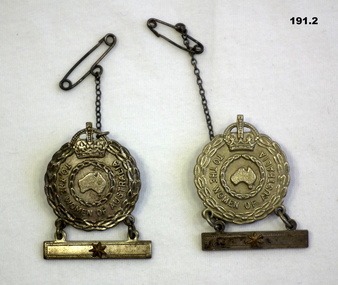
... Badges Numismatics Women Home Front WWII World War Two Second World War .1) "126191" .2) "2435" "To The Women of Australia" badges. .1) Circular badge with map of Australia central and crown at top. ...Female Relatives Badge instituted in 1940. Issued to the nearest female relative. Each star represents a serving member of the Forces. Badge number 126191 relates to Frederick Victor Clive Lowery VX28403 2nd AIF. Badge number 2435 relates to the Ruby Hutchins, the mother of six brothers who served in the AIF: Donald (VX43028), Norman (VX10296), Leonard (VX683), Clifford (VX682), Charles (VX63583) and Ronald (VX681). "To The Women of Australia" badges. .1) Circular badge with map of Australia central and crown at top. Suspended by chain is a bar with one star centre. .2) Same as above..1) "126191" .2) "2435"badges, numismatics, women, home front, wwii, world war two, second world war -
 Kiewa Valley Historical Society
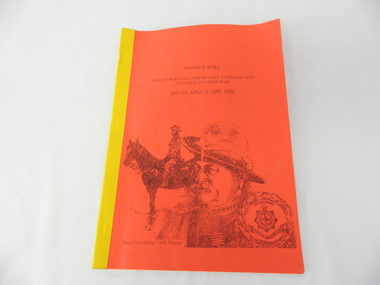
Book - Non Fiction History, Honour Roll - South Africa 1899 - 1902 Albury-Wodonga and District Residents Who Served In The Boer War, reprinted 03/2008
... World War II when England could not help Australia to defend itself against possible invasion by Japan. The alliance between Australia and the United States of America replaced the British/Australian pact. Secondly the attitude of, and the high degree of horsemanship of those from the Albury and Wodonga area. The degree of adaptability, by these servicemen, to suit the environment in which they fought provided the first real insight into the Australian psyche "of those living and surviving on the harsh Australian outback" history boer war ex-servicemen and women albury and wodonga Author's complimentary inscription "To Mount Beauty Museum with compliments" signed Ian R Docking This book has a bright red soft cover and is bound with bright yellow tape. ...Historical information of soldiers from the Albury-Wodonga district who fought in the Boer War in South Africa 1899 - 1902. In 1996 the then curator for the 8/13 VMR Museum, the Hon Colonel John Neale, commissioned the author to research a group of returned servicemen and women from the Boer War and had lived within 100 km radius of the Albury/Wodonga townships.The Boer War was the second war in South Africa and was the result of heavy taxes and non voting rights of the local white Boer population. Colonial forces including the Australian Light Horse contingent where called upon by England to overthrow the rebellion. This War was the first engagement of Australian troops fighting on foreign soil.This Honour Roll details the pay rates, the battle highlights, weapons used and maps covering the first Australian contingent of soldiers who fought in the Transvaal (Boer War).. Listed are the names of those soldiers who lived within 100klms of Albury and Wodonga.The soldiers are listed by Location, Rank, Initial,Name and Unit. The significance of both the War and those who served in it is two fold. Firstly it demonstrates that the tie between the Colonial outreaches of England's Empire to "the Motherland" were extremely strong at this point in time. This union remained strong up until the middle of World War II when England could not help Australia to defend itself against possible invasion by Japan. The alliance between Australia and the United States of America replaced the British/Australian pact. Secondly the attitude of, and the high degree of horsemanship of those from the Albury and Wodonga area. The degree of adaptability, by these servicemen, to suit the environment in which they fought provided the first real insight into the Australian psyche "of those living and surviving on the harsh Australian outback"This book has a bright red soft cover and is bound with bright yellow tape. There is a drawing of two Australian soldiers on the front, one on horsebackAuthor's complimentary inscription "To Mount Beauty Museum with compliments" signed Ian R Docking history, boer war, ex-servicemen and women, albury and wodonga -
 Bendigo Military Museum
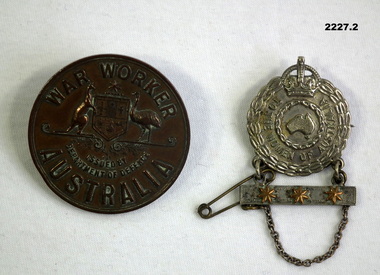
Badge - FEMALE RELATIVE BADGE, WAR WORKER MEDALLION, 1940
... Second World War and the stars represent the number of serving individuals related to the holder of the badge. A number of the back appears in a register that records the name of the holder. .2) Three stars denotes 3 members of the family in the army in 1939 - 1945. Badages medallions female relative war workers .1) :"Issued by the department of defence, 618. .2) Front "To the Women of Australia ...The badge (on the right) is a Female Relatives Badge from the Second World War and the stars represent the number of serving individuals related to the holder of the badge. A number of the back appears in a register that records the name of the holder. .2) Three stars denotes 3 members of the family in the army in 1939 - 1945..1) Badge, brassround with 2 lugs on rear. Front has "War Worker Australia". Centre is coat of arms. On rear is "Navies & Labourers". Stamped numbered badge. .2) Female relative badge. Metal, silver colour, round shape with crown. wreath arrangement with map of Australia centre. Rear has pin attached. Attached by two small chains is a clasp with 3 small bronze stars. Rear of badge is stamped..1) :"Issued by the department of defence, 618. .2) Front "To the Women of Australia" Rear "Issued by the C/Weath Govt. A6800badages, medallions, female, relative, war workers -
 Warrnambool RSL Sub Branch
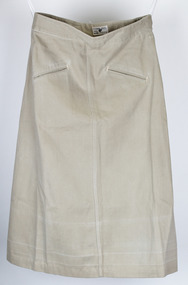
Skirt, 1940s
... Joan Peck’s uniform is also significant as an item of social history, revealing the role of local women in the home front war effort. skirt uniform second world war royal australian air force world war ii women Waistband label reads: “V298/MADE IN/AUSTRALIA/1942/SIZE PECK” Inscription handwritten on waistband interior: “105135.” ...This skirt belonged to Joan Elizabeth Peck who served with the Royal Australian Air Force in the Second World War. Joan was born on 27 July 1919 in Acton England and enlisted in Echuca on the 6 January 1943. At the time of her discharge from the RAAF in 1945, Joan was serving as an Aircraftwoman with the 2 Air Observers School in Mount Gambier. Throughout the war, the Mt Gambier base operated under the Empire Air Training Scheme.This skirt was donated by the owner, Joan Peck, and has significant provenance. The inscriptions throughout facilitate significant research ability, though records are not publicly accessible and digitised at this time. Joan Peck’s uniform is also significant as an item of social history, revealing the role of local women in the home front war effort. Light khaki coloured skirt in cotton fabric. A-line skirt constructed of four panels with two darts on the back and two pockets on the front (as per photograph in Supplementary File). Side fastening on the left side with a series of four steel hook and eye fasteners. Two fasteners on the back waistband which are tightened by pulling through two steel rings. Peach-cream coloured bias binding on interior of hem. Label attached to the interior waistband of the skirt back, to the left and right of which is a handwritten inscription.Waistband label reads: “V298/MADE IN/AUSTRALIA/1942/SIZE PECK” Inscription handwritten on waistband interior: “105135.” To the right of the interior label: “J. E. PECK”skirt, uniform, second world war, royal australian air force, world war ii, women -
 Monbulk RSL Sub Branch
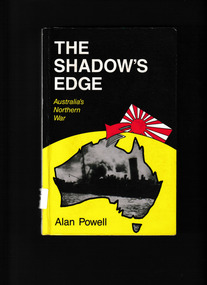
Book, Alan Powell, The shadow's edge : Australia's northern war, 1988
... world war 1939-1945 - campaigns - australia darwin - bombing Account of the Second World War as viewed and experienced in northern Australia ; includes references to Aboriginal people as coast watchers and rescuers, in army service, as trackers, in the Special Reconaissance Unit ; W.E.H. Stanner and the North Australia Observer Unit ; Protectors of women ...Account of the Second World War as viewed and experienced in northern Australia ; includes references to Aboriginal people as coast watchers and rescuers, in army service, as trackers, in the Special Reconaissance Unit ; W.E.H. Stanner and the North Australia Observer Unit ; Protectors of women ; results of war experiences ; white attitudes towards Aboriginal people.Index, bibliography, notes, ill, maps, p.346.non-fictionAccount of the Second World War as viewed and experienced in northern Australia ; includes references to Aboriginal people as coast watchers and rescuers, in army service, as trackers, in the Special Reconaissance Unit ; W.E.H. Stanner and the North Australia Observer Unit ; Protectors of women ; results of war experiences ; white attitudes towards Aboriginal people. world war 1939-1945 - campaigns - australia, darwin - bombing -
 Monbulk RSL Sub Branch
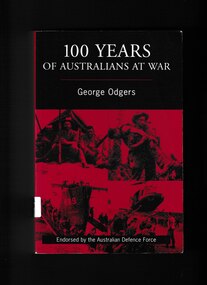
Book, George Odgers, 100 years of Australian at war, 2000
... A revised and updated version of Diggers australia - armed forces - history australia - history - military A tribute to the servicemen and women of the past, and peacekeepers of the present, in the Australian Army, Navy and Air Force. Begins with the Boer War, goes on to cover the Boxers conflict in China, the First and Second World Wars, Malayan emergency, Korean War, Indonesia, Vietnam War, also the Gulf War, and East Timor. ...A tribute to the servicemen and women of the past, and peacekeepers of the present, in the Australian Army, Navy and Air Force. Begins with the Boer War, goes on to cover the Boxers conflict in China, the First and Second World Wars, Malayan emergency, Korean War, Indonesia, Vietnam War, also the Gulf War, and East Timor.Index, notes, ill (b/w plates) (maps).non-fictionA tribute to the servicemen and women of the past, and peacekeepers of the present, in the Australian Army, Navy and Air Force. Begins with the Boer War, goes on to cover the Boxers conflict in China, the First and Second World Wars, Malayan emergency, Korean War, Indonesia, Vietnam War, also the Gulf War, and East Timor. australia - armed forces - history, australia - history - military -
 Victoria Police Museum
Oral history, Sergeant Eileen Rainford, April 2017
... women in 1952. Born in England, she served with Liverpool police, patrolling the docks, prior to moving to Australia. Speaking numerous languages, including Polish and German, Rainford worked as a translator and radio broadcaster during and after the second world war. ...women in 1952. Born in England, she served with Liverpool police, patrolling the docks, prior to moving to Australia. Speaking numerous languages, including Polish and German, Rainford worked as a translator and radio broadcaster during and after the second world war. ...Eileen Rainford is a retired Sergeant who joined Victoria Police as one of only eight police women in 1952. Born in England, she served with Liverpool police, patrolling the docks, prior to moving to Australia. Speaking numerous languages, including Polish and German, Rainford worked as a translator and radio broadcaster during and after the second world war. On moving to Australia Rainford joined Victoria Police, where as one of only eight policewomen, she noted a major difference in public attitude towards women working in the force. In this interview, Rainford reflects on these different attitudes and her roles at numerous stations.Digital archive of oral history of former police woman Eileen Rainford. Cut for exhibition purposespolice woman, policewoman, policewomen, oral history, rainford, victoria police -
 Bendigo Historical Society Inc.
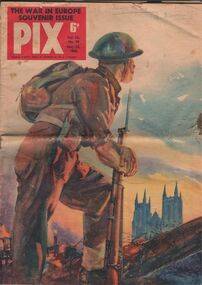
Magazine - AILEEN AND JOHN ELLISON COLLECTION: PIX, THE WAR IN EUROPE SOUVENIR ISSUE 1945
... Features in this issue: Britain faced Hitler alone in 1940 - Many races united against common enemy - Allied leaders' words inspired their nations - Color maps reveal changing face of Europe - Picture diary shows five year pattern of war - Jardine paints second front landing in colors - Rise and fall of fascism - Women shared role in fight for freedom - Danger of armistice in Europe - War closes in on Japan, Pacific color map - Proud records of Australia's fighting men - Four great powers shared burden of struggle - World found time too laugh at war - Famous pictures epitomised war's tragedy....Features in this issue: Britain faced Hitler alone in 1940 - Many races united against common enemy - Allied leaders' words inspired their nations - Color maps reveal changing face of Europe - Picture diary shows five year pattern of war - Jardine paints second front landing in colors - Rise and fall of fascism - Women shared role in fight for freedom - Danger of armistice in Europe - War closes in on Japan, Pacific color map - Proud records of Australia's fighting men - Four great powers shared burden of struggle - World found time too laugh at war - Famous pictures epitomised war's tragedy. ...Pix magazine volume 15 no. 19 May 12, 1945. The war in Europe souvenir issue. The magazine has 31 pages, price 6 pennies. Features in this issue: Britain faced Hitler alone in 1940 - Many races united against common enemy - Allied leaders' words inspired their nations - Color maps reveal changing face of Europe - Picture diary shows five year pattern of war - Jardine paints second front landing in colors - Rise and fall of fascism - Women shared role in fight for freedom - Danger of armistice in Europe - War closes in on Japan, Pacific color map - Proud records of Australia's fighting men - Four great powers shared burden of struggle - World found time too laugh at war - Famous pictures epitomised war's tragedy.books, magazines, war in europe -
 Kyneton RSL Sub Branch
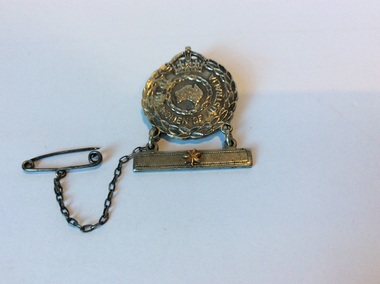
Female Relatives badge, 1942
... Second World War the Female Relatives badge was issued to the nearest female relative of members of the RAN, the AIF, including members of the Australian Army Nursing Service and the RAAF on active service abroad. Stars displayed on a bar suspended below the badge represented the number of relatives involved in the War effort. The badge on display was issued to Nora Marjorie Fielding, whose husband VX79262 Pte Donald Fielding, served with Army Headquarters Signals Regiment in WW2. female relatives badge ww2 homefront Front. To the Women ...In the Second World War the Female Relatives badge was issued to the nearest female relative of members of the RAN, the AIF, including members of the Australian Army Nursing Service and the RAAF on active service abroad. Stars displayed on a bar suspended below the badge represented the number of relatives involved in the War effort.The badge on display was issued to Nora Marjorie Fielding, whose husband VX79262 Pte Donald Fielding, served with Army Headquarters Signals Regiment in WW2.A badge with a safety chain and pin attached, long pin on back for wearing. Laurel wreath on outer rim with crown at top. Map of Australia in middle. A bar is suspended by two loops, there is one star fixed to the bar. Front. To the Women of Australia. Back. Issued by the CWlth of Australia A123489 Angus and Coote 1942female relatives badge, ww2, homefront -
 Warrnambool and District Historical Society Inc.
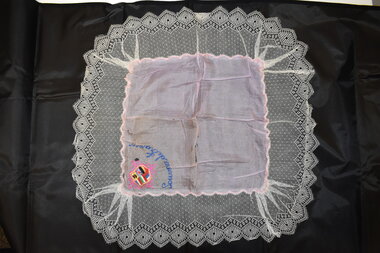
Souvenir Handkerchief, World War One
... Australia by a returning soldier from World War One (1914-1918). At a time when France was completely disrupted by the ravages of war many French women, especially those in rural areas, earned a living by making souvenir pieces of embroidery to sell to soldiers in the Allied forces. These embroidered pieces took the form of postcards, doyleys, centerpieces, handkerchiefs etc. The items are noted for the handcraft skills shown by the makers and are prized by collectors today. This item, although fragile, is of considerable interest, firstly as an attractive embroidered piece and secondly ...This item has been brought back to Australia by a returning soldier from World War One (1914-1918). At a time when France was completely disrupted by the ravages of war many French women, especially those in rural areas, earned a living by making souvenir pieces of embroidery to sell to soldiers in the Allied forces. These embroidered pieces took the form of postcards, doyleys, centerpieces, handkerchiefs etc. The items are noted for the handcraft skills shown by the makers and are prized by collectors today. This item, although fragile, is of considerable interest, firstly as an attractive embroidered piece and secondly, because of its association with World War One as an example of the souvenirs brought back from France to Australia by returning soldiers. This is an oblong-shaped handkerchief or doyley. It has a pink or mauve silk square in the middle with a coloured motif embroidered in one corner. This s a shield with representations of several European flags and embroidered wording underneath. The silk square is edged in a wave pattern in pink. The square has a white lace border. The item is slightly stained and has fold marks.Souvenir de Franceworld war one -
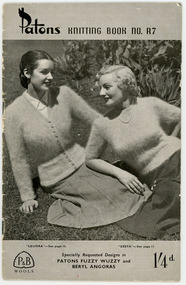 National Wool Museum
Book, Knitting, Patons Knitting Book no. R7
... Second World War. This book was produced by Patons and Baldwins and contains patterns for women's clothes made in angora wool. knitting handicrafts - history patons and baldwins (australia) ltd knitting handicrafts - history Patons / KNITTING BOOK NO. ...This book and a number of others like it were owned by the mother and aunts of the donor, Mrs Dorothy Boyle. They were prolific producers of hand knitted and hand made items of clothing and also knitted and sewed for the armed forces during the Second World War. This book was produced by Patons and Baldwins and contains patterns for women's clothes made in angora wool.Patons / KNITTING BOOK NO. R7 / Specially Requested Designs in / PATONS FUZZY WUZZY and / BERYL ANGORAS / P&B / WOOLS / 1'4d.knitting handicrafts - history, patons and baldwins (australia) ltd, knitting, handicrafts - history
