
Showing 31 items matching "balzac"
-
 Flagstaff Hill Maritime Museum and Village
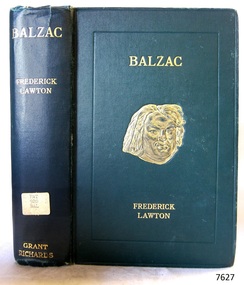
Book, Balzac
... Balzac......Balzac...Balzac Author: Frederick Lawton Publisher: Grant Richards Ltd Date: 1910...Warrnambool Shipwrecked-coast Flagstaff-Hill Flagstaff-Hill-Maritime-Museum Maritime-Museum Shipwreck-coast Flagstaff-Hill-Maritime-Village Shipwrecked-artefact Book Pattison Collection Warrnambool Library Warrnambool Mechanics’ Institute Ralph Eric Pattison Corangamite Regional Library Service Warrnambool City Librarian Mechanics’ Institute Library Victorian Library Board Warrnambool books and records Warrnambool Children’s Library Great Ocean Road Balzac Frederick Lawton Label on spine cover with typed text PAT 920 BAL Pastedown front endpaper has sticker from Warrnambool Mechanics Institute and Free Library Front loose endpaper has a sticker and a staamp from Corangamite Regional Library Service Balzac Author: Frederick Lawton Publisher: Grant Richards Ltd Date: 1910 Balzac Book ...This item is from the ‘Pattison Collection’, a collection of books and records that was originally owned by the Warrnambool Mechanics’ Institute, which was founded in Warrnambool in 1853. By 1886 the Warrnambool Mechanics’ Institute (WMI) had grown to have a Library, Museum and Fine Arts Gallery, with a collection of “… choice productions of art, and valuable specimens in almost every branch and many wonderful national curiosities are now to be seen there, including historic relics of the town and district.” It later included a School of Design. Although it was very well patronised, the lack of financial support led the WMI in 1911 to ask the City Council to take it over. In 1935 Ralph Pattison was appointed as City Librarian to establish and organise the Warrnambool Library as it was then called. When the WMI building was pulled down in 1963 a new civic building was erected on the site and the new Warrnambool Library, on behalf of the City Council, took over all the holdings of the WMI. At this time some of the items were separated and identified as the ‘Pattison Collection’, named after Ralph Pattison. Eventually the components of the WMI were distributed from the Warrnambool Library to various places, including the Art Gallery, Historical Society and Flagstaff Hill. Later some were even distributed to other regional branches of Corangamite Regional Library and passed to and fro. It is difficult now to trace just where all of the items have ended up. The books at Flagstaff Hill Maritime Village generally display stamps and markings from Pattison as well as a variety of other institutions including the Mechanics’ Institute itself. RALPH ERIC PATTISON Ralph Eric Pattison was born in Rockhampton, Queensland, in 1891. He married Maude Swan from Warrnambool in 1920 and they set up home in Warrnambool. In 1935 Pattison accepted a position as City Librarian for the Warrnambool City Council. His huge challenge was to make a functional library within two rooms of the Mechanics’ Institute. He tirelessly cleaned, cleared and sorted a disarrayed collection of old books, jars of preserved specimens and other items reserved for exhibition in the city’s museum. He developed and updated the library with a wide variety of books for all tastes, including reference books for students; a difficult task to fulfil during the years following the Depression. He converted all of the lower area of the building into a library, reference room and reading room for members and the public. The books were sorted and stored using a cataloguing and card index system that he had developed himself. He also prepared the upper floor of the building and established the Art Gallery and later the Museum, a place to exhibit the many old relics that had been stored for years for this purpose. One of the treasures he found was a beautiful ancient clock, which he repaired, restored and enjoyed using in his office during the years of his service there. Ralph Pattison was described as “a meticulous gentleman whose punctuality, floorless courtesy and distinctive neat dress were hallmarks of his character, and ‘his’ clock controlled his daily routine, and his opening and closing of the library’s large heavy doors to the minute.” Pattison took leave during 1942 to 1945 to serve in the Royal Australian Navy, Volunteer Reserve as Lieutenant. A few years later he converted one of the Museum’s rooms into a Children’s Library, stocking it with suitable books for the younger generation. This was an instant success. In the 1950’s he had the honour of being appointed to the Victorian Library Board and received more inspiration from the monthly conferences in Melbourne. He was sadly retired in 1959 after over 23 years of service, due to the fact that he had gone over the working age of council officers. However he continued to take a very keen interest in the continual development of the Library until his death in 1969. The Pattison Collection, along with other items at Flagstaff Hill Maritime Village, was originally part of the Warrnambool Mechanics' Institute’s collection. The Warrnambool Mechanics’ Institute Collection is primarily significant in its totality, rather than for the individual objects it contains. Its contents are highly representative of the development of Mechanics' Institute libraries across Australia, particularly Victoria. A diversity of publications and themes has been amassed, and these provide clues to our understanding of the nature of and changes in the reading habits of Victorians from the 1850s to the middle of the 20th century. The collection also highlights the Warrnambool community’s commitment to the Mechanics’ Institute, reading, literacy and learning in the regions, and proves that access to knowledge was not impeded by distance. These items help to provide a more complete picture of our community’s ideals and aspirations. The Warrnambool Mechanics Institute book collection has historical and social significance for its strong association with the Mechanics Institute movement and the important role it played in the intellectual, cultural and social development of people throughout the latter part of the nineteenth century and the early twentieth century. The collection of books is a rare example of an early lending library and its significance is enhanced by the survival of an original collection of many volumes. The Warrnambool Mechanics' Institute’s publication collection is of both local and state significance. Balzac Author: Frederick Lawton Publisher: Grant Richards Ltd Date: 1910Label on spine cover with typed text PAT 920 BAL Pastedown front endpaper has sticker from Warrnambool Mechanics Institute and Free Library Front loose endpaper has a sticker and a staamp from Corangamite Regional Library Servicewarrnambool, shipwrecked-coast, flagstaff-hill, flagstaff-hill-maritime-museum, maritime-museum, shipwreck-coast, flagstaff-hill-maritime-village, shipwrecked-artefact, book, pattison collection, warrnambool library, warrnambool mechanics’ institute, ralph eric pattison, corangamite regional library service, warrnambool city librarian, mechanics’ institute library, victorian library board, warrnambool books and records, warrnambool children’s library, great ocean road, balzac, frederick lawton -
 Phillip Island and District Historical Society Inc.
Book, BALZAC, Honore de, Edition definitive of the Comedie Humaine, 1896
... BALZAC, Honore de...Edition definitive of the Comedie Humaine Book BALZAC, Honore de George Barrie ...Labelled 'Himmer Bequest'. Stamped 'Cowes Public Library?'. -
Phillip Island and District Historical Society Inc.
Book, BALZAC, Honore de, Old Goriot : in one volume. Trans. Jane Minot Sedgwick, illus. with five etchings, 1897
... BALZAC, Honore de...Jane Minot Sedgwick, illus. with five etchings Book BALZAC, Honore de George Barrie ...Labelled 'Himmer Bequest'. Stamped 'Cowes Public Library'. -
 Robin Boyd Foundation
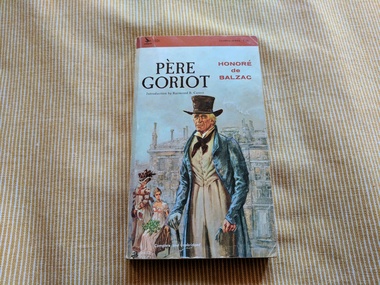
Book, Honore de Balzac, Le Pere Goriot, 1965
... Honore de Balzac...Boyd/pencil inscriptions inside back cover Softcover Le Pere Goriot Book Honore de Balzac Airmont Publishing Company ...SoftcoverS. Boyd/pencil inscriptions inside back coverfrench literature, walsh st library -
 Flagstaff Hill Maritime Museum and Village
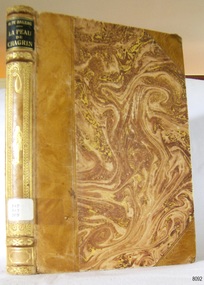
Book, La Peau de Chagrin
... La Peau de Chagrin Author: Honorè De Balzac Publisher: Jules Tallandier ...The Warrnambool Mechanics' Institute’s publication collection is of both local and state significance. warrnambool shipwrecked-coast flagstaff-hill flagstaff-hill-maritime-museum maritime-museum shipwreck-coast flagstaff-hill-maritime-village shipwrecked-artefact book pattison collection warrnambool library warrnambool mechanics’ institute ralph eric pattison corangamite regional library service warrnambool city librarian mechanics’ institute library victorian library board warrnambool books and records warrnambool children’s library great ocean road La Peau de Chagrin Honorè De Balzac Label on spine cover with typed text PAT 843 DEB Pastedown front endpaper has sticker from Warrnambool Public Library Front loose endpaper has a stamp from Corangamite Regional Library Service La Peau de Chagrin Author: Honorè De Balzac Publisher: Jules Tallandier La Peau de Chagrin Book ...This item is from the ‘Pattison Collection’, a collection of books and records that was originally owned by the Warrnambool Mechanics’ Institute, which was founded in Warrnambool in 1853. By 1886 the Warrnambool Mechanics’ Institute (WMI) had grown to have a Library, Museum and Fine Arts Gallery, with a collection of “… choice productions of art, and valuable specimens in almost every branch and many wonderful national curiosities are now to be seen there, including historic relics of the town and district.” It later included a School of Design. Although it was very well patronised, the lack of financial support led the WMI in 1911 to ask the City Council to take it over. In 1935 Ralph Pattison was appointed as City Librarian to establish and organise the Warrnambool Library as it was then called. When the WMI building was pulled down in 1963 a new civic building was erected on the site and the new Warrnambool Library, on behalf of the City Council, took over all the holdings of the WMI. At this time some of the items were separated and identified as the ‘Pattison Collection’, named after Ralph Pattison. Eventually the components of the WMI were distributed from the Warrnambool Library to various places, including the Art Gallery, Historical Society and Flagstaff Hill. Later some were even distributed to other regional branches of Corangamite Regional Library and passed to and fro. It is difficult now to trace just where all of the items have ended up. The books at Flagstaff Hill Maritime Village generally display stamps and markings from Pattison as well as a variety of other institutions including the Mechanics’ Institute itself. RALPH ERIC PATTISON Ralph Eric Pattison was born in Rockhampton, Queensland, in 1891. He married Maude Swan from Warrnambool in 1920 and they set up home in Warrnambool. In 1935 Pattison accepted a position as City Librarian for the Warrnambool City Council. His huge challenge was to make a functional library within two rooms of the Mechanics’ Institute. He tirelessly cleaned, cleared and sorted a disarrayed collection of old books, jars of preserved specimens and other items reserved for exhibition in the city’s museum. He developed and updated the library with a wide variety of books for all tastes, including reference books for students; a difficult task to fulfil during the years following the Depression. He converted all of the lower area of the building into a library, reference room and reading room for members and the public. The books were sorted and stored using a cataloguing and card index system that he had developed himself. He also prepared the upper floor of the building and established the Art Gallery and later the Museum, a place to exhibit the many old relics that had been stored for years for this purpose. One of the treasures he found was a beautiful ancient clock, which he repaired, restored and enjoyed using in his office during the years of his service there. Ralph Pattison was described as “a meticulous gentleman whose punctuality, floorless courtesy and distinctive neat dress were hallmarks of his character, and ‘his’ clock controlled his daily routine, and his opening and closing of the library’s large heavy doors to the minute.” Pattison took leave during 1942 to 1945 to serve in the Royal Australian Navy, Volunteer Reserve as Lieutenant. A few years later he converted one of the Museum’s rooms into a Children’s Library, stocking it with suitable books for the younger generation. This was an instant success. In the 1950’s he had the honour of being appointed to the Victorian Library Board and received more inspiration from the monthly conferences in Melbourne. He was sadly retired in 1959 after over 23 years of service, due to the fact that he had gone over the working age of council officers. However he continued to take a very keen interest in the continual development of the Library until his death in 1969. The Pattison Collection, along with other items at Flagstaff Hill Maritime Village, was originally part of the Warrnambool Mechanics' Institute’s collection. The Warrnambool Mechanics’ Institute Collection is primarily significant in its totality, rather than for the individual objects it contains. Its contents are highly representative of the development of Mechanics' Institute libraries across Australia, particularly Victoria. A diversity of publications and themes has been amassed, and these provide clues to our understanding of the nature of and changes in the reading habits of Victorians from the 1850s to the middle of the 20th century. The collection also highlights the Warrnambool community’s commitment to the Mechanics’ Institute, reading, literacy and learning in the regions, and proves that access to knowledge was not impeded by distance. These items help to provide a more complete picture of our community’s ideals and aspirations. The Warrnambool Mechanics Institute book collection has historical and social significance for its strong association with the Mechanics Institute movement and the important role it played in the intellectual, cultural and social development of people throughout the latter part of the nineteenth century and the early twentieth century. The collection of books is a rare example of an early lending library and its significance is enhanced by the survival of an original collection of many volumes. The Warrnambool Mechanics' Institute’s publication collection is of both local and state significance. La Peau de Chagrin Author: Honorè De Balzac Publisher: Jules Tallandier Label on spine cover with typed text PAT 843 DEB Pastedown front endpaper has sticker from Warrnambool Public Library Front loose endpaper has a stamp from Corangamite Regional Library Servicewarrnambool, shipwrecked-coast, flagstaff-hill, flagstaff-hill-maritime-museum, maritime-museum, shipwreck-coast, flagstaff-hill-maritime-village, shipwrecked-artefact, book, pattison collection, warrnambool library, warrnambool mechanics’ institute, ralph eric pattison, corangamite regional library service, warrnambool city librarian, mechanics’ institute library, victorian library board, warrnambool books and records, warrnambool children’s library, great ocean road, la peau de chagrin, honorè de balzac -
 Flagstaff Hill Maritime Museum and Village
Book, The Tragedy of a Genius
... The Tragedy of a Genius Author: Honore Balzac Translated by Henry Blanchamp Publisher: Collins Clear Type Press ...The Warrnambool Mechanics' Institute’s publication collection is of both local and state significance. warrnambool shipwrecked-coast flagstaff-hill flagstaff-hill-maritime-museum maritime-museum shipwreck-coast flagstaff-hill-maritime-village shipwrecked-artefact book pattison collection warrnambool library warrnambool mechanics’ institute ralph eric pattison corangamite regional library service warrnambool city librarian mechanics’ institute library victorian library board warrnambool books and records warrnambool children’s library great ocean road Honore Balzac Henry Blanchamp Label on spine cover with typed text PAT 843 BAL Pastedown front endpaper has sticker from Warrnambool Mechanics Institute and Free Library Front loose endpaper has a sticker from Corangamite Regional Library Service Front loose endpaper has a stamp from Corangamite Regional Library Service The Tragedy of a Genius Author: Honore Balzac Translated by Henry Blanchamp Publisher: Collins Clear Type Press The Tragedy of a Genius Book ...This item is from the ‘Pattison Collection’, a collection of books and records that was originally owned by the Warrnambool Mechanics’ Institute, which was founded in Warrnambool in 1853. By 1886 the Warrnambool Mechanics’ Institute (WMI) had grown to have a Library, Museum and Fine Arts Gallery, with a collection of “… choice productions of art, and valuable specimens in almost every branch and many wonderful national curiosities are now to be seen there, including historic relics of the town and district.” It later included a School of Design. Although it was very well patronised, the lack of financial support led the WMI in 1911 to ask the City Council to take it over. In 1935 Ralph Pattison was appointed as City Librarian to establish and organise the Warrnambool Library as it was then called. When the WMI building was pulled down in 1963 a new civic building was erected on the site and the new Warrnambool Library, on behalf of the City Council, took over all the holdings of the WMI. At this time some of the items were separated and identified as the ‘Pattison Collection’, named after Ralph Pattison. Eventually the components of the WMI were distributed from the Warrnambool Library to various places, including the Art Gallery, Historical Society and Flagstaff Hill. Later some were even distributed to other regional branches of Corangamite Regional Library and passed to and fro. It is difficult now to trace just where all of the items have ended up. The books at Flagstaff Hill Maritime Village generally display stamps and markings from Pattison as well as a variety of other institutions including the Mechanics’ Institute itself. RALPH ERIC PATTISON Ralph Eric Pattison was born in Rockhampton, Queensland, in 1891. He married Maude Swan from Warrnambool in 1920 and they set up home in Warrnambool. In 1935 Pattison accepted a position as City Librarian for the Warrnambool City Council. His huge challenge was to make a functional library within two rooms of the Mechanics’ Institute. He tirelessly cleaned, cleared and sorted a disarrayed collection of old books, jars of preserved specimens and other items reserved for exhibition in the city’s museum. He developed and updated the library with a wide variety of books for all tastes, including reference books for students; a difficult task to fulfil during the years following the Depression. He converted all of the lower area of the building into a library, reference room and reading room for members and the public. The books were sorted and stored using a cataloguing and card index system that he had developed himself. He also prepared the upper floor of the building and established the Art Gallery and later the Museum, a place to exhibit the many old relics that had been stored for years for this purpose. One of the treasures he found was a beautiful ancient clock, which he repaired, restored and enjoyed using in his office during the years of his service there. Ralph Pattison was described as “a meticulous gentleman whose punctuality, floorless courtesy and distinctive neat dress were hallmarks of his character, and ‘his’ clock controlled his daily routine, and his opening and closing of the library’s large heavy doors to the minute.” Pattison took leave during 1942 to 1945 to serve in the Royal Australian Navy, Volunteer Reserve as Lieutenant. A few years later he converted one of the Museum’s rooms into a Children’s Library, stocking it with suitable books for the younger generation. This was an instant success. In the 1950’s he had the honour of being appointed to the Victorian Library Board and received more inspiration from the monthly conferences in Melbourne. He was sadly retired in 1959 after over 23 years of service, due to the fact that he had gone over the working age of council officers. However he continued to take a very keen interest in the continual development of the Library until his death in 1969. WARRNAMBOOL'S MECHANICS' INSTITUTE Warrnambool's Mechanics' Institute (or Institution as it was sometimes called) was one of the earliest in Victoria. On 17th October 1853 a meeting was held where it was resolved to request the Lieutenant Governor of the Colony to grant land for the erection of a Mechanics' Institutes building. A committee was formed at the meeting and Richard Osburne chaired the first meeting of this committee. The land on the North West corner of Banyan and Merri Streets was granted but there were no funds to erect the building. The Formal Rights of the Warrnambool Mechanics' Institute's encompassed its aims and these were officially adopted in1859; "This Institution has for its object the diffusion of literary, scientific, and other useful knowledge amongst its members, excluding all controversial subjects, religious or political. These objects are sought to be obtained by means of a circulating library, a reading room, the establishment of classes, debates, and the occasional delivery of lectures on natural and experimental philosophy, mechanics, astronomy, chemistry, natural history, literature, and the useful and ornamental arts, particularly those which have a more immediate reference to the colony." The Warrnambool Mechanics' Institute opened its first reading room in November1884 in the National School building at the corner of Banyan and Timor Streets. The Institute was funded by member subscription, payable on a quarterly, half yearly or yearly basis. Samuel Hannaford, the Manager of the Warrnambool Bank of Australasia, was the first Honorary Secretary of the Mechanics' Institutes, and an early President and Vice-President. He also gave several of the early lectures in the Reading Room. Another early Secretary, Librarian and lecturer was Marmaduke Fisher, the teacher at the National School. Lecture topics included The Poets and Poetry of Ireland', 'The Birth and Development of the Earth', 'The Vertebrae - with Remarks on the pleasures resulting from the study of Natural History' and 'Architecture'. In 1856 the Reading Room was moved to James Hider's shop in Timor Street, and by 1864 it was located in the bookshop of Davies and Read. In the 1860's the Mechanics' Institute struggled as membership waned but in 1866, after a series of fund raising efforts, the committee was able to purchase land in Liebig Street, on a site then called Market Square, between the weighbridge and the fire station. A Mechanics' Institute building was opened at this site in August 1871. The following year four more rooms were added to the main Reading Room and in 1873 the Artisan School of Design was incorporated into the Institute. The same year Joseph Archibald established a Museum; however it deteriorated when he was transferred to Bendigo in 1877. In 1880, with Archibald's return to Warrnambool, the Museum was re-established, and in 1885 a new building was built at the back of the Institute to accommodate the re-created School of Design, the Art Gallery and the Museum. In 1887 the Museum section was moved to the former court house in Timor Street (for some time the walls of the building formed part of the TAFE cafeteria but all is now demolished)). In 1911 the Museum was transferred back to the original building and the management of the Mechanics' Institute was handed over to the Warrnambool City Council. The Museum and Art Gallery became one and housed many fine works of art, and the Library continued to grow. The building was well patronised, with records showing that at the beginning of the 20th century there were between 500 and 800 visitors. During World War One the monthly figures were in the thousands, with 3,400 people visiting in January 1915. The Museum was a much loved Institution in Warrnambool until the contents of the Museum and Art Gallery were removed to make room for the Warrnambool City Council Engineers' Department. The contents were stored but many of the items were scattered or lost. When the original building was demolished the site became occupied by the Civic Centre, which included the new City Library. (The library was temporarily located in the old Palais building in Koroit Street.) In the process of reorganisation the Collection was distributed amongst the community groups: -The new City Library took some of the historic books and some important documents, historic photographs and newspapers. -The Art Gallery kept the 19th Century art collection and some of the artefacts from the museum. -The Historic Society has some items -The State Museum has some items -Some items were destroyed -Flagstaff Hill Maritime Village has old newspapers, Government Gazettes, most of the Mechanics' Institute Library, ledgers and documents connected to the Mechanics' Institute Library, some framed and unframed art works and some photographs. The Warrnambool Mechanics' Institute Library book collection is deemed to be of great importance because it is one of the few collections in an almost intact state, and many of the books are now very rare and of great value. The Pattison Collection, along with other items at Flagstaff Hill Maritime Village, was originally part of the Warrnambool Mechanics' Institute’s collection. The Warrnambool Mechanics’ Institute Collection is primarily significant in its totality, rather than for the individual objects it contains. Its contents are highly representative of the development of Mechanics' Institute libraries across Australia, particularly Victoria. A diversity of publications and themes has been amassed, and these provide clues to our understanding of the nature of and changes in the reading habits of Victorians from the 1850s to the middle of the 20th century. The collection also highlights the Warrnambool community’s commitment to the Mechanics’ Institute, reading, literacy and learning in the regions, and proves that access to knowledge was not impeded by distance. These items help to provide a more complete picture of our community’s ideals and aspirations. The Warrnambool Mechanics Institute book collection has historical and social significance for its strong association with the Mechanics Institute movement and the important role it played in the intellectual, cultural and social development of people throughout the latter part of the nineteenth century and the early twentieth century. The collection of books is a rare example of an early lending library and its significance is enhanced by the survival of an original collection of many volumes. The Warrnambool Mechanics' Institute’s publication collection is of both local and state significance. The Tragedy of a Genius Author: Honore Balzac Translated by Henry Blanchamp Publisher: Collins Clear Type Press Label on spine cover with typed text PAT 843 BAL Pastedown front endpaper has sticker from Warrnambool Mechanics Institute and Free Library Front loose endpaper has a sticker from Corangamite Regional Library Service Front loose endpaper has a stamp from Corangamite Regional Library Service warrnambool, shipwrecked-coast, flagstaff-hill, flagstaff-hill-maritime-museum, maritime-museum, shipwreck-coast, flagstaff-hill-maritime-village, shipwrecked-artefact, book, pattison collection, warrnambool library, warrnambool mechanics’ institute, ralph eric pattison, corangamite regional library service, warrnambool city librarian, mechanics’ institute library, victorian library board, warrnambool books and records, warrnambool children’s library, great ocean road, honore balzac, henry blanchamp -
 Merri-bek City Council
Four-colour lithographic offset print on Fabriano Artistico 300gsm traditional white hot-press paper, Gracia Haby et al, And Zarafa Kept Walking, 2013
... She inspired tall hairstyles à la girafe, and prompted Honoré de Balzac to write a story about her. Gracia Haby and Louise Jennison have collaborated as ‘Gracia and Louise’ since 2002, exploring their mutual fascination with the adaptable possibilities of paper and creating works from found images to produce artists' books, prints, zines, drawings, and collages. ...She inspired tall hairstyles à la girafe, and prompted Honoré de Balzac to write a story about her. Gracia Haby and Louise Jennison have collaborated as ‘Gracia and Louise’ since 2002, exploring their mutual fascination with the adaptable possibilities of paper and creating works from found images to produce artists' books, prints, zines, drawings, and collages. ...And Zarafa Kept Walking features an image of Zarafa, the first giraffe to be seen in France in the year 1826. She arrived as an exotic gift and political ploy from Muhammad Ali of Egypt to King Charles X. To the delight of many onlookers, she walked from Marseilles to Paris carrying with her perhaps a few feathered friends. She inspired tall hairstyles à la girafe, and prompted Honoré de Balzac to write a story about her. Gracia Haby and Louise Jennison have collaborated as ‘Gracia and Louise’ since 2002, exploring their mutual fascination with the adaptable possibilities of paper and creating works from found images to produce artists' books, prints, zines, drawings, and collages. -
 Flagstaff Hill Maritime Museum and Village
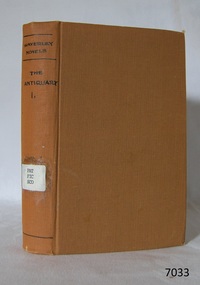
Book - Fictional stories, Sir Walter Scott, Waverley Novels Vol 5 The Antiquary-1, 1836
... Scott's writings fused realism with romance, using history to explore class, power, and progress, influencing writers from Dickens to Balzac. His Waverley Novels (1814–1831) were Europe's most popular for a century, rehabilitating Scottish Highland culture and shaping modern historical perspective....Scott's writings fused realism with romance, using history to explore class, power, and progress, influencing writers from Dickens to Balzac. His Waverley Novels (1814–1831) were Europe's most popular for a century, rehabilitating Scottish Highland culture and shaping modern historical perspective. ...The subject volume of Waverley Novels Vol 5 published by Fisher Son & Co (1836) is part of a collected 48 volume set of Sir Walter Scott's works, containing various stories. Vol 5 in the 1836 Fisher edition reprints later entries from the fourth series, as these stories originally appeared in Scott's Magnum Opus collected 48 volume editions, the first from 1816. With the influential “Magnum Opus” editions from 1829–1833 by Robert Cadell, serving as the basis for later reprinted published sets like Fisher's. The Antiquary is one of Sir Walter Scott’s best known Scottish novels of the set, first published in 1816, and it mixes social comedy, mystery, romance, and historical atmosphere. It centres on Jonathan Oldbuck, an obsessive collector of antiquities, and follows a tangled story involving old family secrets, financial trouble, buried treasure schemes, and questions of identity. The story is set in late 18th century Scotland, mainly around Fairport and nearby estates, and brings together several linked families.Scott uses the novel to explore the tension between the past and the present, showing how antiquarian obsession can be both comic and revealing. He also deals with inheritance, class, old guilt, false appearances, and the way history shapes personal lives.Waverley Novels Vol 5 The Antiquary-1, Light brown hardcover lettering in black text. Author: Sir Walter Scott Publisher: Fisher Son & Co Date: 1838fictionThe subject volume of Waverley Novels Vol 5 published by Fisher Son & Co (1836) is part of a collected 48 volume set of Sir Walter Scott's works, containing various stories. Vol 5 in the 1836 Fisher edition reprints later entries from the fourth series, as these stories originally appeared in Scott's Magnum Opus collected 48 volume editions, the first from 1816. With the influential “Magnum Opus” editions from 1829–1833 by Robert Cadell, serving as the basis for later reprinted published sets like Fisher's. The Antiquary is one of Sir Walter Scott’s best known Scottish novels of the set, first published in 1816, and it mixes social comedy, mystery, romance, and historical atmosphere. It centres on Jonathan Oldbuck, an obsessive collector of antiquities, and follows a tangled story involving old family secrets, financial trouble, buried treasure schemes, and questions of identity. The story is set in late 18th century Scotland, mainly around Fairport and nearby estates, and brings together several linked families.Scott uses the novel to explore the tension between the past and the present, showing how antiquarian obsession can be both comic and revealing. He also deals with inheritance, class, old guilt, false appearances, and the way history shapes personal lives.warrnambool, shipwrecked-coast, flagstaff-hill, flagstaff-hill-maritime-museum, maritime-museum, shipwreck-coast, flagstaff-hill-maritime-village, shipwrecked-artefact, book, waverley novels vol 46 tales of my landlord, sir walter scott, pattison collection, warrnambool library, warrnambool mechanics’ institute, ralph eric pattison, corangamite regional library service, warrnambool city librarian, mechanics’ institute library, victorian library board, warrnambool books and records, warrnambool children’s library -
 Flagstaff Hill Maritime Museum and Village
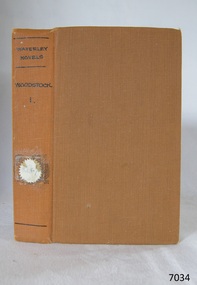
Book - Fictional stories, Sir Walter Scott, Waverley Novels Vol 39 Woodstock or The Cavalier, 1838
... Scott's writings fused realism with romance, using history to explore class, power, and progress, influencing writers from Dickens to Balzac. His Waverley Novels (1814–1831) were Europe's most popular for a century, rehabilitating Scottish Highland culture and shaping modern historical perspective. ...Scott's writings fused realism with romance, using history to explore class, power, and progress, influencing writers from Dickens to Balzac. His Waverley Novels (1814–1831) were Europe's most popular for a century, rehabilitating Scottish Highland culture and shaping modern historical perspective. ...The subject volume of Waverley Novels Vol 39 published by Fisher Son & Co (1838) is part of a collected 48 volume set of Sir Walter Scott's works, containing various stories. Vol 39 in the 1836 Fisher edition reprints later entries from the fourth series, as these stories originally appeared in Scott's Magnum Opus 48 volume editions, the first from 1816. With the influential “Magnum Opus” editions from 1829–1833 by Robert Cadell, serving as the basis for later reprinted published sets like Fisher's. Scott's "Woodstock," or “The Cavalier” is a historical novel originally published in 1826 as the 22nd in the Waverley series. Set in 1651 at Woodstock Manor during the English Commonwealth after the Battle of Worcester, it dramatises Charles II's daring escape from Cromwell's forces. The story is about a royalist Sir Henry Lee and his daughter Alice, they lose their Woodstock home to Colonel Markham Everard, a sympathetic round head relative, who seeks protection for them from Cromwell, who suspects the site as a hideout for fugitive Charles II (disguised as a royal page "Louis Kerneguy"). Charles as the page courts Alice, sparking jealousy with Everard, amid duels, haunting in secret passages, and Cromwell's siege. Charles escapes with help from allies like Wildrake and Albert Lee, who impersonates him. The key themes to this novel are that it contrasts Cavalier loyalty and Puritan zeal, loyalty across divides, romance amid politics, and supernatural folklore masking intrigue. In the Fisher Son & Co edition, it reprints this story from Scott's revised collected original work in 1826.Waverley Novels Vol 39 Woodstock or the Cavalier, Light brown hardcover lettering in black text. Author: Sir Walter Scott Publisher: Fisher Son & Co Date: 1838fictionThe subject volume of Waverley Novels Vol 39 published by Fisher Son & Co (1838) is part of a collected 48 volume set of Sir Walter Scott's works, containing various stories. Vol 39 in the 1836 Fisher edition reprints later entries from the fourth series, as these stories originally appeared in Scott's Magnum Opus 48 volume editions, the first from 1816. With the influential “Magnum Opus” editions from 1829–1833 by Robert Cadell, serving as the basis for later reprinted published sets like Fisher's. Scott's "Woodstock," or “The Cavalier” is a historical novel originally published in 1826 as the 22nd in the Waverley series. Set in 1651 at Woodstock Manor during the English Commonwealth after the Battle of Worcester, it dramatises Charles II's daring escape from Cromwell's forces. The story is about a royalist Sir Henry Lee and his daughter Alice, they lose their Woodstock home to Colonel Markham Everard, a sympathetic round head relative, who seeks protection for them from Cromwell, who suspects the site as a hideout for fugitive Charles II (disguised as a royal page "Louis Kerneguy"). Charles as the page courts Alice, sparking jealousy with Everard, amid duels, haunting in secret passages, and Cromwell's siege. Charles escapes with help from allies like Wildrake and Albert Lee, who impersonates him. The key themes to this novel are that it contrasts Cavalier loyalty and Puritan zeal, loyalty across divides, romance amid politics, and supernatural folklore masking intrigue. In the Fisher Son & Co edition, it reprints this story from Scott's revised collected original work in 1826. warrnambool, shipwrecked-coast, flagstaff-hill, flagstaff-hill-maritime-museum, maritime-museum, shipwreck-coast, flagstaff-hill-maritime-village, shipwrecked-artefact, book, waverley novels vol 46 tales of my landlord, sir walter scott, pattison collection, warrnambool library, warrnambool mechanics’ institute, ralph eric pattison, corangamite regional library service, warrnambool city librarian, mechanics’ institute library, victorian library board, warrnambool books and records, warrnambool children’s library -
 Flagstaff Hill Maritime Museum and Village
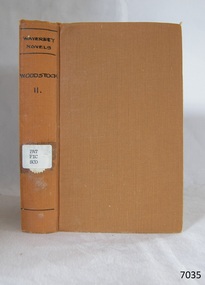
Book - Fictional stories, Sir Walter Scott, Waverley Novels Vol 40 Woodstock or the Cavalier-2, 1838
... Scott's writings fused realism with romance, using history to explore class, power, and progress, influencing writers from Dickens to Balzac. His Waverley Novels (1814–1831) were Europe's most popular for a century, rehabilitating Scottish Highland culture and shaping modern historical perspective. ...Scott's writings fused realism with romance, using history to explore class, power, and progress, influencing writers from Dickens to Balzac. His Waverley Novels (1814–1831) were Europe's most popular for a century, rehabilitating Scottish Highland culture and shaping modern historical perspective. ...The subject volume of Waverley Novels Vol 40 published by Fisher Son & Co (1838) is part of a collected 48 volume set of Sir Walter Scott's works, containing various stories. Vol 40 in the 1838 Fisher edition reprints later entries from the fourth series, as these stories originally appeared in Scott's Magnum Opus 48 volume editions, the first from 1816. With the influential “Magnum Opus” editions from 1829–1833 by Robert Cadell, serving as the basis for later reprinted published sets like Fisher's. Scott's "Woodstock," or “The Cavalier” is a historical novel originally published in 1826 as the 22nd in the Waverley series. Volume 40 continues Woodstock, or The Cavalier from Vol 39 in the Fisher Son & Co edition. It picks up the 1651 story line at Woodstock Manor, where disguised Charles II hides amid escalating tension with Cromwell's forces. The plot continues with Cromwell storming the lodge after suspecting Charles's presence disguised as "Louis Kerneguy", arresting Colonel Everard and searching secret passages haunted by "ghosts". Albert Lee impersonates the king to aid his escape, while Alice guides Charles away; dramatic confrontations ensue with duels, revelations, and Cromwell's rage continuing. As in volume 39 the tale resolves family divisions, loyalty, and supernatural folklore masking political intrigue during the Commonwealth era. This split-volume format is standard in collected 1830 s editions like Fisher's, reprinting of Scott's 1826 original with revisions.Waverley Novels Vol 40 Woodstock or the Cavalier-2, Light brown hardcover lettering in black text. Author: Sir Walter Scott Publisher: Fisher Son & Co Date: 1838fictionThe subject volume of Waverley Novels Vol 40 published by Fisher Son & Co (1838) is part of a collected 48 volume set of Sir Walter Scott's works, containing various stories. Vol 40 in the 1838 Fisher edition reprints later entries from the fourth series, as these stories originally appeared in Scott's Magnum Opus 48 volume editions, the first from 1816. With the influential “Magnum Opus” editions from 1829–1833 by Robert Cadell, serving as the basis for later reprinted published sets like Fisher's. Scott's "Woodstock," or “The Cavalier” is a historical novel originally published in 1826 as the 22nd in the Waverley series. Volume 40 continues Woodstock, or The Cavalier from Vol 39 in the Fisher Son & Co edition. It picks up the 1651 story line at Woodstock Manor, where disguised Charles II hides amid escalating tension with Cromwell's forces. The plot continues with Cromwell storming the lodge after suspecting Charles's presence disguised as "Louis Kerneguy", arresting Colonel Everard and searching secret passages haunted by "ghosts". Albert Lee impersonates the king to aid his escape, while Alice guides Charles away; dramatic confrontations ensue with duels, revelations, and Cromwell's rage continuing. As in volume 39 the tale resolves family divisions, loyalty, and supernatural folklore masking political intrigue during the Commonwealth era. This split-volume format is standard in collected 1830 s editions like Fisher's, reprinting of Scott's 1826 original with revisions.warrnambool, shipwrecked-coast, flagstaff-hill, flagstaff-hill-maritime-museum, maritime-museum, shipwreck-coast, flagstaff-hill-maritime-village, shipwrecked-artefact, book, waverley novels vol 46 tales of my landlord, sir walter scott, pattison collection, warrnambool library, warrnambool mechanics’ institute, ralph eric pattison, corangamite regional library service, warrnambool city librarian, mechanics’ institute library, victorian library board, warrnambool books and records, warrnambool children’s library -
 Flagstaff Hill Maritime Museum and Village
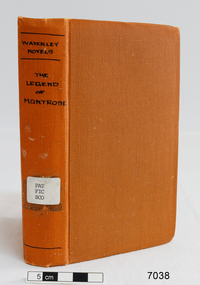
Book - Fictional stories, Sir Walter Scott, A Legend of Montrose Vol 15, 1837
... Scott's writings fused realism with romance, using history to explore class, power, and progress, influencing writers from Dickens to Balzac. His Waverley Novels (1814–1831) were Europe's most popular for a century, rehabilitating Scottish Highland culture and shaping modern historical perspective. ...Scott's writings fused realism with romance, using history to explore class, power, and progress, influencing writers from Dickens to Balzac. His Waverley Novels (1814–1831) were Europe's most popular for a century, rehabilitating Scottish Highland culture and shaping modern historical perspective. ...The subject volume of Waverley Novels Vol 15 published by Fisher Son & Co (1837) is part of a collected 48 volume set of Sir Walter Scott's works, containing various stories. Vol 15 in the 1836 Fisher edition reprints later entries from the fourth series, as these stories originally appeared in Scott's Magnum Opus 48 volume editions, the first from 1816. With the influential “Magnum Opus” editions from 1829–1833 by Robert Cadell, serving as the basis for later reprinted published sets like Fisher's. The story is a historical novel set in Scotland in the 1640s, during the wars of the three Kingdoms. Its main story follows Allan M’Aulay, his friend the Earl of Menteith, and Annot Lyle, against the backdrop of Montrose’s Royalist campaign and clan feuds in the Highlands. The plot combines romance, revenge, and civil war. Annot, who was raised by the M’Aulays after being taken during a clan feud, becomes the focus of a love triangle between Allan M’Aulay and Menteith; The mystery of Annot's birth holds both back from pressing their claims buy eventually her marriage to Menteith is made possible But Allan’s jealousy drives him to attack the groom. A large subplot follows with Dugald Dalgetty, a comic professional soldier whose practical, mercenary outlook contrasts with the passions and loyalties of the other characters.Waverley Novels Vol 15 A Legend of Montrose, Light brown hardcover lettering in black text. Author: Sir Walter Scott Publisher: Fisher Son & Co Date: 1837fictionThe subject volume of Waverley Novels Vol 15 published by Fisher Son & Co (1837) is part of a collected 48 volume set of Sir Walter Scott's works, containing various stories. Vol 15 in the 1836 Fisher edition reprints later entries from the fourth series, as these stories originally appeared in Scott's Magnum Opus 48 volume editions, the first from 1816. With the influential “Magnum Opus” editions from 1829–1833 by Robert Cadell, serving as the basis for later reprinted published sets like Fisher's. The story is a historical novel set in Scotland in the 1640s, during the wars of the three Kingdoms. Its main story follows Allan M’Aulay, his friend the Earl of Menteith, and Annot Lyle, against the backdrop of Montrose’s Royalist campaign and clan feuds in the Highlands. The plot combines romance, revenge, and civil war. Annot, who was raised by the M’Aulays after being taken during a clan feud, becomes the focus of a love triangle between Allan M’Aulay and Menteith; The mystery of Annot's birth holds both back from pressing their claims buy eventually her marriage to Menteith is made possible But Allan’s jealousy drives him to attack the groom. A large subplot follows with Dugald Dalgetty, a comic professional soldier whose practical, mercenary outlook contrasts with the passions and loyalties of the other characters. warrnambool, shipwrecked-coast, flagstaff-hill, flagstaff-hill-maritime-museum, maritime-museum, shipwreck-coast, flagstaff-hill-maritime-village, shipwrecked-artefact, book, waverley novels vol 46 tales of my landlord, sir walter scott, pattison collection, warrnambool library, warrnambool mechanics’ institute, ralph eric pattison, corangamite regional library service, warrnambool city librarian, mechanics’ institute library, victorian library board, warrnambool books and records, warrnambool children’s library, quentin durward, quinten durward -
 Flagstaff Hill Maritime Museum and Village
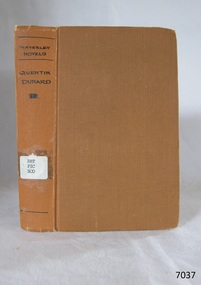
Book - Fictional stories, Sir Walter Scott, Waverley Novels Quentin Durward Vol 32, 1838
... Scott's writings fused realism with romance, using history to explore class, power, and progress, influencing writers from Dickens to Balzac. His Waverley Novels (1814–1831) were Europe's most popular for a century, rehabilitating Scottish Highland culture and shaping modern historical perspective. ...Scott's writings fused realism with romance, using history to explore class, power, and progress, influencing writers from Dickens to Balzac. His Waverley Novels (1814–1831) were Europe's most popular for a century, rehabilitating Scottish Highland culture and shaping modern historical perspective. ...The subject volume of Waverley Novels Vol 32 published by Fisher Son & Co (1838) is part of a collected 48 volume set of Sir Walter Scott's works, containing various stories. Vol 32 in the 1836 Fisher edition reprints later entries from the fourth series, as these stories originally appeared in Scott's Magnum Opus 48 volume editions, the first from 1816. With the influential “Magnum Opus” editions from 1829–1833 by Robert Cadell, serving as the basis for later reprinted published sets like Fisher's. Quentin Durward, often listed as volume 32 in some Waverley Novels editions, is a historical novel set in 15th century France and Burgundy. Its story follows a young Scottish archer who gets drawn into the power struggle between Louis XI and Charles the Bold, while also escorting the Burgundian heiress Isabelle de Croye and eventually winning her hand. The story centres around Quentin arriving in France seeking service, he joins Louis XI’s Scottish Guard, and is pulled into court intrigue, kidnapping plots, and the violent conflict around Liege. The novel’s main historical drama is Louis XI using covert politics to weaken Burgundy, while Quentin’s personal plot tracks loyalty, danger, and romance.Waverley Novels Vol 32 Quentin Durward, Light brown hardcover lettering in black text. Author: Sir Walter Scott Publisher: Fisher Son & Co Date: 1838fictionThe subject volume of Waverley Novels Vol 32 published by Fisher Son & Co (1838) is part of a collected 48 volume set of Sir Walter Scott's works, containing various stories. Vol 32 in the 1836 Fisher edition reprints later entries from the fourth series, as these stories originally appeared in Scott's Magnum Opus 48 volume editions, the first from 1816. With the influential “Magnum Opus” editions from 1829–1833 by Robert Cadell, serving as the basis for later reprinted published sets like Fisher's. Quentin Durward, often listed as volume 32 in some Waverley Novels editions, is a historical novel set in 15th century France and Burgundy. Its story follows a young Scottish archer who gets drawn into the power struggle between Louis XI and Charles the Bold, while also escorting the Burgundian heiress Isabelle de Croye and eventually winning her hand. The story centres around Quentin arriving in France seeking service, he joins Louis XI’s Scottish Guard, and is pulled into court intrigue, kidnapping plots, and the violent conflict around Liege. The novel’s main historical drama is Louis XI using covert politics to weaken Burgundy, while Quentin’s personal plot tracks loyalty, danger, and romance.warrnambool, shipwrecked-coast, flagstaff-hill, flagstaff-hill-maritime-museum, maritime-museum, shipwreck-coast, flagstaff-hill-maritime-village, shipwrecked-artefact, book, waverley novels vol 46 tales of my landlord, sir walter scott, pattison collection, warrnambool library, warrnambool mechanics’ institute, ralph eric pattison, corangamite regional library service, warrnambool city librarian, mechanics’ institute library, victorian library board, warrnambool books and records, warrnambool children’s library, quentin durward, quinten durward -
 Flagstaff Hill Maritime Museum and Village
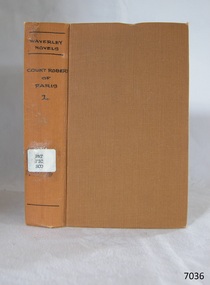
Book - Fictional stories, Sir Walter Scott, Waverley Novels Vol 47 Count Robert of Paris-2, 1838
... Scott's writings fused realism with romance, using history to explore class, power, and progress, influencing writers from Dickens to Balzac. His Waverley Novels (1814–1831) were Europe's most popular for a century, rehabilitating Scottish Highland culture and shaping modern historical perspective. ...Scott's writings fused realism with romance, using history to explore class, power, and progress, influencing writers from Dickens to Balzac. His Waverley Novels (1814–1831) were Europe's most popular for a century, rehabilitating Scottish Highland culture and shaping modern historical perspective. ...The subject volume of the Waverley Novels Vol 47 published by Fisher Son & Co (1838) is part of a collected 48 volume set of Sir Walter Scott's works, containing various stories. Vol 47 in the 1838 Fisher edition reprints later entries from the fourth series, as these stories originally appeared in Scott's Magnum Opus 48 volume editions, the first from 1816. With the influential “Magnum Opus” editions from 1829–1833 by Robert Cadell, serving as the basis for later reprinted published sets like Fisher's. Volume 47 "Count Robert of Paris-2" completes the novel in the Fisher Son & Co edition. It continues the 1097 Constantinople intrigue from Vol 47's first part (or prior volume), resolving crusader-Byzantine clashes. The plot concludes with Count Robert freed by Hereward, fights in Brenhilda's duel against Nicephorus. Hereward reunites with Bertha (Brenhilda's attendant), regains English lands via Robert's influence, and joins him in Palestine as a vassal; crusaders depart after Alexius out maneuvers various plots. Volume 47 often splits Count Robert of Paris Part two before starting Castle Dangerous part one, matching 1830 s collected formats like Fisher's revisions of Scott's 1832 original.Blending chivalry, conspiracy, and cultural satire.Waverley Novels Vol 47 Count Robert of Paris- 2, Light brown hardcover lettering in black text. Author: Sir Walter Scott Publisher: Fisher Son & Co Date: 1838fictionThe subject volume of the Waverley Novels Vol 47 published by Fisher Son & Co (1838) is part of a collected 48 volume set of Sir Walter Scott's works, containing various stories. Vol 47 in the 1838 Fisher edition reprints later entries from the fourth series, as these stories originally appeared in Scott's Magnum Opus 48 volume editions, the first from 1816. With the influential “Magnum Opus” editions from 1829–1833 by Robert Cadell, serving as the basis for later reprinted published sets like Fisher's. Volume 47 "Count Robert of Paris-2" completes the novel in the Fisher Son & Co edition. It continues the 1097 Constantinople intrigue from Vol 47's first part (or prior volume), resolving crusader-Byzantine clashes. The plot concludes with Count Robert freed by Hereward, fights in Brenhilda's duel against Nicephorus. Hereward reunites with Bertha (Brenhilda's attendant), regains English lands via Robert's influence, and joins him in Palestine as a vassal; crusaders depart after Alexius out maneuvers various plots. Volume 47 often splits Count Robert of Paris Part two before starting Castle Dangerous part one, matching 1830 s collected formats like Fisher's revisions of Scott's 1832 original.Blending chivalry, conspiracy, and cultural satire.warrnambool, shipwrecked-coast, flagstaff-hill, flagstaff-hill-maritime-museum, maritime-museum, shipwreck-coast, flagstaff-hill-maritime-village, shipwrecked-artefact, book, waverley novels vol 46 tales of my landlord, sir walter scott, pattison collection, warrnambool library, warrnambool mechanics’ institute, ralph eric pattison, corangamite regional library service, warrnambool city librarian, mechanics’ institute library, victorian library board, warrnambool books and records, warrnambool children’s library -
 Flagstaff Hill Maritime Museum and Village
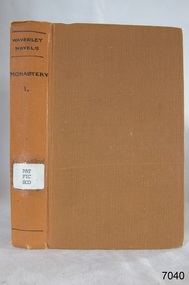
Book - Fictional stories, Sir Walter Scott, Waverley Novels The Monastery- 1 Vol 18, 1838
... Scott's writings fused realism with romance, using history to explore class, power, and progress, influencing writers from Dickens to Balzac. His Waverley Novels (1814–1831) were Europe's most popular for a century, rehabilitating Scottish Highland culture and shaping modern historical perspective. ...Scott's writings fused realism with romance, using history to explore class, power, and progress, influencing writers from Dickens to Balzac. His Waverley Novels (1814–1831) were Europe's most popular for a century, rehabilitating Scottish Highland culture and shaping modern historical perspective. ...The subject volume of Waverley Novels Vol 18 published by Fisher Son & Co (1838) is part of a collected 48 volume set of Sir Walter Scott's works, containing various stories. Vol 18 in the 1836 Fisher edition reprints later entries from the fourth series, as these stories originally appeared in Scott's Magnum Opus 48 volume editions, the first from 1816. With the influential “Magnum Opus” editions from 1829–1833 by Robert Cadell, serving as the basis for later reprinted published sets like Fisher's. Scott’s “The Monastery” is a historical romance set in Scotland during the early Reformation, centred on Kennaquhair Abbey and the Glendinning family. The plot follows Halbert and Edward Glendinning, both in love with Mary Avenel, while religious conflict, local politics, and the eerie White Lady of Avenel shape the action.Waverley Novels Vol 18 The Monastery-1, Light brown hardcover lettering in black text. Author: Sir Walter Scott Publisher: Fisher Son & Co Date: 1837fictionThe subject volume of Waverley Novels Vol 18 published by Fisher Son & Co (1838) is part of a collected 48 volume set of Sir Walter Scott's works, containing various stories. Vol 18 in the 1836 Fisher edition reprints later entries from the fourth series, as these stories originally appeared in Scott's Magnum Opus 48 volume editions, the first from 1816. With the influential “Magnum Opus” editions from 1829–1833 by Robert Cadell, serving as the basis for later reprinted published sets like Fisher's. Scott’s “The Monastery” is a historical romance set in Scotland during the early Reformation, centred on Kennaquhair Abbey and the Glendinning family. The plot follows Halbert and Edward Glendinning, both in love with Mary Avenel, while religious conflict, local politics, and the eerie White Lady of Avenel shape the action.warrnambool, shipwrecked-coast, flagstaff-hill, flagstaff-hill-maritime-museum, maritime-museum, shipwreck-coast, flagstaff-hill-maritime-village, shipwrecked-artefact, book, waverley novels vol 46 tales of my landlord, sir walter scott, pattison collection, warrnambool library, warrnambool mechanics’ institute, ralph eric pattison, corangamite regional library service, warrnambool city librarian, mechanics’ institute library, victorian library board, warrnambool books and records, warrnambool children’s library, quentin durward, quinten durward -
 Flagstaff Hill Maritime Museum and Village
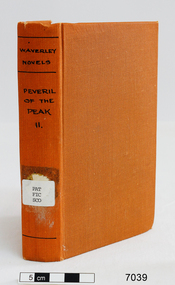
Book - Fictional stories, Sir Walter Scott, Waverley Novels Peveril of the Peak- 2 Vol 29, 1838
... Scott's writings fused realism with romance, using history to explore class, power, and progress, influencing writers from Dickens to Balzac. His Waverley Novels (1814–1831) were Europe's most popular for a century, rehabilitating Scottish Highland culture and shaping modern historical perspective. ...Scott's writings fused realism with romance, using history to explore class, power, and progress, influencing writers from Dickens to Balzac. His Waverley Novels (1814–1831) were Europe's most popular for a century, rehabilitating Scottish Highland culture and shaping modern historical perspective. ...The subject volume of Waverley Novels part 2 Vol 29 published by Fisher Son & Co (1838) is part of a collected 48 volume set of Sir Walter Scott's works, containing various stories. Vol 32 in the 1836 Fisher edition reprints later entries from the fourth series, as these stories originally appeared in Scott's Magnum Opus 48 volume editions, the first from 1816. With the influential “Magnum Opus” editions from 1829–1833 by Robert Cadell, serving as the basis for later reprinted published sets like Fisher's. Scott’s Peveril of the Peak is a historical novel set around the popish plot of 1678, and it follows tensions between Cavalier and Puritan families in Derbyshire, London intrigue, and a romance involving Sir Geoffrey Peveril’s son Julian, Alice Bridgenorth, and the mysterious Fenella Zara. In broad terms, it is about political suspicion, religious conflict, mistaken identities, and how private loyalties get entangled with public upheaval.Waverley Novels Peveril of the Peak- 2 Vol 29, Light brown hardcover lettering in black text. Author: Sir Walter Scott Publisher: Fisher Son & Co Date: 1838fictionThe subject volume of Waverley Novels part 2 Vol 29 published by Fisher Son & Co (1838) is part of a collected 48 volume set of Sir Walter Scott's works, containing various stories. Vol 32 in the 1836 Fisher edition reprints later entries from the fourth series, as these stories originally appeared in Scott's Magnum Opus 48 volume editions, the first from 1816. With the influential “Magnum Opus” editions from 1829–1833 by Robert Cadell, serving as the basis for later reprinted published sets like Fisher's. Scott’s Peveril of the Peak is a historical novel set around the popish plot of 1678, and it follows tensions between Cavalier and Puritan families in Derbyshire, London intrigue, and a romance involving Sir Geoffrey Peveril’s son Julian, Alice Bridgenorth, and the mysterious Fenella Zara. In broad terms, it is about political suspicion, religious conflict, mistaken identities, and how private loyalties get entangled with public upheaval. warrnambool, shipwrecked-coast, flagstaff-hill, flagstaff-hill-maritime-museum, maritime-museum, shipwreck-coast, flagstaff-hill-maritime-village, shipwrecked-artefact, book, waverley novels vol 46 tales of my landlord, sir walter scott, pattison collection, warrnambool library, warrnambool mechanics’ institute, ralph eric pattison, corangamite regional library service, warrnambool city librarian, mechanics’ institute library, victorian library board, warrnambool books and records, warrnambool children’s library, quentin durward, quinten durward -
 Flagstaff Hill Maritime Museum and Village
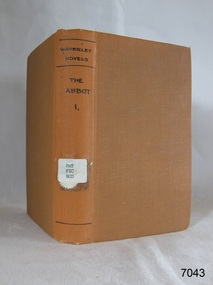
Book - Fictional stories, Sir Walter Scott, Waverley Novels Vol 20 The Abbot- 1 (Sequel to the Monastery), 1837
... Scott's writings fused realism with romance, using history to explore class, power, and progress, influencing writers from Dickens to Balzac. His Waverley Novels (1814–1831) were Europe's most popular for a century, rehabilitating Scottish Highland culture and shaping modern historical perspective. ...Scott's writings fused realism with romance, using history to explore class, power, and progress, influencing writers from Dickens to Balzac. His Waverley Novels (1814–1831) were Europe's most popular for a century, rehabilitating Scottish Highland culture and shaping modern historical perspective. ...The subject volume “The Abbot- 1 (Sequel to the Monastery) Vol 20” published by Fisher Son & Co (1837) is part of a collected edition of Sir Walter Scott's works, containing stories from the "Tales of My Landlord" series. "Tales of My Landlord" forms a key subset of Scott's Waverley Novels, presented as fictional tales gathered by characters like Peter Pattieson from the landlord of the Wallace “Inn at Gandercleugh”. The series spans multiple books across four sub-series, including “The Black Dwarf” (1707 setting), “Old Mortality” (1679–1689), “The Heart of Midlothian” (1736), “The Bride of Lammermoor” (1709–1711), “A Legend of Montrose” (1644–1645), “Count Robert of Paris” (1097), and “Castle Dangerous” (1307). Vol 46 in the 1838 Fisher edition reprints later entries like “Count Robert of Paris” or “Castle Dangerous” from the fourth series, as these stories originally appeared in Scott's Magnum Opus collected volume editions, the first from 1816. With the influential 48-volume “Magnum Opus” edition from 1829–1833 by Robert Cadell, serving as the basis for later collected published sets like Fisher's. The Abbot is Walter Scott’s sequel to The Monastery, set in 1567–1568 during the turmoil around Mary, Queen of Scots. The story follows Roland Græme and other characters around Lochleven Castle, where Mary is imprisoned, and builds toward her escape attempt and the political crisis that ends with her defeat and flight to England. Like the other novels in the Waverley series it mixes historical events with fictional characters: Roland Græme, the Avenel household, and the mysterious “Abbot” figure are woven into the real struggle between Protestant and Catholic factions in Scotland. A central thread is Roland’s divided loyalties, his attraction to both the Catholic and Protestant worlds, and his involvement in helping Mary’s cause. The climax comes with Mary’s attempted escape from Lochleven, the fighting that follows, and her eventual loss of power in Scotland.Waverley Novels Vol 20 The Abbot- 1 Vol 20 (Sequel to the Monastery), Light brown hardcover lettering in black text. Author: Sir Walter Scott Publisher: Fisher Son & Co Date: 1837fictionThe subject volume “The Abbot- 1 (Sequel to the Monastery) Vol 20” published by Fisher Son & Co (1837) is part of a collected edition of Sir Walter Scott's works, containing stories from the "Tales of My Landlord" series. "Tales of My Landlord" forms a key subset of Scott's Waverley Novels, presented as fictional tales gathered by characters like Peter Pattieson from the landlord of the Wallace “Inn at Gandercleugh”. The series spans multiple books across four sub-series, including “The Black Dwarf” (1707 setting), “Old Mortality” (1679–1689), “The Heart of Midlothian” (1736), “The Bride of Lammermoor” (1709–1711), “A Legend of Montrose” (1644–1645), “Count Robert of Paris” (1097), and “Castle Dangerous” (1307). Vol 46 in the 1838 Fisher edition reprints later entries like “Count Robert of Paris” or “Castle Dangerous” from the fourth series, as these stories originally appeared in Scott's Magnum Opus collected volume editions, the first from 1816. With the influential 48-volume “Magnum Opus” edition from 1829–1833 by Robert Cadell, serving as the basis for later collected published sets like Fisher's. The Abbot is Walter Scott’s sequel to The Monastery, set in 1567–1568 during the turmoil around Mary, Queen of Scots. The story follows Roland Græme and other characters around Lochleven Castle, where Mary is imprisoned, and builds toward her escape attempt and the political crisis that ends with her defeat and flight to England. Like the other novels in the Waverley series it mixes historical events with fictional characters: Roland Græme, the Avenel household, and the mysterious “Abbot” figure are woven into the real struggle between Protestant and Catholic factions in Scotland. A central thread is Roland’s divided loyalties, his attraction to both the Catholic and Protestant worlds, and his involvement in helping Mary’s cause. The climax comes with Mary’s attempted escape from Lochleven, the fighting that follows, and her eventual loss of power in Scotland. warrnambool, shipwrecked-coast, flagstaff-hill, flagstaff-hill-maritime-museum, maritime-museum, shipwreck-coast, flagstaff-hill-maritime-village, shipwrecked-artefact, book, waverley novels vol 46 tales of my landlord, sir walter scott, pattison collection, warrnambool library, warrnambool mechanics’ institute, ralph eric pattison, corangamite regional library service, warrnambool city librarian, mechanics’ institute library, victorian library board, warrnambool books and records, warrnambool children’s library -
 Flagstaff Hill Maritime Museum and Village
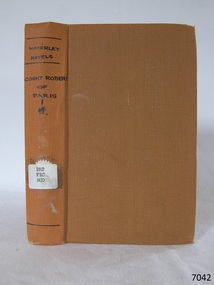
Book - Fictional stories, Sir Walter Scott, Waverley Novels Vol 46-1 Tales of My Landlord, 1838
... Scott's writings fused realism with romance, using history to explore class, power, and progress, influencing writers from Dickens to Balzac. His Waverley Novels (1814–1831) were Europe's most popular for a century, rehabilitating Scottish Highland culture and shaping modern historical perspective. ...Scott's writings fused realism with romance, using history to explore class, power, and progress, influencing writers from Dickens to Balzac. His Waverley Novels (1814–1831) were Europe's most popular for a century, rehabilitating Scottish Highland culture and shaping modern historical perspective. ...The subject volume “Waverley Novels Vol 46” published by Fisher Son & Co (1838) is part of a collected edition of Sir Walter Scott's works, containing stories from the "Tales of My Landlord" series. "Tales of My Landlord" forms a key subset of Scott's Waverley Novels, presented as fictional tales gathered by characters like Peter Pattieson from the landlord of the Wallace “Inn at Gandercleugh”. The series spans multiple books across four sub-series, including “The Black Dwarf” (1707 setting), “Old Mortality” (1679–1689), “The Heart of Midlothian” (1736), “The Bride of Lammermoor” (1709–1711), “A Legend of Montrose” (1644–1645), “Count Robert of Paris” (1097), and “Castle Dangerous” (1307). Vol 46 in the 1838 Fisher edition reprints later entries like “Count Robert of Paris” or “Castle Dangerous” from the fourth series, as these stories originally appeared in Scott's Magnum Opus collected volume editions, the first from 1816. With the influential 48-volume “Magnum Opus” edition from 1829–1833 by Robert Cadell, serving as the basis for later collected published sets like Fisher's.Waverley Novels Vol 46 Tales of My Landlord, Light brown hardcover lettering in black text. Author: Sir Walter Scott Publisher: Fisher Son & Co Date: 1838fictionThe subject volume “Waverley Novels Vol 46” published by Fisher Son & Co (1838) is part of a collected edition of Sir Walter Scott's works, containing stories from the "Tales of My Landlord" series. "Tales of My Landlord" forms a key subset of Scott's Waverley Novels, presented as fictional tales gathered by characters like Peter Pattieson from the landlord of the Wallace “Inn at Gandercleugh”. The series spans multiple books across four sub-series, including “The Black Dwarf” (1707 setting), “Old Mortality” (1679–1689), “The Heart of Midlothian” (1736), “The Bride of Lammermoor” (1709–1711), “A Legend of Montrose” (1644–1645), “Count Robert of Paris” (1097), and “Castle Dangerous” (1307). Vol 46 in the 1838 Fisher edition reprints later entries like “Count Robert of Paris” or “Castle Dangerous” from the fourth series, as these stories originally appeared in Scott's Magnum Opus collected volume editions, the first from 1816. With the influential 48-volume “Magnum Opus” edition from 1829–1833 by Robert Cadell, serving as the basis for later collected published sets like Fisher's. warrnambool, shipwrecked-coast, flagstaff-hill, flagstaff-hill-maritime-museum, maritime-museum, shipwreck-coast, flagstaff-hill-maritime-village, shipwrecked-artefact, book, waverley novels vol 46 tales of my landlord, sir walter scott, pattison collection, warrnambool library, warrnambool mechanics’ institute, ralph eric pattison, corangamite regional library service, warrnambool city librarian, mechanics’ institute library, victorian library board, warrnambool books and records, warrnambool children’s library -
 Flagstaff Hill Maritime Museum and Village
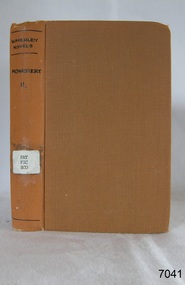
Book - Fictional stories, Sir Walter Scott, Waverley Novels The Monastery- 2 Vol 19, 1837
... Scott's writings fused realism with romance, using history to explore class, power, and progress, influencing writers from Dickens to Balzac. His Waverley Novels (1814–1831) were Europe's most popular for a century, rehabilitating Scottish Highland culture and shaping modern historical perspective. ...Scott's writings fused realism with romance, using history to explore class, power, and progress, influencing writers from Dickens to Balzac. His Waverley Novels (1814–1831) were Europe's most popular for a century, rehabilitating Scottish Highland culture and shaping modern historical perspective. ...The subject volume of Waverley Novels Vol 19 published by Fisher Son & Co (1838) is part of a collected 48 volume set of Sir Walter Scott's works, containing various stories. Vol 19 in the 1836 Fisher edition reprints later entries from the fourth series, as these stories originally appeared in Scott's Magnum Opus 48 volume editions, the first from 1816. With the influential “Magnum Opus” editions from 1829–1833 by Robert Cadell, serving as the basis for later reprinted published sets like Fisher's. Volume 2 is linked to the earlier volume through its shared setting, families, and historical conflict, but it is not a direct continuation of the same protagonist’s journey. It follows the Glendinning brothers and Mary Avenel in the same Scottish Borders world of the Reformation, with the same abbey, the same political tensions, and the same supernatural “White Lady”. In Volume 1 of “The Monastery” the story sets up the core relationships and tensions between Halbert and Edward Glendinning as they grow up near Kennaquhair with Mary Avenel. While the monastery itself becomes a battleground between old Catholic power and the new Protestant order. The second volume picks up those same threads and pushes them toward resolution through Halbert’s rise, Mary’s marriage, and Edward’s shift toward monastic life.Waverley Novels Vol 19 The Monastery-2, Light brown hardcover lettering in black text. Author: Sir Walter Scott Publisher: Fisher Son & Co Date: 1837fictionThe subject volume of Waverley Novels Vol 19 published by Fisher Son & Co (1838) is part of a collected 48 volume set of Sir Walter Scott's works, containing various stories. Vol 19 in the 1836 Fisher edition reprints later entries from the fourth series, as these stories originally appeared in Scott's Magnum Opus 48 volume editions, the first from 1816. With the influential “Magnum Opus” editions from 1829–1833 by Robert Cadell, serving as the basis for later reprinted published sets like Fisher's. Volume 2 is linked to the earlier volume through its shared setting, families, and historical conflict, but it is not a direct continuation of the same protagonist’s journey. It follows the Glendinning brothers and Mary Avenel in the same Scottish Borders world of the Reformation, with the same abbey, the same political tensions, and the same supernatural “White Lady”. In Volume 1 of “The Monastery” the story sets up the core relationships and tensions between Halbert and Edward Glendinning as they grow up near Kennaquhair with Mary Avenel. While the monastery itself becomes a battleground between old Catholic power and the new Protestant order. The second volume picks up those same threads and pushes them toward resolution through Halbert’s rise, Mary’s marriage, and Edward’s shift toward monastic life. warrnambool, shipwrecked-coast, flagstaff-hill, flagstaff-hill-maritime-museum, maritime-museum, shipwreck-coast, flagstaff-hill-maritime-village, shipwrecked-artefact, book, waverley novels vol 46 tales of my landlord, sir walter scott, pattison collection, warrnambool library, warrnambool mechanics’ institute, ralph eric pattison, corangamite regional library service, warrnambool city librarian, mechanics’ institute library, victorian library board, warrnambool books and records, warrnambool children’s library, the monastery -
 Flagstaff Hill Maritime Museum and Village
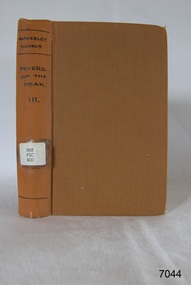
Book - Fictional stories, Sir Walter Scott, Waverley Novels Peveril of the Peak- 3 Vol 30, 1838
... Scott's writings fused realism with romance, using history to explore class, power, and progress, influencing writers from Dickens to Balzac. His Waverley Novels (1814–1831) were Europe's most popular for a century, rehabilitating Scottish Highland culture and shaping modern historical perspective. ...Scott's writings fused realism with romance, using history to explore class, power, and progress, influencing writers from Dickens to Balzac. His Waverley Novels (1814–1831) were Europe's most popular for a century, rehabilitating Scottish Highland culture and shaping modern historical perspective. ...The subject volume “Waverley Novels Vol 30” published by Fisher Son & Co (1838) is part of a collected edition of Sir Walter Scott's works, containing stories from the "Tales of My Landlord" series. "Tales of My Landlord" forms a key subset of Scott's Waverley Novels, presented as fictional tales gathered by characters like Peter Pattieson from the landlord of the Wallace “Inn at Gandercleugh”. The series spans multiple books across four sub-series, including “The Black Dwarf” (1707 setting), “Old Mortality” (1679–1689), “The Heart of Midlothian” (1736), “The Bride of Lammermoor” (1709–1711), “A Legend of Montrose” (1644–1645), “Count Robert of Paris” (1097), and “Castle Dangerous” (1307). Vol 46 in the 1838 Fisher edition reprints later entries like “Count Robert of Paris” or “Castle Dangerous” from the fourth series, as these stories originally appeared in Scott's Magnum Opus collected volume editions, the first from 1816. With the influential 48-volume “Magnum Opus” edition from 1829–1833 by Robert Cadell, serving as the basis for later collected published sets like Fisher's. Peveril of the Peak is Walter Scott's longest novel, published in 1823 and set during the late 17th century amid the Popish plot hysteria under Charles II. It follows young Cavalier Julian Peveril's forbidden romance with Alice Bridgenorth a Puritan's daughter. The story covers political intrigue, family feuds, and conspiracies drawing the characters into events spanning Derbyshire's Peak District, the Isle of Man, and London. The story continues on the Peveril family's royalist loyalties clashing with the Bridgenorths' Puritan resentment, fuelled by past Civil War grievances like the execution of William Christian. Julian and Alice's love is tested when Julian's parents face Popish Plot accusations with subplots involving a scheming dwarf, the Countess of Derby, and court figures like the Duke of Buckingham. It resolves with royal intervention, exposing intrigues and eventually uniting the lovers.Waverley Novels Peveril of the Peak- 3 Vol 30, Light brown hardcover lettering in black text. Author: Sir Walter Scott Publisher: Fisher Son & Co Date: 1838fictionThe subject volume “Waverley Novels Vol 30” published by Fisher Son & Co (1838) is part of a collected edition of Sir Walter Scott's works, containing stories from the "Tales of My Landlord" series. "Tales of My Landlord" forms a key subset of Scott's Waverley Novels, presented as fictional tales gathered by characters like Peter Pattieson from the landlord of the Wallace “Inn at Gandercleugh”. The series spans multiple books across four sub-series, including “The Black Dwarf” (1707 setting), “Old Mortality” (1679–1689), “The Heart of Midlothian” (1736), “The Bride of Lammermoor” (1709–1711), “A Legend of Montrose” (1644–1645), “Count Robert of Paris” (1097), and “Castle Dangerous” (1307). Vol 46 in the 1838 Fisher edition reprints later entries like “Count Robert of Paris” or “Castle Dangerous” from the fourth series, as these stories originally appeared in Scott's Magnum Opus collected volume editions, the first from 1816. With the influential 48-volume “Magnum Opus” edition from 1829–1833 by Robert Cadell, serving as the basis for later collected published sets like Fisher's. Peveril of the Peak is Walter Scott's longest novel, published in 1823 and set during the late 17th century amid the Popish plot hysteria under Charles II. It follows young Cavalier Julian Peveril's forbidden romance with Alice Bridgenorth a Puritan's daughter. The story covers political intrigue, family feuds, and conspiracies drawing the characters into events spanning Derbyshire's Peak District, the Isle of Man, and London. The story continues on the Peveril family's royalist loyalties clashing with the Bridgenorths' Puritan resentment, fuelled by past Civil War grievances like the execution of William Christian. Julian and Alice's love is tested when Julian's parents face Popish Plot accusations with subplots involving a scheming dwarf, the Countess of Derby, and court figures like the Duke of Buckingham. It resolves with royal intervention, exposing intrigues and eventually uniting the lovers. warrnambool, shipwrecked-coast, flagstaff-hill, flagstaff-hill-maritime-museum, maritime-museum, shipwreck-coast, flagstaff-hill-maritime-village, shipwrecked-artefact, book, waverley novels vol 46 tales of my landlord, sir walter scott, pattison collection, warrnambool library, warrnambool mechanics’ institute, ralph eric pattison, corangamite regional library service, warrnambool city librarian, mechanics’ institute library, victorian library board, warrnambool books and records, warrnambool children’s library -
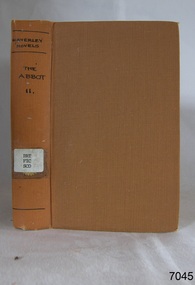 Flagstaff Hill Maritime Museum and Village
Book - Fictional stories, Sir Walter Scott, Waverley Novels Vol 21 The Abbot- 2 (Sequel to the Monastery), 1837
... Scott's writings fused realism with romance, using history to explore class, power, and progress, influencing writers from Dickens to Balzac. His Waverley Novels (1814–1831) were Europe's most popular for a century, rehabilitating Scottish Highland culture and shaping modern historical perspective. ...Scott's writings fused realism with romance, using history to explore class, power, and progress, influencing writers from Dickens to Balzac. His Waverley Novels (1814–1831) were Europe's most popular for a century, rehabilitating Scottish Highland culture and shaping modern historical perspective. ...The subject volume “The Abbot- 2 (Sequel to the Monastery) Vol 21” published by Fisher Son & Co (1837) is part of a collected edition of Sir Walter Scott's works, containing stories from the "Tales of My Landlord" series. "Tales of My Landlord" forms a key subset of Scott's Waverley Novels, presented as fictional tales gathered by characters like Peter Pattieson from the landlord of the Wallace “Inn at Gandercleugh”. The series spans multiple books across four sub-series, including “The Black Dwarf” (1707 setting), “Old Mortality” (1679–1689), “The Heart of Midlothian” (1736), “The Bride of Lammermoor” (1709–1711), “A Legend of Montrose” (1644–1645), “Count Robert of Paris” (1097), and “Castle Dangerous” (1307). Vol 46 in the 1838 Fisher edition reprints later entries like “Count Robert of Paris” or “Castle Dangerous” from the fourth series, as these stories originally appeared in Scott's Magnum Opus collected volume editions, the first from 1816. With the influential 48-volume “Magnum Opus” edition from 1829–1833 by Robert Cadell, serving as the basis for later collected published sets like Fisher's. The Abbot is Walter Scott’s sequel to The Monastery, set in 1567–1568 during the turmoil around Mary, Queen of Scots. The story follows Roland Græme and other characters around Lochleven Castle, where Mary is imprisoned, and builds toward her escape attempt and the political crisis that ends with her defeat and flight to England. Part two follows Roland to Edinburgh and then to Lochleven, where he becomes involved in the events around Mary’s imprisonment. It includes Mary’s confrontation with the Lady of Lochleven, the delivery of the abdication papers, and the forced political outcome that strips Mary of power. From there, the story moves toward the escape attempt, the battle of Langside, and Mary’s flight to England.Waverley Novels Vol 21 The Abbot- 2 (Sequel to the Monastery), Light brown hardcover lettering in black text. Author: Sir Walter Scott Publisher: Fisher Son & Co Date: 1837fictionThe subject volume “The Abbot- 2 (Sequel to the Monastery) Vol 21” published by Fisher Son & Co (1837) is part of a collected edition of Sir Walter Scott's works, containing stories from the "Tales of My Landlord" series. "Tales of My Landlord" forms a key subset of Scott's Waverley Novels, presented as fictional tales gathered by characters like Peter Pattieson from the landlord of the Wallace “Inn at Gandercleugh”. The series spans multiple books across four sub-series, including “The Black Dwarf” (1707 setting), “Old Mortality” (1679–1689), “The Heart of Midlothian” (1736), “The Bride of Lammermoor” (1709–1711), “A Legend of Montrose” (1644–1645), “Count Robert of Paris” (1097), and “Castle Dangerous” (1307). Vol 46 in the 1838 Fisher edition reprints later entries like “Count Robert of Paris” or “Castle Dangerous” from the fourth series, as these stories originally appeared in Scott's Magnum Opus collected volume editions, the first from 1816. With the influential 48-volume “Magnum Opus” edition from 1829–1833 by Robert Cadell, serving as the basis for later collected published sets like Fisher's. The Abbot is Walter Scott’s sequel to The Monastery, set in 1567–1568 during the turmoil around Mary, Queen of Scots. The story follows Roland Græme and other characters around Lochleven Castle, where Mary is imprisoned, and builds toward her escape attempt and the political crisis that ends with her defeat and flight to England. Part two follows Roland to Edinburgh and then to Lochleven, where he becomes involved in the events around Mary’s imprisonment. It includes Mary’s confrontation with the Lady of Lochleven, the delivery of the abdication papers, and the forced political outcome that strips Mary of power. From there, the story moves toward the escape attempt, the battle of Langside, and Mary’s flight to England. warrnambool, shipwrecked-coast, flagstaff-hill, flagstaff-hill-maritime-museum, maritime-museum, shipwreck-coast, flagstaff-hill-maritime-village, shipwrecked-artefact, book, waverley novels vol 46 tales of my landlord, sir walter scott, pattison collection, warrnambool library, warrnambool mechanics’ institute, ralph eric pattison, corangamite regional library service, warrnambool city librarian, mechanics’ institute library, victorian library board, warrnambool books and records, warrnambool children’s library -
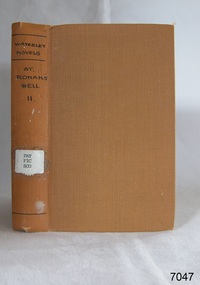 Flagstaff Hill Maritime Museum and Village
Book - Fictional stories, Sir Walter Scott, Waverley Novels St Ronans Well-2 Vol 34, 1838
... Scott's writings fused realism with romance, using history to explore class, power, and progress, influencing writers from Dickens to Balzac. His Waverley Novels (1814–1831) were Europe's most popular for a century, rehabilitating Scottish Highland culture and shaping modern historical perspective. ...Scott's writings fused realism with romance, using history to explore class, power, and progress, influencing writers from Dickens to Balzac. His Waverley Novels (1814–1831) were Europe's most popular for a century, rehabilitating Scottish Highland culture and shaping modern historical perspective. ...The subject volume of Waverley Novels St Ronans Well-2 Vol 34 published by Fisher Son & Co (1838) is part of a collected 48 volume set of Sir Walter Scott's works, containing various stories. Vol 34 in the 1836 Fisher edition reprints later entries from the fourth series, as these stories originally appeared in Scott's Magnum Opus 48 volume editions, the first from 1816. With the influential “Magnum Opus” editions from 1829–1833 by Robert Cadell, serving as the basis for later reprinted published sets like Fisher's. St. Ronan's Well Volume 2 advances the central rivalries and intrigues at the Scottish spa. Originally published in 1824 as part of Sir Walter Scott's novel, it spans chapters 14-26, escalating tensions between half brothers Francis Tyrrel and the Earl of Etherington over Clara Mowbray. After Tyrrel misses a duel and vanishes, innkeeper Meg Dods fears murder and consults solicitor Bindloose; wealthy traveller Peregrine Touchwood arrives, criticising modern changes and staying at the Cleikum Inn. Etherington gambles with John Mowbray, proposes to Clara citing his uncle's will requiring a Mowbray marriage, and duels Tyrrel secretly, wounding him. Theatricals at Shaw's Castle, anonymous warnings, and Clara's rejections heighten drama, with Etherington revealing their sham marriage past in letters to Captain Jekyl.Waverley Novels St Ronans Well-2 Vol 34, Light brown hardcover lettering in black text. Author: Sir Walter Scott Publisher: Fisher Son & Co Date: 1838fictionThe subject volume of Waverley Novels St Ronans Well-2 Vol 34 published by Fisher Son & Co (1838) is part of a collected 48 volume set of Sir Walter Scott's works, containing various stories. Vol 34 in the 1836 Fisher edition reprints later entries from the fourth series, as these stories originally appeared in Scott's Magnum Opus 48 volume editions, the first from 1816. With the influential “Magnum Opus” editions from 1829–1833 by Robert Cadell, serving as the basis for later reprinted published sets like Fisher's. St. Ronan's Well Volume 2 advances the central rivalries and intrigues at the Scottish spa. Originally published in 1824 as part of Sir Walter Scott's novel, it spans chapters 14-26, escalating tensions between half brothers Francis Tyrrel and the Earl of Etherington over Clara Mowbray. After Tyrrel misses a duel and vanishes, innkeeper Meg Dods fears murder and consults solicitor Bindloose; wealthy traveller Peregrine Touchwood arrives, criticising modern changes and staying at the Cleikum Inn. Etherington gambles with John Mowbray, proposes to Clara citing his uncle's will requiring a Mowbray marriage, and duels Tyrrel secretly, wounding him. Theatricals at Shaw's Castle, anonymous warnings, and Clara's rejections heighten drama, with Etherington revealing their sham marriage past in letters to Captain Jekyl.warrnambool, shipwrecked-coast, flagstaff-hill, flagstaff-hill-maritime-museum, maritime-museum, shipwreck-coast, flagstaff-hill-maritime-village, shipwrecked-artefact, book, waverley novels vol 46 tales of my landlord, sir walter scott, pattison collection, warrnambool library, warrnambool mechanics’ institute, ralph eric pattison, corangamite regional library service, warrnambool city librarian, mechanics’ institute library, victorian library board, warrnambool books and records, warrnambool children’s library, waverley novels -
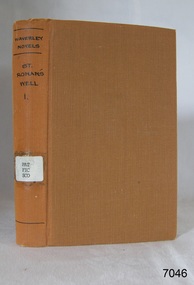 Flagstaff Hill Maritime Museum and Village
Book - Fictional stories, Sir Walter Scott, Waverley Novels St Ronans Well-1 Vol 33, 1838
... Scott's writings fused realism with romance, using history to explore class, power, and progress, influencing writers from Dickens to Balzac. His Waverley Novels (1814–1831) were Europe's most popular for a century, rehabilitating Scottish Highland culture and shaping modern historical perspective. ...Scott's writings fused realism with romance, using history to explore class, power, and progress, influencing writers from Dickens to Balzac. His Waverley Novels (1814–1831) were Europe's most popular for a century, rehabilitating Scottish Highland culture and shaping modern historical perspective. ...The subject volume of Waverley Novels St Ronans Well-1 Vol 33 published by Fisher Son & Co (1838) is part of a collected 48 volume set of Sir Walter Scott's works, containing various stories. Vol 33 in the 1836 Fisher edition reprints later entries from the fourth series, as these stories originally appeared in Scott's Magnum Opus 48 volume editions, the first from 1816. With the influential “Magnum Opus” editions from 1829–1833 by Robert Cadell, serving as the basis for later reprinted published sets like Fisher's. St. Ronan's Well centres on rivalry between half brothers Valentine Bulmer (Earl of Etherington) and Francis Tyrrel, both pursuing Clara Mowbray amid secrets from a sham marriage and inheritance schemes at a fashionable Scottish spa town. The story is set in the early 19th century at the fictional St. Ronan's spa in the Scottish Borders, the story unfolds across three volumes originally published in 1824. Tyrrel returns to the area, reconnects with Clara (whom he once loved), and clashes with locals like Sir Bingo Binks, while Etherington schemes to wed her for her family name to secure his title. Tensions escalate through duels, gambling debts, and revelations about their past, culminating in tragedy with Clara's death and a fatal confrontation.Waverley Novels St Ronans Well-1 Vol 33, Light brown hardcover lettering in black text. Author: Sir Walter Scott Publisher: Fisher Son & Co Date: 1838fictionThe subject volume of Waverley Novels St Ronans Well-1 Vol 33 published by Fisher Son & Co (1838) is part of a collected 48 volume set of Sir Walter Scott's works, containing various stories. Vol 33 in the 1836 Fisher edition reprints later entries from the fourth series, as these stories originally appeared in Scott's Magnum Opus 48 volume editions, the first from 1816. With the influential “Magnum Opus” editions from 1829–1833 by Robert Cadell, serving as the basis for later reprinted published sets like Fisher's. St. Ronan's Well centres on rivalry between half brothers Valentine Bulmer (Earl of Etherington) and Francis Tyrrel, both pursuing Clara Mowbray amid secrets from a sham marriage and inheritance schemes at a fashionable Scottish spa town. The story is set in the early 19th century at the fictional St. Ronan's spa in the Scottish Borders, the story unfolds across three volumes originally published in 1824. Tyrrel returns to the area, reconnects with Clara (whom he once loved), and clashes with locals like Sir Bingo Binks, while Etherington schemes to wed her for her family name to secure his title. Tensions escalate through duels, gambling debts, and revelations about their past, culminating in tragedy with Clara's death and a fatal confrontation.warrnambool, shipwrecked-coast, flagstaff-hill, flagstaff-hill-maritime-museum, maritime-museum, shipwreck-coast, flagstaff-hill-maritime-village, shipwrecked-artefact, book, waverley novels vol 46 tales of my landlord, sir walter scott, pattison collection, warrnambool library, warrnambool mechanics’ institute, ralph eric pattison, corangamite regional library service, warrnambool city librarian, mechanics’ institute library, victorian library board, warrnambool books and records, warrnambool children’s library, waverley novels -
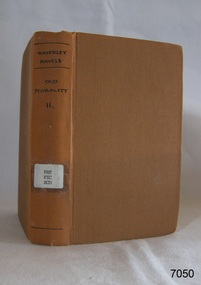 Flagstaff Hill Maritime Museum and Village
Book - Fictional stories, Sir Walter Scott, Waverley Novels Tales of My Landlord-5 Vol 13, 1836
... Scott's writings fused realism with romance, using history to explore class, power, and progress, influencing writers from Dickens to Balzac. His Waverley Novels (1814–1831) were Europe's most popular for a century, rehabilitating Scottish Highland culture and shaping modern historical perspective. ...Scott's writings fused realism with romance, using history to explore class, power, and progress, influencing writers from Dickens to Balzac. His Waverley Novels (1814–1831) were Europe's most popular for a century, rehabilitating Scottish Highland culture and shaping modern historical perspective. ...The subject volume “Waverley Novels Vol 13” published by Fisher Son & Co (1836) is part of a collected edition of Sir Walter Scott's works, containing stories from the "Tales of My Landlord" series. "Tales of My Landlord" forms a key subset of Scott's Waverley Novels, presented as fictional tales gathered by characters like Peter Pattieson from the landlord of the Wallace “Inn at Gandercleugh”. The series spans multiple books across four sub-series, including “The Black Dwarf” (1707 setting), “Old Mortality” (1679–1689), “The Heart of Midlothian” (1736), “The Bride of Lammermoor” (1709–1711), “A Legend of Montrose” (1644–1645), “Count Robert of Paris” (1097), and “Castle Dangerous” (1307). Vol 46 in the 1838 Fisher edition reprints later entries like “Count Robert of Paris” or “Castle Dangerous” from the fourth series, as these stories originally appeared in Scott's Magnum Opus collected volume editions, the first from 1816. With the influential 48-volume “Magnum Opus” edition from 1829–1833 by Robert Cadell, serving as the basis for later collected published sets like Fisher's. "Tales of My Landlord" set five of vol 13 is part of a series of historical novels by Sir Walter Scott, published in four series between 1816 and 1832 as part of his Waverley Novels. They are framed as stories collected by a fictional landlord at the Wallace Inn in Gandercleugh, edited by "Jedediah Cleishbotham." The series includes major works like The Black Dwarf and Old Mortality (1st series, 1816), The Heart of Midlothian (2nd series, 1818), The Bride of Lammermoor and A Legend of Montrose (3rd series, 1819), and Count Robert of Paris with Castle Dangerous (4th series, 1832). Themes of this volume cover Scottish Lowland life, justice, and Presbyterian fervour post 1736. Alternatively, in 3rd series tales like “The Bride of Lammermoor”, advances the Gothic romance of Edgar Ravenswood and Lucy Ashton. Slowly building towards tragedy over family feuds and inheritance.Waverley Novels Vol 46 Tales of My Landlord, Light brown hardcover lettering in black text. Author: Sir Walter Scott Publisher: Fisher Son & Co Date: 1836fictionThe subject volume “Waverley Novels Vol 13” published by Fisher Son & Co (1836) is part of a collected edition of Sir Walter Scott's works, containing stories from the "Tales of My Landlord" series. "Tales of My Landlord" forms a key subset of Scott's Waverley Novels, presented as fictional tales gathered by characters like Peter Pattieson from the landlord of the Wallace “Inn at Gandercleugh”. The series spans multiple books across four sub-series, including “The Black Dwarf” (1707 setting), “Old Mortality” (1679–1689), “The Heart of Midlothian” (1736), “The Bride of Lammermoor” (1709–1711), “A Legend of Montrose” (1644–1645), “Count Robert of Paris” (1097), and “Castle Dangerous” (1307). Vol 46 in the 1838 Fisher edition reprints later entries like “Count Robert of Paris” or “Castle Dangerous” from the fourth series, as these stories originally appeared in Scott's Magnum Opus collected volume editions, the first from 1816. With the influential 48-volume “Magnum Opus” edition from 1829–1833 by Robert Cadell, serving as the basis for later collected published sets like Fisher's. "Tales of My Landlord" set five of vol 13 is part of a series of historical novels by Sir Walter Scott, published in four series between 1816 and 1832 as part of his Waverley Novels. They are framed as stories collected by a fictional landlord at the Wallace Inn in Gandercleugh, edited by "Jedediah Cleishbotham." The series includes major works like The Black Dwarf and Old Mortality (1st series, 1816), The Heart of Midlothian (2nd series, 1818), The Bride of Lammermoor and A Legend of Montrose (3rd series, 1819), and Count Robert of Paris with Castle Dangerous (4th series, 1832). Themes of this volume cover Scottish Lowland life, justice, and Presbyterian fervour post 1736. Alternatively, in 3rd series tales like “The Bride of Lammermoor”, advances the Gothic romance of Edgar Ravenswood and Lucy Ashton. Slowly building towards tragedy over family feuds and inheritance.warrnambool, shipwrecked-coast, flagstaff-hill, flagstaff-hill-maritime-museum, maritime-museum, shipwreck-coast, flagstaff-hill-maritime-village, shipwrecked-artefact, book, waverley novels vol 46 tales of my landlord, sir walter scott, pattison collection, warrnambool library, warrnambool mechanics’ institute, ralph eric pattison, corangamite regional library service, warrnambool city librarian, mechanics’ institute library, victorian library board, warrnambool books and records, warrnambool children’s library -
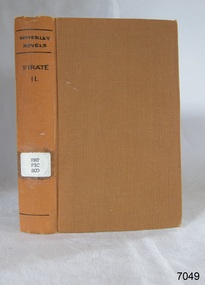 Flagstaff Hill Maritime Museum and Village
Book - Fictional stories, Sir Walter Scott, Waverley Novels The Pirate- 2 Vol 25, 1838
... Scott's writings fused realism with romance, using history to explore class, power, and progress, influencing writers from Dickens to Balzac. His Waverley Novels (1814–1831) were Europe's most popular for a century, rehabilitating Scottish Highland culture and shaping modern historical perspective. ...Scott's writings fused realism with romance, using history to explore class, power, and progress, influencing writers from Dickens to Balzac. His Waverley Novels (1814–1831) were Europe's most popular for a century, rehabilitating Scottish Highland culture and shaping modern historical perspective. ...The subject volume “Waverley Novels Vol 46” published by Fisher Son & Co (1838) is part of a collected edition of Sir Walter Scott's works, containing stories from the "Tales of My Landlord" series. "Tales of My Landlord" forms a key subset of Scott's Waverley Novels, presented as fictional tales gathered by characters like Peter Pattieson from the landlord of the Wallace “Inn at Gandercleugh”. The series spans multiple books across four sub-series, including “The Black Dwarf” (1707 setting), “Old Mortality” (1679–1689), “The Heart of Midlothian” (1736), “The Bride of Lammermoor” (1709–1711), “A Legend of Montrose” (1644–1645), “Count Robert of Paris” (1097), and “Castle Dangerous” (1307). Vol 25 in the 1838 Fisher edition reprints later entries like “Count Robert of Paris” or “Castle Dangerous” from the fourth series, as these stories originally appeared in Scott's Magnum Opus collected volume editions, the first from 1816. With the influential 48-volume “Magnum Opus” edition from 1829–1833 by Robert Cadell, serving as the basis for later collected published sets like Fisher's. The Pirate is Walter Scott’s historical novel set in 17th-century Shetland and Orkney, centred on a shipwreck, piracy, family conflict, and rival love interests. It’s typically presented as a three set novel. In this edition, volume 25 is the second part of “The Pirate”, and the work continues across the surrounding other two volumes in the set. The story follows the Troil family and a shipwrecked captain Cleveland along with Mordaunt, whose relationships with Minna and Brenda Troil drive much of the plot. As Cleveland’s pirate identity is revealed, the novel shifts into rescue, capture, and reconciliation, ending with the pirates subdued and the family ties resettled. The novel itself is commonly divided into three volumes or parts in standard editions, and the Waverley Novels collected edition spreads it across multiple numbered volumes.Waverley Novels The Pirate- 2 Vol 25, Light brown hardcover lettering in black text. Author: Sir Walter Scott Publisher: Fisher Son & Co Date: 1838fictionThe subject volume “Waverley Novels Vol 46” published by Fisher Son & Co (1838) is part of a collected edition of Sir Walter Scott's works, containing stories from the "Tales of My Landlord" series. "Tales of My Landlord" forms a key subset of Scott's Waverley Novels, presented as fictional tales gathered by characters like Peter Pattieson from the landlord of the Wallace “Inn at Gandercleugh”. The series spans multiple books across four sub-series, including “The Black Dwarf” (1707 setting), “Old Mortality” (1679–1689), “The Heart of Midlothian” (1736), “The Bride of Lammermoor” (1709–1711), “A Legend of Montrose” (1644–1645), “Count Robert of Paris” (1097), and “Castle Dangerous” (1307). Vol 25 in the 1838 Fisher edition reprints later entries like “Count Robert of Paris” or “Castle Dangerous” from the fourth series, as these stories originally appeared in Scott's Magnum Opus collected volume editions, the first from 1816. With the influential 48-volume “Magnum Opus” edition from 1829–1833 by Robert Cadell, serving as the basis for later collected published sets like Fisher's. The Pirate is Walter Scott’s historical novel set in 17th-century Shetland and Orkney, centred on a shipwreck, piracy, family conflict, and rival love interests. It’s typically presented as a three set novel. In this edition, volume 25 is the second part of “The Pirate”, and the work continues across the surrounding other two volumes in the set. The story follows the Troil family and a shipwrecked captain Cleveland along with Mordaunt, whose relationships with Minna and Brenda Troil drive much of the plot. As Cleveland’s pirate identity is revealed, the novel shifts into rescue, capture, and reconciliation, ending with the pirates subdued and the family ties resettled. The novel itself is commonly divided into three volumes or parts in standard editions, and the Waverley Novels collected edition spreads it across multiple numbered volumes.warrnambool, shipwrecked-coast, flagstaff-hill, flagstaff-hill-maritime-museum, maritime-museum, shipwreck-coast, flagstaff-hill-maritime-village, shipwrecked-artefact, book, waverley novels vol 46 tales of my landlord, sir walter scott, pattison collection, warrnambool library, warrnambool mechanics’ institute, ralph eric pattison, corangamite regional library service, warrnambool city librarian, mechanics’ institute library, victorian library board, warrnambool books and records, warrnambool children’s library -
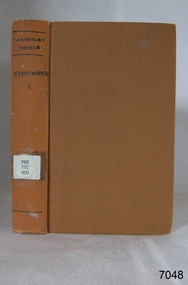 Flagstaff Hill Maritime Museum and Village
Book - Fictional stories, Sir Walter Scott, Waverley Novels Kenilworth- 1 Vol 22, 1837
... Scott's writings fused realism with romance, using history to explore class, power, and progress, influencing writers from Dickens to Balzac. His Waverley Novels (1814–1831) were Europe's most popular for a century, rehabilitating Scottish Highland culture and shaping modern historical perspective. ...Scott's writings fused realism with romance, using history to explore class, power, and progress, influencing writers from Dickens to Balzac. His Waverley Novels (1814–1831) were Europe's most popular for a century, rehabilitating Scottish Highland culture and shaping modern historical perspective. ...The subject volume “Waverley Novels Kenilworth-1 Vol 22” published by Fisher Son & Co (1837) is part of a collected edition of Sir Walter Scott's works, containing stories from the "Tales of My Landlord" series. "Tales of My Landlord" forms a key subset of Scott's Waverley Novels, presented as fictional tales gathered by characters like Peter Pattieson from the landlord of the Wallace “Inn at Gandercleugh”. The series spans multiple books across four sub-series, including “The Black Dwarf” (1707 setting), “Old Mortality” (1679–1689), “The Heart of Midlothian” (1736), “The Bride of Lammermoor” (1709–1711), “A Legend of Montrose” (1644–1645), “Count Robert of Paris” (1097), and “Castle Dangerous” (1307). Vol 25 in the 1837 Fisher edition reprints later entries like “Count Robert of Paris” or “Castle Dangerous” from the fourth series, as these stories originally appeared in Scott's Magnum Opus collected volume editions, the first from 1816. With the influential 48-volume “Magnum Opus” edition from 1829–1833 by Robert Cadell, serving as the basis for later collected published sets like Fisher's. Kenilworth is Sir Walter Scott’s 1821 historical novel about the secret marriage of Amy Robsart and Robert Dudley, Earl of Leicester, set against Queen Elizabeth I’s court and the 1575 festivities at Kenilworth Castle. It mixes political ambition, romance, deception, and tragedy, with the plot turning on Leicester’s desire for power and the fatal consequences of hiding his marriage. The novel follows Amy Robsart, of Leicester, and the scheming Richard Varney, while also bringing in Queen Elizabeth and other figures from Elizabethan England. Its tension comes from the clash between private love and public ambition, and it ends in tragedy rather than reconciliation.Waverley Novels Vol 22 Kenilworth- 1, Light brown hardcover lettering in black text. Author: Sir Walter Scott Publisher: Fisher Son & Co Date: 1837fictionThe subject volume “Waverley Novels Kenilworth-1 Vol 22” published by Fisher Son & Co (1837) is part of a collected edition of Sir Walter Scott's works, containing stories from the "Tales of My Landlord" series. "Tales of My Landlord" forms a key subset of Scott's Waverley Novels, presented as fictional tales gathered by characters like Peter Pattieson from the landlord of the Wallace “Inn at Gandercleugh”. The series spans multiple books across four sub-series, including “The Black Dwarf” (1707 setting), “Old Mortality” (1679–1689), “The Heart of Midlothian” (1736), “The Bride of Lammermoor” (1709–1711), “A Legend of Montrose” (1644–1645), “Count Robert of Paris” (1097), and “Castle Dangerous” (1307). Vol 25 in the 1837 Fisher edition reprints later entries like “Count Robert of Paris” or “Castle Dangerous” from the fourth series, as these stories originally appeared in Scott's Magnum Opus collected volume editions, the first from 1816. With the influential 48-volume “Magnum Opus” edition from 1829–1833 by Robert Cadell, serving as the basis for later collected published sets like Fisher's. Kenilworth is Sir Walter Scott’s 1821 historical novel about the secret marriage of Amy Robsart and Robert Dudley, Earl of Leicester, set against Queen Elizabeth I’s court and the 1575 festivities at Kenilworth Castle. It mixes political ambition, romance, deception, and tragedy, with the plot turning on Leicester’s desire for power and the fatal consequences of hiding his marriage. The novel follows Amy Robsart, of Leicester, and the scheming Richard Varney, while also bringing in Queen Elizabeth and other figures from Elizabethan England. Its tension comes from the clash between private love and public ambition, and it ends in tragedy rather than reconciliation.warrnambool, shipwrecked-coast, flagstaff-hill, flagstaff-hill-maritime-museum, maritime-museum, shipwreck-coast, flagstaff-hill-maritime-village, shipwrecked-artefact, book, waverley novels vol 46 tales of my landlord, sir walter scott, pattison collection, warrnambool library, warrnambool mechanics’ institute, ralph eric pattison, corangamite regional library service, warrnambool city librarian, mechanics’ institute library, victorian library board, warrnambool books and records, warrnambool children’s library -
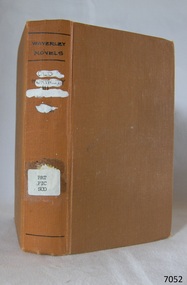 Flagstaff Hill Maritime Museum and Village
Book - Fictional stories, Sir Walter Scott, Waverley Novels Tales of my Landlord-2 Vol 10, 1836
... Scott's writings fused realism with romance, using history to explore class, power, and progress, influencing writers from Dickens to Balzac. His Waverley Novels (1814–1831) were Europe's most popular for a century, rehabilitating Scottish Highland culture and shaping modern historical perspective. ...Scott's writings fused realism with romance, using history to explore class, power, and progress, influencing writers from Dickens to Balzac. His Waverley Novels (1814–1831) were Europe's most popular for a century, rehabilitating Scottish Highland culture and shaping modern historical perspective. ...The subject volume “Waverley Novels Vol 10” published by Fisher Son & Co (1838) is part of a collected edition of Sir Walter Scott's works, containing stories from the "Tales of My Landlord" series. "Tales of My Landlord" forms a key subset of Scott's Waverley Novels, presented as fictional tales gathered by characters like Peter Pattieson from the landlord of the Wallace “Inn at Gandercleugh”. The series spans multiple books across four sub-series, including “The Black Dwarf” (1707 setting), “Old Mortality” (1679–1689), “The Heart of Midlothian” (1736), “The Bride of Lammermoor” (1709–1711), “A Legend of Montrose” (1644–1645), “Count Robert of Paris” (1097), and “Castle Dangerous” (1307). Vol 46 in the 1838 Fisher edition reprints later entries like “Count Robert of Paris” or “Castle Dangerous” from the fourth series, as these stories originally appeared in Scott's Magnum Opus collected volume editions, the first from 1816. With the influential 48-volume “Magnum Opus” edition from 1829–1833 by Robert Cadell, serving as the basis for later collected published sets like Fisher's. In the “Second Series” is the one that includes The Heart of MidLothian, a major Scott novel set around the 1736 Porteous riots in Edinburgh. The story was presented as a collection of stories gathered from a fictional landlord, edited by the imagined figures Peter Pattieson and Jedediah Cleishbotham. In the second series, the central novel, “The Heart of MidLothian, follows crime, justice, and moral conflict in 18th-century Scotland, especially the case of Effie Deans the fictional character in the novel. She is Jeanie Dean’s younger sister presented as pretty, impulsive, and more socially vulnerable than her sister Jeanie. In the novel, she is accused of killing her illegitimate child, though the truth is more complicated, and Jeanie travels to London to seek a pardon for her. Therefore her story centres on an out-of-wedlock pregnancy, a charge of child murder, and the efforts made to save her life, as well as the social consequences of her trial.Waverley Novels Tales of my Landlord Set-2 Vol 10, Light brown hardcover lettering in black text. Author: Sir Walter Scott Publisher: Fisher Son & Co Date: 1836fictionThe subject volume “Waverley Novels Vol 10” published by Fisher Son & Co (1838) is part of a collected edition of Sir Walter Scott's works, containing stories from the "Tales of My Landlord" series. "Tales of My Landlord" forms a key subset of Scott's Waverley Novels, presented as fictional tales gathered by characters like Peter Pattieson from the landlord of the Wallace “Inn at Gandercleugh”. The series spans multiple books across four sub-series, including “The Black Dwarf” (1707 setting), “Old Mortality” (1679–1689), “The Heart of Midlothian” (1736), “The Bride of Lammermoor” (1709–1711), “A Legend of Montrose” (1644–1645), “Count Robert of Paris” (1097), and “Castle Dangerous” (1307). Vol 46 in the 1838 Fisher edition reprints later entries like “Count Robert of Paris” or “Castle Dangerous” from the fourth series, as these stories originally appeared in Scott's Magnum Opus collected volume editions, the first from 1816. With the influential 48-volume “Magnum Opus” edition from 1829–1833 by Robert Cadell, serving as the basis for later collected published sets like Fisher's. In the “Second Series” is the one that includes The Heart of MidLothian, a major Scott novel set around the 1736 Porteous riots in Edinburgh. The story was presented as a collection of stories gathered from a fictional landlord, edited by the imagined figures Peter Pattieson and Jedediah Cleishbotham. In the second series, the central novel, “The Heart of MidLothian, follows crime, justice, and moral conflict in 18th-century Scotland, especially the case of Effie Deans the fictional character in the novel. She is Jeanie Dean’s younger sister presented as pretty, impulsive, and more socially vulnerable than her sister Jeanie. In the novel, she is accused of killing her illegitimate child, though the truth is more complicated, and Jeanie travels to London to seek a pardon for her. Therefore her story centres on an out-of-wedlock pregnancy, a charge of child murder, and the efforts made to save her life, as well as the social consequences of her trial. warrnambool, shipwrecked-coast, flagstaff-hill, flagstaff-hill-maritime-museum, maritime-museum, shipwreck-coast, flagstaff-hill-maritime-village, shipwrecked-artefact, book, waverley novels vol 46 tales of my landlord, sir walter scott, pattison collection, warrnambool library, warrnambool mechanics’ institute, ralph eric pattison, corangamite regional library service, warrnambool city librarian, mechanics’ institute library, victorian library board, warrnambool books and records, warrnambool children’s library, waverley novels -
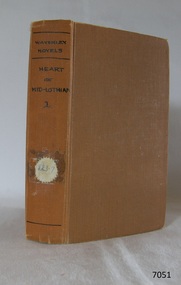 Flagstaff Hill Maritime Museum and Village
Book - Fictional stories, Sir Walter Scott, Waverley Novels Tales of my Landlord-3 Vol 11, 1836
... Scott's writings fused realism with romance, using history to explore class, power, and progress, influencing writers from Dickens to Balzac. His Waverley Novels (1814–1831) were Europe's most popular for a century, rehabilitating Scottish Highland culture and shaping modern historical perspective. ...Scott's writings fused realism with romance, using history to explore class, power, and progress, influencing writers from Dickens to Balzac. His Waverley Novels (1814–1831) were Europe's most popular for a century, rehabilitating Scottish Highland culture and shaping modern historical perspective. ...The subject volume “Waverley Novels Vol 11” published by Fisher Son & Co (1838) is part of a collected edition of Sir Walter Scott's works, containing stories from the "Tales of My Landlord" series. "Tales of My Landlord" forms a key subset of Scott's Waverley Novels, presented as fictional tales gathered by characters like Peter Pattieson from the landlord of the Wallace “Inn at Gandercleugh”. The series spans multiple books across four sub-series, including “The Black Dwarf” (1707 setting), “Old Mortality” (1679–1689), “The Heart of Midlothian” (1736), “The Bride of Lammermoor” (1709–1711), “A Legend of Montrose” (1644–1645), “Count Robert of Paris” (1097), and “Castle Dangerous” (1307). Vol 46 in the 1838 Fisher edition reprints later entries like “Count Robert of Paris” or “Castle Dangerous” from the fourth series, as these stories originally appeared in Scott's Magnum Opus collected volume editions, the first from 1816. With the influential 48-volume “Magnum Opus” edition from 1829–1833 by Robert Cadell, serving as the basis for later collected published sets like Fisher's. "Tales of My Landlord" is part of a series of historical novels by Sir Walter Scott, published pseudonymous as works edited by "Jedediah Cleishbotham." It forms part of his broader Waverley Novels, framed as stories gathered from a fictional innkeeper. The third series, published in 1819, spans four volumes total. Volumes 1–3 primarily cover The Bride of Lammermoor (a tragedy of feuding families in early 18th-century Scotland), while Volume 4 contains A Legend of Montrose (set during the 1640s Wars of the Three Kingdoms, focusing on Highland clans and battles like Inverlochy. The subject Fishers "Vol 11" refers to a misremembered or edition specific chapter in this series (e.g., a pivotal scene in The Bride of Lammermoor), not a standalone volume.Waverley Novels Vol 11 Tales of My Landlord, Light brown hardcover lettering in black text. Author: Sir Walter Scott Publisher: Fisher Son & Co Date: 1836fictionThe subject volume “Waverley Novels Vol 11” published by Fisher Son & Co (1838) is part of a collected edition of Sir Walter Scott's works, containing stories from the "Tales of My Landlord" series. "Tales of My Landlord" forms a key subset of Scott's Waverley Novels, presented as fictional tales gathered by characters like Peter Pattieson from the landlord of the Wallace “Inn at Gandercleugh”. The series spans multiple books across four sub-series, including “The Black Dwarf” (1707 setting), “Old Mortality” (1679–1689), “The Heart of Midlothian” (1736), “The Bride of Lammermoor” (1709–1711), “A Legend of Montrose” (1644–1645), “Count Robert of Paris” (1097), and “Castle Dangerous” (1307). Vol 46 in the 1838 Fisher edition reprints later entries like “Count Robert of Paris” or “Castle Dangerous” from the fourth series, as these stories originally appeared in Scott's Magnum Opus collected volume editions, the first from 1816. With the influential 48-volume “Magnum Opus” edition from 1829–1833 by Robert Cadell, serving as the basis for later collected published sets like Fisher's. "Tales of My Landlord" is part of a series of historical novels by Sir Walter Scott, published pseudonymous as works edited by "Jedediah Cleishbotham." It forms part of his broader Waverley Novels, framed as stories gathered from a fictional innkeeper. The third series, published in 1819, spans four volumes total. Volumes 1–3 primarily cover The Bride of Lammermoor (a tragedy of feuding families in early 18th-century Scotland), while Volume 4 contains A Legend of Montrose (set during the 1640s Wars of the Three Kingdoms, focusing on Highland clans and battles like Inverlochy. The subject Fishers "Vol 11" refers to a misremembered or edition specific chapter in this series (e.g., a pivotal scene in The Bride of Lammermoor), not a standalone volume. warrnambool, shipwrecked-coast, flagstaff-hill, flagstaff-hill-maritime-museum, maritime-museum, shipwreck-coast, flagstaff-hill-maritime-village, shipwrecked-artefact, book, waverley novels vol 46 tales of my landlord, sir walter scott, pattison collection, warrnambool library, warrnambool mechanics’ institute, ralph eric pattison, corangamite regional library service, warrnambool city librarian, mechanics’ institute library, victorian library board, warrnambool books and records, warrnambool children’s library -
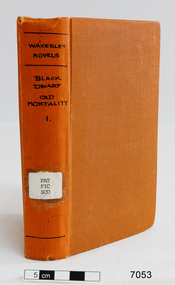 Flagstaff Hill Maritime Museum and Village
Book - Fictional stories, Sir Walter Scott, Waverley Novels Tales of my Landlord Vol 9, 1836
... Scott's writings fused realism with romance, using history to explore class, power, and progress, influencing writers from Dickens to Balzac. His Waverley Novels (1814–1831) were Europe's most popular for a century, rehabilitating Scottish Highland culture and shaping modern historical perspective. ...Scott's writings fused realism with romance, using history to explore class, power, and progress, influencing writers from Dickens to Balzac. His Waverley Novels (1814–1831) were Europe's most popular for a century, rehabilitating Scottish Highland culture and shaping modern historical perspective. ...The subject volume “Waverley Novels Vol 9” published by Fisher Son & Co (1836) is part of a collected edition of Sir Walter Scott's works, containing stories from the "Tales of My Landlord" series. This edition of set 1,of Vol. 9” is the beginning of the first series of “Tales of My Landlord” in which is included “The Black Dwarf” and “The Tale of Old Mortality”. In many multi volume collected edition runs, Vol. 9 will be the first volume of “The Tale of Old Mortality” a more substantial and famous novel in the series, with the other half of the story following in Vol 10. The opening volume of “The Tale of Old Mortality”, is about the Scottish Presbyterian movement that supported two agreements made by the National Covenant of 1638, or the Solemn League and Covenant of 1643. These agreements were intended to defend and extend through the Scottish Presbyterianism resistance that occurred between 1679–1689. The story is told through the journey of the young landowner Henry Morton and the Covenanters’ guerrilla struggle against royal and Episcopal authority of the time. The “Tales of My Landlord” is framed and introduced through the fictional narrator editor, the stories are supposedly gathered from the landlord of the Wallace Inn at Gandercleugh, compiled by “Peter Pattieson” and edited by the schoolmaster and parish clerk Jedediah Cleishbotham. This framework is laid out in the introductions and prefatory material to the first series, especially in the prefatory pages to “The Black Dwarf” and the opening of Old Mortality.Waverley Novels Tales of my Landlord Set-1 Vol 9, Light brown hardcover lettering in black text. Author: Sir Walter Scott Publisher: Fisher Son & Co. Date: 1836fictionThe subject volume “Waverley Novels Vol 9” published by Fisher Son & Co (1836) is part of a collected edition of Sir Walter Scott's works, containing stories from the "Tales of My Landlord" series. This edition of set 1,of Vol. 9” is the beginning of the first series of “Tales of My Landlord” in which is included “The Black Dwarf” and “The Tale of Old Mortality”. In many multi volume collected edition runs, Vol. 9 will be the first volume of “The Tale of Old Mortality” a more substantial and famous novel in the series, with the other half of the story following in Vol 10. The opening volume of “The Tale of Old Mortality”, is about the Scottish Presbyterian movement that supported two agreements made by the National Covenant of 1638, or the Solemn League and Covenant of 1643. These agreements were intended to defend and extend through the Scottish Presbyterianism resistance that occurred between 1679–1689. The story is told through the journey of the young landowner Henry Morton and the Covenanters’ guerrilla struggle against royal and Episcopal authority of the time. The “Tales of My Landlord” is framed and introduced through the fictional narrator editor, the stories are supposedly gathered from the landlord of the Wallace Inn at Gandercleugh, compiled by “Peter Pattieson” and edited by the schoolmaster and parish clerk Jedediah Cleishbotham. This framework is laid out in the introductions and prefatory material to the first series, especially in the prefatory pages to “The Black Dwarf” and the opening of Old Mortality. warrnambool, shipwrecked-coast, flagstaff-hill, flagstaff-hill-maritime-museum, maritime-museum, shipwreck-coast, flagstaff-hill-maritime-village, shipwrecked-artefact, book, waverley novels vol 46 tales of my landlord, sir walter scott, pattison collection, warrnambool library, warrnambool mechanics’ institute, ralph eric pattison, corangamite regional library service, warrnambool city librarian, mechanics’ institute library, victorian library board, warrnambool books and records, warrnambool children’s library, waverley novels -
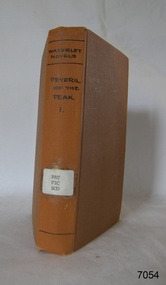 Flagstaff Hill Maritime Museum and Village
Book - Fictional Stories, Sir Walter Scott, Waverley Novels 1 Vol 28 Peveril of the Peak, 1838
... Scott's writings fused realism with romance, using history to explore class, power, and progress, influencing writers from Dickens to Balzac. His Waverley Novels (1814–1831) were Europe's most popular for a century, rehabilitating Scottish Highland culture and shaping modern historical perspective....Scott's writings fused realism with romance, using history to explore class, power, and progress, influencing writers from Dickens to Balzac. His Waverley Novels (1814–1831) were Europe's most popular for a century, rehabilitating Scottish Highland culture and shaping modern historical perspective. ...The subject volume of Waverley Novels part 1 Vol 28 published by Fisher Son & Co (1838) is part of a collected 48 volume set of Sir Walter Scott's works, containing various stories. Vol 29 in the 1838 Fisher edition reprints later entries from the fourth series, as these stories originally appeared in Scott's Magnum Opus 48 volume editions, the first from 1816. With the influential “Magnum Opus” editions from 1829–1833 by Robert Cadell, serving as the basis for later reprinted published sets like Fisher's. Scott’s Peveril of the Peak is a historical novel set around the popish plot of 1678, and it follows tensions between Cavalier and Puritan families in Derbyshire, London intrigue, and a romance involving Sir Geoffrey Peverils son Julian, Alice Bridgenorth, and the mysterious Fenella Zara. In broad terms, it is about political suspicion, religious conflict, mistaken identities, and how private loyalties get entangled with public upheaval.Waverley Novels Vol 28 Peveril of the Peak 1 Author: Sir Walter Scott Publisher: Fisher & Son Date: 1838 Further Information: Light brown hardcover lettering in black text. fictionThe subject volume of Waverley Novels part 1 Vol 28 published by Fisher Son & Co (1838) is part of a collected 48 volume set of Sir Walter Scott's works, containing various stories. Vol 29 in the 1838 Fisher edition reprints later entries from the fourth series, as these stories originally appeared in Scott's Magnum Opus 48 volume editions, the first from 1816. With the influential “Magnum Opus” editions from 1829–1833 by Robert Cadell, serving as the basis for later reprinted published sets like Fisher's. Scott’s Peveril of the Peak is a historical novel set around the popish plot of 1678, and it follows tensions between Cavalier and Puritan families in Derbyshire, London intrigue, and a romance involving Sir Geoffrey Peverils son Julian, Alice Bridgenorth, and the mysterious Fenella Zara. In broad terms, it is about political suspicion, religious conflict, mistaken identities, and how private loyalties get entangled with public upheaval.shipwrecked-coast, flagstaff-hill, flagstaff-hill-maritime-museum, warrnambool, maritime-museum, shipwreck-coast, flagstaff-hill-maritime-village, shipwrecked-artefact, book, pattison collection, warrnambool library, warrnambool mechanics’ institute, ralph eric pattison, corangamite regional library service, warrnambool city librarian, mechanics’ institute library, victorian library board, warrnambool books and records, warrnambool children’s library, waverley novels vol 28 peveril of the peak 1, sir walter scott -
 Flagstaff Hill Maritime Museum and Village
Book - Fictional stories, Sir Walter Scott, Waverley Novels Vol 8 Rob Roy, 1838
... Scott's writings fused realism with romance, using history to explore class, power, and progress, influencing writers from Dickens to Balzac. His Waverley Novels (1814–1831) were Europe's most popular for a century, rehabilitating Scottish Highland culture and shaping modern historical perspective. ...Scott's writings fused realism with romance, using history to explore class, power, and progress, influencing writers from Dickens to Balzac. His Waverley Novels (1814–1831) were Europe's most popular for a century, rehabilitating Scottish Highland culture and shaping modern historical perspective. ...The subject volume from the “Waverley Novels Rob Roy Vol 8” published by Fisher Son & Co (1838) is part of a collected edition of Sir Walter Scott's works, containing stories from the "Tales of My Landlord" series. "Tales of My Landlord" forms a key subset of Scott's Waverley Novels, presented as fictional tales gathered by characters like Peter Pattieson from the landlord of the Wallace “Inn at Gandercleugh”. The series spans multiple books across four sub-series, including “The Black Dwarf” (1707 setting), “Old Mortality” (1679–1689), “The Heart of Midlothian” (1736), “The Bride of Lammermoor” (1709–1711), “A Legend of Montrose” (1644–1645), “Count Robert of Paris” (1097), and “Castle Dangerous” (1307). Vol 46 in the 1838 Fisher edition reprints later entries like “Count Robert of Paris” or “Castle Dangerous” from the fourth series, as these stories originally appeared in Scott's Magnum Opus collected volume editions, the first from 1816. With the influential 48-volume “Magnum Opus” edition from 1829–1833 by Robert Cadell, serving as the basis for later collected published sets like Fisher's. First appearing as a three-volume set in December 1817, Rob Roy became one of Scott's most popular works, later standardised as Volume 8 in various Waverley Novels editions from the 1820's onward, such as the 1830 Magnum Opus issue. Early collected editions, like those from Adam & Charles Black (1878) or Fisher, Son & Co. (1836), often split it across two physical volumes labelled as "Vol. VIII," reflecting the series' format for lengthy novels.Waverley Novels Vol 8 Rob Roy, Light brown hardcover lettering in black text. Author: Sir Walter Scott Publisher: Fisher Son & Co Date: 1838fictionThe subject volume from the “Waverley Novels Rob Roy Vol 8” published by Fisher Son & Co (1838) is part of a collected edition of Sir Walter Scott's works, containing stories from the "Tales of My Landlord" series. "Tales of My Landlord" forms a key subset of Scott's Waverley Novels, presented as fictional tales gathered by characters like Peter Pattieson from the landlord of the Wallace “Inn at Gandercleugh”. The series spans multiple books across four sub-series, including “The Black Dwarf” (1707 setting), “Old Mortality” (1679–1689), “The Heart of Midlothian” (1736), “The Bride of Lammermoor” (1709–1711), “A Legend of Montrose” (1644–1645), “Count Robert of Paris” (1097), and “Castle Dangerous” (1307). Vol 46 in the 1838 Fisher edition reprints later entries like “Count Robert of Paris” or “Castle Dangerous” from the fourth series, as these stories originally appeared in Scott's Magnum Opus collected volume editions, the first from 1816. With the influential 48-volume “Magnum Opus” edition from 1829–1833 by Robert Cadell, serving as the basis for later collected published sets like Fisher's. First appearing as a three-volume set in December 1817, Rob Roy became one of Scott's most popular works, later standardised as Volume 8 in various Waverley Novels editions from the 1820's onward, such as the 1830 Magnum Opus issue. Early collected editions, like those from Adam & Charles Black (1878) or Fisher, Son & Co. (1836), often split it across two physical volumes labelled as "Vol. VIII," reflecting the series' format for lengthy novels.warrnambool, shipwrecked-coast, flagstaff-hill, flagstaff-hill-maritime-museum, maritime-museum, shipwreck-coast, flagstaff-hill-maritime-village, shipwrecked-artefact, book, waverley novels vol 46 tales of my landlord, sir walter scott, pattison collection, warrnambool library, warrnambool mechanics’ institute, ralph eric pattison, corangamite regional library service, warrnambool city librarian, mechanics’ institute library, victorian library board, warrnambool books and records, warrnambool children’s library
