
Showing 64 items matching "baron somers"
-
 Marysville & District Historical Society
Document (item) - Research Document, Judith Vimpani, George Ernest Locke 1860-1941, 2020
... ...baron somers...When George passed away at the age of 81 years he had not visited Marysville for over 14 years. george ernest locke gold miner gold mining yarra track william chester golden bower mine cumberland goldfield silver bower mine chesterville marysville victoria jackie lewis baron somers big tree picea sitchensis exotic box hill cemetery john edward locke annie caroline locke hermit of the cumberland valley An account of the life of George Ernest Locke who was a gold miner on the Yarra Track near Marysville in Victoria. ...An account of the life of George Ernest Locke who was a gold miner on the Yarra Track near Marysville in Victoria.An account of the life of George Ernest Locke who was a gold miner on the Yarra Track near Marysville in Victoria. George was a well-educated young man and had some success prospecting in the Cumberland area before partnering with William Chester with whom he opened the Golden Bower gold mine in 1896. George and William then discovered a second reef which they named the Silver Bower mine. George lived in a log cabin in the Cumberland reserve and was known to be a loner. He was clever with his money and chose not to have a bank account in Marysville, where everyone would learn about his financial status. He banked at the ES&A in Fitzroy and at the time of his death in 1941 he had accumulated the princely sum of three hundred and sixty pounds. George Locke was known as "the Hermit of Cumberland Valley" and lived in his humpy until his last few days during which he moved into a Forest Commission's patrol hut because his old humpy had started to fall to pieces. When George passed away at the age of 81 years he had not visited Marysville for over 14 years. george ernest locke, gold miner, gold mining, yarra track, william chester, golden bower mine, cumberland goldfield, silver bower mine, chesterville, marysville, victoria, jackie lewis, baron somers, big tree, picea sitchensis exotic, box hill cemetery, john edward locke, annie caroline locke, hermit of the cumberland valley -
 Bayside Gallery - Bayside City Council Art & Heritage Collection
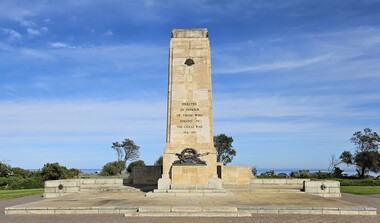
Monument - Memorial, Irwin and Stevenson, Brighton War Memorial, 1927
... The Brighton War Memorial was unveiled by His Excellency the Governor, the Right Honourable Arthur Herbert Tennyson Baron Somers, K.C.M.G., D.S.O., M.C., on Sunday 24th April 1927 in the presence of 4,000 people. ...The Brighton War Memorial was unveiled by His Excellency the Governor, the Right Honourable Arthur Herbert Tennyson Baron Somers, K.C.M.G., D.S.O., M.C., on Sunday 24th April 1927 in the presence of 4,000 people. ...On 23 July 1922, Brighton City Council adopted the recommendation from a sub-committee that the site for a war memorial be at Green Point, Brighton Beach. Brighton Council invited designs, limited to returned soldier architects and 18 designs were received. The first prize of £30 was awarded to the architecture firm Irwin and Stevenson and the designs were exhibited at the Brighton Town Hall in 1925. The bronze casting, using lost wax technique, was executed by sculptor Mr. Paul Montford, to the design of the architect and the central assemblage was believed to be the largest bronze casting in relief carried out in Australia at the time. The Brighton War Memorial was unveiled by His Excellency the Governor, the Right Honourable Arthur Herbert Tennyson Baron Somers, K.C.M.G., D.S.O., M.C., on Sunday 24th April 1927 in the presence of 4,000 people. The memorial was originally constructed to commemorate those from the City of Brighton who served in World War One but has since been augmented to commemorate those from the municipality of Bayside who have made the ultimate sacrifice during official periods of hostility.War memorial consisting of a sandstone cenotaph, granite base and sandstone terrace situated at Green Point, Brighton. The cenotaph is a truncated obelisk with classical decoration in stone and bronze. The cenotaph bears the Rising Sun badge in bronze relief near its top with bronze lettering running down the cenotaph reading "ERECTED IN HONOUR OF THOSE WHO FOUGHT IN THE GREAT WAR 1914 – 1919". A bronze relief assemblage of crossed weapons, a wreath, the lamp of valour and the Latin phrase "DUCIT AMOR PATRIA" (love of country leads me) sit above the base which is carved with the word "SERVICE". The terrace walls have bronze relief medallions with images of the head of an airman on the left and an infantryman on the right. The back of the cenotaph bears a torch in bronze relief near its top. On the sandstone wall behind the cenotaph are three large bronze plaques that lists the names of those from the City of Bayside who have served in the various conflicts in which Australia has been involved. At the back of the sandstone wall is carved lettering reading "HISTORY GAVE THEM A COMMON FAME. POSTERITY A COMMON MONUMENT" with 1914 carved on the left and 1919 on the right.brighton war memorial, memorial, cenotaph, green point, war memorial, brighton, service, paul montford, irwin and stevenson, rising sun, wreath, weapons, lamp of valour, great war, world war one, honour roll, honour board, roll of honour, ducit amor patriae, brighton beach, city of brighton, leighton major francis irwin, roy kenneth stevenson -
 Flagstaff Hill Maritime Museum and Village
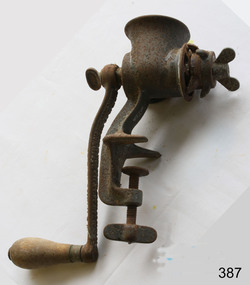
Functional object - Mincer, late 19th or early 20th Century
... The first meat mixer or meat mincer was invented in the 19th century by a German inventor named Baron Karl Drais. Although some versions of the device date back to much earlier. ...The first meat mixer or meat mincer was invented in the 19th century by a German inventor named Baron Karl Drais. Although some versions of the device date back to much earlier. ...A meat grinder, commonly known as the meat mincer, is used for chopping meat into fine pieces. Alternatively, it can be used for the mixing of raw or cooked meat, fish and vegetables. It is the best way to process meat, and is a widely used piece of equipment by butchers and in the home.. Butchers have been known to use either mincing knives or meat cleavers in the kitchen for years to produce a quantity of minced meat. This was a slow and laborious process. The advent of the meat mincer has not only made the mincing process easier but also faster. The meat mincer has slowly evolved over the years into what it is today. The first meat mixer or meat mincer was invented in the 19th century by a German inventor named Baron Karl Drais. Although some versions of the device date back to much earlier. The oldest form of meat mincer was hand cranked which forced meat through a metal plate with several small holes in it, which resulted in long and thin strands of the meat. The meat was fed into the funnel that was placed at the top of the mixer. This meat would pass through a hand cranked screw conveyor that would squash and mix the meat before passing it through the metal plate. Needless to say, this was again a slow and laborious procedure to follow to produce large quantity of meat. With passage of time, this hand cracked machine became powered by electricity. The meat mincer has a great adaptability and efficiency now. The huge variety in mincer plates allows a butcher to produce different types of minced meat in any shape desired. However, traditional manual meat mincers have not really changed a lot. They are manually operated and made of cast iron, as earlier. They are similar to the original mincer designs, dating back to the early 1900s. Some butchers still prefer using a variety of mincer knives. Adapted from: https://brennan-group.com/blogs/news/history-of-the-meat-mincerThe development of the meat mincer enabled both butchers and home cooks to process and grind meat effectively.Clamp on meat mincer with handle for rotating the mincing apparatus inside.None.flagstaff hill, warrnambool, shipwrecked-coast, flagstaff-hill, flagstaff-hill-maritime-museum, maritime-museum, shipwreck-coast, flagstaff-hill-maritime-village, meat mincer -
 Flagstaff Hill Maritime Museum and Village
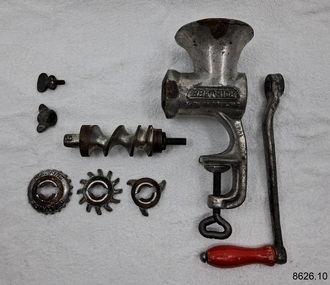
Domestic object - Food Mincer, John Harper & Co, Early - Mid 20th Century
... The first meat mixer or meat mincer was invented in the 19th century by a German inventor named Baron Karl Drais. Although some versions of the device date back to much earlier. ...The first meat mixer or meat mincer was invented in the 19th century by a German inventor named Baron Karl Drais. Although some versions of the device date back to much earlier. ...A meat grinder, commonly known as the meat mincer, is used for chopping meat into fine pieces. Alternatively, it can be used for the mixing of raw or cooked meat, fish and vegetables. It is the best way to process meat, and is a widely used piece of equipment by butchers and in the home.. Butchers have been known to use either mincing knives or meat cleavers in the kitchen for years to produce a quantity of minced meat. This was a slow and laborious process. The advent of the meat mincer has not only made the mincing process easier but also faster. The meat mincer has slowly evolved over the years into what it is today. The first meat mixer or meat mincer was invented in the 19th century by a German inventor named Baron Karl Drais. Although some versions of the device date back to much earlier. The oldest form of meat mincer was hand cranked which forced meat through a metal plate with several small holes in it, which resulted in long and thin strands of the meat. The meat was fed into the funnel that was placed at the top of the mixer. This meat would pass through a hand cranked screw conveyor that would squash and mix the meat before passing it through the metal plate. Needless to say, this was again a slow and laborious procedure to follow to produce large quantity of meat. With passage of time, this hand cracked machine became powered by electricity. The meat mincer has a great adaptability and efficiency now. The huge variety in mincer plates allows a butcher to produce different types of minced meat in any shape desired. However, traditional manual meat mincers have not really changed a lot. They are manually operated and made of cast iron, as earlier. They are similar to the original mincer designs, dating back to the early 1900s. Some butchers still prefer using a variety of mincer knives. Adapted from: https://brennan-group.com/blogs/news/history-of-the-meat-mincer This meat mincer belonged to the family of Dr.William Roy Angus, Surgeon and Oculist. It was donated to Flagstaff Hill Maritime Village by his daughter, Bernice McDade. It is part of the “W.R. Angus Collection” that includes historical medical equipment, surgical instruments and material once belonging to Dr Edward Ryan and Dr Thomas Francis Ryan, (both of Nhill, Victoria) as well as Dr Angus’ own belongings. The Collection’s history spans the medical practices of the two Doctors Ryan, from 1885-1926 plus that of Dr Angus, up until 1969. ABOUT THE “W.R.ANGUS COLLECTION” Doctor William Roy Angus M.B., B.S., Adel., 1923, F.R.C.S. Edin.,1928 (also known as Dr Roy Angus) was born in Murrumbeena, Victoria in 1901 and lived until 1970. He qualified as a doctor in 1923 at University of Adelaide, was Resident Medical Officer at the Royal Adelaide Hospital in 1924 and for a period was house surgeon to Sir (then Mr.) Henry Simpson Newland. Dr Angus was briefly an Assistant to Dr Riddell of Kapunda, then commenced private practice at Curramulka, Yorke Peninsula, SA, where he was physician, surgeon and chemist. In 1926, he was appointed as new Medical Assistant to Dr Thomas Francis Ryan (T.F. Ryan, or Tom), in Nhill, Victoria, where his experiences included radiology and pharmacy. In 1927 he was Acting House Surgeon in Dr Tom Ryan’s absence. Dr Angus had become engaged to Gladys Forsyth and they decided he would take time to further his studies overseas in the UK in 1927. He studied at London University College Hospital and at Edinburgh Royal Infirmary and in 1928, was awarded FRCS (Fellow from the Royal College of Surgeons), Edinburgh. He worked his passage back to Australia as a Ship’s Surgeon on the on the Australian Commonwealth Line’s T.S.S. Largs Bay. Dr Angus married Gladys in 1929, in Ballarat. (They went on to have one son (Graham 1932, born in SA) and two daughters (Helen (died 12/07/1996) and Berenice (Berry), both born at Mira, Nhill ) Dr Angus was a ‘flying doctor’ for the A.I.M. (Australian Inland Ministry) Aerial Medical Service in 1928 . The organisation began in South Australia through the Presbyterian Church in that year, with its first station being in the remote town of Oodnadatta, where Dr Angus was stationed. He was locum tenens there on North-South Railway at 21 Mile Camp. He took up this ‘flying doctor’ position in response to a call from Dr John Flynn; the organisation was later known as the Flying Doctor Service, then the Royal Flying Doctor Service. A lot of his work during this time involved dental surgery also. Between 1928-1932 he was surgeon at the Curramulka Hospital, Yorke Peninsula, South Australia. In 1933 Dr Angus returned to Nhill where he’d previously worked as Medical Assistant and purchased a share of the Nelson Street practice and Mira hospital from Dr Les Middleton one of the Middleton Brothers, the current owners of what was once Dr Tom Ryan’s practice. Dr L Middleton was House Surgeon to the Nhill Hospital 1926-1933, when he resigned. [Dr Tom Ryan’s practice had originally belonged to his older brother Dr Edward Ryan, who came to Nhill in 1885. Dr Edward saw patients at his rooms, firstly in Victoria Street and in 1886 in Nelson Street, until 1901. The Nelson Street practice also had a 2 bed ward, called Mira Private Hospital ). Dr Edward Ryan was House Surgeon at the Nhill Hospital 1884-1902 . He also had occasions where he successfully performed veterinary surgery for the local farmers too. Dr Tom Ryan then purchased the practice from his brother in 1901. Both Dr Edward and Dr Tom Ryan work as surgeons included eye surgery. Dr Tom Ryan performed many of his operations in the Mira private hospital on his premises. He too was House Surgeon at the Nhill Hospital 1902-1926. Dr Tom Ryan had one of the only two pieces of radiology equipment in Victoria during his practicing years – The Royal Melbourne Hospital had the other one. Over the years Dr Tom Ryan gradually set up what was effectively a training school for country general-practitioner-surgeons. Each patient was carefully examined, including using the X-ray machine, and any surgery was discussed and planned with Dr Ryan’s assistants several days in advance. Dr Angus gained experience in using the X-ray machine there during his time as assistant to Dr Ryan. Dr Tom Ryan moved from Nhill in 1926. He became a Fellow of the Royal Australasian College of Surgeons in 1927, soon after its formation, a rare accolade for a doctor outside any of the major cities. He remained a bachelor and died suddenly on 7th Dec 1955, aged 91, at his home in Ararat. Scholarships and prizes are still awarded to medical students in the honour of Dr T.F. Ryan and his father, Dr Michael Ryan, and brother, John Patrick Ryan. ] When Dr Angus bought into the Nelson Street premises in Nhill he was also appointed as the Nhill Hospital’s Honorary House Surgeon 1933-1938. His practitioner’s plate from his Nhill surgery states “HOURS Daily, except Tuesdays, Fridays and Saturday afternoons, 9-10am, 2-4pm, 7-8pm. Sundays by appointment”. This plate is now mounted on the doorway to the Port Medical Office at Flagstaff Hill Maritime Village, Warrnambool. Dr Edward Ryan and Dr Tom Ryan had an extensive collection of historical medical equipment and materials spanning 1884-1926 and when Dr Angus took up practice in their old premises he obtained this collection, a large part of which is now on display at the Port Medical Office at Flagstaff Hill Maritime Village in Warrnambool. During his time in Nhill Dr Angus was involved in the merging of the Mira Hospital and Nhill Public Hospital into one public hospital and the property titles passed on to Nhill Hospital in 1939. In 1939 Dr Angus and his family moved to Warrnambool where he purchased “Birchwood,” the 1852 home and medical practice of Dr John Hunter Henderson, at 214 Koroit Street. (This property was sold in1965 to the State Government and is now the site of the Warrnambool Police Station. ). The Angus family was able to afford gardeners, cooks and maids; their home was a popular place for visiting dignitaries to stay whilst visiting Warrnambool. Dr Angus had his own silk worm farm at home in a Mulberry tree. His young daughter used his centrifuge for spinning the silk. Dr Angus was appointed on a part-time basis as Port Medical Officer (Health Officer) in Warrnambool and held this position until the 1940’s when the government no longer required the service of a Port Medical Officer in Warrnambool; he was thus Warrnambool’s last serving Port Medical Officer. (The duties of a Port Medical Officer were outlined by the Colonial Secretary on 21st June, 1839 under the terms of the Quarantine Act. Masters of immigrant ships arriving in port reported incidents of diseases, illness and death and the Port Medical Officer made a decision on whether the ship required Quarantine and for how long, in this way preventing contagious illness from spreading from new immigrants to the residents already in the colony.) Dr Angus was a member of the Australian Medical Association, for 35 years and surgeon at the Warrnambool Base Hospital 1939-1942, He served as a Surgeon Captain during WWII1942-45, in Ballarat, Victoria, and in Bonegilla, N.S.W., completing his service just before the end of the war due to suffering from a heart attack. During his convalescence he carved an intricate and ‘most artistic’ chess set from the material that dentures were made from. He then studied ophthalmology at the Royal Melbourne Eye and Ear Hospital and created cosmetically superior artificial eyes by pioneering using the intrascleral cartilage. Angus received accolades from the Ophthalmological Society of Australasia for this work. He returned to Warrnambool to commence practice as an ophthalmologist, pioneering in artificial eye improvements. He was Honorary Consultant Ophthalmologist to Warrnambool Base Hospital for 31 years. He made monthly visits to Portland as a visiting surgeon, to perform eye surgery. He represented the Victorian South-West subdivision of the Australian Medical Association as its secretary between 1949 and 1956 and as chairman from 1956 to 1958. In 1968 Dr Angus was elected member of Spain’s Barraquer Institute of Barcelona after his research work in Intrasclearal cartilage grafting, becoming one of the few Australian ophthalmologists to receive this honour, and in the following year presented his final paper on Living Intrasclearal Cartilage Implants at the Inaugural Meeting of the Australian College of Ophthalmologists in Melbourne In his personal life Dr Angus was a Presbyterian and treated Sunday as a Sabbath, a day of rest. He would visit 3 or 4 country patients on a Sunday, taking his children along ‘for the ride’ and to visit with him. Sunday evenings he would play the pianola and sing Scottish songs to his family. One of Dr Angus’ patients was Margaret MacKenzie, author of a book on local shipwrecks that she’d seen as an eye witness from the late 1880’s in Peterborough, Victoria. In the early 1950’s Dr Angus, painted a picture of a shipwreck for the cover jacket of Margaret’s book, Shipwrecks and More Shipwrecks. She was blind in later life and her daughter wrote the actual book for her. Dr Angus and his wife Gladys were very involved in Warrnambool’s society with a strong interest in civic affairs. Their interests included organisations such as Red Cross, Rostrum, Warrnambool and District Historical Society (founding members), Wine and Food Society, Steering Committee for Tertiary Education in Warrnambool, Local National Trust, Good Neighbour Council, Housing Commission Advisory Board, United Services Institute, Legion of Ex-Servicemen, Olympic Pool Committee, Food for Britain Organisation, Warrnambool Hospital, Anti-Cancer Council, Boys’ Club, Charitable Council, National Fitness Council and Air Raid Precautions Group. He was also a member of the Steam Preservation Society and derived much pleasure from a steam traction engine on his farm. He had an interest in people and the community He and his wife Gladys were both involved in the creation of Flagstaff Hill, including the layout of the gardens. After his death (28th March 1970) his family requested his practitioner’s plate, medical instruments and some personal belongings be displayed in the Port Medical Office surgery at Flagstaff Hill Maritime Village, and be called the “W. R. Angus Collection”.The English-made food mincer is an example of kitchenware available to households from the early 20th century. The W.R. Angus Collection is significant for still being located at the site it is connected with, Doctor Angus being the last Port Medical Officer in Warrnambool. The collection of medical instruments and other items and equipment is culturally significant, being an historical example of medicine from late 19th to mid-20th century. Dr Angus assisted Dr Tom Ryan, a pioneer in the use of X-rays and in ocular surgery.Metal food mincer labelled Harper No. 3181, Beatrice. Made in England. The object is part of the W.R. Angus Collection. Harper. No 3181. Beatrice. Made in England. No 3 Fine. Also a leaflet of instructions headed up: 'Harper No.3181 "Beatrice" Food Mincer. Instuctions for Use.'flagstaff hill maritime museum and village, great ocean road, shipwreck coast, mincer, grinder, meat, cooking, beatrice, made in england, harper, no. 3181, w.r. angus -
 Flagstaff Hill Maritime Museum and Village
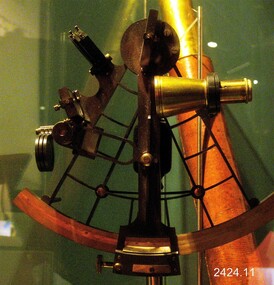
Instrument - Sextant, Late 20th Century
... Baron Kelvin of Largs in 1892, continued to maintain his interest in the business after James White's death. In 1884 raising most of the capital needed to construct and equip new workshops in Cambridge Street, Glasgow. At these premises, the company continued to make the compass Thomson had designed during the 1870s and to supply it in some...Baron Kelvin of Largs in 1892, continued to maintain his interest in the business after James White's death. In 1884 raising most of the capital needed to construct and equip new workshops in Cambridge Street, Glasgow. At these premises, the company continued to make the compass Thomson had designed during the 1870s and to supply it in some ...In 1941, the scientific instrument manufacturing firms of Henry Hughes & Son Ltd, London, England, and Kelvin Bottomley & Baird Ltd, Glasgow, Scotland, came together to form Kelvin & Hughes Ltd. Kelvin Company History: The origins of the company lie in the highly successful and strictly informal relationship between William Thomson (1824-1907), Professor of Natural Philosophy at Glasgow University from 1846-1899 and James White, a Glasgow optical maker. James White (1824-1884) founded the firm of James White, an optical instrument maker in Glasgow in 1850 and was involved in supplying and mending apparatus for Thomson university laboratory and working with him on experimental constructions. White was declared bankrupt in August 1861 and released several months later. In 1870, White was largely responsible for equipping William Thomson laboratory in the new University premises at Gilmore hill. From 1876, he was producing accurate compasses for metal ships to Thomson design during this period and this became an important part of his business in the last years of his life. He was also involved in the production of sophisticated-sounding machinery that Thomson had designed to address problems encountered laying cables at sea, helping to make possible the first transatlantic cable connection. At the same time, he continued to make a whole range of more conventional instruments such as telescopes, microscopes and surveying equipment. White's association with Thomson continued until he died. After his death, his business continued under the same name, being administered by Matthew Edwards (until 1891 when he left to set up his own company. Thomson who became Sir William Thomson and then Baron Kelvin of Largs in 1892, continued to maintain his interest in the business after James White's death. In 1884 raising most of the capital needed to construct and equip new workshops in Cambridge Street, Glasgow. At these premises, the company continued to make the compass Thomson had designed during the 1870s and to supply it in some quantity, especially to the Admiralty. At the same time, the firm became increasingly involved in the design, production and sale of electrical apparatus. In 1899, Lord Kelvin resigned from his University chair and became, in 1900, a director in the newly formed limited liability company Kelvin & James White Ltd which had acquired the business of James White. At the same time Kelvin's nephew, James Thomson Bottomley (1845-1926), joined the firm. In 1904, a London branch office was opened which by 1915 had become known as Kelvin, White & Hutton Ltd. Kelvin & James White Ltd underwent a further change of name in 1913, becoming Kelvin Bottomley & Baird Ltd. Hughes Company History: Henry Hughes & Sons were founded in 1838 in London as a maker of chronographic and scientific instruments. The firm was incorporated as “Henry Hughes & Sons Ltd” in 1903. In 1923, the company produced its first recording echo sounder and in 1935 a controlling interest in the company was acquired by S Smith & Son Ltd resulting in the development and production of marine and aircraft instruments. Following the London office's destruction in the Blitz of 1941, a collaboration was entered into with Kelvin, Bottomley & Baird Ltd resulting in the establishing “Marine Instruments Ltd”. Following the formal amalgamation of Kelvin, Bottomley & Baird Ltd and Henry Hughes & Sons Ltd in 1947 to form Kelvin & Hughes Ltd. Marine Instruments Ltd then acted as regional agents in the UK for Kelvin & Hughes Ltd who were essentially now a part of Smith's Industries Ltd founded in 1944 and the successors of S. Smith & Son Ltd. Kelvin & Hughes Ltd went on to develop various marine radar and echo sounders supplying the Ministry of Transport, and later the Ministry of Defence. The firm was liquidated in 1966 but the name was continued as Kelvin Hughes, a division of the Smiths Group. In 2002, Kelvin Hughes continues to produce and develop marine instruments for commercial and military. G. Falconer Company History: G Falconer (Hong Kong Ltd) appear to have had a retail presence in Hong Kong since 1885, according to the company website, and currently have a shop in the Peninsula Hotel. G Falconer was the Hong Kong selling agent for several British companies. Ross Ltd of 111 New Bond St London was one and the other was Kelvins Nautical Instruments. Falconers were primarily watchmakers, jewellers and diamond merchants.They were also agents for Admiralty Charts, Ross binoculars and telescopes, and sold English Silverware and High Class English Jewellery. In 1928 the company was operating from the Union Building opposite the Hong Kong general post office. It is unclear if the item is an original Sextant made by Kelvin prior to his amalgamation with Henry Hughes & Sons in 1941 as Kelvin appears to have only made compasses up to this date. If the Sextant can be established that it was made by Kelvin then it is very significant and a rare item made for and distributed through their Hong Kong selling agents G Falconer Ltd. There are many Sextants advertised for sale stating "Kelvin & Hughes 1917 model sextant". These can be regarded as replicas as the company was not formed until 1941 and production of marine instruments was not fully under way until after the war in 1947. Further investigation needs to be undertaken to accurately determine the provenance of this item. As the writer currently has the impression that the subject object was possibly made by Kelvin and Hughes in the mid to late 20th century or is a replica made by an unknown maker in the late 1970s. Purchased as an exhibition of marine navigational instruments for the Flagstaff Hill museum. The Sextant is a brass apparatus with filters and telescope lens, and comes with a wooden felt lined storage box. It is a doubly reflecting navigation instrument that measures the angular distance between two visible objects. The primary use of a sextant is to measure the angle between an astronomical object and the horizon for the purposes of celestial navigation.G Falconer and Co. Hong Kong (retailers of nautical equipmentflagstaff hill, warrnambool, shipwrecked-coast, flagstaff-hill, flagstaff-hill-maritime-museum, maritime-museum, shipwreck-coast, flagstaff-hill-maritime-village, sextant, kelvin & hughes ltd, hong kong, navigational instrument, g falconer, mariner's quadrants -
 Flagstaff Hill Maritime Museum and Village
Parallel Rule, 1947-1950
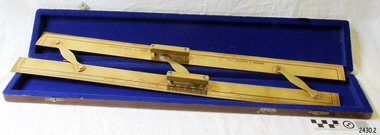
... Thomson who became Sir William Thomson and then Baron Kelvin of Largs in 1892, continued to maintain his interest in the business after James White's death in 1884, raising most of the capital needed to construct and equip new workshops in Cambridge Street, Glasgow. At these premises, the company continued to make the compass Thomson had designed during the 1870s and to supply it in some...Thomson who became Sir William Thomson and then Baron Kelvin of Largs in 1892, continued to maintain his interest in the business after James White's death in 1884, raising most of the capital needed to construct and equip new workshops in Cambridge Street, Glasgow. At these premises, the company continued to make the compass Thomson had designed during the 1870s and to supply it in some ...Navigators use parallel rule with maps and charts for plotting a specific course on a chart. One long edge is used with the compass rose on the chart, aligning the centre of the rose with the desired direction around the edge of the rose. The compass bars are then ‘walked’ in and out across the map to the desired location so that lines can be plotted to represent the direction to be travelled. Kelvin Company History: The origins of the company lie in the highly successful and strictly informal relationship between William Thomson (1824-1907), Professor of Natural Philosophy at Glasgow University from 1846-1899 and James White, a Glasgow optical maker. James White (1824-1884) founded the firm of James White, an optical instrument maker in Glasgow in 1850 and was involved in supplying and mending apparatus for Thomson university laboratory and working with him on experimental constructions. White was declared bankrupt in August 1861 and released several months later. In 1870, White was largely responsible for equipping William Thomson laboratory in the new University premises at Gilmore hill. From 1876, he was producing accurate compasses for metal ships to Thomson design during this period and this became an important part of his business in the last years of his life. He was also involved in the production of sophisticated sounding machinery that Thomson had designed to address problems encountered laying cables at sea, helping to make possible the first transatlantic cable connection. At the same time, he continued to make a whole range of more conventional instruments such as telescopes, microscopes and surveying equipment. White's association with Thomson continued until he died. After his death, his business continued under the same name, being administered by Matthew Edwards until 1891 when he left to set up his own company. Thomson who became Sir William Thomson and then Baron Kelvin of Largs in 1892, continued to maintain his interest in the business after James White's death in 1884, raising most of the capital needed to construct and equip new workshops in Cambridge Street, Glasgow. At these premises, the company continued to make the compass Thomson had designed during the 1870s and to supply it in some quantity, especially to the Admiralty. At the same time, the firm became increasingly involved in the design, production and sale of electrical apparatus. In 1899, Lord Kelvin resigned from his University chair and became, in 1900, a director in the newly formed limited liability company Kelvin & James White Ltd which had acquired the business of James White. At the same time Kelvin's nephew, James Thomson Bottomley (1845-1926), joined the firm. In 1904, a London branch office was opened which by 1915 had become known as Kelvin, White & Hutton Ltd. Kelvin & James White Ltd underwent a further change of name in 1913, becoming Kelvin Bottomley & Baird Ltd. Hughes Company History: Henry Hughes & Sons were founded in 1838 in London as a maker of chronographic and scientific instruments. The firm was incorporated as “Henry Hughes & Sons Ltd” in 1903. In 1923, the company produced its first recording echo sounder and in 1935 a controlling interest in the company was acquired by S Smith & Son Ltd resulting in the development and production of marine and aircraft instruments. Following the London office's destruction in the Blitz of 1941, a collaboration was entered into with Kelvin, Bottomley & Baird Ltd resulting in the establishing “Marine Instruments Ltd”. Following the formal amalgamation of Kelvin, Bottomley & Baird Ltd and Henry Hughes & Sons Ltd in 1947 to form Kelvin & Hughes Ltd. Marine Instruments Ltd then acted as regional agents in the UK for Kelvin & Hughes Ltd who were essentially now a part of Smith's Industries Ltd founded in 1944 and the successors of S Smith & Son Ltd. Kelvin & Hughes Ltd went on to develop various marine radar and echo sounders supplying the Ministry of Transport, and later the Ministry of Defence. The firm was liquidated in 1966 but the name was continued as Kelvin Hughes, a division of the Smiths Group. In 2002, Kelvin Hughes continues to produce and develop marine instruments for commercial and military. This model parallel map ruler is a good example of the commercial diversity of navigational instruments made by Kelvin & Hughes after World War II. It was made in numbers for use by shipping after the second world war and is not particularly rare or significant for it's type. Also it was made no earlier than 1947 as the firms of Kelvin, Bottomley & Baird Ltd and Henry Hughes & Sons Ltd who took over from Smith & Sons were not amalgamated until 1947. It can therefor be assumed that this ruler was made during the company's transitional period to Kelvin & Hughes from Smith Industries Ltd.Brass parallel rule in wooden box with blue felt lining.Rule inscribed on front "Kelvin & Hughes Ltd" " Made in Great Britain"flagstaff hill, warrnambool, shipwrecked-coast, flagstaff-hill, flagstaff-hill-maritime-museum, maritime-museum, shipwreck-coast, flagstaff-hill-maritime-village, parallel rule, kelvin & hughes ltd, map ruler, plot direction, navigation, maps, echo sounder, kelvin & james white, lord kelvin, baron kelvin of largs, scientific instrument -
 Federation University Historical Collection
Booklet, D. Wixted, Garden at School of Mines and Industries Ballarat: Conservation Analysis, 1988, 07/1988
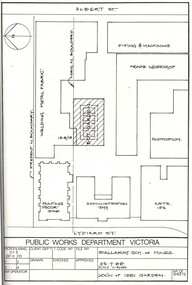
... In February 1881 George Porter Day was appointed gardener at a rate of 17 pounds and ten shillings per annum. ballarat school of mines botanical gardens ballarat school of mines george day george porter day james oddie baron von mueller von mueller ferdinand von mueller joseph flude materia medica botany system garden ferdinand krause field club and science society pharmacy alfred mica smith Some words have been highlighted in orange. ...The Ballarat School of Mines Botanical Garden was established in 1879, and was used by students of botany and materia medica. In February 1881 George Porter Day was appointed gardener at a rate of 17 pounds and ten shillings per annum. Yellow covered stapled report of 20 pages. Includes information about the establishment of the Ballarat School of Mines, plans of ground and buildings (1880, 1881, 1903 and 1988), Botany subjects, history of the garden, the garden in 1988.Some words have been highlighted in orange.ballarat school of mines botanical gardens, ballarat school of mines, george day, george porter day, james oddie, baron von mueller, von mueller, ferdinand von mueller, joseph flude, materia medica, botany, system garden, ferdinand krause, field club and science society, pharmacy, alfred mica smith -
 Federation University Historical Collection
Photograph - Photograph - Black and White, Meeting for the Australian Association for the Advancement of Science, Hobart, 1892, 1892
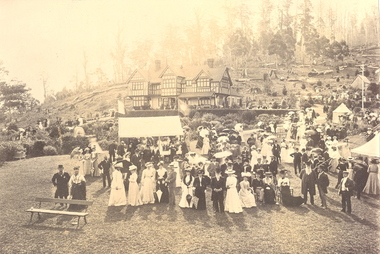
... Several members of the Australasian Association for the Advancement of Science arrived in the city yesterday by the inter colonial steamers, some of whom went direct to Hobart, while others remained in the city, but leave for the capital this afternoon. Amongst those who arrived were Baron Von Mueller, the dis tinguished scientist, who has taken some interest in this colony's re sources, Professor W. ...Several members of the Australasian Association for the Advancement of Science arrived in the city yesterday by the inter colonial steamers, some of whom went direct to Hobart, while others remained in the city, but leave for the capital this afternoon. Amongst those who arrived were Baron Von Mueller, the dis tinguished scientist, who has taken some interest in this colony's re sources, Professor W. ...Newspaper reports relating to the Australasian Association for the Advancement of Science, Hobart, 1892. "Australasian Association for the advancement OF SCIENCE. Several members of the Australasian Association for the Advancement of Science arrived in the city yesterday by the inter colonial steamers, some of whom went direct to Hobart, while others remained in the city, but leave for the capital this afternoon. Amongst those who arrived were Baron Von Mueller, the dis tinguished scientist, who has taken some interest in this colony's re sources, Professor W. Baldwin Spencer, M.A., professor of biology at the Melbourne University, who was general secretary at the Melbourne meeting; the Rev. Lorimer Fison, an able worker in the South Sea mission fields; Dr. Robert Giffen, L.L.D., C.ll.; Captain Pascoe, R.N.; Mr Napier Bell, C.E.; Professors Hutton, Nerich, Smith, and Morris, and Mr Richard Teece, F.T.A., the well-known actuary of the A.M.P. Society. A large number of other distinguished members also arrived. Judge Dorkerwho also arrived, was con ducted over the Exhibition in the after noon, and expressed pleasure with what he saw. His Honor leaves by express train to-day for Hobart. The hon. Dr. Campbell was met by Mr Arthur Day, the official agent for Great Britain to the Exhibition, an old friend, who conducted him over the Exhibition. The doctor confined his attention principally to the dry ore concentrator, in which he takes a great interest. He will, however, visit the Exhibition again after the meetings in Hobart has been brought to a termination. What he has seen of the Exhibition has impressed him favourably. (Launceston Advertiser, 6 January 1892.) "TASMANIA. AUSTALASIAN ASSOCIATION FOR THE ADVANCEMENT OF SCIENCE. The fourth congress of the Australasian Association for the Advancement of Science was commenced in Hobart at 11. o'olock on Thursday by the general Council assembling at the Royal Society's rooms, at the Museum. There was a good attendance, including the Governor, Sir B. G. Hamilton. In the absence of the president, Sir James Hector, the chair was occupied by Baron Von Muellor. In the afternoon Lady Hamilton gave a garden party at Government House to 600 guests, including the members of the association, the Judges, the members of the Ministry, and leading citizens." (Newcastle Morning Herald & Miners' Advocate, 9 January 1892.)Two sepia photographs mounted onto charcoal mount. A group of men in hats and coats, and women in hats and long dresses assemble in front of a double story building, thought to be Henry Dobson's of Ferntree near Hobart. In the background stumps of large trees are evident. The event was a garden party held in for members of the Australasian Association for the Advancement of Science who met in Hobart in 1892. .1 F.J. Martell of the Ballarat School of Mines is seated between two women in the right hand foreground. James Oddie, with white beard and top hat, is standing in the centre foreground between two women. .2) James Oddie is standing with cane in hand on the right of the bench in the foreground of the photo. australasian association for the advancement of science, hobart, oddie, james oddie, martell, von mueller, baldwin spencer, lorimer fison, robert giffen, napier bell, arthur day, dobson, henry dobson -
 Flagstaff Hill Maritime Museum and Village
Compass, 1947-1950
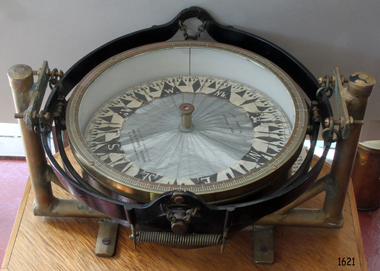
... Thomson, who became Sir William Thomson and then Baron Kelvin of Largs in 1892, continued to maintain his interest in the business after James White's death in 1884, raising most of the capital needed to construct and equip new workshops in Cambridge Street, Glasgow. At these premises, the company continued to make the compass Thomson had designed during the 1870s and to supply it in some...Thomson, who became Sir William Thomson and then Baron Kelvin of Largs in 1892, continued to maintain his interest in the business after James White's death in 1884, raising most of the capital needed to construct and equip new workshops in Cambridge Street, Glasgow. At these premises, the company continued to make the compass Thomson had designed during the 1870s and to supply it in some ...Kelvin Company History: The origins of the company lie in the highly successful, if strictly informal, the relationship between William Thomson (1824-1907), Professor of Natural Philosophy at Glasgow University from 1846-1899 and James White, a Glasgow optical maker. James White (1824-1884) founded the firm of James White, who was an optical instrument maker in Glasgow in 1850. He was involved in supplying and mending apparatus for Thomson's university laboratory and working with him on experimental constructions. White was actually declared bankrupt in August 1861 and released several months later. In 1870, White was largely responsible for equipping William Thomson's laboratory in the new University premises at Gilmore hill. From 1876, he was producing accurate compasses for metal ships to Thomson's design during this period and this became an important part of his business in the last years of his life. He was also involved in the production of sophisticated sounding machinery that Thomson had designed to address problems encountered laying cables at sea, helping to make possible the first transatlantic cable connection. At the same time, he continued to make a whole range of more conventional instruments such as telescopes, microscopes and surveying equipment. White's association with Thomson continued until he died. After his death, his business continued under the same name, being administered by Matthew Edwards (until 1891 when he left to set up his own company). Thomson, who became Sir William Thomson and then Baron Kelvin of Largs in 1892, continued to maintain his interest in the business after James White's death in 1884, raising most of the capital needed to construct and equip new workshops in Cambridge Street, Glasgow. At these premises, the company continued to make the compass Thomson had designed during the 1870s and to supply it in some quantity, especially to the Admiralty. At the same time, the firm became increasingly involved in the design, production and sale of electrical apparatus. In 1899, Lord Kelvin resigned from his University chair and became, in 1900, a director in the newly formed limited liability company Kelvin & James White Ltd which had acquired the business of James White. At the same time Kelvin's nephew, James Thomson Bottomley (1845-1926), joined the firm. In 1904, a London branch office was opened which by 1915 had become known as Kelvin, White & Hutton Ltd . Kelvin & James White Ltd underwent a further change of name in 1913, becoming Kelvin Bottomley & Baird Ltd . Hughes Company History: Henry Hughes & Sons was founded in 1838 in London as a maker of chronographic and scientific instruments. The firm was incorporated as Henry Hughes & Sons Ltd in 1903. In 1923, the company produced its first recording echo sounder and in 1935, a controlling interest in the company was acquired by S Smith & Son Ltd resulting in the development and production of marine and aircraft instruments. Following the London office's destruction in the Blitz of 1941, a collaboration was entered into with Kelvin, Bottomley & Baird Ltd resulting in the establishing Marine Instruments Ltd. Following the formal amalgamation of Kelvin, Bottomley & Baird Ltd and Henry Hughes & Sons Ltd in 1947 to form Kelvin & Hughes Ltd., Marine Instruments Ltd then acted as regional agents in the UK for Kelvin & Hughes Ltd who were essentially now a part of Smith's Industries Ltd founded in 1944 and the successors of S Smith & Son Ltd. Kelvin & Hughes Ltd went on to develop various marine radar and echo sounders supplying the Ministry of Transport, and later the Ministry of Defence. The firm was liquidated in 1966 but the name was continued as Kelvin Hughes, a division of the Smiths Group. In 2002, Kelvin Hughes continues to produce and develop marine instruments for commercial and military use. This model compass is a good example of the commercial type of instruments made by Kelvin & Hughes after the world war 2, it was made in numbers for use on various types of shipping after the second world war and is not particularly rare or significant for it's type. Also it was made no earlier than 1947 as the firms of Kelvin, Bottomley & Baird Ltd and Henry Hughes & Sons Ltd who took over from Smith & Sons were not amalgamated until 1947. Given that Smith and Sons is engraved on the compass with Kelvin & Hughes it can be assumed that this compass was made during the company's transitional period to Kelvin & Hughes.Compass, marine or ship's card compass, gimble mounted, with inscriptions. Type is Lord Kelvin 10 inch compass card. Made in Great Britain by Kelvin Hughes Division of S. Smith & Sons (England) Ltd. "LORD KELVIN 10.", "COMPASS GRID", "MANUFACTURED IN GREAT BRITAIN BY", "KELVIN HUGHES DIVISION", "S. Smith & Sons (England) Ltd".flagstaff hill, warrnambool, shipwrecked-coast, flagstaff-hill, flagstaff-hill-maritime-museum, maritime-museum, shipwreck-coast, flagstaff-hill-maritime-village, marine compass, gimble compass, ship's compass, lord kelvin compass, smith and sons england ltd, henry hughes & son ltd london england, kelvin bottomley & baird ltd glasgow scotland, kelvin & hughes ltd, navigation instrument, scientific instrument, william thomson, james white, baron kelvin of largs -
 Mission to Seafarers Victoria
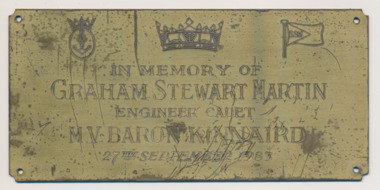
Plaque - Memorial plaque, Graham Stewart Martin, 1983
... Baron Kinnaird, the ship he was on when he travelled to Australia. On the 27th November 1983, there were parties throughout Australia to celebrate the winning of The Americas Cup yacht race, Melbourne was no exception and Graham and several colleagues went ashore to join in. During the celebrations, Graham climbed up some...Baron Kinnaird, the ship he was on when he travelled to Australia. On the 27th November 1983, there were parties throughout Australia to celebrate the winning of The Americas Cup yacht race, Melbourne was no exception and Graham and several colleagues went ashore to join in. During the celebrations, Graham climbed up some ...Graham was born in 1962 in Glasgow, Scotland. He grew up in the south side of Glasgow and became an active member of the Boys Brigade, progressing through the different sections to eventually gain the organisation's highest award, the Queens Badge. During these years Graham became a proficient bugler and trumpeter, taking part in many nationwide competitions as part of the company band. After completion of his school education, Graham was accepted as an apprentice engineering officer by the Scottish Ship Management who ran a fleet of bulk carriers. After training at the Glasgow Nautical College he then went to sea, firstly on the MV Baron Napier and subsequently the MV Baron Kinnaird, the ship he was on when he travelled to Australia. On the 27th November 1983, there were parties throughout Australia to celebrate the winning of The Americas Cup yacht race, Melbourne was no exception and Graham and several colleagues went ashore to join in. During the celebrations, Graham climbed up some scaffolding to get a better view but a girder became disloged and he fell to the ground and was struck by the falling girder. He died shortly after despite the best efforts of the ambulance crews. Graham's body was returned home to Glasgow and a cremation service took place in the Linn Crematorium near where he lived and grew up. Money was donated by the ship's crew and officer and sent to the Mission (Reverend Chin) to purchase an engraved plaque in his memory. The plaque was mounted on a bench used as coffee table. In January 2025, Alain, his former girlfriend visited the Mission to view the plaque.The Mission is a place of memorial for seafarers.Rectangular brass plaque, on top 3 logos: Merchant Navy, Merchant Navy crown and flag of the SSM (Scottish Ship Management)Engraved: In Memory of / Graham Stewart Martin / Engineer Cadet / MV Baron Kinnaird / 27th September 1983graham stewart martin, engineer cadet, m.v. baron kinnaird, scottish ship management, ssm, 1983, america's cup, bench -
 Federation University Historical Collection
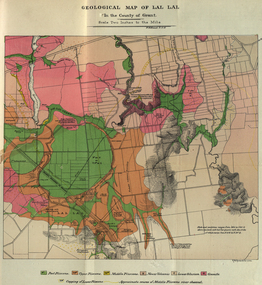
Booklet, The School of Mines Ballaarat Annual Report 1883, 1883
... Life Governors, Museum - open to visitors, Office Bearers, Paper of Particulars, Report of the Curator of the Museum and Library, Report of the Superintendent of Laboratories, Report of the Lecturer in Mathematics, Report of the Lecturer in Mechanical Engineering, Report of the Lecturer in Telegraphy, Report of the Lecturer in Materia Medica, Report of the Lecturer of Astronomy, Scale of Charges for Assays and Analyses, Examinations Held, Statement of Receipts and Expenditure for the year 1883, Subjects and Lectures, Subjects and Examiners, Subscriptions and Donations, from 1st January to 31st December 1883. ballarat school of mines annual report balance sheet certificates granted by the council examination papers fees honorary correspondents life governors museum office bearers paper of particulars ballarat school of mines museum library superintendent of laboratories mathematics mechanical engineering telegraphy lecturer in materia medica statement of receipts and expenditure for the year 1882 examiners subcriptions and donations alfred mica smith chemistry metallurgy f.m. krause ferdinand krause geology mineralogy scientific mining t.h. thompson practical mining w.h. shaw h. reid mechanical enginnering phoenix foundry company (limited) phoenix foundry arthur. a. buley mining engineering surveying walter. d. campbell j. wall astronomy james oddie natural philosophy elementary mechanics and hydrostatics magnetism and electricty sound, light and heat j.f. usher materia medica pharmacy physiology w.h. shawmechanical engineering h.m. andrew h.d. de la poer wall thomas mann p.c. fitzpatrick h. rosale john lewis w.c. kernot mccoy j. cosmo newbery baron von mueller samuel w. macgowan w.p. bechervaise r.l.j. ellery astronomer j.m. bickett james bickett n. kent a. martin r.s. mitchell w.h. keast p. matthews d. milliken j.t. richards jonathan robinson h. brookes allen joseph bosisto c.r. blackett, m.l.a. william. johnson government of victoria analyst moorabool lal lal skipton coal skipton coal discovery Lal Lal Creek Moorabool Falls Lal Lal Race Course Lal Lal Falls Moorabool River William H. Keast Inscription on front cover 'Office Copy' On pages 4 and 5 some ...The School of Mines Ballaarat. Annual Report 1883. Statement of Receipts and expenditure, general balance sheet, and list of subscriptions donations 1883. Annual Report, Balance Sheet, Certificates granted by the Council, Examination Papers - Elementary Science Classes (Appendix), Fees, Honorary Correspondents. Life Governors, Museum - open to visitors, Office Bearers, Paper of Particulars, Report of the Curator of the Museum and Library, Report of the Superintendent of Laboratories, Report of the Lecturer in Mathematics, Report of the Lecturer in Mechanical Engineering, Report of the Lecturer in Telegraphy, Report of the Lecturer in Materia Medica, Report of the Lecturer of Astronomy, Scale of Charges for Assays and Analyses, Examinations Held, Statement of Receipts and Expenditure for the year 1883, Subjects and Lectures, Subjects and Examiners, Subscriptions and Donations, from 1st January to 31st December 1883.Ballaarat School of Mines annual Report. Soft cover pale green booklet of 67 pages. Includes a colour Geological Map of Lal Lal and a sketch Section from Lal Lal to the Moorabool. Inscription on front cover 'Office Copy' On pages 4 and 5 some names have been crossed out and others added.ballarat school of mines, annual report, balance sheet, certificates granted by the council, examination papers, fees, honorary correspondents, life governors, museum, office bearers, paper of particulars, ballarat school of mines museum, library, superintendent of laboratories, mathematics, mechanical engineering, telegraphy, lecturer in materia medica, statement of receipts and expenditure for the year 1882, examiners, subcriptions and donations, alfred mica smith, chemistry, metallurgy, f.m. krause, ferdinand krause, geology, mineralogy, scientific mining, t.h. thompson, practical mining, w.h. shaw, h. reid, mechanical enginnering, phoenix foundry company (limited), phoenix foundry, arthur. a. buley, mining, engineering surveying, walter. d. campbell, j. wall, astronomy, james oddie, natural philosophy, elementary mechanics and hydrostatics, magnetism and electricty, sound, light and heat, j.f. usher, materia medica, pharmacy, physiology, w.h. shawmechanical engineering, h.m. andrew, h.d. de la poer wall, thomas mann, p.c. fitzpatrick, h. rosale, john lewis, w.c. kernot, mccoy, j. cosmo newbery, baron von mueller, samuel w. macgowan, w.p. bechervaise, r.l.j. ellery, astronomer, j.m. bickett, james bickett, n. kent, a. martin, r.s. mitchell, w.h. keast, p. matthews, d. milliken, j.t. richards, jonathan robinson, h. brookes allen, joseph bosisto, c.r. blackett, m.l.a., william. johnson, government of victoria analyst, moorabool, lal lal, skipton, coal, skipton coal discovery, lal lal creek, moorabool falls, lal lal race course, lal lal falls, moorabool river, william h. keast -
 Flagstaff Hill Maritime Museum and Village
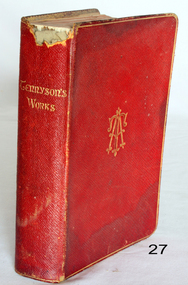
Literary work - Book, Macmillan & Co, The Works of Alfred Lord Tennyson, 1892
... Baron Tennyson FRS (6 August 1809 – 6 October 1892) was a British poet. He was the Poet Laureate during much of Queen Victoria's reign and remains one of the most popular British poets. In 1829, Tennyson was awarded the Chancellor's Gold Medal at Cambridge for one of his first pieces, "Timbuktu". He published his first solo collection of poems, Poems Chiefly Lyrical in 1830. "Claribel" and "Mariana", which remain some...Baron Tennyson FRS (6 August 1809 – 6 October 1892) was a British poet. He was the Poet Laureate during much of Queen Victoria's reign and remains one of the most popular British poets. In 1829, Tennyson was awarded the Chancellor's Gold Medal at Cambridge for one of his first pieces, "Timbuktu". He published his first solo collection of poems, Poems Chiefly Lyrical in 1830. "Claribel" and "Mariana", which remain some ...This book of poetry was a Prize Awarded for Botany and Physiology an unidentifiable recipient who was Dux of Form V, it was presented by James Scott B.A., Warrnambool College. Alfred Tennyson, 1st Baron Tennyson FRS (6 August 1809 – 6 October 1892) was a British poet. He was the Poet Laureate during much of Queen Victoria's reign and remains one of the most popular British poets. In 1829, Tennyson was awarded the Chancellor's Gold Medal at Cambridge for one of his first pieces, "Timbuktu". He published his first solo collection of poems, Poems Chiefly Lyrical in 1830. "Claribel" and "Mariana", which remain some of Tennyson's most celebrated poems, were included in this volume. Although decried by some critics as overly sentimental, his verse soon proved popular and brought Tennyson to the attention of well-known writers of the day, including Samuel Taylor Coleridge. Tennyson's early poetry, with its medievalism and powerful visual imagery, was a major influence on the Pre-Raphaelite Brotherhood.This book was awarded to a student of Warrnambool College as an end of year prize is an example of how it was the custom to award prizes as scholastic encouragement to students for exemplary work during the school year in the late 19th to early 20th centuries.Book “The Works of Alfred Lord Tennyson” poet laureate. Spine of book says “Tennyson’s Works”. Published 1892 in London and New York, by Macmillan and Co. Cover is read with gold border. Prize label book presented by James Scott BA "Form V/Dux/Botany Physiology to Master … / James Scott B.A. / Dec 18th 1893"flagstaff hill, warrnambool, shipwrecked coast, flagstaff hill maritime museum, shipwreck coast, flagstaff hill maritime village, great ocean road, alfred lord tennyson, poetical works, james scott b.a., warrnambool college form v prize 1893 -
 Waverley RSL Sub Branch
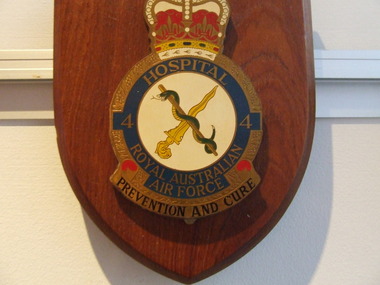
Plaque 4 Sqn.R.A.A.F. Hospital, R.A.A.F. Hospital
... From the outset, No 4 Squadron aircraft regularly engaged the Red Baron's elite 'Flying Circus' and, in spite of their lack of experience, quickly gained the ascendancy over the German squadron. During its brief war service, No 4 Squadron destroyed some 128 enemy aircraft and spawned a total of eleven aces. ...From the outset, No 4 Squadron aircraft regularly engaged the Red Baron's elite 'Flying Circus' and, in spite of their lack of experience, quickly gained the ascendancy over the German squadron. During its brief war service, No 4 Squadron destroyed some 128 enemy aircraft and spawned a total of eleven aces. ...No 4 Squadron, Australian Flying Corps, formed at Point Cook, Victoria, in October 1916. After embarking for England to complete its training, the squadron deployed to France in December 1917. From the outset, No 4 Squadron aircraft regularly engaged the Red Baron's elite 'Flying Circus' and, in spite of their lack of experience, quickly gained the ascendancy over the German squadron. During its brief war service, No 4 Squadron destroyed some 128 enemy aircraft and spawned a total of eleven aces. The squadron's highest scoring airman was Captain Cobby who, in addition to shooting down 29 aircraft, also destroyed 13 observation balloons. World War II saw No 4 Squadron Wirraways deployed to Port Moresby in support of Australian troops fighting in the New Guinea jungles. In their slow and vulnerable aircraft, losses from anti-aircraft fire were high, however, this never deterred the Wirraway crews from completing their assigned tasks. This aggressive spirit was exemplified by Pilot Officer Archer and his crewman, Sergeant Coulston, who, while on a reconnaissance mission, found themselves above a Japanese Zero fighter. Despite operating a vastly inferior aircraft, Pilot Officer Archer dived to the attack and shot down the enemy aircraft. In June 1943, No 4 Squadron received its first Boomerang fighters and continued to support Allied troops during the Cape Gloucester landings before moving to Morotai. No 4 Squadron ended the war in Borneo and returned to Australia in November 1945, where it was renamed No 3 Squadron - thus closing the chapter on a very distinguished and proud unit. Summary of Unit Name(s) Start Date End Date No. 4 RAAF Hospital, Butterworth 06/06/1966 06/06/1966 No. 4 RAAF Hospital, Butterworth 03/07/1966 No. 4 RAAF Hospital, Butterworth 01/08/1966 01/08/1966 No. 4 RAAF Hospital, Butterworth 05/09/1966 No. 4 RAAF Hospital, Butterworth 29/09/1966 No. 4 RAAF Hospital, Butterworth 29/10/1966 29/10/1966 http://www.airforce.gov.au/raafmuseum/research/units/4sqn.htmWooden Plaque 15cm x 13cm with insignia of 4 Sqn.R.A.A.F. Hospital 4 Sqn R.A.A.F. Hospital r.a.a.f. 4 squadron, butterworth, r.a.a.f. hospital -
 Warrnambool and District Historical Society Inc.
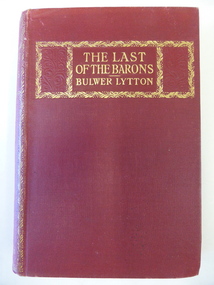
Book, The Last of the Barons, 1843
... some ornamental borders and gold lettering. The book has two black and white full page illustrations, with the first one protected with tissue paper. The inscriptions are handwritten in blue and black ink. The Last of the Barons ...The Davidson brothers, James and John, were pioneer settlers in the Warrnambool district, with John establishing th property of Rosebrook in Woodford and James establishing the homestead of Woodend in West Warrnambool. Another brother William was an early storekeeper in Woolsthorpe. He died in 1904 and may be the W. Davidson who was the recipient of this book. The Midgleys came to the Yangery Creek area in 1852 and established the property of Yangery Grange. Mrs Midgley presumably belonged to one of these families from pioneer times. Ethel Davidson would be a descendant of one of the Davidson families but there were several women with this name born in the 19th century though one born to a William Davidson in 1887 may be the later owner of this book. This book is of interest because of its connection to members of the Davidson families – pioneer settlers in the Warrnambool area.This is a hard cover book of 461 pages. The cover is dark red with some ornamental borders and gold lettering. The book has two black and white full page illustrations, with the first one protected with tissue paper. The inscriptions are handwritten in blue and black ink. ‘To W. Davidson from Mrs Midgley’ ‘Ethel M. Davidson’ william davidson, ethel davidson, history of warrnambool. -
 Warrnambool and District Historical Society Inc.
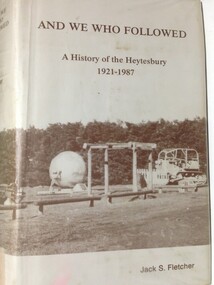
Book, And We Who Followed, 1988
... Baron Heytesbury, Sir William A Court, who purchased the village in 1828 and was a distinguished public figure in Great Britain at the time. The area, largely forested, was cleared in 1960 to establish the Heytesbury Soldier Settlement Scheme and is today an important dairying area centred around the town of Simpson. This book is of some ...This book contains a history of the Shire of Heytesbury from 1921 to 1987. It is written by Jack Fletcher and follows on from his book ‘The Infiltrators’ which is the history of the Heytesbury region from 1840 to 1920. The Heytesbury area in the Western District of Victoria was named after the village of Heytesbury in England and the first Baron Heytesbury, Sir William A Court, who purchased the village in 1828 and was a distinguished public figure in Great Britain at the time. The area, largely forested, was cleared in 1960 to establish the Heytesbury Soldier Settlement Scheme and is today an important dairying area centred around the town of Simpson.This book is of some interest as it details a history of an area adjoining the Warrnambool district. The Heytesbury Settlement farmers are predominantly dairy producers, similar to those in other districts around WarrnamboolThis is a hard cover buff-coloured book with a dust cover sealed down onto the hard cover. The front and back covers have a sepia coloured photograph of the Heytesbury Settlement Park.Front of dust cover – ‘And We Who Followed - A History of the Heytesbury 1921-1987-Jack S. Fletcher Spine – as above (plus a library classification) heytesbury region, victoria, heytesbury soldier settlement -
 Bendigo Historical Society Inc.
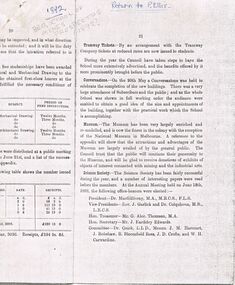
Document - PETER ELLIS COLLECTION: LETTER
... MUSEUMS Peter Ellis Collection Bendigo School of Mines Dr MacGillivray Rev J Garlick Dr Colquhoun Mr G Alec Thomson Mr J Eardsley Edwards Dr Quick J M Harcourt J Robshaw R Bloomfield Rees J D Crofts W H Carwardine Dr Dendy Professor Marshall Hall Professor Baldwin Spencer Department of Education Sir Frederick McCoy Baron Von Mueller J W Faul John Robshaw Henry Jackson J B Lillie MacKay Melbourne University Mr A South Department of Forestry Mr Perrin The Pharmacy Board of Victoria Education Department Photocopies of some pages mentioning the Museum. ...Photocopies of some pages mentioning the Museum. Part of a letter by P H MacGillivray, President, Report on the Botany Class, Report on the Chemistry and Metallurgy Classes, The Museum, including what exhibits, attendance of visitors and opening times. A number of pages of Donations to the Museum from 1/7 1891 to 30/6/1892, including the names and address of the donors. There is a list of the Classification of Specimens (received during the year). Also mentioned is Botany - Lecturer - J B Lillie Mackay and Zoology - Lecturer - J B Lillie Mackay. There is also a part of the printing about Architectural and Geometrical Drawing, Machine and Building Construction - Teacher - W H E Nicolai.museums, peter ellis collection, bendigo school of mines, dr macgillivray, rev j garlick, dr colquhoun, mr g alec thomson, mr j eardsley edwards, dr quick, j m harcourt, j robshaw, r bloomfield rees, j d crofts, w h carwardine, dr dendy, professor marshall hall, professor baldwin spencer, department of education, sir frederick mccoy, baron von mueller, j w faul, john robshaw, henry jackson, j b lillie mackay, melbourne university, mr a south, department of forestry, mr perrin, the pharmacy board of victoria, education department -
Bendigo Historical Society Inc.
Journal - Lansell Articles - Recipes from the Lansells, 1880s
... In those far-off days the age of the gold barons was coming to an end, however the wealth and lifestyle that came with it was still in evidence, even after George Lansell's death. A staff of seven serviced the 40-room house in those days, including two German maids who spent 50 years with the Lansell family. In the 1920s the Lansells owned some...In those far-off days the age of the gold barons was coming to an end, however the wealth and lifestyle that came with it was still in evidence, even after George Lansell's death. A staff of seven serviced the 40-room house in those days, including two German maids who spent 50 years with the Lansell family. In the 1920s the Lansells owned some ...Fortuna, was described as Bendigo's finest home. In those far-off days the age of the gold barons was coming to an end, however the wealth and lifestyle that came with it was still in evidence, even after George Lansell's death. A staff of seven serviced the 40-room house in those days, including two German maids who spent 50 years with the Lansell family. In the 1920s the Lansells owned some of the city's finest homes, and entertained many of His Majesty's Governors throughout.Lansell Articles - Recipes from the Lansells - 16 pages of recipes and tips - handwritten - source unknown, but part of the Lansell Collection This item contains the following document: 11217.70 Sixteen pages of handwritten tips and recipesnon-fictionbendigo, fortuna, george lansell -
 Bendigo Historical Society Inc.
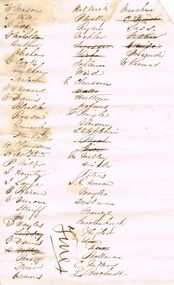
Document - ANCIENT ORDER OF FORESTERS NO. 3770 COLLECTION: CORRESPONDENCE
... W H Howard W Davis Blackler Rossow Emmerley Dunkell H Clausen H Welsten P Miller I Henry I lanje Baron Streiff Hayles G Davis H Weller Bode Daier Hellnes Plosky Ryan Mehler Ward E Claussen Hallam Holnus gleeson Stopplebein Best Gill Melley Hinch Peters I C Howard Moyle Sreshman Franze Bollman C Miller L Borcherdt List of names, some crossed out and some are illlegible. ...List of names, some crossed out and some are illlegible. Fines written between two columns.societies, aof, correspondence, ancient order of foresters no. 3770 collection - correspondence, w mason, wile, i rae, g nicholson, arthur, abraham, g cook, quirkham, maleoh?, w h howard, w davis, blackler, rossow, emmerley, dunkell, h clausen, h welsten, p miller, i henry, i lanje, baron, streiff, hayles, g davis, h weller, bode, daier, hellnes, plosky, ryan, mehler, ward, e claussen, hallam holnus, gleeson, stopplebein, best, gill, melley, hinch, peters, i c howard, moyle, sreshman, franze, bollman, c miller, l borcherdt -
 Bendigo Historical Society Inc.
Newspaper - LYDIA CHANCELLOR COLLECTION: NEWSPAPER CUTTINGS
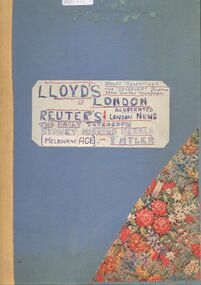
... some correspondance between Lydia Chancellor and Mr. M.P.J. Hurrell the Promotions Officer at 'The Age.' (v) An article titled ' John Fairfax 1804-1877 Maker of The Sydney Morning Herald,' from 'The Home,' March 1, 1941. An article titled, ' The Day & Age of David Syme,' from 'Walkabout' February, 1963. Information re the Lutine Bell at Lloyds of London. Articles re 'THE MAIL' newspaper for Bendigo beginning in 1968. Article by Claudia Wright re jumpsuits, Champagne and toys. Article Re Baron...some correspondance between Lydia Chancellor and Mr. M.P.J. Hurrell the Promotions Officer at 'The Age.' (v) An article titled ' John Fairfax 1804-1877 Maker of The Sydney Morning Herald,' from 'The Home,' March 1, 1941. An article titled, ' The Day & Age of David Syme,' from 'Walkabout' February, 1963. Information re the Lutine Bell at Lloyds of London. Articles re 'THE MAIL' newspaper for Bendigo beginning in 1968. Article by Claudia Wright re jumpsuits, Champagne and toys. Article Re Baron ...A large cardboard folder containing (i) newspaper cuttings from various sources. These sources are, ' Illustrated London News,' ' Herald,' ' The Mail,' ' Herald,' ' Age', ' The Sun News-Pictorial,' and ' Everybody's,' and are dated 1938-1970. (ii) A copy of the 'Bendigo Advertiser,' dated Wednesday, November 27, 1968. (iii) 2 ' Bendigo Advertiser,' supplements dated February 16, 1963 and November 27, 1968. (iv) An 8 page fascimile of 'The Age' newspaper celebrating the move of the newspaper to a new building in Spencer Street. There is also some correspondance between Lydia Chancellor and Mr. M.P.J. Hurrell the Promotions Officer at 'The Age.' (v) An article titled ' John Fairfax 1804-1877 Maker of The Sydney Morning Herald,' from 'The Home,' March 1, 1941. An article titled, ' The Day & Age of David Syme,' from 'Walkabout' February, 1963. Information re the Lutine Bell at Lloyds of London. Articles re 'THE MAIL' newspaper for Bendigo beginning in 1968. Article by Claudia Wright re jumpsuits, Champagne and toys. Article Re Baron Julius de Reuter, founder of the Reuters news service. The Crystal Palace in London.newspaper, bendigo advertiser, various articles, lydia chancellor collection, collection, newspapers, ' the age' newspaper, ephemera, ' the bendigo advertiser.' -
 Bendigo Historical Society Inc.
Document - ARTHUR T. WOODWARD - ARTIST AND POET
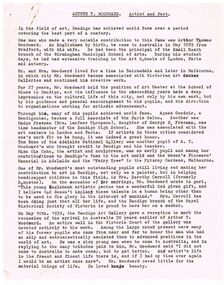
... DOCUMENT Arthur T Woodward - Artist and Poet School of Mines Agnes Goodsir Madge Freeman (Mrs Lanfear Thompson) George H Freeman Bendigo High School Tom Bone Adelaide National Gallery Miss Ola Cohn Women's Pioneers' Memorial Fairy Tree in the Fitzroy Gardens Melb Mrs Dorothy Carroll Royal Historical Society of Victoria Bendigo Art Gallery Princess Margaret Rose Kurmala 'Songs from a Studio' McColl Rankin & Stanistreet Central Nell Gwynne Mine 'Roselands' Ida Woodward Lt Col Claude Robertson Isola Woodward Mr Richard Harvey Bendigo Art Gallery W A Dargie 'The Miser' Baron Von Mueller Typed notes briefly telling of the life of Arthur T. Woodward and mentions some of his pupils. ...Typed notes briefly telling of the life of Arthur T. Woodward and mentions some of his pupils. Also mentions his family.document, arthur t woodward - artist and poet, school of mines, agnes goodsir, madge freeman (mrs lanfear thompson), george h freeman, bendigo high school, tom bone, adelaide national gallery, miss ola cohn, women's pioneers' memorial, fairy tree in the fitzroy gardens melb, mrs dorothy carroll, royal historical society of victoria, bendigo art gallery, princess margaret rose, kurmala, 'songs from a studio', mccoll rankin & stanistreet, central nell gwynne mine, 'roselands', ida woodward, lt col claude robertson, isola woodward, mr richard harvey, bendigo art gallery, w a dargie, 'the miser', baron von mueller -
 Bendigo Military Museum
Postcard - POSTCARD, FARNHAM, U.K, Valentine's Series, cWW1
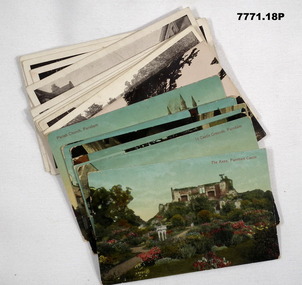
... some places that visit... when I was down at Flories place. Bob xxxxxx' 3. Farnham Castle. 4. West Street, Farnham. 5. Parish Church, Farnham. 6. Castle Street, Farnham. 7. The Church House, Farnham. 8. Parish Church, Farnham. 9. Farnham Castle. 10. Red Hill Hanger, Farnham. Handwritten in black ink on back: 'Letter to R.H. Baron's...Baron Cooper Collection Postcards Farnham UK 1. The Keep, Farnham Castle. Handwritten in black ink on back: 'This is one of the pretty places around Farnham. I was all once here with Florrie. Bob' 2. In Castle grounds, Farnham. Handwritten in black ink on back: 'Dear Elsie, these are some ...1. Florrie is a relative living in Farnham. 2. R.H. Baron married Elsie Keast in 1921. All cards relate to R.H. Baron's visits to Farnham whilst on leave to see Florrie. Part of the 'Robert H. Baron', no.3596 and Cooper Collection. See Catalogue No. 1981P for details of Baron's service.1. Coloured scene of a ruined castle and surrounding gardens. 2. Coloured scene of a garden with building and ruins in background. 3. Coloured photograph of a red brick building with battlement. 4. Coloured street scene with buildings, horse drawn transport and pedestrians. 5. Coloured photograph of the nave of a church looking towards the alter. 6. Coloured street scene with buildings and horse drawn transport. 7. Coloured view across a street to a white walled building with horse drawn transport. 8. Coloured photograph of a church, graveyard in foreground. 9. Black and white photograph of a castle surrounded by trees. 10. Black and white photograph of a forest scene with people standing on a bridge. 11. Black and white photograph of a street scene with buildings, horse drawn transport and people. 12. Black and white photograph of the tower of a church. Graveyard in the foreground. 13. Black and white photograph of a street scene with buildings, horse drawn transport and pedestrians. Castle on the hill in background. 14. Black and white photograph of a street scene with buildings, motor cars and pedestrians. 15. Black and white photograph of a street scene with buildings, motor cars, horse drawn transport and pedestrians. 16. Black and white photograph of a wooded valley. Houses on a hill in the background. 17. Black and white photograph of an avenue of trees. 18. Black and white photograph taken in a park. Three people standing on a bridge over a stream.1. The Keep, Farnham Castle. Handwritten in black ink on back: 'This is one of the pretty places around Farnham. I was all once here with Florrie. Bob' 2. In Castle grounds, Farnham. Handwritten in black ink on back: 'Dear Elsie, these are some places that visit... when I was down at Flories place. Bob xxxxxx' 3. Farnham Castle. 4. West Street, Farnham. 5. Parish Church, Farnham. 6. Castle Street, Farnham. 7. The Church House, Farnham. 8. Parish Church, Farnham. 9. Farnham Castle. 10. Red Hill Hanger, Farnham. Handwritten in black ink on back: 'Letter to R.H. Baron's sister - no date.' 11. South Street, Farnham. Handwritten in black ink on back: 'this part of the place I spent my leave at this is where Florrie is.' 12. Farnham Parish Church. Handwritten in black ink on back: 'Letter to R.H. Baron's mother - dated 24 July 1918.' 13. Castle Street, Farnham. Handwritten in black ink on back. 'I think you will know where this is as I have told you quite a lot about Farnham, it is where Florrie is. I spent my leave here. This is Castle Street and the castle is right on the top of the hill.' 14. Borough, Farnham. Handwritten in black ink on back. ' This is the place where Florrie lives. I spent my last leave their (sic), Bob.' 15. West Street, Farnham. Handwritten in pencil on back. 'Pte R.H. Baron, 57 Battalion, Australian Imperial Forces Abroad.' 16. Lower Bourne Valley, Farnham. Handwritten in black ink on back: 'Partial letter from R.H. Baron to his sweetheart.' 17. The Avenue, Farnham. Handwritten in black ink on back: 'Partial letter from R.H. Baron to his mother.' 18. Recreation Ground, Farnham. Handwritten in black ink on back: 'Letter to Doris from R.H. Baron - no date.' robert h. baron, cooper collection, postcards, farnham uk -
 Bendigo Military Museum
Postcard - POSTCARD - CODFORD UK, YMCA, 1. 9 May 1918. 2. 13 July 1918. 3. 1 September 1918
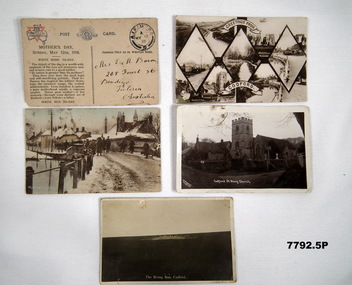
... Baron to Doris dated 1 September 1918'. 4. Codford, St Mary Church. Handwritten in black ink on back: This is a church in the centre of our camp. Bob'. 5. The Rising Sun, Codford. Handwritten in black ink on back: 'Dear Elsie, This Rising Sun was made by an Australian Soldier some time back. ...Baron to Doris dated 1 September 1918'. 4. Codford, St Mary Church. Handwritten in black ink on back: This is a church in the centre of our camp. Bob'. 5. The Rising Sun, Codford. Handwritten in black ink on back: 'Dear Elsie, This Rising Sun was made by an Australian Soldier some time back. ...Postcards sent by R.H. Baron depicting scenes of Codford when the AIF was encamped during WW1. Part of the Robert H. Baron, No. 3596 and Cooper Collections. See Catalogue No. 1981P for details of Baron's service.1. Plain postcard with no photograph. Front has printed Mother's Day message. Y.M.C.A. logo and Rising Sun badge printed at top. Space for written address. Postmark top R.H. Corner. 2. Collation of black and white photographs of scenes from a village. 3. Coloured photograph of a group of soldiers in winter uniform and standing on a snow covered road. Buildings in background. 4. Black and white photograph of a church with square tower, Houses next door. Graveyard next to church. 5. Black and white photograph of a Rising Sun badge carved into a hill side.1. Handwritten in black ink on back: 'Letter to R.H. Baron's mother, dated 9 May 1918'. 2. Greetings from Codford. Handwritten in black ink on back: Letter to R.H. Baron's mother dated 13 July 1918. 3. Winter at Codford. Handwritten in black ink on back: 'Letter from R.H. Baron to Doris dated 1 September 1918'. 4. Codford, St Mary Church. Handwritten in black ink on back: This is a church in the centre of our camp. Bob'. 5. The Rising Sun, Codford. Handwritten in black ink on back: 'Dear Elsie, This Rising Sun was made by an Australian Soldier some time back. Bob'. robert h. baron, cooper collection, postcards, codford uk, aif camp - ww1 -
 Bendigo Military Museum
Postcard - POSTCARD - 14TH TRAINING BATTALION BAND, c1918 - 1919
... Baron.' Twelve black and white and coloured postcards featuring views of various English towns. Some ...Postcards relate to R.H. Baron's role in the 14th Training Battalion Band. They document various places where the band played. Part of the "Robert H. Baron" No. 3596 and Cooper Collections. See Cat No. 1981P for details of Baron's service.Twelve black and white and coloured postcards featuring views of various English towns. Some cards have handwritten letters and anecdotes on the back.1. Lichfield Cathedral, Lady Chapel. Handwritten on back in black ink: 'Letter to R.H. Baron's mother dated 29.1.18.' 2. Bone Street, Lichfield. Handwritten on back in black ink: 'Anecdote, signed, Bob.' 3. The Green, East Knoyle: Handwritten on back in black ink: Letter to R.H. Baron's mother! 4. Wyndham Memorial, East Knoyle. Handwritten on back in black ink: 'R.H. Baron 14 T.B. Band. 5. Woking, Inkerman Barracks. Handwritten on back in black ink: 'Letter to R.H. Baron's sister Elsie.' 6. Chertsey Road and Red House Hotel, Woking. Handwritten on back in black ink: 'I spent a few days here while I was on leave, Bob.' 7. View at Old Woking from Bridge. Handwritten on back in black ink. 'No. 3596, L/Corp R.H. Baron, 14 T.B. Band, 57 Battalion, Aust Imp. Forces, Hurdcott, England.' 8. York Road, Woking. Handwritten on back in black ink: 'Letter to R.H. Baron's mother dated 11.1.19.' 9. Thinking of you at GILLINGHAM. Handwritten on back in black ink: 'This is the place of our last trip with the band, Bob.' 10. Glastonbury Abbey. Handwritten on back in black ink. Letter signed Bob.' 11. Station Rd. Gillingham. Handwritten on back in black ink: 'Letter from R.H. Baron to his friend, Doris. Dated August 2nd (1918?).' 12. Newbury, Gillingham. Handwritten on back in black ink. 'Partial letter written by R.H. Baron.'robert h. baron, cooper collection, postcards, 14th training battalion band, 57th battalion, ww1 -
 Bendigo Military Museum
Document - VARIOUS RECORDS/DOCUMENTS
... Also various documentation of his service records, enlistmebnt and demobilisation and some information on the Red Baron....Baron Blue folder of various records and documents of J>A>R> Alexander Np. 2237. Includes detailed history of his service and time in service. Also various documentation of his service records, enlistmebnt and demobilisation and some information on the Red Baron. ...Detailed records of his service with all his postings, oaths, medicals, casualty and demob. Re; "John Arthur Remington Alexander", No. 2237 AFC, 3rd Squadron. Also a number of items relating to the death of the Red Baron. Refer Cat No 7820.Blue folder of various records and documents of J>A>R> Alexander Np. 2237. Includes detailed history of his service and time in service. Also various documentation of his service records, enlistmebnt and demobilisation and some information on the Red Baron.ww1, service records, john arthur remington alexander, red baron -
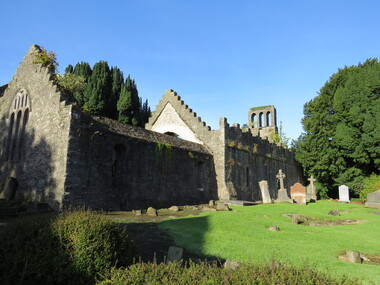 Ballarat Heritage Services
Digital photograph, Gravestones at Malahide Castle, Ireland, 2016, 09/2016
... Baron Talbot and on his death in 1973, passed to his sister, Rose. In 1975, Rose sold the castle to the Irish State, partly to fund inheritance taxes. Many of the contents, notably furnishings, had been sold in advance, leading to considerable public controversy, but private and governmental parties were able to retrieve some. https://en.wikipedia.org/wiki/Malahide_Castle...Baron Talbot and on his death in 1973, passed to his sister, Rose. In 1975, Rose sold the castle to the Irish State, partly to fund inheritance taxes. Many of the contents, notably furnishings, had been sold in advance, leading to considerable public controversy, but private and governmental parties were able to retrieve some. https://en.wikipedia.org/wiki/Malahide_Castle gravestones, malahide castle, ireland, cemetery Malahid castle; talbot; ireland; Richard Talbot; Dublin Digital photographs Gravestones at Malahide Castle, Ireland, 2016 Digital photograph ...Generations of the Talbot family have called Malahide Castle home. They played significant roles in Irish political and social life. Set in 260 acres the castle is only 10 minutes from Dublin airport. https://www.malahidecastleandgardens.ie/ The estate began in 1185, when Richard Talbot, a knight who accompanied Henry II to Ireland in 1174, was granted the "lands and harbour of Malahide." The oldest parts of the castle date back to the 12th century and it was home to the Talbot family for 791 years, from 1185 until 1976, the only exception being the period from 1649–60, when Oliver Cromwell granted it to Miles Corbet after the Cromwellian conquest of Ireland; Corbet was hanged following the demise of Cromwell, and the castle was restored to the Talbots. The building was notably enlarged in the reign of Edward IV, and the towers added in 1765. The estate survived such losses as the Battle of the Boyne, when fourteen members of the owner's family sat down to breakfast in the Great Hall, and all were dead by evening, and the Penal Laws, even though the family remained Roman Catholic until 1774. In 1918 during the First World War a mooring-out base for airships was established in the grounds of the castle, used by airships from RNAS Anglesey in Wales which conducted anti-submarine operations in the Irish Sea. There were plans to base airships here from 1919, but these were abandoned at the end of the war.[1] In the 1920s the private papers of James Boswell were discovered in the castle, and sold to American collector Ralph H. Isham by Boswell's great-great-grandson Lord Talbot de Malahide. Malahide Castle and Demesne was eventually inherited by the 7th Baron Talbot and on his death in 1973, passed to his sister, Rose. In 1975, Rose sold the castle to the Irish State, partly to fund inheritance taxes. Many of the contents, notably furnishings, had been sold in advance, leading to considerable public controversy, but private and governmental parties were able to retrieve some. https://en.wikipedia.org/wiki/Malahide_CastleDigital photographsgravestones, malahide castle, ireland, cemetery, malahid castle; talbot; ireland; richard talbot; dublin -
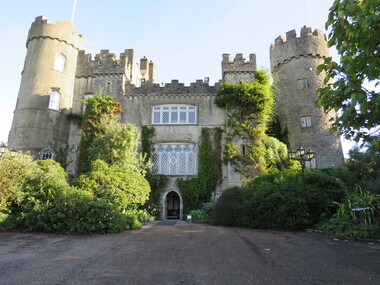 Ballarat Heritage Services
Digital Photograph, Malahide Castle, Ireland, 2016, 09/2016
... Baron Talbot and on his death in 1973, passed to his sister, Rose. In 1975, Rose sold the castle to the Irish State, partly to fund inheritance taxes. Many of the contents, notably furnishings, had been sold in advance, leading to considerable public controversy, but private and governmental parties were able to retrieve some. https://en.wikipedia.org/wiki/Malahide_Castle, Talb...Baron Talbot and on his death in 1973, passed to his sister, Rose. In 1975, Rose sold the castle to the Irish State, partly to fund inheritance taxes. Many of the contents, notably furnishings, had been sold in advance, leading to considerable public controversy, but private and governmental parties were able to retrieve some. https://en.wikipedia.org/wiki/Malahide_Castle, Talb malahide castle, ireland Talbot, Richard Talbot Colour photograph of Malahide Castle, Ireland. ...Generations of the Talbot family have called Malahide Castle home. They played significant roles in Irish political and social life. Set in 260 acres the castle is only 10 minutes from Dublin airport. https://www.malahidecastleandgardens.ie/ The estate began in 1185, when Richard Talbot, a knight who accompanied Henry II to Ireland in 1174, was granted the "lands and harbour of Malahide." The oldest parts of the castle date back to the 12th century and it was home to the Talbot family for 791 years, from 1185 until 1976, the only exception being the period from 1649–60, when Oliver Cromwell granted it to Miles Corbet after the Cromwellian conquest of Ireland; Corbet was hanged following the demise of Cromwell, and the castle was restored to the Talbots. The building was notably enlarged in the reign of Edward IV, and the towers added in 1765. The estate survived such losses as the Battle of the Boyne, when fourteen members of the owner's family sat down to breakfast in the Great Hall, and all were dead by evening, and the Penal Laws, even though the family remained Roman Catholic until 1774. In 1918 during the First World War a mooring-out base for airships was established in the grounds of the castle, used by airships from RNAS Anglesey in Wales which conducted anti-submarine operations in the Irish Sea. There were plans to base airships here from 1919, but these were abandoned at the end of the war.[1] In the 1920s the private papers of James Boswell were discovered in the castle, and sold to American collector Ralph H. Isham by Boswell's great-great-grandson Lord Talbot de Malahide. Malahide Castle and Demesne was eventually inherited by the 7th Baron Talbot and on his death in 1973, passed to his sister, Rose. In 1975, Rose sold the castle to the Irish State, partly to fund inheritance taxes. Many of the contents, notably furnishings, had been sold in advance, leading to considerable public controversy, but private and governmental parties were able to retrieve some. https://en.wikipedia.org/wiki/Malahide_Castle, TalbColour photograph of Malahide Castle, Ireland.malahide castle, ireland, talbot, richard talbot -
 Kilmore Historical Society
Book, Baron Ferdinand von Mueller et al, PLANTS INDIGENOUS TO THE COLONY OF VICTORIA, 1860
... Some previous minor insect damage. Illustrated. Poor condition. PLANTS INDIGENOUS TO THE COLONY OF VICTORIA Book Baron Ferdinand von Mueller F. ...Frederick von Mueller's book of lithographs; plants indigenous to Victoria.Green clothbound hardcover, watermark patterned cloth, faded with some wear to extremities. Title on spine, gilt lettering. Plates XVIII - LXXI plus seven supplementary plates, descriptor pages opposite. Cover detached at front and rear hinges, all pages detached apart from the rear seven. Foxing throughout, some plates water stained. Some previous minor insect damage. Illustrated. Poor condition. non-fictionFrederick von Mueller's book of lithographs; plants indigenous to Victoria. botany, victoria -
 Kilmore Historical Society
Book, Baron Ferdinand von Mueller et al, EUCOLYPTOGRAPHIA. Eighth Decade, 1882
... Baron Ferdinand Mueller, Government Botanist for the Colony of Victoria published. Early definitive study of the eucalypts of Australia botany eucalypts australia A Descriptive Atlas of the Eucalypts of Australia and the Adjoining Islands. Circular stamp, 'Kilmore Mechanics Institute", top right corner front cover. Light card cover, some ...A Descriptive Atlas of the Eucalypts of Australia and the Adjoining Islands.Light card cover, some staining, central longitudinal crease back and front covers. Discoloration from light exposure. Blue cloth backstrip on spine. Minor insect damage top left corner back cover. Light foxing throughout. Binding intact. Good condition.non-fictionA Descriptive Atlas of the Eucalypts of Australia and the Adjoining Islands.botany, eucalypts, australia -
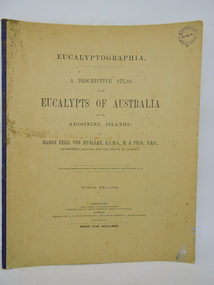 Kilmore Historical Society
Book, Baron Ferdinand von Mueller et al, EUCALYPTOGRAPHIA. Ninth Decade, 1883
... some wear at top and bottom. Light foxing throughout. Minor insect damage to rear endpaper. Binding intact. Good condition. EUCALYPTOGRAPHIA. Ninth Decade. Book Baron ...A descriptive atlas of the eucalypts of Australia and the adjoining islands.Light card cover, some staining, discoloration due to light exposure. Light vertical crease probably due to folding. Blue cloth back strip on spine, some wear at top and bottom. Light foxing throughout. Minor insect damage to rear endpaper. Binding intact. Good condition.non-fictionA descriptive atlas of the eucalypts of Australia and the adjoining islands.botany, eucalypts, australia -
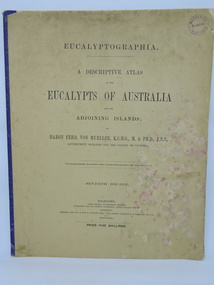 Kilmore Historical Society
Book, Baron Ferdinand von Mueller et al, EUCALYPTOGRAPHIA. Seventh Decade, 1880
... Baron Ferdinand von Mueller, Government Botanist for Victoria. An early definitive study of Australian Eucalypts. botany eucalypts australia A descriptive atlas of the Eucalypts of Australia and the adjoining islands Circular stamp top right front cover - "Mechanics Institute Kilmore". Light card cover, mould and mildew staining, discoloration from light exposure. Minor insect damage to top right front cover. Mould staining front four pages. Mildew & fluid stains through out. Some ...A descriptive atlas of the Eucalypts of Australia and the adjoining islandsLight card cover, mould and mildew staining, discoloration from light exposure. Minor insect damage to top right front cover. Mould staining front four pages. Mildew & fluid stains through out. Some foxing throughout. Blue cloth backstrip on spine, worn at top and bottom. Binding intact. Fair condition.non-fictionA descriptive atlas of the Eucalypts of Australia and the adjoining islandsbotany, eucalypts, australia
