
Showing 5 items matching "barque nelson"
-
 Port Melbourne Historical & Preservation Society
Book, Paul W WRIGHT, Piracy in the Bay, 2025
... Barque Nelson...The donor's great-great uncle pf Captain Walter WRIGHT, master of the barque, Nelson. from which the gold was stolen. ...The blue covered book "Melbourne 1852, Piracy on the Bay, The Great Nelson Gold Robbery" tells the story of the 1852 theft of 8,000 ounces of gold from the barque Nelson....The donor's great-great uncle pf Captain Walter WRIGHT, master of the barque, Nelson. from which the gold was stolen. ...The donor's great-great uncle pf Captain Walter WRIGHT, master of the barque, Nelson. from which the gold was stolen. The 22 gold robbers stole two whaleboats belong to Wilbraham LIARDET, owner of the Pier Hotel.The blue covered book "Melbourne 1852, Piracy on the Bay, The Great Nelson Gold Robbery" tells the story of the 1852 theft of 8,000 ounces of gold from the barque Nelson.barque nelson, captain walter wright, law, transport - shipping, wilbraham liardet, pier hotel -
 Victoria Police Museum
Photograph, Criminal Photograph James Duncan
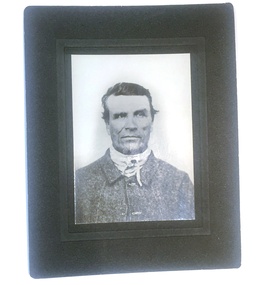
... The robbery of the barque 'Nelson' is one of the most notorious crimes of the 1850s. ...The robbery of the barque 'Nelson' is one of the most notorious crimes of the 1850s. ...James Duncan was tried for his involvement in the Nelson Robbery in 1852. The robbery of the barque 'Nelson' is one of the most notorious crimes of the 1850s. Duncan, along with James Morgan, John James, Stephen Fox and John Roberts , robbed the ship of over cash and gold nuggets at gun point while she was anchored at Hobsons Bay, off Melbourne. One of the victims of the robbery identified Duncan to police by his voice. Duncan was sentenced by the notorious Justice Redmond Barry to 15 years hard labour on the roads. Black and white photograph mounted on card.duncan, morgan, james, fox, roberts, nelson, nelson robbery, gold rush, redmond barry -
 Mission to Seafarers Victoria
Postcard - Photograph, Black and white, Green Bros, 1918
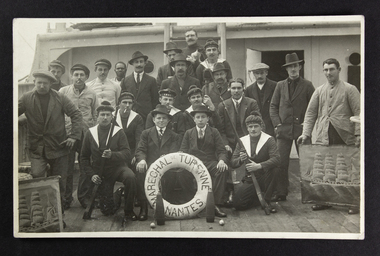
... barque...french...1918...marechal de turenne...nantes...wwi...world war one...first world war...great war...buoy...ship mascot...cat...a.m.b.c...bayonet...african...black man...apprentices...armement militaire des bâtiments de commerce...bachi...sailor beret...radio transmitters...telegraph...morse...telecommunication...german submarines...u-boats...cigarettes...smoking...williamstown...mission to seafarers...seamen's mission...nelson...At sea, the threat were the German submarines: the U-boats. crew barque french 1918 marechal de turenne nantes wwi world war one first world war great war buoy ship mascot cat a.m.b.c bayonet african black man apprentices armement militaire des bâtiments de commerce bachi sailor beret radio transmitters telegraph morse telecommunication german submarines u-boats cigarettes smoking williamstown mission to seafarers seamen's mission nelson place crews and ships Printed at the back: On the left: Green Bros/Photo/251 Nelson Place, Williamstown Centered: Post Card/Correspondence/Address only Top right corner for the stamp: Kodak Australia Written at the back: octobre 1918 Souvenir du navire Maréchal de Turenne Berthot Jacquet Renaut R. ...The Maréchal de Turenne, a three mast barque, was built in the "Chantiers de la Loire" shipyard in Nantes, port in the West of France, in 1899 by the company René Guillon et René Fleury. Capacity of 3000 barrels. The barque is called a "cap-hornier" in French. In a book written in 1973 by Georges Aubin, "La mer douce et cruelle", ed. France-Empire, a chapter "Une traversée du trois-mâts nantais Maréchal de Turenne" (page 285 to 319) tells how the ship was navigating from London to New-York to load barrels of petrol bound for Melbourne.The photograph demonstrates how prepared the merchant navy was during the First World War. The French Merchant Navy had additional men from the Navy: the six sailors in uniform and sailor "bachi" bonnet with the AMBC inscription were on the ship to support the crew in case of enemy attack. Two of those soldiers carry a bayonet. One of the sailors is wearing headphones: World War One saw telecommunication progress. At sea, the threat were the German submarines: the U-boats.The photograph depicting the 22 members of the crew was taken in October 1918 onboard the Marechal de Turenne. The two on the right and left side are holding a picture of the barque. One man at the back is holding a cat. 11 names are written at the back. The photograph was turned into a postcard.Printed at the back: On the left: Green Bros/Photo/251 Nelson Place, Williamstown Centered: Post Card/Correspondence/Address only Top right corner for the stamp: Kodak Australia Written at the back: octobre 1918 Souvenir du navire Maréchal de Turenne Berthot Jacquet Renaut R. Renaut H. Lecoq Mercier Berger Dubas Lorie Coat Tilloncrew, barque, french, 1918, marechal de turenne, nantes, wwi, world war one, first world war, great war, buoy, ship mascot, cat, a.m.b.c, bayonet, african, black man, apprentices, armement militaire des bâtiments de commerce, bachi, sailor beret, radio transmitters, telegraph, morse, telecommunication, german submarines, u-boats, cigarettes, smoking, williamstown, mission to seafarers, seamen's mission, nelson place, crews and ships -
Port Melbourne Historical & Preservation Society
Postcard - Lord Nelson, Tall Ships visit, Chris Piper, 2013
... Colour photo of the sailing ship "Lord Nelson", souvenir of the Tall Ships visit 2013. Launched 1985, owned by "Jubilee Sailing Trust", a 55 metre, 368 ton barque used as a trining ship for people of all physical abilities...Transport - Shipping SS Lord Nelson Tall Ships Colour photo of the sailing ship "Lord Nelson", souvenir of the Tall Ships visit 2013. Launched 1985, owned by "Jubilee Sailing Trust", a 55 metre, 368 ton barque used as a trining ship for people of all physical abilities Postcard Lord Nelson, Tall Ships visit Chris Piper ...Colour photo of the sailing ship "Lord Nelson", souvenir of the Tall Ships visit 2013. Launched 1985, owned by "Jubilee Sailing Trust", a 55 metre, 368 ton barque used as a trining ship for people of all physical abilitiestransport - shipping, ss lord nelson, tall ships -
 Williamstown Historical Society Inc
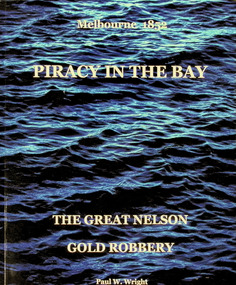
Book - Book - Piracy in the Bay, Wright, Paul W, Piracy in the Bay, Melbourne 1852. The Great Nelson Gold Robbery. Paul.W. Wright, 2025
... On a moolit night in 1852, the barque Nelson, was riding at anchor in Hobson's Bay in the then young colony of Victoria. ...From blub - "It remains the greatest act of theft in Australian history. On a moolit night in 1852, the barque Nelson, was riding at anchor in Hobson's Bay in the then young colony of Victoria. Aboard the vessel was an 8,000 ounce gold consignment bound for London. In an audacious assault, a band of heavily armed pirates took possession of the ship, shooting her chief officer and imprisoning her crew. The pirates then helped themselves to the gold. In today's money, their heist would be worth more than 35 million dollars. This makes the value of their theft three times greater than the famed Eugowra Gold Robbery. The ramifications of the Nelson piracy were enormous. It was an incident that capped widespread lawlessness throughout Victoria during the early gold rush years. With crime rampant, and the government held accountable, it was perhaps the final straw that saw a hapless Governor Charles La Trobe resign his tenure. And it was the main factor in instigating the end of convict transportation - at least to Tasmania. The author of this boook is the great-grandson of Captain Walter Wright, the commander of the Nelson at the time of the piracy.Softcover, 127 pages. Ocean image with text in whitenon-fictionFrom blub - "It remains the greatest act of theft in Australian history. On a moolit night in 1852, the barque Nelson, was riding at anchor in Hobson's Bay in the then young colony of Victoria. Aboard the vessel was an 8,000 ounce gold consignment bound for London. In an audacious assault, a band of heavily armed pirates took possession of the ship, shooting her chief officer and imprisoning her crew. The pirates then helped themselves to the gold. In today's money, their heist would be worth more than 35 million dollars. This makes the value of their theft three times greater than the famed Eugowra Gold Robbery. The ramifications of the Nelson piracy were enormous. It was an incident that capped widespread lawlessness throughout Victoria during the early gold rush years. With crime rampant, and the government held accountable, it was perhaps the final straw that saw a hapless Governor Charles La Trobe resign his tenure. And it was the main factor in instigating the end of convict transportation - at least to Tasmania. The author of this boook is the great-grandson of Captain Walter Wright, the commander of the Nelson at the time of the piracy.hms nelson, nelson gold robbery, piracy, transportation, gold rush, hobsons bay, gold heist
