
Showing 144 items matching "beach holidays"
-
 Peterborough History Group
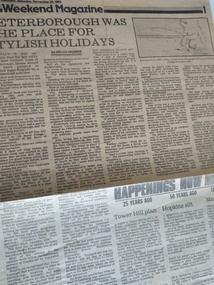
Newspaper, Peterborough was the place for stylish holidays
... ...beach holidays...Significant because of the people mentioned and the noted clientele; and the stories recounted. peterborough peterborough house peterborough hotel j. s. irvine coastal holidays the standard bruce morris beach holidays One page newspaper article talking about the history of the Irvine's in Peterborough. ...The article summarises early visitors' holiday experiences in Peterborough and Peterborough Hotel as the centre of activity. Mentions snippet from the Peterborough Hotel visitors book. Significant because of the people mentioned and the noted clientele; and the stories recounted.One page newspaper article talking about the history of the Irvine's in Peterborough. Printed in 1983peterborough, peterborough house, peterborough hotel, j. s. irvine, coastal holidays, the standard, bruce morris, beach holidays -
 Lakes Entrance Historical Society
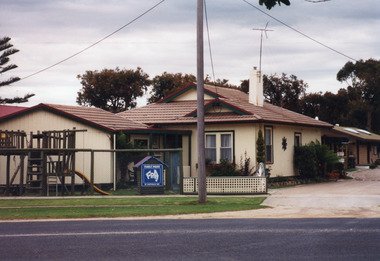
Photograph - Historic House, Echo Beach Holiday Park. 33 Roadknight Street, Lakes Entrance 2000
... Historic House, Echo Beach Holiday Park. 33 Roadknight Street, Lakes Entrance 2000...Colour photograph of Echo Beach Holiday Park. Shows a 1920's style dwelling with extension at front. ...Fences Houses Heritage Study Colour photograph of Echo Beach Holiday Park. Shows a 1920's style dwelling with extension at front. ...Built in 1924 by Vic Fish to a typical Dahlsen home plan. House let in 1939, but small bungalow retained for own use. Later bought by J Williams and set up as small camp park - Gelia Park.Colour photograph of Echo Beach Holiday Park. Shows a 1920's style dwelling with extension at front. Tiled roof, fibro cladding, at 33 Roadknight Street, Lakes Entrance Victoriafences, houses, heritage study -
 Port Fairy Historical Society Museum and Archives
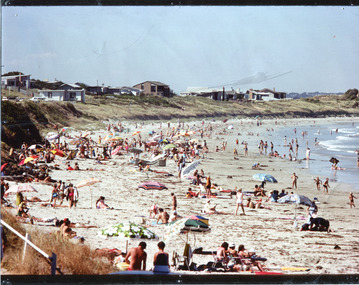
Photograph
... Coloured photograph of South Beach during summer holidays...East beach with the summer crowds East beach crwod sea ocean Coloured photograph of South Beach during summer holidays Photograph Photograph ...East beach with the summer crowdsColoured photograph of South Beach during summer holidayseast beach, crwod, sea, ocean -
 Phillip Island and District Historical Society Inc.
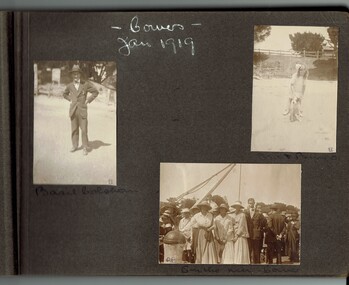
Album, Manton Family Photo Album, 1919
... Photos taken in 1919 of a beach holiday on the Island, mainly Cowes. Some photos taken on Cowes beach show George Cox's hut in the background and possibly George himself. ...Photos taken in 1919 of a beach holiday on the Island, mainly Cowes. Some photos taken on Cowes beach show George Cox's hut in the background and possibly George himself. ...Photos taken in 1919 of a beach holiday on the Island, mainly Cowes. Some photos taken on Cowes beach show George Cox's hut in the background and possibly George himself. HistoricalBrown rectangular suede album bound with cord. Pages are brown with small sepia photos and hand writing under most photos. manton family, basil coldsham, stan griffin, sig franklyn, wenty hobart, con royce, eleanor young, stanley hammond, hollyhoke family, dave & polly brown, mrs wilson, george cox, cowes pier -
 Warrnambool and District Historical Society Inc.
Glass, Warrnambool, Mid 20th century
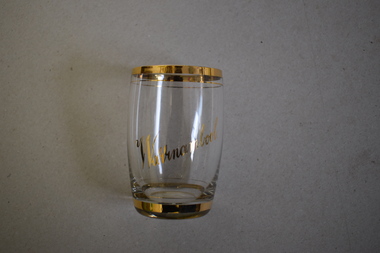
... Today the visitors come in winter to see the Southern Right whales at Logans Beach and other coastal areas and in summer they come for a beach holiday. ...Today the visitors come in winter to see the Southern Right whales at Logans Beach and other coastal areas and in summer they come for a beach holiday. This glass is retained as an example of the mid 20th century tourist souvenirs obtainable in Warrnambool. ...This glass has been purchased by a visitor to Warrnambool as a utilitarian souvenir of the visit. Tourism has been an important business in Warrnambool for over100 years. In the late 19th century Warrnambool was promoted as a spa resort with its mild climate, coastal swimming and hot and cold seawater baths. Today the visitors come in winter to see the Southern Right whales at Logans Beach and other coastal areas and in summer they come for a beach holiday. This glass is retained as an example of the mid 20th century tourist souvenirs obtainable in Warrnambool. This is a small glass tumbler, oval-shaped. The rim and the base are encircled by thick gold bands with smaller gold bands underneath the rim and above the bottom gold band. The word ‘Warrnambool’ is painted in gold on the side of the glassWarrnambooltourism in warrnambool, history of warrnambool -
 Warrnambool and District Historical Society Inc.
Cup, The Warrnambool Botanic Gardens, Mid 20th century
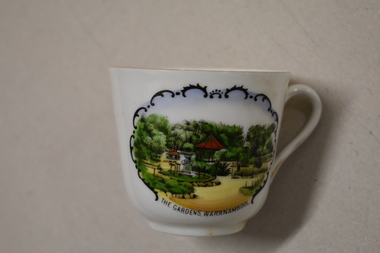
... Today visitors come in winter to see the Southern Right whales at Logans Beach and other coastal areas and they come in summer for a beach holiday. The William Guilfoyle-designed Warrnambool Botanic Gardens have always been an attraction for both locals and visitors. ...Today visitors come in winter to see the Southern Right whales at Logans Beach and other coastal areas and they come in summer for a beach holiday. The William Guilfoyle-designed Warrnambool Botanic Gardens have always been an attraction for both locals and visitors. ...Tourism has been an important industry in Warrnambool for over 100 years. In the late 19th century Warrnambool was promoted as a spa resort offering a mild climate, coastal swimming and hot and cold seawater baths. Today visitors come in winter to see the Southern Right whales at Logans Beach and other coastal areas and they come in summer for a beach holiday. The William Guilfoyle-designed Warrnambool Botanic Gardens have always been an attraction for both locals and visitors. This cup is retained as an example of the souvenirs bought by visitors to Warrnambool in the mid to late 20th century.This is a small white china cup with one handle and with a coloured image of the Warrnambool Botanic Gardens on the side of the cup.The Gardens Warrnambool Victoria Czecho-Slovakia tourism in warrnambool, history of warrnambool -
 Warrnambool and District Historical Society Inc.
Cuo, Westminster China Australia, Hopkins River Boat, Mid 20th century
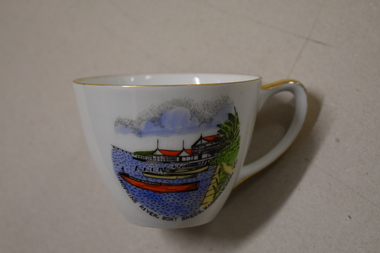
... Today tourists come in winter to see the Southern Right whales at Logans Beach and in summer they come for a beach holiday. The Hopkins River is a popular recreation destination with boating, fishing and water skiing. ...Today tourists come in winter to see the Southern Right whales at Logans Beach and in summer they come for a beach holiday. The Hopkins River is a popular recreation destination with boating, fishing and water skiing. ...Tourism has been an important industry in Warrnambool for over 100 years. In the late 19th century Warrnambool was promoted as a spa resort offering a mild climate, seaside swimming and hot and cold seawater baths. Today tourists come in winter to see the Southern Right whales at Logans Beach and in summer they come for a beach holiday. The Hopkins River is a popular recreation destination with boating, fishing and water skiing. The Proudfoots Boathouse was established in 1885 by Thomas Proudfoot. This cup is an interesting example of a Warrnambool tourist souvenir from the mid to late 20th century.This is a small white china cup. There is gold edging around the rim and on the handle. On the side of the cup is a coloured image of Proudfoots Boatsheds at the mouth of the Hopkins River in Warrnambool. Hopkins River Boatsheds Warrnambool Fine China Westminster China Australia tourism in warrnambool, history of warrnambool -
 Melbourne Legacy
Photograph - Junior legatee outing, Somers Camp 1979, 1979
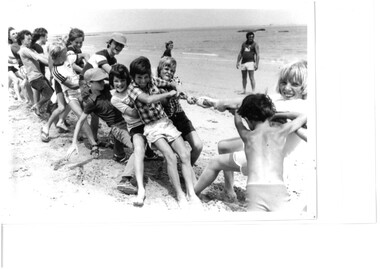
... The camps gave the children an opportunity of a summer beach holiday with other Legacy children....The camps gave the children an opportunity of a summer beach holiday with other Legacy children. A record of Junior Legatees enjoying an outing or a camp. somers camp camp junior legatee outing beach "Jan 79" in blue pen on reverse. ...Photograph of a large group of boys playing tug of war on beach. From the inscription it was at Somers Camp in January 1979. Melbourne Legacy provided camps for junior legatees. It started with outings to the property of Legacy founder, Legatee Stan Savige, who had a place in Balnarring. Permanent camp buildings were built. Other camp venues were used, such as Somers Education Department Camp. The camps gave the children an opportunity of a summer beach holiday with other Legacy children.A record of Junior Legatees enjoying an outing or a camp.Black and white photo of children playing tug of war on a beach January 1979."Jan 79" in blue pen on reverse. Stamped "Copyright / The Herald and Weekly Times" in blue ink. Stamped "The Property of Melbourne Legacy" in purple ink on reverse.somers camp, camp, junior legatee outing, beach -
 Melbourne Legacy
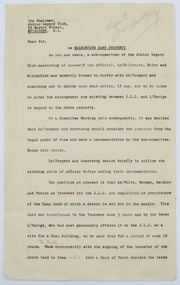
Letter, Re Balnarring Camp Property, c.1930
... The camps gave the children an opportunity of a summer beach holiday with other Legacy children....The camps gave the children an opportunity of a summer beach holiday with other Legacy children. An important record of the history of the land owned by Stan Savige that was used for Legacy Camp, it adds to the other material available about Legacy Camp at Somers. somers camp properties land transfer White foolscap paper with black typed x 5 pages. ...Referring to the legal history and transfer of land for the Junior Legacy Club Balnarring camp from Legatee Savige. Melbourne Legacy provided camps for junior legatees - the children of deceased servicemen. It started with outings to the property of Legacy founder, Legatee Stan Savige, who had a place in Balnarring. Permanent camp buildings were built in 1930. Lord Somers (Governor of Victoria) also ran a camp in the area and the area became known as Somers. These documents record the transfer of the land to Legacy. The camps gave the children an opportunity of a summer beach holiday with other Legacy children.An important record of the history of the land owned by Stan Savige that was used for Legacy Camp, it adds to the other material available about Legacy Camp at Somers.White foolscap paper with black typed x 5 pages. Single sided. Black type with red corrections and some grey lead remarks. Addressed to ‘The chairman,/ Junior Legacy Club,/ 55 Market Street,/ Melbourne. C.1. From ‘Yrs Faithfully/ sgd/ J.H. Armstrong and W. A. Tregent. See also collection item 00253. somers camp, properties, land transfer -
 Warrnambool and District Historical Society Inc.
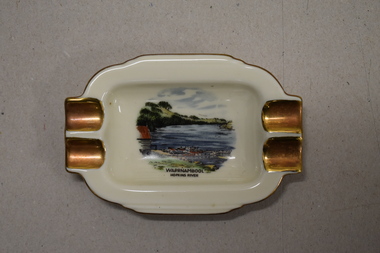
Ashtray, Alka Kunst, Warrnambool Hopkins River, c. 1960
... Today visitors come in winter for the May Racing Carnival and to see the Southern Right whales at Logans Beach and in summer they come for a beach holiday. The image on the dish shows the Warrnambool Hopkins River near its mouth. ...Today visitors come in winter for the May Racing Carnival and to see the Southern Right whales at Logans Beach and in summer they come for a beach holiday. The image on the dish shows the Warrnambool Hopkins River near its mouth. ...This item was bought as a souvenir of Warrnambool in the mid 20th century when cigarette smoking was more widespread and was socially acceptable. Tourism in Warrnambool has been an important industry for over 100 years. In the late 19th century Warrnambool was promoted as a spa resort with its mild climate, sea bathing and its hot and cold sea water baths complex. Today visitors come in winter for the May Racing Carnival and to see the Southern Right whales at Logans Beach and in summer they come for a beach holiday. The image on the dish shows the Warrnambool Hopkins River near its mouth. The boatshed is no longer there with sections of the building being relocated to a site in Henna Street and used for indoor recreational purposes.This ash tray is retained as an example of a local tourist souvenir sold to tourists in the 1960s. This is a small white china dish made in an oval shape and slightly raised from the surface on which it sits. The ends of the dish have four gold coloured indents for stubbing cigarettes. There is a gold rim around the edge of the dish and a coloured image of the old boat shed and jetty on the Hopkins River in Warrnambool. On the base of the dish is the logo of the maker and printed details.Warrnambool Hopkins River Alka Kunst Bavaria tourism in warrnambool, history of warrnambool -
 Melbourne Legacy
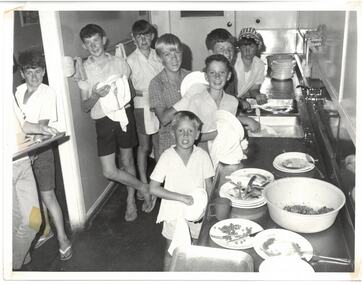
Photograph - Junior legatee outing, Camp, 01/1968
... The camps gave the children an opportunity of a summer beach holiday with other Legacy children. Other camp venues were used, such as Somers Education Department Camp. ...The camps gave the children an opportunity of a summer beach holiday with other Legacy children. Other camp venues were used, such as Somers Education Department Camp. ...A photo of 8 boys in a camp kitchen cleaning up after a meal. From the inscriptions it is Somers Camp in January 1968. Melbourne Legacy provided camps for junior legatees - the children of deceased servicemen. It started with outings to the property of Legacy founder, Legatee Stan Savige, who had a place in Balnarring. Permanent camp buildings were built. The camps gave the children an opportunity of a summer beach holiday with other Legacy children. Other camp venues were used, such as Somers Education Department Camp. It came from a Legacy envelope marked "P6 Junior Legatee Camps and Hols" in red pen, and dated Jan 1977 in pencil. The contents will be items 00418 to 00425. A record of Junior Legatee camps.Black and white photo of boys cleaning up the camp kitchen.Legacy P6 in blue pen. Stamped "The Property of Melbourne Legacy" and 19 Jan 1968 in purple ink. Stamped "Copyright Herald and Weekly Times" in blue ink. Paper label typed in black ink "(k) After a 'dip in the briny' and a big meal, even washing up the dishes is fun for these country Junior Legatees at our Somers Camp." Also "K" underlined twice in black texta.somers camp, junior legatee outing, kitchens -
 Melbourne Legacy
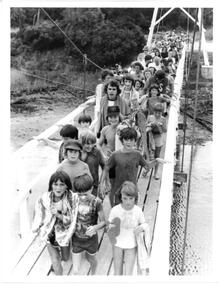
Photograph - Junior legatee outing, Somers Camp 1979, 01/1979
... The camps gave the children an opportunity of a summer beach holiday with other Legacy children. It started with outings to the property of Legacy founder, Legatee Stan Savige, who had a place in Balnarring/Somers, close to the beach. ...The camps gave the children an opportunity of a summer beach holiday with other Legacy children. It started with outings to the property of Legacy founder, Legatee Stan Savige, who had a place in Balnarring/Somers, close to the beach. ...A photo of a large group of children crossing a bridge enroute to the beach. It came from an envelope with other camp photos. The Legacy envelope was marked "P6 Junior Legatee Camps and Hols" in red pen, and dated Jan 1977 in pencil. The contents will be items 00418 to 00425. Melbourne Legacy provides camps for junior legatees. The camps gave the children an opportunity of a summer beach holiday with other Legacy children. It started with outings to the property of Legacy founder, Legatee Stan Savige, who had a place in Balnarring/Somers, close to the beach. Permanent camp buildings were built in 1930. Legacy Somers Camps continued intermittently at Stan's property until it was decided in 1951 to make other arrangements for holidays. A record of Junior Legatee camps.Black and white photo of children crossing a bridge at the beach.Handwritten on back "Jan 1979" in blue pen. Stamped "The property of Melbourne Legacy" in purple ink. Stamped "Copyright The Herald and Weekly Times" in blue ink. junior legatee outing, bridges, beach, somers camp -
 Melbourne Legacy
Photograph - Junior legatee outing, Somers Camp
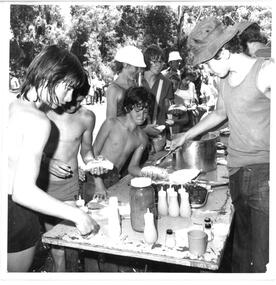
... The camps gave the children an opportunity of a summer beach holiday with other Legacy children. ...The camps gave the children an opportunity of a summer beach holiday with other Legacy children. A record of Junior Legatee camps. somers camp junior legatee outing P6 / Legacy / 4 in blue pen. ...A photo of boys in line receiving a meal at a camp at an unknown camp or date. It came from an envelope with other Camp photos of varying dates. The Legacy envelope was marked "P6 Junior Legatee Camps and Hols" in red pen, and dated Jan 1977 in pencil. The contents will be items 00418 to 00425. Melbourne Legacy arranged many events for Junior Legatees to experience. For many years a regular event was a two week camp at Somers Camp. It started in the 1930s with outings to the property of Legacy founder, Legatee Stan Savige, who had a place in Balnarring/Somers. Permanent camp buildings were built and used up to 1951. The camps gave the children an opportunity of a summer beach holiday with other Legacy children. A record of Junior Legatee camps.Black and white photo of boys being fed at a camp.P6 / Legacy / 4 in blue pen. Stamped "Copyright Herald and Weekly Times" in blue ink. somers camp, junior legatee outing -
 Melbourne Legacy
Photograph, Legacy camp, Balnarring East, 1929, 1929
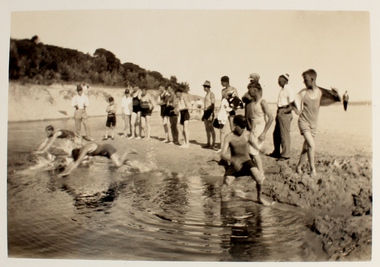
... The camps gave the children an opportunity of a summer beach holiday with other Legacy children....The camps gave the children an opportunity of a summer beach holiday with other Legacy children. A visual record of a camp run for Junior Legatees, with founder Stan Savige in one of the photographs, showing the accommodation and activities. camp stan savige founding legatee somers camp Wallet: 00061.1 “77283” (pencil), Kodak (Australasia) marketing text Photos: 00061.2 “Legacy Camp, Balnarring Xmas 1930/Taken by Aaron Beattie/Pat Hanna rear/Bill Pearce Lfront Lyn Rule/Donovan Joynt Centre Front/Carl Carlton Right Front/Child unknown/extreme left 2 unknown poss. from Bendigo Club” 00061.3 “N 481” 00061.5 “N 481” 00061.6 “Legacy Club Camp Hut/Balnarring East/ 7. ...One of the earliest camps held for Junior Legatees, showing tents, charabancs and fashions of the day. Legatee Stan Savige had a property in the Balnarring area and some camps were held on his property. Names noted on the back of the photos include: Pat Hanna, Aaron Beattie, Stan Savige, Sandy Lowe, Bill Pearce, Lyn Rule, Donovan Joynt, Carl Carleton, George Collins, Bill Pearce, Rupert Hely, Norman Stafford. Some of these were founding legatees. Melbourne Legacy provided camps for junior legatees - the children of deceased servicemen. It started in the early years of Legacy with outings to the property of Legacy founder, Legatee Stan Savige, who had a place in Balnarring. Permanent camp buildings were built in the 1930s. The camps gave the children an opportunity of a summer beach holiday with other Legacy children.A visual record of a camp run for Junior Legatees, with founder Stan Savige in one of the photographs, showing the accommodation and activities.Folding wallet, brown and cream with black printing, set of sepia photos varying sizes, 1 negative for 00061.7Wallet: 00061.1 “77283” (pencil), Kodak (Australasia) marketing text Photos: 00061.2 “Legacy Camp, Balnarring Xmas 1930/Taken by Aaron Beattie/Pat Hanna rear/Bill Pearce Lfront Lyn Rule/Donovan Joynt Centre Front/Carl Carlton Right Front/Child unknown/extreme left 2 unknown poss. from Bendigo Club” 00061.3 “N 481” 00061.5 “N 481” 00061.6 “Legacy Club Camp Hut/Balnarring East/ 7. Dec 1929” 00061.7 “N 481” 00061.8 “L to R/Stan Savige, George Collins, Bill Pearce/Sandy Lowe Rupert Hely/Norman Stafford/413” 00061.9 “738” 00061.10 “N 481” 00061.11 “N 481” 00061.12 “ Printer Harringtons/4 43” 00061.13 “738”camp, stan savige, founding legatee, somers camp -
 Melbourne Legacy
Photograph - Junior legatee outing, Camp 1973, 01/1973
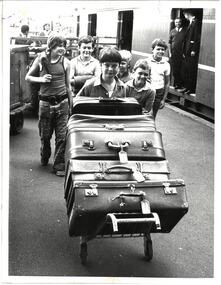
... The camps gave the children an opportunity of a summer beach holiday with other Legacy children. It started with outings to the property of Legacy founder, Legatee Stan Savige, who had a place in Balnarring/Somers, close to the beach. ...The camps gave the children an opportunity of a summer beach holiday with other Legacy children. It started with outings to the property of Legacy founder, Legatee Stan Savige, who had a place in Balnarring/Somers, close to the beach. ...A photo of 6 boys with a trolley of suitcases at Spencer Street Railway Station, Melbourne (since renamed Southern Cross Station). They have arrived from country towns to attend Legacy Somers Camp in January 1973. It came from an envelope with other camp photos. The Legacy envelope was marked "P6 Junior Legatee Camps and Hols" in red pen, and dated Jan 1977 in pencil. The envelope contents are items 00418 to 00425. Melbourne Legacy provides camps for junior legatees. The camps gave the children an opportunity of a summer beach holiday with other Legacy children. It started with outings to the property of Legacy founder, Legatee Stan Savige, who had a place in Balnarring/Somers, close to the beach. Permanent camp buildings were built in 1930. Legacy Somers Camps continued intermittently at Stan's property until it was decided in 1951 to make other arrangements for holidays. A record of Junior Legatee camps and shows style of suitcase used for travelling in 1970s.Black and white photo of children with their suitcases at Spencer St station.Handwritten on the back "P6 Incoming Camps and Hols / Legacy" in blue pen. Stamped "The Property of Melbourne Legacy" in purple ink. Stamped "Copyright The Herald and Weekly Times" in blue ink. Green paper label says "Country Junior Legatees, having arrived at Spencer Street Railway Station, Melbourne, move on to Somers for fun and games at Legacy's recent annual Holiday Camp held in January 1973."somers camp, junior legatee outing, trains -
 Melbourne Legacy
Photograph - Junior legatee outing, Somers Camp 1977, 01/1977
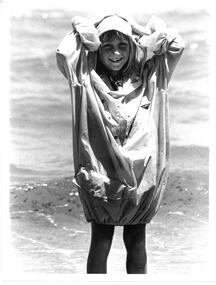
... The camps gave the children an opportunity of a summer beach holiday with other Legacy children. It started with outings to the property of Legacy founder, Legatee Stan Savige, who had a place in Balnarring/Somers, close to the beach. ...The camps gave the children an opportunity of a summer beach holiday with other Legacy children. It started with outings to the property of Legacy founder, Legatee Stan Savige, who had a place in Balnarring/Somers, close to the beach. ...A photo of a smiling girl wading in the ocean. It came from an envelope with other camp photos. Junior Legatees attended Somer's Camp over summer holidays organised by Melbourne Legacy. The newspaper article on 12 January 1977 says it was a day where junior legatees were treated to sailing activities by yachtsmen of Westernport. The boys were at Somers Camp and the girls had been holidaying in the Legacy Camp at Kew. The Legacy envelope was marked "P6 Junior Legatee Camps and Hols" in red pen, and dated Jan 1977 in pencil. The contents will be items 00418 to 00425. Melbourne Legacy provides camps for junior legatees. The camps gave the children an opportunity of a summer beach holiday with other Legacy children. It started with outings to the property of Legacy founder, Legatee Stan Savige, who had a place in Balnarring/Somers, close to the beach. Permanent camp buildings were built in 1930. Legacy Somers Camps continued intermittently at Stan's property until it was decided in 1951 to make other arrangements for holidays. A record of Junior Legatee camps.Black and white photo of a girl at the beach.Handwritten on the back "Holiday Camp at Somers" in blue pen. Stamped "Melbourne Legacy" and "11 Jan 1977" in purple ink. Stamped "Copyright The Herald and Weekly Times" in blue ink. somers camp, junior legatee outing, beach -
 Melbourne Legacy
Photograph - Junior legatee outing, Somers Camp 1977, 01/1977
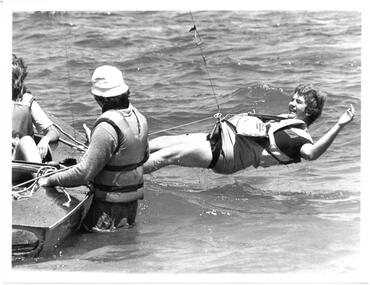
... The camps gave the children an opportunity of a summer beach holiday with other Legacy children. Other camp venues were used, such as Somers Education Department Camp....The camps gave the children an opportunity of a summer beach holiday with other Legacy children. Other camp venues were used, such as Somers Education Department Camp. ...A photo of a teenager hanging out from sail boat in a harness. It came from an envelope with other camp photos. The newspaper article on 12 January 1977 says it was a day where junior legatees were treated to sailing activities by yachtsmen of Westernport. The boy was Wayne Cowards 15, of Morwell getting some practice on the trapeze of a Flying Dutchman. The boys were at Somers Camp and the girls had been holidaying in the Legacy Camp at Kew. The Legacy envelope was marked "P6 Junior Legatee Camps and Hols" in red pen, and dated Jan 1977 in pencil. The contents will be items 00418 to 00425. Melbourne Legacy provided camps for junior legatees - the children of deceased servicemen. It started with outings to the property of Legacy founder, Legatee Stan Savige, who had a place in Balnarring. Permanent camp buildings were built. The camps gave the children an opportunity of a summer beach holiday with other Legacy children. Other camp venues were used, such as Somers Education Department Camp.A record of Junior Legatee camps.Black and white photo of a youth leaning out of a small sailboat.Handwritten on back "Holiday Camp at Somers" in blue pen. Stamped "Melbourne Legacy" and "11 Jan 1977" in purple ink. Stamped "Copyright The Herald and Weekly Times" in blue ink. somers camp, junior legatee outing, boats -
 Port Melbourne Historical & Preservation Society
Book, Holidays, 1955 - 1960
... Holidays was a 'John & Betty' primary school reading book. The cover has a blue background with the outlines of three children at the beach. ...Education - Primary Schools Nott Street State School Glen COSHAM Holidays was a 'John & Betty' primary school reading book. The cover has a blue background with the outlines of three children at the beach. ...Holidays was a 'John & Betty' primary school reading book. The cover has a blue background with the outlines of three children at the beach. The title 'Holidays' is in red. A Spelling List is pasted inside the back cover. The book was used by Glen COSHAM whilst attending Nott Street State School, Port Melbourne in the late 1950's. education - primary schools, nott street state school, glen cosham -
 Melbourne Legacy
Document - Report, Ownership and lease of permanent camp at Balnarring, 1932
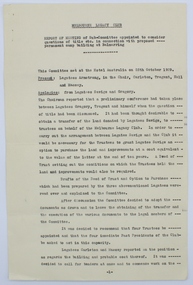
... The camps gave the children an opportunity of a summer beach holiday with other Legacy children. It started with camps on the property of Legacy founder, Legatee Stan Savige, who had a place in Balnarring/Somers, close to the beach. ...The camps gave the children an opportunity of a summer beach holiday with other Legacy children. It started with camps on the property of Legacy founder, Legatee Stan Savige, who had a place in Balnarring/Somers, close to the beach. ...Documents concerning Legacy having a legal hold over land owned by Sir Stanley Savige in Balnarring in order to erect permanent camp buildings. 00253.1 and .2 Report of Meeting of sub committee considering the questions of title re permanent camp building at Balnarring. Meeting held at Hotel Austalia 2nd October 1929. Legatees Armstrong, Carleton, Tregent, Hall and Massey in attendence. 00253.3 Signed letter from Charles H. Peters to Brian Armstrong, Messers Plante and Henty Solicitors. 00253.4, .5, .6, .7, .8 Report on Balnarring Camp Property. Same as collection item 00250 but with different corrections and additional notes. 00253.9 Cover letter to L Armstrong signed from Dudley Tregent. 00253.10 Letter to Blatchford, Deputy Chairman Junior Legacy Club from unknown author. 00253.11, .12 Minutes of Meeting of Board of Management. Camp Premises Agreement and negotiations mentioned on page 3. Melbourne Legacy provides camps for junior legatees. The camps gave the children an opportunity of a summer beach holiday with other Legacy children. It started with camps on the property of Legacy founder, Legatee Stan Savige, who had a place in Balnarring/Somers, close to the beach. Permanent camp buildings were built in 1930. These documents relate to those buildings. Legacy Somers Camps continued intermittently at Stan's property until it was decided in 1951 to make other arrangements for holidays. Including using two other camps in the Somers area: Lord Somers Camp and the Somers School Camp (owned by the Education Department). Camps provided for junior Legatees have been very important from early in Legacy's history. In the 1920s Legacy started camps at Stan Savige's property at Balnarring. By the 1930s a permanent camp kitchen and building had been built at Somers Camp. These documents relate to the official status of the property.White paper with black type x 12 pages relating to land ownership and lease questions around the Balnarring Camp. Six sets of documents kept together. Total of twelve pages, some double sided.land transfer, deed of trust, option to purchase, properties, savige property, legacy somers camp -
![Album (item) - Photographic Album, digital copy, Freda Kathleen Oxley (1882-1969), Album of photographs of a voyage to Australia and visit to the Mission to Seamen, Melbourne [picture] / Freda Oxley, 1925-1928](/media/collectors/4f729f5897f83e0308601603/items/672c59ac552587060c889944/item-media/67a6dc3cd7095b7115fefda2/item-fit-380x285.jpg?cb=6) Mission to Seafarers Victoria
Mission to Seafarers VictoriaAlbum (item) - Photographic Album, digital copy, Freda Kathleen Oxley (1882-1969), Album of photographs of a voyage to Australia and visit to the Mission to Seamen, Melbourne [picture] / Freda Oxley, 1925-1928
... Page 10: Ships in the Yarra River Page 11: Skaregrom and Mitchell ships Page 12-15: Picnics Page 16: Christmas at the Mission, tennis court Page 17: Picnic Page 18: Dora Walker's wedding Page 19: Beach holiday Freda went back to the UK in March 1929 on the Cathay. ...Page 10: Ships in the Yarra River Page 11: Skaregrom and Mitchell ships Page 12-15: Picnics Page 16: Christmas at the Mission, tennis court Page 17: Picnic Page 18: Dora Walker's wedding Page 19: Beach holiday Freda went back to the UK in March 1929 on the Cathay. ...This is a copy of an album of photographs held at the National Library of Australia. The album was photographed by Reverend's Weller grand daughter. Freda Oxley was a friend of the Wellers. She was born in Windsor in 1882 where Alexina Weller (nee Caley) was also born in 1885. She travelled on the SS Persic from England and arrived in 1925. She stayed at the Mission for several years, and became a host of the many picnics, making friends with the ladies from the Guild, taking photographs of people and events. Page 1 to 3: Outward Bound - SS Persic - September 26th .... November 12th 1925 Page 4: Interiors of the Mission to Seamen Melbourne Page 5: Mission to Seamen exteriors and wharf Page 6: Wellers with officers during lunch in the Manse Page 7-8: Mission's staff, garden, Wellers Page 8: Freda Oxley, the Wellers, Alexina Weller, Xmas Day 1927, Dora Walker and Rev. Weller Page 9: Gardens: the photographs show the garden's plants in its early years / Botanical Gardens / Nellie Melba's gardens in her estate Coombe: Walter Butler, the architect of the Mission had designed some extensions for Nellie Melba's estate and part of the gardens of the property, so it was likely through they acquaintance that the Mission's reverend and friends were invited. Page 10: Ships in the Yarra River Page 11: Skaregrom and Mitchell ships Page 12-15: Picnics Page 16: Christmas at the Mission, tennis court Page 17: Picnic Page 18: Dora Walker's wedding Page 19: Beach holiday Freda went back to the UK in March 1929 on the Cathay. But she came back to help the Mission as she's listed on the electoral roll in 1931 living there with the Olivers.This album provides valuable photographs of the Mission's interiors, garden, staff, guests and activities during the Wellers stay. It also provides the provenance of the Weller album held in the Mission's collection.The album was donated to the National Library of Australia by Miss Elizabeth Phillips, with her address in England, with a typed note attached that reads: 'These photographs were taken by my aunt Miss Freda Oxley between 1925 and 1928. She went out to Melbourne at that time and stayed at the Mission to Seamen with her friends the Revd Jack Weller and Mrs Weller. The Revd Weller later became Bishop of the Falkland Islands.'freda kathleen oxley 1882-1969, ss persic, gardens, botanical garden, picnics, officers, portsea, sydney, rev. w.m robertson, dora simpson nee walker, wedding, alice sibthorpe tracy, ethel augusta godfrey 1861-1935, royal botanical garden, nellie melba, coombe, zoo, seamen, sailors, walter richmond butler (1864–1949), juan oyarzo, john oyarzo, fern tree gully, kerferd family -
 Warrnambool and District Historical Society Inc.
Booklet - Warrnambool Tourist Booklet, Warrnambool Progress Association, Warrnambool On the Sea, Victoria, Australia, Tourist Guide, 1932
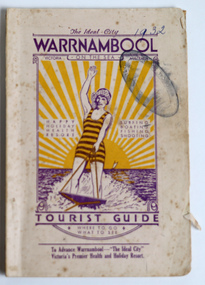
... Holiday Resort'. It also publicises the fact that Warrnambool was declared Victoria's 'Ideal City' in 1928. The Warrnambool Progress Association, formed in 1927, recognized the changing nature of tourism in Australia with the increasing ownership of motor vehicles and so the Warrnambool beaches and camping holidays were highlighted. ...Holiday Resort'. It also publicises the fact that Warrnambool was declared Victoria's 'Ideal City' in 1928. The Warrnambool Progress Association, formed in 1927, recognized the changing nature of tourism in Australia with the increasing ownership of motor vehicles and so the Warrnambool beaches and camping holidays were highlighted. ...Warrnambool Tourist GuideThis is a booklet with a cream cover featuring a sketch of a woman waterskiing and blue printing. The pages contain black and white photographs, advertisements, two maps and printed text. There is one fold-out page. The booklet is stapled and bound with glue.non-fictionWarrnambool Tourist Guidewarrnambool tourism, warrnambool progress association -
 Chelsea & District Historical Society Inc
Photograph - Morton Family, Mr Alfred Morton with his brothers and friends having a picnic at Morton's property, c 1890
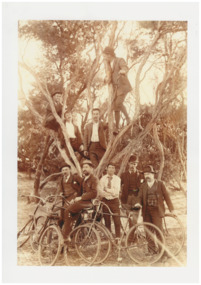
... In the late 1800s it was common for people from Melbourne and north of the city to travel to Chelsea area beaches for their holidays and many liked the area so much that, like the Mortons, they moved here permanently. ...In the late 1800s it was common for people from Melbourne and north of the city to travel to Chelsea area beaches for their holidays and many liked the area so much that, like the Mortons, they moved here permanently. ...Alfred Louis Morton (known as Louis) was born in Geelong in 1866, the fifth of eleven children of Mark Morton and Eliza nee Heard (married 1898). Alfred began work for the Post Office at South Yarra in the 1890s. In the late 1800s it was common for people from Melbourne and north of the city to travel to Chelsea area beaches for their holidays and many liked the area so much that, like the Mortons, they moved here permanently. In the 1890s Alfred’s sister, Mrs William Ashmore, built a weekend house at the foot of what is now Foy Avenue in Chelsea. The Morton family, including Alfred, visited the area often, camping on the foreshore during the 1890s. In 1911 Alfred moved his family permanently to a house on the corner of Morton Grove and Main Road Chelsea (now known as the Nepean Highway) on property that extended from the main road to the beach. This house was destroyed in the fire of 22 December 1913 which raged amongst the ti-tree on the foreshore between Aspendale and Chelsea. Many buildings were destroyed in this fire. The Argus newspaper reported on Wednesday 24 December that 94 houses were burnt with glowing embers blown a mile and half inland. According to the Argus but for the wide break provided by the Point Nepean Road (now the Nepean Highway) and the railway line, the scrub on the other side might have caught. The Morton children, Elsa and Ivan, attended Chelsea State School (now Chelsea Primary School) and Mrs Morton was active in the establishment of St Chad’s Church of England in Chelsea. At the age of 80 in 1945 Mr Morton was concerned about reports that English children had lost their toys due to the war and so he made (as part of a wider effort in Australia) 100 toy engines that were sent to England. He died in 1946 in Chelsea. Sepia photograph of Mr Alfred Morton with his brothers in law and friend at Carrum in the 1890's, some perched in a tree others grouped at the base of the tree, bikes in the foreground.bike riding, picnic, morton, morton grove, chelsea, carrum -
 Chelsea & District Historical Society Inc
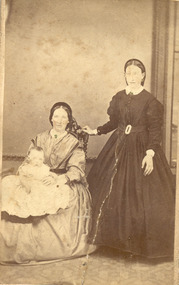
Photograph - Morton Family, Mr Alfred Morton with his mother and aunt, c 1866
... In the late 1800s it was common for people from Melbourne and north of the city to travel to Chelsea area beaches for their holidays and many liked the area so much that, like the Mortons, they moved here permanently. ...In the late 1800s it was common for people from Melbourne and north of the city to travel to Chelsea area beaches for their holidays and many liked the area so much that, like the Mortons, they moved here permanently. ...Alfred Louis Morton (known as Louis) was born in Geelong in 1866, the fifth of eleven children of Mark Morton and Eliza nee Heard (married 1898). Alfred began work for the Post Office at South Yarra in the 1890s. In the late 1800s it was common for people from Melbourne and north of the city to travel to Chelsea area beaches for their holidays and many liked the area so much that, like the Mortons, they moved here permanently. In the 1890s Alfred’s sister, Mrs William Ashmore, built a weekend house at the foot of what is now Foy Avenue in Chelsea. The Morton family, including Alfred, visited the area often, camping on the foreshore during the 1890s. In 1911 Alfred moved his family permanently to a house on the corner of Morton Grove and Main Road Chelsea (now known as the Nepean Highway) on property that extended from the main road to the beach. This house was destroyed in the fire of 22 December 1913 which raged amongst the ti-tree on the foreshore between Aspendale and Chelsea. Many buildings were destroyed in this fire. The Argus newspaper reported on Wednesday 24 December that 94 houses were burnt with glowing embers blown a mile and half inland. According to the Argus but for the wide break provided by the Point Nepean Road (now the Nepean Highway) and the railway line, the scrub on the other side might have caught. The Morton children, Elsa and Ivan, attended Chelsea State School (now Chelsea Primary School) and Mrs Morton was active in the establishment of St Chad’s Church of England in Chelsea. At the age of 80 in 1945 Mr Morton was concerned about reports that English children had lost their toys due to the war and so he made (as part of a wider effort in Australia) 100 toy engines that were sent to England. He died in 1946 in Chelsea. Sepia photograph of Mr Alfred Morton as a baby, on the lap of his mother, Eliza, sitting on a chair, and his aunt, standing.morton, mr alfred louis morton -
 Chelsea & District Historical Society Inc
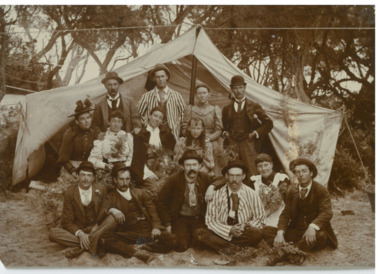
Photograph - Morton Family, Camping at Carrum, now Chelsea, c 1890
... In the late 1800s it was common for people from Melbourne and north of the city to travel to Chelsea area beaches for their holidays and many liked the area so much that, like the Mortons, they moved here permanently. ...In the late 1800s it was common for people from Melbourne and north of the city to travel to Chelsea area beaches for their holidays and many liked the area so much that, like the Mortons, they moved here permanently. ...Mr Alfred Morton with his sisters, brothers and friends camping at Carrum in the 1890's. This area was later called Chelsea. Alfred Louis Morton (known as Louis) was born in Geelong in 1866, the fifth of eleven children of Mark Morton and Eliza nee Heard (married 1898). Alfred began work for the Post Office at South Yarra in the 1890s. In the late 1800s it was common for people from Melbourne and north of the city to travel to Chelsea area beaches for their holidays and many liked the area so much that, like the Mortons, they moved here permanently. In the 1890s Alfred’s sister, Mrs William Ashmore, built a weekend house at the foot of what is now Foy Avenue in Chelsea. The Morton family, including Alfred, visited the area often, camping on the foreshore during the 1890s. In 1911 Alfred moved his family permanently to a house on the corner of Morton Grove and Main Road Chelsea (now known as the Nepean Highway) on property that extended from the main road to the beach. This house was destroyed in the fire of 22 December 1913 which raged amongst the ti-tree on the foreshore between Aspendale and Chelsea. Many buildings were destroyed in this fire. The Argus newspaper reported on Wednesday 24 December that 94 houses were burnt with glowing embers blown a mile and half inland. According to the Argus but for the wide break provided by the Point Nepean Road (now the Nepean Highway) and the railway line, the scrub on the other side might have caught. The Morton children, Elsa and Ivan, attended Chelsea State School (now Chelsea Primary School) and Mrs Morton was active in the establishment of St Chad’s Church of England in Chelsea. At the age of 80 in 1945 Mr Morton was concerned about reports that English children had lost their toys due to the war and so he made (as part of a wider effort in Australia) 100 toy engines that were sent to England. He died in 1946 in Chelsea.Sepia photograph of a of Mr Alfred Morton with his sisters, brothers and friends camping at Carrum in the 1890's. bike riding, picnic, morton, morton grove, chelsea, carrum, camping -
 Chelsea & District Historical Society Inc
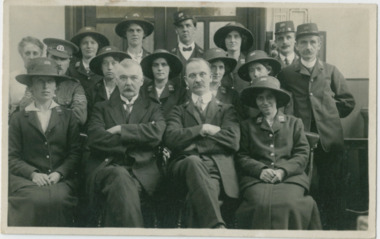
Photograph - Morton Family, Group of Postal workers at South Yarra Post Office, c 1910's
... In the late 1800s it was common for people from Melbourne and north of the city to travel to Chelsea area beaches for their holidays and many liked the area so much that, like the Mortons, they moved here permanently. ...In the late 1800s it was common for people from Melbourne and north of the city to travel to Chelsea area beaches for their holidays and many liked the area so much that, like the Mortons, they moved here permanently. ...Mr Alfred Morton with his sisters, brothers and friends camping at Carrum in the 1890's. This area was later called Chelsea. Alfred Louis Morton (known as Louis) was born in Geelong in 1866, the fifth of eleven children of Mark Morton and Eliza nee Heard (married 1898). Alfred began work for the Post Office at South Yarra in the 1890s. In the late 1800s it was common for people from Melbourne and north of the city to travel to Chelsea area beaches for their holidays and many liked the area so much that, like the Mortons, they moved here permanently. In the 1890s Alfred’s sister, Mrs William Ashmore, built a weekend house at the foot of what is now Foy Avenue in Chelsea. The Morton family, including Alfred, visited the area often, camping on the foreshore during the 1890s. In 1911 Alfred moved his family permanently to a house on the corner of Morton Grove and Main Road Chelsea (now known as the Nepean Highway) on property that extended from the main road to the beach. This house was destroyed in the fire of 22 December 1913 which raged amongst the ti-tree on the foreshore between Aspendale and Chelsea. Many buildings were destroyed in this fire. The Argus newspaper reported on Wednesday 24 December that 94 houses were burnt with glowing embers blown a mile and half inland. According to the Argus but for the wide break provided by the Point Nepean Road (now the Nepean Highway) and the railway line, the scrub on the other side might have caught. The Morton children, Elsa and Ivan, attended Chelsea State School (now Chelsea Primary School) and Mrs Morton was active in the establishment of St Chad’s Church of England in Chelsea. At the age of 80 in 1945 Mr Morton was concerned about reports that English children had lost their toys due to the war and so he made (as part of a wider effort in Australia) 100 toy engines that were sent to England. He died in 1946 in Chelsea.Black and white photo of postal works in front of the South Yarra Post Office. Members of the Morton family are in the group.morton, chelsea, carrum, post office, south yarra, postal workers -
 Chelsea & District Historical Society Inc
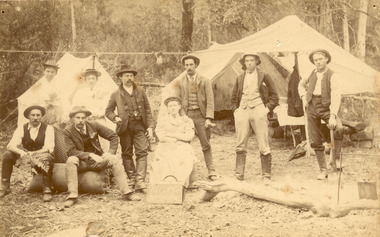
Photograph - Morton Family, Camping at Carrum, c 1890's
... In the late 1800s it was common for people from Melbourne and north of the city to travel to Chelsea area beaches for their holidays and many liked the area so much that, like the Mortons, they moved here permanently. ...In the late 1800s it was common for people from Melbourne and north of the city to travel to Chelsea area beaches for their holidays and many liked the area so much that, like the Mortons, they moved here permanently. ...Mr Alfred Morton with his sisters, brothers and friends camping at Carrum in the 1890's. This area was later called Chelsea. Alfred Louis Morton (known as Louis) was born in Geelong in 1866, the fifth of eleven children of Mark Morton and Eliza nee Heard (married 1898). Alfred began work for the Post Office at South Yarra in the 1890s. In the late 1800s it was common for people from Melbourne and north of the city to travel to Chelsea area beaches for their holidays and many liked the area so much that, like the Mortons, they moved here permanently. In the 1890s Alfred’s sister, Mrs William Ashmore, built a weekend house at the foot of what is now Foy Avenue in Chelsea. The Morton family, including Alfred, visited the area often, camping on the foreshore during the 1890s. In 1911 Alfred moved his family permanently to a house on the corner of Morton Grove and Main Road Chelsea (now known as the Nepean Highway) on property that extended from the main road to the beach. This house was destroyed in the fire of 22 December 1913 which raged amongst the ti-tree on the foreshore between Aspendale and Chelsea. Many buildings were destroyed in this fire. The Argus newspaper reported on Wednesday 24 December that 94 houses were burnt with glowing embers blown a mile and half inland. According to the Argus but for the wide break provided by the Point Nepean Road (now the Nepean Highway) and the railway line, the scrub on the other side might have caught. The Morton children, Elsa and Ivan, attended Chelsea State School (now Chelsea Primary School) and Mrs Morton was active in the establishment of St Chad’s Church of England in Chelsea. At the age of 80 in 1945 Mr Morton was concerned about reports that English children had lost their toys due to the war and so he made (as part of a wider effort in Australia) 100 toy engines that were sent to England. He died in 1946 in Chelsea.Sepia photo of members of the Morton family camping at Carrum (now Chelsea).morton, chelsea, carrum, post office, south yarra, camping, tents -
 Chelsea & District Historical Society Inc
Photograph - Morton Family, Camping at Carrum, c 1890's
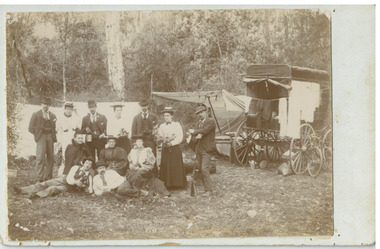
... In the late 1800s it was common for people from Melbourne and north of the city to travel to Chelsea area beaches for their holidays and many liked the area so much that, like the Mortons, they moved here permanently. ...In the late 1800s it was common for people from Melbourne and north of the city to travel to Chelsea area beaches for their holidays and many liked the area so much that, like the Mortons, they moved here permanently. ...Mr Alfred Morton with his sisters, brothers and friends camping at Carrum in the 1890's. This area was later called Chelsea. Alfred Louis Morton (known as Louis) was born in Geelong in 1866, the fifth of eleven children of Mark Morton and Eliza nee Heard (married 1898). Alfred began work for the Post Office at South Yarra in the 1890s. In the late 1800s it was common for people from Melbourne and north of the city to travel to Chelsea area beaches for their holidays and many liked the area so much that, like the Mortons, they moved here permanently. In the 1890s Alfred’s sister, Mrs William Ashmore, built a weekend house at the foot of what is now Foy Avenue in Chelsea. The Morton family, including Alfred, visited the area often, camping on the foreshore during the 1890s. In 1911 Alfred moved his family permanently to a house on the corner of Morton Grove and Main Road Chelsea (now known as the Nepean Highway) on property that extended from the main road to the beach. This house was destroyed in the fire of 22 December 1913 which raged amongst the ti-tree on the foreshore between Aspendale and Chelsea. Many buildings were destroyed in this fire. The Argus newspaper reported on Wednesday 24 December that 94 houses were burnt with glowing embers blown a mile and half inland. According to the Argus but for the wide break provided by the Point Nepean Road (now the Nepean Highway) and the railway line, the scrub on the other side might have caught. The Morton children, Elsa and Ivan, attended Chelsea State School (now Chelsea Primary School) and Mrs Morton was active in the establishment of St Chad’s Church of England in Chelsea. At the age of 80 in 1945 Mr Morton was concerned about reports that English children had lost their toys due to the war and so he made (as part of a wider effort in Australia) 100 toy engines that were sent to England. He died in 1946 in Chelsea.Sepia photo of members of the Morton family camping at Carrum (now Chelsea). Tents and a wagon in the backgroundmorton, chelsea, carrum, post office, south yarra, camping, tents, wagon -
 Chelsea & District Historical Society Inc
Photograph - Morton Family, Group of Postal workers at South Yarra Post Office
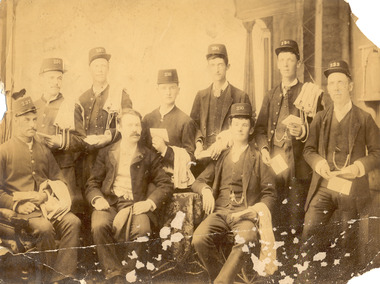
... In the late 1800s it was common for people from Melbourne and north of the city to travel to Chelsea area beaches for their holidays and many liked the area so much that, like the Mortons, they moved here permanently. ...In the late 1800s it was common for people from Melbourne and north of the city to travel to Chelsea area beaches for their holidays and many liked the area so much that, like the Mortons, they moved here permanently. ...Mr Alfred Morton with his sisters, brothers and friends camping at Carrum in the 1890's. This area was later called Chelsea. Alfred Louis Morton (known as Louis) was born in Geelong in 1866, the fifth of eleven children of Mark Morton and Eliza nee Heard (married 1898). Alfred began work for the Post Office at South Yarra in the 1890s. In the late 1800s it was common for people from Melbourne and north of the city to travel to Chelsea area beaches for their holidays and many liked the area so much that, like the Mortons, they moved here permanently. In the 1890s Alfred’s sister, Mrs William Ashmore, built a weekend house at the foot of what is now Foy Avenue in Chelsea. The Morton family, including Alfred, visited the area often, camping on the foreshore during the 1890s. In 1911 Alfred moved his family permanently to a house on the corner of Morton Grove and Main Road Chelsea (now known as the Nepean Highway) on property that extended from the main road to the beach. This house was destroyed in the fire of 22 December 1913 which raged amongst the ti-tree on the foreshore between Aspendale and Chelsea. Many buildings were destroyed in this fire. The Argus newspaper reported on Wednesday 24 December that 94 houses were burnt with glowing embers blown a mile and half inland. According to the Argus but for the wide break provided by the Point Nepean Road (now the Nepean Highway) and the railway line, the scrub on the other side might have caught. The Morton children, Elsa and Ivan, attended Chelsea State School (now Chelsea Primary School) and Mrs Morton was active in the establishment of St Chad’s Church of England in Chelsea. At the age of 80 in 1945 Mr Morton was concerned about reports that English children had lost their toys due to the war and so he made (as part of a wider effort in Australia) 100 toy engines that were sent to England. He died in 1946 in Chelsea.Sepia photo of nine postal workers at South Yarra Post Office. They are wearing hats each with a different number, some have postal bags and some with letters in their hands. Mr Morton is the only one not wearing a hat.morton, chelsea, carrum, post office, south yarra, postal workers, postal uniform -
 Chelsea & District Historical Society Inc
Photograph - Morton Family, Mr Morton in uniform, late 1880's
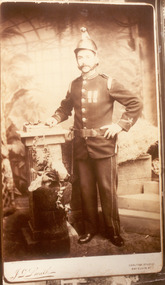
... In the late 1800s it was common for people from Melbourne and north of the city to travel to Chelsea area beaches for their holidays and many liked the area so much that, like the Mortons, they moved here permanently. ...In the late 1800s it was common for people from Melbourne and north of the city to travel to Chelsea area beaches for their holidays and many liked the area so much that, like the Mortons, they moved here permanently. ...Mr Alfred Morton with his sisters, brothers and friends camping at Carrum in the 1890's. This area was later called Chelsea. Alfred Louis Morton (known as Louis) was born in Geelong in 1866, the fifth of eleven children of Mark Morton and Eliza nee Heard (married 1898). Alfred began work for the Post Office at South Yarra in the 1890s. In the late 1800s it was common for people from Melbourne and north of the city to travel to Chelsea area beaches for their holidays and many liked the area so much that, like the Mortons, they moved here permanently. In the 1890s Alfred’s sister, Mrs William Ashmore, built a weekend house at the foot of what is now Foy Avenue in Chelsea. The Morton family, including Alfred, visited the area often, camping on the foreshore during the 1890s. In 1911 Alfred moved his family permanently to a house on the corner of Morton Grove and Main Road Chelsea (now known as the Nepean Highway) on property that extended from the main road to the beach. This house was destroyed in the fire of 22 December 1913 which raged amongst the ti-tree on the foreshore between Aspendale and Chelsea. Many buildings were destroyed in this fire. The Argus newspaper reported on Wednesday 24 December that 94 houses were burnt with glowing embers blown a mile and half inland. According to the Argus but for the wide break provided by the Point Nepean Road (now the Nepean Highway) and the railway line, the scrub on the other side might have caught. The Morton children, Elsa and Ivan, attended Chelsea State School (now Chelsea Primary School) and Mrs Morton was active in the establishment of St Chad’s Church of England in Chelsea. At the age of 80 in 1945 Mr Morton was concerned about reports that English children had lost their toys due to the war and so he made (as part of a wider effort in Australia) 100 toy engines that were sent to England. He died in 1946 in Chelsea.Sepia photo Mr Morton in Fireman Uniformmorton, chelsea, carrum, fireman uniform -
 Chelsea & District Historical Society Inc
Photograph - Morton Family, South Yarra Post Office - Postal workers
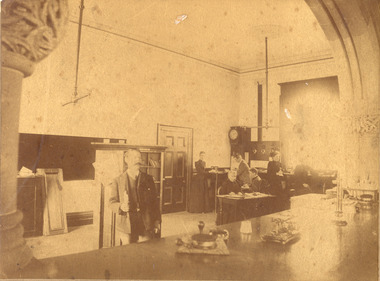
... In the late 1800s it was common for people from Melbourne and north of the city to travel to Chelsea area beaches for their holidays and many liked the area so much that, like the Mortons, they moved here permanently. ...In the late 1800s it was common for people from Melbourne and north of the city to travel to Chelsea area beaches for their holidays and many liked the area so much that, like the Mortons, they moved here permanently. ...Mr Alfred Morton with his sisters, brothers and friends camping at Carrum in the 1890's. This area was later called Chelsea. Alfred Louis Morton (known as Louis) was born in Geelong in 1866, the fifth of eleven children of Mark Morton and Eliza nee Heard (married 1898). Alfred began work for the Post Office at South Yarra in the 1890s. In the late 1800s it was common for people from Melbourne and north of the city to travel to Chelsea area beaches for their holidays and many liked the area so much that, like the Mortons, they moved here permanently. In the 1890s Alfred’s sister, Mrs William Ashmore, built a weekend house at the foot of what is now Foy Avenue in Chelsea. The Morton family, including Alfred, visited the area often, camping on the foreshore during the 1890s. In 1911 Alfred moved his family permanently to a house on the corner of Morton Grove and Main Road Chelsea (now known as the Nepean Highway) on property that extended from the main road to the beach. This house was destroyed in the fire of 22 December 1913 which raged amongst the ti-tree on the foreshore between Aspendale and Chelsea. Many buildings were destroyed in this fire. The Argus newspaper reported on Wednesday 24 December that 94 houses were burnt with glowing embers blown a mile and half inland. According to the Argus but for the wide break provided by the Point Nepean Road (now the Nepean Highway) and the railway line, the scrub on the other side might have caught. The Morton children, Elsa and Ivan, attended Chelsea State School (now Chelsea Primary School) and Mrs Morton was active in the establishment of St Chad’s Church of England in Chelsea. At the age of 80 in 1945 Mr Morton was concerned about reports that English children had lost their toys due to the war and so he made (as part of a wider effort in Australia) 100 toy engines that were sent to England. He died in 1946 in Chelsea.Sepia photo of postal workers at South Yarra Post Office, corner of Toorak Road and Osborne Street, South Yarra. Mr Morton is standing at the counter, other workers are in the background .morton, chelsea, carrum, post office, south yarra, postal workers, postal uniform
