
Showing 37598 items matching "before/during "
-
 Federation University Historical Collection
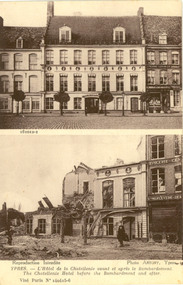
Postcard, Ypres before and after bombardment, 1916, c1916
... Ypres before and after bombardment, 1916...Three postcards showing Ypres before and after bombardment during World War One...World War One World War 1 Ypres bombing ANZAC Saint Nicholas Holmes Three postcards showing Ypres before and after bombardment during World War One Ypres before and after bombardment, 1916 Postcard ...World War I left the original St. Nicholas church in Ypres in ruins. Rebuilt after the war, very little remains of the pre-war church. Closed in 1994, it now houses a municipal museum of education.Three postcards showing Ypres before and after bombardment during World War Oneworld war one, world war 1, ypres, bombing, anzac, saint nicholas, holmes -
 Royal Australian and New Zealand College of Obstetricians & Gynaecologists (RANZCOG)
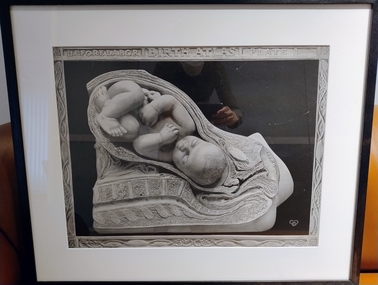
Print - Reproduction print of plate from 'Birth atlas', Maternity Center Association, 1943, Robert Latou Dickinson et al, Plate 8. Before labour, 1943
... Plate 8. Before labour...Text at the top of the print reads 'BEFORE LABOR | BIRTH ATLAS | PLATE 8'. The plate depicts a detailed cross section image of a baby in the womb. ...BEFORE LABOR | BIRTH ATLAS | PLATE 8...Obstetric delivery BEFORE LABOR | BIRTH ATLAS | PLATE 8 Black and white reproduction print of a plate from a book, enclosed in a wooden frame. ...A series of six prints showing various stages of labour, donated to the College in 1999. This print was used on the antenatal clinic of St George's Hospital, Kew, Victoria.Black and white reproduction print of a plate from a book, enclosed in a wooden frame. Text at the top of the print reads 'BEFORE LABOR | BIRTH ATLAS | PLATE 8'. The plate depicts a detailed cross section image of a baby in the womb. Label attached to back of work reads: 'Robert Latou DICKINSON and Abram BELSKI/ Plate 8. Before labour/From: Birth atlas: reproduction of twenty-four life size sculptures of fertilization, growth,/stages of labour and involution./New York: Maternity Center Association, 1943. 6th ed./Gift of St Georges Hospital, Kew, 2000'.BEFORE LABOR | BIRTH ATLAS | PLATE 8obstetric delivery -
 Tatura Irrigation & Wartime Camps Museum
Photograph, Lilian Pitts, Lunch during fruit season, 1910
... Lunch during fruit season...Black and white photograph of 5 men having lunch during fruit picking season, Merrigum Orchard....on back: Merrigum orchard lunch during fruit picking season....Lunch during fruit season Photograph Lilian Pitts ...One of a series of copied photographs depicting life on an orchard in 1910. Originals owned by Mrs Nancy Tyson, Merrigum, a local historian.Black and white photograph of 5 men having lunch during fruit picking season, Merrigum Orchard.on back: Merrigum orchard lunch during fruit picking season.lilian pitt, orchard work -
Beechworth RSL Sub-Branch
Print - Picture 11th Battalion Cheop Pyramid 1915, Contingent of the 1st Division Australian Imperial Force AIF / 11th Battalion Before Deployment to Gallipoli / Cheop Pyramid, Sunday 10th January 1915
... Contingent of the 1st Division Australian Imperial Force AIF / 11th Battalion Before Deployment to Gallipoli / Cheop Pyramid, Sunday 10th January 1915...A wooden framed collage of the print of 11th Battalion Before Deployment to Gallipoli on Cheop Pyramid, Egypt, Sunday 10th January 1915. ...Contingent of the 1st Division Australian Imperial Force AIF / 11th Battalion Before Deployment to Gallipoli / Cheop Pyramid, Sunday 10th January 1915"...The 11 battalion was formed in Western Australia has no connection to the people of Beechworth https://11btn.wags.org.au/ Contingent of the 1st Division Australian Imperial Force AIF / 11th Battalion Before Deployment to Gallipoli / Cheop Pyramid, Sunday 10th January 1915" A wooden framed collage of the print of 11th Battalion Before Deployment to Gallipoli on Cheop Pyramid, Egypt, Sunday 10th January 1915. ...This item was either purchased or donated to the Sub Branch. Apart form being a a very famous picture of the 11th Battalion on the Pyramid Cheop. The 11 battalion was formed in Western Australia has no connection to the people of BeechworthA wooden framed collage of the print of 11th Battalion Before Deployment to Gallipoli on Cheop Pyramid, Egypt, Sunday 10th January 1915. Top centre is the AIF Badge, bottom left is the Battalion Patch, Bottom right is a miniature set of the three medals and centre is the Title " Contingent of the 1st Division Australian Imperial Force AIF / 11th Battalion Before Deployment to Gallipoli / Cheop Pyramid, Sunday 10th January 1915"Contingent of the 1st Division Australian Imperial Force AIF / 11th Battalion Before Deployment to Gallipoli / Cheop Pyramid, Sunday 10th January 1915"https://11btn.wags.org.au/ -
 Lara RSL Sub Branch
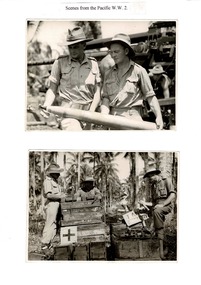
photographs two covering scenes of Australian Soldiers from the Pacific during World War 2, Two photographs of scenes from the Pacific during World War 2 on a a4 paper sheet
... Two photographs of scenes from the Pacific during World War 2 on a a4 paper sheet....Australian Soldiers in Pacific during World War 2...Two Photographs of Australian soldiers with scenes from the Pacific during World War 2. Both mounted on an A4 sheet with a small note on the top with a brief description....A4 sheet of paper with Two Photographs of Australian soldiers with scenes from the Pacific during World War 2. Both mounted on an A4 sheet with a small note on the top with a brief description....Australian Soldiers in Pacific during World War 2 Record of Australian Soldiers on two photos of scenes in the Pacific during World War 2. australian soldiers two photographs - black and white a4 pape rsheet a4 paper sheet A4 sheet of paper with Two Photographs of Australian soldiers with scenes from the Pacific during World War 2. ...Australian Soldiers in Pacific during World War 2Record of Australian Soldiers on two photos of scenes in the Pacific during World War 2.Two Photographs of Australian soldiers with scenes from the Pacific during World War 2. Both mounted on an A4 sheet with a small note on the top with a brief description.A4 sheet of paper with Two Photographs of Australian soldiers with scenes from the Pacific during World War 2. Both mounted on an A4 sheet with a small note on the top with a brief description.australian soldiers, two photographs - black and white, a4 pape rsheet, a4 paper sheet -
 Slovenian Association Melbourne
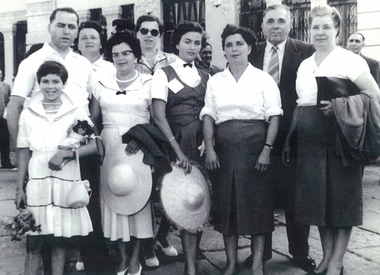
Photo, Marcela and Silvester Bole with Danila and Neva, Trieste 1955 before boarding Toscana, 1955
... Marcela and Silvester Bole with Danila and Neva, Trieste 1955 before boarding Toscana...Marcela (hat in hand) and Silvester Bole with daughters Danila (with a doll) and Neva (hat in hand), Trieste 1955 before boarding Toscana...Marcela and Silvester Bole with Danila and Neva, Trieste 1955, before boarding Toscana...Marcela (hat in hand) and Silvester Bole with daughters Danila (with a doll) and Neva (hat in hand), Trieste 1955 before boarding Toscana slovenian family bole trieste toscana 1955 slovenian association melbourne Marcela and Silvester Bole with Danila and Neva, Trieste 1955, before boarding Toscana Marcela and Silvester Bole with Danila and Neva, Trieste 1955 before boarding Toscana Photo ...Marcela (hat in hand) and Silvester Bole with daughters Danila (with a doll) and Neva (hat in hand), Trieste 1955 before boarding ToscanaMarcela and Silvester Bole with Danila and Neva, Trieste 1955, before boarding Toscanaslovenian family bole, trieste, toscana, 1955, slovenian association melbourne -
 City of Melbourne Libraries
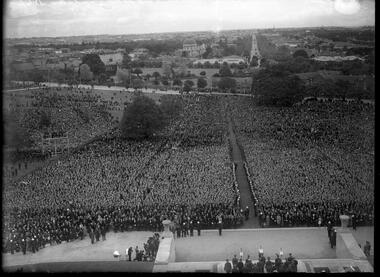
Photograph, Bull, Hugh Jones, 1897-1993, The Multitude before the Shrine at Dedication, 11 November 1934
... The Multitude before the Shrine at Dedication, 11 November 1934...A picture taken during the actual ceremony of Dedication by the Duke of Gloucester. ...Photographer notations on slide: "Multitude before Shrine at Dedication 1934 B62"....A picture taken during the actual ceremony of Dedication by the Duke of Gloucester. ...“The greatest gathering in Australia” – The Argus, 12 November 1934 On Armistice Day, 11 November 1934, the Dedication Ceremony for the Shrine of Remembrance was held in the Domain, presided over by Prince Henry, the Duke of Gloucester. A crowd of over 300,000 people - about one third of Melbourne's population at the time - attended. Photographer notations on slide: "Multitude before Shrine at Dedication 1934 B62" Published: (1934, November 12). The Age (Melbourne, Vic. : 1854 - 1954), p. 13. Published title: ". . . . . . WE WILL REMEMBER THEM." THE MULTITUDE BEFORE THE SHRINE. Published caption: The vast concourse of people gathered yesterday on the southern side of the Shrine of Remembrance. A picture taken during the actual ceremony of Dedication by the Duke of Gloucester. In the foreground, the Duke of Gloucester can be seen at the microphone, making his speech of dedication. He is facing the assembly of returned men, who to the number of 27,500 attended the ceremony. Trove article identifier: http://nla.gov.au/nla.news-article205078252 Description: Massive crowd gathered in the southern forecourt of Melbourne's Shrine of Remembrance on 11 November 1934, for its opening dedication by the Duke of Gloucester. There were an estimated 300,000 in attendance (almost one third of Melbourne's population of 1 million). Research by project volunteer, Louise McKenzie: There were an estimated 300,000 people in attendance for the opening dedication of the Shrine of Remembrance on 11 November 1934. This was almost one third of Melbourne's population of 1 million. Age photographer Hugh Bull cleverly captured the massive crowd using two glass plate exposures. This elevated view is captured from the Shrine and takes in the eastward area with St Kilda Road trams and mansions, Kellow and Falkiner Motor Showrooms, the Toorak Synagogue and Melbourne Grammar School. The corresponding westward view can be accessed via the "Related material link" in the item record. References: WE WILL REMEMBER THEM."--THE MULTITUDE BEFORE THE SHRINE. (1934, November 12). The Age (Melbourne, Vic. : 1854 - 1954), p. 13. Retrieved October 14, 2024, from http://nla.gov.au/nla.news-article205078252Photographer notations on slide: "Multitude before Shrine at Dedication 1934 B62".shrine of remembrance, 1930-1939, ceremonies, world war 1 -
 City of Melbourne Libraries
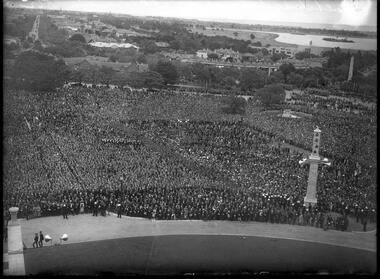
Photograph, Bull, Hugh Jones, 1897-1993, The Multitude before the Shrine at Dedication, 11 November 1934
... The Multitude before the Shrine at Dedication, 11 November 1934...References: WE WILL REMEMBER THEM."--THE MULTITUDE BEFORE THE SHRINE. (1934, November 12). The Age (Melbourne, Vic. : 1854 - 1954), p. 13. ...Photographer notations on slide: "Multitude before Shrine at Dedication 1934 B62"....References: WE WILL REMEMBER THEM."--THE MULTITUDE BEFORE THE SHRINE. (1934, November 12). The Age (Melbourne, Vic. : 1854 - 1954), p. 13. ...“The greatest gathering in Australia” – The Argus, 12 November 1934 On Armistice Day, 11 November 1934, the Dedication Ceremony for the Shrine of Remembrance was held in the Domain, presided over by Prince Henry, the Duke of Gloucester. A crowd of over 300,000 people - about one third of Melbourne's population at the time - attended. Featured in "Newsworthy: Melbourne in photographs 1933-1936" exhibition at East Melbourne Library, October to December 2023. Exhibition caption by project volunteer, Louise McKenzie. Photographer notations on slide: "Multitude before Shrine at Dedication 1934 B62" Description: Massive crowd gathered in southern forecourt of Melbourne's Shrine of Remembrance on 11 November 1934, for its opening dedication by the Duke of Gloucester. There were an estimated 300,000 in attendance (almost one third of Melbourne's population of 1 million). Research by project volunteer, Louise McKenzie: There were an estimated 300,000 people in attendance for the opening dedication of the Shrine of Remembrance on 11 November 1934. This was almost one third of Melbourne's population of 1 million. Age photographer Hugh Bull cleverly captured the massive crowd using two glass plate exposures. This elevated view is captured from the Shrine and takes in the westward area with St Kilda Road trams and mansions, St Kilda Presbyterian Church, the two-storied, curved Princes Terrace, Macpherson Robertson Fountain, South African (Boer) War Memorial, MacRobertson’s Girls High School, Albert Park Lake and Port Phillip Bay. The corresponding eastward view can be accessed via the "Related material link" in the item record. References: WE WILL REMEMBER THEM."--THE MULTITUDE BEFORE THE SHRINE. (1934, November 12). The Age (Melbourne, Vic. : 1854 - 1954), p. 13. Retrieved October 14, 2024, from http://nla.gov.au/nla.news-article205078252Photographer notations on slide: "Multitude before Shrine at Dedication 1934 B62".ceremonies, shrine of remembrance, armistice day, 1930-1939 -
 Stawell Historical Society Inc
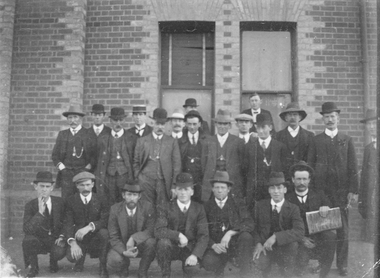
Photograph, Stawell Railway employees including Mr W Boothey second from right -- before 1926
... Stawell Railway employees including Mr W Boothey second from right -- before 1926....Stawell Railway employees before 1926 taken in front of Stawell Railway building. ...Boothey Second from Right Before 1926 In pencil "Railway employers Stawell"...Stawell Railway employees before 1926 taken in front of Stawell Railway building. ...Stawell Railway employees before 1926 taken in front of Stawell Railway building. Mr W Boothey second from right.Black and white photograph of a group of men in front of a brick building with a pattern of lighter bricks around the windows. Also an enlarged copy. Court Post Card Place penny stamp here. Mr. W. Boothey Second from Right Before 1926 In pencil "Railway employers Stawell"stawell railways transport -
 Linton and District Historical Society Inc
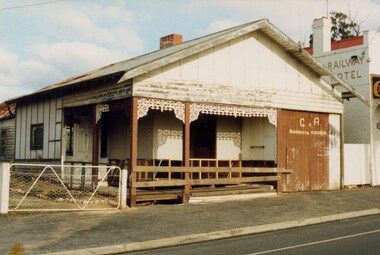
Photograph, Former Nelson Bros. Building Before Restoration, 1987, 1987
... Former Nelson Bros. Building Before Restoration, 1987..."Funeral parlour before restoration"....Former Nelson Bros. Building Before Restoration, 1987 Photograph ...Colour photograph of dilapidated single fronted building located beside a brick building (Linton's Railway Hotel). Photograph is of former Nelson Bros. funeral parlour, which after restoration became the LDHS Resource Centre. "G & A Blacksmith Engineer" is painted on double doors to right, along with some graffiti."Funeral parlour before restoration".ldhs resource centre, nelson bros. funeral parlour, g & a blacksmith engineer, buildings -
 Whitehorse Historical Society Inc.
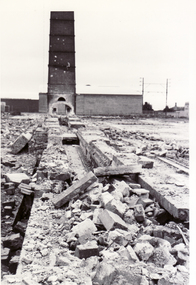
Photograph, Chimney Stack before demolition, 20/06/1971 12:00:00 AM
... Chimney Stack before demolition...Photo of chimney stack before demolition...australian tesselated tile co. pty ltd chimneys ronaldson. eleanor rooks road nunawading mccoy eleanor Photo of chimney stack before demolition Chimney Stack before demolition Photograph Photograph ...Photo of chimney stack before demolitionaustralian tesselated tile co. pty ltd, chimneys, ronaldson. eleanor, rooks road, nunawading, mccoy, eleanor -
 Federation University Historical Collection
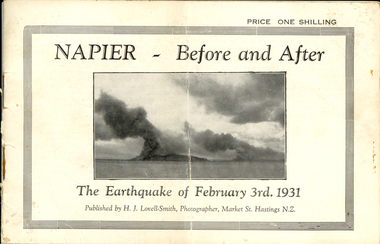
Booklet, Nelson Stedman, Napier Before and After the Earthquake of February 3rd 1931, c1931
... Napier Before and After the Earthquake of February 3rd 1931...There was no warning before the ground started to heave and roll in waves. ...Small booklet of 18 pages with photographic comparisons of New Zealand's Napier region before and after the 1931 earthquake....There was no warning before the ground started to heave and roll in waves. ...The earthquake at Napier, also known as the Hawke's Bay Earthquake, took place on 03 February 1931 at about 10.45 am. There was no warning before the ground started to heave and roll in waves. It was not possible to stand without support, and the violent motion caused stone and brick buildings to collapse into the streets causing death and injury to hundreds who were going about there daily business. Fires started almost immediately, and with the water mains shattered, the fire fighters were powerless to stop or prevent the spread of the flames. Within twelve hours the greater part of the business area of Napier and its port was totally destroyed. As a result of the pressure which caused the upheaval, the levels of the town and the surrounding district have been altered. The town and the harbour were raised from five to seven feet, and many parts of the inner harbour became dry land. Small booklet of 18 pages with photographic comparisons of New Zealand's Napier region before and after the 1931 earthquake.napier, new zealand, earthquake, lovell-smith, stedman, boston, port ahururu, westshore, clive square, hawke's bay -
 Stawell Historical Society Inc
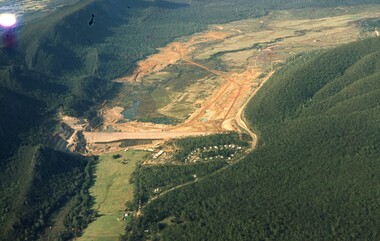
Slide, Ian McCann, Lake Bellfield before filling, 1960's
... Lake Bellfield before filling...Colour Slide: Lake Bellfield before being filled....Grampians Lake Bellfield Colour Slide: Lake Bellfield before being filled. Lake Bellfield before filling Slide Ian McCann ...Colour Slide: Lake Bellfield before being filled.grampians, lake bellfield -
 Kiewa Valley Historical Society
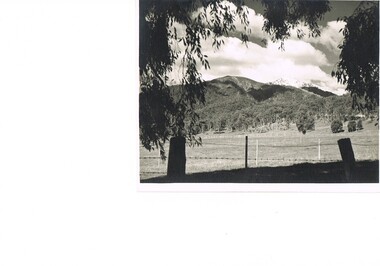
Photograph Farm Land, Mount Beauty Acreage before Golf Course, Circa 1950
... Mount Beauty Acreage before Golf Course...This photograph is a "snap shot" in time circa 1950s detailing the rural environment before the effects of the Kiewa Valley Hydro Scheme altered the basic rural setting of the valley. ...Black and white photograph detailing surveyor posts for construction of golf course. Land used, before establishment of the Mount Beauty Village, as farming/grazing cattle and viewed towards Mount Bogong and its Alpine ranges. ...Mount Beauty Acreage before Golf Course Photograph Farm Land Mr. ...This photograph is a "snap shot" in time circa 1950s detailing the rural environment before the effects of the Kiewa Valley Hydro Scheme altered the basic rural setting of the valley. The golfing fairway was being mapped out on previous grazing land, before the laying of a golf course, for use by the construction workers and auxiliary administration employees of the Victorian State Electricity Commission. This photograph details a dramatic period in time which saw an enormous change to the exclusively rural area of the Kiewa Valley region in the mid 1900s. This change presented both physical and mental challenges to the existing quiet rural inhabitants of the valley. The State of Victoria had to make adjustments to the changing demands imposed by population and industrial expansions. The development of cleaner energy supplies to a growing population has its downside ,which ever way the intrusion into the "natural" landscape is made.Black and white photograph detailing surveyor posts for construction of golf course. Land used, before establishment of the Mount Beauty Village, as farming/grazing cattle and viewed towards Mount Bogong and its Alpine ranges. The photo is on 200gms paper and not on photographic paper.nilmount beauty in the 1940s - 1950s, grazing in the kiewa valley, sec victoria -
 Uniting Church Archives - Synod of Victoria
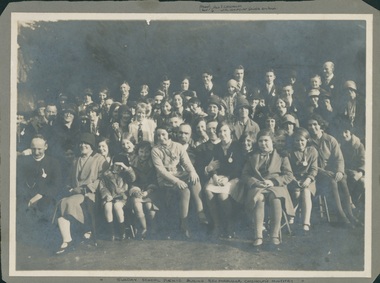
Photograph, Sunday School Picnic during Rev. Farquhar Chisholm's ministry, c.1926 - 1931
... Sunday School Picnic during Rev. Farquhar Chisholm's ministry...Sunday School picnic photo, taken during the ministry of Rev. Farquhar Chisholm at Ballarat (1926–31). ...Sunday School Picnic during Rev. Farquhar Chisholm's ministry...Sunday School picnic photo, taken during the ministry of Rev. Farquhar Chisholm at Ballarat (1926–31). ...Sunday School picnic photo, taken during the ministry of Rev. Farquhar Chisholm at Ballarat (1926–31). Two girls are sitting on men's knees, one the daughter (Sheila) of Mr Chisholm There is a second, unnamed clergyman in the photo. Farquhar Chisholm was b. 1878 in Inverness, Scotland, ordained 1908 Kerang, 1910 Wangaratta; 1919 chaplain Scotch College till 1924. 1926–31 St Cuthbert's Ballarat, 1931 Balaclava, 1936 South Melbourne, 1941 demitted, 1951 Smeaton. Died 7 July 1953 at Smeaton.B & W photographSunday School Picnic during Rev. Farquhar Chisholm's ministryst. cuthbert's, ballarat, presbyterian, rev. farquhar chisholm, sunday school, picnic -
 Ballarat Tramway Museum
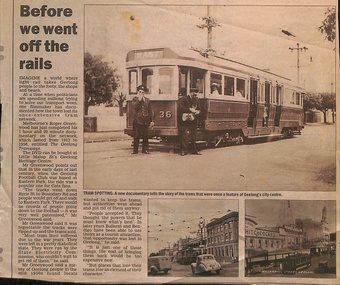
Newspaper, Geelong Advertiser, "Before we went off the rails", 2008
... "Before we went off the rails"...Newspaper clipping from The Geelong Advertiser at the time of the launch of the DVD by Roger Greewood of Efftech, "The Geelong Tramways" during 2008 - see item 6536 of the Melbourne Tram Museum. ...Newspaper item from the Geelong Advertiser, no date - during 2008....Yields information about the DVD launch by Roger Greenwood on Geelong Trams tramways Geelong SECV Launch roger greenwood efftech mesco Newspaper item from the Geelong Advertiser, no date - during 2008. "Before we went off the rails" Newspaper Geelong Advertiser. ...Newspaper clipping from The Geelong Advertiser at the time of the launch of the DVD by Roger Greewood of Efftech, "The Geelong Tramways" during 2008 - see item 6536 of the Melbourne Tram Museum. Has notes on the production, where it could be purchased, possibility of the return of trams to Geelong. Includes a photograph of No. 36 with the destination of East and two crew members standing by the front of the tram.Yields information about the DVD launch by Roger Greenwood on Geelong TramsNewspaper item from the Geelong Advertiser, no date - during 2008.tramways, geelong, secv, launch, roger greenwood, efftech, mesco -
Tatura Irrigation & Wartime Camps Museum
Document, Life of Internees During WW2, 1989
... Life of Internees During WW2...Life of Internees During WW2...Life of Internees During WW2 Document ...Research project compiled and presented to Tatura Museum by Kerrie Mactier 1989.Green back, clear plastic folder. Life of Internees During WW2kerrie mactier -
 Buninyong & District Historical Society
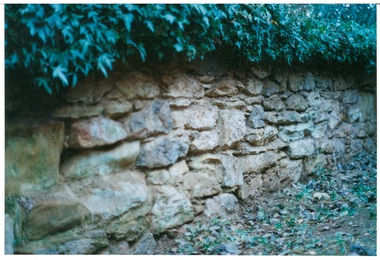
Photograph - Original Photograph, Stone wall, 405 Learmonth Street, before reconstruction, July 1995
... Stone wall, 405 Learmonth Street, before reconstruction....Colour photo, Stone wall, 405 Learmonth Street, before reconstruction....Buninyong Hotel Ma Jamieson Colour photo, Stone wall, 405 Learmonth Street, before reconstruction. Stone wall, 405 Learmonth Street, before reconstruction. ...historic, buildingBelieved to be built using stone from Margaret Jamieson's demolished Buninyong HotelColour photo, Stone wall, 405 Learmonth Street, before reconstruction.stone wall, learmonth st., buninyong hotel, ma jamieson -
 Alfred Hospital Nurses League - Nursing History Collection
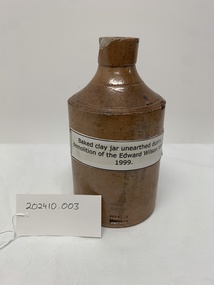
Ceramic - Stoneware bottle, Doulton Lambeth, Baked clay jar unearthed during demolition of the Edward Wilson Wing 1999, ca.1870 - 1890
... Baked clay jar unearthed during demolition of the Edward Wilson Wing 1999... brown glazed earthenware bottle, circular grooves at throat of bottle x 3, cylindrical shape, narrow neck, makers stamp on side, large chip at opening, multiple small chips on sides. no stopper. paper label taped to front -Baked clay jar unearthed during demolition of the Edward Wilson Wing 1999 ...label -paper label taped to front -Baked clay jar unearthed during demolition of the Edward Wilson Wing 1999...label -paper label taped to front -Baked clay jar unearthed during demolition of the Edward Wilson Wing 1999 brown glazed earthenware bottle, circular grooves at throat of bottle x 3, cylindrical shape, narrow neck, makers stamp on side, large chip at opening, multiple small chips on sides. no stopper. paper label taped to front -Baked clay jar unearthed during demolition of the Edward Wilson Wing 1999 Baked clay jar unearthed during demolition of the Edward Wilson Wing 1999 Ceramic Stoneware bottle, Doulton Lambeth ...The business was specialised in making salt-glazed stoneware articles, including utilitarian or decorative bottles, jugs and jars, much of it intended for inns and pubs. The backbone of the business was a wide range of utilitarian wares, mostly stone wares, including storage jars, tankards and the like, and later extending to pipes for drains, lavatories and other bathroom ceramics. From 1853 to 1902 its wares were marked Doulton & Co., then from 1902, when a royal warrant was given, Royal Doulton. The company always made some more decorative items, initially still mostly stoneware, and from the 1860s the firm made considerable efforts to get a reputation for design, in which it was largely successful, as one of the first British makers of art pottery. Initially, this was done through artistic stoneware's made in Lambeth, but in 1882 the firm bought a Burslem factory, which was mainly intended for making bone china table wares and decorative items. An early utilitarian stoneware item made by a well-known company that specialised in making salt-glazed items that later earned a reputation for making stoneware art objects. brown glazed earthenware bottle, circular grooves at throat of bottle x 3, cylindrical shape, narrow neck, makers stamp on side, large chip at opening, multiple small chips on sides. no stopper. paper label taped to front -Baked clay jar unearthed during demolition of the Edward Wilson Wing 1999 Doulton Lambeth stamp base of front - makers mark. label -paper label taped to front -Baked clay jar unearthed during demolition of the Edward Wilson Wing 1999ahnl, edward wilson wing alfred hospital, baked clay jar -
 Stawell Historical Society Inc
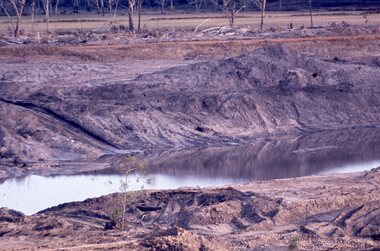
Slide, Ian McCann, Lake Bellfield before filling, 1960's
... Lake Bellfield before filling...Colour Slide showin g the water way before the filling of Lake Bellfield...Grampians Lake Bellfield Colour Slide showin g the water way before the filling of Lake Bellfield Lake Bellfield before filling Slide Ian McCann ...Colour Slide showin g the water way before the filling of Lake Bellfieldgrampians, lake bellfield -
 Ringwood and District Historical Society
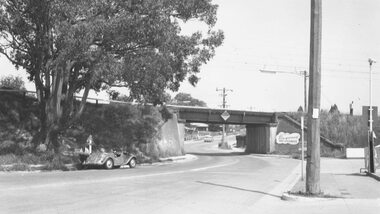
Photograph, Maroondah Highway West, Ringwood- 1965. Wantirna Road bridge, before widening
... Wantirna Road bridge, before widening....Written on back of photograph: "Wantirna Road bridge before widening. 17.11.63....Wantirna Road bridge, before widening. Photograph ...Black and white photographWritten on back of photograph: "Wantirna Road bridge before widening. 17.11.63. -
 Ringwood and District Historical Society
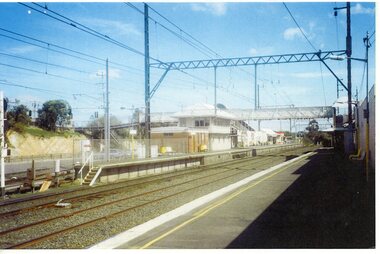
Photograph, Ringwood Railway Station before development- circa 2000
... Ringwood Railway Station before development- circa 2000..."Written on back of photograph" Ringwood station before development. Platform 2..."Written on back of photograph" Ringwood station before development. Platform 2 Coloured photograph Ringwood Railway Station before development- circa 2000 Photograph Photograph ...Coloured photograph"Written on back of photograph" Ringwood station before development. Platform 2 -
 Ringwood and District Historical Society
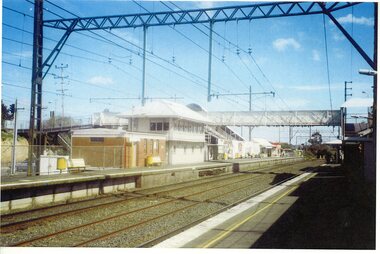
Photograph, Ringwood Railway Station before development- circa 2000
... Ringwood Railway Station before development- circa 2000..."Written on back of photograph" Ringwood station before development. Platform 2..."Written on back of photograph" Ringwood station before development. Platform 2 Coloured photograph Ringwood Railway Station before development- circa 2000 Photograph Photograph ...Coloured photograph"Written on back of photograph" Ringwood station before development. Platform 2 -
 Ringwood and District Historical Society
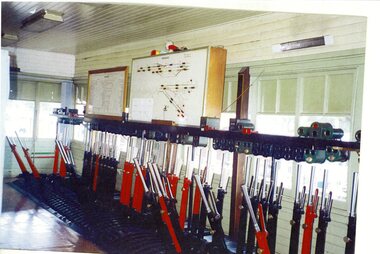
Photograph, Ringwood Railway Station before development- circa 2000
... Ringwood Railway Station before development- circa 2000..."Written on back of photograph" Ringwood station before development. Signal box..."Written on back of photograph" Ringwood station before development. Signal box Coloured photograph Ringwood Railway Station before development- circa 2000 Photograph Photograph ...Coloured photograph"Written on back of photograph" Ringwood station before development. Signal box -
 Ringwood and District Historical Society
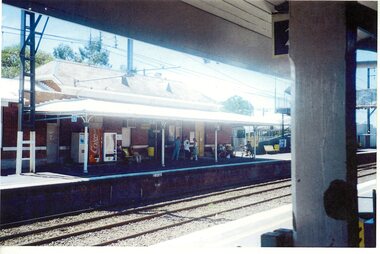
Photograph, Ringwood Railway Station before development- circa 2000
... Ringwood Railway Station before development- circa 2000..."Written on back of photograph" Ringwood station before development. Platform 1..."Written on back of photograph" Ringwood station before development. Platform 1 Coloured photograph Ringwood Railway Station before development- circa 2000 Photograph Photograph ...Coloured photograph"Written on back of photograph" Ringwood station before development. Platform 1 -
 Ringwood and District Historical Society
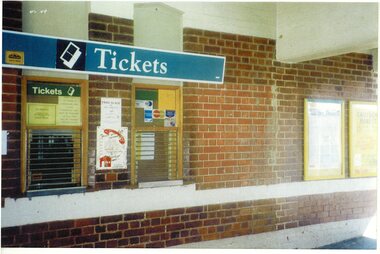
Photograph, Ringwood Railway Station before development- circa 2000
... Ringwood Railway Station before development- circa 2000..."Written on back of photograph" Ringwood station before development. Ticket Office..."Written on back of photograph" Ringwood station before development. Ticket Office Coloured photograph Ringwood Railway Station before development- circa 2000 Photograph Photograph ...Coloured photograph"Written on back of photograph" Ringwood station before development. Ticket Office -
 Ringwood and District Historical Society
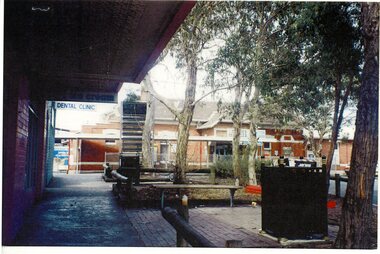
Photograph, Ringwood Railway Station before development- circa 2000
... Ringwood Railway Station before development- circa 2000..."Written on back of photograph" Ringwood station before development. Front Entrance..."Written on back of photograph" Ringwood station before development. Front Entrance Coloured photograph Ringwood Railway Station before development- circa 2000 Photograph Photograph ...Coloured photograph"Written on back of photograph" Ringwood station before development. Front Entrance -
 Ringwood and District Historical Society
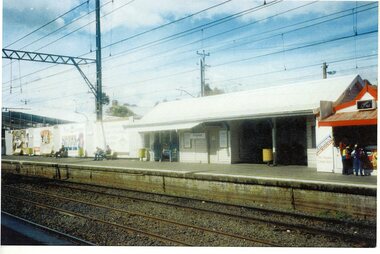
Photograph, Ringwood Railway Station before development- circa 2000
... Ringwood Railway Station before development- circa 2000..."Written on back of photograph" Ringwood station before development. Platform 2..."Written on back of photograph" Ringwood station before development. Platform 2 Coloured photograph Ringwood Railway Station before development- circa 2000 Photograph Photograph ...Coloured photograph"Written on back of photograph" Ringwood station before development. Platform 2 -
 Ringwood and District Historical Society
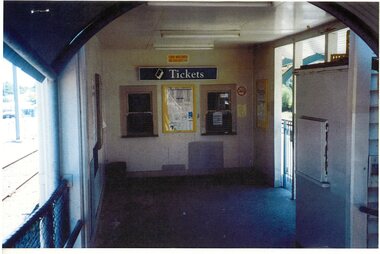
Photograph, Ringwood Railway Station before development- circa 2000
... Ringwood Railway Station before development- circa 2000..."Written on back of photograph" Ringwood station before development. Ticket Office..."Written on back of photograph" Ringwood station before development. Ticket Office Coloured photograph Ringwood Railway Station before development- circa 2000 Photograph Photograph ...Coloured photograph"Written on back of photograph" Ringwood station before development. Ticket Office -
 Ringwood and District Historical Society
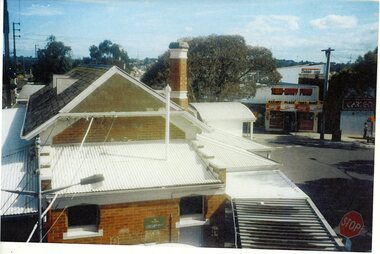
Photograph, Ringwood Railway Station before development- circa 2000
... Ringwood Railway Station before development- circa 2000..."Written on back of photograph" Ringwood station before development. Roof view..."Written on back of photograph" Ringwood station before development. Roof view Coloured photograph Ringwood Railway Station before development- circa 2000 Photograph Photograph ...Coloured photograph"Written on back of photograph" Ringwood station before development. Roof view
