
Showing 6 items matching "bendigo link tour"
-
 Bendigo Historical Society Inc.
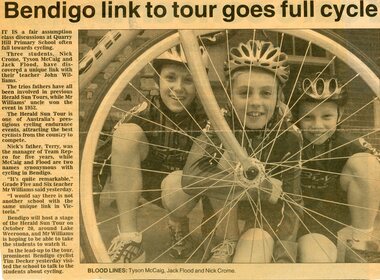
Article - JOHN WILLIAMS COLLECTION: NEWSPAPER ARTICLE BENDIGO LINK TOUR CYCLING, 2000s
... JOHN WILLIAMS COLLECTION: NEWSPAPER ARTICLE BENDIGO LINK TOUR CYCLING......Bendigo Link tour...JOHN WILLIAMS COLLECTION: Newspaper Article Bendigo Link Tour Cycling Newspaper article about Quarry Hill State School Teacher John Williams, three of his students and fathers and their links to the Herald Sun Tours. ...John Williams Bendigo Link tour JOHN WILLIAMS COLLECTION: Newspaper Article Bendigo Link Tour Cycling Newspaper article about Quarry Hill State School Teacher John Williams, three of his students and fathers and their links to the Herald Sun Tours. ...JOHN WILLIAMS COLLECTION: Newspaper Article Bendigo Link Tour Cycling Newspaper article about Quarry Hill State School Teacher John Williams, three of his students and fathers and their links to the Herald Sun Tours. Photo of the three students, Tyson McCaig, Jack Flood and Nick Crome behind a bicycle.john williams, bendigo link tour -
 Bendigo Historical Society Inc.
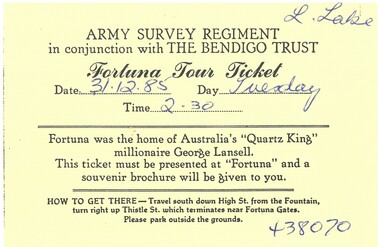
Ephemera - Tour Ticket
... Bendigo, and at one stage probably the deepest gold mine in the world at 3176 feet. The 1875 crushing works are attached directly to the mansion, and the mine's tailings and settling ponds (turned into ornamental lakes) represent a direct link between George Lansell's wealth and its source. Fortuna was compulsorily acquired by the Commonwealth in 1942 as the Cartographic Headquarters of the Australian Survey Corps during World War II, and many ancillary structures were added while preserving the main house and ornamental grounds. Victorian Heritage Database Report https://vhd.heritagecouncil.vic.gov.au/places/68334/download-report Fortuna Villa Tour ...Fortuna Villa was initially commenced as a modest single storey home in 1861 next to the 180 Mine by Theodore Ballerstedt, who sold the mine and house to George Lansell in 1869. Lansell already owned the adjacent Fortuna Mine, and through deeper mining techniques greatly expanded the mine's operation, his personal wealth, and the house and grounds. Lansell was soon known as the 'Quartz King', Australia's first gold mining millionaire and credited as the driving force behind much of Bendigo's prosperity. He continuously added to and expanded the villa, decorating it extravagantly with the finest of artworks and materials, into a sprawling mansion with extensive landscaped grounds, to create a house and grounds of a size and grandeur with few rivals in Australia. After his death in 1907, his second wife Edith carried on with improvements, creating a house and grounds developed over 50 years. The attached mine also contributes to its significance, being one of the richest mines in Bendigo, and at one stage probably the deepest gold mine in the world at 3176 feet. The 1875 crushing works are attached directly to the mansion, and the mine's tailings and settling ponds (turned into ornamental lakes) represent a direct link between George Lansell's wealth and its source. Fortuna was compulsorily acquired by the Commonwealth in 1942 as the Cartographic Headquarters of the Australian Survey Corps during World War II, and many ancillary structures were added while preserving the main house and ornamental grounds. Victorian Heritage Database Report https://vhd.heritagecouncil.vic.gov.au/places/68334/download-reportTicket for Fortuna Villa Tour conducted by the Army Survey Regiment and the National Trust. 31/12/1985. Black printing on yellow card.fortuna villa, tour -
 City of Greater Bendigo - Civic Collection
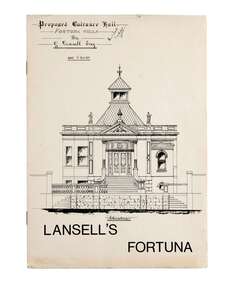
Booklet, Lansell's Fortuna, c 1980
... George Lansell was commonly known as 'Australia's Quartz-King' and director of thirty-eight mines with some link with almost every mine in Bendigo. Mayor William Beebe George Lansell A4 size tour booklet outlining the history, use and architectural features of Fortuna Villa which was purchased by George Lansell in 1860. ...Originally designed in 1857 and extended to the further designs by Bendigo Architects Vahland and Getzschmann, Emil Mauermann and William Beebe the original two story house expanded over time as Lansell's fortune increased and the subsequent mansion was built adjacent to the New Chum Reef and mine from which most of his wealth was yielded. Fortuna remained in the Lansell family for twenty nine years after George died and was sold by auction for demolition in 1934 only to be saved to become a reception house. In 1942 the Army acquired a lease for wartime mapping and occupied the site until 2008. It is now in private hands with the surrounding land being divided for housing. George Lansell was commonly known as 'Australia's Quartz-King' and director of thirty-eight mines with some link with almost every mine in Bendigo.A4 size tour booklet outlining the history, use and architectural features of Fortuna Villa which was purchased by George Lansell in 1860. mayor william beebe, george lansell -
 Bendigo Historical Society Inc.
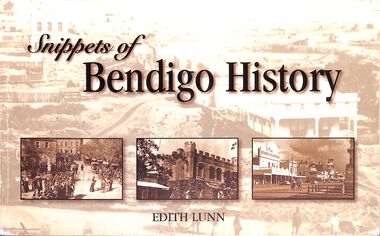
Book - "Snippets of Bendigo History", 2006
... Modern Bendigo has become a fast-growing regional centre, aided by infrastructure like the Calder Freeway linking it to Melbourne. Today, Bendigo preserves its history through museums, walking tours, and heritage sites. ...Modern Bendigo has become a fast-growing regional centre, aided by infrastructure like the Calder Freeway linking it to Melbourne. Today, Bendigo preserves its history through museums, walking tours, and heritage sites. ...Edith Lunn was born in Bendigo in July, 1907, and had lived all of her life in the city and its immediate environs. Edith was awarded the Order of Australia medal in 2002 for her services to, and interest in, Bendigo's history. This text records to history of Bendigo, as recalled and researched by Edith. Bendigo, formerly known as Sandhurst, grew from Indigenous lands to a major gold rush boomtown and is now a vibrant regional city with rich cultural heritage. The Bendigo region is the traditional land of the Dja Dja Wurrung (Djaara) people, who have lived in the area for thousands of years. They managed the land sustainably, utilizing the rich hunting grounds and waterways, and their cultural stories and knowledge remain deeply woven into the landscape today. European exploration began with Major Thomas Mitchell in 1836, followed by squatters establishing sheep runs in 1837. The arrival of settlers led to the displacement of the Dja Dja Wurrung people, with waves of settlement from the south in 1837 and from the north in 1845. Gold was discovered on Bendigo Creek in 1851 by Mrs. Margaret Kennedy and Mrs. Julia Farrell, sparking one of Australia’s largest gold rushes. By 1852, around 20,000 people had arrived from across the world, including Europe and China, transforming Bendigo into a booming gold-mining economy. The city was officially named Sandhurst from 1853 to 1891. The wealth generated during this period is reflected in Bendigo’s Victorian architecture, including the Town Hall and historic buildings. Gold mining continued into the early 20th century, but by 1954, mining had largely ceased. The city then shifted focus to manufacturing and regional services, experiencing renewed growth from the 1930s onward. Modern Bendigo has become a fast-growing regional centre, aided by infrastructure like the Calder Freeway linking it to Melbourne. Today, Bendigo preserves its history through museums, walking tours, and heritage sites. Key attractions include the Bendigo Art Gallery, Bendigo Joss House Temple, Central Deborah Gold Mine, and the Goldfields Track, which highlight both the gold rush era and the city’s cultural diversity. "Snippets of Bendigo History" written by Edith Lunn. Forward by Daryl McClure. Printed by Bendigo Modern Press. Soft cover book. Front and back covers are sepia with Bendigo street scene, and front cover has three inset sepia toned Bendigo scenes inserted. Title and author's name are in black text on front cover. Author's name and book title written in black on spine. Printed in Bendigo, Australia. 65 pp. This edition was 500 copies. Contents page on iv. Details about author on iii. Contains both text and black and white images. edith lunn, bendigo -
 Bendigo Historical Society Inc.
Newspaper - Fortuna Article - "Melody Maker", Jan 07 2008
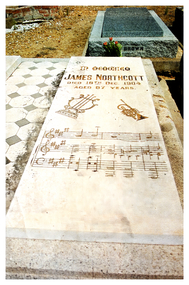
... The monumental section of Bendigo Cemetery has had about 60,000 interments since 1854, with some graves containing up to six people.The cemetery is denominational, with burial locations historically determined by religion.Community and Historical Significance:Cemetery tours are offered at Bendigo, White Hills, Eaglehawk, and Kangaroo Flat as part of the Summer in the Parks program. Many Australians have a family connection to Bendigo, with an estimated one in seven families linked...The monumental section of Bendigo Cemetery has had about 60,000 interments since 1854, with some graves containing up to six people.The cemetery is denominational, with burial locations historically determined by religion.Community and Historical Significance:Cemetery tours are offered at Bendigo, White Hills, Eaglehawk, and Kangaroo Flat as part of the Summer in the Parks program. Many Australians have a family connection to Bendigo, with an estimated one in seven families linked ...James Northcott In 1867 married Miss Lansell sister of George Lansell. A prominent bandsman in Bendigo, recognized for his musical contributions and honored with a silver cornet in 1871. His grave in the Bendigo Cemetery features musical notes. William Francis and Richard Francis were founders of the Beehive store during the gold rush era. Peter Hoey Finn arrived during the goldfields, owned a store that burned down, and later carved the granite bowl of the Alexandra Fountain as a mason. Elizabeth Watson was he only woman known to have died in a mining accident in Bendigo, tragically killed in 1863 due to her dress getting caught in mining machinery. The monumental section of Bendigo Cemetery has had about 60,000 interments since 1854, with some graves containing up to six people.The cemetery is denominational, with burial locations historically determined by religion.Community and Historical Significance:Cemetery tours are offered at Bendigo, White Hills, Eaglehawk, and Kangaroo Flat as part of the Summer in the Parks program. Many Australians have a family connection to Bendigo, with an estimated one in seven families linked to the area.Prominent Graves in the Bendigo Cemetery Article - "Melody Maker" - The Bendigo Miner Thursday Jan 07 2008 This item contains the following: 11217.11a Colour Photo of The Grave of Bandsman James Northcott 11217.11b Colour Photo of The Grave of Sir John Quick, the federal member for Bendigo 1901-1913, died 1932 11217.11c Colour Photo of The Grave of Anne Caudle in whose honour the Ann Caudle Centre is named, died in 1865 11217.11d Colour Photo of a Father and Mother - Some graves contain up to six people 11217.11e Part of page 5 - Melody Makernon-fictionbendigo, fortuna, george lansell, james northcott, anne caudle, john quick, northcott band -
 Bendigo Historical Society Inc.
Document - THE GREAT DIVIDING TRAIL TOUR
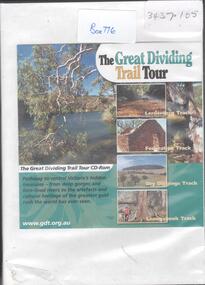
... Bendigo to Bacchus march DVD. The trail consists of four linked tracks stretching from Bacchus Marsh to Bendigo, each of which in turn consists of easily accessible, one day or shorter walks. Document THE GREAT DIVIDING TRAIL TOUR ...DVD. The trail consists of four linked tracks stretching from Bacchus Marsh to Bendigo, each of which in turn consists of easily accessible, one day or shorter walks.trains, bendigo to bacchus march
