
Showing 71 items matching "bishops road"
-
 Eltham District Historical Society Inc
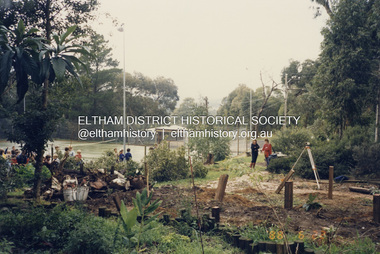
Photograph - Colour Print, Installation of pre-fab buildings at Living and Learning Nillumbik (Panton Hill), 18 Bishops Road, Panton Hill, 22 June 1988
... Installation of pre-fab buildings at Living and Learning Nillumbik (Panton Hill), 18 Bishops Road, Panton Hill......Bishops Road...Batch 4113 Bishops Road Construction Living and Learning Centre Living and Learning Nillumbik (Panton Hill) Panton Hill 11 Colour print 10 x 15 cm Originally housed in a 34.5 x 36 x 2.5 cm expandable album with padded cream covers and gold accents; 18 page inserts with clear pocket inserts holding 6 photos per side, total capacity 216 10 x 15 cm photo prints; showing yellowing with age Installation of pre-fab buildings at Living and Learning Nillumbik (Panton Hill), 18 Bishops Road, Panton Hill Photograph Colour Print ...batch 4113, bishops road, construction, living and learning centre, living and learning nillumbik (panton hill), panton hill -
 Eltham District Historical Society Inc
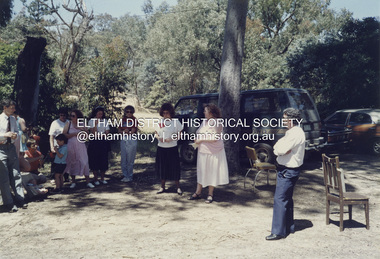
Photograph - Colour Print, Opening function of the updated Living and Learning Nillumbik (Panton Hill) facility, 18 Bishops Road, Panton Hill, 1988
... Opening function of the updated Living and Learning Nillumbik (Panton Hill) facility, 18 Bishops Road, Panton Hill......Bishops Road...Mary Grant Batch 354 Bishops Road Cr. Mary Grant Living and Learning Centre Living and Learning Nillumbik (Panton Hill) Opening Ceremony Panton Hill 21 Colour print 10 x 15 cm Originally housed in a 34.5 x 36 x 2.5 cm expandable album with padded cream covers and gold accents; 18 page inserts with clear pocket inserts holding 6 photos per side, total capacity 216 10 x 15 cm photo prints; showing yellowing with age Opening function of the updated Living and Learning Nillumbik (Panton Hill) facility, 18 Bishops Road, Panton Hill Photograph Colour Print ...Opened by Eltham Shire President, Cr. Mary Grantbatch 354, bishops road, cr. mary grant, living and learning centre, living and learning nillumbik (panton hill), opening ceremony, panton hill -
 Eltham District Historical Society Inc
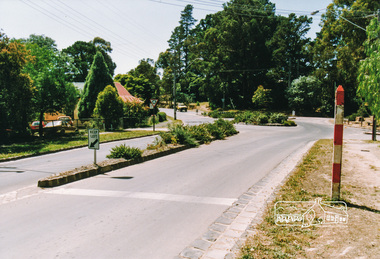
Photograph, Main Road, Panton Hill
... ...bishops road...Colour photograph of Main Road Panton Hill showing roundabout at Bishops Road....main road st andrews road kangaroo ground/st andrews road bishops road roundabouts panton hill Colour photograph of Main Road Panton Hill showing roundabout at Bishops Road. ...Colour photograph of Main Road Panton Hill showing roundabout at Bishops Road.main road, st andrews road, kangaroo ground/st andrews road, bishops road, roundabouts, panton hill -
 Eltham District Historical Society Inc
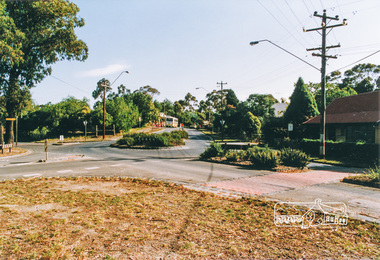
Photograph, Main Road, Panton Hill
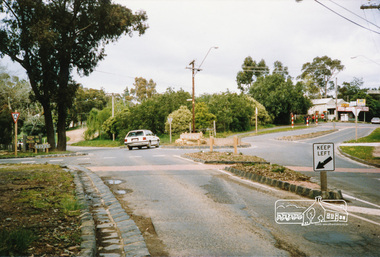
... ...bishops road...Six colour photographs of Main Road Panton Hill showing Bishops Road roundabout...main road st andrews road kangaroo ground/st andrews road bishops road roundabouts panton hill Six colour photographs of Main Road Panton Hill showing Bishops Road roundabout Main Road, Panton Hill Photograph ...Six colour photographs of Main Road Panton Hill showing Bishops Road roundaboutmain road, st andrews road, kangaroo ground/st andrews road, bishops road, roundabouts, panton hill -
 Eltham District Historical Society Inc
Photograph, Main Road, Panton Hill
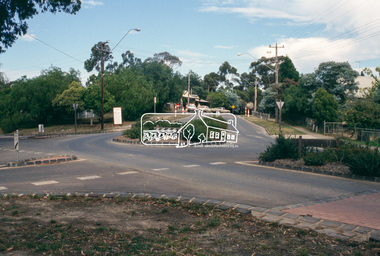
... ...bishops road...Two colour photographs of Main Road Panton Hill showing Bishops Road roundabout...main road st andrews road kangaroo ground/st andrews road bishops road roundabouts panton hill Two colour photographs of Main Road Panton Hill showing Bishops Road roundabout Main Road, Panton Hill Photograph ...Two colour photographs of Main Road Panton Hill showing Bishops Road roundaboutmain road, st andrews road, kangaroo ground/st andrews road, bishops road, roundabouts, panton hill -
 Eltham District Historical Society Inc
Slide - Photograph, Kangaroo Ground-St Andrews Road, Panton Hill, c.Apr. 1988
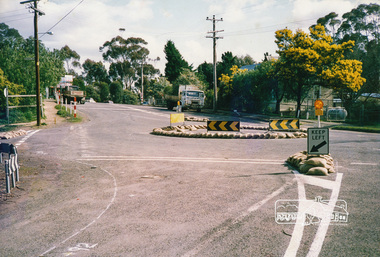
... ...bishops road...The Shire of Eltham was introducing a number of traffic calming measures throughout the shire such as speed humps, roundabouts, chicanes and took a photographic record of various new installations. infrastructure roads bishops road panton hill roundabout merritts road kangaroo ground-st andrews road Process Date "Apr M" 35mm colour positive transparency (4 of 11) Mount - white Kangaroo Ground-St Andrews Road, Panton Hill Slide Photograph ...The Shire of Eltham was introducing a number of traffic calming measures throughout the shire such as speed humps, roundabouts, chicanes and took a photographic record of various new installations.35mm colour positive transparency (4 of 11) Mount - whiteProcess Date "Apr M"infrastructure, roads, bishops road, panton hill, roundabout, merritts road, kangaroo ground-st andrews road -
 Eltham District Historical Society Inc
Photograph, Panton Hill Store near the intersection of Merritts Road and Kangaroo Ground-St Andrews Road, Panton Hill, c. Oct 1987, 1987
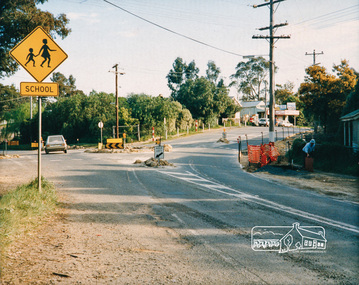
... ...Bishops Road...Date based on other similar display panels visible in images of the Shire of Eltham display at the Eltham Community Festival, 7 November 1987. display panel eltham festival infrastructure shire of eltham Bishops Road General Store Kangaroo Ground-St Andrews Road Merritts Road Panton Hill Roads Roundabouts Colour photograph Panton Hill Store near the intersection of Merritts Road and Kangaroo Ground-St Andrews Road, Panton Hill, c. ...Date based on other similar display panels visible in images of the Shire of Eltham display at the Eltham Community Festival, 7 November 1987.Colour photographdisplay panel, eltham festival, infrastructure, shire of eltham, bishops road, general store, kangaroo ground-st andrews road, merritts road, panton hill, roads, roundabouts -
 Eltham District Historical Society Inc
Photograph, Panton Hill Store near the intersection of Merritts Road and Kangaroo Ground-St Andrews Road, Panton Hill, c. Oct 1987, 1987
... ...bishops road...Date based on other similar display panels visible in images of the Shire of Eltham display at the Eltham Community Festival, 7 November 1987. display panel eltham festival infrastructure shire of eltham bishops road general store kangaroo ground-st andrews road merritts road panton hill roads roundabouts Colour photograph Panton Hill Store near the intersection of Merritts Road and Kangaroo Ground-St Andrews Road, Panton Hill, c. ...Date based on other similar display panels visible in images of the Shire of Eltham display at the Eltham Community Festival, 7 November 1987.Colour photographdisplay panel, eltham festival, infrastructure, shire of eltham, bishops road, general store, kangaroo ground-st andrews road, merritts road, panton hill, roads, roundabouts -
 Greensborough Historical Society
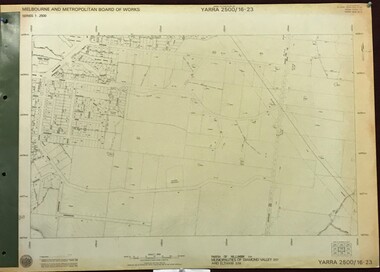
Map, Melbourne and Metropolitan Board of Works. Survey Division, MMBW, Yarra 2500 / 16.23. Diamond Creek, 1978_02
... Prominent streets include: Phipps Crescent, Bishop Avenue, and Reynolds Road. Includes the former Diamond Creek Technical School....Prominent streets include: Phipps Crescent, Bishop Avenue, and Reynolds Road. Includes the former Diamond Creek Technical School. mmbw melbourne and metropolitan board of works shire of diamond valley diamond creek - maps MMBW Map in 1:2500 [scale] series. ...Melbourne and Metropolitan Board of Works. Yarra 2500 [base map] 16-23. Diamond Creek. Parish of Nillumbik 3310. Municipalities of Diamond Valley 257 and Eltham 238. Prominent streets include: Phipps Crescent, Bishop Avenue, and Reynolds Road. Includes the former Diamond Creek Technical School.MMBW Map in 1:2500 [scale] series. Cream parchment with green tape reinforcing on edges and punched holes on left edge.mmbw, melbourne and metropolitan board of works, shire of diamond valley, diamond creek - maps -
 Eltham District Historical Society Inc
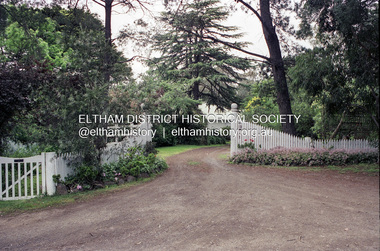
Negative - Photograph, Russell Yeoman, Stanhope, 10 Peter Street, Eltham, c.Sep. 2000
... A son of Mr and Mrs Handfield, John, became a journalist and author, and now lives with his wife Esta at Homestead Road, Eltham. Bishop Stephen was related to Sir Leslie Stephen (1832-1904), one of the great representative minds of Victorian Britain, first editor of the monumental Dictionary of National Biography and father of the famous novelist and essayist Virginia Woolf. ...A son of Mr and Mrs Handfield, John, became a journalist and author, and now lives with his wife Esta at Homestead Road, Eltham. Bishop Stephen was related to Sir Leslie Stephen (1832-1904), one of the great representative minds of Victorian Britain, first editor of the monumental Dictionary of National Biography and father of the famous novelist and essayist Virginia Woolf. ...Clem Christesen wrote a brief history of "Stanhope" which was reproduced in EDHS Newsletter No. 162 May 2005. STANHOPE HOUSE is situated on the crest of Stanhope Hill about ten minutes' walk westward from the Eltham railway station and is bounded by Peter, Fay and Stanhope Streets. The original property, comprising 15 ½ acres with a frontage on Diamond Creek, was bought in about 1900 by Will Longstaff (b. 1878, d London 1953), official war artist during World War I, who became famous for his painting 'The Ghosts of Menin Gate', France which is now in the Australian War Memorial, Canberra. The main residence, designed by Desbrowe Annear, was built of jarrah, with stucco walls and floors of Tasmanian hardwood The rooms were panelled with Californian redwood (sequoia). Away from house was a cottage (used as a studio), and stables, dairy and meat house. In 1919 Mr Theo. Handfield bought the property from Mrs Longstaff. On New Year 's Day 1924 most of the estate (eighty blocks) was auctioned. Bishop Reginald Stephen, Warden of Trinity College and distinguished scholar, bought the house and five acres in 1928. Dr and Mrs C.B. Christesen became the new owners in 1946 and subsequently extended the house on the north and south sides. 'Stanhope 'has had many very interesting art and literary associations. When Will Longstaff occupied it - he was a cousin of another well-known painter, Sir John Longstaff- various leading artists of the period, including Walter Withers who lived nearby, were frequent visitors. A son of Mr and Mrs Handfield, John, became a journalist and author, and now lives with his wife Esta at Homestead Road, Eltham. Bishop Stephen was related to Sir Leslie Stephen (1832-1904), one of the great representative minds of Victorian Britain, first editor of the monumental Dictionary of National Biography and father of the famous novelist and essayist Virginia Woolf. John Harcourt, novelist and music critic, rented 'Stanhope 'while he and his wife Fay were building 'Clay Nuneham' (mudbrick) at the foot of Stanhope Hill near the creek. Nina Christesen, academic and founding editor of Melbourne Slavonic Studies, was Head of the Department of Russian Language and Literature, University of Melbourne, from 1946 to 1977. Clem Christesen, poet, short story writer and painter, founded Australia's leading literary journal Meanjin Quarterly in 1940 and remained editor until 1975. Very many distinguished Australian and foreign writers, artists and academics-from Nobel prize-winning novelist Patrick White to the world's leading cellist Mstislav Rostropovich - have visited 'Stanhope ' over the years. The extensive garden is said to be one of the loveliest in Eltham. The main entrance is by way of Diamond and Peter Streets. film - kodak gc 400-6, russell yeoman collection, scan - 35mm negative, bishop stephen, clem christesen, eltham, nina mikhailovna christesen, peter street, stanhope, theo handfield, will longstaff -
 Flagstaff Hill Maritime Museum and Village
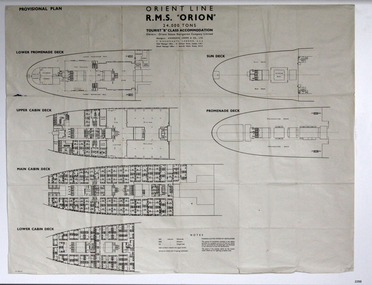
Plan - Ship Plan, Orient Steam Navigation Company, Orient Line, RMS Orion, ca. 1934
... Flagstaff Hill Flagstaff Hill Maritime Museum and Village Warrnambool Maritime Museum Maritime Village Great Ocean Road Shipwreck Coast RMS ORION Plan ship plan provisional plan Orient Line Orient ship Vissel Orion Class B Passenger Accommodation Punkah Louvre System of Ventilation deck plan ship ventilation ship floor plan orient steam navigation company limited Anderson Green & Co Ltd steamship ocean liner war ship troop carrier Printed on the plan: "PROVISIONAL PLAN" "LOWER PROMENADE DECK" "UPPER CABIN DECK" "MAIN CABIN DECK" "LOWER CABIN DECK" "SUN DECK" "PROMENADE DECK" "ORIENT LINE / R.M.S. "ORION" / 24,000 TONS / TOURIST "B" CLASS ACCOMMODATION" "Owners: Orient Steam Navigation Company Limited"' "Managers : ANDERSON, GREEN & CO. LTD" "7 BISHOPS ...The Orient Steam Navigation Company Limited launched the Ocean Liner RMS Orion in 1934 and it remained in operation until 1963. The twin screw steamship was built to carry first class and tourist class passengers, over 1100 in all, plus almost 500 crew from Europe to Australia in comfort. The ship had a single funnel and a single mast. During WWII the vessel served as a troop carrier. The ventilation system noted on the plan, Punkah Louvre System, was designed for heating fresh air ventilation in buildings, ships and railroads. The system originated from Thermotank in Glasgow, Scotland. The ship plan for the RMS Orion is significant for its connection with the vessel. The ship was a leader, with several 'firsts'; the first Orient Line ship to be built with a single funnel since 1902, and the first to be painted in the Orient Line's livery, with a corn-coloured hull. It was the first liner to use chromium and bakelite materials for the surfaces throughout the ship, which provided greater resistance to the sea. It was also the first British ship to be fitted with air conditioning.Plan: printed provisional line drawing of the Orient line vessel "R.M.S. Orion". Inscriptions are printed on the plan. There are diagrams of six decks included in the plan. The ship is built for tourist "B" accommodation. The plan's Notices include details of the cabins including wardrobes, drawers, hinged seats, mattresses and bunk numbers. It also notes that there is a Punkah-Louvre System of Ventilation.Printed on the plan: "PROVISIONAL PLAN" "LOWER PROMENADE DECK" "UPPER CABIN DECK" "MAIN CABIN DECK" "LOWER CABIN DECK" "SUN DECK" "PROMENADE DECK" "ORIENT LINE / R.M.S. "ORION" / 24,000 TONS / TOURIST "B" CLASS ACCOMMODATION" "Owners: Orient Steam Navigation Company Limited"' "Managers : ANDERSON, GREEN & CO. LTD" "7 BISHOPS GATE, LONDON, E.C.2" "Chief Passenger Office : 14 Cockspur Street, London, S.W.1" "Branch Passenger Office : 1 Australia House, Strand, W.C.2" "notices"flagstaff hill, flagstaff hill maritime museum and village, warrnambool, maritime museum, maritime village, great ocean road, shipwreck coast, rms orion, plan, ship plan, provisional plan, orient line, orient ship, vissel orion, class b passenger accommodation, punkah louvre system of ventilation, deck plan, ship ventilation, ship floor plan, orient steam navigation company limited, anderson green & co ltd, steamship, ocean liner, war ship, troop carrier -
 Flagstaff Hill Maritime Museum and Village
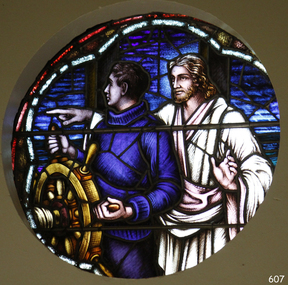
Artwork, other - Window, Brooks, Robinson & Co, Christ Showing the Helmsman the Way, circa August 1947
... road...mission to seamen williamstown...st nicholas seaman’s church williamstown...missions to seamen victoria...mission to seafarers...lightkeepers auxiliary...ladies harbour light guild...139 nelson place williamstown...religion...religious service...sailors rest...bethel sailors’ church...bethel floating church...e. s. & a. bank williamstown...christ directing a sailor...christ showing the helmsman the way...quartermaster’s hand on the wheel...stained glass window...church window...religious window...sanctuary window...memorial window...war memorial window...victorian war heritage inventory...victorian heritage database...merchant navy ww2...1939-1945...anglican church...bishop...This memorial window is significant as a part of Victoria's War Heritage and is listed on the Victorian Heritage Database, Heritage Number 196973. flagstaff hill warrnambool shipwrecked coast flagstaff hill maritime museum maritime museum shipwreck coast flagstaff hill maritime village great ocean road mission to seamen williamstown st nicholas seaman’s church williamstown missions to seamen victoria mission to seafarers lightkeepers auxiliary ladies harbour light guild 139 nelson place williamstown religion religious service sailors rest bethel sailors’ church bethel floating church e. s. & a. bank williamstown christ directing a sailor christ showing the helmsman the way quartermaster’s hand on the wheel stained glass window church window religious window sanctuary window memorial window war memorial window victorian war heritage inventory victorian heritage database merchant navy ww2 1939-1945 anglican church bishop mckie mrs musther brooks robinson & co flying angel club williamstown lightkeepers' auxiliary ladies' harbour lights guild commemorative window Window, stained glass, circular, with reinforcing bars. ...This round, stained glass window, titled "Christ Showing the Helmsman the Way", was also referred to as the Sanctuary Window or Memorial window. It was installed in the St Nicholas Seamen's Church at 139 Nelson Place, Williamstown, Victoria, inside the chapel above the altar. This memorial window has significance as a part of Victoria's War Heritage and is listed on the Victorian Heritage Database. The window and subsequent plaque were donated to St Nicholas Seamen’s Church as a memorial to the members of the Merchant Navy whose lives were lost in the Second World War, 1939-1945. The donor was the Williamstown Lightkeepers Auxiliary, an independent ladies' association working with the Williamstown Missions to Seamen (the Missions to Seamen organisation was re-named the Mission to Seafarers in the year 2000). The window was officially dedicated on December 14, 1947, by Geelong's Anglican Bishop, Rt. Rev. J.D. McKie. In the early months of 1948, a bronze plaque was also placed in the chapel above the altar. It recognises the lost souls of the Merchant Navy during World War 2, as well as the donor of the window, the Williamstown Lightkeepers Auxiliary. The inscription impressed on the rectangular bronze plaque, 20.4 x 10.2cm, is as follows: “IN MEMORY OF THE MEMBERS OF THE MERCHANT NAVY WHO WERE LOST IN THE SECOND WORLD WAR 1939-1945 FAITHFUL UNTO DEATH. THE WINDOW ABOVE THE ALTAR WAS ERECTED BY THE WILLIAMSTOWN LIGHTKEEPERS AUXILIARY 1947.” The Williamstown St Nicholas Seamen’s Church ceased operation in 1966. In 1979, the Victoria Missions to Seamen donated this round, stained glass window and the memorial plaque to Flagstaff Hill Maritime Village, along with many other items and furnishings. These items have been used to simulate the Williamstown Mission and Chapel as much as possible. The round space that formerly displayed the window can still be seen at the back of the old St Nicholas Seamen’s Church, previously the ES&A bank, in Williamstown. THE MISSIONS TO SEAMEN (Brief History): - The Missions to Seamen was an Anglican charity in Great Britain that has served the world's seafarers since 1856. Its symbol is a Flying Angel, inspired by a Bible verse. Today, there are centres in over 200 ports worldwide where seamen of all backgrounds are offered a warm welcome and provided with a wide range of facilities. In Victoria, the organisation began in Williamstown in 1857 as a Sailors’ Church, also known as ‘Bethel’ or the ‘Floating Church’ in an old hulk floating in Hobson’s Bay, Port of Melbourne. It soon became part of the Missions to Seamen, Victoria. In 2000, the organisation, now named Mission to Seafarers, still operated locally in Melbourne, Portland, Geelong and Hastings. The Ladies’ Harbour Lights Guild was formed in 1906 to support the Missions to Seamen in Melbourne and other centres, such as Williamstown. Two of the most significant ladies of the Guild were founder Ethel Augusta Godfrey and foundation member Alice Sibthorpe Tracy (who established a branch of the Guild in Warrnambool in 1920). The Guild continued its work until the 1960s. In 1943, a former Williamstown bank was purchased for the Missions to Seamen Club. The chapel was named St Nicholas’ Seamen’s Church and was supported by the Ladies’ Harbour Lights Guild, the Williamstown Lightkeepers’ Auxiliary and the League of Soldiers’ and Sailors’ Friends. It ceased operation in 1966. A Missions to Seamen Chapel and Recreation Room was a significant feature of ports during the late 1800s and 1900s. It seemed appropriate for Flagstaff Hill to include such a representation within the new Maritime Village, and the Melbourne Board of Management of Missions to Seamen Victoria gave its permission on 21st May 1979 for the entire furnishings of the Williamstown chapel to be transferred to Flagstaff Hill. The St Nicholas Seamen’s Church was officially opened on October 11, 1981, and resembles the Williamstown chapel. This stained glass window is historically significant for its connection to the St Nicholas Mission to Seamen's Church in Williamstown, established in 1857 to cater for the physical, social, and spiritual needs of seafarers. It was donated to the Mission by the Lightkeepers Auxiliary (Ladies Harbour Lights Guild, which was formed in 1905). The Missions to Seamen organisation had its origins in Bristol, England, when a Seamen's Mission was formed in 1837. The first Australian branch was started in 1856 by the Rev. Kerr Johnston, a Church of England clergyman, and operated from a hulk moored in Hobson’s Bay. Later, the Mission occupied buildings in Williamstown and Port Melbourne. The connection of this window, the Mission to Seamen and the Ladies Harbour Lights Guild highlights the strong community awareness of the life of people at sea, their dangers and hardships, and their need for physical, financial, spiritual and moral support. This memorial window is significant as a part of Victoria's War Heritage and is listed on the Victorian Heritage Database, Heritage Number 196973.Window, stained glass, circular, with reinforcing bars. The window represents Christ showing the helmsman the way. It shows a man in blue knitted jumper holding onto a ship's wheel, looking over his right shoulder. Behind him stands a man in a white robe, pointing to his right and looking to his left, his left hand gesturing to pause. The background has various shapes and patterns of blue glass, bordered by two arcs; the outer one is white, the inner one is red. This beautiful window is in our St Nicholas Seamen's Church Collection and was brought to Warrnambool from the original St Nicholas Seamen’s Church in Williamstown. flagstaff hill, warrnambool, shipwrecked coast, flagstaff hill maritime museum, maritime museum, shipwreck coast, flagstaff hill maritime village, great ocean road, mission to seamen williamstown, st nicholas seaman’s church williamstown, missions to seamen victoria, mission to seafarers, lightkeepers auxiliary, ladies harbour light guild, 139 nelson place williamstown, religion, religious service, sailors rest, bethel sailors’ church, bethel floating church, e. s. & a. bank williamstown, christ directing a sailor, christ showing the helmsman the way, quartermaster’s hand on the wheel, stained glass window, church window, religious window, sanctuary window, memorial window, war memorial window, victorian war heritage inventory, victorian heritage database, merchant navy ww2, 1939-1945, anglican church, bishop mckie, mrs musther, brooks robinson & co, flying angel club, williamstown lightkeepers' auxiliary, ladies' harbour lights guild, commemorative window -
 Flagstaff Hill Maritime Museum and Village
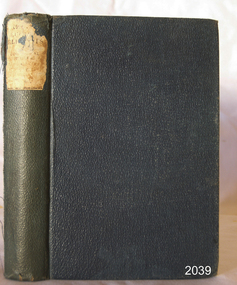
Book - Reference, The Elements of Euclid
... Road Shipwreck Coast Longmans Green and Co. Thomas Longman Paternoster Row London John William Colenso 19th-century British mathematician missionary Spottiswoode & Co. The Elements of Euclid Text on spine The Elements of Euclid by John William Colenso, D.D. (new edition) [The Elements of Euclid (the parts read in the University of Cambridge) from the text of Dr Robert Simson with Geometrical Examples by John William Colenso, D.D., Lord Bishop of Natal} Date: 1846 Publisher: Longmans Green and Co, London Printer: Spottiswoode and Co, New Street Navy blue textured hardcover on the book, with title on a label on the spine. ...Author John William Colenso (1814-1883) was a mathematician, missionary and renowned clergyman in the Anglican Church. In 1853 he became the first Bishop of Natal, South Africa. The publisher firm, Longmans, Green & Co., was originally founded in 1724 in London by Thomas Longman under the name Longman. In August of that year, he bought the two shops and goods of William Taylor and set up his publishing house there at 39 Paternoster Row. The shops were called Black Swan and Ship, and it is said that the 'ship' sign was the inspiration for Longman's Logo. After many changes of name and management, the firm was incorporated in 1926 as Longmans, Green & Co. Pty Ltd. The firm was acquired by Pearson in 1968 and was known as Pearson Longman or Pearson PLC. The printer, Spottiswoode and Co,, was established in 1738 by William Strahan, with premises in New Street Square, London. The growing firm advertised as Printers, Lithographers, Stationers, Electrotypers, Publishers, and Booksellers and by 1914 there were 1,000 employees. The book is significant for its connection to 19th-century author John William Colenso, was a mathematician and Anglican clergyman who had several works published. The publisher and printer of this book are also significant in their roles for being established in the early 18th century, contributing to the education of the studies of the scholars of the day. The book is also significant for its connection to the publisher Longmans, Green and Co., of London, and printer Spottiswoode & Co., firms that have been established for around two centuries, renowned for publishing and printing reference works that contributed to the education of scholars over many years.The Elements of Euclid by John William Colenso, D.D. (new edition) [The Elements of Euclid (the parts read in the University of Cambridge) from the text of Dr Robert Simson with Geometrical Examples by John William Colenso, D.D., Lord Bishop of Natal} Date: 1846 Publisher: Longmans Green and Co, London Printer: Spottiswoode and Co, New Street Navy blue textured hardcover on the book, with title on a label on the spine.Text on spineflagstaff hill, flagstaff hill maritime museum and village, warrnambool, maritime museum, maritime village, great ocean road, shipwreck coast, longmans green and co., thomas longman, paternoster row london, john william colenso, 19th-century british mathematician, missionary, spottiswoode & co., the elements of euclid -
 The Beechworth Burke Museum
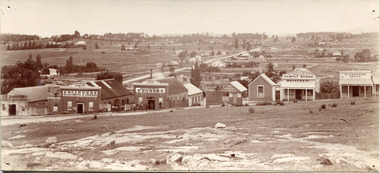
Photograph, c1900
... Bishop...coach builder...coach...Mark Straughair...M. Straughair...Straughair and Duncan...John Duncan...J. Duncan...Beechworth Foundry...Mackenzie Family Store...T. Pratten...grocer...Beechworth grocers...Beechworth Mental Asylum...Beechworth Mental Hospital...Mayday Hills Mental Asylum...Mental Hospital...Alexander Rogers...New Ford Street Foundry...1860s Beechworth...1860s...mining machinery...agricultural machinery...manufacturing...Bridge Road...Bishop coach builder coach Mark Straughair M. Straughair Straughair and Duncan John Duncan J. Duncan Beechworth Foundry Mackenzie Family Store T. Pratten grocer Beechworth grocers Beechworth Mental Asylum Beechworth Mental Hospital Mayday Hills Mental Asylum Mental Hospital Alexander Rogers New Ford Street Foundry 1860s Beechworth 1860s mining machinery agricultural machinery manufacturing Bridge Road Obverse: [Pin holes from circular tacks in all four corners] Reverse: 84.216-1/ Newtown/ 1997.2650/ 21/ BMM3056/ Sepia rectangular photograph printed on photographic paper mounted on board Photograph Photograph ...Taken around 1858, depicting a row of five business buildings on a rocky, sloping hillside at New Town, with a view across to residences and open land. Businesses included, Joseph E. Bishop, Coach Builders; Straughair Duncan, Engineers, Blacksmiths & Farriers; Straughair Duncan, Beechworth Foundry; Wholesale & Retail Est. 1855, Mackenzie Family Store ; and T. Pratten, Grocer. The Mental Hospital can be seen in the background. Mark Straughair and John Duncan, established the Beechworth Foundry, Newtown in 1858 and went on to build an important industry, employing around sixteen men, after acquiring Alexander Roger's New Ford Street Foundry in the late 1860s. Making and repairing mostly mining and agricultural machinery for the Ovens District and a Beechworth brewery, the business continued to function after Straughair's death in 1882, up until the death of Duncan in 1896, when the business folded. This photograph is historically significant because it shows the development of the businesses in Beechworth from the early establishment of the town.Sepia rectangular photograph printed on photographic paper mounted on boardObverse: [Pin holes from circular tacks in all four corners] Reverse: 84.216-1/ Newtown/ 1997.2650/ 21/ BMM3056/new town, newtown, newtown beechworth, local business, 1858, 1850s beechworth, joseph e. bishop, coach builder, coach, mark straughair, m. straughair, straughair and duncan, john duncan, j. duncan, beechworth foundry, mackenzie family store, t. pratten, grocer, beechworth grocers, beechworth mental asylum, beechworth mental hospital, mayday hills mental asylum, mental hospital, alexander rogers, new ford street foundry, 1860s beechworth, 1860s, mining machinery, agricultural machinery, manufacturing, bridge road -
 Flagstaff Hill Maritime Museum and Village
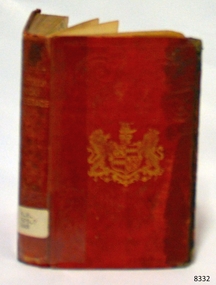
Book - Referance Book, Thomas Curson Hansard Junior, Hansards Pocket Peerage, 1854
... (For more information on the Pattison Collection see item 3678 Flagstaff Hill collections) https://victoriancollections.net.au/items/5580c7e72162f114d8b758db flagstaff hill warrnambool shipwrecked coast flagstaff hill maritime museum maritime museum shipwreck coast flagstaff hill maritime village great ocean road book pattison collection warrnambool library warrnambool mechanics’ institute ralph eric pattison corangamite regional library service warrnambool city librarian mechanics’ institute library victorian library board warrnambool books and records warrnambool children’s library Hansards Pocket Peerage Thomas Cautley Newby Thomas Curson Hansard Junior John Pascoe Fawkner This volume is a genealogical and biographical reference directory of the British nobility. It was designed as a compact, portable handbook detailing the titles, lineages, coats of arms, and family histories of the peers of Great Britain and Ireland, as well as bishops ...This volume is a genealogical and biographical reference directory of the British nobility. It was designed as a compact, portable handbook detailing the titles, lineages, coats of arms, and family histories of the peers of Great Britain and Ireland, as well as bishops and baronets. While Thomas Curson Hansard is famous for establishing the printing of Britain's official parliamentary debates (Hansard), his firm also published these highly practical, condensed pocket guides for politicians, gentlemen, and libraries who needed quick access to the details of high society and parliamentary ranks.Hansards Pocket Peerage Publisher: T C Newby Date: 1854 Further Information: Signed by John Pascoe Fawknernon-fictionThis volume is a genealogical and biographical reference directory of the British nobility. It was designed as a compact, portable handbook detailing the titles, lineages, coats of arms, and family histories of the peers of Great Britain and Ireland, as well as bishops and baronets. While Thomas Curson Hansard is famous for establishing the printing of Britain's official parliamentary debates (Hansard), his firm also published these highly practical, condensed pocket guides for politicians, gentlemen, and libraries who needed quick access to the details of high society and parliamentary ranks.flagstaff hill, warrnambool, shipwrecked coast, flagstaff hill maritime museum, maritime museum, shipwreck coast, flagstaff hill maritime village, great ocean road, book, pattison collection, warrnambool library, warrnambool mechanics’ institute, ralph eric pattison, corangamite regional library service, warrnambool city librarian, mechanics’ institute library, victorian library board, warrnambool books and records, warrnambool children’s library, hansards pocket peerage, thomas cautley newby, thomas curson hansard junior, john pascoe fawkner -
 Flagstaff Hill Maritime Museum and Village
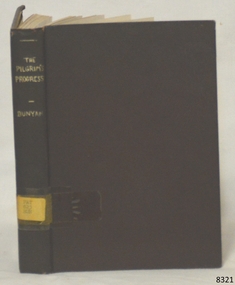
Book, The Pilgrims Progress
... The Warrnambool Mechanics' Institute’s publication collection is of both local and state significance. flagstaff hill warrnambool shipwrecked coast flagstaff hill maritime museum maritime museum shipwreck coast flagstaff hill maritime village great ocean road book pattison collection warrnambool library warrnambool mechanics’ institute ralph eric pattison corangamite regional library service warrnambool city librarian mechanics’ institute library victorian library board warrnambool books and records warrnambool children’s library the pilgrims progress John Bunyan Front loose endpaper has a sticker from Corangamite Regional Library Service Front loose endpaper has a stamp from Corangamite Regional Library Service The Pilgrims Progress Author: John Bunyan Publisher: Ernest Nister Date: Frist Published in 1678 Further Information: With an Introduction by The Right Re. Handley C. O. Qoule, D.D. Lord Bishop ...This book was part of a large group of books referred to as the Pattison Collection, which belonged to the Warrnambool Public Library, part of the Warrnambool Mechanics’ Institute. About RALPH ERIC PATTISON and the ‘PATTISON COLLECTION’ The ‘Pattison Collection’ is a collection of books and records that was originally owned by the Warrnambool Mechanics’ Institute, founded in Warrnambool in 1853. By 1886 the Warrnambool Mechanics’ Institute (WMI) had grown to have a Library, Museum and Fine Arts Gallery, with a collection of “… choice productions of art and valuable specimens in almost every branch and many wonderful national curiosities, are now to be seen there, including historic relics of the town and district.” It later included a School of Design. Although it was very well patronised, the WMI was led to ask the City Council to take it over in 1911 due to a lack of financial support. In 1935 Ralph Pattison was appointed as City Librarian to establish and organise the Warrnambool Public Library as it was then called. Ralph Eric Pattison was born in Rockhampton, Queensland, in 1891. He married Maude Swan from Warrnambool in 1920 and they set up a home in Warrnambool. In 1935 when Pattison accepted the position as City Librarian for the Warrnambool City Council his huge challenge was to make a functional library within two rooms of the Mechanics’ Institute. He tirelessly cleaned, cleared and sorted a disarrayed collection of old books, jars of preserved specimens and other items reserved for exhibition in the city’s museum. He developed and updated the library with a wide variety of books for all tastes, including reference books for students; a difficult task to fulfil during the years following the Depression. He converted all of the lower areas of the building into a library, reference room and reading room for members and the public. The books were sorted and stored using a cataloguing and card index system that he had developed himself. He also prepared the upper floor of the building and established the Art Gallery and later the Museum, a place to exhibit the many old relics that had been stored for years for this purpose. One of the treasures he found was a beautiful ancient clock, which he repaired, restored and enjoyed using in his office during the years of his service there. Ralph Pattison was described as “a meticulous gentleman whose punctuality, floorless courtesy and distinctive neat dress were hallmarks of his character, and ‘his’ clock controlled his daily routine and his opening and closing of the library’s large heavy doors to the minute.” Pattison took leave from 1942 to 1945 to serve in the Royal Australian Navy, Volunteer Reserve as Lieutenant. A few years later he converted one of the Museum’s rooms into a Children’s Library, stocking it with suitable books for the younger generation. This was an instant success. In the 1950’s he had the honour of being appointed to the Victorian Library Board and received more inspiration from the monthly conferences in Melbourne. He was sadly retired in 1959 after over 23 years of service, due to the fact that he had gone over the working age of council officers. However, he continued to take a very keen interest in the continual development of the Library until his death in 1969. THE NEW WARRNAMBOOL LIBRARY When the WMI building was pulled down in 1963 a new civic building was erected on the site and the new Warrnambool Library, on behalf of the City Council, took over all the holdings of the WMI. At this time some of the items were separated and identified as the ‘Pattison Collection’, named after Pattison. Eventually, the components of the WMI were distributed from the Warrnambool Library to various places, including the Art Gallery, Historical Society and Flagstaff Hill. Later some were even distributed to other regional branches of Corangamite Regional Library and passed to and fro. It is difficult now to trace just where all of the items have ended up. The books at Flagstaff Hill Maritime Village generally display stamps and markings from Pattison as well as a variety of other institutions including the Mechanics’ Institute itself. The Pattison Collection, along with other items at Flagstaff Hill Maritime Village, was originally part of the Warrnambool Mechanics' Institute’s collection. The Warrnambool Mechanics’ Institute Collection is primarily significant in its totality, rather than for the individual objects it contains. Its contents are highly representative of the development of Mechanics' Institute libraries across Australia, particularly Victoria. A diversity of publications and themes has been amassed, and these provide clues to our understanding of the nature of and changes in the reading habits of Victorians from the 1850s to the middle of the 20th century. The collection also highlights the Warrnambool community’s commitment to the Mechanics’ Institute, reading, literacy and learning in the regions, and proves that access to knowledge was not impeded by distance. These items help to provide a more complete picture of our community’s ideals and aspirations. The Warrnambool Mechanics Institute book collection has historical and social significance for its strong association with the Mechanics Institute movement and the important role it played in the intellectual, cultural and social development of people throughout the latter part of the nineteenth century and the early twentieth century. The collection of books is a rare example of an early lending library and its significance is enhanced by the survival of an original collection of many volumes. The Warrnambool Mechanics' Institute’s publication collection is of both local and state significance. The Pilgrims Progress Author: John Bunyan Publisher: Ernest Nister Date: Frist Published in 1678 Further Information: With an Introduction by The Right Re. Handley C. O. Qoule, D.D. Lord Bishop of DurhamFront loose endpaper has a sticker from Corangamite Regional Library Service Front loose endpaper has a stamp from Corangamite Regional Library Service flagstaff hill, warrnambool, shipwrecked coast, flagstaff hill maritime museum, maritime museum, shipwreck coast, flagstaff hill maritime village, great ocean road, book, pattison collection, warrnambool library, warrnambool mechanics’ institute, ralph eric pattison, corangamite regional library service, warrnambool city librarian, mechanics’ institute library, victorian library board, warrnambool books and records, warrnambool children’s library, the pilgrims progress, john bunyan -
 Ringwood and District Historical Society
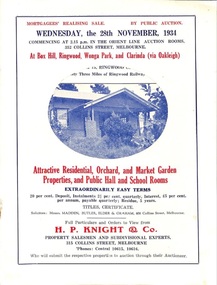
Flyer, Stillwell & Stephens Pty. Ltd, Brochure - Multiple Properties for Public Auction at Box Hill, Ringwood, Wonga Park and Clarinda - 28th November, 1934
... Wonga Park via Ringwood - "Holme Bush" off Warrandyte Road, Part of Lots 14 and 15, Ringwood Orchard Estate, approximatgely three miles (north) of Ringwood Railway Station - 64 Acres. 2. 17 Bishop Street, Box Hill - timber residence. 3. ...Wonga Park via Ringwood - "Holme Bush" off Warrandyte Road, Part of Lots 14 and 15, Ringwood Orchard Estate, approximatgely three miles (north) of Ringwood Railway Station - 64 Acres. 2. 17 Bishop Street, Box Hill - timber residence. 3. ...Seven-page brochure advertising Mortgagees' Realising Sale by Public Auction on Wednesday, 28th November, 1934 for properties at Box Hill, Ringwood, Wonga Park, and Clarinda (via Oakleigh), including photographs, property descriptions, and terms of sale.Auction Commencing at 2.15 p.m. in the Orient Line Auction Rooms, 352 Collins Street, Melbourne. Solicitors: Messrs. Madden, Butler, Elder & Graham, 406 Collins Street, Melbourne. (Agents) H.P. Knight & Co. Property Salesmen and Subidivisional Experts, 315 Collins Street, Melbourne, 'Phones: Central 10615, 10616. Attractive Residential, Orchard, and Market Garden Properties, and Public Hall and School Rooms. 1. Wonga Park via Ringwood - "Holme Bush" off Warrandyte Road, Part of Lots 14 and 15, Ringwood Orchard Estate, approximatgely three miles (north) of Ringwood Railway Station - 64 Acres. 2. 17 Bishop Street, Box Hill - timber residence. 3. Greenwood Avenue, Ringwood - On East Side, 150 feet 3 inches South of Bedford Road - timber attic residence. 4. Ringwood - Wantirna Road, South-east corner of Canterbury Road - Orchard Property of approx. 11-1/2 Acres. 5. Box Hill - Whitehorse Road, South-east corner of Linsley Street - Timber building utilised as a Public Hall and Private School. 6. Clarinda vic Oakleigh, Talbot Crescent, off Centre Road - Home on 10 acres of land. -
 Flagstaff Hill Maritime Museum and Village
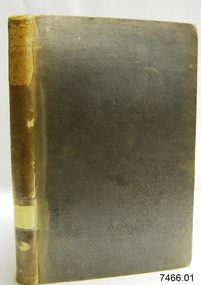
Book - Religious Book, John William Colenso, author, The Pentateuch and Book of Joshua Part 1, 1863
... Road...Shipwreck Coast...Thomas Longman...Paternoster Row London...Pattison Collection...Ralph Eric Pattison...Warrnambool Mechanics’ Institute...Mechanics’ Institute Library...Warrnambool Library...Free Library...Corangamite Regional Library Service...The Pentateuch and Book of Joshua...John William Colenso...19th-century British mathematician...missionary...Anglican Bishop...Flagstaff Hill Flagstaff Hill Maritime Museum and Village Warrnambool Maritime Museum Maritime Village Great Ocean Road Shipwreck Coast Thomas Longman Paternoster Row London Pattison Collection Ralph Eric Pattison Warrnambool Mechanics’ Institute Mechanics’ Institute Library Warrnambool Library Free Library Corangamite Regional Library Service The Pentateuch and Book of Joshua John William Colenso 19th-century British mathematician missionary Anglican Bishop Napal Longman Green Longman Roberts & Green Label with the typed text: "PAT 222 COL" Handwritten on Fly page: "T 7" Stamped on the Pastedown end page, within an oval: "Warrnambool Mechanics Institute" Sticker on Front loose endpaper: "Corangamite Regional Library Service" The Pentateuch and Book of Joshua Part 1 Author: John William Colenso Publisher: Longman, Green, Longman, Roberts & Green Date: 1863 This book is one of a three-part series by this author. ...This item is from the ‘Pattison Collection’, a collection of books and records that was originally owned by the Warrnambool Mechanics’ Institute, which was founded in Warrnambool in 1853. Author John William Colenso (1814-1883) was a mathematician, missionary and renowned clergyman in the Anglican Church. In 1853 he became the first Bishop of Natal, South Africa. The publisher firm, Longman Green Longman Roberts & Green was originally founded in 1724 in London by Thomas Longman under the name Longman. In August of that year, he bought the two shops and goods of William Taylor and set up his publishing house there at 39 Paternoster Row. The shops were called Black Swan and Ship, and it is said that the 'ship' sign was the inspiration for Longman's Logo. After many changes of name and management, the firm was incorporated in 1926 as Longmans, Green & Co. Pty Ltd. The firm was acquired by Pearson in 1968 and was known as Pearson Longman or Pearson PLC.The book is significant for its connection to 19th-century author John William Colenso, who was a mathematician and Anglican clergyman who had several works published. The publisher of this book, Longman Green Longman Roberts & Green, is also significant for being established in the early 18th century, contributing to the education of the studies of the scholars of the day. The book has additional importance for its connection to the Pattison Collection, which, along with other items at Flagstaff Hill Maritime Village, was originally part of the Warrnambool Mechanics' Institutes’ Collection. The Warrnambool Mechanics’ Institute book collection has historical and social significance for its strong association with the Mechanics Institute movement and the important role it played in the intellectual, cultural and social development of people throughout the latter part of the nineteenth century and the early twentieth century. The collection of books is a rare example of an early lending library and its significance is enhanced by the survival of an original collection of many volumes. The Warrnambool Mechanics' Institute’s publication collection is of both local and state significance.The Pentateuch and Book of Joshua Part 1 Author: John William Colenso Publisher: Longman, Green, Longman, Roberts & Green Date: 1863 This book is one of a three-part series by this author. Textured hardcover book with labels attached to the spine, oval stamp and handwritten inscription on fly pagy. Part of the Pattison Colleciton.Label with the typed text: "PAT 222 COL" Handwritten on Fly page: "T 7" Stamped on the Pastedown end page, within an oval: "Warrnambool Mechanics Institute" Sticker on Front loose endpaper: "Corangamite Regional Library Service"flagstaff hill, flagstaff hill maritime museum and village, warrnambool, maritime museum, maritime village, great ocean road, shipwreck coast, thomas longman, paternoster row london, pattison collection, ralph eric pattison, warrnambool mechanics’ institute, mechanics’ institute library, warrnambool library, free library, corangamite regional library service, the pentateuch and book of joshua, john william colenso, 19th-century british mathematician, missionary, anglican bishop, napal, longman green longman roberts & green -
 Flagstaff Hill Maritime Museum and Village
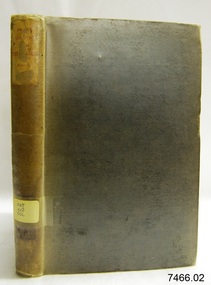
Badge - Religious Book, John William Colenso, author, The Pentateuch and Book of Joshua Part 2, 1863
... Road...Shipwreck Coast...Thomas Longman...Paternoster Row London...Pattison Collection...Ralph Eric Pattison...Warrnambool Mechanics’ Institute...Mechanics’ Institute Library...Warrnambool Library...Free Library...Corangamite Regional Library Service...The Pentateuch and Book of Joshua...John William Colenso...19th-century British mathematician...missionary...Anglican Bishop...Flagstaff Hill Flagstaff Hill Maritime Museum and Village Warrnambool Maritime Museum Maritime Village Great Ocean Road Shipwreck Coast Thomas Longman Paternoster Row London Pattison Collection Ralph Eric Pattison Warrnambool Mechanics’ Institute Mechanics’ Institute Library Warrnambool Library Free Library Corangamite Regional Library Service The Pentateuch and Book of Joshua John William Colenso 19th-century British mathematician missionary Anglican Bishop Napal Longman Green Longman Roberts & Green Label with the typed text: "PAT 222 COL" Stamped on the Pastedown end page, within an oval: "Warrnambool Mechanics Institute" Sticker on Front loose endpaper: "Corangamite Regional Library Service" The Pentateuch and Book of Joshua Part 2 Author: John William Colenso Publisher: Longman, Green, Longman, Roberts and Green Date: 1863 This book is one of a three-part series by this author. ...This item is from the ‘Pattison Collection’, a collection of books and records that was originally owned by the Warrnambool Mechanics’ Institute, which was founded in Warrnambool in 1853. Author John William Colenso (1814-1883) was a mathematician, missionary and renowned clergyman in the Anglican Church. In 1853 he became the first Bishop of Natal, South Africa. The publisher firm, Longman Green Longman Roberts & Green was originally founded in 1724 in London by Thomas Longman under the name Longman. In August of that year, he bought the two shops and goods of William Taylor and set up his publishing house there at 39 Paternoster Row. The shops were called Black Swan and Ship, and it is said that the 'ship' sign was the inspiration for Longman's Logo. After many changes of name and management, the firm was incorporated in 1926 as Longmans, Green & Co. Pty Ltd. The firm was acquired by Pearson in 1968 and was known as Pearson Longman or Pearson PLC.The book is significant for its connection to 19th-century author John William Colenso, who was a mathematician and Anglican clergyman who had several works published. The publisher of this book, Longman Green Longman Roberts & Green, is also significant for being established in the early 18th century, contributing to the education of the studies of the scholars of the day. The book has additional importance for its connection to the Pattison Collection, which, along with other items at Flagstaff Hill Maritime Village, was originally part of the Warrnambool Mechanics' Institutes’ Collection. The Warrnambool Mechanics’ Institute book collection has historical and social significance for its strong association with the Mechanics Institute movement and the important role it played in the intellectual, cultural and social development of people throughout the latter part of the nineteenth century and the early twentieth century. The collection of books is a rare example of an early lending library and its significance is enhanced by the survival of an original collection of many volumes. The Warrnambool Mechanics' Institute’s publication collection is of both local and state significance.The Pentateuch and Book of Joshua Part 2 Author: John William Colenso Publisher: Longman, Green, Longman, Roberts and Green Date: 1863 This book is one of a three-part series by this author. Textured hardcover book with labels attached to the spine and an oval stamp fly page. Part of the Pattison Colleciton.Label with the typed text: "PAT 222 COL" Stamped on the Pastedown end page, within an oval: "Warrnambool Mechanics Institute" Sticker on Front loose endpaper: "Corangamite Regional Library Service"flagstaff hill, flagstaff hill maritime museum and village, warrnambool, maritime museum, maritime village, great ocean road, shipwreck coast, thomas longman, paternoster row london, pattison collection, ralph eric pattison, warrnambool mechanics’ institute, mechanics’ institute library, warrnambool library, free library, corangamite regional library service, the pentateuch and book of joshua, john william colenso, 19th-century british mathematician, missionary, anglican bishop, napal, longman green longman roberts & green -
 Flagstaff Hill Maritime Museum and Village
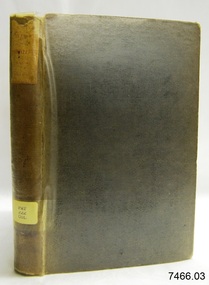
Book - Religious Book, John William Colenso, author, The Pentateuch and Book of Joshua Part 3, 1863
... Road...Shipwreck Coast...Longman Green Longman Roberts & Green...Thomas Longman...Paternoster Row London...Pattison Collection...Ralph Eric Pattison...Warrnambool Mechanics’ Institute...Mechanics’ Institute Library...Warrnambool Library...Free Library...Corangamite Regional Library Service...The Pentateuch and Book of Joshua...John William Colenso...19th-century British mathematician...missionary...Anglican Bishop...Flagstaff Hill Flagstaff Hill Maritime Museum and Village Warrnambool Maritime Museum Maritime Village Great Ocean Road Shipwreck Coast Longman Green Longman Roberts & Green Thomas Longman Paternoster Row London Pattison Collection Ralph Eric Pattison Warrnambool Mechanics’ Institute Mechanics’ Institute Library Warrnambool Library Free Library Corangamite Regional Library Service The Pentateuch and Book of Joshua John William Colenso 19th-century British mathematician missionary Anglican Bishop Napal Label on spine "PAT 222 COL" Handwritten text on fly: "T 9" Pastedown papers; Oval stamp "Warrnambool Mechanics Institute" "Corangamite Regional Library Service" The Pentateuch and Book of Joshua Part 3 Author: John William Colenso Publisher: Longman, Green, Longman, Roberts & Green Date: 1863 This book is one of a three-part series by this author. ...Author John William Colenso (1814-1883) was a mathematician, missionary and renowned clergyman in the Anglican Church. In 1853 he became the first Bishop of Natal, South Africa. The publisher firm Longman Green Longman Roberts & Green, was originally founded in 1724 in London by Thomas Longman under the name Longman. In August of that year, he bought the two shops and goods of William Taylor and set up his publishing house there at 39 Paternoster Row. The shops were called Black Swan and Ship, and it is said that the 'ship' sign was the inspiration for Longman's Logo. After many changes of name and management, the firm was incorporated in 1926 as Longmans, Green & Co. Pty Ltd. The firm was acquired by Pearson in 1968 and was known as Pearson Longman or Pearson PLC.The book is significant for its connection to 19th-century author John William Colenso, who was a mathematician and Anglican clergyman who had several works published. The publisher of this book, Longman Green Longman Roberts & Green, is also significant for being established in the early 18th century, contributing to the education of the studies of the scholars of the day. The book has additional importance for its connection to the Pattison Collection, which, along with other items at Flagstaff Hill Maritime Village, was originally part of the Warrnambool Mechanics' Institutes’ Collection. The Warrnambool Mechanics’ Institute book collection has historical and social significance for its strong association with the Mechanics Institute movement and the important role it played in the intellectual, cultural and social development of people throughout the latter part of the nineteenth century and the early twentieth century. The collection of books is a rare example of an early lending library and its significance is enhanced by the survival of an original collection of many volumes. The Warrnambool Mechanics' Institute’s publication collection is of both local and state significance.The Pentateuch and Book of Joshua Part 3 Author: John William Colenso Publisher: Longman, Green, Longman, Roberts & Green Date: 1863 This book is one of a three-part series by this author. It is part of the Pattison Collection.Label on spine "PAT 222 COL" Handwritten text on fly: "T 9" Pastedown papers; Oval stamp "Warrnambool Mechanics Institute" "Corangamite Regional Library Service"flagstaff hill, flagstaff hill maritime museum and village, warrnambool, maritime museum, maritime village, great ocean road, shipwreck coast, longman green longman roberts & green, thomas longman, paternoster row london, pattison collection, ralph eric pattison, warrnambool mechanics’ institute, mechanics’ institute library, warrnambool library, free library, corangamite regional library service, the pentateuch and book of joshua, john william colenso, 19th-century british mathematician, missionary, anglican bishop, napal -
 Flagstaff Hill Maritime Museum and Village
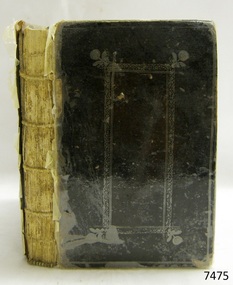
Book - Religious Book, John Scott, D.D, The Christian Life Vol 4, 1696
... Road...Shipwreck Coast...Warrnambool Mechanics’ Institute...Mechanics’ Institute Library...Warrnambool Library...Free Library...John Scott...17th century book...1696...The Christian Life...Walter Kettilby...Bishop...Flagstaff Hill Flagstaff Hill Maritime Museum and Village Warrnambool Maritime Museum Maritime Village Great Ocean Road Shipwreck Coast Warrnambool Mechanics’ Institute Mechanics’ Institute Library Warrnambool Library Free Library John Scott 17th century book 1696 The Christian Life Walter Kettilby Bishop-s Head St Paul's Church Yard St Giles in the Fields religious teaching Christian teaching Christian doctrine Walter Kettilby bookseller Walter Kettilby publisher Label: "RH 248.4 SCO" Sticker: "Warrnambool Mechanics Institute and Free Library" Stamp on Fly: "000379" Text on Fly: "Wherein the great duties of justice, mercy and mortification are fully explained and inforced." ...This religious book by John Scott, D.D., late Rector of St. Giles in the Fields, London, sets about to explain some of the church's doctrine. The book originated from the Warrnambool Mechanics' Institute. The book was printed for Walter Kettilby, a bookseller and publisher in London in the 17th century. He died in 1699 and was buried at St. Paul’s Cathedral.The book is significant for its age – it is one of the oldest books in Flagstaff Hill’s collection, published in 1696, well before Australia was colonised. The publisher, Walter Kettilby, passed away three years later. The book expresses the writer’s interpretation of Christian doctrine giving an insight into the doctrines and beliefs of the 17th century. The book was originally part of the Warrnambool Mechanics' Institutes’ Collection. which has historical and social significance for its strong association with the Mechanics Institute movement and its important role in people's intellectual, cultural and social development throughout the latter part of the nineteenth century and the early twentieth century. The collection of books is a rare example of an early lending library and its significance is enhanced by the survival of an original collection of many volumes. The Warrnambool Mechanics' Institute’s publication collection is of both local and state significance.The Christian Life Part III Vol IV Author: John Scott, D.D. Publisher: Walter Kettilby, Bishop's-Head, St. Paul's Church Yard. Date: 1696Label: "RH 248.4 SCO" Sticker: "Warrnambool Mechanics Institute and Free Library" Stamp on Fly: "000379" Text on Fly: "Wherein the great duties of justice, mercy and mortification are fully explained and inforced." "By John Scott, D.D. late Rector of St. Giles in the Fields."flagstaff hill, flagstaff hill maritime museum and village, warrnambool, maritime museum, maritime village, great ocean road, shipwreck coast, warrnambool mechanics’ institute, mechanics’ institute library, warrnambool library, free library, john scott, 17th century book, 1696, the christian life, walter kettilby, bishop-s head, st paul's church yard, st giles in the fields, religious teaching, christian teaching, christian doctrine, walter kettilby bookseller, walter kettilby publisher -
 Flagstaff Hill Maritime Museum and Village
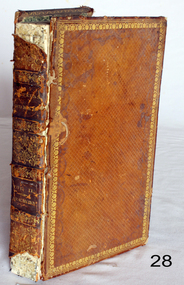
Literary work - Book, G. Sidney, Book of sermons by The Right Reverend Beilby Porteus Vol 2. Additional notes on authors life by Rev. Robert Hodgson, A.M.F.R.S, 1811 Published
... But, ironically, Porteus' most lasting contribution was one for which he is little-known, the Sunday Observance Act of 1781 (a response to what he saw as the moral decay of England), which legislated how the public were allowed to spend their recreation time at weekends these laws continued for the following 200 years until the passing of the Sunday Trading Act of 1994. flagstaff hill warrnambool shipwrecked coast flagstaff hill maritime museum maritime museum shipwreck coast flagstaff hill maritime village great ocean road right reverend beilby porteous sermons london reverend Beilby Porteus (or Porteous; 8 May 1731 – 13 May 1809), successively Bishop of Chester and of London, was a Church of England reformer and a leading abolitionist in England. ...Rev Robert Hodgson: His father was Robert Hodgson Snr, of Congleton, and Mildred (née Porteus) in early 1773. He was baptised on 22 September 1773 at St Peter's Church, Congleton. Hodgson was a close relative (by marriage on his father's side and by blood on his mother's side) of Beilby Porteus, Bishop of London of whom Hodgson wrote a biography of Porteus. On his mother's side, he was a descendant of Augustine Warner Jnr., who presided as the Speaker of the Virginia House of Burgesses during the time of Bacon's Rebellion (Warner served before the Rebellion in 1676, and after the Rebellion in 1677.) Hodgson was educated at Macclesfield School and Peterhouse, Cambridge, where he graduated with a BA as 14th Wrangler in 1795. He was appointed rector of St George's, Hanover Square for over forty years, from 1803 until his death in 1844. Bishop Beilby Porteus: Beilby Porteus 8 May 1731 – 13 May 1809), successively Bishop of Chester and London was a Church of England reformer and a leading abolitionist in England. He was the first Anglican in a position of authority to seriously challenge the Church's position on slavery. Porteus was born in York on 8 May 1731, the youngest of the 19 children of Elizabeth Jennings and Robert Porteus ( 1758/9), a planter. Although the family was of Scottish ancestry, his parents were Virginian planters who had returned to England in 1720 as a result of the economic difficulties in the province and for the sake of his father's health. Educated at York and Ripon Grammar School, he was a classics scholar at Christ's College, Cambridge, becoming a fellow in 1752. In 1759 he won the Seatonian Prize for his poem Death: A Poetical Essay, a work for which he is still remembered. He was ordained as a priest in 1757, and in 1762 was appointed as domestic chaplain to Thomas Secker, Archbishop of Canterbury, acting as his assistant at Lambeth Palace for six years. It was during these years that it is thought he became more aware of the conditions of the enslaved Africans in the American colonies and the British West Indies. He corresponded with clergy and missionaries, receiving reports on the appalling conditions facing the slaves from Rev James Ramsay in the West Indies and from Granville Sharp, the English lawyer who had supported the cases of freed slaves in England. In 1769 Beilby Porteus was appointed as chaplain to King George III. He was also Rector of Lambeth (a living shared between the Archbishop of Canterbury and the Crown) from 1767 to 1777, and later Master of St Cross, Winchester (1776–77). He was concerned about trends within the Church of England towards what he regarded as the watering-down of the truth of Scripture and stood for doctrinal purity. He was, however, happy to work with Methodists and dissenters and recognised their major contributions in evangelism and education. In 1776, Porteus was nominated as Bishop of Chester, taking up the appointment in 1777. He was Renowned as a scholar and a popular preacher, it was in 1783 that the young bishop was to first come to national attention by preaching his most famous and influential sermon. In 1787, Porteus was translated to the bishopric of London on the advice of Prime Minister William Pitt, a position he held until his death in 1809. As is customary, he was also appointed to the Privy Council, and Dean of the Chapel Royal. In 1788, he supported Sir William Dolben's Slave Trade Bill from the bench of bishops, and over the next quarter-century, he became the leading advocate within the Church of England for the abolition of slavery, lending support to such men as Wilberforce, Granville Sharp, Henry Thornton, and Zachary Macaulay to secure the eventual passage of the Slave Trade Act in 1807.Beilby Porteus was one of the most significant, albeit under-rated church figures of the 18th century. His sermons continued to be read by many, and his legacy as a foremost abolitionist was such that his name was almost as well known in the early 19th century as those of Wilberforce and Thomas Clarkson but 100 years later he had become one of the 'forgotten abolitionists', and today his role has largely been ignored and his name has been consigned to the footnotes of history. His primary claim to fame in the 21st century is for his poem on Death and, possibly unfairly, as the supposed prototype for the pompous Mr. Collins in Jane Austen's novel ”Pride and Prejudice”. But, ironically, Porteus' most lasting contribution was one for which he is little-known, the Sunday Observance Act of 1781 (a response to what he saw as the moral decay of England), which legislated how the public were allowed to spend their recreation time at weekends these laws continued for the following 200 years until the passing of the Sunday Trading Act of 1994.Book of sermons cover is brown with gold border and decoration Beilby Porteus (or Porteous; 8 May 1731 – 13 May 1809), successively Bishop of Chester and of London, was a Church of England reformer and a leading abolitionist in England. He was the first Anglican in a position of authority to seriously challenge the Church's position on slavery. The Works of The Right Reverend Beilby Porteus Vol 2” . Spine has “Porteus’ Works, Vol. II Sermons”. The works of the Right Reverend Beilby Porteus, D.D., late Bishop of London; with his life, by the Rev. Robert Hodgson, A.M.F.R.S. and one of the Chaplains in Ordinary to His Majesty. A New Edition in Six Volumes. Vol. II – Sermons. Published in 1811 for T. Cadell and W., Davies, in The Strand, London. Printed by G. Sidney, Northumberland-street. flagstaff hill, warrnambool, shipwrecked coast, flagstaff hill maritime museum, maritime museum, shipwreck coast, flagstaff hill maritime village, great ocean road, right reverend beilby porteous, sermons, london reverend -
 Glen Eira Historical Society
Document - St. Catherine’s Church of England, Kooyong Road, Caulfield South
... Road... Clarence Street... Halls... Snowball Betty... Brick... Foundation Stones... Menzies R.G.... Woods Frank Rev.... Mee Alan Rev.... Earl of Stradbroke Hon.... Macartney H.B. Rev.... Weatherboard Buildings... Mackenzie R.W.B.... Davies I.J.... Davies J.H.... St. John’s Presbyterian Church... Elsternwick... Waghorn Edward J.... Goe Bishop...Road Clarence Street Halls Snowball Betty Brick Foundation Stones Menzies R.G. Woods Frank Rev. Mee Alan Rev. Earl of Stradbroke Hon. Macartney H.B. Rev. Weatherboard Buildings Mackenzie R.W.B. Davies I.J. Davies J.H. St. John’s Presbyterian Church Elsternwick Waghorn Edward J. Goe Bishop ...Typed carbon copy of history of St. Catherine’s South Caulfield from 1875 to 1963, compiled by Betty Snowball, 1978. Printed documentation taken from St. Mary’s Anglican Church website 2009 before the church’s change of name in 1892. Typed and handwritten document regarding building contractors and removal of church costings, 26/11/1888.st. catherine’s church of england, st. catharine’s church of england, caulfield south, st. mary’s anglican church, caulfield, glen huntly road, glenhuntly road, clerence street, cedar street, sycamore street, alder street, st. peter’s mission church, camden town, poplar street, st.agnes’ anglican church, kooyong road, clarence street, halls, snowball betty, brick, foundation stones, menzies r.g., woods frank rev., mee alan rev., earl of stradbroke hon., macartney h.b. rev., weatherboard buildings, mackenzie r.w.b., davies i.j., davies j.h., st. john’s presbyterian church, elsternwick, waghorn edward j., goe bishop, winn lacy j. rev., peck mr., architect, farrell mr., surveyor, baker f., builders -
Glen Eira Historical Society
Document - St Aloysius Church, Caulfield
... Road... Clergy... People Associated with religion... Catholic Church... Bishops... Mannix Archbishop... Daly T. Rev Fr.... Cooney H Mr... O’ Brien John A. Rev. Fr.... O’ Toole F. J. Fr.... Hannan K Fr.... Creed V. Fr.... Kelly J. A Bishop...St Aloysius Church Churches Festivals and celebrations Caulfield Architectural features Church services Parish of Caulfield Architectural styles Balaclava Road Clergy People Associated with religion Catholic Church Bishops Mannix Archbishop Daly T. ...A photocopy of a document dated 26/05/1974 celebrating the fiftieth anniversary of the first Parish Mass in 1924 at St Aloysius Church Balaclava Road, Caulfield. The document lists the Catholic Priests and dignitaries who presided over the first Mass on 25/25/1924. A thanks to the past Parish priests from 1919 to 1974. Also included are three photocopies, of varying clarity, of a photograph of the front view of S1t Aloysius.st aloysius church, churches, festivals and celebrations, caulfield, architectural features, church services, parish of caulfield, architectural styles, balaclava road, clergy, people associated with religion, catholic church, bishops, mannix archbishop, daly t. rev fr., cooney h mr, o’ brien john a. rev. fr., o’ toole f. j. fr., hannan k fr., creed v. fr., kelly j. a bishop, knox cardinal. -
 Eltham District Historical Society Inc
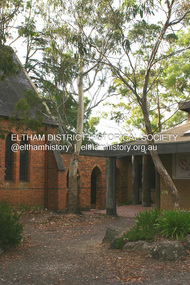
Photograph - Digital Photograph, Alan King, St Margaret's Anglican Church, Pitt Street, Eltham, 30 January 2008
... Road and Pitt Street (then called Brewery Lane). The vicarage was named Dendy House after him. The Eltham settlers were unusual in initiating the establishment of a church. Usually in Victoria a vicar was appointed to a parish and then a permanent church was constructed. But then, the nearest church was at Heidelberg, which was a tedious and time-consuming journey. St Margaret’s builder was a local, George Stebbing, who also constructed the former Methodist, later Uniting, Church at John Street and the Shillinglaw Cottage near Eltham’s Central Park. It is believed the first Anglican Bishop...Road and Pitt Street (then called Brewery Lane). The vicarage was named Dendy House after him. The Eltham settlers were unusual in initiating the establishment of a church. Usually in Victoria a vicar was appointed to a parish and then a permanent church was constructed. But then, the nearest church was at Heidelberg, which was a tedious and time-consuming journey. St Margaret’s builder was a local, George Stebbing, who also constructed the former Methodist, later Uniting, Church at John Street and the Shillinglaw Cottage near Eltham’s Central Park. It is believed the first Anglican Bishop ...St Margaret’s Church of England was officially opened on December 12, 1861. It is the oldest intact church building in Eltham. At the time it was known as Christ Church until its consecration in 1871, when it was completely free of debt (£1,700 for the church and parsonage) despite the district’s poverty. This was largely due to the free labour and materials, including locally made bricks donated by local artisans and others. The church is historically significant because it is the oldest church in the former Shire of Eltham and has associations with the philanthropist and founder of Brighton, Henry Dendy (who donated the land on which the church is built), the architect Nathaniel Billing and the prominent local builder, George Stebbing. The church is architecturally and aesthetically significant because it is constructed in the Gothic Revival style with several stained-glass windows of various dates and is also a very early use of polychromatic brickwork in Victoria. Billing was one of the first Melbourne architects to employ polychromatic brickwork and an important early architect. The rear wall was intended to be temporary. A major feature of the design is the large buttresses with long, steeply graded upper faces. The overall design is well proportioned with the surface brick patterns relieving an otherwise austere design. The church is spiritually and socially significant because it has been an important place of worship for the people of Eltham for almost 150 years. The land on which the buildings stand was donated by Henry Dendy. Dendy arrived in Melbourne in 1841 after purchasing in England eight square miles at Brighton under the system of "special surveys". After this land passed out of his hands, Dendy moved about Victoria, visited England, then returned to settle in Eltham where he purchased a flour mill. Dendy chaired the meeting held in 1860 “for the purpose of devising such means as may be expedient for the establishment of a Church of England in the township of Eltham”. He became chairman and treasurer of the church committee. Unlike the establishment of many early churches in Victoria where a vicar was appointed to a parish and later a permanent church was constructed, the population at Eltham initiated action to build a church. The nearest church at that time was at Heidelberg and the Eltham settlement was part of the parish of St Johns Heidelberg. Isolation and the tedious, time consuming journey between Heidelberg and Eltham resulted in the Eltham community taking its own action. The original vicarage (Dendy House) at the rear of the church is also an important part of the cultural significance of this place because it is connected to the church and the development of the Eltham area. Together, the church and the vicarage are aesthetically significant because they form a significant streetscape feature. The mud-brick community hall designed by Robert Marshall was added in 1978. In 2014 the original temporary rear wall was removed as part of a modern extension designed by Architects Atelier Wagner and constructed by Conrad Construction and Management. Covered under Heritage Overlay, Nillumbik Planning Scheme. National Trust of Australia (Victoria) State significance Victorian Heritage Published: Nillumbik Now and Then / Marguerite Marshall 2008; photographs Alan King with Marguerite Marshall.; p67 St Margaret’s Anglican Church in Pitt Street, Eltham, which officially opened on December 12, 1861, is the oldest intact church building in Eltham.1 With the nearby courthouse and police station, it was one of the first permanent community buildings in the district. The church and vicarage are on the Register of the Heritage Council of Victoria and the National Trust of Australia – Victoria. The church is important as an early example of polychrome brickwork by the notable architect Nathaniel Billings. It is also notable for its historic associations with the early settlement of the Shire of Eltham and its connection with Henry Dendy, Brighton’s founder.2 Henry Dendy, who lived in Eltham much longer than at Brighton, chaired the original meeting which planned the church, and he donated the half-acre (0.2ha) site. Dendy had arrived in Melbourne in 1841 after buying eight square miles (20.7sq km) at Brighton while in England. After this land passed out of his hands, he eventually settled in Eltham where he bought a flour mill, west from the corner of Main Road and Pitt Street (then called Brewery Lane). The vicarage was named Dendy House after him. The Eltham settlers were unusual in initiating the establishment of a church. Usually in Victoria a vicar was appointed to a parish and then a permanent church was constructed. But then, the nearest church was at Heidelberg, which was a tedious and time-consuming journey. St Margaret’s builder was a local, George Stebbing, who also constructed the former Methodist, later Uniting, Church at John Street and the Shillinglaw Cottage near Eltham’s Central Park. It is believed the first Anglican Bishop of Melbourne, Bishop Perry, dedicated the church. After the ceremony he joined in the festivities at the nearby pub and a bill was sent to the parish for teas taken there by the bishop with other participants. The first vicar was the Reverend Robert Mackie from 1864 to1866. St Margaret’s Church was originally called Christ Church until its consecration in 1871, when it was completely free of debt (£1700 pounds for the church and parsonage) despite the district’s poverty. This was largely due to the free labour and materials, including local bricks, donated by local artisans and others. St Margaret’s Church is in the Gothic Revival tradition with a buttressed nave, paired lancet windows, porch and bell-cote. It was the first polychromatic brick church in Australia, using softly contrasting coloured brickwork.3 Billing was one of the first architects to introduce polychrome brickwork into Melbourne. His original drawings for St Margaret’s survive in a folio of his architectural work. However the church’s brickwork is more subdued than in his drawings. About half the windows – those in clear glass with gold borders – are original. The stained glass windows were made much later, but the one behind the altar is thought to be the oldest in the Diamond Valley. It was to be temporary until the congregation could afford to extend the church. In the early 1960s the original cedar pews were replaced by blonde timber pews and the originals were sold to restaurants and to private individuals. Eminent local sculptor Matcham Skipper created a crucifix for the church. A major addition was made in 1978, when the weatherboard hall was replaced by a mud-brick hall. Made of local material, it was designed by local architect and a former shire president Robert Marshall. The mud-brick hall reflects the style of building in Eltham of the late 1970s and for which Eltham is well-known. Perhaps because its earthy tones blend with the surrounding environment, the hall sits well with the church building. St Margaret’s membership has included economist and ABC chairman, Richard Downing; political commentator, diplomat and academic, William Macmahon Ball; Eltham civic leader, Charles Wingrove; artist, Peter Glass; and Eltham’s first postmaster, Frederick Falkiner.This collection of almost 130 photos about places and people within the Shire of Nillumbik, an urban and rural municipality in Melbourne's north, contributes to an understanding of the history of the Shire. Published in 2008 immediately prior to the Black Saturday bushfires of February 7, 2009, it documents sites that were impacted, and in some cases destroyed by the fires. It includes photographs taken especially for the publication, creating a unique time capsule representing the Shire in the early 21st century. It remains the most recent comprehenesive publication devoted to the Shire's history connecting local residents to the past. nillumbik now and then (marshall-king) collection, eltham, st margaret's anglican church, st margaret's church, st margarets church hall, christ church -
 Eltham District Historical Society Inc
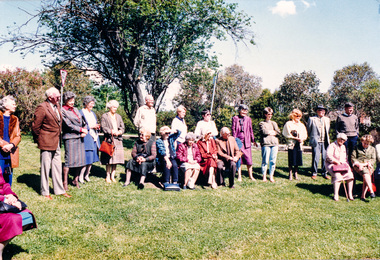
Photograph, Peter Bassett-Smith, Unveiling ceremony of the Memorial Plaque at corner of Main Road and Pitt Street, Eltham commemorating the 20th Anniversary of Eltham District Historical Society, 10 October 1987, 10/10/1987
... Bishop. The commemorative plaque explains the functions of the various items used in the Victorian 150th Anniversary Monument and Time capsule. 1987 activities eltham community centre time capsule Colour photograph Unveiling ceremony of the Memorial Plaque at corner of Main Road and Pitt Street, Eltham commemorating the 20th Anniversary of Eltham District Historical Society, 10 October 1987 Photograph Peter Bassett-Smith ...Standing L-R: Mrs Florence Spicer, Mr Nankervis, Mrs Nankervis, Mrs Marjorie Smith Motschall, Mrs Joy Ness, Mr Alan Gardner, Mrs Marion Yeoman, Mrs Marie Ebeli, Mr Garnet Burges (in hat), Mrs McLellan, - , Mr Bob McLellan; Seated L-R: - , Mrs Eileen Gibbons, Mrs Kath Stephenson, Mrs Irvine Green, Mr Irvine Green (President, Doncaster and Templestowe Historical Society), - , Mrs Bishop. The commemorative plaque explains the functions of the various items used in the Victorian 150th Anniversary Monument and Time capsule.Colour photograph1987, activities, eltham community centre, time capsule -
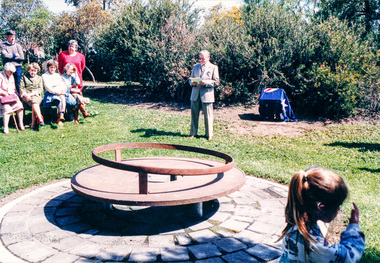 Eltham District Historical Society Inc
Photograph, Peter Bassett-Smith, Unveiling ceremony of the Memorial Plaque at corner of Main Road and Pitt Street, Eltham commemorating the 20th Anniversary of Eltham District Historical Society, 10 October 1987, 10/10/1987
... Bishop, - , -. The commemorative plaque explains the functions of the various items used in the Victorian 150th Anniversary Monument and Time capsule. 1987 activities eltham community centre time capsule Colour photograph Unveiling ceremony of the Memorial Plaque at corner of Main Road and Pitt Street, Eltham commemorating the 20th Anniversary of Eltham District Historical Society, 10 October 1987 Photograph Peter Bassett-Smith ...Standing L-R: Mr Bob McLellan, Mrs Joan Ackland, Mr Joh Ebeli; Seated L-R: - , Mrs Bishop, - , -. The commemorative plaque explains the functions of the various items used in the Victorian 150th Anniversary Monument and Time capsule.Colour photograph1987, activities, eltham community centre, time capsule -
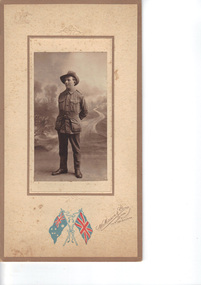 Emerald Museum & Nobelius Heritage Park
Photograph, Nightingale/Thompson Collection, c 1914 - 1918
... Bishop. Victor was born in Gembrook Thompson Collection Thompson Collection Nightingale Makers marks: coloured flags - Australia and UK with W Mason & Co 144 Bridge Road Richmond, Melbourne embossed Australian coat of Arms and embossed bows on top and bottom of photo. ...Photograph of young man in service uniform, identity: Victor George Thomson (1894 - 1948). Victor was the son of William Samuel Thompson and Elizabeth Alice Bishop. Victor was born in GembrookThompson CollectionSepia photograph of soldier on board with coloured flag logo of an embossed coat of armsMakers marks: coloured flags - Australia and UK with W Mason & Co 144 Bridge Road Richmond, Melbourne embossed Australian coat of Arms and embossed bows on top and bottom of photo. Inscription on back: Victor Thompson, my cousinthompson collection, nightingale -
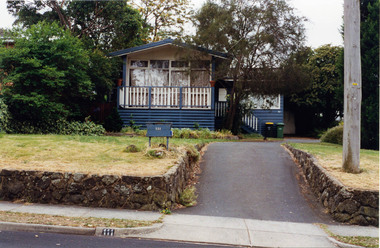 Eltham District Historical Society Inc
Photograph, Margaret Ball, 111 Pitt Street, Eltham, c. June 1999, 1999
... Bishop lived at No. 102). The Margaret Ball (Pre 1960s Houses) Collection was a personal project initiated to mark the year 2000 and arose as a result of the disappearance of many pre-1960s parts of Eltham due to development. Approximately 200 pre-1960s style houses that were left in Eltham between Main Road ...Owner 1970s-1980s: Daniel John Bishop and Beverley Joan Bishop (Norman Joseph Bishop and Mary O'Shea Bishop lived at No. 102).The Margaret Ball (Pre 1960s Houses) Collection was a personal project initiated to mark the year 2000 and arose as a result of the disappearance of many pre-1960s parts of Eltham due to development. Approximately 200 pre-1960s style houses that were left in Eltham between Main Road and east to Bible Street, between Cecil Street to the north and south to Dalton Street were photographed in late 1999. Not all of the houses could be photographed; some because the garden or trees blocked the view of the house, others because of rubbish or cars were in the way, some because people were working on the house or in the gardens at the time.Colour photographic print eltham, houses, streets, margaret ball (pre 1960s houses) collection, pitt street -
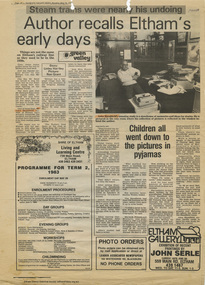 Eltham District Historical Society Inc
Folder, John Handfield
... Road...Handfield House...Anne Hunniford...Dave Lyon...Esta Handfield...Mechanics Insitute...Mr Bond...Rechabite Hall...Robin Boyd...Rutter Family...Bishop.... - Book review of FRIENDS AND BROTHERS, The Life of Father Tucker, Founder of the Brotherhood of St Laurence and Community Aid Abroad, by John Handfield, Hyland House Publishing Pty Ltd John Handfield Joan Armfield David Armfield Handfield family Eltham 16 Homestead Road Handfield House Anne Hunniford Dave Lyon Esta Handfield Mechanics Insitute Mr Bond Rechabite Hall Robin Boyd Rutter Family Bishop Reginald Stephen Clem Christesen Desmond Annear Dr Kent Hughes Ethel Boake Handfield Street John Harcourt Kooringoorama Lady Longstaff Nina Christesen Peter Street Shillinglaw farm Sir John Longstaff Stanhope Yarra Braes A. ...1. News clipping: Author recalls Eltham's early days; story by Linley Hartley, photo by Ron Grant; Diamond Valley News, Thursday, May 24, 1983, p26 (On reverse side, p25, "A pot for every purpose" about potter Joan Armfield with references to artis Davd Armfield) 2. Three pages typed copy of John Handfield's original letter to Blanche Shallard (of the Shire of Eltham Historical Society), 16 May 1989 detailing the Handfield family's life in Eltham and various personalities between their arrival in 1919 and departure in 1928. With a postscript that John Handfield returned in 1961 to a house designed by friend Robin Boyd and built 1961. At the time of the letter John and Esta Handfield had been the only owners. 3. Note from John Handfield to Ron Smith about a proposed talk (to the Historical Society?) to tell the story about the writing of Friends and Brothers. Proposed title of talk "You Never Know What's Around The Corner" plus several copies of book reviews • Photocopy of news clipping; The rector who created a vision; Review by Bishop Holland; Newcastle Morning Herald, c.1980 - Book review of FRIENDS AND BROTHERS, The Life of Father Tucker, Founder of the Brotherhood of St Laurence and Community Aid Abroad, by John Handfield, Hyland House Publishing Pty Ltd • Photocopy of news clipping; The clergyman whose monuments continue to do good; Review by Geoffrey Hutton; Publication unknown, c.1980 - Book review of FRIENDS AND BROTHERS, The Life of Father Tucker, Founder of the Brotherhood of St Laurence and Community Aid Abroad, by John Handfield, Hyland House Publishing Pty Ltd • Photocopy of news clipping; Helper of the defeated; Review by Sandy Murray; Publication unknown, c.1980 - Book review of FRIENDS AND BROTHERS, The Life of Father Tucker, Founder of the Brotherhood of St Laurence and Community Aid Abroad, by John Handfield, Hyland House Publishing Pty Ltd • Photocopy of news clipping; Friends and Brothers by John Handfield; Review by Bishop James Grant; Publication unknown, c.1980 - Book review of FRIENDS AND BROTHERS, The Life of Father Tucker, Founder of the Brotherhood of St Laurence and Community Aid Abroad, by John Handfield, Hyland House Publishing Pty Ltd • Photocopy of news clipping; Off and running on his third career by Stuart Sayers; Writers & Readers, The Age, Saturday 17 January 1981 • Photocopy of news clipping; Determined to succeed; Review by Roy Cassin; The West Australian, n.d. - Book review of FRIENDS AND BROTHERS, The Life of Father Tucker, Founder of the Brotherhood of St Laurence and Community Aid Abroad, by John Handfield, Hyland House Publishing Pty LtdFolder of information on John Handfield, author, Elthamjohn handfield, joan armfield, david armfield, handfield family, eltham, 16 homestead road, handfield house, anne hunniford, dave lyon, esta handfield, mechanics insitute, mr bond, rechabite hall, robin boyd, rutter family, bishop reginald stephen, clem christesen, desmond annear, dr kent hughes, ethel boake, handfield street, john harcourt, kooringoorama, lady longstaff, nina christesen, peter street, shillinglaw farm, sir john longstaff, stanhope, yarra braes, a. copeland, alf baker, baker's cottage, ballakian, belackian, beulah alice rutter, bill withers, bird brothers cash grocer and fruiterer, blacksmith, burgoyne grocery store, butcher, david rutter, donald rutter, e. copeland, edward gadd, ernest james andrew, fanny withers (nee flinn), hubert rutter, jack baker, jack ryan, june rutter, margery withers, newsagency, oakley, ronnie baker, silver street bridge, tessie baker, walter withers, burke and wills, father g k tucker, frederick oliver handfield, friends and brothers (book), muriel elizabeth handfield (nee cochran), ss victoria, st laurence and community aid abroad, stanhope house, theodore louis hopton handfield, book review
