
Showing 5 items matching "bores under road"
-
 Federation University Historical Collection
Book - Book - Scrapbook, Ballarat Institute of Advanced Education: Scrapbook of newspaper cutting. Book 1; December 1968 to August 1969
... ...bores under road...The cuttings cover the period from 21 December 1968 to 12 August 1969. ballarat institute of advanced education biae metallurgy scholarship awards higher pay for academic staff deep-sea housewife jan watson yendon bluestone for smb building at mt helen hepburn springs camp cricket match government may cut grants quotas a must apex scholarship to christopher dower j m hasker of cement and concrete association concrete course at smb john stevens winner of gold medal master plumbers' association trade students prize night education the answer smb success depends on local support $950000 expasion by smb dr r schrieke barry shearer craftsmen receive awards top swimmers stephen yorke ian ellis apprentices on show open night at smb master builders' awards first equipment at mt helen craftsmanship awards commonwealth must not control education courses in computers motor for trainee mechanics bores under road don skewes invents drill bluestone blocks as terracing at smb boost college intake the lake relay stuart alexander wins award biae commands interest ballarat gas company scholarships smb on eve of new era alan graham r w richards medal art in the sunshine retirements from engineering firm stan sweatman joins biae smb diplomates in many fields $130000 computer at biae learning for living Book with grey cover, front. ...Newspaper cuttings relating to Ballarat Institute of Advanced Education. These are from various newspapers and include The Age, Ballarat Courier, The Australian, The Herald. The cuttings cover the period from 21 December 1968 to 12 August 1969. Book with grey cover, front. Spiral boundballarat institute of advanced education, biae, metallurgy scholarship awards, higher pay for academic staff, deep-sea housewife, jan watson, yendon bluestone for smb, building at mt helen, hepburn springs camp, cricket match, government may cut grants, quotas a must, apex scholarship to christopher dower, j m hasker of cement and concrete association, concrete course at smb, john stevens winner of gold medal, master plumbers' association, trade students prize night, education the answer, smb success depends on local support, $950000 expasion by smb, dr r schrieke, barry shearer, craftsmen receive awards, top swimmers, stephen yorke, ian ellis, apprentices on show, open night at smb, master builders' awards, first equipment at mt helen, craftsmanship awards, commonwealth must not control education, courses in computers, motor for trainee mechanics, bores under road, don skewes invents drill, bluestone blocks as terracing at smb, boost college intake, the lake relay, stuart alexander wins award, biae commands interest, ballarat gas company scholarships, smb on eve of new era, alan graham, r w richards medal, art in the sunshine, retirements from engineering firm, stan sweatman joins biae, smb diplomates in many fields, $130000 computer at biae, learning for living -
 Flagstaff Hill Maritime Museum and Village
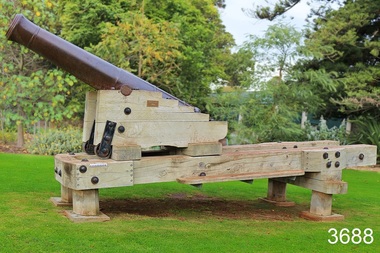
Weapon - Cannon, 1813
... under the Heritage Act 1995. (Reference; Victorian Guns and Cannons, South Western Victoria Assessment, May 2008). flagstaff hill warrnambool shipwrecked coast flagstaff hill maritime museum maritime museum shipwreck coast flagstaff hill maritime village great ocean road victoria’s coastal defences warrnambool fortification warrnambool garrison battery ordinance armaments cannon hill fortifications victorian colonial government carron ironwroks foundary 32pdr smooth bore cannon 28pdr smooth bore cannon 1813 cannon carronade Pressed into left trunnion “80837 / CARRON / 1813”, cast on barrel“symbol (Royal Cypher of King George III”, “symbol (broad arrow of proofing)” and numbers “45-3-24 / 1837” . ...This 1813 cannon is classified as a carronade, having been made by the Carron Ironworks foundry in Stirling, Scotland in 1813. It is a large calibre, short range, gun mainly used on ships. The carronade model of cannon was first used when introduced into the British Royal Navy in the American War of the Revolution (1775-1883). This cannon was originally a 28pdr, 48cwt, 8ft gun. The date ‘1837’ on the barrel probably indicates the date that the Board of Ordinance accepted the change in size to a 32pdr. It may originally have been a naval gun and the conversion undertaken when it was brought ashore. It is very probably one of the 15 guns that are known to have constituted the defences of Victoria in 1860. This group of 32pdrs was the shorter model of the 4800width and 8ft length cannon and as such are different from the 32pdrs found in NSW. It was originally located on Cannon Hill in Warrnambool when it was the site of the Warrnambool Battery Western Artillery, formed in 1866. It was obsolete by the time of the 1887 fortifications, and was moved from the Warrnambool Fortifications to the Botanic Gardens in 1910, when the Fortifications were declared obsolete. HISTORIC INFORMATION ABOUT THE CANNON IN THE WARRNAMBOOL AREA In the years following the Crimean War (1854-1857J) there was a great concern in the Colony that Imperial Russia would attempt an invasion. Coastal defences in the colony of Victoria were greatly strengthened by the Government as a result. Warrnambool was originally protected by cannons at Cannon Hill, approximately 1 kilometer west of the Flagstaff Hill Fortifications. The cannons included two 1866 guns, both 80 Pound Rifled Muzzle Loaders (RML) purchased by Victoria’s Colonial Government. They were part of a shipment of 26 such guns sent from England in December 1866. They are registered as No. 23 (80cwt-2qr-0lbs) - Gun 1, and No.13 (81cwt-1qr-12lbs) - Gun 2. They were cast at the Royal Gun Factory, Woolwich Arsenal, in 1866 and have a 6.3 inch bore. Both barrels carry the Royal Cypher of Queen Victoria, Insignia of the Royal Engineers, within the Garter and Motto surmounted by the Crown, with the Royal Cypher of Queen Victoria within the Garter (letters in centre “VR”, motto “HONI SOIT QUI MAL Y PENSE”, "Shame be to him who thinks evil of it."). The guns were originally supplied with wooden carriages. (The Royal Arsenal at Woolwich, England, was established eleven years after the Restoration of King Charles II. It was the principal supplier of armaments to the British and Empire Governments. At the height of its operations during World War One the factory covered 1300 acres and employed very nearly 80,000 workers. Woolwich was the Headquarters of the Royal Artillery since the raising of that Regiment in 1716. The Arsenal was closed in the late 1960’s.) The two 80pdr cannons were transferred to the Warrnambool Garrison Artillery Battery Fortifications erected at Flagstaff Hill in 1887 as part of Victoria’s Coastal Defences. The original wooden carriages were subsequently replaced with the present iron garrison carriages in 1888. They are a “C” pivot. The ‘racers’ or curved track set into the floor of the gun emplacement (which enabled the guns to be traversed more quickly) are as specified for guns up to 10 inch, being of wrought iron 2.78 inches wide. A temporary third gun, now no longer on Flagstaff Hill’s site, was a 5 inch Rifled Breech Loading (BL) Armstrong gun mounted on an Elswick hydro pneumatic disappearing carriage It was faster to load and fire than the 80 pound RMLs and its arrival spelt the end of the older 80 pound guns’ useful life, apart from being used for practice sessions. The 5 inch BL gun was the main defensive weapon of the Warrnambool Battery until the Battery was downgraded in importance and the gun was recalled to Melbourne in 1910. The gun emplacement still remains in place set between the 2 80pdr cannon. The State of Victoria took over the ownership of the guns at the time of Australian Federation in 1901. In about 1901/1902 the Garrison Battery was converted to the Warrnambool Battery of the Australian Field Artillery (No 4 Field Battery). It was equipped with 4.7 inch naval guns mounted on field carriages. They were now a mobile unit but continued to use the Warrnambool Garrison area at Flagstaff Hill for practice. When the Fortifications were declared obsolete the two 80 Pounder RML were relocated to Cannon Hill in 1910. On the outbreak of World War 1 the 4.7 inch guns were recalled to Melbourne, and the Battery was disbanded. Most of the personnel probably re-enlisted in the local 4th Australian Light Horse Regiment. The two 80 Pounder RML were moved back to the Fortifications in 1973. They were both fully restored by Army First Year Apprentices at the Ordinance Factory in Bendigo in time for the centenary year of the fortifications in 1987. The guns are capable of firing 80 pound (32.3kg) armour piercing exploding shells 3.65kms out to sea. They were original manned by volunteers before a paid Garrison was established. Now the Guns are again fired by volunteers on Special Event days. Since restoration the Gun Number 1 had been fired on a regular basis but Gun Number 2 hadn’t been fired since the mid 1990’s. In April 2015 Gun Number 2 was serviced in preparation for the firing of both cannons on the ANZAC Centenary commemorations on April 25th 2015. Other guns from the original Cannon Hill location were obsolete by the time the 1887 Warrnambool Garrison Artillery Battery was built. These guns are (1) a 32 Pounder Muzzle Loading Smooth Bore (SB) cast in 1813 at the famous Carron Foundry, number 80837 and now located in the Warrnambool Botanic Gardens. It is now mounted on a replica carriage due to the original carriage being in a fragile condition (the original carriage stored under cover at Flagstaff Hill). (2) a 68 Pounder Muzzle Loading Smooth Bore cast in 1861 at the equally august Low Moor Foundry, number 10310 and now located on the lawn area at the entrance to Flagstaff Hill Maritime Village. It is still mounted on its original wooden garrison carriage. Its wooden slide compressor mechanism is fragile and now kept in Flagstaff Hill’s storage. There are only seven 32 Pounder SB made by Carron and fifteen 68 Pounder SB made at Low Moor known to exist in the State of Victoria Plaque attached to the carriage “This replica carriage was constructed by the Warrnambool Tritan Woodworkers club in conjunction with the generosity of local businesses and the Warrnambool community. The original carriage (circa 1860) was removed for restoration and is now located at Flagstaff Hill Maritime Village. The timber used for the replica carriage is Monterey Cypress, which was an early planting in the gardens. 2010 marked the centenary of the cannon’s relocation in the Warrnambool Botanic Gardens.” (Reference; Victorian Guns and Cannons, South Western Victoria Assessment, May 2008, item W/B/01; Flagstaff Hill Maritime Village datasheets and archives). There are only seven 32 Pounder SB made by Carron known to exist in the State of Victoria and this is one of them. On a world level, this cannon represents a high level of rarity. Further, as it has been modified (bored up) it is representative of the historical process of amending artillery in order to ensure a longer usefulness of each piece despite rapidly advancing artillery technology. The number of surviving carriages with traversing slides in this group in South Western Victoria is unique in Australia and probably in the World. Out of 10 such platforms surviving in Australia, the South Western Victorian group has half. Several survive around the world but probably not in such a large group. The wooden sliding compressor mechanism belonging to this cannon is extremely rare, and the only one in this South Western Victorian group of Guns and Cannons. As a whole, this cannon has undergone very little restoration or modification, giving it a high level of integrity. The City of Warrnambool is one of several custodians of a collection of artillery pieces of heritage significance at a state, national and international level. These pieces are directly related to the defence of south-west Victoria in the 19th century. The care and preservation come under the Heritage Act 1995. (Reference; Victorian Guns and Cannons, South Western Victoria Assessment, May 2008).Cannon, or carronade, 32pdr with wheels. Muzzle loading smooth bore (SB) cannon. Cannon has original wooden Burmese Teak carriage and slide with wrought iron fittings and iron wheels. Manufactured by Carron in Scotland, in 1813. It has been converted from a 28pdr. There is a loop for a rope on the cascabel, which was part of the original casting. Re-bored in 1837. Marks include Serial Number, Royal Cypher of King George III, broad arrow of proofing, and numbers to represent the weight. NOTE: The cannon is displayed in the Warrnambool Botanic Gardens and is mounted on a replica wooden carriage; the original wooden carriage is now stored under cover at Flagstaff Hill Maritime Village. This carriage has 4 wheels on swivel attachments and a central gear that allows the wheels to turn on rails. Pressed into left trunnion “80837 / CARRON / 1813”, cast on barrel“symbol (Royal Cypher of King George III”, “symbol (broad arrow of proofing)” and numbers “45-3-24 / 1837” . Cascable “CV” and marks with gradations from nought to three in quarters on each side, On the carriage the end of one of the main slide members carries the mark “W symbol (broad arrow) D” incised into the timber. Plaque attached to the carriage by the Warrnambool Tritan Woodworkers club, 2010, marking the centenary of the cannon’s relocation in the Warrnambool Botanic Gardens and the addition of the replica carriage. flagstaff hill, warrnambool, shipwrecked coast, flagstaff hill maritime museum, maritime museum, shipwreck coast, flagstaff hill maritime village, great ocean road, victoria’s coastal defences, warrnambool fortification, warrnambool garrison battery, ordinance, armaments, cannon hill fortifications, victorian colonial government, carron ironwroks foundary, 32pdr smooth bore cannon, 28pdr smooth bore cannon, 1813 cannon, carronade -
 National Wool Museum
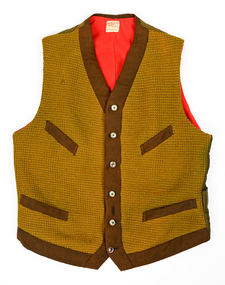
Textile - Waistcoat, R. Collins Hocking, c.1910
... under that of Stretton Park. This was the result of shearing 9,234 sheep. There were usually six or seven shearers, shearing over a two to three week period, beginning in early or mid October. Some of the shearers bore names familiar in the district such as Gogoll, Duffield, and Baensch. Andrew White held a number of local positions including: •1863-1874 Connewarre Road...under that of Stretton Park. This was the result of shearing 9,234 sheep. There were usually six or seven shearers, shearing over a two to three week period, beginning in early or mid October. Some of the shearers bore names familiar in the district such as Gogoll, Duffield, and Baensch. Andrew White held a number of local positions including: •1863-1874 Connewarre Road ...The Waistcoat’s Owners The first owner of the waistcoat was Alfred (Alf) Gilbert White, 1868 Stretton Park, Connewarre – 1946, Mt Duneed. He was the fourth child of Andrew White, 1828-1900, and Jane Roberts, 1827-1871. His father Andrew White was born at Stretton-on-Dunsmore, Warwickshire, England, the sixth child of William White and Sarah Elkington. Andrew had come to Victoria on the James L. Bogart in 1852 with his first wife, Emily Walker. From 1854, records show he was the owner of livery stables in central Geelong before he moved into land ownership. In 1862, Andrew became a landowner with 1,400 acres in Connewarre, the Salt Water Run, then re-named Stretton Park by Andrew. Thereafter he is usually noted as a Farmer or Sheep Farmer. Emily died in 1861 and Andrew remarried Jane Roberts in 1863. Jane was the daughter of Jane (Jenefer) Pearce and William Roberts in Crowan, Cornwell, England and it is thought arrived in Victoria on the British Trident in 1855. In 1878 Andrew moved to the newly purchased “Hillside” at Mt Duneed with his family including Alfred. By 1880 Andrew held 11,095 acres in South Barwon and Barrabool. As well as being a landowner, he had other business interests including Auctioneers, Stock and Station Agents Learmonth White from 1886. However farming at Hillside, particularly wool production, was an important part of his life. For example, in 1893 10,350 sheep were shorn although the highest number of bales of wool produced was in 1892 with 174 bales under AW’s wool mark and 8 under that of Stretton Park. This was the result of shearing 9,234 sheep. There were usually six or seven shearers, shearing over a two to three week period, beginning in early or mid October. Some of the shearers bore names familiar in the district such as Gogoll, Duffield, and Baensch. Andrew White held a number of local positions including: •1863-1874 Connewarre Road Board, Chairman 1871-73 •1875-1900 South Barwon Shire Council. When the Board amalgamated with South Barwon to form the Shire of South Barwon, he was an inaugural representative of Connewarre. He was a council member for 44 years and president for the following terms: 1878-1879; 1885-1887; 1889; 1894; 1895-1896; and 1898-1899. •1878-1886, Barrabool Shire Council, President 1882 •In 1885 he was appointed a Justice of the Peace in the Southern Bailiwick •Committee member of the Geelong Racing Club, 1890-96 •In 1892 he was appointed returning officer for the South-Western Province and the electoral district of Barwon •Foundation President of Torquay Racing Club, 1893 •Mount Duneed Cemetery Trustee, 1893 Alfred Gilbert White went to Connewarre School and then to Mt Duneed School after the family moved to Mt Duneed. He then went to Geelong Grammar School as a boarder from 31 July 1883. After leaving school, in 1886, he worked as a bookkeeper for the family business Learmonth-White stock and station agents and lived at home at Hillside. He and Bessie Orchard Mathews were married in 1894. Bessie was born in Geelong in 1869, the sixth child of William Matthews and Amelia Orchard. Her family lived at “Turley,” Malop Street, Geelong, named after the hamlet of Turleigh in West Wiltshire, England. Bessie’s father, William Mathews, a butcher from Winsley, Wiltshire, arrived on the Queen of the East in Sydney in 1854 and established a successful butcher’s business with his brother James in Geelong. Her mother, Amelia Orchard, also from Winsley, arrived on the Thames in Melbourne in 1857. Alfred, Bessie and their family lived at Stretton Park, Connewarre, leasing it from Andrew. They had six children including their fourth child Douglas Alfred White, the second owner of the waistcoat. His father Andrew supported Alfred’s sheep farming at Stretton Park. In 1896 “.... eight splendid 2-tooth Lincoln rams in the wool were purchased by Mr Andrew White for his son, Mr Alfred G. White….intended for Mr White’s sheep run at Connewarre.“ Alfred White bought ‘Hillside’, 640 acres, after his father’s death and moved there with his family from Stretton Park in Connewarre. (Stretton Park was bought by his half sister Emily and her family and renamed “Morangarell”.) A family partnership was formed to run the wider station. It was then Alfred who managed the new partnership, called Stretton Park. Alfred meticulously kept the financial records of the station, as might be expected from a former bookkeeper. The detail kept is exemplified in the annual shearing records, including the names of the paddocks, the number of lambs and ewes and the shearers’ tallies. In the spring of 1900, after Andrew White had died, shearing began on 7 October and was finished on 6 November. On some days well over 500 sheep were shorn. The highest tally was 616 on 11 October. That year the overall total of sheep shorn was 9,101. Alfred was an active community member including: •South Barwon Council member (46 years), president: 1903-04; 1906-07; 1921-22; and 1931-33 •Geelong Grammar School Council member, 1908-1946 (over 37 years) •Active member of St. Wilfred’s Church of England, Mt Duneed •Director of Dennys Lascelles, 1932-1946 •Mt Duneed Cemetery Trustee, 1900 •Honorary member of the Mt Duneed Rifle Club, 1900 •Mt Duneed Mutual Improvement Association •Mt Duneed Recreation Reserve Trustee •Torquay Improvement Association Trustee •Barwon Returning Officer Douglas Alfred White, 1900 Stretton Park, Connewarre-1976, Geelong. Initially Douglas and his sisters were taught at home by a governess. Then, like his father, Douglas attended Geelong Grammar. After finishing school, he studied Engineering at Melbourne University where he met Violet Fullerton, 1900-1992, who was studying Medicine. They married in 1926 and had two children including Douglas Robert Stretton (DRS) White Melbourne, 1928–Geelong, 1989, the final owner of the waistcoat. After a successful career as an engineer with the Department of Main Roads, NSW, and serving as a Major in the Royal Australian Engineers in NT, New Guinea and Borneo during the Second World War, Douglas purchased part of Stretton Park when it was sold in 1952. He farmed “South Beach Farm” until his death in 1975. (This area now includes The Sands and Stretton Estate subdivisions.) His son DRS White also attended Geelong Grammar before studying at Dookie Agricultural College. In 1955 DRS purchased land from Peter Fisher, John Fisher and Frank Walter, naming the property “Lambidgee”. (This was part of the land that had originally belonged to Andrew White that had been sold previously.) He farmed this land for the rest of his life, continuing the family tradition. After his father’s death in 1975, the waistcoat became his and so passed to a third generation of the family.Chartreuse green and red waistcoat featuring woven wool front with six buttons, silk back with metal clasp, and red lining. The buttons feature small green beads in the centre.Label [printed]: R. Collins Hocking / GEELONG Label [handwritten]: A. G. White Esqwaistcoat, vest, design, textiles, fashion, alfred white, sheep farming, mt duneed, rural life -
 Sunshine and District Historical Society Incorporated
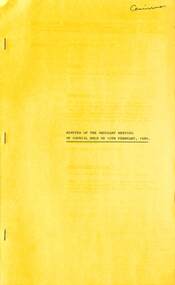
Administrative record - Minutes of the Ordinary Meeting of Council held on 12th February 1980, City of Sunshine, 12th January 1980
... Under the Statcon Programme Pedestrian Operated Signals Main Road East Between Alfrieda Street and Collins Street St. Albans Station Road Widening Melbourne Metropolitan Planning Scheme Amendment No 81 Part Lot 35 Station Road Sewerage Facilities Sunshine West Overhead Powerlines in Market Road City of Footscray Power Line Extension Market Road to Sunshine Road Sunshine Statcon Programme Additions to Network Proposed School Crossing Gould Street Between Mawson Avenue & Melissa Nook Deer Park and Neale Road between Elsum Avenue & Birchwood Boulevard Deer Park Purchase of Water Tanker Boring Operations by M.M.B.W. ...Under the Statcon Programme Pedestrian Operated Signals Main Road East Between Alfrieda Street and Collins Street St. Albans Station Road Widening Melbourne Metropolitan Planning Scheme Amendment No 81 Part Lot 35 Station Road Sewerage Facilities Sunshine West Overhead Powerlines in Market Road City of Footscray Power Line Extension Market Road to Sunshine Road Sunshine Statcon Programme Additions to Network Proposed School Crossing Gould Street Between Mawson Avenue & Melissa Nook Deer Park and Neale Road between Elsum Avenue & Birchwood Boulevard Deer Park Purchase of Water Tanker Boring Operations by M.M.B.W. ...Notice of Ordinary Meeting of the Council 12th February 1980 Report of the Town Clerk's Department Report of the Town Clerk Land Transfers to and from Council Drainage Easement Rear of Sunshine Swimming Pool, Withers Street (Last house owned by Ada Mary Bell Nee Jelly to be converted in council car parking area) and Stanley Street Land Transfers to and from Sunshine R.S.L. Licence Agreement Sunshine Swimming Pool Kiosk Churchill Fellowship Payment of Salaries Licences and Leases Council Properties Introduction of Electric Trolley Bus Services Attendance at Seminars Proposed Review of Voters Rolls Rates, Sanitary and Interest Charges Adjustments and Abandonments Extension of Insurance Cover Child Care Centres Attendance of Shop Stewards at Industrial Relations Course 11th to 13th February 1980 Rates, Sanitary and Interest Charges Adjustments and Abandonments Public Liability Insurance Cleaning Contract Proposed Lease YCW Building Co-Operative Kinder Smith Reserve Local Government (General Amendment) Bill Training of Swimming Pool Attendants Arrears of Fire Hazard Charges Abandonment Supplementary Valuations Alteration of Closing of Poll Proposed Branch Library at the Deer Park Shopping Centre Proposed Purchase of Land from ICI - ICI Oval and Surrounding Lands and Land Fitzgerald Road and Whitesides Avenue Report of Board of Review into the Roles and Structure and Administration of Local Government in Victoria National Wage Decision January 1980 Outlines of Activities at the Rainbow Workshop Over the Past Twelve Months Report by Project Officer Rainbow Workshop Report of the Co-Ordinator of Welfare Services Children's Services Development Officer Quarterly Report Caretaker Lions House of Sunshine Care for Kids Calendar Orama Street Child Care Centre Subsidy for Children's Services Development Officer Financial Assistance Request Footscray Migrant Information Centre Northumberland Road Child Care Centre Repatriation Benefits or Allied Veterans Funding of Women's Refuges Community Youth Support Scheme Community Youth Support Scheme Submission for Refunding Report of the Chief Health Surveyor After Hours Telephone Contact Health Department Builders' Sanitary Service Request for Payment from Clarke Richards Grant & Co Solicitors Sampling Milk Infant Welfare Subsidy Deer Park Infant Welfare Centre and Highpoint West Infant Welfare Centre Thomas Borthwick & Sons (Australasia) Ltd Francis Street Brooklyn Section 95 Health Act 1958 Consent to Construct a Safety Access Walkway Across the Roof of the Sheep and Lamb Dressing Floor Pollution Control Head Lice Statistics 1979 Demonstration of Resuscitation Method Waste Management Conference Melbourne 26th - 28th March 1980 Includes Special Types of Waste Radioactive Waste & Asbestos Rubbish Dumping Incident Station Road Deer Park Burns Street Infant Welfare Centre Maidstone Hours of Infant & Maternal Child Welfare Centres Removal of Dwelling Outside of Municipality Ex Caretaker's House Pig Market Market Road Sunshine to Lot 2 Stanbridge Street Daylesford Infant Welfare Sister Subsidy Health Act Registration for 1980 Application for Transfer of Proprietorship of Premises Under the Health Act Prosecution Proceedings Sunshine Magistrates Court Diamond Avenue Infant Welfare Centre Albanvale Airconditioning Defects Report of the Superintendent Traffic & By-Laws Dog Act Court Proceedings Parking & Traffic Infringements Declaration of Such other Place Derelict Vehicles Fixing of Fees Report of the Municipal Recreation Officer Basketball Stadium Robert Barrett Reserve January 1980 Holiday Programmes Report of the City Engineer & Planner Urban Renewal Vicrail South Road Housing Estate Proposed Legislation Planning Appeal Board Bill Summary of Planning Applications for 1979 Planning Permit Application Display Homes and Associated Commercial Car Parking Lot 29, 30 & 31 Station Road Town Planning Enforcement 36 Wintersun Drive Albanvale Panel Beating and Mechanical Repairs Planning Permit Application Extensions to Existing Workshop for Mentally Retarded People Day Training Centre Council Reserve Bounded by Churchill Avenue, Darnley Street and Ravenhall Street Braybrook Planning Permit Application Vehicular Access to Lot 59 Ballarat Road Deer Park Town Planning Appeal Planning Permit Application Extension to Existing Educational Establishment Involving Agriculture and Husbandry Corner Station Road and Middle Road Deer Park Planning Permit Application Cafe Lot 3 Watt Street Sunshine Planning Permit Application Take Away Food Shop and Self-Serve Petrol Sales Lot 1 Ballarat Road Braybrook Planning Permit Application Pole Sign 83 Mitchell Street Maidstone Planning Permit Consulting Room (Doctor's Surgery) 88 Ashley Street Maidstone Planning Permit Application Floodlit Signs on Fascia Lots 3 & 4 St. Albans Road St. Albans Planning Permit Application Seven Villa Units Lots 54. 55 & 56 Salmond Street Deer Park Planning Permit Application Amusement Parlour 93 Glengala Road Sunshine West Planning Permit Application Illuminated Sign 760 Ballarat Road Deer Park Planning Permit Application Mechanical Repairs Workshop Lot 170 Comley Street Sunshine North Planning Permit Application Illuminated Sign Lot 1 Hampshire Road Sunshine Planning Permit Application Medical Consulting Rooms Shop 99A Deer Park Shopping Centre Neale Road Deer Park Planning Permit Application Two Lot Subdivision Ballarat Road North Side 275 metres West of Kororoit Creek Planning Permit Application Illuminated Sky Sign Coner Glengala Road and Evelyn Crescent Sunshine West Planning Permit Application Cafe Shop 2 Lot 2 Watt Street Sunshine Planning Permit Application Six Factories Lot 1 Berkshire Road Sunshine North Planning Permit Application Unclassified Road Corner Lot 19 Francis Street and Geelong Road Brooklyn Planning Permit Application Detached House Within 60 Metres of the Maribyrnong River Lot 88 Chifley Drive Maribyrnong Planning Permit Application Factory Lot 12 McIntyre Road Sunshine North Planning Permit Car Sales Yard Rosamond Road Maidstone Enforcement Notice Planning Permit Application Factory Extension Lot 6 Lacy Street Braybrook Planning Permit Cluster Subdivision and Display Homes Station Road Deer Park Ainsworth Reserve Sunshine Heights Football Club Liquor Licence Glengala Road Planning Permit Application Pedestrian Bridge Lawrence Street / Verdant Avenue Ardeer Planning Permit Application Extension to School (Educational Religious Centre) 204 Churchill Avenue Braybrook Planning Permit Application Garden Furnishings and Supplies Corner Main Road East, McIntyre Road and Sunshine Avenue Sunshine North Planning Permit Application Amusement Parlour and Cafe 54A Station Place Planning Permit Application Amusement Machine Watt Street Sunshine Planning Permit Sunroom Addition to Existing Apartment House and Caretaker's Residence 16 Ridley Street Albion Planning Permit Application Amusement Parlour & Cafe 93 Glengala Road Sunshine West Planning Permit Application Hot Bread Bakery 69 McIntyre Road Sunshine North Appointment of Authorised Officers Under the Town & Country Planning Act Creation of Easement 40 Mernda Street Sunshine West Consolidation of Title 26 Mernda Street Sunshine West Plans of Consolidation St. Albans Continental Hotel McKechnie Street St. Albans Consolidation of Title lots 13 & 14 Francis Street Brooklyn Consolidation of Title Cranwell Street and Evans Street Braybrook Consolidation of Title Inkerman Street Maidstone Strata Subdivision 40 Mernda Street Sunshine West Maintenance Agreement Albanvale Estate Stage 23 Plan of Subdivision McIntyre Road, Sproul Street & Tennant Street Sunshine North Plan of Subdivision Hook Street & Vule Street St. Albans Foundation for the Technical Advancement of Local Government Engineering in Victoria electrification of Railway Line to Deer Park Westgate Bridge Authority Proposal for Feeder Route to West Gate Freeway Intersection Fairbairn Road / Wright Steet Sunshine West Proposed Private Street Scheme Program Ayton Street / Steers Street Private Street Scheme Western Highway (Ballarat Road) / Duke Street Proposed Traffic Signals Western Highway (Ballarat Road) Street Lighting West of Burke Street to East of Evans Street Braybrook Installation of Pedestrian Operated Signals Under the Statcon Programme Pedestrian Operated Signals Main Road East Between Alfrieda Street and Collins Street St. Albans Station Road Widening Melbourne Metropolitan Planning Scheme Amendment No 81 Part Lot 35 Station Road Sewerage Facilities Sunshine West Overhead Powerlines in Market Road City of Footscray Power Line Extension Market Road to Sunshine Road Sunshine Statcon Programme Additions to Network Proposed School Crossing Gould Street Between Mawson Avenue & Melissa Nook Deer Park and Neale Road between Elsum Avenue & Birchwood Boulevard Deer Park Purchase of Water Tanker Boring Operations by M.M.B.W. Western Highway (Ballarat Road), Hogan Street, Quinn Street and Hamilton Street Deer Park Main Outfall Sewer Reconditioning Brooklyn and Near Hoppers Crossing Sewered Facilities Fitzgerald Road, Hall Street, Allison Street & Hilma Street Sunshine West Tenders for Street Sweeper Report of the Building Surveyor Building Over Easement 15 Merrivale Avenue Sunshine West Building Over Easement 16 Glenrobe Street Deer Park Building Over Easement 18 Bunya Drive St. Albans Building Over Easement 6 Warwick Road Sunshine North Building Over Easement Lot 474 Birchwood Boulevard Deer Park Building Over Easement 122 McIntyre Road Sunshine North Building Over Easement 4 Concord Circuit Albanvale Building Over Easement Lot 4 Devonshire Road Sunshine Building Over Easement 19 Lorna Crescent Sunshine West Building Over Easement 2 Firbank Terrace St. Albans Building Over Easement 9 Mernda Street Sunshine West Building Over Easement 10 Shipley Court Sunshine Building Over Easement 17 Aycliffe Drive Deer Park Building Over Easement Lot 136 Clover Avenue St. Albans Building Over Easement 84 Allison Street Deer Park Fence 21 Willaton Street St. Albans Fence 60 Ford Avenue Sunshine North Siting of Building 23 Stanbury Court Ardeer Siting of Building 8 Dale Street Maribyrnong Siting of Building 100 Ballarat Road Maidstone Installation of Underground Tanks Corner Geelong Road and Francis Street Brooklyn Report of the Structural Aspects of the houses in The South Road Railway's Estate Report of the Director of Parks & Recreation Landscaping Bon Thomas Pre-School Centre Extra Work St. Albans Tennis Club Synthetic Tennis Courts Schedule for Authorising of Affixing the Common Seal of the Municipality to Documents Orders of the Day Accounts Submitted for Payment as at 15th December 1979, 15th January 1980 & 31st January 1980 Resort and recreation Account Proposals for Sporting Pavilions and Improvements Extraordinary Business Report of the City Engineer & Planner Planning Permit Application New and Used Car Sales and Service Dealership Corner Ballarat Road and Ashley Street Maidstone Planning Permit Application Warehouse McIntyre Road Sunshine Northici oval, ballarat road, fitzgerald road, whitesides avenue, ardeer, sunshine swimming pool, kennedy street, stanley street, braybrook, ycw, kinder smith reserve, lily street, deer park library, station road, neale road, deer park, withers street, sunshine r.s.l, deer park shopping centre, lions house of sunshine, watt street, corio street, sunshine, orama street child care centre, orama street, footscray migrant information centre, northumberland road child care centre, northumberland road, sunshine north, deer park infant welfare centre, highpoint west infant welfare centre, rosamond road, maribyrnong, thomas borthwick & sons, francis street, brooklyn, burns street infant welfare centre, burns street, maidstone, pig market, market road, diamond avenue infant welfare centre, diamond avenue, albanvale, robert barrett reserve, wintersun drive, churchill avenue, darnley street, ravenhall street, middle road, mitchell street, ashley street, st. albans road, salmond street, glengala road, sunshine west, comley street, hampshire road, kororoit creek, evelyn crescent, berkshire road, geelong road, maribyrnong river, chifley drive, mcintyre road, lacy street, sunshine heights football club, lawrence street, lawrence street bridge, verdant avenue, main road east, sunshine avenue, station place, ridley street, albion, mernda street, st. albans continental hotel, mckechnie street, cranwell street, evans street, sproul street, tennant street, hook street, vule street, fairbairn road, wright steet, ayton street, steers street, western highway, duke street, burke street, alfrieda street, collins street, sunshine road, gould street, mawson avenue, melissa nook, elsum avenue, birchwood boulevard, hogan street, quinn street, hamilton street, hall street, allison street, hilma street, merrivale avenue, glenrobe street, bunya drive, warwick road, concord circuit, devonshire road, lorna crescent, firbank terrace, shipley court, aycliffe drive, clover avenue, allison stree, willaton street, ford avenue, stanbury court, dale street, bon thomas pre-school centre, st. albans tennis club -
 Sunshine and District Historical Society Incorporated
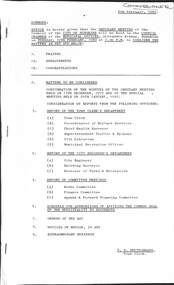
Administrative record - City of Sunshine - Commissioner Mr Alexander Alex George Gillon Collection 1976 - 1982 - Notice of ordinary meeting of the council 12th February 1980, City of Sunshine, 6th January 1980
... Under the Statcon Programme Pedestrian Operated Signals Main Road East Between Alfrieda Street and Collins Street St. Albans Station Road Widening Melbourne Metropolitan Planning Scheme Amendment No 81 Part Lot 35 Station Road Sewerage Facilities Sunshine West Overhead Powerlines in Market Road City of Footscray Power Line Extension Market Road to Sunshine Road Sunshine Statcon Programme Additions to Network Proposed School Crossing Gould Street Between Mawson Avenue & Melissa Nook Deer Park and Neale Road between Elsum Avenue & Birchwood Boulevard Deer Park Purchase of Water Tanker Boring Operations by M.M.B.W. ...Under the Statcon Programme Pedestrian Operated Signals Main Road East Between Alfrieda Street and Collins Street St. Albans Station Road Widening Melbourne Metropolitan Planning Scheme Amendment No 81 Part Lot 35 Station Road Sewerage Facilities Sunshine West Overhead Powerlines in Market Road City of Footscray Power Line Extension Market Road to Sunshine Road Sunshine Statcon Programme Additions to Network Proposed School Crossing Gould Street Between Mawson Avenue & Melissa Nook Deer Park and Neale Road between Elsum Avenue & Birchwood Boulevard Deer Park Purchase of Water Tanker Boring Operations by M.M.B.W. ...Notice of Ordinary Meeting of the Council 12th February 1980 Report of the Town Clerk's Department Report of the Town Clerk Land Transfers to and from Council Drainage Easement Rear of Sunshine Swimming Pool, Withers Street (Last house owned by Ada Mary Bell Nee Jelly to be converted in council car parking area) and Stanley Street Land Transfers to and from Sunshine R.S.L. Licence Agreement Sunshine Swimming Pool Kiosk Churchill Fellowship Payment of Salaries Licences and Leases Council Properties Introduction of Electric Trolley Bus Services Attendance at Seminars Proposed Review of Voters Rolls Rates, Sanitary and Interest Charges Adjustments and Abandonments Extension of Insurance Cover Child Care Centres Attendance of Shop Stewards at Industrial Relations Course 11th to 13th February 1980 Rates, Sanitary and Interest Charges Adjustments and Abandonments Public Liability Insurance Cleaning Contract Proposed Lease YCW Building Co-Operative Kinder Smith Reserve Local Government (General Amendment) Bill Training of Swimming Pool Attendants Arrears of Fire Hazard Charges Abandonment Supplementary Valuations Alteration of Closing of Poll Proposed Branch Library at the Deer Park Shopping Centre Proposed Purchase of Land from ICI - ICI Oval and Surrounding Lands and Land Fitzgerald Road and Whitesides Avenue Report of Board of Review into the Roles and Structure and Administration of Local Government in Victoria National Wage Decision January 1980 Outlines of Activities at the Rainbow Workshop Over the Past Twelve Months Report by Project Officer Rainbow Workshop Report of the Co-Ordinator of Welfare Services Children's Services Development Officer Quarterly Report Caretaker Lions House of Sunshine Care for Kids Calendar Orama Street Child Care Centre Subsidy for Children's Services Development Officer Financial Assistance Request Footscray Migrant Information Centre Northumberland Road Child Care Centre Repatriation Benefits or Allied Veterans Funding of Women's Refuges Community Youth Support Scheme Community Youth Support Scheme Submission for Refunding Report of the Chief Health Surveyor After Hours Telephone Contact Health Department Builders' Sanitary Service Request for Payment from Clarke Richards Grant & Co Solicitors Sampling Milk Infant Welfare Subsidy Deer Park Infant Welfare Centre and Highpoint West Infant Welfare Centre Thomas Borthwick & Sons (Australasia) Ltd Francis Street Brooklyn Section 95 Health Act 1958 Consent to Construct a Safety Access Walkway Across the Roof of the Sheep and Lamb Dressing Floor Pollution Control Head Lice Statistics 1979 Demonstration of Resuscitation Method Waste Management Conference Melbourne 26th - 28th March 1980 Includes Special Types of Waste Radioactive Waste & Asbestos Rubbish Dumping Incident Station Road Deer Park Burns Street Infant Welfare Centre Maidstone Hours of Infant & Maternal Child Welfare Centres Removal of Dwelling Outside of Municipality Ex Caretaker's House Pig Market Market Road Sunshine to Lot 2 Stanbridge Street Daylesford Infant Welfare Sister Subsidy Health Act Registration for 1980 Application for Transfer of Proprietorship of Premises Under the Health Act Prosecution Proceedings Sunshine Magistrates Court Diamond Avenue Infant Welfare Centre Albanvale Airconditioning Defects Report of the Superintendent Traffic & By-Laws Dog Act Court Proceedings Parking & Traffic Infringements Declaration of Such other Place Derelict Vehicles Fixing of Fees Report of the Municipal Recreation Officer Basketball Stadium Robert Barrett Reserve January 1980 Holiday Programmes Report of the City Engineer & Planner Urban Renewal Vicrail South Road Housing Estate Proposed Legislation Planning Appeal Board Bill Summary of Planning Applications for 1979 Planning Permit Application Display Homes and Associated Commercial Car Parking Lot 29, 30 & 31 Station Road Town Planning Enforcement 36 Wintersun Drive Albanvale Panel Beating and Mechanical Repairs Planning Permit Application Extensions to Existing Workshop for Mentally Retarded People Day Training Centre Council Reserve Bounded by Churchill Avenue, Darnley Street and Ravenhall Street Braybrook Planning Permit Application Vehicular Access to Lot 59 Ballarat Road Deer Park Town Planning Appeal Planning Permit Application Extension to Existing Educational Establishment Involving Agriculture and Husbandry Corner Station Road and Middle Road Deer Park Planning Permit Application Cafe Lot 3 Watt Street Sunshine Planning Permit Application Take Away Food Shop and Self-Serve Petrol Sales Lot 1 Ballarat Road Braybrook Planning Permit Application Pole Sign 83 Mitchell Street Maidstone Planning Permit Consulting Room (Doctor's Surgery) 88 Ashley Street Maidstone Planning Permit Application Floodlit Signs on Fascia Lots 3 & 4 St. Albans Road St. Albans Planning Permit Application Seven Villa Units Lots 54. 55 & 56 Salmond Street Deer Park Planning Permit Application Amusement Parlour 93 Glengala Road Sunshine West Planning Permit Application Illuminated Sign 760 Ballarat Road Deer Park Planning Permit Application Mechanical Repairs Workshop Lot 170 Comley Street Sunshine North Planning Permit Application Illuminated Sign Lot 1 Hampshire Road Sunshine Planning Permit Application Medical Consulting Rooms Shop 99A Deer Park Shopping Centre Neale Road Deer Park Planning Permit Application Two Lot Subdivision Ballarat Road North Side 275 metres West of Kororoit Creek Planning Permit Application Illuminated Sky Sign Coner Glengala Road and Evelyn Crescent Sunshine West Planning Permit Application Cafe Shop 2 Lot 2 Watt Street Sunshine Planning Permit Application Six Factories Lot 1 Berkshire Road Sunshine North Planning Permit Application Unclassified Road Corner Lot 19 Francis Street and Geelong Road Brooklyn Planning Permit Application Detached House Within 60 Metres of the Maribyrnong River Lot 88 Chifley Drive Maribyrnong Planning Permit Application Factory Lot 12 McIntyre Road Sunshine North Planning Permit Car Sales Yard Rosamond Road Maidstone Enforcement Notice Planning Permit Application Factory Extension Lot 6 Lacy Street Braybrook Planning Permit Cluster Subdivision and Display Homes Station Road Deer Park Ainsworth Reserve Sunshine Heights Football Club Liquor Licence Glengala Road Planning Permit Application Pedestrian Bridge Lawrence Street / Verdant Avenue Ardeer Planning Permit Application Extension to School (Educational Religious Centre) 204 Churchill Avenue Braybrook Planning Permit Application Garden Furnishings and Supplies Corner Main Road East, McIntyre Road and Sunshine Avenue Sunshine North Planning Permit Application Amusement Parlour and Cafe 54A Station Place Planning Permit Application Amusement Machine Watt Street Sunshine Planning Permit Sunroom Addition to Existing Apartment House and Caretaker's Residence 16 Ridley Street Albion Planning Permit Application Amusement Parlour & Cafe 93 Glengala Road Sunshine West Planning Permit Application Hot Bread Bakery 69 McIntyre Road Sunshine North Appointment of Authorised Officers Under the Town & Country Planning Act Creation of Easement 40 Mernda Street Sunshine West Consolidation of Title 26 Mernda Street Sunshine West Plans of Consolidation St. Albans Continental Hotel McKechnie Street St. Albans Consolidation of Title lots 13 & 14 Francis Street Brooklyn Consolidation of Title Cranwell Street and Evans Street Braybrook Consolidation of Title Inkerman Street Maidstone Strata Subdivision 40 Mernda Street Sunshine West Maintenance Agreement Albanvale Estate Stage 23 Plan of Subdivision McIntyre Road, Sproul Street & Tennant Street Sunshine North Plan of Subdivision Hook Street & Vule Street St. Albans Foundation for the Technical Advancement of Local Government Engineering in Victoria electrification of Railway Line to Deer Park Westgate Bridge Authority Proposal for Feeder Route to West Gate Freeway Intersection Fairbairn Road / Wright Steet Sunshine West Proposed Private Street Scheme Program Ayton Street / Steers Street Private Street Scheme Western Highway (Ballarat Road) / Duke Street Proposed Traffic Signals Western Highway (Ballarat Road) Street Lighting West of Burke Street to East of Evans Street Braybrook Installation of Pedestrian Operated Signals Under the Statcon Programme Pedestrian Operated Signals Main Road East Between Alfrieda Street and Collins Street St. Albans Station Road Widening Melbourne Metropolitan Planning Scheme Amendment No 81 Part Lot 35 Station Road Sewerage Facilities Sunshine West Overhead Powerlines in Market Road City of Footscray Power Line Extension Market Road to Sunshine Road Sunshine Statcon Programme Additions to Network Proposed School Crossing Gould Street Between Mawson Avenue & Melissa Nook Deer Park and Neale Road between Elsum Avenue & Birchwood Boulevard Deer Park Purchase of Water Tanker Boring Operations by M.M.B.W. Western Highway (Ballarat Road), Hogan Street, Quinn Street and Hamilton Street Deer Park Main Outfall Sewer Reconditioning Brooklyn and Near Hoppers Crossing Sewered Facilities Fitzgerald Road, Hall Street, Allison Street & Hilma Street Sunshine West Tenders for Street Sweeper Report of the Building Surveyor Building Over Easement 15 Merrivale Avenue Sunshine West Building Over Easement 16 Glenrobe Street Deer Park Building Over Easement 18 Bunya Drive St. Albans Building Over Easement 6 Warwick Road Sunshine North Building Over Easement Lot 474 Birchwood Boulevard Deer Park Building Over Easement 122 McIntyre Road Sunshine North Building Over Easement 4 Concord Circuit Albanvale Building Over Easement Lot 4 Devonshire Road Sunshine Building Over Easement 19 Lorna Crescent Sunshine West Building Over Easement 2 Firbank Terrace St. Albans Building Over Easement 9 Mernda Street Sunshine West Building Over Easement 10 Shipley Court Sunshine Building Over Easement 17 Aycliffe Drive Deer Park Building Over Easement Lot 136 Clover Avenue St. Albans Building Over Easement 84 Allison Street Deer Park Fence 21 Willaton Street St. Albans Fence 60 Ford Avenue Sunshine North Siting of Building 23 Stanbury Court Ardeer Siting of Building 8 Dale Street Maribyrnong Siting of Building 100 Ballarat Road Maidstone Installation of Underground Tanks Corner Geelong Road and Francis Street Brooklyn Report of the Structural Aspects of the houses in The South Road Railway's Estate Report of the Director of Parks & Recreation Landscaping Bon Thomas Pre-School Centre Extra Work St. Albans Tennis Club Synthetic Tennis Courts Schedule for Authorising of Affixing the Common Seal of the Municipality to Documentsici oval, ballarat road, fitzgerald road, whitesides avenue, ardeer, sunshine swimming pool, kennedy street, stanley street, braybrook, ycw, kinder smith reserve, lily street, deer park library, station road, neale road, deer park, withers street, sunshine r.s.l, deer park shopping centre, lions house of sunshine, watt street, corio street, sunshine, orama street child care centre, orama street, footscray migrant information centre, northumberland road child care centre, northumberland road, sunshine north, deer park infant welfare centre, highpoint west infant welfare centre, rosamond road, maribyrnong, thomas borthwick & sons, francis street, brooklyn, burns street infant welfare centre, burns street, maidstone, pig market, market road, diamond avenue infant welfare centre, diamond avenue, albanvale, robert barrett reserve, wintersun drive, churchill avenue, darnley street, ravenhall street, middle road, mitchell street, ashley street, st. albans road, salmond street, glengala road, sunshine west, comley street, hampshire road, kororoit creek, evelyn crescent, berkshire road, geelong road, maribyrnong river, chifley drive, mcintyre road, lacy street, sunshine heights football club, lawrence street, lawrence street bridge, verdant avenue, main road east, sunshine avenue, station place, ridley street, albion, mernda street, st. albans continental hotel, mckechnie street, cranwell street, evans street, sproul street, tennant street, hook street, vule street, fairbairn road, wright steet, ayton street, steers street, western highway, duke street, burke street, alfrieda street, collins street, sunshine road, gould street, mawson avenue, melissa nook, elsum avenue, birchwood boulevard, hogan street, quinn street, hamilton street, hall street, allison street, hilma street, merrivale avenue, glenrobe street, bunya drive, warwick road, concord circuit, devonshire road, lorna crescent, firbank terrace, shipley court, aycliffe drive, clover avenue, allison stree, willaton street, ford avenue, stanbury court, dale street, bon thomas pre-school centre, st. albans tennis club
