
Showing 25 items matching "bottle glass container australian-glass-manufacturers"
-
 Orbost & District Historical Society
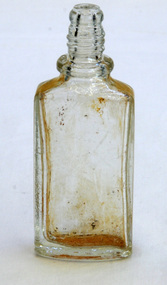
bottle, 1930's
... bottle glass container australian-glass-manufacturers...bottle. This item is an example of a 1930's glass container used for cosmetics. bottle glass container australian-glass-manufacturers On the base - J338 AGM M A narrow clear glass bottle. ...This is probably a perfume bottle.This item is an example of a 1930's glass container used for cosmetics.A narrow clear glass bottle. The sides are flat and it has an external threaded neck with a very small aperture.On the base - J338 AGM Mbottle glass container australian-glass-manufacturers -
 Orbost & District Historical Society
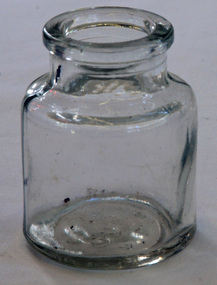
bottle, 1930's
... bottle glass container australian-glass-manufacturers...bottle glass container australian-glass-manufacturers On the base - AGM M71 2 A small clear glass bottle which has a mould seam from the rim to the base. bottle Australian Glass Manufacturers ...A small clear glass bottle which has a mould seam from the rim to the base.On the base - AGM M71 2bottle glass container australian-glass-manufacturers -
 Orbost & District Historical Society
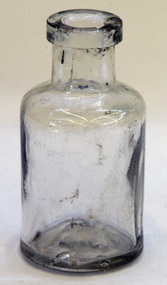
bottle
... bottle glass container australian-glass-manufacturers...bottle glass container australian-glass-manufacturers On the base - AGM A small clear glass bottle with a chipped rim. ...A small clear glass bottle with a chipped rim. It has a seam mould from the rim to the base.On the base - AGMbottle glass container australian-glass-manufacturers -
 Orbost & District Historical Society
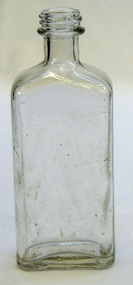
bottle, 1930's
... glass bottle container australian-glass-manufacturers...glass bottle container australian-glass-manufacturers On the base- AGM G510 A small rectangular clear glass bottle with a threaded top. ...A small rectangular clear glass bottle with a threaded top. It has a mould seam from the rim to the base.On the base- AGM G510glass bottle container australian-glass-manufacturers -
 Orbost & District Historical Society
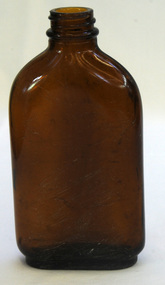
bottle, 1929
... glass bottle container australian-glass-manufacturers...glass bottle container australian-glass-manufacturers AGM F1262 A flat brown glass bottle with a threaded top. ...A flat brown glass bottle with a threaded top. The front and back are flat and the sides are curved.AGM F1262glass bottle container australian-glass-manufacturers -
 City of Moorabbin Historical Society (Operating the Box Cottage Museum)
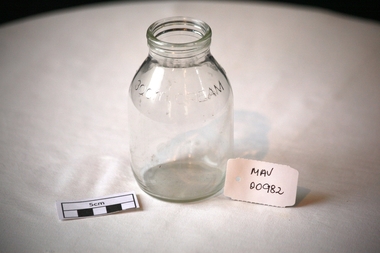
Manufactured Glass, bottle cream 300ml, post 1966
... Glass Container1922:8). It is probable that the delivery of milk in glass containers became universal shortly thereafter Melbourne Glass Bottle Works Co Pty Ltd (1903 - 1915) Registered in Victoria in 1903 the company amalgamated with the Waterloo Glass Bottle Works Ltd in 1915 to form Australian Glass Manufacturers Company, Limited. ...Glass Container1922:8). It is probable that the delivery of milk in glass containers became universal shortly thereafter Melbourne Glass Bottle Works Co Pty Ltd (1903 - 1915) Registered in Victoria in 1903 the company amalgamated with the Waterloo Glass Bottle Works Ltd in 1915 to form Australian Glass Manufacturers Company, Limited. ...General use of milk bottles is usually associated with the 20th century , with occasional late 19th century. Initially, milk was delivered in cans stacked upright in a wagon. At each stop, someone, usually the wife of the house, would bring a pitcher or a pail to the wagon, and the milk man would ladle out the desired amount of milk. Needless to say, this practice was hazardous and unhealthy. The New York State Tuberculosis Association condemned the practice of selling “loose milk,” still being conducted in New York City in 1922, as a major cause for the spread of tuberculosis (Glass Container1922:8). It is probable that the delivery of milk in glass containers became universal shortly thereafter Melbourne Glass Bottle Works Co Pty Ltd (1903 - 1915) Registered in Victoria in 1903 the company amalgamated with the Waterloo Glass Bottle Works Ltd in 1915 to form Australian Glass Manufacturers Company, Limited. Melbourne Glass Bottle Works Spotswood 1872- 1915 The Melbourne Glass Bottle Works (former), comprising a complex of buildings constructed between 1880 and 1940, at Booker Street, Douglas Parade, 2-38 Hudson Road, Raleigh Street and Simcock Avenue, Spotswood. The former glassworks was established in 1890 and originally made bottles for pharmacists Felton Grimwade before it was sold to the State Government by US multinational, OI glass manufacturers Australian Consolidated Industries Ltd was formed in 1939 when Australian Glass Manufacturers Co Ltd changed it's name to reflect diversification into building products. 1982 a new holding company was formed and the company's name was changed to A.C.I. International Ltd. Metric Measure was introduced in Australia 14/2/1966 A clear glass, cream bottle 300ml Around Shoulder : NO DEPOSIT NO RETURN 300ML CREAM Around Base: (makers stamp) M 10116 38 melbourne, early settlers, market gardeners, moorabbin, bentleigh, cheltenham, manufactured glass, milk bottles, dairy farmers, dairies, decimalisation in australia 1966, metric measures, melbourne glass bottle works, spotswood, felton grimwade pty ltd, pharmacists, -
 Orbost & District Historical Society
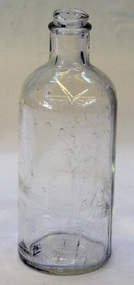
bottle, 1944
... bottle container australian-glass-manufacturers glass...bottle container australian-glass-manufacturers glass On the base - AGM G inside an A M G 322 M Small clear glass bottle with a small piece missing from rim. ...Small clear glass bottle with a small piece missing from rim. It has a mould seam from the rim to the base.On the base - AGM G inside an A M G 322 Mbottle container australian-glass-manufacturers glass -
 Orbost & District Historical Society
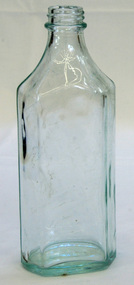
bottle, 1930's
... bottle australian-glass-manufacturers container On the base- AGM 1SM45 6 A clear glass bottle which is hexagonal shaped. ...A clear glass bottle which is hexagonal shaped. It has a threaded top. The front face is flat and the back and sides are curved.On the base- AGM 1SM45 6bottle australian-glass-manufacturers container -
 Orbost & District Historical Society
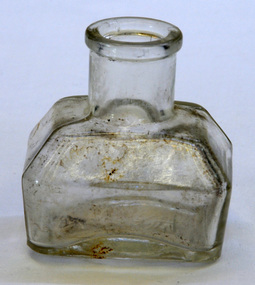
ink bottle, 1920's
... bottle was made of glass or ceramic and typically sat on a desk. The writer would dip the pen (or quill) into the bottle to put more ink on the pen. Because they sat on a desk, ink bottles were often decorative. We have mostly dispensed with ink bottles and quills. This item is an example of early stationery equipment commonly used in schools, households and commercial enterprises. bottle ink stationery personal-effects glass container On the base- AGM F1173 M A clear glass ink bottle with flat sloping shoulders. ink bottle Australian Glass Manufacturers ...An ink bottle was made of glass or ceramic and typically sat on a desk. The writer would dip the pen (or quill) into the bottle to put more ink on the pen. Because they sat on a desk, ink bottles were often decorative.We have mostly dispensed with ink bottles and quills. This item is an example of early stationery equipment commonly used in schools, households and commercial enterprises.A clear glass ink bottle with flat sloping shoulders.On the base- AGM F1173 Mbottle ink stationery personal-effects glass container -
 Orbost & District Historical Society
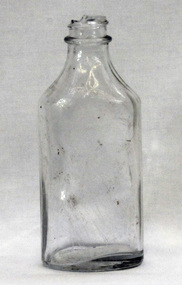
bottle, 1920's, 1930's
... glass-container bottle Australian-Glass-Manufacturers...glass-container bottle Australian-Glass-Manufacturers On base - S 193 AGM 926 2 A clear glass bottle. ...A clear glass bottle. It has one flat side and a screw thread. The lip has been chipped.On base - S 193 AGM 926 2glass-container bottle australian-glass-manufacturers -
 Greensborough Historical Society
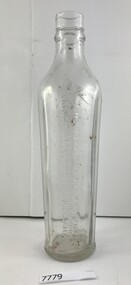
Container - Bottle, Australian Glass Manufacturing Company Limited, Sauce bottle. Jonathan Reeve Pty Ltd, 1922 to 1929
... The type of A G M inscription dates the bottle to the period 1922 to 1929. glass bottles pickle bottles sauce bottles Jonathan Reeve Pty Ltd AGM Pressed inscription: "This bottle is the property of Jonathan Reeve Pty Ltd Manufacturers Ballarat" "Reg No4466" On base: "M 181 M AGM" The type of A G M inscription dates the bottle to the period 1922 to 1929. The company became insolvent in 1930. Clear glass sauce bottle, pressed inscription, AGM mark on base. Sauce bottle. Jonathan Reeve Pty Ltd Container Bottle Australian ...This bottle probably held sauce. The manufacturer Jonathan Reeve Pty Ltd began production of sauces and pickles in Ballarat from 1915 until 1930 when the company became insolvent. The type of A G M inscription dates the bottle to the period 1922 to 1929. Clear glass sauce bottle, pressed inscription, AGM mark on base.Pressed inscription: "This bottle is the property of Jonathan Reeve Pty Ltd Manufacturers Ballarat" "Reg No4466" On base: "M 181 M AGM" The type of A G M inscription dates the bottle to the period 1922 to 1929. The company became insolvent in 1930.glass bottles, pickle bottles, sauce bottles, jonathan reeve pty ltd, agm -
 Greensborough Historical Society
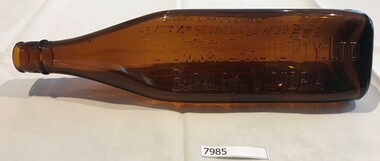
Domestic object - Bottle, AGM (Australian Glass Manufacturers), Methylated Spirits bottle, 1940s
... glass, 3-sided methylated spirit bottle. Strong embossing on 2 sides. No cracking or chipping. Crown sealed, circa late 1940s. It was from an era when most common household poisons had their own unique shaped bottle so if the label was removed or illiterate people still knew what the contents were. methylated spirits bottles AGM AGM (Australian Glass Manufacturers) Embossed: “Property of Renown and Pearlite Pty Ltd Burney Victoria” “This container must not be used as a food container” Brown glass, 3-sided methylated spirit bottle. ...Brown glass, 3-sided methylated spirit bottle. Strong embossing on 2 sides. No cracking or chipping. Crown sealed, circa late 1940s. It was from an era when most common household poisons had their own unique shaped bottle so if the label was removed or illiterate people still knew what the contents were. Brown glass, 3-sided methylated spirit bottle. Strong embossing on 2 sides. Embossed: “Property of Renown and Pearlite Pty Ltd Burney Victoria” “This container must not be used as a food container” methylated spirits, bottles, agm, agm (australian glass manufacturers) -
 Orbost & District Historical Society
bottle, mid 20th century
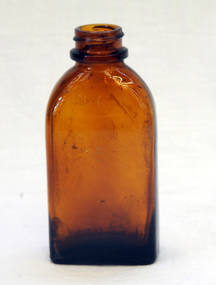
... Australian homes. This item reflects the changes and development in medicine over the last century. The bottle is an example of a glass container used for holding medicines in the mid 20th century. pharmaceutical-manufacturers pharmacy medicines nyal-pty-ltd "This bottle always remains the property of NYAL CO. RD 23669" NYAL inside a horizontal oval. A brown glass ...Originally registered in 1911, Nyal initially comprised an extensive portfolio of products ranging from perfumed soap to toiletries. Since 1911 Nyal has been a popular medicinal brand in Australian homes. This item reflects the changes and development in medicine over the last century. The bottle is an example of a glass container used for holding medicines in the mid 20th century.A brown glass bottle with a moulded rim on the neck."This bottle always remains the property of NYAL CO. RD 23669" NYAL inside a horizontal oval.pharmaceutical-manufacturers pharmacy medicines nyal-pty-ltd -
 Orbost & District Historical Society
bottles, first half 20th century
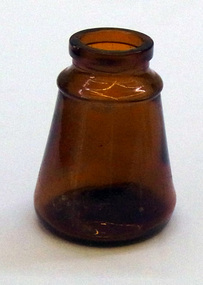
... glass containers used in the early to mid 20th century. Clag glue is an Australian made product still in use today. jar bottle glue container Angus&Co clag 2373.1- on base Angus & C0 above ISM Pty Ltd with CLAG on side and numbers 12732 vertically. 2373.2 -on front CONTENTS MADE BY ANGUS & Co PTY Ltd on base - CONTENTS MADE BY ANGUS co PTY ltd Two glass Clag bottles . Both are cone shaped and appear to have been sealed with a cork. 2373.1 is a smaller brown glass bottle. 2373.2 is a larger clear glass bottle. bottles Australian Glass Manufacturers ...Clag was first trademarked in 1898 by Joseph Angus, manufacturer of North Fitzroy, Melbourne. The original paste is thought to have been starch-based. Clag glue was sold in these containers from the early 1900's to the mid 1900's.These items are examples of glass containers used in the early to mid 20th century. Clag glue is an Australian made product still in use today.Two glass Clag bottles . Both are cone shaped and appear to have been sealed with a cork. 2373.1 is a smaller brown glass bottle. 2373.2 is a larger clear glass bottle.2373.1- on base Angus & C0 above ISM Pty Ltd with CLAG on side and numbers 12732 vertically. 2373.2 -on front CONTENTS MADE BY ANGUS & Co PTY Ltd on base - CONTENTS MADE BY ANGUS co PTY ltdjar bottle glue container angus&co clag -
 Orbost & District Historical Society
bottle, first half 20th century
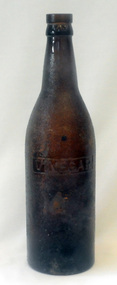
... This is an example of a container commonly used in homes in the early to mid 20th century. container bottle-vinegar agm on front - in rectangle "VINEGAR" on base - AGM and logo F317 M/ A large brown glass vinegar bottle. It has a long neck and is textured glass with a smooth rectangle on the front for labelling. It possibly had a cork top seal. bottle Australian Glass Manufacturers ...This is an example of a container commonly used in homes in the early to mid 20th century. A large brown glass vinegar bottle. It has a long neck and is textured glass with a smooth rectangle on the front for labelling. It possibly had a cork top seal.on front - in rectangle "VINEGAR" on base - AGM and logo F317 M/container bottle-vinegar agm -
 Orbost & District Historical Society
ink bottle, first half 20th century
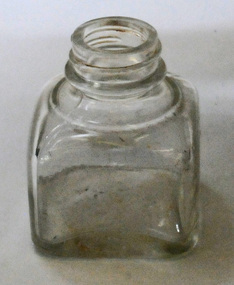
... bottle was made of glass or ceramic and typically sat on a desk. The writer would dip the pen (or quill) into the bottle to put more ink on the pen. Because they sat on a desk, ink bottles were often decorative. We have mostly dispensed with ink bottles and quills. This item is an example of early stationery equipment commonly used in schools, households and commercial enterprises. container bottle ink-bottle on base - AGM F823 M P50 A squat clear glass ink bottle which is square-shaped. It has threaded top and is seamed on both sides. ink bottle Australian Glass Manufacturers ...An ink bottle was made of glass or ceramic and typically sat on a desk. The writer would dip the pen (or quill) into the bottle to put more ink on the pen. Because they sat on a desk, ink bottles were often decorative. We have mostly dispensed with ink bottles and quills. This item is an example of early stationery equipment commonly used in schools, households and commercial enterprises.A squat clear glass ink bottle which is square-shaped. It has threaded top and is seamed on both sides.on base - AGM F823 M P50container bottle ink-bottle -
 Orbost & District Historical Society
glass jar, first half 20th century
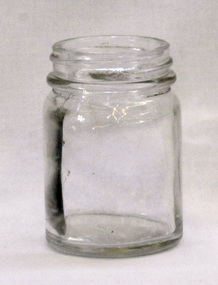
... This glass jar is an example of a food container used in the first half of the 20th century. glass-jar bottle-food-container F 1098 AGM M 816 A small clear glass jar with a screw thread top. It would have been a food container. glass jar Australian Glass Manufacturers ...This glass jar is an example of a food container used in the first half of the 20th century.A small clear glass jar with a screw thread top. It would have been a food container.F 1098 AGM M 816glass-jar bottle-food-container -
 Orbost & District Historical Society
bottle, first half 20th century
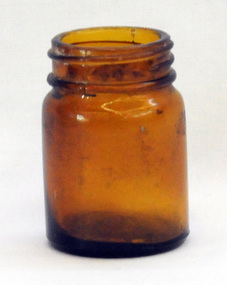
... bottle was used for either food or ointment. This container is an example of a container used in the first half of the 20th century. glass-bottle food-jar-ointment 3764 M AGM A small cylindrical brown bottle with a screw thread top. bottle Australian Glass Manufacturers ...This bottle was used for either food or ointment.This container is an example of a container used in the first half of the 20th century.A small cylindrical brown bottle with a screw thread top.3764 M AGMglass-bottle food-jar-ointment -
 Kiewa Valley Historical Society
Bottle - Milk, 1959
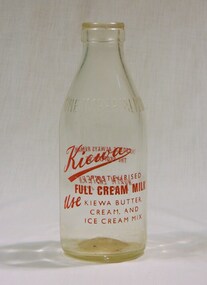
... bottle milk drink container dairy farm kiewa cow Glass molded inscription of ONE IMPERIAL PINT. In red text on front Kiewa, (in script) / PASTUERISED / FULL CREAM MILK/ USE KIEWA BUTTER/ CREAM / AND ICE CREAM MIX . In red text on back THIS BOTTLE ALWAYS REMAINS/THE PROPERTY OF/NORTH EASTERN/DAIRY CO. LTD. On bottom of bottle, molded AGM 2 x M F1959 in the middle of botton 5 / 48 Glass milk bottle. One imperial pint. Bottle - Milk Australian Glass Manufacturers ...This is a milk bottle from the local dairy in Kiewa. It is an old style bottle in imperial measure(ended 1974). This has good historical value, as milk is no longer made in bottles and we do not use imperial measurements anymore. This item is significance for historic reasons, shows local dairy items used. There are not many bottles from this local dairy from this period, and is it is in good condition. . Social significance, shows what items local families used. Research significance. These bottles are not in use anymore as we do not have imperial measurement, so good for research that explains this topic. Therefore has good interpretive capacity.Glass milk bottle. One imperial pint.Glass molded inscription of ONE IMPERIAL PINT. In red text on front Kiewa, (in script) / PASTUERISED / FULL CREAM MILK/ USE KIEWA BUTTER/ CREAM / AND ICE CREAM MIX . In red text on back THIS BOTTLE ALWAYS REMAINS/THE PROPERTY OF/NORTH EASTERN/DAIRY CO. LTD. On bottom of bottle, molded AGM 2 x M F1959 in the middle of botton 5 / 48 bottle, milk, drink, container, dairy, farm, kiewa, cow -
 Kiewa Valley Historical Society
Bottle Ginger Beer, circa mid to late 1900's
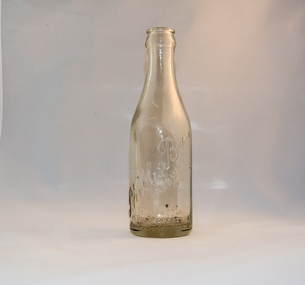
... glass ginger beer bottle was manufactured and used early to late 1900's, until the time that cheaper containers were invented(plastic bottles). This bottle was so constructed to be easily moved within the ginger beer processing plants from the brewing vats/holding tanks to the final corking/sealing of the bottles for eventual distribution. From 1990s the bottle slowly became phased out of production however boutique suppliers still preferred thick glass to contain any explosive action. Two major glass bottle works companies, e.g. Australian Glass Manufacturers...glass ginger beer bottle was manufactured and used early to late 1900's, until the time that cheaper containers were invented(plastic bottles). This bottle was so constructed to be easily moved within the ginger beer processing plants from the brewing vats/holding tanks to the final corking/sealing of the bottles for eventual distribution. From 1990s the bottle slowly became phased out of production however boutique suppliers still preferred thick glass to contain any explosive action. Two major glass bottle works companies, e.g. Australian Glass Manufacturers ...This glass ginger beer bottle was manufactured and used early to late 1900's, until the time that cheaper containers were invented(plastic bottles). This bottle was so constructed to be easily moved within the ginger beer processing plants from the brewing vats/holding tanks to the final corking/sealing of the bottles for eventual distribution. From 1990s the bottle slowly became phased out of production however boutique suppliers still preferred thick glass to contain any explosive action. Two major glass bottle works companies, e.g. Australian Glass Manufacturers and the Melbourne Glass Bottle Works Co. were the main suppliers for the Victorian State.In the period when this bottle was manufactured and used the major ginger beer brewing plants for the whole of Victoria were located in Melbourne because this was where its greatest consumer base was there and most rural areas were supplied by domestic sources (mother brewing ginger beer for the children). The Kiewa Valley and its region was one rural area which until road invrastructure was enhance covered the ginger beer thirst by local family production. As the population expanded considerably in the late 1940's (SECV Hydro Scheme) with a greater demand for "soft" drinks" being established supplies from larger towns and cities were call for. Each bottle was "branded" during manufacturing to show the contents were from a reputable supplier (PHIBBS Bros) and where it originated from. These bottles were recycled by the manufacturer as a way to cut production costs. This method of recycling the bottles back to the specific manufacturer has (except for South Australia)been overtaken by a no cost recycling collection by councils (funded by their communities). This method by passes the user cost principle as the bottles are processed as non generic. The uneconomical "on cost" which was replaced by the "throw away" less costly plastic containers however did not provide the keen domestic brewer of the "beer" with a reusable bottle.This heavy gauged glass bottle (Ginger Beer) has a rim and a distinctive head at the top. This head has been manufactured to facilitate the movement of the bottled along the production line. The method of pouring ginger beer into the bottle has been part of the "production line" process of automation. This bottle has a capacity to hold 250ml of ginger beer and is made from "clear" glass. The marority of ginger beer bottles produced in this time frame where made with a "green" tint in them.This tinting helped reduce the sunlight effecting the contentsAround the bottom side of the bottle and blown into the glass is "THIS BOTTLE IS THE PROPERTY OF PHIBBS BROS, ALBURY" above this, in "running script" and sloping up from left to right is "Phibbs Bros" and underneath parallel to it "ALBURY". On the base of the bottle is molded a big "L 289" underneath this "M" and below this "AGM".ginger beer bottle, soft drink bottles, cordial bottles -
 Williamstown Historical Society Inc
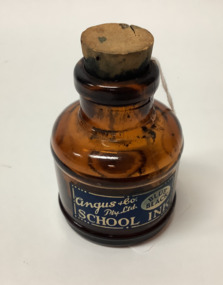
Container - School ink bottle, Angus & Co, Circa 1900 to 1950
... Australia ever since. They had their own bottle works to supply the distinct glass and stoneware bottles for their products. Schools Stationary Writing Printed on label: "Angus & Co. Pty. Ltd./BLUE BLACK/SCHOOL INK". Embossed on base: "ANGUS & CO. PTY. LTD" 'School' brand ink bottle, made by Angus and Co. Amber coloured glass with a dark blue label, and a cork stopper. Manufacturer's name embossed on base. Container ...This ink bottle was made by Angus & Co., (an Australian manufacturer of inks, gums, and pastes), for the school setting in the days when dipping pens and fillable fountain pens were in use. The company was established in Melbourne in 1896 by Joseph Angus. It supplied schools, offices, and government agencies across the country. They also made the well known Clag paste, beginning in 1898, which has been used in schools across Australia ever since. They had their own bottle works to supply the distinct glass and stoneware bottles for their products. 'School' brand ink bottle, made by Angus and Co. Amber coloured glass with a dark blue label, and a cork stopper. Manufacturer's name embossed on base.Printed on label: "Angus & Co. Pty. Ltd./BLUE BLACK/SCHOOL INK". Embossed on base: "ANGUS & CO. PTY. LTD"schools, stationary, writing -
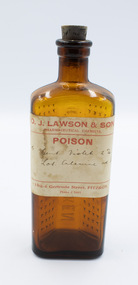 Emerald Museum & Nobelius Heritage Park
Container - Bottle with 'Poison' Label, O. J. Lawson & Son, 1935
... Glass, Bottom, Near Edge: "H / [0?] / [0?]" This item is a tall 8-ounce (approximately 237 ml) brown glass bottle in the shape of a rounded truncated triangular prism. On the rounded face is a label with printed text in red and handwritten text in ink. On the reverse, a warning label is embossed in the glass alongside a pattern of two grids of 68 crosses each. A cork remains in the mouth of the bottle. The bottom of the bottle also features embossed text and what might be a logo. Container Bottle with 'Poison' Label O. J. Lawson & Son Australian Glass Manufacturers ...O. J. Lawson & Son was a pharmaceutical firm operating out of Fitzroy, Victoria during the first half of the 20th century. Its maker's mark indicates that the bottle was manufactured in 1935. Handwriting reveals that the specific poisonous substance within (at least originally) was Calamine Lotion, a medication made from powdered zinc oxide and used to treat mild itchiness.A well-preserved example of the products of a Victorian pharmaceutical company as used in the local area, revealing their systems for labelling dangerous substances.This item is a tall 8-ounce (approximately 237 ml) brown glass bottle in the shape of a rounded truncated triangular prism. On the rounded face is a label with printed text in red and handwritten text in ink. On the reverse, a warning label is embossed in the glass alongside a pattern of two grids of 68 crosses each. A cork remains in the mouth of the bottle. The bottom of the bottle also features embossed text and what might be a logo.Reverse, In Glass: "NOT TO BE TAKEN" Label, Printed: "O. J. LAWSON & SON / PHARMACEUTICAL CHEMISTS / POISON / 102-4 Gertrude Street, FITZROY / Phone J 3401" Label, Handwritten: "14 [years?] Violet 2% / Lot. Calamine [and?] [unclear]" Glass, Bottom: "M423 / 0 / 8 OZ /M" Glass, Bottom, Near Edge: "H / [0?] / [0?]"20th century, medical & health -
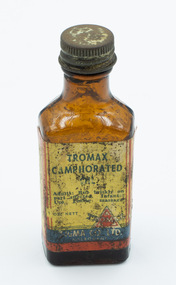 Emerald Museum & Nobelius Heritage Park
Container - Medicine Bottle - "Tromax Camphorated", Sigma Co. Ltd, 1935
... glass: "NOT TO BE TAKEN" Base, embossed in glass: "[GM?] / F1092 / 5 M" This item is a truncated triangular glass bottle with a rusted metal lid attached. A primarily yellow label with red and blue details wraps around the front three faces of the bottle, displaying use instructions and warnings. On the rear of the bottle are two grids containing thirty crosses each and embossed text. There is also embossed text on the base. Inside the bottle, some liquid and solid residue remains. Container Medicine Bottle - "Tromax Camphorated" Sigma Co. Ltd. Australian Glass Manufacturers ...Sigma Co. Ltd. (now known as Sigma Healthcare) was founded in 1912 by Melbourne Pharmacists Edwin Church and Ernest Leete and has since grown to become one of Australia's leading pharmaceutical retailers. Initially driven by the high prices of wholesale drugs and medicines, Church and Leete established Sigma as a manufacturer of medicinal products which could be sold only to paying subscribers. In 1913, it was decided that Sigma would open its markets to non-member pharmacies and retailers, although WWI caused production to falter. Over the following decade, the company grew, resulting in a restructuring in 1927 and the acquisition of small chemist manufacturing firm, Tromax Co. Ltd., who were struggling financially. For centuries, camphor has been used a folk medicine, likely used as a decongestant as well as a treatment for sprains and inflammation. In the 1900s, camphor was used as an analeptic by injection and was also used to induce seizures in schizophrenic patients in an attempt to cure psychosis. Camphorated oil, as was once present in this bottle, was composed of 20% camphor in cottonseed oil. It was rubbed into the skin as a topical medicine to treat itching from minor skin irritation. In 1947, a competitor's 1 oz. bottle of Camphorated oil was sold at a maximum of 8 dimes. The makers mark indicates that this bottle was manufactured in 1935 by Australian Glass Manufacturers (AGM).This item is an excellent example of a popular household medication used for common ailments such as itching and skin irritation. It was sold for use over a wide area of Melbourne and beyond, aiding inhabitants of the local area.This item is a truncated triangular glass bottle with a rusted metal lid attached. A primarily yellow label with red and blue details wraps around the front three faces of the bottle, displaying use instructions and warnings. On the rear of the bottle are two grids containing thirty crosses each and embossed text. There is also embossed text on the base. Inside the bottle, some liquid and solid residue remains. Label, printed: "TROMAX / CAMPHORATED / OIL / Adult: Rub briskly on part affected. Infant: Use gentle massage. / 1 oz. NETT / SIGMA CO LTD. / MELBOURNE" Logo printed on front label: "TROMAX" Embossed underneath label on front face: "5" Left face of label, printed: "CAUTION: Use strictly in accordance with the directions." Right face of label, printed: "For External Use Only." Rear, embossed in glass: "NOT TO BE TAKEN" Base, embossed in glass: "[GM?] / F1092 / 5 M"20th century, medical & health -
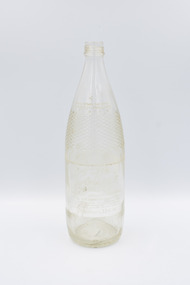 Emerald Museum & Nobelius Heritage Park
Container - "Cottee's" Large Bottle, Australian Glass Manufacturers, 1938
... glass bottle adorned with nutritional advice and Cottee's labelling. The glass forms a cylinder for half of the bottle's height, where it is joined to the upper part of the bottle which curves inward to a screw top. In the upper half of the bottle, there is an approximately 52 millimetre high strip with a textured relief pattern of small ovals, arranged to circumnavigate the bottle. Writing on the sides is in white Applied Colour Label - although it is possible the original colour may have faded. The writing at the bottom of the bottle is in relief. Container "Cottee's" Large Bottle Australian Glass Manufacturers ...Cottee's is a longstanding Australian food and beverage brand, in operation in the dairy industry since the early 20th century. Passiona - a sparkling passionfruit drink - has been produced by the company for almost as long, after being invented by Spencer Cottee in the earlier 1920s and fully introduced to markets by 1927. The "authorised bottlers" mentioned on the label included a number of now defunct Australian bottlers from across the nation. Applied Colour Labels were in heavy use from the mid-1930s. Based on the makers mark, this bottle was manufactured in 1938 by Australian Glass Manufacturers (AGM).This is an older style of bottle that is no longer in use, creating a useful record of past manufacturing and style preferences. This item is a large 32 fluid ounce (~950 ml) glass bottle adorned with nutritional advice and Cottee's labelling. The glass forms a cylinder for half of the bottle's height, where it is joined to the upper part of the bottle which curves inward to a screw top. In the upper half of the bottle, there is an approximately 52 millimetre high strip with a textured relief pattern of small ovals, arranged to circumnavigate the bottle. Writing on the sides is in white Applied Colour Label - although it is possible the original colour may have faded. The writing at the bottom of the bottle is in relief.Reverse: High: "PLEASE RETURN THIS BOTTLE / AND RECEIVE YOUR REFUND" Mid: "Cottee's / TRADE MARK REG'D. / BOTTLED BY / PASSIONA BOTTLING COMPANIES / AND AUTHORISED BOTTLERS / PRESERVATIVE ADDED. ARTIFICIALLY COLOURED / THIS FOOD CONTAINS SACCHARIN, A NON-NUTRITIVE / SWEETENING SUBSTANCE AND ADDED SUGAR. NET CONTENTS 32 FL. OZ." Obverse: "Cottee's / SPARKLING DRINKS / SO REFRESHING!" Bottom: "THIS DESIGN REMAINS / THE / PROPERTY OF / COTTEE'S LTD"1930s -
 Emerald Museum & Nobelius Heritage Park
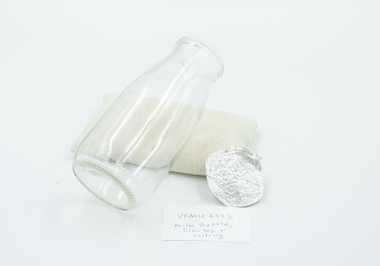
Container - Free School Milk Bottle, Australian Glass Manufacturers, 1954
... glass milk bottle with a thread for a screw-on lid (not included). For a little over half its heigh, the walls of the bottle are vertical, before they curve inwards to make the top slightly narrower than the base. The base is stipled, and near the base is a makers mark and a pattern of dots denoting the mould from which the bottle was formed. The printed note is two pages, stapled in the top-left corner, with page numbers handwritten in red in the top right. Container Free School Milk Bottle Australian Glass Manufacturers ...This bottle was manufactured in 1954 and donated alongside an accompanying note which implies it was a free school milk bottle given to a girl in Grade 2 in that year. In 2018 it was shown to the original recipient's grandchild, who wrote the accompanying note, before both were likely donated to us. The year of manufacture can be determined from the '4' by the Australian Glass Manufacturers maker's mark; the context indicates the bottle is from the 1950s, while the 4 indicates it is from a year ending with 4. The free school milk program for children up to 13 was established by the Federal Government in 1950 and implemented in Victoria by 1951. This was not the first free milk program - for example, Victoria had a winter-only program for a time - but was the first to standardise it across Australia. The program continued for two decades until a 1973 report assessed that the program was poor value for money, causing the Whitlam government to abolish it. In the words of Australian Food Timeline: "Recollections of the scheme vary. While some remember it fondly, most seem to have unpleasant memories of milk left to become warm and unappetising. Many claim it put them off milk forever. Personally, I would rank the abolition of school milk as one of the crowning achievements of the Whitlam government."The free milk program in many ways seems to be a remnant of a time where Australian nutrition policy aimed to counter hunger and maximise caloric intake rather than minimise it. This bottle and its accompanying note is an example of how much nutrition policy and educational standards has changed since the 1950s.This item was donated with a printed note which has been included in its record. This main item is a small glass milk bottle with a thread for a screw-on lid (not included). For a little over half its heigh, the walls of the bottle are vertical, before they curve inwards to make the top slightly narrower than the base. The base is stipled, and near the base is a makers mark and a pattern of dots denoting the mould from which the bottle was formed. The printed note is two pages, stapled in the top-left corner, with page numbers handwritten in red in the top right.Bottle, Makers Marking: "4 [Australian Glass Manufacturers Logo] M10357" Accompanying Note: Page 1: "I interviewed my Grandma about when she was in / Grade 1 in 1953 and how school has changed to / now in 2018. / That is 65 years difference." Page 2: "Some other things that have changed. / - Girls could only wear skirts to school, no pants. / - Boys and Girls had different play areas. / - At recess every child was given a bottle of milk to drink. / - Everyone walked to school."education, 1950s
