
Showing 12 items matching "brighton church of christ"
-
 Vision Australia
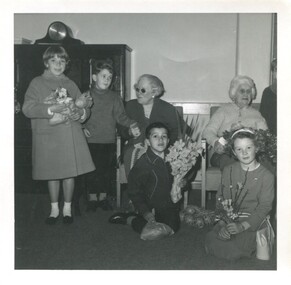
Photograph - Image, Children from the Brighton Church of Christ visit Brighton home residents, 1965
... Children from the Brighton Church of Christ visit Brighton home residents......Brighton Church of Christ...Children from the Brighton Church of Christ bring flowers to Brighton nursing home residents....Children from the Brighton Church of Christ bring flowers to Brighton nursing home residents. ...Children from the Brighton Church of Christ bring flowers to Brighton nursing home residents.1 black and white photograph of children and residents at Brighton nursing homeassociation for the blind, elanora home (brighton), brighton church of christ -
 Brighton Historical Society
Dress, Wedding dress, circa 1939-40
... Brighton from Castlemaine around 1924, when the sisters were still children. Their father, Horace Henry McMinn, was a fruiterer and greengrocer who ran the Fruit Palace at 123 Church Street. Florence May "Floss" McMinn (1912-2007) married William Thomas Vivian on 3 February 1940 at the Brighton Church of Christ. ...Brighton from Castlemaine around 1924, when the sisters were still children. Their father, Horace Henry McMinn, was a fruiterer and greengrocer who ran the Fruit Palace at 123 Church Street. Florence May "Floss" McMinn (1912-2007) married William Thomas Vivian on 3 February 1940 at the Brighton Church of Christ. ...This wedding dress was worn by two Brighton brides, sisters Floss and Vera McMinn, during the Second World War. The McMinn family moved to Brighton from Castlemaine around 1924, when the sisters were still children. Their father, Horace Henry McMinn, was a fruiterer and greengrocer who ran the Fruit Palace at 123 Church Street. Florence May "Floss" McMinn (1912-2007) married William Thomas Vivian on 3 February 1940 at the Brighton Church of Christ. Her sister Vera was her bridesmaid. Vera Olive McMinn (1918-2006) wore the same dress two years later when she married Geoffrey Walter Holmes on 15 August 1942 at Scotch College Chapel.Cream silk wedding dress with a long train. High neck and long sleeves. Yoke with horizontal pintucks and self-covered buttons. Side zip.wedding dress, 1940s, wartime bride, florence may mcminn, florence may vivian, vera olive mcminn, vera olive holmes -
 City of Moorabbin Historical Society (Operating the Box Cottage Museum)
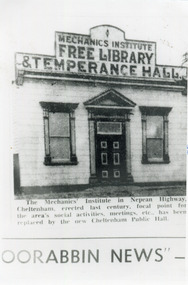
Photograph, Black & White, Cheltenham Mechanics Institute,Library, Temperance hall, c1960
... cheltenham mechanics institute, cheltenham temperance hall, cheltenham church of christ, keys robert, lepage everet, moorabin news, leader newspapers, horse drawn carts, toll gates brighton, motor cars 1900, steam engines, early settlers, bentleigh, mckinnon, parish of moorabbin, city of moorabbin, county of bourke, moorabbin roads board, shire of moorabbin, henry dendy's special survey 1841, were j.b.; bent thomas, o'shannassy john, king richard, charman stephen, highett william, ormond francis, maynard dennis, market gardeners, vineyards, orchards...The Mechanics Institute, built c 1890, was the focal point for the Cheltenham area's social activities, public meetings, adult education, etc. until its demolition 1960 when a new Cheltenham Hall was erected The early settlers erected this Mechanics Institute prior to 1900 as a public meeting place, library, temperance hall and it was used for social events cheltenham mechanics institute, cheltenham temperance hall, cheltenham church of christ, keys robert, lepage everet, moorabin news, leader newspapers, horse drawn carts, toll gates brighton, motor cars 1900, steam engines, early settlers, bentleigh, mckinnon, parish of moorabbin, city of moorabbin, county of bourke, moorabbin roads board, shire of moorabbin, henry dendy's special survey 1841, were j.b.; bent thomas, o'shannassy john, king richard, charman stephen, highett william, ormond francis, maynard dennis, market gardeners, vineyards, orchards Black & White photograph in the Moorabbin News c 1960 showing the Mechanics Institute, c1900 Nepean Highway Cheltenham Photograph, Black & White, Cheltenham Mechanics Institute,Library, Temperance hall Moorabbin News , ...The Mechanics Institute, built c 1890, was the focal point for the Cheltenham area's social activities, public meetings, adult education, etc. until its demolition 1960 when a new Cheltenham Hall was erectedThe early settlers erected this Mechanics Institute prior to 1900 as a public meeting place, library, temperance hall and it was used for social eventsBlack & White photograph in the Moorabbin News c 1960 showing the Mechanics Institute, c1900 Nepean Highway Cheltenhamcheltenham mechanics institute, cheltenham temperance hall, cheltenham church of christ, keys robert, lepage everet, moorabin news, leader newspapers, horse drawn carts, toll gates brighton, motor cars 1900, steam engines, early settlers, bentleigh, mckinnon, parish of moorabbin, city of moorabbin, county of bourke, moorabbin roads board, shire of moorabbin, henry dendy's special survey 1841, were j.b.; bent thomas, o'shannassy john, king richard, charman stephen, highett william, ormond francis, maynard dennis, market gardeners, vineyards, orchards -
 City of Moorabbin Historical Society (Operating the Box Cottage Museum)
Newsletter - City of Moorabbin Historical Society Jun 2011, June 2011
... brighton...cheltenham...ormond...bentleigh...mckinnon...market gardeners...pioneers...early settlers...moorabbin shire...box cottage museum...city of moorabbin...box william...glen eira city council...museums australia victoria...knott peta...church of christ...Church of Christ.. The Blackman family were early settlers in Moorabbin Shire. city of moorabbin historical society stanley helen melbourne moorabbin brighton cheltenham ormond bentleigh mckinnon market gardeners pioneers early settlers moorabbin shire box cottage museum city of moorabbin box william glen eira city council museums australia victoria knott peta church of christ cheltenham baptist church presbyterian church. salvation army jasper road point nepean road brewer’s road redmore rev. james methodist mission to chinese market gardeners blackman nance lydia street bentleigh CITY of MOORABBIN HISTORICAL SOCIETY / JUNE 2011 NEWSLETTER 5 x A4 paper printed on 1 side Issue 22 of the bi-monthly, City of Moorabbin Historical Society Newsletter produced by Society member and Secretary, Mrs Helen Stanley in June 2011. ...The City of Moorabbin Historical Society was formed c 1960 by a group of Moorabbin residents who were concerned that the history of the area should be preserved. A good response to a call for items related to the historical area of Moorabbin Shire brought donations of a wide variety of artefacts which are now preserved by the current members of CMHS at Box Cottage Museum . Helen Stanley, Secretary of CMHS, began producing a Newsletter for members in April 2007 to provide current information and well researched items of historical interestHelen Stanley has produced a bi-monthly Newsletter, 2007 - 2013, for the members of the City of Moorabbin Historical Society that contains well researched interesting historical items, notification of upcoming events, current advice from Royal Australian Historical Society , Museums Australia Victoria and activities of Local Historical Societies. The Newsletter is an important record of the activities of the CMHS. Mrs Nance Blackman’s notes in 1978 for the Centenary of The Cheltenham Church of Christ.. The Blackman family were early settlers in Moorabbin Shire. 5 x A4 paper printed on 1 side Issue 22 of the bi-monthly, City of Moorabbin Historical Society Newsletter produced by Society member and Secretary, Mrs Helen Stanley in June 2011. Notice of meeting June 26th and CMHS members exhibited some artefacts at the ‘Fun4over50’s’ event at Kingston (Moorabbin ) Town Hall June 5th. Glen Eira City Council Building Dept. Officers inspected erosion along the North side of the Barn floor, members have planted seedlings in the garden and Helen and Joan are entering data about our ‘Collection’ onto the MAV website while Jim Dale has photographed some of the farm machinery. Small paragraphs about early local Religious groups – Salvation Army, Methodist and Presbyterian Ministries – with 2 photocopied photographs. Helen also provides the notes penned by Mrs Nance Blackman in 1978 for the Centenary of The Cheltenham Church of Christ. CITY of MOORABBIN HISTORICAL SOCIETY / JUNE 2011 NEWSLETTER city of moorabbin historical society, stanley helen, melbourne, moorabbin, brighton, cheltenham, ormond, bentleigh, mckinnon, market gardeners, pioneers, early settlers, moorabbin shire, box cottage museum, city of moorabbin, box william, glen eira city council, museums australia victoria, knott peta, church of christ cheltenham, baptist church, presbyterian church. salvation army, jasper road, point nepean road, brewer’s road, redmore rev. james, methodist mission to chinese market gardeners, blackman nance, lydia street bentleigh -
 Eltham District Historical Society Inc
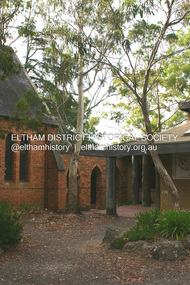
Photograph - Digital Photograph, Alan King, St Margaret's Anglican Church, Pitt Street, Eltham, 30 January 2008
... church building in Eltham. At the time it was known as Christ Church until its consecration in 1871, when it was completely free of debt (£1,700 for the church and parsonage) despite the district’s poverty. This was largely due to the free labour and materials, including locally made bricks donated by local artisans and others. The church is historically significant because it is the oldest church in the former Shire of Eltham and has associations with the philanthropist and founder of Brighton...church building in Eltham. At the time it was known as Christ Church until its consecration in 1871, when it was completely free of debt (£1,700 for the church and parsonage) despite the district’s poverty. This was largely due to the free labour and materials, including locally made bricks donated by local artisans and others. The church is historically significant because it is the oldest church in the former Shire of Eltham and has associations with the philanthropist and founder of Brighton ...St Margaret’s Church of England was officially opened on December 12, 1861. It is the oldest intact church building in Eltham. At the time it was known as Christ Church until its consecration in 1871, when it was completely free of debt (£1,700 for the church and parsonage) despite the district’s poverty. This was largely due to the free labour and materials, including locally made bricks donated by local artisans and others. The church is historically significant because it is the oldest church in the former Shire of Eltham and has associations with the philanthropist and founder of Brighton, Henry Dendy (who donated the land on which the church is built), the architect Nathaniel Billing and the prominent local builder, George Stebbing. The church is architecturally and aesthetically significant because it is constructed in the Gothic Revival style with several stained-glass windows of various dates and is also a very early use of polychromatic brickwork in Victoria. Billing was one of the first Melbourne architects to employ polychromatic brickwork and an important early architect. The rear wall was intended to be temporary. A major feature of the design is the large buttresses with long, steeply graded upper faces. The overall design is well proportioned with the surface brick patterns relieving an otherwise austere design. The church is spiritually and socially significant because it has been an important place of worship for the people of Eltham for almost 150 years. The land on which the buildings stand was donated by Henry Dendy. Dendy arrived in Melbourne in 1841 after purchasing in England eight square miles at Brighton under the system of "special surveys". After this land passed out of his hands, Dendy moved about Victoria, visited England, then returned to settle in Eltham where he purchased a flour mill. Dendy chaired the meeting held in 1860 “for the purpose of devising such means as may be expedient for the establishment of a Church of England in the township of Eltham”. He became chairman and treasurer of the church committee. Unlike the establishment of many early churches in Victoria where a vicar was appointed to a parish and later a permanent church was constructed, the population at Eltham initiated action to build a church. The nearest church at that time was at Heidelberg and the Eltham settlement was part of the parish of St Johns Heidelberg. Isolation and the tedious, time consuming journey between Heidelberg and Eltham resulted in the Eltham community taking its own action. The original vicarage (Dendy House) at the rear of the church is also an important part of the cultural significance of this place because it is connected to the church and the development of the Eltham area. Together, the church and the vicarage are aesthetically significant because they form a significant streetscape feature. The mud-brick community hall designed by Robert Marshall was added in 1978. In 2014 the original temporary rear wall was removed as part of a modern extension designed by Architects Atelier Wagner and constructed by Conrad Construction and Management. Covered under Heritage Overlay, Nillumbik Planning Scheme. National Trust of Australia (Victoria) State significance Victorian Heritage Published: Nillumbik Now and Then / Marguerite Marshall 2008; photographs Alan King with Marguerite Marshall.; p67 St Margaret’s Anglican Church in Pitt Street, Eltham, which officially opened on December 12, 1861, is the oldest intact church building in Eltham.1 With the nearby courthouse and police station, it was one of the first permanent community buildings in the district. The church and vicarage are on the Register of the Heritage Council of Victoria and the National Trust of Australia – Victoria. The church is important as an early example of polychrome brickwork by the notable architect Nathaniel Billings. It is also notable for its historic associations with the early settlement of the Shire of Eltham and its connection with Henry Dendy, Brighton’s founder.2 Henry Dendy, who lived in Eltham much longer than at Brighton, chaired the original meeting which planned the church, and he donated the half-acre (0.2ha) site. Dendy had arrived in Melbourne in 1841 after buying eight square miles (20.7sq km) at Brighton while in England. After this land passed out of his hands, he eventually settled in Eltham where he bought a flour mill, west from the corner of Main Road and Pitt Street (then called Brewery Lane). The vicarage was named Dendy House after him. The Eltham settlers were unusual in initiating the establishment of a church. Usually in Victoria a vicar was appointed to a parish and then a permanent church was constructed. But then, the nearest church was at Heidelberg, which was a tedious and time-consuming journey. St Margaret’s builder was a local, George Stebbing, who also constructed the former Methodist, later Uniting, Church at John Street and the Shillinglaw Cottage near Eltham’s Central Park. It is believed the first Anglican Bishop of Melbourne, Bishop Perry, dedicated the church. After the ceremony he joined in the festivities at the nearby pub and a bill was sent to the parish for teas taken there by the bishop with other participants. The first vicar was the Reverend Robert Mackie from 1864 to1866. St Margaret’s Church was originally called Christ Church until its consecration in 1871, when it was completely free of debt (£1700 pounds for the church and parsonage) despite the district’s poverty. This was largely due to the free labour and materials, including local bricks, donated by local artisans and others. St Margaret’s Church is in the Gothic Revival tradition with a buttressed nave, paired lancet windows, porch and bell-cote. It was the first polychromatic brick church in Australia, using softly contrasting coloured brickwork.3 Billing was one of the first architects to introduce polychrome brickwork into Melbourne. His original drawings for St Margaret’s survive in a folio of his architectural work. However the church’s brickwork is more subdued than in his drawings. About half the windows – those in clear glass with gold borders – are original. The stained glass windows were made much later, but the one behind the altar is thought to be the oldest in the Diamond Valley. It was to be temporary until the congregation could afford to extend the church. In the early 1960s the original cedar pews were replaced by blonde timber pews and the originals were sold to restaurants and to private individuals. Eminent local sculptor Matcham Skipper created a crucifix for the church. A major addition was made in 1978, when the weatherboard hall was replaced by a mud-brick hall. Made of local material, it was designed by local architect and a former shire president Robert Marshall. The mud-brick hall reflects the style of building in Eltham of the late 1970s and for which Eltham is well-known. Perhaps because its earthy tones blend with the surrounding environment, the hall sits well with the church building. St Margaret’s membership has included economist and ABC chairman, Richard Downing; political commentator, diplomat and academic, William Macmahon Ball; Eltham civic leader, Charles Wingrove; artist, Peter Glass; and Eltham’s first postmaster, Frederick Falkiner.This collection of almost 130 photos about places and people within the Shire of Nillumbik, an urban and rural municipality in Melbourne's north, contributes to an understanding of the history of the Shire. Published in 2008 immediately prior to the Black Saturday bushfires of February 7, 2009, it documents sites that were impacted, and in some cases destroyed by the fires. It includes photographs taken especially for the publication, creating a unique time capsule representing the Shire in the early 21st century. It remains the most recent comprehenesive publication devoted to the Shire's history connecting local residents to the past. nillumbik now and then (marshall-king) collection, eltham, st margaret's anglican church, st margaret's church, st margarets church hall, christ church -
 Eltham District Historical Society Inc
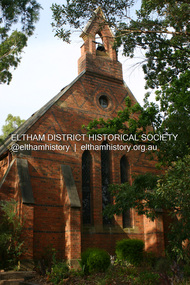
Photograph - Digital Photograph, Alan King, St Margaret's Anglican Church, Pitt Street, Eltham, 30 January 2008
... church building in Eltham. At the time it was known as Christ Church until its consecration in 1871, when it was completely free of debt (£1,700 for the church and parsonage) despite the district’s poverty. This was largely due to the free labour and materials, including locally made bricks donated by local artisans and others. The church is historically significant because it is the oldest church in the former Shire of Eltham and has associations with the philanthropist and founder of Brighton...church building in Eltham. At the time it was known as Christ Church until its consecration in 1871, when it was completely free of debt (£1,700 for the church and parsonage) despite the district’s poverty. This was largely due to the free labour and materials, including locally made bricks donated by local artisans and others. The church is historically significant because it is the oldest church in the former Shire of Eltham and has associations with the philanthropist and founder of Brighton ...St Margaret’s Church of England was officially opened on December 12, 1861. It is the oldest intact church building in Eltham. At the time it was known as Christ Church until its consecration in 1871, when it was completely free of debt (£1,700 for the church and parsonage) despite the district’s poverty. This was largely due to the free labour and materials, including locally made bricks donated by local artisans and others. The church is historically significant because it is the oldest church in the former Shire of Eltham and has associations with the philanthropist and founder of Brighton, Henry Dendy (who donated the land on which the church is built), the architect Nathaniel Billing and the prominent local builder, George Stebbing. The church is architecturally and aesthetically significant because it is constructed in the Gothic Revival style with several stained-glass windows of various dates and is also a very early use of polychromatic brickwork in Victoria. Billing was one of the first Melbourne architects to employ polychromatic brickwork and an important early architect. The rear wall was intended to be temporary. A major feature of the design is the large buttresses with long, steeply graded upper faces. The overall design is well proportioned with the surface brick patterns relieving an otherwise austere design. The church is spiritually and socially significant because it has been an important place of worship for the people of Eltham for almost 150 years. The land on which the buildings stand was donated by Henry Dendy. Dendy arrived in Melbourne in 1841 after purchasing in England eight square miles at Brighton under the system of "special surveys". After this land passed out of his hands, Dendy moved about Victoria, visited England, then returned to settle in Eltham where he purchased a flour mill. Dendy chaired the meeting held in 1860 “for the purpose of devising such means as may be expedient for the establishment of a Church of England in the township of Eltham”. He became chairman and treasurer of the church committee. Unlike the establishment of many early churches in Victoria where a vicar was appointed to a parish and later a permanent church was constructed, the population at Eltham initiated action to build a church. The nearest church at that time was at Heidelberg and the Eltham settlement was part of the parish of St Johns Heidelberg. Isolation and the tedious, time consuming journey between Heidelberg and Eltham resulted in the Eltham community taking its own action. The original vicarage (Dendy House) at the rear of the church is also an important part of the cultural significance of this place because it is connected to the church and the development of the Eltham area. Together, the church and the vicarage are aesthetically significant because they form a significant streetscape feature. The mud-brick community hall designed by Robert Marshall was added in 1978. In 2014 the original temporary rear wall was removed as part of a modern extension designed by Architects Atelier Wagner and constructed by Conrad Construction and Management. Covered under Heritage Overlay, Nillumbik Planning Scheme. National Trust of Australia (Victoria) State significance Victorian Heritage Published: Nillumbik Now and Then / Marguerite Marshall 2008; photographs Alan King with Marguerite Marshall.; p67This collection of almost 130 photos about places and people within the Shire of Nillumbik, an urban and rural municipality in Melbourne's north, contributes to an understanding of the history of the Shire. Published in 2008 immediately prior to the Black Saturday bushfires of February 7, 2009, it documents sites that were impacted, and in some cases destroyed by the fires. It includes photographs taken especially for the publication, creating a unique time capsule representing the Shire in the early 21st century. It remains the most recent comprehenesive publication devoted to the Shire's history connecting local residents to the past. nillumbik now and then (marshall-king) collection, eltham, st margaret's anglican church, st margaret's church, christ church -
Glen Eira Historical Society
Document - National Trust Register
... Brighton Cemetery... Hopetoun Gardens... State Savings Bank Elsternwick... Anderson Organ... Hopetoun Private Hospital (Melrose)... Rippon Lea... Ripponlea... Burreel... O'Neill College... Lisbon House... Elsternwick Club... Merkin-Schutze Organ... Presentation Convent... Duldig Mural - Kadimah Cultural Centre... Glenmoore... Craigellachie... St James the Great... Glenfern... Grimwade House... Dacre... Trinity Congregational Uniting Church Glenhuntly... Alnwick... Holmwood... New Alexandra... Joscelyne Organ... Smith Organ... Fincham Organ... St George's Bentleigh... McKinnon Progress Hall... Wurlitzer Organ... Moorabbin Town Hall... Christ...Georges Road Willow Street Grange Road Station Place Railway Parade Alexandra Street Wood Crescent Elizabeth Street Halstead Street Mavho Street Tucker Road McKinnon Road Nepean Highway Wheatly Road Uniting Church Carnegie Athole St Stephen's Uniting Church Caulfield St Aloysius' Catholic Church Halstead St Mary's Anglican Church Caulfield Caulfield Town Hall Anseln The Glen Woolamai Caulfield House Caulfield Hospital Lirrewa Labassa Fairfield Hall Bellecourt Bagatelle Myoora Rosecraddock Adam and Eve - Karl Duldig The Family - Karl Duldig Caulfield Primary School Septimus Miller Memorial Chapel Brighton Cemetery Hopetoun Gardens State Savings Bank Elsternwick Anderson Organ Hopetoun Private Hospital (Melrose) Rippon Lea Ripponlea Burreel O'Neill College Lisbon House Elsternwick Club Merkin-Schutze Organ Presentation Convent Duldig Mural - Kadimah Cultural Centre Glenmoore Craigellachie St James the Great Glenfern Grimwade House Dacre Trinity Congregational Uniting Church Glenhuntly Alnwick Holmwood New Alexandra Joscelyne Organ Smith Organ Fincham Organ St George's Bentleigh McKinnon Progress Hall Wurlitzer Organ Moorabbin Town Hall Christ Anglican Church St Mary's Jubilee School St Stephen's Presbyterian Church Elsternwick Congregational Church St Mary's Church of England Former Metropolitan Fire Brigade Station No. 31 St Mary's Jubilee Church Belle Court Trinity Congregational Church Heatherbrae Carnegie Caulfield Caulfield North Caulfield South Elsternwick Glen Huntly Glenhuntly Murrumbeena St Kilda East Bentleigh McKinnon Moorabbin Ormond National Trust of Australia National Trust Register Houses Churches Schools Organs Vallati Gladys Mansions Document National Trust Register ...This file contains two items relating to historic buildings in Glen Eira listed on the National Trust Registry: 1/A fax, sent to Gladys Vallati on 02/03/1995 from the National Trust of Australia listing buildings on the Trust’s registry in the Glen Eira area, as well as their addresses and status on the register (5 pages). (Additional photocopy taken for preservation purposes). 2/A typed list of buildings in the Glen Eira area (mainly Caulfield) which are on the National Trust list, including address, approximate date of construction and status on the register. Date of production of the list is unknown. (6 pages).neerim road, poplar grove, avoca grove, balaclava road, orrong road, bambra road, glen eira road, hood crescent, hawthorn road, glenferri street, glenhuntly road, glen huntly road, kambrook road, kooyong road, lirrewa grove, manor grove, north road, pearson avenue, seymour road, alma road, craddock avenue, dandenong road, lyndoch avenue, orrong crescent, hotham street, nagle avenue, inkerman street, iknerman road, sandham street, selwyn street, st. georges road, willow street, grange road, station place, railway parade, alexandra street, wood crescent, elizabeth street, halstead street, mavho street, tucker road, mckinnon road, nepean highway, wheatly road, uniting church carnegie, athole, st stephen's uniting church caulfield, st aloysius' catholic church, halstead, st mary's anglican church caulfield, caulfield town hall, anseln, the glen, woolamai, caulfield house, caulfield hospital, lirrewa, labassa, fairfield hall, bellecourt, bagatelle, myoora, rosecraddock, adam and eve - karl duldig, the family - karl duldig, caulfield primary school, septimus miller memorial chapel, brighton cemetery, hopetoun gardens, state savings bank elsternwick, anderson organ, hopetoun private hospital (melrose), rippon lea, ripponlea, burreel, o'neill college, lisbon house, elsternwick club, merkin-schutze organ, presentation convent, duldig mural - kadimah cultural centre, glenmoore, craigellachie, st james the great, glenfern, grimwade house, dacre, trinity congregational uniting church glenhuntly, alnwick, holmwood, new alexandra, joscelyne organ, smith organ, fincham organ, st george's bentleigh, mckinnon progress hall, wurlitzer organ, moorabbin town hall, christ anglican church, st mary's jubilee school, st stephen's presbyterian church, elsternwick congregational church, st mary's church of england, former metropolitan fire brigade station no. 31, st mary's jubilee church, belle court, trinity congregational church, heatherbrae, carnegie, caulfield, caulfield north, caulfield south, elsternwick, glen huntly, glenhuntly, murrumbeena, st kilda east, bentleigh, mckinnon, moorabbin, ormond, national trust of australia, national trust register, houses, churches, schools, organs, vallati gladys, mansions -
Glen Eira Historical Society
Document - Lees Family
... Brighton Cemetery... Cemeteries... Guerin Mary... Quirk Michael... Quirk Patrick... Quirk Catherine... Quirk Daniel... Quirk Edward... Quirk Daniel Snr.... Lees Mary... Slab Huts... Lees Joseph... Lees Joe... East Bentleigh School... Primary Schools... Ring Catherine... Ring Kate... Stables... Lees Bill... Lees Tom... Lees James Henry... Lees Jim... Ormond State School... Wagons... Cruickshanks Nursery... Nurseries... Church of Christ...Brighton Cemetery Cemeteries Guerin Mary Quirk Michael Quirk Patrick Quirk Catherine Quirk Daniel Quirk Edward Quirk Daniel Snr. Lees Mary Slab Huts Lees Joseph Lees Joe East Bentleigh School Primary Schools Ring Catherine Ring Kate Stables Lees Bill Lees Tom Lees James Henry Lees Jim Ormond State School Wagons Cruickshanks Nursery Nurseries Church of Christ Ormond Carlton Street Lees Street Ring Charles Rout Charlotte Horse Racing Lees George Lees Stan Crop Production Nicholson Street Lees Street Cowie William Lees Leonard William Lees Len Lees Vera Lees Linda Doris Lees Jack Allen Lees Vera Victoria McKinnon Cricket Club Sporting Clubs Bentleigh Club Masonic Lodge Thomas Street Edwards George Nurserymen Chinese Community Market Gardeners J.H. ...A seven page reprinted article by Jan Rigby, on the Lees Family, who were early pioneers, and pioneer market gardeners in McKinnon and Bentleigh 1850-2003. Includes footnotes and references author Jan Rigby used for her research.lees family, pioneers, market gardens, mckinnon, bentleigh, lees jack allan, briggs vera victoria, lees james henry, tobin linda doris, mcclelland vera auraria, lees leonard william, rigby jan, lees james, lees william, bentleigh, jasper road, centre road, harwood j., branbury thomas, mckinnon road, wheatley road, mckinnon railway, east bentleigh, convicts, crop production, farmers, vineyards, viticulture, bent james, mckinnon road, elster creek, hellins edward, inns, gardeners arms, brighton cemetery, cemeteries, guerin mary, quirk michael, quirk patrick, quirk catherine, quirk daniel, quirk edward, quirk daniel snr., lees mary, slab huts, lees joseph, lees joe, east bentleigh school, primary schools, ring catherine, ring kate, stables, lees bill, lees tom, lees james henry, lees jim, ormond state school, wagons, cruickshanks nursery, nurseries, church of christ, ormond, carlton street, lees street, ring charles, rout charlotte, horse racing, lees george, lees stan, crop production, nicholson street, lees street, cowie william, lees leonard william, lees len, lees vera, lees linda doris, lees jack allen, lees vera victoria, mckinnon cricket club, sporting clubs, bentleigh club, masonic lodge, thomas street, edwards george, nurserymen, chinese community, market gardeners, j.h. lee and sons, lee floss, lees iris, centre road, bent thomas -
 St Kilda Historical Society
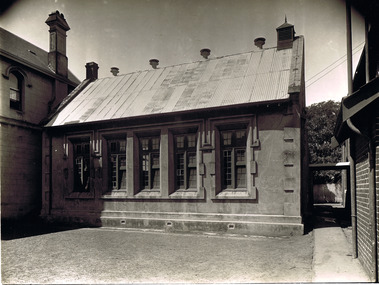
Photograph, Christ Church School St Kilda 1933, 22 November 1933
... Until a permanent State school could be built in the area, the Government used the St Kilda Town Hall for this purpose, and the students from Christ Church school were transferred there. The Brighton Road State School was opened in January 1875, with John Hadfield was its first Headmaster. ...Until a permanent State school could be built in the area, the Government used the St Kilda Town Hall for this purpose, and the students from Christ Church school were transferred there. The Brighton Road State School was opened in January 1875, with John Hadfield was its first Headmaster. ...This school was one of the earliest in St Kilda. The 1842 plan of Crown Lands that were sold to establish what became the village of St Kilda reserved an area on Acland Street for the 'Church of England and School'. Christ Church was constructed on the site in 1854-57. A school had started before then but was closed for about a year after the Head Teacher abandoned his students in search of gold. A sign on the door read 'This school is closed in consequence of the master having gone to the diggings'. The school was re-opened in 1853, with only two pupils on the first day. The new Headmaster was John Hadfield, a teacher who had recently arrived in Melbourne from Wiltshire, England. He stayed on as Headmaster for the next 22 years. Free secular compulsory education was introduced in Victoria from 1873. Until a permanent State school could be built in the area, the Government used the St Kilda Town Hall for this purpose, and the students from Christ Church school were transferred there. The Brighton Road State School was opened in January 1875, with John Hadfield was its first Headmaster. The Government then leased the old Christ Church schoolroom and established a second school there. The Headmaster was James A Ure. The school continued until the 1940s. The building was burnt down in 1977.The building burnt down in 1977.black and white gloss photograph good condition unmountedFirst State School in St Kilda, Acland St, St Kilda 22 Nov 1933st kilda, christ church, acland street, st kilda schools, john hadfield, james a ure, christ church school, christ church college -
 St Kilda Historical Society
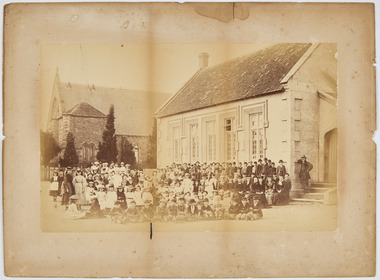
Photograph - Group portrait, Christ Church School St Kilda, c1865
... Until a permanent State school could be built in the area, the Government used the St Kilda Town Hall for this purpose, and the students from Christ Church school were transferred there. The Brighton Road State School was opened in January 1875, with John Hadfield was its first Headmaster. ...Until a permanent State school could be built in the area, the Government used the St Kilda Town Hall for this purpose, and the students from Christ Church school were transferred there. The Brighton Road State School was opened in January 1875, with John Hadfield was its first Headmaster. ...This school was one of the earliest in St Kilda. The 1842 plan of Crown Lands that were sold to establish what became the village of St Kilda reserved an area on Acland Street for the 'Church of England and School'. Christ Church was constructed on the site in 1854-57. A school had started before then but was closed for about a year after the Head Teacher abandoned his students in search of gold. A sign on the door read 'This school is closed in consequence of the master having gone to the diggings'. The school was re-opened in 1853, with only two pupils on the first day. The new Headmaster was John Hadfield, a teacher who had recently arrived in Melbourne from Wiltshire, England. He stayed on as Headmaster for the next 22 years. Free secular compulsory education was introduced in Victoria from 1873. Until a permanent State school could be built in the area, the Government used the St Kilda Town Hall for this purpose, and the students from Christ Church school were transferred there. The Brighton Road State School was opened in January 1875, with John Hadfield was its first Headmaster. The Government then leased the old Christ Church schoolroom and established a second school there. The Headmaster was James A Ure. The school continued until the 1940s. The building was burnt down in 1977.The building burnt down in 1977.Framed and mounted original photograph, black and white. First state school room in Victoria.st kilda, christ church, acland street, st kilda schools, john hadfield, james a ure, christ church school, christ church college -
Merbein District Historical Society
Document, Merbein Church of Christ documents (8 pages), 1923-1931
... Church of Christ group... Arthur Goodie... Stan Chislett... Whit. Neville... Lucy nee Oakes Brooke... Ivy Rainbow... Grace Hazelwood... Norman Chislett... Alma Strawb... Joyce Brighton...Churches of Christ Service Plan - Merbein A. Chislett B West H. Passmore R. Lawson E. Neville G. Chislett Picnic - Church of Christ group Arthur Goodie Stan Chislett Whit. Neville Lucy nee Oakes Brooke Ivy Rainbow Grace Hazelwood Norman Chislett Alma Strawb Joyce Brighton Norma Jerome Jean Williams Norman West Church of Christ - Information Form Churches Merbein Church of Christ documents (8 pages) Document ...churches of christ service plan - merbein, a. chislett, b west, h. passmore, r. lawson, e. neville, g. chislett, picnic - church of christ group, arthur goodie, stan chislett, whit. neville, lucy nee oakes brooke, ivy rainbow, grace hazelwood, norman chislett, alma strawb, joyce brighton, norma jerome, jean williams, norman west, church of christ - information form, churches -
Merbein District Historical Society
Journal - Quarterly, Merbein Historian - Journal MDHS - No 21 (ex. The Newsletter) (2 copies), Sept.2005
... Church of Christ... Messrs V. Allen... Messrs R. Allen... Merbein Brickworks... Irene Olivette Wellington... Nelson (Snr) Wellington... Adele Wellington... Daisy Wellington... Joan Wellington... Marjorie Wellington... Minnie Wellington... Nelson (Jnr) Wellington... Briant West... Edna nee Farrant West... Arthur Goodie... Stan Chislett... Whit. Neville... Lucy nee Oakes Brooke... Ivy Rainbow... Grace nee Chislett Hazelwood... Norman Chislett... Harry Passmore... Alma nee Neville Straub... Joyce nee Watson Brighton...Church of Christ Messrs V. Allen Messrs R. Allen Merbein Brickworks Irene Olivette Wellington Nelson (Snr) Wellington Adele Wellington Daisy Wellington Joan Wellington Marjorie Wellington Minnie Wellington Nelson (Jnr) Wellington Briant West Edna nee Farrant West Arthur Goodie Stan Chislett Whit. Neville Lucy nee Oakes Brooke Ivy Rainbow Grace nee Chislett Hazelwood Norman Chislett Harry Passmore Alma nee Neville Straub Joyce nee Watson Brighton ...church of christ, messrs v. allen, messrs r. allen, merbein brickworks, irene olivette wellington, nelson (snr) wellington, adele wellington, daisy wellington, joan wellington, marjorie wellington, minnie wellington, nelson (jnr) wellington, briant west, edna nee farrant west, arthur goodie, stan chislett, whit. neville, lucy nee oakes brooke, ivy rainbow, grace nee chislett hazelwood, norman chislett, harry passmore, alma nee neville straub, joyce nee watson brighton, norma jerome, jean nee henderson william, george chislett, pioneer brickworks, st alban's sunday school, gladys nee gaulke white, church of christ - information form, yelta mission
