
Showing 7 items matching "british anecdotes"
-
 Robin Boyd Foundation
Book, Robert Morley, Book of Bricks, 1978
... british anecdotes...british anecdotes anecdotes Walsh St library Hardcover w/ Dust Jacket Book of Bricks Book Robert Morley Weidenfeld and Nicolson ...Hardcover w/ Dust Jacketbritish anecdotes, anecdotes, walsh st library -
 Flagstaff Hill Maritime Museum and Village
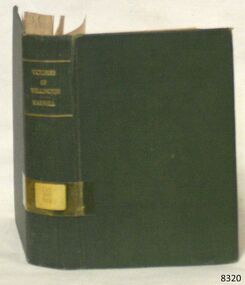
Book - Biographical/ Military History, W. H. Maxwell, The Victories of Wellington, 1871
... British military during the early 19th century. It focuses heavily on the Peninsular War fought against Napoleon's forces in Spain and Portugal and concludes with the famous Battle of Waterloo in 1815. Written with a flair for action, it blends tactical overviews of famous battles with dramatic anecdotes ...This book is a detailed military history and biographical tribute celebrating Arthur Wellesley, the Duke of Wellington, and the triumphs of the British military during the early 19th century. It focuses heavily on the Peninsular War fought against Napoleon's forces in Spain and Portugal and concludes with the famous Battle of Waterloo in 1815. Written with a flair for action, it blends tactical overviews of famous battles with dramatic anecdotes of soldierly bravery, making it highly accessible to the general Victorian public, who voraciously consumed patriotic military histories.The Victories of Wellington Author: W. H. Maxwell Publisher: Bell & Daldy Date: 1871 Further Information: non-fictionThis book is a detailed military history and biographical tribute celebrating Arthur Wellesley, the Duke of Wellington, and the triumphs of the British military during the early 19th century. It focuses heavily on the Peninsular War fought against Napoleon's forces in Spain and Portugal and concludes with the famous Battle of Waterloo in 1815. Written with a flair for action, it blends tactical overviews of famous battles with dramatic anecdotes of soldierly bravery, making it highly accessible to the general Victorian public, who voraciously consumed patriotic military histories.flagstaff hill, warrnambool, shipwrecked coast, flagstaff hill maritime museum, maritime museum, shipwreck coast, flagstaff hill maritime village, great ocean road, book, pattison collection, warrnambool library, warrnambool mechanics’ institute, ralph eric pattison, corangamite regional library service, warrnambool city librarian, mechanics’ institute library, victorian library board, warrnambool books and records, warrnambool children’s library, the victories of wellington, w h maxwell, the duke of wellington, waterloo, 1812 -
 Flagstaff Hill Maritime Museum and Village
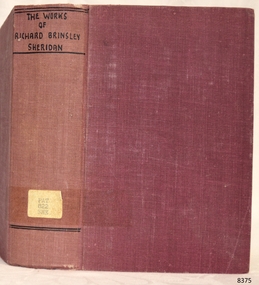
Book - Compalation of Plays, Prologues, Sociatal Observations, Richard Brinsley Sheridan, The Works of Richard Brinsley Sheridan, 1874
... anecdotes into a single, compact, affordable volume, it democratized access to Sheridan's genius. It became the standard reference copy found in public libraries, university collections, and middle-class home bookshelves across the British Empire for nearly forty years. ...Richard Brinsley Sheridan (1751–1816) was an Irish-born playwright, impresario, wit, and prominent Whig politician. He was a dazzling figure in late 18th-century London high society. The book, The Works of Richard Brinsley Sheridan, edited by Francis Stainforth, is an omnibus collection showcasing the full breadth of his career. The volume opens with a substantial biographical introduction (the "memoir"). It traces Sheridan's meteoric rise from an impoverished Irish theater family to the heights of Parliament and Westminster Abbey, balanced against his chaotic personal finances and battles with alcoholism. Rather than just printing his famous plays, this single-volume edition compiles his complete theatrical catalog (The Rivals, The School for Scandal, The Duenna, The Critic, Pizarro, etc.). Also included are his lesser-known verse, prologues written for the theater, classical translations, a selection of his most famous parliamentary orations, and fragments of plays and essays he never completed. The addition of a collection on “ANA,” noted on the book's flyleaf, refers to a 19th-century publishing term for a collection of anecdotes, memorable sayings, table-talk, and biographical trivia regarding a famous person. The "Sheridaniana" section in this book compiles the sharp-witted jokes, pranks, and clever remarks Sheridan made throughout his life.The Works of Richard Brinsley Sheridan Author: Richard Brinsley Sheridan Publisher: Chatto and Windus Date: 1874 Editor: Francis Edward StainforthfictionRichard Brinsley Sheridan (1751–1816) was an Irish-born playwright, impresario, wit, and prominent Whig politician. He was a dazzling figure in late 18th-century London high society. The book, The Works of Richard Brinsley Sheridan, edited by Francis Stainforth, is an omnibus collection showcasing the full breadth of his career. The volume opens with a substantial biographical introduction (the "memoir"). It traces Sheridan's meteoric rise from an impoverished Irish theater family to the heights of Parliament and Westminster Abbey, balanced against his chaotic personal finances and battles with alcoholism. Rather than just printing his famous plays, this single-volume edition compiles his complete theatrical catalog (The Rivals, The School for Scandal, The Duenna, The Critic, Pizarro, etc.). Also included are his lesser-known verse, prologues written for the theater, classical translations, a selection of his most famous parliamentary orations, and fragments of plays and essays he never completed. The addition of a collection on “ANA,” noted on the book's flyleaf, refers to a 19th-century publishing term for a collection of anecdotes, memorable sayings, table-talk, and biographical trivia regarding a famous person. The "Sheridaniana" section in this book compiles the sharp-witted jokes, pranks, and clever remarks Sheridan made throughout his life.flagstaff hil, warrnambool, flagstaff hill maritime museum, maritime museum, shipwreck coast, great ocean road, book, pattison collection, warrnambool library, warrnambool mechanics’ institute, ralph eric pattison, corangamite regional library service, warrnambool city librarian, mechanics’ institute library, victorian library board, warrnambool books and records, warrnambool children’s library, the works of richard brinsley sheridan, richard brinsley sheridan, f stainforth, plays, drama -
 Mission to Seafarers Victoria
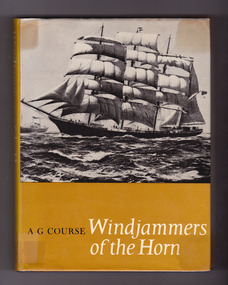
Book, Alfred George Course, Windjammers of the Horn: the story of the last British fleet of square-rigged sailing ships, 1969
... British flag. Captain A.G. Course, a Cape Horner himself, tells the story of this fleet whose vessels sailed so often past the awesome tip of South America, with a wealth of detail, happily marrying factual information and anecdote to produce a valuable historical record. ...From dust jacket: This is the unique story of the sailing ships owned by Sir William Garthwaite between 1915 and 1929, which formed in fact the last sailing merchant fleet to trade under the British flag. Captain A.G. Course, a Cape Horner himself, tells the story of this fleet whose vessels sailed so often past the awesome tip of South America, with a wealth of detail, happily marrying factual information and anecdote to produce a valuable historical record. Here are some of the last great characters of the age of sail, both men and ships, brought to life. The author's own close contact with the vessels and their crews allows him to capture the atmosphere most realistically. The Garthwaite ships, for all the effort put into their operation, were fighting a last-ditch stand against the inevitable supremacy of steam. It is with a certain nostalgia that the author records the passing of a fine fleet and documents an important chapter in maritime history.Navy blue cloth cover with embossed golden lettering on the spine, and mustard dust jacket illustrated by original painting by Commander DGM Gardner. xvi, 176 p. : 16 plates, illus., maps, ports. ; 22 cm. Includes index.non-fictionFrom dust jacket: This is the unique story of the sailing ships owned by Sir William Garthwaite between 1915 and 1929, which formed in fact the last sailing merchant fleet to trade under the British flag. Captain A.G. Course, a Cape Horner himself, tells the story of this fleet whose vessels sailed so often past the awesome tip of South America, with a wealth of detail, happily marrying factual information and anecdote to produce a valuable historical record. Here are some of the last great characters of the age of sail, both men and ships, brought to life. The author's own close contact with the vessels and their crews allows him to capture the atmosphere most realistically. The Garthwaite ships, for all the effort put into their operation, were fighting a last-ditch stand against the inevitable supremacy of steam. It is with a certain nostalgia that the author records the passing of a fine fleet and documents an important chapter in maritime history. windjammers, captains, martin frampton, catherine aviss (nee frampton), herbert aviss, elisabeth frampton, inverneill, garthneil, wray castle, garthwray, alfred george course, invercauld, invermay, carnmoney, garthforce, garthsnaid, garthgarry, garthpool, juteopolis, captain roberts, crew, cape horn, cape leeuwin, captain thomas atkinson, spanish flu, wwi -
 Bendigo Historical Society Inc.
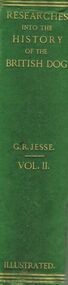
Book - RESEARCHES INTO THE HISTORY OF THE BRITISH DOG, FROM ANCIENT LAWS, CHARTERS AND HISTORICAL RECORDS
... A green hard covered book titled '' Researches into the History of the British dog, from ancient laws, charters and Historical Records. With original anecdotes and illustrations of the nature and attributes of the dog. ...Jesse A green hard covered book titled '' Researches into the History of the British dog, from ancient laws, charters and Historical Records. With original anecdotes and illustrations of the nature and attributes of the dog. ...A green hard covered book titled '' Researches into the History of the British dog, from ancient laws, charters and Historical Records. With original anecdotes and illustrations of the nature and attributes of the dog. From the poets and prose writers of ancient, medieval and modern times.'' In two volumes. Vol. II. London: Robert Hardwicke, 192, Piccadilly. 1866. 424 pgs. (ill.)George R. Jessebooks, technical, dogs, book, books, dog, dogs, animal, animals, history, british dogs, pets -
 Bendigo Historical Society Inc.
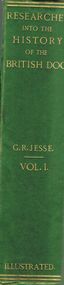
Book - RESEARCHERS INTO THE HISTORY OF THE BRITISH DOG, FROM ANCIENT LAWS, CHARTERS, AND HISTORICAL RECORDS
... A green hard backed book titled, 'Researchers into the History of the British dog, from ancient laws, charters, and historical records, with original anecdotes and illustrations of the nature and attributes of the dog.' ...Jesse A green hard backed book titled, 'Researchers into the History of the British dog, from ancient laws, charters, and historical records, with original anecdotes and illustrations of the nature and attributes of the dog.' ...A green hard backed book titled, 'Researchers into the History of the British dog, from ancient laws, charters, and historical records, with original anecdotes and illustrations of the nature and attributes of the dog.' By George R. Jesse. In two Volumes. Vol. 1. London : Robert Hardwicke, 192 Piccadilly. 1866. 385 p. (ill.)George R. Jessebooks, technical, dogs, books, book, dogs, dog, animal, animals, history, british dog, pets -
 City of Melbourne Libraries
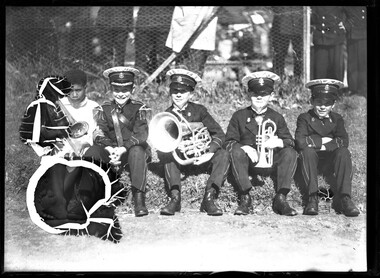
Photograph, Bull, Hugh Jones, 1897-1993, Boy bandsmen
... A well researched blog by Jeremy de Korte dated February 28, 2024 – Band Blasts from the Past – Anecdotes, Stories and Personalities, notes: Orphanage bands in Australia were a copy of practices in England where the teaching of music in boys’ institutions was commonplace (Sheldon, 2009). There was, however, a major difference to the outcomes of this musical education between the two countries. Boys who were trained as musicians in English institutions readily found themselves recruited into the bands of the British...A well researched blog by Jeremy de Korte dated February 28, 2024 – Band Blasts from the Past – Anecdotes, Stories and Personalities, notes: Orphanage bands in Australia were a copy of practices in England where the teaching of music in boys’ institutions was commonplace (Sheldon, 2009). There was, however, a major difference to the outcomes of this musical education between the two countries. Boys who were trained as musicians in English institutions readily found themselves recruited into the bands of the British ...Published: 7 Dec 1934 Published title: A FIJIAN TROMBONIST. Published caption: Although the young Fijian here for the Eucharistic Congress had no uniform, he did not feel out of it with the members of St. Vincent de Paul’s Band at the Sacre Coeur, East Malvern, this week. Trove article identifier: http://nla.gov.au/nla.news-article205071643 Description: A young Fijian boy sits with young members of the St Vincent de Paul’s Band, all seated on the grass in sunshine. The three young band members are jauntily dressed in braided hats, long pants and smart dark jackets, white shirts, dark bow tie, and dark long trousers and boots. One holds a French horn, one a trumpet. In contrast, the young Fijian boy is shoeless, hatless, and dressed in white – a white shirt, and possibly a white “skirt” as observed to be worn by Fijian policemen in their home country at that time. He carries a trombone, which perhaps belongs to the young band member sitting beside him. Research by project volunteer, Louise McKenzie: A photo in the Argus on the previous day shows “two Papuans, Aloysius and Bernard, … talking to Archbishop O’Shea of Wellington (N.Z.).” In a turn of phrase which would be far from acceptable today, the caption notes that the juxtaposition of the dark skinned boys and the white skinned Archbishop makes “A picturesque Contrast”. The photo is also staged in a way that has the two dark skinned boys (wearing white shirts and white “skirts”, and no hats), standing, looking down on the Archbishop in his elaborate clothing and headcovering. The Age caption advises that they are at Sacre Coeur, East Melbourne. The reason for the event – a garden party – was held as part of the National Eucharistic Congress which took place in Melbourne from Sunday 2 – Sunday 9 December 1934. An initiative of the Roman Catholic Church, it was their contribution to Melbourne’s Centenary Celebrations. At this garden party the Papal Legate, Cardinal MacRory, accompanied by dignatories including the Papal Chamberlain, met Old Girls of Sacre Coeur Convent. The Cardinal’s sister was at one time Mother Superior of this Convent. The featuring of Fijian and Papuan boys in these articles reflected the diverse nature of Catholic Church representatives worldwide who attended the Eucharistic Congress which featured as part of Melbourne’s Centenary celebrations. Notable visitors to the Congress included the Papal Legate, His Excellence Cardinal MacRory, several Monsignors from Rome, the Archbishop of Liverpool representing England, Scotland and Wales, together with representatives from New Zealand, China, South Africa, Ireland, the Islands of the Pacific, India, Malta, USA, and of course from across Australia. St Vincent de Paul “Our History” advises that the Society was founded in France in 1833 by a group of dedicated Catholics who put their faith into action to support the poor in their community. The “Vinnies” website “1854 onwards” sets out milestones of the Society’s close involvement with Melbourne from its infancy in March 1854 up to today. A well researched blog by Jeremy de Korte dated February 28, 2024 – Band Blasts from the Past – Anecdotes, Stories and Personalities, notes: Orphanage bands in Australia were a copy of practices in England where the teaching of music in boys’ institutions was commonplace (Sheldon, 2009). There was, however, a major difference to the outcomes of this musical education between the two countries. Boys who were trained as musicians in English institutions readily found themselves recruited into the bands of the British Army and Navy (Sheldon, 2009). Whereas the musicians that graduated from the Orphanage bands in Australia found themselves positions in the wider band movement. … We know that Orphanage bands in Australia have had a long and distinguished history, as well as enviable reputations. The St. Augustine’s Band from Geelong is probably the most famous of them all, and it is mentioned that by 1898 they were already putting the call out for a new set of instruments (“ST. AUGUSTINE’S ORPHANAGE BAND.,” 1898). St. Augustine’s went on to win many competitions at South Street in Ballarat and toured extensively – in one instance, in 1906 they won the A Grade Championships at South Street (Royal South Street Society, 1906). The band at St. Vincent’s de Paul in Melbourne was no less famous than their counterpart in Geelong and in 1921 they gained the services of Mr. Leslie Hoffman, a graduate of the St. Augustine’s Band, as their conductor (“St. Vincent’s Bandmaster,” 1921). This slide is quite badly damaged, reminding us of the fragility of this photographic form. The colour is washed out across most of the slide, and the left of the slide is badly degraded as if the photographic solution hasn’t quite taken. But the culprits are most likely time and mode of storage. References: A FIJIAN TROMBONIST--SUITE FOR DOLL'S HOUSE--LUNCH TIME AT THE SPORTS--A FULL SLIDE. (1934, December 7). The Age (Melbourne, Vic. : 1854 - 1954), p. 3. Retrieved April 9, 2024, from http://nla.gov.au/nla.news-article205071643 "INTERSTATE TENNIS -- EUCHARISTIC GARDEN PARTY" The Argus (Melbourne, Vic. : 1848 - 1957) 6 December 1934: 9. Web. 9 Apr 2024 Photographer notations on slide: "Boy bandsmen B61".1930-1939, bands, catholic church
