
Showing 68 items matching "burke street museum"
-
 The Beechworth Burke Museum
Photograph, 1900
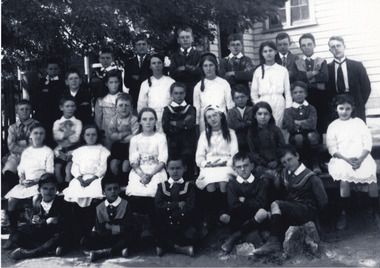
... Burke Street Museum...We can derive from this photograph and its associated history the quality of life of the families and children of the miners while also being able to study the impacts of the gold rush in the area. Burke Street Museum Woolshed woolshed school Beechworth 1900s Beechworth Reverse: 3308/ Woolshed School 190 Rectangular black and white photograph printed on matte photographic paper. ...Woolshed School was based in the former mining region in the North-East of Victoria. The school closed in 1922 following the decline of residents due to the depletion of gold ore, leading miners to seek residence elsewhere. Woolshed was initially built to house the miners and their families, ultimately containing 29 storekeepers and 14 hotels at its peak in 1857. This photograph allows us to identify the families and individuals living in Woolshed in the 1900s. Since many of the families left the town following the decrease in mining opportunity, this photograph represents a percentage of the population associated with the gold rush who settled in Woolshed to find their fortune. We can derive from this photograph and its associated history the quality of life of the families and children of the miners while also being able to study the impacts of the gold rush in the area.Rectangular black and white photograph printed on matte photographic paper.Reverse: 3308/ Woolshed School 190burke street museum, woolshed, woolshed school, beechworth, 1900s beechworth -
 The Beechworth Burke Museum
Photograph, c1990
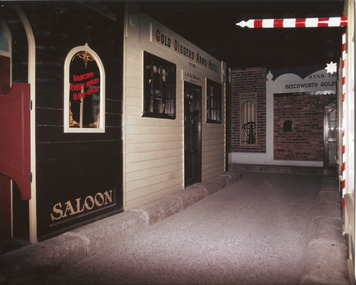
... ...Burke Museum...Street...Taken in the 1990's, this photograph depicts a row of shop fronts in the 'Street of Shops' exhibition in the Burke Museum in Beechworth. This exhibition was created and opened in 1979 and was intended to reflect and imitate a historic peirod in the town's past. ...Beechworth Burke Museum Street of Shops Gold Rush Indigo Shire gold rush 1850s Beechworth Burke Museum exhibitions Saloon Gold buyer Hotel historical streetscape gold rush immigration Obverse: Dancing every night 8pm-6am [mirror] / Gold Diggers Arms Hotel façade / Star / Beechworth Gold / J. ...Taken in the 1990's, this photograph depicts a row of shop fronts in the 'Street of Shops' exhibition in the Burke Museum in Beechworth. This exhibition was created and opened in 1979 and was intended to reflect and imitate a historic peirod in the town's past. The time period decpicted is that of the Gold Rush which swept through many Victorian towns from the 1850's onwards. For the town of Beechworth, the gold rush began in 1852, when gold was discovered in Spring Creek, drawing in many new residents seeking to make a fortune and transforming a once remote town into a bustling centre brimming with hope and opportunity. By 1857, the town contained over 200,000 residents and with this, the need for more amenities and intsitutions arose. Multiple churches, banks, schools, shops, hospitals and other essential buildings appearing over the years. The wealth acquired through the gold rush is largely responsible for the vast development of the town and many of its significant buildings which still remain to this day. This photograph also highlights the significance of this type of exhibition, providing a new mode of experiencing and learning about the past. The street depicts the many supporting trades and industries that arose from the mass migration during the gold rush. The creation of the Street of Shops in 1979 was envisioned by Roy Harvey who was the curator at the time, with the intention of recreating an authentic feel to the environment while collecting from the community to accurately portray the multiculturalism that is ingrainded in many towns and communities of Victoria. This photograph contains historical significance as it relates to and portrays an especially important period of time within Beechworth and Victoria's history. The gold rush phenomena ushered in a wave of hope and prosperity for citizens and immigrants alike. It provided many with the opportunity to strike it rich, while the town prospered and grew in many ways. This widespread development that accompanied the gold rush occured throughout Victoria and holds great historical importance when recording the social, economic and communal developments that occured throughout the time period which gave way to the beloved towns and communities we know today. Beechworth itself is acknowledged as Victoria's best-preserved gold mining town and deserves recognition of its significance. it also showcases the great significance of social develpment and globalization that occured throughout the state during this period. Coloured rectangular photograph printed on matte photographic paper and unmounted. Obverse: Dancing every night 8pm-6am [mirror] / Gold Diggers Arms Hotel façade / Star / Beechworth Gold / J. Davidson / Saloon Reverse: 3306 beechworth, burke museum, street of shops, gold rush, indigo shire gold rush, 1850s beechworth, burke museum exhibitions, saloon, gold buyer, hotel, historical streetscape, gold rush immigration -
 The Beechworth Burke Museum
Photograph
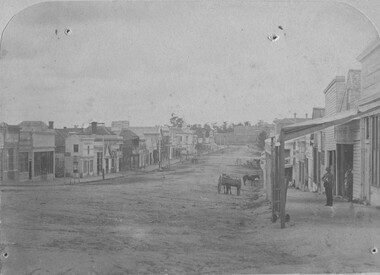
... street...burke museum...On the right of the road appears two figures and a horse and cart, in the distance appears a lone horse. beechworth ford street burke museum shopping horse Reverse: 7774 / Black and white rectangular photograph. ...Taken in Beechworth, this photograph depicts Ford street looking down the length of the shopping precinct. On the right of the road appears two figures and a horse and cart, in the distance appears a lone horse.Black and white rectangular photograph. Image is printed on matte photographic paper and is mounted on cardboard. Reverse: 7774 /beechworth, ford street, burke museum, shopping, horse -
 The Beechworth Burke Museum
Photograph, c1901
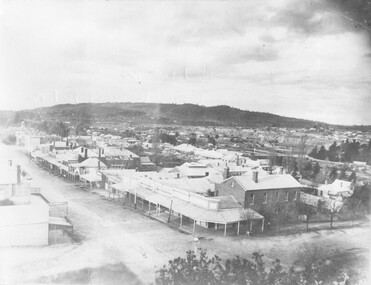
... street...burke museum...Taken in Beechworth c1901, this photograph was taken from the top of Ford Street looking down towards the Post office. beechworth post office ford street burke museum Obverse: NO INSCRIPTION Reverse: 7777 PH P 7 Mrs Sinclair post 1901-1918-192 -signs on verandahs near Fosters and power lines same as Light Horse Photos. ...Taken in Beechworth c1901, this photograph was taken from the top of Ford Street looking down towards the Post office.Black and white rectangular photograph. Image is printed on matte photographic paper. Obverse: NO INSCRIPTION Reverse: 7777 PH P 7 Mrs Sinclair post 1901-1918-192 -signs on verandahs near Fosters and power lines same as Light Horse Photos. Copied form private collection Do not hold the original Post office that was burnt down beechworth, post office, ford street, burke museum -
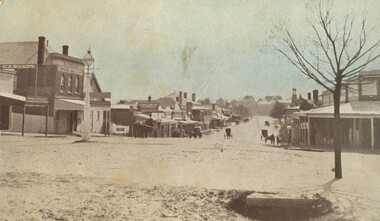 The Beechworth Burke Museum
Photograph
... street...burke museum...Taken in Beechworth 1870, this photograph depicts the business area of Ford Street. beechworth ford street burke museum 1870 beautiful beechworth foxcroft Obverse: Beautiful Beechworth (Vic) 1800 ft. above Sea Level- Ford Street (Looking North) Copyright. ...Taken in Beechworth 1870, this photograph depicts the business area of Ford Street. Black and white rectangular postcard. The image is printed on matt photographic paper and mounted on cardboard. Obverse: Beautiful Beechworth (Vic) 1800 ft. above Sea Level- Ford Street (Looking North) Copyright. F. Foxcroft Photo Reverse: A02754.2 POSTCARD beechworth, ford street, burke museum, 1870, beautiful beechworth, foxcroft -
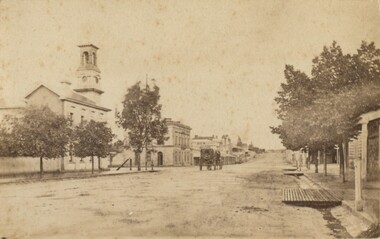 The Beechworth Burke Museum
Photograph
... street...burke museum...This photograph was taken of Ford Street, Beechworth looking east showing the Post Office on the left and the Bank of Victoria on the right. beechworth ford street burke museum horse sepia Obverse: NO INSCRIPTION Reverse: BMM7735 Beechworth Black and white rectangular postcard. ...This photograph was taken of Ford Street, Beechworth looking east showing the Post Office on the left and the Bank of Victoria on the right. Black and white rectangular postcard. The image is printed on matt photographic paper and mounted on cardboard.Obverse: NO INSCRIPTION Reverse: BMM7735 Beechworth beechworth, ford street, burke museum, horse, sepia -
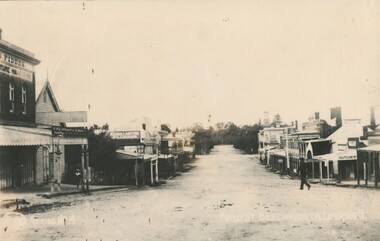 The Beechworth Burke Museum
Photograph, c1900
... street...burke museum 1900...Taken in Beechworth c1900, this photograph depicts the streetscape of Ford Street. beechworth ford street burke museum 1900 Obverse: Ford Street, Beechworth, approximately early 1900's / The Streetscape is still remarkably similar today / Reverse: NO INSCRIPTION Black and white photograph mounted on brown card and laminated. ...Taken in Beechworth c1900, this photograph depicts the streetscape of Ford Street.Black and white photograph mounted on brown card and laminated. Obverse: Ford Street, Beechworth, approximately early 1900's / The Streetscape is still remarkably similar today / Reverse: NO INSCRIPTION beechworth, ford street, burke museum 1900 -
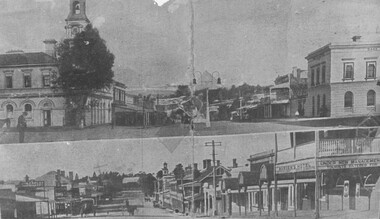 The Beechworth Burke Museum
Photograph
... street...burke museum...The top photograph was taken of Camp Street, Beechworth, looking south and the bottom image was taken of Ford Street, Beechworth, looking east. beechworth camp street ford street burke museum Obverse: Camp Street looking South / Ford Street looking East / Reverse: 1997.3095 / AO3192 / PH 77 / post 1906. / GH. ...This item has two photographs split horizontally. The top photograph was taken of Camp Street, Beechworth, looking south and the bottom image was taken of Ford Street, Beechworth, looking east.Black and white photograph printed on matte photographic paper. Obverse: Camp Street looking South / Ford Street looking East / Reverse: 1997.3095 / AO3192 / PH 77 / post 1906. / GH. Farley listed 1917-1918. / around 1910. See Camp St. Photo of Coronation arch Showing street lamp beechworth, camp street, ford street, burke museum -
 The Beechworth Burke Museum
Photograph, c1900
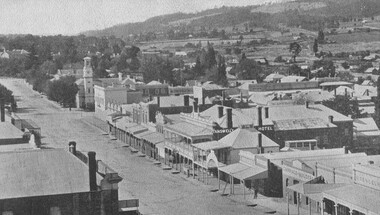
... street...burke museum...Taken in Beechworth c1920, this photograph was taken from the tower of Christ Church (Anglican) looking down at Ford Street. beechworth ford street burke museum post card photograph 1920 church tower anglican church church Obverse: Beautiful Beechworth (Vic) 1800 ft. above Sea Level- Ford Street (Looking East) Copyright. ...Taken in Beechworth c1920, this photograph was taken from the tower of Christ Church (Anglican) looking down at Ford Street. Black and white rectangular postcard. Obverse: Beautiful Beechworth (Vic) 1800 ft. above Sea Level- Ford Street (Looking East) Copyright. F Foxcroft Photo. Reverse: AO3104 Post Cardbeechworth, ford street, burke museum, post card, photograph, 1920, church tower, anglican church, church -
 The Beechworth Burke Museum
Photograph
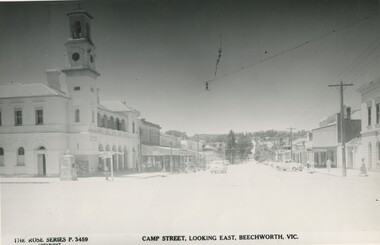
... street...burke museum...As stereographs lost popularity in the 1920s, Rose switched to production of postcards and decorative cards, and he and the photographers who followed took thousands of scenes around Victoria as well as interstate that became iconic images of Australian life. beechworth rose series camp street burke museum black and white Obverse: THE ROSE SERIES P.3459 COPYRIGHT CAMP STREET, LOOKING EAST, BEECHWORTH, VIC Reverse: BMM7743 PH 149 1998.00059 Black and white photograph (copy) on gloss photographic paper. ...This copy of a postcard from the Rose series depicts Camp Street looking East. This postcard is part of the Rose Series produced by Victorian photographer George Rose’s business, the Rose Stereograph Company. George Rose (1861-1942), is considered one of Australia's best photographers of the late 19th and early 20th centuries. The Rose Stereograph Company was founded in 1880 and became famous for producing stereographs, or stereoviews, which gave the illusion of being in 3D when seen through a hand-held viewer, a big craze of the era. As stereographs lost popularity in the 1920s, Rose switched to production of postcards and decorative cards, and he and the photographers who followed took thousands of scenes around Victoria as well as interstate that became iconic images of Australian life.Black and white photograph (copy) on gloss photographic paper.Obverse: THE ROSE SERIES P.3459 COPYRIGHT CAMP STREET, LOOKING EAST, BEECHWORTH, VIC Reverse: BMM7743 PH 149 1998.00059beechworth, rose series, camp street, burke museum, black and white -
 The Beechworth Burke Museum
Photograph
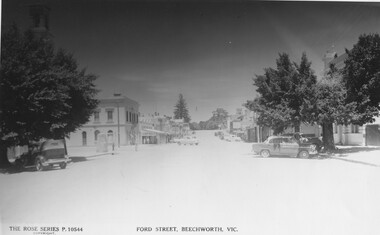
... street...Burke Museum...As stereographs lost popularity in the 1920s, Rose switched to production of postcards and decorative cards, and he and the photographers who followed took thousands of scenes around Victoria as well as interstate that became iconic images of Australian life. beechworth rose series ford street Burke Museum Postcard Obverse: THE ROSE SERIES P.10544 COPYRIGHT FORD STREET, BEECHWORTH, VIC Reverse: BMM7746 PH 147 1998.00059 Black and White photograph (copy) on gloss photographic paper. ...This copy of a postcard from the Rose series depicts Ford Street looking South. This postcard is part of the Rose Series produced by Victorian photographer George Rose’s business, the Rose Stereograph Company. George Rose (1861-1942), is considered one of Australia's best photographers of the late 19th and early 20th centuries. The Rose Stereograph Company was founded in 1880 and became famous for producing stereographs, or stereoviews, which gave the illusion of being in 3D when seen through a hand-held viewer, a big craze of the era. As stereographs lost popularity in the 1920s, Rose switched to production of postcards and decorative cards, and he and the photographers who followed took thousands of scenes around Victoria as well as interstate that became iconic images of Australian life.Black and White photograph (copy) on gloss photographic paper. Obverse: THE ROSE SERIES P.10544 COPYRIGHT FORD STREET, BEECHWORTH, VIC Reverse: BMM7746 PH 147 1998.00059beechworth, rose series, ford street, burke museum, postcard -
 The Beechworth Burke Museum
Photograph
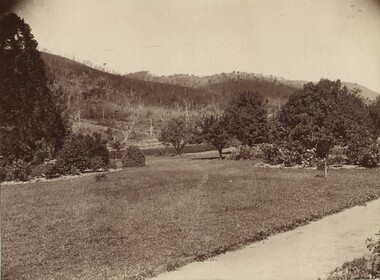
... street...burke museum...A series of three photographs taken from within and around Beechworth. beechworth camp street burke museum photograph sepia Obverse: NO INSCRIPTION Reverse: BMM7764 Three sepia rectangular photographs printed on gloss photographic paper and mounted on cardboard. ...A series of three photographs taken from within and around Beechworth.Three sepia rectangular photographs printed on gloss photographic paper and mounted on cardboard. Obverse: NO INSCRIPTION Reverse: BMM7764 beechworth, camp street, burke museum, photograph, sepia -
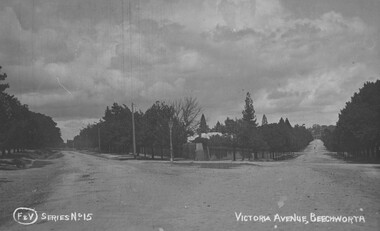 The Beechworth Burke Museum
Photograph
... street...burke museum...Taken in Beechworth, this photograph depicts the intersection between Victorian Avenue and Loch Street. beechworth victoria avenue loch street burke museum photograph postcard intersection Obverse: F & V SERIES NO 15 VICTORIA AVENUE, BEECHWORTH (hand printed) Reverse: A03086 97.21.99 POST CARD R Pigram Cootamundra Black and white photograph printed on a rectangular postcard Photograph Photograph ...Taken in Beechworth, this photograph depicts the intersection between Victorian Avenue and Loch Street. Black and white photograph printed on a rectangular postcardObverse: F & V SERIES NO 15 VICTORIA AVENUE, BEECHWORTH (hand printed) Reverse: A03086 97.21.99 POST CARD R Pigram Cootamundra beechworth, victoria avenue, loch street, burke museum, photograph, postcard, intersection -
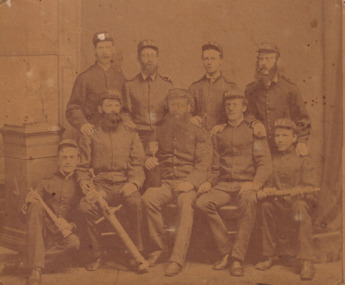 The Beechworth Burke Museum
Photograph, 1877
... The cup is currently on display in the Burke Museum's 'Street of Shops' display Report of the event in the Ovens and Murray Advertiser, 3/4/1877 - The Fire Brigade Competition was held in Beechworth at Easter 1877. ...The cup is currently on display in the Burke Museum's 'Street of Shops' display Report of the event in the Ovens and Murray Advertiser, 3/4/1877 - The Fire Brigade Competition was held in Beechworth at Easter 1877. ...Taken in 1877, this photograph features nine members of the Beechworth Volunteer Fire Brigade holding a cup that was awarded to the group for winning the double hose competition. The cup is currently on display in the Burke Museum's 'Street of Shops' display Report of the event in the Ovens and Murray Advertiser, 3/4/1877 - The Fire Brigade Competition was held in Beechworth at Easter 1877. The double-hose competition carried a prize of ten pounds with an entry fee of ten shillings. The task was for eight men to run with reel 200 yards. fix hydrant, run out not less than 100ft of hose, fix branch, and throw water over rope 10ft high. Run out a second line of hose, not less than 100ft, fix branch, and throw water as before. Beechwoeth first team competed against Wangaratta and Chiltern, coming first in a time of 70 seconds. Wangaratta were disqualified. Sepia rectangular photograph printed on photographic paper and mounted on boardReverse: Member of B.V.Brigade, 1877. The Trophy Cup showing in the Photo is the small cup on display in the adjacent display case./ BMM 3936burke museum, emergency services, fire brigade, fire, competition, cup, photograph -
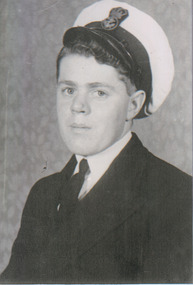 The Beechworth Burke Museum
Audio - Oral History, Jennifer Williams, Mr Ray Stone, 8th June 2000
... burke museum...stone...ray stone...tannery...tanneries...finch street...While the township of Beechworth is known for its history as a gold rush town, these accounts provide a unique insight into the day-to-day life of the town's residents during the 20th century, many of which will have now been lost if they had not been preserved. listen to what they say beechworth oral history burke museum stone ray stone tannery tanneries finch street navy The Great Depression poverty wheelbarrow race cars gift footrace marriage travel Mr Ray Stone / This is a digital copy of a recording that was originally captured on a cassette tape. ...Ray Stone was born in 1927, growing up in Beechworth as the oldest of eight children, but spent much of his life travelling, which he recalls in this oral history. Although he started working at the Beechworth Tannery with his father, he joined the Navy before he was of age in 1944 to support the war effort, and upon returning to Beechworth gave up on the Tannery after half a day to continue working jobs across Victoria instead. He talks extensively about watching Beechworth's famous Wheelbarrow race, where Tony Evans bet Tom Parkinson that the latter would not be able to push the former in a wheelbarrow from the Beechworth Post Office to Mt Buffalo in eight days. Calling himself a "helper all [his] life", he discusses the way many towns he worked in would come together to support struggling families, especially widows. In comparison, he suggests that the Beechworth of 2000 is much less community-orientated. He also discusses the economic changes he's witnessed around Beechworth, from the difficulties during the Depression while he was a child, to business improvements at the Tannery and Brewery, to the tourism boom. This oral history recording was part of a project conducted by Jennifer Williams in the year 2000 to capture the everyday life and struggles in Beechworth during the twentieth century. This project involved recording seventy oral histories on cassette tapes of local Beechworth residents which were then published in a book titled: Listen to what they say: voices of twentieth century Beechworth. These cassette tapes were digitised in July 2021 with funds made available by the Friends of the Burke.Ray Stone's account of his life is historically and socially significant to the region of Beechworth for the way it describes changes in the town over the twentieth century. It covers themes including community relationships, business development, and cultural life. It makes this commentary in comparison to nearby regions such as the Snowy Mountains. This oral history account is socially and historically significant as it is a part of a broader collection of interviews conducted by Jennifer Williams which were published in the book 'Listen to what they say: voices of twentieth-century Beechworth.' While the township of Beechworth is known for its history as a gold rush town, these accounts provide a unique insight into the day-to-day life of the town's residents during the 20th century, many of which will have now been lost if they had not been preserved.This is a digital copy of a recording that was originally captured on a cassette tape. The cassette tape is black with a horizontal white strip and is currently stored in a clear flat plastic rectangular container. It holds up 40 minutes of recordings on each side.Mr Ray Stone /listen to what they say, beechworth, oral history, burke museum, stone, ray stone, tannery, tanneries, finch street, navy, the great depression, poverty, wheelbarrow race, cars, gift footrace, marriage, travel -
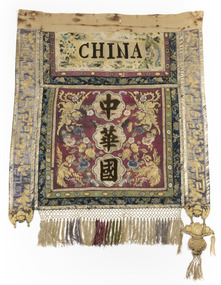 The Beechworth Burke Museum
Textile - Banner, c1872
... street. Two of the Chinese banners were conserved for the Burke Museum in 2006 by Carol Campbell of Phoenix Conservation Services with funding from Victoria’s Heritage Grants. ...street. Two of the Chinese banners were conserved for the Burke Museum in 2006 by Carol Campbell of Phoenix Conservation Services with funding from Victoria’s Heritage Grants. ...This banner was one of five banners gifted to the Beechworth Chinese community in recognition of their support of the Hospital and Benevolent Asylum in 1875, from the Carnival Committee. These banners had been purchased in China by a social envoy from Beechworth then presented to the Chinese community during the Beechworth Fine Arts Exhibition in May of that same year, by Donald Fiddes, President of the Ovens District Hospital. The Burke Museum's Chinese Collection presents the history of Chinese settlement in Beechworth from 1856 and its involvement in local community affairs in the second half of the 19th century. In settling in the area they formed their own community with distinctive Chinese cultural traditions, forming their own 'camps' with laid out streets, housing a Temple, Chinese Theatre and restaurants, hotels, stores, gambling houses and dwellings. Members of the Chinese community took an active interest in town affairs and were generous donors to the appeal to build the Ovens District Hospital in 1856/7. The vibrant colours and dynamic graphics of the silk embroidered Chinese banners were a highlight of Beechworth Charitable processions that took place in the main street. Two of the Chinese banners were conserved for the Burke Museum in 2006 by Carol Campbell of Phoenix Conservation Services with funding from Victoria’s Heritage Grants. In 2015, with the enormous support of the Copland Foundation and fundraising activities by the Friends of the Bur Museum Committee, conservation of the third banner was undertaken by Artlab Australia in Adelaide. The banners display traditional Chinese textile techniques and are visually beautiful and very rare and are considered of local and national significance, with the potential to be deemed internationally significant.Multi panelled banner with embroidery and applied design motifs on front. Back panel is painted design of two men. The front panels have been constructed using strips of various weaves and colours of silk that have been embroidered or had a design applied prior to the overall construction of the piece. The embroidery is predominantly gold work with both plyed and floss silk threads. Silk macrame fringe and tassels to central panel and padded lotus and bowl motif hanging tassel from side panels. Velvet lettering applied to front "CHINA" CHINA /beechworth, burke museum, chinese, benevolent asylum, ovens district hospital, beechworth carnival processions, carnival, processions, beechworth chinese community, beechworth fine arts exhibition, donald fiddes -
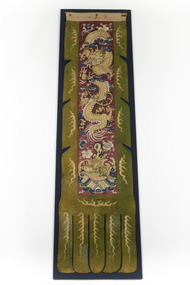 The Beechworth Burke Museum
Textile - Banner, c1872
... street. Two of the Chinese banners were conserved for the Burke Museum in 2006 by Carol Campbell of Phoenix Conservation Services with funding from Victoria’s Heritage Grants. ...street. Two of the Chinese banners were conserved for the Burke Museum in 2006 by Carol Campbell of Phoenix Conservation Services with funding from Victoria’s Heritage Grants. ...This banner was one of five banners gifted to the Beechworth Chinese community in recognition of their support of the Hospital and Benevolent Asylum in 1875, from the Carnival Committee. These banners had been purchased in China by a social envoy from Beechworth then presented to the Chinese community during the Beechworth Fine Arts Exhibition in May of that same year, by Donald Fiddes, President of the Ovens District Hospital. The Burke Museum's Chinese Collection presents the history of Chinese settlement in Beechworth from 1856 and its involvement in local community affairs in the second half of the 19th century. In settling in the area they formed their own community with distinctive Chinese cultural traditions, forming their own 'camps' with laid out streets, housing a Temple, Chinese Theatre and restaurants, hotels, stores, gambling houses and dwellings. Members of the Chinese community took an active interest in town affairs and were generous donors to the appeal to build the Ovens District Hospital in 1856/7. The vibrant colours and dynamic graphics of the silk embroidered Chinese banners were a highlight of Beechworth Charitable processions that took place in the main street. Two of the Chinese banners were conserved for the Burke Museum in 2006 by Carol Campbell of Phoenix Conservation Services with funding from Victoria’s Heritage Grants. In 2015, with the enormous support of the Copland Foundation and fundraising activities by the Friends of the Bur Museum Committee, conservation of the third banner was undertaken by Artlab Australia in Adelaide.The banners display traditional Chinese textile techniques and are visually beautiful and very rare and are considered of local and national significance, with the potential to be deemed internationally significant.Multi panelled banner with embroidery and applied design motifs on front. The front panels have been constructed using strips of various weaves and colours of silk that have been embroidered or had a design applied prior to the overall construction of the piece. The embroidery is predominantly gold work with both plyed and floss silk threads.beechworth, burke museum, chinese, benevolent asylum, ovens district hospital, beechworth carnival processions, carnival, processions, beechworth chinese community, beechworth fine arts exhibition, donald fiddes -
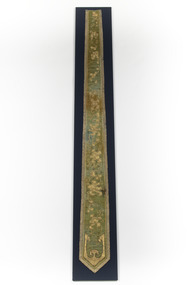 The Beechworth Burke Museum
Textile - Banner, c1872
... street. Two of the Chinese banners were conserved for the Burke Museum in 2006 by Carol Campbell of Phoenix Conservation Services with funding from Victoria’s Heritage Grants. ...street. Two of the Chinese banners were conserved for the Burke Museum in 2006 by Carol Campbell of Phoenix Conservation Services with funding from Victoria’s Heritage Grants. ...This banner was one of five banners gifted to the Beechworth Chinese community in recognition of their support of the Hospital and Benevolent Asylum in 1875, from the Carnival Committee. These banners had been purchased in China by a social envoy from Beechworth then presented to the Chinese community during the Beechworth Fine Arts Exhibition in May of that same year, by Donald Fiddes, President of the Ovens District Hospital. The Burke Museum's Chinese Collection presents the history of Chinese settlement in Beechworth from 1856 and its involvement in local community affairs in the second half of the 19th century. In settling in the area they formed their own community with distinctive Chinese cultural traditions, forming their own 'camps' with laid out streets, housing a Temple, Chinese Theatre and restaurants, hotels, stores, gambling houses and dwellings. Members of the Chinese community took an active interest in town affairs and were generous donors to the appeal to build the Ovens District Hospital in 1856/7. The vibrant colours and dynamic graphics of the silk embroidered Chinese banners were a highlight of Beechworth Charitable processions that took place in the main street. Two of the Chinese banners were conserved for the Burke Museum in 2006 by Carol Campbell of Phoenix Conservation Services with funding from Victoria’s Heritage Grants. In 2015, with the enormous support of the Copland Foundation and fundraising activities by the Friends of the Bur Museum Committee, conservation of the third banner was undertaken by Artlab Australia in Adelaide. The banners display traditional Chinese textile techniques and are visually beautiful and very rare and are considered of local and national significance, with the potential to be deemed internationally significant.Multi panelled banner with embroidery and applied design motifs on front. The front panels have been constructed using strips of various weaves and colours of silk that have been embroidered or had a design applied prior to the overall construction of the piece. The embroidery is predominantly gold work with both plyed and floss silk threads.beechworth, burke museum, chinese, benevolent asylum, ovens district hospital, beechworth carnival processions, carnival, processions, beechworth chinese community, beechworth fine arts exhibition, donald fiddes -
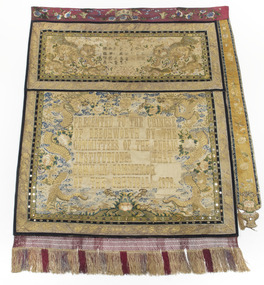 The Beechworth Burke Museum
Textile - Banner, c1872
... street. Two of the Chinese banners were conserved for the Burke Museum in 2006 by Carol Campbell of Phoenix Conservation Services with funding from Victoria’s Heritage Grants. ...street. Two of the Chinese banners were conserved for the Burke Museum in 2006 by Carol Campbell of Phoenix Conservation Services with funding from Victoria’s Heritage Grants. ...This banner was one of five banners gifted to the Beechworth Chinese community in recognition of their support of the Hospital and Benevolent Asylum in 1875, from the Carnival Committee. These banners had been purchased in China by a social envoy from Beechworth then presented to the Chinese community during the Beechworth Fine Arts Exhibition in May of that same year, by Donald Fiddes, President of the Ovens District Hospital. The Burke Museum's Chinese Collection presents the history of Chinese settlement in Beechworth from 1856 and its involvement in local community affairs in the second half of the 19th century. In settling in the area they formed their own community with distinctive Chinese cultural traditions, forming their own 'camps' with laid out streets, housing a Temple, Chinese Theatre and restaurants, hotels, stores, gambling houses and dwellings. Members of the Chinese community took an active interest in town affairs and were generous donors to the appeal to build the Ovens District Hospital in 1856/7. The vibrant colours and dynamic graphics of the silk embroidered Chinese banners were a highlight of Beechworth Charitable processions that took place in the main street. Two of the Chinese banners were conserved for the Burke Museum in 2006 by Carol Campbell of Phoenix Conservation Services with funding from Victoria’s Heritage Grants. In 2015, with the enormous support of the Copland Foundation and fundraising activities by the Friends of the Bur Museum Committee, conservation of the third banner was undertaken by Artlab Australia in Adelaide.The banners display traditional Chinese textile techniques and are visually beautiful and very rare and are considered of local and national significance, with the potential to be deemed internationally significant.The banner has a narrow fuchsia embroidered top border, a wider embroidered panel depicting 2 dogs with embroidered Chinese text and a larger lower panel with the embroidered text “PRESENTED TO THE CHINESE OF BEECHWORTH BY THE COMMITEES OF THE PUBLIC INSTITUTIONS (missing) THAT TOWN IN COMMEMOR (missing) OF THE CARNIVAL 1873” The 2 lower panels have narrow decorative borders decorated with mirrors and extensive embroidery. There is an additional embroidered tab running along the right hand edge. The bottom edge has a wide knotted fringe. The back is lined with fabric decorated with a painted scene. Refer Attachment 1 quote ARTLAB AustPRESENTED TO THE CHINESE / OF BEECHWORTH BY THE / COMMITEES OF THE PUBLIC / INSTITUTIONS THAT / TOWN IN COMMEMOR / OF THE CARNIVAL 1873beechworth, burke museum, chinese, benevolent asylum, ovens district hospital, beechworth carnival processions, carnival, processions, beechworth chinese community, beechworth fine arts exhibition, donald fiddes -
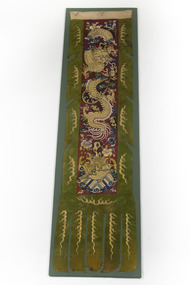 The Beechworth Burke Museum
Textile - Banner, c1872
... street. Two of the Chinese banners were conserved for the Burke Museum in 2006 by Carol Campbell of Phoenix Conservation Services with funding from Victoria’s Heritage Grants. ...street. Two of the Chinese banners were conserved for the Burke Museum in 2006 by Carol Campbell of Phoenix Conservation Services with funding from Victoria’s Heritage Grants. ...This banner was one of five banners gifted to the Beechworth Chinese community in recognition of their support of the Hospital and Benevolent Asylum in 1875, from the Carnival Committee. These banners had been purchased in China by a social envoy from Beechworth then presented to the Chinese community during the Beechworth Fine Arts Exhibition in May of that same year, by Donald Fiddes, President of the Ovens District Hospital. The Burke Museum's Chinese Collection presents the history of Chinese settlement in Beechworth from 1856 and its involvement in local community affairs in the second half of the 19th century. In settling in the area they formed their own community with distinctive Chinese cultural traditions, forming their own 'camps' with laid out streets, housing a Temple, Chinese Theatre and restaurants, hotels, stores, gambling houses and dwellings. Members of the Chinese community took an active interest in town affairs and were generous donors to the appeal to build the Ovens District Hospital in 1856/7. The vibrant colours and dynamic graphics of the silk embroidered Chinese banners were a highlight of Beechworth Charitable processions that took place in the main street. Two of the Chinese banners were conserved for the Burke Museum in 2006 by Carol Campbell of Phoenix Conservation Services with funding from Victoria’s Heritage Grants. In 2015, with the enormous support of the Copland Foundation and fundraising activities by the Friends of the Bur Museum Committee, conservation of the third banner was undertaken by Artlab Australia in Adelaide. The banners display traditional Chinese textile techniques and are visually beautiful and very rare and are considered of local and national significance, with the potential to be deemed internationally significant.Multi panelled banner with embroidery and applied design motifs on front. The front panels have been constructed using strips of various weaves and colours of silk that have been embroidered or had a design applied prior to the overall construction of the piece. The embroidery is predominantly gold work with both plyed and floss silk threads. beechworth, burke museum, chinese, benevolent asylum, ovens district hospital, beechworth carnival processions, carnival, processions, beechworth chinese community, beechworth fine arts exhibition, donald fiddes -
 The Beechworth Burke Museum
Photograph - Lantern Slide, c1900
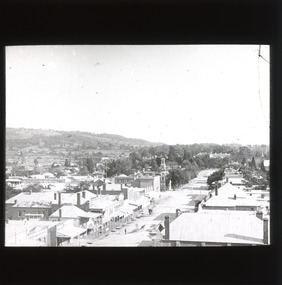
... Burke Museum...Beechworth...Lantern Slide...Slide...Glass Slide...Plate...Burke Museum Collection...Photograph...Monochrome...ford street...Burke Museum Beechworth Lantern Slide Slide Glass Slide Plate Burke Museum Collection Photograph Monochrome ford street christ church of st peter and st paul church tower landmarks 1900 shopping facilities public buildings 1900s built environment streetscape Thin translucent sheet of glass with a square image printed on the front and framed in a black backing. ...This image shows a semi-aerial view of commercial and official properties lining Ford Street, Beechworth, in approximately 1900. The tower of Christ Church of St Peter and St Paul can be seen in the middle section of the photograph, on the left-hand side of the street. The Church was constructed in 1858 with the tower added to the structure in 1864. Lantern slides, sometimes called 'magic lantern' slides, are glass plates on which an image has been secured for the purpose of projection. Glass slides were etched or hand-painted for this purpose from the Eighteenth Century but the process became more popular and accessible to the public with the development of photographic-emulsion slides used with a 'Magic Lantern' device in the mid-Nineteenth Century. Photographic lantern slides comprise a double-negative emulsion layer (forming a positive image) between thin glass plates that are bound together. A number of processes existed to form and bind the emulsion layer to the base plate, including the albumen, wet plate collodion, gelatine dry plate and woodburytype techniques. Lantern slides and magic lantern technologies are seen as foundational precursors to the development of modern photography and film-making techniques.This glass slide is significant because it provides insight into Beechworth's built environment and commercial and official infrastructure in the early Twentieth Century, around the time of Australia's Federation into one nation. It is also an example of an early photographic and film-making technology in use in regional Victoria in the time period.Thin translucent sheet of glass with a square image printed on the front and framed in a black backing. It is held together by metals strips to secure the edges of the slide.burke museum, beechworth, lantern slide, slide, glass slide, plate, burke museum collection, photograph, monochrome, ford street, christ church of st peter and st paul, church tower, landmarks, 1900, shopping facilities, public buildings, 1900s, built environment, streetscape -
 The Beechworth Burke Museum
Photograph - Lantern Slide, c1900
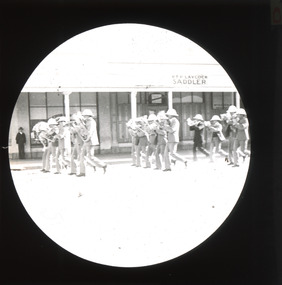
... Street is lined with updated shopfronts. This glass slide is socially and historically significant as it captures a moment of celebration for the Beechworth residents. The image is historically and socially significant for attesting to the enduring appeal of local musical associations, which were a popular means of entertainment that fostered social connections among settlers from diverse ethnic backgrounds. Burke Museum ...The glass slide captures the Beechworth Band performing down Ford Street, Beechworth circa 1900. In the slide three rows with five people in each row wearing the Beechworth Band uniform playing instruments as they walk through Ford Street. The slide was captured right as the Band was passing RTP Laycock Saddler. Marching bands, choirs, circus acts, theatrical performances, races, and seasonal activities were among the entertainments on offer in Beechworth. The location is also significant as Ford Street is, and was when this slide was taken, considered one of the two main streets of Beechworth. Today Ford Street is lined with updated shopfronts. This glass slide is socially and historically significant as it captures a moment of celebration for the Beechworth residents. The image is historically and socially significant for attesting to the enduring appeal of local musical associations, which were a popular means of entertainment that fostered social connections among settlers from diverse ethnic backgrounds.A thin translucent sheet of glass with a circular image printed on the front and framed in a black backing. It is held together by metals trips to secure the edges of the slide.burke museum, beechworth, lantern slide, slide, glass slide, plate, burke museum collection, photograph, monochrome -
 The Beechworth Burke Museum
Functional object - Silver Cigarette Case, Alexander Clark Manufacturing Co, 1900
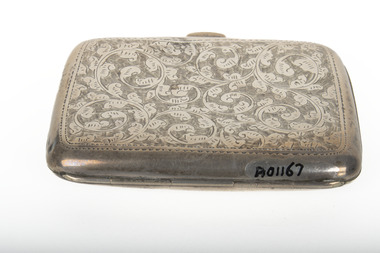
... Street, London, forming an alliance with Sheffield cutler R F Mosley in 1900 before later moving to Birmingham. Dates of the exact move to Birmingham differ from site to site. The hallmarks on this object make it significant in the representation of silver wares made by the Alexander Clark Manufacturing Co. which, when added to the other pieces of information available about this manufacturer, add to the information and history available. As the Alexander Clark Manufacturing Co. was based in England, this is of international significance. The social history objects held in the Burke Museum's ...The hallmarks on this silver cigarette case indicate that the object was made in Birmingham (anchor hallmark), is Stirling silver (lion hallmark), and was made 1900 (a hallmark) by the Alexander Clark Manufacturing Co. (makers mark hallmark). The Alexander Clark Manufacturing Co. was established in 1890-1891 at Fenchurch Street, London, forming an alliance with Sheffield cutler R F Mosley in 1900 before later moving to Birmingham. Dates of the exact move to Birmingham differ from site to site.The hallmarks on this object make it significant in the representation of silver wares made by the Alexander Clark Manufacturing Co. which, when added to the other pieces of information available about this manufacturer, add to the information and history available. As the Alexander Clark Manufacturing Co. was based in England, this is of international significance. The social history objects held in the Burke Museum's collection help to tell the stories of Beechworth's past by showing the social, cultural, and economic aspects of the town's history.A small rectangular case silver in colour, with gold wash on the inside. The case has a clasp along one edge, a swirling floral design on its top, and two brown elastic straps on the inside.AC [over] MCo / Anchor symbol / Lion symbol / a [Hallmark inside case, lower LHS] Lion symbol / a [Hallmark inside case, upper RHSD]accessories, social history, burke museum, silver -
 The Beechworth Burke Museum
Award - Trophy, 1877
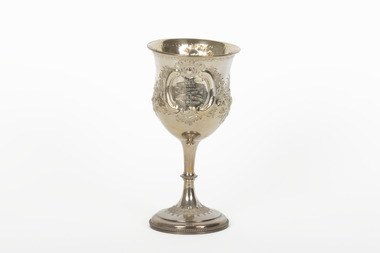
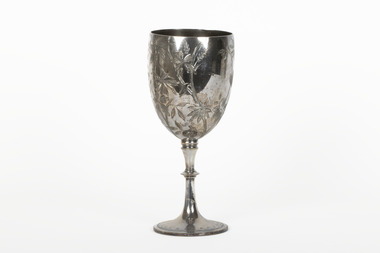
... Burke Museum Collection and the history of Beechworth. Due to its historical associations with the Beechworth Double-Hose Competition in 1877, it holds significance as an important item representing Beechworth's history. It further provides a point of research in this area, and further investigation into Beechworth's history. Street ...This trophy represents the winning the of Beechworth V.F.C at the 1877 Double-Hose Competition on the 26th of December against Wangaratta. This competition was an annual event which took place as part of the Christmastide Festivities in Beechworth on Boxing Day. This Trophy was created by the British silver manufacturing company, Hilliard and Thomason in Birmingham, England in 1877.This trophy holds significance for the Burke Museum Collection and the history of Beechworth. Due to its historical associations with the Beechworth Double-Hose Competition in 1877, it holds significance as an important item representing Beechworth's history. It further provides a point of research in this area, and further investigation into Beechworth's history.A silver trophy cup.THE CUP AND FIVE GUINEAS / won by / THE BEECHWORTH V.F.C. / AT WANGARATTA / 26TH Dec. 1877 / DOUBLE HOSE COMPETITION / TIME 59 SECONDSstreet of shops exhibition, silver trophy, double-hose competition, beechworth, wangaratta, 1877 v.f.c -
 The Beechworth Burke Museum
Award - Trophy
... This silver trophy has been part of Beechworth history since 1879, and is currently held in the Burke Museum C.F. Falck Watchmaker & Jeweller display in the Street of Shops Exhibition. ...This trophy was made in 1879 and used in Beechworth in the same year, 1879. Donated by Miss Ethel Spencer this trophy belonged to Catherine Mitchell Pyle. Miss Ethel Spencer was bridesmaid to Catherine Mitchell Pyle's daughter Jessie Pyle. Catherine Mitchell Pyle came to live with Ethel Spencer at Black Springs where she remained until she died in 1921. Ethel recalled that Catherine had a strong will and 'ruled the house inside and out'. Besides making beautiful bread, she also grew chrysanthemums. This silver trophy has been part of Beechworth history since 1879, and is currently held in the Burke Museum C.F. Falck Watchmaker & Jeweller display in the Street of Shops Exhibition.Deep hollow silver cup tapers to pedestal, engraved with branches and leaves. Base decorated with engraved lines, dots and half-moon pattern. Not inscribed. A00632 / 79.88 / 1.5 / Walker & Hall / Silver Cutlers / Silver Smiths Sheffield / 719 silver, trophy, walker & hall -
 The Beechworth Burke Museum
Photograph - Photographic Print, c1985
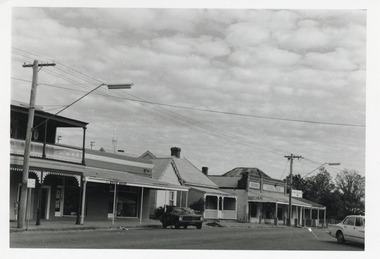
... The photograph shows the Camp Street Butcher which was opened by E Spencer in 1940 to supply locals with the primest quality meat at the lowest possible cash prices. This photograph is part of Burke Museum's ...A 1980s photograph taken of the shops on Camp Street from the corner of Ford Street in Beechworth. The photograph shows the Camp Street Butcher which was opened by E Spencer in 1940 to supply locals with the primest quality meat at the lowest possible cash prices.This photograph is part of Burke Museum's collection of streetscape images, capturing the historical essence of Beechworth's streets and township. It serves as a significant visual record, offering valuable insights into the architectural and social fabric of the area during a pivotal period in its history.Black and white rectangular photograph, unmounted.Reverse: 2568/ GWYN MIRRORS CHEMIST BEECHWORTH/ F558camp street, ford street, beechworth, streetscape, shops, butcher -
 The Beechworth Burke Museum
Photograph, 1999
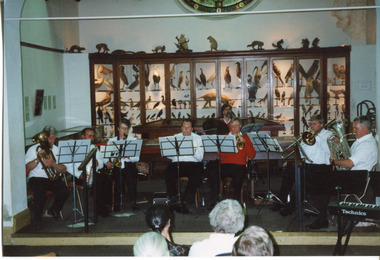
... Burke Museum, Loch Street, Beechworth, Victoria, Australia...Street, which became Billson’s Brewery, one of the oldest continuing beverage manufacturers in Australia. An active member of Beechworth’s cultural, business and political life around the turn of the century, A.A. Billson served on Beechworth Shire Council from 1884 to 1893, and from 1895 to 1910, with three terms as president (1888–89, 1899–1901, 1908–09). He founded the Beechworth Progress Association in 1891 and produced an ‘Illustrated Guide to Beechworth and Vicinity’ to develop tourism potential. This photograph of the Beechworth Band playing at the Burke Museum ...This photograph depicts members of the Beechworth Band at a 'Liedertafel' concert in the main hall at the Burke Museum in 1999. The concert was associated with an exhibition titled, 'From the Liedertafel to the Skating Rink: Entertainment in Beechworth 1852 - early 1900s', which celebrated the rich and diverse entertainments that were a part of Beechworth life in the nineteenth and early twentieth centuries. Marching bands, choirs, circus acts, theatrical performances, races, and seasonal activities, such as Mr. Spiller's roller skating rink, founded in the late 1860s, were among the attractions on offer. 'Liedertafel' is a tradition that accompanied German settlers to Australia. It refers to a friendly society of men united by an enthusiasm for singing. The Beechworth Brass Band was formed by Mr. H. Vandenberg in 1887. The Beechworth Liedertafel was established 14 March 1894 at the London Tavern, Camp Street, Beechworth, by Mr. A.A. Billson, and a visiting conductor, Mr. H. Fielder. German clubs, complete with marching bands, athletics associations and Liedertafel choirs, were centres of social activity attracting wide audiences not limited to members of their own ethnicity. Alfred Arthur Billson was the youngest son of Mr. George Billson, who served as Beechworth’s mayor between 1869-1871. In 1872, George purchased the Oven’s Brewery in Last Street, which became Billson’s Brewery, one of the oldest continuing beverage manufacturers in Australia. An active member of Beechworth’s cultural, business and political life around the turn of the century, A.A. Billson served on Beechworth Shire Council from 1884 to 1893, and from 1895 to 1910, with three terms as president (1888–89, 1899–1901, 1908–09). He founded the Beechworth Progress Association in 1891 and produced an ‘Illustrated Guide to Beechworth and Vicinity’ to develop tourism potential. This photograph of the Beechworth Band playing at the Burke Museum is historically significant for the information it conveys about an exhibition at the Burke Museum between September and November 1999. The use of the contemporary Beechworth Band in a 'Liedertafel' performance provides insight into curatorial approaches at the turn of the twenty-first century and improves our understanding of how exhibitions use objects in the Burke Museum's Collection to tell stories about the past in the present. The image is historically and socially significant for attesting to the enduring appeal of local musical associations, which were a popular means of entertainment that fostered social connections among settlers from diverse ethnic backgrounds. Rectangular colour photograph printed on matte photographic paper. Reverse: 7029 / Label: 7029 / Source / Burke Museum / Beechworth / Band / 1999/2000 /liedertafel, beechworth band, burke museum, from the liedertafel to the skating rink, entertainment in beechworth 1852 - early 1900s, gold rush, immigration, beechworth's german heritage, london tavern beechworth, beechworth's first brick tavern, spiller's skating rink, vandenberg's beechworth brass band, protestantism, teetotallism, skating carnivals, beechworth german association, yma's, beechworth skating rink, progress societies, billson's brewery, german-australians, beechworth progess association, lodges, freemasonry, colonial australia -
 The Beechworth Burke Museum
Photograph, c1999/2000
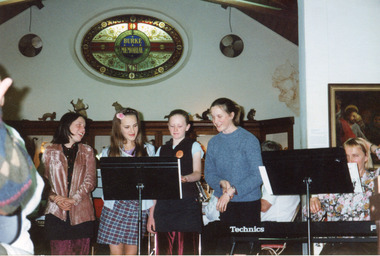
... Burke Museum in 1999. The concert related to an exhibition titled, 'From the Liedertafel to the Skating Rink: Entertainment in Beechworth 1852 - early 1900s', which celebrated the rich and diverse entertainments that were part of Beechworth life in the nineteenth and early twentieth centuries. 'Liedertafel' is a German tradition that accompanied European settlers to Australia. It refers to a friendly society of men united by an enthusiasm for singing. The Beechworth Liedertafel was established 14 March 1894 at the London Tavern, Camp Street...Burke Museum, Loch Street, eechworth, Victoria, Australia...Burke Museum in 1999. The concert related to an exhibition titled, 'From the Liedertafel to the Skating Rink: Entertainment in Beechworth 1852 - early 1900s', which celebrated the rich and diverse entertainments that were part of Beechworth life in the nineteenth and early twentieth centuries. 'Liedertafel' is a German tradition that accompanied European settlers to Australia. It refers to a friendly society of men united by an enthusiasm for singing. The Beechworth Liedertafel was established 14 March 1894 at the London Tavern, Camp Street ...This photograph depicts female singers accompanied by members of the Beechworth Band at a 'Liedertafel' concert in the main hall at the Burke Museum in 1999. The concert related to an exhibition titled, 'From the Liedertafel to the Skating Rink: Entertainment in Beechworth 1852 - early 1900s', which celebrated the rich and diverse entertainments that were part of Beechworth life in the nineteenth and early twentieth centuries. 'Liedertafel' is a German tradition that accompanied European settlers to Australia. It refers to a friendly society of men united by an enthusiasm for singing. The Beechworth Liedertafel was established 14 March 1894 at the London Tavern, Camp Street, Beechworth, by president, Mr. A.A. Billson, and a visiting conductor, Mr. H. Fielder. The Beechworth Brass Band was formed by Mr. H. Vandenberg in 1887. Marching bands, choirs, circus acts, theatrical performances, races, and seasonal activities, such as Mr. Spiller's roller skating rink, which was founded in the late 1860s, were among the entertainments on offer in Beechworth.This photograph of the Beechworth Band playing at the Burke Museum is historically significant for the information it conveys about an exhibition at the Burke Museum between September and November 1999. The use of the contemporary Beechworth Band in a 'Liedertafel' performance provides insight into curatorial approaches at the turn of the twenty-first century and improves our understanding of how exhibitions use objects in the Burke Museum's Collection to tell stories about the past in the present. The image is historically and socially significant for attesting to the enduring appeal of local musical associations, which were a popular means of entertainment that fostered social connections among settlers from diverse ethnic backgrounds. Liedertafel choirs were originally male-only, therefore, the presence of female singers at the 1999 exhibition reflects progressive social and community values with regard to gender and inclusion.Rectangular colour photograph printed on matte photographic paper.Reverse: 7030 / Label: Burke Museum / Liedertafel Exh / Emily Messen, Luetta / Schier, Hannah / Routledge, Sarah / McKinley 2000 (?) / 2000 (?) / liedertafel, beechworth band, burke museum, exhibition 1999, from the liedertafel to the skating rink, entertainment in beechworth 1852 - early 1900s, past exhibitions, performances at the burke museum, european settlers, german community, german choral societies, brass bands, male choir, colonial passtimes, colonial entertainments, cultural traditions, gold rush, immigration, beechworth's german heritage, london tavern beechworth, camp st beechworth, beechworth historic district, beechworth's first brick tavern, spiller's skating rink, vandenberg's beechworth brass band, benevolent societies, intellectual societies, protestantism, billson brewery beechworth, teetotallism, fancy dress carnivals, skating carnivals, fundraising societies, german musicians, crimean war, beechworth german association, freemasonry, yma's, beechworth athenaeum, beechworth skating rink -
 The Beechworth Burke Museum
Photograph
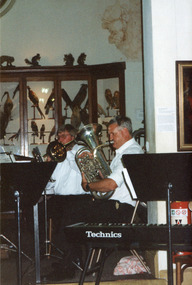
... Burke Museum in 1999. The concert related to an exhibition titled, 'From the Liedertafel to the Skating Rink: Entertainment in Beechworth 1852 - early 1900s', which celebrated the rich and diverse entertainments that were a part of Beechworth life in the nineteenth and early twentieth centuries. 'Liedertafel' is a German tradition that accompanied European settlers to Australia. It refers to a friendly society of men united by an enthusiasm for singing. The Beechworth Liedertafel was established 14 March 1894 at the London Tavern, Camp Street...Streets, Beechworth. Vandenberg's Beechworth Brass Band was reported to have provided musical entertainment for patrons at both venues. This photograph of the Beechworth Band playing at the Burke Museum is historically significant for the information it conveys about an exhibition at the Burke Museum between September and November 1999. ...This photograph depicts two members of the Beechworth Band at a 'Liedertafel' concert in the main hall at the Burke Museum in 1999. The concert related to an exhibition titled, 'From the Liedertafel to the Skating Rink: Entertainment in Beechworth 1852 - early 1900s', which celebrated the rich and diverse entertainments that were a part of Beechworth life in the nineteenth and early twentieth centuries. 'Liedertafel' is a German tradition that accompanied European settlers to Australia. It refers to a friendly society of men united by an enthusiasm for singing. The Beechworth Liedertafel was established 14 March 1894 at the London Tavern, Camp Street, Beechworth, by president, Mr. A.A. Billson, and a visiting conductor, Mr. H. Fielder. The Beechworth Brass Band was formed by Mr. H. Vandenberg in 1887. Marching bands, choirs, processions, circus acts, theatrical performances, races, fancy dress and roller skating carnivals, were among the vibrant and diverse entertainments offered in Beechworth during the gold rush period. Race meetings were revived with a gala atmosphere at Baarmutha on New Year's Day and Easter Monday in the early 1880s. 'Spiller's Skating Rink', which premiered at St. Georges Hall in August 1869, was accompanied by the 'Beechworth Fire and Drum band'. In 1888, Beechworth had two skating rinks in operation, the Columbia Elite at Oddfellow's Hall, and the Beechworth Skating Rink, corner Camp and Last Streets, Beechworth. Vandenberg's Beechworth Brass Band was reported to have provided musical entertainment for patrons at both venues.This photograph of the Beechworth Band playing at the Burke Museum is historically significant for the information it conveys about an exhibition at the Burke Museum between September and November 1999. The use of the contemporary Beechworth Band in a 'Liedertafel' performance provides insight into curatorial approaches at the turn of the twenty-first century and improves our understanding of how exhibitions use objects in the Burke Museum's Collection to tell stories about the past in the present. The story of Liedertafel's and Beechworth Brass Band is historically and socially significant for understanding the role played by German immigrants in building Victorian communities. In settler communities, cultural associations centred on artistic, recreational and sporting activities not only provided a popular means of entertainment, but fostered social cohesion among settlers from diverse ethnic backgrounds.Rectangular colour photograph printed on matte photographic paper. Obverse (On keyboard): Technics / Reverse: 7028 / Label: Liedertafel / exh. / Beechworth / Band / 1999/2000 /liedertafel, beechworth band, burke museum, from the liedertafel to the skating rink, entertainment in beechworth 1852 - early 1900s, gold rush, immigration, beechworth's german heritage, london tavern beechworth, beechworth's first brick tavern, spiller's skating rink, vandenberg's beechworth brass band, protestantism, teetotallism, skating carnivals, beechworth german association, yma's, beechworth skating rink, progress societies, billson's brewery, german-australians, roller skating history -
 The Beechworth Burke Museum
Photograph, C1990s
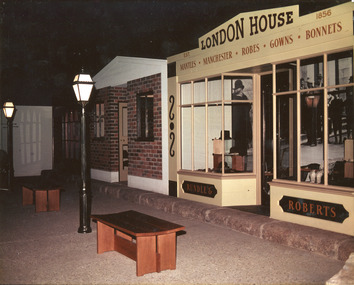
... Street of shops...historical streetscape...recreated shops...Roy harvey...museum exhibit...burke...This photograph is recorded as depicting a street of shops and London houses at Burke Museum in the 1990s. It features an indoor recreated historical streetscape of the 19th century. ...This photograph is recorded as depicting a street of shops and London houses at Burke Museum in the 1990s. It features an indoor recreated historical streetscape of the 19th century. ...This photograph is recorded as depicting a street of shops and London houses at Burke Museum in the 1990s. It features an indoor recreated historical streetscape of the 19th century. Within the shop window recreation are objects on display, including hats. The Street of Shops exhibition is still on display at Burke Museum and features objects collected in 1979 through the community by Roy Harvey (also author of Background to Beechworth from 1852), to provide insight into eras of the past. This exhibit displays a collection of over 30,000 items, many dating back over 150 years. The ‘street of shops’ tell the story of the changing town and its community.This photograph is of social significance to the Beechworth area and the Burke Museum as it depicts a still-exhibiting museum display that is of value to the community. The artefacts exhibited in the photograph all have a strong connection to the Beechworth area, having been donated by members of the local community, and are of special value to that community. It is also a record of the curating work of Roy Harvey, a local historian, author and museum curator, as well as a depiction of the curating and exhibition practices of the 1990s, when the photo was taken.This is a colour rectangular photograph printed on paper.Obverse: Est London House 1856 / mantles, manchester, robes, gowns, bonnets / rundle and roberts. Reverse: 53307street of shops, historical streetscape, recreated shops, roy harvey, museum exhibit, burke museum, beechworth, 19th century museum display, victorian artefacts, community, exhibition history, shop history, shop recreation, hats, bonnets, manchester, robes, gowns, rundle and roberts
