
Showing 10 items matching "burstall house"
-
 Eltham District Historical Society Inc
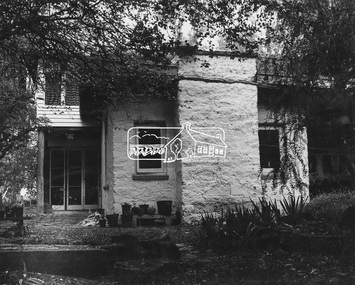
Photograph, Tim and Betty Burstall House (1948-1960s)
... Tim and Betty Burstall House (1948-1960s)...tim and betty burstall house...Tim and Betty Burstall designed and built their mud brick house in (68 Napier Crescent) Montmorency in 1948. ...(EDHS Newsletter No. 145 July 2002) betty burstall houses mud brick construction tim and betty burstall house tim burstall Montmorency Alistair Knox Collection Handwritten notes in pencil re details of building, year of construction, owner, designer, builder, etc Black and white print mounted on card 35mm Colour positive transparency (copy of print) Mount - Black and White Tim and Betty Burstall House (1948-1960s) Photograph Photograph ...Tim and Betty Burstall designed and built their mud brick house in (68 Napier Crescent) Montmorency in 1948. Extensions were added in the 1960s. The Alistair Knox Collection (Image 6) The Alistair Knox Collection is a series of mounted enlarged photos of about forty images mud brick houses and related subjects. The collection is understood to have been put together by Alistair Knox although it is the work of several unacknowledged photographers. For some years it was held by the Building Department of the former Eltham Shire Council and was then passed to EDHS. Some of the photos have been used in Knox's books. Alistair Knox (1912 - 1986) is acknowledged as the founder of Eltham's mud brick building movement. Many of the buildings shown in the collection are of his design and he was also involved with the construction of several of them. Others are the work of his contemporaries and associates such as Peter Glass, Gordon Ford, and John Harcourt. (EDHS Newsletter No. 145 July 2002)Handwritten notes in pencil re details of building, year of construction, owner, designer, builder, etcbetty burstall, houses, mud brick construction, tim and betty burstall house, tim burstall, montmorency, alistair knox collection -
 Eltham District Historical Society Inc
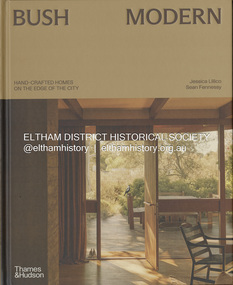
Book, Jessica Lillico, Bush Modern: Hand-crafted homes on the edge of the city, 4 Nov. 2025
... ...Burstall House...Contents: Bush modern locations (map) Grounded in simplicity by Jessica Lillico and Sean Fennessy Time and place by Morag Fraser Houses featured - Stonygrad 1940, North Warrandyte Fraser-Jackson House 1947/1977, Montmorency Busst House 1948, Eltham Burstall House 1950, Montmorency Wright House II 1960, North Warrandyte Collis House 1966, Eltham Diskin House 1967, Eltham Redfern House 1967, North Warrandyte River Bend 1968/2022, Garambi Baan, Eltham Fisher House 1969, Warrandyte Borrack House 1970, Plenty Valley Fiddlers Elbow 1970, North Warrandyte Light Well House 1972, Donvale Birrarung House 1974, Garambi Baan, Eltham High Noon 1974, North Warrandyte Monty Sibbel 1975/2022, Montmorency Provan House 1976/2021, North Warrandyte Pizzey House 1977, Eltham Pittard House 1978, Eltham Gray House 1980, Eltham Carol Ann House 1989, Bend of Islands Wattle Glen 1999, Wattle Glen Big Hill 2001, Christmas Hills ...Contents: Bush modern locations (map) Grounded in simplicity by Jessica Lillico and Sean Fennessy Time and place by Morag Fraser Houses featured - Stonygrad 1940, North Warrandyte Fraser-Jackson House 1947/1977, Montmorency Busst House 1948, Eltham Burstall House 1950, Montmorency Wright House II 1960, North Warrandyte Collis House 1966, Eltham Diskin House 1967, Eltham Redfern House 1967, North Warrandyte River Bend 1968/2022, Garambi Baan, Eltham Fisher House 1969, Warrandyte Borrack House 1970, Plenty Valley Fiddlers Elbow 1970, North Warrandyte Light Well House 1972, Donvale Birrarung House 1974, Garambi Baan, Eltham High Noon 1974, North Warrandyte Monty Sibbel 1975/2022, Montmorency Provan House 1976/2021, North Warrandyte Pizzey House 1977, Eltham Pittard House 1978, Eltham Gray House 1980, Eltham Carol Ann House 1989, Bend of Islands Wattle Glen 1999, Wattle Glen Big Hill 2001, Christmas Hills Stonygrad Fraser-Jackson House Busst House Burstall House Wright House II Collis House Diskin House Redfern House River Bend Fisher House Borrack House Fiddlers Elbow Light Well House Birrarung House High Noon Monty Sibbel Provan House Pizzey House Pittard House Gray House Carol Ann House Wattle Glen Big Hill Inside front cover in ink: "Enjoy! ...From the publisher Thames & Hudson Australia's website: "In the bushy north-eastern fringe of Melbourne, an enduring, uniquely Australian architectural aesthetic has been quietly gaining recognition. Emerging out of necessity in the post-war years, it reimagined the sleek ideals of modernism through the lens of the local landscape. Simple homes built 'of the land' from mud bricks and recycled timber captured the mood of those searching for an alternative way of life close to nature. The movement gathered momentum in the counter-cultural 1960s and culminated in near-mainstream popularity in the 1970s. After a few decades where brown lost appeal in favour of white-washed minimalism, the style in all its warm, earthy glory is once again being embraced and revived by a new generation Through evocative photography by Sean Fennessy, personal stories and architectural insights, Bush Modern explores the timeless appeal of these character-filled homes: tactile, grounded and deeply in tune with their environment." Contents: Bush modern locations (map) Grounded in simplicity by Jessica Lillico and Sean Fennessy Time and place by Morag Fraser Houses featured - Stonygrad 1940, North Warrandyte Fraser-Jackson House 1947/1977, Montmorency Busst House 1948, Eltham Burstall House 1950, Montmorency Wright House II 1960, North Warrandyte Collis House 1966, Eltham Diskin House 1967, Eltham Redfern House 1967, North Warrandyte River Bend 1968/2022, Garambi Baan, Eltham Fisher House 1969, Warrandyte Borrack House 1970, Plenty Valley Fiddlers Elbow 1970, North Warrandyte Light Well House 1972, Donvale Birrarung House 1974, Garambi Baan, Eltham High Noon 1974, North Warrandyte Monty Sibbel 1975/2022, Montmorency Provan House 1976/2021, North Warrandyte Pizzey House 1977, Eltham Pittard House 1978, Eltham Gray House 1980, Eltham Carol Ann House 1989, Bend of Islands Wattle Glen 1999, Wattle Glen Big Hill 2001, Christmas Hills Inside front cover in ink: "Enjoy! Jess & Sean"stonygrad, fraser-jackson house, busst house, burstall house, wright house ii, collis house, diskin house, redfern house, river bend, fisher house, borrack house, fiddlers elbow, light well house, birrarung house, high noon, monty sibbel, provan house, pizzey house, pittard house, gray house, carol ann house, wattle glen, big hill -
 Eltham District Historical Society Inc
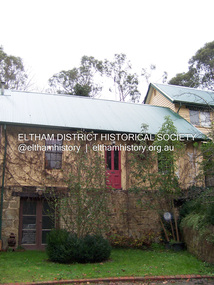
Photograph - Digital Photograph, Marguerite Marshall, Souter House, 23 Falkiner Street, Eltham, 20 June 2008
... house remained unoccupied for some time. Sonia Skipper, one of Montsalvat’s builders who also worked for Alistair Knox oversaw rebuilding it. She employed landscape designer Gordon Ford, artist Peter Glass and Tim Burstall. ...house remained unoccupied for some time. Sonia Skipper, one of Montsalvat’s builders who also worked for Alistair Knox oversaw rebuilding it. She employed landscape designer Gordon Ford, artist Peter Glass and Tim Burstall. ...Originally built in the 1850s by Charles Souter from earth excavated from his property. It was a forerunner for a building style that was later to be synonymous with Eltham. The house is historically significant as the oldest mud brick building in the Shire of Nillumbik, as one of less than half a dozen buildings from the 1850s that survive in the Shire. It underwent several additions and alterations between c.1950s-1980s. It is also significant for its associations with Mervyn Skipper from the well-known Eltham family who was one of the founders of the artist's colony at Montsalvat. The house is architecturally significant because its north section was designed by the noted 'Eltham-style' architect, Alistair Knox, and the two long Oregon beams supporting the main floor were added by the noted 'Eltham-style' builder, Horrie Judd who built the southern room. A onetime tenant in the house, Judd built many Eltham houses and was a major builder of Montsalvat. The 1934 flood destroyed the south wall and the house remained unoccupied for some time. Sonia Skipper, one of Montsalvat’s builders who also worked for Alistair Knox oversaw rebuilding it. She employed landscape designer Gordon Ford, artist Peter Glass and Tim Burstall. The house originally had a cellar for making and storing wine, reputedly the first made in the district according to Alistair Knox in his book ‘We are what we stand on’ (p33). Water would seep into the cellar so Sonia’s father and then owner of the house, Mervyn Skipper bulldozed a channel outside to divert it. The Brocksopp family purchased the house in 1950 and added an outside door to the cellar and converted it into a gallery. Covered under Heritage Overlay, Nillumbik Planning Scheme. Published: Nillumbik Now and Then / Marguerite Marshall 2008; photographs Alan King with Marguerite Marshall.; p51This collection of almost 130 photos about places and people within the Shire of Nillumbik, an urban and rural municipality in Melbourne's north, contributes to an understanding of the history of the Shire. Published in 2008 immediately prior to the Black Saturday bushfires of February 7, 2009, it documents sites that were impacted, and in some cases destroyed by the fires. It includes photographs taken especially for the publication, creating a unique time capsule representing the Shire in the early 21st century. It remains the most recent comprehenesive publication devoted to the Shire's history connecting local residents to the past. nillumbik now and then (marshall-king) collection, eltham, falkiner street, mud brick building, mudbrick houses, souter house -
 Eltham District Historical Society Inc
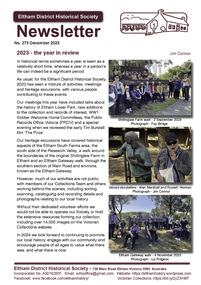
Journal - Newsletter, Newsletter, No. 273 December 2023
... Contents: • 2023 – the year in review by Jim Connor • Our Next Meeting - 7.30pm Wednesday 13th December 2023 • Eltham Mudbrick House Tour • Tim Burstall – Pioneer Film Maker by Marguerite Marshall • The Prize: Marcys Skipper’s comments • Threats to Kangaroo Ground by Richard Pinn • Local Mother’s Incredible Support in WW2 by Terry Beaton • 60 Years Ago at Eltham East Primary by Stephen Corneille • Community banking – our local story by Malcom Hackett OAM ...Contents: • 2023 – the year in review by Jim Connor • Our Next Meeting - 7.30pm Wednesday 13th December 2023 • Eltham Mudbrick House Tour • Tim Burstall – Pioneer Film Maker by Marguerite Marshall • The Prize: Marcys Skipper’s comments • Threats to Kangaroo Ground by Richard Pinn • Local Mother’s Incredible Support in WW2 by Terry Beaton • 60 Years Ago at Eltham East Primary by Stephen Corneille • Community banking – our local story by Malcom Hackett OAM The Shire of Eltham Historical Society was formed in October 1967. ...Contents: • 2023 – the year in review by Jim Connor • Our Next Meeting - 7.30pm Wednesday 13th December 2023 • Eltham Mudbrick House Tour • Tim Burstall – Pioneer Film Maker by Marguerite Marshall • The Prize: Marcys Skipper’s comments • Threats to Kangaroo Ground by Richard Pinn • Local Mother’s Incredible Support in WW2 by Terry Beaton • 60 Years Ago at Eltham East Primary by Stephen Corneille • Community banking – our local story by Malcom Hackett OAM The Shire of Eltham Historical Society was formed in October 1967. The first newsletter of the Society was issued May 1978 and has been published continuously ever since on a bi-monthly basis. With the cessation of the Shire of Eltham in late 1994, the Society's name was revised to Eltham District Historical Society and this name first appeared with issue No. 103, July 1995. The collection of the Society's newsletters provides a valuable resource on the history of the Society's activities, office bearers and committee members, guest speakers and subjects of historical interest pertinent to the former Shire of Eltham and the Eltham District.A4 newsletter distributed to members (Digital and A4 photocopy)newsletter, eltham district historical society -
 Eltham District Historical Society Inc
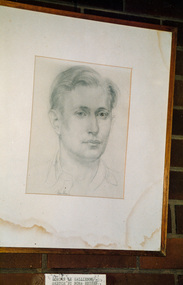
Photograph, Peter Bassett-Smith, Ink sketch of Dorian Le Gallienne by Nora Heysen, 1988
... Burstall’s 1958 film “The Prize”; set in Eltham. From 1949 until his death, he lived with his friend Dick Downing in Yarra Braes Road. Their modest mudbrick “weekender” grew in stages to become one of the notable houses of the area. ...Burstall’s 1958 film “The Prize”; set in Eltham. From 1949 until his death, he lived with his friend Dick Downing in Yarra Braes Road. Their modest mudbrick “weekender” grew in stages to become one of the notable houses of the area. ...Dorian Le Gallienne (1915-1963) was born in Melbourne and studied music at Melbourne University Conservatorium and at the Royal College of Music, London. In 1951 he won a Commonwealth Jubilee Music Scholarship and studies in London for a further two years. Le Gallienne was recognized as one of Australia’s foremost composers. He was also well known as a music critic for Melbourne newspapers. On the local scene he wrote the music for Tim Burstall’s 1958 film “The Prize”; set in Eltham. From 1949 until his death, he lived with his friend Dick Downing in Yarra Braes Road. Their modest mudbrick “weekender” grew in stages to become one of the notable houses of the area. Bicentennial/Heritage Week Display, "The Eltham Tradition", Eltham Shire Office, 17-22 April 1988 Colour photographactivities, eltham shire office, heritage display, heritage week, dorian le gallienne, nora heysen, portrait -
 Eltham District Historical Society Inc
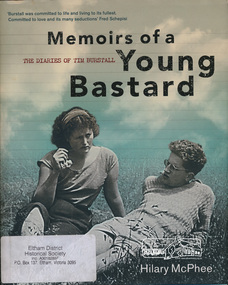
Book, Miegunyah Press, Memoirs of a Young Bastard: the diaries of Tim Burstall compiled by Hilary McPhee, 2012
... Burstall, the celebrated director of Stork, Alvin Purple and numerous other definitive 'ocker' comedies, is credited with shaking the moribund Australian film industry out of its torpor. But long before that, in the early 1950s, he began keeping a diary to record the world of the group of 'arties' and 'intellectuals' he was living among in Eltham, then a rural area outside Melbourne, where cheap land was available for mudbrick houses and studios, and where suburban rigidities could be mercilessly flouted. ...Burstall, the celebrated director of Stork, Alvin Purple and numerous other definitive 'ocker' comedies, is credited with shaking the moribund Australian film industry out of its torpor. But long before that, in the early 1950s, he began keeping a diary to record the world of the group of 'arties' and 'intellectuals' he was living among in Eltham, then a rural area outside Melbourne, where cheap land was available for mudbrick houses and studios, and where suburban rigidities could be mercilessly flouted. ...Diaries of Tim Burstall November 1953 to December 1954. Tim Burstall lived in Eltham. Tim Burstall, the celebrated director of Stork, Alvin Purple and numerous other definitive 'ocker' comedies, is credited with shaking the moribund Australian film industry out of its torpor. But long before that, in the early 1950s, he began keeping a diary to record the world of the group of 'arties' and 'intellectuals' he was living among in Eltham, then a rural area outside Melbourne, where cheap land was available for mudbrick houses and studios, and where suburban rigidities could be mercilessly flouted. Burstall was in his mid-twenties, with two young sons and an open marriage with his wife, Betty. Eager to become a writer, to go against the grain, he kept a record almost daily-of the parties and the talk in pubs and studios, about art and politics and sex, of Communist Party branch meetings and film societies, of political rallies and the first Herald Outdoor Art Show. Somehow, while holding down a public relations job in the Antarctic Division and juggling his love affairs and obsession with the beautiful, brainy Fay, he wrote 500 words almost every day. Betty, according to the diaries, kept the show on the road, feeding friends after the pub, milking goats and working in her pottery making bowls and mugs, which Tim sometimes decorated at weekends. These Memoirs of a Young Bastard, as Burstall dubbed himself and them, are among the most evocative Australian diaries of modern times. Burstall can write. He has an eye for the telling detail, an unerring ear for cant and pomposity and, most endearingly, an ability to mock himself-always from the perspective of a bloke of his generation. Source: Publisherxxiv, 343 p., [18] p. of plates : ill., maps, ports., facsims. ; 27 cm.ISBN 9780522858143diary, motion picture director, film director, author -
 Eltham District Historical Society Inc
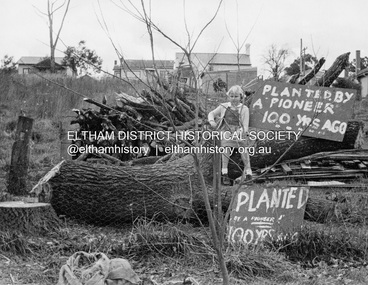
Photograph - Black and White Print, George W. Bell, Tree Protest, Franklin Street, Eltham, 1956
... The protest involved personalities such as Matcham Skipper; Lesley Martin; Alistair and Margot Knox and youn Hamish; Jack, Susan, Mavis and Laurel Gill; Hal Peck; Tim Burstall and Gordon Ford The location is about halfway between Main Road and Bible Street looking north, around number 91. Looking up the hill in a northerly direction, the house on the left is George Stebbing's original cottage at 88 Pitt Street, built around 1861. ...The protest involved personalities such as Matcham Skipper; Lesley Martin; Alistair and Margot Knox and youn Hamish; Jack, Susan, Mavis and Laurel Gill; Hal Peck; Tim Burstall and Gordon Ford The location is about halfway between Main Road and Bible Street looking north, around number 91. Looking up the hill in a northerly direction, the house on the left is George Stebbing's original cottage at 88 Pitt Street, built around 1861. ...This was a protest that came about when some S.E.C. workers cut down two 100-year old Oak trees in Franklin Street. We have examined aerial photos from February 1956 and two large trees are present near where number 91 is today and were gone in a January 1960 image. Alistair Knox wrote about their protest against the depradations of the State Electricty Commission in his 1980 book, We are what we stand on, pp48-49. You can read about online at https://alistairknox.org/chapters/45 “Protest against the depradations of the State Electricity Commission 1956” - Alistair Knox (1980), We are what we stand on, pp48-49 “The fact that the number of trees in central Eltham has more than doubled since 1945 is an indication of how universal and powerful the movement has been. Eltham was fighting the S.E.C. and other government authorities in the 40's and 50's over the retention of indigenous trees. In the Christmas season of 1956 our conflict with them came to a dramatic confrontation that made headline news in all the daily papers for a week. It started in the Herald, was repeated in the Sun and taken up by the Age two days later. After four days, it was appearing in the New York Times.” “Some S.E.C. workers cut down two 100-year-old oak trees in Franklin Street. The inner Eltham community launched a frontal attack on bureaucratic bungling and arrogance that they have never forgotten.” “When the chairman of the Commission delivered his New Year's speech some weeks later, he emphasised that the commission's first responsibility was to protect trees. This was the antithesis of their previous attitude. For many years to come, tree-lopping Commission workers always pretended they were not there when our small explosive group passed by. With Council assistance, we also carried out free native tree plantings on the nature strips of most roads in the Central Riding in the l 950's, when the rhododendron and the gladioli flanked by pampas grass and flowering fruit trees were still being introduced into the most 'desirable' eastern suburbs.” The protest involved personalities such as Matcham Skipper; Lesley Martin; Alistair and Margot Knox and youn Hamish; Jack, Susan, Mavis and Laurel Gill; Hal Peck; Tim Burstall and Gordon Ford The location is about halfway between Main Road and Bible Street looking north, around number 91. Looking up the hill in a northerly direction, the house on the left is George Stebbing's original cottage at 88 Pitt Street, built around 1861. Little is recorded of this early Eltham builder and we have no picture of him. He arrived from England in August 1857 and settled at Eltham after a short period at Kangaroo Ground. His occupation is often listed as a farmer but he built a number of important buildings between 1860 and 1880. Those remaining include Shillinglaw Cottage (c.1858), St. Margaret’s Church (1860), Uniting Church (formerly Methodist Church 1880) and his house at 88 Pitt Street (1861). This photo was possibly used in a presentation by Russell Yeoman to the 10 November 2004 Society meeting on "Significant Trees, Wildflowers and Local Gardens" - Research by Peter Pidgeon, EDHS, June 2026 Black and white print on photo paper Also black and white slide copy of print Mount - white 7 dots (Technodia Italy)trees, eltham, protests, george w bell collection, significant tree, alistair knox, george w. bell collection, gordon ford, hal peck, hamish knox, jack gill, laurel gill, lesley martin, margot knox, matcham skipper, mavis gill, stebbing cottage, susan gill, tim burstall -
 Eltham District Historical Society Inc
Document - Folder, Peck, Joy
... house, later moving to Moor Street in Fitzroy. Contents Newspaper article: "Ode to Joy", The Australian, 22 February 2008. Obituary by Phillip Adams of his friend Joy Peck. Letter Sue Law to Phillip Adams, 25 March 2008, regarding Phillip Adams' article about Joy Peck. Letter Phillip Adams to Sue Law, 16 April 2008, acknowledging. Newspaper article: "At home in the fantastic, yet her work was also surprisingly gritty", The Age, 3 April 2008. Obituary of Joy Peck by Jim Davidson. Joy Peck Phillip Adams Hal Peck Eltham High School Montsalvat Justus Jorgensen Inga Clendinnen Betty Burstall ...Joy Peck was an artist and husband Hal was a teacher at Eltham High School and a potter. They had three children: Tony, Gina and Marcus. Joy was born in Ballarat but grew up in Warrnambool; died 3 February 2008. She trained at the National Gallery School and exhibited from 1960 until 1997; her Melbourne galleries included Realities and Manyung. In Eltham, the Pecks lived in a mud brick house, later moving to Moor Street in Fitzroy. Contents Newspaper article: "Ode to Joy", The Australian, 22 February 2008. Obituary by Phillip Adams of his friend Joy Peck. Letter Sue Law to Phillip Adams, 25 March 2008, regarding Phillip Adams' article about Joy Peck. Letter Phillip Adams to Sue Law, 16 April 2008, acknowledging. Newspaper article: "At home in the fantastic, yet her work was also surprisingly gritty", The Age, 3 April 2008. Obituary of Joy Peck by Jim Davidson.Newspaper clippings, A4 photocopies, etcjoy peck, phillip adams, hal peck, eltham high school, montsalvat, justus jorgensen, inga clendinnen, betty burstall, la mama theatre carlton, tony peck, gine peck, marcus peck, eltham mud brick buildings, realities art gallery, manyung art gallery, clifton pugh, barry humphries, john clendinnen, tim burstall, moor street fitzroy -
 Eltham District Historical Society Inc
Photograph - Digital Photograph, Alan King, Busst House, cnr Silver Street and Kerrie Crescent, Eltham, 2 February 2008
... Those who built their own houses, included film maker Tim Burstall, artists Peter Glass, Clifton Pugh, Matcham Skipper, Sonia Skipper and husband Jo Hannan. ...Those who built their own houses, included film maker Tim Burstall, artists Peter Glass, Clifton Pugh, Matcham Skipper, Sonia Skipper and husband Jo Hannan. ...Considered the best of the early mud-brick houses built by Alistair Knox. Covered under Heritage Overlay, Nillumbik Planning Scheme. Published: Nillumbik Now and Then / Marguerite Marshall 2008; photographs Alan King with Marguerite Marshall.; p143 The Busst house hidden by trees at the corner of Silver Street and Kerrie Crescent is considered the best of the early mud-brick houses built by Eltham architect, Alistair Knox. Knox himself said, that the Busst house was the most mature mud-brick house designed at that period. ‘It related with true understanding to its steep site and expressed the flexibility of earth building ………to develop a new sense of flowing form and shape’. Built in 1948 for artist Phyl Busst, a former art student at Montsalvat, the house helped usher in Eltham Shire’s distinctive mud-brick residential character. Knox was the pivotal figure of the style developed from the 1950s to the 1970s. Scarcity of building materials after World War Two encouraged mud-brick building because earth was a cheap and plentiful building medium. But when Knox began building in mud-brick in 1947, no council in Victoria knew anything of this ancient art and he needed a permit. Fortunately the Commonwealth Experimental Building Station at Ryde in NSW, had been experimenting with earth construction to help overcome the shortages of that time. They published a pamphlet that became available in Melbourne on the same day the Eltham Council was to consider whether the earth building should be allowed. Knox caught one of the three morning trains to the city in those days and bought several copies of the pamphlet to give to each councillor. On his return he found the councillors standing on the steps of the shire offices after lunch at the local hotel. He heard that earth building had been discussed before lunch and that they were not in favor of it. Knox gave each councillor a pamphlet. They passed that plan and by doing so, opened the door for all future earth building in Victoria and by default, in Australia. Mud-brick houses attracted artists to Eltham, for their aesthetic appeal and because they were cheap. Those who built their own houses, included film maker Tim Burstall, artists Peter Glass, Clifton Pugh, Matcham Skipper, Sonia Skipper and husband Jo Hannan. For Knox, mud-brick building was more than just a cheap building medium. He saw it as harmonising with the surrounding bush and as a way of counteracting the growing materialism of the age. He wrote of its impact on ‘ 20th century man. It should counteract the confusion that the perpetual flow of high technology products have upon him ..’ Building the Busst house on a steep site was difficult because most earth-moving equipment was then in its infancy. For instance drilling for explosives was done by hand, which was a slow and painful process. Knox, assisted by his foreman Horrie Judd and Gordon Ford (who was to become a famous landscape designer), built two large main rooms - a living room/ kitchen downstairs - and upstairs, a studio/bedroom. The studio/bedroom opens onto the balcony, which covers the living area. The bath made of solid concrete by stonemason Jack Fabro, is particularly deep. Sunshine pours through the three French windows of the north-east facing kitchen/living area, which is lined with timber. The large hearth can fit a family around the fire while the timber floors and solomite (compressed straw) ceilings add to the cosy atmosphere. The garden is thick with trees, and in the late 1990s, Ford put in a pool near the original dry wall he had built as a young man.This collection of almost 130 photos about places and people within the Shire of Nillumbik, an urban and rural municipality in Melbourne's north, contributes to an understanding of the history of the Shire. Published in 2008 immediately prior to the Black Saturday bushfires of February 7, 2009, it documents sites that were impacted, and in some cases destroyed by the fires. It includes photographs taken especially for the publication, creating a unique time capsule representing the Shire in the early 21st century. It remains the most recent comprehenesive publication devoted to the Shire's history connecting local residents to the past. nillumbik now and then (marshall-king) collection, alistair knox, alistair knox design, busst house, kerrie crescent, mudbrick construction, mudbrick houses, silver street -
 Eltham District Historical Society Inc
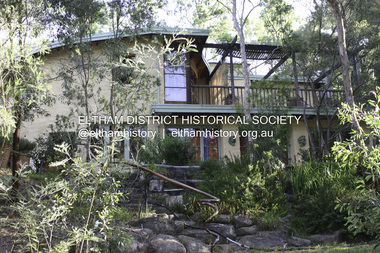
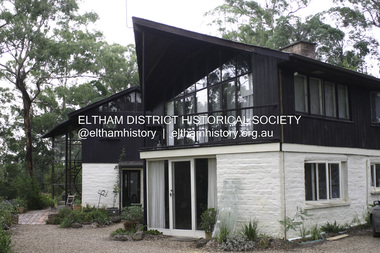
Photograph - Digital Photograph, Alan King, Downing-Le Gallienne house, Yarra Braes Road, Eltham, 30 January 2008
... house was built by Alistair Knox. It was built for economist Richard Downing, to become a founder of the welfare state in Australia and Chairman of the Australian Broadcasting Commission, and musician and composer Dorian Le Gallienne. Le Gallienne was a pioneering composer of modern music in Victoria before 1945, whose works included the Symphony in E.1 He wrote several pieces of film music for Eltham Films, including The Prize, working with its writer and artistic director Tim Burstall. ...house was built by Alistair Knox. It was built for economist Richard Downing, to become a founder of the welfare state in Australia and Chairman of the Australian Broadcasting Commission, and musician and composer Dorian Le Gallienne. Le Gallienne was a pioneering composer of modern music in Victoria before 1945, whose works included the Symphony in E.1 He wrote several pieces of film music for Eltham Films, including The Prize, working with its writer and artistic director Tim Burstall. ...The property is a classic example of what made Eltham famous from the late 1940s to the 1960s. Covered under Heritage Overlay, Nillumbik Planning Scheme. Published: Nillumbik Now and Then / Marguerite Marshall 2008; photographs Alan King with Marguerite Marshall.; p149 The first view of the large double-storey house at Yarra Braes Road, Eltham South, is of a jutting roofline over a balcony, reminiscent of a large sailing vessel or galleon – very appropriate, considering the name of one of the first owners, Le Gallienne. The Downing-Le Gallienne property is a classic example of what made Eltham famous from the late 1940s to the 1960s and attracted so many artists and intellectuals to the area. Set in a largely indigenous bush-style garden, the mud-brick and timber house was built by Alistair Knox. It was built for economist Richard Downing, to become a founder of the welfare state in Australia and Chairman of the Australian Broadcasting Commission, and musician and composer Dorian Le Gallienne. Le Gallienne was a pioneering composer of modern music in Victoria before 1945, whose works included the Symphony in E.1 He wrote several pieces of film music for Eltham Films, including The Prize, working with its writer and artistic director Tim Burstall. Le Gallienne was also a music critic for The Argus and later for The Age. In 1967 the music critic Roger Covell argued that Le Gallienne’s Symphony, was ‘still the most accomplished and purposive . . . written by an Australian’. According to Alan Marshall the main inspiration behind the building that evolved from 1948 to 1964 was Le Gallienne. ‘He was able to see value in the simplest things and many who worked there had their eyes opened for the first time to the Eltham environment, to the bush and the trees and the fauna which lived there.’ The garden included no formality, no lawns, nor exotic plants. ‘Natural informal growth came right up to their doors and so did the indigenous birdlife.’ This informal style – consisting of mass and void – was to be developed and popularised by landscaper Gordon Ford from the 1950s. The large mud-brick and timber house, which was built in four stages and has three separate but linked sections, began as a small weekend retreat for the couple. In 1948, Downing and Le Gallienne (Dick and Dor to their friends), asked Knox to build the 36 x18 foot (11mx5.4m) building with a pitched slate roof. It was built on a concrete slab and included a fireplace, which is still in use. The second wing was built in 1954 after Downing had returned from working at the International Labour Office and the couple decided to live there full-time. The third section was built after the death of Le Gallienne in 1963, aged 48. He is buried in the Eltham Cemetery. When Downing married widow, Jean Norman (nee McGregor) and had to accommodate a large family, including her six children and one of their own, the last stage was built by 1964. At that time the house was considered one of the largest mud-brick houses in Victoria. It consists of five living areas, including a small ballroom. Several artists helped Knox build the Downing-Le Gallienne house, which was one of his first of mud-brick. They included painter Clifton Pugh, artist John Howley and actor Wynn Roberts. Ellis Stones had landscaped the first wing and Gordon Ford set the boulder steps and made a pool as part of the landscaping he completed. Inside, the mud-bricks are largely whitewashed with pine-lined ceilings and Oregon beams. A winding timber staircase in the front extends behind a glass window from the ground floor to the top. The property, of a little more than 0.5 ha, is bordered by Parks Victoria land, which extends to the Yarra River.This collection of almost 130 photos about places and people within the Shire of Nillumbik, an urban and rural municipality in Melbourne's north, contributes to an understanding of the history of the Shire. Published in 2008 immediately prior to the Black Saturday bushfires of February 7, 2009, it documents sites that were impacted, and in some cases destroyed by the fires. It includes photographs taken especially for the publication, creating a unique time capsule representing the Shire in the early 21st century. It remains the most recent comprehenesive publication devoted to the Shire's history connecting local residents to the past. nillumbik now and then (marshall-king) collection, dorian le gallienne, downing-le gallienne house, eltham, mudbrick construction, mudbrick houses, richard downing, yarra braes road
