
Showing 548 items matching "business stamps"
-
 Orbost & District Historical Society
Equipment - Two stamps
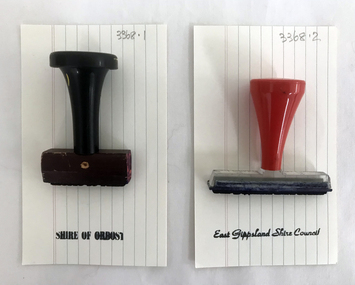
... business stamps...The oldest of these business stamps (3368.1) was used by Orbost Shire Council which was based in Orbost from 1892 - 1994. ...The oldest of these business stamps (3368.1) was used by Orbost Shire Council which was based in Orbost from 1892 - 1994. ...The oldest of these business stamps (3368.1) was used by Orbost Shire Council which was based in Orbost from 1892 - 1994. East Gippsland Shire Council was created in 1994 as a merged shire, with Orbost Shire as part of this amalgamation. After 1994, Orbost Shire no longer existed. 3368.2 is the more modern stamp, from East Gippsland Shire Council.These business stamps are significant because they relate to the two eras of local government in the Orbost/East Gippsland area. They show evidence of the transition from Orbost Shire Council to East Gippsland Shire Council. Two stamps. 3368.1 Shire of Orbost, black plastic handle. 3368.2 East Gippsland Shire Council, red plastic handle with clear plastic bottom. These are stamps which have the raised profile onto the bottom stamp and are used with an ink stamp-pad to stamp documents.3368.1 Shire of Orbost; 3368.2 East Gippsland Shire Councilbusiness stamps, orbost shire council, east gippsland shire council -
 Bendigo Historical Society Inc.
Administrative record - T.J. Connolly Work Book
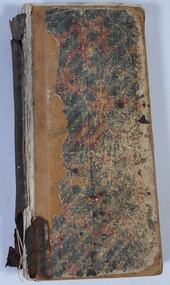
... Business stamp on torn loose page inside front cover. ...Margaret Roberts Collection Ironmongers Forest Street Bendigo businesses Business stamp on torn loose page inside front cover. ...The item is a hard cover book recording weekly work of T.J. Connolly, Ironmongers, Sandhurst. A list of names is written inside the front cover. An alphabetical index at the front of the book, lists types of goods and equipment. The index is followed by handwritten pages recording each week's work including goods, fittings and equipment types, client surname or business name and a numbering system. The work records have also been checked off with ticks or crosses separately. The hard cardboard cover is green with red marbling, which is worn and torn. The leather binding has peeled away from the pages and front cover but is attached to the back cover. The pages are fragile with many loose pages due to the state of the binding. The book is full and includes the date range of 29 May 1886 to 12 October 1888. This item is part of the Margaret Roberts Collection.Business stamp on torn loose page inside front cover. margaret roberts collection, ironmongers, forest street, bendigo businesses -
 Wodonga & District Historical Society Inc
Functional object - Wooden pre-decimal pricing stamps, J. Mann & Sons General Store, Wodonga, pre-1966
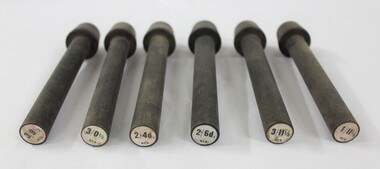
... business...pricing stamps...They also have national and international significance as examples of the use of the pre-decimal currency system in commerce/local businesses. mann general store high street wodonga commerce local business pricing stamps pre-decimal currency j. mann & sons Pre-decimal prices. ...The wooden pricing stamps are part of the 'Mann' collection at the Wodonga Historical Society and were used in the J. Mann & Sons General Store in Wodonga High Street, prior to the introduction of the decimal currency in Australia in 1966. J. Mann and Sons was first established as a farm produce store in 1921. The range of products was extended in the 1930s and included groceries and hardware, as well as the first petrol bowser in Wodonga outside the store. After WWII, the premises were extended and the range of products continued to increase. In the 1960s the Mann Family opened a new supermarket in Wodonga, in addition to the hardware business, providing steel, plumbing and industrial supplies, and they employed over 100 people at one stage. With changes in the retail industry, the Mann Family sold the main hardware business to Bunnings and the steel and rural produce business to the Kelly brothers in 2006.The collection of wooden pre-decimal pricing stamps have local significance due to their use in the J. Mann & Sons General Store in High St, Wodonga pre-1966, and their association with the prominent Mann family in Wodonga. They also have national and international significance as examples of the use of the pre-decimal currency system in commerce/local businesses.Six wooden pre-decimal pricing stamps from the J. Mann & Sons General Store, Wodonga which are part of a large collection of wooden pricing stamps. The pre-decimal prices are printed in black on a circular white background at one end and at the other end, the embossed/raised price is used for the stamp. The letter 'd' in some of the prices stands for pence and comes from the Latin 'denarius.Pre-decimal prices.mann, general store, high street, wodonga, commerce, local business, pricing stamps, pre-decimal currency, j. mann & sons -
 Tennis Australia
Vinyl phonograph record 'Tennis Tips with Evonne Goolagong', Circa 1975
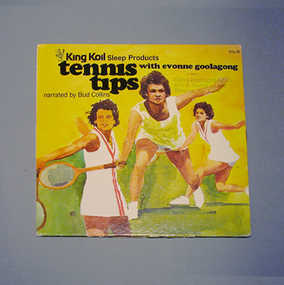
... Contained in a printed cardboard sleeve, depicting a graphical image of Goolagong. Ink business stamp on sleeve states: STEIN'S/KOSCIUSKO FURNITURE/MILWAUKEE/WISC'. ...Contained in a printed cardboard sleeve, depicting a graphical image of Goolagong. Ink business stamp on sleeve states: STEIN'S/KOSCIUSKO FURNITURE/MILWAUKEE/WISC'. ...A vinyl phonograph record, entitled 'Tennis Tips with Evonne Goolagong'. Format: 7 inch, 45 rpm. Contained in a printed cardboard sleeve, depicting a graphical image of Goolagong. Ink business stamp on sleeve states: STEIN'S/KOSCIUSKO FURNITURE/MILWAUKEE/WISC'. Materials: Vinyl, Cardboard, Papertennis -
 Coal Creek Community Park & Museum
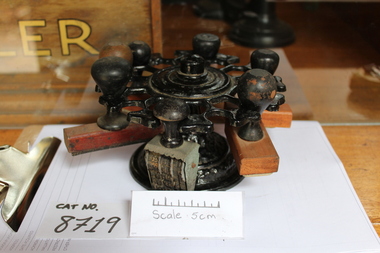
Stamp holder with stamps
... 8719.1 - Cast iron stamp holder (painted black) 8719.2 - Date stamp. 8719.3 - "NOT NEGOTIABLE" stamp. 8719.4 - "Thanks we appreciate your business" stamp. 8719.5 - "Help us help you" "Order Friday for Saturday delivery" stamp. 8719.6 - " Meeniyan District Ambulance" stamp. 8719.7 - " What would you expect us to do if we owed you this account" stamp. 8719.8 - Stamp handle....8719.2 - 23 NOV 1939 8719.3 - NOT NEGOTIABLE 8719.4 - Thanks we appreciate your business 8719.5 - Help us help you - Order Friday for Saturday delivery 8719.6 - Meeniyan District Ambulance 8719.7 - What would you expect us to do if we owed you this account 8719.1 - Cast iron stamp holder (painted black) 8719.2 - Date stamp. 8719.3 - "NOT NEGOTIABLE" stamp. 8719.4 - "Thanks we appreciate your business" stamp. 8719.5 - "Help us help you" "Order Friday for Saturday delivery" stamp. 8719.6 - " Meeniyan District Ambulance" stamp. 8719.7 - " What would you expect us to do if we owed you this account" stamp. 8719.8 - Stamp handle. ...8719.1 - Cast iron stamp holder (painted black) 8719.2 - Date stamp. 8719.3 - "NOT NEGOTIABLE" stamp. 8719.4 - "Thanks we appreciate your business" stamp. 8719.5 - "Help us help you" "Order Friday for Saturday delivery" stamp. 8719.6 - " Meeniyan District Ambulance" stamp. 8719.7 - " What would you expect us to do if we owed you this account" stamp. 8719.8 - Stamp handle.8719.2 - 23 NOV 1939 8719.3 - NOT NEGOTIABLE 8719.4 - Thanks we appreciate your business 8719.5 - Help us help you - Order Friday for Saturday delivery 8719.6 - Meeniyan District Ambulance 8719.7 - What would you expect us to do if we owed you this account -
 Phillip Island and District Historical Society Inc.
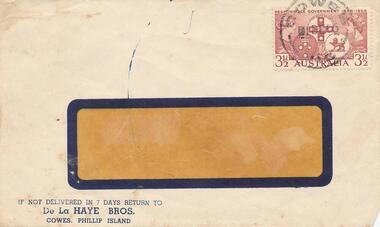
Document - Envelope, 1950's
... One Window faced envelope with 1956 stamp. Business envelope of De La Haye Bros. Cowes. ...Old window faced envelope from the business of De La Haye Bros., Cowes, Phillip Island. window faced envelope de la haye bros kevin findlay IF NOT DELIVERED IN 7 DAYS RETURN TO / De La HAYE BROS. / COWES, PHILLIP ISLAND One Window faced envelope with 1956 stamp. ...Old window faced envelope from the business of De La Haye Bros., Cowes, Phillip Island.One Window faced envelope with 1956 stamp. Business envelope of De La Haye Bros. Cowes. Postmarked Cowes. IF NOT DELIVERED IN 7 DAYS RETURN TO / De La HAYE BROS. / COWES, PHILLIP ISLANDwindow faced envelope, de la haye bros, kevin findlay -
 St Vincent's Hospital Melbourne Archives
Album - Photograph Album containing a single photo of Ethel Charles circa 1940
... and died 1967 at St Vincents?". There is a business stamp on the back of the photo which states Robinson Traralgon. ...and died 1967 at St Vincents?". There is a business stamp on the back of the photo which states Robinson Traralgon. ...The single black and white small photo enclosed states that Ethel Charles is seated on the left, there is another unidentified younger person. It was taken in the backyard of a garden circa 1940. Inscription states "Ethel Charles was born 1875? and died 1967 at St Vincents?". There is a business stamp on the back of the photo which states Robinson Traralgon. Ethel Charles completed her nursing training at St Vincents Hospital Melbourne in 1910 and spent time nursing WW1 army veterans at Victoria Barracks.ethel charles, victoria barracks, world war 1 vetrans, st vincents hospital melbourne -
 Greensborough Historical Society
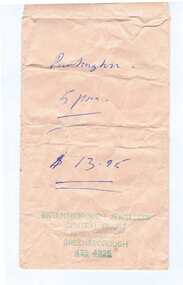
Envelope, Greensborough Jewellers, 1960c
... Customer: Partington; Price: $13.95; rubber stamped business name, address and telephone number...It was possibly a branch of Busby Jewellers in Preston. greensborough jewellers main street shops central court main street greesborough Customer: Partington; Price: $13.95; rubber stamped business name, address and telephone number Jewelery repair envelope, brown paper Greensborough Jewellers Envelope Greensborough Jewellers ...Greensborough Jewellers operated in Main Street in the 1960s-1970s. It was possibly a branch of Busby Jewellers in Preston.Jewelery repair envelope, brown paperCustomer: Partington; Price: $13.95; rubber stamped business name, address and telephone numbergreensborough jewellers, main street shops, central court main street greesborough -
 Beechworth RSL Sub-Branch
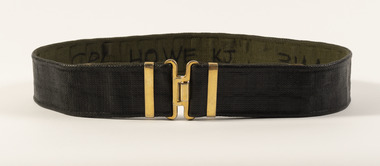
Web Belt
... Interior - Marker: CPL / HOWE / KJ / 3144504 Stamped: BUSINESS / COMMONWEALTH CLOTHING FACTORY ...Interior - Marker: CPL / HOWE / KJ / 3144504 Stamped: BUSINESS / COMMONWEALTH CLOTHING FACTORY Black web belt with brass buckle. ...This belt relates to the Vietnam war and was worn for ceremonial purpose. Black web belt with brass buckle. Exterior has been polished black with boot polished, the interior remains jungle green. Interior - Marker: CPL / HOWE / KJ / 3144504 Stamped: BUSINESS / COMMONWEALTH CLOTHING FACTORY -
 Port Fairy Historical Society Museum and Archives
Functional object - Company Seal
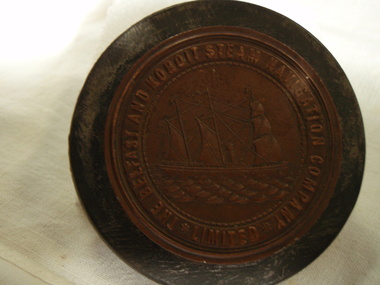
... Used by the Belfast and Koroit Steam Navigation Company in the course of their business being a stamp to legitimise contracts and deals ...Used by the Belfast and Koroit Steam Navigation Company in the course of their business being a stamp to legitimise contracts and deals local history commerce office equipment stationery belfast/port fairy s.s.casino s.s.dawn s.s.coramba The Belfast and Koroit Steam Navigation Company Limited- picture of sailing ship A metal Company seal for the Belfast and Koroit Steam Navigation Company Functional object Company Seal ...Used by the Belfast and Koroit Steam Navigation Company in the course of their business being a stamp to legitimise contracts and deals A metal Company seal for the Belfast and Koroit Steam Navigation CompanyThe Belfast and Koroit Steam Navigation Company Limited- picture of sailing shiplocal history, commerce, office equipment, stationery, belfast/port fairy, s.s.casino, s.s.dawn, s.s.coramba -
 Southern Sherbrooke Historical Society Inc.
Photograph, Watson's Photos, Belgrave, Building Austral Hall, Belgrave, 1920
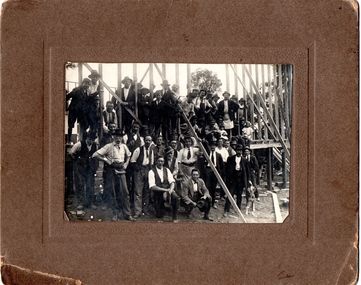
... On the reverse side is written in pencil, 'Building Church hall/ at/ Belgrave/ Saturday 11th Dec 1920.' There is a stamped business name which reads 'Watson's/ photos/ Belgrave.' ...On the reverse side is written in pencil, 'Building Church hall/ at/ Belgrave/ Saturday 11th Dec 1920.' There is a stamped business name which reads 'Watson's/ photos/ Belgrave.'...On the reverse side is written in pencil, 'Building Church hall/ at/ Belgrave/ Saturday 11th Dec 1920.' There is a stamped business name which reads 'Watson's/ photos/ Belgrave.' ...Black and White photo on a brown cardboard mount, showing a large group of men (about 30) and children (about 6) in front of and on the wooden frame of the partially constructed Belgrave Catholic Church Hall, Austral Hall, corner of (now) Reynolds Lane & Burwood Highway. The men are dressed in various combinations of hats, ties, shirts, jackets, trousers and work aprons. Some have tool belts or are holding hammers and other tools. Two small girls are seated on their fathers' laps. A man is sitting on his haunches at the front. He is wearing a suit and loose bow tie and holding a hat. He appears to be an official. Another man is patting or holding a dog. The building seems to have two walls partially constructed. There are trees visible in the background which are on the high side of the main road of Belgrave. A moulded brown cardboard mount measures 24.7 X 20.00. On the reverse side is written in pencil, 'Building Church hall/ at/ Belgrave/ Saturday 11th Dec 1920.' There is a stamped business name which reads 'Watson's/ photos/ Belgrave.' The Hall was built by largely volunteer labour as the Austral Hall, financed largely by Harry Luscombe's dances and functions. The land was donated by the Buckley Family. On the reverse side is written in pencil, 'Building Church hall/ at/ Belgrave/ Saturday 11th Dec 1920.' There is a stamped business name which reads 'Watson's/ photos/ Belgrave.' -
 Kew Historical Society Inc
Card - Exhibition Card, Philatelic Requisite / Wm. Ackland, 267 Collins St., Melbourne
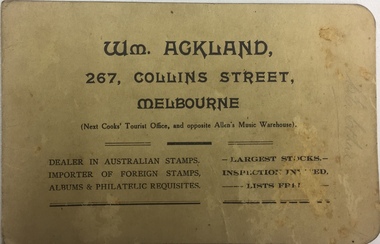
... William Ackland (1872-1953) was the senior, charter member of the Australian Stamp Dealers Association, having operated a stamp business in Melbourne for 60 years....William Ackland (1872-1953) was the senior, charter member of the Australian Stamp Dealers Association, having operated a stamp business in Melbourne for 60 years. philately william ackland - 267 collins street - melbourne (vic) Paper and cellophane holder for stamps retailed by William Ackland of 267 Collins Street. ...William Ackland (1872-1953) was the senior, charter member of the Australian Stamp Dealers Association, having operated a stamp business in Melbourne for 60 years.Paper and cellophane holder for stamps retailed by William Ackland of 267 Collins Street. The front of the packet contains advertising information about the seller. The reverse includes printed calculators.philately, william ackland - 267 collins street - melbourne (vic) -
 Warrnambool and District Historical Society Inc.
Office Equipment, Stamp holder, Mid 20th century
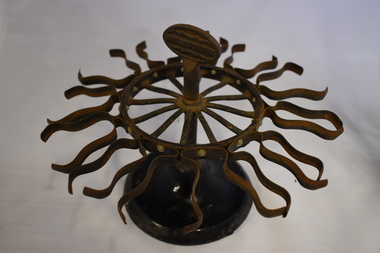
... This item would have been used in an office or business for holding stamps of various kinds. It would have been particularly useful in a legal business or a Government Department such as a Post Office where several different kinds of stamps and seals were needed. ...This item would have been used in an office or business for holding stamps of various kinds. It would have been particularly useful in a legal business or a Government Department such as a Post Office where several different kinds of stamps and seals were needed. ...This item would have been used in an office or business for holding stamps of various kinds. It would have been particularly useful in a legal business or a Government Department such as a Post Office where several different kinds of stamps and seals were needed. Stamps are still used in some business and office circles and an object such as this could still be useful. This item is of interest as an example of office equipment in frequent use in the years gone by. It will be useful for display.This is a black metal object. It has a metal stand with a circular column inserted in the centre of the stand. The top of the column has an oval-shaped handle. A circular piece of metal is attached to the column by a series of radiating spokes. Attached to the outer rim are twelve metal clips for holding office stamps (usually held by the handle of the stamp). The metal clips are held in place by metal studs. The ends of the metal clips clamp over to hold the stamps. The metal clips are all slightly misshapen. history of warrnambool, vintage office equipment -
 Bendigo Historical Society Inc.
Document - GOYNES STAMPER GRATINGS
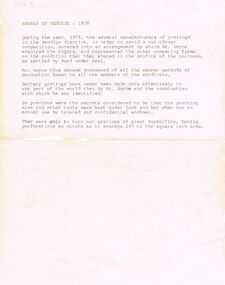
... Typewritten page of an extract from the 'Annals of Bendigo - 1876' and details a portion of the business operation of Goynes Stamper Grating works; in that all of the manufacturers at the time entered into an arrangement whereby Mr Goyne acquired the rights and represented the other competing firms on the condition they shared in the profits of the business...BUSINESS Mining stamper gratings Annals of Bendigo Manufacturing Goynes Typewritten page of an extract from the 'Annals of Bendigo - 1876' and details a portion of the business operation of Goynes Stamper Grating works; in that all of the manufacturers at the time entered into an arrangement whereby Mr Goyne acquired the rights and represented the other competing firms on the condition they shared in the profits of the business Document GOYNES STAMPER GRATINGS ...Typewritten page of an extract from the 'Annals of Bendigo - 1876' and details a portion of the business operation of Goynes Stamper Grating works; in that all of the manufacturers at the time entered into an arrangement whereby Mr Goyne acquired the rights and represented the other competing firms on the condition they shared in the profits of the businessbusiness, mining, stamper gratings, annals of bendigo, manufacturing goynes -
 Bendigo Military Museum
Pamphlet - A SOLDIER AND HIS CARDS
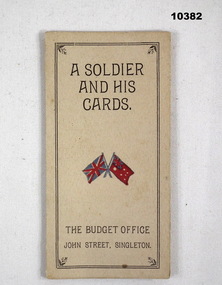
... The other two faces are advertising for the Business re printing, stamps, cards, binding, Xmas/new year cards are some of the many. ...The other two faces are advertising for the Business re printing, stamps, cards, binding, Xmas/new year cards are some of the many. ...Collection re G.A. Jones 3790932, refer Cat No 10053.2P for his service details.Small card, folds into one, print on both sides in black, front main cover has "A Soldier and his Cards" in colour crossed British and Australian flags, under "The Budget Office John Street Singleton". The other two faces are advertising for the Business re printing, stamps, cards, binding, Xmas/new year cards are some of the many. The inside 3 folds contains one verse that relates to the pack of cards being a Bible, Almanac and Common Prayer book.singleton, cards, ga, jones -
 Bendigo Historical Society Inc.
Photograph - GROUP OF SIXTY FOUR MEN (FOUNDRY WORKERS?)
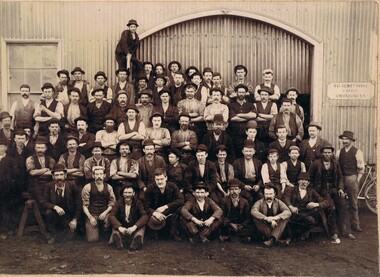
... Inscriptions: in image - sign of RH side of doorway 'no admittance except on business'. On back - stamp 'WH Robinson, Photographer, Bendigo. ...Inscriptions: in image - sign of RH side of doorway 'no admittance except on business'. On back - stamp 'WH Robinson, Photographer, Bendigo. ...Black and white photograph, mounted on brown board. Group of sixty four men in six rows, with one young man standing, straddled over a post, above the rest of the group. One Aborigine? On the RH side of picture. They are a work group of blue collar workers. All have hats or caps of various kinds. Standing in front of an iron wall with a doorway and one window. Eight have pipes, most are mature men but there are some young boys (apprentices?). Inscriptions: in image - sign of RH side of doorway 'no admittance except on business'. On back - stamp 'WH Robinson, Photographer, Bendigo. Handwritten 'cannot identify', '?foundry staff?'.WH Robinsonperson, group, male group of workers -
 Mont De Lancey
Book, L.Zions, Zions' Hours and Wages Record Book, c 1960's
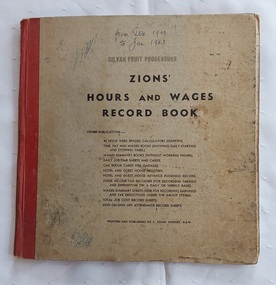
... The cover has the title, the business who used it stamped at the top as well as a full list of other publications and place of printing and publishing details. ...The cover has the title, the business who used it stamped at the top as well as a full list of other publications and place of printing and publishing details. ...An Hours and Wages Record Book for the Silvan Fruit Processors business in the Wandin area, Victoria.A faded square grey coloured Silvan Fruit Processors Zions' Hours and Wages Record Book bound with red tape on the stapled spine. The cover has the title, the business who used it stamped at the top as well as a full list of other publications and place of printing and publishing details. At the top of the front cover is written in blue biro, the dates of records - from Dec 1960 to Jan 1963. Inside are full column listings of Names, Hours Worked Daily, Total Hours, Rate,Total earnings, Tax Deductions, Net Payment and a Signature or Other Particulars column.non-fictionAn Hours and Wages Record Book for the Silvan Fruit Processors business in the Wandin area, Victoria. wages books, business records, books, wages tables, wages calculators, wages -
 Flagstaff Hill Maritime Museum and Village
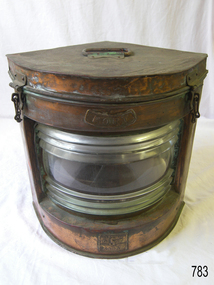
Equipment - Navigation Lamp, Port, Genton & Kessler Ltd, 1900 -1920
... business on his own. The company continued to be managed by family members until 1961, when it ceased trading. A marine lamp made by a significant maker in Birmingham, England, in the early part of the 20th century. This item is now regarded as a collector's item. Flagstaff Hill Warrnambool Shipwrecked-coast Flagstaff-Hill Flagstaff-Hill-Maritime-Museum Maritime-Museum Shipwreck-coast Flagstaff-Hill-Maritime-Village Alfred Frederick Samuel Genton Birmingham Genton & Kessler ship lamp Bingley Works J E & H Player Alfred F S Genton navigation lamp port lamp bow side lamp lighting device navigation Seahorse Great Britain Genton & Kessler Ltd. Stamped ...Alfred Frederick Samuel Genton was born in Switzerland around 1869 and arrived in England, date unclear. By 1901, the Kelly’s Directory of Birmingham had listed the Genton & Kessler company as manufacturers of all kinds of ship and railway lamps, fog horns and general ship fittings, with their factory listed as the Bingley Works, King Edward Place, Birmingham, UK, which is listed in 1896 as being owned and run by J E & H Player. Then in February 1905 it appears the partnership of Alfred F S Genton & Julius Rudolf Kessler was dissolved and Alfred F S Genton continued to carry on the business on his own. The company continued to be managed by family members until 1961, when it ceased trading.A marine lamp made by a significant maker in Birmingham, England, in the early part of the 20th century. This item is now regarded as a collector's item. Brass lamp marked 'Port', with two small chains and hook locking mechanisms, and a hinged lid. It has a clear ribbed glass front with a red lens filter. The fuel tank and wick burner were removed. Inscriptions marked on the lamp. Manufacturer: Seahorse in Great Britain.Stamped: "Seahorse GB trade mark" "No. 54987" "PORT"flagstaff hill, warrnambool, shipwrecked-coast, flagstaff-hill, flagstaff-hill-maritime-museum, maritime-museum, shipwreck-coast, flagstaff-hill-maritime-village, alfred frederick samuel genton, birmingham, genton & kessler, ship lamp, bingley works, j e & h player, alfred f s genton, navigation lamp, port lamp, bow side lamp, lighting device, navigation, seahorse, great britain, genton & kessler ltd. -
 Flagstaff Hill Maritime Museum and Village
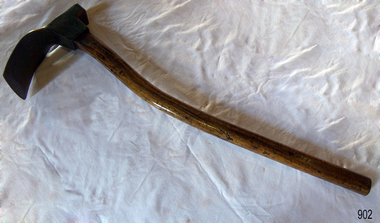
Tool - Adze, Ward & Payne Ltd, Between 1843 to Mid 20th Century
... stamped into the steel. The firm was established by David Ward (1767-1822) in 1803 the company became David Ward & Sons, in 1837 after Ward's son Edward joined the firm. In 1845 Henry Payne the founder's son-in-law became a partner but died in 1850 after which the company reverted to the Ward family. The business...stamped into the steel. The firm was established by David Ward (1767-1822) in 1803 the company became David Ward & Sons, in 1837 after Ward's son Edward joined the firm. In 1845 Henry Payne the founder's son-in-law became a partner but died in 1850 after which the company reverted to the Ward family. The business ...An adze is an ancient and versatile cutting tool and has been in use for thousands of years. Adze are similar to an axe but with the cutting edge perpendicular to the handle rather than parallel. They have been used since the Stone Age. Adzes are hand tools used for smoothing or carving wood. The subject item was made by Ward & Payne of the Limbrick Works at Hillsborough, Sheffield England manufacturers of hand-forged tools. Their trademark registered in 1850 was a Letter "W" & "P" stamped into the steel. The firm was established by David Ward (1767-1822) in 1803 the company became David Ward & Sons, in 1837 after Ward's son Edward joined the firm. In 1845 Henry Payne the founder's son-in-law became a partner but died in 1850 after which the company reverted to the Ward family. The business then concentrated on making carving tools, chisels and gouges. In 1882 David Ward's grandson David Ward Jr. (1835-1889) purchased land and built a factory at Sheffield North known as the "Limerick Wheel". For a time Wards operated from both 106-114 West Street Sheffield and at Limbrick Road, Hillsborough on the river Loxley. By 1911 they had expanded into making spades, forks, sheep shears and many other types of edged tools including drills and wood planes. In 1967 Wilkinson Sword purchased all the company's share capital and continued to sell Ward & Payne tools until 1970 when a fire burned the factory down and housing development was built on the site.The subject item is significant as it gives a snapshot of the technological development of sailing ships and their operation before steam-powered vessels took over around the world. Tools such as the subject item demonstrate the traditional craftsmanship and skill of the shipwright and the aesthetic quality of the timber ships designs of the time. Adze with wooden handle curved painted green with patent number and maker's name inscribed on inside curve of blade. Inscribed "Patd 561 Ward" "2w". flagstaff hill, warrnambool, flagstaff-hill, flagstaff-hill-maritime-museum, maritime-museum, shipwreck-coast, flagstaff-hill-maritime-village, smoothing tool, hand tool, carpenders tool, adze, coopers tool, woodworking tools -
 Flagstaff Hill Maritime Museum and Village
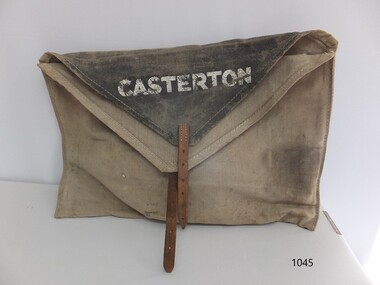
Functional object - Courier Bag, Government of Victoria, Late 19th to mid-20th centuries
... It was likely used by Victoria's railway system that transported people, goods, documents and cash between the districts of western Victoria. warrnambool shipwreck coast flagstaff hill flagstaff hill maritime museum flagstaff hill maritime village bag pouch document pouch courier bag western district western victoria 19th century 20th century railway rural business rural trade Boronia Casterton Merino sheep farm sheep property canvas bag canvas courier bag government courier bag broad arrow White stencilled paint "CASTERTON" Black stencilled paint "BORONIA" [barely visible] White over-stamped stencilled paint "MERINO" Courier bag; beige canvas rectangular bag with triangular black canvas flaps and a leather strap and buckle closure. ...The courier bag was once government property, as indicated by the broad arrow symbol. The flap has the name 'Boronia' - an area near Melbourne - overstamped with the town name 'Merino', and on the other side of the flap is the town 'Casterton'. Merino and Casterton are renowned for large sheep farming properties in Victoria's western district. Perhaps the courier bag was originally used between Melbourne and Boronia. During the late 19th and early-to-mid 20th centuries, a government-operated railway service was active in in the western district of Victoria. It served remote properties, including a line between Merino and Casterton. The train delivered mail, cash, supplies documents, business records and people between the sheep farm properties and the township of Casterton.This courier bag is an example of the connections and business between people in the remote areas of western Victoria. It was likely used by Victoria's railway system that transported people, goods, documents and cash between the districts of western Victoria.Courier bag; beige canvas rectangular bag with triangular black canvas flaps and a leather strap and buckle closure. The bag has stencilled stamps of three towns - Casterton, Merino and Boronia. It also has the government property symbol of a broad arrow.White stencilled paint "CASTERTON" Black stencilled paint "BORONIA" [barely visible] White over-stamped stencilled paint "MERINO"warrnambool, shipwreck coast, flagstaff hill, flagstaff hill maritime museum, flagstaff hill maritime village, bag, pouch, document pouch, courier bag, western district, western victoria, 19th century, 20th century, railway, rural business, rural trade, boronia, casterton, merino, sheep farm, sheep property, canvas bag, canvas courier bag, government courier bag, broad arrow -
 Flagstaff Hill Maritime Museum and Village
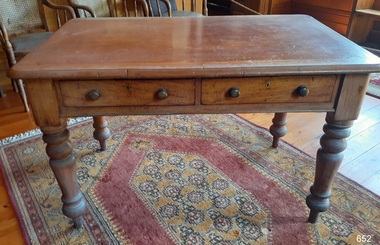
Furniture - Desk, Foy & Gibson, Circa 1880s
... business known as Foy’s. The former Foy & Gibson Complex is registered by Heritage Council Victoria. “Designed by William Pitt, this magnificent 19th and early 20th century complex of factories, warehouses and showrooms saw the production of a remarkable range of goods for Foy & Gibson, Melbourne’s earliest department store chain”. (Quoted from the Plaque erected by the Collingwood Historical Society 2007) P.W.D. – Public Works Department, Victoria The desk is stamped...business known as Foy’s. The former Foy & Gibson Complex is registered by Heritage Council Victoria. “Designed by William Pitt, this magnificent 19th and early 20th century complex of factories, warehouses and showrooms saw the production of a remarkable range of goods for Foy & Gibson, Melbourne’s earliest department store chain”. (Quoted from the Plaque erected by the Collingwood Historical Society 2007) P.W.D. – Public Works Department, Victoria The desk is stamped ...The design of this small disc is from the Australian Colonial period. The cedar wood desk was made in Australian by Foy & Gibson in the 1880s, most probably in the business’s works in Collingwood, Victoria. The heavy brass locks fitted into the desk drawers were made by the famous Hobbs & Co of London, mid-late 19th century. In 1860 the business changed hands but the locks were still branded Hobbs & Co. The desk is branded with the symbol of Victoria’s Public Works Department. There is currently no information on when, where and by whom this desk was used. However, a very similar desk with Hobbs & Co. locks is on site at the Point Hicks Lightstation in Victoria and was formerly used by the Point Hicks head light keeper there. Other light stations also have similar desks from the P.W.D. (see also ‘Desk, Parks Victoria – Point Hicks Lightstation, Victorian Collections’.) HOBBS & CO., LONDON Alfred Charles Hobbs, 1812-1891, was American born. He became an executive salesman in 1840 for renowned lock manufacturer Day & Newell. His technique of exposing the weaknesses of people’s current locks was very successful in generating sales. He represented Day & Newell at London’s Great Exhibition of 1851, competing with other lock makers. Through the Exhibition he became famous for picking the best trusted Bramah and Chubb locks. Hobbs’ fame led him to found his own company in 1851 then register it in 1852 as Hobbs & Co., London. Hobbs was awarded the Telford Medal by the British Institution of Civil Engineers in 1854 for his paper 'On the Principles and Construction of Locks'. In 1855 the very successful company added partners and became Hobbs, Ashley and Co. In 1860, it traded under the name of Hobbs, Hart & Co. and was based in Cheapside London, where the business remained. Hobbs then returned to America, having sold the complete company to John Mathias Hart. He briefly returned to attend the 21st anniversary celebrations of the successful business in 1872. Hobbs kept himself busy in America, inventing and manufacturing firearm ammunition, for which he held several patents. He passed away there in 1891, a month after his 70th birthday. FOY & GIBSON Mark Foy wan an Irish draper who migrated to Bendigo, Victoria in 1858, attracted by the gold rush. He lived and worked in the area, establishing a drapery business. In the 1870s he moved to Melbourne where there were better prospects for expansion. He chose a place in Smith Street, Collingwood, a suburb of Melbourne, and started his business at the rear. In 1883 Foy retired, bringing in William Gibson as a partner, and then transferred his own share of the company to his son Francis Foy. Not long afterwards Francis sold his half share to Gibson, and the business continued under the name of Foy & Gibson. Francis Foy and he and his brother Mark Foy (junior) moved to Sydney. They established a business there in 1885, named after their father, Mark Foy. Gibson added to his business by starting his own manufacturing works from 1887, producing clothing, millinery, furniture, bedding and hardware for his stores. The factories, warehouses and stores complex became one of Victoria’s largest employers. He set up branches of his stores in Perth, Brisbane and Adelaide and two more branches in Melbourne. Foy & Gibson (usually referred to as Foys) became one of Australia’s largest retail department stores. In 1931 Foy’s little house in Collingwood was still part of the entrance to Foy & Gibson Emporium. In 1955 the company was bought out by Cox Brothers. Later on the stores were sold to various businesses such as David Jones, Woolworths and Harris Scarfe. In 1968 Cox Brothers went into receivership, ending almost 100 years of the business known as Foy’s. The former Foy & Gibson Complex is registered by Heritage Council Victoria. “Designed by William Pitt, this magnificent 19th and early 20th century complex of factories, warehouses and showrooms saw the production of a remarkable range of goods for Foy & Gibson, Melbourne’s earliest department store chain”. (Quoted from the Plaque erected by the Collingwood Historical Society 2007) P.W.D. – Public Works Department, Victoria The desk is stamped “P.W.D,” signifying that it is from the Public Works Department in Victoria, which operated from 1855-1987. The department was responsible for, among other things, the design and supply of office furniture and equipment for public buildings and organisations. This desk is significant historically as it originated from Foy & Gibson, a colonial Australian company that had a positive and strong impact on employment, manufacturing and retailing in Melbourne, Victoria and Australia. The significance of Foy & Gibson to Victoria’s and Australia’s history is marked by the Collingwood Complex being registered in both Heritage Victoria Register (H0755, H0897 and H0896) and National Trust Register (B2668). This locks on this desk are significant for their connection with their manufacturer, Hobbs & Co, who invented a lock that surpassed the security of any other locks produced in the mid-19th century. Desk; Australian Colonial cedar desk, honey coloured. Desktop has a wooden border with a rolled edge and a fitted timber centrepiece. The four tapered legs are tulip turned. Two half-width drawers fit side by side and extend the full depth of the desk. The drawers have dovetail joints. Each drawer has two round wooden knob handles, a keyhole and a fitted, heavy brass lever lock. Inscriptions are on the desktop, drawers, desk leg and lock. Made in Australia circa 1880 by Foy & Gibson, lock made by Hobbs & Co, London.Impressed into timber frame of one drawer “FOY & GIBSON” Impressed into lock “HOBBS & CO / LONDON”, “MACHINE MADE”, “LEVER” Impressed along the front edge of the desktop [indecipherable] text. Impressed into the timber of right front leg “P. W. D.” below a ‘crown’ symbol Handwritten in white chalk under a drawer “206” flagstaff hill, warrnambool, shipwrecked coast, flagstaff hill maritime museum, maritime museum, shipwreck coast, flagstaff hill maritime village, great ocean road, desk, cedar desk, colonial desk, 1880s desk, australian colonial furniture, furniture, office furniture, office equipment, australian made furniture, colonial furniture, colonial hardware, foy & gibson, alfred charles hobbs, hobbs & co london, hobs & co lever lock, cabinetry lock, machine made lever lock, p.w.d., public works department victoria, day & newell, great exhibition of 1851, bramah lock, chubb lock, telford medal 1854, cheapside london, mark foy, mark foy – bendigo draper, smith street collingwood, william gibson, foy & gibson emporium, foy & gibson complex, cox brothers -
 Flagstaff Hill Maritime Museum and Village
Clock, 1867-1870
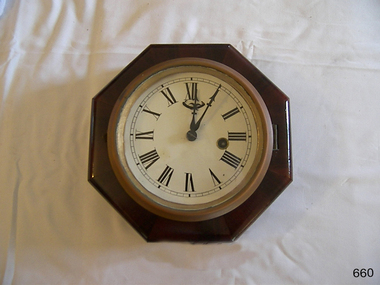
... stamping out clockwork gears rather than using castings, Jerome was producing the lowest-priced clocks in the world. That can only add to his significance as the major clock manufacture of the 19th century. Jerome may have made and lost, a fortune selling his clocks but was perhaps the most influential and creative person associated with the American clock business during the mid-19th century. ...Chauncey Jerome (1793–1868) was an American clock maker in the early to mid 19th century. He made a fortune selling his clocks, and his business grew quickly. Jerome was born in Canaan USA in 1793 son of a blacksmith and nail-maker. He began his career in Plymouth, making dials for long-case clocks where he learned all he could about clocks, particularly clock cases, and then went to New Jersey to make seven-foot cases for clocks mechanisms. In 1816 he went to work for Eli Terry making "Patent Shelf Clocks," learning how to make previously handmade cases using machinery. Deciding to go into business for himself, Jerome began to make cases, trading them to Terry for wooden movements. In 1822 Jerome moved his business to Bristol New Haven, opening a small shop with his brother Noble and began to produce a 30-hour and eight-day wooden clocks. By 1837 Jerome's company was selling more clocks than any of his competitors. A one-day wood-cased clock, which sold for six dollars had helped put the company on the map. A year later his company was selling that same clock for four dollars. The company also sold one line of clocks at a wholesale price of 75 cents and by 1841 the company was showing an annual profit of a whopping $35,000, primarily from the sale of its brass movements. In 1842 Jerome moved his clock-case manufacturing operation to St. John Street in New Haven. Three years later, following a fire that destroyed the Bristol plant, Jerome relocated the entire operation to Elm City factory. Enlarging the plant, the company soon became the largest industrial employer in the city, producing 150,000 clocks annually. In 1850 Jerome formed the Jerome Manufacturing Co. as a joint-stock company with Benedict & Burnham, brass manufacturers of Waterbury. In 1853 the company then became known as the New Haven Clock Co, producing 444,000 clocks and timepieces annually, then the largest clock maker in the world. Jerome's future should have been secure but in 1855 he bought out a failed Bridgeport clock company controlled by P.T. Barnum, which wiped him out financially, leaving the Jerome Manufacturing Co. bankrupt. Jerome never recovered from the loss. By his admission, he was a better inventor than a businessman. When Jerome went bankrupt in 1856 the New Haven Clock Company purchased the company. One of the primary benefits of Jerome purchasing New Haven in the first place was the good reputation of the Jerome brand and the network of companies that remained interested in selling its clocks. In England, Jerome & Co. Ltd. sold Jerome clocks for the New Haven company until 1904, when New Haven purchased the English firm outright. After his involvement with the New Haven Company in 1856, Jerome traveled from town to town, taking jobs where he could, often working for clock companies that had learned the business of clock making using Jerome's inventions. On returning to New Haven near the end of his life, he died, penniless, in 1868 at the age of 74. The company struggled on after Jerome's bankruptcy until after World War II, when the company endeavored to continue through disruptions caused by a takeover along with poor sales, finally having to fold its operations in 1960 a little more than 100 years after it had been founded. The item is significant as it is associated with Chauncey Jerome who had made a historic contribution to the clock making industry during the 19th century when he began to substitute brass mechanisms for wooden mechanisms in his clocks. This was said to be the greatest and most far-reaching contribution to the clock industry. Because of his discovery of stamping out clockwork gears rather than using castings, Jerome was producing the lowest-priced clocks in the world. That can only add to his significance as the major clock manufacture of the 19th century. Jerome may have made and lost, a fortune selling his clocks but was perhaps the most influential and creative person associated with the American clock business during the mid-19th century. Also, he had served his community as a legislator in 1834, a Presidential elector in 1852 and mayor of New Haven, Connecticut from 1854 to 1855.Eight day movement wall clock with Roman numerals, octagonal shaped rosewood veneered casing, hinged face with locking clip. Wound from front. Face has adjustment for Fast-to-Slow.Part paper label on back of case can just make out "Jerome" and "ight and One" probable meaning is "Eight and One Day" describing the movements operational time between winding the mechanism.flagstaff hill, warrnambool, shipwrecked-coast, flagstaff-hill, flagstaff-hill-maritime-museum, maritime-museum, shipwreck-coast, flagstaff-hill-maritime-village, clock maker, jerome & co, new haven, chauncey jerome, canaan -
 Flagstaff Hill Maritime Museum and Village
Functional object - Standard avoirdupois weights, Avery Ltd, 1950s
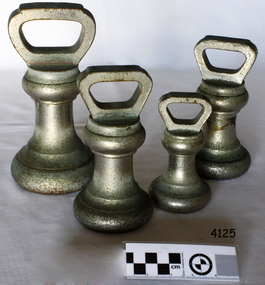
... business was in turn acquired by the US-American company Weigh-Tronix, who already owned Salter, and is today operating as Avery Weigh-Tronix. An item used used by grocers and merchants to weigh store bought goods around the 1950s. This item gives an insight into social history of the time. flagstaff hill warrnambool shipwrecked-coast flagstaff-hill flagstaff-hill-maritime-museum maritime-museum shipwreck-coast flagstaff-hill-maritime-village weight imperial weight imperial standard weights and measures imperial standard weight None Weights, metal, silver electroplated, 1 x 2lb, 2 x 4lb, 1 x 7lb. (4) all government stamped, made by Avery Ltd. ...A weight made in England by W&T Avery a British manufacturer of weights and weighing machines. The company was founded in the early 18th century and took the name W & T Avery in 1818. The undocumented origin of the company goes back to 1730 when James Ford established the business in the town of Digbeth. On Joseph Balden, the then company’s owner’s death in 1813 William and Thomas Avery took over his scale making business and in 1818 renamed it W & T Avery. The business rapidly expanded and in 1885 they owned three factories: the Atlas Works in West Bromwich, the Mill Lane Works in Birmingham and the Moat Lane Works in Digbeth. In 1891 the business became a limited company with a board of directors and in 1894 the shares were quoted on the London Stock Exchange. In 1895 the company bought the legendary Soho Foundry in Smethwick, a former steam engine factory owned by James Watt & Co. In 1897 the move was complete and the steam engine business was gradually converted to pure manufacture of weighing machines. The turn of the century was marked by managing director William Hipkins who was determined to broadening the renown of the Avery brand and transforming the business into specialist manufacture of weighing machines. By 1914 the company occupied an area of 32,000m² and had some 3000 employees. In the inter-war period, the growth continued with the addition of specialized shops for cast parts, enamel paints and weighbridge assembly and the product range diversified into counting machines, testing machines, automatic packing machines and petrol pumps. During the second world war, the company also produced various types of heavy guns. At that time the site underwent severe damage from parachute mines and incendiary bombs. Then from 1931 to 1973, the company occupied the 18th-century Middlesex Sessions House in Clerkenwell as its headquarters. Changes in weighing machine technology after World War II led to the closure of the foundry, the introduction of electronic weighing with the simultaneous gradual disappearance of purely mechanical devices. The continued expansion was partly achieved through a series of acquisitions of other companies. After almost a century of national and international expansion, the company was taken over by GEC in 1979. Keith Hodgkinson, managing director at the time, completed the turn-around from mechanical to electronic weighing with a complete overhaul of the product range of retail sales of industrial platform scales. In 1993 GEC took over the Dutch-based company Berkel and the Avery-Berkel name was introduced. In 2000 the business was in turn acquired by the US-American company Weigh-Tronix, who already owned Salter, and is today operating as Avery Weigh-Tronix. An item used used by grocers and merchants to weigh store bought goods around the 1950s. This item gives an insight into social history of the time.Weights, metal, silver electroplated, 1 x 2lb, 2 x 4lb, 1 x 7lb. (4) all government stamped, made by Avery Ltd.Noneflagstaff hill, warrnambool, shipwrecked-coast, flagstaff-hill, flagstaff-hill-maritime-museum, maritime-museum, shipwreck-coast, flagstaff-hill-maritime-village, weight, imperial weight, imperial standard weights and measures, imperial standard weight -
 Flagstaff Hill Maritime Museum and Village
Functional object - Weight Avoirdupois, Avery Ltd, 1940-1950s
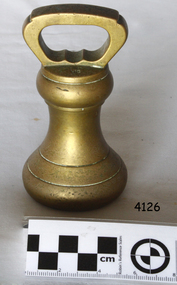
... business was in turn acquired by the US-American company Weigh-Tronix, who already owned Salter, and is today operating as Avery Weigh-Tronix. An item used used by grocers and merchants to weigh store bought goods around the 1950s. This item gives an insight into social history of the time. flagstaff hill warrnambool shipwrecked-coast flagstaff-hill flagstaff-hill-maritime-museum maritime-museum shipwreck-coast flagstaff-hill-maritime-village weight brass weight Stamped F27, 2lb. ...A weight made in England by W&T Avery a British manufacturer of weights and weighing machines. The company was founded in the early 18th century and took the name W & T Avery in 1818. The undocumented origin of the company goes back to 1730 when James Ford established the business in the town of Digbeth. On Joseph Balden, the then company’s owner’s death in 1813 William and Thomas Avery took over his scale making business and in 1818 renamed it W & T Avery. The business rapidly expanded and in 1885 they owned three factories: the Atlas Works in West Bromwich, the Mill Lane Works in Birmingham and the Moat Lane Works in Digbeth. In 1891 the business became a limited company with a board of directors and in 1894 the shares were quoted on the London Stock Exchange. In 1895 the company bought the legendary Soho Foundry in Smethwick, a former steam engine factory owned by James Watt & Co. In 1897 the move was complete and the steam engine business was gradually converted to pure manufacture of weighing machines. The turn of the century was marked by managing director William Hipkins who was determined to broadening the renown of the Avery brand and transforming the business into specialist manufacture of weighing machines. By 1914 the company occupied an area of 32,000m² and had some 3000 employees. In the inter-war period, the growth continued with the addition of specialized shops for cast parts, enamel paints and weighbridge assembly and the product range diversified into counting machines, testing machines, automatic packing machines and petrol pumps. During the second world war, the company also produced various types of heavy guns. At that time the site underwent severe damage from parachute mines and incendiary bombs. Then from 1931 to 1973, the company occupied the 18th-century Middlesex Sessions House in Clerkenwell as its headquarters. Changes in weighing machine technology after World War II led to the closure of the foundry, the introduction of electronic weighing with the simultaneous gradual disappearance of purely mechanical devices. The continued expansion was partly achieved through a series of acquisitions of other companies. After almost a century of national and international expansion, the company was taken over by GEC in 1979. Keith Hodgkinson, managing director at the time, completed the turn-around from mechanical to electronic weighing with a complete overhaul of the product range of retail sales of industrial platform scales. In 1993 GEC took over the Dutch-based company Berkel and the Avery-Berkel name was introduced. In 2000 the business was in turn acquired by the US-American company Weigh-Tronix, who already owned Salter, and is today operating as Avery Weigh-Tronix. An item used used by grocers and merchants to weigh store bought goods around the 1950s. This item gives an insight into social history of the time.Weight, brass, Stamped F27, 2lb.flagstaff hill, warrnambool, shipwrecked-coast, flagstaff-hill, flagstaff-hill-maritime-museum, maritime-museum, shipwreck-coast, flagstaff-hill-maritime-village, weight, brass weight -
 Flagstaff Hill Maritime Museum and Village
Functional object - Bellows, 1862-1875
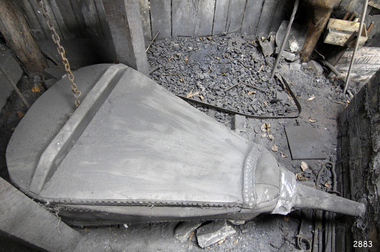
... The stamp with the text, Gold Medal 1862, was also used on the business’ advertising. ...The stamp with the text, Gold Medal 1862, was also used on the business’ advertising. ...This bellows was used at the Warrnambool Racecourse by Master Farrier, Brian Chapman (1931-2017), during the 1970s but its history before then is still being investigated. The bellows have continued to be used from 1978 at Flagstaff Hill's blacksmith's workshop. Even today, in 2021, this same bellows are used by a volunteer blacksmith as he demonstrate the skills and tells of the importance of the blacksmith trade to colonial Australia. This 1860s double-action bellows is a typical form of blacksmith's or shipsmith's bellows. The end is forge-fitted with an iron nozzle or tube, called a tuyere or Tue iron, which concentrates the air to fan the fire or furnace. Tuyeres were traditionally made of cow horn. The double-action design of this bellows efficiently moves air both in and out of the chambers in the one movement of the long handle. The bellows was manufactured by John C. Onions of Birmingham, England, between 1862 and 1875. The stamp with the text, Gold Medal 1862, was also used on the business’ advertising. In 1875 the company was registered and began using the name John C. Onions Limited. JOHN C. ONIONS - John C. (Collingwood) Onions (1841-1904) was the son of a bellows maker of the same name. Onions (born 1841) and his wife Helen married in 1867 and they named one of their children John Collingwood Onions (1868-1913), as was the family tradition. He was well known as a Birmingham manufacturer of patented bellows and other forge-related equipment. He sold to the wholesale and retail markets for both local and overseas customers, including the British colonies. An 1862 advertisement points out that John C. Onions was a “Bellows manufacturer and contractor to Her Majesty’s Honourable Board of Ordinance” and His Imperial Majesty the Emperor of the French [Napoleon Bonaparte]”. The advertisement includes a sketched portrait of the Emperor Napoleon III, and an Imperial Autograph Letter dated May 23, 1854, from Napoleon, Palace of the Tulleries to Mr J C Onions of Bradford Street, Birmingham. In 1863 the company registered a patent on portable forges. In 1871 there were eight employees. John C. Onions Limited became a registered company in 1875. In 1876 an advertisements included that the company were smiths for hearths and tools in general and showed a row of six medallions including one with “Napoleon III, Emperor” and his portrait, and another “ _ _ _ 1862 MEDAL”. Their advertising motto was “For Excellence of Quality”. In 1885 the company merged with William Allday and Sons to become Allday and Onions. This mid-19th century bellows has local historical significance as it were once used by blacksmiths at the Warrnambool Racecourse in the annual racing event that continues today. This bellows is significant as a working example of equipment used in the 1800 and 1900s in the trace of blacksmiths and other metal working smiths. The bellows is technologically significant as it shows the progress from simple bellows to the double-action bellows, a time saving and efficient improvement. The manufacturer John C. Onions is historically significant as a family business that began in the 1600s and continued up until the 1980s.Bellows; large, oval, mechanical double-action smith’s bellows, manually operated, in working condition. The paddles of wood that form the top, middle sections and base of the bellows have flexible leather pieces attached firmly between them, forming airtight double lungs. Cut-outs in the panels allow the bellows to fill with air then force it out. A long handle is connected to pump the bellows and control the quantity and force of the air. The blasts of air are forced through the metal nozzle or tuyere at the end of the bellows and into the forge’s fire. Inscriptions are impressed into the wood on the upper paddle or board of the bellows. There are three circular stamps containing text. Text impressed in the wooden upper paddle of the bellows has been assumed to read “JOHN C. ONIONS, PATENTEES & MANUFACTURERS, BIRMINGHAM””?” “EXTRA” “AWARDED FOR EXCELLENCE OF QUALITY”, made from the following readable text :- “JOHN C ONIONS“ “PATENT - - - & MAN - - - - - - - - -“, “BIR - - - - HAM“, “ _ ERA - - - - “- XTRA-“, “- - - - - - - FOR EXCELL-“ “OF - - - - ITY” Text in the stamp “ - - ECE - - “, “ - - - - - / 1862 / MEDAL”, “- ITY” flagstaff hill, warrnambool, shipwrecked-coast, flagstaff-hill, flagstaff-hill-maritime-museum, maritime-museum, shipwreck-coast, flagstaff-hill-maritime-village, john collingwood onions, john c onions, allday and onions, bellows, smith’s bellows, 19th century bellows, double-action bellows, double-acting bellows, double lung bellows, double chamber bellows, blacksmith tools, blacksmith trade, blacksmith craft, blacksmith equipment, forging equipment, john c onions patented double-action bellows, brian chapman, warrnambool racecourse, blacksmith, shipsmith, iron smith, mechanical bellows -
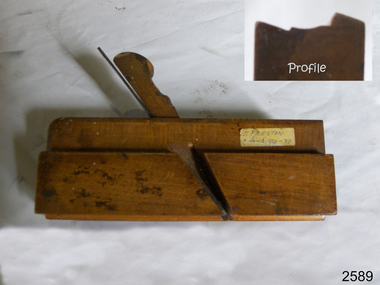 Flagstaff Hill Maritime Museum and Village
Tool - Wood moulding Plane, Edward Preston & Sons, Early 20th century
... business was carried on at Whittall Works, Cheston Street, Aston, Birmingham. Falling on hard times, the firm of Edward Preston & Sons was sold to the Birmingham firm of John Rabone & Sons in 1932, and shortly thereafter manufacturing rights to some of the Preston range of planes were sold to the Sheffield firm of C. & J. Hampton, who would later merge with the Record Tool Company. Some of the Preston planes were directly added to the Record line by the Hampton firm, while others were modified or discontinued altogether. Generally, all Preston wooden planes are stamped...business was carried on at Whittall Works, Cheston Street, Aston, Birmingham. Falling on hard times, the firm of Edward Preston & Sons was sold to the Birmingham firm of John Rabone & Sons in 1932, and shortly thereafter manufacturing rights to some of the Preston range of planes were sold to the Sheffield firm of C. & J. Hampton, who would later merge with the Record Tool Company. Some of the Preston planes were directly added to the Record line by the Hampton firm, while others were modified or discontinued altogether. Generally, all Preston wooden planes are stamped ...By the end of the nineteenth century, the firm of Edward Preston & Sons was founded in 1825, becoming one of England's leading makers of hand tools and in many ways a British counterpart to America's "Stanley" for its wide range of quality utilitarian tools at affordable prices. Edward Preston Sr. (1798–1883) was first listed as a plane-maker at 77 Lichfield Street in the Birmingham Directory of 1833, but later listings and advertisements assert that the business was started in 1825. Preston is likewise recorded as a plane-maker living with his family in Lichfield Street in the 1841 census, at which time his younger son Edward was 6 years old. Around 1850, his son Edward left school to join his father's business and is recorded in the 1851 census as a plane-maker at his father's address. He appears to have been quite a talented and resourceful young man, as he had later been able to start up his own "wood and brass spirit level manufacturing business at 97½ Lichfield Street by 1864. By 1866, Edward Jnr had added planes, routers, joiners, coach, gun, cabinet, and carpenters tools to his line, and the following year he moved his shop from his father's address and relocated to 26 Newton Street, before moving again to much larger premises at 22–24 Whittall Street. This location became known as the Whittall Works and later was the office and factory of Edward Preston & Sons, Ltd. In 1889 Edward Preston Jnr and his three sons were brought into the firm and the name was changed to Edward Preston & Sons, becoming Edward Preston & Sons Ltd on incorporation in 1898. Part of the firm's output was a healthy line of malleable and gun-metal planes and patent adjustable iron smoothers, shoulder planes, bull-nose, and block planes - a range that was expanded in later years. The 1901 catalog shows several styles of planes that were unique to the Preston brand, along with the usual styles which had already been set by other makers. The death of Edward Preston Jnr was reported in the Lichfield Mercury of 26 September 1913. "Mr. Preston was decided of an innovative turn of mind," the newspaper wrote, "as many of the machines in use at his works, as well as of the tools produced were the invention of himself and his three sons, who now manage the business." The report noted that at the time of his death, the business was carried on at Whittall Works, Cheston Street, Aston, Birmingham. Falling on hard times, the firm of Edward Preston & Sons was sold to the Birmingham firm of John Rabone & Sons in 1932, and shortly thereafter manufacturing rights to some of the Preston range of planes were sold to the Sheffield firm of C. & J. Hampton, who would later merge with the Record Tool Company. Some of the Preston planes were directly added to the Record line by the Hampton firm, while others were modified or discontinued altogether. Generally, all Preston wooden planes are stamped on the front of the plane, the shape, size, and character type of the stamp indicating the age of the plane. On some metal planes, all the parts were stamped with a number or symbol during manufacture. This number was used to re-assemble the parts following a batch process. Not all Preston tools are trade-marked clearly. Early shoulder, rebate, chariot planes, and chamfer rebates commonly appear without trademarks but may have assembly numbers. The "E P" trade-mark was already in use by 1882. The trade-mark "Preston" also appears on some later tools that were manufactured in Sheffield, England. These are generally smoothing planes and appear modern and very similar in construction to other modern manufacturers' planes.The item gives a snapshot of one of England's premier tool manufacturing companies at a time when significant industrial changes were occurring in manufacturing and business structures in the World that were beginning to affect social changes.Ogee moulding Plane Maker E Preston & Sons sticker with date 1904 -1931flagstaff hill, warrnambool, shipwrecked-coast, flagstaff-hill, flagstaff-hill-maritime-museum, maritime-museum, shipwreck-coast, flagstaff-hill-maritime-village -
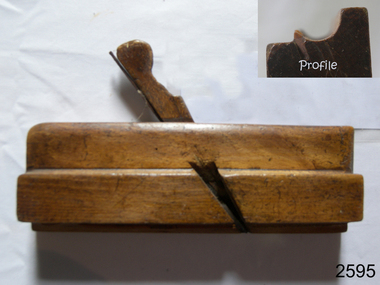 Flagstaff Hill Maritime Museum and Village
Tool - Moulding wood Plane, John Manners, 1792-1822
... business to Alexander Mathieson another collectable tool maker in the early 19th century. This item would be sought after by wood working tool collectors and it gives us a snapshot of how cabinet makers went about creating furniture during this time period. flagstaff hill warrnambool shipwrecked-coast flagstaff-hill flagstaff-hill-maritime-museum maritime-museum shipwreck-coast flagstaff-hill-maritime-village Stamped Manners (Maker) (also inside stamped GN, & W, M. ...A moulding plane is a specialised plane used for making the complex shapes found in wooden mouldings that are used to decorate furniture or other wooden objects. Traditionally, moulding planes were blocks of wear-resistant hardwood, often beech or maple, which were worked to the shape of the intended moulding. The blade or iron was likewise formed to the intended moulding profile and secured in the body of the plane with a wooden wedge. A traditional cabinetmakers shop might have many, perhaps hundreds, of moulding planes for the full range of work to be performed. Large crown mouldings required planes of six or more inches in width, which demanded great strength to push and often had additional peg handles on the sides, allowing the craftsman's apprentice or other workers to pull the plane ahead of the master who guided it. Company History: We know little of John Manners other than his firm was acquired by Alexander Mathieson & Sons in 1822, Mathieson were one of the leading makers of hand tools in Scotland at this time. 1792 was deemed by Mathieson & Sons to be that of its foundation and it was in all likelihood the year in which John Manners had also set up his plane-making workshop on Saracen Lane off the Gallowgate in the heart of Glasgow, not far from the Saracen's Head Inn. Alexander Mathieson (1797–1851) is recorded in 1822 as a plane-maker at 25 Gallowgate, but in the following year at 14 Saracen's Lane, it is presumed having taken over the premises of John Manners. The 1841 national census described Alexander Mathieson as a master plane-maker at 38 Saracen Lane with his son Thomas Adam working as a journeyman plane-maker, from 1822 we hear nothing regards what happened to John Manners.A vintage tool made by a known maker John Manners the item is a significant wood working tool from the late 18th century that today is quite rare. As this maker sold his business to Alexander Mathieson another collectable tool maker in the early 19th century. This item would be sought after by wood working tool collectors and it gives us a snapshot of how cabinet makers went about creating furniture during this time period. Wood Moulding plane Side Bead - Single Box type Stamped Manners (Maker) (also inside stamped GN, & W, M. Nicol also F W. probably owners of item over the years.)flagstaff hill, warrnambool, shipwrecked-coast, flagstaff-hill, flagstaff-hill-maritime-museum, maritime-museum, shipwreck-coast, flagstaff-hill-maritime-village -
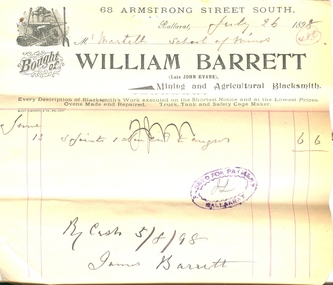 Federation University Historical Collection
Document - Invoice, James Barnett, William Barrett Mining and Agricultural Blacksmith Invoice, 26/7/1898 (exact)
... james ballarat school of mines barrett william barrett blacksmith armstrong st ballarat frederick martell ovens safety cage mining blacksmith agricultural blacksmith Stamped 'Passed for Payment Ballarat' Printed invoice with business address and image of a forge on the top. ...Printed invoice with business address and image of a forge on the top. The invoice was made at to Fred Martell of the Ballarat School of Mines, and was signed by James BarrettStamped 'Passed for Payment Ballarat'james, ballarat school of mines, barrett, william barrett, blacksmith, armstrong st ballarat, frederick martell, ovens, safety cage, mining blacksmith, agricultural blacksmith -
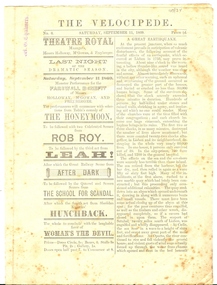 Federation University Historical Collection
Newspaper, Untitled, The Velocipede, No 6, Saturday September 11, 1869, 11/9/1869 (exact)
... Stamped 'W.G. Chalmers" Four page printed newspaper with an articles including 'A Great Earthquake' [Lisbon 1755) and 'To My Pipe'. Includes numerous advertisements relating to Ballarat businesses. ...A velocipede is a human-powered land vehicle with one or more wheels. Today the bicycle is the most common type of velocipede. In September 1869 Velocipede Sports were held in Ballarat. Four page printed newspaper with an articles including 'A Great Earthquake' [Lisbon 1755) and 'To My Pipe'. Includes numerous advertisements relating to Ballarat businesses.Stamped 'W.G. Chalmers"tobacco, holloway, mcgowan, freyberger, theatre royal, john stout, grocer, h anderson, watchmaker, ballarat monster tea company, e meyers, bridge street tea company, g whitty, george e jones, r benney, r wane, colonial fruit and provision company, david thomas, butcher, john buckle, tailor, w e jones, london house, j wheeler, j williams, bluchers, central tea company, pinnick and twycross, london dye works, west end venetian bliand manufactory, james allinson, saddler, wilmot oakey s self balancing bycycles, j walker, james bull, h glenny, photographer, jardine and quinn, t carrick, r lewis, j pullin, velocipede, w chalmers, chalmers, bicycle -
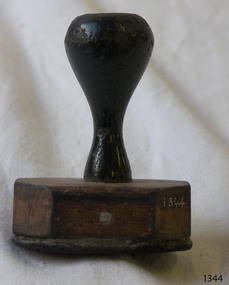 Flagstaff Hill Maritime Museum and Village
Equipment - Stamp, Cramond and Dickson, Mid-19th century
... ...business stamp...Flagstaff Hill Maritime Museum and Village Flagstaff Hill Maritime Village Maritime Museum Shipwreck Coast Great Ocean Road Warrnambool Cramond and Dickson Warrnambool business department store commerce Timor Street Liebig Street sales retail equipment office equipment stamp rubber stamp business stamp "Warrnambool" "Outfitters and Drapers" "Cramond and Dickson" Rubber stamp, octagonal-sided, with wooden handle. ...This stamp was made for and used by Cramond and Dickson, a large clothing store on the corner of Liebig and Timor Streets, Warrnambool. They traded from 185 – 1974. John Glass Cramond and James Dickson migrated from Scotland to Melbourne where they opened a Cramond and Dickson store in St Kilda. They were inspired by the growth in Warrnambool after a visit and opened a second store there in 1855. The Cramond and Dickson store, grocers – drapery – ironmongery - chemist, was located on the corner of Liebig and Timor Streets, Warrnambool (now the site of a Mexican restaurant). Both Cramond and Dickson were involved in the business and social aspects of Warrnambool’s community. Cramond and Dickson closed in 1974. An advertisement placed by Cramond and Dickson in The Camperdown Chronicle, Saturday 6th April 1895, states them “showing the latest novelties for the coming winter season” … “import directly from English and Continental manufacturers” … “representatives in London … always in touch with the Newest Continental Fashions” ... “having been established for so many years we know the requirements of the Western District”… “allow 5 percent discount on goods paid for at the time of purchase”.The rubber stamp is significant for its association with Cramond and Dickson, a large retail store established in Warrnambool and operating from 1855 to 1974. Both partners were prominent figures in the community.Rubber stamp, octagonal-sided, with wooden handle. The stamp was owned and used by Warrnambool's department store, Cramond & Dickson."Warrnambool" "Outfitters and Drapers" "Cramond and Dickson"flagstaff hill maritime museum and village, flagstaff hill, maritime village, maritime museum, shipwreck coast, great ocean road, warrnambool, cramond and dickson, warrnambool business, department store, commerce, timor street, liebig street, sales, retail equipment, office equipment, stamp, rubber stamp, business stamp
