
Showing 10 items matching "californian gold rush"
-
 Marysville & District Historical Society
Booklet (item) - Information booklet, Artworkz Tourism, Gold & Mining, Unknown
... ...californian gold rush...A booklet that was produced of information regarding gold and gold mining in Australia. gold gold mining californian gold rush australian gold rush new south wales gold rush victorian gold rush eureka stockade redgate diggings eglington mine redgate alexandra alluvial mining quartz reef mining walhalla quartz reef mine mount pleasant diggings artworks tourism A booklet that was produced of information regarding gold and gold mining in Australia. ...A booklet that was produced of information regarding gold and gold mining in Australia.A booklet that was produced of information regarding gold and gold mining in Australia.gold, gold mining, californian gold rush, australian gold rush, new south wales gold rush, victorian gold rush, eureka stockade, redgate diggings, eglington mine, redgate, alexandra, alluvial mining, quartz reef mining, walhalla quartz reef mine, mount pleasant diggings, artworks tourism -
Bendigo Historical Society Inc.
Certificate - Fortuna - Memorial of Conveyance, 6th May 1870
... The Ballerstedt and Lansell names are the foundation of Bendigo’s gold rush history, intrinsically linked to the sprawling and historic Fortuna Villa. Christopher Ballerstedt (a German migrant who arrived during the 1849 California gold rush) settled in Bendigo in 1855. ...The Ballerstedt and Lansell names are the foundation of Bendigo’s gold rush history, intrinsically linked to the sprawling and historic Fortuna Villa. Christopher Ballerstedt (a German migrant who arrived during the 1849 California gold rush) settled in Bendigo in 1855. ...A Memorial of Conveyance is a historical legal document or deed summary used to prove property ownership under the pre-Torrens General Law system. It recorded transactions like sales, mortgages, or transfers of land, providing an official record of the chain of ownership. The Ballerstedt and Lansell names are the foundation of Bendigo’s gold rush history, intrinsically linked to the sprawling and historic Fortuna Villa. Christopher Ballerstedt (a German migrant who arrived during the 1849 California gold rush) settled in Bendigo in 1855. He managed significant mining claims on the Victoria Reef and built a modest home on the site that would later become Fortuna Villa. Christopher and his son Theodore were among the first to prove that deep underground quartz reefs could yield massive amounts of gold. George Lansell, famously known as the "Quartz King of Bendigo," purchased the Ballerstedt mines, machinery, and residence in 1870 for £20,000. Lansell expanded the modest home into a lavish 60-room, multi-story mansion and created an opulent estate featuring ornamental lakes and Roman-style bathsFortuna - Memorial of Conveyance of the Fortuna Property This item contains the following documents: 11217.87a Fortuna - Memorial of Conveyance of the Fortuna Property from Theodore Ballerstedt to George Lansell for 20 thousand pounds on the 6th May 1870non-fictionbendigo, fortuna, george lansell, ballerstedt -
Bendigo Historical Society Inc.
Document - Fortuna Article - History Notes - Author Unknown, 1990s
... This document provides a historical overview of the Fortuna property and the Bendigo goldfields, focusing on key figures and developments from the 1850s to the early 20th century: Christopher and Theodore Ballerstedt were early mining magnates who arrived in Bendigo after the California Gold Rush. Christopher Ballerstedt began systematic mining on Victoria Reef in 1855, helping to prove that gold yields could remain high at greater depths. ...This document provides a historical overview of the Fortuna property and the Bendigo goldfields, focusing on key figures and developments from the 1850s to the early 20th century: Christopher and Theodore Ballerstedt were early mining magnates who arrived in Bendigo after the California Gold Rush. Christopher Ballerstedt began systematic mining on Victoria Reef in 1855, helping to prove that gold yields could remain high at greater depths. ...This document provides a historical overview of the Fortuna property and the Bendigo goldfields, focusing on key figures and developments from the 1850s to the early 20th century: Christopher and Theodore Ballerstedt were early mining magnates who arrived in Bendigo after the California Gold Rush. Christopher Ballerstedt began systematic mining on Victoria Reef in 1855, helping to prove that gold yields could remain high at greater depths. George Lansell was Known as "The Quartz King," Lansell became one of Australia's most successful gold mine owners and speculators, significantly influencing the region's mining industry from 1871 to 1935. Gold was discovered in Bendigo in 1851, transforming the area from grazing land to a bustling mining hub. The initial gold rush led to rapid population growth and the establishment of government infrastructure, with Sandhurst (now Bendigo) developing as the main township. Early mining focused on alluvial gold, but as surface deposits declined by 1856, attention shifted to quartz reef mining.Victoria Reef, discovered in 1854, became the first and one of the most important quartz reefs in the area. Technological advancements, such as steam crushing plants and stem winding equipment, enabled deeper mining and increased yields, leading to the formation of mining companies by 1857. The property is notable for its association with both the Ballerstedt and Lansell families, reflecting the broader history of gold mining innovation and entrepreneurship in Bendigo. Maud Nott's husband was an investor. They had plans to develop the Ball Room at Fortuna but this did not eventuate.Fortuna Article - Handout Notes for a Tour, by the Australian Government Department of defence support group This item contains the following document: 11217.62a Nine pages of notes on: George and Edith Lansells, "The Quartz King", Bendigo Mines, Maude Nott, and the Army Survey Regiment.non-fictionbendigo, fortuna, george lansell, edith lansell, maud nott -
 Bendigo Historical Society Inc.
Map - GUIDE MAP OF BENDIGO & EAGLEHAWK, Late 1920's
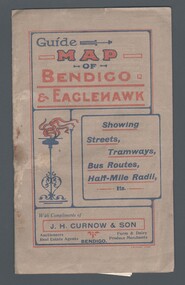
... Shows the location of Sailors Gully, Peg-Leg Gully, Jobs Gully, California Gully, Long Gully, Ironbark Gully, Golden Gully, Poverty Gully, Sheepshead Gully, Charcoal Gully, Eaglehawk Creek, Bendigo Creek and Back Creek. Contains interesting facts about Bendigo - Area 7,900 acres. Population - 26,000. First Council elected - 1855. Proclaimed a Borough - 1863. Proclaimed a City - 1871. Gold Rush...Shows the location of Sailors Gully, Peg-Leg Gully, Jobs Gully, California Gully, Long Gully, Ironbark Gully, Golden Gully, Poverty Gully, Sheepshead Gully, Charcoal Gully, Eaglehawk Creek, Bendigo Creek and Back Creek. Contains interesting facts about Bendigo - Area 7,900 acres. Population - 26,000. First Council elected - 1855. Proclaimed a Borough - 1863. Proclaimed a City - 1871. Gold Rush ...Map. Guide Map of Bendigo & Eaglehawk. Light brown coloured booklet containing folded map of Bendigo and Eaglehawk. Outer cover is printed in blue and red ink and states - With compliments of J H Curnow & Son, Auctioneers, Real Estate Agents, Farm & Dairy Produce Merchants, Bendigo. Printed by J B Young, Lithographer. Map shows tramways & bus routes. Map shows Agricultural Showgrounds located between Park Street, Water Street, Barnard Street and Bridge Lane. Also shows Acclimitization Reserve located behind The Botanical Gardens at White Hills. Shows the location of Sailors Gully, Peg-Leg Gully, Jobs Gully, California Gully, Long Gully, Ironbark Gully, Golden Gully, Poverty Gully, Sheepshead Gully, Charcoal Gully, Eaglehawk Creek, Bendigo Creek and Back Creek. Contains interesting facts about Bendigo - Area 7,900 acres. Population - 26,000. First Council elected - 1855. Proclaimed a Borough - 1863. Proclaimed a City - 1871. Gold Rush broke out - 1851. For first 10 years gold yield averaged 8,600 ozs. per week . Total gold yield to 1923 - 572 tons valued at 82,000,000 pounds. Deepest mines - Victoria Quartz 4,614 ft., New Chum Railway 4,318 ft. 13 mines over 3.000 ft. deep. 53 mines over 2,000 ft. deep. Sewering of City commenced 1922, all principal buildings now sewered. Map printed by Arnall & Jackson, General Printers, Stationers & Engravers, 476 Collins Street. Map displays advertisement for J H Curnow & Son, Bendigo's leading Auctioneer and Estate Agents, Mitchell & Queen Sts. Bendigo. Map Scale 20 chs. = 1 in.cottage, miners, guide map of bendigo and eaglehawk -
 Bendigo Historical Society Inc.
Map - GUIDE MAP OF BENDIGO & EAGLEHAWK, Late 1920's
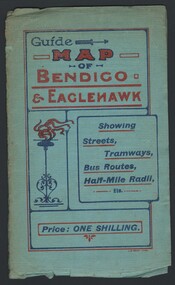
... Shows the location of Sailors Gully, Peg-Leg Gully, Jobs Gully, California Gully, Long Gully, Ironbark Gully, Golden Gully, Poverty Gully, Sheepshead Gully, Charcoal Gully, Eaglehawk Creek, Bendigo Creek and Back Creek.Contains interesting facts about Bendigo:- Area - 7,900 acres, Population - 26,000, First Council elected - 1855, Proclaimed a City - 1871. Gold Rush...Shows the location of Sailors Gully, Peg-Leg Gully, Jobs Gully, California Gully, Long Gully, Ironbark Gully, Golden Gully, Poverty Gully, Sheepshead Gully, Charcoal Gully, Eaglehawk Creek, Bendigo Creek and Back Creek.Contains interesting facts about Bendigo:- Area - 7,900 acres, Population - 26,000, First Council elected - 1855, Proclaimed a City - 1871. Gold Rush ...Map. Guide map of Bendigo & Eaglehawk. Folded map of Bendigo & Eaglehawk with blue outer cover booklet. Map is compiled by E E Parker, Eaglehawk. Map shows tramways, bus routes and cost one shilling. Map shows Agricultural Showgrounds located between Park Street, Water Street, Barnard Street and Bridge Lane. Also shows Acclimitization Reserve located behind the Botanical Gardens at White Hills. Shows the location of Sailors Gully, Peg-Leg Gully, Jobs Gully, California Gully, Long Gully, Ironbark Gully, Golden Gully, Poverty Gully, Sheepshead Gully, Charcoal Gully, Eaglehawk Creek, Bendigo Creek and Back Creek.Contains interesting facts about Bendigo:- Area - 7,900 acres, Population - 26,000, First Council elected - 1855, Proclaimed a City - 1871. Gold Rush broke out - 1851. For first 10 years gold yield averaged 8,600 ozs. Per week. Total gold yield to 1923 - 572 tons valued at 82,000,000 pounds. Deepest mines - Victoria Quartz 4,614 ft., New Chum Railway 4,318 ft., 13 mines over 3,000ft. deep, 53 mines over 2,000 ft. deep. Sewering of City commenced 1922. All principal buildings now sewered. Map printed by Arnall & Jackson, General Printers, Stationers & Engravers, 476 Collins Street. Outer map blue cover printed in red and blue ink by J B Young, Lithographer. Map displays advertisement for Bendigo Timber Co. Outer blue cover displays advertisement for Campbell Connelly & Co. Pty. Ltd, Ironmongers, Timware Manufacturers, Plumbers, Sewerage Contractors, High and Forest Sts, Bendigo 9outside back cover) and for Hartleys ( J L Shoosmith) Bendigo, displaying Indian Motor Cycles (inside back cover).map, bendigo, township, guide map of bendigo & eaglehawk -
 Bendigo Historical Society Inc.
Book - THE MEMOIRS OF GEORGE DEWES, 2005
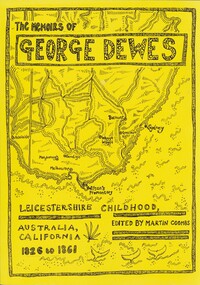
... BHS Collection BOOK life on goldfields Gold rush Life on Gold Fields Bendigo Gold Fields. Martin Coombs The Memoirs of George Dewes, Leicestershire Childhood, Australia, California 1826 - 1861. 231 pages with pages 132 to 138 relating to Bendigo, photographs and maps. ...BHS CollectionThe Memoirs of George Dewes, Leicestershire Childhood, Australia, California 1826 - 1861. 231 pages with pages 132 to 138 relating to Bendigo, photographs and maps.Martin Coombsbook, life on goldfields, gold rush, life on gold fields, bendigo gold fields. -
Clunes Museum
Document
... GOLD DISCOVERY IN CALIFORNIA, USA. ESMOND LEFT CLUNES 1849 RETURNING TO AUSTRALIA ABOARD THE 'EMMA" IN 1851 ON JUNE 29TH 1851, HE DISCOVERED GOLD IN QUARTZ AND ALLUVIUM. THE GEELONG ADVERTISER REPORTED THE DISCOVERY AND THE GREAT GOLD RUSH...GOLD DISCOVERY IN CALIFORNIA, USA. ESMOND LEFT CLUNES 1849 RETURNING TO AUSTRALIA ABOARD THE 'EMMA" IN 1851 ON JUNE 29TH 1851, HE DISCOVERED GOLD IN QUARTZ AND ALLUVIUM. THE GEELONG ADVERTISER REPORTED THE DISCOVERY AND THE GREAT GOLD RUSH ...JAMES ESMOND BORN AT ENNISCORTHY IRELAND1822., HE ARRIVED IN AUSTRALIA FEBRUARY 13TH 1840. HE WORKED FOR DONALDCAMERON ON (CLUNES RUN) AS A SHEPHERD FROM 1842 - 1846. LURED BY GOLD DISCOVERY IN CALIFORNIA, USA. ESMOND LEFT CLUNES 1849 RETURNING TO AUSTRALIA ABOARD THE 'EMMA" IN 1851 ON JUNE 29TH 1851, HE DISCOVERED GOLD IN QUARTZ AND ALLUVIUM. THE GEELONG ADVERTISER REPORTED THE DISCOVERY AND THE GREAT GOLD RUSH STARTED. JAMES ESMOND TOOK PART IN EUREKA UPRISING WITH PETER LALOR.1, PHOTO COPY OF PHOTOGRAPH OF JAMES ESMOND 1822-1890 2, SUMMARY OF THE LIFE OF JAMES ESMONDjames esmond, donald cameron, gold mining, local history -
 Bendigo Historical Society Inc.
Book - "Eaglehawk. Recollections of the Borough", 1995
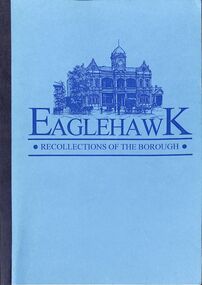
... This event sparked a gold rush in the area leading to the establishment of the township in 1852, the population quickly building up to 40,000. The Post Office opened on 1 August 1857. In 1862, the Borough of Eaglehawk was established, which included the nearby township of California Gully. ...This event sparked a gold rush in the area leading to the establishment of the township in 1852, the population quickly building up to 40,000. The Post Office opened on 1 August 1857. In 1862, the Borough of Eaglehawk was established, which included the nearby township of California Gully. ...Eaglehawk is a suburb within the City of Greater Bendigo and a former gold-mining town in Victoria, Australia. Eaglehawk is situated to the north-west of Bendigo on the Loddon Valley Highway. The highway is known locally as High Street until the intersection with Sailors Gully Road (Bendigo - Pyramid Road) and as Peg Leg Road to the west. Located on this intersection is Brassey Square which is the location of the town hall. Next to the town hall is the former post office and the Mechanics' Institute. To the north of the intersection on Napier Street is Canterbury Park and Lake Neangar while the Swan Hill railway line and the local railway station are located to the south. The original inhabitants of the area were the Dja Dja Wurrung. Following the discovery of gold at Sandhurst (Bendigo) in October 1851, Joseph Crook discovered a gold nugget while searching for stray horses. This event sparked a gold rush in the area leading to the establishment of the township in 1852, the population quickly building up to 40,000. The Post Office opened on 1 August 1857. In 1862, the Borough of Eaglehawk was established, which included the nearby township of California Gully. After the alluvial gold was exhausted in 1893, reef mines were established, with 300 tonnes of gold extracted. Most of the mines had closed by the 1890s and by 1947 the population had decreased substantially to 4,090. The Eaglehawk Magistrates' Court closed on 1 January 1990. In 1994 the Borough of Eaglehawk was amalgamated by the Victorian Government with four other councils to become the city of Greater Bendigo."Eaglehawk. Recollections of the Borough" by Jodie Clough, Et al. Soft cover. Sky blue cardboard cover with navy blue binding tape along spine. Title written in navy blue on front cover. Drawing of Eaglehawk Town Hall in front cover in navy blue. No page numbers. Illustrations in black ink throughout. Produced under the LEAP Program, a federally funded project for the long-term unemployed referred by the Commonwealth Employment Service. Has content page at front, but no index. Interviewees listed inside back cover with contact phone numbers. mining, education, eaglehawk -
 Bendigo Historical Society Inc.
Book - "A Fly on the Wall", 2010
... This event sparked a gold rush in the area leading to the establishment of the township in 1852, the population quickly building up to 40,000. The Post Office opened on 1 August 1857. In 1862, the Borough of Eaglehawk was established, which included the nearby township of California Gully. ...This event sparked a gold rush in the area leading to the establishment of the township in 1852, the population quickly building up to 40,000. The Post Office opened on 1 August 1857. In 1862, the Borough of Eaglehawk was established, which included the nearby township of California Gully. ...Eaglehawk is a suburb within the City of Greater Bendigo and a former gold-mining town in Victoria, Australia. In 1901 Eaglehawk had a total population of 8130. Eaglehawk is situated to the north-west of Bendigo on the Loddon Valley Highway. The highway is known locally as High Street until the intersection with Sailors Gully Road (Bendigo - Pyramid Road) and as Peg Leg Road to the west. Located on this intersection is Brassey Square which is the location of the town hall. Next to the town hall is the former post office and the Mechanics' Institute. To the north of the intersection on Napier Street is Canterbury Park and Lake Neangar while the Swan Hill railway line and the local railway station are located to the south. The original inhabitants of the area were the Dja Dja Wurrung. Following the discovery of gold at Sandhurst (Bendigo) in October 1851, Joseph Crook discovered a gold nugget while searching for stray horses. This event sparked a gold rush in the area leading to the establishment of the township in 1852, the population quickly building up to 40,000. The Post Office opened on 1 August 1857. In 1862, the Borough of Eaglehawk was established, which included the nearby township of California Gully. After the alluvial gold was exhausted in 1893, reef mines were established, with 300 tonnes of gold extracted. Most of the mines had closed by the 1890s and by 1947 the population had decreased substantially to 4,090. The Eaglehawk Magistrates' Court closed on 1 January 1990. In 1994 the Borough of Eaglehawk was amalgamated by the Victorian Government with four other councils to become the city of Greater Bendigo."A Fly on the Wall. Eaglehawk. 1901" written by Noelene Wild. Published in 2010. ISBN: 978-0-9579939-3-8. Soft cover. Sky blue front cover, spine and back cover. Title, author's name and picture of Eaglehawk Town Hall on front cover in maroon. 93 pp. Has index. Contains black and white images. List of all rate holders in the Borough of Eaglehawk towards back of book. eaglehawk, gold, mining, population -
 Bendigo Historical Society Inc.
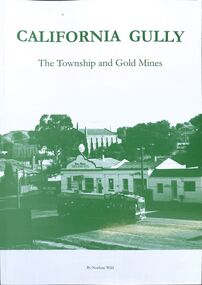
Book - "California Gully. The Township and Gold Mines", 2009
... California and worked in the gully searching for alluvial gold. In the 1850s both California Gully and Eaglehawk became established townships. In the 1960's much land was opened up for housing bringing a slow but steady increase of new families to the area. California Gully is a suburb of Bendigo, 4 km north-west of the city centre. It was formed around the California Gully where it intersects the Eaglehawk Road. Gold was discovered in California Gully in 1852, and it was rushed...California and worked in the gully searching for alluvial gold. In the 1850s both California Gully and Eaglehawk became established townships. In the 1960's much land was opened up for housing bringing a slow but steady increase of new families to the area. California Gully is a suburb of Bendigo, 4 km north-west of the city centre. It was formed around the California Gully where it intersects the Eaglehawk Road. Gold was discovered in California Gully in 1852, and it was rushed ...It was presumed that California Gully was named after miners who came from California and worked in the gully searching for alluvial gold. In the 1850s both California Gully and Eaglehawk became established townships. In the 1960's much land was opened up for housing bringing a slow but steady increase of new families to the area. California Gully is a suburb of Bendigo, 4 km north-west of the city centre. It was formed around the California Gully where it intersects the Eaglehawk Road. Gold was discovered in California Gully in 1852, and it was rushed by miners from the Californian gold diggings. A large influx of Cornish miners occurred in the 1870s, strengthening a Methodist tradition which had established the first school in 1857. A township formed in Eaglehawk Road, and is identified by the White Horse Hotel and the Uniting (former Methodist) church behind the hotel. Both were built during the early 1870s. California Gully's mines had a long production period, the North Johnson group running from 1861 to 1920. It was on the Eaglehawk tram line which closed in 1973. In 1883 a large school building was erected on an elevated site west of the town, known as Bell Topper Hill. (The name apparently came about from English miners making a bonfire of their bell topper hats, found to be unsuitable for Australian conditions.) The school is on the Victorian Heritage Register, along with the former Methodist church. The school replaced a building (1862) in School Street which became a mechanics' institute. The California Gully primary school had 147 pupils in 2014. California Gully has a number of buildings and sites which retain elements of the goldmining past. There are two reserves with ovals and a shopping centre near the Woolpack Hotel. In 1968 the Anglican church opened the St Lawrence Court aged care centre in Upper California Gully Road. Three years later a large Stafford Ellinson menswear factory was opened. It lasted until 2002, employing over 300 people. Since then, St Lawrence Court has become the largest local employer."California Gully. The Township and Gold Mines" written by Noelene Wild. Soft cover. 84 PP. Sky blue front cover, spine and back cover. Title on front cover in green text. Has image of California Gully in the 1960's in green. Has index. Has black and white images throughout. Published in 2009 by Noelene and Ian Wild. ISBN 978-0-9579939-2-1.mining, miners, california gully, gold, eaglehawk
