
Showing 41 items matching "camp 2 artists"
-
 Tatura Irrigation & Wartime Camps Museum
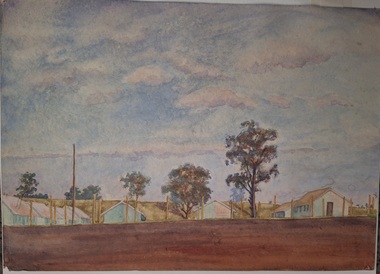
Photograph, Camp 2 sketch by Fred Lowenstein, 1942 (painting)
... ...Camp 2 artists...Photograph of painting by Fred Lowenstein (name changed to Fred Lowen). dunera camp 2 Fred Lowen Fred Lowenstein WW2 internee artists Camp 2 artists internment camp 2 artists Photographic copy of a water colour painting of internment camp huts with timber posts in foreground. ...Photograph of painting by Fred Lowenstein (name changed to Fred Lowen).Photographic copy of a water colour painting of internment camp huts with timber posts in foreground.dunera, camp 2, fred lowen, fred lowenstein, ww2 internee artists, camp 2 artists, internment camp 2 artists -
Tatura Irrigation & Wartime Camps Museum
Painting - Painting - Watercolour, Theodor Engel, Tatura 1941, 1941
... ...camp 2 artists...Camp 2. Donated by son of Lieutenant F. Hardy, Paymaster at Camp 2 theodor engel col colliver camp 2 artists internment camp 2 artists don hardy lieutenant hardy Tatura 1941 Theodor Engel. on the back: n. ...Painted by Theodor Engel whilst in Camp 2. Donated by son of Lieutenant F. Hardy, Paymaster at Camp 2Framed watercolour painting of 4 army huts, 2 trees, garden structure and 2 people sitting at a bench. Gold colored wooden frame.Tatura 1941 Theodor Engel. on the back: n. Col Colliver, Shepparton high above all otherstheodor engel, col colliver, camp 2 artists, internment camp 2 artists, don hardy, lieutenant hardy -
 Tatura Irrigation & Wartime Camps Museum
Painting - Painting - Watercolour, About Tatura Camp, Victoria 1941, 1941
... internment camp 2 artists...Made and used by internee at Camp 2. internment camp 2 artists internment camp 2 mary clare adam murritz leonhard adam Leonhard Adam. ...Made and used by internee at Camp 2.Watercolour painting of war time camp depicting huts and trees, cloud formation, sunrise/sunset. Leonhard Adam. About Tatura Camp Victoria 1941internment camp 2 artists, internment camp 2, mary clare adam murritz, leonhard adam -
 Federation University Historical Collection
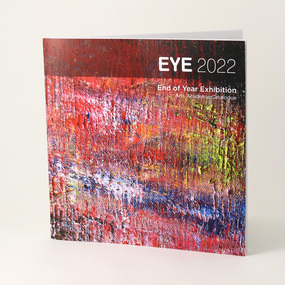
Booklet - Exhibition catalogue, EYE, End of Year Exhibition, Arts Academy Catalogue, 2022, 2022
... artist statements. Introduction by Associate Professor Richard Chew, Director, Arts Academy, Institute of Education, Arts and Community. Notes a return to face-to-face teaching. Catalogue includes students from Diploma of Graphic Design (9), Advanced Diploma of Graphic Design (4), Bachelor of Visual Art (6), Bachelor of Communication Design (2), Graduate Diploma of Ceramics (4), Bachelor of Fine Art (2). Publication design by Angas Dorsett, Jack Trevey, Ashleigh Freeman, Susan Stanley and Jason Grace. Last page lists acknowledgements of staff and supporters. Inside back cover lists sponsors. Federation University Visual Arts Graphic Design Arts Academy Camp ...Pages feature student works, contacts and artist statements. Introduction by Associate Professor Richard Chew, Director, Arts Academy, Institute of Education, Arts and Community. Notes a return to face-to-face teaching. Catalogue includes students from Diploma of Graphic Design (9), Advanced Diploma of Graphic Design (4), Bachelor of Visual Art (6), Bachelor of Communication Design (2), Graduate Diploma of Ceramics (4), Bachelor of Fine Art (2). Publication design by Angas Dorsett, Jack Trevey, Ashleigh Freeman, Susan Stanley and Jason Grace. Last page lists acknowledgements of staff and supporters. Inside back cover lists sponsors.Catalogue to accompany the Federation University, Bachelor of Visual Arts graduate exhibition, 2022. 48 page + 4 page cover, saddle-stitched book, full colour throughout.federation university, visual arts, graphic design, arts academy, camp street campus, exhibition, eye -
 Eltham District Historical Society Inc
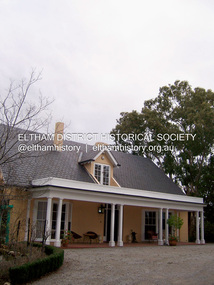
Photograph - Digital Photograph, Marguerite Marshall, 'Landscape', 60 Lavender Park Road, Eltham South, 24 June 2008
... 2 Leason also painted 28 portraits of the last full-blooded aboriginals in Victoria at Lake Tyers in Gippsland, most of which are in a private collection. In Sydney Leason illustrated Henry Lawson’s Selected Poems and worked for The Bulletin. Leason had begun his career at 13 as an apprentice lithographic artist at Sands and MacDougall. He attended night classes at the National Gallery and the Victorian Artists Society. Leason first visited Eltham in 1910 to paint with fellow artist William ‘Jock’ Frater. They camped...2 Leason also painted 28 portraits of the last full-blooded aboriginals in Victoria at Lake Tyers in Gippsland, most of which are in a private collection. In Sydney Leason illustrated Henry Lawson’s Selected Poems and worked for The Bulletin. Leason had begun his career at 13 as an apprentice lithographic artist at Sands and MacDougall. He attended night classes at the National Gallery and the Victorian Artists Society. Leason first visited Eltham in 1910 to paint with fellow artist William ‘Jock’ Frater. They camped ...Built by artist and cartoonist Percy Leason in 1927 in what was then New Street but renamed Lavender Park Road in the late 1950s/early 1960s. Covered under Heritage Overlay, Nillumbik Planning Scheme. Published: Nillumbik Now and Then / Marguerite Marshall 2008; photographs Alan King with Marguerite Marshall.; p121 Said to be a genius, cartoonist Percy Leason’s career was at its peak when in 1925 to 1926 he built his home at New Street (now Lavender Park Road) Eltham. The Herald newspaper owner, Sir Keith Murdoch, had hired Leason for his newly acquired Melbourne Punch magazine at a salary of £1750, making him ‘one of the highest paid cartoonists in the world’.1 With this salary and financial help from Murdoch, Leason was able to build his lovely home in Eltham. At the crest of a sweeping drive, the home now two-storey in white brick with a gabled grey slate roof and dormer windows is flanked by an extension built by another owner in the 1980s. Leason lived in the home with his wife, Isabel and children, until 1937, when he left for the United States of America, where he lived until his death in 1959. The four-bedroom house and garden would have been well-suited to bringing up his family and to entertaining their friends in style. Large airy rooms have high ceilings with moulded plaster, timber floors and several are brightened with bay windows. Leason made friends with many of the artists and personalities who gravitated to Eltham. Around 1931 Justus Jörgensen, founder of the Montsalvat Artists’ Colony, helped Leason build his large studio at the back of the house. Another friend was journalist Mervyn Skipper, father of jeweller and sculptor Matcham, and artists Helen and Sonia. Leason’s teacher, artist Max Meldrum, also visited and rented accommodation in Eltham, opposite Wingrove Park. Punch folded in 1925, but Leason continued as cartoonist for Table Talk. In 1926 Leason began the cartoons of a mythical Australian town Wiregrass, which were inspired by Kaniva, his home town. The art gallery in Main Road Eltham was named Wiregrass in Leason’s honour. Leason completed 1000 drawings from 1919 to 1937, which author Garrie Hutchinson claimed, were technically unsurpassed and had regional and universal interest. Leason’s acute observations of country life stemmed from his childhood in Kaniva in Victoria’s western Wimmera, where he was born, the son of a selector, in 1889. Meldrum claimed that Leason could name every plant and the habits of every animal.2 Leason also painted 28 portraits of the last full-blooded aboriginals in Victoria at Lake Tyers in Gippsland, most of which are in a private collection. In Sydney Leason illustrated Henry Lawson’s Selected Poems and worked for The Bulletin. Leason had begun his career at 13 as an apprentice lithographic artist at Sands and MacDougall. He attended night classes at the National Gallery and the Victorian Artists Society. Leason first visited Eltham in 1910 to paint with fellow artist William ‘Jock’ Frater. They camped near Bible and Pitt Streets and along the Diamond Creek on the site of the present Eltham Retirement Centre. Despite his success as a cartoonist, Leason wanted to be recognised as a serious painter and for his anthropological work.3 He was also conservative and felt uncomfortable with the modern art scene in Melbourne.4 So he left for the United States of America to work as a painter. Ironically his time in New York saw the burgeoning of modern art, notably by artists such as Jackson Pollock. But Leason found his niche by running an art school, painting society portraits and illustrating books and magazines.This collection of almost 130 photos about places and people within the Shire of Nillumbik, an urban and rural municipality in Melbourne's north, contributes to an understanding of the history of the Shire. Published in 2008 immediately prior to the Black Saturday bushfires of February 7, 2009, it documents sites that were impacted, and in some cases destroyed by the fires. It includes photographs taken especially for the publication, creating a unique time capsule representing the Shire in the early 21st century. It remains the most recent comprehenesive publication devoted to the Shire's history connecting local residents to the past. nillumbik now and then (marshall-king) collection, landscape, lavender park road, percy leason, new street -
 Eltham District Historical Society Inc
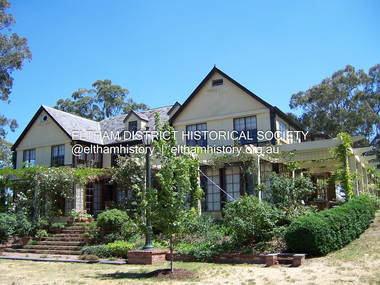
Photograph - Digital Photograph, Marguerite Marshall, Jelbart home, 93 Arthur Street, Eltham, 11 November 2006
... But a shortage of building materials following World War Two hampered their plans to build their new home, so they followed the example of the Eltham Artists’ Colony (later called Montsalvat) and used mud-bricks and recycled materials.2 With great determination the family and friends constructed their house. Massive timber frames and huge quantities of mud-bricks were made on site. The barn was built first in 1945, and two years later, while camping...But a shortage of building materials following World War Two hampered their plans to build their new home, so they followed the example of the Eltham Artists’ Colony (later called Montsalvat) and used mud-bricks and recycled materials.2 With great determination the family and friends constructed their house. Massive timber frames and huge quantities of mud-bricks were made on site. The barn was built first in 1945, and two years later, while camping ...Situated at the top of the hill in Arthur Street, the former Jelbart residence and barn were part of a major change that transformed Eltham's character in the late 1960s. Built from the mid 1940s through mid 1950s when Eltham was a rural community, the Jelbart residence and barn are all that remain of a family property of some 250 acres (100 ha). With growing population pressures, in the late 1960s, owners Ron and Yvonne Jelbart decided to subdivide their property creating the Woodridge Estate in the early 1970s, a major factor towards the transformation of Eltham to the suburb it is today. The Jelbarts had moved to Eltham in the early 1940s when they purchased a poultry farm in New Street, now Lavendar Park Road. (The local Black Friday bushire of January 13, 1939 had started at C.A. (Clarrie) Hurst’s Eltham Poultry Farm and Hatchery in New Street.) Jelbart was primarily a businessman importing office machinery but desired farm beef and dairy cattle so the couple purchased the virgin bushland at what was then at the end of a dirt road, Arthur Street. With post war shortages of most building materials, they followed the example of the Eltham Artists' Colony (later called Montsalvat) and built their home from mud-bricks and recycled materials. The barn was first to be completed in 1945 which they made their home whilst building the main residence. It took eight years to complete the two buildings. Both the main residence and the barn are now separate homes, and along with the remaining property being sub-divided further in 1998 are now part of the Kinloch Gardens Estate at 93 Arthur Street. Covered under Heritage Overlay, Nillumbik Planning Scheme. Published: Nillumbik Now and Then / Marguerite Marshall 2008; photographs Alan King with Marguerite Marshall.; p139 Standing on a hilltop at Arthur Street, Eltham, the Jelbart residence and former barn were part of a major change that transformed Eltham’s character in the late 1960s. Built from the late 1940s to the mid 1950s when Eltham was a rural community, they are all that remain of what was once a family property of around 250 acres (100 ha). As population pressure increased in the late 1960s, owners Ron and Yvonne Jelbart, decided to subdivide their property. The break-up of this property into the Woodridge Estate in the early 1970s, was a major factor towards transforming Eltham into the suburb it is today.1 Although standing only a few minutes from Eltham’s busy hub and hundreds of houses in Woodridge, scarcely any urban sound disturbs the peace. Views from the two buildings are almost exclusively of trees and extend to Mt. Dandenong to the south-east, the Great Divide to the north, and Melbourne city to the south-west. The Jelbarts had lived in Eltham since the early 1940s when they bought a poultry farm in New Street, now Lavender Park Road. Although Jelbart was primarily a businessman importing office machinery, he was keen to farm dairy and beef cattle, so the couple bought rough bushland at what was then the end of Arthur Street. But a shortage of building materials following World War Two hampered their plans to build their new home, so they followed the example of the Eltham Artists’ Colony (later called Montsalvat) and used mud-bricks and recycled materials.2 With great determination the family and friends constructed their house. Massive timber frames and huge quantities of mud-bricks were made on site. The barn was built first in 1945, and two years later, while camping inside, the Jelbarts started building their house. It took eight years to construct the two buildings, even with the help of professional tradesmen. The buildings, with timber frames infilled with mud-brick and plastered, are reminiscent of the English Tudor style. The Jelbarts are of Cornish stock. Much of the timber framework came from demolished bridges or warehouses, and recycled slate was used for roofs and floors. Quality second-hand materials were readily available in the late 1940s and 1950s when there was much demolition in Melbourne and little respect for heritage. A former 19th century Toorak mansion Woorigoleen provided the magnificent stone fireplace, the timber panelling and the parquetry floor in the living room. The large stone gateposts at the entry of the property came from Melbourne University. Almost no mechanical equipment was used to build the 55 square house and the 25 square barn. Massive timber frames were erected using block and tackle pulleys and timbers were shaped, sawn and drilled by hand. Son and architect Ian, with his family, have lived in and extensively renovated both buildings since the early 1970s. Ian transformed the steep ridge of the property into a plateau, where the main house Kinloch stands, surrounded by terraces and lawns. The grounds retain many native plants, including massive yellow boxes – some nudging 80 years. Ian attached 70 metres of pergolas draped with wisteria, roses and grape vines, to three sides of the house. The beautiful garden is featured in the book Through the Rose Arbour by Rosemary Houseman. The two-storey barn – now a house – retains traces of its original use. The cow-shed with milking and feed-rooms, and the machinery-shed remain. The house, separated on the ground floor by a breeze-way, soars two storeys and includes a mezzanine. These are connected by spiral staircases, to timber-beamed and plaster-lined high-pitched ceilings. The house also descends to a wine cellar. Curiously the roof is of corrugated iron on the south and slate on the north, to save costs. Small-paned windows and three French doors open onto the front lawn, which extends to Jelbart Court.This collection of almost 130 photos about places and people within the Shire of Nillumbik, an urban and rural municipality in Melbourne's north, contributes to an understanding of the history of the Shire. Published in 2008 immediately prior to the Black Saturday bushfires of February 7, 2009, it documents sites that were impacted, and in some cases destroyed by the fires. It includes photographs taken especially for the publication, creating a unique time capsule representing the Shire in the early 21st century. It remains the most recent comprehenesive publication devoted to the Shire's history connecting local residents to the past. nillumbik now and then (marshall-king) collection, eltham, arthur street, jelbart barn, jelbart home, kinloch gardens -
 Box Hill Historical Society
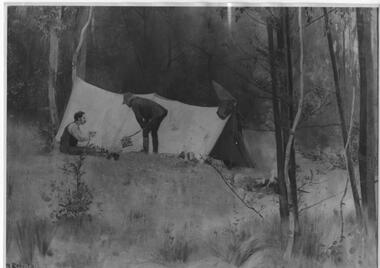
Photograph - The Artists Camp
... Painting by Tom Roberts titled "The Artists' Camp The Artists' Camp Roberts> Tom Art 1886 (1) Black and white photo; (2) colour photo of same painting. ...Painting by Tom Roberts titled "The Artists' Camp(1) Black and white photo; (2) colour photo of same painting.the artists' camp, roberts> tom, art, 1886 -
Tatura Irrigation & Wartime Camps Museum
Document, Leonhard Adam
... Camps. Leonhard Adam Tatura Interees WW2 camp artists a single plastic sleeve containing 2 sheets of paper. 1 has a photograph and life information on Leonhard Adam. 2nd is a list of names, including Leonhard Adam. ...Information and photograph of Leonhard Adam, an internee in the Tatura Camps.a single plastic sleeve containing 2 sheets of paper. 1 has a photograph and life information on Leonhard Adam. 2nd is a list of names, including Leonhard Adam.leonhard adam, tatura interees, ww2 camp artists -
 Tatura Irrigation & Wartime Camps Museum
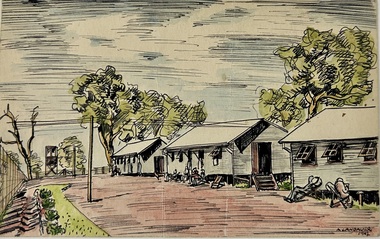
Work on paper - Painting - Watercolour, Camp 2 Tatura
... He was a commerical artist who arrived in Australia on board the "Dunera". Camp 2 Dunera Landauer Watercolor 1942 A. ...Alfred Landauer was Born in Vienna 13/06/1910. He was a commerical artist who arrived in Australia on board the "Dunera".Pen & Ink and watercolor of three camp huts. Large trees at the rear of the huts. Several internees are reclining in chairs outside each hut. A guard tower is in the distance . A fence runs along the side of the painting and a garden and green grass follow the length of the fence. A. Landauer 1942camp 2, dunera, landauer, watercolor, 1942 -
 Tatura Irrigation & Wartime Camps Museum
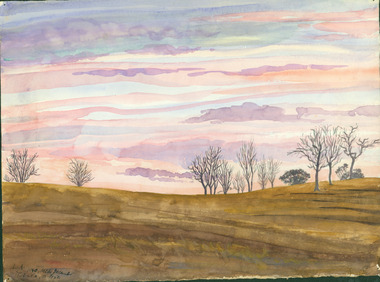
Painting - Painting - Watercolour, Mitte December, Tatura, Victoria, December 1940
... Dr Leonhard Adam was a Dunera internee in Camp 2 Original painting depicting the camps, colours and changing conditions of the Australian landscape during the artist's time in internment at Tatura. ...Dr Leonhard Adam was a Dunera internee in Camp 2RomanticismL.A 1940 Mitte December, Tatura, Victoria -
 Tatura Irrigation & Wartime Camps Museum
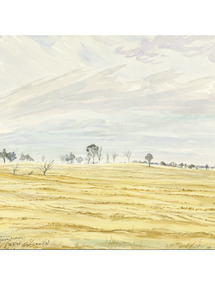
Painting - Painting - Watercolour, Waranga (Victoria, Australia) 25.i.42, Staurmus SW
... Leonhard Adam was a Dunera Internee in Camp 2 Original painting depicting the camps, colours and changing conditions of the Australian landscape during the artist's time in internment at Tatura. ...Dr. Leonhard Adam was a Dunera Internee in Camp 2RomanticismVictoria, Australia 25.I.42 Staurmus SW -
 Tatura Irrigation & Wartime Camps Museum
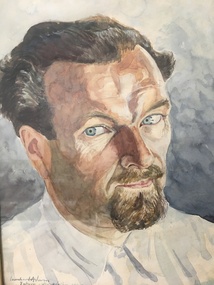
Painting - Painting - Watercolour, Portrait of unknown Internee, 1940
... Camp 2. Original painting depicting an internee during the artist's time in Internment at Tatura. tatura dunera internee camps Leonhard Adam Leonhard Adam Tatura / Vic Weiten 1940 Portrait of unknown 'Camp 2 Internee', by Leonhard Adam. ...Dr. Leonhard Adam was an internee in Camp 2.Original painting depicting an internee during the artist's time in Internment at Tatura.Portrait of unknown 'Camp 2 Internee', by Leonhard Adam. Cream coloured painted old-fashioned frame (plaster?), with decorative scrollwork on corners. Male subject, brown hair & goatee, blue eyes. Blue/ white background. White shirt.Leonhard Adam Tatura / Vic Weiten 1940tatura, dunera, internee camps, leonhard adam -
 Tatura Irrigation & Wartime Camps Museum
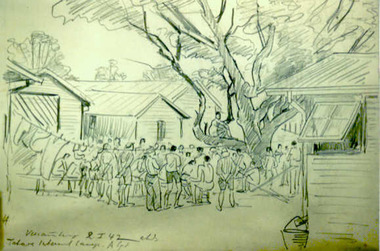
Photographs, Wittenberg, Emil, the artist, The "Dunera" Story, c. 1942 for sketches
... camp 2 world war ii emil wittenberg The "Dunera" Story, Sketches by Emil Wittenberg. Four A4 photographs of colour sketches mounted in a timber frame with glass front. Photo of sketches displaying life on the "Dunera" barracks, bunks and toilet facilities in the internment camps. The "Dunera" Story. Photographs Wittenberg, Emil, the artist ...The original sketches were used by the Tatura Museum for an exhibition c.1997, and were photographed before their return to Wittenberg's nephew, who verbally approved of the use of these copies for any purpose by the Society.Four A4 photographs of colour sketches mounted in a timber frame with glass front. Photo of sketches displaying life on the "Dunera" barracks, bunks and toilet facilities in the internment camps.The "Dunera" Story, Sketches by Emil Wittenberg."dunera", hay internment camp, internment camps, tatura, camp 2, world war ii, emil wittenberg -
Tatura Irrigation & Wartime Camps Museum
Painting - Watercolour, "No 1 1939-44 POW Hospital Tatura, 1940's
... POW hospital at Camp 1 internment camp artists internment camp paintings internment camp hospitals Dot Cussens watercolour paintings A 44 on the front "No 1 1939-44 POW Hospital Tatura framed painting of 4 blue buildings, trees in the back ground, brush fence. 2 flags on a pole and light pole. ...POW hospital at Camp 1framed painting of 4 blue buildings, trees in the back ground, brush fence. 2 flags on a pole and light pole. Gold coloured sticker on the backA 44 on the front "No 1 1939-44 POW Hospital Taturainternment camp artists, internment camp paintings, internment camp hospitals, dot cussens, watercolour paintings -
 Tatura Irrigation & Wartime Camps Museum
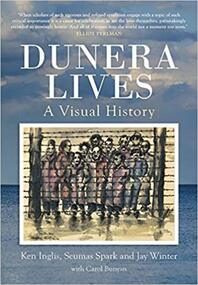
Book, Dunera Lives. Volume 1 A Visual History, 2018
... artists with examples of their varied styles of water and colour paintings, sketches and cartoons. Vivid reminders of the whole experience of internment in Australia during World War 2 for these men. Launched at the Jewish Museum in St Kilda, Sunday July 8th and Monday July 9th at Readings Books in Melbourne. Visual history of camp ...A remarkable, thoroughly researched and detailed record of "Dunera" internee artists with examples of their varied styles of water and colour paintings, sketches and cartoons. Vivid reminders of the whole experience of internment in Australia during World War 2 for these men. Launched at the Jewish Museum in St Kilda, Sunday July 8th and Monday July 9th at Readings Books in Melbourne.Visual history of camp life of the Dunera boysBlue soft cover, with front cover painting by Emil Wittenberg. Painted at Tatura on 23rd May 1941, depicts a group of Dunera internees behind barbed wire. B/W and colour photos, sketches, paintings and watercolour.To the memory of Amirah Inglis. A photograph of Kenneth Stanley Inglis, 7 October 1929 - 1 December 2017dunera boys -
 Tatura Irrigation & Wartime Camps Museum
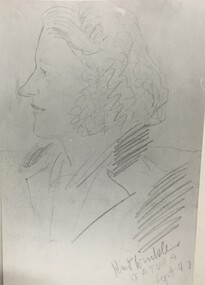
Artwork, other - Sketch - Lead Pencil, Kurt Winkler, Jean Tennant, September 1941
... He was sent to Australia on the "Dunera" where he was interned at Tatura 1940-1945. internee camp world war 2 winkler kurwin Kurt Winkler Tatura September '41. Lead pencil sketch. Head and shoulders profile. Subject is Jean Tenant. Artist ...Kurt Winker was born in Germany in 1902 and was a survivor of the "Arandora Star". He was sent to Australia on the "Dunera" where he was interned at Tatura 1940-1945.Lead pencil sketch. Head and shoulders profile. Subject is Jean Tenant. Artist is Kurt Winkler. This was drawn in September 1941 at Tatura, but is a photocopy in wooden frame . Artist has signed the original.Kurt Winkler Tatura September '41.internee camp, world war 2, winkler, kurwin -
 Tatura Irrigation & Wartime Camps Museum
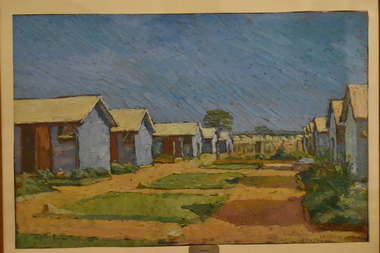
Painting - Painting - Oil, Barracks
... The painting was commissioned by Matron Schnerring. matron hedwig schnerring gunther schnerring cesare vagarini camp 3 artists oil painting of 2 rows of huts. 5 one side, 6 on the other side. ...Donated by Gunther Schnerring in memory of his mother - Matron Hedwig Schnerring. Painted by Cesare Vagarini. The painting was commissioned by Matron Schnerring.oil painting of 2 rows of huts. 5 one side, 6 on the other side. Garden beds in between the rows of huts. In a wooden framematron hedwig schnerring, gunther schnerring, cesare vagarini, camp 3 artists -
Tatura Irrigation & Wartime Camps Museum
Photograph
... 1 - eating utensils used by internees at Camp 3 during 1941-1946; 2 - collection of tools used by internees at Camp 3 during WW2 ww2 artists camp 13 tatura camp utensils camp tools Beilharz 2 coloured photographs of a collection of tools and 2 a collection of eating utensils. ...1 - eating utensils used by internees at Camp 3 during 1941-1946; 2 - collection of tools used by internees at Camp 3 during WW2 2 coloured photographs of a collection of tools and 2 a collection of eating utensils.ww2 artists, camp 13 tatura, camp utensils, camp tools, beilharz -
Tatura Irrigation & Wartime Camps Museum
Photograph
... Community bulletin photos of exhibition at Museum 22 September 1991. ww2 artists camp 13 tatura Temple Society 2 coloured photographs of artifacts made and used in camps during WW2. ...Community bulletin photos of exhibition at Museum 22 September 1991. 2 coloured photographs of artifacts made and used in camps during WW2.ww2 artists, camp 13 tatura, temple society -
Tatura Irrigation & Wartime Camps Museum
Photograph, 22 September 1991
... Camps, on 22 September 1991. Present were Council president Andrew Crawford, Dieter Ruff and members of the Temple Society and members of the Historical Society. ww2 artists camp 13 tatura temple society sister beatrice moore dieter ruff lurline knee life membership Coloured photos (3) 1 - official opening by Beatrice Moore, 22 September 1991; 2 - Dieter Ruff, Temple Society, official representative; 3 - Lurline Knee receiving her life membership from Historical Society President Ron Donaldson. ...Photos of the opening ceremony at the Tatura Museum, in conjunction with 50th Anniversary, of the Temple Society in Australia. Sister Beatrice Moore nursed at Camp 3 during WW2 and was invited by Tatura and District Historical Society to officially open their new buildings and display on POW and Internment Camps, on 22 September 1991. Present were Council president Andrew Crawford, Dieter Ruff and members of the Temple Society and members of the Historical Society.Coloured photos (3) 1 - official opening by Beatrice Moore, 22 September 1991; 2 - Dieter Ruff, Temple Society, official representative; 3 - Lurline Knee receiving her life membership from Historical Society President Ron Donaldson.ww2 artists, camp 13 tatura, temple society, sister beatrice moore, dieter ruff, lurline knee, life membership -
Tatura Irrigation & Wartime Camps Museum
Photograph, 1942
... Photo of a painting done by an internee, name indecipherable. camp 3 templer society Camp artists Colour photograph of a magnificent painting of an Australian scene of 2 bullock wagons laden with bales of wool. 2 gum trees are prominent on the rolling rises. ...Photo of a painting done by an internee, name indecipherable.Colour photograph of a magnificent painting of an Australian scene of 2 bullock wagons laden with bales of wool. 2 gum trees are prominent on the rolling rises.camp 3, templer society, camp artists -
Tatura Irrigation & Wartime Camps Museum
Photograph, 1942
... camp 3 templer society camp artists C. Vagarini C. Vagarini (bottom right main one) Colour photograph of a painting of 2 huts left hand side. ...One of several by C. VagariniColour photograph of a painting of 2 huts left hand side. The end of 4 huts right side. One tall post, 7 fence posts and 5 gum trees in the centre.C. Vagarini (bottom right main one)camp 3, templer society, camp artists, c. vagarini -
 Tatura Irrigation & Wartime Camps Museum
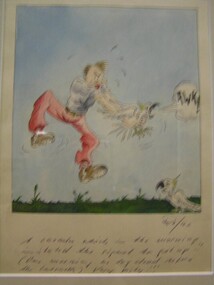
Sketch - Watercolour, Georg Rosenkranz, Man with cockatoos, 1941/2
... Artist Georg Rosenkranz, crewman aboard the HSK Kormoran, painted this while at Graytown Prisoner of War Camp. graytown pow camp georg rosenkranz illustrations watercolour A character noisily in the morning initiated the signal to get up (one morning he lay dead before the Barracks) very pity!!! Watercolour sketch of a man in grey shirt and red trousers and 2 ...Artist Georg Rosenkranz, crewman aboard the HSK Kormoran, painted this while at Graytown Prisoner of War Camp.Watercolour sketch of a man in grey shirt and red trousers and 2 birdsA character noisily in the morning initiated the signal to get up (one morning he lay dead before the Barracks) very pity!!!graytown pow camp, georg rosenkranz, illustrations, watercolour -
Tatura Irrigation & Wartime Camps Museum
Book, Untitled
... artist Josef Thum as a token of his friendship. Thum was an Austrian POW at Camp 13 who was permitted to assist Ken Hill who was a mobile cinema operator, as a member of the Australian Amenities Service - AAA's Mobile Cinema Unit No 36 - around 1946-47. After hostilities had ceased Thum returned to Vienna. He and his Wife had 2...artist Josef Thum as a token of his friendship. Thum was an Austrian POW at Camp 13 who was permitted to assist Ken Hill who was a mobile cinema operator, as a member of the Australian Amenities Service - AAA's Mobile Cinema Unit No 36 - around 1946-47. After hostilities had ceased Thum returned to Vienna. He and his Wife had 2 ...Presented to Ken Hill by the artist Josef Thum as a token of his friendship. Thum was an Austrian POW at Camp 13 who was permitted to assist Ken Hill who was a mobile cinema operator, as a member of the Australian Amenities Service - AAA's Mobile Cinema Unit No 36 - around 1946-47. After hostilities had ceased Thum returned to Vienna. He and his Wife had 2 childrenFaded blue hard cover book. Cloth spine and front and back edges. Linen like paper pages. 5 pages of water colour sketches, 24 pages of pencil sketchesWith many kind wishes as a token of my friendship. Ever yours. Josef Thumsketches, pencil, thum j, hill k, camp 13, tatura, illustrations, books, art -
Tatura Irrigation & Wartime Camps Museum
Album - small photo album
... The artist of the sketches Hans - Wolter von Gruenewaldt - ex South African Mining Engineer served in the North Africa campaign. This album also includes photos of visitors to the Tatura Museum, Memorial service German War Cemetery 1992 and visitors to Camps 1, 2, 4 and 13 Photos include Murchison R.S.L clubhouse,which was Murchison P.O.W Camp,13 Recreation Hall, Colonel Walter Tinsley D.S.O who was appointed Commandant camp 13 1946, Folk Dancers from Hungary,Scotland, Yugoslavia, Russia, Spain, Holland, German waitress, African Mother and Child,, Asia, Australian swagman, Australian A.W.A.S, British Army W.O, British Naval Officer. ...The artist of the sketches Hans - Wolter von Gruenewaldt - ex South African Mining Engineer served in the North Africa campaign. This album also includes photos of visitors to the Tatura Museum, Memorial service German War Cemetery 1992 and visitors to Camps 1, 2, 4 and 13 Photos include Murchison R.S.L clubhouse,which was Murchison P.O.W Camp,13 Recreation Hall, Colonel Walter Tinsley D.S.O who was appointed Commandant camp 13 1946, Folk Dancers from Hungary,Scotland, Yugoslavia, Russia, Spain, Holland, German waitress, African Mother and Child,, Asia, Australian swagman, Australian A.W.A.S, British Army W.O, British Naval Officer. ...The artist of the sketches Hans - Wolter von Gruenewaldt - ex South African Mining Engineer served in the North Africa campaign. This album also includes photos of visitors to the Tatura Museum, Memorial service German War Cemetery 1992 and visitors to Camps 1, 2, 4 and 13 Photos include Murchison R.S.L clubhouse,which was Murchison P.O.W Camp,13 Recreation Hall, Colonel Walter Tinsley D.S.O who was appointed Commandant camp 13 1946, Folk Dancers from Hungary,Scotland, Yugoslavia, Russia, Spain, Holland, German waitress, African Mother and Child,, Asia, Australian swagman, Australian A.W.A.S, British Army W.O, British Naval Officer. Visitors to Memorial service German War Cemetery 1992 Photos show a collection of the art work painted on walls of Camp 13 Recreation hall Small, green coloured photo albumHans-Wolter von Gruenewaldt, German P.O.W. painted these scenes and figures as murals on the walls of the camp 13 Recreation Hall. The hall was transferred to Murchison after WW2 and was purchased by the Murchison R.S.L. as its headquarters in 1955. These paintings can now be seen at the David Jones Nursing Home in Murchison.murchison pow recreation hall, german war cemetery -
 Tatura Irrigation & Wartime Camps Museum
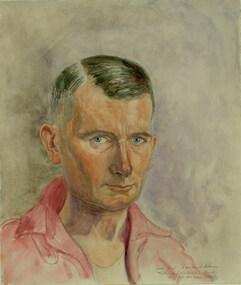
Painting - Painting - Watercolour, Leonhard Adam, Ipse Feci, 1941
... Camp 2 Tatura. Original Painting depicting the camps, colours and changing conditions of the Australian landscape during the artists time in internment at Tatura. tatura dunera internee camps Leonhard Adam Ipse Fici Ipse Feci . ...Dr Leonhard Adam was a Dunera internee in Camp 2 Tatura.RomanticismWatercolour self portrait by artist Leonhard Adam. He is wearing a pink/light red collared open shirt with a white vest underneath. His hair is black with streaks of grey through it. He has blue eyes and a ruddy complexion.Ipse Feci . Leonhard Adam. Tatura (Victoria) Austr. 18-21 Januar 1941tatura, dunera, internee camps, leonhard adam, ipse fici -
 Tatura Irrigation & Wartime Camps Museum
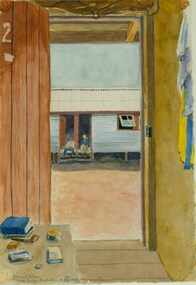
Painting - Painting - Watercolour, Tatura Camp Australian, 1940
... Camp 2. Original Painting depicting the camps, colours and changing conditions of the Australian landscape during the artists time in internment at Tatura. tatura dunera' internee camps illustrations watercolour Tatura Camp, Australia, 1940 Framed watercolour painting of Tatura internment camp barracks through doorway. ...Dr. Leonhard Adam was an internee in Camp 2.RomanticismFramed watercolour painting of Tatura internment camp barracks through doorway.Tatura Camp, Australia, 1940tatura, dunera', internee camps, illustrations, watercolour -
 Tatura Irrigation & Wartime Camps Museum
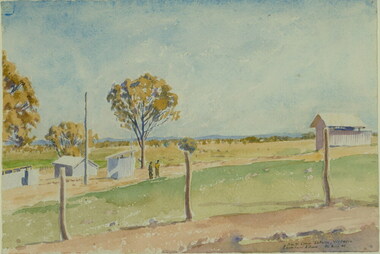
Painting - Painting - Watercolour, Leonhard Adam, No 4 Camp Tatura Victoria, 1941
... Leonhard Adam was a Dunera internee in Camp 2 Tatura. tatura dunera internee camps illiustrations watercolour leonhard adam Leonhard Adam, No.4 Camp Tatura Victoria, 16 Aug, 41 Watercolour painting of Tatura Internment Camp 4 outbuildings and fencing. No 4 Camp Tatura Victoria Painting Painting - Watercolour Leonhard Adam Artist ...Leonhard Adam was a Dunera internee in Camp 2 Tatura. RomanticismWatercolour painting of Tatura Internment Camp 4 outbuildings and fencing.Leonhard Adam, No.4 Camp Tatura Victoria, 16 Aug, 41tatura, dunera, internee camps, illiustrations, watercolour, leonhard adam -
 Tatura Irrigation & Wartime Camps Museum
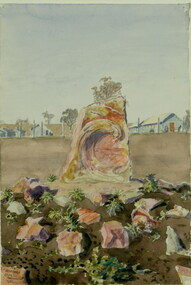
Painting - Painting - Watercolour, Leonhard Adam, 1941 Arandora Star Monument, Tatura, Victoria, 1941
... Leonhard Adam was a Dunera internee in Camp 2 Tatura. tatura dunera internee camps illustrations watercolour arandora star Leonhard Adam. 1941, 'Arandora Star' Monument, Tatura, Victoria Watercolour painting of memorial carved in stone at Tatura internment Camp 3. Barracks in the background 1941 Arandora Star Monument, Tatura, Victoria Painting Painting - Watercolour Leonhard Adam Artist ...Leonhard Adam was a Dunera internee in Camp 2 Tatura.RomanticismWatercolour painting of memorial carved in stone at Tatura internment Camp 3. Barracks in the backgroundLeonhard Adam. 1941, 'Arandora Star' Monument, Tatura, Victoriatatura, dunera, internee camps, illustrations, watercolour, arandora star -
 Tatura Irrigation & Wartime Camps Museum
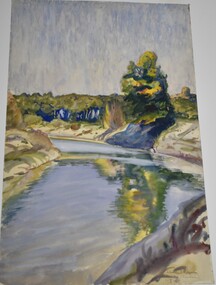
Painting - Painting - Watercolour, Reflections, Jalomitca, Rumanien, 1918, 1918
... Leonhard Adam was an internee Camp 2. tatura dunera internee camps illustrations watercolour Jalomitca, Rumanien, 22-8-1918 Riverbend with the reflections of a large tree in the still blue water. The tree appears to be in autumn colours with smaller trees and bushes along the riverbank. The sky is muted blue and white. Reflections, Jalomitca, Rumanien, 1918 Painting Painting - Watercolour Artist ...Dr. Leonhard Adam was an internee Camp 2.Riverbend with the reflections of a large tree in the still blue water. The tree appears to be in autumn colours with smaller trees and bushes along the riverbank. The sky is muted blue and white.Jalomitca, Rumanien, 22-8-1918tatura, dunera, internee camps, illustrations, watercolour
