Showing 6 items matching "caravanning"
-
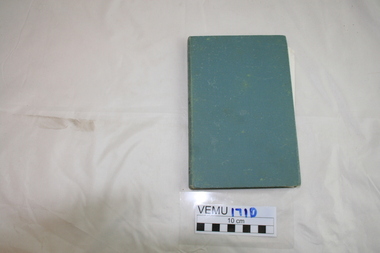
Gippsland Vehicle CollectionBook, Broadbent's, RACV Camping and Caravanning Guide
... RACV Camping and Caravanning Guide......caravanning...Gippsland Vehicle Collection 1a Sale Road Maffra gippsland guide racv camping caravanning braodbent MEMBERS FREE COPY stamped on front cover Book RACV Camping and Caravanning Guide Book Broadbent's ...BookMEMBERS FREE COPY stamped on front coverguide, racv, camping, caravanning, braodbent -
Emerald Museum & Nobelius Heritage ParkBook, On the Trail by Keith Winser, 1956
... Caravanning Guide to Australia 1956. Emerald Lake Park is on page 79....Emerald Museum & Nobelius Heritage Park 5 Crichton Rd Emerald yarra-valley-and-the-dandenong-ranges Caravanning Guide to Australia 1956. Emerald Lake Park is on page 79. caravaning keith winser 1956 motor manual Green hard cover, with 240 pages. ...Caravanning Guide to Australia 1956. Emerald Lake Park is on page 79.Green hard cover, with 240 pages.caravaning, keith winser, 1956, motor manual -
The Beechworth Burke MuseumPhotograph, 1960s
... The popularity of caravanning in Australia exploded during this post-war period of the late 1950s and 1960s. ...The popularity of caravanning in Australia exploded during this post-war period of the late 1950s and 1960s. ...This photograph was taken in the 1960s at Lake Sambell Caravan Park and visible in the photograph are individual caravan sites with electricity outlets, a large single-story building with a caravan park banner, dirt roads, a freestanding message board, and a parked car. Lake Sambell Caravan Park opened in 1959 owing to the work of R.E. Carter, Beechworth Shire engineer from 1954-63. Carter advocated for improvements to the lake and surrounding area in order to encourage tourism in Beechworth. The opening of the caravan park was part of many improvements to Lake Sambell made in this period by Carter including: the swimming pool in 1961, water skiing and boating facilities, and increased lake surface in 1964. These improvements were financed mainly by grants from the Tourist Development Authority. The popularity of caravanning in Australia exploded during this post-war period of the late 1950s and 1960s. This popularity was driven by multiple factors, including: the stopping of fuel rations, the accessibility of car ownership through the manufacturing of affordable cars, technological developments in caravan design, and the increase in prosperity and leisure time for many Australians. Facilities such as electrical outlets to power caravans are present in this photograph of Lake Sambell Caravan Park. Lake Sambell is an artificial lake that was developed on the previous site of the Rocky Mountain Mining Company workings and was officially opened by Minister for Lands, Mr Baily, on October 5, 1928. The disused and unattractive remains of the mine were converted into a recreational area intended for swimming, boating, and fishing. The lake is named after Mr L.H. Sambell, shire engineer and secretary of the Forward Beechworth Committee, who advocated for the enhancement of Beechworth into a tourist destination and was central to the planning and establishment of the lake. This photograph is of historical and social significance in providing insight into caravanning during the 1960s in Australia. Caravanning was extremely popular during the 1960s in Australia due to multiple social and economic factors including the stopping of fuel rations, the accessibility of car ownership through the manufacturing of affordable cars, technological developments in caravan design, and the increase in prosperity and leisure time for many Australians.Black and white rectangle photograph printed on photographic paper and unmounted.Reverse: 3536/ [logo back printing: KODAK/ VELOX/ PAPER] / C798 lake sambell caravan park, lake sambell, caravanning 1960s, caravan park, rocky mountain mining company, kodak velox paper, r.e. carter, l.h. sambell, caravan electricity outlets, tourist development authority, post-war prosperity, forward beechworth committee, lake sambell boating, lake sambell swimming pool, lake sambell fishing, artificial lake, travel 1960s, recreation 1960s -
The Beechworth Burke MuseumPhotograph, 1960s
... The popularity of caravanning in Australia exploded during this post-war period of the late 1950s and 1960s. ...The popularity of caravanning in Australia exploded during this post-war period of the late 1950s and 1960s. ...This photograph was taken in the 1960s at Lake Sambell Caravan Park, visible in the photograph are individual caravan sites with electricity outlets, a large single-story building, a parked car, and two caravans partially obstructed by trees. Lake Sambell Caravan Park opened in 1959 owing to the work of R.E. Carter, Beechworth Shire engineer from 1954-63. Carter advocated for improvements to the lake and surrounding area in order to encourage tourism in Beechworth. The opening of the caravan park was part of many improvements to Lake Sambell made in this period by Carter including: the swimming pool in 1961, water skiing and boating facilities, and increased lake surface in 1964. These improvements were financed mainly by grants from the Tourist Development Authority. The popularity of caravanning in Australia exploded during this post-war period of the late 1950s and 1960s. This popularity was driven by multiple factors, including: the stopping of fuel rations, the accessibility of car ownership through the manufacturing of affordable cars, technological developments in caravan design, and the increase in prosperity and leisure time for many Australians. Facilities such as electrical outlets to power caravans are present in this photograph of Lake Sambell Caravan Park. Lake Sambell is an artificial lake that was developed on the previous site of the Rocky Mountain Mining Company workings and was officially opened by Minister for Lands, Mr Baily, on October 5, 1928. The disused and unattractive remains of the mine were converted into a recreational area intended for swimming, boating, and fishing. The lake is named after Mr L.H. Sambell, shire engineer and secretary of the Forward Beechworth Committee, who advocated for the enhancement of Beechworth into a tourist destination and was central to the planning and establishment of the lake. This photograph is of historic and social significance in documenting the enhancement of the Lake Sambell area overseen by R.E. Carter and providing insight into caravanning during the 1960s in Australia. Caravanning was extremely popular in Australia during the late 1950s and 60s due to multiple social and economic factors including the stopping of fuel rations, the accessibility of car ownership through the manufacturing of affordable cars, technological developments in caravan design, and the increase in prosperity and leisure time for many Australians. Black and white rectangle photograph printed on photographic paper and unmounted.Reverse: 3538/ [logo back printing KODAK/ VELOX/ PAPER] / C798lake sambell caravan park, lake sambell, lake sambell 1960s, lake sambell fishing, lake sambell boating, lake sambell swimming pool, r.e. carter, l.h. sambell, tourist development authority, caravanning 1960s, caravan electricity outlets, caravan park, forward beechworth committee, rocky mountain mining company, lake caravan park, caravan mid 20th century, beechworth tourism, travel in the 1960s, holiday 1960s -
The Beechworth Burke MuseumPhotograph, 1960s
... The popularity of caravanning in Australia exploded during this post-war period of the late 1950s and 1960’s. ...The popularity of caravanning in Australia exploded during this post-war period of the late 1950s and 1960’s. ...This photo was taken in the 1960s from a northeast position looking down towards Lake Sambell, the caravan park, and the surrounding area. This photo was taken during a period of rejuvenation for the lake area including the opening of the caravan park in 1959 and the swimming pool area in 1961 (this pool is just visible in the centre of the photo). The popularity of caravanning in Australia exploded during this post-war period of the late 1950s and 1960’s. This popularity was driven by multiple factors, including: the stopping of fuel rations, the accessibility of car ownership through the manufacturing of affordable cars, technological developments in caravan design, and the increase in prosperity and leisure time for many Australians. Lake Sambell is an artificial lake that was developed on the previous site of the Rocky Mountain Mining Company workings and was officially opened by Minister for Lands, Mr Baily, on October 5, 1928. The disused and unattractive remains of the mine were converted into a recreational area intended for swimming, boating, and fishing. The lake is named after Mr L.H. Sambell, shire engineer and secretary of the Forward Beechworth Committee, who advocated for the enhancement of Beechworth into a tourist destination and was central to the planning and establishment of the lake. Funding for the project was raised by both competition funds and donations. Since the construction in 1928 several engineering issues have arisen. In 1939 the water levels were low, and the lake was considered both an eyesore and ‘mudhole’, Beechworth Shire Council sort funding to raise the height of the lake six feet to improve the quality of water. Throughout the 1940s the Beechworth Swimming Club tried to raise awareness and funds to address the structural engineering issues and improve swimming facilities at the lake. R.E. Carter, similar to L.H. Sambell, was a shire engineer who advocated the importance of positioning Beechworth as a tourist destination. Carter held the position from 1954-63 and organised many improvements to the Lake Sambell area including the caravan park in 1959, the lake swimming pool in 1961, water skiing and boating facilities, and increased the lake surface are in 1964. These improvements were financed mainly by grants from the Tourist Development Authority. This photograph is of historical significance as it documents Lake Sambell and the surrounding area in the 1960s after a phase of enhancements to improve the appearance and usability for both the people of Beechworth and tourists. It is also of social significance in providing an insight into the increase in leisure time and access to travel during a period of post-war prosperity.Black and white rectangle photograph printed on matte photographic paper and unmounted.Reverse: 1 / [logo KODAK/ VELOX/ PAPER] / C798 / 3535lake sambell, lake sambell caravan park, lake sambell swimming pool, caravan park, caravanning 1960s, rocky mountain mining company, l.h. sambell, r.e. carter, beechworth swimming club, forward beechworth committee, minister of lands, tourist development authority, lake swimming, swimming, boating, fishing, water skiing, beechworth 1960s, lake sambell fishing, lake sambell boating -
Bendigo Historical Society Inc.Document - The Victorian Country Volleyball Council Miscellaneous Items, 1989-2012
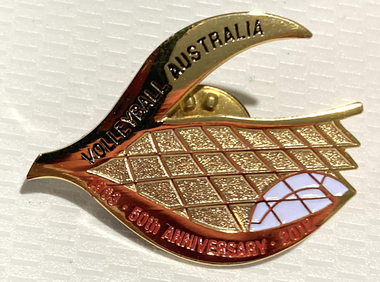
... He had an engineering background, and was Managing Director of Hayman Reece, a name synonomous with caravanning and towing aids. After his retirement, Eric continued to maintain a small engineering workshop at his home in Malvern, complete with lathe, welders, grinders and other equipment which shared the garage with his beloved Rolls Royce and motor cycle. 11171.27i Bendigo Volleyball association 50th Anniversary Function Video on USB Stick - Contact the BHS for details or view on YouTube - See Link Below...He had an engineering background, and was Managing Director of Hayman Reece, a name synonomous with caravanning and towing aids. After his retirement, Eric continued to maintain a small engineering workshop at his home in Malvern, complete with lathe, welders, grinders and other equipment which shared the garage with his beloved Rolls Royce and motor cycle. 11171.27i Bendigo Volleyball association 50th Anniversary Function Video on USB Stick - Contact the BHS for details or view on YouTube - See Link Below Document The Victorian Country Volleyball Council Miscellaneous Items ...Volleyball has been played in regional Victoria since the early-1960’s. During those early days, most competitions, like the founders of our great sport, were run by, or in conjunction with, the YMCA. Competitions were running at the Ballarat School of Mines and the YMCA’s of Bendigo, Geelong and Warrnambool. In August 1966, an invitation was extended by the Victorian Amateur Volleyball Association to play in the first State-wide event at Monash University. Geelong and Bendigo accepted the invitation with Melbourne represented by Sisu. For Bendigo players at least, this was the first exposure to ‘international rules’, which prevented upward scoops with open hands, introduced an action called a ‘dig’ and seemed to penalise most overhead actions using the fingers as ‘double hits’! Over the next few years, the sport expanded through the YMCA movement with weekly competitions starting up in Ararat, Warrnambool and Latrobe Valley. The Victorian Regional Council of YMCA’s proposed the first Victorian YMCA Championship in Warrnambool on 30th March 1968 with an entry fee of $4.00 per team. The sport continued to grow with additional regional associations affiliating with the Victorian Amateur Volleyball Association (now VVI) who provided the coaching and refereeing assistance needed to raise the standard of play. In 1970, the YMCA Championships started to give way to the Victorian Country Championships with the first ever event held in Bendigo. In 1973, a re-organisation of the VAVA saw the proposal to create separate Victorian Country and Metropolitan Volleyball Councils. The VCVC was established in 1974 and took over the organisation of the Victorian Country Championships. For the next 10-12 years, the Country Championships grew in stature with the inclusion of two divisions for open men and women and junior divisions for boys and girls. Representative teams successfully contested Australian Country Championships between Victoria, South Australia and New South Wales on several occasions. In October 1985, the VCVC voluntarily wound up the Council and handed the responsibility for the Country Championships back to Volleyball Victoria, who by that time had full-time State Executive and Coaching Directors. Since that time, the Long Weekend in June has continued to be the date of the major annual volleyball event for most regional associations, even though in 1986 the Junior Country Championships were wound up in favour of state and national schools events. A number of regional associations have ceased to exist, as have a number of regional tournaments. Regional leagues were created in both the Gippsland and Central, North-West regions, with Gippsland the only one to survive. Some associations have successfully competed in the State League competitions at various times. Following the experience gained by a number of regional administrators working on the Sydney Olympic Games, a proposal to revamp the Victorian Country Championship was put to VVI in early 2002. Later that year, the Volleyball Victoria Country Championships Commission was formed to implement the recommendations of the review and take control of the event into the future. These championships now provide regional players and officials an opportunity to participate in a consistently well-managed event, using many international protocols and a high standard of presentation. Without doubt, this event now ranks as one of the best volleyball events in Australia. Source: 2022 Country Championship regulations The management of the Country Championships by the Victorian Country Championship Commission certainly achieved the objective of raising the standard of presentation, and delivering a consistently high quality event. However, the demands on Host Associations began to take their toll, with several Associations declining the opportunity to host the event due to the high workload. Similarly, the workload of the volunteer Commissioners also took its toll, with the Commission unable to fill casual vacancies. In 2023, the Commission handed the organisation of the Championships back to VVI, who with paid staff, were better equipped to manage the event.This item contains The Victorian Country Volleyball Council Miscellaneous Items; it includes the following items: 11171.27a Australian Volleyball Federation 50th Anniversary Commemorative Pin - Presented to Malcolm Qualtrough in 2012 11171.27b Australian Volleyball Federation 50th Anniversary Celebration Booklet 2012 11171.27c Bendigo Volleyball Association 50th Anniversary Booklet created by Bronwyn James 1964 - 2014 11171.27d Bendigo Volleyball in the beginning by Murray Mansfield 11171.27e Deputy Leader of the Australian Senate, and President of Volleyball Victoria Inc., Senator Stephen Conroy presenting Life Membership Award to Malcolm Qualtrough, April 2011 11171.27f The Mayor of Bendigo Councillor Rod Fyffe at the 50th Anniversary of the Country Volleyball Championships in 2019, with Geoff Rietschel, the Executive Officer of Volleyball Victoria Inc. 11171.27g Bendigo representative country volleyball team reunion. Back Row L-R: Ann Mansfield, Diane Brown, Sharyn Wiebe, Rosie Punton, Front Row L-R Lyn Wingrave, Sharyn Weibe, Jill Crossley (nee Grieve,)with coach John Bullen 11171.27h Eric Hayman Past Chairman of Volleyball Victoria, a tribute by Life member Murray Mansfield, written in July 2002 after his death. Eric had been identified as a potential Chairman of the Victorian Amateur Volleyball Association (VAVA). He had an engineering background, and was Managing Director of Hayman Reece, a name synonomous with caravanning and towing aids. After his retirement, Eric continued to maintain a small engineering workshop at his home in Malvern, complete with lathe, welders, grinders and other equipment which shared the garage with his beloved Rolls Royce and motor cycle. 11171.27i Bendigo Volleyball association 50th Anniversary Function Video on USB Stick - Contact the BHS for details or view on YouTube - See Link Belowvictorian country volleyball council, vcvc, victorian amateur volleyball association, volleyball victoria