
Showing 253 items matching "carers week"
-
 Lakes Entrance Historical Society
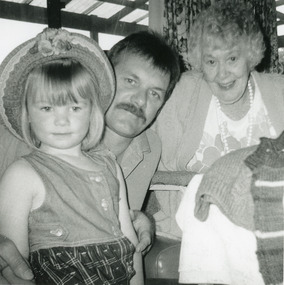
Photograph - Carers Week, 1996
... Carers Week......Carers Week...Black and white photograph of Rita Sadler, resident of Nursing Home at Kalimna, with visitors Ashley and Doug Bowler during Carers Week. Lakes Entrance Victoria...Number in album 03339.02 Nursing Home Carers Week Black and white photograph of Rita Sadler, resident of Nursing Home at Kalimna, with visitors Ashley and Doug Bowler during Carers Week. ...Number in album 03339.02Black and white photograph of Rita Sadler, resident of Nursing Home at Kalimna, with visitors Ashley and Doug Bowler during Carers Week. Lakes Entrance Victorianursing home, carers week -
 Lakes Entrance Historical Society
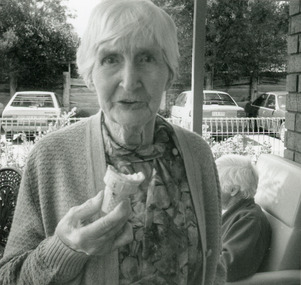
Photograph - Carers Week, Lakes Post Newspaper, 1996
... Carers Week......Carers Week...Black and white photograph elderly lady resident Mrs Lou Gough enjoying an ice cream Nursing Home, Kalimna, at Thank You Day barbecue during Carers Week. Lakes Entrance Victoria...Nuring Home Carers Week Black and white photograph elderly lady resident Mrs Lou Gough enjoying an ice cream Nursing Home, Kalimna, at Thank You Day barbecue during Carers Week. ...Black and white photograph elderly lady resident Mrs Lou Gough enjoying an ice cream Nursing Home, Kalimna, at Thank You Day barbecue during Carers Week. Lakes Entrance Victorianuring home, carers week -
 Lakes Entrance Historical Society
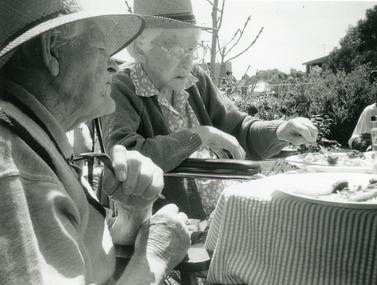
Photograph - Carers Week, Lakes Post Newspaper, 1996
... Carers Week...Black and white photograph Wally Morgan and Claire Rentle, residents of Nursing Home at Kalimna, enjoying barbecue during Carers Week. Lakes Entrance Victoria...Number in album 03340.01 Private Nursing Homes residents Black and white photograph Wally Morgan and Claire Rentle, residents of Nursing Home at Kalimna, enjoying barbecue during Carers Week. Lakes Entrance Victoria Photograph Carers Week Lakes Post Newspaper ...Number in album 03340.01Black and white photograph Wally Morgan and Claire Rentle, residents of Nursing Home at Kalimna, enjoying barbecue during Carers Week. Lakes Entrance Victoria private nursing homes, residents -
 Slovenian Association Melbourne
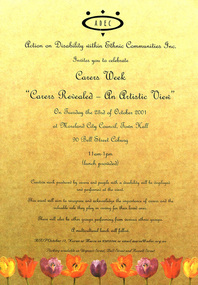
Invitation, Marcela Bole - Invitation to Carers Revealed-An Artistic View 2001, 2001
... ...Carers Week 2001...Invitation to celebration Carers Week, 2001 at Moreland City Council, Coburg...Invitation Marcela Bole Carers Week 2001 Moreland City Council Slovenian Association Melbourne Acknowledgement to importance of carers Invitation to celebration Carers Week, 2001 at Moreland City Council, Coburg Marcela Bole - Invitation to Carers Revealed-An Artistic View 2001 Invitation ...Invitation to celebration Carers Week, 2001 at Moreland City Council, CoburgAcknowledgement to importance of carersinvitation, marcela bole, carers week 2001, moreland city council, slovenian association melbourne -
 Whitehorse Historical Society Inc.
Article, Our unsung heroes, 1992
... A look at the work of palliative care volunteers in Nunawading during Palliative Care Week....Health Services Mid-Eastern Palliative Care Association Clarke Margaret Morris Sheridan Smith Beverley Nunawading Palliative Care Service A look at the work of palliative care volunteers in Nunawading during Palliative Care Week. A look at the work of palliative care volunteers in Nunawading during Palliative Care Week. ...A look at the work of palliative care volunteers in Nunawading during Palliative Care Week.A look at the work of palliative care volunteers in Nunawading during Palliative Care Week.A look at the work of palliative care volunteers in Nunawading during Palliative Care Week.health services, mid-eastern palliative care association, clarke, margaret, morris, sheridan, smith, beverley, nunawading palliative care service -
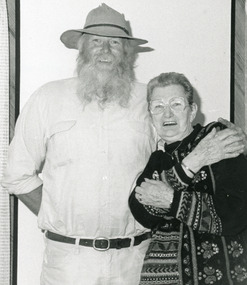 Lakes Entrance Historical Society
Photograph - Public Health, Lakes Post Newspaper, 1996
... Black and white photograph of Brian Blakeman who performed and Joyce Robertson carer who did the introductions at concert for carers week held at Community Health Centre Lakes Entrance Victoria...Health Services Volunteering Entertainment Black and white photograph of Brian Blakeman who performed and Joyce Robertson carer who did the introductions at concert for carers week held at Community Health Centre Lakes Entrance Victoria Photograph Public Health Lakes Post Newspaper ...Black and white photograph of Brian Blakeman who performed and Joyce Robertson carer who did the introductions at concert for carers week held at Community Health Centre Lakes Entrance Victoriahealth services, volunteering, entertainment -
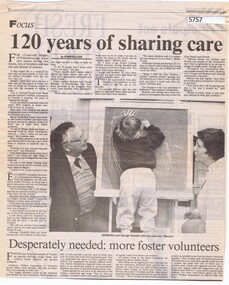 Greensborough Historical Society
Newspaper Clipping, Diamond Valley News, 120 years of sharing care, 21/09/1993
... National Foster Care Week [1993] celebrated 120 years of fostering in Victoria. ...National Foster Care Week [1993] celebrated 120 years of fostering in Victoria. ...National Foster Care Week [1993] celebrated 120 years of fostering in Victoria. The need for more volunteers is discussed.Newspaper clipping, black and white text and image.greensborough, foster care -
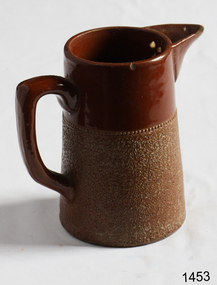 Flagstaff Hill Maritime Museum and Village
Domestic object - Jug
... week – put your name on the outside of the bag so you can find your work easily. We have stickers and markers. Consider how you want to decorate your work – coloured slip can be applied at a fairly wet stage (remembering that it will make your work even wetter!). Trying to apply slip to dry clay won’t work! If you want to do sgraffito – you will need to keep the work leather hard (a state of dryness where you can still work the clay with a little effort and a little water and care...week – put your name on the outside of the bag so you can find your work easily. We have stickers and markers. Consider how you want to decorate your work – coloured slip can be applied at a fairly wet stage (remembering that it will make your work even wetter!). Trying to apply slip to dry clay won’t work! If you want to do sgraffito – you will need to keep the work leather hard (a state of dryness where you can still work the clay with a little effort and a little water and care ...The Process of Making Pottery Decorating, Firing, Glazing, Making, Technical There is a rhythm and flow to clay. It can’t be done all at once! Even the making process! It can take weeks to get everything done, especially if you can only work on your pottery once a week! Even though we have three hour classes, it’s often just not enough time! Here is an overview of some of the processes so you have a bit more grasp on some of the technical stuff! Step One – Design There are SO many ideas out there for making stuff in clay! From delicate porcelain jewellery, through to heavy sculptural work and everything in between. Deciding your direction is sometimes not that easy – when you first start, try everything, you will naturally gravitate to the style that you enjoy! The options and variations are endless and can get a wee bit overwhelming too! Check in with me before you start to ensure your ideas will work, what order you might do things, how you could achieve the look you are seeking and any other technical data required! Step Two – Making Clay is thixotropic. This means that as you work with it, the clay first gets sloppier and wetter, before is begins to dry in the atmosphere. For most things, you simply can’t do all parts of the project at once. An example of work order might look like: Get last weeks work out from the shelves Prepare clay for today’s work – roll your clay, prepare balls for throwing, make the first stage of a pinch pot) Clean up last week’s work and put it on the shelf for bisque firing Check that you have any glazing to do – and do enough of it that you will have time to finish your main project Do the next step of your next project – there might be a further step that can’t be complete immediately, in that case, wrap your work well and put onto the shelves. Letting your work rest for a while can really help keep your work clean and professional looking. Many things require bagging under plastic to keep it ready for work the next week – put your name on the outside of the bag so you can find your work easily. We have stickers and markers. Consider how you want to decorate your work – coloured slip can be applied at a fairly wet stage (remembering that it will make your work even wetter!). Trying to apply slip to dry clay won’t work! If you want to do sgraffito – you will need to keep the work leather hard (a state of dryness where you can still work the clay with a little effort and a little water and care). Step Three – Drying Most of the time your work can go into the rack uncovered to let it dry out for the following week. If you want to continue forming or shaping you will need to double bag your work – put your work on a suitable sized bat and put the bat in a bag so the base of the bag is under the bat, then put another bag over the top of the work and tuck the top of the bag under the bat. If you want to trim (or turn) your thrown work the following week, it should also be double bagged. If your work is large, delicate, or of uneven thicknesses, you should lightly cover your work for drying. When considering the drying process, bare in mind the weather, humidity and wind! The hotter and dryer, the faster things dry and work can dry unevenly in the shelves – this can lead to cracking – another time to lightly cover your work for drying. Step Four – Trimming and Cleaning Up Your work is dry! It is called greenware now and it is at it’s most fragile! Handle everything with two hands. I often refer to soft hands – keep everything gentle and with your fingers spread as much as possible. Try to not pick up things like plates too much, and always with both hands! Before your work can be bisque fired it should be “cleaned up”. You work won’t go into the kiln if it has sharp edges – when glazed, sharp edges turn into razor blades! Use a piece of fly wire to rub the work all over – this will scratch a little so be light handed. Use a knife or metal kidney to scrape any areas that require a bit more dynamic treatment than the fly wire offers! Finally, a very light wipe over with a slightly damp sponge can help soften and soothe all of your edges and dags! Trimming thrown work: If you are planning to trim (or turn) your thrown work (and you should be), make sure you bag it well – your work should be leather hard to almost dry for easiest trimming. Use this step to finish the work completely – use a metal kidney to polish the surface, or a slightly damp sponge to give a freshly thrown look. Wipe the sponge around the rim after trimming, and check the inside of the pot for dags! Trimming slip cast work: Usually I will trim the rims of your work on the wheel the following day to make that stage easier, however you will still need to check your work for lumps and bumps. Last but not least – check that your name is still clearly on the bottom of your work. Step Five – Bisque Firing When the work is completely dry it can go into the bisque kiln. The bisque kiln is fired to 1000°C. This process burns off the water in the clay as well as some of the chemically bound water. The structure of the clay is not altered that much at this temperature. Inside the bisque kiln, the work is stacked a little, small bowl inside a larger bowl and onto a heavy plate. Smaller items like decorations or drink coasters might get stacked several high. Consideration is paid to the weight of the stack and shape of the work. A bisque kiln can fire about one and a half times the amount of work that the glaze kiln can fire. The firing takes about 10 hours to complete the cycle and about two days to cool down. Once it has been emptied the work is placed in the glaze room ready for you to decorate! Step Six – Glazing Decorating your work with colour can be a lot of fun – and time consuming! There are three main options for surface treatment at this stage: Oxide Washes Underglazes Glazes Washes and underglazes do not “glaze” the work – It will still need a layer of glaze to fully seal the clay (washes don’t need glaze on surfaces not designed for food or liquid as they can gloss up a little on their own). Underglazes are stable colourants that turn out pretty much how they look in the jar. They can be mixed with each other to form other colours and can be used like water colours to paint onto your work. Mostly they should have a clear glaze on top to seal them. Oxides are a different species – the pink oxide (cobalt) wash turns out bright blue for instance. They don’t always need a glaze on top, and some glazes can change the colour of the wash! The glazes need no other “glaze” on top! Be careful of unknown glaze interactions – you can put any combination of glaze in a bowl or on a plate, but only a single glaze on the outside of any vertical surface! Glazes are a chemical reaction under heat. We don’t know the exact chemicals in the Mayco glazes we use. I can guess by the way they interact with each other, however, on the whole, you need to test every idea you have, and not run the test on a vertical surface! Simply put, glaze is a layer of glass like substance that bonds with the clay underneath. Clay is made of silica, alumina and water. Glaze is made of mostly silica. Silica has a melting point of 1700°C and we fire to 1240°C. The silica requires a “flux” to help it melt at the lower temperature. Fluxes can be all sorts of chemicals – a common one is calcium – calcium has a melting point of 2500°C, however, together they both melt at a much lower temperature! Colourants are metal oxides like cobalt (blue), chrome (green through black), copper (green, blue, even red!), manganese (black, purple and pink) iron (red brown), etc. Different chemicals in the glaze can have dramatic effects. for example, barium carbonate (which we don’t use) turns manganese bright pink! Other elements can turn manganese dioxide brown, blue, purple and reddish brown. Manganese dioxide is a flux in and of itself as well. So, glazes that get their black and purple colours, often interact with other glazes and RUN! Our mirror black is a good example – it mixes really well with many glazes because it fluxes them – causes them to melt faster. It will also bring out many beautiful colours in the glazes because it’s black colouring most definitely comes from manganese dioxide! Glaze chemistry is a whole subject on it’s own! We use commercial Mayco glazes on purpose – for their huge range of colour possibilities, stability, cool interactions, artistic freedom with the ability to easily brush the glazes on and ease of use. We currently have almost 50 glazes on hand! A major project is to test the interactions of all glazes with each other. That is 2,500 test tiles!!!! I’m going to make the wall behind the wheels the feature wall of pretty colours! Step Seven – Glaze (Gloss or sometimes called “Glost”) Firing Most of the time this is the final stage of making your creation (but not always!) The glaze kiln goes to 1240°C. This is called cone 6, or midrange. It is the low end of stoneware temperatures. Stoneware clays and glazes are typically fired at cone 8 – 10, that is 1260 – 1290°C. The energy requirement to go from 1240°C to 1280°C is almost a 30% more! Our clay is formulated to vitrify (mature, turn “glass-like”) at 1240°, as are our glazes. A glaze kiln take around 12 hours to reach temperature and two to three days to cool down. Sometimes a third firing process is required – this is for decoration that is added to work after the glaze firing. For example – adding precious metals and lustres. this firing temperature is usually around 600 – 800°C depending upon the techniques being used. There are many students interested in gold and silver trims – we will be doing this third type of firing soon! After firing your work will be in the student finished work shelves. Remember to pay for it before you head out the door! There is a small extra charge for using porcelain clay (it’s more than twice the price of regular clay), and for any third firing process! Once your work has been fired it can not turn back into clay for millennia – so don’t fire it if you don’t like it! Put it in the bucket for recycling. https://firebirdstudios.com.au/the-process-of-making-pottery/The form of the jug has been in use for many centuries.Stoneware jug. Two tone brown glaze with pierced lip behind spout. Spout chipped.None.flagstaff hill, warrnambool, shipwrecked-coast, flagstaff-hill, flagstaff-hill-maritime-museum, maritime-museum, shipwreck-coast, flagstaff-hill-maritime-village, jug, ceramic jug -
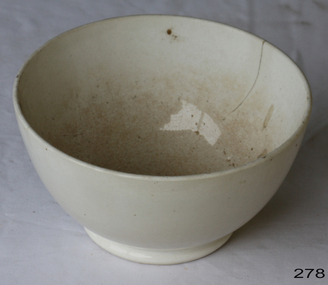 Flagstaff Hill Maritime Museum and Village
Domestic object - Bowl, Late 19th or early 20th Century
... week – put your name on the outside of the bag so you can find your work easily. We have stickers and markers. Consider how you want to decorate your work – coloured slip can be applied at a fairly wet stage (remembering that it will make your work even wetter!). Trying to apply slip to dry clay won’t work! If you want to do sgraffito – you will need to keep the work leather hard (a state of dryness where you can still work the clay with a little effort and a little water and care...week – put your name on the outside of the bag so you can find your work easily. We have stickers and markers. Consider how you want to decorate your work – coloured slip can be applied at a fairly wet stage (remembering that it will make your work even wetter!). Trying to apply slip to dry clay won’t work! If you want to do sgraffito – you will need to keep the work leather hard (a state of dryness where you can still work the clay with a little effort and a little water and care ...The Process of Making Pottery Decorating, Firing, Glazing, Making, Technical There is a rhythm and flow to clay. It can’t be done all at once! Even the making process! It can take weeks to get everything done, especially if you can only work on your pottery once a week! Even though we have three hour classes, it’s often just not enough time! Here is an overview of some of the processes so you have a bit more grasp on some of the technical stuff! Step One – Design There are SO many ideas out there for making stuff in clay! From delicate porcelain jewellery, through to heavy sculptural work and everything in between. Deciding your direction is sometimes not that easy – when you first start, try everything, you will naturally gravitate to the style that you enjoy! The options and variations are endless and can get a wee bit overwhelming too! Check in with me before you start to ensure your ideas will work, what order you might do things, how you could achieve the look you are seeking and any other technical data required! Step Two – Making Clay is thixotropic. This means that as you work with it, the clay first gets sloppier and wetter, before is begins to dry in the atmosphere. For most things, you simply can’t do all parts of the project at once. An example of work order might look like: Get last weeks work out from the shelves Prepare clay for today’s work – roll your clay, prepare balls for throwing, make the first stage of a pinch pot) Clean up last week’s work and put it on the shelf for bisque firing Check that you have any glazing to do – and do enough of it that you will have time to finish your main project Do the next step of your next project – there might be a further step that can’t be complete immediately, in that case, wrap your work well and put onto the shelves. Letting your work rest for a while can really help keep your work clean and professional looking. Many things require bagging under plastic to keep it ready for work the next week – put your name on the outside of the bag so you can find your work easily. We have stickers and markers. Consider how you want to decorate your work – coloured slip can be applied at a fairly wet stage (remembering that it will make your work even wetter!). Trying to apply slip to dry clay won’t work! If you want to do sgraffito – you will need to keep the work leather hard (a state of dryness where you can still work the clay with a little effort and a little water and care). Step Three – Drying Most of the time your work can go into the rack uncovered to let it dry out for the following week. If you want to continue forming or shaping you will need to double bag your work – put your work on a suitable sized bat and put the bat in a bag so the base of the bag is under the bat, then put another bag over the top of the work and tuck the top of the bag under the bat. If you want to trim (or turn) your thrown work the following week, it should also be double bagged. If your work is large, delicate, or of uneven thicknesses, you should lightly cover your work for drying. When considering the drying process, bare in mind the weather, humidity and wind! The hotter and dryer, the faster things dry and work can dry unevenly in the shelves – this can lead to cracking – another time to lightly cover your work for drying. Step Four – Trimming and Cleaning Up Your work is dry! It is called greenware now and it is at it’s most fragile! Handle everything with two hands. I often refer to soft hands – keep everything gentle and with your fingers spread as much as possible. Try to not pick up things like plates too much, and always with both hands! Before your work can be bisque fired it should be “cleaned up”. You work won’t go into the kiln if it has sharp edges – when glazed, sharp edges turn into razor blades! Use a piece of fly wire to rub the work all over – this will scratch a little so be light handed. Use a knife or metal kidney to scrape any areas that require a bit more dynamic treatment than the fly wire offers! Finally, a very light wipe over with a slightly damp sponge can help soften and soothe all of your edges and dags! Trimming thrown work: If you are planning to trim (or turn) your thrown work (and you should be), make sure you bag it well – your work should be leather hard to almost dry for easiest trimming. Use this step to finish the work completely – use a metal kidney to polish the surface, or a slightly damp sponge to give a freshly thrown look. Wipe the sponge around the rim after trimming, and check the inside of the pot for dags! Trimming slip cast work: Usually I will trim the rims of your work on the wheel the following day to make that stage easier, however you will still need to check your work for lumps and bumps. Last but not least – check that your name is still clearly on the bottom of your work. Step Five – Bisque Firing When the work is completely dry it can go into the bisque kiln. The bisque kiln is fired to 1000°C. This process burns off the water in the clay as well as some of the chemically bound water. The structure of the clay is not altered that much at this temperature. Inside the bisque kiln, the work is stacked a little, small bowl inside a larger bowl and onto a heavy plate. Smaller items like decorations or drink coasters might get stacked several high. Consideration is paid to the weight of the stack and shape of the work. A bisque kiln can fire about one and a half times the amount of work that the glaze kiln can fire. The firing takes about 10 hours to complete the cycle and about two days to cool down. Once it has been emptied the work is placed in the glaze room ready for you to decorate! Step Six – Glazing Decorating your work with colour can be a lot of fun – and time consuming! There are three main options for surface treatment at this stage: Oxide Washes Underglazes Glazes Washes and underglazes do not “glaze” the work – It will still need a layer of glaze to fully seal the clay (washes don’t need glaze on surfaces not designed for food or liquid as they can gloss up a little on their own). Underglazes are stable colourants that turn out pretty much how they look in the jar. They can be mixed with each other to form other colours and can be used like water colours to paint onto your work. Mostly they should have a clear glaze on top to seal them. Oxides are a different species – the pink oxide (cobalt) wash turns out bright blue for instance. They don’t always need a glaze on top, and some glazes can change the colour of the wash! The glazes need no other “glaze” on top! Be careful of unknown glaze interactions – you can put any combination of glaze in a bowl or on a plate, but only a single glaze on the outside of any vertical surface! Glazes are a chemical reaction under heat. We don’t know the exact chemicals in the Mayco glazes we use. I can guess by the way they interact with each other, however, on the whole, you need to test every idea you have, and not run the test on a vertical surface! Simply put, glaze is a layer of glass like substance that bonds with the clay underneath. Clay is made of silica, alumina and water. Glaze is made of mostly silica. Silica has a melting point of 1700°C and we fire to 1240°C. The silica requires a “flux” to help it melt at the lower temperature. Fluxes can be all sorts of chemicals – a common one is calcium – calcium has a melting point of 2500°C, however, together they both melt at a much lower temperature! Colourants are metal oxides like cobalt (blue), chrome (green through black), copper (green, blue, even red!), manganese (black, purple and pink) iron (red brown), etc. Different chemicals in the glaze can have dramatic effects. for example, barium carbonate (which we don’t use) turns manganese bright pink! Other elements can turn manganese dioxide brown, blue, purple and reddish brown. Manganese dioxide is a flux in and of itself as well. So, glazes that get their black and purple colours, often interact with other glazes and RUN! Our mirror black is a good example – it mixes really well with many glazes because it fluxes them – causes them to melt faster. It will also bring out many beautiful colours in the glazes because it’s black colouring most definitely comes from manganese dioxide! Glaze chemistry is a whole subject on it’s own! We use commercial Mayco glazes on purpose – for their huge range of colour possibilities, stability, cool interactions, artistic freedom with the ability to easily brush the glazes on and ease of use. We currently have almost 50 glazes on hand! A major project is to test the interactions of all glazes with each other. That is 2,500 test tiles!!!! I’m going to make the wall behind the wheels the feature wall of pretty colours! Step Seven – Glaze (Gloss or sometimes called “Glost”) Firing Most of the time this is the final stage of making your creation (but not always!) The glaze kiln goes to 1240°C. This is called cone 6, or midrange. It is the low end of stoneware temperatures. Stoneware clays and glazes are typically fired at cone 8 – 10, that is 1260 – 1290°C. The energy requirement to go from 1240°C to 1280°C is almost a 30% more! Our clay is formulated to vitrify (mature, turn “glass-like”) at 1240°, as are our glazes. A glaze kiln take around 12 hours to reach temperature and two to three days to cool down. Sometimes a third firing process is required – this is for decoration that is added to work after the glaze firing. For example – adding precious metals and lustres. this firing temperature is usually around 600 – 800°C depending upon the techniques being used. There are many students interested in gold and silver trims – we will be doing this third type of firing soon! After firing your work will be in the student finished work shelves. Remember to pay for it before you head out the door! There is a small extra charge for using porcelain clay (it’s more than twice the price of regular clay), and for any third firing process! Once your work has been fired it can not turn back into clay for millennia – so don’t fire it if you don’t like it! Put it in the bucket for recycling. https://firebirdstudios.com.au/the-process-of-making-pottery/ The bowl is an example of kitchenware used in the 19th century and still in use today.Bowl white ceramic. Crack on side. Badly stained.Backstamp very faint and unable to be read.flagstaff hill, warrnambool, shipwrecked-coast, flagstaff-hill, flagstaff-hill-maritime-museum, maritime-museum, shipwreck-coast, flagstaff-hill-maritime-village, mixing bowl, food preparation, kitchen equipment, ceramic -
 Flagstaff Hill Maritime Museum and Village
Domestic object - Bowl
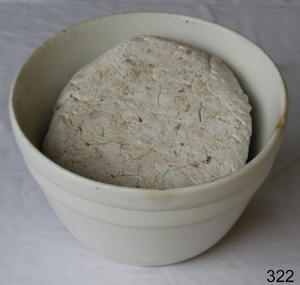
... week – put your name on the outside of the bag so you can find your work easily. We have stickers and markers. Consider how you want to decorate your work – coloured slip can be applied at a fairly wet stage (remembering that it will make your work even wetter!). Trying to apply slip to dry clay won’t work! If you want to do sgraffito – you will need to keep the work leather hard (a state of dryness where you can still work the clay with a little effort and a little water and care...week – put your name on the outside of the bag so you can find your work easily. We have stickers and markers. Consider how you want to decorate your work – coloured slip can be applied at a fairly wet stage (remembering that it will make your work even wetter!). Trying to apply slip to dry clay won’t work! If you want to do sgraffito – you will need to keep the work leather hard (a state of dryness where you can still work the clay with a little effort and a little water and care ...The Process of Making Pottery Decorating, Firing, Glazing, Making, Technical There is a rhythm and flow to clay. It can’t be done all at once! Even the making process! It can take weeks to get everything done, especially if you can only work on your pottery once a week! Even though we have three hour classes, it’s often just not enough time! Here is an overview of some of the processes so you have a bit more grasp on some of the technical stuff! Step One – Design There are SO many ideas out there for making stuff in clay! From delicate porcelain jewellery, through to heavy sculptural work and everything in between. Deciding your direction is sometimes not that easy – when you first start, try everything, you will naturally gravitate to the style that you enjoy! The options and variations are endless and can get a wee bit overwhelming too! Check in with me before you start to ensure your ideas will work, what order you might do things, how you could achieve the look you are seeking and any other technical data required! Step Two – Making Clay is thixotropic. This means that as you work with it, the clay first gets sloppier and wetter, before is begins to dry in the atmosphere. For most things, you simply can’t do all parts of the project at once. An example of work order might look like: Get last weeks work out from the shelves Prepare clay for today’s work – roll your clay, prepare balls for throwing, make the first stage of a pinch pot) Clean up last week’s work and put it on the shelf for bisque firing Check that you have any glazing to do – and do enough of it that you will have time to finish your main project Do the next step of your next project – there might be a further step that can’t be complete immediately, in that case, wrap your work well and put onto the shelves. Letting your work rest for a while can really help keep your work clean and professional looking. Many things require bagging under plastic to keep it ready for work the next week – put your name on the outside of the bag so you can find your work easily. We have stickers and markers. Consider how you want to decorate your work – coloured slip can be applied at a fairly wet stage (remembering that it will make your work even wetter!). Trying to apply slip to dry clay won’t work! If you want to do sgraffito – you will need to keep the work leather hard (a state of dryness where you can still work the clay with a little effort and a little water and care). Step Three – Drying Most of the time your work can go into the rack uncovered to let it dry out for the following week. If you want to continue forming or shaping you will need to double bag your work – put your work on a suitable sized bat and put the bat in a bag so the base of the bag is under the bat, then put another bag over the top of the work and tuck the top of the bag under the bat. If you want to trim (or turn) your thrown work the following week, it should also be double bagged. If your work is large, delicate, or of uneven thicknesses, you should lightly cover your work for drying. When considering the drying process, bare in mind the weather, humidity and wind! The hotter and dryer, the faster things dry and work can dry unevenly in the shelves – this can lead to cracking – another time to lightly cover your work for drying. Step Four – Trimming and Cleaning Up Your work is dry! It is called greenware now and it is at it’s most fragile! Handle everything with two hands. I often refer to soft hands – keep everything gentle and with your fingers spread as much as possible. Try to not pick up things like plates too much, and always with both hands! Before your work can be bisque fired it should be “cleaned up”. You work won’t go into the kiln if it has sharp edges – when glazed, sharp edges turn into razor blades! Use a piece of fly wire to rub the work all over – this will scratch a little so be light handed. Use a knife or metal kidney to scrape any areas that require a bit more dynamic treatment than the fly wire offers! Finally, a very light wipe over with a slightly damp sponge can help soften and soothe all of your edges and dags! Trimming thrown work: If you are planning to trim (or turn) your thrown work (and you should be), make sure you bag it well – your work should be leather hard to almost dry for easiest trimming. Use this step to finish the work completely – use a metal kidney to polish the surface, or a slightly damp sponge to give a freshly thrown look. Wipe the sponge around the rim after trimming, and check the inside of the pot for dags! Trimming slip cast work: Usually I will trim the rims of your work on the wheel the following day to make that stage easier, however you will still need to check your work for lumps and bumps. Last but not least – check that your name is still clearly on the bottom of your work. Step Five – Bisque Firing When the work is completely dry it can go into the bisque kiln. The bisque kiln is fired to 1000°C. This process burns off the water in the clay as well as some of the chemically bound water. The structure of the clay is not altered that much at this temperature. Inside the bisque kiln, the work is stacked a little, small bowl inside a larger bowl and onto a heavy plate. Smaller items like decorations or drink coasters might get stacked several high. Consideration is paid to the weight of the stack and shape of the work. A bisque kiln can fire about one and a half times the amount of work that the glaze kiln can fire. The firing takes about 10 hours to complete the cycle and about two days to cool down. Once it has been emptied the work is placed in the glaze room ready for you to decorate! Step Six – Glazing Decorating your work with colour can be a lot of fun – and time consuming! There are three main options for surface treatment at this stage: Oxide Washes Underglazes Glazes Washes and underglazes do not “glaze” the work – It will still need a layer of glaze to fully seal the clay (washes don’t need glaze on surfaces not designed for food or liquid as they can gloss up a little on their own). Underglazes are stable colourants that turn out pretty much how they look in the jar. They can be mixed with each other to form other colours and can be used like water colours to paint onto your work. Mostly they should have a clear glaze on top to seal them. Oxides are a different species – the pink oxide (cobalt) wash turns out bright blue for instance. They don’t always need a glaze on top, and some glazes can change the colour of the wash! The glazes need no other “glaze” on top! Be careful of unknown glaze interactions – you can put any combination of glaze in a bowl or on a plate, but only a single glaze on the outside of any vertical surface! Glazes are a chemical reaction under heat. We don’t know the exact chemicals in the Mayco glazes we use. I can guess by the way they interact with each other, however, on the whole, you need to test every idea you have, and not run the test on a vertical surface! Simply put, glaze is a layer of glass like substance that bonds with the clay underneath. Clay is made of silica, alumina and water. Glaze is made of mostly silica. Silica has a melting point of 1700°C and we fire to 1240°C. The silica requires a “flux” to help it melt at the lower temperature. Fluxes can be all sorts of chemicals – a common one is calcium – calcium has a melting point of 2500°C, however, together they both melt at a much lower temperature! Colourants are metal oxides like cobalt (blue), chrome (green through black), copper (green, blue, even red!), manganese (black, purple and pink) iron (red brown), etc. Different chemicals in the glaze can have dramatic effects. for example, barium carbonate (which we don’t use) turns manganese bright pink! Other elements can turn manganese dioxide brown, blue, purple and reddish brown. Manganese dioxide is a flux in and of itself as well. So, glazes that get their black and purple colours, often interact with other glazes and RUN! Our mirror black is a good example – it mixes really well with many glazes because it fluxes them – causes them to melt faster. It will also bring out many beautiful colours in the glazes because it’s black colouring most definitely comes from manganese dioxide! Glaze chemistry is a whole subject on it’s own! We use commercial Mayco glazes on purpose – for their huge range of colour possibilities, stability, cool interactions, artistic freedom with the ability to easily brush the glazes on and ease of use. We currently have almost 50 glazes on hand! A major project is to test the interactions of all glazes with each other. That is 2,500 test tiles!!!! I’m going to make the wall behind the wheels the feature wall of pretty colours! Step Seven – Glaze (Gloss or sometimes called “Glost”) Firing Most of the time this is the final stage of making your creation (but not always!) The glaze kiln goes to 1240°C. This is called cone 6, or midrange. It is the low end of stoneware temperatures. Stoneware clays and glazes are typically fired at cone 8 – 10, that is 1260 – 1290°C. The energy requirement to go from 1240°C to 1280°C is almost a 30% more! Our clay is formulated to vitrify (mature, turn “glass-like”) at 1240°, as are our glazes. A glaze kiln take around 12 hours to reach temperature and two to three days to cool down. Sometimes a third firing process is required – this is for decoration that is added to work after the glaze firing. For example – adding precious metals and lustres. this firing temperature is usually around 600 – 800°C depending upon the techniques being used. There are many students interested in gold and silver trims – we will be doing this third type of firing soon! After firing your work will be in the student finished work shelves. Remember to pay for it before you head out the door! There is a small extra charge for using porcelain clay (it’s more than twice the price of regular clay), and for any third firing process! Once your work has been fired it can not turn back into clay for millennia – so don’t fire it if you don’t like it! Put it in the bucket for recycling. https://firebirdstudios.com.au/the-process-of-making-pottery/ This bowl is an example of kitchenware used in the 19th century and still in use today.Bowl white ceramic plain that has two sets of edging around lip. Inside bowl has plaster designed to look like cooking mixture.flagstaff hill, warrnambool, shipwrecked-coast, flagstaff-hill, flagstaff-hill-maritime-museum, maritime-museum, shipwreck-coast, flagstaff-hill-maritime-village, kitchen equipment, ceramic -
 Flagstaff Hill Maritime Museum and Village
Domestic object - Bowl, J & G Meakin, Late 19th or early 20th Century
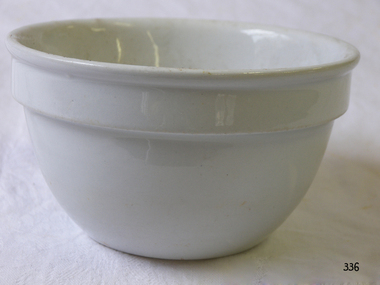
... week – put your name on the outside of the bag so you can find your work easily. We have stickers and markers. Consider how you want to decorate your work – coloured slip can be applied at a fairly wet stage (remembering that it will make your work even wetter!). Trying to apply slip to dry clay won’t work! If you want to do sgraffito – you will need to keep the work leather hard (a state of dryness where you can still work the clay with a little effort and a little water and care...week – put your name on the outside of the bag so you can find your work easily. We have stickers and markers. Consider how you want to decorate your work – coloured slip can be applied at a fairly wet stage (remembering that it will make your work even wetter!). Trying to apply slip to dry clay won’t work! If you want to do sgraffito – you will need to keep the work leather hard (a state of dryness where you can still work the clay with a little effort and a little water and care ...The Process of Making Pottery Decorating, Firing, Glazing, Making, Technical There is a rhythm and flow to clay. It can’t be done all at once! Even the making process! It can take weeks to get everything done, especially if you can only work on your pottery once a week! Even though we have three hour classes, it’s often just not enough time! Here is an overview of some of the processes so you have a bit more grasp on some of the technical stuff! Step One – Design There are SO many ideas out there for making stuff in clay! From delicate porcelain jewellery, through to heavy sculptural work and everything in between. Deciding your direction is sometimes not that easy – when you first start, try everything, you will naturally gravitate to the style that you enjoy! The options and variations are endless and can get a wee bit overwhelming too! Check in with me before you start to ensure your ideas will work, what order you might do things, how you could achieve the look you are seeking and any other technical data required! Step Two – Making Clay is thixotropic. This means that as you work with it, the clay first gets sloppier and wetter, before is begins to dry in the atmosphere. For most things, you simply can’t do all parts of the project at once. An example of work order might look like: Get last weeks work out from the shelves Prepare clay for today’s work – roll your clay, prepare balls for throwing, make the first stage of a pinch pot) Clean up last week’s work and put it on the shelf for bisque firing Check that you have any glazing to do – and do enough of it that you will have time to finish your main project Do the next step of your next project – there might be a further step that can’t be complete immediately, in that case, wrap your work well and put onto the shelves. Letting your work rest for a while can really help keep your work clean and professional looking. Many things require bagging under plastic to keep it ready for work the next week – put your name on the outside of the bag so you can find your work easily. We have stickers and markers. Consider how you want to decorate your work – coloured slip can be applied at a fairly wet stage (remembering that it will make your work even wetter!). Trying to apply slip to dry clay won’t work! If you want to do sgraffito – you will need to keep the work leather hard (a state of dryness where you can still work the clay with a little effort and a little water and care). Step Three – Drying Most of the time your work can go into the rack uncovered to let it dry out for the following week. If you want to continue forming or shaping you will need to double bag your work – put your work on a suitable sized bat and put the bat in a bag so the base of the bag is under the bat, then put another bag over the top of the work and tuck the top of the bag under the bat. If you want to trim (or turn) your thrown work the following week, it should also be double bagged. If your work is large, delicate, or of uneven thicknesses, you should lightly cover your work for drying. When considering the drying process, bare in mind the weather, humidity and wind! The hotter and dryer, the faster things dry and work can dry unevenly in the shelves – this can lead to cracking – another time to lightly cover your work for drying. Step Four – Trimming and Cleaning Up Your work is dry! It is called greenware now and it is at it’s most fragile! Handle everything with two hands. I often refer to soft hands – keep everything gentle and with your fingers spread as much as possible. Try to not pick up things like plates too much, and always with both hands! Before your work can be bisque fired it should be “cleaned up”. You work won’t go into the kiln if it has sharp edges – when glazed, sharp edges turn into razor blades! Use a piece of fly wire to rub the work all over – this will scratch a little so be light handed. Use a knife or metal kidney to scrape any areas that require a bit more dynamic treatment than the fly wire offers! Finally, a very light wipe over with a slightly damp sponge can help soften and soothe all of your edges and dags! Trimming thrown work: If you are planning to trim (or turn) your thrown work (and you should be), make sure you bag it well – your work should be leather hard to almost dry for easiest trimming. Use this step to finish the work completely – use a metal kidney to polish the surface, or a slightly damp sponge to give a freshly thrown look. Wipe the sponge around the rim after trimming, and check the inside of the pot for dags! Trimming slip cast work: Usually I will trim the rims of your work on the wheel the following day to make that stage easier, however you will still need to check your work for lumps and bumps. Last but not least – check that your name is still clearly on the bottom of your work. Step Five – Bisque Firing When the work is completely dry it can go into the bisque kiln. The bisque kiln is fired to 1000°C. This process burns off the water in the clay as well as some of the chemically bound water. The structure of the clay is not altered that much at this temperature. Inside the bisque kiln, the work is stacked a little, small bowl inside a larger bowl and onto a heavy plate. Smaller items like decorations or drink coasters might get stacked several high. Consideration is paid to the weight of the stack and shape of the work. A bisque kiln can fire about one and a half times the amount of work that the glaze kiln can fire. The firing takes about 10 hours to complete the cycle and about two days to cool down. Once it has been emptied the work is placed in the glaze room ready for you to decorate! Step Six – Glazing Decorating your work with colour can be a lot of fun – and time consuming! There are three main options for surface treatment at this stage: Oxide Washes Underglazes Glazes Washes and underglazes do not “glaze” the work – It will still need a layer of glaze to fully seal the clay (washes don’t need glaze on surfaces not designed for food or liquid as they can gloss up a little on their own). Underglazes are stable colourants that turn out pretty much how they look in the jar. They can be mixed with each other to form other colours and can be used like water colours to paint onto your work. Mostly they should have a clear glaze on top to seal them. Oxides are a different species – the pink oxide (cobalt) wash turns out bright blue for instance. They don’t always need a glaze on top, and some glazes can change the colour of the wash! The glazes need no other “glaze” on top! Be careful of unknown glaze interactions – you can put any combination of glaze in a bowl or on a plate, but only a single glaze on the outside of any vertical surface! Glazes are a chemical reaction under heat. We don’t know the exact chemicals in the Mayco glazes we use. I can guess by the way they interact with each other, however, on the whole, you need to test every idea you have, and not run the test on a vertical surface! Simply put, glaze is a layer of glass like substance that bonds with the clay underneath. Clay is made of silica, alumina and water. Glaze is made of mostly silica. Silica has a melting point of 1700°C and we fire to 1240°C. The silica requires a “flux” to help it melt at the lower temperature. Fluxes can be all sorts of chemicals – a common one is calcium – calcium has a melting point of 2500°C, however, together they both melt at a much lower temperature! Colourants are metal oxides like cobalt (blue), chrome (green through black), copper (green, blue, even red!), manganese (black, purple and pink) iron (red brown), etc. Different chemicals in the glaze can have dramatic effects. for example, barium carbonate (which we don’t use) turns manganese bright pink! Other elements can turn manganese dioxide brown, blue, purple and reddish brown. Manganese dioxide is a flux in and of itself as well. So, glazes that get their black and purple colours, often interact with other glazes and RUN! Our mirror black is a good example – it mixes really well with many glazes because it fluxes them – causes them to melt faster. It will also bring out many beautiful colours in the glazes because it’s black colouring most definitely comes from manganese dioxide! Glaze chemistry is a whole subject on it’s own! We use commercial Mayco glazes on purpose – for their huge range of colour possibilities, stability, cool interactions, artistic freedom with the ability to easily brush the glazes on and ease of use. We currently have almost 50 glazes on hand! A major project is to test the interactions of all glazes with each other. That is 2,500 test tiles!!!! I’m going to make the wall behind the wheels the feature wall of pretty colours! Step Seven – Glaze (Gloss or sometimes called “Glost”) Firing Most of the time this is the final stage of making your creation (but not always!) The glaze kiln goes to 1240°C. This is called cone 6, or midrange. It is the low end of stoneware temperatures. Stoneware clays and glazes are typically fired at cone 8 – 10, that is 1260 – 1290°C. The energy requirement to go from 1240°C to 1280°C is almost a 30% more! Our clay is formulated to vitrify (mature, turn “glass-like”) at 1240°, as are our glazes. A glaze kiln take around 12 hours to reach temperature and two to three days to cool down. Sometimes a third firing process is required – this is for decoration that is added to work after the glaze firing. For example – adding precious metals and lustres. this firing temperature is usually around 600 – 800°C depending upon the techniques being used. There are many students interested in gold and silver trims – we will be doing this third type of firing soon! After firing your work will be in the student finished work shelves. Remember to pay for it before you head out the door! There is a small extra charge for using porcelain clay (it’s more than twice the price of regular clay), and for any third firing process! Once your work has been fired it can not turn back into clay for millennia – so don’t fire it if you don’t like it! Put it in the bucket for recycling. https://firebirdstudios.com.au/the-process-of-making-pottery/This bowl was made by renowned pottery company J & G Meakin of England. The firm was established in the mid-1800's. The bowl is an example of kitchenware used in the 19th century and still in use today.Bowl; white ceramic, round and tapering inwards towards base. Made by J and G Meakin England.On base, 'Ironstone China Reg SOL 391413' with symbolflagstaff hill, flagstaff hill maritime museum and village, warrnambool, maritime museum, maritime village, great ocean road, shipwreck coast, mixing bowl, food preparation, j & g meakin, pottery, stoke-on-trent, kitchen equipment, ceramic -
 Ringwood and District Historical Society
Magazine, Maroondah In Focus Council Magazine August 2003
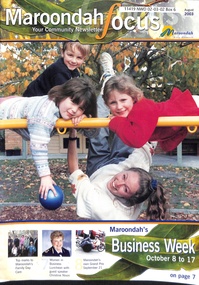
... Maroondah In Focus newsletter includes features on Maroondah Family Day Care, Christine Nixon guest speaker, local Grand Prix, Business Week, No Tolls Campaign, McGivern Art Prize, Croydon Pool Update, Budget for 2003-2004...Maroondah In Focus newsletter includes features on Maroondah Family Day Care, Christine Nixon guest speaker, local Grand Prix, Business Week, No Tolls Campaign, McGivern Art Prize, Croydon Pool Update, Budget for 2003-2004 Maroondah In Focus Council Magazine August 2003 Magazine ...Maroondah In Focus newsletter includes features on Maroondah Family Day Care, Christine Nixon guest speaker, local Grand Prix, Business Week, No Tolls Campaign, McGivern Art Prize, Croydon Pool Update, Budget for 2003-2004 -
Marysville & District Historical Society
THE TRIANGLE NEWS-VOL 41 NO 15-APRIL 25 2014
... week 2014...notice of special meetin of council...buxton hotel parma night...anzac day office closures...season opener lunch...anzac day services 2014...marysville preschool centre...long day care...marysville victoria australia lions donation to cystic fibrosis farmers need our help new contact details for triangle news what's on when in april/may 2014 seasonal influenza vaccine available the committee of management of the gallipoli park precinct marysville community market creative triangle marysville sub branch rsl adventurous cooks triangle community dinner buxton ridge vineyard wine tasting church notices heather jenkins wins the mavis hatfield trophy intrepid triangle bushwalkers marysville saddletramps inaugural ralph wait memorial ride burning continues despite high rainfall lions rich fruit cakes marysville & triangle community men's shed top end/central tour buxton recreation reserve committee meeting inviting public el kanah eat in eat out menu marysville road closure anzac day march amnesty peiod on open air burning in residential areas residential and rural real estate marysville triangle real estate lake mountain mountain mayhem marsyville midweek netball fire prevention irrigation systems alexandra district hospital heart week 2014 notice of special meetin of council buxton hotel parma night anzac day office closures season opener lunch anzac day services 2014 marysville preschool centre long day care & kindergarten buxton hall trivia night annual alexandra truck ute & rod show marysville cultural community 2 mime shows head of camp marysville vic the outdoor education group woodlands rainforest retreat position vacant murrindindi early years conference building beyond el kanah conference centre murrindindi shire council naming the community centre rooms and stadium advertisements THE TRIANGLE NEWS-VOL 41 NO 15-APRIL 25 2014 ...marysville, victoria, australia, lions donation to cystic fibrosis, farmers need our help, new contact details for triangle news, what's on when in april/may, 2014 seasonal influenza vaccine available, the committee of management of the gallipoli park precinct, marysville community market, creative triangle, marysville sub branch rsl, adventurous cooks, triangle community dinner, buxton ridge vineyard wine tasting, church notices, heather jenkins wins the mavis hatfield trophy, intrepid triangle bushwalkers, marysville saddletramps, inaugural ralph wait memorial ride, burning continues despite high rainfall, lions rich fruit cakes, marysville & triangle community men's shed, top end/central tour, buxton recreation reserve committee meeting inviting public, el kanah, eat in eat out menu, marysville road closure anzac day march, amnesty peiod on open air burning in residential areas, residential and rural real estate, marysville triangle real estate, lake mountain, mountain mayhem, marsyville midweek netball, fire prevention irrigation systems, alexandra district hospital heart week 2014, notice of special meetin of council, buxton hotel parma night, anzac day office closures, season opener lunch, anzac day services 2014, marysville preschool centre, long day care & kindergarten, buxton hall trivia night, annual alexandra truck ute & rod show, marysville cultural community, 2 mime shows, head of camp marysville vic, the outdoor education group, woodlands rainforest retreat position vacant, murrindindi early years conference building beyond, el kanah conference centre, murrindindi shire council, naming the community centre rooms and stadium, advertisements -
Marysville & District Historical Society
THE TRIANGLE NEWS-VOL 41 NO 16-MAY 2 2014
... week 2014...cleaner needed for marysville villains pie night...murrindindi shire council...ceaca...marysville midweek netball...swimming pools made a splash this season...mother's day black spur inn...darryl hull entertainer...tree changes tempted by shire...marysville preschool centre...long day care...marysville victoria australia marysville history centre life members honoured mary & reg kenealy life membership certificates presented new contact details for triangle news what's on when in may 2014 sesonal influenza vaccine the committee of management of the gallipoli park precinct marysville community market creative triangle adventurous cooks triangle community dinner church notices marysville golf report mayor's chair by margaret rose marysville saddletramps inaugural ralph wait memorial ride gallipoli park marysville top end/central tour marysville triangle community men's shed advertisements modern life music school the next wave cabaret dinner show el kanah marysville eat in eat out menu buxton nursery residential and rural real estate marysville triangle real estate lake mountain mountain mayhem alexandra district hospital heart week 2014 cleaner needed for marysville villains pie night murrindindi shire council ceaca marysville midweek netball swimming pools made a splash this season mother's day black spur inn darryl hull entertainer tree changes tempted by shire marysville preschool centre long day care & kindergarten 1000 hands a great success emergence program marysville cultural community 2 mime shows buxton hall trivia night murrindindi early years conference building beyond naming the marysville community centre rooms and stadium THE TRIANGLE NEWS-VOL 41 NO 16-MAY 2 2014 ...marysville, victoria, australia, marysville history centre life members honoured, mary & reg kenealy, life membership certificates presented, new contact details for triangle news, what's on when in may, 2014 sesonal influenza vaccine, the committee of management of the gallipoli park precinct, marysville community market, creative triangle, adventurous cooks, triangle community dinner, church notices, marysville golf report, mayor's chair by margaret rose, marysville saddletramps, inaugural ralph wait memorial ride, gallipoli park marysville, top end/central tour, marysville triangle community men's shed, advertisements, modern life music school, the next wave cabaret dinner show, el kanah marysville, eat in eat out menu, buxton nursery, residential and rural real estate, marysville triangle real estate, lake mountain, mountain mayhem, alexandra district hospital heart week 2014, cleaner needed for marysville villains pie night, murrindindi shire council, ceaca, marysville midweek netball, swimming pools made a splash this season, mother's day black spur inn, darryl hull entertainer, tree changes tempted by shire, marysville preschool centre, long day care & kindergarten, 1000 hands a great success, emergence program, marysville cultural community, 2 mime shows, buxton hall trivia night, murrindindi early years conference, building beyond, naming the marysville community centre rooms and stadium -
Marysville & District Historical Society
THE TRIANGLE NEWS-VOL 41 NO 17-MAY 9 2014
... week...marysville & triangle community men's shed...united approach for visitor information centres...buxton nursery...social dancing alexandra...residential & rural real estate...marysville triangle real estate...lake mountain...mountain mayhem...depression recovery program free information evening...cleaner needed for marysville villains...marsysville shines for 1000 hands project opening...buxton hotel burger night...draft budget 2014-2015 council plan review...recognising those who returned from the war...black spur inn mother's day lunch...el kanah marsyville...eat in eat out menu...marysville preschool centre...long day care...marysville victoria australia villains season 2014 kicks off in style afl legend doug hawkins speech marysville lions club news contact details for triangle news what's on when in may 2014 seasonal influenza vaccine available the committee of management of the gallipoli park precinct marysville community market creative triangle adventurous cooks marysville fire brigade good friday appeal church notices marysville golf report dr neil mckern running legend alexandra high school reunion mayor's chair by cr margaret rae councillor comment by cr john walsh koriella ward celebrating volunteers week marysville & triangle community men's shed united approach for visitor information centres buxton nursery social dancing alexandra residential & rural real estate marysville triangle real estate lake mountain mountain mayhem depression recovery program free information evening cleaner needed for marysville villains marsysville shines for 1000 hands project opening buxton hotel burger night draft budget 2014-2015 council plan review recognising those who returned from the war black spur inn mother's day lunch el kanah marsyville eat in eat out menu marysville preschool centre long day care & kindergarten marysville beer & platter garden closed for winter black spur inn kitchen assistant wanted council plan keeps focus on community emergence from surviving to thriving el kanah conference room dandyman play buxton hall trivia night review of dandyman play draft budget 2014/15 sets council's direction THE TRIANGLE NEWS-VOL 41 NO 17-MAY 9 2014 ...marysville, victoria, australia, villains season 2014 kicks off in style, afl legend doug hawkins speech, marysville lions club, news contact details for triangle news, what's on when in may, 2014 seasonal influenza vaccine available, the committee of management of the gallipoli park precinct, marysville community market, creative triangle, adventurous cooks, marysville fire brigade good friday appeal, church notices, marysville golf report, dr neil mckern running legend, alexandra high school reunion, mayor's chair by cr margaret rae, councillor comment by cr john walsh koriella ward, celebrating volunteers week, marysville & triangle community men's shed, united approach for visitor information centres, buxton nursery, social dancing alexandra, residential & rural real estate, marysville triangle real estate, lake mountain, mountain mayhem, depression recovery program free information evening, cleaner needed for marysville villains, marsysville shines for 1000 hands project opening, buxton hotel burger night, draft budget 2014-2015 council plan review, recognising those who returned from the war, black spur inn mother's day lunch, el kanah marsyville, eat in eat out menu, marysville preschool centre, long day care & kindergarten, marysville beer & platter garden closed for winter, black spur inn kitchen assistant wanted, council plan keeps focus on community, emergence from surviving to thriving, el kanah conference room dandyman play, buxton hall trivia night, review of dandyman play, draft budget 2014/15 sets council's direction -
Marysville & District Historical Society
THE TRIANGLE NEWS-VOL 41 NO 37-SEPTEMBER 26 2014
... week...marysville & triangle community men's shed...advertisements...council committed to delivering on community's bushfire memorials...emotions anonymous international meeting...residential & rural real estate...marysville triangle real estate...community light the night...leukaemia foundation...maryville community golf & bowls club grand final day...el kanah new spring menu...buxton hall social dance...bunker restaurant opening hours...community openings skate park & bbq canopy...retail opportunity...marysville pre school...long day care...marysville victoria australia fireball to football painting villains football club bill metcalf what's on when in october the committee of management of the gallipoli park precinct marysville community market creative triangle position vacant change of venue for ordinary meeting of council change to alexandra library opening hours marysville golf report church notices police requesting information mayor's chair by margaret rae murrindindi shire council expressions of interest 2014-2015 fire season slashing programs celebrate senior's week marysville & triangle community men's shed advertisements council committed to delivering on community's bushfire memorials emotions anonymous international meeting residential & rural real estate marysville triangle real estate community light the night leukaemia foundation maryville community golf & bowls club grand final day el kanah new spring menu buxton hall social dance bunker restaurant opening hours community openings skate park & bbq canopy retail opportunity marysville pre school long day care & kindergarten alexandra automotive swap meet THE TRIANGLE NEWS-VOL 41 NO 37-SEPTEMBER 26 2014 ...marysville, victoria, australia, fireball to football painting, villains football club, bill metcalf, what's on when in october, the committee of management of the gallipoli park precinct, marysville community market, creative triangle, position vacant, change of venue for ordinary meeting of council, change to alexandra library opening hours, marysville golf report, church notices, police requesting information, mayor's chair by margaret rae, murrindindi shire council, expressions of interest 2014-2015 fire season slashing programs, celebrate senior's week, marysville & triangle community men's shed, advertisements, council committed to delivering on community's bushfire memorials, emotions anonymous international meeting, residential & rural real estate, marysville triangle real estate, community light the night, leukaemia foundation, maryville community golf & bowls club grand final day, el kanah new spring menu, buxton hall social dance, bunker restaurant opening hours, community openings skate park & bbq canopy, retail opportunity, marysville pre school, long day care & kindergarten, alexandra automotive swap meet -
Marysville & District Historical Society
THE TRIANGLE NEWS-VOL 41 NO 44-NOVEMBER 14 2014
... care & kindergarten...marysville preschool...emotions anonymous international...buxton bootcamp...marysville district football & netball club...fire action week...marysville victoria australia taggerty's community projects taking shape what's on when in november the committee of management of the gallipoli park precinct marysville community market creative triangle new general manager joins murrindindi shire marysville golf report church notices mayor's chair by councillor margaret rae murrindindi shire council road closures & event information marysville & triangle community men's shed advertisements mp's visit narbethong to view holly eradication program marysville & district kindergarten assocn preschool agm residential and rural real estate marysville triangle real estate nye at el kanah marysville villains marysville & district football club veterans long day care & kindergarten marysville preschool emotions anonymous international buxton bootcamp marysville district football & netball club fire action week time to get prepared interruption to mobile library service intrepid triangle bushwalkers marysville community golf & bowls club intro to summer real estate the wild woman's show open gardens marysville new marysville water treatment plant works progressing smoothly THE TRIANGLE NEWS-VOL 41 NO 44-NOVEMBER 14 2014 ...marysville, victoria, australia, taggerty's community projects taking shape, what's on when in november, the committee of management of the gallipoli park precinct, marysville community market, creative triangle, new general manager joins murrindindi shire, marysville golf report, church notices, mayor's chair by councillor margaret rae, murrindindi shire council, road closures & event information, marysville & triangle community men's shed, advertisements, mp's visit narbethong to view holly eradication program, marysville & district kindergarten assocn preschool agm, residential and rural real estate, marysville triangle real estate, nye at el kanah, marysville villains, marysville & district football club veterans, long day care & kindergarten, marysville preschool, emotions anonymous international, buxton bootcamp, marysville district football & netball club, fire action week time to get prepared, interruption to mobile library service, intrepid triangle bushwalkers, marysville community golf & bowls club intro to summer, real estate, the wild woman's show, open gardens marysville, new marysville water treatment plant works progressing smoothly -
Marysville & District Historical Society
THE TRIANGLE NEWS-VOL 2 NO 8-APRIL 1 1977
... week...for sale...rainfall...community care...marysville victoria australia gear oil heaters major government project golf club kindergarten news senior citizens fire brigade mcfarlane briquettes pigskin preview lions wirreanda meeting bowls the news next week for sale rainfall community care centre narbethong public meeting birth concert interschool athletic sports THE TRIANGLE NEWS-VOL 2 NO 8-APRIL 1 1977 ...marysville, victoria, australia, gear oil heaters, major government project, golf club, kindergarten news, senior citizens, fire brigade, mcfarlane briquettes, pigskin preview, lions, wirreanda meeting, bowls, the news next week, for sale, rainfall, community care centre, narbethong public meeting, birth, concert, interschool athletic sports -
Marysville & District Historical Society
THE TRIANGLE NEWS-VOL 3 NO 37-10 NOVEMBER 1978
... care centre...australian democrats...in hospital...for sale...found...swimming club...senior citizens...rainfall...marysville water...fisherman of the week...marysville victoria australia final call primary school enrolment brownie-guides new faces scouts & cubs committee meeting community care centre australian democrats in hospital for sale found swimming club senior citizens rainfall marysville water fisherman of the week kindergarten annual dinner pottery classes commencing cricket the future of triangle news golf poison pen letter marysville primary school council fruit salad farm THE TRIANGLE NEWS-VOL 3 NO 37-10 NOVEMBER 1978 ...marysville, victoria, australia, final call, primary school enrolment, brownie-guides, new faces, scouts & cubs committee meeting, community care centre, australian democrats, in hospital, for sale, found, swimming club, senior citizens, rainfall, marysville water, fisherman of the week, kindergarten, annual dinner, pottery classes commencing, cricket, the future of triangle news, golf, poison pen letter, marysville primary school council, fruit salad farm -
Marysville & District Historical Society
THE TRIANGLE NEWS-VOL 4 NO 2-16 FEBRUARY 1979
... care centre...for sale pups...marysville tourist association...situation vacant...thought for the week...marysville victoria australia footy club lions club visit new school principal senior citizens 1st marysville scouts/cubs community care centre for sale pups marysville tourist association situation vacant thought for the week swimming carnival marysville bowling club tender kinder roster tv reception marysville changes to club directory triangle news typewriter birthdays and engagements new deadline triangle news marysville tape-lions club THE TRIANGLE NEWS-VOL 4 NO 2-16 FEBRUARY 1979 ...marysville, victoria, australia, footy club, lions club visit, new school principal, senior citizens, 1st marysville scouts/cubs, community care centre, for sale pups, marysville tourist association, situation vacant, thought for the week, swimming carnival, marysville bowling club tender, kinder roster, tv reception marysville, changes to club directory, triangle news typewriter, birthdays and engagements, new deadline triangle news, marysville tape-lions club -
Marysville & District Historical Society
THE TRIANGLE NEWS-VOL 4 NO 5-MARCH 9 1979
... week...health check...farewell dinner...associates golf...vale mrs cuzens...marysville football club social committee...fun run...sponsorship lions club...marysville cricket club...rally...community care...marysville victoria australia lions convention marysville girl guide association footy club notes senior citizens red cross kinder roster toddlers group thanks billie jo andrews uniting church marysville primary school mothers club wanted kitchen hand for sale modern supper dance marysville hotel annual meeting wirreanda crossways restaurant thought of the week health check farewell dinner associates golf vale mrs cuzens marysville football club social committee fun run sponsorship lions club marysville cricket club rally community care centre THE TRIANGLE NEWS-VOL 4 NO 5-MARCH 9 1979 ...marysville, victoria, australia, lions convention, marysville girl guide association, footy club notes, senior citizens, red cross, kinder roster, toddlers group, thanks billie jo andrews, uniting church, marysville primary school mothers club, wanted kitchen hand, for sale, modern supper dance marysville hotel, annual meeting wirreanda, crossways restaurant, thought of the week, health check, farewell dinner, associates golf, vale mrs cuzens, marysville football club social committee, fun run, sponsorship lions club, marysville cricket club, rally, community care centre -
Marysville & District Historical Society
THE TRIANGLE NEWS-VOL 20 NO 33-20 AUGUST 1993
... care agm...senior citizens...buxton fire brigade...for sale...oregon woodgrain timber...church notices...triangle tid bits...marysville indoor bowls...tax accountant...letters to the editor...ratepayers' assocn...public meeting the retreat...wirreanda words...food vendors...deafness awareness week...marysville victoria australia marysville & district community care agm senior citizens buxton fire brigade for sale oregon woodgrain timber church notices triangle tid bits marysville indoor bowls tax accountant letters to the editor ratepayers' assocn public meeting the retreat wirreanda words food vendors deafness awareness week the hermitage music & arts red nose day triangle community business new committee shopping trip registered drivers new drivers bus bookings alpine liquor shire of alexandra gallipoli park management committee long term development plan marysville hotel THE TRIANGLE NEWS-VOL 20 NO 33-20 AUGUST 1993 ...marysville, victoria, australia, marysville & district community care agm, senior citizens, buxton fire brigade, for sale, oregon woodgrain timber, church notices, triangle tid bits, marysville indoor bowls, tax accountant, letters to the editor, ratepayers' assocn, public meeting the retreat, wirreanda words, food vendors, deafness awareness week, the hermitage music & arts, red nose day, triangle community business, new committee, shopping trip, registered drivers, new drivers, bus bookings, alpine liquor, shire of alexandra, gallipoli park management committee, long term development plan, marysville hotel -
Marysville & District Historical Society
THE TRIANGLE NEWS-VOL 22 NO 11-17 MARCH 1995
... week...reflections on history...marysville & district historical society...health care...marysville victoria australia senior citizens for sale or rent designer kidz & ladies wear the danish coffee garden oregon woodgrain timber community health services fishing competition emergency fire telephone numbers triangle news helpers thank you buxton primary school happy birthday lions mints rates reduced shire of murrindindi marysville ladies' bowling club press release flowerdale hall hire of plant church news arthritis week reflections on history marysville & district historical society health care card & pension card holders dental discount garage sale golf news triangle tid bits lions club award marysville video competition word puzzle marysville newsagency & general store THE TRIANGLE NEWS-VOL 22 NO 11-17 MARCH 1995 ...marysville, victoria, australia, senior citizens, for sale or rent, designer kidz & ladies wear, the danish coffee garden, oregon woodgrain timber, community health services, fishing competition, emergency fire telephone numbers, triangle news helpers thank you, buxton primary school, happy birthday, lions mints, rates reduced, shire of murrindindi, marysville ladies' bowling club, press release, flowerdale hall, hire of plant, church news, arthritis week, reflections on history, marysville & district historical society, health care card & pension card holders, dental discount, garage sale, golf news, triangle tid bits, lions club award, marysville video competition, word puzzle, marysville newsagency & general store -
Federation University Historical Collection
Book - Book - Scrapbook, Ballarat School of MInes: Scrapbook of Newspaper Cuttings, Book 11, June 1981 to September 1981
... week at smb...photography courses at smb...geoff pope photography teacher...training better supervisors - factory language in classroom...impetus from top...ballarat move for apprentice hairdressers' course at smb...safety seminar for apprentices...education mood of gloom says john dawkins federal spokesman for education...tafe region board chairman appointed...neil ferguson...councils face increasing financial pressures...proper care...The papers concerned are The Courier, Ballarat, The Australian, The Age over the period of 10 June 1981 to 25 September 1981. courses available smb music teachers to play in japan scholarships given by real estate men department tests plant operators student comfort and architectual skill carol woolman breaking language barrier morgan john retires from bcae council leanne parker neil henderson and daryl crawley among state's top students father john ignatius bleasdale wine authority receptionist course to begin at smb governor sir henry winneke's tribute to craftsmen smb courses to help avoid business failure joan chamber mla critical of tafe college funding jobless urged to train for jobs replies to joan chambers' comments ballarat rowers deny council bashing henry sutton inventor employers advised to learn of training changes apprentice week at smb photography courses at smb geoff pope photography teacher training better supervisors - factory language in classroom impetus from top ballarat move for apprentice hairdressers' course at smb safety seminar for apprentices education mood of gloom says john dawkins federal spokesman for education tafe region board chairman appointed neil ferguson councils face increasing financial pressures proper care of rape victims advocated tafe funding not enough local government conference in ballarat major trophy for john wilson peter drake racv apprentice motor mechanic of the year Book with white cover, front, spiral bound. ...Collection of newspaper articles related to Ballarat School Of Mines.They cover activities and advertisements for staff. The papers concerned are The Courier, Ballarat, The Australian, The Age over the period of 10 June 1981 to 25 September 1981.Book with white cover, front, spiral bound. courses available, smb music teachers to play in japan, scholarships given by real estate men, department tests plant operators, student comfort and architectual skill, carol woolman breaking language barrier, morgan john retires from bcae council, leanne parker neil henderson and daryl crawley among state's top students, father john ignatius bleasdale wine authority, receptionist course to begin at smb, governor sir henry winneke's tribute to craftsmen, smb courses to help avoid business failure, joan chamber mla critical of tafe college funding, jobless urged to train for jobs, replies to joan chambers' comments, ballarat rowers deny council bashing, henry sutton inventor, employers advised to learn of training changes, apprentice week at smb, photography courses at smb, geoff pope photography teacher, training better supervisors - factory language in classroom, impetus from top, ballarat move for apprentice hairdressers' course at smb, safety seminar for apprentices, education mood of gloom says john dawkins federal spokesman for education, tafe region board chairman appointed, neil ferguson, councils face increasing financial pressures, proper care of rape victims advocated, tafe funding not enough, local government conference in ballarat, major trophy for john wilson, peter drake racv apprentice motor mechanic of the year -
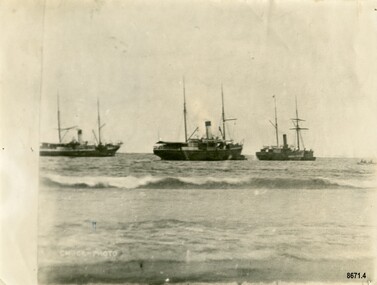 Flagstaff Hill Maritime Museum and Village
Photograph - Steamers - Julia Percy, Dawn and Coorong, Chuck Photo Ballarat, Circa 1885
... On board the Dawn the exhausted men received care and attention to their needs and wants, including much needed clothing. Four men (three crew and one passenger) died. A week...On board the Dawn the exhausted men received care and attention to their needs and wants, including much needed clothing. Four men (three crew and one passenger) died. A week ...This photograph was one of ten photographs donated to Flagstaff Hill Maritime Museum and Village by Fred Trewartha. Frederick John Fox Trewartha (Fred) was a well-known Warrnambool businessman. He was born in Beeac near Geelong in 1920 and came to Warrnambool with his family as a very young child. He was apprenticed to his father John, as a saddler and later opened his own shop on Raglan Parade. He then moved into working with tarpaulins and canvases for the trucking industry. Fred was keenly interested in photography (and was a member of the Warrnambool Cine Club), yachting and boat building. He kept his yacht moored at Port Fairy for many years and participated in sailing events locally and interstate. He also built boats with his sons. He had the opportunity to meet many older sailors and it's thought this photo (and others in the set) may have been given to him by one of these men. Fred Trewartha died in 2016 in Warrnambool. Shipping was the cheapest and most practical means of carrying produce and goods during the period 1840-1890. Regular domestic steamer services commenced in the Warrnambool district in the late 1850’s and by 1870 the passenger trade was booming. Four coastal traders made regular stops at Warrnambool in the 1880's - S. S. Julia Percy, S. S. Dawn, S. S. Nelson and S. S. Casino. The S.S. Julia Percy (later named Leeuwin) was an iron passenger-cargo steam ship built in 1876. At one point in time the Julia Percy would sail from Warrnambool to Melbourne every Friday and return from Melbourne to Warrnambool every Tuesday. The cost of a return ticket for a Saloon Fare was £1.0.0. The Julia Percy was built in Glasgow by Thomas Wingate & Company, Whiteinch, in 1876 for the Warrnambool Steam Packet Company, which commissioned it for trade in Victoria’s western district. It was first registered in Warrnambool, Victoria in 1876. Two steamships, the Julia Percy and the Nelson, collided on 25th December 1881. The Julia Percy was at that time owned by its first owners, the Warrnambool Steam Packet Company, and she sailed under the command of Captain Chapman. It had left Melbourne the evening of 24th December, with about 150 passengers, sailing in fine weather through Port Phillip Heads around 9pm. It was headed for Warrnambool, Belfast (now named Port Fairy) and Portland. The Julia Percy was off Apollo Bay when Captain Chapman was woken by the ship’s whistle after midnight, the steamer Nelson being on a collision course with the Julia Percy. The Nelson struck Julia Percy midship. Boats were lowered from the ship (apart from a damaged lifeboat) and about 30-40 of the passengers boarded the Nelson. The engine room and the forehold were checked and found clear of water. The company manager, Mr. Evans, had been on the Nelson, so he boarded and inspected the Julia Percy and the decision was made to continue on to Warrnambool with the passengers as there appeared to be no immediate danger. However, Captain Thomas Smith said the Nelson was taking on water, so Julia Percy followed it for about an hour towards Melbourne on standby in case of need. Then Julia Percy turned around towards Warrnambool again. Shortly afterwards the Nelson turned to follow her, the ships stopped and passengers were returned to Julia Percy, and three from Julia Percy boarded the Nelson. Both ships proceeded on their way. Julia Percy passed Cape Otway light afterwards, signaling that there had been a collision. It was discovered later that one of the passengers was missing, then thought to have boarded the Nelson but later thought to have fallen into the sea and drowned while trying to jump from Julia Percy to Nelson. There had been 3 tickets purchased under the same name of that passenger “Cutler”; a father, son and friend named Wordsworth, which had caused quite some confusion. No further mishap occurred to either ship and both the Julia Percy and the Nelson reached their destinations safely. An enquiry was instigated by the Victoria Steam Navigation Board regarding the cause of the accident between the two steamships, in connection with the death of Cutler who was supposed to have lost his life by the collision. The enquiry resulted in Captain Thomas Smith having his master's certificate suspended for six months. The Julia Percy changed hands several times. Its next owner was the Western Steam Navigation Co (1887), managed by Mr. T.H. Osborne (the company’s office was on the corner of Timor and Liebig Streets - its north-western wall is now part of the current Warrnambool Regional Art Gallery.) The Melbourne Steamship Co became the next owners (1890), followed by William Howard Smith and Sons (1901) for use in Queensland coastal trades and then it was bought by George Turnbull in 1903 and used for local mail contract in Western Australia. The Julia Percy was sold to the Melbourne Steamship Company Ltd. (1906) and re-named the “Leeuwin” but continued in her Western Australian coastal run. It was converted into a coal hulk in Melbourne in 1910 as a result of damaged caused when it was driven against the jetty at Dongara during a gale. The ship was eventually dismantled and scuttled off Port Phillip Heads on 28 December 1934. The steamship "Dawn" was a 522-ton coastal trader built in 1876 and the vessel operated around the Victorian west coast from 1877 until 1898 for the Portland & Belfast Steam Navigation Co. sailing between Melbourne and Portland, via Warrnambool. The vessel was then owned in October 1885 by the renamed company, Belfast & Koroit Steam Navigation Co., until March 1896 when its ownership moved to W Howard Smith & Sons Ltd. This Melbourne company used the ship to service most ports around Australia. Captain F. Chapman took over from Captain Jones and served on the SS Dawn from 1898 until 1900 when he took command of the SS Casino. On September 4th 1880, the three masted clipper ship, "Eric the Red" struck Otway Reef, near Cape Otway. The S. S. Dawn, under the command of Captain Jones, was returning to Warrnambool from Melbourne, its sailing time different to its usual schedule. The provedore of the Dawn, Benjamin Lear, heard cries of distress coming through the portholes of the saloon. He gave the alarm and the engines were stopped. Cries could be heard clearly, coming from the land. Captain Jones sent out crew in two boats, and fired off rockets and blue lights to illuminate the area. They picked up the three survivors who were in the long boat from "Eric the Red". Two men were picked up out of the water, one being the owner’s son who was clinging to floating kerosene boxes. At daylight the Dawn then rescued the 18 men from the floating portion of the deckhouse, which had drifted about 4 miles from where they’d struck the reef. Shortly after the rescue the deckhouse drifted onto breakers and was thrown onto rocks at Point Franklin, about 2 miles east of Cape Otway. Captain Jones had signalled to Cape Otway lighthouse the number of the Eric the Red and later signalled that there was a wreck at Otway Reef but there was no response from the lighthouse. The captain and crew of the Dawn spent several more hours searching unsuccessfully for more survivors, even going back as far as Apollo Bay. On board the Dawn the exhausted men received care and attention to their needs and wants, including much needed clothing. Four men (three crew and one passenger) died. A week after the shipwreck, the Australian Government had also conveyed its thanks to the Captain and crew of the S.S. Dawn - “Captain Griffith Jones, S.S. Dawn, The Hon. Mr Clark desires that the thanks of the Government should be conveyed to you for the prompt, persevering and seamanlike qualities displayed by you, your officers and crew in saving the number of lives you did on the occasion referred to. The Hon. The Commissioner has also been pleased to award you a souvenir in commemoration of the occasion, and a sum of 65 pounds to be awarded to your officers and crew according to annexed scale. I am, &c, W Collins Rees, for and in the absence of the Chief Harbour Master.” The Awards are as follows: - Crew of DAWN'S lifeboat-Chief Officer, Mr G. Peat, 15 pounds; boat's crew-G. Sterge, A.B., 5 pounds; T. Hammond, A.B., 5 pounds; J. Black, A.B., 5 pounds; H. Edwards, A.B., 5 pounds. Dinghy's Crew-Second Officer, Mr Christie, 10 pounds; boat's crew -F. Lafer, A.B., 5 pounds; W. Johnstone, A.B., 5 pounds; Mr Lear, provedore, 5 pounds; Mr Dove, purser, 5 pounds. Captain Jones receives a piece of plate. (from “Wreck of the ship Eric the Red” by Jack Loney). Medals of Bravery were awarded to the Captain and crew of the S.S. Dawn by the President of the United States, through the Consul-general (Mr Oliver M. Spencer), in July 1881 “ … in recognition of their humane efforts in rescuing the 23 survivors of the American built wooden sailing ship, the Eric the Red, on 4th September 1880.” The men were also presented with substantial monetary rewards and gifts. The city of Warrnambool’s care of the survivors was also mentioned by the President at the presentation, saying that “the city hosted and supported the crew ‘most graciously’. The Medal of Bravery awarded to Nelson Johnson is in the collection at Flagstaff Hill Maritime Museum and Village in Warrnambool. Prior to 1882, and the arrival of the S. S. Casino, the "Dawn" was the only steamer to be able to navigate up the Moyne River at Port Fairy and unload at the wharf. The other regular steamers had to anchor in the bay instead. In February 1891 (as reported in The Age newspaper) the "Dawn" became the first vessel to berth alongside the newly completed Warrnambool Breakwater. The occasion was celebrated with a number of prominent townspeople assembling on board to "participate of a glass of wine". In 1895 the owners of the S.S. Dawn, the Portland and Belfast Steam Navigation Co., wound up and sold out to the Belfast Company who took over the Dawn for one year before selling it to Howard Smith. It took over the Melbourne to Warrnambool run in 1906 when the S. S. Flinders was sold. The S. S. Dawn was condemned and sunk in Suva in 1928. The State Library of Victoria has a lithograph in its collection depicting the steamer Dawn and the shipwrecked men, titled. "Wreck of the ship Eric the Red, Cape Otway: rescue of the crew by the Dawn". The third ship depicted in the photograph was thought to be the S. S. Coorong but there was a question mark next to its name. The photograph was thought to have been taken in 1885 and it's possible the S.S. Coorong was working in Clarence River, N. S. W. by this time. The steamer "Coorong" was built in 1862 by J. G. Lawrie of Glasgow. It was an "iron screw" steamer of 304 tons. It had many owners including Joseph Darwent of Adelaide (1863 - 1871), McMeckan Blackwood and Company, Melbourne (1871 - 1877), Mount Gambier Steamship Company Ltd. (1877 - 1881). William Whineham, Port Adelaide (1882), John See and Company, Sydney (1884 - 1892) and the North Coast Steam Navigation Company Ltd, Sydney (1892 - 1910). In 1911 it was hulked in Sydney Harbour and in 1921 it was being used as a coal hulk at Sydney. It had been originally imported into South Australia for the Port Augusta trade (primarily transporting goods needed by the early settlers) however the owners recognized that it had too much space for that purpose, so it was moved to work on the Adelaide to Melbourne line. Its passenger accommodation was enlarged and it enjoyed a "first class reputation" and by 1874 had made 313 voyages between Melbourne and Adelaide. Its captains included Captain McLean, Captain Ashton and Captain Dowell. In 1867, when 25 miles west of Cape Otway, while travelling from Adelaide to Melbourne, it came across the crew of the schooner "Black Watch" who had abandoned ship after it began quickly taking on water. The crew (six men) were able to get away in a small boat with a compass, chart and few candles. They were "excessively cold from exposure to the weather" when the S. S. Coorong picked them up. In 1877 the Coorong ran aground when entering the Outer Harbour at Adelaide (but was not damaged) and in 1882 it was stranded (for a short time) near Curdies Inlet (Victoria) with some slight damage to its bottom plates. Note - A ship with the same name "Coorong" (a coal carrying barque) was often on the Newcastle / Wollongong to Adelaide route also stopped several times in Warrnambool in the mid 1880's. The photograph has the label "Chuck Photos" printed on the front. Thomas Foster Chuck (born 1826 in London) was a photographer and entrepreneur who arrived in Victoria in 1861. The following year he produced and toured a "Grand Moving Diarama" of dramatic painted scenes from the Burke and Wills expedition. By 1866 he had established a photography studio in Daylesford and later he returned to Melbourne where he opened a studio in the Royal Arcade. In 1874 a collection of Chuck's photographs won a gold medal at the Annual International Exhibition in London. Throughout the 1870's he took over 700 individual photographs of prominent citizens for his historical photographic montage titled "Historical Pictures of the Explorers and Early Colonists of Victoria" which is now in the collection of the National Library of Australia. By 1888 he had sold his Melbourne studio and had established a studio in Ballarat (with his son Thomas Henry Chuck). In 1886 they produced an album titled "Warrnambool and District 1886, Western Hotel - J. Fox proprietor" containing over sixty large photographs of local coastal scenes and seascapes, for the use of patrons of the Western Hotel. This photo (of the three steamers in Lady Bay) was taken at this time and is in the album. Thomas Chuck died on December 7th, 1898, in Albert Park, Melbourne and his son Thomas Henry continued to operate the photography studio in Ballarat into the 1920's.This photograph is a significant record of several of the well-known coastal traders (S. S. Julia Percy, S. S. Dawn and possibly S. S. Coorong) that sailed along the southwest coast of Victoria for many years - transporting goods and passengers between Melbourne and Warrnambool in the 1880's. They are also significant in the role they played in the history of Warrnambool and the other coastal ports they visited as well as being examples of the dangers and hazards associated with navigating the waters along the southern coast of Australia. It is also a good example of a photograph taken by a well-known and significant photographer of that era.Black and white photograph of three steam ships anchored in Lady Bay, Warrnambool. They each have a funnel and two masts and are side on to the beach. A small rowboat with a crew can be seen on the far right. The words "CHUCK-PHOTO" are on the bottom left of the photograph. On the back of the photograph is the name and telephone number of the donor (handwritten in black ball point pen) and the names of the three steamships and date written in uppercase letters in dark blue ink. There is a four-figure number stamped in the centre of the back.Front - "CHUCK-PHOTO" Back - Name of donor and telephone number "6944" "JULIA PERCY, DAWN & KOORONG(?) IN LADY BAY 1885"flagstaff hill maritime museum and village, warrnambool, great ocean road, fred trewartha, s. s. julia percy, s. s. dawn, s. s. nelson, s. s. casino, leeuwin, steamer, steamship, coastal trader, warrnambool steam packet company, captain chapman, victorian steam navigation board, western steam navigation company, melbourne steamship company, william howard smith and sons, portland and belfast steam navigation company, w howard smith and sons ltd, eric the red, captain jones, medal of bravery, rescue, moyne river, warrnambool breakwater, lady bay, s. s. coorong, mount gambier steamship company, black watch, thomas foster chuck, chuck photos, chuck photography -
 Flagstaff Hill Maritime Museum and Village
Photograph - Set of Photographs, John Chance, late 1960s to early 1970s
... Hugh and Lavinia Gibson cared for Pearce and Eva at Glenample and extended their hospitality to Eva, who stayed on for about six weeks as she recovered from the ordeal physically and emotionally. ...Hugh and Lavinia Gibson cared for Pearce and Eva at Glenample and extended their hospitality to Eva, who stayed on for about six weeks as she recovered from the ordeal physically and emotionally. ...This set of glossy black and white photographs is a set of images of Glenample Homestead circa late 1960s to early 1970s. They were taken by John Chance and are part of the John Chance Collection. The Colonial Georgian style Glenample Homestead was built from 1866 to 1869 from locally quarried sandstone. In is built on the top of a hill amongst trees. There are paddocks below and around the building. The building is basically a rectangular shape with a recessed room on the right side of the front. The pitched roof is covered in corrugated iron. The veranda, added in 1886, also has a corrugated iron room and is supported by square posts with decorative tops. It shelters three sides of the building. The edge of the veranda is decorated with scalloped shapes along the front and left side of the building. On the right is a brick wall incorporating a chimney. Another chimney on the left is contained within the building. The four-panelled outside doors are visible in some of the photos, as are the 12-paned glass windows, which are framed in contrasting stone. The veranda is trimmed with scalloped metal work on two sides and had some enclosed corners. There appears to be a cubical water tank on the roof line. Out-buildings include a toilet built against the house's brick wall. Another building appears to have two rooms with outside doors, perhaps for workers. There is the remains of a two-wheeled cart under a shelter. GLENAMPLE & the LOCH ARD Glenample Homestead became famous after the disastrous wreck of the sailing ship Loch Ard on June 1, 1878. The owners, Hugh Hamilton Gibson and Peter McArthur, were involved in the rescue and recovery of the only two survivors, as well as overseeing the salvage of items from the shipwreck and the burial of those who lost their lives. Glenample Homestead is on the Great Ocean Road at Princetown. Originally the land was part of Kennan’s Station lease, one of the district’s early settlements, circa 1847. James Murray bought Kerman’s land in 1856-57, combined it with nearby land, and named it Glenample Homestead. The ruins of huts Murray built on the property were still there until recently. Glenample was sold in 1866 to the partnership of Gibson and McArthur, who built a Georgian style house there using local sandstone, completing it by 1869. On 1st June 1878 the Loch Ard was wrecked at what is now called Loch Ard Gorge. Apprentice crewman Tom Pearce and eighteen year old passenger Eva Carmichael were the only survivors. Pearce had brought Eva ashore and sheltered her in a cave, reviving her with whiskey found amongst items washed up from the wreck. He climbed the cliffs and came across two riders from Glenample. No other survivors were found and sadly, Eva’s family members were amongst those who drowned. Hugh and Lavinia Gibson cared for Pearce and Eva at Glenample and extended their hospitality to Eva, who stayed on for about six weeks as she recovered from the ordeal physically and emotionally. Mrs Gibson introduced Eva to Jane Shields and the young ladies became lifelong friends. Years after Eva had returned to England, Jane’s daughter visited her. Eva handed her a blue china tea set to pass onto her mother as a gift. A descendant of Jane’s donated part of the tea set to Flagstaff Hill Maritime Village while another descendant donated her inherited share of the tea set to the Warrnambool and District Historical Society. In 1886 Glenample Homestead was updated to include a veranda on three sides. In 1887 Gibson sold his share to partner Peter McArthur. McArthur’s son Ernest inherited the property in 1897. Ernest established the Glenample Cheese Factory in around 1911. It was closed due to the World War and reopened in 1929 by McArthur’s sons, Robert and Colin, when they took control. In 1945 they sold Glenample and several owners followed but it was left unoccupied and became dilapidated. It was during this time that John Chance visited the property and photographed the buildings. In the 1980s the National Parks Service acquired the Glenample Homestead and began a restoration program. Work began in 1989 by Cathedral Stone, which was established in 1989 by James Charlwood, a specialist stonemason and son of maritime author Don Charlwood. This set of photographs are significant as a record of Glenample Homestead as it was from around the late 1860s to the late 1960s. The photographs are also significant as they were taken by John Chance, a diver from the wreck of the Loch Ard in the 1960s-70s. Items that come from several wrecks along Victoria's coast have since been donated to the Flagstaff Hill Maritime Village’s museum collection by his family, illustrating this item’s level of historical value. The photographs are significant as a link between Glenample, the vessel Loch Ard, and the only survivors of the Loch Ard. Glenample Homestead is of historical, social and architectural significance to the State of Victoria and is listed on the Victorian Heritage Register (VHR H0392). It is a historical example of early settlement and development of a run in the coastal land of South West Victoria, and it is constructed from locally quarried sandstone but doesn’t take away from its Georgian design. Glenample Homestead is of State significance through its unique connection with the wreck of the ship Loch Ard and the connection to its owners, Hugh and Lavinia Gibson and Peter McArthur, played a historically and socially significant role in the rescue and care of the survivors, the salvage of goods and the burial of those who lost their lives. The shipwreck of the Loch Ard itself is of significance for Victoria and is registered on the Victorian Heritage Register (S417). The set of ten rectangular black and white photographs of the Glenample Homestead, taken in the late 1960s or early 1970s, give san overview of the Glenample property. The views include the front, back and one side of the building, three outbuildings, and the situation of the homestead on the property. The details on the photographs show the materials used and the Colonial Georgian style. The photographs are also a record of the deterioration of the property over the years it was unoccupied.flagstaff hill, warrnambool, flagstaff hill maritime museum, maritime museum, shipwreck coast, flagstaff hill maritime village, great ocean road, kennans station, glenample homestead, georgian homestead, loch ard, princetown, victoria, james murray, hugh hamilton gibson, lavinia gibson, jane shields, eva carmichael, tom pearce, blue china tea set, peter mcarthur, ernest mcarthur, robert mcarthur, colin mcarthur, glenample cheese factory, cathedral stone, don charlwood, james charlwood, antique door key, glenample photographs, john chance, victorian heritage database 392 -
 Greensborough Historical Society
Newspaper Clipping, Diamond Valley News, Banyule News: Joyce Avenue Child Care Centre, 01/11/1995
... The Joyce Avenue Child Care Centre in Greensborough celebrated Children's Week with a pyjama party....The Joyce Avenue Child Care Centre in Greensborough celebrated Children's Week with a pyjama party. joyce avenue child care centre greensborough Newspaper clipping, black and white text and image. ...The Joyce Avenue Child Care Centre in Greensborough celebrated Children's Week with a pyjama party.Newspaper clipping, black and white text and image.joyce avenue child care centre greensborough -
 Ringwood and District Historical Society
Newspaper, Scrapbook Clipping, Library Collection, Ringwood, Victoria
... Maroondah Council this week confirmed its ongoing commitment to push for State and Federal Government Home and Community Care (HACC) funding increases to bolster its home help program....Maroondah Council this week confirmed its ongoing commitment to push for State and Federal Government Home and Community Care (HACC) funding increases to bolster its home help program. ...Newspaper Clipping from The Post, 3-7-96, P2. Home Care Funding PushMaroondah Council this week confirmed its ongoing commitment to push for State and Federal Government Home and Community Care (HACC) funding increases to bolster its home help program. -
 Ringwood and District Historical Society
Newspaper, From RC Horman scrapbook, Mayor of Ringwood 1960/61
... August 1962, Elizabeth Penny elected as first woman Councillor of Ringwood Open Day of Ringwood Technical School as part of the Commonwealth Technical Training Week by Mayor RC Horman 80,000 pound to build Aged-Care home in Kirk St, Ringwood. ...August 1962, Elizabeth Penny elected as first woman Councillor of Ringwood Open Day of Ringwood Technical School as part of the Commonwealth Technical Training Week by Mayor RC Horman 80,000 pound to build Aged-Care home in Kirk St, Ringwood. ...August 1962, Elizabeth Penny elected as first woman Councillor of Ringwood Open Day of Ringwood Technical School as part of the Commonwealth Technical Training Week by Mayor RC Horman 80,000 pound to build Aged-Care home in Kirk St, Ringwood. Work expected to start in February 1962. Land donated by Ringwood Council. The Richmond Lions Club has donated a sizable amount. Pam Deuter awarded American Field scholarship Ringwood CWA 12 birthday. -
 City of Moorabbin Historical Society (Operating the Box Cottage Museum)
Photograph, 1916 William Henry Thomas in WW1 Uniform, 1916 William Henry Thomas in WW1 Uniform, 1916
... Whilst on leave in England he received medical attention before returning to France and 13 November 1918 he spent a week in the care of the 7rh Field Ambulance suffering with influenza . ...Whilst on leave in England he received medical attention before returning to France and 13 November 1918 he spent a week in the care of the 7rh Field Ambulance suffering with influenza . ...1916 William Henry Thomas of Keys Road , South Brighton (now Moorabbin ) in WW 1 1914 -1918 1st AIF uniform. William was born in 1894 , Christened at the Wesleyan Church. (Methodist), Wickham Road, South Brighton and attended Moorabbin State School. . Private Thomas was a market gardener in Moorabbin prior to his enlistment in the Australian Imperial Force on 19 July 1915. Both his parents wrote separate letters giving their consent for their son to serve overseas due to " the pressing request of my son William Henry, also the urgent need of recruits do give my consent that he shall go to the front." September 29th 1915 he left Australia with the 5th Reinforcements of the 24th Battalion for Egypt. March 1916 he was hospitalised with Mumps and shortly after left Alexandria to join the British Expeditionary Force for France where he transferred to the 6th Australian Machine Gun Company.. Whilst on leave in England he received medical attention before returning to France and 13 November 1918 he spent a week in the care of the 7rh Field Ambulance suffering with influenza . Private Thomas returned to Australia on the hospital transport Castalia 13 April 1919 and his enlistment was terminated 26 September 1919Private William Henry Thomas and his family are examples of the patriotism exhibited by the market gardeners, and indeed throughout Australia, during the World War 1 1914-1918. Photograph is black and white. William Henry Thomas is standing straight and tall in the centre of the photograph, looking directly at the photographer while holding a weapon in his right hand. He is in his military uniform (WW1) .Front of Mount : Ainor Studio Auburn Back of Mount : William Henry Thomas / 1st World War 1916 / Keys Rd., Moorabbin / Born 1894 / Christened at Wesleyan ( Methodist ) Church / Wickham Rd., / South Brighton / now Uniting Church unsigned undatedwilliam henry thomas, 1916, 1894, first ww, world war one, uniform, wickham road, south brighton, moorabbin, world war 1 1914- 1918, thomas street,early settlers, pioneers, market gardeners, australian infantry force, soldiers, key's cup, victorian war memorials, cheltenham, mckinnon,, keys road moorabbin, ss castalia, british expeditionary force ww1 1914- 1918, 24th battalion 1st aif, 6th australian machine gun company 1st aif, influenza epidemic 1919, alexandria egypt, methodist church,
