
Showing 15487 items matching "carvel-built"
-
 Flagstaff Hill Maritime Museum and Village
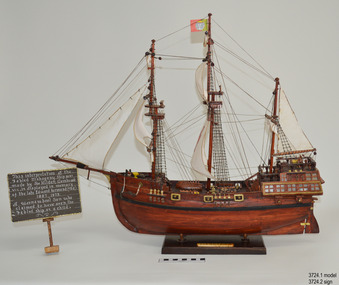
Craft - Ship Model, Portuguese Carvel, 1999
... Portuguese Carvel ...In 1884 Argus journalist `The Vagabond' wrote that the hull was built of "Spanish mahogany" and six years later Mason wrote another letter saying it might not have been mahogany but red gum or ironbark from New South Wales. ...Ship model, an interpretation of a mahogany Portuguese carvel vessel in a glass display case with wood frame and a description plaque. ...Ship model, an interpretation of a mahogany Portuguese carvel vessel in a glass display case with wood frame and a description plaque. ...The Mahogany Ship is today regarded as a legend and refers to an ancient wreck that is purported to lie beneath the sand beside Armstrong Bay, several kilometres west of Warrnambool, Its location is currently unknown. For well over a century the mystery of this ship has fascinated Australians because the existence of such a vessel could throw a different light on the earliest phases of exploration of eastern Australia by Europeans. The story is that in January 1836 a party of whalers from Port Fairy travelled to the mouth of the Hopkins River in search of seals. Their boat overturned and one man was drowned. The three survivors were walking the 30 kilometres back to Port Fairy along the coast when, about halfway along, they discovered the wrecked ship in the dunes. It is said that Captain John Mills, who was in charge of the whaling station at Port Fairy promptly visited the wreck with several of his men, including Hugh Donnelly. Donnelly who was the originator of that version of events is now regarded as unreliable. Local history researcher Joan Fawcett believes Donnelly could not have visited the wreck in 1836 because he did not arrive in Victoria until 1841. The "mahogany" description can be traced to a letter from Port Fairy builder, architect and surveyor John Mason and published in the Melbourne Argus in 1876. He said he had seen the hull in 1846 and it "had the appearance of either cedar or mahogany." In 1884 Argus journalist `The Vagabond' wrote that the hull was built of "Spanish mahogany" and six years later Mason wrote another letter saying it might not have been mahogany but red gum or ironbark from New South Wales. He was too late with this new description as the wrecks mahogany tag was here to stay all through the hull was not visible as it had disappeared beneath the shifting sands by 1880. A more reliable account was later presented by the former editor of the Warrnambool Examiner, historian Richard Osburne, who wrote about the wreck in his book History of Warrnambool (published 1887). In it the author remembers to have noticed a wreck in the hummocks between Belfast and Warrnambool, in 1847 or 1848; he stated it was much nearer Warrnambool than Belfast, now known as Port Fairy, going on to state “in fact, it was only two or three miles from the former place, to the west of the big hummock which was supposed to fill Warrnambool Bay with drift sand washed by the Merri River before the cutting was made.” Osburne followed up with a letter to the Port Fairy Gazette on June 25, 1876, during a period of heightened interest in the wreck, although he was unsure of the provenance of the ship he went on to state in his letter. “The old wreck was, in fact, miles away from the Port Fairy beach, and only about four miles from Warrnambool. In the years 1847 and 1848. I have often seen the wreck and I regret to say I do not believe she was a foreign ship at all.”The ship model is significant for its association with the Warrnambool story of what is now referred to as the Mahogany Ship, an ancient shipwreck. The model is significant as it is an interpretation of a Portuguese caravel and possibly associated with the early history and exploration of Southern Australia. The model is a fine example of a hand crafted ship made from plans, not from a kit. Some of the materials used for the model are significant to the Gembrook community in that the timber used is a portion from a 30-meter pine tree that fell onto and destroyed the 120-year-old Gembrook church building. The model is also a dedication to Edward Kermond, who grew up in Warrnambool and claimed to have seen the shipwreck in the dunes when he was a lad in the late 19th century. (See note section of this document for further information on the creator and donation of the subject item).Ship model, an interpretation of a mahogany Portuguese carvel vessel in a glass display case with wood frame and a description plaque. Model is made from dark stained wood. The three masted vessel is fully rigged, with a Portuguese-like flag on mast. Plaque is rectangular, free standing on a pedestal. The model was handmade by Joe Hilder (Senior) in 1999 from flooring obtained from the Gembrook Uniting Church in Victoria. Inscriptions, hand written, under base of case and on plaque.Under base, black felt tip pen “Ship & Case made From / Flooring from Gembrook uniting Church, Flattened in 1999 / By Large Pine Tree.” On plaque, white paint "This interpretation of the Fabled Mahogany Ship was made by Joe Hilder, Gembrook Vic. is displayed in the memory of the late Edward Kermond (Ted) 1887-1973, a Warrnambool son who claimed to have seen the original ship as a child." flagstaff hill, warrnambool, flagstaff hill maritime museum, shipwreck coast, flagstaff hill maritime village, great ocean road, ship model, mahogany ship, mahogany ship story, portuguese caravel, joe hilder, edward kermond, ted kermond, gembrook uniting church, gembrook storm 1999, port fairy whalers, belfast whalers -
 Buninyong & District Historical Society
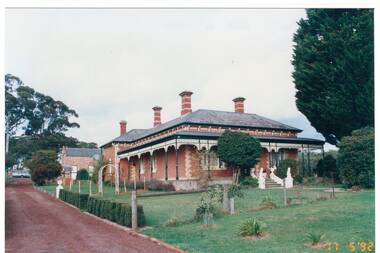
Photograph - Original Colour Photograph, Anne Beggs-Sunter, "Mount Helen" built c. 1888, 17 May 1992
... "Mount Helen" built c. 1888...Example of late 19th Century home built by Irving and Glover for Abraham Baxter, a well known engineer, railway contractor and horse racing enthusiast. ...Colour photograph of "Mount Helen" built c.1888 by Irving and Glover..."Mt. Helen". built c. 1888...Building Green Hill Irving and Glover Abraham Baxter "Mt. Helen". built c. 1888 Colour photograph of "Mount Helen" built c.1888 by Irving and Glover "Mount Helen" built c. 1888 Photograph Original Colour Photograph Anne Beggs-Sunter ...Example of late 19th Century home built by Irving and Glover for Abraham Baxter, a well known engineer, railway contractor and horse racing enthusiast. The estate consisted of about 300 acres, taking in the northern and eastern faces of Green Hill. The family lived at "Mt. Helen" until 1908. The house has been restored in recent in recent years.The fine brick house is an example of late 19th century home built and occupied by the Baxter family until 1908.Colour photograph of "Mount Helen" built c.1888 by Irving and Glover"Mt. Helen". built c. 1888building, green hill, irving and glover, abraham baxter -
 Buninyong & District Historical Society
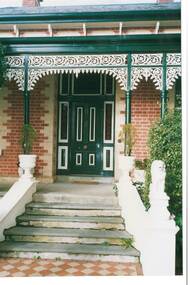
Photograph - Original Colour Photograph, Anne Beggs-Sunter, Front door of "Mount Helen" built c. 1888, 17 May 1992
... Front door of "Mount Helen" built c. 1888...Example of late 19th Century home built by Irving and Glover for Abraham Baxter, a well known engineer, railway contractor and horse racing enthusiast. ...Colour photograph of the front entrance to "Mount Helen" built c.1888 by Irving and Glover..."Mt. Helen". built c. 1888...Building Green Hill Irving and Glover Abraham Baxter "Mt. Helen". built c. 1888 Colour photograph of the front entrance to "Mount Helen" built c.1888 by Irving and Glover Front door of "Mount Helen" built c. 1888 Photograph Original Colour Photograph Anne Beggs-Sunter ...Example of late 19th Century home built by Irving and Glover for Abraham Baxter, a well known engineer, railway contractor and horse racing enthusiast. The estate consisted of about 300 acres, taking in the northern and eastern faces of Green Hill. The family lived at "Mt. Helen" until 1908. The house has been restored in recent in recent years.The fine brick house is an example of late 19th century home built and occupied by the Baxter family until 1908.Colour photograph of the front entrance to "Mount Helen" built c.1888 by Irving and Glover"Mt. Helen". built c. 1888building, green hill, irving and glover, abraham baxter -
 Buninyong & District Historical Society
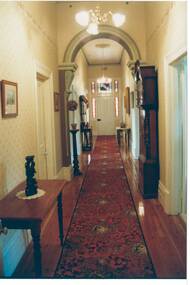
Photograph - Original Colour Photograph, Anne Beggs-Sunter, Interior hallway of "Mount Helen" built c. 1888, 17 May 1992
... Interior hallway of "Mount Helen" built c. 1888...Example of late 19th Century home built by Irving and Glover for Abraham Baxter, a well known engineer, railway contractor and horse racing enthusiast. ...Colour photograph of the interior hallway of "Mount Helen" built c.1888 by Irving and Glover..."Mt. Helen". built c. 1888...Building Green Hill Irving and Glover Abraham Baxter Interior "Mt. Helen". built c. 1888 Colour photograph of the interior hallway of "Mount Helen" built c.1888 by Irving and Glover Interior hallway of "Mount Helen" built c. 1888 Photograph Original Colour Photograph Anne Beggs-Sunter ...Example of late 19th Century home built by Irving and Glover for Abraham Baxter, a well known engineer, railway contractor and horse racing enthusiast. The estate consisted of about 300 acres, taking in the northern and eastern faces of Green Hill. The family lived at "Mt. Helen" until 1908. The house has been restored in recent in recent years.The fine brick house is an example of late 19th century home built and occupied by the Baxter family until 1908.Colour photograph of the interior hallway of "Mount Helen" built c.1888 by Irving and Glover"Mt. Helen". built c. 1888building, green hill, irving and glover, abraham baxter, interior -
 Kew Historical Society Inc
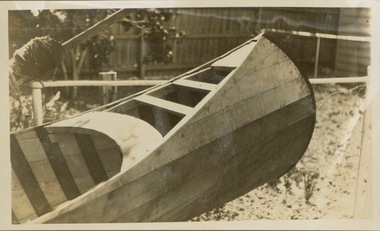
Photograph - Victorian Canoe Club, Built-up ends & deck frames, 1920-30
... Built-up ends & deck frames...The subject of this photograph is identified as 'Built-up ends & deck frames' where the canoe its completed and ready for testing...."Built-up ends & deck frames"...Built-up ends & deck frames Photograph Victorian Canoe Club ...Canoeing on the River Yarra at Melbourne was an important and widespread recreational pursuit for Melbournians, especially in the first half of the twentieth century. The Victorian Canoe Club was formed in 1912 at a meeting in Melbourne and its first committee elected in the same year. Records indicate that the Club continued into at least the 1950s .The album has historic and social significance as a record of recreational activities (as well as canoe making) in the early years of the twentieth century. It has local significance as the site of the headquarters of the Club was in Studley park. A number of photographs in the album provide vistas of Kew on the Yarra that are otherwise unavailable.One of 24 labelled photos in part album, originating from the Victorian Canoe Club, which had its headquarters in Studley Park, Kew. The album includes a photographic record of canoe construction and also locations in Studley Park and Kew where the canoes were used. The subject of this photograph is identified as 'Built-up ends & deck frames' where the canoe its completed and ready for testing."Built-up ends & deck frames"victorian canoe club, canoe making, river yarra, burke road, mornington, studley park, kew, steaming gear, canoe construction -
 Canterbury History Group
Document - Emulation Hall, Report Recommendation for inclusion in Heritage Register, Built Heritage, 1/12/2011 12:00:00 AM
... Built Heritage report to the Victorian Government, Department of Planning and Community Development on the cultural heritage significance of the Emulation Hall. ...Built Heritage...Canterbury Emulation Hall Rochester Road Built Heritage Masonic Lodges Symbols Department of Planning and Community Development Built Heritage report to the Victorian Government, Department of Planning and Community Development on the cultural heritage significance of the Emulation Hall. ...Built Heritage report to the Victorian Government, Department of Planning and Community Development on the cultural heritage significance of the Emulation Hall. Includes black and white photographscanterbury, emulation hall, rochester road, built heritage, masonic lodges, symbols, department of planning and community development -
 Linton and District Historical Society Inc
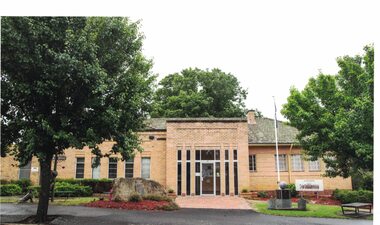
Photograph, Golden Plains Shire Offices, built 1939
... Golden Plains Shire Offices, built 1939...The Shire of Grenville offices in Linton were built n in 1939, and replaced the original Shire Hall which was built in the 1860s. ...Golden Plains Shire offices in Linton (formerly Shire of Grenville offices), built 1939....The Shire of Grenville offices in Linton were built n in 1939, and replaced the original Shire Hall which was built in the 1860s. ...The Shire of Grenville offices in Linton were built n in 1939, and replaced the original Shire Hall which was built in the 1860s. At the time the offices were built, Linton was the headquarters of the Shire of Grenville. The Shire of Grenville ceased to exist in 1993 following municipal amalgamations, and the offices are now the Linton offices of the Golden Plains Shire which has its headquarters at Bannockburn.Colour photograph showing a single-storey cream brick building, with a flagpole and various memorials outside it. Golden Plains Shire offices in Linton (formerly Shire of Grenville offices), built 1939.shire of grenville offices linton, golden plains shire offices linton -
 Eltham District Historical Society Inc
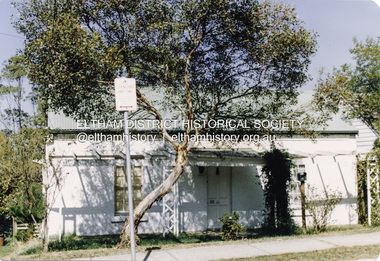
Photograph, Stebbing's Cottage (c.1860s), 88 Pitt St, Eltham, built by George Stebbing, 1860s
... Stebbing's Cottage (c.1860s), 88 Pitt St, Eltham, built by George Stebbing...His occupation is often listed as a farmer but he built a number of important buildings between 1860 and 1880. ...Six colour photographs of cottage at 88 Pitt Street, Eltham, built by George Stebbing c.1860s...His occupation is often listed as a farmer but he built a number of important buildings between 1860 and 1880. ...George Stebbing Little is recorded of this early Eltham builder and we have no picture of him. He arrived from England in August1857 and settled at Eltham after a short period at Kangaroo Ground. His occupation is often listed as a farmer but he built a number of important buildings between 1860 and 1880. Those remaining include Shillinglaw Cottage (c.1858), St. Margaret’s Church (1860), Uniting Church (formerly Methodist Church 1880) and house at 88 Pitt Street (1861).Six colour photographs of cottage at 88 Pitt Street, Eltham, built by George Stebbing c.1860spitt street, eltham, houses, george stebbing, stebbing cottage -
Canterbury History Group
Document - Thematic Environmental History, Built Heritage, 1/05/2012
... Final document produced, after community consultation, for the City of Boroondara by Built Heritage...Built Heritage...Final document produced, after community consultation, for the City of Boroondara by Built Heritage City of Boroondara Canterbury Churches Cottages Dairies Danks Family Elgar Survey Exploration Frognall Goldings Boot Factory Maling Road Malone's Hotel Maps Masonic Lodges National Parks Native Plants Police Stations Post Offices Railways Rochester Road Schools Shrublands Soldiers Memorial Hall Sport Telephone Exchanges Theatres Transport Wildlife Canterbury Road Land subdivisions Parks and reserves Outer Circle railway Back yards 242 pages Document Thematic Environmental History Built Heritage ...Thematic Environmental Heritage. Final document produced, after community consultation, for the City of Boroondara by Built Heritage242 pages city of boroondara, canterbury, churches, cottages, dairies, danks family, elgar survey, exploration, frognall, goldings boot factory, maling road, malone's hotel, maps, masonic lodges, national parks, native plants, police stations, post offices, railways, rochester road, schools, shrublands, soldiers memorial hall, sport, telephone exchanges, theatres, transport, wildlife, canterbury road, land subdivisions, parks and reserves, outer circle railway, back yards -
 Buninyong & District Historical Society
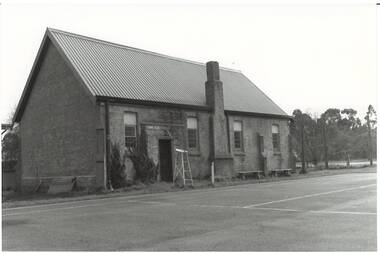
Photograph - Black and white photograph, First church built in Buninyong, 1993
... First church built in Buninyong...Original Anglican church built in Buninyong in 1857 used as a school, church hall and Sunday school at various times, renovated circa 1990...Black and white photograph of the side of the first brick Church of England built in 1857 in Scott Street now used as church hall. ...Original Anglican church built in Buninyong in 1857 used as a school, church hall and Sunday school at various times, renovated circa 1990 Earliest Church built in Buninyong and used in various religious and educational capacities since 1857. ...Original Anglican church built in Buninyong in 1857 used as a school, church hall and Sunday school at various times, renovated circa 1990Earliest Church built in Buninyong and used in various religious and educational capacities since 1857.Black and white photograph of the side of the first brick Church of England built in 1857 in Scott Street now used as church hall. Chimney is clearly visible in the centre of the rear wall.church of england, first church, religion -
 Buninyong & District Historical Society
Photograph - Black and white photograph, First church built in Buninyong, 1993
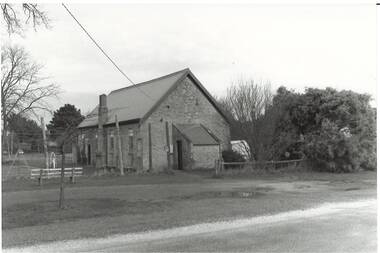
... First church built in Buninyong...Original Anglican church built in Buninyong in 1857 used as a school, church hall and Sunday school at various times, renovated circa 1990...Black and white photograph of the rear of the first brick Church of England built in 1857 in Scott Street now used as church hall. ...Original Anglican church built in Buninyong in 1857 used as a school, church hall and Sunday school at various times, renovated circa 1990 Earliest Church built in Buninyong and used in various religious and educational capacities since 1857. ...Original Anglican church built in Buninyong in 1857 used as a school, church hall and Sunday school at various times, renovated circa 1990Earliest Church built in Buninyong and used in various religious and educational capacities since 1857.Black and white photograph of the rear of the first brick Church of England built in 1857 in Scott Street now used as church hall. Front view, tennis court visible on left.church of england, first church, religion -
 Ringwood RSL Sub-Branch
Work on paper - The largest gun ever built was the Gustav Gun
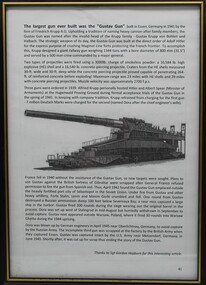
... The largest gun ever built was the Gustav Gun...The largest gun ever built was the Gustav Gun...The largest gun ever built was the Gustav Gun Document The largest gun ever built was the Gustav Gun Work on paper The largest gun ever built was the Gustav Gun ...DocumentThe largest gun ever built was the Gustav Gun -
Canterbury History Group
Document - Thematic Environmental History, draft, Built Heritage, 1/07/2011
... Draft copy of Thematic Environmental History prepared for City of Boroondara by Built Heritage for community consultation. ...Built Heritage...Draft copy of Thematic Environmental History prepared for City of Boroondara by Built Heritage for community consultation. ...Draft copy of Thematic Environmental History prepared for City of Boroondara by Built Heritage for community consultation. Includes a timeline of key dates from 1803-1994216 pagesboroondara, canterbury, transport, migrants, agriculture, mines and mining, communication, industry, historic sites, medical services and health, law and order, cultural structures and establishments, building structures and establishments -
 Seaworks Maritime Museum
Model ship, The model was built by the ship's carpenter on board the Archibald Russell, Archibald Russell, 1905
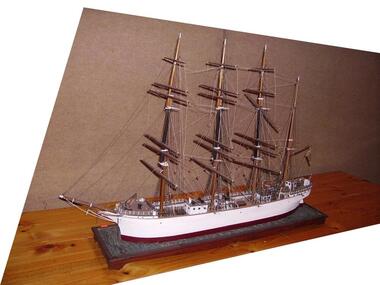
... Model of 4-masted barque launched at Greenock in 1905 for John Hardie & Sons. Steel barque built by Scott Shipbuilding and Engineering Co., Greenock, at a cost of £20.750. ...The model was built by the ship's carpenter on board the Archibald Russell. ...Archibald Russell Model ship The model was built by the ship's carpenter on board the Archibald Russell. ...ARCHIBALD RUSSELL (1905-1949) Until 1922 completed numerous cargo voyages to Sydney, Newcastle, Fremantle, Geelong, and especially Melbourne. In 1923 she was bought by Gustaf Erikson, the famous Finnish ship-owner, and carried timber to Melbourne in 1926, 1927 and 1928, and carried grain from Geelong in 1927 and Williamstown in 1929 - and that was the year she won the Grain Race (93 days). She then carried grain from South Australia until the war and was then was taken over by the British and used as a food storehouse through the war. She was broken up in 1949 on Tyneside. An example of end-era sailing ship trade with Australia. Reference: http://www.bruzelius.info/Nautica/Ships/Fourmast_ships/Archibald_Russell%281905%29.html She was launched at Greenock in 1905 for John Hardie & Sons.Has significant links with Australian and Victorian commerce. An example of end of era sailing ship trade with Australia. A detailed static model with carved and laminated hull painted in white and maroon, the varnished deck with detailed fittings and rigging, raised on wooden base with simulated waves. Model of 4-masted barque launched at Greenock in 1905 for John Hardie & Sons. Steel barque built by Scott Shipbuilding and Engineering Co., Greenock, at a cost of £20.750. Her dimensions were: 291'3 × 42'9 × 24'0 (88.77 x 13.03 x 7.32m) and tonnage: 2354 GRT, 2048 NRT and 3950 DWT. Equipped with two 120' long bilgekeels. Rigged with royal sails over double top-gallant sails. "Archibald Russell" painted on ship -
 Ringwood and District Historical Society
Photograph, Maroondah Highway East, Ringwood- 1969. New Civic Centre being built in Braeside Ave
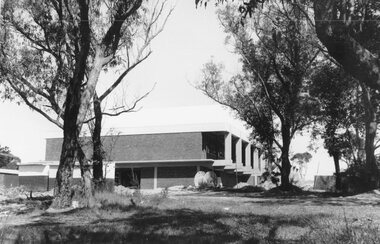
... New Civic Centre being built in Braeside Ave....Written on back of photograph: "New municipal offices being built"....New Civic Centre being built in Braeside Ave. Photograph ...Black and white photographWritten on back of photograph: "New municipal offices being built". -
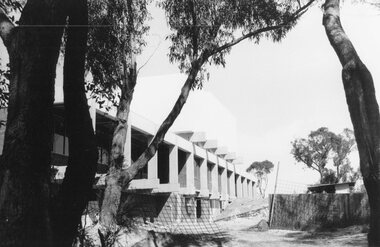 Ringwood and District Historical Society
Photograph, Maroondah Highway East, Ringwood- 1969. New Civic Centre being built in Braeside Ave
... New Civic Centre being built in Braeside Ave....Written on back of photograph: "New municipal offices being built."...New Civic Centre being built in Braeside Ave. Photograph ...Black and white photographWritten on back of photograph: "New municipal offices being built." -
 Melbourne Tram Museum
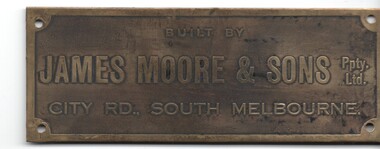
Sign, James Moore & Sons, "Built by JAMES MOORE & SONS Ppty Ltd, 1920's
... "Built by JAMES MOORE & SONS Ppty Ltd....Used by the company on the tramcar bodies it built for the MMTB in the 1920's. Second copy marked on rear "Ex W2 268"...Builders Plate, sign - pressed brass sheet with burnished background around the raised letters - "Built by JAMES MOORE & SONS Ppty Ltd. City Rd. ...Two copies held. "Built by JAMES MOORE & SONS Ppty Ltd. Sign James Moore & Sons ...Used by the company on the tramcar bodies it built for the MMTB in the 1920's. Second copy marked on rear "Ex W2 268"Yields information about the construction of W class trams.Builders Plate, sign - pressed brass sheet with burnished background around the raised letters - "Built by JAMES MOORE & SONS Ppty Ltd. City Rd. South Melbourne". Has screws holes in each corner. Two copies held.Has on the rear in black text pen "265"trams, tramways, signs, tramcars, tramcar bodies, james moore, new trams, w2 class, tram 268, tram 265 -
 Stawell Historical Society Inc
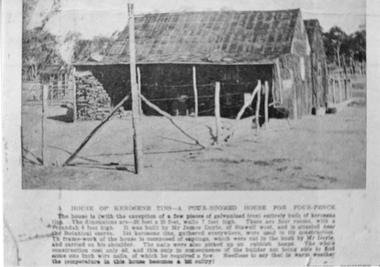
Photograph, Kerosene Tin House built by James Doyle of Stawell West
... Kerosene Tin House built by James Doyle of Stawell West....Sepia photograph of a small two peaked home built of kerosene tins. A lean-to at with a large wood pile on the side of the building. ...The house is (with exception of a few pieces of galvanised iron) entirely built of Kerosene Tins. The dimensions are 20 feet by 20 feet, walks 7 feet high. ...Kerosene Tin House built by James Doyle of Stawell West. Photograph ...Kerosene Tin four roomed House build by James Doyle of Stawell West for Four Pence. Situated by the Botanic Reserve, now Grampians Caravan Park. Sepia photograph of a small two peaked home built of kerosene tins. A lean-to at with a large wood pile on the side of the building. A bush post and wire fence around the yard. Printed inscription on the base of photograph. Two enlarged black and white photographs taken from an original photo. A House of Kerosene Tins. A four roomed House for Four Pence. The house is (with exception of a few pieces of galvanised iron) entirely built of Kerosene Tins. The dimensions are 20 feet by 20 feet, walks 7 feet high. There are four rooms with a verandah 6 feet high. It was built by Mr. James Doyle of Stawell West and is erected near the Botanica Reserve. The Kerosene Tins, gathered everywhere, were used in its construction. The frame work of the house is composed of saplings, which were cut in the bush by Mr. Doyle and carried on his shoulder. The nails were picked up at the rubbish heaps. The whole construction cost only 4 pence, and this only in consequence of the builder not being able to find 1 inch nails of which he needed a few. Needless to say that in warm weather the temperature in this house becomes a bit sultry. stawell buildings -
Whitehorse Historical Society Inc.
Article, 1930's Mansion Built For Tile King, 21/06/2000 12:00:00 AM
... 1930's Mansion Built For Tile King...the mansion built by the 'Tile King', Australian Tesselated Tile Company, about 1934. ...Article in Gazette Property Weekly about 'Glenhowan', the mansion built by the 'Tile King', Australian Tesselated Tile Company, about 1934. ...the mansion built by the 'Tile King', Australian Tesselated Tile Company, about 1934. ...Article in Gazette Property Weekly about 'Glenhowan'., the mansion built by the 'Tile King', Australian Tesselated Tile Company, about 1934. The property is up for auction. The garden was inspired by Edna Walling, Architect Claude Browse Gibbs.Article in Gazette Property Weekly about 'Glenhowan', the mansion built by the 'Tile King', Australian Tesselated Tile Company, about 1934. The property is up for auction. The garden was inspired by Edna Walling, Architect Claude Browse Gibbs.Article in Gazette Property Weekly about 'Glenhowan'., the mansion built by the 'Tile King', Australian Tesselated Tile Company, about 1934. The property is up for auction. The garden was inspired by Edna Walling, Architect Claude Browse Gibbs.mitcham road, mitcham, no. 456-460 glenhowan, australian tesselated tile co. pty ltd, walling, edna, walker, stanley, gibbs, claude chipton browse -
 Ringwood and District Historical Society
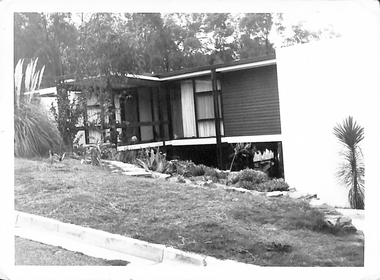
Photograph, 5 photographs of newly built 2 Hearthside Crt, North Ringwood, designed and built by Architect Ian Napier mid 1960's
... 5 photographs of newly built 2 Hearthside Crt, North Ringwood, designed and built by Architect Ian Napier mid 1960's...Set of 5 black and white photographs undated, of newly built house at No 2 Hearthside Court, North Ringwood. ...See also VC Items 11345-11346, and 11348-11349 5 photographs of newly built 2 Hearthside Crt, North Ringwood, designed and built by Architect Ian Napier mid 1960's Photograph ...Set of 5 black and white photographs undated, of newly built house at No 2 Hearthside Court, North Ringwood. Undated but probably mid 1960's. See also VC Items 11345-11346, and 11348-11349(See Titles of each image for the handwritten notes on back of each photo) -
 Australian Gliding Museum
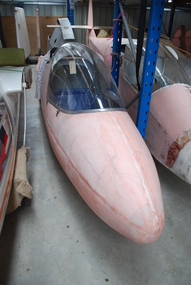
Machine - Glider – Sailplane, 1960s
... The name applied to the M-100 gliders built in France was “Mesange” This example has undergone major restoration to display condition by Museum volunteers. ...Designed by Alberto and Piero Morelli, Built by Aeromere and Avionautica Rio...Machine Glider – Sailplane Designed by Alberto and Piero Morelli, Built by Aeromere and Avionautica Rio ...The Morelli M-100S 15 metre Italian sailplane first flew in 1960 and over 220 were built in Italy and France. The design was a development of the M100 incorporating changes to fit the international rules for “Standard” class competition gliders: thus the designation “S”. The name applied to the M-100 gliders built in France was “Mesange” This example has undergone major restoration to display condition by Museum volunteers. In the main the airframe is made up of the glider serial number 69 formerly registered in Australia as VH-GUD. The restoration incorporated parts of another wrecked M100 (serial number 71). VH-GUD was previously owned by Darling Downs Soaring Club (from 28 October 1967) and Beaudesert Gliding Club (from 30 October 1971). It was test flown in Australia on 28 October 1967 and logged 1533 hours 41 minutes from 2731 launches until it crashed and was wrecked on 11 February 1978. When completely restored to display standard this exhibit will be a representative example of the Morelli M100 sailplane type Single seat sailplane of wooden construction with plywood and aircraft fabric covering.Serial Number 69australian gliding, glider, sailplane, morelli, m-100s, mesange, aeromere and avionautica rio, darling downs soaring club, beaudesert gliding club -
 Ringwood and District Historical Society
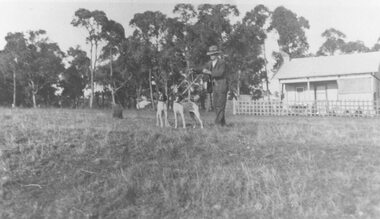
Photograph, First house built in Junction Street, Ringwood, near Mullum Mullum creek (undated)
... First house built in Junction Street, Ringwood, near Mullum Mullum creek (undated)...Written on backing sheet, "First house built in Junction Street, near creek"....Written on backing sheet, "First house built in Junction Street, near creek". Man with two dogs in front. ...Man with two dogs in front.Written on backing sheet, "First house built in Junction Street, near creek". -
 Ringwood and District Historical Society
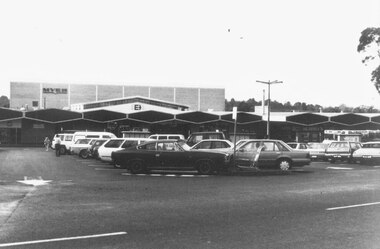
Photograph, Eastland, front. Where new mall is to be built. Ringwood April 1987
... Where new mall is to be built. Ringwood April 1987...Where new mall is to be built."...Where new mall is to be built." Eastland, front. Where new mall is to be built. ...Written on back of photograph, "8.4.87. Eastland, front. Where new mall is to be built." -
 Buninyong & District Historical Society
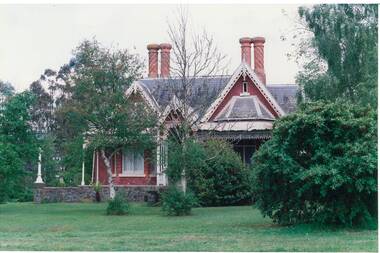
Photograph - Original Photograph, Clifton Villa, built 1859, Eyre St. Buninyong
... Clifton Villa, built 1859, Eyre St. Buninyong...Coloured photograph Clifton Villa, built 1859, Eyre St. Buninyong...Clifton Villa Coloured photograph Clifton Villa, built 1859, Eyre St. Buninyong Clifton Villa, built 1859, Eyre St. ...Significant gold rush mansionColoured photograph Clifton Villa, built 1859, Eyre St. Buninyongbuninyong, eyre st., clifton villa, -
Whitehorse Historical Society Inc.
Newspaper - Article, The House that August Built - Schwerkolt Cottage, 21/07/1993
... The House that August Built - Schwerkolt Cottage...'The House that August built' : article on August Schwerkolt and the building of Schwerkolt Cottage....The House that August Built - Schwerkolt Cottage Newspaper Article ...'The House that August built' : article on August Schwerkolt and the building of Schwerkolt Cottage.schwerkolt cottage, schwerkolt, johann august -
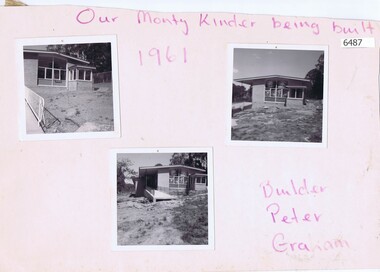 Greensborough Historical Society
Photographs, Our Monty Kinder being built, 1961_
... Our Monty Kinder being built..."Our Monty Kinder being built, 1961" and "Builder Peter Graham" in purple pencil...Photos by Peter Graham, former Shire of Eltham councillor. petrie park montmorency kindergartens "Our Monty Kinder being built, 1961" and "Builder Peter Graham" in purple pencil Three black and white photographs mounted on card, with pencilled insciption Our Monty Kinder being built Photographs Peter Graham ...Photographs of the infant welfare and pre-school centre under construction at Petrie Park Montmorency. Builder Peter Graham.Photos by Peter Graham, former Shire of Eltham councillor.Three black and white photographs mounted on card, with pencilled insciption"Our Monty Kinder being built, 1961" and "Builder Peter Graham" in purple pencilpetrie park montmorency, kindergartens -
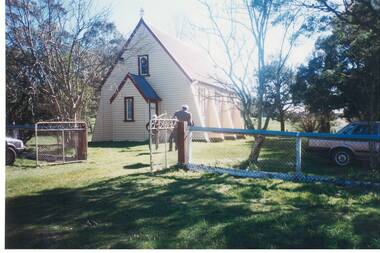 Buninyong & District Historical Society
Photograph - Original Photograph, Exterior Scotsburn Union Church, built 1894, c 1990
... Exterior Scotsburn Union Church, built 1894...2 x Colour photographs, Exterior Scotsburn Union Church, built 1894...historic building Scotsburn Church 2 x Colour photographs, Exterior Scotsburn Union Church, built 1894 Exterior Scotsburn Union Church, built 1894 Photograph Original Photograph ...historic building2 x Colour photographs, Exterior Scotsburn Union Church, built 1894scotsburn, church -
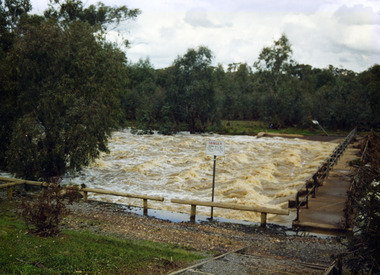 Charlton Golden Grains Museum Inc
Photograph, Avoca River flood of 1987 at the new weir built in 1984
... Avoca River flood of 1987 at the new weir built in 1984...Photograph of Avoca River flood of 1987 at the new weir built in 1984 unmounted...Avoca River New Charlton Weir Photograph of Avoca River flood of 1987 at the new weir built in 1984 unmounted Avoca River flood of 1987 at the new weir built in 1984 Photograph ...Photograph of Avoca River flood of 1987 at the new weir built in 1984 unmountedavoca river, new charlton weir -
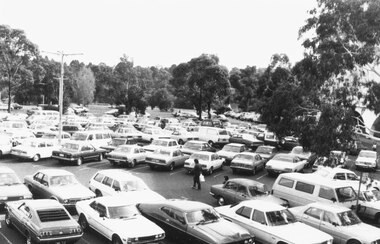 Ringwood and District Historical Society
Photograph, Eastland - Where new multi-storey car park will be built. Ringwood April 1987
... Eastland - Where new multi-storey car park will be built. Ringwood April 1987...Eastland - Where new multi-storey car park will be built."...Eastland - Where new multi-storey car park will be built." Eastland - Where new multi-storey car park will be built. ...Written on back of photograph, "8.4.87. Eastland - Where new multi-storey car park will be built." -
 Ringwood and District Historical Society
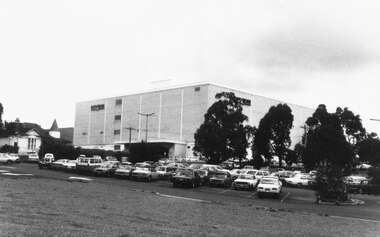
Photograph, Eastland - Where new multi-storey car park will be built. Ringwood March 1987
... Eastland - Where new multi-storey car park will be built. Ringwood March 1987...Eastland - Where new multi-storey car park will be built."...Eastland - Where new multi-storey car park will be built." Eastland - Where new multi-storey car park will be built. ...Written on back of photograph, "14.3.87. Eastland - Where new multi-storey car park will be built."
