
Showing 34 items matching "casualty nurse"
-
 St Vincent's Hospital Melbourne Archives
Drawing - Cartoon of Sister "Vivaceous" Vivienne Pearce in a Casualty Department, circa 1950's
... Casualty nurse...A cartoon of a fictitious casualty department scenario. Casualty nurse Cartoon Vivienne Pearce Casualty patient Black ink pen capital letters used in dialogue ballon. ...A cartoon of a fictitious casualty department scenario. Black ink pen capital letters used in dialogue ballon. casualty nurse, cartoon, vivienne pearce, casualty patient -
 Bendigo Military Museum
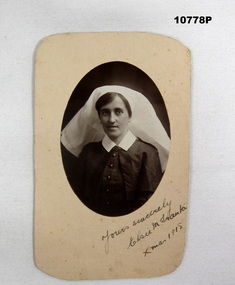
Photograph - WW1 NURSE, 1918
... Elsie May Tranter (born Geelong) enlisted on 2.9.1916 in the AAMS age 28 years, embark for England 6.12.1916, embark for France and posted to 26th General Hospital 13.2.1917, hospital with Measles 6.4.1917, rejoin Unit 16.7.1917, posted to several other Units including No 29 Casualty Clearing Station, promoted to Sister13.12.1918, discharged from the Army on 30.11.1919. Staley collection, refer Cat No 10758.2P for more details. Tmstaleycollection Nurse ...Photo. Elsie May Tranter (born Geelong) enlisted on 2.9.1916 in the AAMS age 28 years, embark for England 6.12.1916, embark for France and posted to 26th General Hospital 13.2.1917, hospital with Measles 6.4.1917, rejoin Unit 16.7.1917, posted to several other Units including No 29 Casualty Clearing Station, promoted to Sister13.12.1918, discharged from the Army on 30.11.1919. Staley collection, refer Cat No 10758.2P for more details.Photograph B & W, oval shape inset on a card background with rounded edges, text on the front.On the front, "Yours sincerely Elsie M Tranter Xmas 1918"tmstaleycollection, nurse -
 Bendigo Military Museum
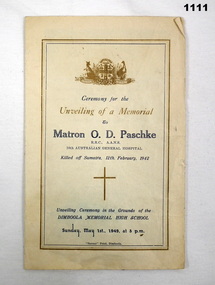
Memorabilia - NURSE MEMORIAL, 1.5.1949
... Nurses drifted away on a raft and never seen again on 14.2.42. Many others became POW,s, drowned or murdered by the Japanese. Her records state believed killed on or after 11.2.142 dated 8.6.1944 then Now reported missing and for official purposes presumed dead, dated 11.4.1945. Records state she was granted the promotion of Major in 1943. CCS (Casualty...Nurses drifted away on a raft and never seen again on 14.2.42. Many others became POW,s, drowned or murdered by the Japanese. Her records state believed killed on or after 11.2.142 dated 8.6.1944 then Now reported missing and for official purposes presumed dead, dated 11.4.1945. Records state she was granted the promotion of Major in 1943. CCS (Casualty ...Matron (Major) Olive Dorothy PASCHKE No VX38812 enlisted in the AAMC on 3.8.40 age 35 years. Promoted to Matron 8.1.1941, posted to 10th AGH on 11.1.1941, embarked for Malaya 3.2.1941 disembarking 18.2.1941, awarded the RRC 1st Class 1.1.1942 in the New Years Honors list signed by Gordon Bennett, detached to 2/4th CCS on 6.1.1942, embarked from Singapore 12.2.1942 for Australia. She was serving in Singapore when the Japanese invaded. She with many other Nurses during the bombing left on the ill fated "Vyner Brooke" which was later bombed by the Japanese in the Sundra Straits near Banka Island. Abandoning the ship she and 5 other Nurses drifted away on a raft and never seen again on 14.2.42. Many others became POW,s, drowned or murdered by the Japanese. Her records state believed killed on or after 11.2.142 dated 8.6.1944 then Now reported missing and for official purposes presumed dead, dated 11.4.1945. Records state she was granted the promotion of Major in 1943. CCS (Casualty Clearing Station) RRC ( Royal Red Cross) AGH (Australian General Hospital)Five page "order of service" re the unveiling of a memorial to "Matron O.D. Paschke RRC AANS 10th Australian General hospital." at the Dimboola Memorial High school." A sepia tone photo of O.D Paschke is stapled inside the order of service." printing is in blue & Brown. Front page has the Australian coat of arms at the top.documents - pamphlets, religon - christian, paschke, pow -
 Bendigo Military Museum
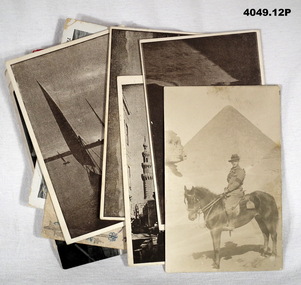
Postcard - POSTCARDS, PHOTOGRAPHIC WW1, C.WW1
... The date on card is unclear. .11) On rear in red "No 33 - some of the nurses in their quarters at an Australian Casualty Clearing Station". .12) On rear in fine print "Patriotic Series No. 22" Across both 4048.10P & 4049.12P there is two other addresses for "MISS H. ...The date on card is unclear. .11) On rear in red "No 33 - some of the nurses in their quarters at an Australian Casualty Clearing Station". .12) On rear in fine print "Patriotic Series No. 22" Across both 4048.10P & 4049.12P there is two other addresses for "MISS H. ...The cards revolve around "Hannah FIRTH". See also Cat. No. 4048.10P for more cards. .1) Addressed to "Hannah" from "Clarry (Peanuts)". .2) To "Dear Hannah, April 13th 7.30pm". Not signed off but from same person as .1) & .3). .3) Addressed "Dear" from "Dillon (Clarry)". .4) To "Dear Hannah" from "Yours ERIC". .5) There is no to or from but mentions "ERIC". .6) - .9) all are written on rear in large purple writing with the following: "Love to Hannah x x" "To Hannah with Love x x x" "With the Australian Contingent in Eygpt" "Love to Hannah x x" .10) Addressed to "Mrs H. FIRTH 18 Brunswick St Morley Leeds Yorkshire". The date on card is unclear. .11) On rear in red "No 33 - some of the nurses in their quarters at an Australian Casualty Clearing Station". .12) On rear in fine print "Patriotic Series No. 22" Across both 4048.10P & 4049.12P there is two other addresses for "MISS H. FIRTH". 1. 28 Young St Fitzroy, Melbourne. 2. 2 Turner St Abbotsford, Melbourne.Twelve photograph postcards of different scenes revolving around “Hannah”.1) & .2) Postcards, colour, centre has oval shape with British flag and all around are 11 smaller flags with country name on. In gold speckled writing top & bottom "From A. 10th Field Coy Engineers. On rear in black pen extensive letters. .3) Postcard, colour, centre has horse shoe with Australian & British flags. In same speckled gold writing as .1) & .2). On horseshoe in black pen "Good luck to Hannah & Clarence". .4) Postcard, black & white, showing a ship, at the bottom printed "TROOPSHIP HORORATA". On rear short letter in purple. .5) Postcard, sepia, showing soldier on horseback at the Pyramids & Sphinx. On rear brief letter in pencil. .6) Postcard, sepia, showing a street scene which appears to be a place called "Muski" in Eygpt. Brief note on rear in purple. .7) Postcard, sepia, showing domed building, re the "Blue Mosque". Brief note on back in purple. .8) Postcard, sepia, scene over buildings being "View from the Citadel". Brief note on the back in purple. .9) Postcard, sepia, showing a sailing craft on a river being "Felluca on the Nile". .10) Postcard, colour, hand drawn, shown a flag flower arrangement, centre in an arrow through a heart. Address on rear in black. .11) Postcard, black & white, showing a group of nurses. Card was put out by the "Aust Comforts Fund". .12) Postcard, colour, drawn showing six different nations soldiers carrying flags.photographs, postcards, hannah -
 Bendigo Military Museum
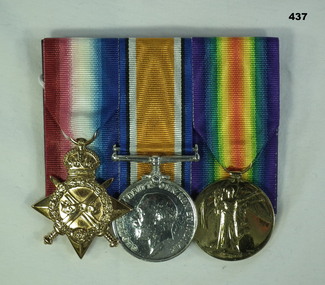
Award - MEDAL SET WW1, Post 1919
... She had 5 brothers in the AIF, one DOW's and one awarded a DCM. 1ACCS (1st Aust Casualty Clearing Station), 15 CCS (15th Casualty Clearing Station), 10th SH (10th Stationary Hospital) numismatics- medals- history metalcraft 1. "Nurse ...Frances Madge Killicoat (Born Burra Burra) Enlisted on 5.11.15 in the Australian Army Nursing Service age 26 years, embarked for Eygpt 12.11.1915. Joins the B.E.F in Alexandria 26.3.1916, disembarks Marseilles 4.4.1916, hospital with Hay Fever 16.6.1917 later changed to Nasal Catarrh and then with Debility, rejoin unit 4.7.1917. From there she served in No 1 ACCS, 15 CCS and 10th SH. She was discharged from the AIF on her marriage to Capt S.O.Coen AAMC on 18.11.18. She had 5 brothers in the AIF, one DOW's and one awarded a DCM. 1ACCS (1st Aust Casualty Clearing Station), 15 CCS (15th Casualty Clearing Station), 10th SH (10th Stationary Hospital)Medals, court Mounted, set of (3) Re Nurse- sister F. Killicoat. 1. 1914-15 Star. 2. War Medal 1914-18 3. Victory Medal 1914-191. "Nurse/Sister F.M Killicoat, ANS A.F 2. "S - Nurse F.M Killicoat A.I.F" 3. "Sister F.M Killicoat A.I.F"numismatics- medals- history, metalcraft -
 Alfred Hospital Nurses League - Nursing History Collection
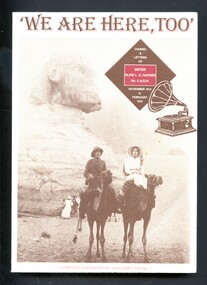
Book - Illustrated book, Olive L. C. Hayes 1888-1978, "We are here too": diaries and letter of Sister Olive L. C. Haynes No. 2 A.G.H. November 1914 to February 1918, 1991
... This book gives an invaluable insight into the experiences of an Australian Army nurse whose service saw her minister to casualties from some of Australia's most significant campaigns during World War One At the bottom right of the front end-page is a printed black and white donation sticker: black Maltese cross in circle, "This book was donated to Alfred Archival Association Nursing Division by" Jenny Jones (handwritten in black ink) Also previous catalogue number handwritten in black ink on this label Illustrated book with brown and cream cover. ...A collection of letters and diary extracts written by Olive Haynes, between 1914 and 1918. This book gives an invaluable insight into the experiences of an Australian Army nurse whose service saw her minister to casualties from some of Australia's most significant campaigns during World War OneIllustrated book with brown and cream cover. Title, editors name, and an illustration of a gramophone are printed in brown on the front cover. Also on the front cover is a brown and white photo of a man and woman riding camels in front of the Sphinx: Olive " airing herself around the Pyramids in lieu of pay" accompanied by Dr John Kneebone. Title is also printed in brown on the spine. On the back cover are printed extracts from the book, along with two small photographs, one is of the front of an envelope, the other is a photograph of Olive Haynes in uniform 1915non-fictionA collection of letters and diary extracts written by Olive Haynes, between 1914 and 1918. This book gives an invaluable insight into the experiences of an Australian Army nurse whose service saw her minister to casualties from some of Australia's most significant campaigns during World War Oneolive l.c.hayes, world war 1914-1918 - medical care, world war 1914-1918-hospitals, australian army nurses, nurse -
 Alfred Hospital Nurses League - Nursing History Collection
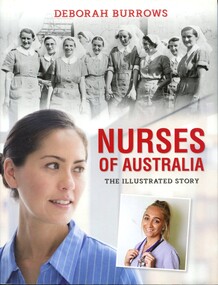
Book - Illustrated book, Deborah Burrows 1959, Nurses of Australia: The illustrated story, 2018
... Title and authors name printed on front cover and spine (red ink on front and white ink on red background on spine) Background of front cover has three photographs: black and white photograph of a group of nurses (Malaya 1941 group portrait of Australian Army Nursing Service nurses of the 2/4th Casualty Clearing Station), colour photo of a nurse looking over her shoulder, and a coloured photo of an Indigenous nurse. ...Title and authors name printed on front cover and spine (red ink on front and white ink on red background on spine) Background of front cover has three photographs: black and white photograph of a group of nurses (Malaya 1941 group portrait of Australian Army Nursing Service nurses of the 2/4th Casualty Clearing Station), colour photo of a nurse looking over her shoulder, and a coloured photo of an Indigenous nurse. ...From the First Nation caregivers who healed, birthed and nursed for millennia to the untrained and ill-equipped convict men and women who cared for the sick in the fledgling colony of New South Wales, nursing has been practised in Australia since the beginning. It would take the arrival of a group of dedicated Irish nuns, followed by Florence Nightingale-trained nurses - and decades of constant and continuing campaigning - to transform nursing into what it is today: the most trusted profession in Australia. Nurses will recognise their own lived experience in stories about training days, nurses' quarters, changing uniforms, changing roles, the arrival of male nurses and current pathways to nursing. Produced in collaboration with the Australian College of Nursing and the Congress of Aboriginal and Torres Strait Islander Nurses and Midwives, with additional information provided by the Australian Nursing and Midwifery Federation, this is the story of nursing in Australia.Illustrated book. Title and authors name printed on front cover and spine (red ink on front and white ink on red background on spine) Background of front cover has three photographs: black and white photograph of a group of nurses (Malaya 1941 group portrait of Australian Army Nursing Service nurses of the 2/4th Casualty Clearing Station), colour photo of a nurse looking over her shoulder, and a coloured photo of an Indigenous nurse. The back cover has a summary of the book along with four coloured photographs: Portrait of a nun with constitution and quill (Sister Mary Augustine Aikenhead by Nicholas Joseph Cowley), A nurse in uniform with veil (Vivian Bull winkel 1941), an indigenous woman (Lois O'Donoghue) an enrolled nurse (Samuel Yenui)non-fictionFrom the First Nation caregivers who healed, birthed and nursed for millennia to the untrained and ill-equipped convict men and women who cared for the sick in the fledgling colony of New South Wales, nursing has been practised in Australia since the beginning. It would take the arrival of a group of dedicated Irish nuns, followed by Florence Nightingale-trained nurses - and decades of constant and continuing campaigning - to transform nursing into what it is today: the most trusted profession in Australia. Nurses will recognise their own lived experience in stories about training days, nurses' quarters, changing uniforms, changing roles, the arrival of male nurses and current pathways to nursing. Produced in collaboration with the Australian College of Nursing and the Congress of Aboriginal and Torres Strait Islander Nurses and Midwives, with additional information provided by the Australian Nursing and Midwifery Federation, this is the story of nursing in Australia.nurses-australia-history, nursing-australia-history -
 Alfred Hospital Nurses League - Nursing History Collection
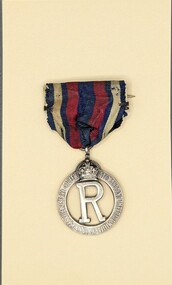
Badge - Qualification Badge, Queen Alexandra's Imperial Military Nursing Service Reserve (QAIMNSR) badge (Leah Rosenthal), 1915
... A call for nurses from the war office London in 1915 for volunteers from Australia to join the Queen Alexandra Imperial Nursing Service Reserve. Leah Rosenthal, was among the volunteers chosen and left Australia aboard the Karoola on 18/12/1915. Stationed at various Casualty...A call for nurses from the war office London in 1915 for volunteers from Australia to join the Queen Alexandra Imperial Nursing Service Reserve. Leah Rosenthal, was among the volunteers chosen and left Australia aboard the Karoola on 18/12/1915. Stationed at various Casualty ...A call for nurses from the war office London in 1915 for volunteers from Australia to join the Queen Alexandra Imperial Nursing Service Reserve. Leah Rosenthal, was among the volunteers chosen and left Australia aboard the Karoola on 18/12/1915. Stationed at various Casualty Clearance Stations (CCS) in France. Leah had graduated from the Alfred Hospital in 1904Of significance to the AHNL as Leah Rosenthal was an Alfred graduateSilver badge featuring a voided circle with the letter 'R' in the centre, all surmounted by an Imperial Crown. The surrounding ring is inscribed 'QUEEN ALEXANDRA'S IMPERIAL MILITARY NURSING SERVICE (RESERVE). Attached ribbon is red with a dark blue/white/dark blue side stripes. Reverse has 'LONDON' and hallmark inscribed. leah rosenthal, queen alexandra's imperial military nursing service reserve, qaimnsr -
 Kiewa Valley Historical Society
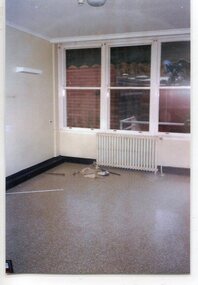
Photographs – Old Tawonga District General Hospital Mt Beauty. Set of 19 colour photographs
... Nurse D Hateley in the Kitchen 5. Nurse D Hateley in the Casualty Room 6. Sister W McClelland in new nurse’s station 7. ...Nurse D Hateley in the Kitchen 5. Nurse D Hateley in the Casualty Room 6. Sister W McClelland in new nurse’s station 7. ...In the early stages of the Kiewa Hydro-Electric Scheme the State Electricity Commission took over the financial and construction responsibility of the Tawonga District General Hospital building at a cost of 27,000 pounds. This included the removal and re-erection of the ex-military Bonegilla ward from Wodonga while in addition they carried out all the necessary building works that allowed the hospital to operate as a functional unit. The work was completed and handed over to the Hospital Committee of Management on September 1, 1949. Local residents raised 3,400 pounds through fund raising. The balance was met by the SEC and the Hospital and Charities Commission. The initial project was to provide for a basic temporary hospital which was later to include an Operating Theatre, Offices, Store, Mortuary and a Nurse’s Home, until the establishment of a permanent medical premises. Following the opening, 455 patients were admitted to the Tawonga District General Hospital and 254 operations were performed in the first year. The hospital relocated to Mount Beauty in the former SEC administration offices located in the town centre. Official opening of the 18 bed Tawonga District General Hospital was on April 29 in 1961. The old weatherboard building was demolished around the late 1900’s to early 2000’s and replaced with a new modern brick building. Alpine Health CEO Mr Lyndon Seys oversaw the opening of the new Mount Beauty Hospital in November 2001 alongside Board of Management President Mr Andrew Randell, other board members and politicians. The Kiewa Hydro-Electric Scheme the State Electricity Commission played a pivotal part in the planning and initial funding of the Tawonga District General Hospital, with a view to providing medical support for its many workers on the Hydro scheme. Later, spouse and family members of workers were also able to access medical assistance The hospital was originally located in Tawonga away from the majority of the patients as the Hospital and Charities. Many SEC workers and their families have received medical care at Tawonga District General Hospital and Alpine Health over the years. A number of family members of SECV workers as well as other dedicated staff have provided high quality medical attention and support in all the facilities as nursing staff, support staff and volunteers. Many past staff members and their families still remain living in the Kiewa Valley area 19 Colour photographs of the Tawonga and District Hospital situated in Mt Beauty circa 2000. Including photographs of interior and of some staff members1. No markings 2. G Ryder at front entrance 3. Sister G Ryder in the Resuscitation Room 4. Nurse D Hateley in the Kitchen 5. Nurse D Hateley in the Casualty Room 6. Sister W McClelland in new nurse’s station 7. R Forrest, G Ryder, ?, M Ranton 8. Nurse D Hateley in the Pan Room 9. Tawonga District General Hospital: Resuscitation Room 10. Hospital Hallway 11. Empty Nurses Station 12. Tawonga District General Hospital: Nursery 13. Patient Tea Room 14, 15, 16, 17, & 18. No marking mt beauty district hospital, tawonga district hospital, bonegilla ward, ryder family -
 Bendigo Military Museum
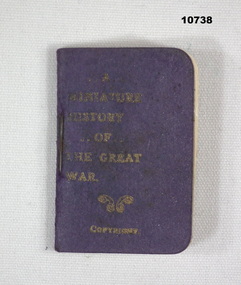
Book - MINIATURE BOOK, WW1, F. Edwards, "Miniature History of the Great War", Post WW1
... Book features main events of WW1 in addition to short biographies of significant personnel including; Sir Douglas Haig, Nurse Edith Cavell, Marshall Fochard, P.M. Lloyd- George, WW1 British casualties listed. ...Book features main events of WW1 in addition to short biographies of significant personnel including; Sir Douglas Haig, Nurse Edith Cavell, Marshall Fochard, P.M. Lloyd- George, WW1 British casualties listed. ...Book features main events of WW1 in addition to short biographies of significant personnel including; Sir Douglas Haig, Nurse Edith Cavell, Marshall Fochard, P.M. Lloyd- George, WW1 British casualties listed. Part of the Bennetts collection. See Cat No. 9726P for details of service for "Alva Marie Bennetts" (VFX128835).Purple coloured card covered book. 32 pages with cut edges and rounded corners. Text in black type. Black and white photographs on various pages. Title on front cover in gold coloured lettering. Publisher details on back cover in gold coloured lettering. Pages attached to cover via a metal staple.bennetts collection, alva bennetts, ww1, miniature book -
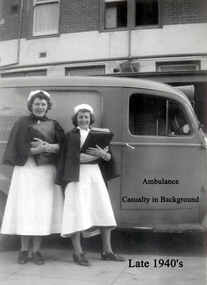 Ballarat Base Hospital Trained Nurses League
1949/50, Old Ambulance near Casualty, S Smith, K Strownix
... 1949 ambulance casualty smith strownix nurses ballarat uniform books Photo 1949/50, Old Ambulance near Casualty, S Smith, K Strownix ...Photo1949, ambulance, casualty, smith, strownix, nurses, ballarat, uniform, books -
 Kew Historical Society Inc
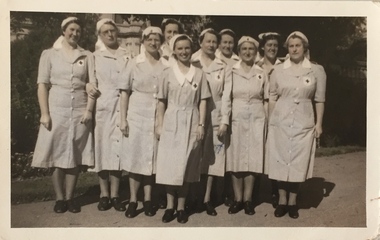
Photograph, Lillias Jerram & other V.A.D. nurses, 1939-46
... casualty and wards at St Vincent's Hospital regularly for 6 years. Also duty at the Eye and Ear Hospital and A.R.P. Duty. Helped No.323 Detachment to raise funds amounting to 400 pounds for St. John Theatre at 115th A.G.H., Heidelberg. Blood donor. [Courtesy: John Torpey representing the Kew RSL] voluntary aid detachment (kew branch) lillias jerram Inscription on reverse in inl: "Miss Lillias Jerram X. / V.A.D. Corp / 1939-46". Group portrait of Voluntary Aid Detachment (V.A.D.) nurses ...In the collection of the Kew RSL (Cotham Road) there is a framed original certificate with information about Lillias Jerram. It includes the following information: Miss Lillias May JERRAM Commandant No. 323 Detachment, Victoria [Citation] Loyal and able leadership and service during World War II Service: Joined No.323 (Kew) Detachment in 1937. Commandant in 1944. Miss Jerram did voluntary duty in casualty and wards at St Vincent's Hospital regularly for 6 years. Also duty at the Eye and Ear Hospital and A.R.P. Duty. Helped No.323 Detachment to raise funds amounting to 400 pounds for St. John Theatre at 115th A.G.H., Heidelberg. Blood donor. [Courtesy: John Torpey representing the Kew RSL]Group portrait of Voluntary Aid Detachment (V.A.D.) nurses including Lillias Jerram who was a member of this group during 1939-46. The photograph was given at the same time as the embroidered V.A.D. tablecloth which also includes Miss Jerram's name (see 2002.0003)Inscription on reverse in inl: "Miss Lillias Jerram X. / V.A.D. Corp / 1939-46".voluntary aid detachment (kew branch), lillias jerram -
![Royal Australian Nursing Federation campaign badge, [1986?]](/media/collectors/5bb42dc221eaf31100db1d3b/items/5c47b56c21ea6d01508dadaf/item-media/5c47b58d21ea6d01508debd8/item-fit-380x285.jpg?cb=6) Australian Nursing & Midwifery Federation
Australian Nursing & Midwifery FederationRoyal Australian Nursing Federation campaign badge, [1986?]
... The Royal Australian Nursing Federation (RANF) became the Australian Nursing Federation in 1989, suggesting that this button is from the late 1980s. nursing nurses industrial action strike action unionism david white health minister badges victoria buttons pins campaigning protest trade unions labour history Circular blue and white plastic button. Silver metal, plastic-coated, with safety pin fastener adhered to back. Button printed with 'WHITE LIES = WAGE CASUALTIES ...Distributed to nurses during campaigning for improved wages and working conditions in the 1980s, probably during the historic 1986 Victorian 50-day nurses strike. The 'White' in 'WHITE LIES' refers to David Ronald White, who was a state M.P. and the Victorian Minister for Health from 1985-1989. David White regularly featured in Branch newsletters around the time of the strike, and was regularly portrayed as a magician, skilled in 'white magic' that made 'nurses wages disappear'. The Royal Australian Nursing Federation (RANF) became the Australian Nursing Federation in 1989, suggesting that this button is from the late 1980s.Circular blue and white plastic button. Silver metal, plastic-coated, with safety pin fastener adhered to back. Button printed with 'WHITE LIES = WAGE CASUALTIES' and 'R.A.N.F. [Royal Australian Nursing Federation] Vic. [Victoria]'.nursing, nurses, industrial action, strike action, unionism, david white, health minister, badges, victoria, buttons, pins, campaigning, protest, trade unions, labour history -
 Melbourne Legacy
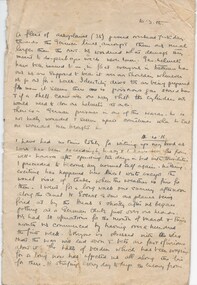
Document, Diary of Priscilla Wardle, a nurse in France 1916, 1916
... Nurses League entries on Victorian Collections. The contents of the diary has been retyped and is in the Word document. The diary shows she was serving at a Casualty Clearing Station (CCS) in Bethune, France in March 1916. ...Nurses League entries on Victorian Collections. The contents of the diary has been retyped and is in the Word document. The diary shows she was serving at a Casualty Clearing Station (CCS) in Bethune, France in March 1916. ...An incomplete diary of an Australian nurse serving in France in 1916. The author is unidentified in the document but after extensive research it is concluded that is by Priscilla Wardle, who left Melbourne on 14 April 1915 on RMS Orontes and served with Queen Alexandra's Imperial Military Nursing Service (QAIMNS) in France. A larger portion of her diary is available from the Ballarat Base Hospital Trained Nurses League entries on Victorian Collections. The contents of the diary has been retyped and is in the Word document. The diary shows she was serving at a Casualty Clearing Station (CCS) in Bethune, France in March 1916. She goes on to serve at Wimereux, at the No 8 Stationary hospital. Also possibly at Boulogne. She had a period of rest at Hardelot, a convalescent home for nurses, and also a trip to England and Scotland. She tried to visit the graves of ancestors, such as relatives of 'Grandfather Allan', in the church yard at East Kilbride church. During her nursing experience she mentions being gassed by 'weeping' gas and hearing the sounds of shelling. Also the numbers of operations per month, such as 311 in March 1916. And another day when there were 29 operations in one day. She talks of POWs coming to the hospital. They are treated after the Allied soldiers are looked after. So operations often continued into the night to take care of the Germans. She also mentions removing a piece of shrapnel herself in one operation. She appears to be of a senior rank as she is asked to meet with senior hospital officials and high ranking officers that visit. In particular she mentions a staff surgeon from Admiral Jellicoe's ship the 'Iron Duke'. He visited just after the Battle of Jutland, which was a naval battle fought between Britain's Royal Navy Grand Fleet, under Admiral Sir John Jellicoe, and the Imperial German Navy's High Seas Fleet, under Vice-Admiral Reinhard Scheer, during the First World War (31 May – 1 June 1916). Also being visited by Stan Walker (also from Ballarat) and Lt Brough who was ADC to General Legge. It is possible Stan Walker is Lt (later Captain) Edward Stanley Walker. Lt Brough is believed to be Charles Anthony Brough. She also mentions meeting a Lady Gifford and Madam O'Gorman. She mentions travelling with Captain Newton to London in early December 1916 - she calls him Sauchiehall and Sauchie, both could be nicknames. Capt Newton later becomes Sir Wilberforce Newton, who was serving in the Royal Army Medical Corps on the Western Front between 1915 and 1917. His diaries are held in the University of Melbourne archive. He also left Melbourne on the RMS Orontes on 14 April 1915 (source Trove) and would have known the 14 Victorian nurses that went on to serve with QAIMNS. On 11 December 1915 he mentions trying to see a Sister Loughran at the No. 7 Stationary hospital - which was in Boulogne. Sister Loughran was also on the RMS Orontes. When he was ill he mentions receiving a parcel from two other nurses that were on the Orontes and served with QAIMNS (Madge Donnellan and Margaret Donaldson). Other things that indicate it might be Priscilla Wardle is that from Births Deaths and Marriages Victoria (BDM) she was born in Ballarat, her mother's maiden name was Allan, she had a sister Janet that went by the name of Jean who was married at the time mentioned in the diary (BDM and Trove), Priscilla's mother also died during the time of diary and coincides with the diary entry of the 'death of dear mother'. An article in Trove after Priscilla's return to Australia mentions she was in the areas mentioned in the diary. Also that Priscilla went on to be trained as an anaesthetist to help in the surgeries. It matches the comment in the diary that she was involved in many operations and even allowed to perform a bullet extraction. Finally on seeing the diary held by Ballarat Base Hospital Trained Nurses League - it was determined the handwriting matched and this diary is part of the larger diary held there, so is definitely Priscilla Wardle. After the war Priscilla Wardle married Cyril Terrence (Terry) Charles Kirby, an English soldier and they settled in Ballarat and later Melbourne. Terry Kirby became a Legatee in 1929 and transferred to Melbourne Legacy in 1935. He was a well liked, hard working Legatee and worked at Legacy House up to his death in 1967. That is probably how the diary ended up in the building. In May 2021 the pages were returned to descendants of Priscilla so now only electronic copies are in our archive.A valuable first hand account of life as a nurse in World War One. The founders of Legacy all served in World War One and may have known this nurse or been in situations similar to her.Handwritten diary of a nurse from 1916 on 10 pages of notepaper.memoir, world war one, nurse -
 Returned Nurses RSL Sub-branch
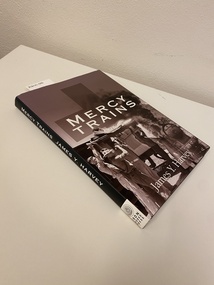
Book, James Y Harvey, Mercy trains, 2001
... Australian Nurses World War Two WWII WW2 Papua New Guinea Pacific theatre Homefront Australia 'Mercy trains - Australian Army Ambulance trains during World War II recounts the hitherto untold story of trains provided by Australia's State railway departments to convey the tens of thousands of the armed force's sick and wounded needing transportation across the continent. Conceived as large-scale ambulances to evacuate battle casualties ...'Mercy trains - Australian Army Ambulance trains during World War II recounts the hitherto untold story of trains provided by Australia's State railway departments to convey the tens of thousands of the armed force's sick and wounded needing transportation across the continent. Conceived as large-scale ambulances to evacuate battle casualties suffered on Australian soil in the event of a landing by enemy forces, their role changed when Australia was spared the trauma of invasion. Instead, the trains becam mobile hospitals: their task to convey invalids from all allied (and enemy) forces to medical centres throughout the nation. One major assignment was to bring south from Queensland casualties evacuated from the battlefields of Papua-New Guinea, whose numbers reached crisis proportions at the close of 1942 and into early 1943. The trains were operated by United States Army personnel for twelve months, one in New South Wales and one in Queensland. Author Jim Harvey spent three years searching through Army (both Australian and U.S.) and railway department files and what he found was a story of demanding military, a penny-pinching government prepared to endanger the lives of train staff rather than permit necessary improvements, some railway operating problems, fires, more than a fair share of floods, a bombing attack, examples of a generosity from caring local communities, a dexicated staff of doctors, nurses, medical orderlies and cooks, supported at all times by sympathetic railwayment of all grades.' [from inside front dust jacked]Black bound book with silver writing on spine. Dust jacket has collage of photographs on front, spine is black with white writing on it.non-fiction'Mercy trains - Australian Army Ambulance trains during World War II recounts the hitherto untold story of trains provided by Australia's State railway departments to convey the tens of thousands of the armed force's sick and wounded needing transportation across the continent. Conceived as large-scale ambulances to evacuate battle casualties suffered on Australian soil in the event of a landing by enemy forces, their role changed when Australia was spared the trauma of invasion. Instead, the trains becam mobile hospitals: their task to convey invalids from all allied (and enemy) forces to medical centres throughout the nation. One major assignment was to bring south from Queensland casualties evacuated from the battlefields of Papua-New Guinea, whose numbers reached crisis proportions at the close of 1942 and into early 1943. The trains were operated by United States Army personnel for twelve months, one in New South Wales and one in Queensland. Author Jim Harvey spent three years searching through Army (both Australian and U.S.) and railway department files and what he found was a story of demanding military, a penny-pinching government prepared to endanger the lives of train staff rather than permit necessary improvements, some railway operating problems, fires, more than a fair share of floods, a bombing attack, examples of a generosity from caring local communities, a dexicated staff of doctors, nurses, medical orderlies and cooks, supported at all times by sympathetic railwayment of all grades.' [from inside front dust jacked]australian nurses, world war two, wwii, ww2, papua new guinea, pacific theatre, homefront, australia -
 Returned Nurses RSL Sub-branch
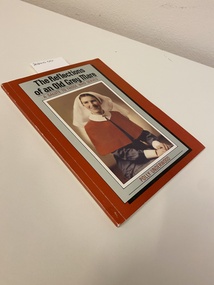
Book, Polly Underwood, The Reflections of an old grey mare : A salute to those who served
... The book is important because it records the experience of a nurse working in different kinds of medical facitilities during WW2 - tented hospitals, Casualty clearing stations, ambulance trains....The book is important because it records the experience of a nurse working in different kinds of medical facitilities during WW2 - tented hospitals, Casualty clearing stations, ambulance trains. ...A record of nursing service in the second world war, from enlistment to peace.Soft cover, red and grey, containing a portrait of the author in army nurses' uniform. Australian Army Nursing Service uniform. Back cover, white with a facsimile of the Instrument of Surrender.non-fictionA record of nursing service in the second world war, from enlistment to peace.world war two, ww2, finschhafen, ambulance trains, wwii -
 Returned Nurses RSL Sub-branch
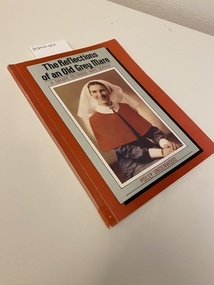
Book, Polly Underwood, The Reflections of an old grey mare : A salute to those who served
... The book is important because it records the experience of a nurse working in different kinds of medical facitilities during WW2 - tented hospitals, Casualty clearing stations, ambulance trains....The book is important because it records the experience of a nurse working in different kinds of medical facitilities during WW2 - tented hospitals, Casualty clearing stations, ambulance trains. ...A record of nursing service in the second world war, from enlistment to peace.Soft cover, red and grey, containing a portrait of the author in army nurses' uniform. Australian Army Nursing Service uniform. Back cover, white with a facsimile of the Instrument of Surrender.non-fictionA record of nursing service in the second world war, from enlistment to peace.world war two, ww2, finschhafen, ambulance trains, wwii -
 Returned Nurses RSL Sub-branch
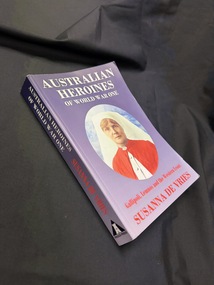
Book - Illustrated paperback book, Susanna De Vries, Australian heroines of World War One : Gallipoli, Lemnos and the Western Front, 2013
... In France, Florence James-Wallace, Anne Donnell and Elsie Tranter nursed near the front line in the Casualty Clearing Stations, treating soldiers with hideous wounds or blinded by mustard gas. ...'This outstanding book tells the stories of eight courageous women through diaries, letters, photos, paintings and specially drawn maps. These women had the courage and strength for with the Anzacs are renowns and the compassion and tenderness that only a woman can bring. Sister Hilda Samsing from Melbourne became a whistleblower when nursing aboard the hospital ship Gascon, outraged by the bungled evacuation of wounded Anzacs. She defied censorship and kept a very frank diary, reproduced here for the first time. In 1914, Louise Creed, a Sydney journalist, was caught in the besieged city of Antwerp and mad a hair-raising escape from a German firing squad. Brisbane's Grace Wilson, ordered to establish an emergency hospital on drought-stricken Lemnos Island, arrived there to find suffering Anzacs but no drinking water, tents or medical supplies. Grace and her nurses saved the lives of thousands who had been wounded at Lone Pine and The Nek. In France, Florence James-Wallace, Anne Donnell and Elsie Tranter nursed near the front line in the Casualty Clearing Stations, treating soldiers with hideous wounds or blinded by mustard gas. In 1918 they had to deal with an epidemic of Spanish flu, but their heroism was quickly forgotten. Two of these women received such meagre pensions, they died destitute. Publication of this book with its numerous illustrations has been facilitated by a generous donation from Dame Elizabeth Murdoch, keen that these stories become known to Australians of all ages.' [Summary from back cover] Has endnotes with full biographical details and an index.Paperback book with purple blue cover & spine, red and white text one cover & spine, black logo and text on spine and colour image of a woman in army nurses uniform on cover. Top and bottom corners of front cover curling.non-fiction'This outstanding book tells the stories of eight courageous women through diaries, letters, photos, paintings and specially drawn maps. These women had the courage and strength for with the Anzacs are renowns and the compassion and tenderness that only a woman can bring. Sister Hilda Samsing from Melbourne became a whistleblower when nursing aboard the hospital ship Gascon, outraged by the bungled evacuation of wounded Anzacs. She defied censorship and kept a very frank diary, reproduced here for the first time. In 1914, Louise Creed, a Sydney journalist, was caught in the besieged city of Antwerp and mad a hair-raising escape from a German firing squad. Brisbane's Grace Wilson, ordered to establish an emergency hospital on drought-stricken Lemnos Island, arrived there to find suffering Anzacs but no drinking water, tents or medical supplies. Grace and her nurses saved the lives of thousands who had been wounded at Lone Pine and The Nek. In France, Florence James-Wallace, Anne Donnell and Elsie Tranter nursed near the front line in the Casualty Clearing Stations, treating soldiers with hideous wounds or blinded by mustard gas. In 1918 they had to deal with an epidemic of Spanish flu, but their heroism was quickly forgotten. Two of these women received such meagre pensions, they died destitute. Publication of this book with its numerous illustrations has been facilitated by a generous donation from Dame Elizabeth Murdoch, keen that these stories become known to Australians of all ages.' [Summary from back cover] Has endnotes with full biographical details and an index.australian nurses, world war one, wwi, ww1, louise mack [creed], claire trestrail [swan], muriel wakeford, hilda theresa samsing, grace margaret wilson, anne donnell, florence james-wallace, elsie may tranter -
 Returned Nurses RSL Sub-branch
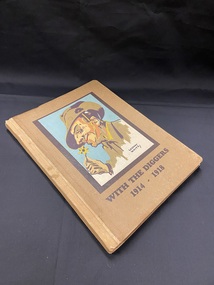
Book - Illustrated hardcover book, Fourth Division A.M.C. Association, With the Diggers 1914-1918, 1933
... casualties, as well as South African War songs and verses (and printings of these are especially elusive). The illustrations are by, among others, Hal Gye, Cecil Hartt, and Leyshon White."--Bookseller's description - from Trove record. 'B74' [Handwriiten in pencil on the first page] 'To / Returned Nurses ...The Fourth Division Army Medical Corps comprised the 4th, 12th, and 13th Field Ambulances, but this compilation is not just a record of fallen comrades, but "a remarkably rich work, not just an anthology of digger verse, song, and illustration but an extensive record of Australian war service, including the Anglo-Boer War. In addition to the requisite chronology of the Great War, the volume includes laboriously compiled records of the entire A.I.F. giving every unit in all divisions, the principal engagements, casualties, etc; a detailed record of the Nursing Service; a detailed record of the Australian Navy and the R.A.N.B. in the war; details of warship and mercantile marine losses; number and name of every transport requisitioned by the Australian Navy with complements of officers and men (and horses); honour rolls of the 4th, 12th, and 13th Field Ambulances; etc. The Boer War section includes details of enlistments, principal actions, casualties, as well as South African War songs and verses (and printings of these are especially elusive). The illustrations are by, among others, Hal Gye, Cecil Hartt, and Leyshon White."--Bookseller's description - from Trove record.Light brown hardcover book with a lighter brown spine. There is a handdrawn image of a soldier smelling a flower in a dark brown border. The title is printed across the bottom.non-fictionThe Fourth Division Army Medical Corps comprised the 4th, 12th, and 13th Field Ambulances, but this compilation is not just a record of fallen comrades, but "a remarkably rich work, not just an anthology of digger verse, song, and illustration but an extensive record of Australian war service, including the Anglo-Boer War. In addition to the requisite chronology of the Great War, the volume includes laboriously compiled records of the entire A.I.F. giving every unit in all divisions, the principal engagements, casualties, etc; a detailed record of the Nursing Service; a detailed record of the Australian Navy and the R.A.N.B. in the war; details of warship and mercantile marine losses; number and name of every transport requisitioned by the Australian Navy with complements of officers and men (and horses); honour rolls of the 4th, 12th, and 13th Field Ambulances; etc. The Boer War section includes details of enlistments, principal actions, casualties, as well as South African War songs and verses (and printings of these are especially elusive). The illustrations are by, among others, Hal Gye, Cecil Hartt, and Leyshon White."--Bookseller's description - from Trove record. australian imperial forces, world war 1914-1918 songs and music, world war 1914-1918, war poetry, wwi, ww1, world war one -
 Returned Nurses RSL Sub-branch
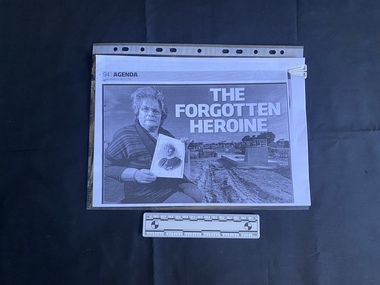
Document - Photocopy of newspaper clipping and related documents, Sunday Herald, The forgotten heroine, 5 December 1914 - May 20 2012
... Lee-Archer, Estelle (RRC) listed) Dr Collopy Kildonian Castle London Caulfield Tasmania John Lee Archer Mary Anne Lyons Joseph Lyons Parlianment House Hobart Ross Bridge Alfred Hospital Kyarra 1st Australian General Hospital Swanage Dorset Gallipoli 2nd Australian General Hospital 3rd Australian General Hospital 25th Australian General Hospital 47th Australian Casualty Clearing Station 3rd Australian Casualty Clearing Station 7th Australian General Hospital John Saddington Five photocopied pages held together with a plastic paperclip. Two pages are of a newspaper story, the first showing a full page black and white photo of a seated older woman holding a photo of a woman in nurse's uniform. ...Newspaper - 'The forgotten heroine' Visitors to New Cheltenham Cemetery in Melbourne would not know that a highly decorated and dedicated nurse was buried there. Her grave is unmarked, there is no reference to her achievements or selfless dedication. Estelle Lee Archer died in 1960, at the Repatriation General Hospital, Heidelberg, age 78 from a perforated ulcer. Margaret Leyden wants the Office of Australian War Graves to recognise that her great-aunt died from war-related injuries and to restore and maintain her grave. Margaret, who never met her aunt, has pieced together her history, including that Estelle's medals, including the prestigious Royal Red Cross 2nd Class for services in support of our ANZACs have ended up in the MAryborough Military & Colonial Museum after they were bought at a second hand shop. Estelle served in seven army units and was in the Middle East, England and France for the duration of World War 1. After the war she continued to dedicate her life to the care of soldiers. Document 1 - digitised copy of 'First Wold War Embarkation Roll' for Estelle Frances Lee-Archer Document 2 - photocopy of 'Austraalian Imperial Force - Nominal Roll' page 7 (Lee-Archer, Estelle Frances listed) Document 3 - photocopy of unknown document (Sis. Lee-Archer, Estelle (RRC) listed) Five photocopied pages held together with a plastic paperclip. Two pages are of a newspaper story, the first showing a full page black and white photo of a seated older woman holding a photo of a woman in nurse's uniform. The second page of the newspaper story has four columns of text with a photo of a war medal and a photo of a standing woman in nurse's uniform beside them. The final three pages are war-time documents.dr collopy, kildonian castle, london, caulfield, tasmania, john lee archer, mary anne lyons, joseph lyons, parlianment house, hobart, ross bridge, alfred hospital, kyarra, 1st australian general hospital, swanage, dorset, gallipoli, 2nd australian general hospital, 3rd australian general hospital, 25th australian general hospital, 47th australian casualty clearing station, 3rd australian casualty clearing station, 7th australian general hospital, john saddington -
 Returned Nurses RSL Sub-branch
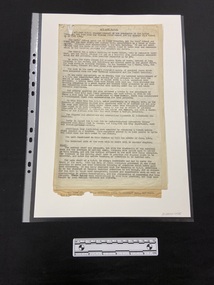
Document - Typed document, Sister J Langham, 2/3 Aust C.C.S
... An account of the 2/3 Austrailan Casualty Clearing Station (C.C.S.) in 1941-42 including information on staff, equipment, movements, patients, evacuations and conditions. Australian Army Nurses ...An account of the 2/3 Austrailan Casualty Clearing Station (C.C.S.) in 1941-42 including information on staff, equipment, movements, patients, evacuations and conditions.'2/3 AUST C.C.S.' typed and underlined at the top of the page followed by a full page of typed print. There are twelve pages in total, of varying sizes. 'by Sister J Langham' [Lightly written in pencil in the top right corner of the first page]australian army nurses, world war 1939-1945, ww2, wwii, 2/3 australian casual clearing station, jess langham -
 Returned Nurses RSL Sub-branch
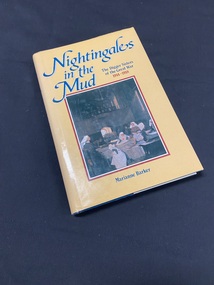
Book - Hardcover book, Marianne Barker, Nightingales in the mud : the Digger Sisters of the Great War 1914-1918, 1989
... History of Nursing World War One 1914-1918 WW1 WWI Nurses Australia Great War Nurses 'Draws on many first-hand and previously unpublished accounts of the work of Australian nurses in the Great War to tell an extraordinary story of courage and companionship under conditions of great hardship - in the mud of Flanders, among the cholera cases in India, on the hospital ships during the Gallipoli campaign, on Afghanistan border, in Vladivostok, in mosquito infested Macedonia, and in the Sinai Desert. - from inside dustjacket. Contents note: pt. 1. The Middle East -- 1. Enlistment -- 2. Egypt -- 3. Hospital ships -- 4. Lemnos -- 5. Malta -- 6. Palestine -- 7. Mesopotamia -- 8. India -- 9. Serbia and Salonika -- pt. 2. The Western Front -- 10. The Australian base hospitals in France -- 11. The casualty ...'Draws on many first-hand and previously unpublished accounts of the work of Australian nurses in the Great War to tell an extraordinary story of courage and companionship under conditions of great hardship - in the mud of Flanders, among the cholera cases in India, on the hospital ships during the Gallipoli campaign, on Afghanistan border, in Vladivostok, in mosquito infested Macedonia, and in the Sinai Desert. - from inside dustjacket. Contents note: pt. 1. The Middle East -- 1. Enlistment -- 2. Egypt -- 3. Hospital ships -- 4. Lemnos -- 5. Malta -- 6. Palestine -- 7. Mesopotamia -- 8. India -- 9. Serbia and Salonika -- pt. 2. The Western Front -- 10. The Australian base hospitals in France -- 11. The casualty clearing stations -- 12. Transport in France -- 13. Home hospitals in England -- 14. Repatriation -- Epilogue -- Appendix: Roll of Nurses. - from Trove record.Blue hardcover book with a yellow dustjacket. The title is printed down the spine in blue text. The front cover shows an image of an oil painting of nurses tending the beds of the wounded, it is surrounded by a dark red border. Above the image the title is printed in blue, with 1914-1918 printed in smaller red print.non-fiction'Draws on many first-hand and previously unpublished accounts of the work of Australian nurses in the Great War to tell an extraordinary story of courage and companionship under conditions of great hardship - in the mud of Flanders, among the cholera cases in India, on the hospital ships during the Gallipoli campaign, on Afghanistan border, in Vladivostok, in mosquito infested Macedonia, and in the Sinai Desert. - from inside dustjacket. Contents note: pt. 1. The Middle East -- 1. Enlistment -- 2. Egypt -- 3. Hospital ships -- 4. Lemnos -- 5. Malta -- 6. Palestine -- 7. Mesopotamia -- 8. India -- 9. Serbia and Salonika -- pt. 2. The Western Front -- 10. The Australian base hospitals in France -- 11. The casualty clearing stations -- 12. Transport in France -- 13. Home hospitals in England -- 14. Repatriation -- Epilogue -- Appendix: Roll of Nurses. - from Trove record.history of nursing, world war one 1914-1918, ww1, wwi, nurses australia, great war nurses -
 Returned Nurses RSL Sub-branch
Book - Paperback book, Thomas Keneally, The daughhters of Mars, 2012
... Naomi, Sally and their gang are then sent to northern Europe, where Naomi nurses in the visionary Australian Voluntary Hospital run by the committed and eccentric Lady Tarlton, and Sally in a casualty clearing station next to the Western Front. ...In 1915 sisters Naomi and Sally Durance answer a call for nurses to join the war effort. They are escaping the family dairy farm in the Macleay Valley, and they carry a secret with them. Soon they are in Egypt, where they are put to work on the Red Cross hospital ship Archimedes as it patrols the Dardanelles. On Archimedes they witness Mars in all his ferocity, as he pummels soldiers in the massive, brutal metal brawl that is Gallipoli. Yet the sisters and their newfound nursing friends, with whom they will witness undreamt-of carnage and take care of unspeakably blighted men, find themselves courageous in the face of the horror. Naomi, Sally and their gang are then sent to northern Europe, where Naomi nurses in the visionary Australian Voluntary Hospital run by the committed and eccentric Lady Tarlton, and Sally in a casualty clearing station next to the Western Front. Here, again, they must face the inhumanity of war in its many terrible guises - where trench warfare and gas abound. But it is here, too, that the sisters meet the remarkable men with whom they wish to spend the rest of their lives. Inspired by journals of Australian nursing sisters who gave their all to the Great War effort and the men they nursed, The Daughters Of Mars is vast in scope yet extraordinarily intimate. This is Keneally at the height of his storytelling powers; a stunning tour de force to join the best of First World War literature, and one that casts a fresh light on the challenges faced by the Australian men and women who voluntarily risked their lives for peace. Naomi and Sally Durance are daughters of a dairy farmer from the Macleay Valley. Bound together in complicity by what they consider a crime, when the Great War begins in 1914 they hope to submerge their guilt by leaving for Europe to nurse the tides of young wounded. They head for the Dardanelles on the hospital ship Archimedes. Their education in medicine, valour and human degradation continues on the Greek island of Lemnos, then on the Western Front. Everywhere they are confronted by new outrages - gas, shellshock and broken men. Naomi encounters the wonderful, eccentric Lady Tarlton, who is founding a voluntary hospital near Boulogne; Sally serves in a casualty clearing station close to the front. They meet the men with whom they would wish to spend the rest of their lives. An extraordinary portrait of two ordinary young women[From Trove]Paperback book with a light olive cover and an image of a poppy field under the title and the author's name.fictionIn 1915 sisters Naomi and Sally Durance answer a call for nurses to join the war effort. They are escaping the family dairy farm in the Macleay Valley, and they carry a secret with them. Soon they are in Egypt, where they are put to work on the Red Cross hospital ship Archimedes as it patrols the Dardanelles. On Archimedes they witness Mars in all his ferocity, as he pummels soldiers in the massive, brutal metal brawl that is Gallipoli. Yet the sisters and their newfound nursing friends, with whom they will witness undreamt-of carnage and take care of unspeakably blighted men, find themselves courageous in the face of the horror. Naomi, Sally and their gang are then sent to northern Europe, where Naomi nurses in the visionary Australian Voluntary Hospital run by the committed and eccentric Lady Tarlton, and Sally in a casualty clearing station next to the Western Front. Here, again, they must face the inhumanity of war in its many terrible guises - where trench warfare and gas abound. But it is here, too, that the sisters meet the remarkable men with whom they wish to spend the rest of their lives. Inspired by journals of Australian nursing sisters who gave their all to the Great War effort and the men they nursed, The Daughters Of Mars is vast in scope yet extraordinarily intimate. This is Keneally at the height of his storytelling powers; a stunning tour de force to join the best of First World War literature, and one that casts a fresh light on the challenges faced by the Australian men and women who voluntarily risked their lives for peace. Naomi and Sally Durance are daughters of a dairy farmer from the Macleay Valley. Bound together in complicity by what they consider a crime, when the Great War begins in 1914 they hope to submerge their guilt by leaving for Europe to nurse the tides of young wounded. They head for the Dardanelles on the hospital ship Archimedes. Their education in medicine, valour and human degradation continues on the Greek island of Lemnos, then on the Western Front. Everywhere they are confronted by new outrages - gas, shellshock and broken men. Naomi encounters the wonderful, eccentric Lady Tarlton, who is founding a voluntary hospital near Boulogne; Sally serves in a casualty clearing station close to the front. They meet the men with whom they would wish to spend the rest of their lives. An extraordinary portrait of two ordinary young women[From Trove]wwi, ww1, world war one, world war 1, nurses, miles franklin award nominations, military nursing -- fiction, 1914-1918 -- australia -- fiction, historical fiction -
 Returned Nurses RSL Sub-branch
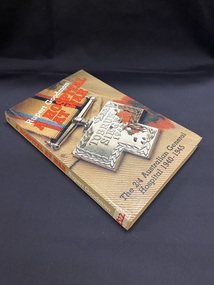
Book - Hardcover book, Rupert Goodman, A hospital at war : the story of 2/4 Australian General Hospital 1940-1945, 1983
... casualties were treated at Tobruk, Redbank, Jerusalem, Colombo and Labuan. [From Trove] 'B22' [Handwritten in pencil on the first page] 'with best wishes from /the author / Rupert Goodman / at the launching. / 19 April 1983.' [Handwritten in blue ink on the first page] 'presented by / D.I.Ireland to / Returned Nurses ...The story of 2/4 Australian General Hospital during World War II. Over 6 years some 43,000 casualties were treated at Tobruk, Redbank, Jerusalem, Colombo and Labuan. [From Trove]Light brown cover and spine. The title is printed diagonally near the top of the cover in red print, with the author's name above that in white print. At the bottom of the cover is the sub-title in black print. The background of the entire cover is a close-up image of the fabric of a soldier's uniform with a bullet wound and a silver medallion that reads 'Tobruk siege 1941'.non-fictionThe story of 2/4 Australian General Hospital during World War II. Over 6 years some 43,000 casualties were treated at Tobruk, Redbank, Jerusalem, Colombo and Labuan. [From Trove]wwii, world war ii, 2/4th australian general hospital, ww2, military hospitals -
 Returned Nurses RSL Sub-branch
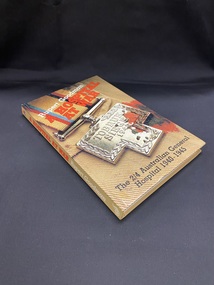
Book - Hardcover book, Rupert Goodman, A hospital at war : the story of 2/4 Australian General Hospital 1940-1945, 1983
... Over 6 years some 43,000 casualties were treated at Tobruk, Redbank, Jerusalem, Colombo and Labuan. [From Trove] 'B21' [Handwritten in pencil on the first page] 'To the Returned Nurses Club / with best wishes / from the author / Rupert Goodman. / April 1983.' ...The story of 2/4 Australian General Hospital during World War II. Over 6 years some 43,000 casualties were treated at Tobruk, Redbank, Jerusalem, Colombo and Labuan. [From Trove]Light brown cover and spine. The title is printed diagonally near the top of the cover in red print, with the author's name above that in white print. At the bottom of the cover is the sub-title in black print. The background of the entire cover is a close-up image of the fabric of a soldier's uniform with a bullet wound and a silver medallion that reads 'Tobruk siege 1941'.non-fictionThe story of 2/4 Australian General Hospital during World War II. Over 6 years some 43,000 casualties were treated at Tobruk, Redbank, Jerusalem, Colombo and Labuan. [From Trove]wwii, world war ii, 2/4th australian general hospital, ww2, military hospitals -
 Returned Nurses RSL Sub-branch
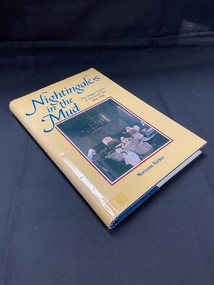
Book - Hardcover book, Marianne Barker, Nightingale in the mud : the Digger Sisters of the Great War 1914-1918, 1989
... History of Nursing World War One 1914-1918 WW1 WWI Nurses Australia Great War Nurses 'Draws on many first-hand and previously unpublished accounts of the work of Australian nurses in the Great War to tell an extraordinary story of courage and companionship under conditions of great hardship - in the mud of Flanders, among the cholera cases in India, on the hospital ships during the Gallipoli campaign, on Afghanistan border, in Vladivostok, in mosquito infested Macedonia, and in the Sinai Desert. - from inside dustjacket. Contents note: pt. 1. The Middle East -- 1. Enlistment -- 2. Egypt -- 3. Hospital ships -- 4. Lemnos -- 5. Malta -- 6. Palestine -- 7. Mesopotamia -- 8. India -- 9. Serbia and Salonika -- pt. 2. The Western Front -- 10. The Australian base hospitals in France -- 11. The casualty ...'Draws on many first-hand and previously unpublished accounts of the work of Australian nurses in the Great War to tell an extraordinary story of courage and companionship under conditions of great hardship - in the mud of Flanders, among the cholera cases in India, on the hospital ships during the Gallipoli campaign, on Afghanistan border, in Vladivostok, in mosquito infested Macedonia, and in the Sinai Desert. - from inside dustjacket. Contents note: pt. 1. The Middle East -- 1. Enlistment -- 2. Egypt -- 3. Hospital ships -- 4. Lemnos -- 5. Malta -- 6. Palestine -- 7. Mesopotamia -- 8. India -- 9. Serbia and Salonika -- pt. 2. The Western Front -- 10. The Australian base hospitals in France -- 11. The casualty clearing stations -- 12. Transport in France -- 13. Home hospitals in England -- 14. Repatriation -- Epilogue -- Appendix: Roll of Nurses. - from Trove record.Blue hardcover book with a yellow dustjacket. The title is printed down the spine in blue text. The front cover shows an image of an oil painting of nurses tending the beds of the wounded, it is surrounded by a dark red border. Above the image the title is printed in blue, with 1914-1918 printed in smaller red print.non-fiction'Draws on many first-hand and previously unpublished accounts of the work of Australian nurses in the Great War to tell an extraordinary story of courage and companionship under conditions of great hardship - in the mud of Flanders, among the cholera cases in India, on the hospital ships during the Gallipoli campaign, on Afghanistan border, in Vladivostok, in mosquito infested Macedonia, and in the Sinai Desert. - from inside dustjacket. Contents note: pt. 1. The Middle East -- 1. Enlistment -- 2. Egypt -- 3. Hospital ships -- 4. Lemnos -- 5. Malta -- 6. Palestine -- 7. Mesopotamia -- 8. India -- 9. Serbia and Salonika -- pt. 2. The Western Front -- 10. The Australian base hospitals in France -- 11. The casualty clearing stations -- 12. Transport in France -- 13. Home hospitals in England -- 14. Repatriation -- Epilogue -- Appendix: Roll of Nurses. - from Trove record.history of nursing, world war one 1914-1918, ww1, wwi, nurses australia, great war nurses -
 Returned Nurses RSL Sub-branch
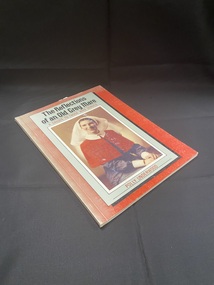
Book - Illustrated paperback book, Polly Underwood, The Reflections of an old grey mare : A salute to those who served
... The book is important because it records the experience of a nurse working in different kinds of medical facitilities during WW2 - tented hospitals, Casualty clearing stations, ambulance trains....The book is important because it records the experience of a nurse working in different kinds of medical facitilities during WW2 - tented hospitals, Casualty clearing stations, ambulance trains. ...A record of nursing service in the second world war, from enlistment to peace.Paperback with faded cover. Plain white spine with a red front cover. Most of the cover contains a large pale green rectangle with a shadow behind it, inside it is the title and author details and a picture of an Army Nurse in uniform.non-fictionA record of nursing service in the second world war, from enlistment to peace.world war two, ww2, finschhafen, ambulance trains, wwii -
 Returned Nurses RSL Sub-branch
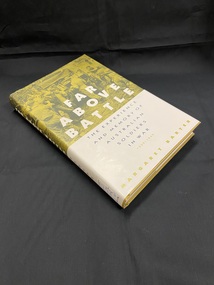
Book - Hardcover book, Allen & Unwin, Far above battle: the experience and memory of Australian soldiers in war 1939-1945, 1994
... nurses, as traumatised survivors of war in traditional military-based studies.... Even Jan Bassett's comprehensive history of Australian army nursing reveals little of the human suffering which faced the women in their ministrations to battlefield casualties". ...nurses, as traumatised survivors of war in traditional military-based studies.... Even Jan Bassett's comprehensive history of Australian army nursing reveals little of the human suffering which faced the women in their ministrations to battlefield casualties". ...It is the story of the men of 2/2 Infantry Battalion, Australian Imperial Forces, who fought in the Middle East, Greece, and Papua New Guinea. The author describes the experience of battle and warfare itself: of fear and injury, of hunger and tiredness, of sickness, of marches through snow and jungles, of loneliness and bravery. The book provides an anatomy of war through the experience of this volunteer battalion who fought in all major theatres in World War II in which Australians took part. [from Trove]Hard-cover book with cream coloured dust jacket. There is an olive green and black toned photographic image wrapped around the top half of the cover and spine, it shows soldiers leading a man with bandaged eyes towards a jeep in the jungle, with other soldiers gathered around. The lower half of the cover is cream with blue text. There is a white label on the base of the spine with blue handwritten call number .non-fictionIt is the story of the men of 2/2 Infantry Battalion, Australian Imperial Forces, who fought in the Middle East, Greece, and Papua New Guinea. The author describes the experience of battle and warfare itself: of fear and injury, of hunger and tiredness, of sickness, of marches through snow and jungles, of loneliness and bravery. The book provides an anatomy of war through the experience of this volunteer battalion who fought in all major theatres in World War II in which Australians took part. [from Trove]2/2 battalion, psychological impacts of war, ww2, wwii, world war 1939-1945, world war two, human side of warfare, infantry -
 Returned Nurses RSL Sub-branch
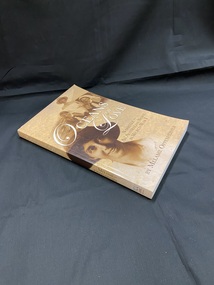
Book - Paperback book, ABC Books, Oceans of love: Narrelle : an Australian nurse in World War I, 2006
... nursed in Sicily, India and Mesopotamia (now modern day Iran/Iraq). The Mesopotamia campaign, fought between the British and the Turks, is one of the largely forgotten theatres of the war. Narrelle spent 10 months in Basra and later Amara, on the Tigris River, nursing casualties ...At the outbreak of World War I, Narrelle Hobbes was the matron of the small and remote Brewarrina hospital in north-western NSW. Keen to be an active participant in the war, Narrelle, aged 36, decided to travel to London in March 1915 in order to join Queen Alexandra's Imperial Medical Nursing Service Reserve (QAIMNSR). By May she was in Malta nursing the sick and wounded from Gallipoli. She later nursed in Sicily, India and Mesopotamia (now modern day Iran/Iraq). The Mesopotamia campaign, fought between the British and the Turks, is one of the largely forgotten theatres of the war. Narrelle spent 10 months in Basra and later Amara, on the Tigris River, nursing casualties and patients with appalling diseases such as enteric fever, dysentery, typhoid and cholera. After falling sick, she then spent six months recuperating in the foothills of the Himalayas at the remote hill station of Binsar in Uttar Pradesh. Narrelle is based on an extraordinary collection of letters written home to her family ('Dearest Peoples' and signed 'oceans of love') in Australia, letters that are a witty and evocative reminder of an extraordinary period in Australian history from the perspective of an Australian girl from the bush. [Trove]Sepia toned cover with two images on the front (a portrait of a woman, and three nursing sisters) and an image of a woman in profile on the back. The title is printed across the front and spine in white print, sub-title and author in brown.non-fictionAt the outbreak of World War I, Narrelle Hobbes was the matron of the small and remote Brewarrina hospital in north-western NSW. Keen to be an active participant in the war, Narrelle, aged 36, decided to travel to London in March 1915 in order to join Queen Alexandra's Imperial Medical Nursing Service Reserve (QAIMNSR). By May she was in Malta nursing the sick and wounded from Gallipoli. She later nursed in Sicily, India and Mesopotamia (now modern day Iran/Iraq). The Mesopotamia campaign, fought between the British and the Turks, is one of the largely forgotten theatres of the war. Narrelle spent 10 months in Basra and later Amara, on the Tigris River, nursing casualties and patients with appalling diseases such as enteric fever, dysentery, typhoid and cholera. After falling sick, she then spent six months recuperating in the foothills of the Himalayas at the remote hill station of Binsar in Uttar Pradesh. Narrelle is based on an extraordinary collection of letters written home to her family ('Dearest Peoples' and signed 'oceans of love') in Australia, letters that are a witty and evocative reminder of an extraordinary period in Australian history from the perspective of an Australian girl from the bush. [Trove]ww1, wwi, first world war, world war 1914-1918, narrelle hobbes, sister florence narrelle jessie hobbes, queen alexandra's imperial military nuring service, australian nurses -
 Returned Nurses RSL Sub-branch
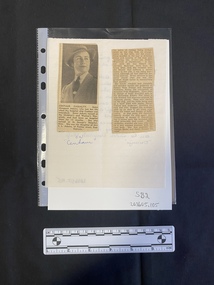
Document - Handwritten letter and newspaper clipping, Centaur casualty, 19430522
... casualty of the Centaur torpedoing. The second clipping appears to be part way through a story about the Centaur. Sisters [Ellen] Eleanor Savage, Vera [Alexandra] Torney and Margaret Anderson are mentioned. Army Nurse ...The letter speaks about that some of the newspaper clipping is missing, going on to speak about Margaret Adams and the 'Centaur Sisters' The first newpaper clipping names Sister Margaret Adams as casualty of the Centaur torpedoing. The second clipping appears to be part way through a story about the Centaur. Sisters [Ellen] Eleanor Savage, Vera [Alexandra] Torney and Margaret Anderson are mentioned.A hand written letter with a newspaper clipping glued to the reverse. The letter is undated, the newspaper clipping is in two pieces and consists of a black and white photo with a caption and a column of text. The photo shows a young woman in military uniform.'ON / "Centaur" ' [blue ink, reverse of letter, under left hand clipping]army nurse, wwii, world war two, ww2, vfx66028, nfx76584, vfx63846, 500267, vfx63845, 500609
