
Showing 11 items matching "casualty patient"
-
 St Vincent's Hospital Melbourne Archives
Drawing - Cartoon of Sister "Vivaceous" Vivienne Pearce in a Casualty Department, circa 1950's
... ...Casualty patient...Casualty nurse Cartoon Vivienne Pearce Casualty patient Black ink pen capital letters used in dialogue ballon. ...A cartoon of a fictitious casualty department scenario. Black ink pen capital letters used in dialogue ballon. casualty nurse, cartoon, vivienne pearce, casualty patient -
 National Vietnam Veterans Museum (NVVM)
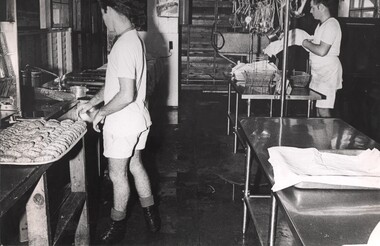
Photograph, Gibbons, Denis, Preparing Evening Meal 1
... A black and white photograph of two cooks from the Royal Australian Catering Corps preparing the evening meal for staff and patients at the 1st Australian Field Hospital, Vung Tau, South Vietnam. Specialist meals were provided for some casualty and medical patients....Photograph 1st Australian Field Hospital Vung Tau Royal Australian Catering Corps Gibbons Collection Catalogue Denis Gibbons Photographer Vietnam War Cooks A black and white photograph of two cooks from the Royal Australian Catering Corps preparing the evening meal for staff and patients at the 1st Australian Field Hospital, Vung Tau, South Vietnam. Specialist meals were provided for some casualty and medical patients. ...Denis Gibbons (1937 – 2011) Trained with the Australian Army, before travelling to Vietnam in January 1966, Denis stayed with the 1st Australian Task Force in Nui Dat working as a photographer. For almost five years Gibbons toured with nine Australian infantry battalions, posting compelling war images from within many combat zones before being flown out in late November 1970 after sustaining injuries. The images held within the National Vietnam Veterans Museum make up the Gibbons Collection.A black and white photograph of two cooks from the Royal Australian Catering Corps preparing the evening meal for staff and patients at the 1st Australian Field Hospital, Vung Tau, South Vietnam. Specialist meals were provided for some casualty and medical patients.photograph, 1st australian field hospital, vung tau, royal australian catering corps, gibbons collection catalogue, denis gibbons, photographer, vietnam war, cooks -
 City of Moorabbin Historical Society (Operating the Box Cottage Museum)
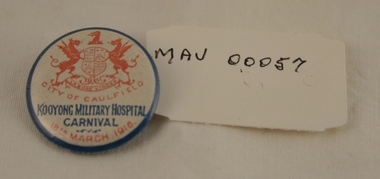
Badge - World War 1914 - 1918, Badge fund-raising, c1916
... patients. This badge is a reminder of the Community support for injured soldiers when they returned from WW1 conflict and were hospitalized at Kooyong Military Hospital Caulfield 1914 - 1948 This badge was displayed at the GECC 'Wounded Soldier WW1 1914-1918 Exhibition" 2016 at Glen Eira Town Hall Caulfield ww1 1914-18 kooyong military hospital war casualties caulfield moorabbin bentleigh carnivals fundraising patriotism anzac australian commonwealth military forces A copy of the City of Caulfield's Coat-of- Arms and the words, City of Caulfield, is written on the front of the button, as is the date 18th March 1916. ...The Kooyong Military Hospital in Kooyong Road, Caulfield was established for the care and rehabilitation of soldiers injured in World War 1. Many events like carnivals were held by the Red Cross to raise funds for the war effort and entertain the patients.This badge is a reminder of the Community support for injured soldiers when they returned from WW1 conflict and were hospitalized at Kooyong Military Hospital Caulfield 1914 - 1948 This badge was displayed at the GECC 'Wounded Soldier WW1 1914-1918 Exhibition" 2016 at Glen Eira Town Hall Caulfield A small tin button, with pin attachment at the back. The button was produced and sold as a fund-raiser for the Kooyong Military Hospital during the World War1, 1914-18, at that organisation's Carnival held on March 18th 1916. The front of the button is white with a blue perimeter. A copy of the City of Caulfield's Coat-of- Arms and the words, City of Caulfield, is written on the front of the button, as is the date 18th March 1916. Both the above are written in red. Kooyong Military Hospital is written in blue. ww1, 1914-18, kooyong military hospital, war casualties, caulfield, moorabbin, bentleigh, carnivals, fundraising, patriotism, anzac, australian commonwealth military forces -
 Geoffrey Kaye Museum of Anaesthetic History
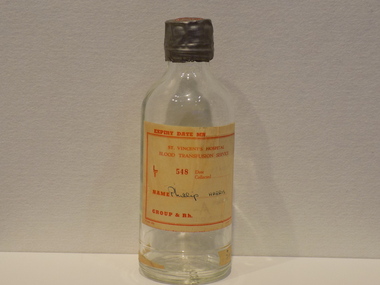
Container - Bottle, Blood transfusion
... Casualty Clearing Station or Regimental Aid Post for further treatment. Among the assorted surgical and resuscitation equipment carried by the forward resuscitation team, were a number of Kimpton-Brown flasks. Blood was collected from patients...Casualty Clearing Station or Regimental Aid Post for further treatment. Among the assorted surgical and resuscitation equipment carried by the forward resuscitation team, were a number of Kimpton-Brown flasks. Blood was collected from patients ...Dr Alan Holmes á Court enlisted in the Australian Army in 1916 as a medical officer with the rank of Captain. In 1918, Holmes á Court was promoted to Major and attached to the 4th Australian Field Ambulance on the Western Front. As the front advanced, the Casualty Clearing Stations became further removed from the battlefield, creating an urgent need for immediate resuscitation prior to transfer back to the CCS. In June 1918, Holmes a Court and his colleagues established a forward resuscitation team. The team consisted of one doctor trained in surgery, blood transfusion and resuscitation, another doctor trained in anaesthesia, resuscitation and blood classification, and four other assisting staff. This team moved out to the wounded, rather than waiting for them to be stretchered back. They provided on-the-spot, life-saving resuscitation. The wounded were then transported back to the Casualty Clearing Station or Regimental Aid Post for further treatment. Among the assorted surgical and resuscitation equipment carried by the forward resuscitation team, were a number of Kimpton-Brown flasks. Blood was collected from patients with minor injuries using the flask. It was then administered to those in need, after establishing their blood type. Citrated blood was introduced by the Americans in 1917. This allowed blood administration to be delayed for up to two hours but there were many problems with transport, storage and infection in these early experimental days.Round, clear glass bottle with white [discoloured] paper label, with red printed, and metal screw-top lid.Handwritten on white [discoloured] paper label: Phillip HARRIS Moulded into the top of the screw-top lid in red ink: RED CROSS BLOOD TRANSFUSION SERVICEblood transfusion, red cross, world war one -
 National Vietnam Veterans Museum (NVVM)
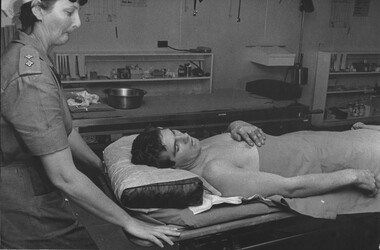
Photograph, Gibbons, Denis, Lt McLean
... The quick transfer of patients from theatre to wards made way for other casualties....The quick transfer of patients from theatre to wards made way for other casualties. Lt McLean Photograph Gibbons, Denis ...Denis Gibbons (1937 – 2011) Trained with the Australian Army, before travelling to Vietnam in January 1966, Denis stayed with the 1st Australian Task Force in Nui Dat working as a photographer. For almost five years Gibbons toured with nine Australian infantry battalions, posting compelling war images from within many combat zones before being flown out in late November 1970 after sustaining injuries. The images held within the National Vietnam Veterans Museum make up the Gibbons Collection. A black and white photograph of Royal Australian Army Nursing Corps Sister Lt Desley McLean wheeling a patient from triage to the surgical ward at the 1st Australian Field Hospital, Vung Tau, South Vietnam. The quick transfer of patients from theatre to wards made way for other casualties.photograph, royal australian army nursing corps, lt desley mclean, 1st australian field hospital, vung tau, gibbons collection catalogue, denis gibbons, photographer, vietnam war, triage, surgical ward, wounded serviceman -
![Cover page of 'Case history of tea services at the Alfred Hospital Melbourne' [ca.1950] , The tea bureau](/media/collectors/50187a8f023fd7201471f198/items/69d4a39f40348e1414e3d4e3/item-media/69d5c2177219387d705efe35/item-fit-380x285.jpg?cb=6) Alfred Hospital Nurses League - Nursing History Collection
Alfred Hospital Nurses League - Nursing History CollectionDocument - Report, The Tea Bureau, Case history of tea services at the Alfred Hospital Melbourne, [ca.1950]
... Also provides information about numbers of staff, patients (in, out and casualty) and capacity of dining rooms....Also provides information about numbers of staff, patients (in, out and casualty) and capacity of dining rooms. ...Report was made to advise the Alfred Hospital of the most appropriate equipment to purchase for tea making. Also provides information about numbers of staff, patients (in, out and casualty) and capacity of dining rooms.Gives insight into catering at the Alfred Hospital in 1950Unbound, photocopied, illustrated document. Cover page has black print detailing title and publisher, Their is also an illustration of a proposed redenelopment of the Alfred HospitalPrevious catalogue number at top right of cover pagealred hospital, hospital catering, tea making -
 Kiewa Valley Historical Society
Photographs – Old Tawonga District General Hospital Mt Beauty. Set of 19 colour photographs
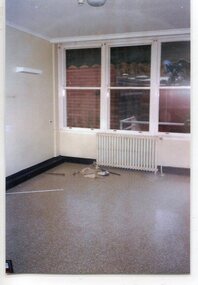
... Casualty Room 6. Sister W McClelland in new nurse’s station 7. R Forrest, G Ryder, ?, M Ranton 8. Nurse D Hateley in the Pan Room 9. Tawonga District General Hospital: Resuscitation Room 10. Hospital Hallway 11. Empty Nurses Station 12. Tawonga District General Hospital: Nursery 13. Patient...Casualty Room 6. Sister W McClelland in new nurse’s station 7. R Forrest, G Ryder, ?, M Ranton 8. Nurse D Hateley in the Pan Room 9. Tawonga District General Hospital: Resuscitation Room 10. Hospital Hallway 11. Empty Nurses Station 12. Tawonga District General Hospital: Nursery 13. Patient ...In the early stages of the Kiewa Hydro-Electric Scheme the State Electricity Commission took over the financial and construction responsibility of the Tawonga District General Hospital building at a cost of 27,000 pounds. This included the removal and re-erection of the ex-military Bonegilla ward from Wodonga while in addition they carried out all the necessary building works that allowed the hospital to operate as a functional unit. The work was completed and handed over to the Hospital Committee of Management on September 1, 1949. Local residents raised 3,400 pounds through fund raising. The balance was met by the SEC and the Hospital and Charities Commission. The initial project was to provide for a basic temporary hospital which was later to include an Operating Theatre, Offices, Store, Mortuary and a Nurse’s Home, until the establishment of a permanent medical premises. Following the opening, 455 patients were admitted to the Tawonga District General Hospital and 254 operations were performed in the first year. The hospital relocated to Mount Beauty in the former SEC administration offices located in the town centre. Official opening of the 18 bed Tawonga District General Hospital was on April 29 in 1961. The old weatherboard building was demolished around the late 1900’s to early 2000’s and replaced with a new modern brick building. Alpine Health CEO Mr Lyndon Seys oversaw the opening of the new Mount Beauty Hospital in November 2001 alongside Board of Management President Mr Andrew Randell, other board members and politicians. The Kiewa Hydro-Electric Scheme the State Electricity Commission played a pivotal part in the planning and initial funding of the Tawonga District General Hospital, with a view to providing medical support for its many workers on the Hydro scheme. Later, spouse and family members of workers were also able to access medical assistance The hospital was originally located in Tawonga away from the majority of the patients as the Hospital and Charities. Many SEC workers and their families have received medical care at Tawonga District General Hospital and Alpine Health over the years. A number of family members of SECV workers as well as other dedicated staff have provided high quality medical attention and support in all the facilities as nursing staff, support staff and volunteers. Many past staff members and their families still remain living in the Kiewa Valley area 19 Colour photographs of the Tawonga and District Hospital situated in Mt Beauty circa 2000. Including photographs of interior and of some staff members1. No markings 2. G Ryder at front entrance 3. Sister G Ryder in the Resuscitation Room 4. Nurse D Hateley in the Kitchen 5. Nurse D Hateley in the Casualty Room 6. Sister W McClelland in new nurse’s station 7. R Forrest, G Ryder, ?, M Ranton 8. Nurse D Hateley in the Pan Room 9. Tawonga District General Hospital: Resuscitation Room 10. Hospital Hallway 11. Empty Nurses Station 12. Tawonga District General Hospital: Nursery 13. Patient Tea Room 14, 15, 16, 17, & 18. No marking mt beauty district hospital, tawonga district hospital, bonegilla ward, ryder family -
 Parks Victoria - Wilsons Promontory Lightstation
Stretcher
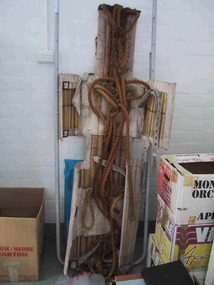
... A lifting rope is attached to a ring above the patient's head, while a guideline is tied near the ankles and used to stop the stretcher swaying as it is hoisted up. This style of stretcher was specifically designed for use on ships, where casualties might have to be lifted from engine-room spaces, holds and other compartments with access hatches too small for ordinary stretchers. ...A lifting rope is attached to a ring above the patient's head, while a guideline is tied near the ankles and used to stop the stretcher swaying as it is hoisted up. This style of stretcher was specifically designed for use on ships, where casualties might have to be lifted from engine-room spaces, holds and other compartments with access hatches too small for ordinary stretchers. ...Made of canvas and bamboo slats with hemp ropes, adjustable canvas straps and metal buckles and rings, the rescue stretcher was used for carrying an injured person. According to the Powerhouse Museum, the stretcher and was ‘designed to support and carry an injured person in circumstances where the person has to be lifted vertically’. Known as the ‘Neil Robertson stretcher’, it was developed in the early 1900s by John Neil Robertson as a lightweight rescue device and was modelled on Japanese bamboo litters. An identical stretcher is held in Sydney’s Powerhouse Museum and is thought to date between c.1967 and 1999. The museum’s statement of significance for the unique stretcher elaborates on its cultural values: The canvas is wrapped around the patient and secured with strong canvas straps. A lifting rope is attached to a ring above the patient's head, while a guideline is tied near the ankles and used to stop the stretcher swaying as it is hoisted up. This style of stretcher was specifically designed for use on ships, where casualties might have to be lifted from engine-room spaces, holds and other compartments with access hatches too small for ordinary stretchers. The original name of the Neil Robertson stretcher was 'Hammock for hoisting wounded men from stokeholds and for use in ships whose ash hoists are 2 ft. 6 in. diameter'. Since those times the Neil Robertson stretcher has also been used in factories and mines and for other emergency rescue situations. It is still possible to buy this type of stretcher although the slats are now more likely to be made of wood. The example in the Powerhouse collection was amongst several items of obsolete first aid and rescue equipment donated by the electricity generation company Delta Electricity. It would have been used - or at least been on stand-by - at the company's Munmorah Power Station or the associated coal mine on the Central Coast of New South Wales. Industrial sites and mines are extremely dangerous work places. Throughout the 20th century to the present there has been a drive, especially in developed countries like Australia, to improve workplace safety. Measures taken to reduce injuries and deaths have included safer industrial equipment, safer work practices, staff training, and the ready availability of accident and emergency equipment.It was also used throughout WWI and WWII. There are two other examples of the stretcher are known in Parks Victoria heritage collections. Canvas and bamboo stretcher with straps and buckles. Hemp ropes are attached to the stretcher. -
 Returned Nurses RSL Sub-branch
Newspaper - Photocopy of newspaper clippings and a photo, The Sun, Meningitis case in Bonegilla area, 4 and 19 Oct 1940
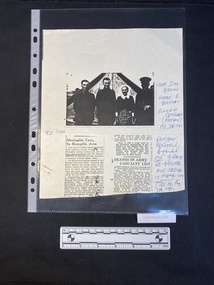
... casualty lists for Victoria and New South Wales. Victoria - In Australia: Gunner J Burgess, Pte WH Chute: died of illness; Pte AD Mathers, Pte W Walsh: placed on dangerously ill list; Gunner OJ Carkeek: removed from seriosly ill list; Abroad: Pte JW Bruce: placed on dangerously ill list; Pte JW Nuttall: removed from seriusly ill list. New South Wales: Abroad: Pte EJ Maples: accidentally killed; Gunner AAGV Peterson: placed on seriously ill list. Lydia Shaw Edith Lydia Shaw Artillery Infantry Engineers WW2 WWII World War Two 'SEPT 1940' [blue ink, left side middle' 'CAPT. DON / BROWN / SISTER B. / HAYNES / GUNNER / CARKEEK / (PATIENT ...Clipping one - 'Meningitis case in Bonegilla area' - A case of cerebro-spinal meningitis was reported from the troops on the Bonegilla military camp. The man was recovering, said the Deputy-Director of Medical Services, Southern Command,with all precautions against the spread being taken, including isolation of contacts and the unit. Colonel Shaw went on to emphasise that there was no need for alarm as the disease did not appear to present in epidemic form and the likelihood that it would assume epidemic proportions reduced every week. Clipping two - 'Deaths in army casualty list' - Army casualty lists for Victoria and New South Wales. Victoria - In Australia: Gunner J Burgess, Pte WH Chute: died of illness; Pte AD Mathers, Pte W Walsh: placed on dangerously ill list; Gunner OJ Carkeek: removed from seriosly ill list; Abroad: Pte JW Bruce: placed on dangerously ill list; Pte JW Nuttall: removed from seriusly ill list. New South Wales: Abroad: Pte EJ Maples: accidentally killed; Gunner AAGV Peterson: placed on seriously ill list.A photocopied page of two single column newspaper clippings from separate newspapers beneath a black and white photo of a woman in nurse's uniform and three men standing in front of a tent.'SEPT 1940' [blue ink, left side middle' 'CAPT. DON / BROWN / SISTER B. / HAYNES / GUNNER / CARKEEK / (PATIENT) / PTE. DE [MM]' [blue ink, right side middle] 'PATIENT / RE[CORDED/COVERED] / A[?ded] / OUT of ARMY / RE-EnlistED / AnD SERVED / In SAME[underlined] LM[E/] / [line leading into clipping text] 9211 FD. Reg. / IM ME.' [blue ink right side, lower] [line indicating a line in the text, blue ink, middle lower]lydia shaw, edith lydia shaw, artillery, infantry, engineers, ww2, wwii, world war two -
 Returned Nurses RSL Sub-branch
Document - Typed document, Sister J Langham, 2/3 Aust C.C.S
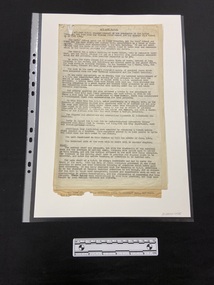
... An account of the 2/3 Austrailan Casualty Clearing Station (C.C.S.) in 1941-42 including information on staff, equipment, movements, patients, evacuations and conditions....An account of the 2/3 Austrailan Casualty Clearing Station (C.C.S.) in 1941-42 including information on staff, equipment, movements, patients, evacuations and conditions. ...An account of the 2/3 Austrailan Casualty Clearing Station (C.C.S.) in 1941-42 including information on staff, equipment, movements, patients, evacuations and conditions.'2/3 AUST C.C.S.' typed and underlined at the top of the page followed by a full page of typed print. There are twelve pages in total, of varying sizes. 'by Sister J Langham' [Lightly written in pencil in the top right corner of the first page]australian army nurses, world war 1939-1945, ww2, wwii, 2/3 australian casual clearing station, jess langham -
 Returned Nurses RSL Sub-branch
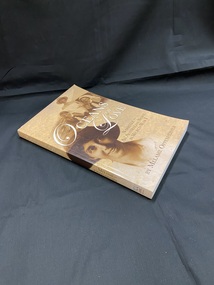
Book - Paperback book, ABC Books, Oceans of love: Narrelle : an Australian nurse in World War I, 2006
... Narrelle spent 10 months in Basra and later Amara, on the Tigris River, nursing casualties and patients with appalling diseases such as enteric fever, dysentery, typhoid and cholera. ...At the outbreak of World War I, Narrelle Hobbes was the matron of the small and remote Brewarrina hospital in north-western NSW. Keen to be an active participant in the war, Narrelle, aged 36, decided to travel to London in March 1915 in order to join Queen Alexandra's Imperial Medical Nursing Service Reserve (QAIMNSR). By May she was in Malta nursing the sick and wounded from Gallipoli. She later nursed in Sicily, India and Mesopotamia (now modern day Iran/Iraq). The Mesopotamia campaign, fought between the British and the Turks, is one of the largely forgotten theatres of the war. Narrelle spent 10 months in Basra and later Amara, on the Tigris River, nursing casualties and patients with appalling diseases such as enteric fever, dysentery, typhoid and cholera. After falling sick, she then spent six months recuperating in the foothills of the Himalayas at the remote hill station of Binsar in Uttar Pradesh. Narrelle is based on an extraordinary collection of letters written home to her family ('Dearest Peoples' and signed 'oceans of love') in Australia, letters that are a witty and evocative reminder of an extraordinary period in Australian history from the perspective of an Australian girl from the bush. [Trove]Sepia toned cover with two images on the front (a portrait of a woman, and three nursing sisters) and an image of a woman in profile on the back. The title is printed across the front and spine in white print, sub-title and author in brown.non-fictionAt the outbreak of World War I, Narrelle Hobbes was the matron of the small and remote Brewarrina hospital in north-western NSW. Keen to be an active participant in the war, Narrelle, aged 36, decided to travel to London in March 1915 in order to join Queen Alexandra's Imperial Medical Nursing Service Reserve (QAIMNSR). By May she was in Malta nursing the sick and wounded from Gallipoli. She later nursed in Sicily, India and Mesopotamia (now modern day Iran/Iraq). The Mesopotamia campaign, fought between the British and the Turks, is one of the largely forgotten theatres of the war. Narrelle spent 10 months in Basra and later Amara, on the Tigris River, nursing casualties and patients with appalling diseases such as enteric fever, dysentery, typhoid and cholera. After falling sick, she then spent six months recuperating in the foothills of the Himalayas at the remote hill station of Binsar in Uttar Pradesh. Narrelle is based on an extraordinary collection of letters written home to her family ('Dearest Peoples' and signed 'oceans of love') in Australia, letters that are a witty and evocative reminder of an extraordinary period in Australian history from the perspective of an Australian girl from the bush. [Trove]ww1, wwi, first world war, world war 1914-1918, narrelle hobbes, sister florence narrelle jessie hobbes, queen alexandra's imperial military nuring service, australian nurses
