
Showing 23 items matching "centennial display"
-
 University of Melbourne, Burnley Campus Archives
Plan, Alterations and Refurbishment of the Centennial Display Building, 1990
... Alterations and Refurbishment of the Centennial Display Building......Centennial Display Building...Specification of workmanship and materials to be used in the construction of: Alterations and Refurbishment of the Centennial Display Building at Victorian College of Agriculture and Horticulture, Burnley for VCAH by Urban Spaces Pty. ...Alterations and Refurbishment of the Centennial Display Building Plan ...Specification of workmanship and materials to be used in the construction of: Alterations and Refurbishment of the Centennial Display Building at Victorian College of Agriculture and Horticulture, Burnley for VCAH by Urban Spaces Pty. Ltd., Architects. Includes Plans and Elevations, and Presentation Drawings. Provenance Geoff C(?) 19.08.91. burnley horticultural college, centennial display building, urban paces pty. ltd., architectural plans, bookshop -
University of Melbourne, Burnley Campus Archives
Plan - Plans, Alterations and refurbishment of the Centennial Display Building, 1990 - 1991
... Alterations and refurbishment of the Centennial Display Building...Contract for proposed alterations and additions to the Centennial Display Building by Orlean Constructions (incl. plans and elevations). 3. ...Correspondence from Greg Moore re same Alterations and refurbishment of the Centennial Display Building Plan Plans ...Notes as to filing of documentsburnleyhorticultural college, urban spaces p/l, orlean constructions, buildings, greg moore, dairy, centennial building, renovations -
 University of Melbourne, Burnley Campus Archives
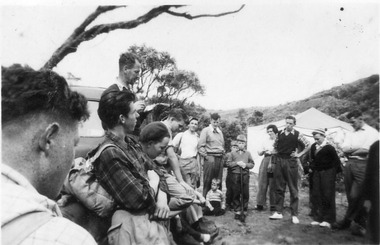
Photograph - Black and white print, Justine Curry (nee Mitchelson), Wilson's Promontory, 1954
... ...centennial display...Used in the Centennial Display in 1991....Used in the Centennial Display in 1991. Wilson's Promontory Photograph Black and white print Justine Curry (nee Mitchelson) ...Original donated by Justine Curry (née Mitchelson) 1954 in a photograph album B09.0004. Copy of black ans white photograph of Students, T.H. Kneen and his children gathered around a campsite on an excursion to Wilson's Promontory. Used in the Centennial Display in 1991.students, t.h. kneen, children, campsite, excursion, centennial display, justine curry (née mitchelson), wilson's promontory -
 University of Melbourne, Burnley Campus Archives
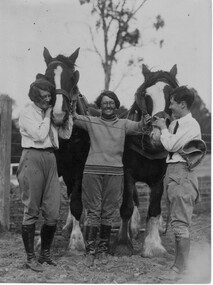
Photograph - Black and white prints and negatives, Students With Draught Horses, 1920-1930
... ...centennial display...Two of them in shirts and ties.1 Copy nearly life-size (part only) used in Centennial Display....female students draught horse rodda centennial display jodhpurs long boots shirts and ties On reverse, "Rodda." 2 copies black and white photograph and negative. 3 female students holding 2 draught horses. ...2 copies black and white photograph and negative. 3 female students holding 2 draught horses. Students dressed in jodhpurs and long boots. Two of them in shirts and ties.1 Copy nearly life-size (part only) used in Centennial Display.On reverse, "Rodda."female students, draught horse, rodda, centennial display, jodhpurs, long boots, shirts and ties -
 University of Melbourne, Burnley Campus Archives
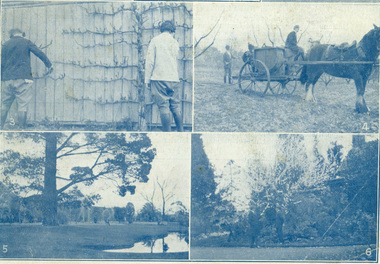
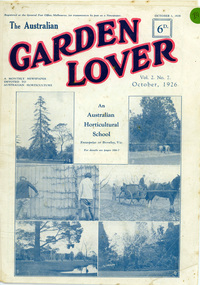
Photograph - Colour print, The Australian Garden Lover, "An Australian Horticultural School.", 1926
... ...centennial display...Winzenried p 52 and also used in the Centennial Display mounted on board. The espaliered fruit tree was located in the old nursery trained by George Russ. ...Winzenried p 52 and also used in the Centennial Display mounted on board. The espaliered fruit tree was located in the old nursery trained by George Russ. ...The 4 bottom photographs used as an illustration in, "Green Grows Our Garden," A.P. Winzenried p 52 and also used in the Centennial Display mounted on board. The espaliered fruit tree was located in the old nursery trained by George Russ. Top right orchard spraying. Bottom left View of Pavilion showing Luffmann's pond and a Pinus radiata planted in the 1860's. Bottom right A.W. Jessep (Principal) and E.E. Pescott (Lecturer). outside Principal's Residence. E.B. Littlejohn.See detailed description in paper catalogue and B91.404 for Journal Article.Colour photograph of part of the cover of , "The Australian Garden Lover," Vol. 2 No. 7 October, 1926, entitled, " 'An Australian Horticultural School.' Enterprise at Burnley, Vic." See B91.404 for more details ella chalmers (née fry), green grows our garden, a.p. winzenried, centennial display, a.w. jessep, principal, e.e. pescott, lecturer, principal's residence, e.b. littlejohn, espaliered fruit tree, old nursery, george russ, orchard spraying, pavilion, pinus radiata, ponds., lily ponds, luffmann ponds -
 Ballarat Tramway Museum
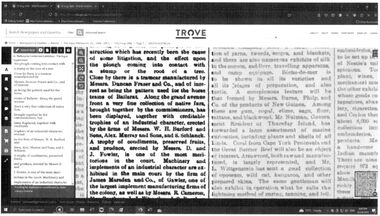
Newspaper - Trove Extract, The Argus Newspaper, Ballarat Horse tram on display - Centennial Exhibition 1888, 2-8-1888
... Ballarat Horse tram on display - Centennial Exhibition 1888...Report by the Argus newspaper on the South Australian stand at the 1888 Centennial exhibition held in Melbourne reporting that a Ballarat tram by Duncan and Fraser was on display....Yields information about the exhibition of a Ballarat horse tram at the Melbourne 1888 Exhibition. trams exhibitions 1888 Centennial Exhibition horse trams Duncan & Fraser Ballararat Extract from Trove - The Argus 2-8-1888 - printed on an A4 sheet Ballarat Horse tram on display - Centennial Exhibition 1888 Newspaper Trove Extract The Argus Newspaper ...Report by the Argus newspaper on the South Australian stand at the 1888 Centennial exhibition held in Melbourne reporting that a Ballarat tram by Duncan and Fraser was on display.Yields information about the exhibition of a Ballarat horse tram at the Melbourne 1888 Exhibition.Extract from Trove - The Argus 2-8-1888 - printed on an A4 sheettrams, exhibitions, 1888 centennial exhibition, horse trams, duncan & fraser, ballararat -
 University of Melbourne, Burnley Campus Archives
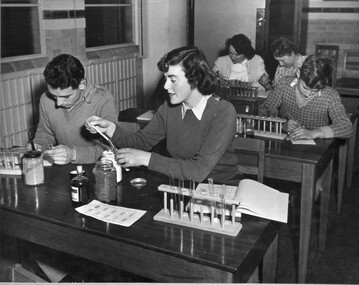
Photograph - Black and white prints and negatives, Students in Class, c. 1950
... A further enlargement (B92.564) was used in the Centennial Display. Same students in B91.174....A further enlargement (B92.564) was used in the Centennial Display. Same students in B91.174. Students in Class Photograph Black and white prints and negatives ...Enlargement. of black and white photograph B91.172 Chemistry class. R.D.M. Soil Indicator colour chart on table and substances in test tubes. Front row: Margot George, Peter Smith. A further enlargement (B92.564) was used in the Centennial Display. Same students in B91.174.Inscribed, Students in Class Room Burnley Gardens B19-1238. Similar Negs B19-1237. Dup B87, B19-1239. Dup B88, B19-1240. Dup B89."r.d.m. soil indicator, colour chart, test tubes, margot george, peter smith, students in class, chemistry class -
 University of Melbourne, Burnley Campus Archives
Article - Journal Extracts, The Australian Garden Lover, The Australian Garden Lover An Australian Horticultural School: Enterprise at Burnley, Vic, 1926
... Winzenried p 52 and also used in the Centennial Display mounted on board. The espaliered fruit tree was located in the old nursery trained by George Russ. ...Winzenried p 52 and also used in the Centennial Display mounted on board. The espaliered fruit tree was located in the old nursery trained by George Russ. ...Cover and pages 265-267 from "The Australian Garden Lover" , Vol. 2, No. 7, Oct. 1926 describing Burnley. Also see B91.405 for photograph of front cover. Cover has 6 photographs The 4 bottom photographs used as an illustration in, "Green Grows Our Garden," A.P. Winzenried p 52 and also used in the Centennial Display mounted on board. The espaliered fruit tree was located in the old nursery trained by George Russ. Top right orchard spraying. Bottom left View of Pavilion showing Luffmann's pond and a Pinus radiata planted in the 1860's. Bottom right A.W. Jessep (Principal) and E.E. Pescott (Lecturer). outside Principal's Residence. E.B. Littlejohn. Article: "The Burnley Gardens. Instructional School Conducted by the Victorian Department of Agriculture. Horticulture as a profession for women." Part of article by "Correa" p 268 "Australian Native Flowers October Orchids." Correas was the pen-name of Jean Galbraith.the australian garden lover, journal, horticulture, women, profession, gardening, gardeners, horticulture as a profession for women, department of agriculture victoria, "correa", jean galbraith, orchids, native flowers -
 Flagstaff Hill Maritime Museum and Village
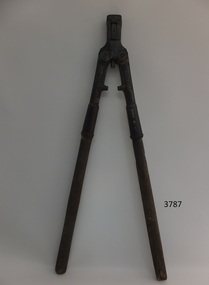
Bolt Cutter, 1878
... The engine was displayed at the 1876 Centennial and is now in a permanent collection at the Franklin Institute USA. ...The engine was displayed at the 1876 Centennial and is now in a permanent collection at the Franklin Institute USA. ...Cyrus Chambers was a self-described mechanic who started out winding bobbins in his father's woollen mill and went on to invent machines that changed their industries. Cyrus Chambers came from Quaker parents the ninth of thirteen siblings, he once said a year before his death. “I believe I have succeeded because, first, I was industrious; second, because I made a study of the subject that was before me.” At age 7, Chambers went to work in his father’s mill. His job was to monitor bobbins—wooden spindles around which thread was wound and to remove and replace them as they became full. "There was no child labour law at that time," he later recalled. Chambers loved machinery and always regarded himself as a mechanic rather than an inventor. At age 16, Chambers was sent to learn dentistry with an older brother, (Edwin) who was already in the field and willing to take him on as an apprentice. Chambers was talented at working with small parts. He used his brother's dental instruments to build a miniature high-pressure steam engine of silver. It ran at 3,000 revolutions per minute and weighed less than a half-ounce. At that time it was the smallest engine that had ever been constructed. The engine was displayed at the 1876 Centennial and is now in a permanent collection at the Franklin Institute USA. Chambers major invention was the paper folding machine and came from reading that school teachers made less than the young girls who were employed to fold book pages as they came off the press. He told friends that his first efforts were to make the machine that would fold newspapers after demonstrating his device he met with Horace Greeley of the New York Tribune who advised Chambers would never invent the machine that would be able to fold his newspaper or books. In less than a year Chambers had built a full-size machine capable of folding large newspapers and books and was installed at J B Lippincott & Co folding pages for the "Comly Speller" this machine ran successfully for twenty-five years until the printing works burnt down. Chambers then went into partnership with a brother and they established the firm "Chambers, Brother & Co" at a plant in Philadelphia. It was also observed in 1910 and a fact that there was not a periodical or newspaper printed or recently published book that had not gone through one of Chambers inventions. Chambers went on to produce many mechanical inventions and improvements to existing tools and machinery most notable was his invention for the machine that would make clay bricks. This machine made forty bricks per hour and by the end of Chambers life after many improvements, it could make more than four hundred. Although there were a large number of bold cutters made of this patent at Cyrus Chamber’s foundry in Philadelphia, the item is associated with a notable American inventor of the nineteenth century. This particular patent for a bolt and rivet cutter won Chambers the prestigious Elliott Cresson Medal. This cutter is just one of the many inventions and mechanical improvements that Cyrus Chambers made during his lifetime, contributing to the ongoing development of mechanical improvements that were occurring in American industry of the time and therefore a notable addition to the Flagstaff collection.Cast iron bolt cutter with removable tempered steel cutter. Chambers New No. 2.Raised embossed lettering on cast body of cutter "New No 2" on one side, "Chambers Bros & Co" on the other sideflagstaff hill, warrnambool, shipwrecked coast, flagstaff hill maritime museum, maritime museum, shipwreck coast, flagstaff hill maritime village, great ocean road, cyrus chambers, bolt cutter, paper folding machine, brick making machine, elliot cresson, elliot cresson medal, franklin institute, gold medal, rivet cutter -
 Flagstaff Hill Maritime Museum and Village
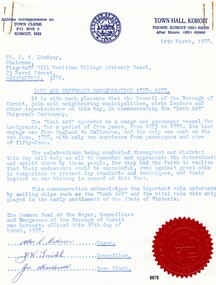
Letter - Loch Ard Centenary Letter, Koroit Council, March 1978
... The anchor of the Loch Ard was raised from the wreck and displayed at Port Campbell, a memorial plaque (erected by The National Park) was unveiled at Loch Ard Gorge, a special "Loch Ard Shipwreck Centennial Port Campbell" postmark was issued by the Post Office and a model ship competition was held. ...The anchor of the Loch Ard was raised from the wreck and displayed at Port Campbell, a memorial plaque (erected by The National Park) was unveiled at Loch Ard Gorge, a special "Loch Ard Shipwreck Centennial Port Campbell" postmark was issued by the Post Office and a model ship competition was held. ...The Loch Ard was an iron hulled clipper, built in Scotland in 1873 and wrecked on the southwest coast of Victoria in 1878 at what is now known as Loch Ard Gorge, near Port Campbell. Fifty two crew and passengers died and only Tom Pierce and Eva Carmichael survived. The Loch Ard was the last sailing ship to lose emigrants' lives when negotiating the entrance to Bass Strait. One of the most unlikely pieces of cargo to have survived the shipwreck was a Minton porcelain peacock - one of only nine in the world. The peacock was destined for the Melbourne International Exhibition in 1880. It had been well packed, which gave it adequate protection during the violent storm. Today, the Minton peacock can be seen at the Flagstaff Hill Maritime Museum in Warrnambool. From Australia's most dramatic shipwreck it has now become Australia's most valuable shipwreck artefact and is one of very few 'objects' on the Victorian State Heritage Register. The Victorian History Advisory Council decided 1978 was an appropriate year to mark, not only the centenary of the sinking of the Loch Ard in 1878, but also commemorate the large part played by sailing ships in immigration, and through this, the development of Australia. The Victorian Government authorised the commemoration and a "Loch Ard Centenary Committee" was formed. It was established to create public interest and awareness for the 100th anniversary of the tragic Loch Ard shipwreck. Activities and events included student essays, exhibitions, videos, publications, competitions and historical information. A booklet called "Settlers Under Sail" by Don Charlwood was commissioned to be made available to all school children. The anchor of the Loch Ard was raised from the wreck and displayed at Port Campbell, a memorial plaque (erected by The National Park) was unveiled at Loch Ard Gorge, a special "Loch Ard Shipwreck Centennial Port Campbell" postmark was issued by the Post Office and a model ship competition was held. Flagstaff Hill Maritime Museum and Village, together with other local towns and shires along the south-west coast participated in many of these commemorative activities. This letter is a significant reminder (and recognition) of the importance the Loch Ard (and other immigrant ships) played in the settling of Victoria and the dangers faced by the settlers who came to Australia in these ships. Flagstaff Hill’s collection of artefacts from LOCH ARD is significant for being one of the largest collections of artefacts from this shipwreck in Victoria. It is significant for its association with the shipwreck, which is on the Victorian Heritage Register (VHR S417). The collection is significant because of the relationship between the objects, as together they have a high potential to interpret the story of the LOCH ARD. The LOCH ARD collection is archaeologically significant as the remains of a large international passenger and cargo ship. The LOCH ARD collection is historically significant for representing aspects of Victoria’s shipping history and its potential to interpret sub-theme 1.5 of Victoria’s Framework of Historical Themes (living with natural processes). The collection is also historically significant for its association with the LOCH ARD, which was one of the worst and best-known shipwrecks in Victoria’s history.Single page letter typed in blue ink, on behalf of Koroit Council, written on 14th March 1978 and addressed to the Chairman, Flagstaff Hill Maritime Village Advisory Board, in recognition of the "Loch Ard Centenary Commemoration 1878 - 1978". It has the "Borough of Koroit" stamp at the top of the page and a red "Borough of Koroit" seal on the bottom right-hand corner of the page. It is signed by the Mayor (Allan R. Waterson), a councillor (J. W. Smith) and the Town Clerk (Jim Macdonald). The letter is in a plain buff manilla folder labelled in blue type.Top left corner - "Address correspondence to:/TOWN CLERK / P.O. BOX 5/KOROIT, 3282" Top Centre - blue circular ink stamp of "BOROUGH OF KOROIT 1870" with coat of arms in the center Top right - "TOWN HALL,KOROIT/ PHONE KOROIT (055) 658230/After Hours (055) 658490" The letter is addressed to - "CR. J. S. Lindsay, /Chairman,/ Flagstaff Hill Maritime Village Advisory Board,/ WARRNAMBOOL. 3280" "LOCH ARD CENTENARY COMMEMORATION 1878 - 1978" (underlined) The letter begins - "It is with much pleasure that the Council of the Borough of Koroit, join with neighbouring municipalities, civic leaders and other organisations on this day, in commemorating the "Loch Ard" Shipwreck centenary. The "Loch Ard" operated as a cargo and passenger vessel for immigrants, for a period of five years, from 1873 to 1878. Its last voyage was from England to Melbourne, and the ship was sunk on the 1st June 1878, with only two survivors from passengers and crew of fifty-four. The celebrations being conducted throughout our district this day will help us all to remember and appreciate the determination and spirit shown by these people, for they had the faith to realise that their endeavours would be successful, even against great odds in comparison to present day standards and techniques, and their imprint on our history is record of this fact. This commemoration acknowledges the important role undertaken by sailing ships such as the "Loch Ard" and the vital role this ship played in the early settlement of the State of Victoria." The letter ends with -" the Common Seal of the Mayor, Councillors and Burgesses of the Borough of Koroit was hereunto affixed this 18th day of March, 1978." The letter is signed "Allan J. Waterson Mayor/J. W. Smith Councillor/ Jim Macdonald Town Clerk and a large red seal of the Borough of Koroit (with their coat of arms) is in the bottom right-hand corner. Front of manilla folder - "BOROUGH OF KOROIT / LOCH ARD CENTENARY COMMEMORATION/ 1878 - 1978" "4050" written in black ink top right-hand corner next to a scribbled out numberflagstaff hill maritime museum and village, warrnambool, great ocean road, shipwreck coast, loch ard, port cambell, shipwreck, commemorative committee, loch ard centenary, koroit council, commemorative letter, loch ard commemorative committee -
 Flagstaff Hill Maritime Museum and Village
Newspaper - Newspaper Article, March 1978
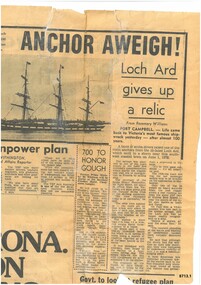
... Centennial Port Campbell" postmark was issued by the Post Office and a model ship competition was held. Flagstaff Hill Maritime Museum and Village, together with other local towns and shires along the south-west coast participated in many of these commemorative activities. The Chair of the Loch Ard Century Committee (Sir John Holland) approached the "Scuba Divers Federation of Victoria" to "seek and recover a significant relic from the Loch Ard" with the idea of having it available for public display at Port Campbell. ...Centennial Port Campbell" postmark was issued by the Post Office and a model ship competition was held. Flagstaff Hill Maritime Museum and Village, together with other local towns and shires along the south-west coast participated in many of these commemorative activities. The Chair of the Loch Ard Century Committee (Sir John Holland) approached the "Scuba Divers Federation of Victoria" to "seek and recover a significant relic from the Loch Ard" with the idea of having it available for public display at Port Campbell. ...The Loch Ard was the last sailing ship to lose emigrants' lives when negotiating the entrance to Bass Strait. The ship Loch Ard was built on the River Clyde in Scotland in 1873 for the prestigious Loch Line of colonial clipper ships, designed for the Australian run. It sailed from England on 1 March 1878 carrying 37 crew, 17 passengers and a diverse general cargo ranging from luxury items to bulk railway iron. On 1 June 1878, emerging from fog and hearing too late the sound of breakers against the tall limestone cliffs, the vessel struck the southern foot of Mutton Bird Island and sank in 23 metres of water. Of the fifty-four people on board only two survived, one young male crewman, Tom Pearce, and one young female passenger, Eva Carmichael. This newspaper advertisement was donated by the family of George Shields - a member of the Shields family who had had a long association with the wreck of the Loch Ard and Eva Carmichael. In 1878, following the wreck of the Loch Ard and the subsequent rescue of Eva Carmichael, Eva was taken to Glenample station (near Princetown) to recuperate. It was during this period that Eva became great friends with Jane Shields (an Aunt of George Shields) - a friendship that continued throughout their lives. At that time, Jane was a young woman living in Princetown with her parents and siblings. Many of the Shields family continued to have a great interest in the Loch Ard and several generations of the family are buried in the Loch Ard cemetery. One of the most unlikely pieces of cargo to have survived the shipwreck was a Minton porcelain peacock - one of only nine in the world. The peacock was destined for the Melbourne International Exhibition in 1880. It had been well packed, which gave it adequate protection during the violent storm. Today, the Minton peacock can be seen at the Flagstaff Hill Maritime Museum in Warrnambool. From Australia's most dramatic shipwreck it has now become Australia's most valuable shipwreck artefact and is one of very few 'objects' on the Victorian State Heritage Register. The Victorian History Advisory Council decided 1978 was an appropriate year to mark, not only the centenary of the sinking of the Loch Ard in 1878, but also commemorate the large part played by sailing ships in immigration, and through this, the development of Australia. The Victorian Government authorised the commemoration and a "Loch Ard Centenary Committee" was formed. It was established to create public interest and awareness for the 100th anniversary of the tragic Loch Ard shipwreck. Activities and events included student essays, exhibitions, videos, publications, competitions and historical information. A booklet called "Settlers Under Sail" by Don Charlwood was commissioned to be made available to all school children, a memorial plaque (erected by The National Park) was unveiled at Loch Ard Gorge, a special "Loch Ard Shipwreck Centennial Port Campbell" postmark was issued by the Post Office and a model ship competition was held. Flagstaff Hill Maritime Museum and Village, together with other local towns and shires along the south-west coast participated in many of these commemorative activities. The Chair of the Loch Ard Century Committee (Sir John Holland) approached the "Scuba Divers Federation of Victoria" to "seek and recover a significant relic from the Loch Ard" with the idea of having it available for public display at Port Campbell. The SDFV enlisted the help of the VSAG (Victorian Sub Aqua Group) with a contingent of nineteen divers participating in the salvage which took place over the weekend of 11th and 12th March 1978. The anchor was placed in the custody of the expert conservators at Flagstaff Hill Maritime Museum and Village to be cleaned, and eighteen months later was returned to Port Campbell. This newspaper article was one of many reports and descriptions of events that took place during the Centennial Commemoration of the sinking of the Loch Ard. This newspaper article is a significant reminder (and recognition) of the importance the Loch Ard (and other immigrant ships) played in the settling of Victoria and the dangers faced by the settlers who came to Australia in these ships. Flagstaff Hill’s collection of artefacts from LOCH ARD is significant for being one of the largest collections of artefacts from this shipwreck in Victoria. It is significant for its association with the shipwreck, which is on the Victorian Heritage Register (VHR S417). The collection is significant because of the relationship between the objects, as together they have a high potential to interpret the story of the LOCH ARD. The LOCH ARD collection is archaeologically significant as the remains of a large international passenger and cargo ship. The LOCH ARD collection is historically significant for representing aspects of Victoria’s shipping history and its potential to interpret sub-theme 1.5 of Victoria’s Framework of Historical Themes (living with natural processes). The collection is also historically significant for its association with the LOCH ARD, which was one of the worst and best-known shipwrecks in Victoria’s history.A newspaper cutting taken from a Victorian newspaper (possibly the Herald) printed in March 1978, describing the salvaging of the anchor from the wreck of the Loch Ard near Port Campbell. The cutting has two tears (that have sticky tape on them) and the paper is yellowed with age. The article (written by Rosemary Williams) has an old black and white photograph of the Loch Ard, two large print headings and two colomns of text. The article has been cut out of a larger page and also contains parts of other articles and an advertisement."ANCHOR AWEIGH!" "Loch Ard /gives up/ a relic" Plus two colomns of text describing the raising of the anchor by a team of divers.flagstaff hill maritime museum and village, warrnambool, great ocean road, shipwreck coast, loch ard, loch ard centennial, loch ard anchor, port campbell, loch ard salvage, scuba divers, scuba divers federation of victoria, victorian sub aqua group -
 Bendigo Historical Society Inc.
Document - R.H.ABBOTT. INVITATIONS. 1908, 1908
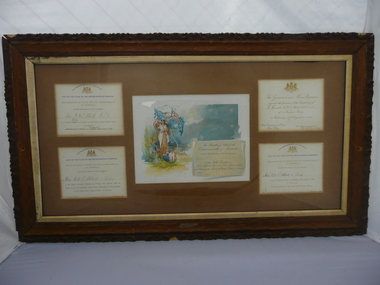
... display. 1. The ministers of state for the commonwealth of Australia request the pleasure of the company of R.H.S. Abbott at the public reception of Rear Admiral Sperry and the officers, sailors, & marines of the fleet of the united states of America. Sydney. August 1908. 2. Invitations to a theatre parties. Tuesday 25th August 1908. 3. Invitation to Public Reception. Friday 21st August. 1908. 4. Invitation to garden party. State government house. Rose Bay. Wednesday. 26th August 1980 at 3pm. 5. Invitation to Naval & Military review. Monday 24th August 1908 at centennial...display. 1. The ministers of state for the commonwealth of Australia request the pleasure of the company of R.H.S. Abbott at the public reception of Rear Admiral Sperry and the officers, sailors, & marines of the fleet of the united states of America. Sydney. August 1908. 2. Invitations to a theatre parties. Tuesday 25th August 1908. 3. Invitation to Public Reception. Friday 21st August. 1908. 4. Invitation to garden party. State government house. Rose Bay. Wednesday. 26th August 1980 at 3pm. 5. Invitation to Naval & Military review. Monday 24th August 1908 at centennial ...5 Invitation cards in a display. 1. The ministers of state for the commonwealth of Australia request the pleasure of the company of R.H.S. Abbott at the public reception of Rear Admiral Sperry and the officers, sailors, & marines of the fleet of the united states of America. Sydney. August 1908. 2. Invitations to a theatre parties. Tuesday 25th August 1908. 3. Invitation to Public Reception. Friday 21st August. 1908. 4. Invitation to garden party. State government house. Rose Bay. Wednesday. 26th August 1980 at 3pm. 5. Invitation to Naval & Military review. Monday 24th August 1908 at centennial park. Deframed 2022document, invitations, receptions -
 Puffing Billy Railway
Phoenix Foundry Plate
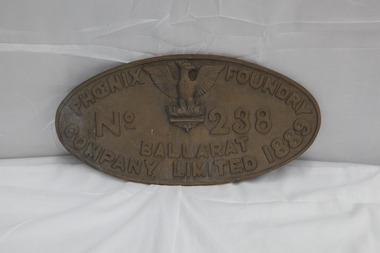
... Incorporation to 1889 1890 to Closing locomotive Y112 Builder: Phoenix Foundry, Ballarat Builder’s Number & Year: 238 of 1889 Designer: Kitson & Co Wheel Arrangement: 0-6-0 No. in class: 31 Entered Service: 24 July 1889 Taken off Register: 11 May 1961 The origins of the Victorian Railways Y-class lay with the decision by Kitson & Co, Leeds to place a 0-6-0 freight locomotive on display at the Centennial International Exhibition, Melbourne in 1888, together with a 2-4-2T suburban passenger locomotive. ...Incorporation to 1889 1890 to Closing locomotive Y112 Builder: Phoenix Foundry, Ballarat Builder’s Number & Year: 238 of 1889 Designer: Kitson & Co Wheel Arrangement: 0-6-0 No. in class: 31 Entered Service: 24 July 1889 Taken off Register: 11 May 1961 The origins of the Victorian Railways Y-class lay with the decision by Kitson & Co, Leeds to place a 0-6-0 freight locomotive on display at the Centennial International Exhibition, Melbourne in 1888, together with a 2-4-2T suburban passenger locomotive. ...Phoenix Foundry Plate - replica Made about 2010 cast off original from locomotive Y112 The Phoenix Foundry (1857-1906) fabricated iron and brass products - including engines and pumping gear for the mining industry, locomotives, steam rollers, water pipes, water gauges and diverse small items. Throughout its operation the business was located at premises on Armstrong Street, Ballarat . Background In 1852, at the age of thirty-three and after a year of operating his own engineering business at Williamstown, Lancashire-born blacksmith and engineer George Threlfall (1819-1897) arrived on the Sebastopol gold plain and immediately undertook blacksmith work repairing picks and tools for the miners. Little did he know that this fledgling business would be the genesis of the most iconic business of nineteenth-century Ballarat. At approximately thirty-nine years of age, English mechanical engineer Richard Carter (c1814-1883) came to Australia on board the Arrogant - arriving in Melbourne on 19 April 1853. He soon travelled to the Ballarat goldfields. Born in the year 1830 in Belfast (Ireland), mechanical engineer William Henry Shaw (1830-1896) arrived in Australia in October 1853. He worked briefly with George Threlfall at Sebastopol, then moved to Geelong to manage the small foundry of Frederick Moore. Twenty-four year old English-born iron moulder Robert Holden (c1831-?) left his home in Belfast (Ireland) in late 1854 and travelled from Liverpool to Melbourne on board the James Baines - arriving in February 1855. Afterwards he joined his brother-in-law William Henry Shaw in Ballarat. History Foundation to Incorporation In March 1857 George Threlfall joined in business with Richard Carter, William Henry Shaw and Robert Holden. They relocated Threlfall's successful engineering enterprise from Sebastopol to new premises in Armstrong Street, Ballarat. This business was then known variously as the Phoenix Iron Works Company, Phoenix Foundry or Messrs Carter and Co. By 15 April 1857 they were advertising that they were open for business as engineers, millwrights, boiler makers, smiths, iron founders and brass founders. In January 1858 George Threlfall left the partnership. Incorporation to 1889 1890 to Closing locomotive Y112 Builder: Phoenix Foundry, Ballarat Builder’s Number & Year: 238 of 1889 Designer: Kitson & Co Wheel Arrangement: 0-6-0 No. in class: 31 Entered Service: 24 July 1889 Taken off Register: 11 May 1961 The origins of the Victorian Railways Y-class lay with the decision by Kitson & Co, Leeds to place a 0-6-0 freight locomotive on display at the Centennial International Exhibition, Melbourne in 1888, together with a 2-4-2T suburban passenger locomotive. This marketing initiative proved successful as the Victorian Railways were clearly impressed with these machines, with both purchased after the exhibition and becoming the patterns for new standard locomotive types. Thirty examples of the 0-6-0 heavy freight design were ordered from the Phoenix Foundry, Ballarat, becoming the Y-class for main line heavy freight duties, while the 2-4-2T design became the E-class for Melbourne suburban passenger duties (represented by preserved locomotive E 236). The Y-class prove successful in service and accrued high mileages. They were inevitably superseded by more modern and powerful steam locomotives and a number cascaded into shunting and yard pilot duties, often with the addition of shunters steps along both locomotive and tender. Y 112 was one of the last in service when withdrawn in 1961. Fortunately it was saved for preservation and plinthed in central Ballarat, ostensibly in commemoration of Phoenix Foundry. I understand it is owned by the Sovereign Hill Museums Association. During the 1980’s, Y 112 was leased to Steamrail Victoria and restored to operation at an industrial site in Ballarat. Y 112 features an attractive lined apple green livery and has performed various rail tours around Victoria since restoration. It is normally based at the Steamrail depot in Ballarat East. Y 112 is the only 19th century design in operational condition in Victoria and as such is one of the oldest working steam locomotive in Victoria . Historic - Phoenix Foundry Plate - replica Made about 2010 cast off original from locomotive Y112Phoenix Foundry Plate Oval shaped plate with an image of a phoenix centered at the top with lettering surrounding it.Phoenix Foundry No 238 Ballarat Company Limited 1889.puffing billy, phoenix foundry, ballarat, locomotive y112, phoenix foundry plate - replica -
 University of Melbourne, Burnley Campus Archives
Slide - Colour slide, Milton Gellert, Department of Agriculture Burnley Gardens Victoria, 1955-1990
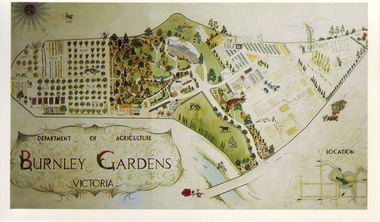
... Centennial Year in 1990. Note by T.H. Kneen 18 March 1992, "The original drawing was done by Milton Gellert and for a considerable time was displayed in the Fruit Preserving Branch's display window. ...Centennial Year in 1990. Note by T.H. Kneen 18 March 1992, "The original drawing was done by Milton Gellert and for a considerable time was displayed in the Fruit Preserving Branch's display window. ...Copied for use as a postcard for the Centennial Year in 1990. Note by T.H. Kneen 18 March 1992, "The original drawing was done by Milton Gellert and for a considerable time was displayed in the Fruit Preserving Branch's display window. This was Milton's own concept and was probably done in late 50's. Milton was on Burnley Staff 1955-57 & then employed at Plant Research Institute, Burnley Gardens." The picture was later hung in the Staff Room in the Administration Building but has disappeared.2 copies, large colour negative. Coloured hand drawn plan of of the whole site in a frame. Photographed in 1965.centennial year, milton gellert, fruit preserving branch, staff, plant research institute, burnley gardens, hand drawn plan of site, 1991, plan -
 Wodonga & District Historical Society Inc
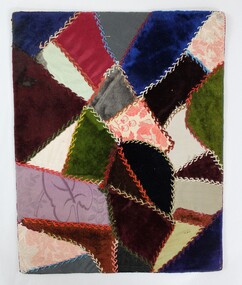
Textile - Hamilton-Smith Collection Victorian-era Crazy Quilt Sampler
... The rise of the trend is attributed to the display of Japanese art and ceramics at the 1876 Philadelphia Centennial Exposition (U.S.A.) that featured asymmetrical designs. ...The rise of the trend is attributed to the display of Japanese art and ceramics at the 1876 Philadelphia Centennial Exposition (U.S.A.) that featured asymmetrical designs. ...The Hamilton-Smith collection was donated by the children of Grace Mary Hamilton-Smith nee Ellwood (1911-2004) and John Hamilton-Smith (1909-1984) who settled in Wodonga in the 1940s. The Ellwood family had lived in north-east Victoria since the late 1800s. Grace’s mother, Rosina Ellwood nee Smale, was the first teacher at Baranduda in 1888, and a foundation member of the C.W.A. Rosina and her husband Mark retired to Wodonga in 1934. Grace and John married at St. David’s Church, Albury in 1941. John was a grazier, and actively involved in Agricultural Societies. The collection contains significant items which reflect the local history of Wodonga, including handmade needlework, books, photographs, a wedding dress, maps, and material relating to the world wars. This quilt sampler was made before 1900 by Rosina Ellwood. Crazy quilts were fashionable in the late Victorian era. The rise of the trend is attributed to the display of Japanese art and ceramics at the 1876 Philadelphia Centennial Exposition (U.S.A.) that featured asymmetrical designs. Inspired, quilters began sewing pieces of fabric of different sizes and textures together into abstract, asymmetrical patterns. The craze spread from America around the world. Embroidery, ribbon and silk embellishments, and hand stitched applique birds and flowers were popular additions. One magazine estimated that a detailed crazy quilt could take over 1,500 hours to complete. Crazy quilts remained in fashion in metropolitan cities until about 1910, though the style endured for longer in rural areas. This item is unique, handmade and has a known owner. It forms part of a significant and representative historical collection which reflects the local history of Wodonga. It contributes to our understanding of domestic and family life in early twentieth century Wodonga, as well as providing interpretative capacity for themes including local history, social history and women’s history.A colourful patchwork quilt sampler using mixed fabric types including velvet, cotton, brocade and satin, backed on cardboard.hamilton-smith collection, hamilton-smith, stiching, needlework, sewing, handmade, domestic, quilt, quilts, crazy quilt, crazy quilts, women's history -
 Kew Historical Society Inc
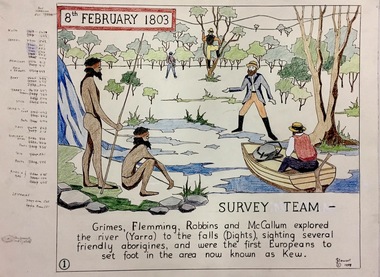
Work on paper, Joy Stewart, 1. Survey Team, 1988
... Centennial Project carried out under the auspices of City of Kew Council and the Kew Historical Society Incorporated. Nearly 600 citizens including many children participated in the production by adding a few or more stitches. A book records their names and the panels upon which they worked. Artist: Joy Stewart Co-ordinator: Dorothy Benyei Sydney Joy (Joy) Stewart was born in Melbourne 1925. She studied at Swinburne Technical College Art School from 1941-1945, then the National Gallery Art School 1946-1948. Her career included employment positions as a display ...Kew Tapestry. The eight panels depict the history of Kew. This was a 1988 Australian Bi-Centennial Project carried out under the auspices of City of Kew Council and the Kew Historical Society Incorporated. Nearly 600 citizens including many children participated in the production by adding a few or more stitches. A book records their names and the panels upon which they worked. Artist: Joy Stewart Co-ordinator: Dorothy BenyeiSydney Joy (Joy) Stewart was born in Melbourne 1925. She studied at Swinburne Technical College Art School from 1941-1945, then the National Gallery Art School 1946-1948. Her career included employment positions as a display artist, designer/painter, gallery assistant, and art teacher. Joy relocated to Cairns in 1981. Solo exhibitions in Melbourne and Cairns, including 'Done By Me' at Cairns Regional Gallery in 1999. Group exhibitions at Cairns Regional Gallery, 'The Fish John West Regrets, 1993' and 'Facets of Life' 1994. Joy Stewart died in Cairns in 2018.1. Survey Team. A Handcoloured cartoon created by the artist Joy Stewart as a template for the first of a series of embroidered panels depicting the history of Kew. Wool colour codes at left. Inscription: "8th February 1803. SURVEY. Grimes, Flemming (sic), Robbins and McCallum explored the river (Yarra) to the falls (Dights), sighting several friendly aborigines, and were the first Europeans to set foot in the area now known as Kew". Signed by the artist "(c) JStewart, 1988"bicentennial project (kew), joy stewart -
 Kew Historical Society Inc
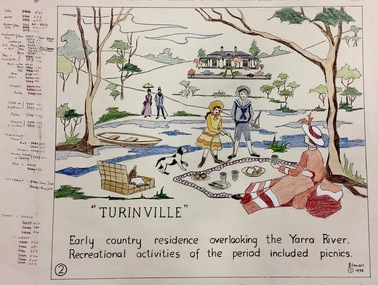
Work on paper, Joy Stewart, 2. Turinville, 1988
... Centennial Project carried out under the auspices of City of Kew Council and the Kew Historical Society Incorporated. Nearly 600 citizens including many children participated in the production by adding a few or more stitches. A book records their names and the panels upon which they worked. Artist: Joy Stewart Co-ordinator: Dorothy Benyei Sydney Joy (Joy) Stewart was born in Melbourne 1925. She studied at Swinburne Technical College Art School from 1941-1945, then the National Gallery Art School 1946-1948. Her career included employment positions as a display ...Kew Tapestry The eight panels depict the history of Kew. This was a 1988 Australian Bi-Centennial Project carried out under the auspices of City of Kew Council and the Kew Historical Society Incorporated. Nearly 600 citizens including many children participated in the production by adding a few or more stitches. A book records their names and the panels upon which they worked. Artist: Joy Stewart Co-ordinator: Dorothy BenyeiSydney Joy (Joy) Stewart was born in Melbourne 1925. She studied at Swinburne Technical College Art School from 1941-1945, then the National Gallery Art School 1946-1948. Her career included employment positions as a display artist, designer/painter, gallery assistant, and art teacher. Joy relocated to Cairns in 1981. Solo exhibitions in Melbourne and Cairns, including 'Done By Me' at Cairns Regional Gallery in 1999. Group exhibitions at Cairns Regional Gallery, 'The Fish John West Regrets, 1993' and 'Facets of Life' 1994. Joy Stewart died in Cairns in 2018.2. Turinville. A Handcoloured cartoon created by the artist Joy Stewart as a template for the second of a series of embroidered panels depicting the history of Kew. Wool colour codes at left. Inscription: "TURINVILLE. Early country residence overlooking the Yarra River. Recreational activities of the period included picnics." Signed by the artist "(c) JStewart, 1988"bicentennial project (kew), turinville, joy stewart -
 Kew Historical Society Inc
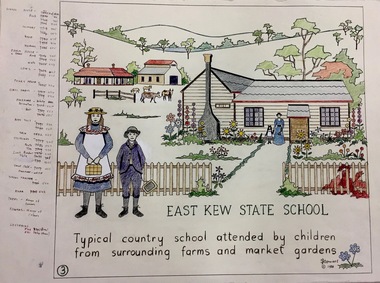
Work on paper, Joy Stewart, 3. East Kew State School, 1988
... Centennial Project carried out under the auspices of City of Kew Council and the Kew Historical Society Incorporated. Nearly 600 citizens including many children participated in the production by adding a few or more stitches. A book records their names and the panels upon which they worked. Artist: Joy Stewart Co-ordinator: Dorothy Benyei Sydney Joy (Joy) Stewart was born in Melbourne 1925. She studied at Swinburne Technical College Art School from 1941-1945, then the National Gallery Art School 1946-1948. Her career included employment positions as a display ...Kew Tapestry The eight panels depict the history of Kew. This was a 1988 Australian Bi-Centennial Project carried out under the auspices of City of Kew Council and the Kew Historical Society Incorporated. Nearly 600 citizens including many children participated in the production by adding a few or more stitches. A book records their names and the panels upon which they worked. Artist: Joy Stewart Co-ordinator: Dorothy BenyeiSydney Joy (Joy) Stewart was born in Melbourne 1925. She studied at Swinburne Technical College Art School from 1941-1945, then the National Gallery Art School 1946-1948. Her career included employment positions as a display artist, designer/painter, gallery assistant, and art teacher. Joy relocated to Cairns in 1981. Solo exhibitions in Melbourne and Cairns, including 'Done By Me' at Cairns Regional Gallery in 1999. Group exhibitions at Cairns Regional Gallery, 'The Fish John West Regrets, 1993' and 'Facets of Life' 1994. Joy Stewart died in Cairns in 2018.3. East Kew State School. A Handcoloured cartoon created by the artist Joy Stewart as a template for the third of a series of embroidered panels depicting the history of Kew. Wool colour codes at left. Inscription: "EAST KEW STATE SCHOOL. Typical country school attended by children from surrounding farms and market gardens". Signed by the artist "(c) JStewart, 1988"bicentennial project (kew), joy stewart -
 Kew Historical Society Inc
Work on paper, Joy Stewart, 4. Boroondara Cemetery, established 1859, 1988
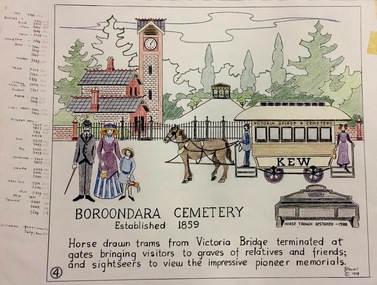
... Centennial Project carried out under the auspices of City of Kew Council and the Kew Historical Society Incorporated. Nearly 600 citizens including many children participated in the production by adding a few or more stitches. A book records their names and the panels upon which they worked. Artist: Joy Stewart Co-ordinator: Dorothy Benyei Sydney Joy (Joy) Stewart was born in Melbourne 1925. She studied at Swinburne Technical College Art School from 1941-1945, then the National Gallery Art School 1946-1948. Her career included employment positions as a display ...Kew Tapestry The eight panels depict the history of Kew. This was a 1988 Australian Bi-Centennial Project carried out under the auspices of City of Kew Council and the Kew Historical Society Incorporated. Nearly 600 citizens including many children participated in the production by adding a few or more stitches. A book records their names and the panels upon which they worked. Artist: Joy Stewart Co-ordinator: Dorothy BenyeiSydney Joy (Joy) Stewart was born in Melbourne 1925. She studied at Swinburne Technical College Art School from 1941-1945, then the National Gallery Art School 1946-1948. Her career included employment positions as a display artist, designer/painter, gallery assistant, and art teacher. Joy relocated to Cairns in 1981. Solo exhibitions in Melbourne and Cairns, including 'Done By Me' at Cairns Regional Gallery in 1999. Group exhibitions at Cairns Regional Gallery, 'The Fish John West Regrets, 1993' and 'Facets of Life' 1994. Joy Stewart died in Cairns in 2018.4. Boroondara Cemetery, established 1859. A Handcoloured cartoon created by the artist Joy Stewart as a template for the fourth of a series of embroidered panels depicting the history of Kew. Wool colour codes at left. Inscription: "BOROONDARA CEMETERY, Established 1859. Horse drawn trams from Victoria Bridge terminated at gates bringing visitors to graves of relatives and friends; and sightseers to view the impressive pioneer memorials". Signed by the artist "(c) JStewart, 1988". bicentennial project (kew), boroondara general (kew) cemetery -
 Kew Historical Society Inc
Work on paper, Joy Stewart, 5. Kew Railway Station (1887-1958), 1988
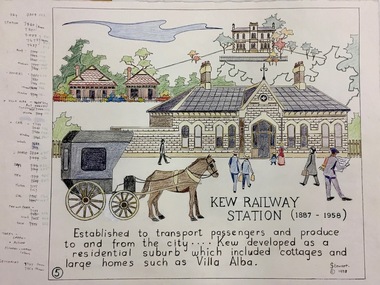
... Centennial Project carried out under the auspices of City of Kew Council and the Kew Historical Society Incorporated. Nearly 600 citizens including many children participated in the production by adding a few or more stitches. A book records their names and the panels upon which they worked. Artist: Joy Stewart Co-ordinator: Dorothy Benyei Sydney Joy (Joy) Stewart was born in Melbourne 1925. She studied at Swinburne Technical College Art School from 1941-1945, then the National Gallery Art School 1946-1948. Her career included employment positions as a display ...Kew Tapestry The eight panels depict the history of Kew. This was a 1988 Australian Bi-Centennial Project carried out under the auspices of City of Kew Council and the Kew Historical Society Incorporated. Nearly 600 citizens including many children participated in the production by adding a few or more stitches. A book records their names and the panels upon which they worked. Artist: Joy Stewart Co-ordinator: Dorothy BenyeiSydney Joy (Joy) Stewart was born in Melbourne 1925. She studied at Swinburne Technical College Art School from 1941-1945, then the National Gallery Art School 1946-1948. Her career included employment positions as a display artist, designer/painter, gallery assistant, and art teacher. Joy relocated to Cairns in 1981. Solo exhibitions in Melbourne and Cairns, including 'Done By Me' at Cairns Regional Gallery in 1999. Group exhibitions at Cairns Regional Gallery, 'The Fish John West Regrets, 1993' and 'Facets of Life' 1994. Joy Stewart died in Cairns in 2018.5. Kew Railway Station (1887-1958). A Handcoloured cartoon created by the artist Joy Stewart as a template for the fifth of a series of embroidered panels depicting the history of Kew. Wool colour codes at left. Inscription: "KEW RAILWAY STATION (1887-1958). Established to transport passengers and produce too and from the city ... Kew developed as a residential suburb which included cottages an dlarge homes such as Villa Alba". Signed by the artist "(c) JStewart, 1988"bicentennial project (kew), joy stewart -
 Kew Historical Society Inc
Work on paper, Joy Stewart, 6. War Memorial: Unveiled 1925, 1988
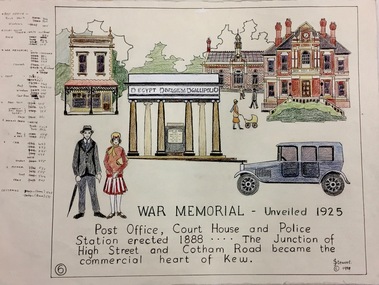
... Centennial Project carried out under the auspices of City of Kew Council and the Kew Historical Society Incorporated. Nearly 600 citizens including many children participated in the production by adding a few or more stitches. A book records their names and the panels upon which they worked. Artist: Joy Stewart Co-ordinator: Dorothy Benyei Sydney Joy (Joy) Stewart was born in Melbourne 1925. She studied at Swinburne Technical College Art School from 1941-1945, then the National Gallery Art School 1946-1948. Her career included employment positions as a display ...Kew Tapestry The eight panels depict the history of Kew. This was a 1988 Australian Bi-Centennial Project carried out under the auspices of City of Kew Council and the Kew Historical Society Incorporated. Nearly 600 citizens including many children participated in the production by adding a few or more stitches. A book records their names and the panels upon which they worked. Artist: Joy Stewart Co-ordinator: Dorothy BenyeiSydney Joy (Joy) Stewart was born in Melbourne 1925. She studied at Swinburne Technical College Art School from 1941-1945, then the National Gallery Art School 1946-1948. Her career included employment positions as a display artist, designer/painter, gallery assistant, and art teacher. Joy relocated to Cairns in 1981. Solo exhibitions in Melbourne and Cairns, including 'Done By Me' at Cairns Regional Gallery in 1999. Group exhibitions at Cairns Regional Gallery, 'The Fish John West Regrets, 1993' and 'Facets of Life' 1994. Joy Stewart died in Cairns in 2018.6. War Memorial: Unveiled 1925. A Handcoloured cartoon created by the artist Joy Stewart as a template for the sixth of a series of embroidered panels depicting the history of Kew. Wool colour codes at left. Inscription: "WAR MEMORIAL: Unveiled 1925. Post Office, Court House and Police Station erected 1888. ... The Junction of High Street and Cotham Road became the commercial heart of Kew." Signed by the artist "(c) JStewart, 1988"bicentennial project (kew), joy stewart, wwi, kew war memorial -
 Kew Historical Society Inc
Work on paper, Joy Stewart, 7. Churches, 1988
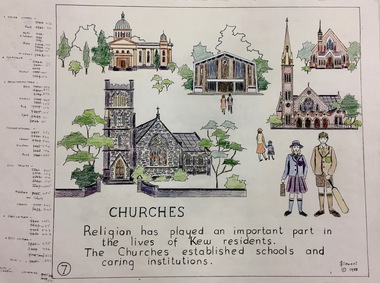
... Centennial Project carried out under the auspices of City of Kew Council and the Kew Historical Society Incorporated. Nearly 600 citizens including many children participated in the production by adding a few or more stitches. A book records their names and the panels upon which they worked. Artist: Joy Stewart Co-ordinator: Dorothy Benyei Sydney Joy (Joy) Stewart was born in Melbourne 1925. She studied at Swinburne Technical College Art School from 1941-1945, then the National Gallery Art School 1946-1948. Her career included employment positions as a display ...Kew Tapestry The eight panels depict the history of Kew. This was a 1988 Australian Bi-Centennial Project carried out under the auspices of City of Kew Council and the Kew Historical Society Incorporated. Nearly 600 citizens including many children participated in the production by adding a few or more stitches. A book records their names and the panels upon which they worked. Artist: Joy Stewart Co-ordinator: Dorothy BenyeiSydney Joy (Joy) Stewart was born in Melbourne 1925. She studied at Swinburne Technical College Art School from 1941-1945, then the National Gallery Art School 1946-1948. Her career included employment positions as a display artist, designer/painter, gallery assistant, and art teacher. Joy relocated to Cairns in 1981. Solo exhibitions in Melbourne and Cairns, including 'Done By Me' at Cairns Regional Gallery in 1999. Group exhibitions at Cairns Regional Gallery, 'The Fish John West Regrets, 1993' and 'Facets of Life' 1994. Joy Stewart died in Cairns in 2018.7. Churches. A Handcoloured cartoon created by the artist Joy Stewart as a template for the seventh of a series of embroidered panels depicting the history of Kew. Wool colour codes at left. Inscription: "CHURCHES. Religion has played an important part in the lives of Kew residents. The churches established schools and caring institutions." Signed by the artist "(c) JStewart, 1988"bicentennial project (kew), joy stewart -
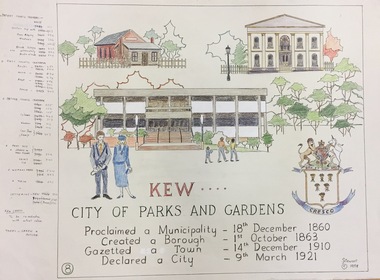 Kew Historical Society Inc
Work on paper, Joy Stewart, 8. Kew: City of Parks and Gardens, 1988
... Centennial Project carried out under the auspices of City of Kew Council and the Kew Historical Society Incorporated. Nearly 600 citizens including many children participated in the production by adding a few or more stitches. A book records their names and the panels upon which they worked. Artist: Joy Stewart Co-ordinator: Dorothy Benyei Sydney Joy (Joy) Stewart was born in Melbourne 1925. She studied at Swinburne Technical College Art School from 1941-1945, then the National Gallery Art School 1946-1948. Her career included employment positions as a display ...Kew Tapestry The eight panels depict the history of Kew. This was a 1988 Australian Bi-Centennial Project carried out under the auspices of City of Kew Council and the Kew Historical Society Incorporated. Nearly 600 citizens including many children participated in the production by adding a few or more stitches. A book records their names and the panels upon which they worked. Artist: Joy Stewart Co-ordinator: Dorothy BenyeiSydney Joy (Joy) Stewart was born in Melbourne 1925. She studied at Swinburne Technical College Art School from 1941-1945, then the National Gallery Art School 1946-1948. Her career included employment positions as a display artist, designer/painter, gallery assistant, and art teacher. Joy relocated to Cairns in 1981. Solo exhibitions in Melbourne and Cairns, including 'Done By Me' at Cairns Regional Gallery in 1999. Group exhibitions at Cairns Regional Gallery, 'The Fish John West Regrets, 1993' and 'Facets of Life' 1994. Joy Stewart died in Cairns in 2018.8. Kew. City of Parks and Gardens. A handcoloured cartoon created by the artist Joy Stewart as a template for the seventh of a series of embroidered panels depicting the history of Kew. Wool colour codes at left. Inscription: "Proclaimed a Municipality - 18th December 1860 / Created a Borough - 1st October 1863 / Gazetted a Town - 14th December 1910 / Declared a City - 9th March 1921". Signed by the artist "(c) JStewart, 1988"joy stewart, bicentennial project (kew)
