
Showing 13 items matching "centre of gravity"
-
 Moorabbin Air Museum
Document (Item) - Operating limitations including centre of gravity landing and take off, Jindivik Mk 2 and 3B Climb and performance of short span with Mk5 pods
... Operating limitations including centre of gravity landing and take off...Jindivik Mk 2 and 3B Climb and performance of short span with Mk5 pods Document Operating limitations including centre of gravity landing and take off ... -
Moorabbin Air Museum
Drawing (Item) - DHC Beaver A95 Stations and Centre of Gravity Diagrams A12968 and Issue A12968 (Issue 2)
... DHC Beaver A95 Stations and Centre of Gravity Diagrams A12968 and Issue A12968 (Issue 2)...Drawing DHC Beaver A95 Stations and Centre of Gravity Diagrams A12968 and Issue A12968 (Issue 2) ... -
Moorabbin Air Museum
Equipment (item) - Graviscope for Lincoln (Australian) RAAF Ident No G6C/3972, Graviscope for Lincoln
... History / Summary The graviscope is a computing device, which in aircraft was used for measuring the centre of gravity in an aircraft. This would vary depending on crew, bomb load, fuel and stores carried. ...A circular slide rule for calculating weights and centre of gravity. Contained in a leather pouch...History / Summary The graviscope is a computing device, which in aircraft was used for measuring the centre of gravity in an aircraft. This would vary depending on crew, bomb load, fuel and stores carried. ...Description White plastic doubled sided Graviscope stored in protective leather carry case. Case is fitted with pair of press studs, pocket in front for holding instructions and is stamped "Graviscope / for / Lincoln / (Australian) / Manufactured by / Melb > W & G < Aust / R.A.A.F / Ident. No G6C/3972". Plastic graviscope consists of a 277mm white disc, printed on both sides, overlaid on one side by a 224mm disc and the other side by a 175mm disc. All discs located by central screw, to which is attached a 160mm long x 25mm wide clear celluloid strip. History / Summary The graviscope is a computing device, which in aircraft was used for measuring the centre of gravity in an aircraft. This would vary depending on crew, bomb load, fuel and stores carried. It was used in the British designed but Australian manufactured, Government Aircraft Factory (GAF) Lincoln heavy bomber, which was operated by the Royal Australian Air Force (RAAF) in the years following the Second World War. This aircraft was originally a derivative of the famous Avro Lancaster bomber. The Lincoln was used by both the RAAF and the Royal Air Force in operations against Malayan Communist terrorists during the Malayan Emergency, 1948-1960. This graviscope is of the type designed for and used by RAAF and RAF aircrew who operated this aircraft.Many by W and G Australia -
Moorabbin Air Museum
Manual - Ansett Boeing 767 operating manuals, Boeing 767 Operating Manual Chapter 1 Limitations October 1988 Chapter 2 Normal Procedures October 1988
... ...Centre of gravity...Ansett Boeing 767 operating manuals Weight limitations Centre of gravity Locker & floor loading Operational limits Engine APU Automatic wheel brakes Cabin pressurisation Autopilot Cargo fire Autothrottle Fuel system Icing conditions Passenger evacuation Pre flight Engine start & before take off Taxi out & take off Climb & cruise procedure Severe air turbulence procedure Descent Holding Instrument flight procedures Landing roll procedure Taxi in & park Overview of limitations & normal procedures for Boeing 767, circa 1988 Spiral bound book style manual Boeing 767 Operating Manual Chapter 1 Limitations October 1988 Chapter 2 Normal Procedures October 1988 Manual Ansett Boeing 767 operating manuals ...Overview of limitations & normal procedures for Boeing 767, circa 1988Spiral bound book style manualnon-fictionOverview of limitations & normal procedures for Boeing 767, circa 1988weight limitations, centre of gravity, locker & floor loading, operational limits, engine, apu, automatic wheel brakes, cabin pressurisation, autopilot, cargo fire, autothrottle, fuel system, icing conditions, passenger evacuation, pre flight, engine start & before take off, taxi out & take off, climb & cruise procedure, severe air turbulence procedure, descent, holding, instrument flight procedures, landing roll procedure, taxi in & park -
Moorabbin Air Museum
Manual - Ansett Boeing 727 operating manuals, Boeing 727 Operating Manual Section 1 Limitations Section 2 Minimum Equipment List (MEL) and Configuration Deviation List (CDL) May 1984
... Centre of gravity...Ansett Boeing 727 operating manuals Centre of gravity Compartment capacities Loading Operational limits Fuel system Engine Windows Fire protection systems Radar Oxygen Electrical APU Hydraulic Cabin pressurisation Placarding & certification Overview of limitations & MEL/CDL for Boeing 727, circa 1984 Spiral bound book style manual Boeing 727 Operating Manual Section 1 Limitations Section 2 Minimum Equipment List (MEL) and Configuration Deviation List (CDL) May 1984 Manual Ansett Boeing 727 operating manuals ...Overview of limitations & MEL/CDL for Boeing 727, circa 1984Spiral bound book style manualnon-fictionOverview of limitations & MEL/CDL for Boeing 727, circa 1984centre of gravity, compartment capacities, loading, operational limits, fuel system, engine, windows, fire protection systems, radar, oxygen, electrical, apu, hydraulic, cabin pressurisation, placarding & certification -
 B-24 Liberator Memorial Restoration Australia Inc
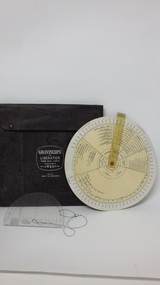
Graviscope, W&G, Graviscope for Liberator, circa 1942
... 2 Circular plastic manual computing discs with black print on a white background with areas for calculating Centre of gravity, Armament, Bomb loadings,Fuel, oil,Crew, Miscel., Oxygen and Camera. ...R.A.A.F IDENT NO G6B/2396 2 Circular plastic manual computing discs with black print on a white background with areas for calculating Centre of gravity, Armament, Bomb loadings,Fuel, oil,Crew, Miscel., Oxygen and Camera. ...Standard crew issue for pilots and flight engineers.The equipment supplied air crew with a computer to calculate individual aircraft's weight and balance.2 Circular plastic manual computing discs with black print on a white background with areas for calculating Centre of gravity, Armament, Bomb loadings,Fuel, oil,Crew, Miscel., Oxygen and Camera. Clear plastic protractor with string attached. Enclosed in a leather envelope.GRAVISCOPE FOR LIBERATOR. MODEL B24J, L AND M. MANUFACTURED BY MELB. >W&G< AUST. R.A.A.F IDENT NO G6B/2396 -
 Yarrawonga and Mulwala Pioneer Museum
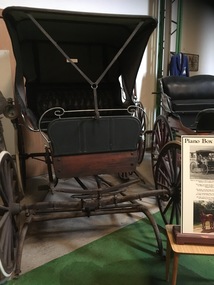
Piano Box Buggy, Made by J. McCabe & Sons in 1926
... The transverse elliptical springs, front and rear, are set above the floor level which allows a lower centre of gravity, and easy entry. Colour Black body and reddish-brown undercarriage with black lining on the wheels. ...The transverse elliptical springs, front and rear, are set above the floor level which allows a lower centre of gravity, and easy entry. Colour Black body and reddish-brown undercarriage with black lining on the wheels. ...A simply design four-wheeled vehicle with one seat on a high side box tray. The transverse elliptical springs, front and rear, are set above the floor level which allows a lower centre of gravity, and easy entry. Colour Black body and reddish-brown undercarriage with black lining on the wheels. History Dating from the 1850s the piano box buggy became the most popular style of buggy in the USA and a common sight in Australia. The examples in this collection probably date from the early 1900s -
 Melbourne Tram Museum
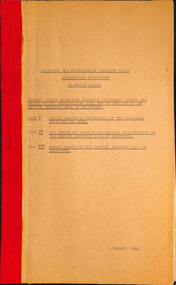
Document - Report, Melbourne & Metropolitan Tramways Board (MMTB), 'Current trends which may indicate the future growth and nature of the metropolitan area and in particular the Central Business area of Melbourne", Jan. 1966
... Report - Foolscap, card covers, red binding strip, about pages + drawings or charts, titled 'Current trends which may indicate the future growth and nature of the metropolitan area and in particular the Central Business area of Melbourne" Has three parts: 1 - Future growth of population of the Melbourne Metropolitan Area 2 - The Centre of Gravity of and general distribution of the Central Business area of Melbourne 3 - Future growth of the Central Business Area of Melbourne. ...Report - Foolscap, card covers, red binding strip, about pages + drawings or charts, titled 'Current trends which may indicate the future growth and nature of the metropolitan area and in particular the Central Business area of Melbourne" Has three parts: 1 - Future growth of population of the Melbourne Metropolitan Area 2 - The Centre of Gravity of and general distribution of the Central Business area of Melbourne 3 - Future growth of the Central Business Area of Melbourne. ...Report - Foolscap, card covers, red binding strip, about pages + drawings or charts, titled 'Current trends which may indicate the future growth and nature of the metropolitan area and in particular the Central Business area of Melbourne" Has three parts: 1 - Future growth of population of the Melbourne Metropolitan Area 2 - The Centre of Gravity of and general distribution of the Central Business area of Melbourne 3 - Future growth of the Central Business Area of Melbourne. Dated Jan 1966, prior to the construction of the Underground Railway and the move to Docklands.Has "JEC" in pencil on top right hand corner.trams, tramways, melbourne, planning, development -
 Department of Energy, Environment and Climate Action
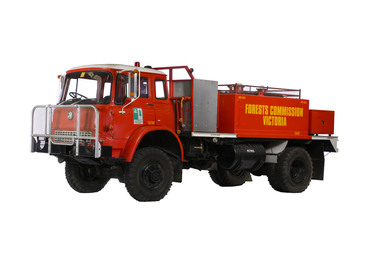
Bedford M Series fire tanker
... Earlier in 1975, the M Series tankers underwent a design change at the Altona North workshops, replacing the cylindrical water tank with a “V” bottom 4090 litre water tank that sat low between the chassis rails to reduce its centre of gravity. Aluminium heat shields were also added to protect the pump operators on the back. ...Earlier in 1975, the M Series tankers underwent a design change at the Altona North workshops, replacing the cylindrical water tank with a “V” bottom 4090 litre water tank that sat low between the chassis rails to reduce its centre of gravity. Aluminium heat shields were also added to protect the pump operators on the back. ...Ash Wednesday Veteran This Bedford M Series tanker spent its working days at the Forests Commission depot at Gembrook, and among its many forays, fought the deadly Ash Wednesday bushfires at nearby Upper Beaconsfield and Cockatoo on 16 February 1983. Earlier in 1975, the M Series tankers underwent a design change at the Altona North workshops, replacing the cylindrical water tank with a “V” bottom 4090 litre water tank that sat low between the chassis rails to reduce its centre of gravity. Aluminium heat shields were also added to protect the pump operators on the back. While generally considered "bulletproof" the petrol fuel lines on this particular model were very prone to vaporise in the heat causing the motor to stall, often at the most dangerous moment.... in this case frightening the hell out of its driver, affable knockabout bloke, and firefighting legend Lex Wade. Some jokingly said this design quirk was an inbuilt safety feature to stop crews getting too close to the fire in the first place. The Gembrook tanker was later sent into the workshop and all its brake and fuel lines fitted with heat resistant lagging. Fortunately, this remarkable bushfire survivor was rescued from the scrap heap by Lex and fire equipment wizard Barry Marsden upon its retirement from a loyal and lengthy service. After a lick of fresh paint and most of its battle scars "buffed out", this time-honoured veteran now takes pride of place at the Altona North workshop.Bedford M series fire tankerMZF 347fire pump, fire tanker, forests commission victoria (fcv) -
 Sunshine and District Historical Society Incorporated
Functional object - Shire Of Braybrook Table
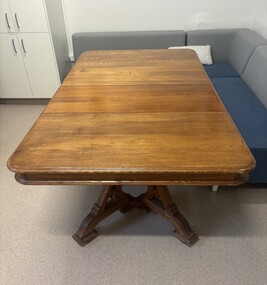
... That 1885 building was the first official hall and council offices for the Shire of Braybrook, long before the municipality shifted its centre of gravity toward Sunshine. It stood near the Deer Park Hotel and served as the administrative heart of the shire during the late 19th century. ...That 1885 building was the first official hall and council offices for the Shire of Braybrook, long before the municipality shifted its centre of gravity toward Sunshine. It stood near the Deer Park Hotel and served as the administrative heart of the shire during the late 19th century. ...The Shire of Braybrook (1871–1951) was a vast, semi‑rural municipality stretching from Melton to West Melbourne, centred on the old Braybrook village at Solomon’s Ford. It transformed dramatically with the arrival of railways, the rise of Braybrook Junction/Sunshine, and the industrial boom driven by H.V. McKay’s Harvester Works. The area was first organised as the Braybrook Road District on 28th May 1860, after a public meeting at the Shamrock Hotel in Albion. The district was enormous, extending from Melton to Dynon Road on the West Melbourne swamp. Early settlement clustered around Solomon’s Ford on the Maribyrnong River, a key crossing for travelers heading to Geelong, Williamstown, and the goldfields. On 23rd January 1871, the Road District became the Shire of Braybrook. Council meetings were initially held in Maidstone, reflecting the early population centres. The Braybrook Shire Hall in Deer Park was built in 1885. That 1885 building was the first official hall and council offices for the Shire of Braybrook, long before the municipality shifted its centre of gravity toward Sunshine. It stood near the Deer Park Hotel and served as the administrative heart of the shire during the late 19th century. The Braybrook Shire Hall at Deer Park effectively closed as a council headquarters in 1930, when the Shire of Braybrook shifted its administrative centre to Sunshine. In 1951, the Shire of Braybrook was renamed the City of Sunshine, reflecting the shift of population and industry eastward. In 1994 - 1995 the Kennett Government reduced Victoria’s councils from 210 to 78, the largest restructuring of local government in the state’s history and this part of the City of Sunshine became the City of Brimbank. It is believed this extension table came from the Shire of Braybrook Shire Office located in Ballarat Road, Deer Park, opposite the Deer Park Hotel. Over the years this extension table was used in the Shire of Braybrook Shire Office Ballarat Road Deer Park, the Shire of Braybrook and City of Sunshine Memorial Hall Hampshire Road Sunshine and in the City of Sunshine Municipal Offices Alexandra Avenue Sunshine. When the City of Sunshine Municipal Offices in Alexandra Avenue, Sunshine closed down, this table was were presented to the Sunshine & District Historical Society by the City of Brimbank. The table is still in use by the staff at The Hunt Club Community Arts Centre, Ballarat Road, Deer Park.This table is one of the few remaining items that still connects us to the early days of the Shire of Braybrook.Wood extension table with two extension leaves and carved legs.shire of braybrook, shire of braybrook offices, ballarat road, deer park -
 Sunshine and District Historical Society Incorporated
Functional object - Shire Of Braybrook Sideboard
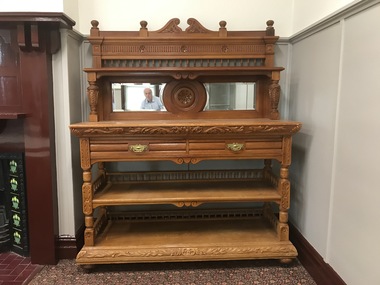
... That 1885 building was the first official hall and council offices for the Shire of Braybrook, long before the municipality shifted its centre of gravity toward Sunshine. It stood near the Deer Park Hotel and served as the administrative heart of the shire during the late 19th century. ...That 1885 building was the first official hall and council offices for the Shire of Braybrook, long before the municipality shifted its centre of gravity toward Sunshine. It stood near the Deer Park Hotel and served as the administrative heart of the shire during the late 19th century. ...The Shire of Braybrook (1871–1951) was a vast, semi‑rural municipality stretching from Melton to West Melbourne, centred on the old Braybrook village at Solomon’s Ford. It transformed dramatically with the arrival of railways, the rise of Braybrook Junction/Sunshine, and the industrial boom driven by H.V. McKay’s Harvester Works. The area was first organised as the Braybrook Road District on 28th May 1860, after a public meeting at the Shamrock Hotel in Albion. The district was enormous, extending from Melton to Dynon Road on the West Melbourne swamp. Early settlement clustered around Solomon’s Ford on the Maribyrnong River, a key crossing for travelers heading to Geelong, Williamstown, and the goldfields. On 23rd January 1871, the Road District became the Shire of Braybrook. Council meetings were initially held in Maidstone, reflecting the early population centres. The Braybrook Shire Hall in Deer Park was built in 1885. That 1885 building was the first official hall and council offices for the Shire of Braybrook, long before the municipality shifted its centre of gravity toward Sunshine. It stood near the Deer Park Hotel and served as the administrative heart of the shire during the late 19th century. The Braybrook Shire Hall at Deer Park effectively closed as a council headquarters in 1930, when the Shire of Braybrook shifted its administrative centre to Sunshine. In 1951, the Shire of Braybrook was renamed the City of Sunshine, reflecting the shift of population and industry eastward. In 1994 - 1995 the Kennett Government reduced Victoria’s councils from 210 to 78, the largest restructuring of local government in the state’s history and this part of the City of Sunshine became the City of Brimbank. It is believed this extension table came from the Shire of Braybrook Shire Office located in Ballarat Road, Deer Park, opposite the Deer Park Hotel. Over the years this sideboard was used in the Shire of Braybrook Shire Office Ballarat Road Deer Park, the Shire of Braybrook and City of Sunshine Memorial Hall Hampshire Road Sunshine and in the City of Sunshine Municipal Offices Alexandra Avenue Sunshine where it was used in the Mayoral's council chambers. When the City of Sunshine Municipal Offices in Alexandra Avenue, Sunshine closed down, this sideboard was presented to the Sunshine & District Historical Society by the City of Brimbank.This sideboard is one of the few remaining items that still connects us to the early days of the Shire of Braybrook.French renaissance styled carved walnut sideboard with mirrored backplate.shire of braybrook, shire of braybrook offices, ballarat road, deer park -
 Federation University Historical Collection
Object, Synchronome Co. Ltd, Synchronome Frequency Checking Master Clock No. 2191, c1930
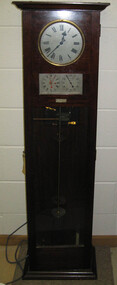
... centre on left and right. > "Synchronome Patent." Steel plate, back panel, inside case, right hand side: >N R A" (descending) >"2191" serial number/part number Face of main clock: "Synchronome Electric" Two clocks in a timber case. Both are electric, one is powered by the main pendulum mechanism, the other is a self contained electric clock. The main mechanism is of the gravity ...Information from Norman F. Dalton: Ballarat had a reticulated DC supply in the early part of last century and in 1905 had sufficient generating capacity to enable the trams to be changed from horse drawn to DC electricity. The use of electricity increased with the main power station located on Wendouree Parade, near Webster Street, under the ownership of The Electric Supply Company of Victoria. AC generating plant was installed in 1925 and conversion to AC proceeded. In 1934 the company was taken over by the State Electricity Commission Victoria (SECV) and more AC generation was installed and the changeover of customers was accelerated. This is around the time that the Synchronome Frequency Checking Mast Clock was installed at the Wendouree Parade Power Station. The SECV Annual Report of 1921 states: ::Section 11 of the act directed the COmmission to enquire into the question of securing the adoption of such standards of plant and equipment of a system, frequency and pressure for the generation and distribution of electricity as will admit of the efficient interconnection of undertakings throughout the State. In 1934 when the SECV took over the Ballarat operations the question of linking with the State grid had been a planned operation for some years but due to financial considerations had hindered it and in fact would continue to do so for a further 10 years. So while the need for close frequency control for interconnection was hardly an issue, the need to keep electric clocks correct was important, particularly as this item was a frequent sales point to cover the inconvenience and sometimes expense of converting from DC to AC. The clock is a very accurate pendulum clock with provision for varying effective length during operation for precise time regulation. There are two normal time dials and one is controlled by the pendulum and the other is operated by the system frequency. When the clock was in use it was installed by the MEter and Tests Laboratory and the time was checked daily by radio time signals. The two dials were repeated in the operators control panel in the Power Station. A maximum deviation between the two dials was set in the operating instructions (eg 5 seconds) and the operator would correct this when necessary by remote manual alteration of the turbine governor set point. The clock was used to drive and regulate a system of "slave" clocks which were used to display the time in various locations around the power station. A slave clock is a simple clock which is driven by a small electric motor, its accuracy is regulated by the master clock every 30 seconds to ensure that it and all the other slave clocks in the station are on exactly the right time; slave clocks were placed in various locations, from common rooms to workshops. A master clock could potentially run thousands of slave clocks at one plant. The clock also contains a rectifier. A rectifier is a device that is used to convert AC power to more stable DC current.Two clocks in a timber case. Both are electric, one is powered by the main pendulum mechanism, the other is a self contained electric clock. The main mechanism is of the gravity arm and roller type, which sends an impulse to the slave clocks every 30 seconds. The This Synchronome Frequency Checking Master Clock was used at the Ballarat Power Station. Below the main section of the case is a smaller cabinet containing a rectifier to provide consistent DC power for the clock. The rectifier was made by the Victorian company Hilco, which was located in Burwood. There is a high chance this is not the original rectifier from this clock as there appears to be brackets to hold a larger device in the space the rectifier occupies.Front below main clock face on front of case: "Patented Sychronome Brisbane" Lower left-hand clock face: "Frequency time" Lower right-hand clock face: "Standard Seconds" Synchronous electric clock mechanism on door (Frequency time clock): >200/250 V. 50~ >"Synchronomains" Made in England >Direction indicator for clock starting switch >"To start move lever in direction of arrow and release" >"Patent applied for" Mechanism for "standard seconds" clock: >"English Made" >"Patented" >Serial number "321" >0 above right-hand pillar on front-plate Mechanism for "standard seconds" clock: >"English Made" >"Patented" >Serial number "321" >0 above right-hand pillar on front-plate Mechanism for main clock face: >"English Made" >"Patented" >Serial number "8751" >0 above right-hand pillar on front-plate Inside case, back panel, top enamel plate: >Seconds Battery + Pos. > Battery Common or - Neg. >1/2 min dials Inside case, back panel, bottom enamel plate: external seconds dial Inside case, right hand side, electrical knobs: two switches, both "A.C. mains" Pendulum rod, below suspension spring: Serial number (?) 0000005 Rectifier in bottom cabinet: >"Hilco Rectifier" >"A.C. Volts 230/240" >"Model 1060/S" >"A.C. Amperes" >"Serial No. 1060/S >"Phases 1" >"D.C. Volts 6" >"C.P.S. 50" >"D.C. Amperes 1" >"Made in Australia by Hilco Transformers McIntyre St., Burwood, Victoria." Bakelite electrical plug: makers mark Lower cabinet, RH side panel, pressed tin plate: "AC" (upside down) Brass speed adjustment, outer right RH side: "S" and "F" Ivory and wood pendulum beat ruler: >Ruler, with 0 in centre and numbers 1-5 in ascending order from centre on left and right. > "Synchronome Patent." Steel plate, back panel, inside case, right hand side: >N R A" (descending) >"2191" serial number/part number Face of main clock: "Synchronome Electric" synchronome frequency checking master clock, electricity, state electricity commission, wendouree parade power station, secv, clock, time, pendulum, electric supply company of victoria, norman f. dalton, ballarat power station, rectifier, slave clock -
 B-24 Liberator Memorial Restoration Australia Inc
Load Adjuster, Bomb Load Adjuster No. 31629, 1945
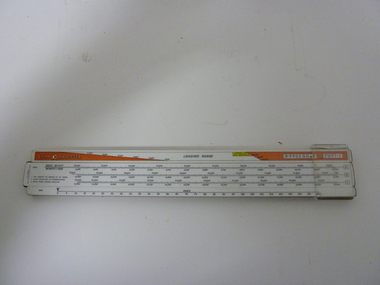
... Works by adding Angular moments together to find centre of gravity (COG) of a plane (adds bombs, ammunition and crew on board). bomb load adjuster a16 Load Adjuster, Property of US Government. 102630 on case. 81629. ...1945 Slide Rule US Army Air Force from Prof. Allan Bromley.Works by adding Angular moments together to find centre of gravity (COG) of a plane (adds bombs, ammunition and crew on board).Brown Leather Case with 'Slide Rule' inner.Load Adjuster, Property of US Government. 102630 on case. 81629. Airplane serial No. 44-4-1195, Model B-24Jbomb load adjuster, a16
