
Showing 35 items matching "chess club"
-
 Whitehorse Historical Society Inc.
Document, Nunawading Chess Club, 1970-1998
... Nunawading Chess Club...Nunawading Chess Club...Mitcham Chess Club was established June 1970 and disbanded Dec 1976. ...Papers of Mitcham Chess Club (1970-1976) and Nunawading Chess Club (1977-1998) incl. ...Operated from The Avenue Neighbourhood House Blackburn. Nunawading Chess Club Mitcham Chess Club Papers of Mitcham Chess Club (1970-1976) and Nunawading Chess Club (1977-1998) incl. ...Papers of Mitcham Chess Club (1970-1976) and Nunawading Chess Club (1977-1998) incl. Minutes, Cash book, Bank Savings book and miscellaneous papers.Papers of Mitcham Chess Club (1970-1976) and Nunawading Chess Club (1977-1998) incl. Minutes, Cash book, Bank Savings book and miscellaneous papers.Papers of Mitcham Chess Club (1970-1976) and Nunawading Chess Club (1977-1998) incl. Minutes, Cash book, Bank Savings book and miscellaneous papers.nunawading chess club, mitcham chess club -
Port Melbourne Historical & Preservation Society
Photograph - Members, Port Melbourne Chess Club, c. 1910
... Members, Port Melbourne Chess Club......Chess Club...Members of the Port Melbourne Chess Club...Members of the Port Melbourne Chess Club Photograph Members, Port Melbourne Chess Club ...Studio portrait of five Port Melbourne identities c1910. James (or Robert) THACKRUH, George Samuel TURNER and Walter Herbert COOKE (back row); George SANGSTER (on right hand side) and unknown man in front. Members of the Port Melbourne Chess Clubgeorge sangster, walter herbert cooke, george samuel turner, social activities, james thackruh (?), chess club -
 Whitehorse Historical Society Inc.
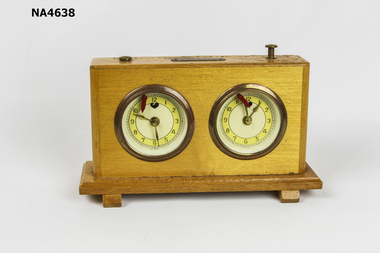
Leisure object - Chess Clock Timer
... The Mitcham Chess Club was established in 1970 and disbanded Dec-1976. ...'Olympia' and repaired 8/83 Mitcham Chess Club...The Mitcham Chess Club was established in 1970 and disbanded Dec-1976. ...The Mitcham Chess Club was established in 1970 and disbanded Dec-1976. The Nunawading Chess Club reformed from Mitcham Club Jan-1977 and disbanded permanently in 1998. It operated from The Avenue Neighbourhood House, Blackburn.Wooden rectangular box sitting on rectangular base. The box contains two timing windup clocks used to time chess games. Two starter knobs on top. Metal label on top marked 'Olympia'. Metal clock faces with yellow background with brass coloured numbers and hands. Each clock has a red arrow on top. Back has brass circles with wind up mechanism; left hand side has knob to adjust time but not right clock.'Olympia' and repaired 8/83 Mitcham Chess Clubhorology, clocks, toys, games -
Port Melbourne Historical & Preservation Society
Photograph - Portrait, George SANGSTER, c. 1910
... ...Chess Club...Portrait photo of George SANGSTER (on right) with unknown man - both members of the Port Melbourne Chess Club. Councillor, Borough of Port Melbourne 1893-94.. ...Local Government - Borough of Port Melbourne Recreation Sport - Australian Rules Football George SANGSTER Chess Club Port Melbourne Football Club PMFC Portrait photo of George SANGSTER (on right) with unknown man - both members of the Port Melbourne Chess Club. ...Portrait photo of George SANGSTER (on right) with unknown man - both members of the Port Melbourne Chess Club. Councillor, Borough of Port Melbourne 1893-94.. President of the Port Melbourne Football Club 1898-1890. State Member of Parliament for Port Melbourne for 20 years local government - borough of port melbourne, recreation, sport - australian rules football, george sangster, chess club, port melbourne football club, pmfc -
 Whitehorse Historical Society Inc.
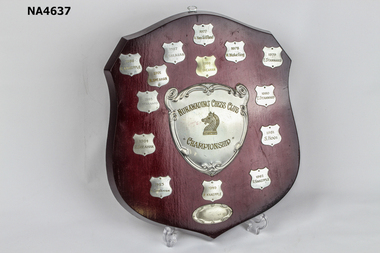
Award - Board - Honour, 1977
... Mitcham Chess Club was established in 1970 and disbanded December 1976. ...Wooden Shield with central metal shield. 'Nunawading Chess Club' 'Championship' with etched Knight piece in centre surrounded by 14 small shields with winner from 1977 to 1991....Mitcham Chess Club was established in 1970 and disbanded December 1976. ...Mitcham Chess Club was established in 1970 and disbanded December 1976. Nunawading Chess Club reformed from Mitcham club January 1977 and disbanded permanently 1998. It operated from The Avenue Neighbourhood House Blackburn.Wooden Shield with central metal shield. 'Nunawading Chess Club' 'Championship' with etched Knight piece in centre surrounded by 14 small shields with winner from 1977 to 1991.|Names on shield A Van Silfliout - 1977, M. Walkling - 1978, E. Stannard - 1979, 1980, and 1985, S. Hooi 1981, R. Knaepple - 1982, 1986, 1989, R. Sheahan - 1983, 1984, 1987, 1988 and 1991.|Small oval unmarked shield on bottom.as abovetrophies & awards, sports -
 Surrey Hills Historical Society Collection
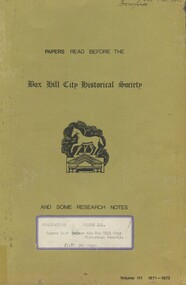
Book, Papers read before the Box Hill Historical Society: together with research notes and contributed items, Vol. III, 1971-1973, 1973
... ...box hill chess club...A collection of papers presented at meetings of the Box Hill Historical Society detailing history of local families, churches, schools and other significant histories. box hill historical society box hill (mr) arundel wrighte wattle club box hill state school (mr) frank bamford (mrs) mona webster a. b. mcintosh (mrs) l. turner 1971 1973 toogood family box hill chess club box hill repertory box hill choral society box hill country women's association A collection of papers presented at meetings of the Box Hill Historical Society detailing hsitory of local families, churches, schools and other significant histories. ...A collection of papers presented at meetings of the Box Hill Historical Society detailing history of local families, churches, schools and other significant histories.A collection of papers presented at meetings of the Box Hill Historical Society detailing hsitory of local families, churches, schools and other significant histories.box hill historical society, box hill, (mr) arundel wrighte, wattle club, box hill state school, (mr) frank bamford, (mrs) mona webster, a. b. mcintosh, (mrs) l. turner, 1971, 1973, toogood family, box hill chess club, box hill repertory, box hill choral society, box hill country women's association -
 Surrey Hills Historical Society Collection
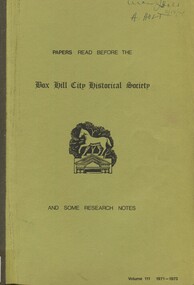
Book, Box Hill Historical Society, Papers read before the Box Hill Historical Society: together with research notes and contributed items, Vol. III, 1971-1973, 1973
... ...box hill chess club...(mrs) 1971 1973 toogood family box hill chess club box hill repertory box hill choral society box hill country women's association A collection of papers presented at meetings of the Box Hill Historical Society detailing hsitory of local families, churches, schools and other significant histories. ...A collection of papers presented at meetings of the Box Hill Historical Society detailing hsitory of local families, churches, schools and other significant histories.box hill historical society, box hill, wrighte, arundel, wattle club, box hill state school, bamford, frank, webster, m. (mrs), mcintosh, a. b., turner, l. (mrs), 1971, 1973, toogood family, box hill chess club, box hill repertory, box hill choral society, box hill country women's association -
Kadimah Jewish Cultural Centre and National Library
Audio - Oral History, Oral History Interview with Alex Dafner June 2021
... ...Kadimah Chess Club...Alex Dafner Kadimah committee President Melbourne Yiddish Youth Theatre Dovid Herman Theatre Bund Lectures Mitvokh Club 100 year celebration In One Voice Kadimah Chess Club Sholem Aleichem College Sender Burstin Bono Wiener Yasha Sher Hershl Bacharach Josef Auerbach Moshe Ajzenbud Pinchas Ringelblum Nachman Gryfenberg Lova Friedman Yizhak Khan Avrum Cykiert Rachel Levita Cesia Goldberg Abram Goldberg Yossl Winkler Renata Singer Joe Tigel Eugene Orenstein Avraham Novershtern Dov Noy Herschel Klapfisch Adam Gruzman Pinchas Goldhar Herz Bergner Leo Fink Samuel Wynn Simche Burstin Varshavski Digital recording of an Oral History Interview with Alex Dafner Oral History Interview with Alex Dafner June 2021 Audio Oral History ...Alex Dafner was interviewed about his involvement in the Kadimah from the 1970s through to the 2020s. Alex has been widely involved in Yiddish life in Melbourne. He served as a Kadimah board member (1970 – 2022) and President (1995-2015). He currently leads post-VCE Yiddish reading and conversation group. The interview was conducted by Jordy Silverstein in June 2021 for the Kadimah Jewish Cultural Centre and National Library.Digital recording of an Oral History Interview with Alex Dafneralex dafner, kadimah committee, president, melbourne yiddish youth theatre, dovid herman theatre, bund, lectures, mitvokh club, 100 year celebration, in one voice, kadimah chess club, sholem aleichem college, sender burstin, bono wiener, yasha sher, hershl bacharach, josef auerbach, moshe ajzenbud, pinchas ringelblum, nachman gryfenberg, lova friedman, yizhak khan, avrum cykiert, rachel levita, cesia goldberg, abram goldberg, yossl winkler, renata singer, joe tigel, eugene orenstein, avraham novershtern, dov noy, herschel klapfisch, adam gruzman, pinchas goldhar, herz bergner, leo fink, samuel wynn, simche burstin, varshavski -
 Whitehorse Historical Society Inc.
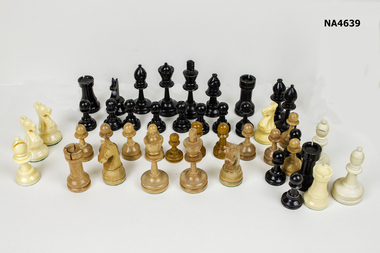
Leisure object - Chess pieces - 44
... Mitcham Chess Club was established in 1970 and disbanded Dec 1976. ...Mitcham Chess Club was established in 1970 and disbanded Dec 1976. ...Mitcham Chess Club was established in 1970 and disbanded Dec 1976. Nunawading Chess Club reformed from Mitcham Club Jan 1977 and disbanded permanently 1998. It operated from The Avenue Neighbourhood House, Mitcham.Assorted chess pieces. Black pieces: 21, 7 ivory colour. Brown pieces: 3 brown wooden colour, 13 light brown colour.toys, games -
 Ringwood and District Historical Society
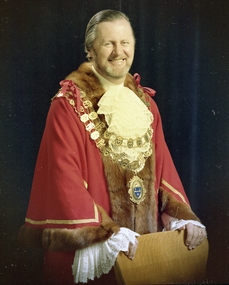
Photograph, Photo of Ringwood Mayor Gerald Richard Smart in mayoral robes
... chess, table tennis, photography (8mm, 35mm, stills, music.) Theatre - Melbourne University, Emerald Hill Repertory Company. Radio - Music session on 3XY. Television - 'Consider Your Verdict', character parts. President Ringwood Arts and Crafts Society Honorary Secretary of Television Society of Australia Patron, Ringwood Swimming and Life Saving Club President Ringwood District Scouting Association Executive Committee Member of Municipal Association of Victoria Formed ECB-FM +Additional Keywords: Refer to the "Mayor" envelope, registration no. 3932, for further information....chess, table tennis, photography (8mm, 35mm, stills, music.) Theatre - Melbourne University, Emerald Hill Repertory Company. Radio - Music session on 3XY. Television - 'Consider Your Verdict', character parts. President Ringwood Arts and Crafts Society Honorary Secretary of Television Society of Australia Patron, Ringwood Swimming and Life Saving Club President Ringwood District Scouting Association Executive Committee Member of Municipal Association of Victoria Formed ECB-FM +Additional Keywords: Refer to the "Mayor" envelope, registration no. 3932, for further information. ...The colour negative appears to be an official photo arranged by the City of Ringwood Council.Gerald Smart was mayor in 1973/74 and 1976/77 for the City of Ringwood. He also served as a Councillor from 1967/68 until 1981/82. Married Sandra, who also served as Mayoress for Cr Pat Palmer. Gerald was instrumental in getting the Wyrenna-based local radio station, ECB-FM, off the ground. Other information:- SMART, Gerald Richard George 1967-73, Mayor 1973-74, Chartered Engineer. Melbourne University, R.M.I.T., Diploma of Radio Engineering. Son of Walter and Doris Smart. Married with one son. Cricket, tennis, golf, spearfishing, chess, table tennis, photography (8mm, 35mm, stills, music.) Theatre - Melbourne University, Emerald Hill Repertory Company. Radio - Music session on 3XY. Television - 'Consider Your Verdict', character parts. President Ringwood Arts and Crafts Society Honorary Secretary of Television Society of Australia Patron, Ringwood Swimming and Life Saving Club President Ringwood District Scouting Association Executive Committee Member of Municipal Association of Victoria Formed ECB-FM +Additional Keywords: Refer to the "Mayor" envelope, registration no. 3932, for further information. -
 Halls Gap & Grampians Historical Society
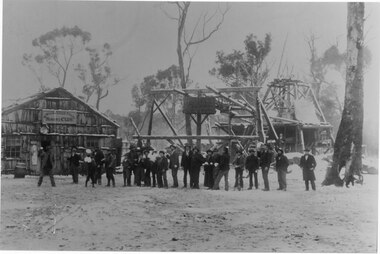
Photograph - B/W, C 1900
... Men's Club opened Nov 30th 1900 A banquet was given on opening night - 60 men attended Club President Mr Alf Rose The Hall was built by a working bee of approximate 50 men who were all members Main focus of club was to provide for interest in literature, chess, draughts debating etc....Men's Club opened Nov 30th 1900 A banquet was given on opening night - 60 men attended Club President Mr Alf Rose The Hall was built by a working bee of approximate 50 men who were all members Main focus of club was to provide for interest in literature, chess, draughts debating etc. ...Men's Club opened Nov 30th 1900 A banquet was given on opening night - 60 men attended Club President Mr Alf Rose The Hall was built by a working bee of approximate 50 men who were all members Main focus of club was to provide for interest in literature, chess, draughts debating etc.Photo depicts "Working Men's Club" at Mafeking 23 people in foreground, 1 in background. Snow on ground Some of 1 group with snowballs in their hands. Goldmine structure in background (poppet head)buildings, shops, mining, mafeking -
 Eltham District Historical Society Inc
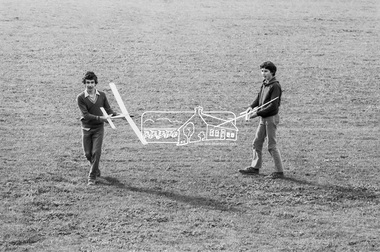
Photograph, George Coop, Balsa wood model airplane construction class, Nunawading High School, Canterbury Road, c.August 1983, 1983
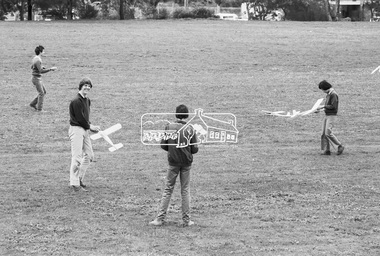
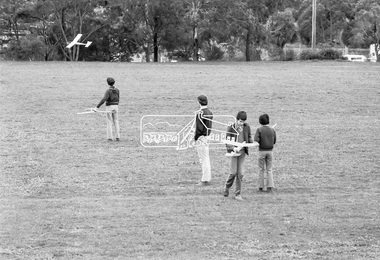
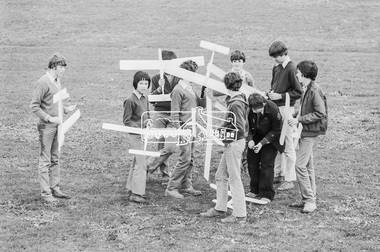
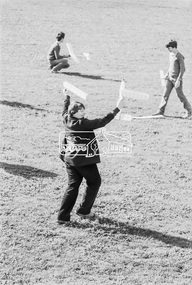
... There were various clubs such as gardening, chess, etc. Given George's background with art, craft and woodwork, he organised an activity for students to assemble balsa wood airplane kits which were test flown on the school grounds; Canternury Road in the background. ...There were various clubs such as gardening, chess, etc. Given George's background with art, craft and woodwork, he organised an activity for students to assemble balsa wood airplane kits which were test flown on the school grounds; Canternury Road in the background. ...Teachers at Nunawading High School were required to hold one afternoon a week with students undertaking some form of activity. There were various clubs such as gardening, chess, etc. Given George's background with art, craft and woodwork, he organised an activity for students to assemble balsa wood airplane kits which were test flown on the school grounds; Canternury Road in the background. Nunawading High School opened on Canterbury Road (near Mahoneys Road) in 1955. Enrolments grew rapidly and by 1969 there were over 1,100 students, making it one of the largest schools in the state. In 1989 it was merged with Burwood Heights High and Blackburn South High to become a junior campus of Forest Hills Secondary College. However, the junior campuses were closed in 1997, and the former Nunawading High was bulldozed to make way for a housing estate. "Lost Schools of the 1990s", Learning from the Past, http://learningfromthepast.com.au/lost-schools-of-the-1990s/ George Coop was a teacher of art, craft, wood working and graphics at Nunawading High School until it merged into Forest Hills Secondary College at which point he retired.Digital TIFF file Scan of 35mm Kodak Safety 5062 black and white transparencycanterbury road,model airplane, nunawading high school -
 Eltham District Historical Society Inc
Photograph, George Coop, Balsa wood model airplane construction class, Nunawading High School, Canterbury Road, c.August 1983, 1983
... There were various clubs such as gardening, chess, etc. Given George's background with art, craft and woodwork, he organised an activity for students to assemble balsa wood airplane kits which were test flown on the school grounds; Canternury Road in the background. ...There were various clubs such as gardening, chess, etc. Given George's background with art, craft and woodwork, he organised an activity for students to assemble balsa wood airplane kits which were test flown on the school grounds; Canternury Road in the background. ...Teachers at Nunawading High School were required to hold one afternoon a week with students undertaking some form of activity. There were various clubs such as gardening, chess, etc. Given George's background with art, craft and woodwork, he organised an activity for students to assemble balsa wood airplane kits which were test flown on the school grounds; Canternury Road in the background. Nunawading High School opened on Canterbury Road (near Mahoneys Road) in 1955. Enrolments grew rapidly and by 1969 there were over 1,100 students, making it one of the largest schools in the state. In 1989 it was merged with Burwood Heights High and Blackburn South High to become a junior campus of Forest Hills Secondary College. However, the junior campuses were closed in 1997, and the former Nunawading High was bulldozed to make way for a housing estate. "Lost Schools of the 1990s", Learning from the Past, http://learningfromthepast.com.au/lost-schools-of-the-1990s/ George Coop was a teacher of art, craft, wood working and graphics at Nunawading High School until it merged into Forest Hills Secondary College at which point he retired.Digital TIFF file Scan of 35mm Kodak Safety 5062 black and white transparencycanterbury road,model airplane, nunawading high school -
 Eltham District Historical Society Inc
Photograph, George Coop, Balsa wood model airplane construction class, Nunawading High School, Canterbury Road, c.August 1983, 1983
... There were various clubs such as gardening, chess, etc. Given George's background with art, craft and woodwork, he organised an activity for students to assemble balsa wood airplane kits which were test flown on the school grounds; Canternury Road in the background. ...There were various clubs such as gardening, chess, etc. Given George's background with art, craft and woodwork, he organised an activity for students to assemble balsa wood airplane kits which were test flown on the school grounds; Canternury Road in the background. ...Teachers at Nunawading High School were required to hold one afternoon a week with students undertaking some form of activity. There were various clubs such as gardening, chess, etc. Given George's background with art, craft and woodwork, he organised an activity for students to assemble balsa wood airplane kits which were test flown on the school grounds; Canternury Road in the background. Nunawading High School opened on Canterbury Road (near Mahoneys Road) in 1955. Enrolments grew rapidly and by 1969 there were over 1,100 students, making it one of the largest schools in the state. In 1989 it was merged with Burwood Heights High and Blackburn South High to become a junior campus of Forest Hills Secondary College. However, the junior campuses were closed in 1997, and the former Nunawading High was bulldozed to make way for a housing estate. "Lost Schools of the 1990s", Learning from the Past, http://learningfromthepast.com.au/lost-schools-of-the-1990s/ George Coop was a teacher of art, craft, wood working and graphics at Nunawading High School until it merged into Forest Hills Secondary College at which point he retired.Digital TIFF file Scan of 35mm Kodak Safety 5062 black and white transparencycanterbury road,model airplane, nunawading high school -
 Eltham District Historical Society Inc
Photograph, George Coop, Balsa wood model airplane construction class, Nunawading High School, Canterbury Road, c.August 1983, 1983
... There were various clubs such as gardening, chess, etc. Given George's background with art, craft and woodwork, he organised an activity for students to assemble balsa wood airplane kits which were test flown on the school grounds; Canternury Road in the background. ...There were various clubs such as gardening, chess, etc. Given George's background with art, craft and woodwork, he organised an activity for students to assemble balsa wood airplane kits which were test flown on the school grounds; Canternury Road in the background. ...Teachers at Nunawading High School were required to hold one afternoon a week with students undertaking some form of activity. There were various clubs such as gardening, chess, etc. Given George's background with art, craft and woodwork, he organised an activity for students to assemble balsa wood airplane kits which were test flown on the school grounds; Canternury Road in the background. Nunawading High School opened on Canterbury Road (near Mahoneys Road) in 1955. Enrolments grew rapidly and by 1969 there were over 1,100 students, making it one of the largest schools in the state. In 1989 it was merged with Burwood Heights High and Blackburn South High to become a junior campus of Forest Hills Secondary College. However, the junior campuses were closed in 1997, and the former Nunawading High was bulldozed to make way for a housing estate. "Lost Schools of the 1990s", Learning from the Past, http://learningfromthepast.com.au/lost-schools-of-the-1990s/ George Coop was a teacher of art, craft, wood working and graphics at Nunawading High School until it merged into Forest Hills Secondary College at which point he retired.Digital TIFF file Scan of 35mm Kodak Safety 5062 black and white transparencycanterbury road,model airplane, nunawading high school -
 Eltham District Historical Society Inc
Photograph, George Coop, Balsa wood model airplane construction class, Nunawading High School, Canterbury Road, c.August 1983, 1983
... There were various clubs such as gardening, chess, etc. Given George's background with art, craft and woodwork, he organised an activity for students to assemble balsa wood airplane kits which were test flown on the school grounds; Canternury Road in the background. ...There were various clubs such as gardening, chess, etc. Given George's background with art, craft and woodwork, he organised an activity for students to assemble balsa wood airplane kits which were test flown on the school grounds; Canternury Road in the background. ...Teachers at Nunawading High School were required to hold one afternoon a week with students undertaking some form of activity. There were various clubs such as gardening, chess, etc. Given George's background with art, craft and woodwork, he organised an activity for students to assemble balsa wood airplane kits which were test flown on the school grounds; Canternury Road in the background. Nunawading High School opened on Canterbury Road (near Mahoneys Road) in 1955. Enrolments grew rapidly and by 1969 there were over 1,100 students, making it one of the largest schools in the state. In 1989 it was merged with Burwood Heights High and Blackburn South High to become a junior campus of Forest Hills Secondary College. However, the junior campuses were closed in 1997, and the former Nunawading High was bulldozed to make way for a housing estate. "Lost Schools of the 1990s", Learning from the Past, http://learningfromthepast.com.au/lost-schools-of-the-1990s/ George Coop was a teacher of art, craft, wood working and graphics at Nunawading High School until it merged into Forest Hills Secondary College at which point he retired.Digital TIFF file Scan of 35mm Kodak Safety 5062 black and white transparencycanterbury road,model airplane, nunawading high school -
 Eltham District Historical Society Inc
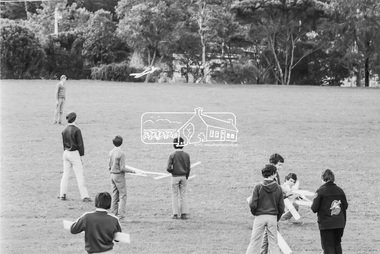
Photograph, George Coop, Balsa wood model airplane construction class, Nunawading High School, Canterbury Road, c.August 1983, 1983
... There were various clubs such as gardening, chess, etc. Given George's background with art, craft and woodwork, he organised an activity for students to assemble balsa wood airplane kits which were test flown on the school grounds; Canternury Road in the background. ...There were various clubs such as gardening, chess, etc. Given George's background with art, craft and woodwork, he organised an activity for students to assemble balsa wood airplane kits which were test flown on the school grounds; Canternury Road in the background. ...Teachers at Nunawading High School were required to hold one afternoon a week with students undertaking some form of activity. There were various clubs such as gardening, chess, etc. Given George's background with art, craft and woodwork, he organised an activity for students to assemble balsa wood airplane kits which were test flown on the school grounds; Canternury Road in the background. Nunawading High School opened on Canterbury Road (near Mahoneys Road) in 1955. Enrolments grew rapidly and by 1969 there were over 1,100 students, making it one of the largest schools in the state. In 1989 it was merged with Burwood Heights High and Blackburn South High to become a junior campus of Forest Hills Secondary College. However, the junior campuses were closed in 1997, and the former Nunawading High was bulldozed to make way for a housing estate. "Lost Schools of the 1990s", Learning from the Past, http://learningfromthepast.com.au/lost-schools-of-the-1990s/ George Coop was a teacher of art, craft, wood working and graphics at Nunawading High School until it merged into Forest Hills Secondary College at which point he retired.Digital TIFF file Scan of 35mm Kodak Safety 5062 black and white transparencycanterbury road,model airplane, nunawading high school -
 Eltham District Historical Society Inc
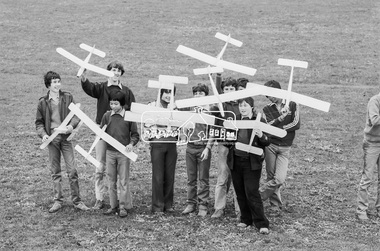
Photograph, George Coop, Balsa wood model airplane construction class, Nunawading High School, Canterbury Road, c.August 1983, 1983
... There were various clubs such as gardening, chess, etc. Given George's background with art, craft and woodwork, he organised an activity for students to assemble balsa wood airplane kits which were test flown on the school grounds; Canternury Road in the background. ...There were various clubs such as gardening, chess, etc. Given George's background with art, craft and woodwork, he organised an activity for students to assemble balsa wood airplane kits which were test flown on the school grounds; Canternury Road in the background. ...Teachers at Nunawading High School were required to hold one afternoon a week with students undertaking some form of activity. There were various clubs such as gardening, chess, etc. Given George's background with art, craft and woodwork, he organised an activity for students to assemble balsa wood airplane kits which were test flown on the school grounds; Canternury Road in the background. Nunawading High School opened on Canterbury Road (near Mahoneys Road) in 1955. Enrolments grew rapidly and by 1969 there were over 1,100 students, making it one of the largest schools in the state. In 1989 it was merged with Burwood Heights High and Blackburn South High to become a junior campus of Forest Hills Secondary College. However, the junior campuses were closed in 1997, and the former Nunawading High was bulldozed to make way for a housing estate. "Lost Schools of the 1990s", Learning from the Past, http://learningfromthepast.com.au/lost-schools-of-the-1990s/ George Coop was a teacher of art, craft, wood working and graphics at Nunawading High School until it merged into Forest Hills Secondary College at which point he retired.Digital TIFF file Scan of 35mm Kodak Safety 5062 black and white transparencycanterbury road,model airplane, nunawading high school -
 Eltham District Historical Society Inc
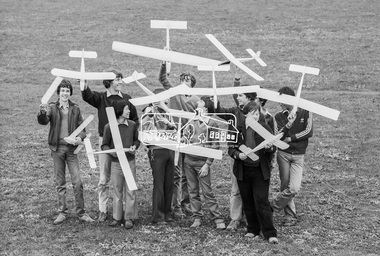
Photograph, George Coop, Balsa wood model airplane construction class, Nunawading High School, Canterbury Road, c.August 1983, 1983
... There were various clubs such as gardening, chess, etc. Given George's background with art, craft and woodwork, he organised an activity for students to assemble balsa wood airplane kits which were test flown on the school grounds; Canternury Road in the background. ...There were various clubs such as gardening, chess, etc. Given George's background with art, craft and woodwork, he organised an activity for students to assemble balsa wood airplane kits which were test flown on the school grounds; Canternury Road in the background. ...Teachers at Nunawading High School were required to hold one afternoon a week with students undertaking some form of activity. There were various clubs such as gardening, chess, etc. Given George's background with art, craft and woodwork, he organised an activity for students to assemble balsa wood airplane kits which were test flown on the school grounds; Canternury Road in the background. Nunawading High School opened on Canterbury Road (near Mahoneys Road) in 1955. Enrolments grew rapidly and by 1969 there were over 1,100 students, making it one of the largest schools in the state. In 1989 it was merged with Burwood Heights High and Blackburn South High to become a junior campus of Forest Hills Secondary College. However, the junior campuses were closed in 1997, and the former Nunawading High was bulldozed to make way for a housing estate. "Lost Schools of the 1990s", Learning from the Past, http://learningfromthepast.com.au/lost-schools-of-the-1990s/ George Coop was a teacher of art, craft, wood working and graphics at Nunawading High School until it merged into Forest Hills Secondary College at which point he retired.Digital TIFF file Scan of 35mm Kodak Safety 5062 black and white transparencycanterbury road,model airplane, nunawading high school -
 Eltham District Historical Society Inc
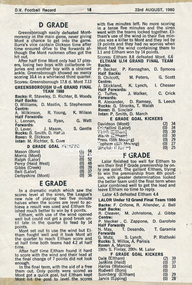
Newspaper clipping, D, E and F Grade Junior Football Grand Final results, D.V. Football Record, 23 August 1980, p18
... Symons, Eltham Football Club, G. Scott, Gary Stranks, I . Chesser, J. Stickland, J. Walker, K. ...E Grade Eltham U-14 Grand Final Team defeated MontmorencyDigital file only scanned by EDHS from item on loanb. chilcott, b. sinclair, c. crick, c. tuffen, d. march, d. ramsey, d. symons, eltham football club, g. scott, gary stranks, i . chesser, j. stickland, j. walker, k. lynch, m. peters, p. becker, p. kernaghan, p. smith, r. alexander, s. leech, t. walsh -
 Eltham District Historical Society Inc
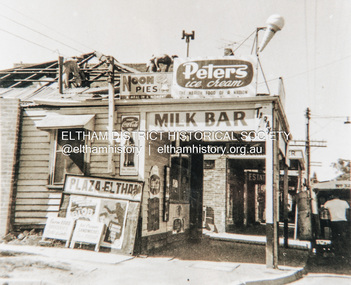
Photograph, Formerly Burges Blue Gum Cafe being demolished, cnr Pryor Street and Main Road, Eltham, Sep. 1960
... Aerial imagery shows that this was erected by 1962. 1968-1985 The name Blue Gum did not disappear but was reincarnated a few doors up some years later as the Blue Gum Milk Bar at 1006 Main Road (present-day Vyve Beauty & Wellness building on the northern side of Pryor Street one premises up from Westpac bank) “As a lifelong resident of the Diamond Valley, Ian Chesser (Chess) is a well-known face within the local community due to his involvement with numerous sporting clubs, and for being the “kid from the Blue Gum Milk Bar” many years ago” “From the time he was a child, Ian would assist his parents Graeme and Shirley at the Blue Gum Milk Bar working behind the counter.” ...Aerial imagery shows that this was erected by 1962. 1968-1985 The name Blue Gum did not disappear but was reincarnated a few doors up some years later as the Blue Gum Milk Bar at 1006 Main Road (present-day Vyve Beauty & Wellness building on the northern side of Pryor Street one premises up from Westpac bank) “As a lifelong resident of the Diamond Valley, Ian Chesser (Chess) is a well-known face within the local community due to his involvement with numerous sporting clubs, and for being the “kid from the Blue Gum Milk Bar” many years ago” “From the time he was a child, Ian would assist his parents Graeme and Shirley at the Blue Gum Milk Bar working behind the counter.” ...Formerly Burges Blue Gum Cafe being demolished, cnr Pryor Street and Main Road, Eltham, Sept. 1960. A new two story brick building was erected on site approximately 1961 for Mr Millet - visible in 1962 aerial photos Film poster is advertising The Blob (1958) and "I married a monster from outer space" (1958) which both appear to have been screened in Australia in 1960 and 1961 1922 Originally opened in October 1922 by Miss Barber, it was known as the Blue Gum Soda Fountain. It was named after a prominent Bluegum which stood on the property. 1928 It was taken over by W. Jim Burges in 1928 and by 1929 was known as the Blue Gum Café but also as the Blue Gum Tea Rooms from around August 1931. 1935 In August 1935 Jim Burges sold the Blue Gum Café to Mr and Mrs L.H. Herring of Kallista. The Herrings maintained the name Blue Gum Café 1938 In July 1938 the Herrings sold the business as the Eltham Confectionary And Soda Fountain to Misses Robinson and Pringle effective from August 1st. 1939 In April 1939, Misses Robinson and Pringle sold the Eltham Confectionary And Soda Fountain to Mr Herbert Eugene Borner and Miss Edith Florance Borner, (brother and older sister), formerly of Yarra Glen and it became known as H.E. Borner’s Shop. It is not known when the Borners sold the shop. Both were recorded there in the 1949 Electoral Roll. However, it is noted that Herbert Borner of Blackburn, late of Eltham, died as a result of an accident in August 1952. Sister Edith married railway employee John Stephens in in 1962. She died December 1978. So it is most likely they sold it possibly sometime between 1950 and 1951. 1950 The ownership between 1950 and 1954 is unknown but at some time during that period, the business was acquired by John Henry Millett and his wife, Esther. In 1949 they are listed in Footscray North and are recorded in the 1954 Electoral Roll as shopkeeper, Main Road, Eltham. It is possible they purchased it from the Borners between 1950 and 1951. It was advertised in the 1955 Easter Gymkhana Program as The Blue Gum, J. Millet, Proprietor. c. Aug. 1960 OLD LANDMARK GOES EDHS_05531 ELTHAM’S GROWTH HAS BEEN RAPID IN RECENT YEARS Possibly Diamond Valley News c.August 1960 Perhaps the most famous landmark in Eltham's' business section disappeared last Wednesday when the towering blue gum in Pryor Street at the rear of Main Road shops was felled. The tree, stated to be more than 80 feet high, was the one for which the adjoining café was named, when that business was Eltham’s only provision store, long before the turn of the century. Mr. J. Millett, who now owns the property on which the tree stood, deeply regretted its removal, but was mindful of the need for expansion in the business area. The "Old Blue Gum" was removed by Mr. A. Wilson, expert tree feller, from Heidelberg. Its proportions might be assessed by these facts – it took a gang of experienced men two days to completely fell and clear the tree, and, falling sections being brought down by cable tipped electricity wires on the opposite side of Pryor Street. Sep. 1960 The original store was demolished in September 1960 to make way for a new two-story brick building which became known as Millett’s Foodland. Aerial imagery shows that this was erected by 1962. 1968-1985 The name Blue Gum did not disappear but was reincarnated a few doors up some years later as the Blue Gum Milk Bar at 1006 Main Road (present-day Vyve Beauty & Wellness building on the northern side of Pryor Street one premises up from Westpac bank) “As a lifelong resident of the Diamond Valley, Ian Chesser (Chess) is a well-known face within the local community due to his involvement with numerous sporting clubs, and for being the “kid from the Blue Gum Milk Bar” many years ago” “From the time he was a child, Ian would assist his parents Graeme and Shirley at the Blue Gum Milk Bar working behind the counter.” "Ian Chesser - Barry Plant - Eltham." realcommercial.com.au https://www.realcommercial.com.au/agent/ian-chesser-1704490 Accessed 18 Nov. 2025. - Research by Peter Pidgeon, EDHS, May 2026Colour photograph copy of originalColour photograph copy of original. Possibly donated by Peter Bassett-Smith, noted as Sept 19601960, blue gum milk bar (eltham), butcher, coca cola, eltham shopping centre, eltham shops, estate agency, fire, four n twenty, i married a monster from outer space (film 1958), main road eltham, milk bar, noon pies, peters ice cream, pryor street, staffs general store, summer, the blob (film 1958), eltham, shops, blue gum café, blue gum milk bar, blue gum soda fountain -
 Lakes Entrance Historical Society
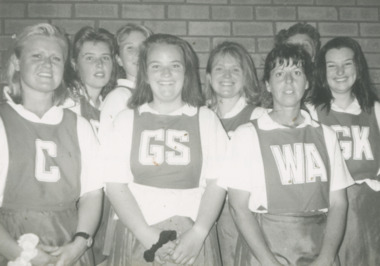
Photograph - Swan Reach B grade Netball
... B grade Netball team Swan Reach Becky Faille Cheryl East Justin Roberts Maureen Ash Michelle, Kelly Avage Jodie Brown Sharon Chesser Lakes Entrance Victoria Sports Netball Clubs Recreation Black and white photograph showing eight members of the B grade Netball team Swan Reach Becky Faille Cheryl East Justin Roberts Maureen Ash Michelle, Kelly Avage Jodie Brown Sharon Chesser Lakes Entrance Victoria Photograph Swan Reach B grade Netball ...B grade Netball team Swan Reach Becky Faille Cheryl East Justin Roberts Maureen Ash Michelle, Kelly Avage Jodie Brown Sharon Chesser Lakes Entrance VictoriaBlack and white photograph showing eight members of the B grade Netball team Swan Reach Becky Faille Cheryl East Justin Roberts Maureen Ash Michelle, Kelly Avage Jodie Brown Sharon Chesser Lakes Entrance Victoriasports, netball, clubs, recreation -
 Slovenian Association Melbourne
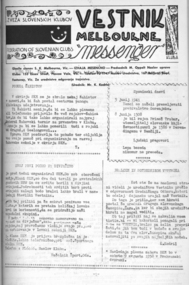
Slovenski Vestnik - Messenger 1958, Article introducing the Chess and Hunters sections in Slovenian Club Melbourne in 1958, 1958
... Article introducing the Chess and Hunters sections in Slovenian Club Melbourne in 1958...The page introduces the establishment of the Chess and Hunters groups at the Slovenian Club Melbourne...Vestnik is full of current and historical news, advertisements, notices and articles. vestnik messenger slovenian newspaper slovenian club melbourne The page introduces the establishment of the Chess and Hunters groups at the Slovenian Club Melbourne Front page of the Vestnik - Messenger Article introducing the Chess and Hunters sections in Slovenian Club Melbourne in 1958 Slovenski Vestnik - Messenger 1958 ...Vestnik - Messenger was established in 1955 and it brought news and cultural events to the members of Slovenian Club Melbourne and other subscribers. There were various editors, among them the longest term was by Marjan Persič. The issue in this file was edited by K. Kodrič.Vestnik is full of current and historical news, advertisements, notices and articles.Front page of the Vestnik - MessengerThe page introduces the establishment of the Chess and Hunters groups at the Slovenian Club Melbournevestnik, messenger, slovenian newspaper, slovenian club melbourne -
 Wodonga & District Historical Society Inc
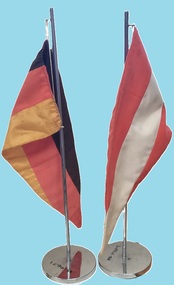
Memorabilia - German and Austrian miniature flags, Unknown
... Club prospered and had 300 members, making it necessary for new applicants to be put on a waiting list to be accepted as members. Interest groups consisted of Competition Air Rifle Shooting Group, a Skat (German Card game) Group, Folk Dancing Group, Ladies Group, Table Tennis Group, Darts Group, Chess Group and the Billiard Group. ...Club prospered and had 300 members, making it necessary for new applicants to be put on a waiting list to be accepted as members. Interest groups consisted of Competition Air Rifle Shooting Group, a Skat (German Card game) Group, Folk Dancing Group, Ladies Group, Table Tennis Group, Darts Group, Chess Group and the Billiard Group. ...Thousands of German migrants started a new life at Bonegilla, Victoria in the 1950s. Among them were five men who met each other in Wodonga, became friends and decided to form a German Austrian Club, where they could enjoy the company of likeminded individuals. They were Kurt Mueller, Willi Klimt, Toni Krischa and Erwin Klein from Germany and Manfred Teissl from Austria. On the 16th July 1960, after advertising in the Border Morning Mail, the German Austrian Club in Wodonga was born. Office bearers were Paul Peters as President. Gerhard Ziermann as Secretary and Günter Schmehl as Treasurer. Their aim was "To promote the upkeep of the German language in written and spoken form and to promote good German fellowship, while enjoying functions of a cultural and entertaining nature". By 1963 the Club boasted 40 members, holding meetings at the RSL Clubrooms and other suitable locations before they found a house in Hovell Street, Wodonga. It was used for meetings, Skat meetings, film nights and "Sonnabendschule” or Saturday school where children of members could continue to learn German. The Committee organised a wide range of activities and functions in their small rooms but dreamed of having a bigger home. This became reality in July 1979, when the Committee purchased land from the Albury Wodonga Development Corporation at 5 McFarland Road, Wodonga. The first brick was laid on the Club's land in May 1980, and the double-storey brick building was completed within 12 months voluntarily by Club members. At the same time members supported other organisations and charities in the Wodonga and wider community. The first Oktoberfest in Wodonga was held in 1975, drawing 4,000 attendees. The event was organized to promote German culture, and the profits from the first year were donated to the Wodonga District Hospital, raising $20,000. In 2001 the German Austrian Club was presented with the Certificate of Meritorious Service by the Government of Victoria for Community Works in Wodonga and district. The Club raised $23,000 for the Wodonga Hospital, had numerous fundraisers to assist in bushfires and drought situations and was involved in the Red Cross Calling campaign for many years. After much fundraising, hard work and making their way through extensive government red tape, the Club moved to its new premises in McFarland Road on 1st August 1981. The members continued to make necessary internal adjustments and sought an alcohol licence. The building was officially opened in May 1983. The Club prospered and had 300 members, making it necessary for new applicants to be put on a waiting list to be accepted as members. Interest groups consisted of Competition Air Rifle Shooting Group, a Skat (German Card game) Group, Folk Dancing Group, Ladies Group, Table Tennis Group, Darts Group, Chess Group and the Billiard Group. In later years, as so many Australians became members, the Club’s name was changed to the German Austrian Australian Club. Over recent years patronage and interest in the Club and its activities changed. Children of the original members had become “real Aussies” and did not always want to carry on traditions. Aging membership and lack of volunteers forced the Club to disband in 2025. The Club building has been gifted to the Albury Wodonga Theatre Company.These items are significant because they are representative of an important cultural organisation which operated in Wodonga for over 60 years.Two small flags of Germany and Austria attached to metal stands with string. Each stand has a metal circular base. "Lufthansa" is inscribed on the base.On base: Lufthansagerman austrian australian club, german austrian club -
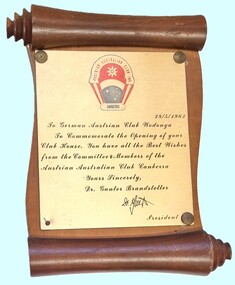 Wodonga & District Historical Society Inc
Plaque - German-Austrian Club Wodonga Opening, 1983
... Club prospered and had 300 members, making it necessary for new applicants to be put on a waiting list to be accepted as members. Interest groups formed consisted of Competition Air Rifle Shooting Group, a Skat (German Card game) Group, Folk Dancing Group, Ladies Group, Table Tennis Group, Darts Group, Chess Group and the Billiard Group. ...Club prospered and had 300 members, making it necessary for new applicants to be put on a waiting list to be accepted as members. Interest groups formed consisted of Competition Air Rifle Shooting Group, a Skat (German Card game) Group, Folk Dancing Group, Ladies Group, Table Tennis Group, Darts Group, Chess Group and the Billiard Group. ...Thousands of German migrants started a new life at Bonegilla, Victoria in the 1950s. Among them were five men who met each other in Wodonga, became friends and decided to form a German Austrian Club, where they could enjoy the company of likeminded individuals. They were Kurt Mueller, Willi Klimt, Toni Krischa and Erwin Klein from Germany and Manfred Teissl from Austria. On the 16th July 1960, after advertising in the Border Morning Mail the German Austrian Club in Wodonga was born. Office bearers were Paul Peters as President. Gerhard Ziermann as Secretary and Günter Schmehl as Treasurer. Their aim was "To promote the upkeep of the German language in written and spoken form and to promote good German fellowship, while enjoying functions of a cultural and entertaining nature". By 1963 the Club boasted 40 members, holding meetings at the RSL Clubrooms and other suitable locations before they found a house in Hovell Street, Wodonga. It was used for meetings, Skat meetings, film nights and Sonnabendschule” or Saturday school where children of members could continue to learn German. The Committee organised a wide range of activities and functions in their small rooms but dreamed of having a bigger home. This became reality in July 1979, when the Committee purchased land from the Albury Wodonga Development Corporation at 5 McFarland Road, Wodonga. The first brick was laid on the Club's land in May 1980, and the double-story brick building was completed within 12 months voluntarily by Club members. At the same time members supported other organisations and charities in the Wodonga and wider community. The first Oktoberfest in Wodonga was held in 1975, drawing 4,000 attendees. The event was organized to promote German culture, and the profits from the first year were donated to the Wodonga District Hospital, raising $20,000. In 2001 the German Austrian Club was presented with the Certificate of Meritorious Service by the Government of Victoria for Community Works in Wodonga and district. The Club raised $23,000 for the Wodonga Hospital, had numerous fundraisers to assist in bushfires and drought situations and was involved in the Red Cross Calling campaign for many years. After much fundraising, hard work and making their way through extensive government red tape, the Club moved to its new premises in McFarland Road on 1st August 1981. The members continued to make necessary internal adjustments and sought an alcohol licence. The building was officially opened in May 1983. The Club prospered and had 300 members, making it necessary for new applicants to be put on a waiting list to be accepted as members. Interest groups formed consisted of Competition Air Rifle Shooting Group, a Skat (German Card game) Group, Folk Dancing Group, Ladies Group, Table Tennis Group, Darts Group, Chess Group and the Billiard Group. In later years, as so many Australians became members, the Club’s name was changed to the German Austrian Australian Club. Over recent years patronage and interest in the Club and its activities changed. Children of the original members had become “real Aussies” and did not always want to carry on traditions. Aging membership and lack of volunteers forced the Club to disband in 2025. The Club building has been gifted to the Albury Wodonga Theatre Company. These items are significant because they are representative of an important cultural organisation which operated in Wodonga for over 60 years.A metal plaque attached to a wooden backing shaped like a scroll. The text is in the form of a letter.Emblem of the Austrian - Australian Clubs Inc. Canberra 28/5/1983 To German Austrian Club Wodonga To Commemorate the Opening of your Club House. You have all the Best Wishes from the Committee & Members of the Austrian Australian Club Canberra Yours Sincerely, Dr. Gunter Brandstetter Presidentgerman austrian australian club, german migrants wodonga -
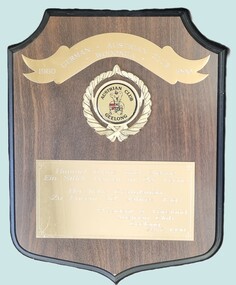 Wodonga & District Historical Society Inc
Plaque - German-Austrian Club Wodonga 30th Anniversary, 1990
... Club prospered and had 300 members, making it necessary for new applicants to be put on a waiting list to be accepted as members. Interest groups formed consisted of Competition Air Rifle Shooting Group, a Skat (German Card game) Group, Folk Dancing Group, Ladies Group, Table Tennis Group, Darts Group, Chess Group and the Billiard Group. ...Club prospered and had 300 members, making it necessary for new applicants to be put on a waiting list to be accepted as members. Interest groups formed consisted of Competition Air Rifle Shooting Group, a Skat (German Card game) Group, Folk Dancing Group, Ladies Group, Table Tennis Group, Darts Group, Chess Group and the Billiard Group. ...Thousands of German migrants started a new life at Bonegilla, Victoria in the 1950s. Among them were five men who met each other in Wodonga, became friends and decided to form a German Austrian Club, where they could enjoy the company of likeminded individuals. They were Kurt Mueller, Willi Klimt, Toni Krischa and Erwin Klein from Germany and Manfred Teissl from Austria. On the 16th July 1960, after advertising in the Border Morning Mail the German Austrian Club in Wodonga was born. Office bearers were Paul Peters as President. Gerhard Ziermann as Secretary and Günter Schmehl as Treasurer. Their aim was "To promote the upkeep of the German language in written and spoken form and to promote good German fellowship, while enjoying functions of a cultural and entertaining nature". By 1963 the Club boasted 40 members, holding meetings at the RSL Clubrooms and other suitable locations before they found a house in Hovell Street, Wodonga. It was used for meetings, Skat meetings, film nights and Sonnabendschule” or Saturday school where children of members could continue to learn German. The Committee organised a wide range of activities and functions in their small rooms but dreamed of having a bigger home. This became reality in July 1979, when the Committee purchased land from the Albury Wodonga Development Corporation at 5 McFarland Road, Wodonga. The first brick was laid on the Club's land in May 1980, and the double-story brick building was completed within 12 months voluntarily by Club members. At the same time members supported other organisations and charities in the Wodonga and wider community. The first Oktoberfest in Wodonga was held in 1975, drawing 4,000 attendees. The event was organized to promote German culture, and the profits from the first year were donated to the Wodonga District Hospital, raising $20,000. In 2001 the German Austrian Club was presented with the Certificate of Meritorious Service by the Government of Victoria for Community Works in Wodonga and district. The Club raised $23,000 for the Wodonga Hospital, had numerous fundraisers to assist in bushfires and drought situations and was involved in the Red Cross Calling campaign for many years. After much fundraising, hard work and making their way through extensive government red tape, the Club moved to its new premises in McFarland Road on 1st August 1981. The members continued to make necessary internal adjustments and sought an alcohol licence. The building was officially opened in May 1983. The Club prospered and had 300 members, making it necessary for new applicants to be put on a waiting list to be accepted as members. Interest groups formed consisted of Competition Air Rifle Shooting Group, a Skat (German Card game) Group, Folk Dancing Group, Ladies Group, Table Tennis Group, Darts Group, Chess Group and the Billiard Group. In later years, as so many Australians became members, the Club’s name was changed to the German Austrian Australian Club. Over recent years patronage and interest in the Club and its activities changed. Children of the original members had become “real Aussies” and did not always want to carry on traditions. Aging membership and lack of volunteers forced the Club to disband in 2025. The Club building has been gifted to the Albury Wodonga Theatre Company.This item is significant because it is representative of an important cultural organisation which operated in Wodonga for over 60 years.A wooden plaque with metal insignia and a plate with text in German. This plaque was presented by the German Austrian Club of Geelong on the occasion of the 30th Anniversary of the Wodonga Club and bears its insignia.Himmel Glanz und Sterne Ein Stuck Heimat in Der Fern Herzliche Gratulation Zu Eurem 30 Jahres Tag President and Vorstand Translation Sky, splendour and stars A piece of home away from home Congratulations On your 30th anniversary President and Board of Directorsgerman austrian australian club, german migrants wodonga -
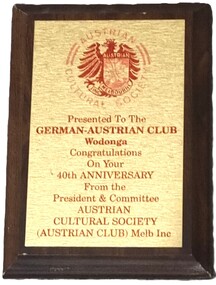 Wodonga & District Historical Society Inc
Plaque - German-Austrian Club Wodonga 40th Anniversary, 2000
... Club prospered and had 300 members, making it necessary for new applicants to be put on a waiting list to be accepted as members. Interest groups formed consisted of Competition Air Rifle Shooting Group, a Skat (German Card game) Group, Folk Dancing Group, Ladies Group, Table Tennis Group, Darts Group, Chess Group and the Billiard Group. ...Club prospered and had 300 members, making it necessary for new applicants to be put on a waiting list to be accepted as members. Interest groups formed consisted of Competition Air Rifle Shooting Group, a Skat (German Card game) Group, Folk Dancing Group, Ladies Group, Table Tennis Group, Darts Group, Chess Group and the Billiard Group. ...Thousands of German migrants started a new life at Bonegilla, Victoria in the 1950s. Among them were five men who met each other in Wodonga, became friends and decided to form a German Austrian Club, where they could enjoy the company of likeminded individuals. They were Kurt Mueller, Willi Klimt, Toni Krischa and Erwin Klein from Germany and Manfred Teissl from Austria. On the 16th July 1960, after advertising in the Border Morning Mail the German Austrian Club in Wodonga was born. Office bearers were Paul Peters as President. Gerhard Ziermann as Secretary and Günter Schmehl as Treasurer. Their aim was "To promote the upkeep of the German language in written and spoken form and to promote good German fellowship, while enjoying functions of a cultural and entertaining nature". By 1963 the Club boasted 40 members, holding meetings at the RSL Clubrooms and other suitable locations before they found a house in Hovell Street, Wodonga. It was used for meetings, Skat meetings, film nights and Sonnabendschule” or Saturday school where children of members could continue to learn German. The Committee organised a wide range of activities and functions in their small rooms but dreamed of having a bigger home. This became reality in July 1979, when the Committee purchased land from the Albury Wodonga Development Corporation at 5 McFarland Road, Wodonga. The first brick was laid on the Club's land in May 1980, and the double-story brick building was completed within 12 months voluntarily by Club members. At the same time members supported other organisations and charities in the Wodonga and wider community. The first Oktoberfest in Wodonga was held in 1975, drawing 4,000 attendees. The event was organized to promote German culture, and the profits from the first year were donated to the Wodonga District Hospital, raising $20,000. In 2001 the German Austrian Club was presented with the Certificate of Meritorious Service by the Government of Victoria for Community Works in Wodonga and district. The Club raised $23,000 for the Wodonga Hospital, had numerous fundraisers to assist in bushfires and drought situations and was involved in the Red Cross Calling campaign for many years. After much fundraising, hard work and making their way through extensive government red tape, the Club moved to its new premises in McFarland Road on 1st August 1981. The members continued to make necessary internal adjustments and sought an alcohol licence. The building was officially opened in May 1983. The Club prospered and had 300 members, making it necessary for new applicants to be put on a waiting list to be accepted as members. Interest groups formed consisted of Competition Air Rifle Shooting Group, a Skat (German Card game) Group, Folk Dancing Group, Ladies Group, Table Tennis Group, Darts Group, Chess Group and the Billiard Group. In later years, as so many Australians became members, the Club’s name was changed to the German Austrian Australian Club. Over recent years patronage and interest in the Club and its activities changed. Children of the original members had become “real Aussies” and did not always want to carry on traditions. Aging membership and lack of volunteers forced the Club to disband in 2025. The Club building has been gifted to the Albury Wodonga Theatre Company.This item is significant because it is representative of an important cultural organisation which operated in Wodonga for over 60 years.A small metal plaque on a wooden backing with red text. It includes the insignia of the Austrian Cultural Society of Melbourne.Presented To The GERMAN-AUSTRIAN CLUB Wodonga Congratulations On Your 40th ANNIVERSARY From the President & Committee AUSTRIAN CULTURAL SOCIETY (AUSTRIAN CLUB) Melb Incgerman austrian australian club, german migrants wodonga -
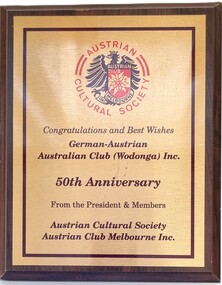 Wodonga & District Historical Society Inc
Plaque - German-Austrian Club Wodonga 50th Anniversary, 2010
... Club prospered and had 300 members, making it necessary for new applicants to be put on a waiting list to be accepted as members. Interest groups formed consisted of Competition Air Rifle Shooting Group, a Skat (German Card game) Group, Folk Dancing Group, Ladies Group, Table Tennis Group, Darts Group, Chess Group and the Billiard Group. ...Club prospered and had 300 members, making it necessary for new applicants to be put on a waiting list to be accepted as members. Interest groups formed consisted of Competition Air Rifle Shooting Group, a Skat (German Card game) Group, Folk Dancing Group, Ladies Group, Table Tennis Group, Darts Group, Chess Group and the Billiard Group. ...Thousands of German migrants started a new life at Bonegilla, Victoria in the 1950s. Among them were five men who met each other in Wodonga, became friends and decided to form a German Austrian Club, where they could enjoy the company of likeminded individuals. They were Kurt Mueller, Willi Klimt, Toni Krischa and Erwin Klein from Germany and Manfred Teissl from Austria. On the 16th July 1960, after advertising in the Border Morning Mail the German Austrian Club in Wodonga was born. Office bearers were Paul Peters as President. Gerhard Ziermann as Secretary and Günter Schmehl as Treasurer. Their aim was "To promote the upkeep of the German language in written and spoken form and to promote good German fellowship, while enjoying functions of a cultural and entertaining nature". By 1963 the Club boasted 40 members, holding meetings at the RSL Clubrooms and other suitable locations before they found a house in Hovell Street, Wodonga. It was used for meetings, Skat meetings, film nights and Sonnabendschule” or Saturday school where children of members could continue to learn German. The Committee organised a wide range of activities and functions in their small rooms but dreamed of having a bigger home. This became reality in July 1979, when the Committee purchased land from the Albury Wodonga Development Corporation at 5 McFarland Road, Wodonga. The first brick was laid on the Club's land in May 1980, and the double-story brick building was completed within 12 months voluntarily by Club members. At the same time members supported other organisations and charities in the Wodonga and wider community. The first Oktoberfest in Wodonga was held in 1975, drawing 4,000 attendees. The event was organized to promote German culture, and the profits from the first year were donated to the Wodonga District Hospital, raising $20,000. In 2001 the German Austrian Club was presented with the Certificate of Meritorious Service by the Government of Victoria for Community Works in Wodonga and district. The Club raised $23,000 for the Wodonga Hospital, had numerous fundraisers to assist in bushfires and drought situations and was involved in the Red Cross Calling campaign for many years. After much fundraising, hard work and making their way through extensive government red tape, the Club moved to its new premises in McFarland Road on 1st August 1981. The members continued to make necessary internal adjustments and sought an alcohol licence. The building was officially opened in May 1983. The Club prospered and had 300 members, making it necessary for new applicants to be put on a waiting list to be accepted as members. Interest groups formed consisted of Competition Air Rifle Shooting Group, a Skat (German Card game) Group, Folk Dancing Group, Ladies Group, Table Tennis Group, Darts Group, Chess Group and the Billiard Group. In later years, as so many Australians became members, the Club’s name was changed to the German Austrian Australian Club. Over recent years patronage and interest in the Club and its activities changed. Children of the original members had become “real Aussies” and did not always want to carry on traditions. Aging membership and lack of volunteers forced the Club to disband in 2025. The Club building has been gifted to the Albury Wodonga Theatre Company.This item is significant because it is representative of an important cultural organisation which operated in Wodonga for over 60 years.A small metal plaque on a wooden backing with red text. It includes the insignia of the Austrian Cultural Society of Melbourne.Congratulations and Best Wishes German-Austrian Australian Club (Wodonga) Inc. 50th Anniversary From the President & Members Austrian Cultural Society Austrian Club Melbourne Inc.german austrian australian club, german migrants wodonga -
Kew Historical Society Inc
Journal, Kewriosity : June 1988
... Obituary [Mrs Gwen Gee, Kew Chess Club] / p2. Commentary / Cr Jim Tutt p3. ...It rained - but the band played on [Rotunda - Alexandra Gardens, Kew Band, Australian Bicentennial] / p1. Dates for June / p2. Postage stamps, portraits and panoramas [Donald Cameron] / p2. Obituary [Mrs Gwen Gee, Kew Chess Club] / p2. Commentary / Cr Jim Tutt p3. YMCA to manage new Rec Centre [Kew Recreation Centre] / p3. Traffic - a perennial problem for Kew / p3. Did you know? [National Australia Bank] / p3. Notices / p4. Holiday time again / p4. Your rates at work / p4. Pre-school story time [Kew Library] / p4. Kew Living 1988 [Australian Bicentennial] / p4. Russian razzmatazz [Sadko Balalaika Orchestra] / p5. Metropolitan Fire Brigade visit to Council / p5. Council Review on Mother and Child Health / p5. Calling all cooks [Kew Community House] / p5. Kew Community House / Judy Price p6. What's on for young people in Kew? [Youth Resource Centre] / p6. Kew Community Action Group - 10 years on / p6. New community bus / p6. Walk your way to a fit active life [Boroondara Bushwalkers] / p7. Kew ballerina to perform in Russia [Miranda Coney] / p7. Dog warning / p7. Footy news [Kew Football Club] / p8. Keeping you informed [Citizens' Advice Bureau] / p8. Kew Emergency Flat [Kew Emergency House Steering Committee] / p8. Management Plan for Yarra Bend Park / p8.Kewriosity was a local newsletter combining Kew Council and community news. It was published between November 1983 and June 1994, replacing an earlier Kewriosity [broad] Sheet (1979-84). In producing Kewriosity, Council aimed to provide a range of interesting and informative articles covering its deliberations and decision making, together with items of general interest and importance to the Kew community and information not generally available through daily media outlets.non-fictionIt rained - but the band played on [Rotunda - Alexandra Gardens, Kew Band, Australian Bicentennial] / p1. Dates for June / p2. Postage stamps, portraits and panoramas [Donald Cameron] / p2. Obituary [Mrs Gwen Gee, Kew Chess Club] / p2. Commentary / Cr Jim Tutt p3. YMCA to manage new Rec Centre [Kew Recreation Centre] / p3. Traffic - a perennial problem for Kew / p3. Did you know? [National Australia Bank] / p3. Notices / p4. Holiday time again / p4. Your rates at work / p4. Pre-school story time [Kew Library] / p4. Kew Living 1988 [Australian Bicentennial] / p4. Russian razzmatazz [Sadko Balalaika Orchestra] / p5. Metropolitan Fire Brigade visit to Council / p5. Council Review on Mother and Child Health / p5. Calling all cooks [Kew Community House] / p5. Kew Community House / Judy Price p6. What's on for young people in Kew? [Youth Resource Centre] / p6. Kew Community Action Group - 10 years on / p6. New community bus / p6. Walk your way to a fit active life [Boroondara Bushwalkers] / p7. Kew ballerina to perform in Russia [Miranda Coney] / p7. Dog warning / p7. Footy news [Kew Football Club] / p8. Keeping you informed [Citizens' Advice Bureau] / p8. Kew Emergency Flat [Kew Emergency House Steering Committee] / p8. Management Plan for Yarra Bend Park / p8. publications -- city of kew (vic.), kewriosity, council newsletters, community newsletters -
Kew Historical Society Inc
Journal, The Kewriosity Sheet Vol.1 No.1 : June 1979
... Limerick of the month / p2. Kew Chess Club -1979 Championships / p2. Kew Rovers start well [The Kew Rovers Football Club] / p2. ...What is THIS Kewriosity Sheet? Where did it come from? What's it for? / [Cr] Kaye Cole [Mayor of Kew] p1. What's doing in Kew during June / p1. Those vacant dates / p1. People wanted [Mount Royal Henry Pride Geriatric Centre] / p1. Pensioners' Association /p1. We need your news / p1. The birth of a village [Kew history] / H. Rolley p2. Limerick of the month / p2. Kew Chess Club -1979 Championships / p2. Kew Rovers start well [The Kew Rovers Football Club] / p2. The Copy Shop / p2. Area Playgroups / p2. Council News - Stradbroke Park Pavilion; Recreational Achievement of the Year Award; Kew Elder Citizens' Club / p2. Winter Sporting Activities Operating Throughout Kew / p2. Citizens' Advice Bureau / p2.The Kewriosity Sheet (1979-83) was first published in the City of Kew (Victoria) in June 1979 as a two-sided 'community newssheet'. It aimed to: 'share news about Kew happenings and Kew people, and to exchange ideas about living in Kew'. Later issues gradually evolved into a 4-page, quarto sized publication. The Kewriosity Sheet was superseded by the Kew Council publication 'Kewriosity' (1983-1994).non-fictionWhat is THIS Kewriosity Sheet? Where did it come from? What's it for? / [Cr] Kaye Cole [Mayor of Kew] p1. What's doing in Kew during June / p1. Those vacant dates / p1. People wanted [Mount Royal Henry Pride Geriatric Centre] / p1. Pensioners' Association /p1. We need your news / p1. The birth of a village [Kew history] / H. Rolley p2. Limerick of the month / p2. Kew Chess Club -1979 Championships / p2. Kew Rovers start well [The Kew Rovers Football Club] / p2. The Copy Shop / p2. Area Playgroups / p2. Council News - Stradbroke Park Pavilion; Recreational Achievement of the Year Award; Kew Elder Citizens' Club / p2. Winter Sporting Activities Operating Throughout Kew / p2. Citizens' Advice Bureau / p2.community publications --- kew (vic.), the kewriosity sheet, newsletters - kew (vic.)
