
Showing 204 items matching "childrens literature"
-
 Glenelg Shire Council Cultural Collection
Book, Louis Boussenard - author, The Crusoes of Guyana, c. 1884
... childrens literature...childrens literature book Front: Inside front cover: 'Robert Arthur Henty with love and best wishes from Aunt Edie' handwritten in ink Children's book, hard cover, olive green; title and author's name in gold; alternative title and illustrations in black. ...Children's book, hard cover, olive green; title and author's name in gold; alternative title and illustrations in black. Back cover has publisher's monogram impressed into it. Spine gold and black print, black illustrationFront: Inside front cover: 'Robert Arthur Henty with love and best wishes from Aunt Edie' handwritten in inkchildrens literature, book -
Glenelg Shire Council Cultural Collection
Book, Harleigh Severne, Chums: A Tale for the Youngsters, c. 1892
... ... childrens literature...fiction childrens literature 1800s Front: Corndale School/ Prize/ Awarded to/ Reginald Wancocks/ Xmas 92 (endpapers) Harrie Stewart/ Glen Dhiw.../ Condah Swamp/ 8-7-60 (blue pen, title page) Brown cloth-covered binding. ...Brown cloth-covered binding. Front cover has pictures of swords, guns and ancors, with lettering and design in gold. Title and author on spine in black lettering. Gilt-edged pages. 312pp.fiction, childrens literature, 1800s -
 Bendigo Historical Society Inc.
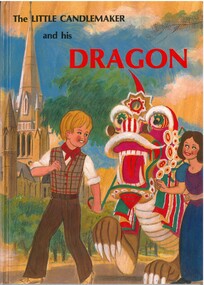
Book - TED BEATTIE COLLECTION: CHILDREN'S BOOK, 1985
... ...childrens' literature...CHINESE Ted Beattie childrens' literature John Kenney and illustrated by Tom Bishop The Little Candlemaker and His Dragon - copyright 1985 Lamplighter Books (J.A.H. and M.A. ...The Little Candlemaker and His Dragon - copyright 1985 Lamplighter Books (J.A.H. and M.A. Kenney Pty Ltd); 13 Earlsfield Rd, Hampton, Melbourne. Colour printed - Illustrations of Bendigo throughout; 26 pages National Library of Australia car and ISBN number 0 9595967 5 5John Kenney and illustrated by Tom Bishopchinese, ted beattie, childrens' literature -
Whitehorse Historical Society Inc.
Article, Authors on write track, 1/06/2008 12:00:00 AM
... ...Childrens' literature...Edwards Hazel Childrens' literature Hazel Edwards, author of more than 177 books, imparts her skills in a series of library workshops (photo) Hazel Edwards, author of more than 177 books, imparts her skills in a series of library workshops (photo) Authors on write track Article Article ...Hazel Edwards, author of more than 177 books, imparts her skills in a series of library workshops (photo)Hazel Edwards, author of more than 177 books, imparts her skills in a series of library workshops (photo)Hazel Edwards, author of more than 177 books, imparts her skills in a series of library workshops (photo)edwards, hazel, childrens' literature -
 Kilmore Historical Society
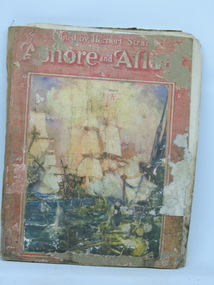
Ashore and Afloat, unknown
... ...childrens literature...Boys adventure book of short stories. glanville collection childrens literature 'Robert Glanville/Kilmore/Victoria', inside front cover Soft board with cloth spine showing image of a sailing ship which has been glued on to paper covering, very worn. ...Boys adventure book of short stories.Soft board with cloth spine showing image of a sailing ship which has been glued on to paper covering, very worn. Front & back covers have detached from body. Book is water damaged throughout with mildew on edges of first two pages. Loose pages. Evidence of previous insect damage. No page numbers - about 50 pp. Very poor condition.'Robert Glanville/Kilmore/Victoria', inside front coverglanville collection, childrens literature -
 Kilmore Historical Society
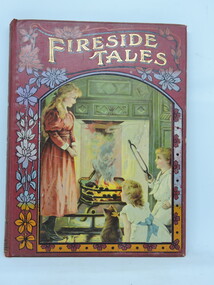
Fireside Tales, c1904
... ...childrens literature...Donated to Whitburgh Cottage museum early 1980's. flora mcdonald childrens literature whitburgh cottage collection Inside front cover, 'State School/No.2253/First/Prize/awarded to/Flora McDonald/Class 2/for/Years Work/A. ...Children's book of stories awarded to Flora McDonald in 1904. Donated to Whitburgh Cottage museum early 1980's.Red cloth-bound hardcover book, picture of three children in front of a fire and decorative flower motifs on front cover. Back cover stained with loss of colour. Fabric frayed at corners. Cover loose, binding loose. Coloured plate opposite title page. Illustrated. Gilt page edges. Fair-good condition.Inside front cover, 'State School/No.2253/First/Prize/awarded to/Flora McDonald/Class 2/for/Years Work/A. Worthington Head Teacher/Christmas 1904'. Front flyleaf, 'If this book should chance to roam/ Box its ears and send it home./To Flora McDonald'.flora mcdonald, childrens literature, whitburgh cottage collection -
 Kilmore Historical Society
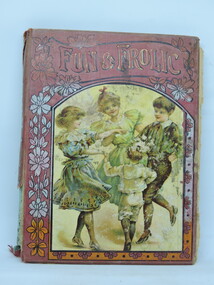
Fun & Frolic, c1904
... ...childrens literature...Donated to the Whitburgh Cottage museum c1982 by unknown person/s. flora mcdonald childrens literature whitburgh cottage collection Second flyleaf, 'Presented to/Flora McDonald/From her/Brother/Angus McDonald/5/9/04'. ...Book of children's stories given to Flora McDonald by her brother. Donated to the Whitburgh Cottage museum c1982 by unknown person/s.Red cloth-bound hardcover book, colour illustration of four dancing children bordered by floral motif on front cover, worn with loss of colour. Back cover stained with faded areas. Spine torn & partially missing. Cover separated from front. Loose binding, some loose pages, several pages with ragged edges. Pages gilt edged. Colour plate opposite title page. Illustrated. 144 pp. Poor condition.Second flyleaf, 'Presented to/Flora McDonald/From her/Brother/Angus McDonald/5/9/04'.flora mcdonald, childrens literature, whitburgh cottage collection -
 Kilmore Historical Society
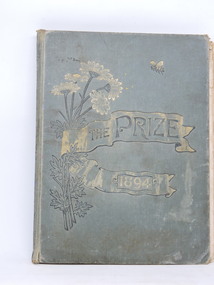
The Prize 1894, The Prize for Girls and Boys 1894, 1894
... ...childrens literature...Inscription inside back cover probably is a reference to the McDonald children - Angus, Jack,Tess, Elizabeth & Flora with cryptic address? mcdonald childrens literature whitburgh cottage collection Inside back cover, 'A.J.T.E.D.F.H.McD.F.R.I.S.G.V. ...Bound collection of "The Prize", from 1894, a monthly magazine for boys and girls. Inscription inside back cover probably is a reference to the McDonald children - Angus, Jack,Tess, Elizabeth & Flora with cryptic address?Green cloth-bound hardcover book. Cover faded, worn at corners & spine, separated from body. Ragged gilt edged pages Loose binding & pages. Foxing and staining throughout. Rear flyleaf and or pages missing. Ragged gilt edged pages. Front cover of each monthly magazine colour plate. Black & white illustrations throughout. Poor conditionInside back cover, 'A.J.T.E.D.F.H.McD.F.R.I.S.G.V. Australia'.mcdonald, childrens literature, whitburgh cottage collection -
 Kilmore Historical Society
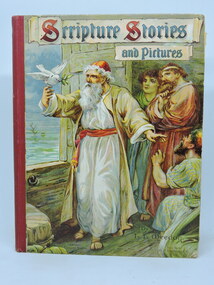
Scripture Stories, Scripture Stories and Pictures, c1909
... ...childrens literature...See inscriptions inside front page. religion flora mcdonald whitburgh cottage collection childrens literature Inside front cover, '25/12/09/To Flora - died 7- 10-1910/aged 15 years/With love from /her Mother - died 31-1-1910/Wishing you a Happy Xmas, & New Year'. ...Children's book of Scripture stories given to Flora McDonald Xmas 1909. See inscriptions inside front page.Board cover with cloth spine, stapled sections. Colour plate opposite title page, black & white illustrations throughout. Some loose pages, foxing and yellowing of pages. 88 pp. Good condition.Inside front cover, '25/12/09/To Flora - died 7- 10-1910/aged 15 years/With love from /her Mother - died 31-1-1910/Wishing you a Happy Xmas, & New Year'.religion, flora mcdonald, whitburgh cottage collection, childrens literature -
 Kilmore Historical Society
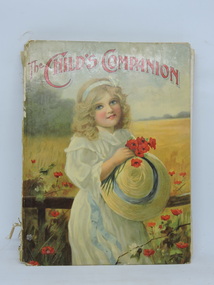
The Child's Companion, c1908
... ...childrens literature...Children's book given to Flora McDonald for her birthday in 1908 by her sister, Elizabeth. flora mcdonald childrens literature whitburgh cottage collection Front flyleaf, 'To Flora/Wishing you many happy returns/of the Day/from E. ...Children's book given to Flora McDonald for her birthday in 1908 by her sister, Elizabeth.Board cover separated from body, spine missing. Loose pages and binding. Title page missing. Advertisement inside front & back covers and back pages. 188 pp plus advertisements. Poor condition.Front flyleaf, 'To Flora/Wishing you many happy returns/of the Day/from E. McD./March 8th, 1908'.flora mcdonald, childrens literature, whitburgh cottage collection -
 Kilmore Historical Society
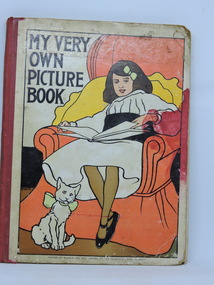
My Very Own Picture Book, c1903
... ...childrens literature...Donated to Whitburgh Cottage museum c1982. flora mcdonald childrens literature whitburgh cottage collection Page no's marked in pencil at top of each page. ...Awarded to Flora McDonald in 1903. Donated to Whitburgh Cottage museum c1982.Board cover with cloth spine, red-stain on front cover and worn corners. Foxing and marks throughout. Loose binding separated from front cover. Black & white illustrations throughout. 84 pp. Poor - fair condition.Page no's marked in pencil at top of each page. Certificate glued to front flyleaf, 'State School 2253/4th Prize/Flora/Awarded to/Flora McDonald/Class 1st/for/1st Home W. 1st Insp./H. Worthington Head Teacher/Decr. 1903'. Inside back cover 'Flora McDonald', handwritten cursive in pencil.flora mcdonald, childrens literature, whitburgh cottage collection -
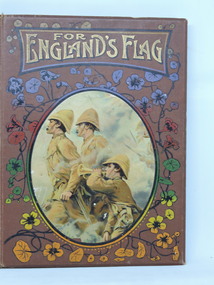 Kilmore Historical Society
For England's Flag, c1904
... ...childrens literature...Donated to Whitburgh Cottage museum c1982. mcdonald childrens literature whitburgh cottage collection Certificate glued to inside cover, 'State School/No. 2253/Second/Prize/Awarded to Don McDonald/Class Third /for/ Year's Work/H. ...Children's book of war stories awarded to Don McDonald in 1904. Donated to Whitburgh Cottage museum c1982. Cloth- bound hardcover book with oval-shaped colour plate attached to front cover. Some wear to cover edges. Binding loose but all pages intact. Foxing and miscellaneous marks through out, yellowed pages. Faded gilt-edged pages. Black and white illustrations, colour plate opposite title page. Advertisements back & front pages. 128 pp. Fair condition.Certificate glued to inside cover, 'State School/No. 2253/Second/Prize/Awarded to Don McDonald/Class Third /for/ Year's Work/H. Worthington Head Teacher/Christmas 1904'.mcdonald, childrens literature, whitburgh cottage collection -
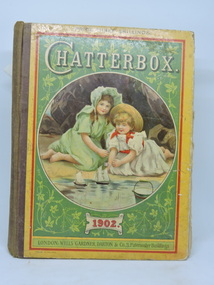 Kilmore Historical Society
Chatterbox, Chatterbox 1902, 1902
... Childrens Literature...It ceased publication in 1955. Childrens Literature Kilmore Mechanics Institute Library. ...Chatterbox was a weekly British paper of stories for children published in the 19th & 20 centuries. It was also published as an annual for much of its run, both in the UK and US. Chatterbox was founded in 1866 by John Erskine Clarke who edited the paper until 1902. It ceased publication in 1955.Card & cloth-bound hard cover book. Cover intact, a little worn at corners, detached from body of book. Loose pages. Binding unravelling. Yellowing of pages. 412 pp. plus advertisements.P.1- 14/262 (hand written). P.3 'To Don,/ - Wishing you/ a merry Xmas./ 1907./ From E.M W.'childrens literature, kilmore mechanics institute library. -
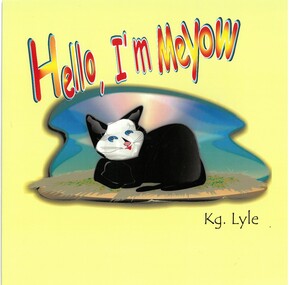 Bacchus Marsh & District Historical Society
Book, Hello, I'm Meyow
... ...Childrens Literature...Bacchus Marsh Writers Childrens Literature An illustrated children's book about the adventures of a cat. ...An illustrated children's book about the adventures of a cat. The story was created in 2006 for the author's grandchildren and later published for a wider audience. Self published by the author Kg (Ken) Lyle through Exibris Press, 2014. BMDHS Location: AR/R5/S5A printed book published in paperback edition. 21 pages. 220 mm x 220 mm. BMDHS Location: AR/R5/S5 An illustrated children's book about the adventures of a cat. The story was created in 2006 for the author's grandchildren and later published for a wider audience. Self published by the author Kg (Ken) Lyle through Exibris Press, 2014. BMDHS Location: AR/R5/S5bacchus marsh writers, childrens literature -
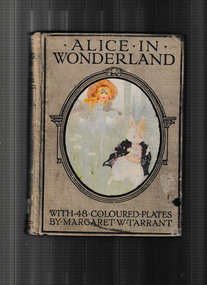 Mrs Aeneas Gunn Memorial Library
Book, Lewis Carroll, Alice's adventures in wonderland, ????
... Childrens literature...Childrens literature Fictional literature Commemorating the 150th anniversary of one of the most beloved classics of children's literature, this illustrated edition presents Alice like you've never seen her before. ...Commemorating the 150th anniversary of one of the most beloved classics of children's literature, this illustrated edition presents Alice like you've never seen her before. In 1865, Charles Lutwidge Dodgson, an Oxford mathematician and Anglican deacon, published a story about a little girl who tumbles down a rabbit hole. Thus was the world first introduced to Alice and her pseudonymous creator, Lewis Carroll.Ill, p.320.fictionCommemorating the 150th anniversary of one of the most beloved classics of children's literature, this illustrated edition presents Alice like you've never seen her before. In 1865, Charles Lutwidge Dodgson, an Oxford mathematician and Anglican deacon, published a story about a little girl who tumbles down a rabbit hole. Thus was the world first introduced to Alice and her pseudonymous creator, Lewis Carroll. childrens literature, fictional literature -
 Mrs Aeneas Gunn Memorial Library
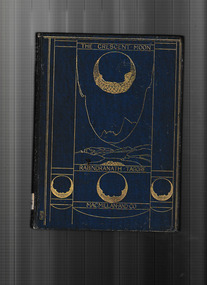
Book, Rabindranath Tagore, The crescent moon, 1913
... Bengali literature...Childrens...Bengali literature Childrens poetry A book of childrens poetry p.82. ...A book of childrens poetryp.82.fictionA book of childrens poetrybengali literature, childrens poetry -
 Federation University Historical Collection
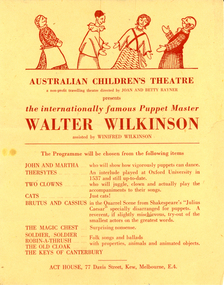
Document, Australian Children's Theatre Flyer
... This object was related to the teaching of children's literature as part of the Labrianship course at the Ballarat College of Advanced Education...This object was related to the teaching of children's literature as part of the Labrianship course at the Ballarat College of Advanced Education ballarat college of advanced education puppet puppetry theatre entertainment walter wilkinson Reddish brown ink printed onto white paper advertising a workshop by famous puppet master Walter Wilkinson for the Australian Children's Theatre to be held at ACT House, 77 Davis Street, Kew. ...This object was related to the teaching of children's literature as part of the Labrianship course at the Ballarat College of Advanced EducationReddish brown ink printed onto white paper advertising a workshop by famous puppet master Walter Wilkinson for the Australian Children's Theatre to be held at ACT House, 77 Davis Street, Kew. The flyer includes line drawings of 4 puppet characters along the top of the page.ballarat college of advanced education, puppet, puppetry, theatre, entertainment, walter wilkinson -
 Warrnambool Art Gallery
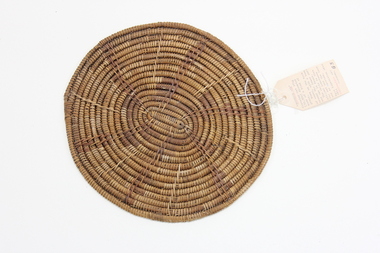
Pooneed-ke (child carrier), c. 1890-1920
... His wife Annie was a fantastic author and wrote children's literature which was serialised in the newspapers. ...His wife Annie was a fantastic author and wrote children's literature which was serialised in the newspapers. ...This mat was donated to the Museum by the Rev. Andrew Rule Osborn. Reverend Osborn donated several artefacts including Aboriginal artefacts, Zulu and Pacific Islander objects. The Reverend came over from Tasmania to serve here in Warrnambool. His wife Annie was a fantastic author and wrote children's literature which was serialised in the newspapers. She was a supporter of women's suffrage and also the first woman editor of The Age.A flat circular mat made from native Australian grasses. Indigenous Australians would use this as a baby-carrier on the back. One band would be placed around the lower back and mat and two higher up. The child would be placed between the back and the mat. It was also sometimes used as a sun shade or something to sit on. It is a spiral form with grasses woven around to bind it together.aboriginal, indigenous, child carrier, mat, native grasses, reverend andrew rule osborn, annie osborn, women, mothers -
 Flagstaff Hill Maritime Museum and Village
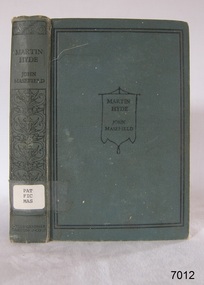
Book - Fictional Story, John Masefield, Martin Hyde The Dukes Messenger, 1928 to 1949
... The Darton family had been prominent publishers of children's literature in London since the 1780s. Under the leadership of F. ...The Darton family had been prominent publishers of children's literature in London since the 1780s. Under the leadership of F. ...Martin Hyde, the Duke's Messenger is a historical novel set in the late 17th century, following a young boy named Martin Hyde as he moves from a carefree childhood in rural Suffolk into a web of intrigue in London. Orphaned young, Martin goes to live with his uncle in London, where he becomes tangled up in royal conspiracies and secret missions. After his father's death in 1685, the 12-year-old goes to live with his uncle and eventually becomes messenger for James Scott, Duke of Monmouth, as Monmouth tries to build support for his claim to the English throne after the death of Charles II. It's often compared to Robert Louis Stevenson's Treasure Island or Kidnapped a boy's-own adventure that takes Martin overseas and eventually back to England to take part in the Monmouth Rebellion of 1685, with a rival working for the Crown whom he has to outwit. A reviewer also notes a small, restrained love-story thread Martin's messenger rival turns out to be a girl in disguise which nudges the book slightly outside the standard boys'-adventure genre of its era.Hard cover book. Martin Hyde “The Dukes Messenger” Author: John Masefield Publisher: Wells Gardner Darton & Co Date: 1928 to 1949 Further Information: Blue Cloth hardcover with lettering and patterning to spine in black. Publisher Logo to front cover with title & authors name. The spine has a Library label with an inscription.fictionMartin Hyde, the Duke's Messenger is a historical novel set in the late 17th century, following a young boy named Martin Hyde as he moves from a carefree childhood in rural Suffolk into a web of intrigue in London. Orphaned young, Martin goes to live with his uncle in London, where he becomes tangled up in royal conspiracies and secret missions. After his father's death in 1685, the 12-year-old goes to live with his uncle and eventually becomes messenger for James Scott, Duke of Monmouth, as Monmouth tries to build support for his claim to the English throne after the death of Charles II. It's often compared to Robert Louis Stevenson's Treasure Island or Kidnapped a boy's-own adventure that takes Martin overseas and eventually back to England to take part in the Monmouth Rebellion of 1685, with a rival working for the Crown whom he has to outwit. A reviewer also notes a small, restrained love-story thread Martin's messenger rival turns out to be a girl in disguise which nudges the book slightly outside the standard boys'-adventure genre of its era.warrnambool, shipwrecked-coast, flagstaff-hill, flagstaff-hill-maritime-museum, maritime-museum, shipwreck-coast, flagstaff-hill-maritime-village, shipwrecked-artefact, martin hyde the dukes messenger, john masefield, book, warrnambool mechanics’ institute, pattison collection, warrnambool library, ralph eric pattison, corangamite regional library service, warrnambool city librarian, mechanics’ institute library, victorian library board, warrnambool books and records, warrnambool children’s library -
 Flagstaff Hill Maritime Museum and Village
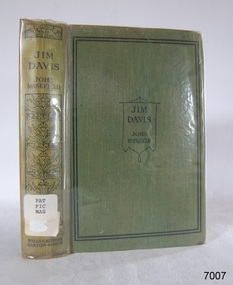
Book - Fictional Story, John Masefield, Jim Davis, 1912-1220s
... The Darton family had been prominent publishers of children's literature in London since the 1780s. Under the leadership of F. ...The Darton family had been prominent publishers of children's literature in London since the 1780s. Under the leadership of F. ...Jim Davis is a classic British sea-adventure novel written for young adults. Set along the Devon coast of England in 1812, the story follows a twelve-year-old orphan named Jim Davis. While exploring local caves and coastlines, Jim inadvertently stumbles upon a ring of night-riders and smugglers led by a fierce, charismatic captain named Marah. To protect their operational secrets, the smugglers kidnap Jim and take him to sea. The novel details his reluctant adventures aboard smuggling luggers, evasions of the coastguard, skirmishes, and his eventual effort to escape and return to civilian life.Hard cover book. Jim Davis Author: John Masefield Publisher: Wells Gardner Darton & Co Date: 1912-1920s Further Information: Green Cloth hardcover with lettering and patterning to spine in black. The spine has a Library label with an inscription.fictionJim Davis is a classic British sea-adventure novel written for young adults. Set along the Devon coast of England in 1812, the story follows a twelve-year-old orphan named Jim Davis. While exploring local caves and coastlines, Jim inadvertently stumbles upon a ring of night-riders and smugglers led by a fierce, charismatic captain named Marah. To protect their operational secrets, the smugglers kidnap Jim and take him to sea. The novel details his reluctant adventures aboard smuggling luggers, evasions of the coastguard, skirmishes, and his eventual effort to escape and return to civilian life.warrnambool, shipwrecked-coast, flagstaff-hill, flagstaff-hill-maritime-museum, maritime-museum, shipwreck-coast, flagstaff-hill-maritime-village, shipwrecked-artefact, book, jim davis, john masefield, warrnambool mechanics’ institute, pattison collection, warrnambool library, ralph eric pattison, corangamite regional library service, warrnambool city librarian, mechanics’ institute library, victorian library board, warrnambool books and records, warrnambool children’s library -
City of Moorabbin Historical Society (Operating the Box Cottage Museum)
Newsletter, City of Moorabbin Historical Society No. 7 Vol. 12 December 1973, City of Moorabbin Historical Society No. 7 Vol. 12 December 1973, 1973
... Topics ; Kyneton ; Living local history; Australian Childrens' Literature LaTrobe Library; The Aims of the CMHS are ‘to record the history of the City, and register something of the Australian Atmosphere, which the necessary speed-up in post-world-war two (WW11) immigration has caused to be lost; to produce a magazine at regular intervals, featuring the work of pioneers and the changing Australian scene; to work constantly with a long range view towards building a hall where records and exhibits can be housed’ (1961) The Original Newsletters reflect the history and heritage of the former City of Moorabbin — derived from Mooroobin, ‘a resting place’ in the Bunurrung spoken language. ...Topics ; Kyneton ; Living local history; Australian Childrens' Literature LaTrobe Library; The Aims of the CMHS are ‘to record the history of the City, and register something of the Australian Atmosphere, which the necessary speed-up in post-world-war two (WW11) immigration has caused to be lost; to produce a magazine at regular intervals, featuring the work of pioneers and the changing Australian scene; to work constantly with a long range view towards building a hall where records and exhibits can be housed’ (1961) The Original Newsletters reflect the history and heritage of the former City of Moorabbin — derived from Mooroobin, ‘a resting place’ in the Bunurrung spoken language. ...Topics ; Kyneton ; Living local history; Australian Childrens' Literature LaTrobe Library; The Aims of the CMHS are ‘to record the history of the City, and register something of the Australian Atmosphere, which the necessary speed-up in post-world-war two (WW11) immigration has caused to be lost; to produce a magazine at regular intervals, featuring the work of pioneers and the changing Australian scene; to work constantly with a long range view towards building a hall where records and exhibits can be housed’ (1961) The Original Newsletters reflect the history and heritage of the former City of Moorabbin — derived from Mooroobin, ‘a resting place’ in the Bunurrung spoken language. In 1994, the City of Moorabbin was integrated into the Cities of Bayside, Glen Eira, Kingston and Monash. This is Newsletter No. 7 Vol. 12 of the CMHS December 1973 CMHS obtained a Kingston City Council Community Grant 2016 for the digitization and preservation of these Original CMHS Newsletters commenced in 1961 3 pages x L 26cm x W 21cm printed one side CITY OF MOORABBIN HISTORICAL SOCIETY / President / Mrs C Whitehead Secretary Mrs N. Blackman / NEWSLETTER / Vol 12 No 7 December 1973 city of moorabbin historical society 1961, sheehy t.a., newsletters, kyneton victoria, -
 Federation University Historical Collection
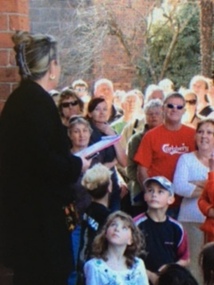
Article - Article - Women, Ballarat College of Advanced Education: Anne Stewart; Librarianship Storyteller
... Stewart is a senior writer for the 'Swag of Yarns' and has worn the prestigious storytellers Cape at Dromkeen, an institution that nurtures and develops children's literature. Returning to her alma mater in 2007 Anne E. ...Stewart is a senior writer for the 'Swag of Yarns' and has worn the prestigious storytellers Cape at Dromkeen, an institution that nurtures and develops children's literature. Returning to her alma mater in 2007 Anne E. ...Anne completed her secondary education at Presentation College Windsor. She left Melbourne to study Librarianship at Ballarat College of Advanced Education and completed a Graduate Diploma of Librarianship in 1981 and a Graduate Diploma of Education in 1986. During her studies Anne E. Stewart produced weekly shows on 3BBB Community Radio Ballarat, `As the assistant children's librarian at Geelong in 1987 Anne E. Stewart drove the Jolly Jumbuck storytelling van to various local sites, gathered the children and told a story. A keen community player Anne E. Stewart has fulfilled a number of pro bono roles such as the President of the Australian Storytelling Guild (Vic Branch), and Council President of the Daylesford Primary School. Anne E. Stewart is a senior writer for the 'Swag of Yarns' and has worn the prestigious storytellers Cape at Dromkeen, an institution that nurtures and develops children's literature. Returning to her alma mater in 2007 Anne E. Stewart developed a ghost tour through the historic Ballarat School of Mines (SMB) campus. Established in 1870, and incorporating a former gaol, the SMB ghosts came to life as she enthralled numerous groups visiting the campus on Open Day 2007, 2008 and 2009. In 2009 Anne E. Stewart was a principal teller at the Scottish International Storytelling Festival at Edinburgh.women of note, ballarat college of advanced education, anne stewart, presentaion college windsor, librarianship, graduate diploma of librarianship, graduate diploma of education, community radio, geelong library, jolly jumbuck van, storytelling, australian storytelling guild, daylesford primary school, swag of yarns, cape at dromkeen, children's literature, ghost tours, school of mines ballarat -
 Federation University Historical Collection
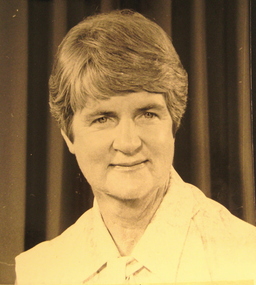
Article - Article - Women, Ballarat Teachers' College: Women of Note: Mary Egan (1922-1981)
... Mary Egan joined the Ballarat Teachers' College (BTC) staff in 1958, starting a 23 year career specialising in language curriculum (ie children's literacy and literature). She was still on staff when all teachers colleges became State Colleges during the early 1970s. ...Mary Egan joined the Ballarat Teachers' College (BTC) staff in 1958, starting a 23 year career specialising in language curriculum (ie children's literacy and literature). She was still on staff when all teachers colleges became State Colleges during the early 1970s. ...Mary Egan was one of Ballarat's best-loved and respected educators. Commencing her teaching career as a student-teacher at Bacchus Marsh, she undertook teacher training at Melbourne Teachers' College (1941-1942). She taught in the Mildura district before returning to Ballarat in 1953, teaching infant grades at Humffray Street State School. Mary Egan joined the Ballarat Teachers' College (BTC) staff in 1958, starting a 23 year career specialising in language curriculum (ie children's literacy and literature). She was still on staff when all teachers colleges became State Colleges during the early 1970s. Along with other members of the State College Victoria, Ballarat (SCVB) staff, Mary's lecturing career continued when SCVB merged with the tertiary section of SMB at Mt Helen, later known as the Ballarat College of Advanced Education (BCAE). Mary is known throughout the state for her work in teacher-training, particularly for the teaching of reading and language. A collection of specialist teaching books in the E.J. Barker Library is named as a memorial to Mary Egan,mary egan, melbourne teachers' college, humffray street state school, ballarat teachers' college, staff, ballarat college of advanced education, e j barker library, memorial, state college of victoria ballarat, scvb, literacy and literature, teacher-training, women of note -
 Flagstaff Hill Maritime Museum and Village
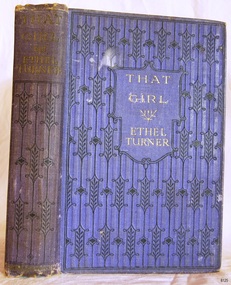
Book, That Girl
... Ethel Mary Turner Ethel Turner (25th January 1872 – 8th April 1958) was an English-born Australian novelist and children's literature writer. She was born Ethel Mary Burwell in Doncaster in England. ...Ethel Mary Turner Ethel Turner (25th January 1872 – 8th April 1958) was an English-born Australian novelist and children's literature writer. She was born Ethel Mary Burwell in Doncaster in England. ...This item is from the ‘Pattison Collection’, a collection of books and records that was originally owned by the Warrnambool Mechanics’ Institute, which was founded in Warrnambool in 1853. By 1886 the Warrnambool Mechanics’ Institute (WMI) had grown to have a Library, Museum and Fine Arts Gallery, with a collection of “… choice productions of art, and valuable specimens in almost every branch and many wonderful national curiosities are now to be seen there, including historic relics of the town and district.” It later included a School of Design. Although it was very well patronised, the lack of financial support led the WMI in 1911 to ask the City Council to take it over. In 1935 Ralph Pattison was appointed as City Librarian to establish and organise the Warrnambool Library as it was then called. When the WMI building was pulled down in 1963 a new civic building was erected on the site and the new Warrnambool Library, on behalf of the City Council, took over all the holdings of the WMI. At this time some of the items were separated and identified as the ‘Pattison Collection’, named after Ralph Pattison. Eventually the components of the WMI were distributed from the Warrnambool Library to various places, including the Art Gallery, Historical Society and Flagstaff Hill. Later some were even distributed to other regional branches of Corangamite Regional Library and passed to and fro. It is difficult now to trace just where all of the items have ended up. The books at Flagstaff Hill Maritime Village generally display stamps and markings from Pattison as well as a variety of other institutions including the Mechanics’ Institute itself. RALPH ERIC PATTISON Ralph Eric Pattison was born in Rockhampton, Queensland, in 1891. He married Maude Swan from Warrnambool in 1920 and they set up home in Warrnambool. In 1935 Pattison accepted a position as City Librarian for the Warrnambool City Council. His huge challenge was to make a functional library within two rooms of the Mechanics’ Institute. He tirelessly cleaned, cleared and sorted a disarrayed collection of old books, jars of preserved specimens and other items reserved for exhibition in the city’s museum. He developed and updated the library with a wide variety of books for all tastes, including reference books for students; a difficult task to fulfil during the years following the Depression. He converted all of the lower area of the building into a library, reference room and reading room for members and the public. The books were sorted and stored using a cataloguing and card index system that he had developed himself. He also prepared the upper floor of the building and established the Art Gallery and later the Museum, a place to exhibit the many old relics that had been stored for years for this purpose. One of the treasures he found was a beautiful ancient clock, which he repaired, restored and enjoyed using in his office during the years of his service there. Ralph Pattison was described as “a meticulous gentleman whose punctuality, floorless courtesy and distinctive neat dress were hallmarks of his character, and ‘his’ clock controlled his daily routine, and his opening and closing of the library’s large heavy doors to the minute.” Pattison took leave during 1942 to 1945 to serve in the Royal Australian Navy, Volunteer Reserve as Lieutenant. A few years later he converted one of the Museum’s rooms into a Children’s Library, stocking it with suitable books for the younger generation. This was an instant success. In the 1950’s he had the honour of being appointed to the Victorian Library Board and received more inspiration from the monthly conferences in Melbourne. He was sadly retired in 1959 after over 23 years of service, due to the fact that he had gone over the working age of council officers. However he continued to take a very keen interest in the continual development of the Library until his death in 1969. Ethel Mary Turner Ethel Turner (25th January 1872 – 8th April 1958) was an English-born Australian novelist and children's literature writer. She was born Ethel Mary Burwell in Doncaster in England. Her father died when she was two, leaving her mother Sarah Jane Burwell with two daughters (Ethel and Lillian). A year later, Ethel’s mother married Henry Turner, who was 20 years older and had six children of his own. Sarah Jane and Henry had a daughter, Rose. Henry Turner died suddenly, leaving Sarah Jane with nine children and little income. In 1879 Sarah Jane moved to Australia with Ethel, Lillian, and Rose; within the next two years she married Charles Cope and gave birth to his son Rex. Ethel Turner was educated at Paddington, New South Wales Public School and Sydney Girls High School she was one of the school's original thirty-seven pupils. Ethel started her writing career at eighteen, founding the Parthenon, a journal for young people, with her sister Lillian. Writing as “Dame Durden”, she wrote children's columns for the Illustrated Sydney News and later for the Australian Town and Country Journal. In 1891 the family moved to Woodlands, a large house in Lindfield, now Killara, which was then out in the country. Woodlands still stands today in Werona Avenue and is where she wrote “Seven Little Australians”. In 1896 Ethel married Herbert Curlewis, a lawyer. After living in Mosman, they built their own house overlooking Middle Harbour. The house, Avenel, is where Ethel Turner spent the rest of her years. She survived her daughter Jean Curlewis, who died of tuberculosis, by 28 years. Jean was also a writer of children's books, although not as popular as her mother. Jean's works include “The Ship That Never Set Sail”, “Drowning Maze”, and “Beach Beyond (1923)”. Her son Adrian, was a Barrister, Captain in WW2 and a Changi and Thai-Burma Railway POW and later a Judge. Ethel Turner died at Mosman on 8 April 1958 at 85. She is buried at Macquarie Park Her best-known work is her first novel, Seven Little Australians (1894), which is widely considered a classic of Australian children's literature and was an instant hit both in Australia and overseas. It is about a family of seven children growing up in Australia. The book, together with its sequels “The Family at Misrule” (1895) and “Little Mother Meg” (1902) that deal with the lives of the Wolcott family, particularly with its seven mischievous children in 1880s Australia. A companion to "Seven Little Australians", “Judy and Punch” was published in 1928. Like her stepfather, the character of Captain Woollcott was a widower with six children. The book was made into a feature film in Australia in 1939 and a UK television series in 1953. A 10-episode television series was made in 1973 by the Australian Broadcasting Corporation. Turner published a number of other books for children, short stories and poems. “Three Little Maids” (1900) is a strongly autobiographical novel about her family's migration from England to Sydney, Australia. Turner wrote more than forty novels. Some were about the mischievous Wolcott’s. Others were serialized, like her books on "the Cub", and some were stand-alone. The children she wrote about were all adventurous and independent. They frequently got themselves into sticky situations and got themselves out of them with very little to no adult help. Turner was awarded a number of prestigious literary awards and could be considered one of Australia's best-loved authors. She is listed on The Australian Women's Register. The Ethel Turner Prize for Young People's Literature is given annually under the auspices of the New South Wales Premier's Literary Awards. Ref Ethel Mary Turner, Biography: https://en.wikipedia.org/wiki/Ethel_Turner The Pattison Collection, along with other items at Flagstaff Hill Maritime Village, was originally part of the Warrnambool Mechanics' Institute’s collection. The Warrnambool Mechanics’ Institute Collection is primarily significant in its totality, rather than for the individual objects it contains. Its contents are highly representative of the development of Mechanics' Institute libraries across Australia, particularly Victoria. A diversity of publications and themes has been amassed, and these provide clues to our understanding of the nature of and changes in the reading habits of Victorians from the 1850s to the middle of the 20th century. The collection also highlights the Warrnambool community’s commitment to the Mechanics’ Institute, reading, literacy and learning in the regions, and proves that access to knowledge was not impeded by distance. These items help to provide a more complete picture of our community’s ideals and aspirations. The Warrnambool Mechanics Institute book collection has historical and social significance for its strong association with the Mechanics Institute movement and the important role it played in the intellectual, cultural and social development of people throughout the latter part of the nineteenth century and the early twentieth century. The collection of books is a rare example of an early lending library and its significance is enhanced by the survival of an original collection of many volumes. The Warrnambool Mechanics' Institute’s publication collection is of both local and state significance. That Girl Author: Ethel Turner Publisher: Ward, Lock & Co illustrations by Frances Ewan Date: 1920warrnambool, shipwrecked-coast, flagstaff-hill, flagstaff-hill-maritime-museum, maritime-museum, shipwreck-coast, flagstaff-hill-maritime-village, shipwrecked-artefact, book, pattison collection, warrnambool library, warrnambool mechanics’ institute, ralph eric pattison, corangamite regional library service, warrnambool city librarian, mechanics’ institute library, victorian library board, warrnambool books and records, warrnambool children’s library, great ocean road, that girl, ethel turner, frances ewan -
 Flagstaff Hill Maritime Museum and Village
Book, Betty & Co
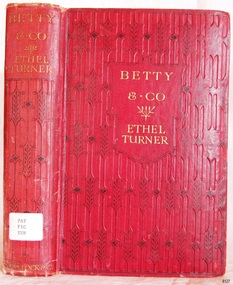
... Ethel Mary Turner Ethel Turner (25th January 1872 – 8th April 1958) was an English-born Australian novelist and children's literature writer. She was born Ethel Mary Burwell in Doncaster in England. ...Ethel Mary Turner Ethel Turner (25th January 1872 – 8th April 1958) was an English-born Australian novelist and children's literature writer. She was born Ethel Mary Burwell in Doncaster in England. ...This item is from the ‘Pattison Collection’, a collection of books and records that was originally owned by the Warrnambool Mechanics’ Institute, which was founded in Warrnambool in 1853. By 1886 the Warrnambool Mechanics’ Institute (WMI) had grown to have a Library, Museum and Fine Arts Gallery, with a collection of “… choice productions of art, and valuable specimens in almost every branch and many wonderful national curiosities are now to be seen there, including historic relics of the town and district.” It later included a School of Design. Although it was very well patronised, the lack of financial support led the WMI in 1911 to ask the City Council to take it over. In 1935 Ralph Pattison was appointed as City Librarian to establish and organise the Warrnambool Library as it was then called. When the WMI building was pulled down in 1963 a new civic building was erected on the site and the new Warrnambool Library, on behalf of the City Council, took over all the holdings of the WMI. At this time some of the items were separated and identified as the ‘Pattison Collection’, named after Ralph Pattison. Eventually the components of the WMI were distributed from the Warrnambool Library to various places, including the Art Gallery, Historical Society and Flagstaff Hill. Later some were even distributed to other regional branches of Corangamite Regional Library and passed to and fro. It is difficult now to trace just where all of the items have ended up. The books at Flagstaff Hill Maritime Village generally display stamps and markings from Pattison as well as a variety of other institutions including the Mechanics’ Institute itself. RALPH ERIC PATTISON Ralph Eric Pattison was born in Rockhampton, Queensland, in 1891. He married Maude Swan from Warrnambool in 1920 and they set up home in Warrnambool. In 1935 Pattison accepted a position as City Librarian for the Warrnambool City Council. His huge challenge was to make a functional library within two rooms of the Mechanics’ Institute. He tirelessly cleaned, cleared and sorted a disarrayed collection of old books, jars of preserved specimens and other items reserved for exhibition in the city’s museum. He developed and updated the library with a wide variety of books for all tastes, including reference books for students; a difficult task to fulfil during the years following the Depression. He converted all of the lower area of the building into a library, reference room and reading room for members and the public. The books were sorted and stored using a cataloguing and card index system that he had developed himself. He also prepared the upper floor of the building and established the Art Gallery and later the Museum, a place to exhibit the many old relics that had been stored for years for this purpose. One of the treasures he found was a beautiful ancient clock, which he repaired, restored and enjoyed using in his office during the years of his service there. Ralph Pattison was described as “a meticulous gentleman whose punctuality, floorless courtesy and distinctive neat dress were hallmarks of his character, and ‘his’ clock controlled his daily routine, and his opening and closing of the library’s large heavy doors to the minute.” Pattison took leave during 1942 to 1945 to serve in the Royal Australian Navy, Volunteer Reserve as Lieutenant. A few years later he converted one of the Museum’s rooms into a Children’s Library, stocking it with suitable books for the younger generation. This was an instant success. In the 1950’s he had the honour of being appointed to the Victorian Library Board and received more inspiration from the monthly conferences in Melbourne. He was sadly retired in 1959 after over 23 years of service, due to the fact that he had gone over the working age of council officers. However he continued to take a very keen interest in the continual development of the Library until his death in 1969. Ethel Mary Turner Ethel Turner (25th January 1872 – 8th April 1958) was an English-born Australian novelist and children's literature writer. She was born Ethel Mary Burwell in Doncaster in England. Her father died when she was two, leaving her mother Sarah Jane Burwell with two daughters (Ethel and Lillian). A year later, Ethel’s mother married Henry Turner, who was 20 years older and had six children of his own. Sarah Jane and Henry had a daughter, Rose. Henry Turner died suddenly, leaving Sarah Jane with nine children and little income. In 1879 Sarah Jane moved to Australia with Ethel, Lillian, and Rose; within the next two years she married Charles Cope and gave birth to his son Rex. Ethel Turner was educated at Paddington, New South Wales Public School and Sydney Girls High School she was one of the school's original thirty-seven pupils. Ethel started her writing career at eighteen, founding the Parthenon, a journal for young people, with her sister Lillian. Writing as “Dame Durden”, she wrote children's columns for the Illustrated Sydney News and later for the Australian Town and Country Journal. In 1891 the family moved to Woodlands, a large house in Lindfield, now Killara, which was then out in the country. Woodlands still stands today in Werona Avenue and is where she wrote “Seven Little Australians”. In 1896 Ethel married Herbert Curlewis, a lawyer. After living in Mosman, they built their own house overlooking Middle Harbour. The house, Avenel, is where Ethel Turner spent the rest of her years. She survived her daughter Jean Curlewis, who died of tuberculosis, by 28 years. Jean was also a writer of children's books, although not as popular as her mother. Jean's works include “The Ship That Never Set Sail”, “Drowning Maze”, and “Beach Beyond (1923)”. Her son Adrian, was a Barrister, Captain in WW2 and a Changi and Thai-Burma Railway POW and later a Judge. Ethel Turner died at Mosman on 8 April 1958 at 85. She is buried at Macquarie Park Her best-known work is her first novel, Seven Little Australians (1894), which is widely considered a classic of Australian children's literature and was an instant hit both in Australia and overseas. It is about a family of seven children growing up in Australia. The book, together with its sequels “The Family at Misrule” (1895) and “Little Mother Meg” (1902) that deal with the lives of the Wolcott family, particularly with its seven mischievous children in 1880s Australia. A companion to "Seven Little Australians", “Judy and Punch” was published in 1928. Like her stepfather, the character of Captain Woollcott was a widower with six children. The book was made into a feature film in Australia in 1939 and a UK television series in 1953. A 10-episode television series was made in 1973 by the Australian Broadcasting Corporation. Turner published a number of other books for children, short stories and poems. “Three Little Maids” (1900) is a strongly autobiographical novel about her family's migration from England to Sydney, Australia. Turner wrote more than forty novels. Some were about the mischievous Wolcott’s. Others were serialized, like her books on "the Cub", and some were stand-alone. The children she wrote about were all adventurous and independent. They frequently got themselves into sticky situations and got themselves out of them with very little to no adult help. Turner was awarded a number of prestigious literary awards and could be considered one of Australia's best-loved authors. She is listed on The Australian Women's Register. The Ethel Turner Prize for Young People's Literature is given annually under the auspices of the New South Wales Premier's Literary Awards. Ref Ethel Mary Turner, Biography: https://en.wikipedia.org/wiki/Ethel_Turner The Pattison Collection, along with other items at Flagstaff Hill Maritime Village, was originally part of the Warrnambool Mechanics' Institute’s collection. The Warrnambool Mechanics’ Institute Collection is primarily significant in its totality, rather than for the individual objects it contains. Its contents are highly representative of the development of Mechanics' Institute libraries across Australia, particularly Victoria. A diversity of publications and themes has been amassed, and these provide clues to our understanding of the nature of and changes in the reading habits of Victorians from the 1850s to the middle of the 20th century. The collection also highlights the Warrnambool community’s commitment to the Mechanics’ Institute, reading, literacy and learning in the regions, and proves that access to knowledge was not impeded by distance. These items help to provide a more complete picture of our community’s ideals and aspirations. The Warrnambool Mechanics Institute book collection has historical and social significance for its strong association with the Mechanics Institute movement and the important role it played in the intellectual, cultural and social development of people throughout the latter part of the nineteenth century and the early twentieth century. The collection of books is a rare example of an early lending library and its significance is enhanced by the survival of an original collection of many volumes. The Warrnambool Mechanics' Institute’s publication collection is of both local and state significance. Betty & Co Author: Ethel Turner Publisher: Ward, Lock & Co Date: 1903Label on spine cover with typed text PAT FIC TUR Pastedown front endpaper has sticker from Warrnambool Children’s Library covered by a sticker from Corangamite Regional Library Servicewarrnambool, shipwrecked-coast, flagstaff-hill, flagstaff-hill-maritime-museum, maritime-museum, shipwreck-coast, flagstaff-hill-maritime-village, shipwrecked-artefact, book, pattison collection, warrnambool library, warrnambool mechanics’ institute, ralph eric pattison, corangamite regional library service, warrnambool city librarian, mechanics’ institute library, victorian library board, warrnambool books and records, warrnambool children’s library, great ocean road, betty & co, ethel turner -
 Flagstaff Hill Maritime Museum and Village
Book, A White Roof-Tree
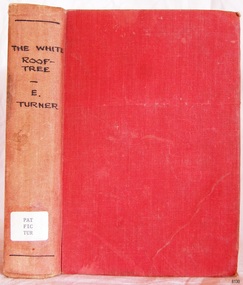
... Ethel Mary Turner Ethel Turner (25th January 1872 – 8th April 1958) was an English-born Australian novelist and children's literature writer. She was born Ethel Mary Burwell in Doncaster in England. ...Ethel Mary Turner Ethel Turner (25th January 1872 – 8th April 1958) was an English-born Australian novelist and children's literature writer. She was born Ethel Mary Burwell in Doncaster in England. ...This item is from the ‘Pattison Collection’, a collection of books and records that was originally owned by the Warrnambool Mechanics’ Institute, which was founded in Warrnambool in 1853. By 1886 the Warrnambool Mechanics’ Institute (WMI) had grown to have a Library, Museum and Fine Arts Gallery, with a collection of “… choice productions of art, and valuable specimens in almost every branch and many wonderful national curiosities are now to be seen there, including historic relics of the town and district.” It later included a School of Design. Although it was very well patronised, the lack of financial support led the WMI in 1911 to ask the City Council to take it over. In 1935 Ralph Pattison was appointed as City Librarian to establish and organise the Warrnambool Library as it was then called. When the WMI building was pulled down in 1963 a new civic building was erected on the site and the new Warrnambool Library, on behalf of the City Council, took over all the holdings of the WMI. At this time some of the items were separated and identified as the ‘Pattison Collection’, named after Ralph Pattison. Eventually the components of the WMI were distributed from the Warrnambool Library to various places, including the Art Gallery, Historical Society and Flagstaff Hill. Later some were even distributed to other regional branches of Corangamite Regional Library and passed to and fro. It is difficult now to trace just where all of the items have ended up. The books at Flagstaff Hill Maritime Village generally display stamps and markings from Pattison as well as a variety of other institutions including the Mechanics’ Institute itself. RALPH ERIC PATTISON Ralph Eric Pattison was born in Rockhampton, Queensland, in 1891. He married Maude Swan from Warrnambool in 1920 and they set up home in Warrnambool. In 1935 Pattison accepted a position as City Librarian for the Warrnambool City Council. His huge challenge was to make a functional library within two rooms of the Mechanics’ Institute. He tirelessly cleaned, cleared and sorted a disarrayed collection of old books, jars of preserved specimens and other items reserved for exhibition in the city’s museum. He developed and updated the library with a wide variety of books for all tastes, including reference books for students; a difficult task to fulfil during the years following the Depression. He converted all of the lower area of the building into a library, reference room and reading room for members and the public. The books were sorted and stored using a cataloguing and card index system that he had developed himself. He also prepared the upper floor of the building and established the Art Gallery and later the Museum, a place to exhibit the many old relics that had been stored for years for this purpose. One of the treasures he found was a beautiful ancient clock, which he repaired, restored and enjoyed using in his office during the years of his service there. Ralph Pattison was described as “a meticulous gentleman whose punctuality, floorless courtesy and distinctive neat dress were hallmarks of his character, and ‘his’ clock controlled his daily routine, and his opening and closing of the library’s large heavy doors to the minute.” Pattison took leave during 1942 to 1945 to serve in the Royal Australian Navy, Volunteer Reserve as Lieutenant. A few years later he converted one of the Museum’s rooms into a Children’s Library, stocking it with suitable books for the younger generation. This was an instant success. In the 1950’s he had the honour of being appointed to the Victorian Library Board and received more inspiration from the monthly conferences in Melbourne. He was sadly retired in 1959 after over 23 years of service, due to the fact that he had gone over the working age of council officers. However he continued to take a very keen interest in the continual development of the Library until his death in 1969. Ethel Mary Turner Ethel Turner (25th January 1872 – 8th April 1958) was an English-born Australian novelist and children's literature writer. She was born Ethel Mary Burwell in Doncaster in England. Her father died when she was two, leaving her mother Sarah Jane Burwell with two daughters (Ethel and Lillian). A year later, Ethel’s mother married Henry Turner, who was 20 years older and had six children of his own. Sarah Jane and Henry had a daughter, Rose. Henry Turner died suddenly, leaving Sarah Jane with nine children and little income. In 1879 Sarah Jane moved to Australia with Ethel, Lillian, and Rose; within the next two years she married Charles Cope and gave birth to his son Rex. Ethel Turner was educated at Paddington, New South Wales Public School and Sydney Girls High School she was one of the school's original thirty-seven pupils. Ethel started her writing career at eighteen, founding the Parthenon, a journal for young people, with her sister Lillian. Writing as “Dame Durden”, she wrote children's columns for the Illustrated Sydney News and later for the Australian Town and Country Journal. In 1891 the family moved to Woodlands, a large house in Lindfield, now Killara, which was then out in the country. Woodlands still stands today in Werona Avenue and is where she wrote “Seven Little Australians”. In 1896 Ethel married Herbert Curlewis, a lawyer. After living in Mosman, they built their own house overlooking Middle Harbour. The house, Avenel, is where Ethel Turner spent the rest of her years. She survived her daughter Jean Curlewis, who died of tuberculosis, by 28 years. Jean was also a writer of children's books, although not as popular as her mother. Jean's works include “The Ship That Never Set Sail”, “Drowning Maze”, and “Beach Beyond (1923)”. Her son Adrian, was a Barrister, Captain in WW2 and a Changi and Thai-Burma Railway POW and later a Judge. Ethel Turner died at Mosman on 8 April 1958 at 85. She is buried at Macquarie Park Her best-known work is her first novel, Seven Little Australians (1894), which is widely considered a classic of Australian children's literature and was an instant hit both in Australia and overseas. It is about a family of seven children growing up in Australia. The book, together with its sequels “The Family at Misrule” (1895) and “Little Mother Meg” (1902) that deal with the lives of the Wolcott family, particularly with its seven mischievous children in 1880s Australia. A companion to "Seven Little Australians", “Judy and Punch” was published in 1928. Like her stepfather, the character of Captain Woollcott was a widower with six children. The book was made into a feature film in Australia in 1939 and a UK television series in 1953. A 10-episode television series was made in 1973 by the Australian Broadcasting Corporation. Turner published a number of other books for children, short stories and poems. “Three Little Maids” (1900) is a strongly autobiographical novel about her family's migration from England to Sydney, Australia. Turner wrote more than forty novels. Some were about the mischievous Wolcott’s. Others were serialized, like her books on "the Cub", and some were stand-alone. The children she wrote about were all adventurous and independent. They frequently got themselves into sticky situations and got themselves out of them with very little to no adult help. Turner was awarded a number of prestigious literary awards and could be considered one of Australia's best-loved authors. She is listed on The Australian Women's Register. The Ethel Turner Prize for Young People's Literature is given annually under the auspices of the New South Wales Premier's Literary Awards. Ref Ethel Mary Turner, Biography: https://en.wikipedia.org/wiki/Ethel_Turner The Pattison Collection, along with other items at Flagstaff Hill Maritime Village, was originally part of the Warrnambool Mechanics' Institute’s collection. The Warrnambool Mechanics’ Institute Collection is primarily significant in its totality, rather than for the individual objects it contains. Its contents are highly representative of the development of Mechanics' Institute libraries across Australia, particularly Victoria. A diversity of publications and themes has been amassed, and these provide clues to our understanding of the nature of and changes in the reading habits of Victorians from the 1850s to the middle of the 20th century. The collection also highlights the Warrnambool community’s commitment to the Mechanics’ Institute, reading, literacy and learning in the regions, and proves that access to knowledge was not impeded by distance. These items help to provide a more complete picture of our community’s ideals and aspirations. The Warrnambool Mechanics Institute book collection has historical and social significance for its strong association with the Mechanics Institute movement and the important role it played in the intellectual, cultural and social development of people throughout the latter part of the nineteenth century and the early twentieth century. The collection of books is a rare example of an early lending library and its significance is enhanced by the survival of an original collection of many volumes. The Warrnambool Mechanics' Institute’s publication collection is of both local and state significance. A White Roof-Tree Author: Ethel Turner Publisher: Ward, Lock & Co Date: 1905Label on spine cover with typed text PAT FIC TUR Pastedown front endpaper has sticker from Warrnambool Children’s Library covered by a sticker from Corangamite Regional Library Servicewarrnambool, shipwrecked-coast, flagstaff-hill, flagstaff-hill-maritime-museum, maritime-museum, shipwreck-coast, flagstaff-hill-maritime-village, shipwrecked-artefact, book, pattison collection, warrnambool library, warrnambool mechanics’ institute, ralph eric pattison, corangamite regional library service, warrnambool city librarian, mechanics’ institute library, victorian library board, warrnambool books and records, warrnambool children’s library, great ocean road, a white roof-tree, ethel turner -
 Flagstaff Hill Maritime Museum and Village
Book, The Ungardeners
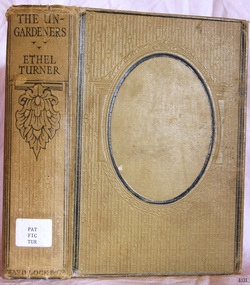
... Ethel Mary Turner Ethel Turner (25th January 1872 – 8th April 1958) was an English-born Australian novelist and children's literature writer. She was born Ethel Mary Burwell in Doncaster in England. ...Ethel Mary Turner Ethel Turner (25th January 1872 – 8th April 1958) was an English-born Australian novelist and children's literature writer. She was born Ethel Mary Burwell in Doncaster in England. ...This item is from the ‘Pattison Collection’, a collection of books and records that was originally owned by the Warrnambool Mechanics’ Institute, which was founded in Warrnambool in 1853. By 1886 the Warrnambool Mechanics’ Institute (WMI) had grown to have a Library, Museum and Fine Arts Gallery, with a collection of “… choice productions of art, and valuable specimens in almost every branch and many wonderful national curiosities are now to be seen there, including historic relics of the town and district.” It later included a School of Design. Although it was very well patronised, the lack of financial support led the WMI in 1911 to ask the City Council to take it over. In 1935 Ralph Pattison was appointed as City Librarian to establish and organise the Warrnambool Library as it was then called. When the WMI building was pulled down in 1963 a new civic building was erected on the site and the new Warrnambool Library, on behalf of the City Council, took over all the holdings of the WMI. At this time some of the items were separated and identified as the ‘Pattison Collection’, named after Ralph Pattison. Eventually the components of the WMI were distributed from the Warrnambool Library to various places, including the Art Gallery, Historical Society and Flagstaff Hill. Later some were even distributed to other regional branches of Corangamite Regional Library and passed to and fro. It is difficult now to trace just where all of the items have ended up. The books at Flagstaff Hill Maritime Village generally display stamps and markings from Pattison as well as a variety of other institutions including the Mechanics’ Institute itself. RALPH ERIC PATTISON Ralph Eric Pattison was born in Rockhampton, Queensland, in 1891. He married Maude Swan from Warrnambool in 1920 and they set up home in Warrnambool. In 1935 Pattison accepted a position as City Librarian for the Warrnambool City Council. His huge challenge was to make a functional library within two rooms of the Mechanics’ Institute. He tirelessly cleaned, cleared and sorted a disarrayed collection of old books, jars of preserved specimens and other items reserved for exhibition in the city’s museum. He developed and updated the library with a wide variety of books for all tastes, including reference books for students; a difficult task to fulfil during the years following the Depression. He converted all of the lower area of the building into a library, reference room and reading room for members and the public. The books were sorted and stored using a cataloguing and card index system that he had developed himself. He also prepared the upper floor of the building and established the Art Gallery and later the Museum, a place to exhibit the many old relics that had been stored for years for this purpose. One of the treasures he found was a beautiful ancient clock, which he repaired, restored and enjoyed using in his office during the years of his service there. Ralph Pattison was described as “a meticulous gentleman whose punctuality, floorless courtesy and distinctive neat dress were hallmarks of his character, and ‘his’ clock controlled his daily routine, and his opening and closing of the library’s large heavy doors to the minute.” Pattison took leave during 1942 to 1945 to serve in the Royal Australian Navy, Volunteer Reserve as Lieutenant. A few years later he converted one of the Museum’s rooms into a Children’s Library, stocking it with suitable books for the younger generation. This was an instant success. In the 1950’s he had the honour of being appointed to the Victorian Library Board and received more inspiration from the monthly conferences in Melbourne. He was sadly retired in 1959 after over 23 years of service, due to the fact that he had gone over the working age of council officers. However he continued to take a very keen interest in the continual development of the Library until his death in 1969. Ethel Mary Turner Ethel Turner (25th January 1872 – 8th April 1958) was an English-born Australian novelist and children's literature writer. She was born Ethel Mary Burwell in Doncaster in England. Her father died when she was two, leaving her mother Sarah Jane Burwell with two daughters (Ethel and Lillian). A year later, Ethel’s mother married Henry Turner, who was 20 years older and had six children of his own. Sarah Jane and Henry had a daughter, Rose. Henry Turner died suddenly, leaving Sarah Jane with nine children and little income. In 1879 Sarah Jane moved to Australia with Ethel, Lillian, and Rose; within the next two years she married Charles Cope and gave birth to his son Rex. Ethel Turner was educated at Paddington, New South Wales Public School and Sydney Girls High School she was one of the school's original thirty-seven pupils. Ethel started her writing career at eighteen, founding the Parthenon, a journal for young people, with her sister Lillian. Writing as “Dame Durden”, she wrote children's columns for the Illustrated Sydney News and later for the Australian Town and Country Journal. In 1891 the family moved to Woodlands, a large house in Lindfield, now Killara, which was then out in the country. Woodlands still stands today in Werona Avenue and is where she wrote “Seven Little Australians”. In 1896 Ethel married Herbert Curlewis, a lawyer. After living in Mosman, they built their own house overlooking Middle Harbour. The house, Avenel, is where Ethel Turner spent the rest of her years. She survived her daughter Jean Curlewis, who died of tuberculosis, by 28 years. Jean was also a writer of children's books, although not as popular as her mother. Jean's works include “The Ship That Never Set Sail”, “Drowning Maze”, and “Beach Beyond (1923)”. Her son Adrian, was a Barrister, Captain in WW2 and a Changi and Thai-Burma Railway POW and later a Judge. Ethel Turner died at Mosman on 8 April 1958 at 85. She is buried at Macquarie Park Her best-known work is her first novel, Seven Little Australians (1894), which is widely considered a classic of Australian children's literature and was an instant hit both in Australia and overseas. It is about a family of seven children growing up in Australia. The book, together with its sequels “The Family at Misrule” (1895) and “Little Mother Meg” (1902) that deal with the lives of the Wolcott family, particularly with its seven mischievous children in 1880s Australia. A companion to "Seven Little Australians", “Judy and Punch” was published in 1928. Like her stepfather, the character of Captain Woollcott was a widower with six children. The book was made into a feature film in Australia in 1939 and a UK television series in 1953. A 10-episode television series was made in 1973 by the Australian Broadcasting Corporation. Turner published a number of other books for children, short stories and poems. “Three Little Maids” (1900) is a strongly autobiographical novel about her family's migration from England to Sydney, Australia. Turner wrote more than forty novels. Some were about the mischievous Wolcott’s. Others were serialized, like her books on "the Cub", and some were stand-alone. The children she wrote about were all adventurous and independent. They frequently got themselves into sticky situations and got themselves out of them with very little to no adult help. Turner was awarded a number of prestigious literary awards and could be considered one of Australia's best-loved authors. She is listed on The Australian Women's Register. The Ethel Turner Prize for Young People's Literature is given annually under the auspices of the New South Wales Premier's Literary Awards. Ref Ethel Mary Turner, Biography: https://en.wikipedia.org/wiki/Ethel_Turner The Pattison Collection, along with other items at Flagstaff Hill Maritime Village, was originally part of the Warrnambool Mechanics' Institute’s collection. The Warrnambool Mechanics’ Institute Collection is primarily significant in its totality, rather than for the individual objects it contains. Its contents are highly representative of the development of Mechanics' Institute libraries across Australia, particularly Victoria. A diversity of publications and themes has been amassed, and these provide clues to our understanding of the nature of and changes in the reading habits of Victorians from the 1850s to the middle of the 20th century. The collection also highlights the Warrnambool community’s commitment to the Mechanics’ Institute, reading, literacy and learning in the regions, and proves that access to knowledge was not impeded by distance. These items help to provide a more complete picture of our community’s ideals and aspirations. The Warrnambool Mechanics Institute book collection has historical and social significance for its strong association with the Mechanics Institute movement and the important role it played in the intellectual, cultural and social development of people throughout the latter part of the nineteenth century and the early twentieth century. The collection of books is a rare example of an early lending library and its significance is enhanced by the survival of an original collection of many volumes. The Warrnambool Mechanics' Institute’s publication collection is of both local and state significance. The Ungardeners Author: Ethel Turner Publisher: Ward, Lock & Co Date: 1925Label on spine cover with typed text PAT FIC TUR Pastedown front endpaper has sticker from Corangamite Regional Library Service Flyleaf has a stamp from Warrnambool Public Librarywarrnambool, shipwrecked-coast, flagstaff-hill, flagstaff-hill-maritime-museum, maritime-museum, shipwreck-coast, flagstaff-hill-maritime-village, shipwrecked-artefact, book, pattison collection, warrnambool library, warrnambool mechanics’ institute, ralph eric pattison, corangamite regional library service, warrnambool city librarian, mechanics’ institute library, victorian library board, warrnambool books and records, warrnambool children’s library, great ocean road, ethel turner, the ungardeners -
 Flagstaff Hill Maritime Museum and Village
Book - Fictional Story, Hugh Walpole, The Fortress, 1934
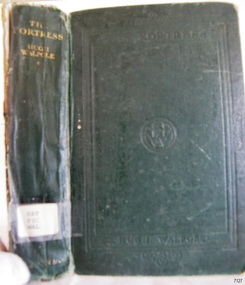
... The firm went on to publish two of the best-known works of Victorian children's literature: Lewis Carroll's Alice's Adventures in Wonderland (1865) and Rudyard Kipling's The Jungle Book (1894). ...The firm went on to publish two of the best-known works of Victorian children's literature: Lewis Carroll's Alice's Adventures in Wonderland (1865) and Rudyard Kipling's The Jungle Book (1894). ...The Fortress is the third novel in Walpole’s Herries Chronicles, which follow the branches of the Herries family in the 19th-century Lake District. The story centres on a bitter feud between the branch led by Judith Paris and the one led by Walter Herries. Walter wants to drive Judith and Jennifer Herries out, so he builds a great mansion, the Fortress, on a hill overlooking their house. Elizabeth, Walter’s kind daughter, is caught between family hostility and her love for Jennifer’s son John. John is then persecuted by his wife’s brother, which leads to a tragic confrontation. The saga covers about fifty years, from a summer fair at Keswick to Queen Victoria’s coronation.Hard cover book. The Fortress Author: Hugh Walpole Publisher: Macmillan and Co., Limited Date: 1934 Further Information: Dark green cloth, blind-stamped border and “W” monogram to binding. The spine has a Library label with an inscription.fictionThe Fortress is the third novel in Walpole’s Herries Chronicles, which follow the branches of the Herries family in the 19th-century Lake District. The story centres on a bitter feud between the branch led by Judith Paris and the one led by Walter Herries. Walter wants to drive Judith and Jennifer Herries out, so he builds a great mansion, the Fortress, on a hill overlooking their house. Elizabeth, Walter’s kind daughter, is caught between family hostility and her love for Jennifer’s son John. John is then persecuted by his wife’s brother, which leads to a tragic confrontation. The saga covers about fifty years, from a summer fair at Keswick to Queen Victoria’s coronation.book, the fortress, hugh walpole, shipwrecked-coast, flagstaff-hill, flagstaff-hill-maritime-museum, warrnambool, maritime-museum, shipwreck-coast, flagstaff-hill-maritime-village, shipwrecked-artefact, pattison collection, warrnambool library, warrnambool mechanics’ institute, ralph eric pattison, corangamite regional library service, warrnambool city librarian, mechanics’ institute library, victorian library board, warrnambool books and records, warrnambool children’s library, great ocean road -
 Flagstaff Hill Maritime Museum and Village
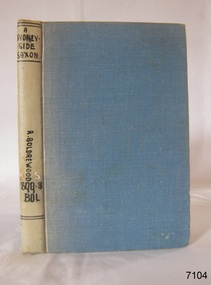
Book - Fictional Novel, Rolf Boldrewood (Pen Name), A Sydney-Side Saxon, 1891
... The firm went on to publish two of the best-known works of Victorian children's literature: Lewis Carroll's Alice's Adventures in Wonderland (1865) and Rudyard Kipling's The Jungle Book (1894). ...The firm went on to publish two of the best-known works of Victorian children's literature: Lewis Carroll's Alice's Adventures in Wonderland (1865) and Rudyard Kipling's The Jungle Book (1894). ..."A Sydney-Side Saxon" is a novel by Rolf Boldrewood (pen name of Thomas Alexander Browne, 1826–1915), first published in 1891 by Macmillan & Co. as No. 124 in Macmillan's Colonial Library. It's a single-volume work (unlike many of his other novels, which ran to three volumes) of 12 chapters, centring on the Claythorpe family of "Applegate" station and the pastoral world of colonial New South Wales squatters, station life, courtship, and the social texture of rural Australia in the late 19th century. Chapter headings such as "Job Claythorpe, of Applegate, ploughman", "Jesse Claythorpe, crowboy", and "Jack Leighton, swagman" reflect its episodic, character-driven structure typical of Boldrewood's pastoral fiction. Boldrewood drew heavily on his own experience some 25 years as a squatter and pastoralist in Victoria and the Riverina, followed by decades as a police magistrate and goldfields warden in NSW which gives his fiction its documentary feel for colonial bush life.Hard cover book, A Sydney-Side Saxon Author: Pen Name Rolf Boldrewood For (Thomas Alexander Browne) Publisher: Macmillan And Co Date: 1891 Blue cloth hardcover and spine with spine lettering in black texter. The spine has a Library label with inscription.fiction"A Sydney-Side Saxon" is a novel by Rolf Boldrewood (pen name of Thomas Alexander Browne, 1826–1915), first published in 1891 by Macmillan & Co. as No. 124 in Macmillan's Colonial Library. It's a single-volume work (unlike many of his other novels, which ran to three volumes) of 12 chapters, centring on the Claythorpe family of "Applegate" station and the pastoral world of colonial New South Wales squatters, station life, courtship, and the social texture of rural Australia in the late 19th century. Chapter headings such as "Job Claythorpe, of Applegate, ploughman", "Jesse Claythorpe, crowboy", and "Jack Leighton, swagman" reflect its episodic, character-driven structure typical of Boldrewood's pastoral fiction. Boldrewood drew heavily on his own experience some 25 years as a squatter and pastoralist in Victoria and the Riverina, followed by decades as a police magistrate and goldfields warden in NSW which gives his fiction its documentary feel for colonial bush life.book, a sydney-side saxon, rolf boldrewood, shipwrecked-coast, flagstaff-hill, flagstaff-hill-maritime-museum, warrnambool, maritime-museum, shipwreck-coast, flagstaff-hill-maritime-village, shipwrecked-artefact, pattison collection, warrnambool library, warrnambool mechanics’ institute, ralph eric pattison, corangamite regional library service, warrnambool city librarian, mechanics’ institute library, victorian library board, warrnambool books and records, warrnambool children’s library, great ocean road -
 Flagstaff Hill Maritime Museum and Village
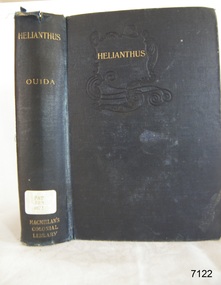
Book - Political Satire, Ouida/Marie Louise de la Ramée, Helianthus, 1908
... The firm went on to publish two of the best-known works of Victorian children's literature: Lewis Carroll's Alice's Adventures in Wonderland (1865) and Rudyard Kipling's The Jungle Book (1894). ...The firm went on to publish two of the best-known works of Victorian children's literature: Lewis Carroll's Alice's Adventures in Wonderland (1865) and Rudyard Kipling's The Jungle Book (1894). ...This novel Helianthus is a political satire set in an invented Mediterranean kingdom of the same name, whose capital is Helios. King John of Gunderode rules as an autocrat behind constitutional forms, with a muzzled press and police spies everywhere. His second son, Prince Elim, Duke of Othyris, is a humane, philosophical man who hates soldiering. At a military review he halts his cavalry rather than trample peasants who have strayed onto the field, and the crowd adores him for it. The King and Elim's stiff elder brother, the Crown Prince, are furious. The visiting Emperor Julius of the neighbouring 'Guthones' is a pious, vain militarist who is eyeing the kingdom's sea. He gets Elim off the hook, partly to humiliate him. A review from the time calls it a novel with a purpose, whose author's zeal sometimes tips into vituperation, and which lacks the romantic charm of Under Two Flags. In the US it was published as A Prince of Europe (Helianthus).Hard cover book. Helianthus Author: Ouida/Marie Louise de la Ramée Publisher: Macmillan and Co., Limited Date: 1908 Further Information: Black Cloth hardcover with lettering and patterning to spine in gilt. The spine has a Library label with an inscription.fictionThis novel Helianthus is a political satire set in an invented Mediterranean kingdom of the same name, whose capital is Helios. King John of Gunderode rules as an autocrat behind constitutional forms, with a muzzled press and police spies everywhere. His second son, Prince Elim, Duke of Othyris, is a humane, philosophical man who hates soldiering. At a military review he halts his cavalry rather than trample peasants who have strayed onto the field, and the crowd adores him for it. The King and Elim's stiff elder brother, the Crown Prince, are furious. The visiting Emperor Julius of the neighbouring 'Guthones' is a pious, vain militarist who is eyeing the kingdom's sea. He gets Elim off the hook, partly to humiliate him. A review from the time calls it a novel with a purpose, whose author's zeal sometimes tips into vituperation, and which lacks the romantic charm of Under Two Flags. In the US it was published as A Prince of Europe (Helianthus).book, under two flags, ouida, maria louise ramé, shipwrecked-coast, flagstaff-hill, flagstaff-hill-maritime-museum, warrnambool, maritime-museum, shipwreck-coast, flagstaff-hill-maritime-village, shipwrecked-artefact, pattison collection, warrnambool library, warrnambool mechanics’ institute, ralph eric pattison, corangamite regional library service, warrnambool city librarian, mechanics’ institute library, victorian library board, warrnambool books and records, warrnambool children’s library, great ocean road
