
Showing 17 items matching "christian literature"
-
 Linton Mechanics Institute and Free Library Collection
Book - Novel, Wallace, Lew, Ben-Hur : a tale of the Christ, [n.d.] [1890s?]
... ...Christian literature...(Google AI) Fiction Wesleyan Book Depot Lew Wallace Christian literature The book follows the life of fictional Judah Ben-Hur, a Jewish prince from Jerusalem, who is enslaved by the Romans at the beginning of the first century and becomes a charioteer and a Christian. ...The book follows the life of fictional Judah Ben-Hur, a Jewish prince from Jerusalem, who is enslaved by the Romans at the beginning of the first century and becomes a charioteer and a Christian.422 p. : frontispiece illustration "Then came the Nazarene." Red cover decorated with images of flowers and a butterfly. Title in gold block on front cover, and embossed in gold on spine.fictionThe book follows the life of fictional Judah Ben-Hur, a Jewish prince from Jerusalem, who is enslaved by the Romans at the beginning of the first century and becomes a charioteer and a Christian.fiction, wesleyan book depot, lew wallace, christian literature -
 Warrnambool and District Historical Society Inc.
Booklet - The Keswick Quarterly & Upwey Convention News, 1941
... This is a book produced by the Keswick Book depot to promote its collection of Christian literature and to give information about conventions held at its Upwey centre. ...This is a book produced by the Keswick Book depot to promote its collection of Christian literature and to give information about conventions held at its Upwey centre. ...This is a book produced by the Keswick Book depot to promote its collection of Christian literature and to give information about conventions held at its Upwey centre. It is apparently a Protestant publication. This booklet is of minor interest as a religious publication that came from a local Warrnambool resident.This is a soft covered booklet of 80 pages. It contains printed material including advertisements and sketches. The book has been stapled but the staples have been removed. The cover is slightly torn. -
 Flagstaff Hill Maritime Museum and Village
Book - A Fictional Story, Amelia Sophia Le Feuvre, Our Own Gazette Vol 16, 1899
... The RTS merged in 1935 into what became the United Society for Christian Literature, having already changed its home-market imprint to Lutterworth Press in 1931. ...The RTS merged in 1935 into what became the United Society for Christian Literature, having already changed its home-market imprint to Lutterworth Press in 1931. ...This is The Carved Cupboard by Amy Le Feuvre, the 1899 serialised story featured as "This Year's Story" in a copy of Our Own Gazette, Vol. 16. The cover credits it to "the Author of Probable Sons", which was also one of Le Feuvre's books. The story centres around four sisters who live in a house whose owner has left an old carved cupboard locked, asking the tenants not to open it. Before she leaves, their nanny gives each sister a verse from Psalm 37 to meditate on. As the secret of the cupboard unfolds, each sister grows spiritually according to her verse. The sisters (Agatha, Clare, Gwen, and Elfie) are pushed out of their home when a cousin convinces their aunt to change her will.Hard cover book. The Carved Cupboard (Our Own Gazette Vol 16 ) Author: Amelia Sophia Le Feuvre Editor: Annie Margaret Menzies Publisher: S. W. Partridge & Co Date: 1899 Further Information: Green Cloth hardcover with gold flower patterning and lettering in gilt to title on front cover. The spine has no Library label with an inscription.fictionThis is The Carved Cupboard by Amy Le Feuvre, the 1899 serialised story featured as "This Year's Story" in a copy of Our Own Gazette, Vol. 16. The cover credits it to "the Author of Probable Sons", which was also one of Le Feuvre's books. The story centres around four sisters who live in a house whose owner has left an old carved cupboard locked, asking the tenants not to open it. Before she leaves, their nanny gives each sister a verse from Psalm 37 to meditate on. As the secret of the cupboard unfolds, each sister grows spiritually according to her verse. The sisters (Agatha, Clare, Gwen, and Elfie) are pushed out of their home when a cousin convinces their aunt to change her will.warrnambool, shipwrecked-coast, flagstaff-hill, flagstaff-hill-maritime-museum, maritime-museum, shipwreck-coast, shipwrecked-artefact, book, our own gazette vol 16, young women's christian association, annie margaret menzies, amelia sophia le feuvre -
 Uniting Church Archives - Synod of Victoria
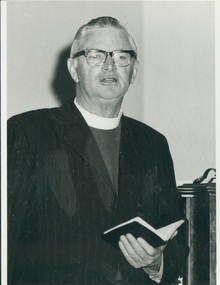
BW photo, Undated
... He worked hard to meet the need for Christian literature, bookshops, adult literacy and theological training. ...He worked hard to meet the need for Christian literature, bookshops, adult literacy and theological training. ...STANWAY, ALFRED (b. 9 Sept 1908; d. Melbourne, Vic, 27 June 1989). Anglican bishop, missionary. Stanway grew up in the Wimmera district of western Victoria, and left school when 14 years old. He found work in Melbourne, trained as an accountant, and at the age of 20, held a responsible position with a publishing company. This background, allied with an uncommon flair for figures and finance, was to stand him in good stead throughout his life. But he had little knowledge and no experience of the grace of God until 29 July 1928. At the Evening Service in the parish church of Fairfield on 29 July, he heard the Rev C H Nash (q.v.) preach a sermon which led to his conversion. Within two years he made up his mind to become a missionary and began night studies in order to matriculate. He entered Ridley College in March 1932 to prepare for ordination undertaking week-end duties as a catechist at Deer Park and St Albans. He joined the CMS League of Youth, became chairman, and gathered a fine band of young people many of whom were to become missionaries. He was closely involved with the Belgrave Heights Convention (then at Upwey) and established a League of Youth camp on the site. All his energies were thrown into the task of building up its members in personal holiness and vigorous evangelism. Stanway was ordained in St Paul's Cathedral, Melbourne on St Thomas Day 1934 and was placed in charge of the Old Mission Church of St James and St John, Melbourne. The duties were light enough to allow him to enrol in the Melbourne Teachers College and to complete the Diploma in Teaching. On 26 January 1937, he sailed for Africa to become a missionary in the Anglican Diocese of Mombasa, which at that time embraced the whole of Kenya. He was sent to the hot coastal town of Kaloleni as principal of a Secondary Boys School. Before he left Melbourne, he had become engaged to Marjory Harrison: she followed him to Africa and their marriage took place in Mombasa Cathedral in June 1939. He remained at Kaloleni until 1944 when he was transferred to the inland station of Maseno where all his gifts were to be deployed as rural dean of Nyanza. His oversight of some 500 village churches as well as a widespread primary school system was so efficient that in 1948 he was appointed archdeacon of Kenya with his home and office in Nairobi. As secretary of the African Church Council and of the African Education Board, he was responsible for all African work in the diocese. His contacts with government ministers and public servants were of first class significance at the time when the cry of Uhuru and the demand for independence was travelling throughout the colonial world. On 2 Feb 1951, Alfred Stanway was consecrated in Westminster Abbey as the third Anglican Bp of Central Tanganyika. This Diocese was the special sphere of the CMS Australia, and he already knew most of the missionary personnel. He brought with him the understanding and experience of one who had fully shared the lot and problems of a district missionary, but he came to the diocese at a time when it had yet to recover from its losses in personnel and finance as a result of the war. His immediate task was to provide the impetus of fresh leadership and a long-term overall policy. His aim from-the outset was to build up a strong autonomous church with its own indigenous pastorate. With the whole-hearted confidence of the home base, he was able to enlist the service of new missionaries. He saw a great increase in the number of African clergy and he encouraged village evangelists to open new fields of work. Simple structures were built as new churches at the rate of two a week, week in and week out, year by year. He worked hard to meet the need for Christian literature, bookshops, adult literacy and theological training. He opened Bible schools for village evangelists and sent suitable clergy overseas for further studies. He encouraged initiative in others, helped them to find and use their talents, and gave them his unstinted confidence and support. Fresh finance was required for new ventures. This led him to travel widely in Germany and America, where he raised large funds for these projects. Mackay House was built in Dodoma as the central administrative base for the diocese, hospitals such as those at Mvumi and Hombolo were modernised or established, schools were built and upgraded. In keeping with his vision for ultimate leadership by African personnel, he consecrated Yohana Omari in 1955 as his assistant, he was the first national to become a bp in East Africa. Bp Stanway then set on foot the long and complicated process for the division of his sprawling diocese. In 1963, the diocese of Victoria Nyanza came into being; in 1965, that of Morogoro; in 1966, that of Western Tanganyika. Yet in 1971, his own diocese of Central Tanganyika, though greatly reduced in size, had more churches and more clergy than in its undivided state in 195 l. Stanway then played a leading part in the formation of the Province of Tanzania in 1970, with an African abp as metropolitan. A year later, after 35 years in East Africa and 20 years as bishop of Central Tanganyika, he resigned. His leadership and achievements throughout those years had placed him in the front rank as a great missionary statesman. Stanway had returned to Melbourne at the time when his resignation took effect in August 1971. His early love for Ridley College reasserted itself and he went into residence as deputy principal under the Rev Dr Leon Morris. He was put in charge of chapel worship and the pastoral oversight of the students. All his gifts and experience were called into play as he sought to guide and encourage those who were on the threshold of their ministry. The whole bent of his heart was to foster the spiritual life and missionary calling of those whose hearts the Lord had touched. It was during those years that his life-long zeal for the spread of the gospel through Christian literature had its ultimate flowering. It had begun in his Nairobi days with a small church bookstall, this had developed into a major book-shop in the heart of the city. Then in Dodoma he had established the Central Tanganyika Press in order to promote the publication and distribution of Christian literature at all levels. He had marked out Kevin Engel, trained him, and launched him on the international scene. Hence it was natural that in Melbourne he and Kevin Engel should found the Australian Christian Literature Society. But his time at Ridley College was not to last. Unknown to him, the Rev J R W Stott had put his name forward as that of a person who could head a new school of theology in the United States to provide a sound training for evangelical ordinands. Such a task would have been formidable enough for a younger man who had grown up in America. How could an Australian who had spent half his life in Africa hope to succeed in a venture of that kind in America? How could one who had been a missionary, not a theologian, found a new school to train men for ordination? Nevertheless he rose to the challenge. In Sept 1975, he and Mrs Stanway left Melbourne for Sewickly, an outer suburb of Pittsburg, with the promise of three years' service. He had to start from scratch. He found a house to live in, but there was no land for the school, no funds in hand, no staff yet appointed, no students, and no buildings. His drive, his infections enthusiasm, and his flair for practical enterprise carried the day. One by one, obstacles were overcome and support grew in volume and strength. Twelve months after his arrival, in Sept 1976, the Trinity Episcopal School for Ministry was opened with three staff members, seventeen students, and the goodwill of the whole American Episcopal Church to win. During the next two years, the school took shape and was firmly established. Bp Stanway left an indelible stamp on every aspect of its life and work, its spiritual tone and ideals, its financial and administrative principles. He had inspired widespread support among evangelical episcopalians and had imparted a strong sense of divine guidance and purpose. The council would gladly have extended his term in office beyond three years, but at 75 years of age he knew that his health had begun to fail. When he finally relinquished his office in Nov 1978, he could look back on those three years as the crown of his ministry. It is not too much to say that his name was even more highly honoured and revered in the Trinity School of Ministry than in his own dearly loved Africa. His return to Melbourne led to quiet retirement at Mount Waverley where he settled down to a long battle with the ever worsening effects of Parkinson's Disease. The slow loss of physical capacity and the ultimate failure in powers of speech were a great trial, but he never complained. His faith was summed up in his brief reply when he was asked why he had not prayed for healing: 'What God allows, I accept'. That acceptance was without reserve; his testimony was never brighter. His mental powers were undiminished and his spiritual concerns were as wide as ever. He kept in touch with CMS, he went to church, he met with missionaries, he led Bible studies in his home as long as he was able. Africa was always in his heart, news from Sewickly always gave him great pleasure. He had left a mark for God on three great continents and his death left sad but thankful hearts in them all. It was the close of a life in which he had felt that he could never do enough for God who had done so much for him. One of Bp Stanway's sayings was 'when the Holy Spirit takes hold of you, anything can happen'. So it was in his case. He was very human, with his full share of human foibles and frailties. He had a great zest for life and an endless fund of stories drawn from his own experience. He was himself the subject of many stories, some true, others legendary. His vibrant personality always seemed to fill the house where he was, his presence could not be overlooked. His own home was one in which Mrs Stanway had a paramount influence. She was a trained teacher, a skilled artist, a born hostess and a first-class linguist. They had no children of their own, but were devoted Godparents and always deeply interested in the children of missionaries. Home life allowed him to relax in a serene and contented atmosphere and to exercise his gifts for friendship and hospitality. He was always on the watch for souls, a person-to-person evangelist par excellence. He was a man of faith and prayer who dared to believe in the God of the impossible. His love for Africa, his total dedication as a missionary; his gifts as a soulwinner; his genius for finance; his shrewd practical initiatives, and his statesmanlike vision were outstanding characteristics. But great or small, all his gifts were laid out in the service of the gospel, and that service marked him out as one of the most remarkable Australian missionaries of his generation. M L Loane, Men to Remember (Sydney, 1987) Rev. Alfred Stanway is standing with open book in hand, dressed in clerical garb.Bishop Alfred Stanwaybishop alfred stanway -
 Flagstaff Hill Maritime Museum and Village
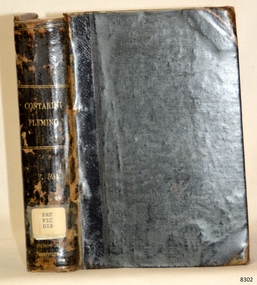
Book - Fictional Novel, Benjamin Disraeli, Contarini Fleming: A Psychological Romance, 1871
... Christian heritage. When the opportunity arises, he defects, reclaiming his homeland and battling his former captors. It is full of high romance, battles and political intrigue. The author, Benjamin Disraeli (1804–1881), is unique in British history as the only novelist to also serve as Prime Minister. Born into a Jewish family that converted to Anglicanism in his youth, Disraeli initially sought fame through literature...Christian heritage. When the opportunity arises, he defects, reclaiming his homeland and battling his former captors. It is full of high romance, battles and political intrigue. The author, Benjamin Disraeli (1804–1881), is unique in British history as the only novelist to also serve as Prime Minister. Born into a Jewish family that converted to Anglicanism in his youth, Disraeli initially sought fame through literature ...This specific book brings together two distinct works written early in the career of one of Victorian Britain's most fascinating political and literary figures. The subject 1871 volume is Volume VII of the first major "Collected Edition" of Disraeli's novels and tales issued by Longmans, Green & Co. The first novel, Contarini Fleming, published in 1832, is an intensely autobiographical, romantic and experimental work. It follows the development of a young man, Contarini Fleming, the son of a Scandinavian nobleman and an Italian mother. The story charts his emotional and artistic growth as he struggles with his identity, travels across Europe and the Levant, and attempts to become a poet. It explores the inner consciousness, imagination and the formation of a creative mind which is why Disraeli subtitled it a "Psychological Romance".Contarini Fleming: A Psychological Romance - and - The Rise of Iskander Author: Benjamin Disraeli (Right Honorable B. Disraeli) Publisher: Longmans Green & Co., London Date: 1871 (new edition) Black cloth hardcover book with embossed gold text on the spine. Inscriptions include stickers, stamps and handwriting. fictionThis specific book brings together two distinct works written early in the career of one of Victorian Britain's most fascinating political and literary figures. The subject 1871 volume is Volume VII of the first major "Collected Edition" of Disraeli's novels and tales issued by Longmans, Green & Co. The first novel, Contarini Fleming, published in 1832, is an intensely autobiographical, romantic and experimental work. It follows the development of a young man, Contarini Fleming, the son of a Scandinavian nobleman and an Italian mother. The story charts his emotional and artistic growth as he struggles with his identity, travels across Europe and the Levant, and attempts to become a poet. It explores the inner consciousness, imagination and the formation of a creative mind which is why Disraeli subtitled it a "Psychological Romance".flagstaff hill, flagstaff hill maritime museum and village, warrnambool, maritime museum, maritime village, great ocean road, shipwreck coast, pattison collection, ralph eric pattison, warrnambool mechanics’ institute, mechanics’ institute library, warrnambool library, free library, corangamite regional library service, longmans green and co. london, benjamin disraeli, queen victoria's friend, longmans green & co, earl of beaconsfield, british politician, british prime minister, contarini fleming, psychological romance, the rise of iskander, right honourable b. disraeli, 1871 -
 Flagstaff Hill Maritime Museum and Village
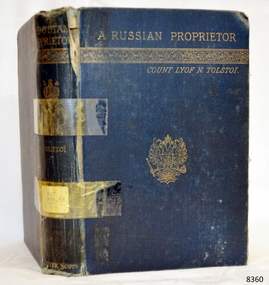
Book - Fictional Stories, Count Leo Tolstoy, A Russian Proprietor and other Stories, 1888
... literature. He is most famous for his massive, sweeping masterpieces War and Peace and Anna Karenina. Later in life, Tolstoy underwent a profound moral and spiritual crisis, becoming a Christian anarchist, pacifist, and social reformer whose essays on non-violent resistance heavily influenced figures like Mahatma Gandhi and Martin Luther King Jr. ...literature. He is most famous for his massive, sweeping masterpieces War and Peace and Anna Karenina. Later in life, Tolstoy underwent a profound moral and spiritual crisis, becoming a Christian anarchist, pacifist, and social reformer whose essays on non-violent resistance heavily influenced figures like Mahatma Gandhi and Martin Luther King Jr. ...A Russian Proprietor and Other Stories is a collection of early short stories and semi-autobiographical fiction. The title story, A Russian Proprietor (originally published in Russian in 1856 as A Landlord's Morning), reflects the author's real-life experiences as a young nobleman trying to improve the lives of the serfs on his estate, only to be met with deep-seated mistrust and resistance.A Russian Proprietor and other Stories. Author: Count Lyof Tolstoy ( Leo Tolstoy) Publisher: Walter Scott Date: 1888 Translator: Nathan Haskell DolefictionA Russian Proprietor and Other Stories is a collection of early short stories and semi-autobiographical fiction. The title story, A Russian Proprietor (originally published in Russian in 1856 as A Landlord's Morning), reflects the author's real-life experiences as a young nobleman trying to improve the lives of the serfs on his estate, only to be met with deep-seated mistrust and resistance.flagstaff hil, warrnambool, flagstaff hill maritime museum, maritime museum, shipwreck coast, flagstaff hill maritime village, great ocean road, book, pattison collection, warrnambool library, warrnambool mechanics’ institute, ralph eric pattison, corangamite regional library service, warrnambool city librarian, mechanics’ institute library, victorian library board, warrnambool books and records, warrnambool children’s library, a russian proprietor and other stories, leo tolstoy -
 Flagstaff Hill Maritime Museum and Village
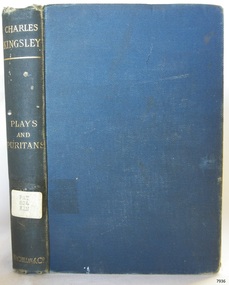
Book - Reference Book/Historical/Sociology/Research, Charles Kingsley, Plays and Puritans and other Historical Essays, 1873
... The volume also includes other historical pieces on topics such as national character, literature, and religious thought, all written in a vivid, moral in history style typical of Kingsley’s later essays. Charles Kingsley (1819–1875) was an Anglican clergyman, social reformer, historian, and popular Victorian novelist. He was associated with Christian...The volume also includes other historical pieces on topics such as national character, literature, and religious thought, all written in a vivid, moral in history style typical of Kingsley’s later essays. Charles Kingsley (1819–1875) was an Anglican clergyman, social reformer, historian, and popular Victorian novelist. He was associated with Christian ...Plays and Puritans and Other Historical Essays by Charles Kingsley is a collection of cultural and historical meditations, centred on the relationship between Puritanism and the English stage, especially in the 16th and 17th centuries, along with broader reflections on art, morality, and national identity in Victorian‑era Britain.Plays and Puritans and other Historical Essays Author: Charles Kingsley Publisher: MacMillan & Co Date: 1873, Light Blue to cloth cardboard covers darker Blue to the spine the spine has title embossed in gold lettering. non-fictionPlays and Puritans and Other Historical Essays by Charles Kingsley is a collection of cultural and historical meditations, centred on the relationship between Puritanism and the English stage, especially in the 16th and 17th centuries, along with broader reflections on art, morality, and national identity in Victorian‑era Britain. warrnambool, shipwrecked-coast, flagstaff-hill, flagstaff-hill-maritime-museum, maritime-museum, shipwreck-coast, flagstaff-hill-maritime-village, shipwrecked-artefact, book, pattison collection, warrnambool library, warrnambool mechanics’ institute, ralph eric pattison, corangamite regional library service, warrnambool city librarian, mechanics’ institute library, victorian library board, warrnambool books and records, warrnambool children’s library, great ocean road, plays and puritans and other historical essays, charles kingsley -
 Warrnambool and District Historical Society Inc.
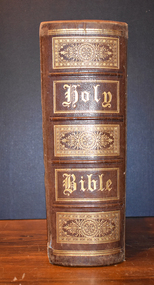
Book - Bible, Thomas Bankes, The Christian's New and Complete Family Bible, 1786
... literature family bible 1786 bible warrnambool bankes bible This is a family bible circa late 1700's The book has a plain brown leather cover, the front of which is scuffed, stained and completely detached from the spine. On the spine is printed Bankes's Bible, an alternative title. The pages contain text, black and white plates, images and engravings. Some of the pages are torn, others have been repaired with paste. The dedication by Thomas Bankes, a clergyman, is to his Bishop Lord James Beauclerc. All the 's' letters are written as ' f'. The Christian's ...This is a family bible circa late 1700'sThe book has a plain brown leather cover, the front of which is scuffed, stained and completely detached from the spine. On the spine is printed Bankes's Bible, an alternative title. The pages contain text, black and white plates, images and engravings. Some of the pages are torn, others have been repaired with paste. The dedication by Thomas Bankes, a clergyman, is to his Bishop Lord James Beauclerc. All the 's' letters are written as ' f'.non-fictionThis is a family bible circa late 1700's18th century literature, family bible, 1786 bible, warrnambool, bankes bible -
 Warrnambool and District Historical Society Inc.
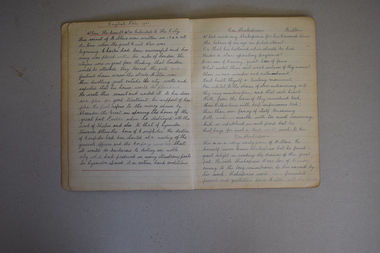
Book - School Exercise Book 1921 St Ann's, early 20th century
... Literature material produced by Ena O'Keefe at St. Ann's College, Warrnambool and dates from the 1921. It seems to be about Year 10 standard. St. Ann's College began in 1872 as a Convent of Mercy School for Girls, changed its name to St. Ann's in 1888 and amalgamated with the Christian...Literature material produced by Ena O'Keefe at St. Ann's College, Warrnambool and dates from the 1921. It seems to be about Year 10 standard. St. Ann's College began in 1872 as a Convent of Mercy School for Girls, changed its name to St. Ann's in 1888 and amalgamated with the Christian ...This school exercise book contains mostly English Literature material produced by Ena O'Keefe at St. Ann's College, Warrnambool and dates from the 1921. It seems to be about Year 10 standard. St. Ann's College began in 1872 as a Convent of Mercy School for Girls, changed its name to St. Ann's in 1888 and amalgamated with the Christian Brothers' College in 1990 to form the present-day Emmanuel College. No information is available on Ena O'Keefe but she may have come from the Winslow district. This book is of interest as a school exercise book from the early 20th centuryThis is a school exercise book of 100 pages. The black cover is somewhat scuffed. The pages are ruled and contain handwriting in blue ink.Ena O'Keefe St. Ann's College Warrnamboolwarrnambool schools, st. ann's college, ena o'keefe -
 Victorian Aboriginal Corporation for Languages
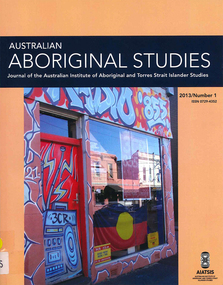
Periodical, Australian Institute of Aboriginal and Torres Strait Islander Studies, Australian Aboriginal studies : journal of the Australian Institute of Aboriginal and Torres Strait Islander Studies, 2013
... literature, the main themes of which include the pervasiveness of a racist discourse in Australian media and society, the power of invisible assumptions, and the importance of naming and exposing them. Changes in Pitjantjatjara mourning and burial practices Bill Edwards, University of South Australia This paper is based on observations over a period of more than five decades of changes in Pitjantjatjara burial practices from traditional practices to the introduction of Christian services and cemeteries. ...literature, the main themes of which include the pervasiveness of a racist discourse in Australian media and society, the power of invisible assumptions, and the importance of naming and exposing them. Changes in Pitjantjatjara mourning and burial practices Bill Edwards, University of South Australia This paper is based on observations over a period of more than five decades of changes in Pitjantjatjara burial practices from traditional practices to the introduction of Christian services and cemeteries. ...We don?t leave our identities at the city limits: Aboriginal and Torres Strait Islander people living in urban localities Bronwyn Fredericks Aboriginal and Torres Strait Islander people who live in cities and towns are often thought of as ?less Indigenous? than those who live ?in the bush?, as though they are ?fake? Aboriginal people ? while ?real? Aboriginal people live ?on communities? and ?real? Torres Strait Islander people live ?on islands?. Yet more than 70 percent of Australia?s Indigenous peoples live in urban locations (ABS 2007), and urban living is just as much part of a reality for Aboriginal and Torres Strait Islander people as living in remote discrete communities. This paper examines the contradictions and struggles that Aboriginal and Torres Strait Islander people experience when living in urban environments. It looks at the symbols of place and space on display in the Australian cities of Melbourne and Brisbane to demonstrate how prevailing social, political and economic values are displayed. Symbols of place and space are never neutral, and this paper argues that they can either marginalise and oppress urban Aboriginal and Torres Strait Islander people, or demonstrate that they are included and engaged. Juggling with pronouns: Racist discourse in spoken interaction on the radio Di Roy While the discourse of deficit with regard to Australian Indigenous health and wellbeing has been well documented in print media and through images on film and on television, radio talk concerning this discourse remains underresearched. This paper interrogates the power of an interactive news interview, aired on the Radio National Breakfast program on ABC Radio in 2011, to maintain and reproduce the discourse of deficit, despite the best intentions of the interview participants. Using a conversation-analytical approach, and membership categorisation analysis in particular, this paper interrogates the spoken interaction between a well-known radio interviewer and a respected medical researcher into Indigenous eye health. It demonstrates the recreation of a discourse emanating from longstanding hegemonies between mainstream and Indigenous Australians. Analysis of firstperson pronoun use shows the ongoing negotiation of social category boundaries and construction of moral identities through ascriptions to category members, upon which the intelligibility of the interview for the listening audience depended. The findings from analysis support claims in a considerable body of whiteness studies literature, the main themes of which include the pervasiveness of a racist discourse in Australian media and society, the power of invisible assumptions, and the importance of naming and exposing them. Changes in Pitjantjatjara mourning and burial practices Bill Edwards, University of South Australia This paper is based on observations over a period of more than five decades of changes in Pitjantjatjara burial practices from traditional practices to the introduction of Christian services and cemeteries. Missions have been criticised for enforcing such changes. However, in this instance, the changes were implemented by the Aboriginal people themselves. Following brief outlines of Pitjantjatjara traditional life, including burial practices, and of the establishment of Ernabella Mission in 1937 and its policy of respect for Pitjantjatjara cultural practices and language, the history of these changes which commenced in 1973 are recorded. Previously, deceased bodies were interred according to traditional rites. However, as these practices were increasingly at odds with some of the features of contemporary social, economic and political life, two men who had lost close family members initiated church funeral services and established a cemetery. These practices soon spread to most Pitjantjatjara communities in a manner which illustrates the model of change outlined by Everett Rogers (1962) in Diffusion of Innovations. Reference is made to four more recent funerals to show how these events have been elaborated and have become major social occasions. The world from Malarrak: Depictions of South-east Asian and European subjects in rock art from the Wellington Range, Australia Sally K May, Paul SC Ta�on, Alistair Paterson, Meg Travers This paper investigates contact histories in northern Australia through an analysis of recent rock paintings. Around Australia Aboriginal artists have produced a unique record of their experiences of contact since the earliest encounters with South-east Asian and, later, European visitors and settlers. This rock art archive provides irreplaceable contemporary accounts of Aboriginal attitudes towards, and engagement with, foreigners on their shores. Since 2008 our team has been working to document contact period rock art in north-western and western Arnhem Land. This paper focuses on findings from a site complex known as Malarrak. It includes the most thorough analysis of contact rock art yet undertaken in this area and questions previous interpretations of subject matter and the relationship of particular paintings to historic events. Contact period rock art from Malarrak presents us with an illustrated history of international relationships in this isolated part of the world. It not only reflects the material changes brought about by outside cultural groups but also highlights the active role Aboriginal communities took in responding to these circumstances. Addressing the Arrernte: FJ Gillen?s 1896 Engwura speech Jason Gibson, Australian National University This paper analyses a speech delivered by Francis James Gillen during the opening stages of what is now regarded as one of the most significant ethnographic recording events in Australian history. Gillen?s ?speech? at the 1896 Engwura festival provides a unique insight into the complex personal relationships that early anthropologists had with Aboriginal people. This recently unearthed text, recorded by Walter Baldwin Spencer in his field notebook, demonstrates how Gillen and Spencer sought to establish the parameters of their anthropological enquiry in ways that involved both Arrernte agency and kinship while at the same time invoking the hierarchies of colonial anthropology in Australia. By examining the content of the speech, as it was written down by Spencer, we are also able to reassesses the importance of Gillen to the ethnographic ambitions of the Spencer/Gillen collaboration. The incorporation of fundamental Arrernte concepts and the use of Arrernte words to convey the purpose of their 1896 fieldwork suggest a degree of Arrernte involvement and consent not revealed before. The paper concludes with a discussion of the outcomes of the Engwura festival and the subsequent publication of The Native Tribes of Central Australia within the context of a broader set of relationships that helped to define the emergent field of Australian anthropology at the close of the nineteenth century. One size doesn?t fit all: Experiences of family members of Indigenous gamblers Louise Holdsworth, Helen Breen, Nerilee Hing and Ashley Gordon Centre for Gambling Education and Research, Southern Cross University This study explores help-seeking and help-provision by family members of Indigenous people experiencing gambling problems, a topic that previously has been ignored. Data are analysed from face-to-face interviews with 11 family members of Indigenous Australians who gamble regularly. The results confirm that substantial barriers are faced by Indigenous Australians in accessing formal help services and programs, whether for themselves or a loved one. Informal help from family and friends appears more common. In this study, this informal help includes emotional care, practical support and various forms of ?tough love?. However, these measures are mostly in vain. Participants emphasise that ?one size doesn?t fit all? when it comes to avenues of gambling help for Indigenous peoples. Efforts are needed to identify how Indigenous families and extended families can best provide social and practical support to assist their loved ones to acknowledge and address gambling problems. Western Australia?s Aboriginal heritage regime: Critiques of culture, ethnography, procedure and political economy Nicholas Herriman, La Trobe University Western Australia?s Aboriginal Heritage Act 1972 (WA) and the de facto arrangements that have arisen from it constitute a large part of the Aboriginal ?heritage regime? in that state. Although designed ostensibly to protect Aboriginal heritage, the heritage regime has been subjected to various scholarly critiques. Indeed, there is a widespread perception of a need to reform the Act. But on what basis could this proceed? Here I offer an analysis of these critiques, grouped according to their focus on political economy, procedure, ethnography and culture. I outline problems surrounding the first three criticisms and then discuss two versions of the cultural critique. I argue that an extreme version of this criticism is weak and inconsistent with the other three critiques. I conclude that there is room for optimism by pointing to ways in which the heritage regime could provide more beneficial outcomes for Aboriginal people. Read With Me Everyday: Community engagement and English literacy outcomes at Erambie Mission (research report) Lawrence Bamblett Since 2009 Lawrie Bamblett has been working with his community at Erambie Mission on a literacy project called Read With Me. The programs - three have been carried out over the past four years - encourage parents to actively engage with their children?s learning through reading workshops, social media, and the writing and publication of their own stories. Lawrie attributes much of the project?s extraordinary success to the intrinsic character of the Erambie community, not least of which is their communal approach to living and sense of shared responsibility. The forgotten Yuendumu Men?s Museum murals: Shedding new light on the progenitors of the Western Desert Art Movement (research report) Bethune Carmichael and Apolline Kohen In the history of the Western Desert Art Movement, the Papunya School murals are widely acclaimed as the movement?s progenitors. However, in another community, Yuendumu, some 150 kilometres from Papunya, a seminal museum project took place prior to the completion of the Papunya School murals and the production of the first Papunya boards. The Warlpiri men at Yuendumu undertook a ground-breaking project between 1969 and 1971 to build a men?s museum that would not only house ceremonial and traditional artefacts but would also be adorned with murals depicting the Dreamings of each of the Warlpiri groups that had recently settled at Yuendumu. While the murals at Papunya are lost, those at Yuendumu have, against all odds, survived. Having been all but forgotten, this unprecedented cultural and artistic endeavour is only now being fully appreciated. Through the story of the genesis and construction of the Yuendumu Men?s Museum and its extensive murals, this paper demonstrates that the Yuendumu murals significantly contributed to the early development of the Western Desert Art Movement. It is time to acknowledge the role of Warlpiri artists in the history of the movement.b&w photographs, colour photographsracism, media, radio, pitjantjatjara, malarrak, wellington range, rock art, arrernte, fj gillen, engwura, indigenous gambling, ethnography, literacy, erambie mission, yuendumu mens museum, western desert art movement -
Ballarat RSL Sub-Branch Inc.
Poem - "In loving Memory of dear Len My Soldier Son" by Ellica Christian
... First World War (WW1) 1914 - 1918 Literature Ballarat RSL Ballarat Poem - "In loving Memory of dear Len My Soldier Son" by Ellica Christian ...This object relates to John Leonard GROAT. He was born on 1/02/1897 in Ballarat, VIC. John Leonard served in the AIF (12458) enlisting on, 21/10/1915 in Ballarat, VIC before being killed in action on duties with the 10th FLD AMBUL as a Army Non-Commissioned Lance Corporal / Lance Bombardier (LCPL/LBDR) on 16/10/1917. John Leonard GROAT was not a prisoner of war. His next of kin is Frederick Thomas GROAT (Father). John Groat was awarded the British War Medal, Victory Medal, British Military Medal GV.first world war (ww1), 1914 - 1918, literature, ballarat rsl, ballarat -
Kilmore Historical Society
Book, White Moss Rose, Pre-1873
... Published under the direction of the Committee of General Literature and Education, appointed by the Society for Promoting Christian Knowledge....Published under the direction of the Committee of General Literature and Education, appointed by the Society for Promoting Christian Knowledge. ...Short story.Small book with blue cover, title printed in gold lettering within a decorative gold garland. Embossed borders back & front covers. 62pp. Binding loose, body separating from cover, hole mid-spine.fictionShort story.family, religion, poulter -
 Kilmore Historical Society
Book, STARS BEGIN TO PEEP, c1928
... Fine example of 1930's era children's Christian literature. Children religion Bedtime picture books for children between six and twelve; articles, verses, bible stories. ...Bedtime picture books for children between six and twelve; articles, verses, bible stories.Board cover with pasted on colour picture, green cloth spine. Wear to extemities, red colour scribbling to front cover. Front hinge partially detached. Discolouration & minor of pages throughout. Eight pages of coloured pictures & twenty other B&W illustrations. 148pp. Fair-good condition.fictionBedtime picture books for children between six and twelve; articles, verses, bible stories.children, religion -
 Flagstaff Hill Maritime Museum and Village
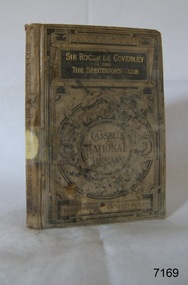
Book - A Collection of Periodical Essays, Cassell & Co, Ltd et al, Sir Roger De Coverley and The Spectators Club, 1886
... literature, and was a long-time writer and editor for Dickens’s Household Words. In his later life he edited some 300 volumes of classics for Morley’s Universal Library and Cassell’s National Library. Before those series, he had edited a standard text of Addison’s Spectator. He died on 14 May 1894. The publisher Cassell was founded in London in 1848 by John Cassell (1817–1865), growing rapidly through the late nineteenth century into an international publishing group by the 1890s. John Cassell himself was a fervent Christian...literature, and was a long-time writer and editor for Dickens’s Household Words. In his later life he edited some 300 volumes of classics for Morley’s Universal Library and Cassell’s National Library. Before those series, he had edited a standard text of Addison’s Spectator. He died on 14 May 1894. The publisher Cassell was founded in London in 1848 by John Cassell (1817–1865), growing rapidly through the late nineteenth century into an international publishing group by the 1890s. John Cassell himself was a fervent Christian ...The book collects essays from The Spectator, the daily London periodical Addison and Steele ran from March 1711 to December 1712. It centres on the fictional Sir Roger de Coverley and the imaginary ‘Spectator Club’. Sir Roger is a simple, kindly, whimsical country baronet, and Addison devised him to represent the country gentry. The club was designed to be a cross-section of society, and its main characters stood for different social norms. For example, Sir Roger stands for the country gentry and Toryism, Sir Andrew Freeport for commerce and Whiggism, the Templar, Clergyman and Captain Sentry for law, church and army, and Will Honeycomb for fashion. The essays follow the Spectator and the members of the club in London, as well as the Spectator’s stay at Sir Roger’s country house. Typical episodes are Sir Roger at the theatre, at Vauxhall and in Westminster Abbey. Notice of Sir Roger’s death appeared in issue number 517. The writer was unable to confirm the exact list of essays in this Cassell volume.Hard cover book. Sir Roger De Coverley and The Spectators Club Author: Richard Steele & Joseph Addison Editor: Henry Morley, LL.D Publisher: Cassell & Co Ltd. Date: 1886 Further Information: Light Brown Cloth hardcover with lettering and patterning to spine & front cover in black. The spine has a Library label with an inscription. fictionThe book collects essays from The Spectator, the daily London periodical Addison and Steele ran from March 1711 to December 1712. It centres on the fictional Sir Roger de Coverley and the imaginary ‘Spectator Club’. Sir Roger is a simple, kindly, whimsical country baronet, and Addison devised him to represent the country gentry. The club was designed to be a cross-section of society, and its main characters stood for different social norms. For example, Sir Roger stands for the country gentry and Toryism, Sir Andrew Freeport for commerce and Whiggism, the Templar, Clergyman and Captain Sentry for law, church and army, and Will Honeycomb for fashion. The essays follow the Spectator and the members of the club in London, as well as the Spectator’s stay at Sir Roger’s country house. Typical episodes are Sir Roger at the theatre, at Vauxhall and in Westminster Abbey. Notice of Sir Roger’s death appeared in issue number 517. The writer was unable to confirm the exact list of essays in this Cassell volume.shipwrecked-coast, flagstaff-hill, flagstaff-hill-maritime-museum, warrnambool, maritime-museum, shipwreck-coast, flagstaff-hill-maritime-village, shipwrecked-artefact, book, pattison collection, warrnambool library, warrnambool mechanics’ institute, ralph eric pattison, corangamite regional library service, warrnambool city librarian, mechanics’ institute library, victorian library board, warrnambool books and records, warrnambool children’s library, great ocean road, sir roger de coverley and the spectators club, steele & addison -
 Flagstaff Hill Maritime Museum and Village
Book - A Fictional Story, John Cowper Powys, A Glastonbury Romance, 1955
... literature. Pattison Collection see item 3678 Flagstaff Hill collections)https://victoriancollections.net.au/items/5580c7e72162f114d8b758db shipwrecked-coast flagstaff-hill flagstaff-hill-maritime-museum warrnambool maritime-museum shipwreck-coast flagstaff-hill-maritime-village shipwrecked-artefact book pattison collection warrnambool library warrnambool mechanics’ institute ralph eric pattison corangamite regional library service warrnambool city librarian mechanics’ institute library victorian library board warrnambool books and records warrnambool children’s library a glastonbury romance john cowper powys A Glastonbury Romance, original publication 1932/1933, is a sprawling, monumental modernist epic set in Somerset, England. It blends Arthurian myth, pagan lore, Christian ...A Glastonbury Romance, original publication 1932/1933, is a sprawling, monumental modernist epic set in Somerset, England. It blends Arthurian myth, pagan lore, Christian symbolism, and early 20th-century industrial politics. The story centres on John Crow, his lover Mary, and a cast of dozens of townspeople in Glastonbury who become involved in a communal movement attempting to revive the Holy Grail legend as a spiritual force against corporate capitalism and industrial decay.Hard cover book. A Glastonbury Romance Author: John Cowper Powys Publisher: Macdonald & Co Date: 1955 Further Information: Bound in solid cloth boards, light green dust Jacket featuring typographical mid-century graphic designs of Glastonbury, The spine has a Library label with an inscription.fictionA Glastonbury Romance, original publication 1932/1933, is a sprawling, monumental modernist epic set in Somerset, England. It blends Arthurian myth, pagan lore, Christian symbolism, and early 20th-century industrial politics. The story centres on John Crow, his lover Mary, and a cast of dozens of townspeople in Glastonbury who become involved in a communal movement attempting to revive the Holy Grail legend as a spiritual force against corporate capitalism and industrial decay.shipwrecked-coast, flagstaff-hill, flagstaff-hill-maritime-museum, warrnambool, maritime-museum, shipwreck-coast, flagstaff-hill-maritime-village, shipwrecked-artefact, book, pattison collection, warrnambool library, warrnambool mechanics’ institute, ralph eric pattison, corangamite regional library service, warrnambool city librarian, mechanics’ institute library, victorian library board, warrnambool books and records, warrnambool children’s library, a glastonbury romance, john cowper powys -
 Flagstaff Hill Maritime Museum and Village
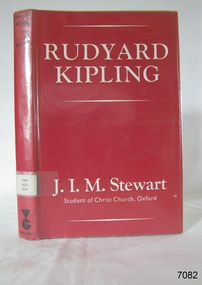
Book - Biography, John Innes Mackintosh Stewart, Rudyard Kipling, 1966
... literature, nonfiction, and popular fiction, including crime, mystery, and later science fiction. Gollancz himself (1893–1967) was a British publisher and humanitarian, a supporter of left-wing politics who described himself as a Christian socialist, and founder of the Left Book Club. ...literature, nonfiction, and popular fiction, including crime, mystery, and later science fiction. Gollancz himself (1893–1967) was a British publisher and humanitarian, a supporter of left-wing politics who described himself as a Christian socialist, and founder of the Left Book Club. ...J. I. M. Stewart's "Rudyard Kipling" is a critical biography covering Kipling's Childhood, Schooldays, Indian Years, and Indian writings such as The Conquest of London and The Light That Failed, Vermont, New Horizons, From the Jungle Books to Rewards and Fairies, Stalky and Others, The Mature Craftsman, and Verse. There is a conclusion, followed by a bibliography of Kipling's principal publications. The physical work runs to 190 pages and includes a list of "Published works of Rudyard Kipling referred to in this work". Reference sources describe the volume quite plainly as "a biographical and critical study of Kipling's writing and his personality." It traces Kipling's life from his 1865 Bombay birth through his Indian journalism career, his sudden London fame, and on to his controversial later reputation as his political views started to draw criticism.Hard cover book. Rudyard Kipling Author: John Innes Mackintosh Stewart Publisher: Victor Gollancz Limited Date: 1966 Further Information: Red Cloth hardcover with dust cover lettering to cover & spine in white on red background. The spine has a Library label with an inscription.non-fictionJ. I. M. Stewart's "Rudyard Kipling" is a critical biography covering Kipling's Childhood, Schooldays, Indian Years, and Indian writings such as The Conquest of London and The Light That Failed, Vermont, New Horizons, From the Jungle Books to Rewards and Fairies, Stalky and Others, The Mature Craftsman, and Verse. There is a conclusion, followed by a bibliography of Kipling's principal publications. The physical work runs to 190 pages and includes a list of "Published works of Rudyard Kipling referred to in this work". Reference sources describe the volume quite plainly as "a biographical and critical study of Kipling's writing and his personality." It traces Kipling's life from his 1865 Bombay birth through his Indian journalism career, his sudden London fame, and on to his controversial later reputation as his political views started to draw criticism.shipwrecked-coast, flagstaff-hill, flagstaff-hill-maritime-museum, warrnambool, maritime-museum, shipwreck-coast, flagstaff-hill-maritime-village, shipwrecked-artefact, book, pattison collection, warrnambool library, warrnambool mechanics’ institute, ralph eric pattison, corangamite regional library service, warrnambool city librarian, mechanics’ institute library, victorian library board, warrnambool books and records, warrnambool children’s library, rudyard kipling, john innes mackintosh stewart -
Linton Mechanics Institute and Free Library Collection
Book - Novel, Collins, Wilkie, The fallen leaves : First series in three volumes : Vol. II ; Book the fourth (continued). Love and Money, 1879
... Fiction Literature Wilkie Collins The plot details American Christian Socialist Amelius Goldenheart's sojourn to England after exile from his Utopian commune, and his difficulties when elements of his past life resurface. ...The plot details American Christian Socialist Amelius Goldenheart's sojourn to England after exile from his Utopian commune, and his difficulties when elements of his past life resurface.269p. ; Chatto & Windus's List of Books p.1-40 ; beige cover with title and drawing of leaves embossed on front cover in blackfictionThe plot details American Christian Socialist Amelius Goldenheart's sojourn to England after exile from his Utopian commune, and his difficulties when elements of his past life resurface.fiction, literature, wilkie collins
