
Showing 17 items matching "churchman"
-
 Victorian Railway History Library
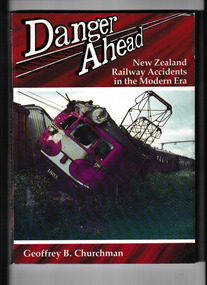
Book, IPL Publishing Group, Danger ahead : New Zealand railway accidents in the modern era, 1991
... ...Geoffrey B Churchman...Danger ahead : New Zealand railway accidents in the modern era Book IPL Publishing Group Geoffrey B Churchman ...Descriptions of new Zealand railway accidentsIll, p.159.non-fictionDescriptions of new Zealand railway accidents railway accidents - new zealand, railway safety - new zealand -
 Victorian Railway History Library
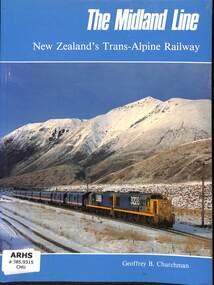
Book, Churchman, Geoffrey B, The Midland Line - New Zealand's Trans-Alpine Railway, 1990
... Churchman, Geoffrey B....The Midland Line - New Zealand's Trans-Alpine Railway Book Churchman, Geoffrey B. Industrial Publishing Ltd ...A pictorial history of the Tranz-Alpine railway from Christchurch to Greymouth in the South Island of New Zealandill, maps, p.40 (72).non-fictionA pictorial history of the Tranz-Alpine railway from Christchurch to Greymouth in the South Island of New Zealandrailroads - new zealand - tranz-alpine - history, railroads - new zealand - pictorial -
 Victorian Railway History Library
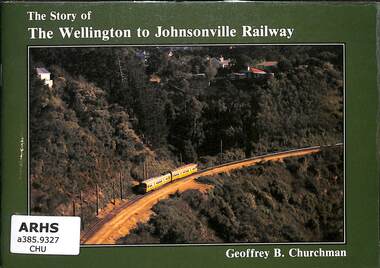
Book, Churchman, Geoffrey B, The Story of The Wellington to Johnsonville Railway, 1988
... Churchman, Geoffrey B....The Story of The Wellington to Johnsonville Railway Book Churchman, Geoffrey B. Industrial Publishing Ltd ...The history of the Wellington to Johnsonville Railway in New Zealand from the time it was the Main North Island Trunk railway to a suburban branch line.ill, maps, p.24.non-fictionThe history of the Wellington to Johnsonville Railway in New Zealand from the time it was the Main North Island Trunk railway to a suburban branch line.railroad construction - new zealand, railroads - new zealand - south island - history -
 Victorian Railway History Library
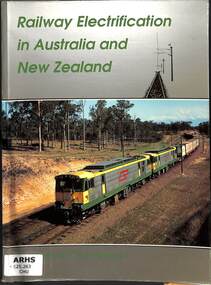
Book, Churchman, Geoffrey B, Railway Electrification in Australia and New Zealand, 1995
... Churchman, Geoffrey B....Railway Electrification in Australia and New Zealand Book Churchman, Geoffrey B. IPL Books ...A history of some of the electric locomotives, electric multiple units and trams in Australia and New Zealand.ill, maps, p.160.non-fictionA history of some of the electric locomotives, electric multiple units and trams in Australia and New Zealand.electric trains - australia- history, electric trains - new zealand - history -
 Victorian Railway History Library
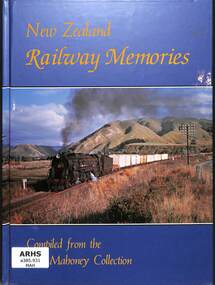
Book, Mahoney, P.J, New Zealand Railway Memories, 1999
... ...Churchman, Geoffrey...New Zealand Railway Memories Book Mahoney, P.J. Churchman, Geoffrey IPL Publishing Services ...A pictorial history of steam trains in New Zealand compiled from the photographic collection of J.D. Mahoney.ill, p.120.non-fictionA pictorial history of steam trains in New Zealand compiled from the photographic collection of J.D. Mahoney.railroad steam locomotives - new zealand - history, railroad operations - new zealand -
 Victorian Railway History Library
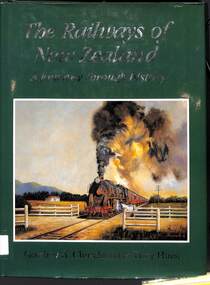
Book, Churchman, Geoffrey B. et al, The Railways of New Zealand: A Journey through history, 1990
... Churchman, Geoffrey B....The Railways of New Zealand: A Journey through history Book Churchman, Geoffrey B. Hurst, Tony William Collins Publishers Ltd ...A history of the New Zealand Government railways including Government buses.index, ill, maps, p.226.non-fictionA history of the New Zealand Government railways including Government buses.railroad construction - new zealand, railroads - new zealand - history -
 Tennis Australia
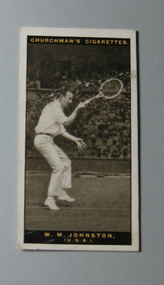
Cigarette swap card, Circa 1930
... Churchman's cigarette card featuring W.M. Johnston. ...Tennis Churchman's cigarette card featuring W.M. Johnston. ...Churchman's cigarette card featuring W.M. Johnston. Materials: Paper, Inktennis -
 Kilmore Historical Society
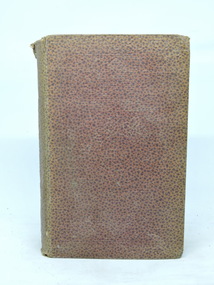
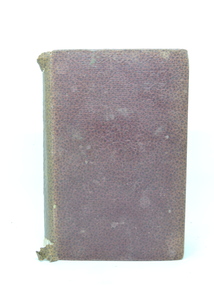
Gibbon's Rome, The History of the Decline and Fall of the Roman Empire, Vol. 3 of 6, 1854
... Edited, with further illustrations from the most recent sources, by an English Churchman....Edited, with further illustrations from the most recent sources, by an English Churchman. Gibbon's Rome Kilmore Mechanics Institute Library. ...The History of the Decline & Fall of the Roman Empire with variorum [sic] notes, including those of Guizot, Wenck, Schreiter, & Hugo. Edited, with further illustrations from the most recent sources, by an English Churchman.Brown speckled with black cloth-covered hardback book. Frayed at corners and base of spine, tear at top of spine. Minor foxing and staining of pages. Cover beginning to separate from body front & back. Several dog-eared pages. 582 pp. Fair condition.Inside front cover, 'No (30) Kilmore Mechanics Institute'/ Kilmore Mechanics Institute stamp.gibbon's rome, kilmore mechanics institute library. -
 Kilmore Historical Society
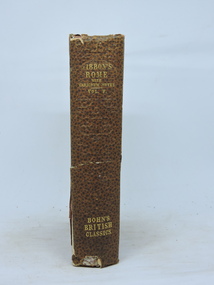
Gibbon's Rome, The History of the Decline and Fall of the Roman Empire, Vol. 4 of 6, 1854
... Edited, with further illustrations from the most recent sources, by an English Churchman....Edited, with further illustrations from the most recent sources, by an English Churchman. Gibbon' Rome Kilmore Mechanics Institute Library. ...The History of the Decline and Fall of the Roman Empire, with variorum [sic] notes, including those of Guizot, Wenck, Schreiter, & Hugo. Edited, with further illustrations from the most recent sources, by an English Churchman.Brown speckled black cloth-covered hardback book. Worn at corners. Spine torn top and bottom. Binding loose. Moderate foxing and staining on pages, page edges a littled ragged. 554 pp. Fair condition.Inside front cover, 'No. (31) Kilmore Mechanics Institute' hand written. Kilmore Mechanics Institute stamp opposite page.gibbon' rome, kilmore mechanics institute library. -
 Kilmore Historical Society
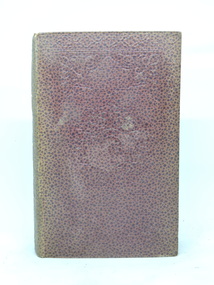
Gibbon's Rome, The History of the Rise and Fall of the Roman Empire, Vol. 5 of 6, 1854
... Edited, with further illustrations from the most recent sources, by an English Churchman....Edited, with further illustrations from the most recent sources, by an English Churchman. Gibbon's Rome Kilmore Mechanics Institute Library. ...The History of the Decline and Fall of the Roman Empire with variorum [sic] notes, including those of Guizot, Wenck, Schreiter, & Hugo. Edited, with further illustrations from the most recent sources, by an English Churchman.Brown speckled black cloth-covered hardcover book. Spine torn, wear on spine edges. Moderate foxing throughout. 534 pp. Fair condition.Inside front cover, 'No.(32) Kilmore Mechanics Institute'. Kilmore Mechanics Institute stamp on opposite page.gibbon's rome, kilmore mechanics institute library. -
 Kilmore Historical Society
Gibbon's Rome, The History of the Decline and Fall of the Roman Empire, Vol. 6 of 6, 1855
... Edited, with further illustrations from the most recent sources, by an English Churchman....Edited, with further illustrations from the most recent sources, by an English Churchman. Gibbon's Rome Kilmore Mechanics Institute Library. ...History of the Rise and Fall Of the Roman Empire with variorum [sic] notes, including those of Guizot, Wenck, Schreiter, & Hugo. Edited, with further illustrations from the most recent sources, by an English Churchman.Brown speckled black cloth-covered hardcover book. Wear to top of spine & bottom corners. Moderate foxing throughout. 573 pp. Good condition.Inside front cover, 'No.(33) Kilmore Mechanics Institute', handwritten. Kilmore Mechanics Institute stamp on opposite page.gibbon's rome, kilmore mechanics institute library. -
 Bendigo Historical Society Inc.
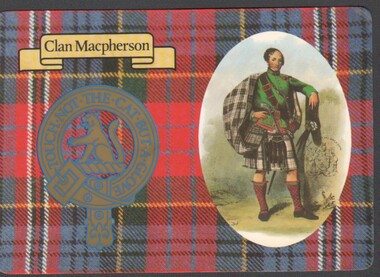
Postcard - Clan Macpherson postcard with Clan motto "Touch not the cat but a glove"
... The clan's name appears to derive from "Son of a Parson" and indicates that the Founder of the Clan was a Churchman. The Clan shares its origins with Clan MacKintosh and forms part of the Clan Chatton or Cat Confederation...The clan's name appears to derive from "Son of a Parson" and indicates that the Founder of the Clan was a Churchman. The Clan shares its origins with Clan MacKintosh and forms part of the Clan Chatton or Cat Confederation Postcard Clan Macpherson postcard with Clan motto "Touch not the cat but a glove" ...Clan Macpherson postcard with Clan motto "Touch not the cat but a glove", meaning Touch not a cat without a Glove. The clan's name appears to derive from "Son of a Parson" and indicates that the Founder of the Clan was a Churchman. The Clan shares its origins with Clan MacKintosh and forms part of the Clan Chatton or Cat Confederationclan macpherson, postcard, scottish -
 Dandenong/Cranbourne RSL Sub Branch
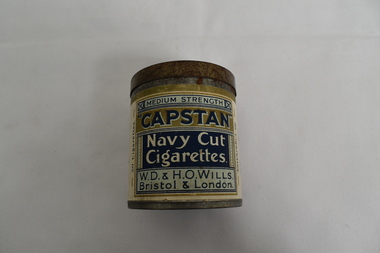
Container - 3 x WW11 Vintage cigarette tins
... 1 x Churchmans No 1 cigarette tin. 1 x Capstan Navy Cut Cigarette tin. 1 x Players Navy Cut Cigarette tin. ...Historical importance. 1 x Churchmans No 1 cigarette tin. 1 x Capstan Navy Cut Cigarette tin. 1 x Players Navy Cut Cigarette tin. ...Historical importance.3 x navy cigarette tins.1 x Churchmans No 1 cigarette tin. 1 x Capstan Navy Cut Cigarette tin. 1 x Players Navy Cut Cigarette tin. Inscription on each lid with opening instructions. " To open the tin remove lid and press vcut until point is directly downwards. Replace lid. Press slightly and turn. Each tin is round in shape and held 50 cigarettes. -
 Uniting Church Archives - Synod of Victoria
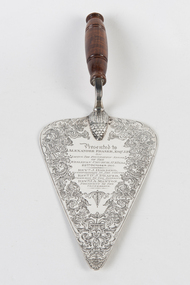
Ceremonial object - Commemorative Trowel
... Fraser lived at St Kilda and in 1857 was elected to its first Municipal Council; in 1859 he became chairman and mayor in 1864-65. An active churchman, he held most important offices in the Wesleyan Church and for thirty years was treasurer of the supernumerary fund, which he helped Rev. ...Fraser lived at St Kilda and in 1857 was elected to its first Municipal Council; in 1859 he became chairman and mayor in 1864-65. An active churchman, he held most important offices in the Wesleyan Church and for thirty years was treasurer of the supernumerary fund, which he helped Rev. ...Commemorative trowel from Wesley Church St Kilda, 22 October 1857. Alexander Fraser (1802-1888), businessman and politician. Fraser lived at St Kilda and in 1857 was elected to its first Municipal Council; in 1859 he became chairman and mayor in 1864-65. An active churchman, he held most important offices in the Wesleyan Church and for thirty years was treasurer of the supernumerary fund, which he helped Rev. Daniel Draper to found. Dour and pious, Fraser was conscientious in fulfilling his political duties. He presided at numerous meetings and laid countless foundation stones.Silver trowel with polished wooden handle. Trowel decorated around the edges and with an inscription.Presented to Alexander Fraser Esq J.P. on laying the foundation stone of the Wesley Church St Kilda 22nd October 1857. Rev. J. Harding Superintendent of the church. Rev. D.J. Draper Chairman of the District. Rev. J.A. Manton President of the Conference.wesleyan church st kilda, fraser, alexander, draper, daniel -
 Friends of Ballarat Botanical Gardens History Group
Work on paper - James Oddie, Member of Ballarat Municipal Council (1824-1911), A Short Biography, Unknown. C. 2011
... ...Churchman...James Oddie Miner Public Positions Ballarat Botanical Gardens John Garner Doctor John Garner Friends of Ballarat Botanical Gardens Churchman Philanthropist John Garner Collection Gardens Ballarat None. 1 page of very small print and a small picture of a Jubilee medal in the top lefthand corner. ...James Oddie played an important part in Ballarat affairs in the nineteenth century.This is a good thumbnail sketch of Oddie's life and his contributions to public, church and philanthropic work in Ballarat.1 page of very small print and a small picture of a Jubilee medal in the top lefthand corner.None.james oddie, miner, public positions, ballarat botanical gardens, john garner, doctor john garner, friends of ballarat botanical gardens, churchman, philanthropist, john garner collection, gardens, ballarat -
 Uniting Church Archives - Synod of Victoria
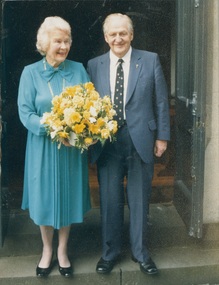
Colour photo, 1986
... He was awarded a scholarship to Trinity College, Glasgow University, in 1935, and for three months stayed with the great Scottish churchman George (later Lord) MacLeod. While on a cycling trip around Scotland, he stopped by the shores of Loch Ness and saw a long neck appear. ...He was awarded a scholarship to Trinity College, Glasgow University, in 1935, and for three months stayed with the great Scottish churchman George (later Lord) MacLeod. While on a cycling trip around Scotland, he stopped by the shores of Loch Ness and saw a long neck appear. ...1911–2005: Gordon George Powell, who has died at 94, was for many years the highly influential minister at St Stephen's Presbyterian Church in Sydney and a popular radio broadcaster and author. He began Wednesday services at St Stephen's in Macquarie Street soon after arriving in Sydney from Melbourne in 1952. They grew to become the biggest regular lunch-hour services in the world, with up to 1300 people crowding the church and the hall below. In 1953, with the help of Vernon Turner of the Christian Broadcasting Association, services were broadcast on radio. The broadcasts continued even when Gordon moved back to Melbourne, so for 30 years he maintained a successful weekly radio ministry. While at St Stephen's, he was also involved in the 1959 Billy Graham Crusade in Sydney, attended by 980,000 people over two weeks. Gordon was born in Warrnambool, Victoria, the son of a dentist, George Powell, and his wife, Louisa (nee Clarke). He went to school at Scotch College. He gave up plans to become an electrical engineer after hearing a call to the ministry and studied arts and then theology at the University of Melbourne, where he formed a close friendship with Edward (Weary) Dunlop. Gordon rowed in the Ormond crew, winning the university's inter-college trophy five times. He was a passionate sports lover all his life. He was awarded a scholarship to Trinity College, Glasgow University, in 1935, and for three months stayed with the great Scottish churchman George (later Lord) MacLeod. While on a cycling trip around Scotland, he stopped by the shores of Loch Ness and saw a long neck appear. The monster swam about 300 metres at great speed; Gordon counted three or four humps. Later, when he saw a skeleton of a plesiosaurus at the Victoria and Albert Museum, he recognised it as Nessie. For the rest of his life, he retained an avid interest in the Loch Ness Monster and its attendant scientific debate. While in Scotland, Gordon wrote a weekly article for The Messenger, the official journal of the Presbyterian Church of Victoria. This led to a life as an author of articles and books. He also wrote long letters home to his mother, a habit that later led to his weekly "Dad's Diaries", which were distributed to the wider family. Failing eyesight put an end to his reading and writing two years ago. On returning to Australia in late 1936, he became assistant minister at Toorak, the second-biggest Presbyterian church in Melbourne. There, at last, Gordon married Gwen Gilchrist, whom he had courted for nine years. They moved from the wealthiest church to one of the poorest, at Port Adelaide, which was still in the grip of the Depression. There, he was finally ordained, in May 1938, and the first two of their four children, Rosemary and David, were born. In 1941, Gordon became assistant minister to Scots Church in Melbourne and the following year, after the birth of his third child, Mardi, he reluctantly volunteered as an RAAF chaplain. He was a pacifist but felt bad at not being in uniform. For the following three years, he was stationed in New Guinea and Australia. His war reminiscences were published as Two Steps to Tokyo and sold 6000 copies in 1945 alone. At 34, by then the father of four children, he was invited to be minister of the Collins Street Independent Church in the heart of Melbourne, now St Michael's Uniting Church Before being inducted, he undertook a lecture tour of the US, speaking to Rotary clubs in 48 centres, from Michigan to Maryland. He met, and was impressed by, the liberal theologian Harry Emerson Fosdick, and the US religious leader and author Norman Vincent Peale, who became a close friend and mentor. Back in Australia, Gordon founded and fostered the first Alcoholics Anonymous group in Melbourne. In 1952, he took up what was to become his happiest ministry, at St Stephen's in Sydney. When Queen Elizabeth and Prince Philip toured two years later, Gordon and Gwen were not only invited to lunch with them, but sat beside them. This was a highlight for Gordon, an ardent monarchist. In 1960, Gordon and Gwen embarked on a world tour that included the US, where he was invited to give the opening prayer in the Senate, with vice-president Richard Nixon presiding. After another five years at St Stephen's, Gordon returned to Scots Church in Melbourne. It was a time of bitter debates over church union with the Methodists and Congregationalists. Gordon was in favour, but Scots ultimately voted to stay out and remain Presbyterian. By then in his mid-60s, he and Gwen moved to New York, where Peale was his neighbour. They had six happy years there before retiring to Melbourne. Gordon is survived by Gwen, and children David, Mardi and Jenny (daughter Rosemary died in 1992), 13 grandchildren and 10 great-grandchildren. [From the obituary in the Sydney Morning Herald, 2005, written by Jenny (Powell)] Gwen and Gordon Powell coming out of the Toorak Uniting Church 50 years after they were married there. Gwen and Gordon Powell coming out of the Toorak Uniting Church 50 years after they were married there.gordon powell; gwen powell; port adelaide; toorak presbyterian church; st stephen's presbyterian church sydney; presbyterian minister -
 Old Colonists' Association of Ballarat Inc.
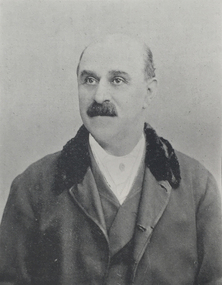
Photograph - Image, John Robson
... 'Mr Robson was an earnest adherent of the Church of England, and in social and other organisations he from time to time held important positions. As a Anglican churchman, he was widely respected, being the official principal and lay Canon of the Cathedral, a member of the Bishops Council, and a prominent member of St. ...'Mr Robson was an earnest adherent of the Church of England, and in social and other organisations he from time to time held important positions. As a Anglican churchman, he was widely respected, being the official principal and lay Canon of the Cathedral, a member of the Bishops Council, and a prominent member of St. ...John Robson was born at Newcastle, Northumberland, England, the son of Mathew Robson and Hannah Sproat. Hesailed to Australia on the "Arabian", landing at Port Phillip in 1854. Obituary DEATH OF MR. JOHN ROBSON ANOTHER PIONEER GONE. AN EXTREMELY VERSATILE MAN. General regret was expressed at the death yesterday morning at Miss Garnett's private hospital, of Mr John Robson, musician and and elocutonist and one of Ballarat's oldest, best known and most respected citizens. Mr Robson had been sitting for a few weeks, and his medical adviser, diagnosed his complaint as appendicitis, which afflicted, him in such a severe form that an operation was deemed to be absolutely necessary. He was removed to Miss Garnett's private hospital, and about a week ago he was operated upon. Mr Robson, being a man of robust constitution, stood the shock of the operation well, and he was making good headway towards recovery when the spell of hot weather set in, and caused exhaustion. Heart failure followed, and exhaustion the attention of his medical adviser, and the careful nursing he received, the end came peacefully at the time stated above. Mr John Robson was born at Newcastle, Northumberland, England, in , and he was therefore 72 years of age. Mr Robson's father, who was a contractor, had much to do with the building of the City of Newcastle. After passing through minor schools, Mr John Robson entered the academy of Professor Ross, and soon rose to a foremost position in the classes. When his studies were completed he was apprenticed to an architect and for a time studied the technique of this important branch of his father's calling. His adaptability for the work was great, and hopes were entertained that he would rise to a high position in the profession. Then came glowing reports of the wonderful Australian gold discoveries. Mr Robson’s father decided to migrate to these parts, and he sent a son to prepare the way. Believing that tools and timber might not be procured in Australia. Mr Robson, senr, constructed a portable wooden residence, which was shipped in pieces on the White Star liner Arabian which brought the family over. In 1854 Mr John Robson, who was then nearly 17 years of age, landed at Port Phillip, and with the other members of the family came on to Ballarat, which place he made his home to the end. When he first reached Ballarat, Mr Robson joined in the search for gold, but not being strong enough for this rough work, he turned his attention to carpentering. This he did not care much about, and in 1858 he was appointed a teacher in St. Paul's Day School, Ballarat, but in the following year he relinquished this position and became exchange clerk in the local branch of the National Bank. Being adapted to this quickly made himself acquainted with the details of a banker’s profession, and his rise was rapid. In the year 1871, about 12 years after he joined the bank, he was appointed manager, and for four years occupied that position with conspicuous success. He was connected with the National Bank for eighteen years, and in 1875 he entered business on his own account. With his brother, Mr Wm. Robson, he erected red-gum sawmills at Gunbower, on the River Murray. Subsequently he was offered the management of the Australian and European Bank in mills. In 1886, he accepted the position and held it until the bank was absorbed by the Commercial Bank of Australia. For a time he lived privately, still, how ever, holding his interest in the saw mills. In 1886, he accepted, the position of manager of the Ballarat branch of the Mercantile Bank of Australia. This bank was closed in 1892, and Mr Robson retired, altogether from commercial circles. In the meantime his brother died, and the saw-mills were sold. Mr Robson held a very important position in music, in fact he for many years was looked upon as the leading musician in Ballarat, he being master of quite a variety of instruments. In 1864. he was appointed conductor of the old Harmonic Society in this city, and subsequently conductor of the Ballarat Liedertafel. Under his leadership this society attained a high state of efficiency, which has since been well-maintained. Many years ago Mr Robson formed an operatic company from amongst Ballarat residents, and such beautiful operas as “Lucrezia Borgia' "Lucia di Lammermoor," “Ernani,' La Sonnambula,” and others were successfully rendered. As an elocutionist, Mr Robson attained much prominence, he being recognised as one of the most capable teachers in Ballarat. He was president of the one-time Ballarat Shakespearian Dramatic Club, which under his direction, from time to time produced Shakespeare’s masterpieces. In this, too, he took the chief characters, the roles of Macbeth, Othello, Hamlet, and Shylock, all being powerfully represented by him. For some years prior to his demise Mr Robson, acted as a teacher of music, and elocution, and many of his pupils, competed with great success at the Ballarat and other competitions. Some years ago he acted as adjudicator at the South street competitions, when he gave every satisfaction, and his services were frequently secured to judge at competitions in other parts of the State and in other states of the Commonwealth. At the Ballarat band contests every year, he was a conspicuous figure, and he always acted as leader of the massed bands, by whom his appearance was always enthusiastically greeted. In his younger days he took a keen interest in several forms of sport, was a successful oarsman, one of the best amateur boxers of his weight and as a billiard player was able to hold his own with professionals. 'Mr Robson was an earnest adherent of the Church of England, and in social and other organisations he from time to time held important positions. As a Anglican churchman, he was widely respected, being the official principal and lay Canon of the Cathedral, a member of the Bishops Council, and a prominent member of St. Paul's Church, Ballarat East. He was also a prominent member of the Masonic order. and was a Past Grand Junior Warden of the Grand Lodge of Freemasons of Victoria, an office which he filled with the greatest credit. He was also a member of the Old Colonists' Association and the Mechanics' Institute, was at one time vice-president of the Art Gallery was once a member of the School of Mines Council, and was many years ago made a Justice of the Pence. On many occasions he was asked to stand for Parliament, as a representative of Ballarat and on one occasion he consented to do so, but subsequently retired without going to the poll in favor of the late Mr Daniel Brophy. He was also often pressed to stand for both the Ballarat East and City Councils, but he declined to allow himself to be nominated. Mr Robson was an active gentleman, and a brilliant conversationalist. His courtesy, high mental and moral endowments, and warm open-heartedness, made him a most interesting and congenial companion. During his long residence in Ballarat, which city he declined to sever his connected with, he was well known and much courted, and was looked up on as one of the most prominent citizens, and his loss will be very severely felt. Some years ago a portrait of Mr Robson, in full Masonic regalia, was painted by he late Mr Stanton Bowman, and was presented by Mr Robson to the citizens, and it was hung in the City Hall, where it is always admired by visitors. The late Mr John Robson never married, and with his brother, James, lived for many years in Eureka street, Ballarat. The two brothers were nearly always together, and as they walked the streets with arms linked, they were frequently referred to as the Siamese twins. The only Australian relative of the late Mr John Robson is his brother. Mr James Robson, who hardly left the bedside during John's illness, and to him the blow has been a very severe one. In his bereavement he will have the heartfelt sympathy not only of the whole of the residents of Ballarat, but of people in all parts of the State. When the news of Mr Robson’s death became known the flags were flown at half-mast at the City and Town Halls, and the Old Colonists’ Hall, out of respect to the memory of the deceased. The interment will take place at the Old Cemetery this afternoon. The cortege will leave “Rothbury," Eureka street, Mr Robson’s late residence, at 3 o'clock, for St. Paul’s Church, where there will be a short service conducted by the vicar, the Rev T. A. Colebrook. (Ballarat Star, January 1910)Photographic portrait of John Robson, member of the Old Colonists' Association of Ballarat.john robson, old colonists' association of ballarat, old colonists' club
