
Showing 7 items matching "cinematic"
-
 Sunshine and District Historical Society Incorporated
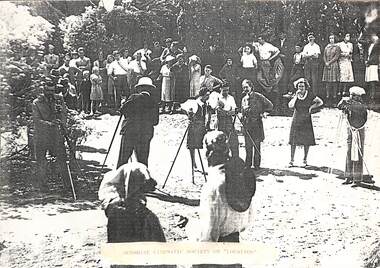
Photograph - Sunshine Cinematic Society C1930 Photograph
... John “Jack” Horace Jackson, the founder of the Sunshine Cinematic Society, was a long‑time Sunshine resident, a Harvester Works employee and owner of his own engineering company, and one of the suburb’s earliest and most important amateur filmmakers. ...5705 - Sunshine Cinematic Society C1930's Photograph .jpg...John Jackson was an avid film and radio enthusiast who documented everyday life in Sunshine from the 1930s to the 1960s. Sunshine Cinematic Society John "Jack" Horace Jackson 5705 - Sunshine Cinematic Society C1930's Photograph .jpg Scanned picture Photograph Sunshine Cinematic Society C1930 Photograph ...John “Jack” Horace Jackson, the founder of the Sunshine Cinematic Society, was a long‑time Sunshine resident, a Harvester Works employee and owner of his own engineering company, and one of the suburb’s earliest and most important amateur filmmakers. He had his home private picture theatre called The Gladina at his Withers Street house and was the creator of numerous films showing Sunshine landmarks, construction works, and community life.John Jackson was an avid film and radio enthusiast who documented everyday life in Sunshine from the 1930s to the 1960s. 5705 - Sunshine Cinematic Society C1930's Photograph .jpgsunshine cinematic society, john "jack" horace jackson -
 City of Stonnington
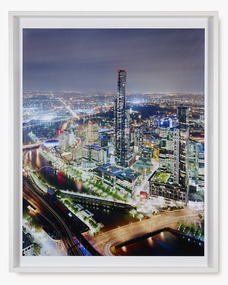
David Stephenson, Melbourne looking East from Rialto Tower 3, 2009
... ...Cinematic...Stonnington contemporary art collection Urban City Industrialisation Modernity Cinematic Environmental Melbourne David Stephenson Melbourne looking East from Rialto Tower 3 David Stephenson ...Melbourne looking east from the Rialto Tower 2009 is a sprawling, cinematic view of Melbourne’s CBD. In his Light Cities series, Stephenson explores notions of human and technological achievement against environmental sustainability. The glowing city in Melbourne looking east from the Rialto Tower seems the perfect emblem of our industrialized culture: an extraordinary example of a monumental technological sublime, where awe, beauty, and human aspiration are tinged with potential environmental catastrophe ¬– our engine of modernity seemingly running on empty. Melbourne, in particular, with its bay surrounding the city, makes it highly vulnerable to rising sea levels. Stephenson’s work, therefore, gives further urgency to a close scrutiny of the evolving modern city. Stephenson moved to Australia in 1982 to teach photography at the University of Tasmania School of Art, where he completed his PhD in Fine Art in 2001. He lives and works in Hobart.For more than 30 years, David Stephenson has travelled the globe, producing startlingly beautiful landscapes and cityscapes that illuminate or allude to that which cannot normally be seen. A fascination for the vast in space and time has led him to Europe, the Himalayas, and both the Arctic and Antarctic. He is one of Australia’s most well known and celebrated contemporary photographers with a practice that focuses on the sublime in architecture and in nature.stonnington contemporary art collection, urban, city, industrialisation, modernity, cinematic, environmental, melbourne, david stephenson -
 City of Stonnington
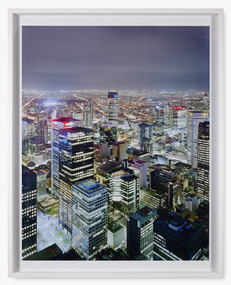
David Stephenson, Melbourne looking East from Rialto Tower 1, 2009
... ...Cinematic...Stonnington contemporary art collection Photography Urban City Industrialisation Modernity Cinematic Environmental David Stephenson Melbourne Melbourne looking East from Rialto Tower 1 David Stephenson ...Melbourne looking east from the Rialto Tower 2009 is a sprawling, cinematic view of Melbourne’s CBD. In his Light Cities series, Stephenson explores notions of human and technological achievement against environmental sustainability. The glowing city in Melbourne looking east from the Rialto Tower seems the perfect emblem of our industrialized culture: an extraordinary example of a monumental technological sublime, where awe, beauty, and human aspiration are tinged with potential environmental catastrophe ¬– our engine of modernity seemingly running on empty. Melbourne, in particular, with its bay surrounding the city, makes it highly vulnerable to rising sea levels. Stephenson’s work, therefore, gives further urgency to a close scrutiny of the evolving modern city. Stephenson moved to Australia in 1982 to teach photography at the University of Tasmania School of Art, where he completed his PhD in Fine Art in 2001. He lives and works in Hobart.For more than 30 years, David Stephenson has travelled the globe, producing startlingly beautiful landscapes and cityscapes that illuminate or allude to that which cannot normally be seen. A fascination for the vast in space and time has led him to Europe, the Himalayas, and both the Arctic and Antarctic. He is one of Australia’s most well known and celebrated contemporary photographers with a practice that focuses on the sublime in architecture and in nature.stonnington contemporary art collection, photography, urban, city, industrialisation, modernity, cinematic, environmental, david stephenson, melbourne -
 City of Stonnington
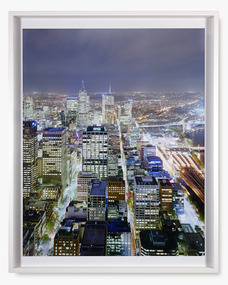
David Stephenson, Melbourne looking East from Rialto Tower 2, 2009
... ...Cinematic...Stonnington contemporary art collection Photography Urban City Industrialisation Modernity Cinematic Environmental Melbourne David Stephenson Melbourne looking East from Rialto Tower 2 David Stephenson ...Melbourne looking east from the Rialto Tower 2009 is a sprawling, cinematic view of Melbourne’s CBD. In his Light Cities series, Stephenson explores notions of human and technological achievement against environmental sustainability. The glowing city in Melbourne looking east from the Rialto Tower seems the perfect emblem of our industrialized culture: an extraordinary example of a monumental technological sublime, where awe, beauty, and human aspiration are tinged with potential environmental catastrophe ¬– our engine of modernity seemingly running on empty. Melbourne, in particular, with its bay surrounding the city, makes it highly vulnerable to rising sea levels. Stephenson’s work, therefore, gives further urgency to a close scrutiny of the evolving modern city. Stephenson moved to Australia in 1982 to teach photography at the University of Tasmania School of Art, where he completed his PhD in Fine Art in 2001. He lives and works in Hobart.For more than 30 years, David Stephenson has travelled the globe, producing startlingly beautiful landscapes and cityscapes that illuminate or allude to that which cannot normally be seen. A fascination for the vast in space and time has led him to Europe, the Himalayas, and both the Arctic and Antarctic. He is one of Australia’s most well known and celebrated contemporary photographers with a practice that focuses on the sublime in architecture and in nature.stonnington contemporary art collection, photography, urban, city, industrialisation, modernity, cinematic, environmental, melbourne, david stephenson -
 Flagstaff Hill Maritime Museum and Village
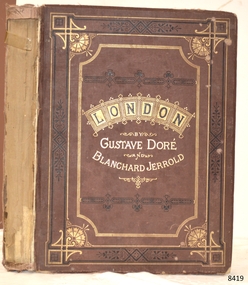
Book - Illustrated Reference Book/Social History, Louis Auguste Gustave Doré et al, London a Pilgrimage, 1872
... When Jerrold suggested a massive, joint exploration of London in 1869, it brought together two perfect skill sets: Jerrold provided the investigative journalistic grit and intimate knowledge of London’s social strata, while Doré provided the haunting, cinematic visual poetry through his illustrations. ...London A Pilgrimage (1872) is one of the most celebrated, visually striking, and socially important illustrated books of the 19th century; as such, the work is a highly desirable piece of publishing history. The book offers a comprehensive, episodic portrait of Victorian London at the height of the British Empire. The prominent French artist Gustave Doré and English journalist William Blanchard Jerrold shared a fascination with urban life, combining their talents to create one of the 19th century's greatest collaborative works. They spent days exploring the metropolis together to capture the stark dualities of the city. Rather than focusing solely on the grand landmarks of the wealthy, the book famously juxtaposes the "sunlight and shadows" of London life. When Jerrold suggested a massive, joint exploration of London in 1869, it brought together two perfect skill sets: Jerrold provided the investigative journalistic grit and intimate knowledge of London’s social strata, while Doré provided the haunting, cinematic visual poetry through his illustrations.Hard cover book, London a Pilgrimage Author: William Blanchard Jerrold Publisher: Grant & Co, 74-78 Turnmill St. London. EC. Date: 1872 Morocco Olive hardcover with a damaged spine, lettering in gold with a title in a surrounded with a decorative panel. non-fictionLondon A Pilgrimage (1872) is one of the most celebrated, visually striking, and socially important illustrated books of the 19th century; as such, the work is a highly desirable piece of publishing history. The book offers a comprehensive, episodic portrait of Victorian London at the height of the British Empire. The prominent French artist Gustave Doré and English journalist William Blanchard Jerrold shared a fascination with urban life, combining their talents to create one of the 19th century's greatest collaborative works. They spent days exploring the metropolis together to capture the stark dualities of the city. Rather than focusing solely on the grand landmarks of the wealthy, the book famously juxtaposes the "sunlight and shadows" of London life. When Jerrold suggested a massive, joint exploration of London in 1869, it brought together two perfect skill sets: Jerrold provided the investigative journalistic grit and intimate knowledge of London’s social strata, while Doré provided the haunting, cinematic visual poetry through his illustrations.flagstaff hil, warrnambool, flagstaff hill maritime museum, maritime museum, shipwreck coast, flagstaff hill maritime village, great ocean road, book, pattison collection, warrnambool library, warrnambool mechanics’ institute, ralph eric pattison, corangamite regional library service, warrnambool city librarian, mechanics’ institute library, victorian library board, warrnambool books and records, warrnambool children’s library -
 Sunshine and District Historical Society Incorporated
Archive - Sunshine And District Historical Society Early Heritage Photographs And Hunt Club Exhibition Material
... Harvester Works Pipeband Rupertswood Sunbury Sunshine Fire Station Chris Curtin Jock Guy Stan Barkla Bill Burnside Alex Wilson Bill Troon The Hunt Club Ballarat Road Deer Park Sunshine Sunshine Railway Station Sunshine Cinematic Society John "Jack" Horace Jackson Early Heritage Photographs And Hunt Club Collection of material used for an exhibition about Early Heritage Photographs and The Hunt Club Archive Sunshine And District Historical Society Early Heritage Photographs And Hunt Club Exhibition Material ...Early Heritage Photographs And Hunt Clubharvester works pipeband, rupertswood, sunbury, sunshine fire station, chris curtin, jock guy, stan barkla, bill burnside, alex wilson, bill troon, the hunt club, ballarat road, deer park, sunshine, sunshine railway station, sunshine cinematic society, john "jack" horace jackson -
 Mrs Aeneas Gunn Memorial Library
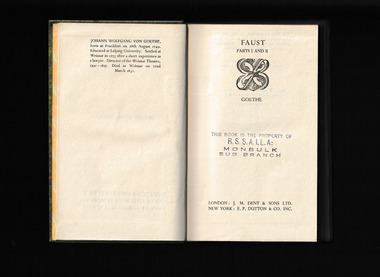
Book, JM Dent and sons, Goethe's Faust : Parts I and II, 1908
... The Faust legend has been the basis for many literary, artistic, cinematic, and musical works that have reinterpreted it through the ages. ...Faust is the protagonist of a classic German legend. He is a scholar who is highly successful yet dissatisfied with his life, so he makes a pact with the Devil, exchanging his soul for unlimited knowledge and worldly pleasures. The Faust legend has been the basis for many literary, artistic, cinematic, and musical works that have reinterpreted it through the ages. Faust and the adjective Faustian imply a situation in which an ambitious person surrenders moral integrity in order to achieve power and success for a delimited term. The Faust of early books - as well as the ballads, dramas, movies, and puppet-plays which grew out of them - is irrevocably damned because he prefers human to divine knowledge; "he laid the Holy Scriptures behind the door and under the bench, refused to be called doctor of Theology, but preferred to be styled doctor of Medicine". Plays and comic puppet theatre loosely based on this legend were popular throughout Germany in the 16th century, often reducing Faust and Mephistopheles to figures of vulgar fun. The story was popularised in England by Christopher Marlowe, who gave it a classic treatment in his play, The Tragical History of Doctor Faustus. In Goethe's reworking of the story two hundred years later, Faust becomes a dissatisfied intellectual who yearns for "more than earthly meat and drink" in his lifep.424.non-fictionFaust is the protagonist of a classic German legend. He is a scholar who is highly successful yet dissatisfied with his life, so he makes a pact with the Devil, exchanging his soul for unlimited knowledge and worldly pleasures. The Faust legend has been the basis for many literary, artistic, cinematic, and musical works that have reinterpreted it through the ages. Faust and the adjective Faustian imply a situation in which an ambitious person surrenders moral integrity in order to achieve power and success for a delimited term. The Faust of early books - as well as the ballads, dramas, movies, and puppet-plays which grew out of them - is irrevocably damned because he prefers human to divine knowledge; "he laid the Holy Scriptures behind the door and under the bench, refused to be called doctor of Theology, but preferred to be styled doctor of Medicine". Plays and comic puppet theatre loosely based on this legend were popular throughout Germany in the 16th century, often reducing Faust and Mephistopheles to figures of vulgar fun. The story was popularised in England by Christopher Marlowe, who gave it a classic treatment in his play, The Tragical History of Doctor Faustus. In Goethe's reworking of the story two hundred years later, Faust becomes a dissatisfied intellectual who yearns for "more than earthly meat and drink" in his lifegerman literature, german drama
