
Showing 28 items matching "city of melbourne regiment"
-
 Bendigo Military Museum
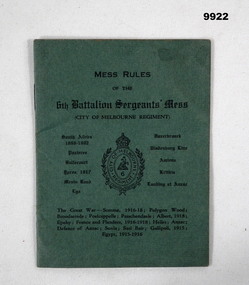
Booklet - MESS RULES BOOKLET, Carter & Taverner Pty Ltd, Mess Rules of the 6th Battalion Sergeant's Mess (City of Melbourne Regiment), Post WW1
... Mess Rules of the 6th Battalion Sergeant's Mess (City of Melbourne Regiment).......City of Melbourne Regiment...Insignia of City of Melbourne Regiment on middle of front cover. ...Insignia of City of Melbourne Regiment on middle of front cover. Battle honours of battalion listed in black type. ...Item in the collection of "William John Leslie Bennetts". See Catalogue No. 9886P for details of his service.Green coloured card cover with title in black text. Insignia of City of Melbourne Regiment on middle of front cover. Battle honours of battalion listed in black type. Eight cream coloured pages with cut edges. Pages secured with two staples. Text on pages in black type.william bennetts, mess rules, 6th battalion, city of melbourne regiment, ww1 -
 The 5th/6th Battalion Royal Victoria Regiment Historical Collection
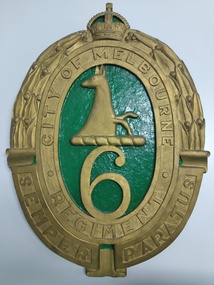
Decorative object - Badge-Large, 6 Battalion -City of Melbourne Regiment
... 6 Battalion -City of Melbourne Regiment...Large carved wooden badge of the 6th Battalion city of Melbourne Regiment. The badge is painted green and metallic gold on the obvers, has the image of a Kangaroo located above a "6" centrally on a victory green background "City of Melbourne Regiment" and "Semper Paratus are caved into the badge and a Kings crown is located centrally atop of the badge. ...Large carved wooden badge of the 6th Battalion city of Melbourne Regiment. The badge is painted green and metallic gold on the obvers, has the image of a Kangaroo located above a "6" centrally on a victory green background "City of Melbourne Regiment" and "Semper Paratus are caved into the badge and a Kings crown is located centrally atop of the badge. ...Badge of pre curser unit to 5/6 RVRLarge carved wooden badge of the 6th Battalion city of Melbourne Regiment. The badge is painted green and metallic gold on the obvers, has the image of a Kangaroo located above a "6" centrally on a victory green background "City of Melbourne Regiment" and "Semper Paratus are caved into the badge and a Kings crown is located centrally atop of the badge. The reverse has "W McAllum" & " Youngman st. Preston " painted in green and "190549" hand cared into it.The reverse has "W McAllum" & " Youngman st. Preston " painted in green and "190549" hand cared into it.wark vc club, 6 battalion, melbourne rifles -
 The 5th/6th Battalion Royal Victoria Regiment Historical Collection
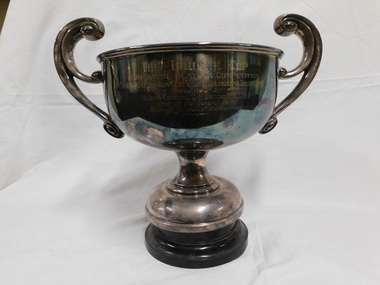
Award - Trophy, The Bruche Cup
... ...City of Melbourne Regiment...THE BRUCHE CUP FOR INTER PLATOON COMPETITION 6TH BATTALION (CITY OF MELBOURNE REGIMENT) Presented by MAJOR GENERAL J.H. ...6th Battalion was forerunner for the 5th/6th Battalion Presented to the city of melbourne regiment by its honorary Colonel and The chief of the General staff 5/6 RVR Regimental Property Trophy 6th Battalion City of Melbourne Regiment inter platoon competion THE BRUCHE CUP FOR INTER PLATOON COMPETITION 6TH BATTALION (CITY OF MELBOURNE REGIMENT) Presented by MAJOR GENERAL J.H. ...6th Battalion was forerunner for the 5th/6th BattalionPresented to the city of melbourne regiment by its honorary Colonel and The chief of the General staffSilver bowl shaped trophy with ornate handles THE BRUCHE CUP FOR INTER PLATOON COMPETITION 6TH BATTALION (CITY OF MELBOURNE REGIMENT) Presented by MAJOR GENERAL J.H. Bruche, C.B, C.M.G Chief of General Staff Honorary Colonel of the Regiment 5/6 rvr, regimental property, trophy, 6th battalion, city of melbourne regiment, inter platoon competion -
 The 5th/6th Battalion Royal Victoria Regiment Historical Collection
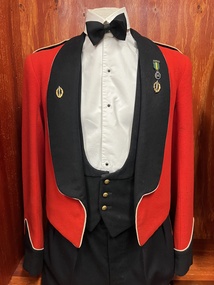
Uniform - 6th Battalion, the Royal Victoria Regiment Mess Dress Jacket
... Melbourne Regiment...Mess Dress Jacket...Mess Dress...Mess Jacket...Australian Army...Royal Australian Infantry Corps...RAINF...RMR...5th/6th Battalion...Royal Victoria Regiment...City...Traditional Fusiliers pattern mess dress inherited from the 6th Battalion, the Royal Melbourne Regiment (1918-1960) who were given the pattern by their allied regiment, the Royal Fusiliers (City of London Regiment) in 1936 as a token of friendship. ...Traditional Fusiliers pattern mess dress inherited from the 6th Battalion, the Royal Melbourne Regiment (1918-1960) who were given the pattern by their allied regiment, the Royal Fusiliers (City of London Regiment) in 1936 as a token of friendship. ...The use after 1960 (when the Royal Melbourne Regiment was amalgamated) is evidenced by unit held photos and by object itself which bears the Royal Australian Infantry Corps collar badges and staybrite St Edward's Crown rank insignia to each epaulet (for rank of Major). 6th Battalion Royal Melbourne Regiment Mess Dress Jacket Mess Dress Mess Jacket Australian Army Royal Australian Infantry Corps RAINF RMR 5th/6th Battalion Royal Victoria Regiment City of Melbourne Regiment RVR 5/6 RVR 6th Battalion, the Royal Victoria Regiment Mess Dress Jacket. ...6th Battalion, the Royal Victoria Regiment Mess Dress Jacket. Traditional Fusiliers pattern mess dress inherited from the 6th Battalion, the Royal Melbourne Regiment (1918-1960) who were given the pattern by their allied regiment, the Royal Fusiliers (City of London Regiment) in 1936 as a token of friendship. The Royal Victoria Regiment (RVR) was a late adopter of miniature RVR badges for collar badges and the Royal Australian Infantry Corps collar badges fitted indicate use after 1960 and likely at least into the 1980s when miniature RVR badges were adopted. The staybrite St Edward's Crown rank insignia to each epaulet also indicate use between 1960-1980s. Red body with white piping to Royal blue facings (to cuffs, epaulets and lapel/collar). Royal blue lapelled waistcoat with brass Australian Commonwealth Military Forces buttons. This mess jacket is significant because Australian Army Infantry units would normally wear the Infantry Corps pattern of mess dress. However, this pattern was worn by the 6th Battalion, the Royal Victoria Regiment (and likely also 5/6 RVR) right up to the late 1980s due to the unique and honoured customs and traditions of the 6th Battalion. It is a traditional Fusiliers pattern mess dress which was inherited from the 6th Battalion, the Royal Melbourne Regiment (1918-1960) who were the forebear to the Royal Victoria Regiment. They were given the pattern by their allied regiment, the Royal Fusiliers (City of London Regiment) in 1936 as a token of friendship. The use after 1960 (when the Royal Melbourne Regiment was amalgamated) is evidenced by unit held photos and by object itself which bears the Royal Australian Infantry Corps collar badges and staybrite St Edward's Crown rank insignia to each epaulet (for rank of Major).6th Battalion, the Royal Victoria Regiment Mess Dress Jacket. Traditional Fusiliers pattern mess dress inherited from the 6th Battalion, the Royal Melbourne Regiment (1918-1960) who were given the pattern by their allied regiment, the Royal Fusiliers (City of London Regiment) in 1936 as a token of friendship. The Royal Victoria Regiment (RVR) was a late adopter of miniature RVR badges for collar badges and the Royal Australian Infantry Corps collar badges fitted indicate use after 1960 and likely at least into the 1980s when miniature RVR badges were adopted. The staybrite St Edward's Crown rank insignia to each epaulet also indicate use between 1960-1980s. Red body with white piping to Royal blue facings (to cuffs, epaulets and lapel/collar). Royal blue lapelled waistcoat with brass Australian Commonwealth Military Forces buttons. 6th battalion, royal melbourne regiment, mess dress jacket, mess dress, mess jacket, australian army, royal australian infantry corps, rainf, rmr, 5th/6th battalion, royal victoria regiment, city of melbourne regiment, rvr, 5/6 rvr -
 Running Rabbits Military Museum operated by the Upwey Belgrave RSL Sub Branch
Button
... 64th Btn City of Melbourne Regiment 1912-1918; (later became 6th Btn City of Melb 1930-1942)...Badge/Buttons WW1 Army 64th Btn City of Melbourne Regiment 1912-1918; (later became 6th Btn City of Melb 1930-1942) Button ...64th Btn City of Melbourne Regiment 1912-1918; (later became 6th Btn City of Melb 1930-1942)badge/buttons, ww1, army -
 Bendigo Military Museum
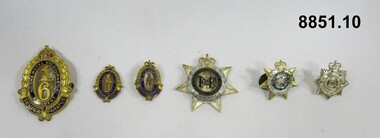
Badge - VARIOUS MILITARY BADGES, Unknown
... Sizes vary. 1. 6th Battalion City of Melbourne Regiment Hat, blue enamel. 2. 6th Battalion City of Melbourne Regiment Collar. 3. 6th Battalion City of Melbourne Regiment collar. 4. ...Sizes vary. 1. 6th Battalion City of Melbourne Regiment Hat, blue enamel. 2. 6th Battalion City of Melbourne Regiment Collar. 3. 6th Battalion City of Melbourne Regiment collar. 4. ...7. Corps Badges in Frame - View Cat. No. 2980 8. Corps badges in Frame - View Cat No. 2984. 9. Badges Post 1945 - View Cat No. 2720.3. 10. Badge Collection - View Cat No. 2832.Military badges either gold, silver or brass colour with or without a backing mounting plate, pins. Sizes vary. 1. 6th Battalion City of Melbourne Regiment Hat, blue enamel. 2. 6th Battalion City of Melbourne Regiment Collar. 3. 6th Battalion City of Melbourne Regiment collar. 4. Royal Australian Corps of Transport - Hat. 5. Royal Australian Corps of Transport - Collar. 6. Royal Australian Army Service Corps Collar. 7. Corps Badges in Frame. 8. Corps Badges in Frame 1964/1977. 9. Badges Post 1945. 10. Badge Collection W.F.R. Budge. passchendaele barracks trust, pbt71to80, badges -
 The 5th/6th Battalion Royal Victoria Regiment Historical Collection
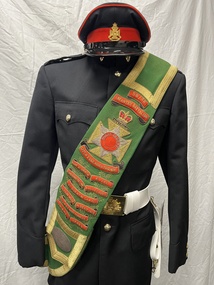
Uniform - Colour Belt of the 58th/32nd Infantry Battalion, City of Essendon Regiment c1956, 1956
... ...City of Essendon Regiment...Melbourne...58th/32nd Battalion (The City of Essendon Regiment) 1955-1960 was an Infantry Battalion from Melbourne Australia. ...58th/32nd Battalion (The City of Essendon Regiment) 1955-1960 was an Infantry Battalion from Melbourne Australia. ...58th/32nd Battalion (The City of Essendon Regiment) 1955-1960 was an Infantry Battalion from Melbourne Australia. It became part of the Royal Victoria Regiment in 1960 and today its customs and traditions are preserved by the 5th/6th Battalion, the Royal Victoria Regiment. Before 1955, it was titled the 58th/32nd Battalion (The Melbourne Rifles) 1948-1955 and before 1948 had been two separate regiments; the 58th Infantry Battalion (The Essendon Rifles) and the 32nd Infantry Battalion (The Footscray Regiment). Gold and silver bullion decoration with red battle honours on a rifle green backing. The regimental badge of the 58th/32nd Infantry Battalion with motto 'Nulli Cedere' (latin for 'Never Give Up') is spun gold and silver bullion and red silk. The battalion's battle honours are embroidered in spun gold thread on red silk banners in front of a lightly coloured wattle bush. Battle honours 'Mont St. Quentin', 'Avere', 'Hindenberg Line', 'Bullecourt', 'St Quentin Canal', 'Polygon Wood', 'Albert 1918', 'Villers Brettenneux', 'Amiens' and 'Ypres'. Wattle backing behind. Silver plate attached to lower section inscribed as follows: 'This belt was presented by the City of Essendon on the occasion of presentation of new Colours 25 November 1956'. 58th/32nd battalion, city of essendon regiment, melbourne rifles, 5/6 rvr, 5th/6th battalion, royal victoria regiment, colour party, colour belt, australian army, essendon rifles -
 The 5th/6th Battalion Royal Victoria Regiment Historical Collection
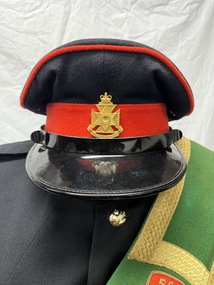
Uniform - Peaked Blues Cap from the 58th/32nd Battalion (The Melbourne Rifles) 1948-1955
... ...City of Essendon Regiment...Melbourne...Melbourne Australia. It became the 58th/32nd Battalion (The City of Essendon Regiment) 1955-1960 before becoming part of the Royal Victoria Regiment in 1960 and today its customs and traditions are preserved by the 5th/6th Battalion, the Royal Victoria Regiment. ...Before 1948 it had been two separate regiments; the 58th Infantry Battalion (The Essendon Rifles) and the 32nd Infantry Battalion (The Footscray Regiment). 58th/32nd Battalion City of Essendon Regiment Melbourne Rifles 5/6 RVR 5th/6th Battalion Royal Victoria Regiment Colour Party Australian Army Essendon Rifles Blues Peaked Cap Hat badge inscribed 'Melbourne Rifles', 'Australia'. ...58th/32nd Battalion (The Melbourne Rifles) 1948-1955 was an Infantry Battalion from Melbourne Australia. It became the 58th/32nd Battalion (The City of Essendon Regiment) 1955-1960 before becoming part of the Royal Victoria Regiment in 1960 and today its customs and traditions are preserved by the 5th/6th Battalion, the Royal Victoria Regiment. Before 1948 it had been two separate regiments; the 58th Infantry Battalion (The Essendon Rifles) and the 32nd Infantry Battalion (The Footscray Regiment). Peaked Blues Cap from the 58th/32nd Battalion (The Melbourne Rifles) 1948-1955 fitted with the gilt brass badge of the regiment. Hat badge inscribed 'Melbourne Rifles', 'Australia'. 58th/32nd battalion, city of essendon regiment, melbourne rifles, 5/6 rvr, 5th/6th battalion, royal victoria regiment, colour party, australian army, essendon rifles, blues, peaked cap -
 Mont De Lancey
Card - Dance Cards, Circa 1913
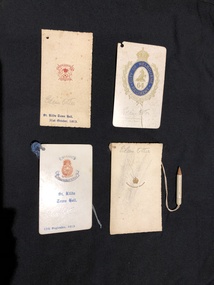
... "St Kilda Town Hall 12 Sept 1913" 3. "City of Melbourne Regiment, Town Hall Prahran Fri 19 Sept 1913" 4. ..."St Kilda Town Hall 12 Sept 1913" 3. "City of Melbourne Regiment, Town Hall Prahran Fri 19 Sept 1913" 4. ...Belonged to Eileen Otter, who was 18 or 19 at the time of the Dances, this may have been when she first 'came out' into Society.4 cardboard Dance Cards, one with a pencil attached by string.1, "Government House" 2. "St Kilda Town Hall 12 Sept 1913" 3. "City of Melbourne Regiment, Town Hall Prahran Fri 19 Sept 1913" 4. Victorian Naval & Military Club. St Kilda Town Hall 31 Oct 1913" dancing, leisure -
 Geelong RSL Sub Branch
History - VX5104 L/Col Victor J Schofield MBE, early 20 Century
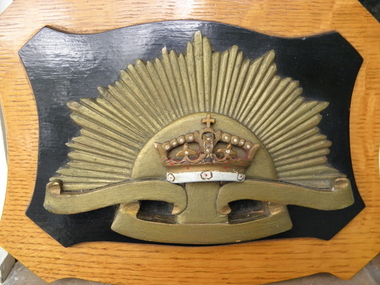
... City of Geelong Regiment). In 1929 this Battalion was amalgamated with the 21st Battalion to become 23rd/21st Battalion and adopted the territorial designation of 'The City of Geelong Regiment/The Victorian Rangers'. The Battalion went to the Northern Territory during WW2 before being disbanded, however VX5104 VJ Schofield became redeployed and served in New Guinea during WW2. He was awarded an MBE for his service. (Reference The Argus (Melbourne...City of Geelong Regiment). In 1929 this Battalion was amalgamated with the 21st Battalion to become 23rd/21st Battalion and adopted the territorial designation of 'The City of Geelong Regiment/The Victorian Rangers'. The Battalion went to the Northern Territory during WW2 before being disbanded, however VX5104 VJ Schofield became redeployed and served in New Guinea during WW2. He was awarded an MBE for his service. (Reference The Argus (Melbourne ...These are original items of VX5104 L/Col VJ Schofield MBE who served with 23rd Battalion (The City of Geelong Regiment). In 1929 this Battalion was amalgamated with the 21st Battalion to become 23rd/21st Battalion and adopted the territorial designation of 'The City of Geelong Regiment/The Victorian Rangers'. The Battalion went to the Northern Territory during WW2 before being disbanded, however VX5104 VJ Schofield became redeployed and served in New Guinea during WW2. He was awarded an MBE for his service. (Reference The Argus (Melbourne, Vic.) Friday 20 July 1945. (Awards for Service in Papua-New Guinea). The original plaques were located at the Geelong Returned Soldiers, Sailors and Airman Woollen Mill (commonly referred to as the RS&S Mill). Schofields Father was responsible for the raising of the Mill, with Federal Funding, he was the CEO. It is not known if Victor John Schofield worked at this Mill but the plaques were found there and donated to the Geelong RSL Sub Branch by Roger Burt CEO of Godfrey Hirst Group during the Hirst takerover of the RS&S Mill.Two Plaques - one the Rising Sun, one the Maxwell Family Crest which is related to L/Col Schofield MBE. Timber materials used in the manufacture of both items.None on the Rising Sun. One The Maxwell Family Crest 'Rebiresco' Maxwell.ww2, vx5104 jc schofield mbe, papua-new guinea, city of geelong regiment, 23rd/21st battalion -
 Bendigo Military Museum
Pamphlet - SANDAKAN MEMORIAL 1995, C. 1995
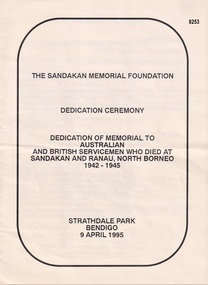
... City of Greater Bendigo, Mr J.S. Millner AM, Chairman The Sandakan Memorial Foundation. The Requiem was read by Father John Brendan Rogers OFM. Unveiling the Memorial by, Mr Peter Ross Edwards AM. Dedication of the Memorial by; Father John Brendan Rogers OFM, Chaplain 8th Division Sandakan and Kuching, Chaplain Gary Kenney, Australian Army. Laying of the wreaths, Wreath Marshalls supplied by Bendigo RSL Sub Branch, Australian Army Band Melbourne. The ODE was read by; President Bendigo RSL Mr Cliff Clohesy. The Catalflaque Party was supplied by; Army School of Survey Regiment...City of Greater Bendigo, Mr J.S. Millner AM, Chairman The Sandakan Memorial Foundation. The Requiem was read by Father John Brendan Rogers OFM. Unveiling the Memorial by, Mr Peter Ross Edwards AM. Dedication of the Memorial by; Father John Brendan Rogers OFM, Chaplain 8th Division Sandakan and Kuching, Chaplain Gary Kenney, Australian Army. Laying of the wreaths, Wreath Marshalls supplied by Bendigo RSL Sub Branch, Australian Army Band Melbourne. The ODE was read by; President Bendigo RSL Mr Cliff Clohesy. The Catalflaque Party was supplied by; Army School of Survey Regiment ...This service was to dedicate a Memorial to Australian & British Servicemen who died at Sandakan and Ranau, North Borneo 1942 - 1945. It was unveiled at Strathdale Park Bendigo on 9.4.1995. The Official Party were; Mr Peter Ross Edwards AM, Chief Commissioner The City of Greater Bendigo, Mr J.S. Millner AM, Chairman The Sandakan Memorial Foundation. The Requiem was read by Father John Brendan Rogers OFM. Unveiling the Memorial by, Mr Peter Ross Edwards AM. Dedication of the Memorial by; Father John Brendan Rogers OFM, Chaplain 8th Division Sandakan and Kuching, Chaplain Gary Kenney, Australian Army. Laying of the wreaths, Wreath Marshalls supplied by Bendigo RSL Sub Branch, Australian Army Band Melbourne. The ODE was read by; President Bendigo RSL Mr Cliff Clohesy. The Catalflaque Party was supplied by; Army School of Survey Regiment Bendigo.Pamphlet off white colour, A4 folded making 8 pages total, all print in black, one staple central holding together.On the front, "The Sandakan Memorial Foundation, Strathdale Park Bendigo 9 April 1995"brsl, smirsl, sandakan, strathdale -
 4th/19th Prince of Wales's Light Horse Regiment Unit History Room
Regimental Scrap Book: 1970-1979, 2009
... melbourne...kyneton...training...history 4 19 prince of wales s light horse regiment...ceremonial west gate bridge...freedom of city...Regiment for the period 1970- 1979. Contents include: Training, ceremonial and social activities. Vale Lt Col John Dixon. Freedom of City of Traralgon 29 Nov 1970. Freedom of City of Melbourne...melbourne kyneton training history 4 19 prince of wales s light horse regiment ceremonial west gate bridge freedom of city traralgon Archival quality A3 loose leaf slip case containing memorabilia documents, cuttings and photos about the Regiment for the period 1970- 1979. ...Archival quality A3 loose leaf slip case containing memorabilia documents, cuttings and photos about the Regiment for the period 1970- 1979. Contents include: Training, ceremonial and social activities. Vale Lt Col John Dixon. Freedom of City of Traralgon 29 Nov 1970. Freedom of City of Melbourne March 1977. Freedom of City of Kyneton September 1978. Opening of West Gate Bridge Nov 1975.melbourne, kyneton, training, history 4 19 prince of wales s light horse regiment, ceremonial west gate bridge, freedom of city, traralgon -
4th/19th Prince of Wales's Light Horse Regiment Unit History Room
Regimental Scrap Book: 1990-1999, 2009
... Regiment. Chief of General Staff Commendation to A Squadron 4/19 PWLH for assistance with flood emergency in Gippsland April 1990. Meritorious Unit Commendation to Prince of Wales Light Horse Troop while attached to 173 US Airborne Brigade, South Vietnam 1965/66. Freedom of City of Melbourne...ceremonial training vietnam war history 4 19 prince of wales s light horse freedom of city melbourne freedom of city traralgon traralgon army depot commendations gippsland floods Archival quality A3 loose leaf slip case containing memorabilia documents, cuttings and photos about the Regiment for the period 1990-1999. ...Archival quality A3 loose leaf slip case containing memorabilia documents, cuttings and photos about the Regiment for the period 1990-1999. Contents include:Training, Ceremonial, social activities. Hansard 18 Oct 1990 re future of the Regiment. Threats to the Regiment. Chief of General Staff Commendation to A Squadron 4/19 PWLH for assistance with flood emergency in Gippsland April 1990. Meritorious Unit Commendation to Prince of Wales Light Horse Troop while attached to 173 US Airborne Brigade, South Vietnam 1965/66. Freedom of City of Melbourne May 1992. 50th Birthday of Regiment. Closure of Traralgon Depot 1998.ceremonial, training, vietnam war, history 4 19 prince of wales s light horse, freedom of city melbourne, freedom of city traralgon, traralgon army depot, commendations, gippsland floods -
4th/19th Prince of Wales's Light Horse Regiment Unit History Room
Pewter Mug
... Presented to the Lord Mayor of Melbourne during Regiment's build up to Freedom of Entry Ceremony March 1977 mug pewter city of melbourne The Lord Mayor's Mug Hallmark on base Circular logo - Selangor Pewter - Malaysia - Singapore Pewter mug with one handle. ...Presented to the Lord Mayor of Melbourne during Regiment's build up to Freedom of Entry Ceremony March 1977Pewter mug with one handle. Metal badge of 4/19 Prince of Wales's Light Horse Regiment affixedThe Lord Mayor's Mug Hallmark on base Circular logo - Selangor Pewter - Malaysia - Singaporemug, pewter, city of melbourne -
 Victorian Interpretive Projects Inc.
Cartoons, World War One Cartoons by Edwin Cannon
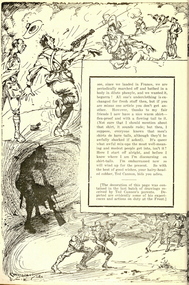
... A keen member of the local 71st "City of Ballarat" Regiment Ted was already primed for a life in the army. He embarked from Port Melbourne on 23 November 1915 with reinforcements to the 6th Infantry Battalion bound for Egypt. ...A keen member of the local 71st "City of Ballarat" Regiment Ted was already primed for a life in the army. He embarked from Port Melbourne on 23 November 1915 with reinforcements to the 6th Infantry Battalion bound for Egypt. ...Edwin (Ted) Cannon was born at Ballarat on 30 July 1895, the only son of Edwin and Florence Cannon. He studied art at the Ballarat School of Mines Technical Art School. Ted displayed a talent for industrial design but it was his black and white work that 'drew' most attention. His cartoons and caricatures, heavily influenced by Phil May, were of a particularly high standard. During the Ballarat Exhibition of 1913 Ted's work was singled out for notice and he was awarded First Prize. After completing his art course Ted was employed as an assistant teacher at the Ballarat Technical Art School, before taking a position as cartoonist with the Ballarat Star newspaper at the end of 1914. With the war raging in Europe Ted discovered a darker aspect for his artwork, but, still, he could not resist depicting Turkey as a full-feathered, fez-wearing bird. In 1915 Ted was awarded the prestigious Victorian Education Department Senior Technical School Scholarship. Only months into his scholarship, Ted volunteered for the AIF. A keen member of the local 71st "City of Ballarat" Regiment Ted was already primed for a life in the army. He embarked from Port Melbourne on 23 November 1915 with reinforcements to the 6th Infantry Battalion bound for Egypt. It was during the Battle of Pozieres on the Western Front that Ted Cannon came into his own. His work with the Scout Platoon (under the command of Lieutenant Jack Rogers) sketching the enemy's gun emplacements proved invaluable to the Brigade and brought Ted to the attention of the Australian High Command. On 13 September 1916 Ted was given a special assignment for General C.B.B. White. Ted was sent out forward of the Old Mill at Verbrandenmolen (in the Ypres Salient) to draw a panorama of the German lines in the area from Hill 60 to The Bluff. It was a hazardous task and Ted was warned to be careful. Tragically he was sniped by an enemy machine-gunner and sustained severe abdominal wounds. Stretcher-bearers rushed him to the 17th Casualty Clearing Station where he was operated on by the doctors at 8.30 that night. With little chance of success, but ever resilient, Ted remained conscious almost to the end. He died early in the morning of the 14 September 1916. His body was buried in the large Military Cemetery at Lijssenthoek. See http://www.ballarat.edu.au/about-ub/history/art-and-historical-collection/ub-honour-roll/c/edwin-joseph-ted-cannon-1895-1916 Digital images of a number of cartoons published in the Ballarat School of Mines Students' Magazine, 1916. Ted Cannon sent cartoons home to Ballarat from the World War One front.edwin cannon, ted cannon, cartoons, world war, world war 1 -
 Warrnambool and District Historical Society Inc.
Household, Ceremonial Regalia, 1930s
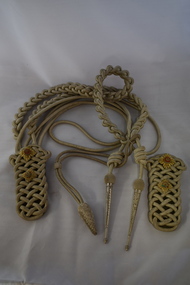
... Regiment). He wore this regalia when he was part of the mounted Guard of Honour during the visit of the Duke of Gloucester in 1934. The visit was part of Victoria’s Centenary celebrations and the Duke officially opened the Melbourne Shrine of Remembrance. Charles Rogers was a well-known Warrnambool identity in the 1930s, 40s and 50s as a horseman and Army identity and he and his horse frequently led parades and celebrations in the city. ...Regiment). He wore this regalia when he was part of the mounted Guard of Honour during the visit of the Duke of Gloucester in 1934. The visit was part of Victoria’s Centenary celebrations and the Duke officially opened the Melbourne Shrine of Remembrance. Charles Rogers was a well-known Warrnambool identity in the 1930s, 40s and 50s as a horseman and Army identity and he and his horse frequently led parades and celebrations in the city. ...This ceremonial regalia belonged to Captain Charles Rogers of the Australian Army (Light Horse Regiment). He wore this regalia when he was part of the mounted Guard of Honour during the visit of the Duke of Gloucester in 1934. The visit was part of Victoria’s Centenary celebrations and the Duke officially opened the Melbourne Shrine of Remembrance. Charles Rogers was a well-known Warrnambool identity in the 1930s, 40s and 50s as a horseman and Army identity and he and his horse frequently led parades and celebrations in the city. He was a long-serving Warrnambool Agricultural Show official as a judge of equine events. Rogers died in 1961. These items are of great interest as examples of the regalia worn by Australian military personnel in the 1930s. They are also good mementos of Charles Rogers, a notable personality in Warrnambool in the 1930s, 40s and 50s.1 This is a piece of ceremonial regalia worn over the shoulder and called an aigullette. It has a plaited silver-coloured cord ending in silver metal tagged points. The metal points or stakes are highly decorated. The cords also have an accompanying smaller silver-coloured cord and another attachment of cord with an end of interwoven material in the shape of an elongated pear or acorn. The item is a little tarnished. .2 These are epaulettes worn on the shoulder. One is attached to the aigullette and the other is detached. They are made of silver plaited cord with a brown felt backing and have two star-shaped gold and yellow badges indicating the rank captain charles rogers, duke of gloucester visit, centenary of victoria, history of warrnambool -
 Warrnambool and District Historical Society Inc.
Household, Ceremonial Regalia (Charles Rogers), 1930s
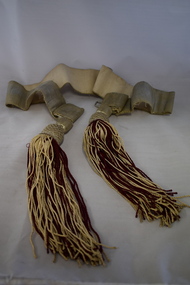
... Regiment) when he was part of the mounted Guard of Honour during the visit of the Duke of Gloucester in 1934. The visit was part of Victoria’s Centenary celebrations and the Duke officially opened the Melbourne Shrine of Remembrance. Charles Rogers was a well-known Warrnambool identity in the 1930s, 40s and 50s as a horseman and Army member. He was often seen on horseback leading parades and celebrations in the city...Regiment) when he was part of the mounted Guard of Honour during the visit of the Duke of Gloucester in 1934. The visit was part of Victoria’s Centenary celebrations and the Duke officially opened the Melbourne Shrine of Remembrance. Charles Rogers was a well-known Warrnambool identity in the 1930s, 40s and 50s as a horseman and Army member. He was often seen on horseback leading parades and celebrations in the city ...This belt was worn by Captain Charles Rogers of the Australian Army (Light Horse Regiment) when he was part of the mounted Guard of Honour during the visit of the Duke of Gloucester in 1934. The visit was part of Victoria’s Centenary celebrations and the Duke officially opened the Melbourne Shrine of Remembrance. Charles Rogers was a well-known Warrnambool identity in the 1930s, 40s and 50s as a horseman and Army member. He was often seen on horseback leading parades and celebrations in the city. He was a long-serving Warrnambool Agricultural Show official as a judge of equine events. He died in 1961. This belt is of interest as an example of the ceremonial regalia used by Army personnel in the 1930s and as a memento of a notable 20th century Warrnambool person, Charles Rogers.This is a belt made of silver thread material with a thick cloth backing. The belt has a cloth-covered metal clasp. There are two tassels hanging from the clasp area with beige and maroon threads with tops covered in silver mesh. These mesh tops may have a wooden frame underneath. The belt is a little tarnished.captain charles rogers, duke of gloucester visit, history of warrnambool -
 Bendigo Military Museum
Badge - VARIOUS MILITARY BADGES, Unknown
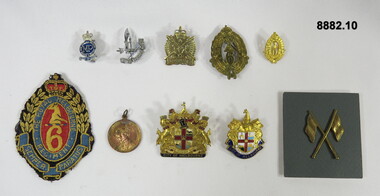
... NZ Cadet Corps Hat. 4. 6 Battalion The Royal Melbourne Regiment Hat. 5. 6 Battalion The Royal Melbourne Regiment collar. 6. 6 Battalion The Royal Melbourne Regiment Coat Pocket. 7. King George VI & Queen Elizabeth Medallion Victory in Europe-Pacific. (1945 City of Melbourne) 8. ...NZ Cadet Corps Hat. 4. 6 Battalion The Royal Melbourne Regiment Hat. 5. 6 Battalion The Royal Melbourne Regiment collar. 6. 6 Battalion The Royal Melbourne Regiment Coat Pocket. 7. King George VI & Queen Elizabeth Medallion Victory in Europe-Pacific. (1945 City of Melbourne) 8. ...Military badges either gold, silver or brass colour with or without a backing mounting plate, pins, sizes vary.. 1. Royal N.Z. Military Police Collar. 2. NZ RF Cadets Hat. 3. NZ Cadet Corps Hat. 4. 6 Battalion The Royal Melbourne Regiment Hat. 5. 6 Battalion The Royal Melbourne Regiment collar. 6. 6 Battalion The Royal Melbourne Regiment Coat Pocket. 7. King George VI & Queen Elizabeth Medallion Victory in Europe-Pacific. (1945 City of Melbourne) 8. City of Melbourne Crest. 9. City of Melbourne Crest. 10. Army Signallers Qualification Arm. passchendaele barracks trust, 391to400, badges -
 Warrnambool and District Historical Society Inc.
Book, William Clowes and Sons (for His Majesty’s Stationery Office), Cavalry Training Vol. 11 War 1929, 1929
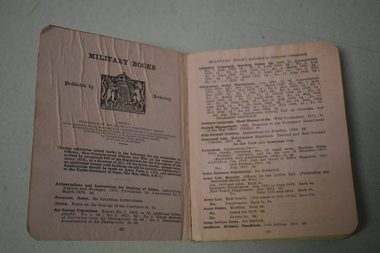
... Regiment. He was part of the mounted Guard of Honour during the visit of the Duke of Gloucester in 1934. The visit was part of Victoria’s centenary celebrations and the duke officially opened the Melbourne Shrine of Remembrance. Charles Rogers was well-known as a Warrnambool resident in the 1930s, 40s and 50s and was often seen on horseback leading parade and celebrations in the city. ...Regiment. He was part of the mounted Guard of Honour during the visit of the Duke of Gloucester in 1934. The visit was part of Victoria’s centenary celebrations and the duke officially opened the Melbourne Shrine of Remembrance. Charles Rogers was well-known as a Warrnambool resident in the 1930s, 40s and 50s and was often seen on horseback leading parade and celebrations in the city. ...This book belonged to Charles Rogers. Captain Charles Rogers was an Australian Army officer in the 4th Lighthorse Regiment. He was part of the mounted Guard of Honour during the visit of the Duke of Gloucester in 1934. The visit was part of Victoria’s centenary celebrations and the duke officially opened the Melbourne Shrine of Remembrance. Charles Rogers was well-known as a Warrnambool resident in the 1930s, 40s and 50s and was often seen on horseback leading parade and celebrations in the city. He as a long-serving Warrnambool Agricultural Show official as a judge of equine events. He died in 1961. This book is of interest, firstly as an example of a military handbook for cavalry officers and secondly because it belonged to Captain Charles Rogers, an army officer (Lighthorse regiment) who was a well-known resident of Warrnambool in the early to mid 20th century. This is a hard cover book of 198 pages. It has a yellow cover with black printing on the spine. Most of the pages are white, with several pink pages at the beginning and the end. The book has 13 chapters and an index. The cover is slightly worn.‘C.A.Rogers’captain charles rogers, warrnambool, military handbooks -
 Sunshine and District Historical Society Incorporated
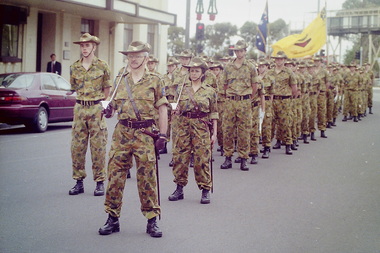
Photograph - 30th Regional Cadet Unit Of Australia Freedom Of The City Of Sunshine Parade 1998 Photographs, The Advocate, 5th December 1998
... Melbourne’s western suburbs, particularly Sunshine, St Albans, and Deer Park. It operated independently of the Australian Defence Force cadet structure, though it adopted similar uniforms, drill practices, and leadership training. The Freedom Ceremony dates from the medieval times when cities and towns were fortified by walls. Visiting armies had to be granted freedom of entry before being allowed to pass. A trusted military unit would be allowed to march through the city in full ceremonial order, a public affirmation of honour, trust, and the bond between the regiment ...These photographs, taken by The Advocate in 1998, show the 30th Regional Cadet Unit of Australia taking part in the Freedom of the City of Sunshine parade. The images capture the unit marching in full ceremonial order as part of the civic honour granted by the municipality. The 30th Regional Cadet Unit of Australia (Sunshine) was a community‑based youth cadet organisation active in Melbourne’s western suburbs, particularly Sunshine, St Albans, and Deer Park. It operated independently of the Australian Defence Force cadet structure, though it adopted similar uniforms, drill practices, and leadership training.The Freedom Ceremony dates from the medieval times when cities and towns were fortified by walls. Visiting armies had to be granted freedom of entry before being allowed to pass. A trusted military unit would be allowed to march through the city in full ceremonial order, a public affirmation of honour, trust, and the bond between the regiment and the community.30th Regional Cadet Unit Of Australia Freedom Of The City Of Sunshine 555.2devonshire road, hampshire road, city of sunshine municipal offices, sunshine municipal offices, alexandra avenue, sunshine -
Dandenong & District Historical Society
Book, Victoria - A Description Of It's Principle Cities Melbourne & Geelong
... A Description of Victoria Principal Cities - Melbourne & Geelong Remarks on the Present State of the Colony An Account of the Ballarat Disturbances Death of Captain Wise - 40th Regiment...A Description of Victoria Principal Cities - Melbourne & Geelong Remarks on the Present State of the Colony An Account of the Ballarat Disturbances Death of Captain Wise - 40th Regiment Victoria - A Description Of It's Principle Cities Melbourne & Geelong Book ...non-fiction -
 8th/13th Victorian Mounted Rifles Regimental Collection
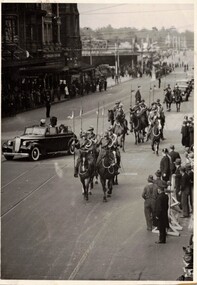
Photograph - Light Horse with lances, July 1939
... Melbourne on 17 July 1939 to take up the post of Governor of Victoria. The escort comprised Lieutenant HG Fyffe, Sergeant C Thorburn, Trumpeter G Pyle and 12 troopers drawn from the Tocumwal Troop of the 20th Light Horse Regiment. Historical photograph of Vice Regal escort drawn from a Light Horse Regiment. Well provenanced and possibly the last mounted escort in Victoria drawn from serving military. dugan winston sir fyffe h g thorburn c pyle g governor of victoria Black and white photograph of mounted troops armed with lances in city street with open car carrying men in feathered hats, one wearing bearskin. ...Escort for Major General Sir Winston Dugan on his arrival in Melbourne on 17 July 1939 to take up the post of Governor of Victoria. The escort comprised Lieutenant HG Fyffe, Sergeant C Thorburn, Trumpeter G Pyle and 12 troopers drawn from the Tocumwal Troop of the 20th Light Horse Regiment.Historical photograph of Vice Regal escort drawn from a Light Horse Regiment. Well provenanced and possibly the last mounted escort in Victoria drawn from serving military.Black and white photograph of mounted troops armed with lances in city street with open car carrying men in feathered hats, one wearing bearskin.dugan winston sir, fyffe h g, thorburn c, pyle g, governor of victoria -
 8th/13th Victorian Mounted Rifles Regimental Collection
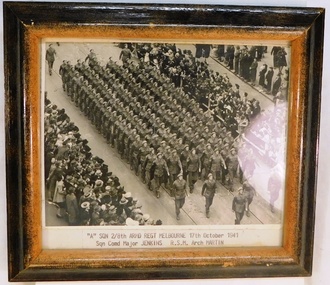
Photograph, October 1941
... Good study showing men of an armoured regiment from Victoria marching in Melbourne early in WWII (1939-45) 2/8th armoured regiment Melbourne Below photograph ""A Squadron 2/8th Armoured Regiment , Melbourne, 17th October 1941. Squadron Commander Major Jenkins. RSM Arch Martin" Framed photograph of soldiers marching through Melbourne city ...The 2/8th Armoured Regiment was raised in June 1941 under the command of Lieutenant Colonel W G Hopkins with officers and men selected from the wider AIF in Victoria. The regiment trained in newly arrived M3 General Grant tanks at Puckapunyal before moving north to Singleton, then the Wee Waa plains. The regiment sailed for New Guinea in April 1943 and carried out mobile defence to airfields at Port Moresby, Milne Bay, Dobadura and Popondetta. The regiment returned to Australia in February 1944 and disbanded as an armoured regiment and retrained as Nos 41, 42 and 43 Landing Craft Companies. They returned to the South West Pacific serving at Bougainville, Balikpapan, Lae and Wewak.Good study showing men of an armoured regiment from Victoria marching in Melbourne early in WWII (1939-45)Framed photograph of soldiers marching through Melbourne city street; crowds on both sides of street.Below photograph ""A Squadron 2/8th Armoured Regiment , Melbourne, 17th October 1941. Squadron Commander Major Jenkins. RSM Arch Martin"2/8th armoured regiment, melbourne -
 8th/13th Victorian Mounted Rifles Regimental Collection
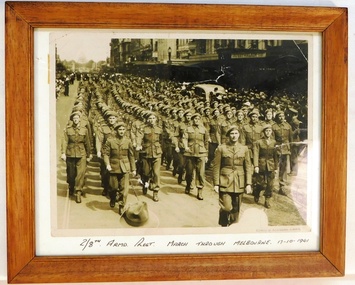
Photograph, October 1941
... Good study showing men of an armoured regiment from Victoria marching in Melbourne. 2/8th armoured regiment Melbourne Below photo "2/8th Armoured Regiment march through Melbourne 17 - 10 - 1941" Framed photograph of soldiers in armoured corps uniform marching through Melbourne city street; crowds on both sides of the street. ...The 2/8th Armoured Regiment was raised in June 1941 under the command of Lieutenant Colonel W G Hopkins with officers and men selected from the wider AIF in Victoria. The regiment trained in newly arrived M3 General Grant tanks at Puckapunyal before moving north to Singleton, then the Wee Waa plains. The regiment sailed for New Guinea in April 1943 and carried out mobile defence to airfields at Port Moresby, Milne Bay, Dobadura and Popondetta. The regiment returned to Australia in February 1944 and disbanded as an armoured regiment and retrained as Nos 41, 42 and 43 Landing Craft Companies. They returned to the South West pacific serving at Bougainville, Balikpapan, Lae and Wewak.Good study showing men of an armoured regiment from Victoria marching in Melbourne.Framed photograph of soldiers in armoured corps uniform marching through Melbourne city street; crowds on both sides of the street.Below photo "2/8th Armoured Regiment march through Melbourne 17 - 10 - 1941"2/8th armoured regiment, melbourne -
 The 5th/6th Battalion Royal Victoria Regiment Historical Collection
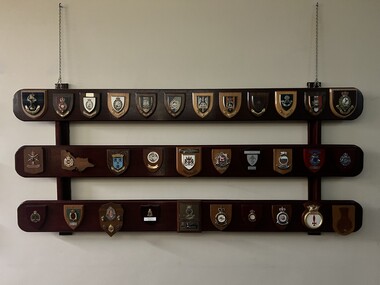
Plaque - Presentation Plaque, 32 x Plaques
... 1x Plaque made of 3 hoeizontal varnished timber beams with plaques affiixed and suspended from the wall via chains (Gordan Highlanders + Royal Fusiliers + 1 RRF + 2 Fusiliers + North Hampton Shire Regiment + The lake superior Scottish regiment + Royal Scots Dragon guards + Royal Warwickshire Fusiliers + King's Regiment + Light infantry + Royal Leicestershire regiment + RRF + 3 DIV + RAE + Villers Bretonneux + City of sunshine + City of Melbourne + Hauraki + 3 EME + Aitape Tread Warily + Victoria Police + AFP + KSEA FOR ASSN + 39 BN + 6 RMR + Swan Regiment + MPDRANR + 10 SQN + 36 SQN + MTU + London + [blank] ...Collection of plaques presented to the unit over the years 5/6 RVR PLAQUE 1x Plaque made of 3 hoeizontal varnished timber beams with plaques affiixed and suspended from the wall via chains (Gordan Highlanders + Royal Fusiliers + 1 RRF + 2 Fusiliers + North Hampton Shire Regiment + The lake superior Scottish regiment + Royal Scots Dragon guards + Royal Warwickshire Fusiliers + King's Regiment + Light infantry + Royal Leicestershire regiment + RRF + 3 DIV + RAE + Villers Bretonneux + City of sunshine + City of Melbourne + Hauraki + 3 EME + Aitape Tread Warily + Victoria Police + AFP + KSEA FOR ASSN + 39 BN + 6 RMR + Swan Regiment + MPDRANR + 10 SQN + 36 SQN + MTU + London + [blank] 32 x Plaques Plaque Presentation Plaque ...Collection of plaques presented to the unit over the years 1x Plaque made of 3 hoeizontal varnished timber beams with plaques affiixed and suspended from the wall via chains (Gordan Highlanders + Royal Fusiliers + 1 RRF + 2 Fusiliers + North Hampton Shire Regiment + The lake superior Scottish regiment + Royal Scots Dragon guards + Royal Warwickshire Fusiliers + King's Regiment + Light infantry + Royal Leicestershire regiment + RRF + 3 DIV + RAE + Villers Bretonneux + City of sunshine + City of Melbourne + Hauraki + 3 EME + Aitape Tread Warily + Victoria Police + AFP + KSEA FOR ASSN + 39 BN + 6 RMR + Swan Regiment + MPDRANR + 10 SQN + 36 SQN + MTU + London + [blank] 5/6 rvr, plaque -
The 5th/6th Battalion Royal Victoria Regiment Historical Collection
Mixed media - Framed Badges and Lanyard, 58/32 Infantry Battalion Essendon Rifles
... City of Essendon Regiment which was formally known as the Melbourne Rifles. ...City of Essendon Regiment which was formally known as the Melbourne Rifles. ...Unit that 5/6RVR draws its lineageFramed red cloth shoulder patches and gold coloured metal hat and collar badges and red and black woven lanyard of the 58th/ 32nd Inf Bn Essendon Rifles.These are the Titles Embroidered Sign Formation, Lanyard, Collar and Hat badges of the 58th/32 Inf. Bn. City of Essendon Regiment which was formally known as the Melbourne Rifles. Presented to the Museum by Capt. I. Rainford. 1 rvr officers mess trust, wark vc club, 58/32 battalion -
 The 5th/6th Battalion Royal Victoria Regiment Historical Collection
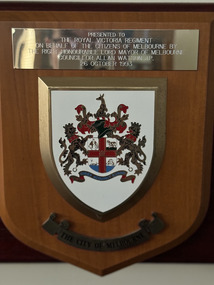
Plaque - The City of Melbourne plaque
... City of Melbourne Plaque present to the Royal Victoria Regiment. The City of Melbourne symbol is in the centre of the plaque. ...City of Melbourne Plaque present to the Royal Victoria Regiment. The City of Melbourne symbol is in the centre of the plaque. ...City of Melbourne Plaque present to the Royal Victoria Regiment. The City of Melbourne symbol is in the centre of the plaque. The metal plate on the top part of the plaque stated "Presented to The Royal Victoria Regiment on behalf of the citizens of Melbourne by the Right Honourable Lord Mayor of Melbourne councillor Allan Watson J.P 26 October 1993" -
 Ballarat Heritage Services
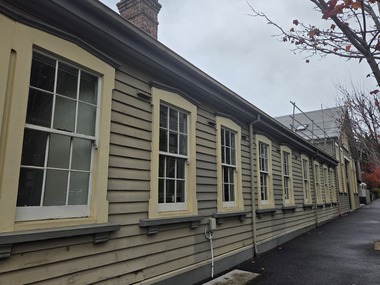
Photograph, Former Drill Hall, Therry St, Fitzroy
... Melbourne Regiment. After World War Two the Drill Hall was mainly used for regimental parties, dances and fetes. Melbourne City...Melbourne Regiment. After World War Two the Drill Hall was mainly used for regimental parties, dances and fetes. Melbourne City ...Built in 1937 the drill hall was designed by architect George Hallandal, to provide military facilities for the Royal Melbourne Regiment. After World War Two the Drill Hall was mainly used for regimental parties, dances and fetes. Melbourne City Council purchased the building in the late 1990s, and since 2013 it has been managed by AMES Australia. Two photos of weatherboard driill hall on the corner of Victoria St and Therry St, Fitzroy. Also a pedf of the brochire provided during Open Melbourne tours (https://www.ames.net.au/sites/default/files/migrated_files/ohm_drill-hall-history.pdf)drill hall, royal melbourne regiment
