
Showing 21 items matching "city oval grandstand"
-
 Ballarat Heritage Services
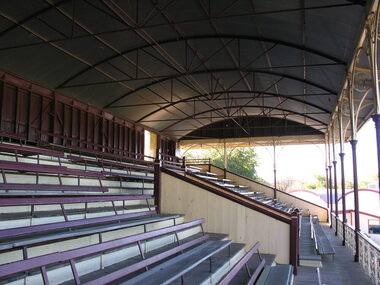
Photograph - Photograph - Colour, Dorothy Wickham, Seats at the City Oval Grandstand, Ballarat, c2015
... Seats at the City Oval Grandstand, Ballarat...city oval...grandstand...Grace said the City Oval was the 'most English' of any grounds he had played on in Australia. The City Ova Grandstand was constructed in 1898 to the designs of Clegg, Kell and Miller. ...Colour photograph of the Ballarat City Oval grandstand....It was classifed by the National Trust on 11 June 1981. ballarat city oval grandstand cast iron Colour photograph of the Ballarat City Oval grandstand. ...Cricketer W.G. Grace said the City Oval was the 'most English' of any grounds he had played on in Australia. The City Ova Grandstand was constructed in 1898 to the designs of Clegg, Kell and Miller. The arched roof is supported by iron columns with cast iron brackets. Three squat lanterns are a feature of the roof, and support flagpoles. The cast iron balustrading at the front of the grandstand features a sunflower pattern, and the upper tiered section covers dressing rooms and internal stairways. Registered by Heritage Victoria, it is significant as a large and intact grandstand. The design, especially the roof, is unique in Victoria and the setting is enhanced by the ancillary ticket boxes and nearby mature trees. It was classifed by the National Trust on 11 June 1981. Colour photograph of the Ballarat City Oval grandstand.ballarat city oval, grandstand, cast iron -
 Ballarat Heritage Services
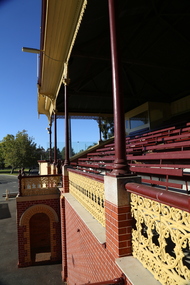
Photograph - Grandstand, L.J. Gervasoni, Ballarat City Oval Grandstand, c2014
... Ballarat City Oval Grandstand...city oval...grandstand...Grace said the City Oval was the 'most English' of any grounds he had played on in Australia. The City Ova Grandstand was constructed in 1898 to the designs of Clegg, Kell and Miller. ...Colour photograph of the Ballarat City Oval Grandstand...It was classifed by the National Trust on 11 June 1981. ballarat heritage city oval grandstand cast iron Ballarat City Oval Colour photograph of the Ballarat City Oval Grandstand Ballarat City Oval Grandstand Photograph Grandstand L.J. ...Cricketer W.G. Grace said the City Oval was the 'most English' of any grounds he had played on in Australia. The City Ova Grandstand was constructed in 1898 to the designs of Clegg, Kell and Miller. The arched roof is supported by iron columns with cast iron brackets. Three squat lanterns are a feature of the roof, and support flagpoles. The cast iron balustrading at the front of the grandstand features a sunflower pattern, and the upper tiered section covers dressing rooms and internal stairways. Registered by Heritage Victoria, it is significant as a large and intact grandstand. The design, especially the roof, is unique in Victoria and the setting is enhanced by the ancillary ticket boxes and nearby mature trees. It was classifed by the National Trust on 11 June 1981. Colour photograph of the Ballarat City Oval Grandstandballarat, heritage, city oval, grandstand, cast iron, ballarat city oval -
 Ballarat Heritage Services
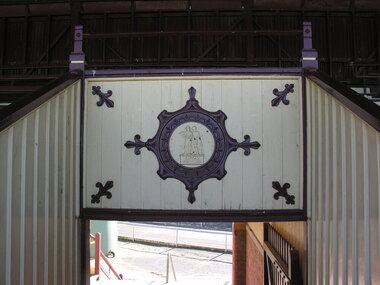
Photograph - Photograph - Colour, Dorothy Wickham, Ballarat Coat of Arms of the City Oval Grandstand, Ballarat, 2017
... Ballarat Coat of Arms of the City Oval Grandstand, Ballarat......City Oval Grandstand...Grace said the City Oval was the 'most English' of any grounds he had played on in Australia. The City Ova Grandstand was constructed in 1898 to the designs of Clegg, Kell and Miller. ...Colour photograph of the Ballarat Coat of Arms on the City Oval Grandstand, Ballarat. ...Ballarat Ballarat Coat of Arms City Oval Grandstand grandstand Colour photograph of the Ballarat Coat of Arms on the City Oval Grandstand, Ballarat. ...Cricketer W.G. Grace said the City Oval was the 'most English' of any grounds he had played on in Australia. The City Ova Grandstand was constructed in 1898 to the designs of Clegg, Kell and Miller. The arched roof is supported by iron columns with cast iron brackets. Three squat lanterns are a feature of the roof, and support flagpoles. The cast iron balustrading at the front of the grandstand features a sunflower pattern, and the upper tiered section covers dressing rooms and internal stairways. Registered by Heritage Victoria, it is significant as a large and intact grandstand. The design, especially the roof, is unique in Victoria and the setting is enhanced by the ancillary ticket boxes and nearby mature trees. It was classifed by the National Trust on 11 June 1981. Colour photograph of the Ballarat Coat of Arms on the City Oval Grandstand, Ballarat. ballarat, ballarat coat of arms, city oval grandstand, grandstand -
 Ballarat Heritage Services
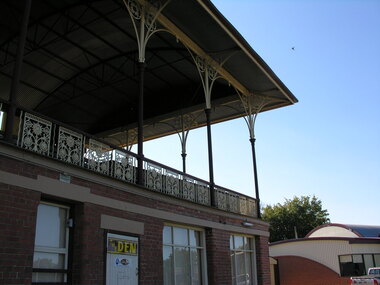
Photograph - Photograph - Colour, Iron lace, Grandstand, City Oval, Ballarat, c2014
... Iron lace, Grandstand, City Oval, Ballarat...city oval...grandstand...Grace said the City Oval was the 'most English' of any grounds he had played on in Australia. The City Ova Grandstand was constructed in 1898 to the designs of Clegg, Kell and Miller. ...Colour photograph of the Ballarat City Oval Grandstand. ...It was classifed by the National Trust on 11 June 1981. ballarat city oval grandstand Colour photograph of the Ballarat City Oval Grandstand. ...Cricketer W.G. Grace said the City Oval was the 'most English' of any grounds he had played on in Australia. The City Ova Grandstand was constructed in 1898 to the designs of Clegg, Kell and Miller. The arched roof is supported by iron columns with cast iron brackets. Three squat lanterns are a feature of the roof, and support flagpoles. The cast iron balustrading at the front of the grandstand features a sunflower pattern, and the upper tiered section covers dressing rooms and internal stairways. Registered by Heritage Victoria, it is significant as a large and intact grandstand. The design, especially the roof, is unique in Victoria and the setting is enhanced by the ancillary ticket boxes and nearby mature trees. It was classifed by the National Trust on 11 June 1981. Colour photograph of the Ballarat City Oval Grandstand. ballarat city oval, grandstand -
 Ballarat Heritage Services
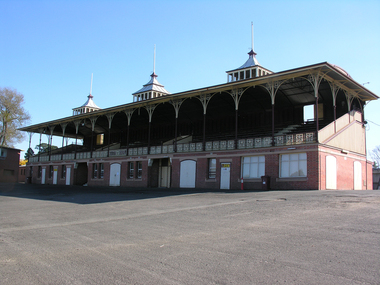
Photograph - Grandstand, Grandstand, City Oval, Ballarat
... Grandstand, City Oval, Ballarat...City Oval Grandstand...Colour photograph of the City Oval grandstand, Ballarat...City Oval. It is near Lake Wendouree previously known as Yuille's Swamp. City Oval Grandstand Grandstand Ballarat Colour photograph of the City Oval grandstand, Ballarat Grandstand, City Oval, Ballarat Photograph Grandstand ...Originally known as Yuille's paddock, this oval is now called the City Oval. It is near Lake Wendouree previously known as Yuille's Swamp.Colour photograph of the City Oval grandstand, Ballaratcity oval grandstand, grandstand, ballarat -
 Ballarat Heritage Services
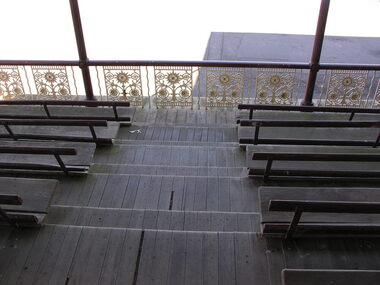
Photograph - Grandstand, Iron lace, seats and floor, Grandstand, City Oval, Ballarat
... Iron lace, seats and floor, Grandstand, City Oval, Ballarat...City Oval Ballarat...Grandstand...Grace said the City Oval was the 'most English' of any grounds he had played on in Australia. The City Ova Grandstand was constructed in 1898 to the designs of Clegg, Kell and Miller. ...Colour photograph of the Iron lace, seats and floor at the City Oval grandstand, Ballarat... Ballarat Grandstand Iron sun Colour photograph of the Iron lace, seats and floor at the City Oval grandstand, Ballarat Iron lace, seats and floor, Grandstand, City Oval, Ballarat Photograph Grandstand ...Cricketer W.G. Grace said the City Oval was the 'most English' of any grounds he had played on in Australia. The City Ova Grandstand was constructed in 1898 to the designs of Clegg, Kell and Miller. The arched roof is supported by iron columns with cast iron brackets. Three squat lanterns are a feature of the roof, and support flagpoles. The cast iron balustrading at the front of the grandstand features a sunflower pattern, and the upper tiered section covers dressing rooms and internal stairways. Registered by Heritage Victoria, it is significant as a large and intact grandstand. The design, especially the roof, is unique in Victoria and the setting is enhanced by the ancillary ticket boxes and nearby mature trees. It was classifed by the National Trust on 11 June 1981. Colour photograph of the Iron lace, seats and floor at the City Oval grandstand, Ballaratcity oval ballarat, grandstand, iron, sun -
 Ballarat Heritage Services
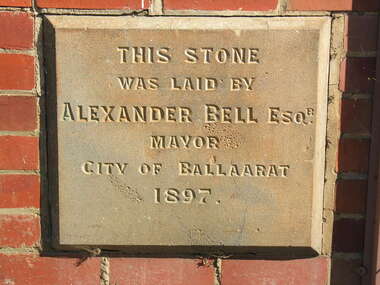
Photograph - Photograph - Colour, Dorothy Wickham, Foundation stone, Grandstand, City Oval, Ballarat
... Foundation stone, Grandstand, City Oval, Ballarat......Grandstand...City Oval...Grace said the City Oval was the 'most English' of any grounds he had played on in Australia. The City Ova Grandstand was constructed in 1898 to the designs of Clegg, Kell and Miller. ...Foundation stone at the City Oval grandstand....Foundation stone Grandstand City Oval Ballarat Alexander Bell Foundation stone at the City Oval grandstand. ...Cricketer W.G. Grace said the City Oval was the 'most English' of any grounds he had played on in Australia. The City Ova Grandstand was constructed in 1898 to the designs of Clegg, Kell and Miller. The arched roof is supported by iron columns with cast iron brackets. Three squat lanterns are a feature of the roof, and support flagpoles. The cast iron balustrading at the front of the grandstand features a sunflower pattern, and the upper tiered section covers dressing rooms and internal stairways. Registered by Heritage Victoria, it is significant as a large and intact grandstand. The design, especially the roof, is unique in Victoria and the setting is enhanced by the ancillary ticket boxes and nearby mature trees. It was classifed by the National Trust on 11 June 1981. Foundation stone at the City Oval grandstand.foundation stone, grandstand, city oval, ballarat, alexander bell -
 Ballarat Heritage Services
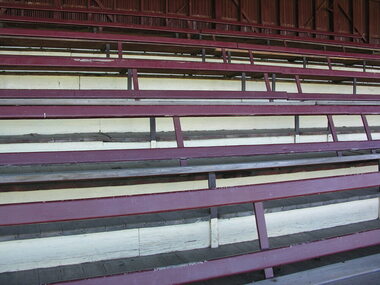
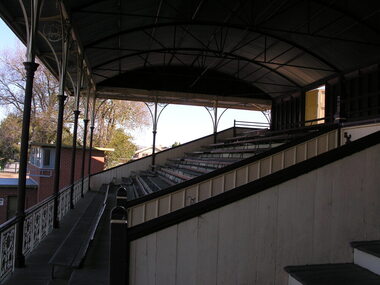
Grandstand, Seats, Grandstand, City Oval, Ballarat, c2014
... Seats, Grandstand, City Oval, Ballarat...city oval...ballarat city oval...grandstand...Grace said the City Oval was the 'most English' of any grounds he had played on in Australia. The City Ova Grandstand was constructed in 1898 to the designs of Clegg, Kell and Miller. ...Colour photograph of the grandstand at Ballarat's City Oval. ... ballarat city oval grandstand Seating Colour photograph of the grandstand at Ballarat's City Oval. ...Cricketer W.G. Grace said the City Oval was the 'most English' of any grounds he had played on in Australia. The City Ova Grandstand was constructed in 1898 to the designs of Clegg, Kell and Miller. The arched roof is supported by iron columns with cast iron brackets. Three squat lanterns are a feature of the roof, and support flagpoles. The cast iron balustrading at the front of the grandstand features a sunflower pattern, and the upper tiered section covers dressing rooms and internal stairways. Registered by Heritage Victoria, it is significant as a large and intact grandstand. The design, especially the roof, is unique in Victoria and the setting is enhanced by the ancillary ticket boxes and nearby mature trees. It was classifed by the National Trust on 11 June 1981. Colour photograph of the grandstand at Ballarat's City Oval. city oval, ballarat city oval, grandstand, seating -
 Ballarat Heritage Services
Photograph - Grandstand, Seats, Grandstand, City Oval, Ballarat, c2014
... Seats, Grandstand, City Oval, Ballarat...City Oval...grandstand...Grace said the City Oval was the 'most English' of any grounds he had played on in Australia. The City Ova Grandstand was constructed in 1898 to the designs of Clegg, Kell and Miller. ...Colour photograph of the grandstand at Ballarat City Oval. ...Seats, Grandstand, City Oval, Ballarat Photograph Grandstand ...Cricketer W.G. Grace said the City Oval was the 'most English' of any grounds he had played on in Australia. The City Ova Grandstand was constructed in 1898 to the designs of Clegg, Kell and Miller. The arched roof is supported by iron columns with cast iron brackets. Three squat lanterns are a feature of the roof, and support flagpoles. The cast iron balustrading at the front of the grandstand features a sunflower pattern, and the upper tiered section covers dressing rooms and internal stairways. Registered by Heritage Victoria, it is significant as a large and intact grandstand. The design, especially the roof, is unique in Victoria and the setting is enhanced by the ancillary ticket boxes and nearby mature trees. It was classifed by the National Trust on 11 June 1981. Colour photograph of the grandstand at Ballarat City Oval. ballarat city oval, grandstand, seating -
 Ballarat Heritage Services
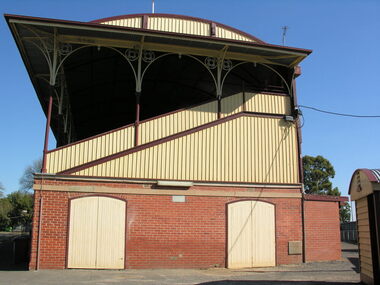
Photograph - Photograph - Colour, End of Grandstand, City Oval, Ballarat, c2015
... End of Grandstand, City Oval, Ballarat...city oval...grandstand...Colour photograph of the grandstand at Ballarat City Oval....Ballarat Heritage Services PO Box 2209 Bakery Hill Post Office goldfields Old grandstand in Ballarat. ballarat city oval grandstand Colour photograph of the grandstand at Ballarat City Oval. ...Old grandstand in Ballarat.Colour photograph of the grandstand at Ballarat City Oval.ballarat city oval, grandstand -
 Ballarat Heritage Services
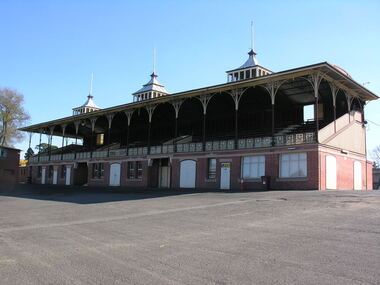
Photograph - Photograph - Colour, City Oval Grandstand, Ballarat, c2015
... City Oval Grandstand, Ballarat...grandstand...ballarat city oval...Grace said the City Oval was the 'most English' of any grounds he had played on in Australia. The City Ova Grandstand was constructed in 1898 to the designs of Clegg, Kell and Miller. ...Colour photograph of the grandstand at Ballarat City Oval. ...City Oval Grandstand, Ballarat Photograph Photograph - Colour ...Cricketer W.G. Grace said the City Oval was the 'most English' of any grounds he had played on in Australia. The City Ova Grandstand was constructed in 1898 to the designs of Clegg, Kell and Miller. The arched roof is supported by iron columns with cast iron brackets. Three squat lanterns are a feature of the roof, and support flagpoles. The cast iron balustrading at the front of the grandstand features a sunflower pattern, and the upper tiered section covers dressing rooms and internal stairways. Registered by Heritage Victoria, it is significant as a large and intact grandstand. The design, especially the roof, is unique in Victoria and the setting is enhanced by the ancillary ticket boxes and nearby mature trees. It was classifed by the National Trust on 11 June 1981. Colour photograph of the grandstand at Ballarat City Oval. grandstand, ballarat city oval -
 Ballarat Heritage Services
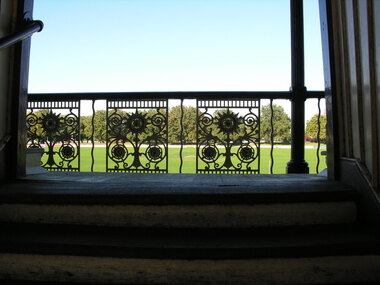
Photograph - Photograph - Colour, Dorothy Wickham, Cast Iron lace on the Grandstand at City Oval, Ballarat, c2015
... Cast Iron lace on the Grandstand at City Oval, Ballarat...grandstand...ballarat city oval...Grace said the City Oval was the 'most English' of any grounds he had played on in Australia. The City Ova Grandstand was constructed in 1898 to the designs of Clegg, Kell and Miller. ...Colour photograph of the iron work at the Ballarat City Oval Grandstand....It was classifed by the National Trust on 11 June 1981. grandstand ballarat city oval cast iron iron lace Colour photograph of the iron work at the Ballarat City Oval Grandstand. ...Cricketer W.G. Grace said the City Oval was the 'most English' of any grounds he had played on in Australia. The City Ova Grandstand was constructed in 1898 to the designs of Clegg, Kell and Miller. The arched roof is supported by iron columns with cast iron brackets. Three squat lanterns are a feature of the roof, and support flagpoles. The cast iron balustrading at the front of the grandstand features a sunflower pattern, and the upper tiered section covers dressing rooms and internal stairways. Registered by Heritage Victoria, it is significant as a large and intact grandstand. The design, especially the roof, is unique in Victoria and the setting is enhanced by the ancillary ticket boxes and nearby mature trees. It was classifed by the National Trust on 11 June 1981. Colour photograph of the iron work at the Ballarat City Oval Grandstand.grandstand, ballarat city oval, cast iron, iron lace -
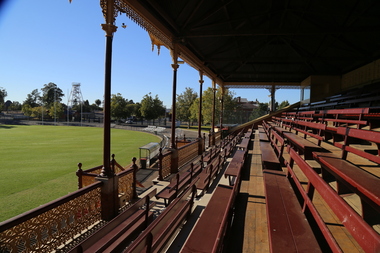 Ballarat Heritage Services
Digital photograph, L.J. Gervasoni, City Oval Ballarat, 2017
... city oval...ballarat...grandstand...Digital Image of the Grandstand at Ballarat's City Oval....Ballarat Heritage Services PO Box 2209 Bakery Hill Post Office goldfields city oval ballarat grandstand football oval sport Digital Image of the Grandstand at Ballarat's City Oval. ...Digital Image of the Grandstand at Ballarat's City Oval.city oval, ballarat, grandstand, football, oval, sport -
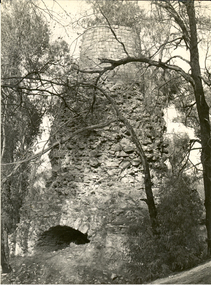 Federation University Historical Collection
Photograph - Photograph Album, Photographs of Ballarat Buildings, 1967, 1967
... Williams, Mair Street, September 1967 .79) City Oval Grandstand, with fire training tower in the background, .80) City Oval Grandstand .81) City Oval Grandstand .82) Smythesdale Post Office, October 1967 .83) Court House Hotel. ...Williams, Mair Street, September 1967 .79) City Oval Grandstand, with fire training tower in the background, .80) City Oval Grandstand .81) City Oval Grandstand .82) Smythesdale Post Office, October 1967 .83) Court House Hotel. ...When these photos were taken Geoffrey Biddington was highly involved with the Ballarat Branch of the National Trust. At one time Her Majesty's Theatre was known as the Memorial Theatre. Lenaghan of Tourello "Master Dan Lenaghan, eldest son of Mr. and Mrs. R. Lenaghan, of Tourello, has been successful in obtaining a Government scholarship, tenable for four years at St. Patrick's College, Ballarat.(Melbourne Advocate, 02 March 1939) Two Black folders of Ballarat photographs as follows: .1) Interior of Ballarat Railway Station .2) Interior of Ballarat Railway Station .3) Craig's Hotel .4) Craig's Hotel .5) Craig's Hotel .6) Craig's Hotel .7) Ballarat Fine Art Gallery later Art Gallery of Ballarat .8) Cuthberts, corner Lydiard and Mair Streets .9) Golden City Hotel (GCs) .10) Golden City Hotel (GCs) .11) Reid's Coffee Palace .12) Alexandria Tea Rooms, neighbouring Old Colonists' Club, Ballarat, Lydiard Street North .13) ? .14 Caste iron drink fountain, corner of Strurt and Drummond Streets, October 1967 .15) Lal Lal Blast Furnace .16) Ballarat Botanical Garden Gates .17) Ballaarat Old Cemetery Gates .18) Novar gate .19) Ballaarat Old Cemetery Gates .20) ? .21) Webster Street .22) Doveton Street South .23) ? .24) ? .25) .26) .27) Iron hitching Rail .28) Iron hitching Rail .30) Postal Box, Corner or Armstrong Street South and Eyre Street, October 1967 .31) Iron Drinking Fountain in the Ballarat Botanical Gardens .32) Iron Drinking Fountain in the Ballarat Botanical Gardens .33) Killarney, Warrenheip .34) Killarney, Warrenheip .35) Killarney, Warrenheip .36) Killarney, Warrenheip .37) Bailey's Mansion, Drummond Street .38) Bailey's Mansion, Drummond Street .39) Beaufort House .40) Beaufort House .41) ? .42) ? .43) ? .44) ? .45) ? .46) ? .47) ? .48) Lenaghan's Tourello, February 1968 .49) Lenaghan's Tourello, February 1968 .50) ? .51) ? .52) ? .53) ? .54) ? .55) ? .56) ? .57) ? .58) ? .59) ? .70) Her Majesty's Theatre, Lydiard Street .71) Her Majesty's Theatre, Lydiard Street .72) Dana Street Primary School, September 1967 .73) Ballarat School of Mines Administration Building, September 1967 .74) Eureka Street Primary School ? .75) Selkirk Brick Chimney? .76) Grigsby's Foundry, Mair Street, September 1967 .77) Pratt's Warehouse, Camp Street .78) Premises of R. And R.A. Williams, Mair Street, September 1967 .79) City Oval Grandstand, with fire training tower in the background, .80) City Oval Grandstand .81) City Oval Grandstand .82) Smythesdale Post Office, October 1967 .83) Court House Hotel. Smythesdale, October 1967 .84) Smythesdale, October 1967ballarat, buildings, bluestone, iron, architecture, biddington, geoff biddington, railway, old colonists, lal lal blast furnace, beaufort house, her majesty's theatre, craig's hotel, botanical gardens, bailey, cuthbert, lenaghan, tourello, smythesdale post office, court house hotel, smythesdale, smythesdale, alexandria tea rooms, cast iron, eureka street primary school, dana street primary school, ballarat school of mines administration building, grigsby brass founder, foundry, pratt's warehouse, selkirk bricks, grandstand, court house hotel -
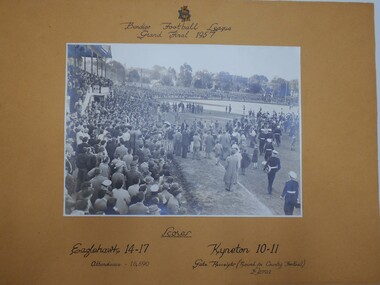 Bendigo Historical Society Inc.
Photograph - Bendigo Football League Grand final 1957, 1957
... City, other competing clubs being South Bendigo, Eaglehawk and California Gully. (https://www.bendigofnl.com.au/about/league-history) Black and white photograph of the Bendigo Football League Grand Final between Eaglehawk (14-17) and Kyneton (10-11). Attendance 16,590. Gate Receipts (Record for Country Football) £2,721. Photograph taken after the game. Two players can be seen been carried off the oval on the shoulders of others as spectators and band members move onto the playing space. A grandstand ...The first premiership competition under the auspices of the Bendigo District Football Association was in 1880 and was won by Bendigo. Sandhurst won 1881 and Eaglehawk won 1882. The Bendigo District Football Association was superseded in 1913 by the Bendigo Football League. The first president was Dr. H. H. Hunter and the first secretary Mr. Edward Hull. Premiership in the first year of the League was won by Bendigo City, other competing clubs being South Bendigo, Eaglehawk and California Gully. (https://www.bendigofnl.com.au/about/league-history)Black and white photograph of the Bendigo Football League Grand Final between Eaglehawk (14-17) and Kyneton (10-11). Attendance 16,590. Gate Receipts (Record for Country Football) £2,721. Photograph taken after the game. Two players can be seen been carried off the oval on the shoulders of others as spectators and band members move onto the playing space. A grandstand can be seen on the left of the photograph. -
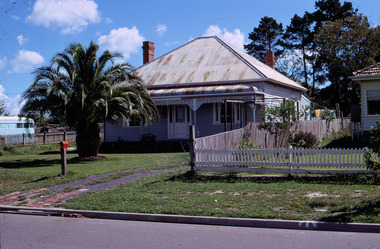 Ringwood and District Historical Society
Photograph, North side of City Road, Ringwood 1969
... City Road had been a private road. This rusty old gate was never closed, but it was a remnant of bygone days. Ireland St, Regina St, and Greenwood Avenue south of Haig Street were all narrow dirt roads as well. Jubilee Park Oval was fairly new, and there was no grandstand...City Road had been a private road. This rusty old gate was never closed, but it was a remnant of bygone days. Ireland St, Regina St, and Greenwood Avenue south of Haig Street were all narrow dirt roads as well. Jubilee Park Oval was fairly new, and there was no grandstand ...Written by Michael Anderson on RDHS Facebook on March 2016 CITY ROAD, RINGWOOD 1959 My family moved to City Road in 1959. At that time, it was a narrow rutted dirt road, with a large drain running on the northern side, and a wide nature strip complete with big wattle trees on the southern side, ideal for playing cricket and other games. There was no Salvation Army Citadel, nor was there a Lutheran Church. As you proceed from Wantirna Road towards Jubilee Park, there were no houses on the right hand side at all until you reached our house, 14 City Road, which at the time was Lot 51. On the corner where the Lutheran Church now stands, there was an old rusty farm gate, attached to a very weathered wooden post. This indicated that at some stage, City Road had been a private road. This rusty old gate was never closed, but it was a remnant of bygone days. Ireland St, Regina St, and Greenwood Avenue south of Haig Street were all narrow dirt roads as well. Jubilee Park Oval was fairly new, and there was no grandstand. The players and staff had to make do with a small wooden building that looked like a garden shed. Just beyond the southern end of the oval were growing many wild pumpkins, and I understand that the land had been a rubbish tip in the not so distant past. The park also had a couple of tennis courts. There was no road from Jubilee Park to Reilly St, and Reilly St didn't go all the way through from Wantirna Road to Great Ryrie St. It was broken by a creek. Aquinas College was an orchard. As you proceed up City Road from Wantirna Road, The Salvation Army church is on the left corner. The Hobbs family lived on that corner, in an old house on a block which was bordered by a huge hedge. The house next door in Wantirna Road, which is also Salvation Army land now, was owned by the Bayliss family. Mrs Bayliss was a teacher at Ringwood High. The first house in City Rd proper was at no. 1 to 5. The Roberts family lived there in an old weatherboard house on an acre of land. Mr Roberts was a carpenter who had built our house at No. 14, and he lived there with his wife and two sons, Graeme and Max. Eventually, they wanted more space, so they moved to the acre. Next door to the Roberts was Ted O'Regan at no. 7 to no. 9. He appears to have been a widower, and he lived by himself in an old wooden house which was surrounded by a large veranda on about 2/3 acre. Next door to Ted O'Regan lived his brother Jack O'Regan at no. 11 on about 1/2 acre, with his wife Edna, his son Alan, and his Daughter Judith. Barney Meadows lived on about 1/2 acre at no. 13. Barney was an old widower, and his front garden had a huge palm tree in it. Next to Barney lived the Reeves at no. 15, and finally there was the McDonald family at no. 17, which is on the corner of Regina St. From then on, City Rd, was a bush block down to Greenwood Ave, and the bush continued up Greenwood Ave to the Williams house, one house block from Haig St. On the right hand side of City Road it was all paddock to Ireland St, and another paddock which ended at our house was over the other side of Ireland St. Both paddocks were developed in about 1961/62, and there are about 12 houses there now, plus the Lutheran Church. When we first moved there, there was a horse and a cow grazing in the paddock beside our house. For the first couple of years, there was a huge bonfire in "our" paddock to mark Guy Fawkes day. It was a lot of fun, although I concede that it might have been a tad dangerous, with 3d. bungers and all that! Next door to us at no. 16 was the Goessling family. From now on the house blocks were normal sized. The Goesslings had one baby girl who was about 9 months old when we first moved in, but they ended up with 4 kids, all of whom would be middle aged now. They were observant Lutherans, but they were there before the church. Next door to the Goesslings at no. 18 was the Weir family on the corner of Regina St. On the other side of Regina St. at no. 20 was the Gowland family, and the last house in the street at no. 22 was owned by Arthur Johnston and his family. Arthur was an Ambulance Driver. Of course, many other people moved in and moved out in all those years. There was one particularly bad week for the street in June 1969. My brother Peter was killed in a work accident on Saturday 7th June. The next Wednesday 11th June Ted O'Regan, who lived diagonally opposite us died. Then on the next Saturday the 14th June, Ted Bell, who lived next door to us at no. 12 died from a heart attack at the age of 47. Three deaths in one week was a bit too much. It was eerie! Our old house is still standing, but I doubt for much longer. It was bought by people who wanted to develop it. Their plans were knocked back, so they sold it again. I would bet that in the not too distant future the house will be a piece of history. City Road was a paradise for kids when we moved in. We had lived in the inner suburbs, so the space and freedom were amazing for us "city slickers." I don't know where you could move to now if you wanted to bring up your children in a similar environment. Somehow, I don't think it would be possible. -
 Ringwood and District Historical Society
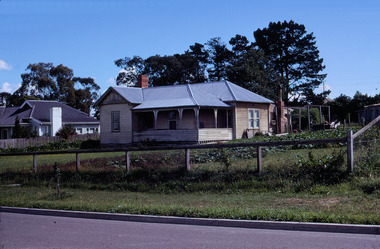
Photograph, City Road – North Side. Owned by E A (Ted) O’Regan on 23 March 1969
... City Road had been a private road. This rusty old gate was never closed, but it was a remnant of bygone days. Ireland St, Regina St, and Greenwood Avenue south of Haig Street were all narrow dirt roads as well. Jubilee Park Oval was fairly new, and there was no grandstand...City Road had been a private road. This rusty old gate was never closed, but it was a remnant of bygone days. Ireland St, Regina St, and Greenwood Avenue south of Haig Street were all narrow dirt roads as well. Jubilee Park Oval was fairly new, and there was no grandstand ...Written by Michael Anderson on RDHS Facebook on March 2016 CITY ROAD, RINGWOOD 1959 My family moved to City Road in 1959. At that time, it was a narrow rutted dirt road, with a large drain running on the northern side, and a wide nature strip complete with big wattle trees on the southern side, ideal for playing cricket and other games. There was no Salvation Army Citadel, nor was there a Lutheran Church. As you proceed from Wantirna Road towards Jubilee Park, there were no houses on the right hand side at all until you reached our house, 14 City Road, which at the time was Lot 51. On the corner where the Lutheran Church now stands, there was an old rusty farm gate, attached to a very weathered wooden post. This indicated that at some stage, City Road had been a private road. This rusty old gate was never closed, but it was a remnant of bygone days. Ireland St, Regina St, and Greenwood Avenue south of Haig Street were all narrow dirt roads as well. Jubilee Park Oval was fairly new, and there was no grandstand. The players and staff had to make do with a small wooden building that looked like a garden shed. Just beyond the southern end of the oval were growing many wild pumpkins, and I understand that the land had been a rubbish tip in the not so distant past. The park also had a couple of tennis courts. There was no road from Jubilee Park to Reilly St, and Reilly St didn't go all the way through from Wantirna Road to Great Ryrie St. It was broken by a creek. Aquinas College was an orchard. As you proceed up City Road from Wantirna Road, The Salvation Army church is on the left corner. The Hobbs family lived on that corner, in an old house on a block which was bordered by a huge hedge. The house next door in Wantirna Road, which is also Salvation Army land now, was owned by the Bayliss family. Mrs Bayliss was a teacher at Ringwood High. The first house in City Rd proper was at no. 1 to 5. The Roberts family lived there in an old weatherboard house on an acre of land. Mr Roberts was a carpenter who had built our house at No. 14, and he lived there with his wife and two sons, Graeme and Max. Eventually, they wanted more space, so they moved to the acre. Next door to the Roberts was Ted O'Regan at no. 7 to no. 9. He appears to have been a widower, and he lived by himself in an old wooden house which was surrounded by a large veranda on about 2/3 acre. Next door to Ted O'Regan lived his brother Jack O'Regan at no. 11 on about 1/2 acre, with his wife Edna, his son Alan, and his Daughter Judith. Barney Meadows lived on about 1/2 acre at no. 13. Barney was an old widower, and his front garden had a huge palm tree in it. Next to Barney lived the Reeves at no. 15, and finally there was the McDonald family at no. 17, which is on the corner of Regina St. From then on, City Rd, was a bush block down to Greenwood Ave, and the bush continued up Greenwood Ave to the Williams house, one house block from Haig St. On the right hand side of City Road it was all paddock to Ireland St, and another paddock which ended at our house was over the other side of Ireland St. Both paddocks were developed in about 1961/62, and there are about 12 houses there now, plus the Lutheran Church. When we first moved there, there was a horse and a cow grazing in the paddock beside our house. For the first couple of years, there was a huge bonfire in "our" paddock to mark Guy Fawkes day. It was a lot of fun, although I concede that it might have been a tad dangerous, with 3d. bungers and all that! Next door to us at no. 16 was the Goessling family. From now on the house blocks were normal sized. The Goesslings had one baby girl who was about 9 months old when we first moved in, but they ended up with 4 kids, all of whom would be middle aged now. They were observant Lutherans, but they were there before the church. Next door to the Goesslings at no. 18 was the Weir family on the corner of Regina St. On the other side of Regina St. at no. 20 was the Gowland family, and the last house in the street at no. 22 was owned by Arthur Johnston and his family. Arthur was an Ambulance Driver. Of course, many other people moved in and moved out in all those years. There was one particularly bad week for the street in June 1969. My brother Peter was killed in a work accident on Saturday 7th June. The next Wednesday 11th June Ted O'Regan, who lived diagonally opposite us died. Then on the next Saturday the 14th June, Ted Bell, who lived next door to us at no. 12 died from a heart attack at the age of 47. Three deaths in one week was a bit too much. It was eerie! Our old house is still standing, but I doubt for much longer. It was bought by people who wanted to develop it. Their plans were knocked back, so they sold it again. I would bet that in the not too distant future the house will be a piece of history. City Road was a paradise for kids when we moved in. We had lived in the inner suburbs, so the space and freedom were amazing for us "city slickers." I don't know where you could move to now if you wanted to bring up your children in a similar environment. Somehow, I don't think it would be possible. -
 City of Ballarat Libraries
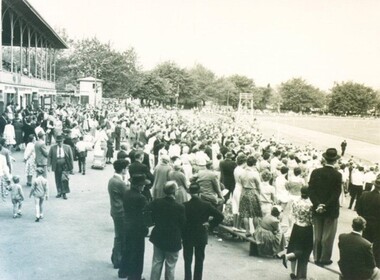
Photograph - Card Box Photographs, Spectators at the City Oval, Ballarat circa 1955
... city oval...ballarat...public...building...grandstand...City of Ballarat Libraries Eureka Centre Eureka Street Ballarat East goldfields city oval ballarat public building grandstand sport pleasant street sturt street Spectators at the City Oval, Ballarat circa 1955. ...city oval, ballarat, public, building, grandstand, sport, pleasant street, sturt street -
 Kew Historical Society Inc
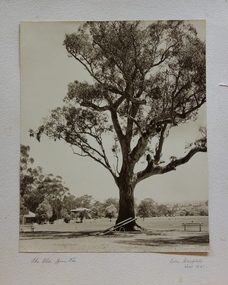
Photograph, Colin Campbell, The Old Gum Tree, 1961
... A 2007 Master Plan developed for the City of Boroondara advises the retention of this now dead River Red Gum, including a ‘managed risk zone’ and planting under the heavily lopped tree. victoria park (kew) colin campbell (photographer) victoria park red gum tree eucalypts kew (vic.) -- historic trees THE OLD GUM TREE / COLIN CAMPBELL KEW 1961 ‘The Old Gum Tree’ in Victoria Park. In the distance a game of cricket is being played on the oval. The old grandstand ...In 1871, Victoria Park, beside the Boroondara General Cemetery was set aside as a public reserve. As the Park developed, exotic plants were added to existing specimens. In 1910, a photograph of ‘The Oldest Inhabitant: A Giant Red-gum Tree’ in the Park was included in the Jubilee History of Kew. Fifty-one years later the tree was re-photographed by Colin Campbell. A 2007 Master Plan developed for the City of Boroondara advises the retention of this now dead River Red Gum, including a ‘managed risk zone’ and planting under the heavily lopped tree.‘The Old Gum Tree’ in Victoria Park. In the distance a game of cricket is being played on the oval. The old grandstand can be seen in the photo. Photographer Colin Campbell 1961. THE OLD GUM TREE / COLIN CAMPBELL KEW 1961victoria park (kew), colin campbell (photographer), victoria park, red gum tree, eucalypts, kew (vic.) -- historic trees -
 Kew Historical Society Inc
Booklet - Yarraleen Estate, Bulleen, c.1966
... City of Kew, a number of other plans and advertisements have been donated by individuals, of which this is an example. Subdivisions -- Bulleen (Vic.) Yarraleen estate Original 8-page booklet advertising a new residential development in Bulleen entitled 'Yarraleen'. The glossy multi-colour brochure includes historic and contemporary photographs of the Yarra Valley, graphic designs of potential residential development, photographs of key facilities (Marcellin College, Golf links, local swimming holes, the Beaver Swim School, Carey Grammar School Oval and grandstand, shopping strips, and farmland). ...Subdivision plans and real estate flyers/brochures reveal a number of aspects of urban development and history. The Kew Historical Society's collection of these plans, as well as advertisements extracted from magazines, cover key aspects of community development and architectural history of Kew and Kew Eat as well as surrounding suburbs. While most of the plans in the collection were gifted to the Society by the former City of Kew, a number of other plans and advertisements have been donated by individuals, of which this is an example.Original 8-page booklet advertising a new residential development in Bulleen entitled 'Yarraleen'. The glossy multi-colour brochure includes historic and contemporary photographs of the Yarra Valley, graphic designs of potential residential development, photographs of key facilities (Marcellin College, Golf links, local swimming holes, the Beaver Swim School, Carey Grammar School Oval and grandstand, shopping strips, and farmland).subdivisions -- bulleen (vic.), yarraleen estate -
 Bendigo Historical Society Inc.
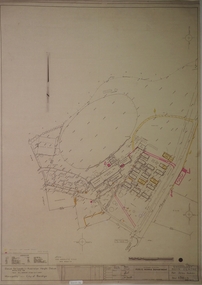
Plan - SANDHURST BOYS CENTRE COLLECTION: PART DETAIL SURVEY
... City of Bendigo. Site plan of area bounded by O'Dwyer St and Finn St, North Bendigo. Handwritten note on back - Update of whole centre 10/4/91. Details include: oval, tennis court, grandstand...City of Bendigo. Site plan of area bounded by O'Dwyer St and Finn St, North Bendigo. Handwritten note on back - Update of whole centre 10/4/91. Details include: oval, tennis court, grandstand ...Prepared by the Public Works Department for the Government of Victoria. Client is the Mental Health Department, Municipality is City of Bendigo. Site plan of area bounded by O'Dwyer St and Finn St, North Bendigo. Handwritten note on back - Update of whole centre 10/4/91. Details include: oval, tennis court, grandstand, area is bounded by an un-named watercourse. Also indicated are 14 nissen huts, 2 toilet blocks, 3 weatherboard buildings, 1 galvanised iron building,2 galvanised iron sheds (one new), residence, garage, fowl shed, and a carpark. bendigo, institutions, sandhurst boys centre, sandhurst boys centre site plan;
