National Wool Museum
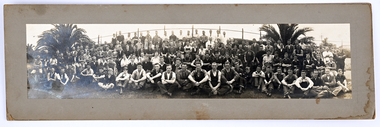
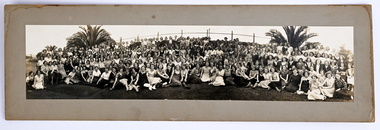
Photograph - Staff Portrait, Valley Worsted Mills, Geelong, 1930's
... ...Cliff Hoyle...The donor's father Stan Hoyle, and grandfather Cliff Hoyle, both worked there at the time....The donor's father Stan Hoyle, and grandfather Cliff Hoyle, both worked there at the time. Valley Worsted Mills Swanston Street Geelong Geelong Woollen Mills Depression 1930s Working Life Panoramic Employees Staff Portrait Textile Industry Great Depression Female Workers Mill Girls Social Culture Stan Hoyle Cliff Hoyle back: [handwritten] Valley / Worsted Mills Geelong / 34 - 40 / Ada? ...
The Valley Worsted Mills were established in 1924 on Swanston Street in South Geelong and quickly grew to become the largest and most modern textile mill in Australia, employing roughly 500 workers at its peak.
Built out of distinctive red Geelong brick with iconic Art Deco white trimmings and a sawtooth roofline, the massive 11-acre complex served as a major manufacturing cornerstone during the height of the region's historic wool boom.
The mill operated at high production for nearly 50 years before merging with John Foster & Son in December 1973, subsequently closing down entirely in the mid-1970s.
During the Great Depression of the 1930s, the female workforce at Valley Worsted Mills and other local Geelong textile factories became more vital than ever. Because women were historically paid significantly lower wage rates than men for equivalent labor, local mills increasingly relied on them to keep operating costs low during severe economic strain.
These young women, often referred to affectionately as "mill girls," typically started working as young as 14 to 16 years old. They filled specialized, highly skilled roles as menders, warpers, and weavers. For many families in the Geelong region, the steady industrial employment of these women provided a crucial financial lifeline when male breadwinners faced widespread unemployment.
Beyond their grueling factory shifts, the mill women maintained a vibrant social culture, even forming organized recreation groups like the Valley Worsted Mills Women’s Basketball team during this era.
The donor's father Stan Hoyle, and grandfather Cliff Hoyle, both worked there at the time.Black and white panoramic photograph attached to backing board. Photograph shows a group portrait of female factory workers outdoors.back: [handwritten] Valley / Worsted Mills Geelong / 34 - 40 / Ada? Stan?valley worsted mills, swanston street geelong, geelong, woollen mills, depression, 1930s, working life, panoramic, employees, staff, portrait, textile industry, great depression, female workers, mill girls, social culture, stan hoyle, cliff hoyle

 National Wool Museum
 National Wool Museum